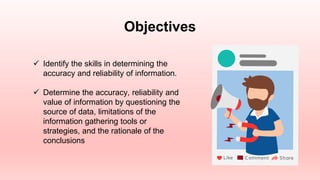
The document discusses factors to consider when evaluating information:
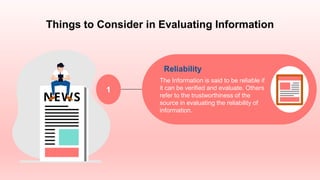
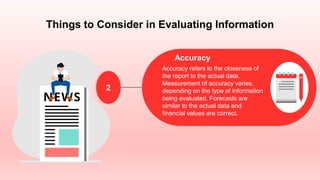
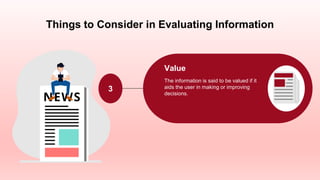
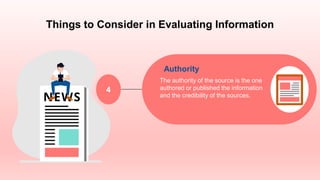
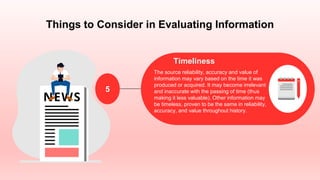
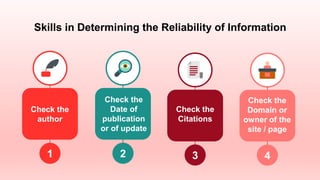
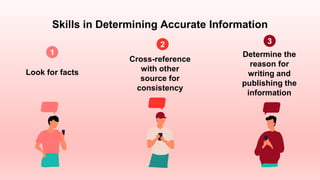
Reliability refers to whether the information can be verified and the trustworthiness of the source. Accuracy means how close the information is to actual data. Value is if the information helps with decision making. Authority is the credibility of the source. Timeliness considers if information remains relevant over time or becomes outdated. Skills for evaluating reliability include checking the author, citations, domain/owner, and date. For accuracy, one should check facts, cross-reference sources, and determine the reason for publishing.



![How Big Brands are Taking Your Traffic in Alberta [Data Inside].pptx](https://cdn.slidesharecdn.com/ss_thumbnails/howbigbrandsaretakingyourtrafficinalbertadatainside-260123180142-42d276f3-thumbnail.jpg?width=640&height=640&fit=bounds)
