THERMAL INSULATION
WHAT IS THERMAL INSULATION
• Thermal insulation indicates the
construction or provisions by way of which
transmission of heat from or in the room is
retarded. Thermal insulation can be
attained during the design process from
providing thermal insulating materials on
the “shell” of the building.
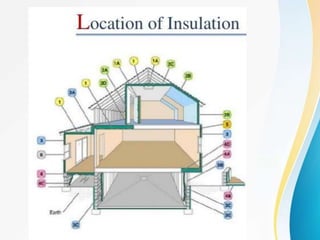
Location of Insulation
• 1) In unfinished attic spaces, between and over the floor
joists to seal off living spaces below. If the air distribution
is in the attic space, then consider insulating the rafters
to move the distribution into the conditioned space. (1A)
attic access door
• 2) In finished attic rooms with or without dormer, (2A)
between the studs of "knee“ walls, (2B) between the
studs and rafters of exterior walls and roof, (2C) and
ceilings with cold spaces above. (2D) Extend insulation
into joist space to reduce air flows.
• 3) All exterior walls, including (3A) walls between living
spaces and unheated garages, shed roofs, or storage
areas; (3B) foundation walls above ground level; (3C)
foundation walls in heated basements, full wall either
interior or exterior.
Location of Insulation
• 4) Floors above cold spaces, such as vented crawl
spaces and unheated garages. Also (4A) any portion of
the floor in a room that is cantilevered beyond the
exterior wall below; (4B) slab floors built directly on the
ground; (4C) as an alternative to floor insulation,
foundation walls of unvented crawl spaces. (4D) Extend
insulation into joist space to reduce air flows.
• 5) Band joists.
• 6) Replacement or storm windows and caulk and seal
around all windows and doors.
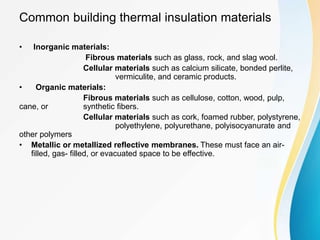
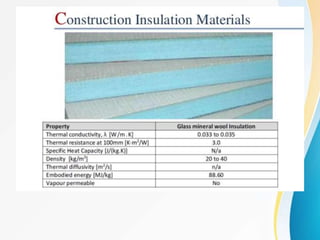
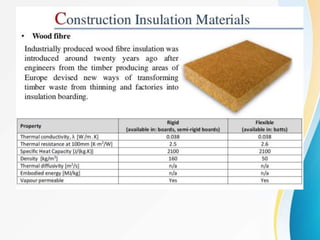
Common building thermal insulation materials
• Inorganic materials:
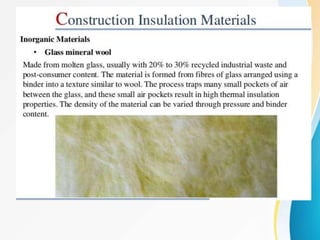
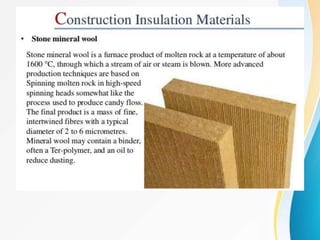
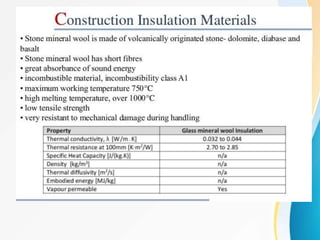
Fibrous materials such as glass, rock, and slag wool.
Cellular materials such as calcium silicate, bonded perlite,
vermiculite, and ceramic products.
• Organic materials:
Fibrous materials such as cellulose, cotton, wood, pulp,
cane, or synthetic fibers.
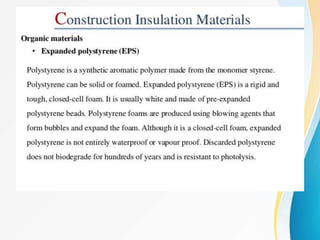
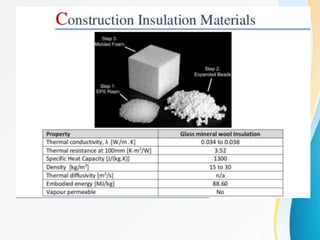
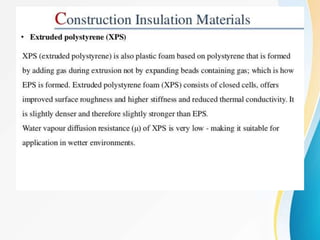
Cellular materials such as cork, foamed rubber, polystyrene,
polyethylene, polyurethane, polyisocyanurate and
other polymers
• Metallic or metallized reflective membranes. These must face an air-
filled, gas- filled, or evacuated space to be effective.
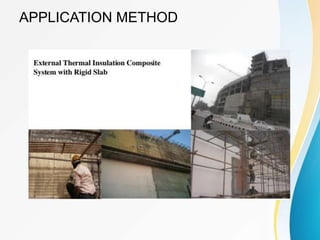
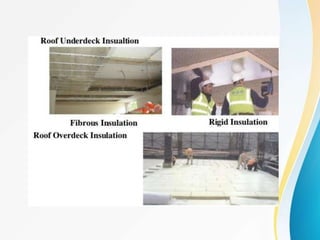
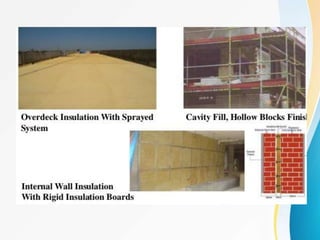
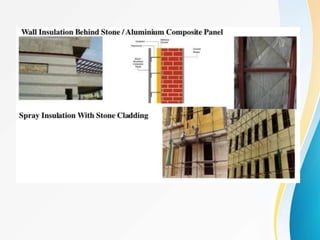
APPLICATION METHOD
THERMAL-INSULATION THERMAL-INSULATIONTHERMAL-INSULATION

THERMAL-INSULATION THERMAL-INSULATIONTHERMAL-INSULATION

  • 1.
  • 2.
    WHAT IS THERMALINSULATION • Thermal insulation indicates the construction or provisions by way of which transmission of heat from or in the room is retarded. Thermal insulation can be attained during the design process from providing thermal insulating materials on the “shell” of the building.
  • 3.
    Location of Insulation •1) In unfinished attic spaces, between and over the floor joists to seal off living spaces below. If the air distribution is in the attic space, then consider insulating the rafters to move the distribution into the conditioned space. (1A) attic access door • 2) In finished attic rooms with or without dormer, (2A) between the studs of "knee“ walls, (2B) between the studs and rafters of exterior walls and roof, (2C) and ceilings with cold spaces above. (2D) Extend insulation into joist space to reduce air flows. • 3) All exterior walls, including (3A) walls between living spaces and unheated garages, shed roofs, or storage areas; (3B) foundation walls above ground level; (3C) foundation walls in heated basements, full wall either interior or exterior.
  • 4.
    Location of Insulation •4) Floors above cold spaces, such as vented crawl spaces and unheated garages. Also (4A) any portion of the floor in a room that is cantilevered beyond the exterior wall below; (4B) slab floors built directly on the ground; (4C) as an alternative to floor insulation, foundation walls of unvented crawl spaces. (4D) Extend insulation into joist space to reduce air flows. • 5) Band joists. • 6) Replacement or storm windows and caulk and seal around all windows and doors.
  • 6.
    Common building thermalinsulation materials • Inorganic materials: Fibrous materials such as glass, rock, and slag wool. Cellular materials such as calcium silicate, bonded perlite, vermiculite, and ceramic products. • Organic materials: Fibrous materials such as cellulose, cotton, wood, pulp, cane, or synthetic fibers. Cellular materials such as cork, foamed rubber, polystyrene, polyethylene, polyurethane, polyisocyanurate and other polymers • Metallic or metallized reflective membranes. These must face an air- filled, gas- filled, or evacuated space to be effective.
  • 16.