B.F SKINNERTHEORIES OF
PERSONALITY
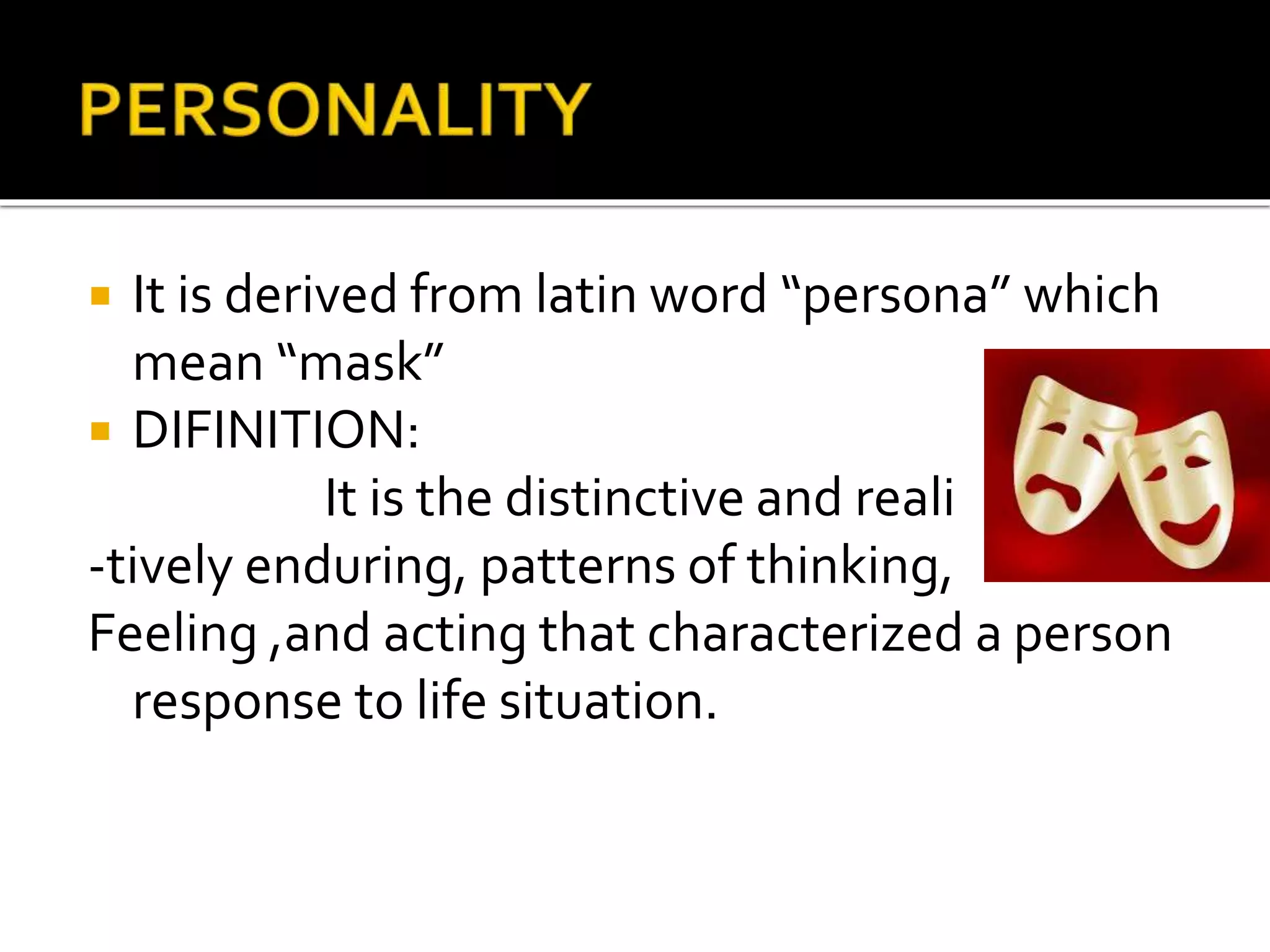
 It is derived from latin word “persona” which
mean “mask”
 DIFINITION:
It is the distinctive and reali
-tively enduring, patterns of thinking,
Feeling ,and acting that characterized a person
response to life situation.
1. PSYCHODYNAMIC PERSPECTIVE
2. COGNATIVETHEORIES
3. LEARNINGTHEORIES
4. HUMANASTICTHEORIES
5. MUSLIMSTHEORIES
 Is a learning theory based on the idea , that
behavior can be controlled or modified based
on the antecedents and consequences of
behavior.
 Name : Burrhus Frederic Skinner
 Born on : March ,20 ,1904
 Education: Harvard university ,Hamilton
college.
 Occupation : psychologist
 Died on : August , 18 , 1990.
 B.F skinner gave the ides of “operant
conditioning”
 Studied the voluntary response shown by an
organism.
 He proposed theory of operant conditioning
 Environment is so important that just
changing someone’s can change their
personality.
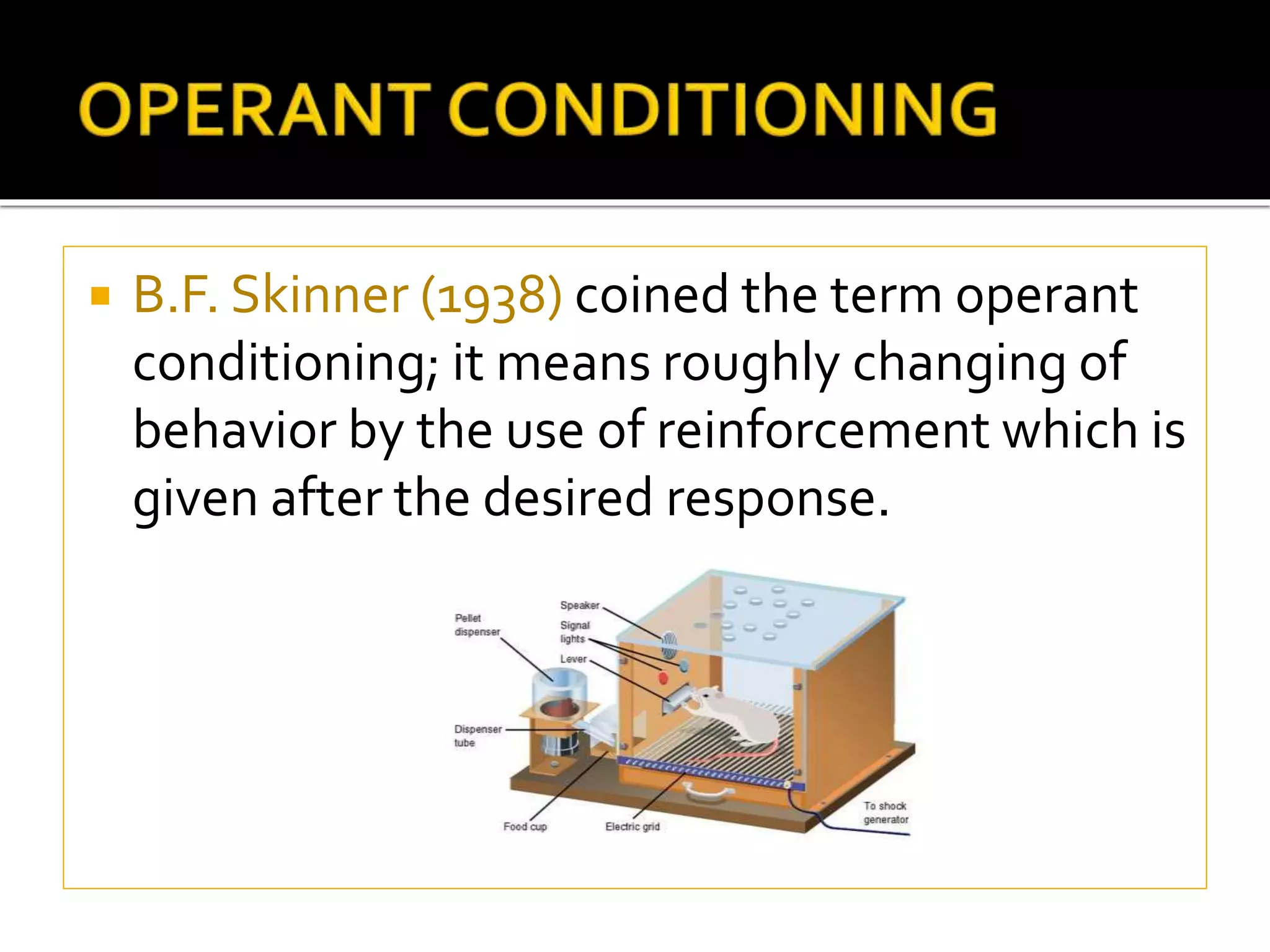
 B.F. Skinner (1938) coined the term operant
conditioning; it means roughly changing of
behavior by the use of reinforcement which is
given after the desired response.
 REINFORCEMENT
 PUNISHMENT
 GENERALIZATION
 ACQUISITION
 EXTINCTION
 SHAPING
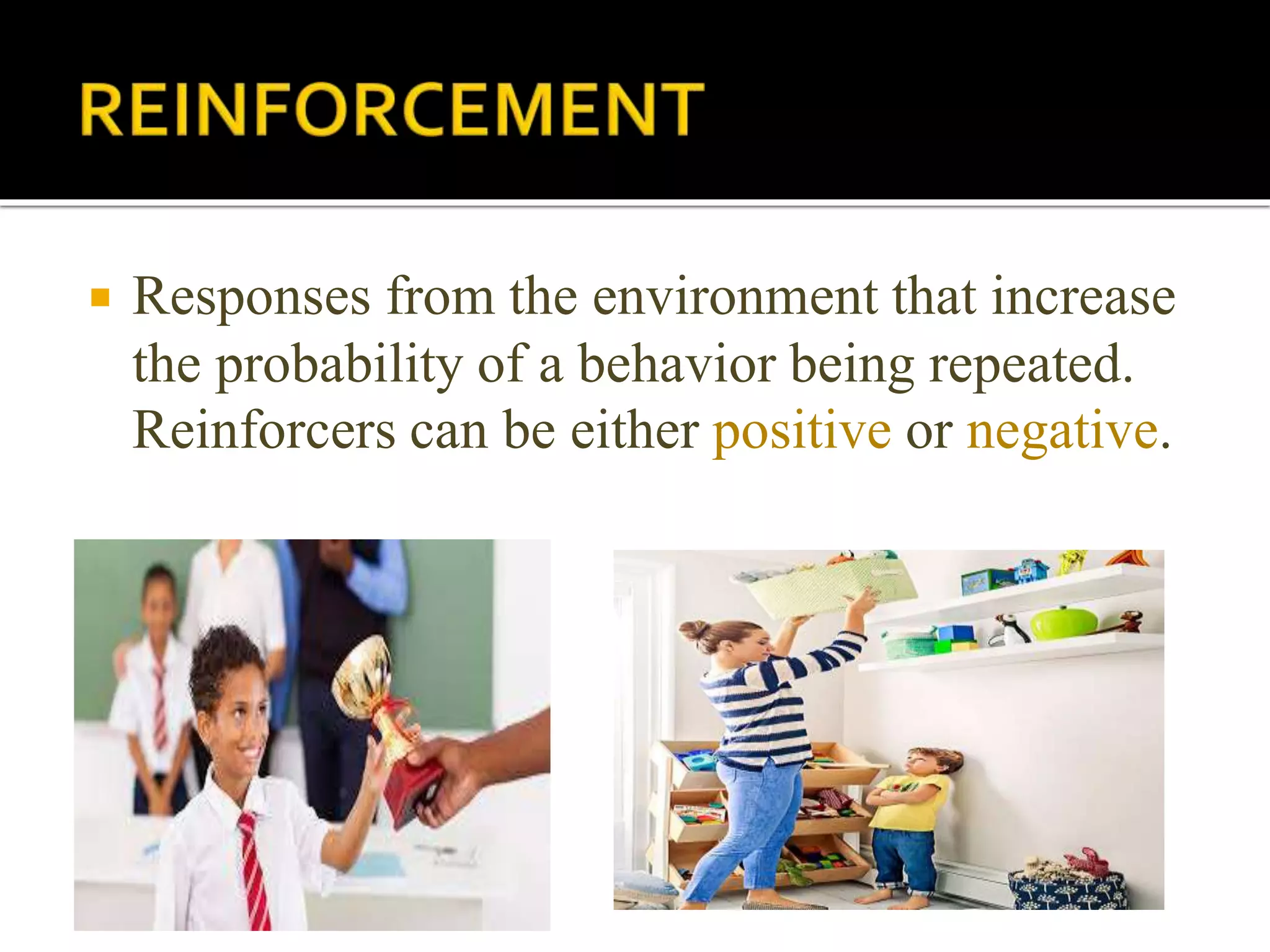
 Responses from the environment that increase
the probability of a behavior being repeated.
Reinforcers can be either positive or negative.
 A schedule of reinforcement is basically a rule
stating which instances of a behavior will be
reinforced. In some cases, a behavior might
be reinforced every time it occurs.
 Sometimes, a behavior might not be
reinforced at all.
 Fixed-ratio schedules are those where a response is reinforced only after a specified number of
responses.This schedule produces a high, steady rate of responding with only a brief pause after
the delivery of the reinforcer.
 An example of a fixed-ratio schedule would be delivering a food pellet to a rat after it presses a
bar five times.
 Variable-ratio schedules occur when a response is reinforced after an unpredictable number of
responses.This schedule creates a high steady rate of responding. Gambling and lottery games
are good examples of a reward based on a variable ratio schedule. In a lab setting, this might
involve delivering food pellets to a rat after one bar press, again after four bar presses, and a third
pellet after two bar presses.
 Fixed-interval schedules are those where the first response is rewarded only after a specified
amount of time has elapsed.This schedule causes high amounts of responding near the end of
the interval, but much slower responding immediately after the delivery of the reinforcer. An
example of this in a lab setting would be reinforcing a rat with a lab pellet for the first bar press
after a 30-second interval has elapsed.
 Variable-interval schedules occur when a response is rewarded after an unpredictable amount of
time has passed.This schedule produces a slow, steady rate of response. An example of this
would be delivering a food pellet to a rat after the first bar press following a one-minute interval,
another pellet for the first response following a five-minute interval, and a third food pellet for
the first response following a three-minute interval.
 Punishment is the presentation of an adverse
event that cause a decrease in the behaviour
it follows.
 Positive punishment refers to adding of
stimulus that weakens a response and make
it less likely to occur again.
 Example: a child beats another child and his
parents scold him for this behaviour.
 It refers to the taking away or removing a
stimulus that weakens a response and make
it less likely to occur again.
 Example :if your cell phone rings during the
lecture and teacher take away your phone.
 A behaviour that is previously reinforced, no
longer result in the reinforcing consequences
and therefore ,the behavour stop occurring in
the future.
 Example: when a child is reinforced for doing
homework on time and then he is not
reinforced many times after doing
homework, then he will not do his homework
on time.
 A phenomenon in which an organism learn a
response to one stimulus and apply it to an
other stimuli.
 Example: when a child is afraid of snack he is
also afraid of rope.
 The discrimination is the act of making a
distinction between thing on daily bases.
 It is the therapeutic approach designed to
change a particular undesirable negative
behaviour.
 Shaping refers to the gradually reinforce the
behaviour that is close to the target
behaviour.
 When a person is punished he or she is likely
to repeat a behaviour.
 Operant Condition does not take cognitive
factors into account.
 Once reward is given the person go back to
his bad behaviour.
 Too little emphasis on cognitions.
 Too much emphasis on environmental
determints.
Theories bf skinner
Theories bf skinner

Theories bf skinner

  • 2.
  • 3.
     It isderived from latin word “persona” which mean “mask”  DIFINITION: It is the distinctive and reali -tively enduring, patterns of thinking, Feeling ,and acting that characterized a person response to life situation.
  • 4.
    1. PSYCHODYNAMIC PERSPECTIVE 2.COGNATIVETHEORIES 3. LEARNINGTHEORIES 4. HUMANASTICTHEORIES 5. MUSLIMSTHEORIES
  • 5.
     Is alearning theory based on the idea , that behavior can be controlled or modified based on the antecedents and consequences of behavior.
  • 8.
     Name :Burrhus Frederic Skinner  Born on : March ,20 ,1904  Education: Harvard university ,Hamilton college.  Occupation : psychologist  Died on : August , 18 , 1990.
  • 9.
     B.F skinnergave the ides of “operant conditioning”  Studied the voluntary response shown by an organism.  He proposed theory of operant conditioning
  • 10.
     Environment isso important that just changing someone’s can change their personality.
  • 11.
     B.F. Skinner(1938) coined the term operant conditioning; it means roughly changing of behavior by the use of reinforcement which is given after the desired response.
  • 12.
     REINFORCEMENT  PUNISHMENT GENERALIZATION  ACQUISITION  EXTINCTION  SHAPING
  • 13.
     Responses fromthe environment that increase the probability of a behavior being repeated. Reinforcers can be either positive or negative.
  • 14.
     A scheduleof reinforcement is basically a rule stating which instances of a behavior will be reinforced. In some cases, a behavior might be reinforced every time it occurs.  Sometimes, a behavior might not be reinforced at all.
  • 16.
     Fixed-ratio schedulesare those where a response is reinforced only after a specified number of responses.This schedule produces a high, steady rate of responding with only a brief pause after the delivery of the reinforcer.  An example of a fixed-ratio schedule would be delivering a food pellet to a rat after it presses a bar five times.  Variable-ratio schedules occur when a response is reinforced after an unpredictable number of responses.This schedule creates a high steady rate of responding. Gambling and lottery games are good examples of a reward based on a variable ratio schedule. In a lab setting, this might involve delivering food pellets to a rat after one bar press, again after four bar presses, and a third pellet after two bar presses.  Fixed-interval schedules are those where the first response is rewarded only after a specified amount of time has elapsed.This schedule causes high amounts of responding near the end of the interval, but much slower responding immediately after the delivery of the reinforcer. An example of this in a lab setting would be reinforcing a rat with a lab pellet for the first bar press after a 30-second interval has elapsed.  Variable-interval schedules occur when a response is rewarded after an unpredictable amount of time has passed.This schedule produces a slow, steady rate of response. An example of this would be delivering a food pellet to a rat after the first bar press following a one-minute interval, another pellet for the first response following a five-minute interval, and a third food pellet for the first response following a three-minute interval.
  • 17.
     Punishment isthe presentation of an adverse event that cause a decrease in the behaviour it follows.
  • 18.
     Positive punishmentrefers to adding of stimulus that weakens a response and make it less likely to occur again.  Example: a child beats another child and his parents scold him for this behaviour.
  • 19.
     It refersto the taking away or removing a stimulus that weakens a response and make it less likely to occur again.  Example :if your cell phone rings during the lecture and teacher take away your phone.
  • 20.
     A behaviourthat is previously reinforced, no longer result in the reinforcing consequences and therefore ,the behavour stop occurring in the future.  Example: when a child is reinforced for doing homework on time and then he is not reinforced many times after doing homework, then he will not do his homework on time.
  • 21.
     A phenomenonin which an organism learn a response to one stimulus and apply it to an other stimuli.  Example: when a child is afraid of snack he is also afraid of rope.
  • 22.
     The discriminationis the act of making a distinction between thing on daily bases.
  • 23.
     It isthe therapeutic approach designed to change a particular undesirable negative behaviour.
  • 24.
     Shaping refersto the gradually reinforce the behaviour that is close to the target behaviour.
  • 25.
     When aperson is punished he or she is likely to repeat a behaviour.  Operant Condition does not take cognitive factors into account.  Once reward is given the person go back to his bad behaviour.  Too little emphasis on cognitions.  Too much emphasis on environmental determints.