THE ZIMBABWE DAIRY
INDUSTRY

Gororo Eddington, November 2013
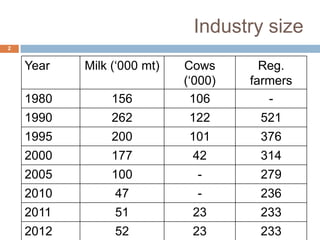
Industry size
2

Year

Milk (‘000 mt)

1980

156

Cows
(‘000)
106

Reg.
farmers
-

1990

262

122

521

1995

200

101

376

2000

177

42

314

2005

100

-

279

2010

47

-

236

2011

51

23

233

2012

52

23

233
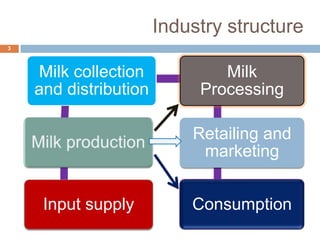
Industry structure
3

Milk collection
and distribution

Milk
Processing
Retailing and
marketing

Input supply

Consumption
Input supply
4












Feed compounding and marketing
Fertilisers
Seed companies
Agro-chemicals
Breeding supplies and services
Veterinary services
Dairy equipment and spares
Etc.
Input supply
5
Milk Production
6



A dual industry that vary with scale of
production.
1.
2.



Large scale commercial sector
Smallholder sector

Informal sector
 not

regarded as part of the industry
Large-scale Dairy Sector
7





Large specialized farms
Capitalisation and mechanisation
Specialist dairy breeds and their crosses
 Holstein-Frisian,




Jersey, Red Dane, Ayrshire

Milk yields > 4000 kg
Share of market: 97-98 %
Large-scale Dairy Sector
8



A high level of vertical integration
 Forward:

to milk processing and distribution e.g.
Alpha Omega Dairies, Dendairy, Clavelshay Dairy
 Backwards: to feed production e.g., Dendairy
(through Ice Feeds)


>200 non-operational dairy farms
Large-scale Dairy Sector
9



Registered as
Producer-retailers
producer-distributors
producer- processors
Smallholder Dairy Sector
10







Small scale dairy projects initiated in 1982 under
the then Dairy Marketing Board (now Dairibord
Holdings Ltd)
Each farmer has 1-5 specialized dairy cows and
their crosses
Total projects countrywide = 35
 But in 2012 only 17 were operational with a
combined active (delivering) membership of
485 producers.
Smallholder Dairy Sector
11

Milk yields: 1,800-2,500litres/lactation
 Milk is sold locally
 to neighbours and/or
 through milk collection centers (farmers’
cooperatives)


process

it or sell to processing
companies.



Contributes only 2-3 % of marketed milk
production.
Collection and distribution
12





Small scale farmers: bring milk to collection
centre/dairy in ox-drawn carts or by bicycle or
car
Large scale farms: milk collected in cooled
milk tankers every 2-3 days by
 NFB

Logistics (DZL)
 NDC (DZL, Nestle, Kefalos, etc.)
 Own car/lorry (cans)


Backward and forward integration in the value
chain.
13

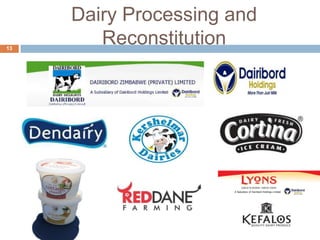
Dairy Processing and
Reconstitution
Processed Product Range
14





34 registered processors with capacity to process
400 million litres p. a.
Liquid milks
UHT – e.g. Steri, Longlife
 Pasteurised – e.g., Chimombe, flavoured milks
 Fermented milks –
Inkomasi, Lacto, Hodzeko, Maas, yorghurts, drinking
yorghurts








Powder – full cream, skim milk powder, low
fat, substitute creamers
Other products – cheese, dairy flavoured
drinks, dairy-fruit juices, butter, ice cream
Presentation


Plastic bottles, plastic satchets, PVC cups, cartons
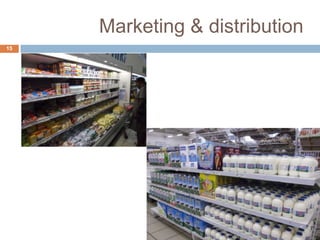
Marketing & distribution
15
Support functions
16



CFU, ZFU, ZCFU






NADF
The aims and objectives of the NADF are to promote,
advance and develop the production of milk and dairy
products in Zimbabwe and to advance and protect the
interests of all sections and categories of producers
and by so doing play a pivotal anchor role in the dairy
industry in Zimbabwe.
Zimbabwe Dairy Services Agency







Farmers’ organizations

Regulatory (Dairy Act and Dairy Regulations)
Monitoring and registration (Quality scheme)
Zimbabwe Dairy Herd Improvement Program (ZDHI)
Training

Zimbabwe Dairy Industry Trust
Support Services
17



NDC (National Dairy Co-operative Ltd)
 bulk

tank hire
 bulk milk collection


Dairy Development Programme (DDP)
 promote

milk production in small scale
commercial farms, resettlement and communal
areas
 Promote the processing and marketing of milk by
these farmers


Government – research, technical extension,
veterinary services, education and training,
regulation
Support Services
18



Bilateral and Non-Governmental Organizations
 Heifer

Project International
 Technoserve
 Land O’Lakes
 European Union
 USAID
 ZimACP (Zimbabwe Agricultural Competitive
Programme)
Support services
19
Contact me
20

Eddington Gororo
Department of Animal Production and
Technology

Chinhoyi University of Technology
Private Bag 7724 Chinhoyi, Zimbabwe
Email: gororoeddington@gmail.com
Mobile Tel. +263 77 3 916375

The zimbabwe dairy industry

  • 1.
    THE ZIMBABWE DAIRY INDUSTRY GororoEddington, November 2013
  • 2.
    Industry size 2 Year Milk (‘000mt) 1980 156 Cows (‘000) 106 Reg. farmers - 1990 262 122 521 1995 200 101 376 2000 177 42 314 2005 100 - 279 2010 47 - 236 2011 51 23 233 2012 52 23 233
  • 3.
    Industry structure 3 Milk collection anddistribution Milk Processing Retailing and marketing Input supply Consumption
  • 4.
    Input supply 4         Feed compoundingand marketing Fertilisers Seed companies Agro-chemicals Breeding supplies and services Veterinary services Dairy equipment and spares Etc.
  • 5.
  • 6.
    Milk Production 6  A dualindustry that vary with scale of production. 1. 2.  Large scale commercial sector Smallholder sector Informal sector  not regarded as part of the industry
  • 7.
    Large-scale Dairy Sector 7    Largespecialized farms Capitalisation and mechanisation Specialist dairy breeds and their crosses  Holstein-Frisian,   Jersey, Red Dane, Ayrshire Milk yields > 4000 kg Share of market: 97-98 %
  • 8.
    Large-scale Dairy Sector 8  Ahigh level of vertical integration  Forward: to milk processing and distribution e.g. Alpha Omega Dairies, Dendairy, Clavelshay Dairy  Backwards: to feed production e.g., Dendairy (through Ice Feeds)  >200 non-operational dairy farms
  • 9.
    Large-scale Dairy Sector 9  Registeredas Producer-retailers producer-distributors producer- processors
  • 10.
    Smallholder Dairy Sector 10    Smallscale dairy projects initiated in 1982 under the then Dairy Marketing Board (now Dairibord Holdings Ltd) Each farmer has 1-5 specialized dairy cows and their crosses Total projects countrywide = 35  But in 2012 only 17 were operational with a combined active (delivering) membership of 485 producers.
  • 11.
    Smallholder Dairy Sector 11 Milkyields: 1,800-2,500litres/lactation  Milk is sold locally  to neighbours and/or  through milk collection centers (farmers’ cooperatives)  process it or sell to processing companies.  Contributes only 2-3 % of marketed milk production.
  • 12.
    Collection and distribution 12   Smallscale farmers: bring milk to collection centre/dairy in ox-drawn carts or by bicycle or car Large scale farms: milk collected in cooled milk tankers every 2-3 days by  NFB Logistics (DZL)  NDC (DZL, Nestle, Kefalos, etc.)  Own car/lorry (cans)  Backward and forward integration in the value chain.
  • 13.
  • 14.
    Processed Product Range 14   34registered processors with capacity to process 400 million litres p. a. Liquid milks UHT – e.g. Steri, Longlife  Pasteurised – e.g., Chimombe, flavoured milks  Fermented milks – Inkomasi, Lacto, Hodzeko, Maas, yorghurts, drinking yorghurts     Powder – full cream, skim milk powder, low fat, substitute creamers Other products – cheese, dairy flavoured drinks, dairy-fruit juices, butter, ice cream Presentation  Plastic bottles, plastic satchets, PVC cups, cartons
  • 15.
  • 16.
    Support functions 16  CFU, ZFU,ZCFU    NADF The aims and objectives of the NADF are to promote, advance and develop the production of milk and dairy products in Zimbabwe and to advance and protect the interests of all sections and categories of producers and by so doing play a pivotal anchor role in the dairy industry in Zimbabwe. Zimbabwe Dairy Services Agency      Farmers’ organizations Regulatory (Dairy Act and Dairy Regulations) Monitoring and registration (Quality scheme) Zimbabwe Dairy Herd Improvement Program (ZDHI) Training Zimbabwe Dairy Industry Trust
  • 17.
    Support Services 17  NDC (NationalDairy Co-operative Ltd)  bulk tank hire  bulk milk collection  Dairy Development Programme (DDP)  promote milk production in small scale commercial farms, resettlement and communal areas  Promote the processing and marketing of milk by these farmers  Government – research, technical extension, veterinary services, education and training, regulation
  • 18.
    Support Services 18  Bilateral andNon-Governmental Organizations  Heifer Project International  Technoserve  Land O’Lakes  European Union  USAID  ZimACP (Zimbabwe Agricultural Competitive Programme)
  • 19.
  • 20.
    Contact me 20 Eddington Gororo Departmentof Animal Production and Technology Chinhoyi University of Technology Private Bag 7724 Chinhoyi, Zimbabwe Email: gororoeddington@gmail.com Mobile Tel. +263 77 3 916375