Care and Storage of
Hatching Eggs - Before
incubation
Why?
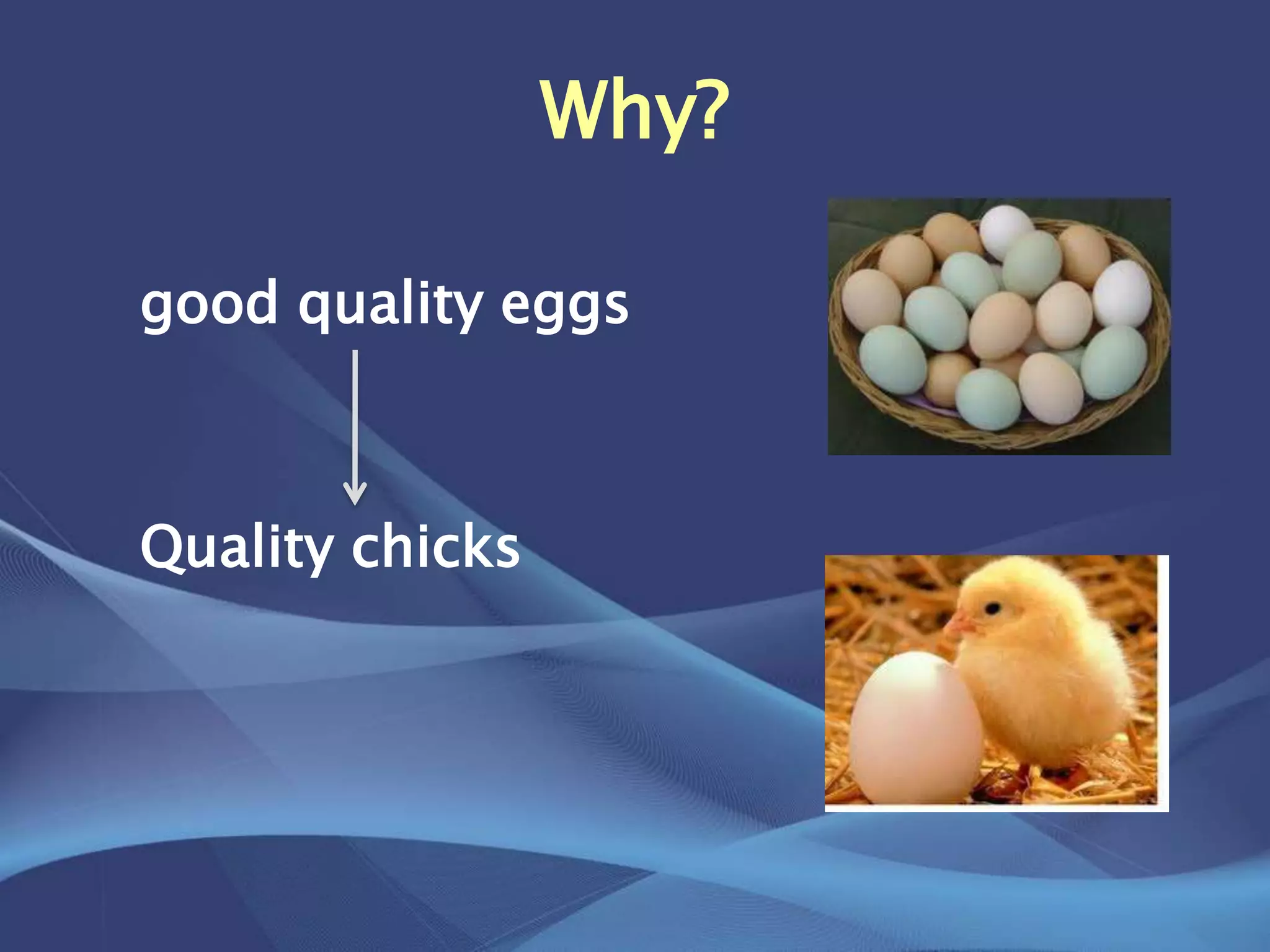
good quality eggs
Quality chicks
• Good quality egg production
1. Collection
2. Cleaning
3. Fumigation
4. Grading
5. Storing
6. Incubation
1. Collection of eggs
• From healthy well managed breeding
stock
– No vitamin deficiencies
– No mineral deficiencies
High hatchability
2. Cleaning of eggs
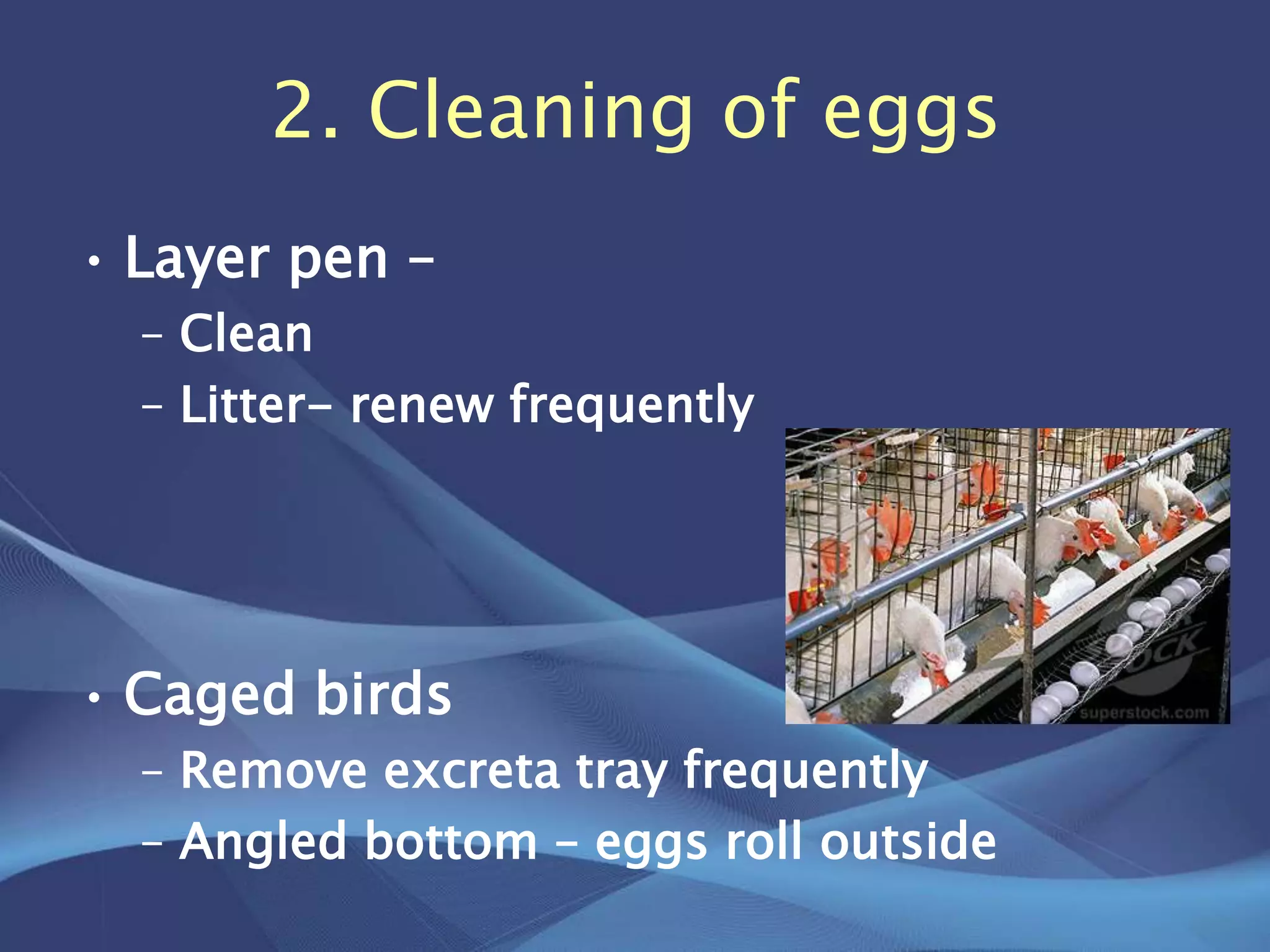
• Layer pen –
– Clean
– Litter- renew frequently
• Caged birds
– Remove excreta tray frequently
– Angled bottom – eggs roll outside
• Egg shell – avoid contamination of
eggs
– High velocity air
– Brushes
– Sand paper
– Wet clothes
•Do not use water ??
•If essential ??
3. Fumigation
• Disinfectant fume – 20 min
• Proper gas concentration
• Ventilate properly after fumigation
•To fill the air sac with normal fresh air
4. Collect eggs
• 3 – 5 times per day
• At least 2 time
• If Environmental temperature is high –
collect more frequently
Ensure proper cool down
avoid undue effect on the
embryo
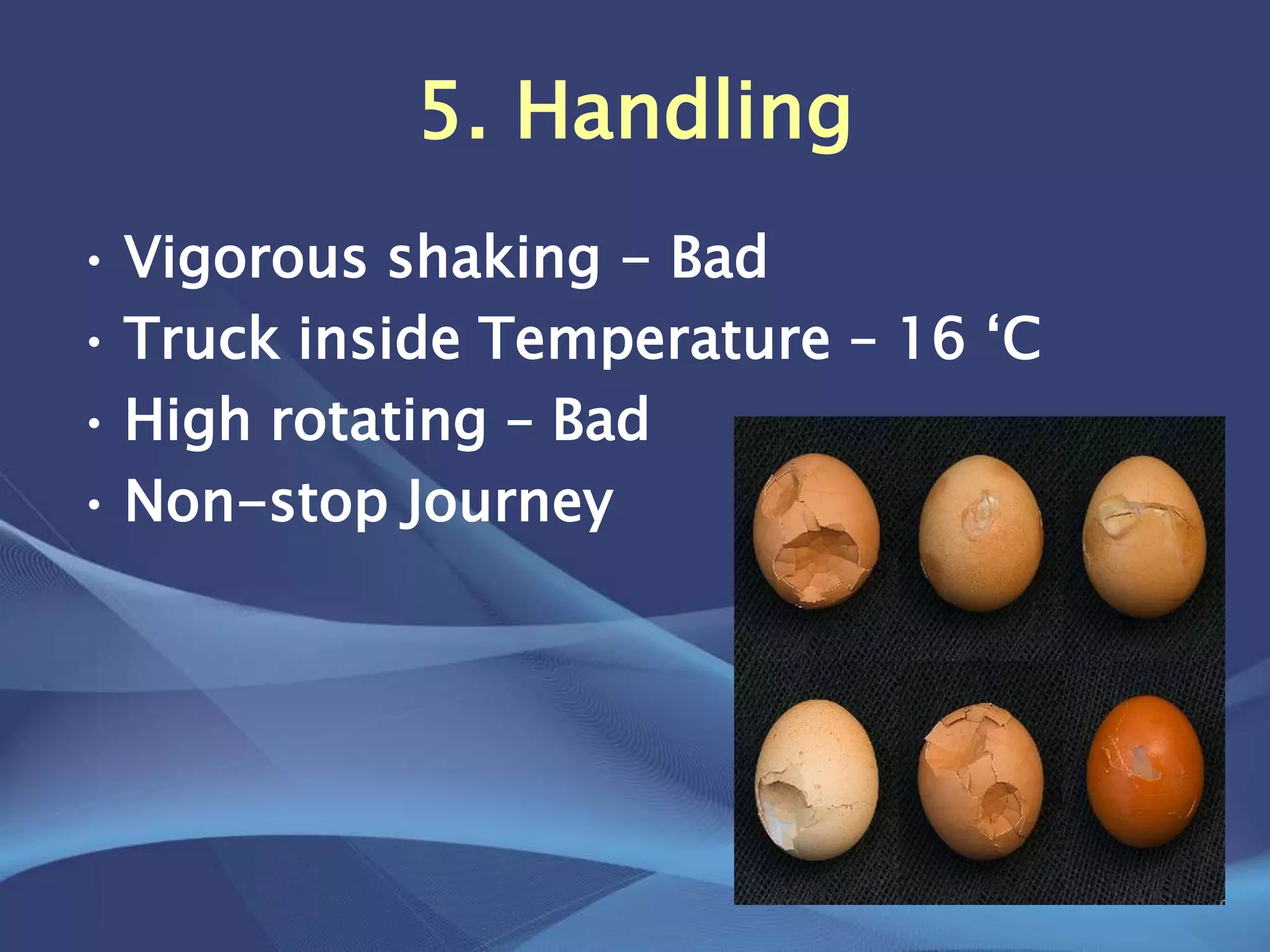
5. Handling
• Vigorous shaking - Bad
• Truck inside Temperature – 16 ‘C
• High rotating – Bad
• Non-stop Journey
6. Grading
• According to the weight
Small
Medium 55- 60 g
Large
Jumbo
7. Storing of eggs
• Have to consider
- Duration
- Temperature
- RH
- Orientation and positioning
- Turning
1. Duration –
– Less than 7 days
– If not - Reduce hatchability
Increase Incubation time
2. Temperature -
– Two types - whole storage 20-21 ‘C
Pre Warming
1. Relative Humidity - 75-85 %
– High RH – High MO growth
– Low RH - High evaporation
- weight loss
1. Orientation & Positioning
– Broad side – upward ??
- Air cell
2. Turning – At least once -a- day
– If not ???
8. Pre - warming
• Bringing back eggs from
Storage Temperature
Room Temperature
• Pre-warming Temperature 23’C - !8 hr

Care and storage of hatching eggs before

  • 1.
    Care and Storageof Hatching Eggs - Before incubation
  • 2.
  • 3.
    • Good qualityegg production 1. Collection 2. Cleaning 3. Fumigation 4. Grading 5. Storing 6. Incubation
  • 4.
    1. Collection ofeggs • From healthy well managed breeding stock – No vitamin deficiencies – No mineral deficiencies High hatchability
  • 5.
    2. Cleaning ofeggs • Layer pen – – Clean – Litter- renew frequently • Caged birds – Remove excreta tray frequently – Angled bottom – eggs roll outside
  • 6.
    • Egg shell– avoid contamination of eggs – High velocity air – Brushes – Sand paper – Wet clothes •Do not use water ?? •If essential ??
  • 7.
    3. Fumigation • Disinfectantfume – 20 min • Proper gas concentration • Ventilate properly after fumigation •To fill the air sac with normal fresh air
  • 8.
    4. Collect eggs •3 – 5 times per day • At least 2 time • If Environmental temperature is high – collect more frequently Ensure proper cool down avoid undue effect on the embryo
  • 9.
    5. Handling • Vigorousshaking - Bad • Truck inside Temperature – 16 ‘C • High rotating – Bad • Non-stop Journey
  • 10.
    6. Grading • Accordingto the weight Small Medium 55- 60 g Large Jumbo
  • 11.
    7. Storing ofeggs • Have to consider - Duration - Temperature - RH - Orientation and positioning - Turning
  • 12.
    1. Duration – –Less than 7 days – If not - Reduce hatchability Increase Incubation time 2. Temperature - – Two types - whole storage 20-21 ‘C Pre Warming
  • 13.
    1. Relative Humidity- 75-85 % – High RH – High MO growth – Low RH - High evaporation - weight loss
  • 14.
    1. Orientation &Positioning – Broad side – upward ?? - Air cell 2. Turning – At least once -a- day – If not ???
  • 15.
    8. Pre -warming • Bringing back eggs from Storage Temperature Room Temperature • Pre-warming Temperature 23’C - !8 hr