The Visual Arts
Report by: Veronica Baje
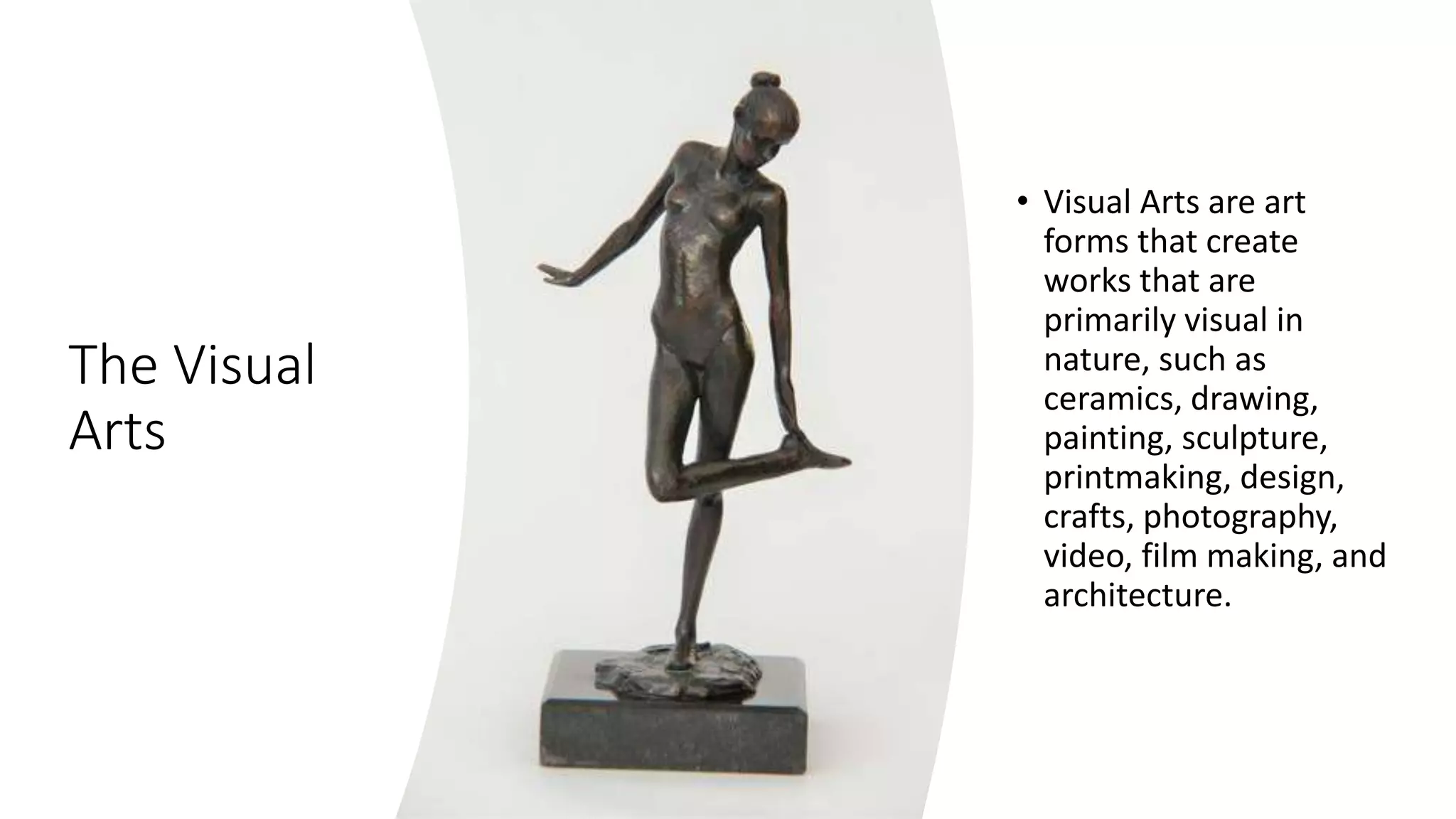
The Visual
Arts
• Visual Arts are art
forms that create
works that are
primarily visual in
nature, such as
ceramics, drawing,
painting, sculpture,
printmaking, design,
crafts, photography,
video, film making, and
architecture.
Visual Arts include:
• Fine Arts – refers to an art form practiced
mainly for its aesthetic value and its
beauty rather than its functional value.
• Contemporary Arts – include number of
modern art forms such as: assemblage,
collage, mixed-media, conceptual art,
installation, happenings and performance
art, along with film-based disciplines
such as photography, video art, and
animation, or any combination thereof.
• Decorative Arts and
Crafts – includes
ceramics and studio
pottery, mosaic art,
mobiles, tapestry, glass
art, and others.
• Other – graphic
design, fashion design,
and interior design.
New types of body art
may also fall in this
category which
includes tattoo art,
face painting, and
body painting.
Philosophical Perspective of
Arts
Art as mimesis (Plato)
• Mimesis is derived from the Greek word
“mimos” meaning to imitate. It is a critical
and philosophical term that carries a wide
range of meanings, which include
imitation, representation, mimicry,
receptivity, similarity, the act of
resembling, the act of expression, and the
presentation of the self.
Art as
representation
(Aristotle)
• Similar to Plato’s
writings about
mimesis, Aristotle also
defined mimesis as
the perfection, and
imitation of nature
Art of Art Sake
• "Art for art's sake" is
the usual English
rendering of a French
slogan from the early
19th century, "l'art pour
l'art“.
• Used to convey the idea
that the chief or only
aim of a work of art is
the self-expression of
the individual artist
who creates it.
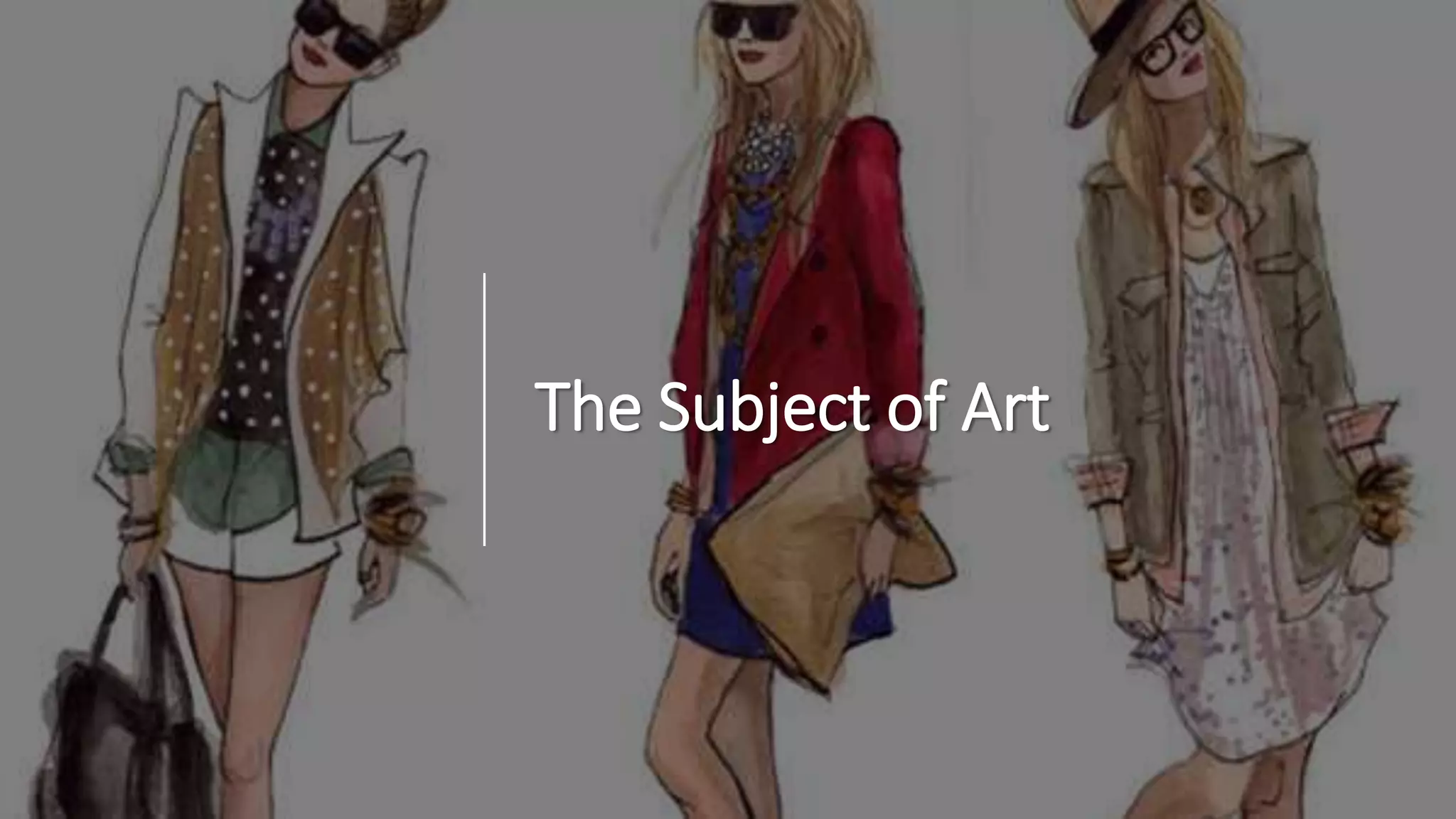
The Subject of Art
Representational of
Objective
• Representational art or figurative art
represents objects or events in the real
world, usually looking easily
recognizable. It uses form and is
concerned with what is to be depicted
in the artwork.
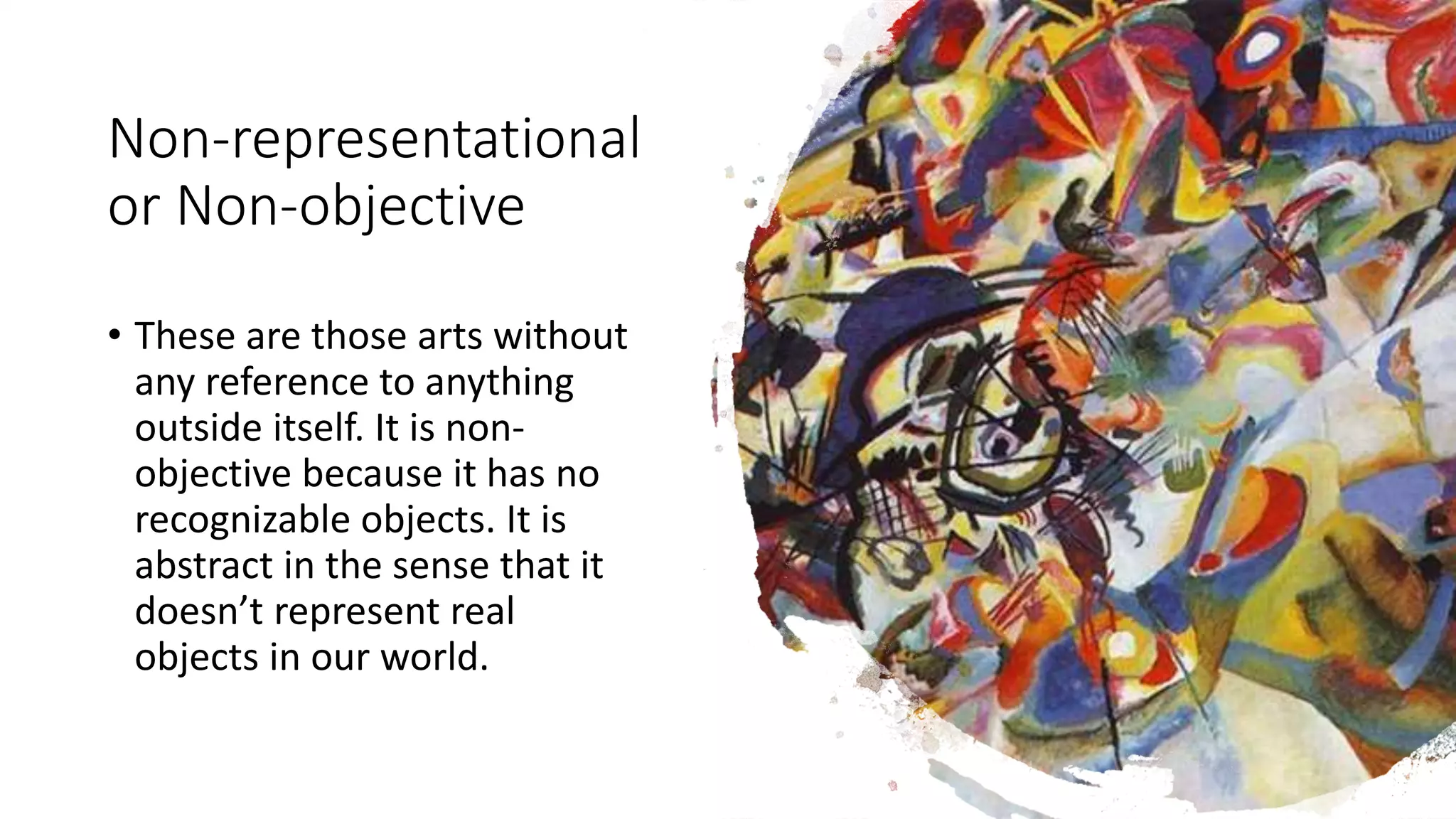
Non-representational
or Non-objective
• These are those arts without
any reference to anything
outside itself. It is non-
objective because it has no
recognizable objects. It is
abstract in the sense that it
doesn’t represent real
objects in our world.
Sources of Subject Art
Primary Sources
• Provide first hand
testimony or direct
evidence concerning a
topic under
investigation. They are
created by witnesses or
recorders who
experienced the events
or conditions being
documented.
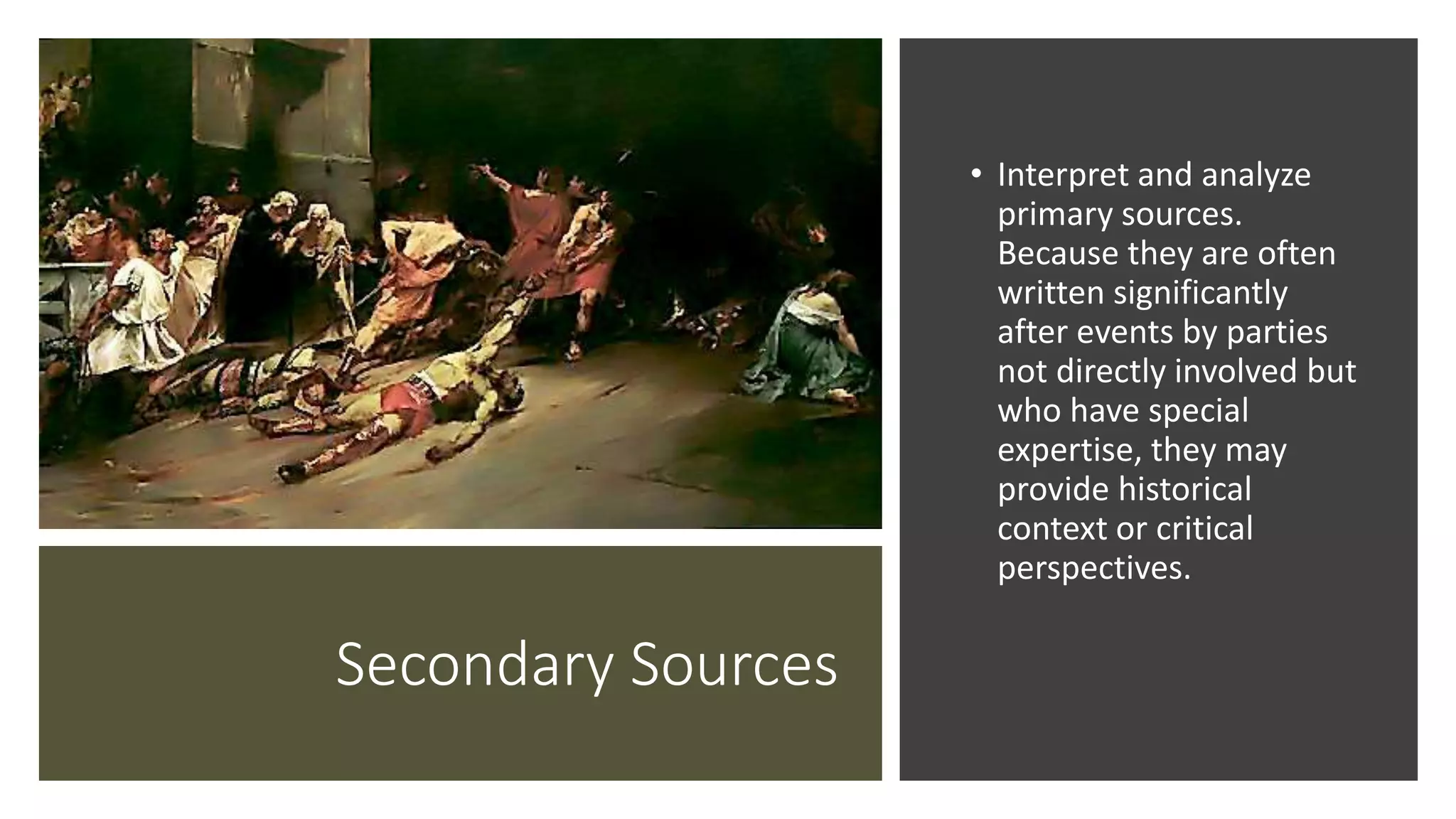
Secondary Sources
• Interpret and analyze
primary sources.
Because they are often
written significantly
after events by parties
not directly involved but
who have special
expertise, they may
provide historical
context or critical
perspectives.
Some of these
sources of art
subject are:
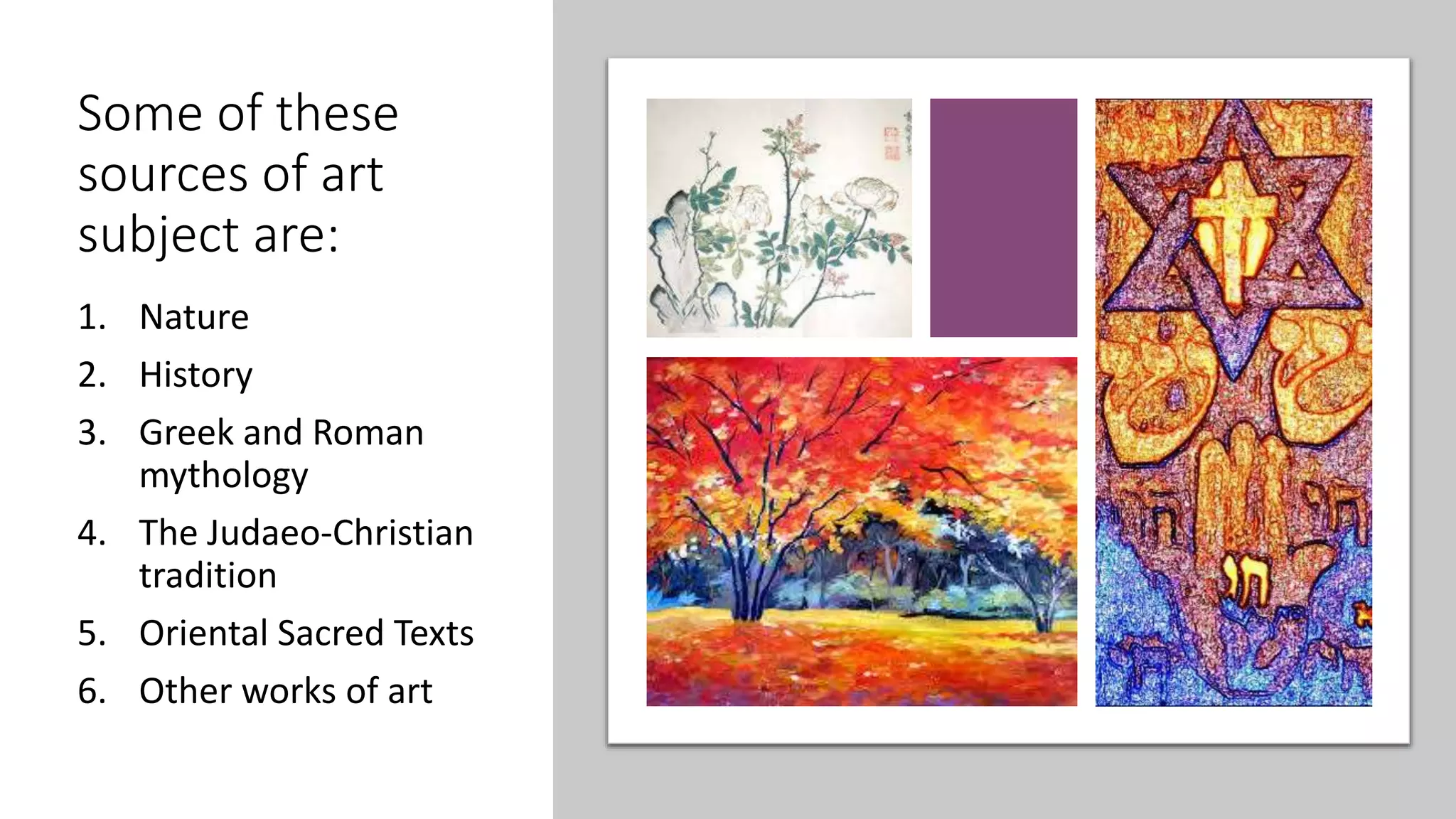
1. Nature
2. History
3. Greek and Roman
mythology
4. The Judaeo-Christian
tradition
5. Oriental Sacred Texts
6. Other works of art
Kinds of Subject
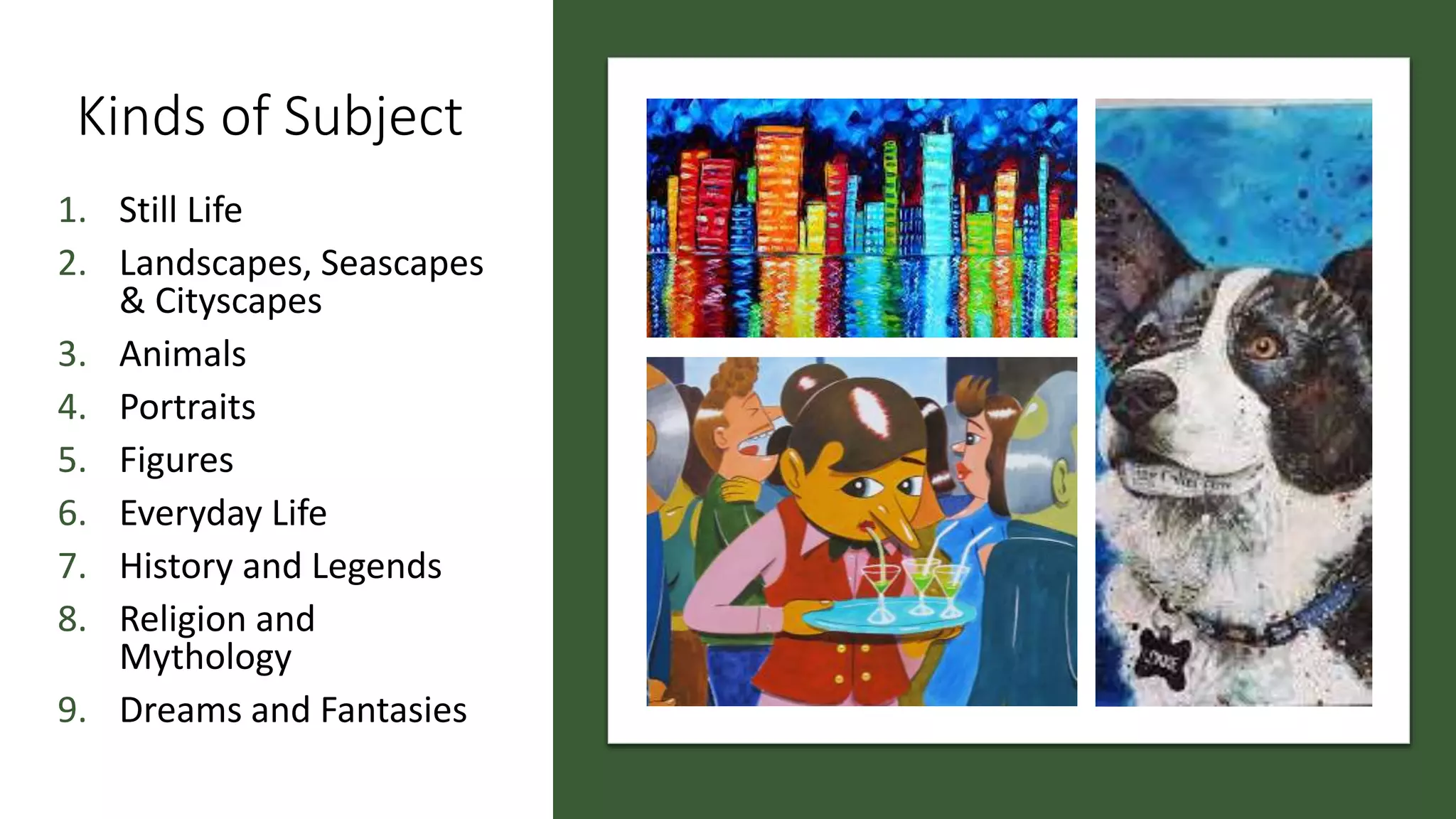
1. Still Life
2. Landscapes, Seascapes
& Cityscapes
3. Animals
4. Portraits
5. Figures
6. Everyday Life
7. History and Legends
8. Religion and
Mythology
9. Dreams and Fantasies
Different Levels of Meaning
Factual Meaning
• The literal meaning or
narrative content in the
work which can be directly
apprehended because the
objects presented are easily
recognized.
Conventional
Meaning
• Refers to the special
meaning that certain object
has in a particular culture or
group of people.
Subjective Meaning
• Any personal meaning
consciously or unconsciously
conveyed by the artist using a
private symbolism which stems
from his own association of
certain objects, actions, or colors
with past experience.

The Visual Arts

  • 1.
    The Visual Arts Reportby: Veronica Baje
  • 2.
    The Visual Arts • VisualArts are art forms that create works that are primarily visual in nature, such as ceramics, drawing, painting, sculpture, printmaking, design, crafts, photography, video, film making, and architecture.
  • 3.
    Visual Arts include: •Fine Arts – refers to an art form practiced mainly for its aesthetic value and its beauty rather than its functional value. • Contemporary Arts – include number of modern art forms such as: assemblage, collage, mixed-media, conceptual art, installation, happenings and performance art, along with film-based disciplines such as photography, video art, and animation, or any combination thereof.
  • 4.
    • Decorative Artsand Crafts – includes ceramics and studio pottery, mosaic art, mobiles, tapestry, glass art, and others. • Other – graphic design, fashion design, and interior design. New types of body art may also fall in this category which includes tattoo art, face painting, and body painting.
  • 5.
  • 6.
    Art as mimesis(Plato) • Mimesis is derived from the Greek word “mimos” meaning to imitate. It is a critical and philosophical term that carries a wide range of meanings, which include imitation, representation, mimicry, receptivity, similarity, the act of resembling, the act of expression, and the presentation of the self.
  • 7.
    Art as representation (Aristotle) • Similarto Plato’s writings about mimesis, Aristotle also defined mimesis as the perfection, and imitation of nature
  • 8.
    Art of ArtSake • "Art for art's sake" is the usual English rendering of a French slogan from the early 19th century, "l'art pour l'art“. • Used to convey the idea that the chief or only aim of a work of art is the self-expression of the individual artist who creates it.
  • 9.
  • 10.
    Representational of Objective • Representationalart or figurative art represents objects or events in the real world, usually looking easily recognizable. It uses form and is concerned with what is to be depicted in the artwork.
  • 11.
    Non-representational or Non-objective • Theseare those arts without any reference to anything outside itself. It is non- objective because it has no recognizable objects. It is abstract in the sense that it doesn’t represent real objects in our world.
  • 12.
  • 13.
    Primary Sources • Providefirst hand testimony or direct evidence concerning a topic under investigation. They are created by witnesses or recorders who experienced the events or conditions being documented.
  • 14.
    Secondary Sources • Interpretand analyze primary sources. Because they are often written significantly after events by parties not directly involved but who have special expertise, they may provide historical context or critical perspectives.
  • 15.
    Some of these sourcesof art subject are: 1. Nature 2. History 3. Greek and Roman mythology 4. The Judaeo-Christian tradition 5. Oriental Sacred Texts 6. Other works of art
  • 16.
    Kinds of Subject 1.Still Life 2. Landscapes, Seascapes & Cityscapes 3. Animals 4. Portraits 5. Figures 6. Everyday Life 7. History and Legends 8. Religion and Mythology 9. Dreams and Fantasies
  • 17.
  • 18.
    Factual Meaning • Theliteral meaning or narrative content in the work which can be directly apprehended because the objects presented are easily recognized.
  • 19.
    Conventional Meaning • Refers tothe special meaning that certain object has in a particular culture or group of people.
  • 20.
    Subjective Meaning • Anypersonal meaning consciously or unconsciously conveyed by the artist using a private symbolism which stems from his own association of certain objects, actions, or colors with past experience.

Editor's Notes

  • #2 Artist: Emily Foster
  • #3 Sculpture by Michael James Talbot
  • #4 Assemblage - a work of art made by grouping found or unrelated objects. Installation - an artistic genre that "involves the configuration or installation of objects in a space, such as a room or warehouse. E.g. Leeroy New (Filipino) Photograph by Jed Regala
  • #5 Foothills Ceramic Arts Museum, California Body Painting: Mona Turnbull
  • #6 Frieze from the Parthenon detail of Poseidon, Apollo and Artemis --Phidias 5th c
  • #7 Mimesis Painting by Jesùs Leguizamo
  • #8 Starry Night by Van Gogh
  • #11 Mojarto Monalisa by Da Vinci
  • #12 Composition VII (1913) – Wassily Kandinsky
  • #13 Dan Flavin, ‘Untitled (to Don Judd, colorist)’ 1–5 (1987) Photo: Emma Hogan Photography
  • #14 Photo taken at Sudan by Kevin Carter
  • #15 Spoliarium. 19th Century. Juan Luna. The painting features a glimpse of Roman history centered on the bloody carnage brought by gladiatorial matches.
  • #18 Photo by Fiji Kama