


WHAT IS CARBON BUILDUP
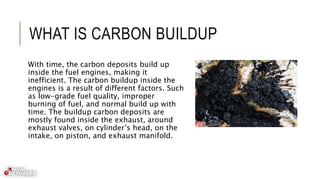
With time, the carbon deposits build up
inside the fuel engines, making it
inefficient. The carbon buildup inside the
engines is a result of different factors. Such
as low-grade fuel quality, improper
burning of fuel, and normal build up with
time. The buildup carbon deposits are
mostly found inside the exhaust, around
exhaust valves, on cylinder’s head, on the
intake, on piston, and exhaust manifold.
HOW TO REMOVE CARBON
BUILDUP
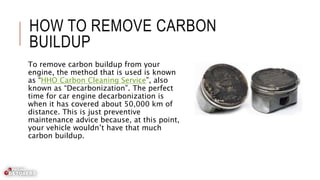
To remove carbon buildup from your
engine, the method that is used is known
as “HHO Carbon Cleaning Service”, also
known as “Decarbonization”. The perfect
time for car engine decarbonization is
when it has covered about 50,000 km of
distance. This is just preventive
maintenance advice because, at this point,
your vehicle wouldn’t have that much
carbon buildup.
WHY CAR ENGINE
DECARBONIZATION IS NEEDED?
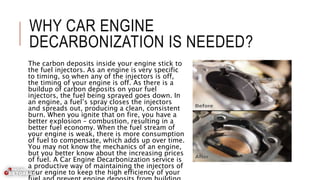
The carbon deposits inside your engine stick to
the fuel injectors. As an engine is very specific
to timing, so when any of the injectors is off,
the timing of your engine is off. As there is a
buildup of carbon deposits on your fuel
injectors, the fuel being sprayed goes down. In
an engine, a fuel’s spray closes the injectors
and spreads out, producing a clean, consistent
burn. When you ignite that on fire, you have a
better explosion – combustion, resulting in a
better fuel economy. When the fuel stream of
your engine is weak, there is more consumption
of fuel to compensate, which adds up over time.
You may not know the mechanics of an engine,
but you better know about the increasing prices
of fuel. A Car Engine Decarbonization service is
a productive way of maintaining the injectors of
your engine to keep the high efficiency of your
WHAT ARE THE BENEFITS OF THE
CAR ENGINE DECARBONIZATION?
The need for de-carbonizing and engine unsurprisingly comes
from manufacturers of the chemical decarbonizing machines.
There are various benefits of HHO Car Engine Decarbonization,
some of them are as follow:
1. It improves the power of an engine and accelerates it.
2. It restores/improves the fuel efficiency of an engine.
3. It maximizes the performance of a vehicle,
4. It cleans the entire engine, both from inside and outside
without opening it.
5. Reduces the emissions of harmful substances i.e. Carbon
Dioxide.
6. It reduces the noise and vibrations of the engine.
7. Repairs the drivability problems i.e. rough idling, hard
starts, and engine hesitation, etc.
8. Involves decarbonization of entire fuel system, including
oxygen sensor & catalytic converter.
CHEMICAL DECARBONIZATION
PROCESS
In the Chemical decarbonization process, a
chemical compound along with the fuel is
passed through the engine to break down
the deposits of carbon. These broken
carbon deposits then get out of the engine
along with the exhaust gases. There are
many ways of executing this method. One
of the most common ways is to add the
chemical together with some fuel in a
discrete component that is connected with
the fuel intake line of the vehicle. After
that, the engine is started and the vehicle is
run for about 15-20 minutes or until the
mixture is completely utilized. This method
is used both for petrol and diesel engines.
PHYSICAL DECARBONIZATION
PROCESS
Those engines that have extreme carbon
build-up, a physical decarbonization
method is perfect for them. This method
involves the opening of the cylinder’s head,
removal of the intake and exhaust valves
and getting rid of the carbon deposits off
the cylinder’s head, valves, and manifolds.
It also involves the dismantling and
thorough cleaning of the exhaust pipe with
the help of high-pressure water. In case
the exhaust muffler is clogged with carbon
buildup, there is a need for heating and
tapping it out, before flushing with water.
The ultimate guide: car engine decarbonization process

The ultimate guide: car engine decarbonization process

  • 2.
    WHAT IS CARBONBUILDUP With time, the carbon deposits build up inside the fuel engines, making it inefficient. The carbon buildup inside the engines is a result of different factors. Such as low-grade fuel quality, improper burning of fuel, and normal build up with time. The buildup carbon deposits are mostly found inside the exhaust, around exhaust valves, on cylinder’s head, on the intake, on piston, and exhaust manifold.
  • 3.
    HOW TO REMOVECARBON BUILDUP To remove carbon buildup from your engine, the method that is used is known as “HHO Carbon Cleaning Service”, also known as “Decarbonization”. The perfect time for car engine decarbonization is when it has covered about 50,000 km of distance. This is just preventive maintenance advice because, at this point, your vehicle wouldn’t have that much carbon buildup.
  • 4.
    WHY CAR ENGINE DECARBONIZATIONIS NEEDED? The carbon deposits inside your engine stick to the fuel injectors. As an engine is very specific to timing, so when any of the injectors is off, the timing of your engine is off. As there is a buildup of carbon deposits on your fuel injectors, the fuel being sprayed goes down. In an engine, a fuel’s spray closes the injectors and spreads out, producing a clean, consistent burn. When you ignite that on fire, you have a better explosion – combustion, resulting in a better fuel economy. When the fuel stream of your engine is weak, there is more consumption of fuel to compensate, which adds up over time. You may not know the mechanics of an engine, but you better know about the increasing prices of fuel. A Car Engine Decarbonization service is a productive way of maintaining the injectors of your engine to keep the high efficiency of your
  • 5.
    WHAT ARE THEBENEFITS OF THE CAR ENGINE DECARBONIZATION? The need for de-carbonizing and engine unsurprisingly comes from manufacturers of the chemical decarbonizing machines. There are various benefits of HHO Car Engine Decarbonization, some of them are as follow: 1. It improves the power of an engine and accelerates it. 2. It restores/improves the fuel efficiency of an engine. 3. It maximizes the performance of a vehicle, 4. It cleans the entire engine, both from inside and outside without opening it. 5. Reduces the emissions of harmful substances i.e. Carbon Dioxide. 6. It reduces the noise and vibrations of the engine. 7. Repairs the drivability problems i.e. rough idling, hard starts, and engine hesitation, etc. 8. Involves decarbonization of entire fuel system, including oxygen sensor & catalytic converter.
  • 6.
    CHEMICAL DECARBONIZATION PROCESS In theChemical decarbonization process, a chemical compound along with the fuel is passed through the engine to break down the deposits of carbon. These broken carbon deposits then get out of the engine along with the exhaust gases. There are many ways of executing this method. One of the most common ways is to add the chemical together with some fuel in a discrete component that is connected with the fuel intake line of the vehicle. After that, the engine is started and the vehicle is run for about 15-20 minutes or until the mixture is completely utilized. This method is used both for petrol and diesel engines.
  • 7.
    PHYSICAL DECARBONIZATION PROCESS Those enginesthat have extreme carbon build-up, a physical decarbonization method is perfect for them. This method involves the opening of the cylinder’s head, removal of the intake and exhaust valves and getting rid of the carbon deposits off the cylinder’s head, valves, and manifolds. It also involves the dismantling and thorough cleaning of the exhaust pipe with the help of high-pressure water. In case the exhaust muffler is clogged with carbon buildup, there is a need for heating and tapping it out, before flushing with water.