Bioevo seminars


The true story behind the annotation of
               a pathway
             Giovanni Dall'Olio,
             IBE (UPF-CEXS)
Summary of the talk
●   We have recently published two works:
    ●   Dall'Olio GM, Jassal B, Montanucci L, Gagneux P, Bertranpetit J,
        Laayouni H. The annotation of the Asparagine N-linked
        Glycosylation pathway in the Reactome Database. Glycobiology.
        2011 Jan 2. PubMed PMID: 21199820.
    ●   Dall'Olio GM, Bertranpetit J, Laayouni H. The annotation and the
        usage of scientific databases could be improved with public issue
        tracker software. Database (Oxford). 2010 Dec 23;2010:baq035. Print
        2010. PubMed PMID: 21186182; PubMed Central PMCID:
        PMC3011984.
●   One is about the annotation of a pathway in a
    database, the other about reporting errors to
    databases
What can you learn from this talk
●   The data annotated in scientific databases is
    not perfect, and can contain errors. Even when
    is correct, it can have multiple interpretations.
What can you learn from this talk
●   The data annotated in scientific databases is
    not perfect, and can contain errors. Even when
    is correct, it can have multiple interpretations.
●   Errors don't get fixed by themselves, and
    problems don't get solved alone. When you find
    something wrong, it is your duty to report it.
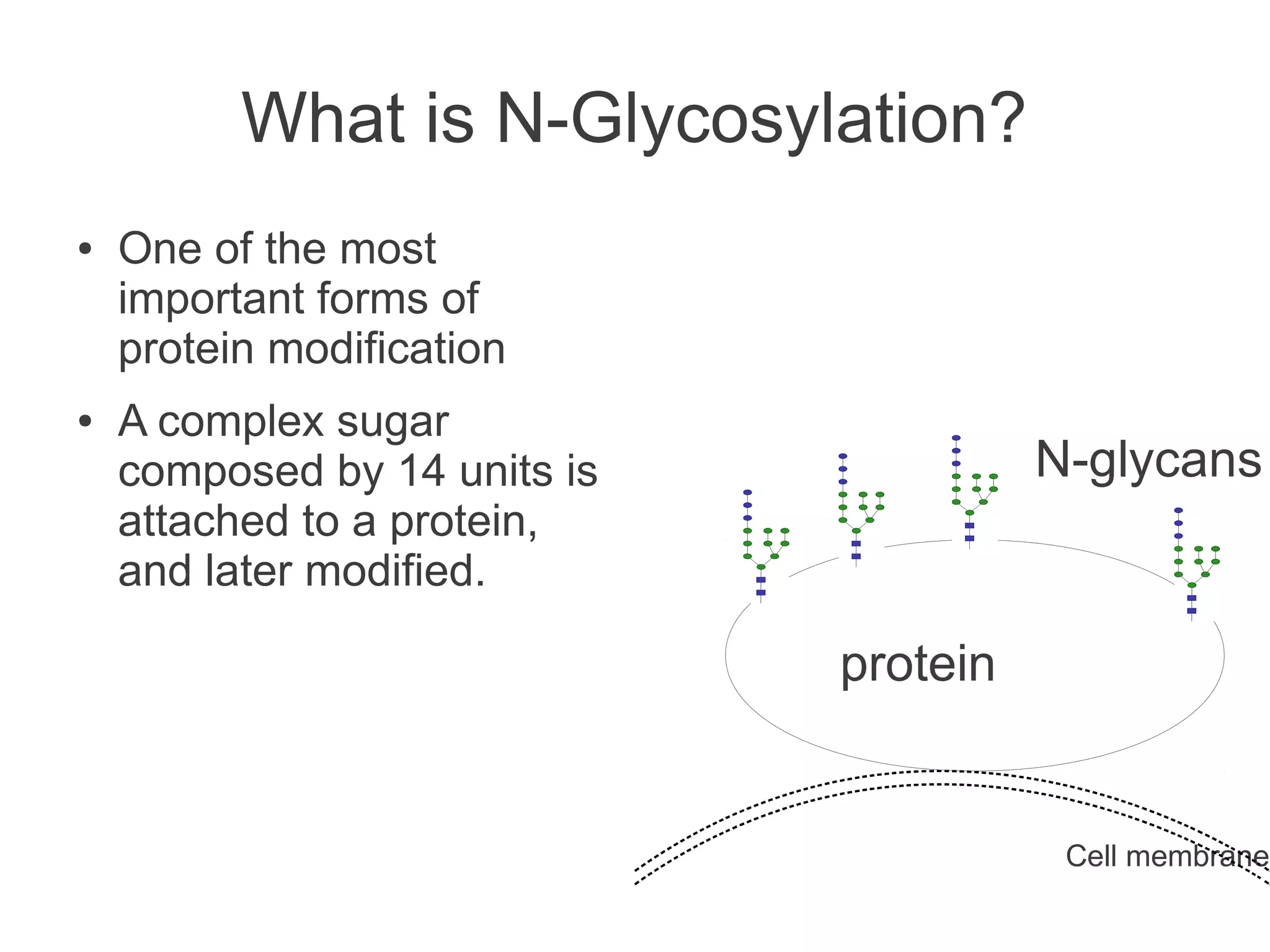
What is N-Glycosylation?
●   One of the most
    important forms of
    protein modification
●   A complex sugar
    composed by 14 units is             N-glycans
    attached to a protein,
    and later modified.

                              protein


                                         Cell membrane
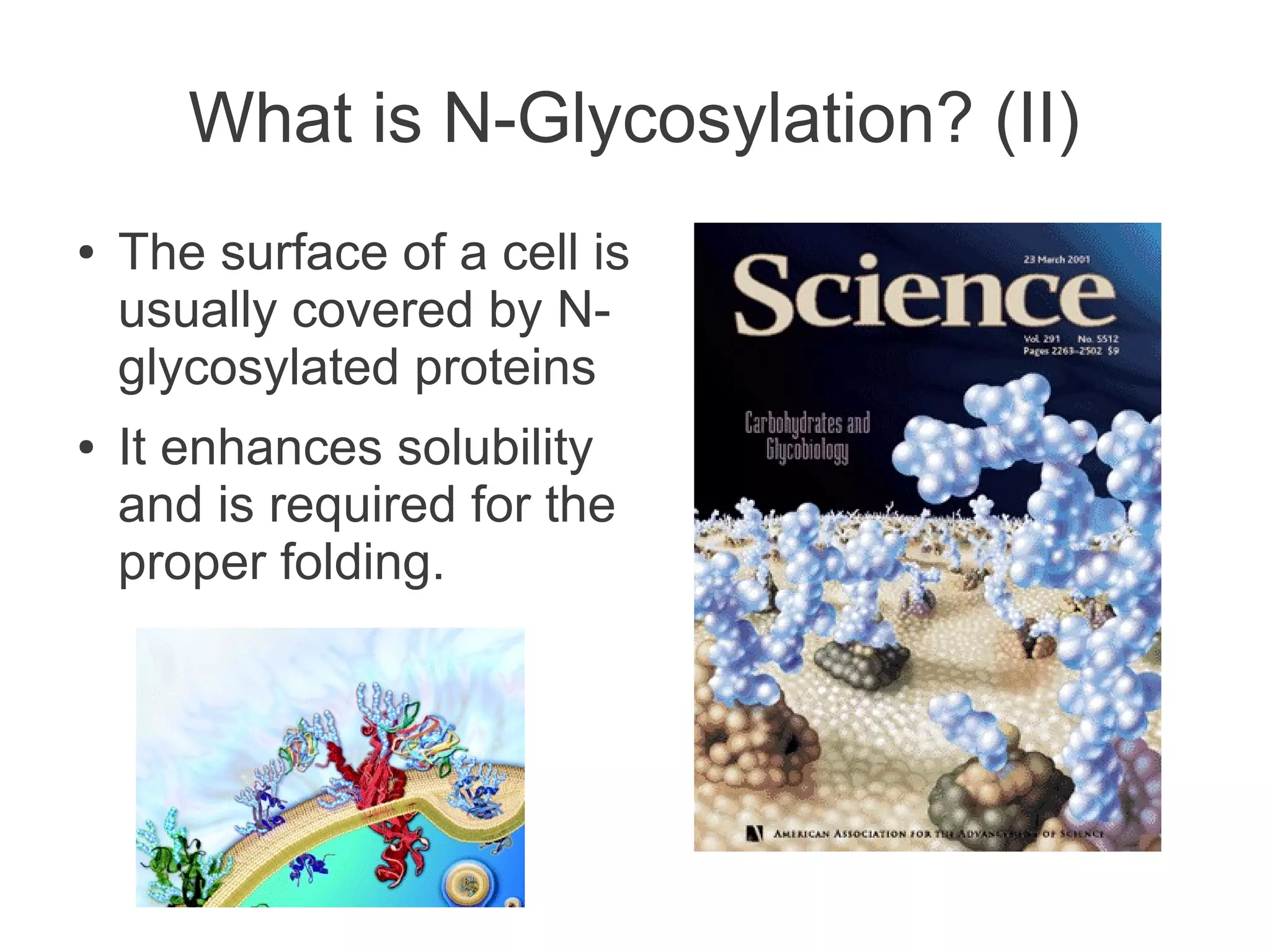
What is N-Glycosylation? (II)
●   The surface of a cell is
    usually covered by N-
    glycosylated proteins
●   It enhances solubility
    and is required for the
    proper folding.
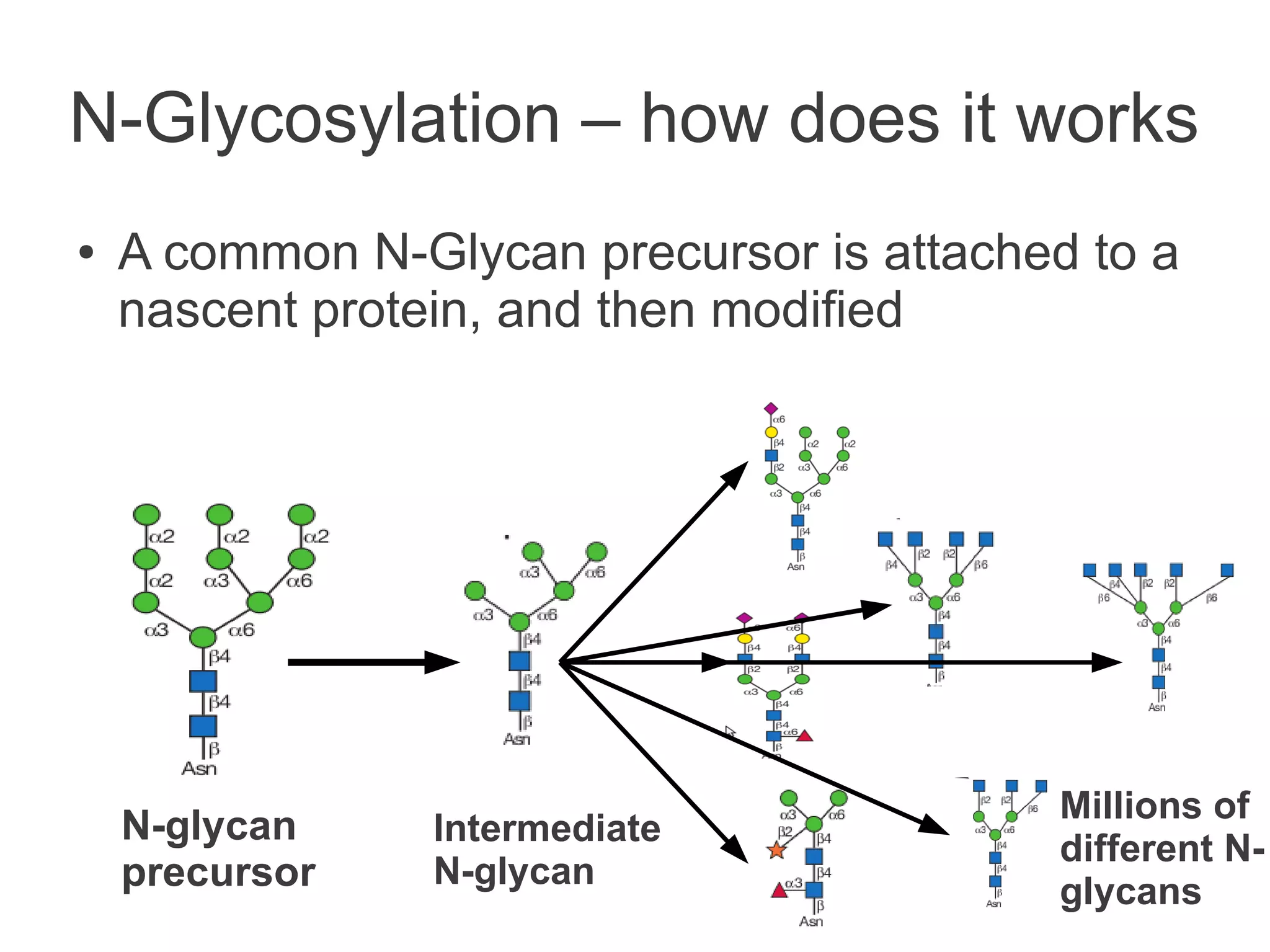
N-Glycosylation – how does it works
●   A common N-Glycan precursor is attached to a
    nascent protein, and then modified


                                           Millions of
    N-glycan     Intermediate
                                           different N-
    precursor    N-glycan
                                           glycans
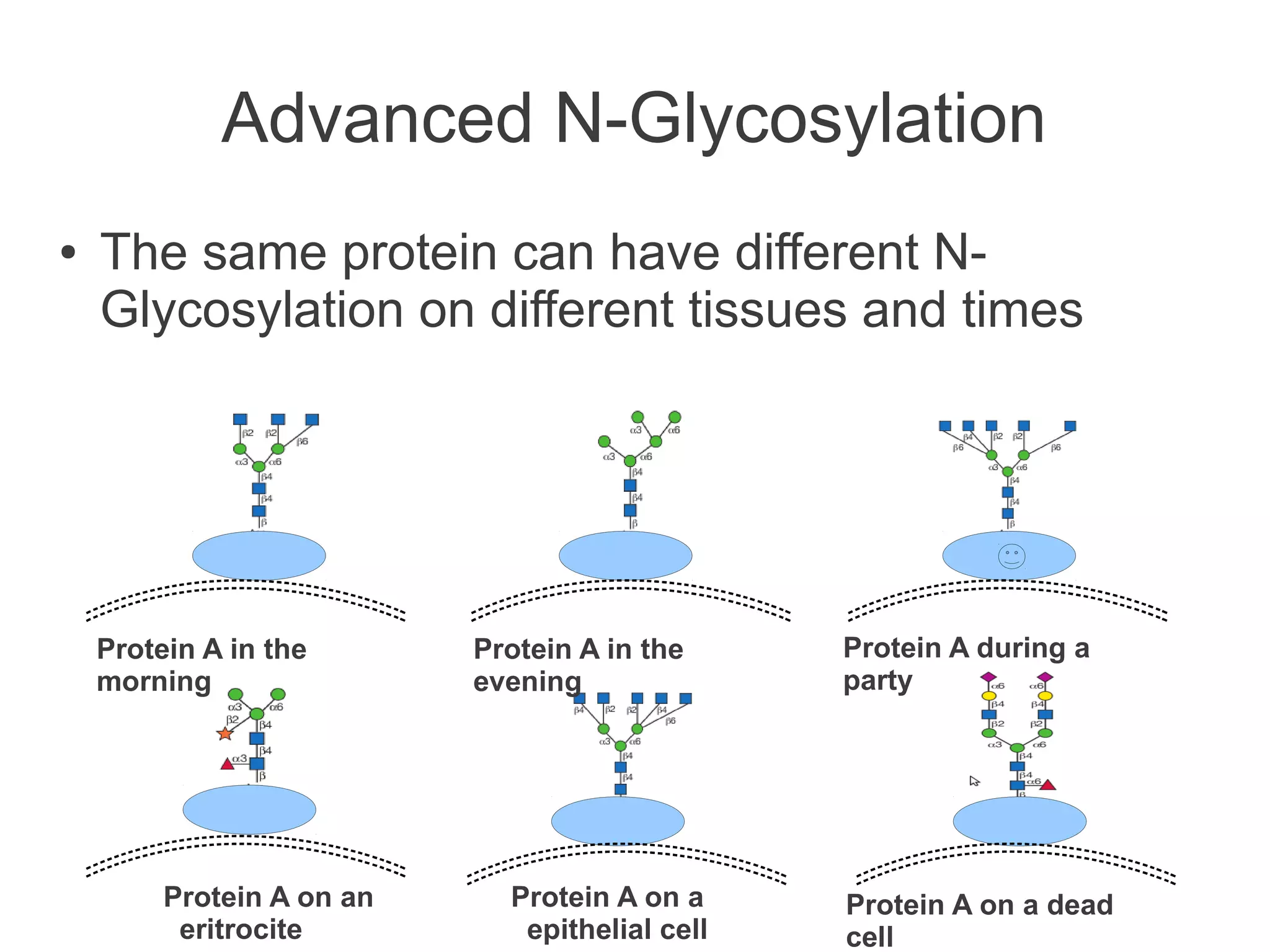
Advanced N-Glycosylation
●   The same protein can have different N-
    Glycosylation on different tissues and times


    Protein A in the       Protein A in the     Protein A during a
    morning                evening              party


         Protein A on an     Protein A on a     Protein A on a dead
          eritrocite          epithelial cell   cell
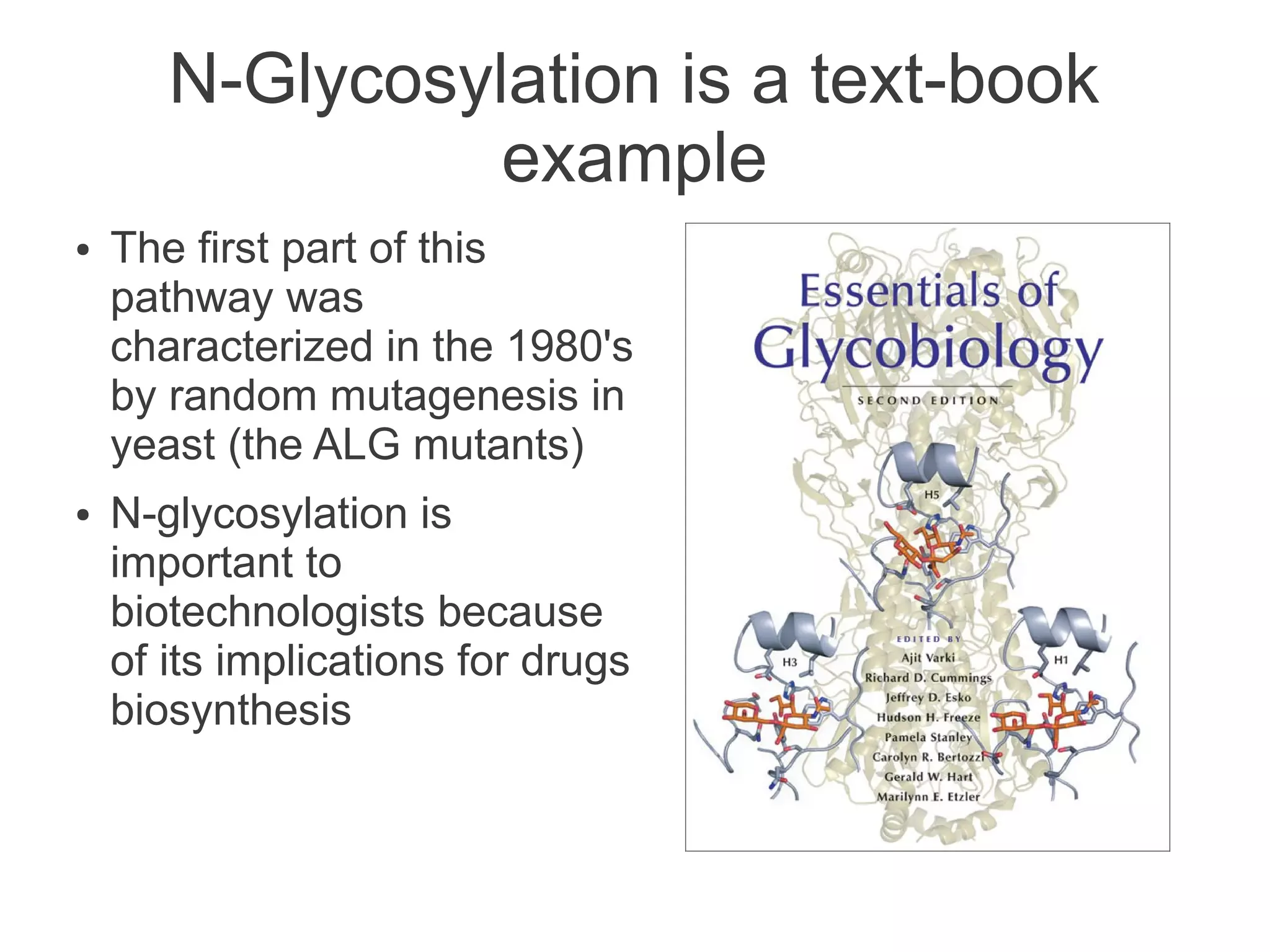
N-Glycosylation is a text-book
                 example
●   The first part of this
    pathway was
    characterized in the 1980's
    by random mutagenesis in
    yeast (the ALG mutants)
●   N-glycosylation is
    important to
    biotechnologists because
    of its implications for drugs
    biosynthesis
Annotating the pathway
●   My PhD thesis is about selection within the
    genes of N-Glycosylation, so I had to study the
    biology behind it
Annotating the pathway
●   My PhD thesis is about selection within the
    genes of N-Glycosylation, so I had to study the
    biology behind it
●   I was not happy with the current annotation of
    the pathway in other databases, so I decided to
    make a new annotation by myself, and publish
    it on a public database
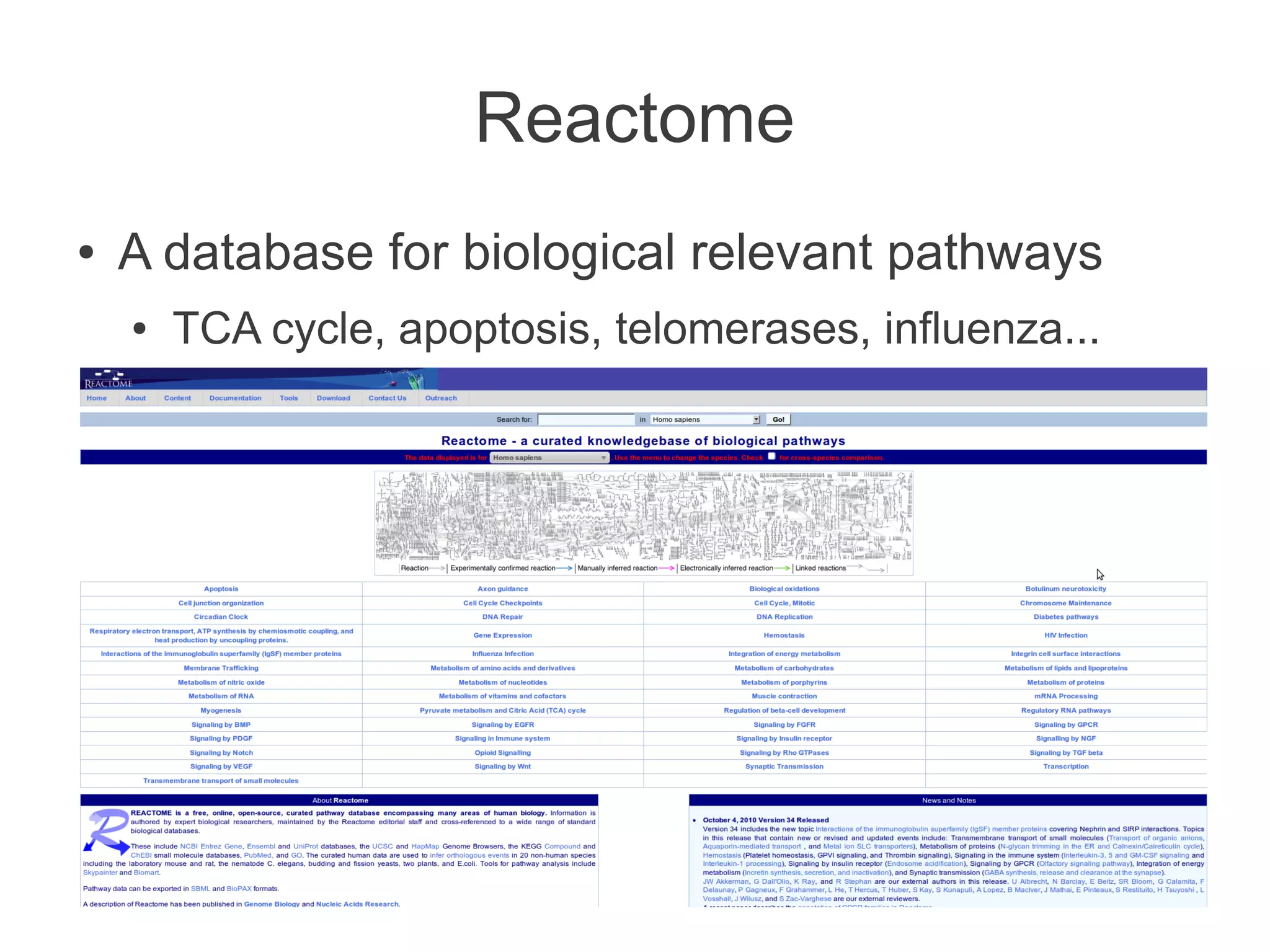
Reactome
●   A database for biological relevant pathways
    ●   TCA cycle, apoptosis, telomerases, influenza...
Reactome - advantages
●   Open-source approach. Anyone can contribute
    to a pathway, and all contributions are public
    and transparent
●   Annotates a greater number of informations for
    each reaction
●   Does not artificially distinguish between
    metabolic/interaction pathways (uses GO terms
    instead)
The process of annotation in
                Reactome
●   Annotating a pathway in Reactome means that
    for each reaction, you have to details like:
    ●   Description and name of the reaction
    ●   Genes involved
    ●   GO localization terms for input, outputs and
        enzymes
    ●   References to experimental evidences
The process of annotation in
        Reactome


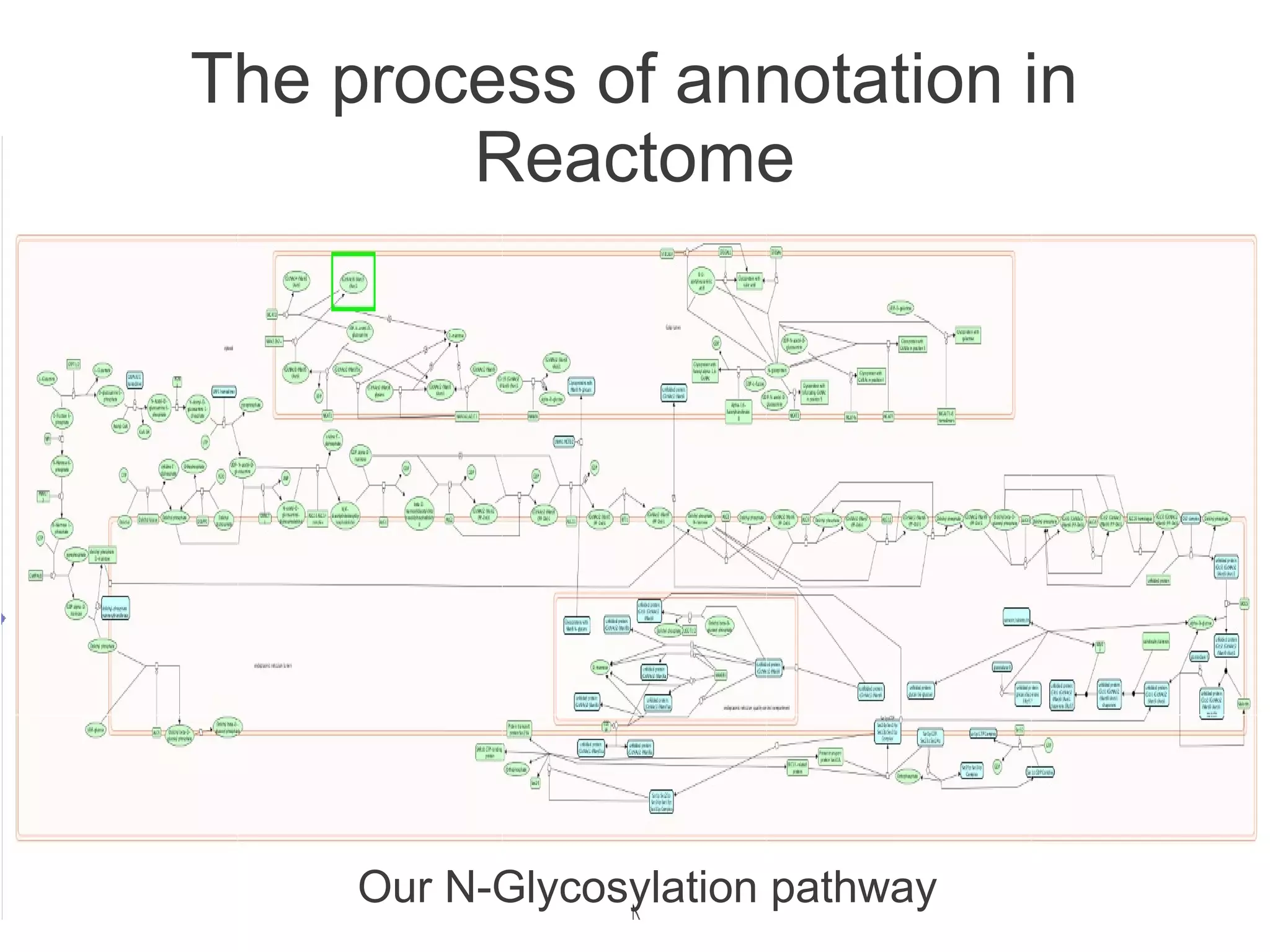
     Our N-Glycosylation pathway
The process of annotation in
                Reactome
●   Annotating a pathway in Reactome means that
    for each reaction, you have to provide details
    like:
    ●   Description and name of the reaction
    ●   Genes involved
    ●   GO localization terms for input, outputs and
        enzymes
    ●   References to experimental evidences
●   Each reaction must pass a peer-reviewed
    process before being included in Reactome
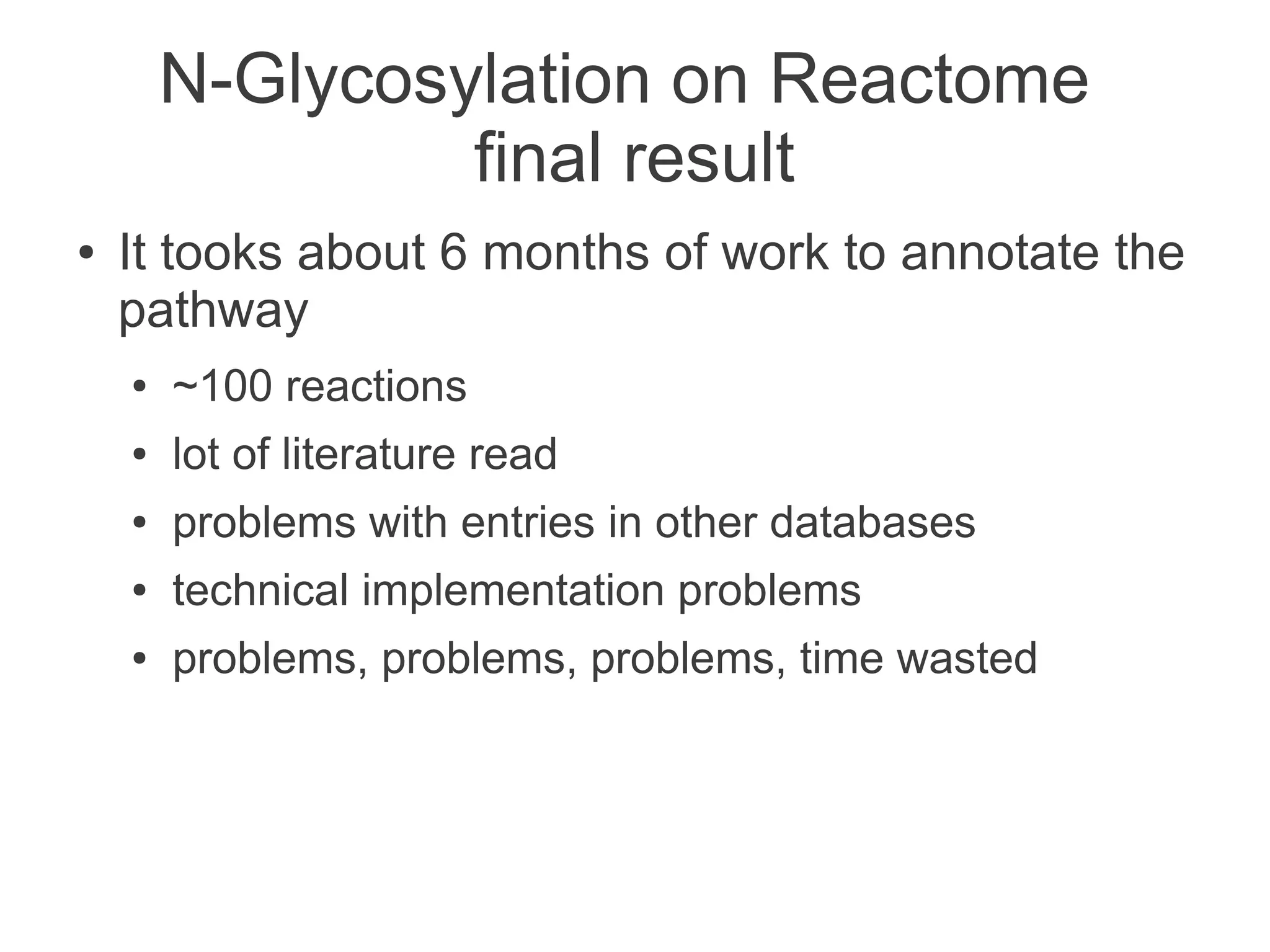
N-Glycosylation on Reactome
                 final result
●   It tooks about 6 months of work to annotate the
    pathway
    ●   ~100 reactions
    ●   lot of literature read
    ●   problems with entries in other databases
    ●   technical implementation problems
    ●   problems, problems, problems, time wasted
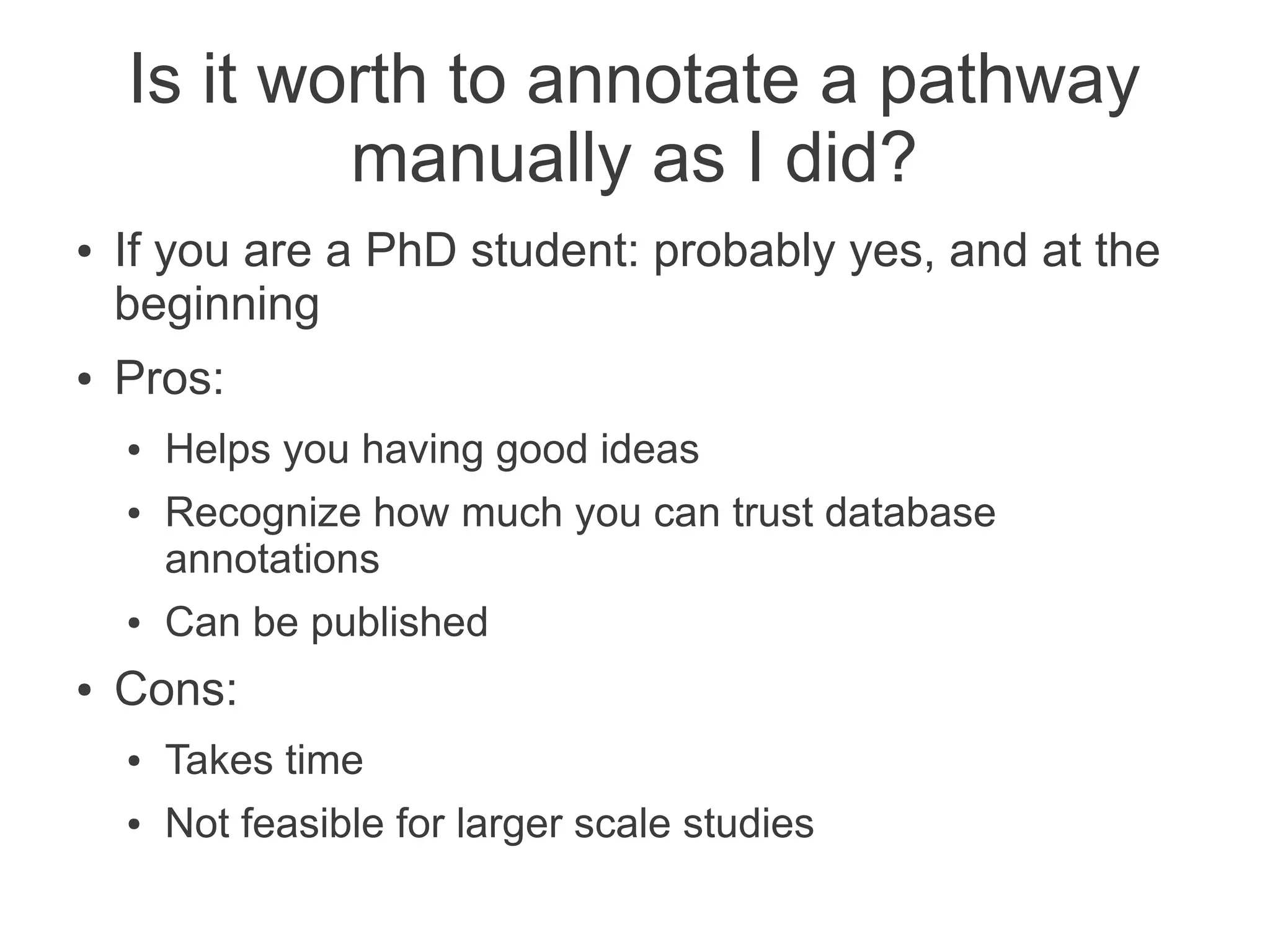
Is it worth to annotate a pathway
            manually as I did?
●   If you are a PhD student: probably yes, and at the
    beginning
●   Pros:
    ●   Helps you having good ideas
    ●   Recognize how much you can trust database
        annotations
    ●   Can be published
●   Cons:
    ●   Takes time
    ●   Not feasible for larger scale studies
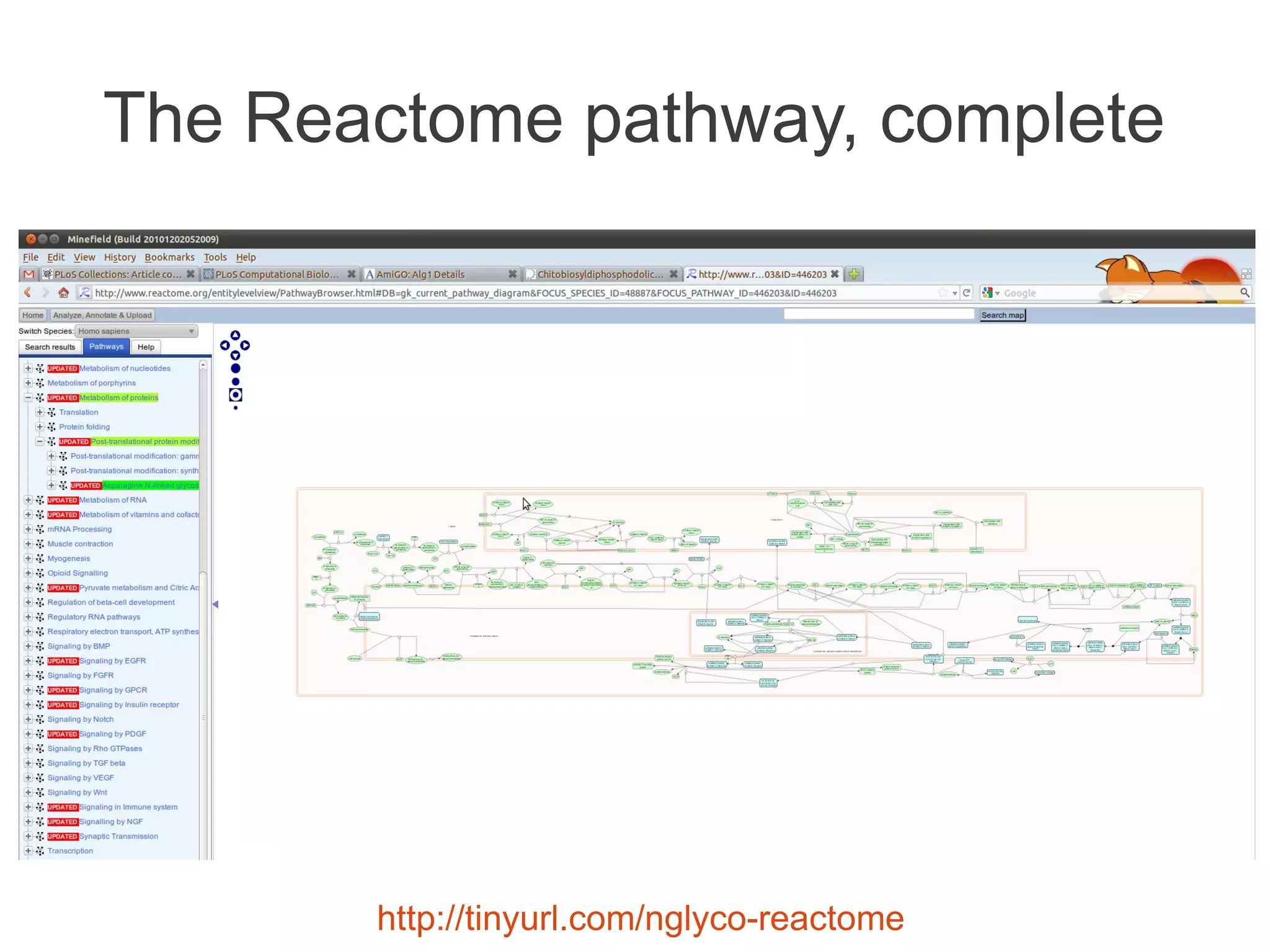
The Reactome pathway, complete


       http://tinyurl.com/nglyco-reactome
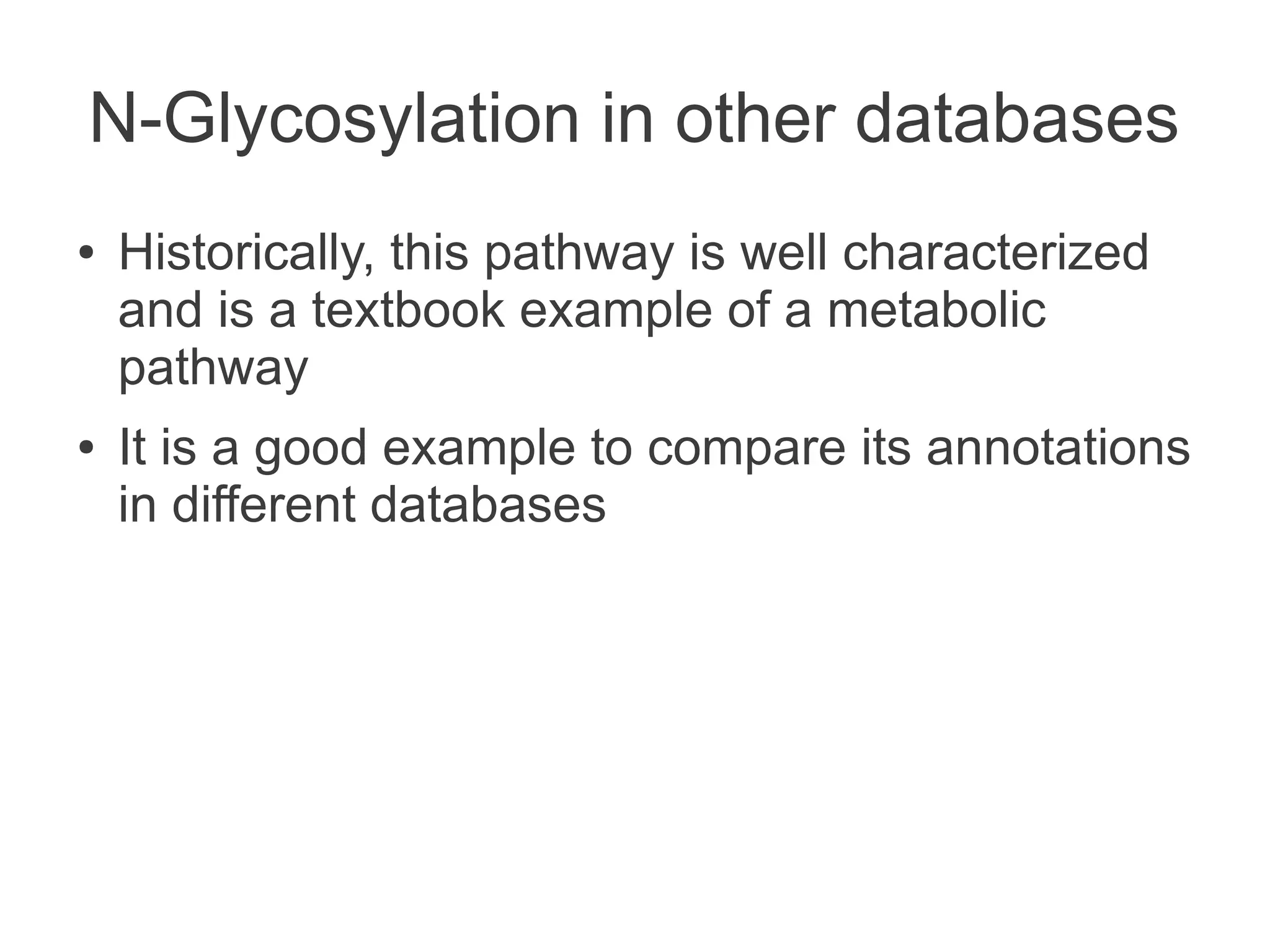
N-Glycosylation in other databases
●   Historically, this pathway is well characterized
    and is a textbook example of a metabolic
    pathway
●   It is a good example to compare its annotations
    in different databases
N-Glycosylation in other databases
●   Historically, this pathway is well characterized
    and is a textbook example of a metabolic
    pathway
●   It is a good example to compare its annotations
    in different databases
●   If you dedicate 6 months to read tons of
    literature about what you are studying, which
    kind of errors do you expect to find in
    databases?
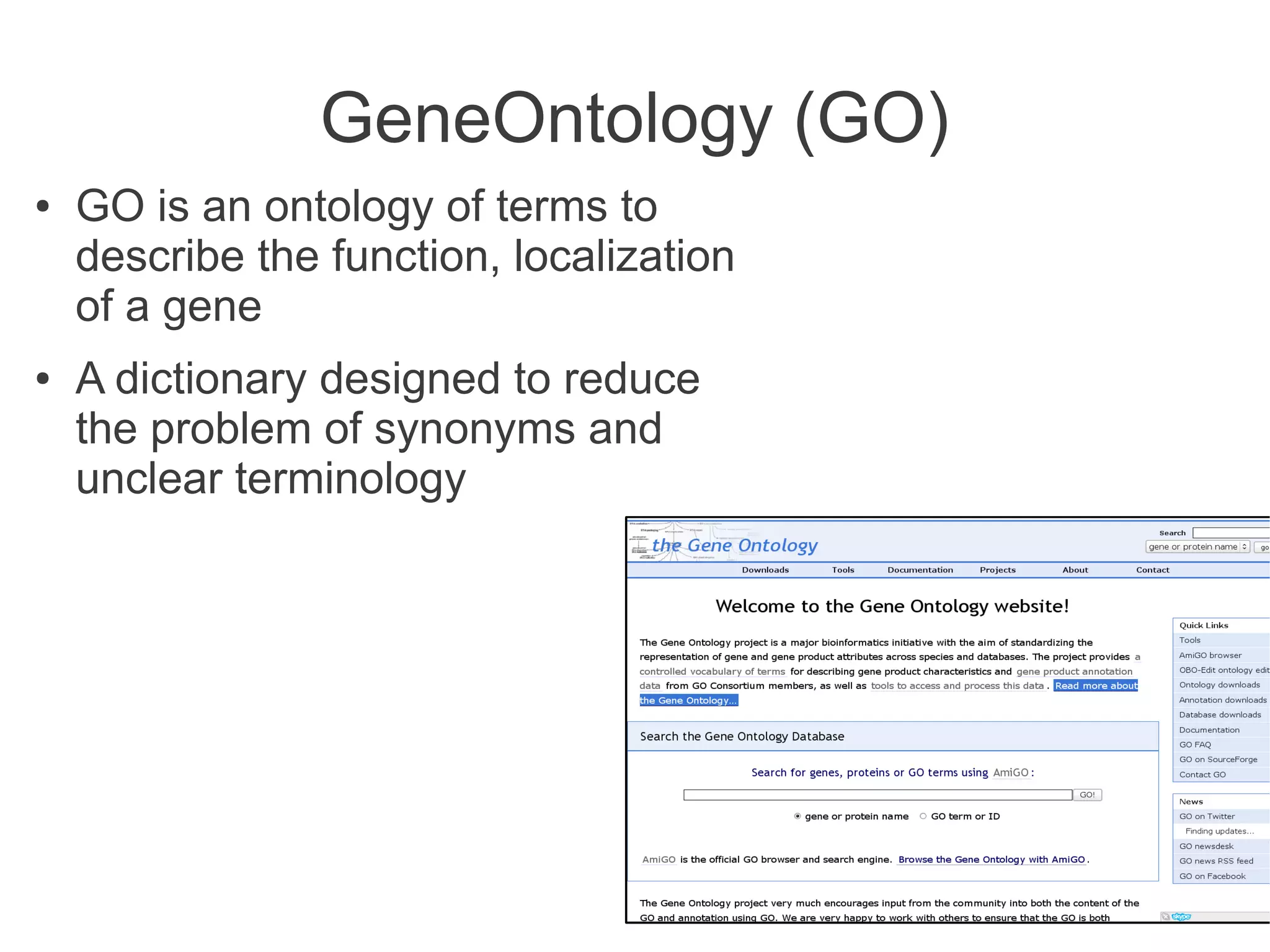
GeneOntology (GO)
●   GO is an ontology of terms to
    describe the function, localization
    of a gene
●   A dictionary designed to reduce
    the problem of synonyms and
    unclear terminology
What is a GO annotation?
●   A GO annotation is the association between a
    GO term and a gene, protein or event
    ●   The gene ALG1 is Integral to the membrane (GO:
        32130)
    ●   The protein XYZ has peroxidase activity
        (GO:03123)
GO annotations
●   GO annotations are frequently used in the
    scientific literature
    ●   This set of genes is enriched of a specific GO term
    ●   We subdivided the pathway in GO modules and
        studied selection within them
●   However, which are the procedures to
    associate a GO term with a gene?
●   Which are the possible sources of error in a GO
    association?
The GO term assignment
●   In order to assign a GO term to a protein in a
    species, there it must be an experimental
    evidence for the association in that species
The GO term assignment
●   In order to assign a GO term to a protein in a
    species, there it must be an experimental
    evidence for the association in that species


                 Lots of false negatives in GO!
Example of false negative in GO
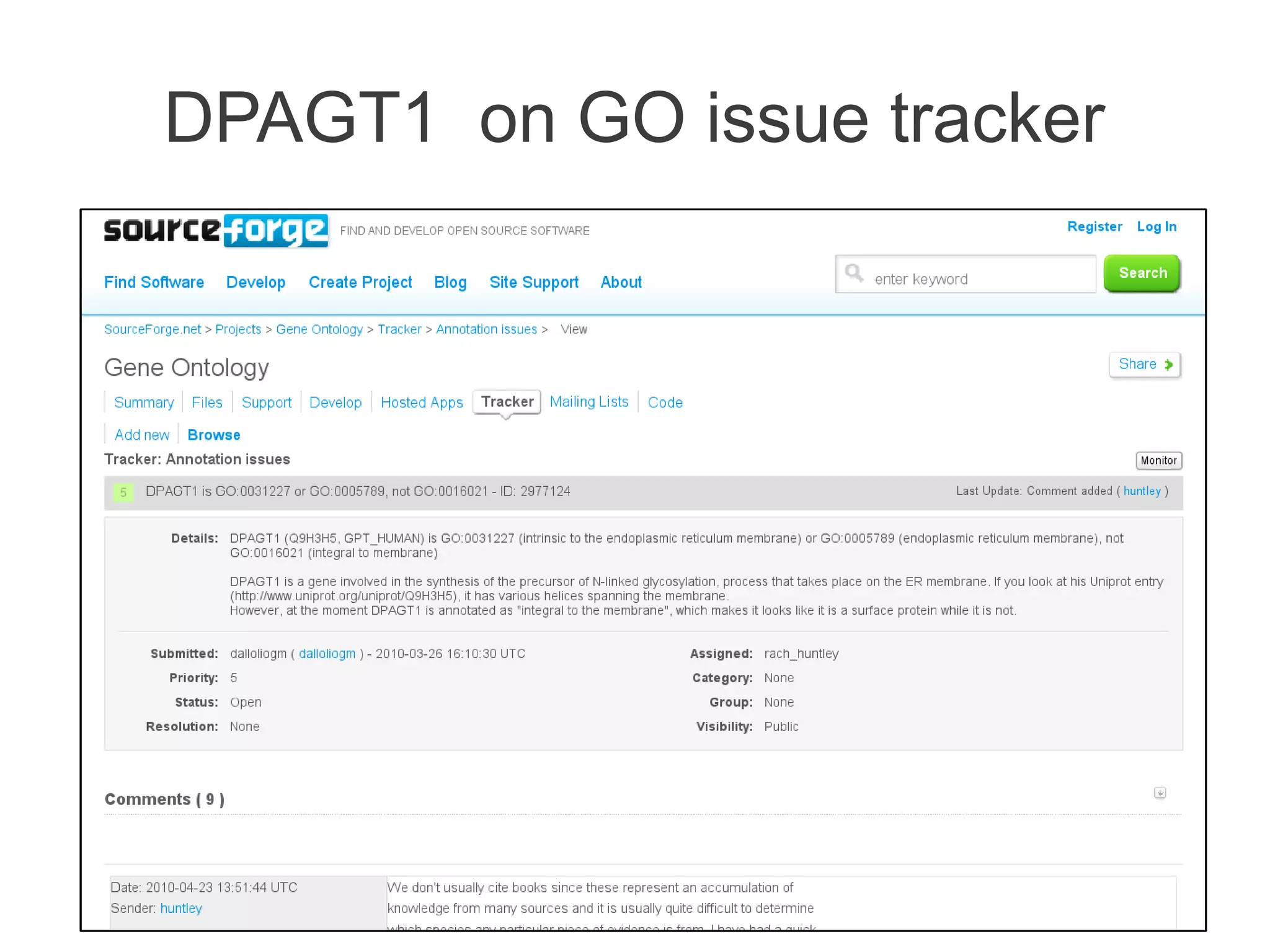
●   We proposed the association of DPAGT1 with
    the term 'Integral to the ER membrane' in
    human
    ●   All the literature assumes that this association
        exists
    ●   This association is annotated in Kegg for Yeast
Example of false positive in GO
●   We proposed the association of DPAGT1 with
    the term 'Integral to the ER membrane' in
    human
    ●   All the literature assumes that this association
        exists
    ●   This association is annotated in Kegg for Yeast
●   The proposal has been rejected because there
    it were no experimental evidence in human
    ●   Probably there it won't never be any
DPAGT1 on GO issue tracker
Ambigous interpretation of the term
     N-Glycosylation in GO
●   We found a big mistake with the term 'N-
    Glycosylation'
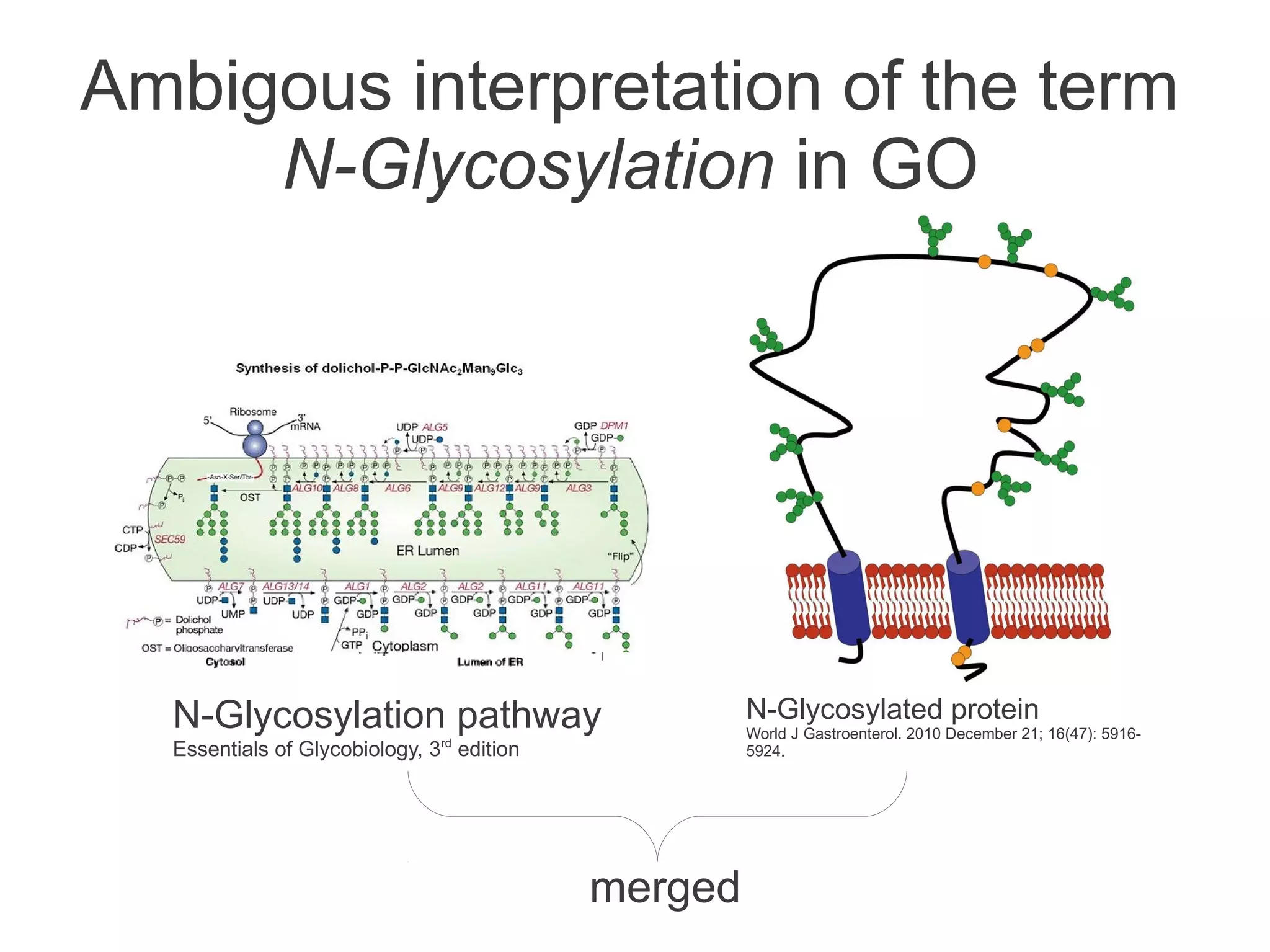
●   This was being associated to two classes of
    genes: those which are glycosylated, and those
    which participate to the process of glycosylation
Ambigous interpretation of the term
     N-Glycosylation in GO


  N-Glycosylation pathway                            N-Glycosylated protein
                                                     World J Gastroenterol. 2010 December 21; 16(47): 5916-
  Essentials of Glycobiology, 3rd edition            5924.


                                            merged
Summary of GO annotations for N-
         glycosylation
●   ~80 correct GO classification
●   ~50 new gene-term association proposed
●   10 genes had a clearly wrong classification
●   2 new GO terms proposed:
    ●   Endoplasmic reticulum quality control compartment
    ●   Intrinsic to the lumenal side of the endoplasmic
        reticulum :-)
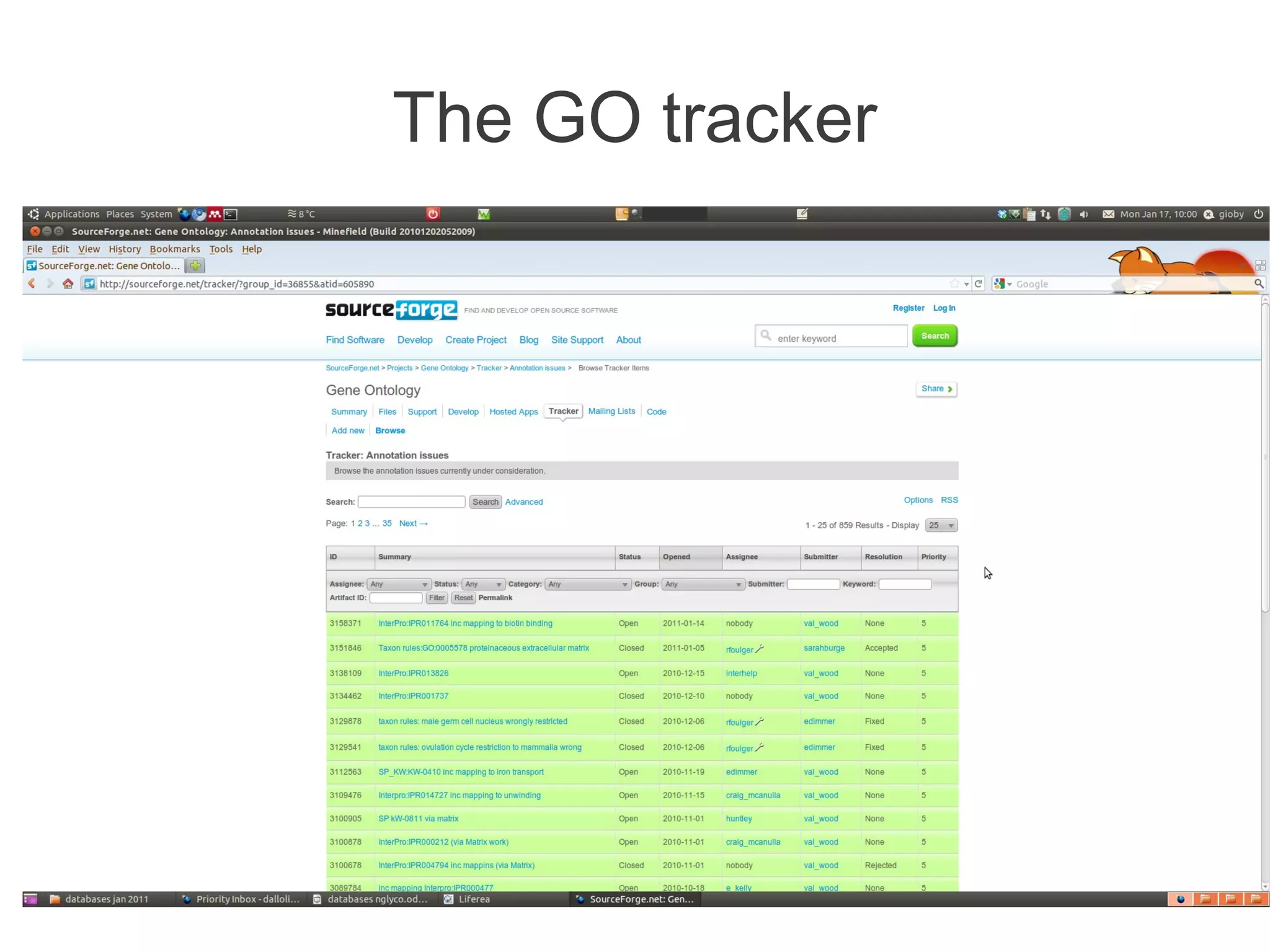
The GO issue tracker
●   All the errors on GO elements are tracked on a
    publicly accessible online application, the issue
    tracker
●   From there, you can report new errors, or check
    whether there are reported cases for the terms
    you are using
The GO tracker
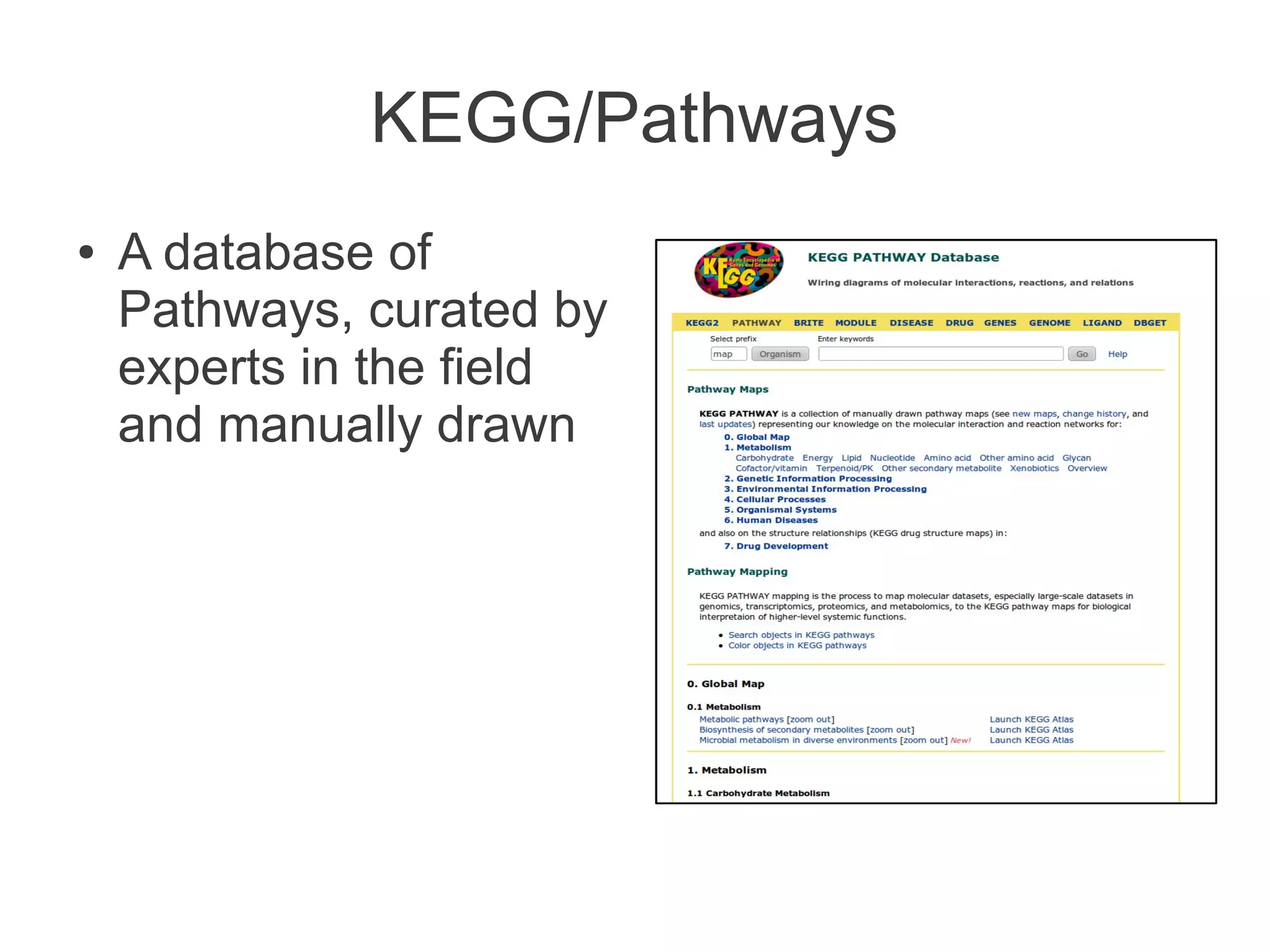
KEGG/Pathways
●   A database of
    Pathways, curated by
    experts in the field
    and manually drawn
KEGG/Pathway
●   KEGG/Pathways is the most renowned
    database for biological pathways
●   Pros:
    ●   Lot of pathways annotated
●   Cons:
    ●   Authors of the pathways are unknown, and no
        references are given for each reaction. Difficult to
        ask for clarification
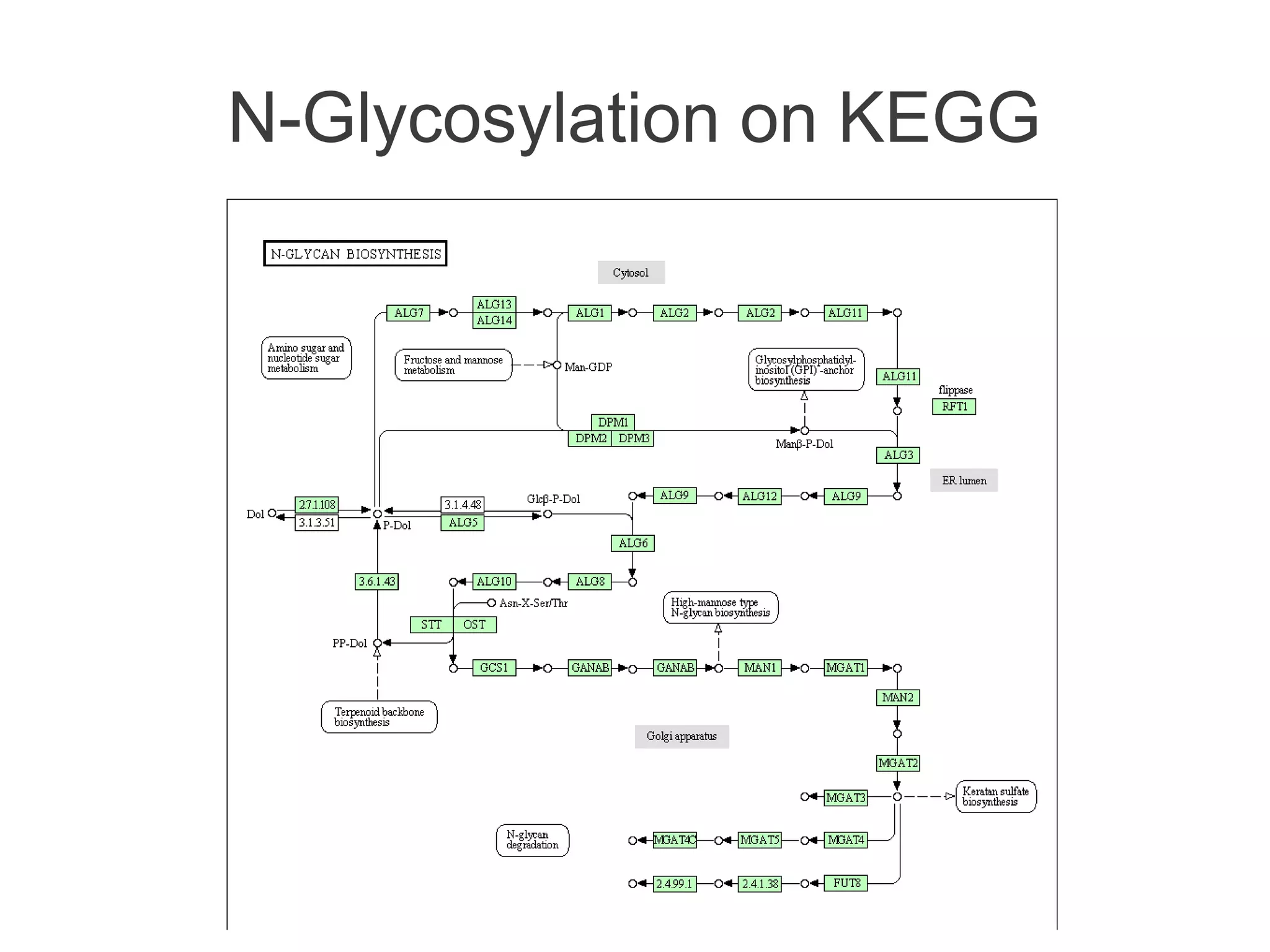
N-Glycosylation on KEGG
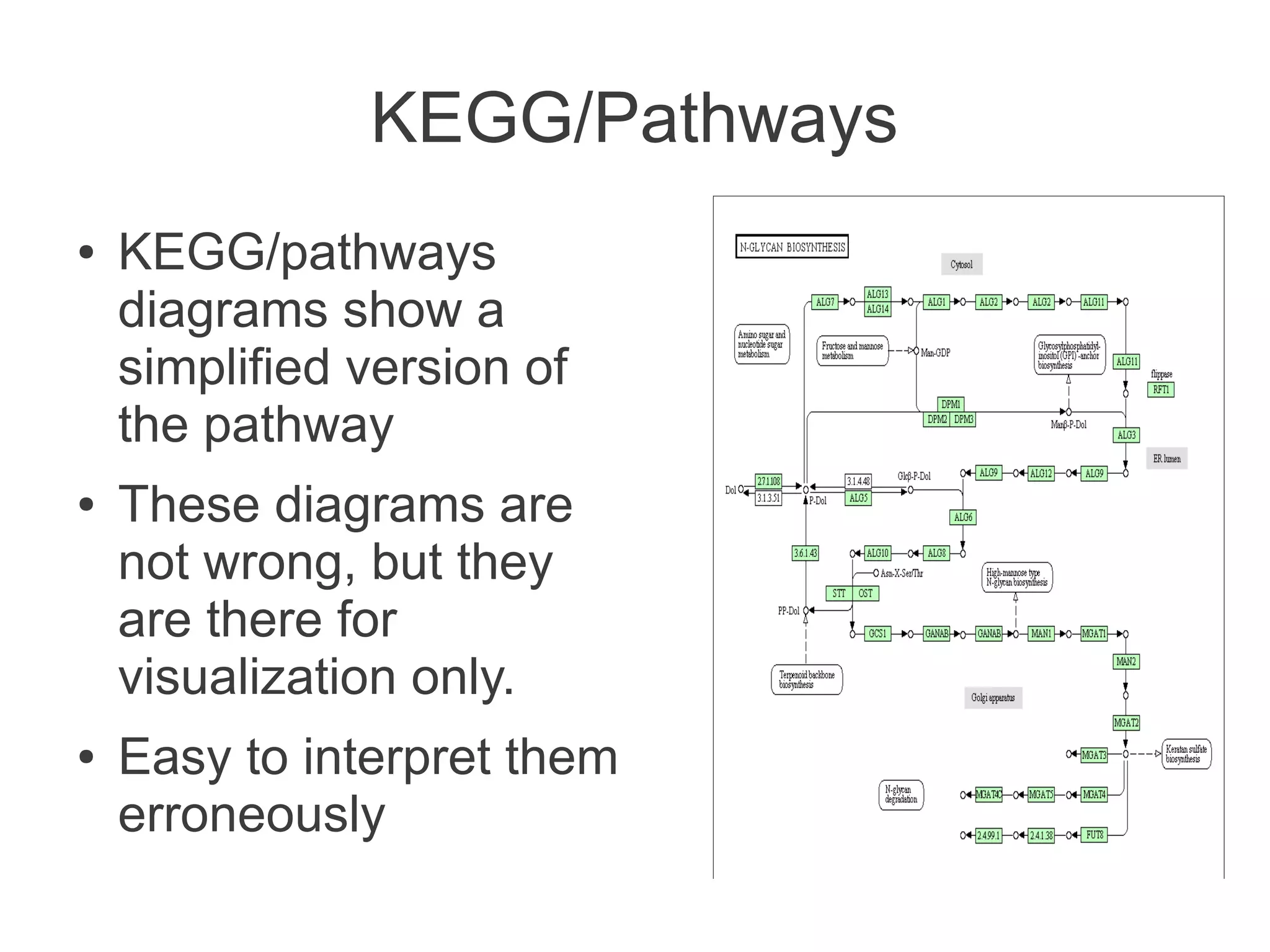
KEGG/Pathways
●   KEGG/pathways
    diagrams show a
    simplified version of
    the pathway
●   These diagrams are
    not wrong, but they
    are there for
    visualization only.
●   Easy to interpret them
    erroneously
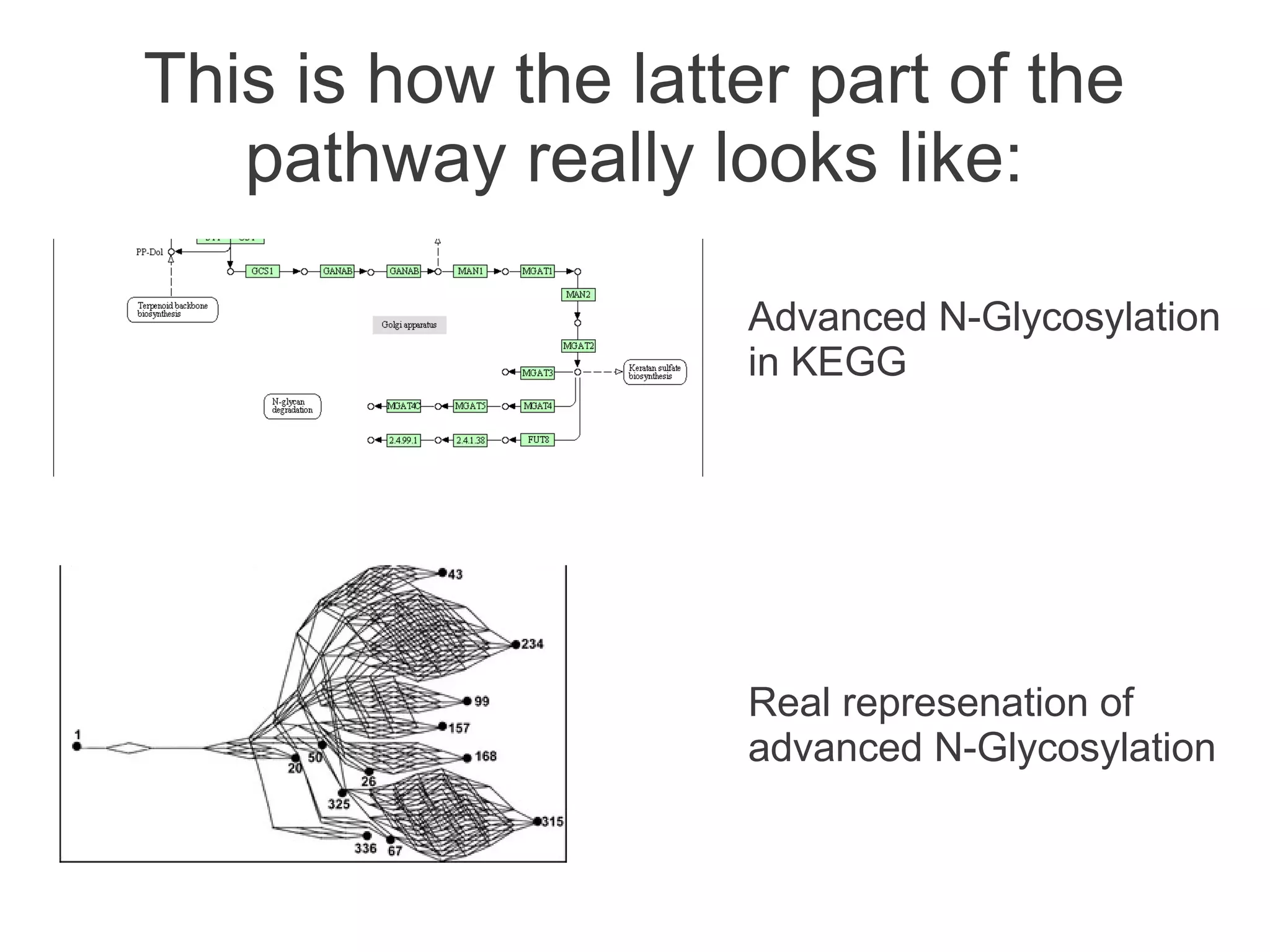
This is how the latter part of the
   pathway really looks like:

                    Advanced N-Glycosylation
                    in KEGG


                    Real represenation of
                    advanced N-Glycosylation
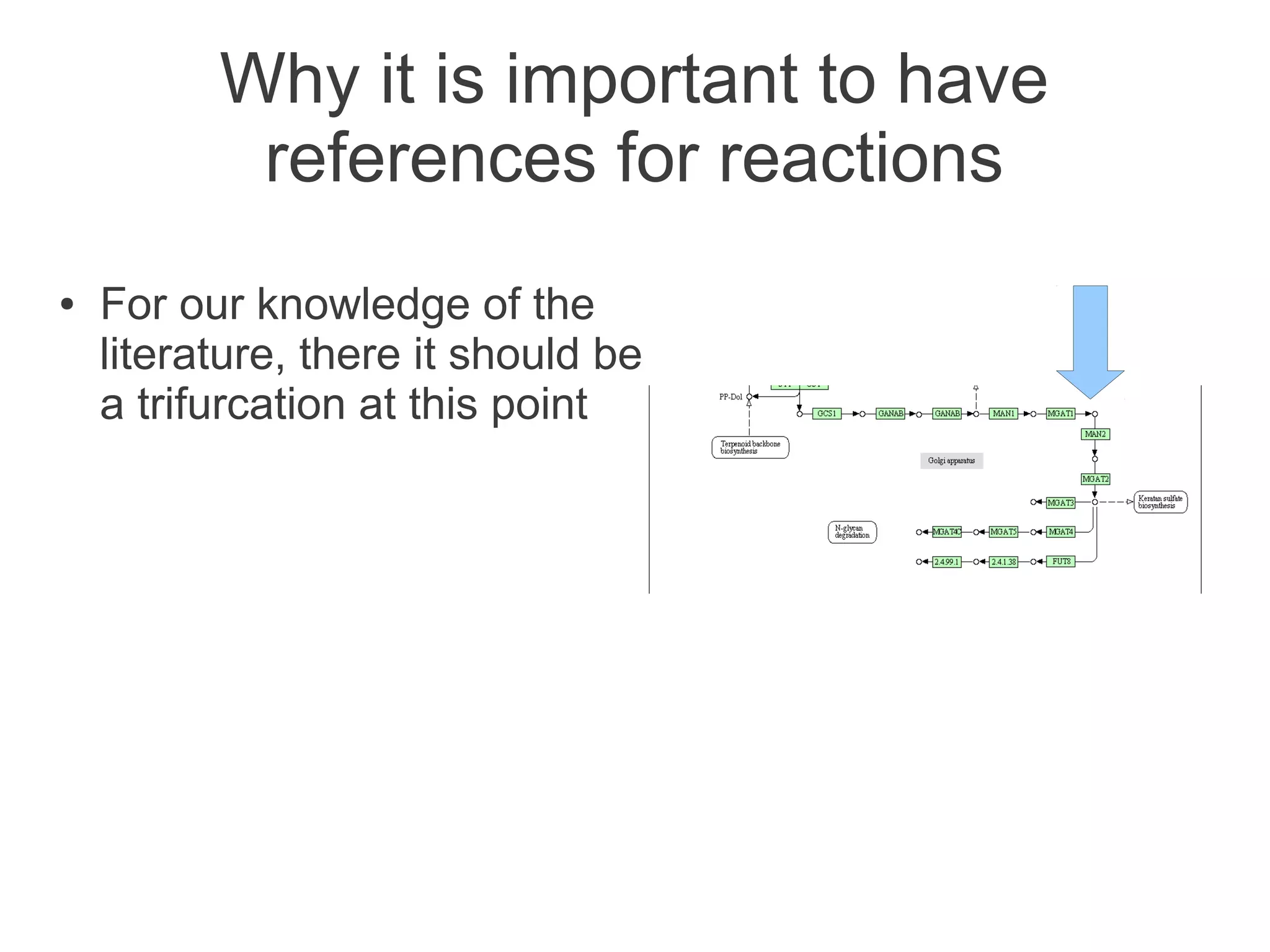
Why it is important to have
           references for reactions
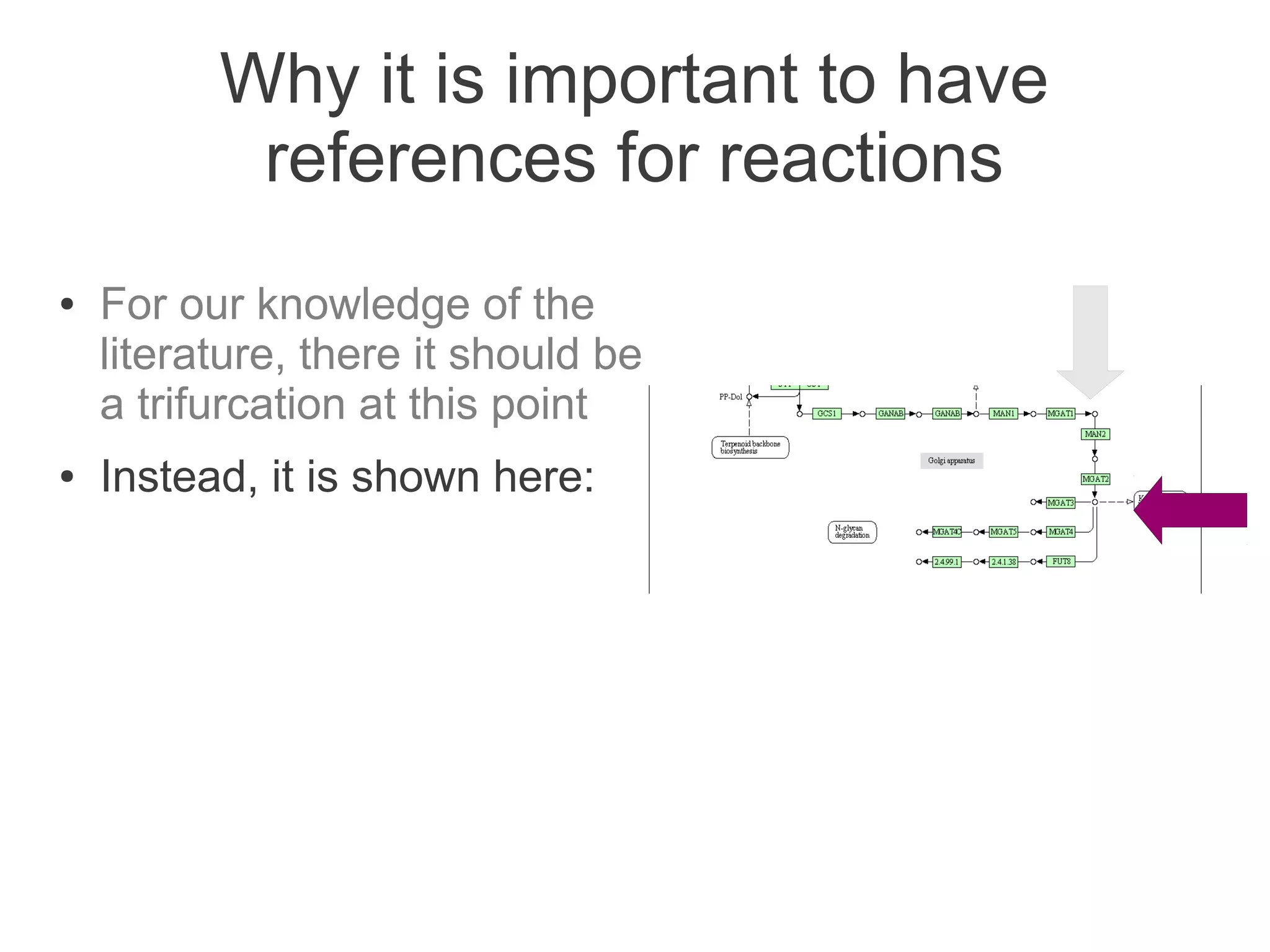
●   For our knowledge of the
    literature, there it should be
    a trifurcation at this point
Why it is important to have
           references for reactions
●   For our knowledge of the
    literature, there it should be
    a trifurcation at this point
●   Instead, it is shown here:
Why it is important to have
            references for reactions
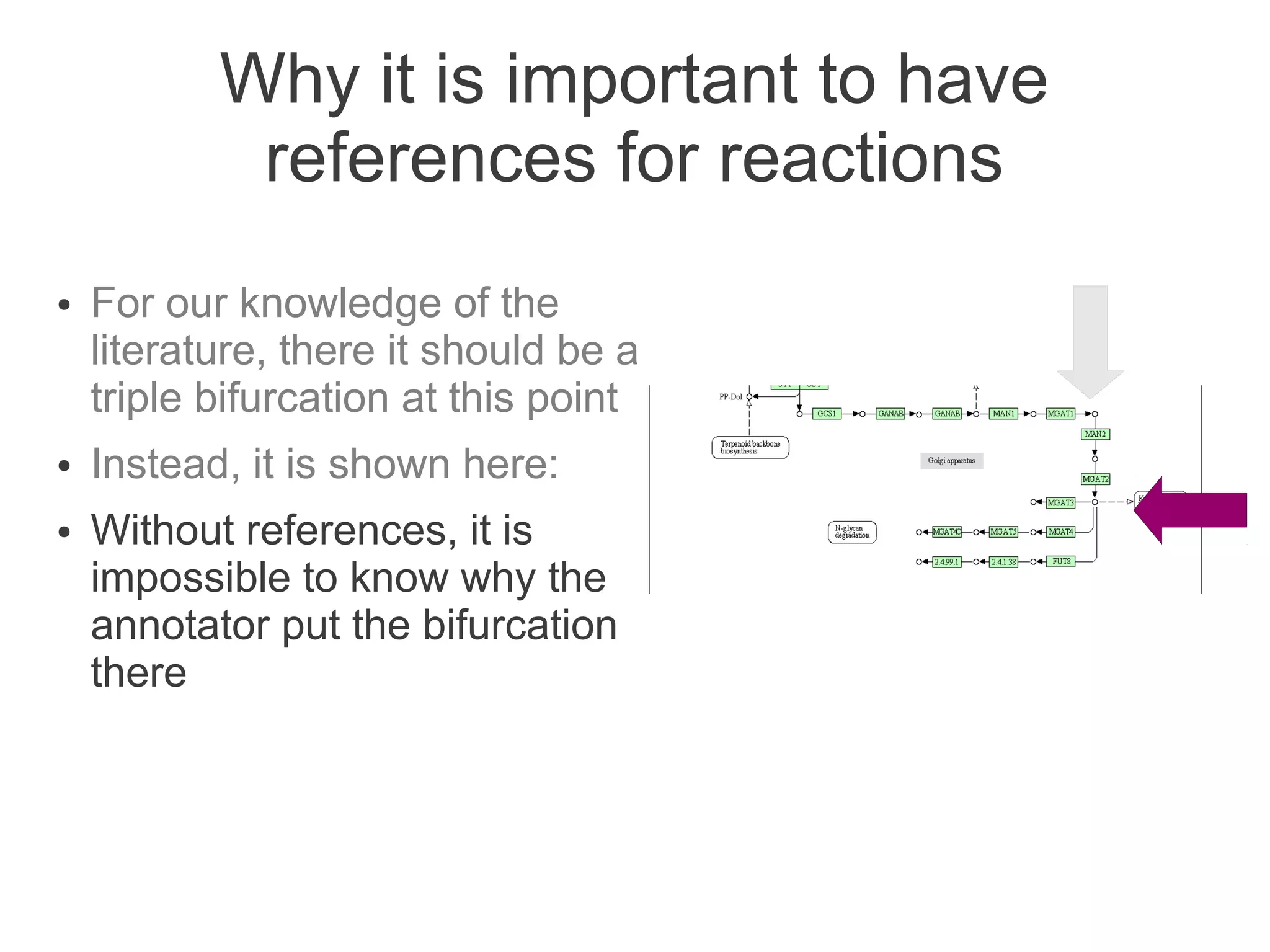
●   For our knowledge of the
    literature, there it should be a
    triple bifurcation at this point
●   Instead, it is shown here:
●   Without references, it is
    impossible to know why the
    annotator put the bifurcation
    there
String
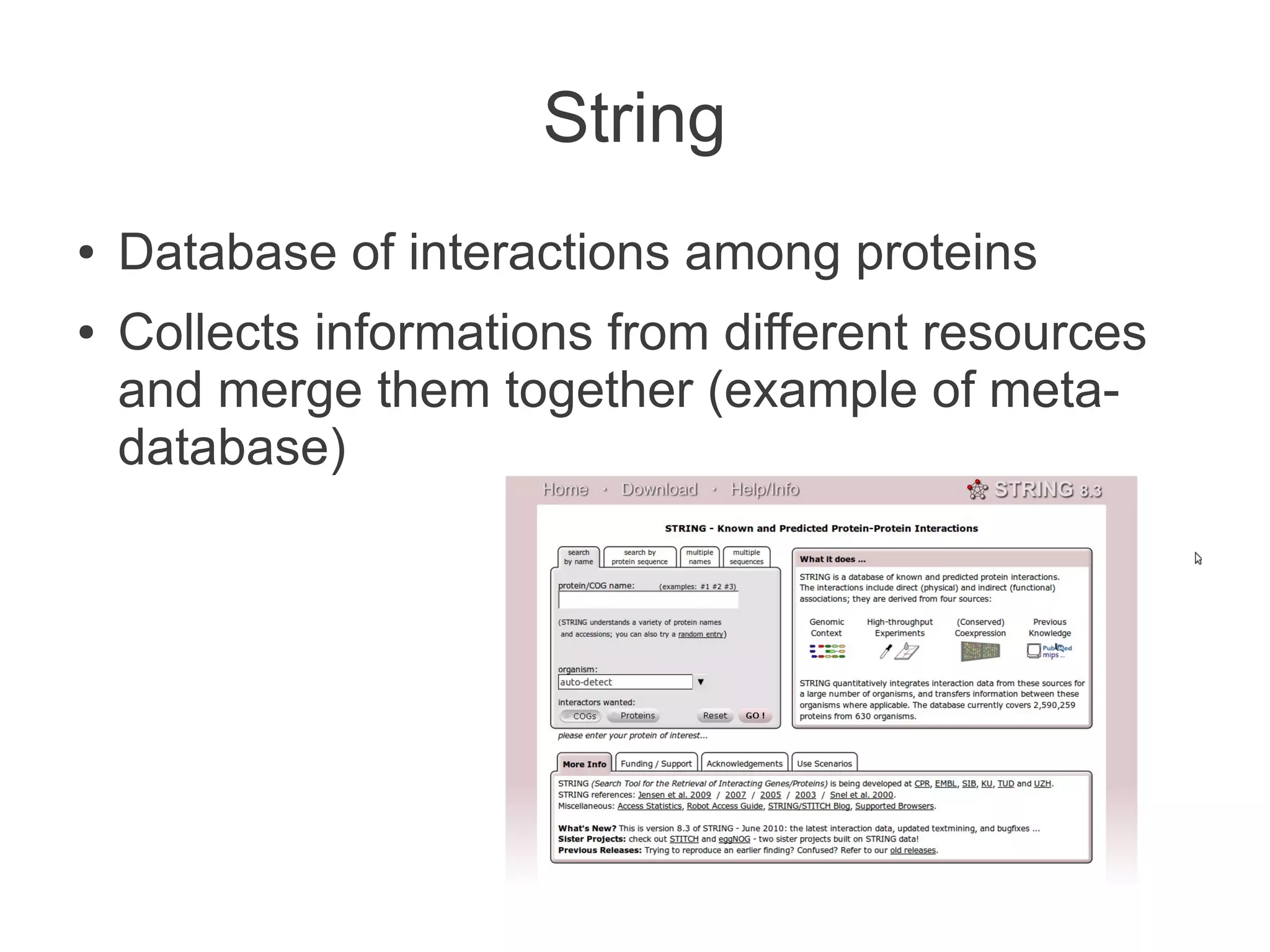
●   Database of interactions among proteins
●   Collects informations from different resources
    and merge them together (example of meta-
    database)
False positives in interactions
                 databases
●   Interaction databases are usually full of false
    positives and negatives
    ●   Yeast-two hybrids and similar
    ●   Automatic processing of scientific papers
String – the pathway is not there
●   Most of the interactions in N-Glycosylation were
    not found in String
    ●   Latest release has improved
●   The same term interaction is ambiguous
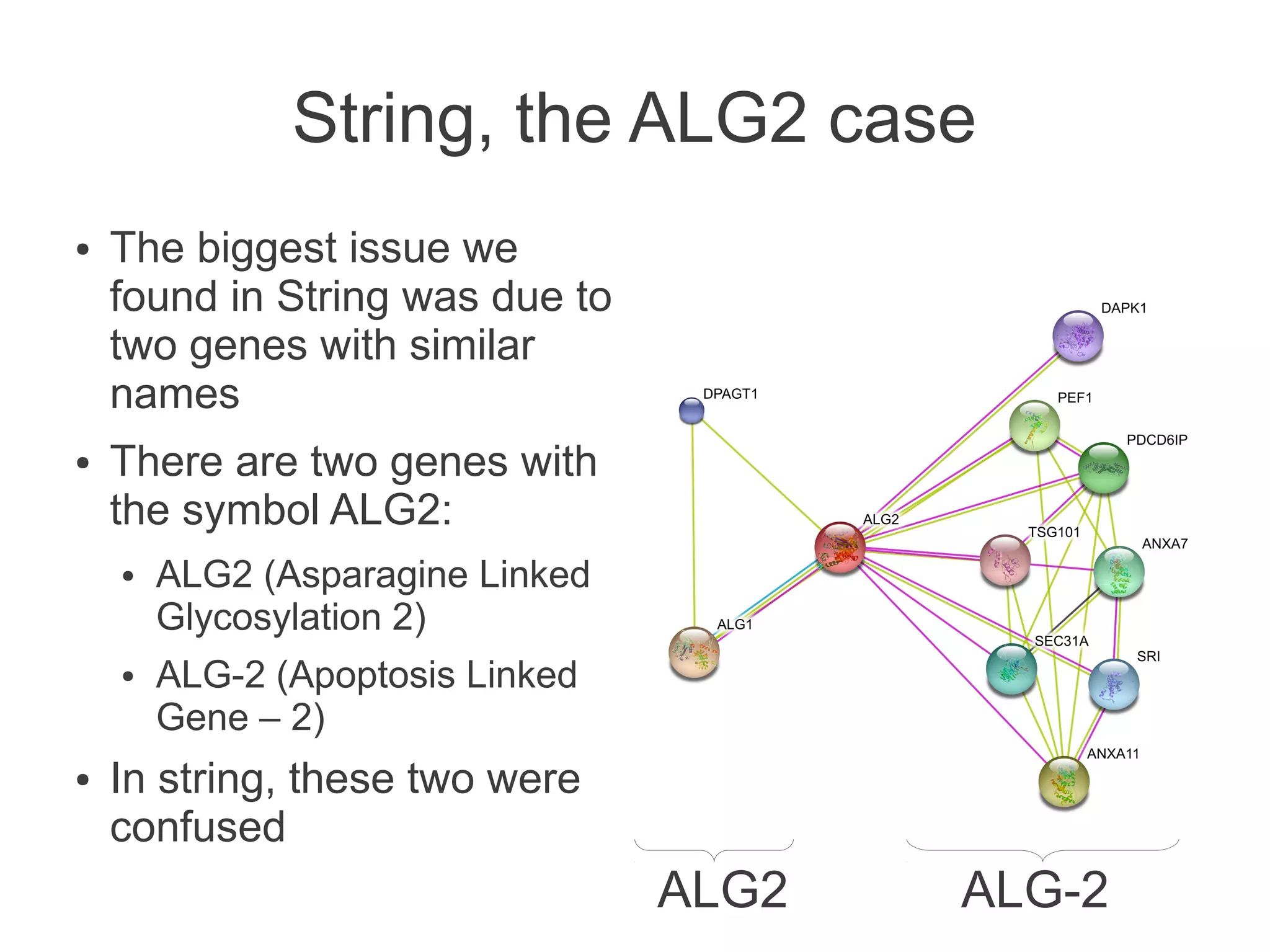
String, the ALG2 case
●   The biggest issue we
    found in String was due to
    two genes with similar
    names
●   There are two genes with
    the symbol ALG2:
    ●   ALG2 (Asparagine Linked
        Glycosylation 2)
    ●   ALG-2 (Apoptosis Linked
        Gene – 2)
●   In string, these two were
    confused
                                  ALG2   ALG-2
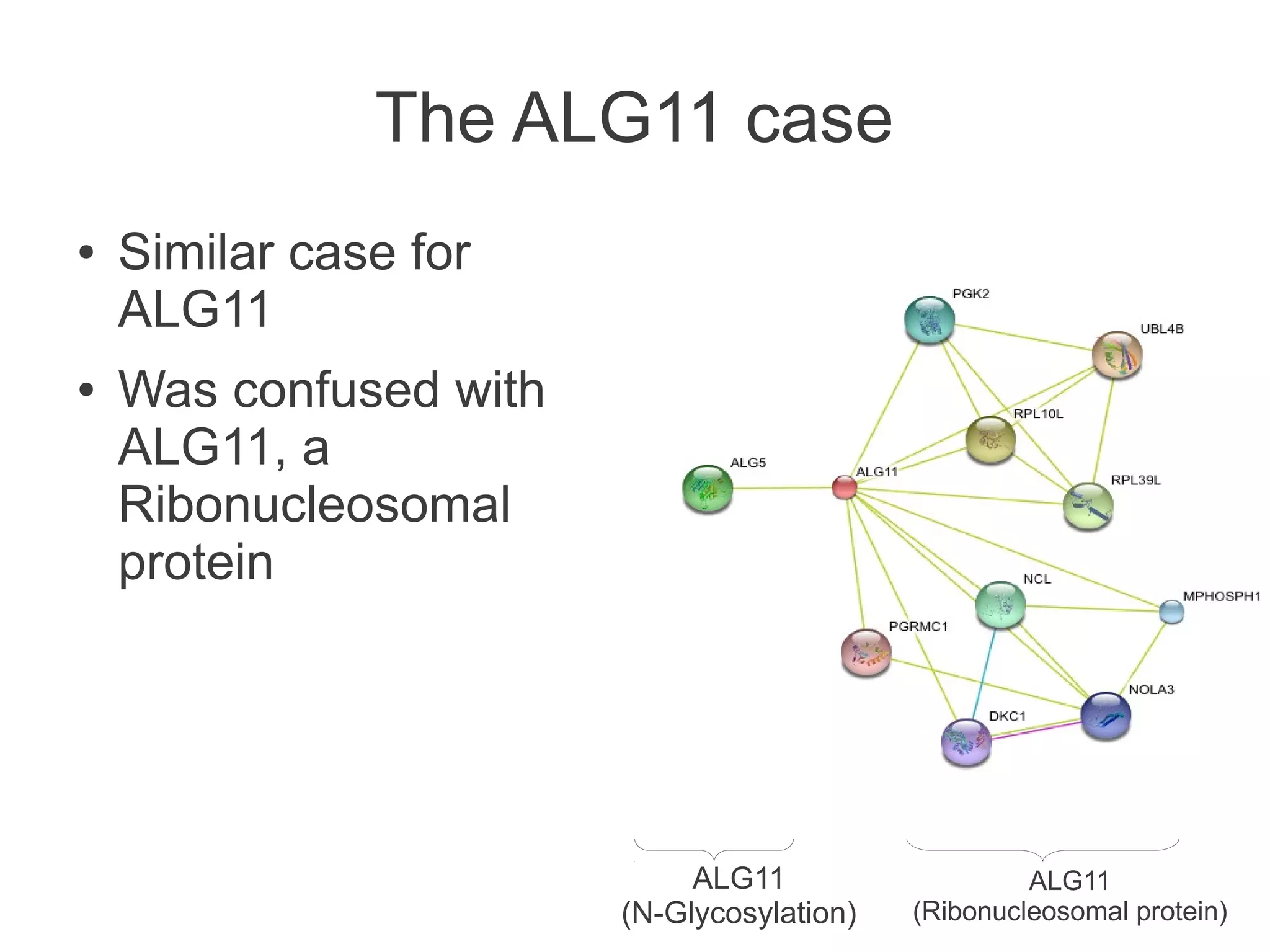
The ALG11 case
●   Similar case for
    ALG11
●   Was confused with
    ALG11, a
    Ribonucleosomal
    protein


                             ALG11                   ALG11
                        (N-Glycosylation)   (Ribonucleosomal protein)
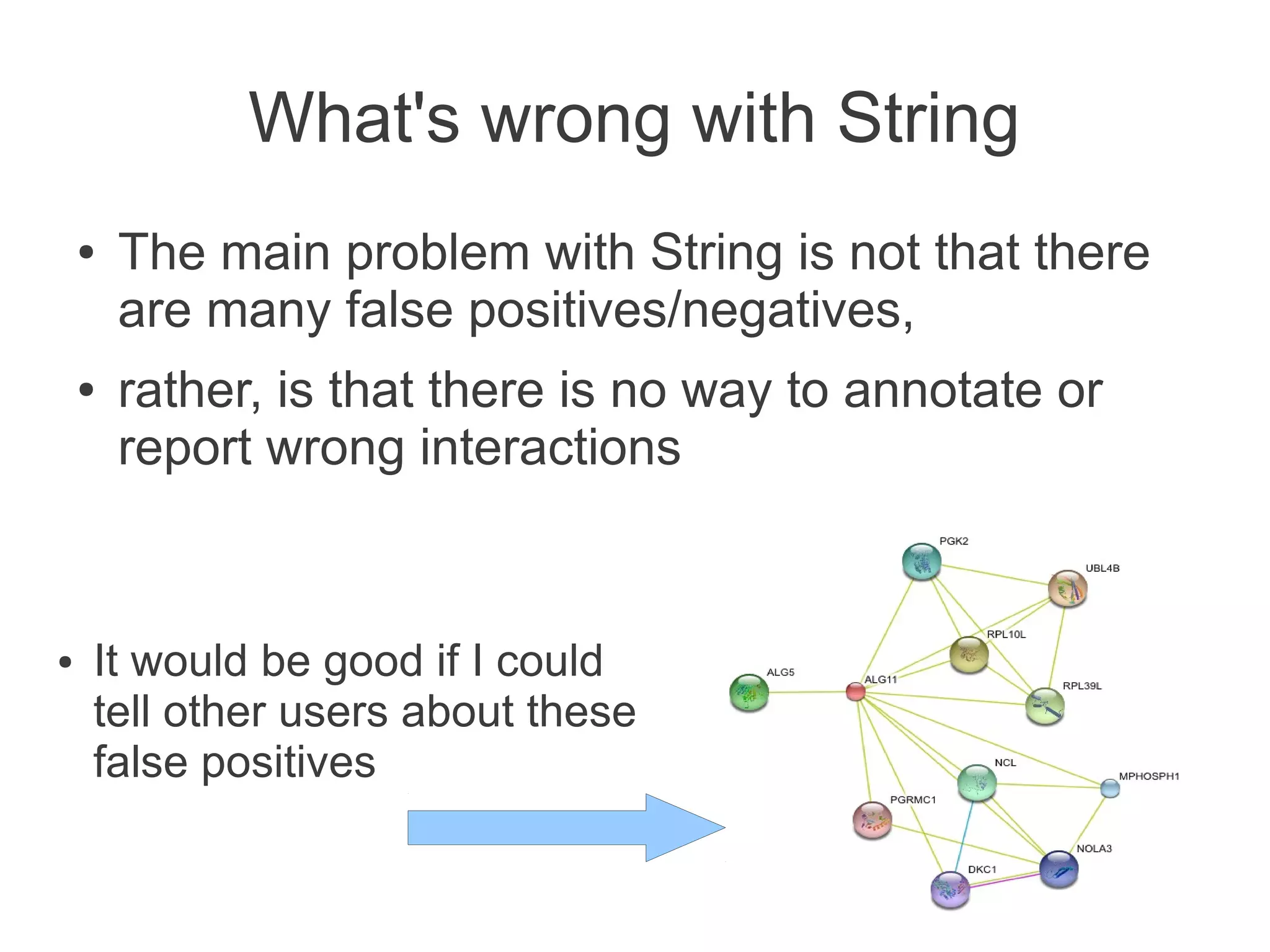
What's wrong with String
    ●   The main problem with String is not that there
        are many false positives/negatives,
    ●   rather, is that there is no way to annotate or
        report wrong interactions


●   It would be good if I could
    tell other users about these
    false positives
Uniprot
●   Uniprot is a database for annotations of
    proteins
●   The standard resource to use when looking for
    information on a protein
Annotations in Uniprot
●   We have found very few errors in the
    annotations in Uniprot
●   Mostly they were due to outdated names or
    minor imprecisions
●   Every Uniprot entry has a 'Send me feedback'
    button
So, I have found an error in an
        annotation – now what?
●   Ignore the error
So, I have found an error in an
           annotation – now what?
●   Ignore the error
    ●   Wrong because the error remains there and can
        affect other people's work
So, I have found an error in an
           annotation – now what?
●   Ignore the error
    ●   Wrong because the error remains there and can
        affect other people's work
●   Use a different database
So, I have found an error in an
           annotation – now what?
●   Ignore the error
    ●   Wrong because the error remains there and can
        affect other people's work
●   Use a different database
    ●   Even worst than the previous: doesn't fix the error
        and waste times
So, I have found an error in an
           annotation – now what?
●   Ignore the error
    ●   Wrong because the error remains there and can
        affect other people's work
●   Use a different database
    ●   Even worst than the previous: doesn't fix the error
        and waste times
●   Report the error
So, I have found an error in an
           annotation – now what?
●   Ignore the error
    ●   Wrong because the error remains there and can
        affect other people's work
●   Use a different database
    ●   Even worst than the previous: doesn't fix the error
        and waste times
●   Report the error
    ●   This is the best approach, however not everybody
        knows how to do it, and it requires time
Current state of reporting errors in
        the scientific community
●   Unfortunately, reporting errors is not
    encouraged in the modern scientific literature
    ●   Time consuming, but not acknowledged
    ●   Few people know how to do it
    ●   Made difficult by lack of transparency
Issue trackers
●   Usually the best way to report an error is by
    using an issue tracker software
●   When you find an error in a database, always
    check whether there is a public issue tracker
●   If not, things get more difficult
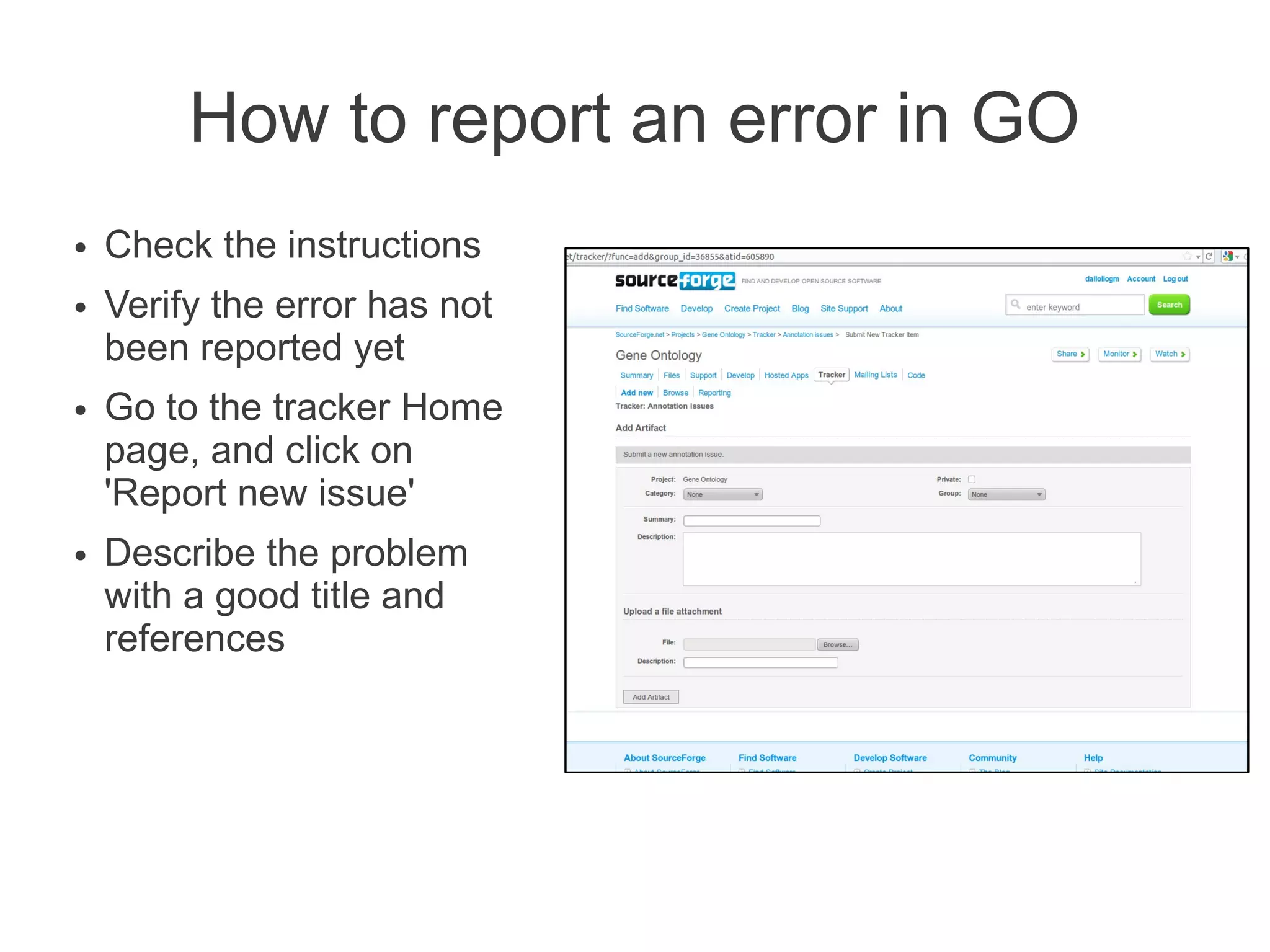
How to report an error in GO
●   Check the instructions
●   Verify the error has not
    been reported yet
●   Go to the tracker Home
    page, and click on
    'Report new issue'
●   Describe the problem
    with a good title and
    references
Take-home messages
●   Before using any data from a scientific
    database:
    ●   Check whether they have a public issue tracker and
        check whether there are errors reported about your
        data
    ●   Read the literature!
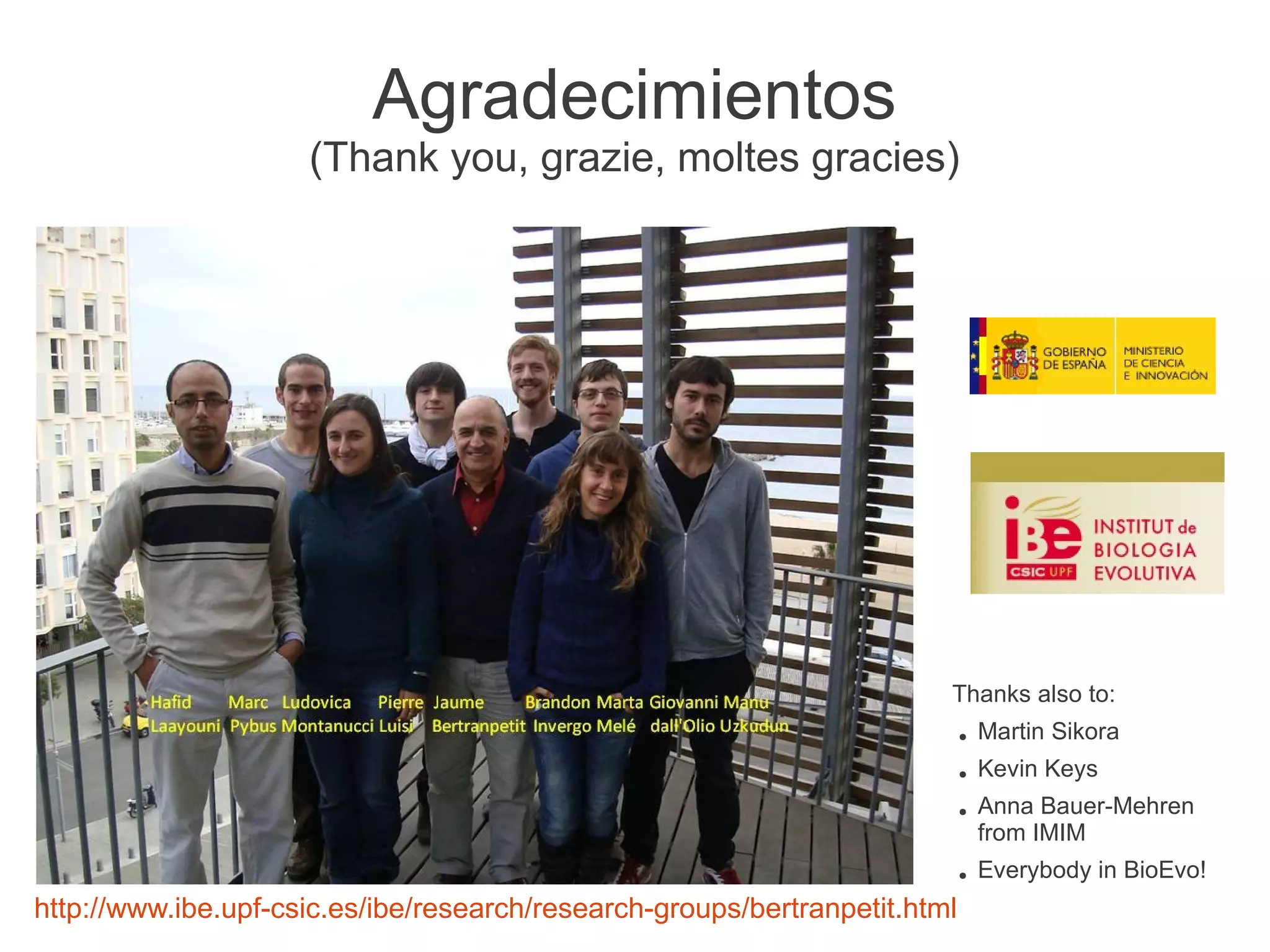
Agradecimientos
                     (Thank you, grazie, moltes gracies)


                                                                        Thanks also to:
                                                                            ●   Martin Sikora
                                                                            ●   Kevin Keys
                                                                            ●   Anna Bauer-Mehren
                                                                                from IMIM
                                                                            ●   Everybody in BioEvo!
http://www.ibe.upf-csic.es/ibe/research/research-groups/bertranpetit.html

The true story behind the annotation of a pathway

  • 1.
    Bioevo seminars The truestory behind the annotation of a pathway Giovanni Dall'Olio, IBE (UPF-CEXS)
  • 2.
    Summary of thetalk ● We have recently published two works: ● Dall'Olio GM, Jassal B, Montanucci L, Gagneux P, Bertranpetit J, Laayouni H. The annotation of the Asparagine N-linked Glycosylation pathway in the Reactome Database. Glycobiology. 2011 Jan 2. PubMed PMID: 21199820. ● Dall'Olio GM, Bertranpetit J, Laayouni H. The annotation and the usage of scientific databases could be improved with public issue tracker software. Database (Oxford). 2010 Dec 23;2010:baq035. Print 2010. PubMed PMID: 21186182; PubMed Central PMCID: PMC3011984. ● One is about the annotation of a pathway in a database, the other about reporting errors to databases
  • 3.
    What can youlearn from this talk ● The data annotated in scientific databases is not perfect, and can contain errors. Even when is correct, it can have multiple interpretations.
  • 4.
    What can youlearn from this talk ● The data annotated in scientific databases is not perfect, and can contain errors. Even when is correct, it can have multiple interpretations. ● Errors don't get fixed by themselves, and problems don't get solved alone. When you find something wrong, it is your duty to report it.
  • 5.
    What is N-Glycosylation? ● One of the most important forms of protein modification ● A complex sugar composed by 14 units is N-glycans attached to a protein, and later modified. protein Cell membrane
  • 6.
    What is N-Glycosylation?(II) ● The surface of a cell is usually covered by N- glycosylated proteins ● It enhances solubility and is required for the proper folding.
  • 7.
    N-Glycosylation – howdoes it works ● A common N-Glycan precursor is attached to a nascent protein, and then modified Millions of N-glycan Intermediate different N- precursor N-glycan glycans
  • 8.
    Advanced N-Glycosylation ● The same protein can have different N- Glycosylation on different tissues and times Protein A in the Protein A in the Protein A during a morning evening party Protein A on an Protein A on a Protein A on a dead eritrocite epithelial cell cell
  • 9.
    N-Glycosylation is atext-book example ● The first part of this pathway was characterized in the 1980's by random mutagenesis in yeast (the ALG mutants) ● N-glycosylation is important to biotechnologists because of its implications for drugs biosynthesis
  • 10.
    Annotating the pathway ● My PhD thesis is about selection within the genes of N-Glycosylation, so I had to study the biology behind it
  • 11.
    Annotating the pathway ● My PhD thesis is about selection within the genes of N-Glycosylation, so I had to study the biology behind it ● I was not happy with the current annotation of the pathway in other databases, so I decided to make a new annotation by myself, and publish it on a public database
  • 12.
    Reactome ● A database for biological relevant pathways ● TCA cycle, apoptosis, telomerases, influenza...
  • 13.
    Reactome - advantages ● Open-source approach. Anyone can contribute to a pathway, and all contributions are public and transparent ● Annotates a greater number of informations for each reaction ● Does not artificially distinguish between metabolic/interaction pathways (uses GO terms instead)
  • 14.
    The process ofannotation in Reactome ● Annotating a pathway in Reactome means that for each reaction, you have to details like: ● Description and name of the reaction ● Genes involved ● GO localization terms for input, outputs and enzymes ● References to experimental evidences
  • 15.
    The process ofannotation in Reactome Our N-Glycosylation pathway
  • 16.
    The process ofannotation in Reactome ● Annotating a pathway in Reactome means that for each reaction, you have to provide details like: ● Description and name of the reaction ● Genes involved ● GO localization terms for input, outputs and enzymes ● References to experimental evidences ● Each reaction must pass a peer-reviewed process before being included in Reactome
  • 17.
    N-Glycosylation on Reactome final result ● It tooks about 6 months of work to annotate the pathway ● ~100 reactions ● lot of literature read ● problems with entries in other databases ● technical implementation problems ● problems, problems, problems, time wasted
  • 18.
    Is it worthto annotate a pathway manually as I did? ● If you are a PhD student: probably yes, and at the beginning ● Pros: ● Helps you having good ideas ● Recognize how much you can trust database annotations ● Can be published ● Cons: ● Takes time ● Not feasible for larger scale studies
  • 19.
    The Reactome pathway,complete http://tinyurl.com/nglyco-reactome
  • 20.
    N-Glycosylation in otherdatabases ● Historically, this pathway is well characterized and is a textbook example of a metabolic pathway ● It is a good example to compare its annotations in different databases
  • 21.
    N-Glycosylation in otherdatabases ● Historically, this pathway is well characterized and is a textbook example of a metabolic pathway ● It is a good example to compare its annotations in different databases ● If you dedicate 6 months to read tons of literature about what you are studying, which kind of errors do you expect to find in databases?
  • 22.
    GeneOntology (GO) ● GO is an ontology of terms to describe the function, localization of a gene ● A dictionary designed to reduce the problem of synonyms and unclear terminology
  • 23.
    What is aGO annotation? ● A GO annotation is the association between a GO term and a gene, protein or event ● The gene ALG1 is Integral to the membrane (GO: 32130) ● The protein XYZ has peroxidase activity (GO:03123)
  • 24.
    GO annotations ● GO annotations are frequently used in the scientific literature ● This set of genes is enriched of a specific GO term ● We subdivided the pathway in GO modules and studied selection within them ● However, which are the procedures to associate a GO term with a gene? ● Which are the possible sources of error in a GO association?
  • 25.
    The GO termassignment ● In order to assign a GO term to a protein in a species, there it must be an experimental evidence for the association in that species
  • 26.
    The GO termassignment ● In order to assign a GO term to a protein in a species, there it must be an experimental evidence for the association in that species Lots of false negatives in GO!
  • 27.
    Example of falsenegative in GO ● We proposed the association of DPAGT1 with the term 'Integral to the ER membrane' in human ● All the literature assumes that this association exists ● This association is annotated in Kegg for Yeast
  • 28.
    Example of falsepositive in GO ● We proposed the association of DPAGT1 with the term 'Integral to the ER membrane' in human ● All the literature assumes that this association exists ● This association is annotated in Kegg for Yeast ● The proposal has been rejected because there it were no experimental evidence in human ● Probably there it won't never be any
  • 29.
    DPAGT1 on GOissue tracker
  • 30.
    Ambigous interpretation ofthe term N-Glycosylation in GO ● We found a big mistake with the term 'N- Glycosylation' ● This was being associated to two classes of genes: those which are glycosylated, and those which participate to the process of glycosylation
  • 31.
    Ambigous interpretation ofthe term N-Glycosylation in GO N-Glycosylation pathway N-Glycosylated protein World J Gastroenterol. 2010 December 21; 16(47): 5916- Essentials of Glycobiology, 3rd edition 5924. merged
  • 32.
    Summary of GOannotations for N- glycosylation ● ~80 correct GO classification ● ~50 new gene-term association proposed ● 10 genes had a clearly wrong classification ● 2 new GO terms proposed: ● Endoplasmic reticulum quality control compartment ● Intrinsic to the lumenal side of the endoplasmic reticulum :-)
  • 33.
    The GO issuetracker ● All the errors on GO elements are tracked on a publicly accessible online application, the issue tracker ● From there, you can report new errors, or check whether there are reported cases for the terms you are using
  • 34.
  • 35.
    KEGG/Pathways ● A database of Pathways, curated by experts in the field and manually drawn
  • 36.
    KEGG/Pathway ● KEGG/Pathways is the most renowned database for biological pathways ● Pros: ● Lot of pathways annotated ● Cons: ● Authors of the pathways are unknown, and no references are given for each reaction. Difficult to ask for clarification
  • 37.
  • 38.
    KEGG/Pathways ● KEGG/pathways diagrams show a simplified version of the pathway ● These diagrams are not wrong, but they are there for visualization only. ● Easy to interpret them erroneously
  • 39.
    This is howthe latter part of the pathway really looks like: Advanced N-Glycosylation in KEGG Real represenation of advanced N-Glycosylation
  • 40.
    Why it isimportant to have references for reactions ● For our knowledge of the literature, there it should be a trifurcation at this point
  • 41.
    Why it isimportant to have references for reactions ● For our knowledge of the literature, there it should be a trifurcation at this point ● Instead, it is shown here:
  • 42.
    Why it isimportant to have references for reactions ● For our knowledge of the literature, there it should be a triple bifurcation at this point ● Instead, it is shown here: ● Without references, it is impossible to know why the annotator put the bifurcation there
  • 43.
    String ● Database of interactions among proteins ● Collects informations from different resources and merge them together (example of meta- database)
  • 44.
    False positives ininteractions databases ● Interaction databases are usually full of false positives and negatives ● Yeast-two hybrids and similar ● Automatic processing of scientific papers
  • 45.
    String – thepathway is not there ● Most of the interactions in N-Glycosylation were not found in String ● Latest release has improved ● The same term interaction is ambiguous
  • 46.
    String, the ALG2case ● The biggest issue we found in String was due to two genes with similar names ● There are two genes with the symbol ALG2: ● ALG2 (Asparagine Linked Glycosylation 2) ● ALG-2 (Apoptosis Linked Gene – 2) ● In string, these two were confused ALG2 ALG-2
  • 47.
    The ALG11 case ● Similar case for ALG11 ● Was confused with ALG11, a Ribonucleosomal protein ALG11 ALG11 (N-Glycosylation) (Ribonucleosomal protein)
  • 48.
    What's wrong withString ● The main problem with String is not that there are many false positives/negatives, ● rather, is that there is no way to annotate or report wrong interactions ● It would be good if I could tell other users about these false positives
  • 49.
    Uniprot ● Uniprot is a database for annotations of proteins ● The standard resource to use when looking for information on a protein
  • 50.
    Annotations in Uniprot ● We have found very few errors in the annotations in Uniprot ● Mostly they were due to outdated names or minor imprecisions ● Every Uniprot entry has a 'Send me feedback' button
  • 51.
    So, I havefound an error in an annotation – now what? ● Ignore the error
  • 52.
    So, I havefound an error in an annotation – now what? ● Ignore the error ● Wrong because the error remains there and can affect other people's work
  • 53.
    So, I havefound an error in an annotation – now what? ● Ignore the error ● Wrong because the error remains there and can affect other people's work ● Use a different database
  • 54.
    So, I havefound an error in an annotation – now what? ● Ignore the error ● Wrong because the error remains there and can affect other people's work ● Use a different database ● Even worst than the previous: doesn't fix the error and waste times
  • 55.
    So, I havefound an error in an annotation – now what? ● Ignore the error ● Wrong because the error remains there and can affect other people's work ● Use a different database ● Even worst than the previous: doesn't fix the error and waste times ● Report the error
  • 56.
    So, I havefound an error in an annotation – now what? ● Ignore the error ● Wrong because the error remains there and can affect other people's work ● Use a different database ● Even worst than the previous: doesn't fix the error and waste times ● Report the error ● This is the best approach, however not everybody knows how to do it, and it requires time
  • 57.
    Current state ofreporting errors in the scientific community ● Unfortunately, reporting errors is not encouraged in the modern scientific literature ● Time consuming, but not acknowledged ● Few people know how to do it ● Made difficult by lack of transparency
  • 58.
    Issue trackers ● Usually the best way to report an error is by using an issue tracker software ● When you find an error in a database, always check whether there is a public issue tracker ● If not, things get more difficult
  • 59.
    How to reportan error in GO ● Check the instructions ● Verify the error has not been reported yet ● Go to the tracker Home page, and click on 'Report new issue' ● Describe the problem with a good title and references
  • 60.
    Take-home messages ● Before using any data from a scientific database: ● Check whether they have a public issue tracker and check whether there are errors reported about your data ● Read the literature!
  • 61.
    Agradecimientos (Thank you, grazie, moltes gracies) Thanks also to: ● Martin Sikora ● Kevin Keys ● Anna Bauer-Mehren from IMIM ● Everybody in BioEvo! http://www.ibe.upf-csic.es/ibe/research/research-groups/bertranpetit.html