Saadia Z. Yunus, MA, MFT
ICNA-MAS Convention 2012
Marriage and family therapy is one of the core
mental health disciplines and is based on the
research and theory that mental illness and
family problems are best treated in a family
context.
 Trained in psychotherapy and family systems,
marriage and family therapists focus on
understanding their clients’ symptoms and
interaction patterns within their existing
environment.
 Whomever the client, Family Therapists treat
from a relationship perspective that incorporates
family systems. (AAMFT.org)

 "It

is He who created you from a single soul,
And made its mate of like nature in order
that you might dwell with him/her in
love...."(7:189) So the male and female
complete each other - together they make a
single self and this is how they must strive to
make their lives together - as if they are one
being, one person, one spirit.

 The

Qur'an says: "Your spouses are a garment
for you, and you are a garment for
them" (2:187)
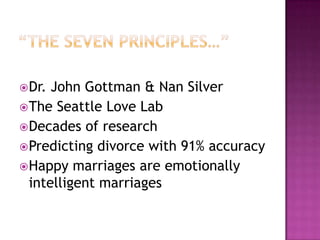
 Dr.

John Gottman & Nan Silver
 The Seattle Love Lab
 Decades of research
 Predicting divorce with 91% accuracy
 Happy marriages are emotionally
intelligent marriages


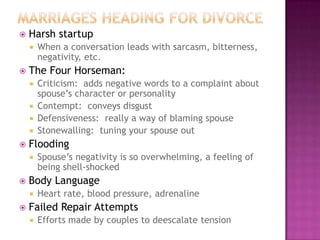
Harsh startup




The Four Horseman:







Spouse’s negativity is so overwhelming, a feeling of
being shell-shocked

Body Language




Criticism: adds negative words to a complaint about
spouse’s character or personality
Contempt: conveys disgust
Defensiveness: really a way of blaming spouse
Stonewalling: tuning your spouse out

Flooding




When a conversation leads with sarcasm, bitterness,
negativity, etc.

Heart rate, blood pressure, adrenaline

Failed Repair Attempts


Efforts made by couples to deescalate tension
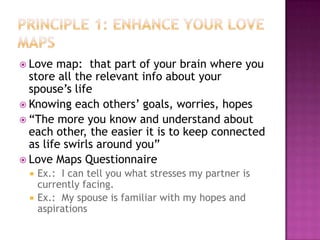
 Love

map: that part of your brain where you
store all the relevant info about your
spouse’s life
 Knowing each others’ goals, worries, hopes
 “The more you know and understand about
each other, the easier it is to keep connected
as life swirls around you”
 Love Maps Questionnaire



Ex.: I can tell you what stresses my partner is
currently facing.
Ex.: My spouse is familiar with my hopes and
aspirations
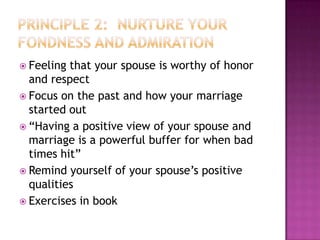
 Feeling

that your spouse is worthy of honor
and respect
 Focus on the past and how your marriage
started out
 “Having a positive view of your spouse and
marriage is a powerful buffer for when bad
times hit”
 Remind yourself of your spouse’s positive
qualities
 Exercises in book
 Having

small moments of connection
 Letting your spouse know he/she is valued
during the grind of everyday life
 Creating an emotional bank account for
future tough times
 Turning towards each other in little ways
every day vs. a vacation or candlelight dinner
 Exercises in book
 Women

tend to accept their spouse’s
influence more than men
 Men who allow their wives to influence them
have happier marriages and are less likely to
divorce
 Let your spouse influence your decisionmaking by taking his/her opinions and
feelings into account
 Convey honor and respect when it comes to
power-sharing and decision-making
 Exercises in book
 Two



types of marital conflict:

Solvable problems
Perpetual problems

 Be

able to tell the difference and understand
that you don’t have to solve all of your
problems
 How do you solve your solvable problems?
1.
2.
3.
4.
5.

Soften your startup
Learn to make and receive repair attempts
Soothe yourself and each other
Compromise
Be tolerant of each others’ faults
 Gridlock





The conflict makes you feel rejected by your
partner
You keep talking about it but make no progress
You are unwilling to budge
When you discuss, you feel more frustrated

 Don’t

try to solve the problem; move from
gridlock to dialogue
 Gridlock is a sign that you have dreams for
your life that aren’t being addressed or
respected
 Sharing

a deep sense of what is meaningful
about your lives together
 A crucial goal of any marriage is to create an
atmosphere that encourages each person to
talk honestly about his/her convictions
 Islam—afterlife—earning Jannah together
 Reminding each other of your true purpose
 A team against Shaytaan
 Family rituals, symbols, roles
 Successful

marriages have a higher ratio of
positivity vs. negativity
 Many ayaat in Qur’an discuss living with one
another in tranquility
 Mawaddah and Rahma=Love and mercy
 Invest in your marriage
 Islam encourages seeking help if things get
too difficult—therapy, counseling
 Prophet (S) was the best therapist
 www.therapistlocator.net

The Seven Principles for Making Marriage Work

  • 1.
    Saadia Z. Yunus,MA, MFT ICNA-MAS Convention 2012
  • 2.
    Marriage and familytherapy is one of the core mental health disciplines and is based on the research and theory that mental illness and family problems are best treated in a family context.  Trained in psychotherapy and family systems, marriage and family therapists focus on understanding their clients’ symptoms and interaction patterns within their existing environment.  Whomever the client, Family Therapists treat from a relationship perspective that incorporates family systems. (AAMFT.org) 
  • 3.
     "It is Hewho created you from a single soul, And made its mate of like nature in order that you might dwell with him/her in love...."(7:189) So the male and female complete each other - together they make a single self and this is how they must strive to make their lives together - as if they are one being, one person, one spirit.  The Qur'an says: "Your spouses are a garment for you, and you are a garment for them" (2:187)
  • 4.
     Dr. John Gottman& Nan Silver  The Seattle Love Lab  Decades of research  Predicting divorce with 91% accuracy  Happy marriages are emotionally intelligent marriages
  • 5.
     Harsh startup   The FourHorseman:      Spouse’s negativity is so overwhelming, a feeling of being shell-shocked Body Language   Criticism: adds negative words to a complaint about spouse’s character or personality Contempt: conveys disgust Defensiveness: really a way of blaming spouse Stonewalling: tuning your spouse out Flooding   When a conversation leads with sarcasm, bitterness, negativity, etc. Heart rate, blood pressure, adrenaline Failed Repair Attempts  Efforts made by couples to deescalate tension
  • 6.
     Love map: thatpart of your brain where you store all the relevant info about your spouse’s life  Knowing each others’ goals, worries, hopes  “The more you know and understand about each other, the easier it is to keep connected as life swirls around you”  Love Maps Questionnaire   Ex.: I can tell you what stresses my partner is currently facing. Ex.: My spouse is familiar with my hopes and aspirations
  • 7.
     Feeling that yourspouse is worthy of honor and respect  Focus on the past and how your marriage started out  “Having a positive view of your spouse and marriage is a powerful buffer for when bad times hit”  Remind yourself of your spouse’s positive qualities  Exercises in book
  • 8.
     Having small momentsof connection  Letting your spouse know he/she is valued during the grind of everyday life  Creating an emotional bank account for future tough times  Turning towards each other in little ways every day vs. a vacation or candlelight dinner  Exercises in book
  • 9.
     Women tend toaccept their spouse’s influence more than men  Men who allow their wives to influence them have happier marriages and are less likely to divorce  Let your spouse influence your decisionmaking by taking his/her opinions and feelings into account  Convey honor and respect when it comes to power-sharing and decision-making  Exercises in book
  • 10.
     Two   types ofmarital conflict: Solvable problems Perpetual problems  Be able to tell the difference and understand that you don’t have to solve all of your problems  How do you solve your solvable problems? 1. 2. 3. 4. 5. Soften your startup Learn to make and receive repair attempts Soothe yourself and each other Compromise Be tolerant of each others’ faults
  • 11.
     Gridlock     The conflictmakes you feel rejected by your partner You keep talking about it but make no progress You are unwilling to budge When you discuss, you feel more frustrated  Don’t try to solve the problem; move from gridlock to dialogue  Gridlock is a sign that you have dreams for your life that aren’t being addressed or respected
  • 12.
     Sharing a deepsense of what is meaningful about your lives together  A crucial goal of any marriage is to create an atmosphere that encourages each person to talk honestly about his/her convictions  Islam—afterlife—earning Jannah together  Reminding each other of your true purpose  A team against Shaytaan  Family rituals, symbols, roles
  • 13.
     Successful marriages havea higher ratio of positivity vs. negativity  Many ayaat in Qur’an discuss living with one another in tranquility  Mawaddah and Rahma=Love and mercy  Invest in your marriage  Islam encourages seeking help if things get too difficult—therapy, counseling  Prophet (S) was the best therapist  www.therapistlocator.net