THE PASSIVE
Look at the picture:


        ACTIVE VOICE: present

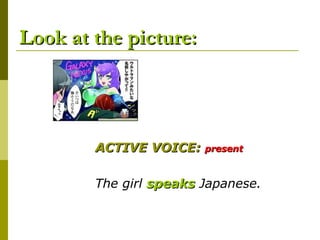
        The girl speaks Japanese.
PASSIVE VOICE:    present TO BE + PAST PARTICIPLE


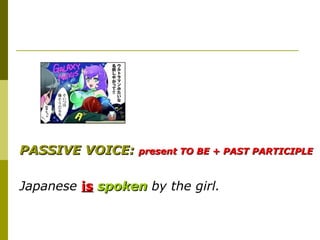
Japanese is spoken by the girl.
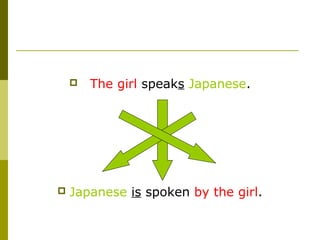
   The girl speaks Japanese.


   Japanese is spoken by the girl.
What are the changes?

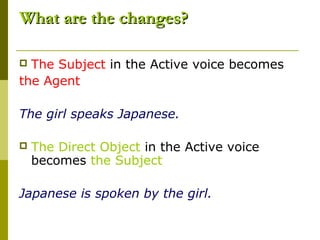
 The Subject in the Active voice becomes
the Agent

The girl speaks Japanese.

   The Direct Object in the Active voice
    becomes the Subject

Japanese is spoken by the girl.
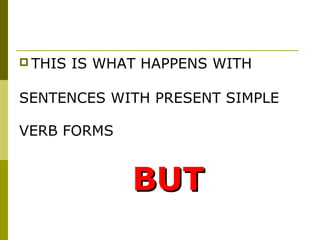
 THIS   IS WHAT HAPPENS WITH

SENTENCES WITH PRESENT SIMPLE

VERB FORMS


               BUT
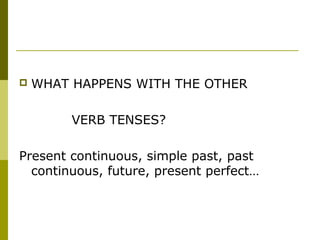
   WHAT HAPPENS WITH THE OTHER

         VERB TENSES?

Present continuous, simple past, past
  continuous, future, present perfect…
THE SAME
 THING
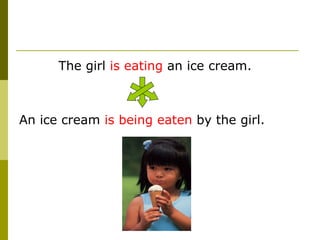
The girl is eating an ice cream.


An ice cream is being eaten by the girl.
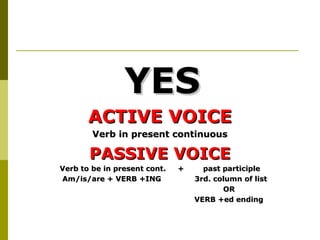
YES
       ACTIVE VOICE
        Verb in present continuous

       PASSIVE VOICE
Verb to be in present cont.   +     past participle
Am/is/are + VERB +ING             3rd. column of list
                                         OR
                                  VERB +ed ending
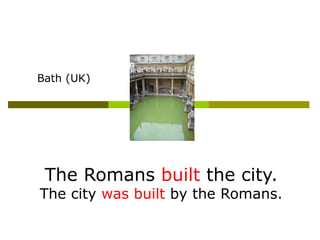
Bath (UK)


 The Romans built the city.
The city was built by the Romans.
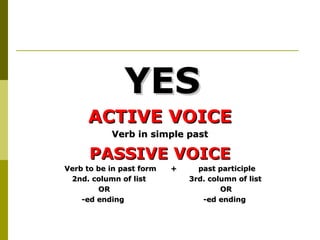
YES
     ACTIVE VOICE
           Verb in simple past

      PASSIVE VOICE
Verb to be in past form   +     past participle
 2nd. column of list          3rd. column of list
        OR                            OR
    -ed ending                   -ed ending
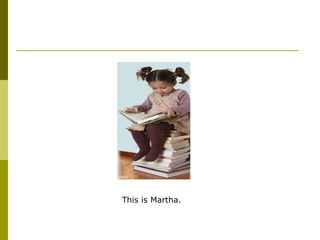
This is Martha.
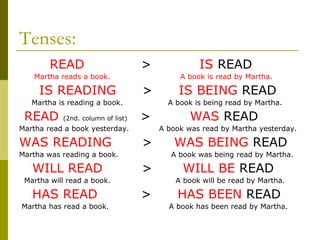
Tenses:
        READ                       >             IS READ
   Martha reads a book.                     A book is read by Martha.

     IS READING                    >        IS BEING READ
   Martha is reading a book.             A book is being read by Martha.

 READ      (2nd. column of list)   >           WAS READ
Martha read a book yesterday.          A book was read by Martha yesterday.

WAS READING                        >      WAS BEING READ
Martha was reading a book.                A book was being read by Martha.

   WILL READ                       >         WILL BE READ
 Martha will read a book.                  A book will be read by Martha.

   HAS READ                        >       HAS BEEN READ
Martha has read a book.                  A book has been read by Martha.
OH
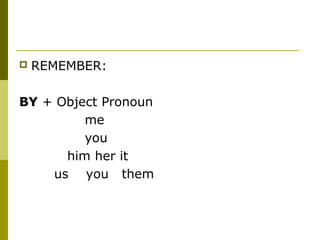
   REMEMBER:

BY + Object Pronoun
         me
         you
      him her it
    us you them

The passive 3rs 4ts (1)

  • 1.
  • 2.
    Look at thepicture: ACTIVE VOICE: present The girl speaks Japanese.
  • 3.
    PASSIVE VOICE: present TO BE + PAST PARTICIPLE Japanese is spoken by the girl.
  • 4.
    The girl speaks Japanese.  Japanese is spoken by the girl.
  • 5.
    What are thechanges?  The Subject in the Active voice becomes the Agent The girl speaks Japanese.  The Direct Object in the Active voice becomes the Subject Japanese is spoken by the girl.
  • 6.
     THIS IS WHAT HAPPENS WITH SENTENCES WITH PRESENT SIMPLE VERB FORMS BUT
  • 7.
    WHAT HAPPENS WITH THE OTHER VERB TENSES? Present continuous, simple past, past continuous, future, present perfect…
  • 8.
  • 9.
    The girl iseating an ice cream. An ice cream is being eaten by the girl.
  • 10.
    YES ACTIVE VOICE Verb in present continuous PASSIVE VOICE Verb to be in present cont. + past participle Am/is/are + VERB +ING 3rd. column of list OR VERB +ed ending
  • 11.
    Bath (UK) TheRomans built the city. The city was built by the Romans.
  • 12.
    YES ACTIVE VOICE Verb in simple past PASSIVE VOICE Verb to be in past form + past participle 2nd. column of list 3rd. column of list OR OR -ed ending -ed ending
  • 13.
  • 14.
    Tenses: READ > IS READ Martha reads a book. A book is read by Martha. IS READING > IS BEING READ Martha is reading a book. A book is being read by Martha. READ (2nd. column of list) > WAS READ Martha read a book yesterday. A book was read by Martha yesterday. WAS READING > WAS BEING READ Martha was reading a book. A book was being read by Martha. WILL READ > WILL BE READ Martha will read a book. A book will be read by Martha. HAS READ > HAS BEEN READ Martha has read a book. A book has been read by Martha.
  • 15.
  • 16.
    REMEMBER: BY + Object Pronoun me you him her it us you them