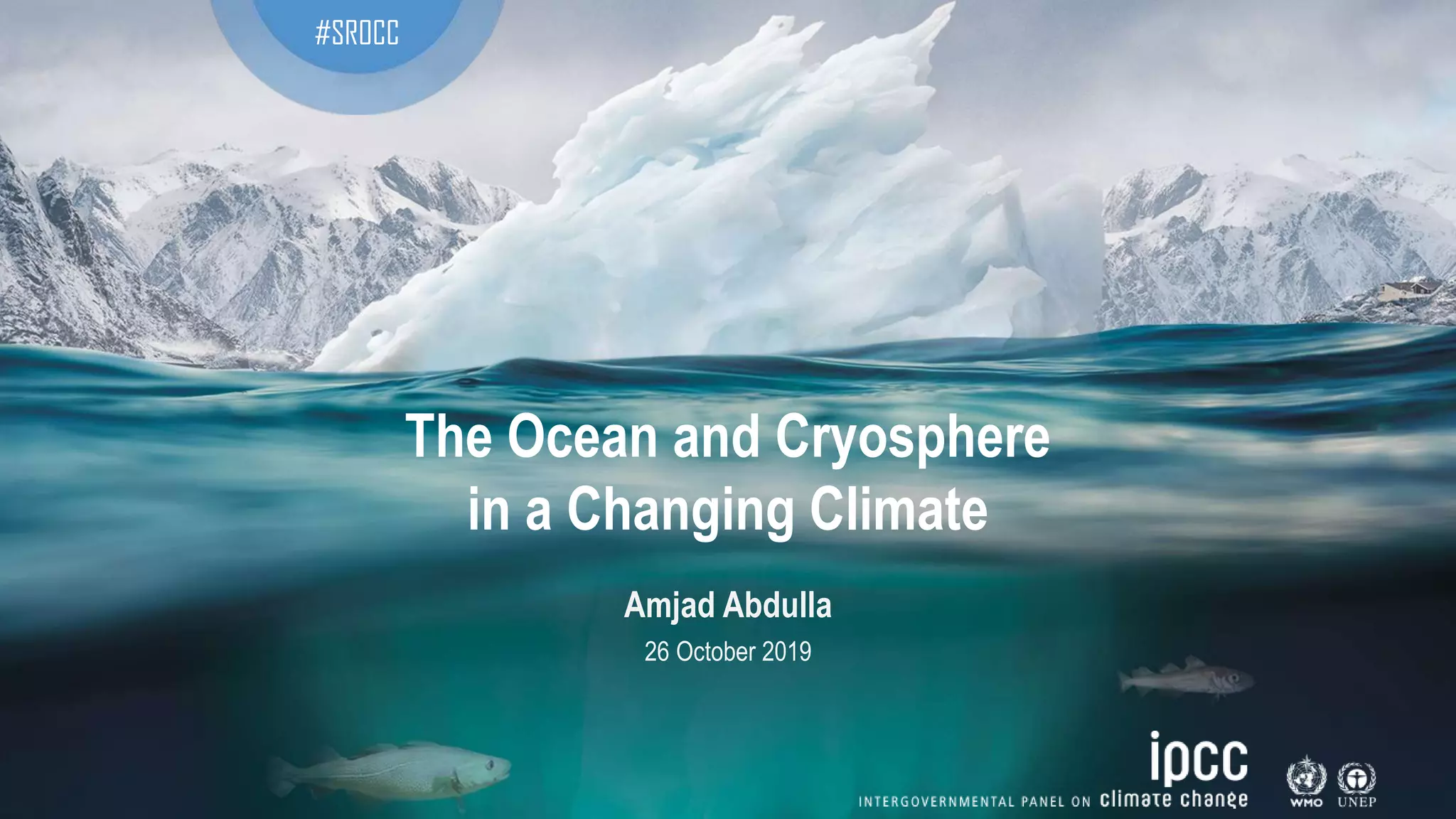
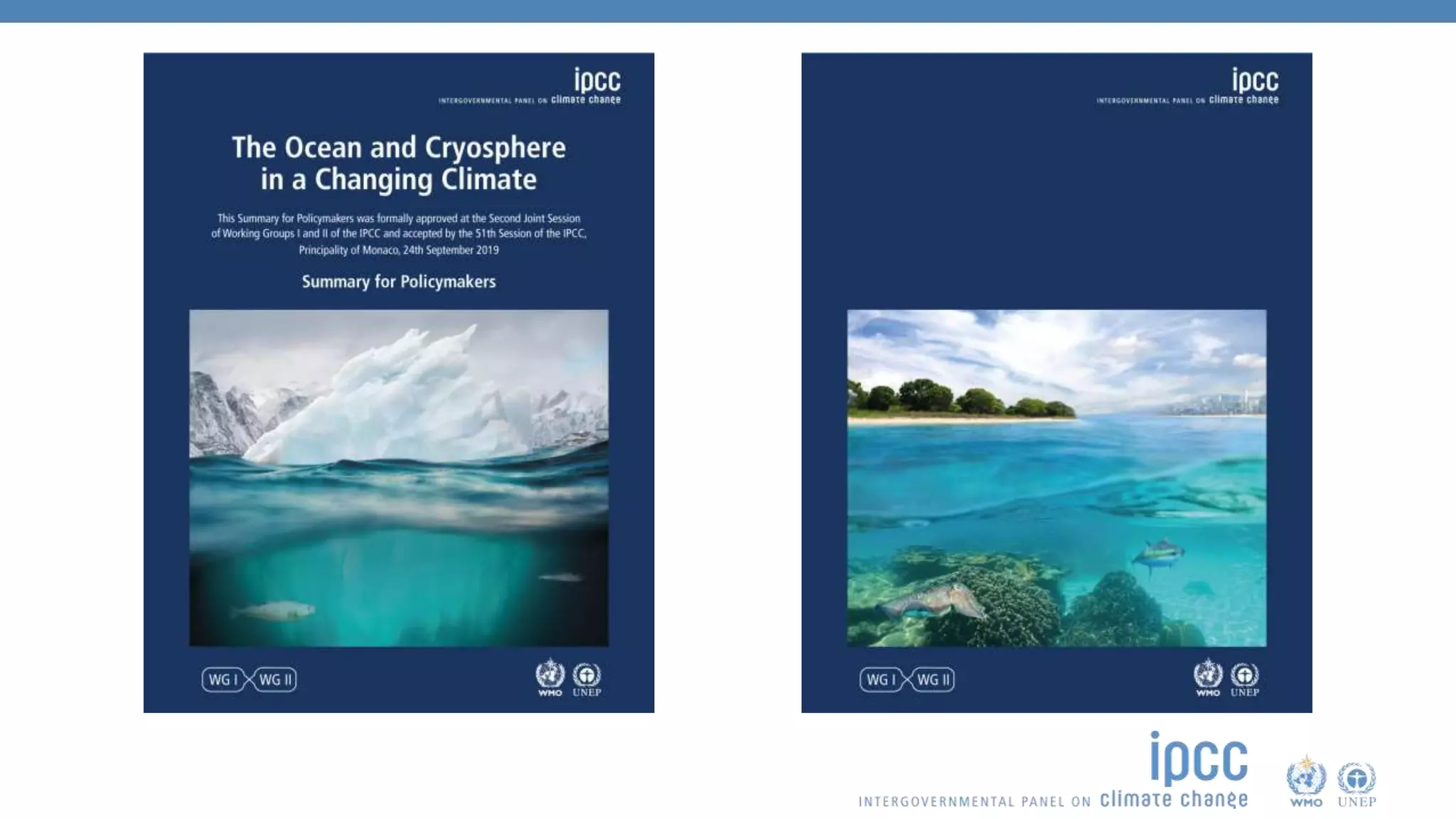
The Ocean and Cryosphere
in a Changing Climate
#SROCC
Amjad Abdulla
26 October 2019
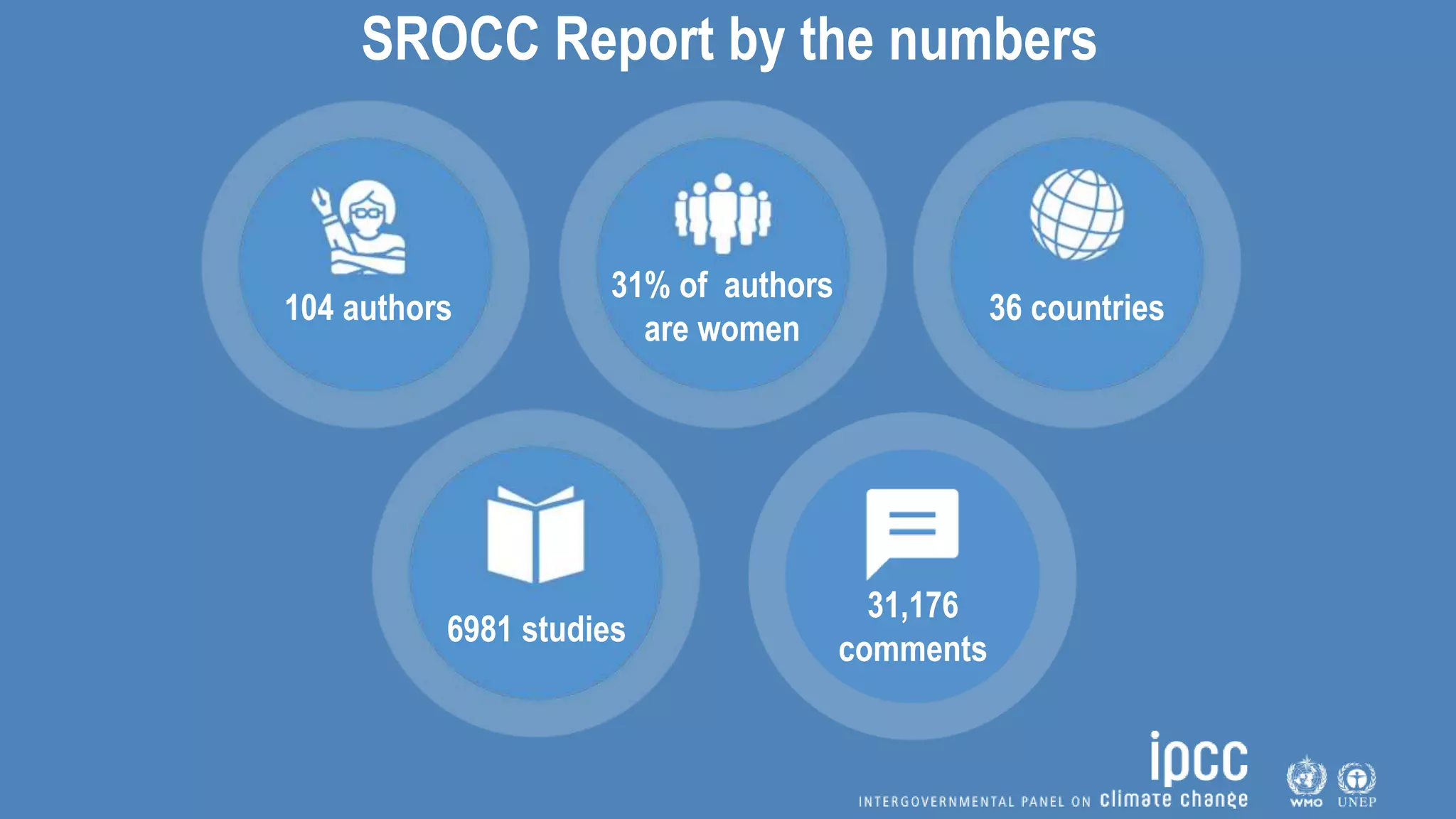
SROCC Report by the numbers
104 authors 36 countries
31% of authors
are women
31,176
comments
6981 studies
The world’s ocean and cryosphere have been
‘taking the heat’ from climate change for decades.
Consequences for nature and humanity are
sweeping and severe.
Image Source: @ Elza_Bouhassira
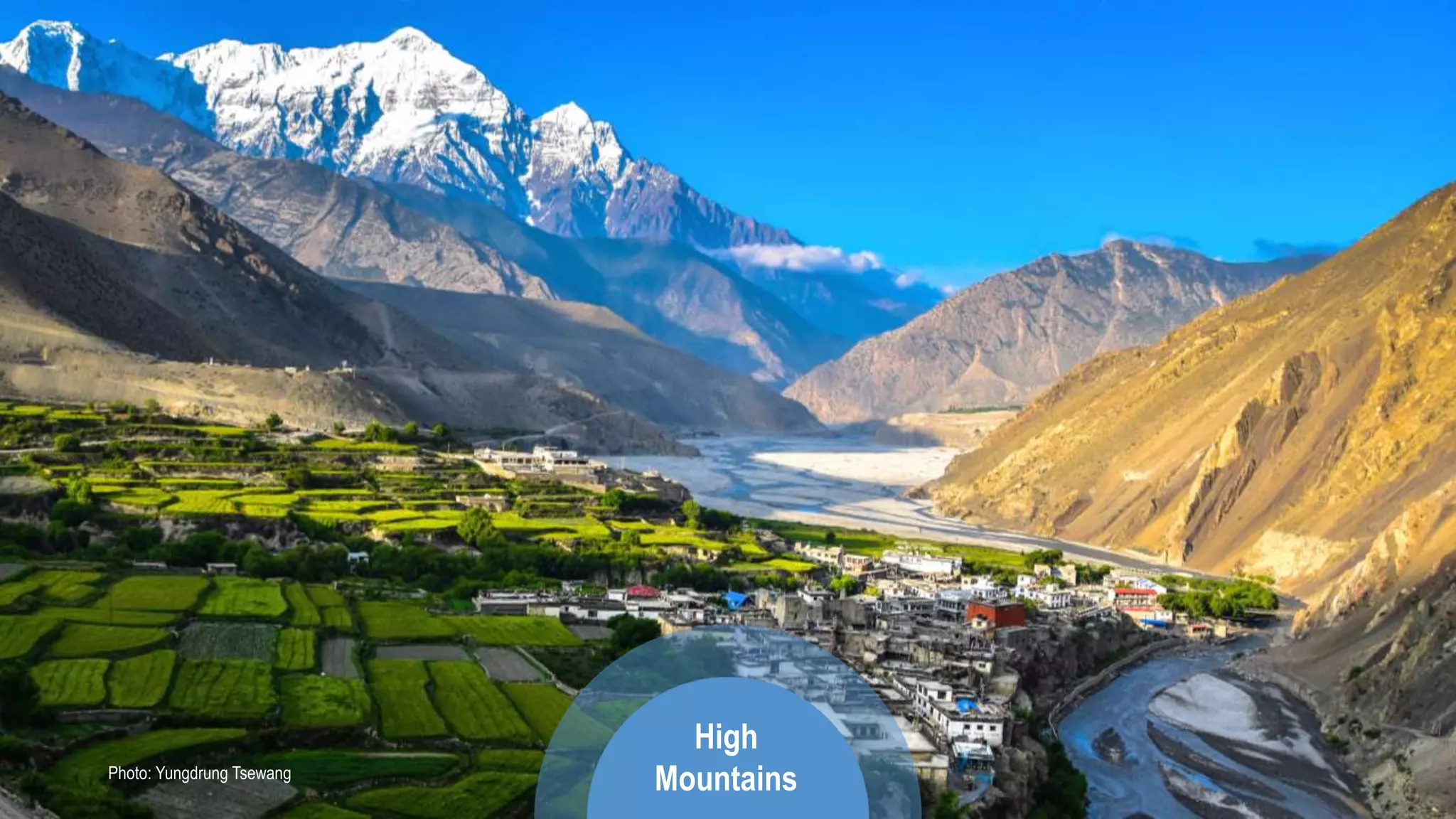
Photo: Yungdrung Tsewang
High
Mountains
Changes in the mountain cryosphere
• Smaller glaciers found, for example, in Europe, eastern Africa, the tropical
Andes and Indonesia are projected to lose more than 80% of their current ice
mass by 2100 if emissions continue to increase strongly.
• As glaciers melt and snow cover shrinks, warm-adapted plant and animal
species migrate upslope. Cold- and snow-adapted species decrease and risk
eventual extinction, especially without conservation.
• The retreat of the cryosphere will continue to adversely affect recreational
activites, tourism and cultural assets.
Changes in the mountain cryosphere
• Hazards for people, for example through landslides, snow avalanches or
floods will increase as glaciers and permafrost decline.
• Changing water availability and quality affects households, agriculture,
energy systems, and people both in the region and beyond.
• Limiting warming to 1.5°C would help people to adjust to changes in water
supplies and limit risks related to mountain hazards.
• Integrated water management and transboundary cooperation provide
opportunities to reduce the impacts of climate-related cryosphere changes on
water resources.
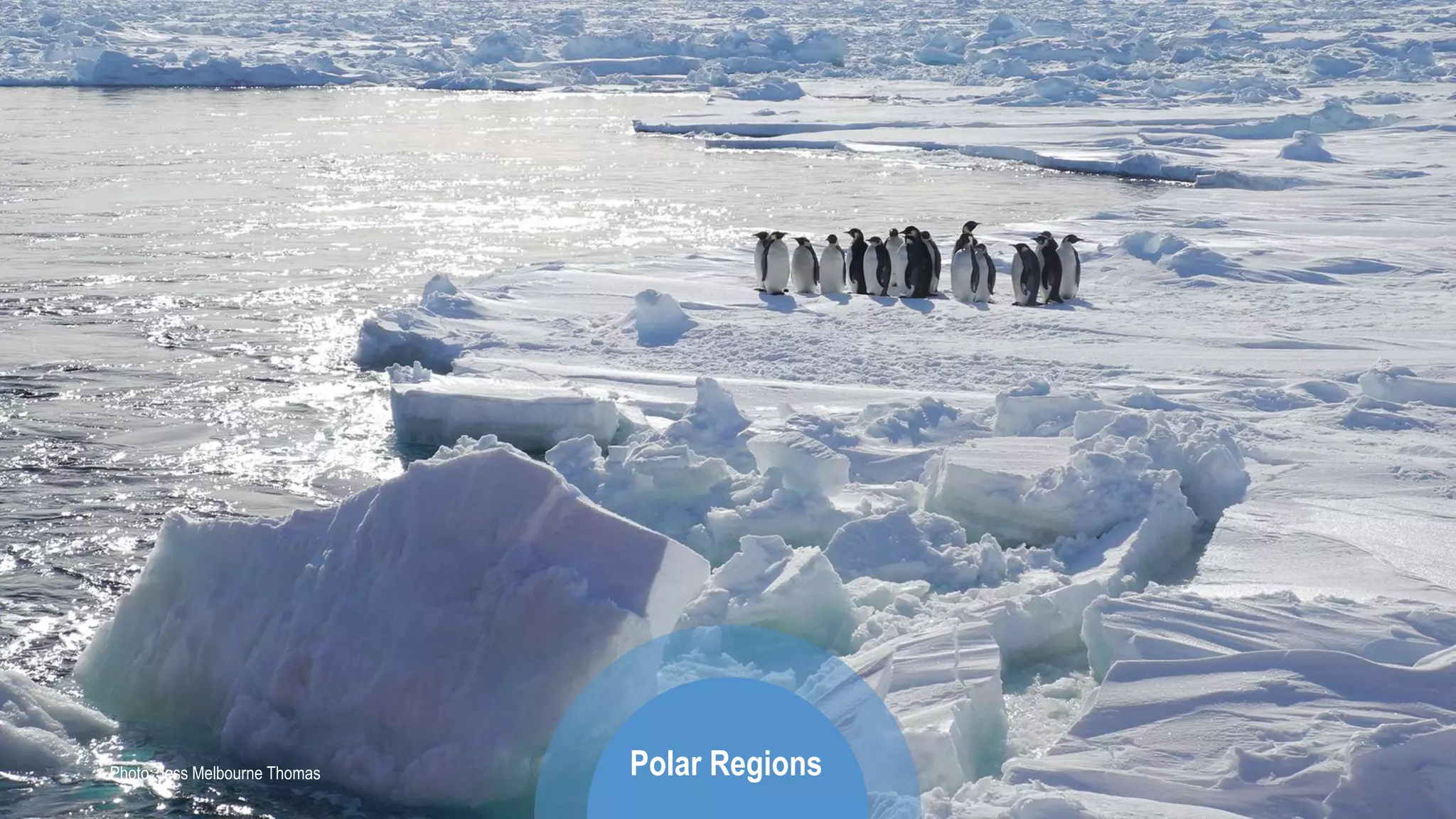
Photo: Jess Melbourne Thomas Polar Regions
• The Greenland and Antarctic ice sheets are losing mass, accelerating global
sea level rise. They will continue to melt, committing the planet to long-term
global sea level rise.
• Arctic sea ice is declining in every month of the year, and is getting
thinner.
• At global warming of 1.5°C, the Arctic Ocean will rarely be free of sea ice in
September. At 2°C warming, this will occur up to one year in three.
Changes in polar regions
• Permafrost is thawing, with the potential of adding more greenhouse gases
to the atmosphere.
• With global warming limited to well below 2°C, around one quarter of near-
surface permafrost will thaw by 2100. If emissions continue to increase
strongly, around 70% near-surface permafrost could be lost.
• People living in the Arctic, especially indigenous peoples, are already
adjusting their travel and hunting activities to the seasonality and safety of
land, ice and snow conditions. Their success in adapting depends on funding,
capacities and institutional support.
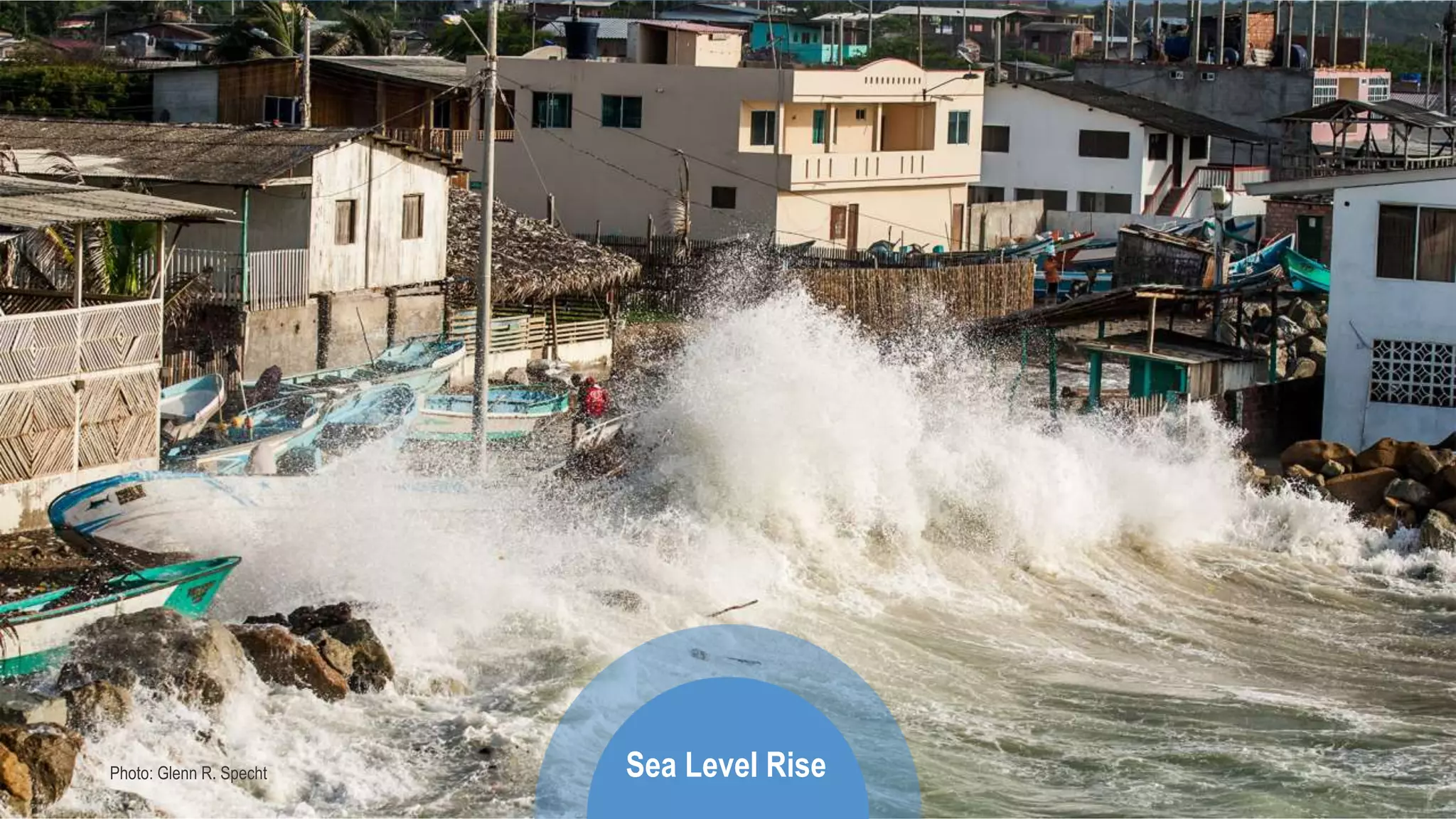
Photo: Glenn R. Specht Sea Level Rise
• During the 20th century, the global mean sea level rose by about 15cm.
• Sea level is currently rising more than twice as fast and will further
accelerate reaching up to 1.10m in 2100 if emissions are not sharply
reduced.
• Extreme sea level events which now occur rarely during high tides and
intense storms will become more common.
• Many low-lying coastal cities and small islands will be exposed to risks of
flooding and land loss annually by 2050, especially without strong adaptation.
Sea level rise and coastal extremes
• Various adaptation approaches are already being implemented, including:
o protection
o accommodation
o ecosystem-based adaptation
o coastal advance
o managed relocation
• People with the highest exposure and vulnerability are often those with the
lowest capacity to respond.
Sea level rise and coastal extremes
Photo: Paulo Krug
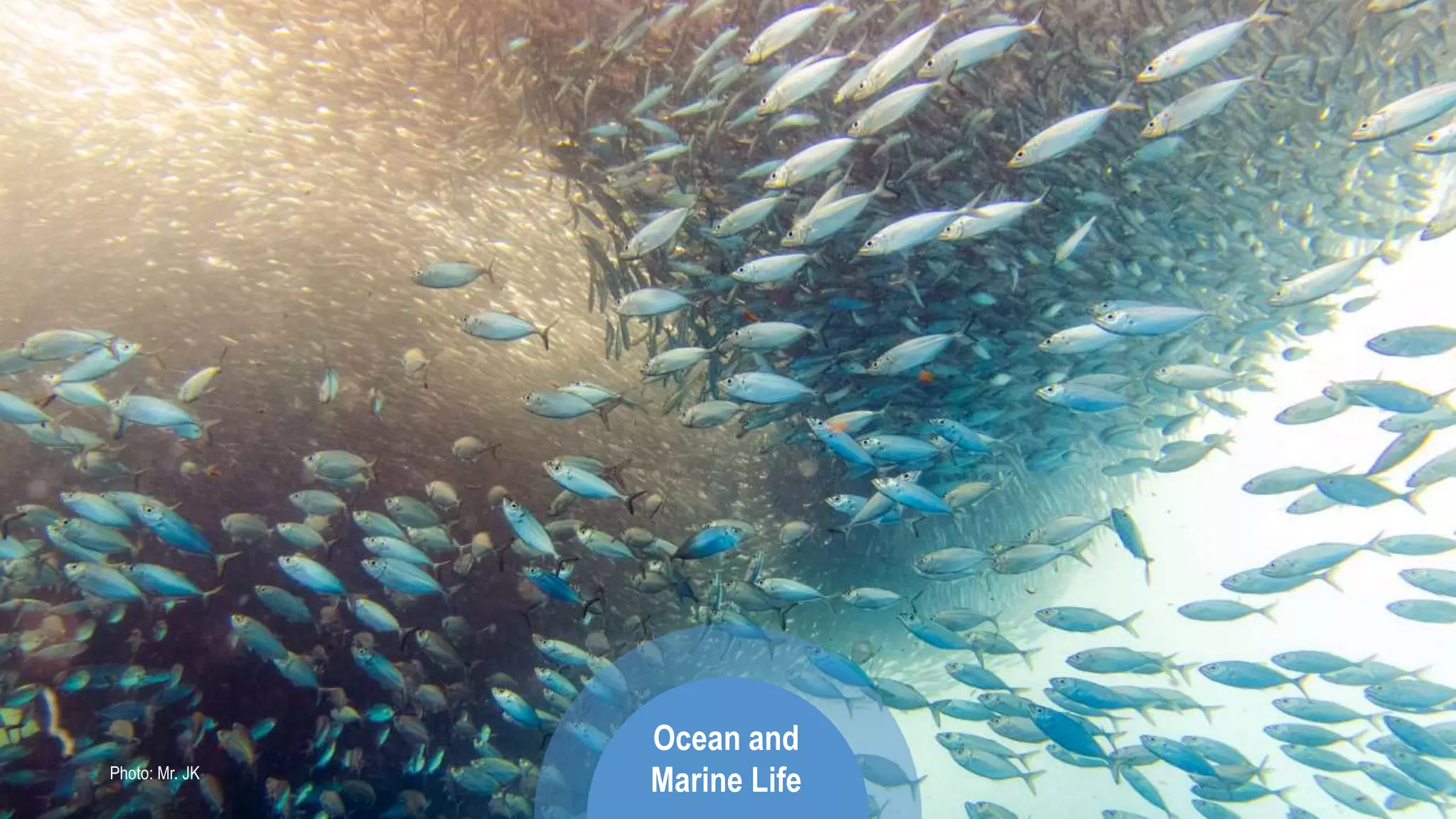
Ocean and
Marine LifePhoto: Mr. JK
Changes in the ocean
• To date, the ocean has taken up more than 90% of the excess heat in the
climate system. By 2100, the ocean will take up 2 to 4 times more heat if
global warming is limited to 2°C and up to 5 to 7 times at higher emissions.
• Ocean warming reduces mixing between water layers and therefore the
supply of oxygen and nutrients for marine life.
• Marine heatwaves are becoming more frequent and severe, especially
harming warm-water corals, kelp forests and the distribution of marine life.
• The ocean takes up human-induced carbon emissions. This increases ocean
acidity. It has taken up 20 to 30% of these emissions and continued uptake
will exacerbate this.
Changes in marine life
• Changes in the ocean cause shifts in fish populations. This has reduced the
global catch potential. In the future some regions will see further decreases
but there will be increases in others.
• Communities that depend highly on seafood may face risks to nutritional
health and food security.
• Reducing other pressures such as pollution will further help marine life deal
with changes in their environment.
• Policy frameworks for fisheries management and marine protected
areas offer opportunities for people to adapt.
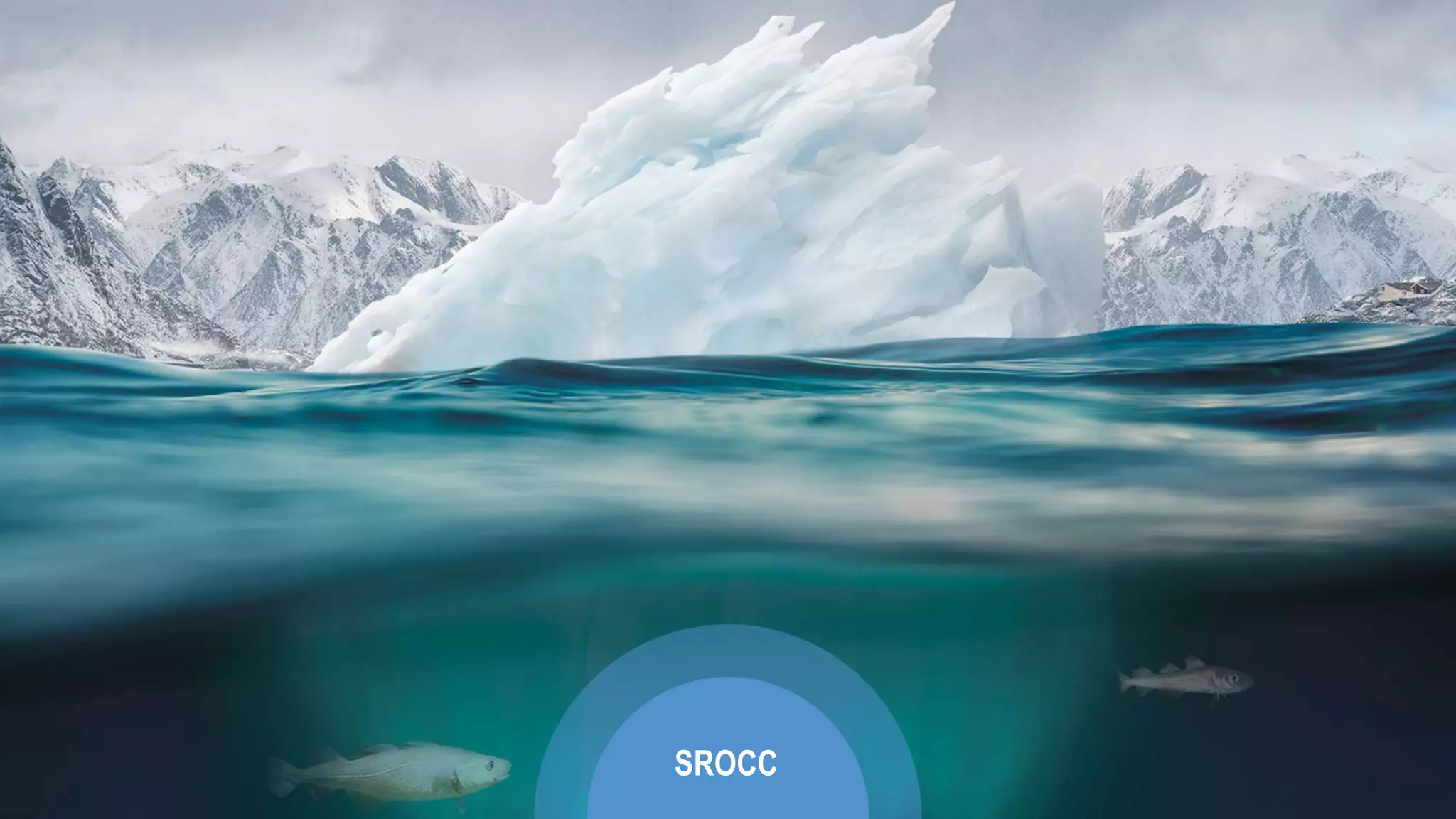
SROCC
Knowledge for action
The IPCC Special Report on the Ocean and Cryosphere in a Changing Climate
• highlights the urgency of prioritizing timely, ambitious and coordinated
action to address widespread and enduring changes in the ocean and
cryosphere;
• empowers people, communities and governments to tackle the unprecedented
transitions in all aspects of society;
• provides evidence of the benefits of combining scientific with local and
indigenous knowledge;
• focuses, for the first time, on the importance of education and climate literacy.
The more decisively and earlier we act, the
more able we will be to address unavoidable
changes, manage risks, improve our lives
and achieve sustainability for ecosystems
and people around the world – today and in
the future.
Our ocean and cryosphere –
They sustain us.
They are under pressure.
Their changes affect all our lives.
The time for action is now.
More Information:
Website: http://ipcc.ch
IPCC Secretariat: ipcc-sec@wmo.int
IPCC Press Office: ipcc-media@wmo.int
@IPCC_CH
@IPCCNews
@IPCC_Climate_Change
www.vimeo.com/ipcc
www.youtube.com/c/ipccgeneva
Find us on:

The Ocean and Cryosphere in a Changing Climate

  • 1.
    The Ocean andCryosphere in a Changing Climate #SROCC Amjad Abdulla 26 October 2019
  • 3.
    SROCC Report bythe numbers 104 authors 36 countries 31% of authors are women 31,176 comments 6981 studies
  • 4.
    The world’s oceanand cryosphere have been ‘taking the heat’ from climate change for decades. Consequences for nature and humanity are sweeping and severe.
  • 5.
    Image Source: @Elza_Bouhassira Photo: Yungdrung Tsewang High Mountains
  • 6.
    Changes in themountain cryosphere • Smaller glaciers found, for example, in Europe, eastern Africa, the tropical Andes and Indonesia are projected to lose more than 80% of their current ice mass by 2100 if emissions continue to increase strongly. • As glaciers melt and snow cover shrinks, warm-adapted plant and animal species migrate upslope. Cold- and snow-adapted species decrease and risk eventual extinction, especially without conservation. • The retreat of the cryosphere will continue to adversely affect recreational activites, tourism and cultural assets.
  • 7.
    Changes in themountain cryosphere • Hazards for people, for example through landslides, snow avalanches or floods will increase as glaciers and permafrost decline. • Changing water availability and quality affects households, agriculture, energy systems, and people both in the region and beyond. • Limiting warming to 1.5°C would help people to adjust to changes in water supplies and limit risks related to mountain hazards. • Integrated water management and transboundary cooperation provide opportunities to reduce the impacts of climate-related cryosphere changes on water resources.
  • 8.
    Photo: Jess MelbourneThomas Polar Regions
  • 9.
    • The Greenlandand Antarctic ice sheets are losing mass, accelerating global sea level rise. They will continue to melt, committing the planet to long-term global sea level rise. • Arctic sea ice is declining in every month of the year, and is getting thinner. • At global warming of 1.5°C, the Arctic Ocean will rarely be free of sea ice in September. At 2°C warming, this will occur up to one year in three. Changes in polar regions
  • 10.
    Changes in polarregions • Permafrost is thawing, with the potential of adding more greenhouse gases to the atmosphere. • With global warming limited to well below 2°C, around one quarter of near- surface permafrost will thaw by 2100. If emissions continue to increase strongly, around 70% near-surface permafrost could be lost. • People living in the Arctic, especially indigenous peoples, are already adjusting their travel and hunting activities to the seasonality and safety of land, ice and snow conditions. Their success in adapting depends on funding, capacities and institutional support.
  • 11.
    Photo: Glenn R.Specht Sea Level Rise
  • 12.
    • During the20th century, the global mean sea level rose by about 15cm. • Sea level is currently rising more than twice as fast and will further accelerate reaching up to 1.10m in 2100 if emissions are not sharply reduced. • Extreme sea level events which now occur rarely during high tides and intense storms will become more common. • Many low-lying coastal cities and small islands will be exposed to risks of flooding and land loss annually by 2050, especially without strong adaptation. Sea level rise and coastal extremes
  • 13.
    • Various adaptationapproaches are already being implemented, including: o protection o accommodation o ecosystem-based adaptation o coastal advance o managed relocation • People with the highest exposure and vulnerability are often those with the lowest capacity to respond. Sea level rise and coastal extremes
  • 14.
    Photo: Paulo Krug Oceanand Marine LifePhoto: Mr. JK
  • 15.
    Changes in theocean • To date, the ocean has taken up more than 90% of the excess heat in the climate system. By 2100, the ocean will take up 2 to 4 times more heat if global warming is limited to 2°C and up to 5 to 7 times at higher emissions. • Ocean warming reduces mixing between water layers and therefore the supply of oxygen and nutrients for marine life. • Marine heatwaves are becoming more frequent and severe, especially harming warm-water corals, kelp forests and the distribution of marine life. • The ocean takes up human-induced carbon emissions. This increases ocean acidity. It has taken up 20 to 30% of these emissions and continued uptake will exacerbate this.
  • 16.
    Changes in marinelife • Changes in the ocean cause shifts in fish populations. This has reduced the global catch potential. In the future some regions will see further decreases but there will be increases in others. • Communities that depend highly on seafood may face risks to nutritional health and food security. • Reducing other pressures such as pollution will further help marine life deal with changes in their environment. • Policy frameworks for fisheries management and marine protected areas offer opportunities for people to adapt.
  • 17.
  • 18.
    Knowledge for action TheIPCC Special Report on the Ocean and Cryosphere in a Changing Climate • highlights the urgency of prioritizing timely, ambitious and coordinated action to address widespread and enduring changes in the ocean and cryosphere; • empowers people, communities and governments to tackle the unprecedented transitions in all aspects of society; • provides evidence of the benefits of combining scientific with local and indigenous knowledge; • focuses, for the first time, on the importance of education and climate literacy.
  • 19.
    The more decisivelyand earlier we act, the more able we will be to address unavoidable changes, manage risks, improve our lives and achieve sustainability for ecosystems and people around the world – today and in the future.
  • 20.
    Our ocean andcryosphere – They sustain us. They are under pressure. Their changes affect all our lives. The time for action is now.
  • 21.
    More Information: Website: http://ipcc.ch IPCCSecretariat: ipcc-sec@wmo.int IPCC Press Office: ipcc-media@wmo.int @IPCC_CH @IPCCNews @IPCC_Climate_Change www.vimeo.com/ipcc www.youtube.com/c/ipccgeneva Find us on: