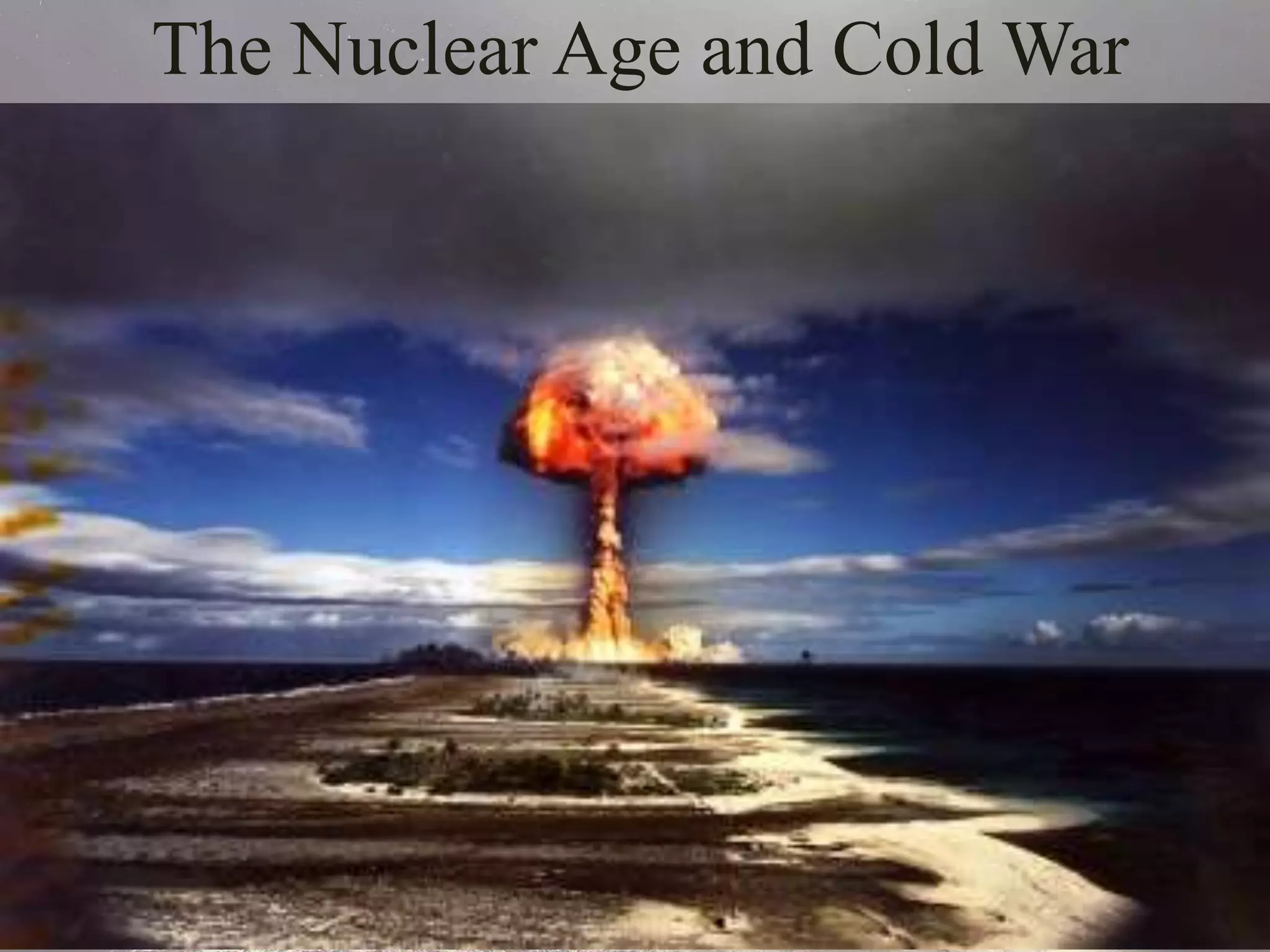
The Nuclear Age and Cold War
Cold war
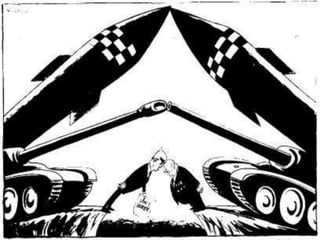
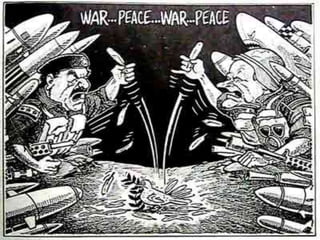
• What was the cold war?
• Period between 1945 and 1991, tension and
rivalry in various aspects between the USA
and USSR(Union of Soviet Socialist Republics)
• No conventional war took place during this
time between the two countries
• What does conventional war mean?
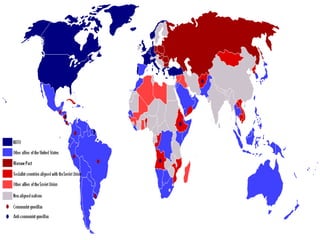
• Most of the world sided either with the USA
or USSA
• If war erupted between the two. What would
have been the outcome?
1. Changing of the Nature of war
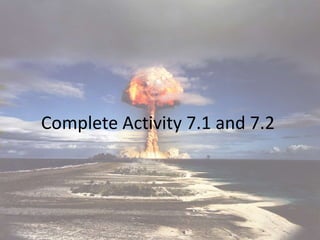
• Hiroshima and Nagasaki
• USA dropped nuclear weapons on these cities
in an attempt to end World War Two
• Nearly 200 000 people died.
• These nuclear weapons were made possible
by the Manhattan project.
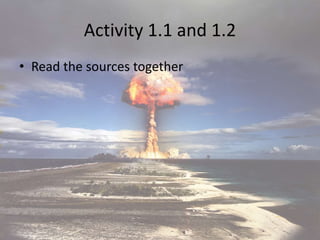
Activity 1.1 and 1.2
• Read the sources together
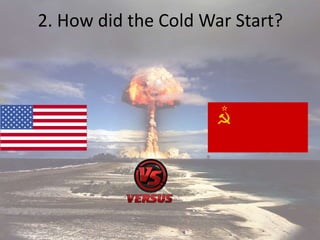
2. How did the Cold War Start?
• During WW2 they were allies
• After WW2 they were superpowers
• And as a result rivals
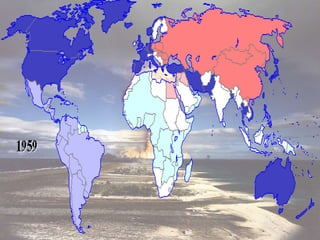
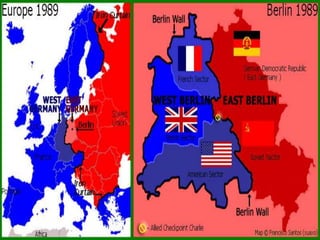
• The USA controlled the West, the USSR the
East
• Iron curtain was the term coined by Winston
Churchill in a speech after WW2
Spheres of influence
• What does this concept mean?
• So the USSR had a sphere of influence thanks
to Josef Stalin in eastern Europe etc.
• The USA had its sphere of influence in the
west due to the Truman Doctrine. What was
it?
• It was a policy of the USA to send financial or
technical aid to any country that it considered
to be under threat of a communist takeover.
Complete Activity 2.1
• Read the Sources together
3. Cold War and the nuclear age
• In 1949 both the USA and USSR possessed
nuclear missiles.
• Why was this dangerous?
• 1961 – Hydrogen bomb comes into existence
• Why is this significant?
• A thousand times more destructive than the
bomb dropped on Hiroshima.
• This would result in…
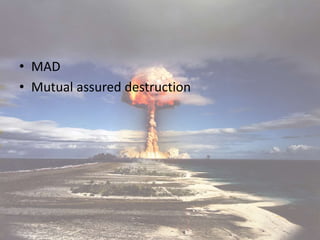
• MAD
• Mutual assured destruction
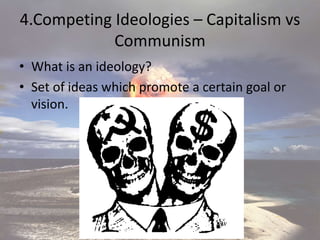
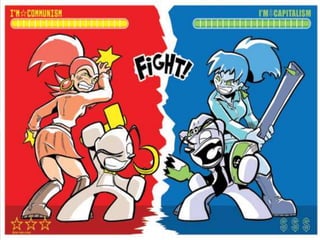
4.Competing Ideologies – Capitalism vs
Communism
• What is an ideology?
• Set of ideas which promote a certain goal or
vision.
Capitalism
• Economic system
• People are free to own a business and make a
profit
• Linked to democracy
• People can elect a government to represent
them
• Individual freedoms are viewed as extremely
important
USA
• Multi-party democracy
• One of the wealthiest economies
• Free market
• Privately owned
• Profit system
• Uneven distribution of wealth
• Individual rights more important than social
equality
• Limited human rights restrictions
• Eg, freedom of speech
• Media owned by private companies
• Rare censorship
USSR
• One party rule
• Government elected from Communist Party
• Large and powerful economy
• Government run economy
• Business and farms owned by government
• Profit goes to government and used for the people
• Wealth is more evenly distributed
• Lower Gross National Income compared to USA
• Many social services for free
• Individual rights less important than communal rights
• Strict limitations on some human rights
• Right to work and education guaranteed
• Media owned by the government
• Censorship is at a high level than in the USA
Complete Activity 5.1 and 5.2
: pg 183
5. The Arms Race
• 1961 – Both countries have nuclear
capabilities – aimed at each other
• This could actually reduce the chance of war.
Why?
• Despite this, in 1962 Nuclear War almost
happened.
• How?
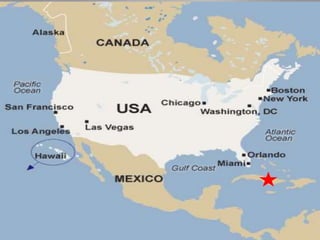
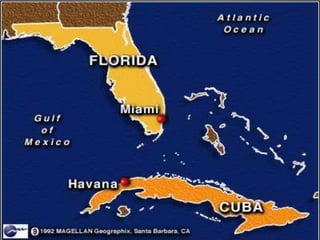
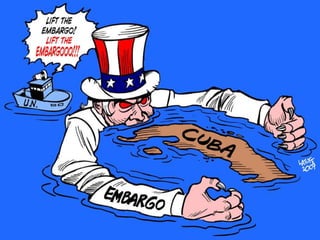
• Cuban Missile Crises!
Cuban Missile Crises
• Background – 1959 - Castro overthrew the
American backed dictator.
• America had many companies and interests in
Cuba.
• In 1961 the USA tried to overthrow Castros
government with an invasion at the Bay of
Pigs
• This failed massively.
• As a result, the USSR supplied Cuba with
equipment, including missiles enabling her to
to defend herself from the USA
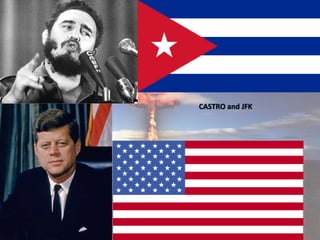
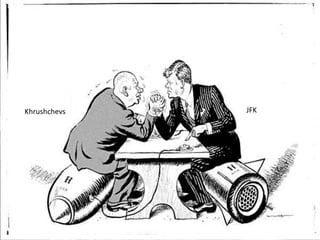
CASTRO and JFK
Khrushchevs JFK
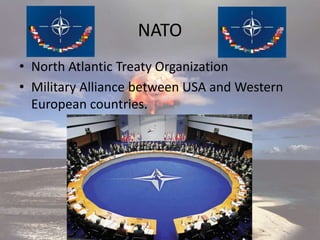
NATO
• North Atlantic Treaty Organization
• Military Alliance between USA and Western
European countries.
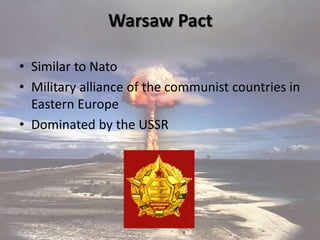
Warsaw Pact
• Similar to Nato
• Military alliance of the communist countries in
Eastern Europe
• Dominated by the USSR
Complete Activity 5.1 and Activity 5.2
6. Conflict over territory
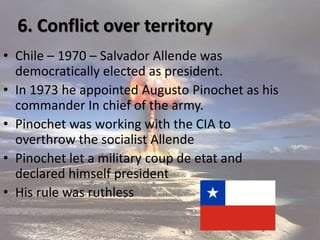
• Chile – 1970 – Salvador Allende was
democratically elected as president.
• In 1973 he appointed Augusto Pinochet as his
commander In chief of the army.
• Pinochet was working with the CIA to
overthrow the socialist Allende
• Pinochet let a military coup de etat and
declared himself president
• His rule was ruthless
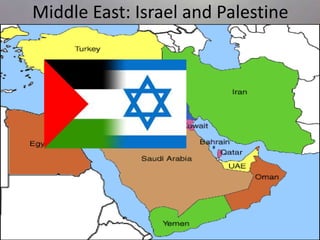
Middle East: Israel and Palestine
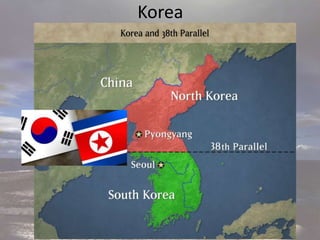
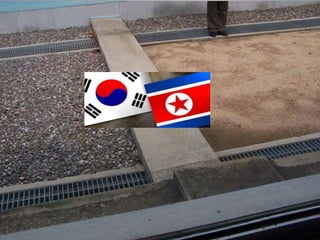
Korea
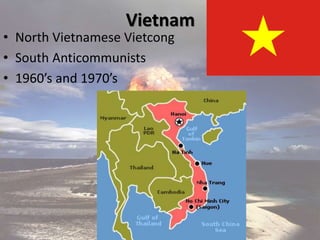
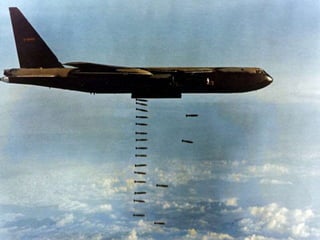
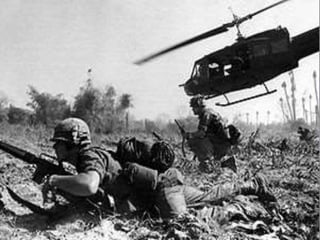
Vietnam
• North Vietnamese Vietcong
• South Anticommunists
• 1960’s and 1970’s
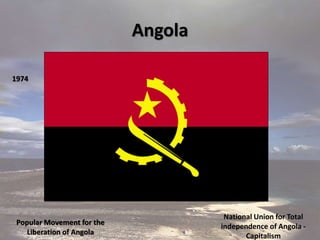
Angola
Popular Movement for the
Liberation of Angola
National Union for Total
independence of Angola -
Capitalism
1974
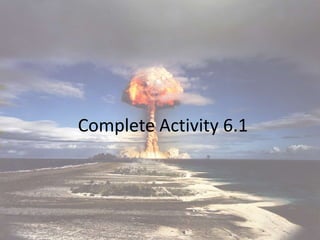
Complete Activity 6.1
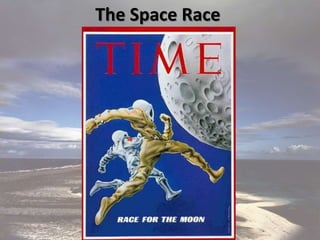
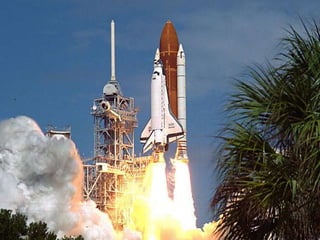
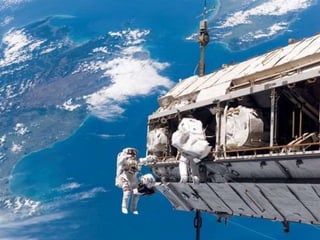
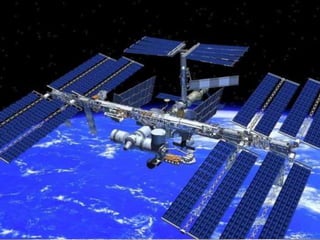
The Space Race
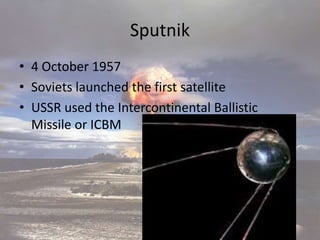
Sputnik
• 4 October 1957
• Soviets launched the first satellite
• USSR used the Intercontinental Ballistic
Missile or ICBM
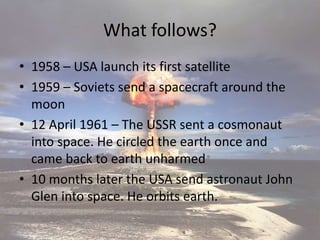
What follows?
• 1958 – USA launch its first satellite
• 1959 – Soviets send a spacecraft around the
moon
• 12 April 1961 – The USSR sent a cosmonaut
into space. He circled the earth once and
came back to earth unharmed
• 10 months later the USA send astronaut John
Glen into space. He orbits earth.
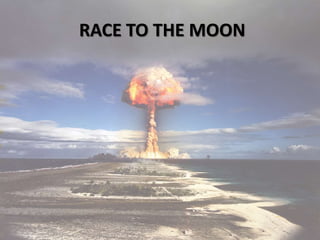
RACE TO THE MOON
Complete Activity 7.1 and 7.2
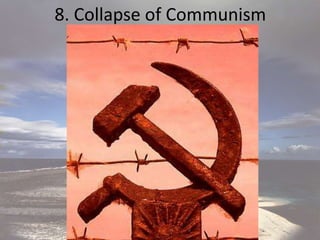
8. Collapse of Communism
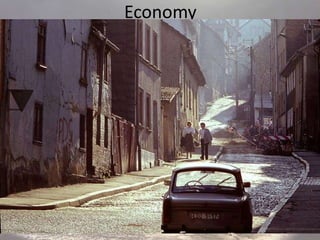
Economy
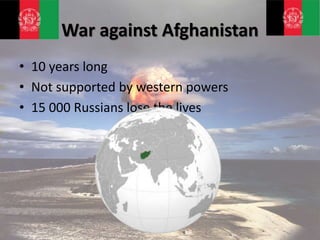
War against Afghanistan
• 10 years long
• Not supported by western powers
• 15 000 Russians lose the lives
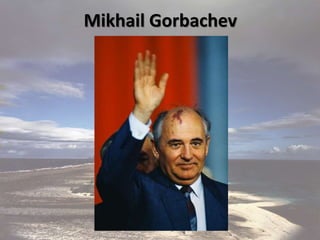
Mikhail Gorbachev
• Speech by Gorbachev
• 7 December 1988
Perestroika
• Restructuring
• Perestroika means mass initiative. It is the conference of development of
democracy, socialist self-government, encouragement of initiative and creative
endeavour, improved water and disciplined, more glasnost, criticism and self-
criticism in all spheres of our society. It is utmost respect for the individual and
consideration for personal dignity.
• Perestroika is the all-round intensification of the Soviet economy, the revival and
development of the principles of democratic centralism in running the national
economy, the universal introduction of economic methods, the renunciation of
management by injunction and by administrative methods, and the overall
encouragement of innovation and socialist enterprise.
• Perestroika means a resolute shift to scientific methods, an ability to provide a
solid scientific basis for every new initiative. It means the combination of the
achievements of the scientific and technological revolution with a planned
economy
• Perestroika means priority development of the social sphere aimed at ever better
satisfaction of the Soviet people's requirements for good living and working
conditions, for good rest and recreation, education and health care. It means
unceasing concern for cultural and spiritual wealth, for the culture of every
individual and society as a whole.
• Perestroika means the elimination from society of the distortions of socialist
ethics, the consistent implementation of the principles of social justice. It means
the unity of words and deeds, rights and duties. It is the elevation of honest,
highly-qualified labor, the overcoming of leveling tendencies in pay and
consumerism. . .
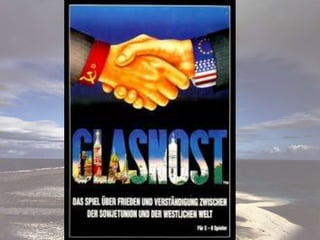
Glasnost
• a Soviet policy permitting open discussion of
political and social issues and freer
dissemination of news and information
•
Complete Activity 8.1 and 8.2
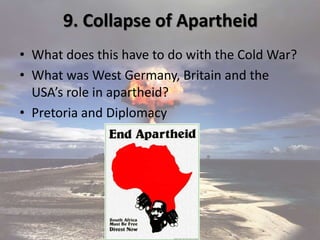
9. Collapse of Apartheid
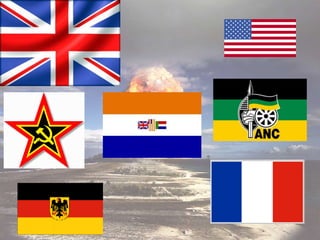
• What does this have to do with the Cold War?
• What was West Germany, Britain and the
USA’s role in apartheid?
• Pretoria and Diplomacy
Complete Activity 9.1 and 9.2

The nuclear age and cold war

  • 1.
    The Nuclear Ageand Cold War
  • 2.
    Cold war • Whatwas the cold war? • Period between 1945 and 1991, tension and rivalry in various aspects between the USA and USSR(Union of Soviet Socialist Republics) • No conventional war took place during this time between the two countries • What does conventional war mean? • Most of the world sided either with the USA or USSA • If war erupted between the two. What would have been the outcome?
  • 6.
    1. Changing ofthe Nature of war • Hiroshima and Nagasaki • USA dropped nuclear weapons on these cities in an attempt to end World War Two • Nearly 200 000 people died. • These nuclear weapons were made possible by the Manhattan project.
  • 7.
    Activity 1.1 and1.2 • Read the sources together
  • 8.
    2. How didthe Cold War Start?
  • 9.
    • During WW2they were allies • After WW2 they were superpowers • And as a result rivals • The USA controlled the West, the USSR the East • Iron curtain was the term coined by Winston Churchill in a speech after WW2
  • 13.
    Spheres of influence •What does this concept mean? • So the USSR had a sphere of influence thanks to Josef Stalin in eastern Europe etc. • The USA had its sphere of influence in the west due to the Truman Doctrine. What was it? • It was a policy of the USA to send financial or technical aid to any country that it considered to be under threat of a communist takeover.
  • 14.
    Complete Activity 2.1 •Read the Sources together
  • 15.
    3. Cold Warand the nuclear age • In 1949 both the USA and USSR possessed nuclear missiles. • Why was this dangerous? • 1961 – Hydrogen bomb comes into existence • Why is this significant? • A thousand times more destructive than the bomb dropped on Hiroshima. • This would result in…
  • 18.
    • MAD • Mutualassured destruction
  • 19.
    4.Competing Ideologies –Capitalism vs Communism • What is an ideology? • Set of ideas which promote a certain goal or vision.
  • 21.
    Capitalism • Economic system •People are free to own a business and make a profit • Linked to democracy • People can elect a government to represent them • Individual freedoms are viewed as extremely important
  • 22.
    USA • Multi-party democracy •One of the wealthiest economies • Free market • Privately owned • Profit system • Uneven distribution of wealth • Individual rights more important than social equality • Limited human rights restrictions • Eg, freedom of speech • Media owned by private companies • Rare censorship
  • 23.
    USSR • One partyrule • Government elected from Communist Party • Large and powerful economy • Government run economy • Business and farms owned by government • Profit goes to government and used for the people • Wealth is more evenly distributed • Lower Gross National Income compared to USA • Many social services for free • Individual rights less important than communal rights • Strict limitations on some human rights • Right to work and education guaranteed • Media owned by the government • Censorship is at a high level than in the USA
  • 24.
    Complete Activity 5.1and 5.2 : pg 183
  • 25.
    5. The ArmsRace • 1961 – Both countries have nuclear capabilities – aimed at each other • This could actually reduce the chance of war. Why? • Despite this, in 1962 Nuclear War almost happened. • How? • Cuban Missile Crises!
  • 26.
    Cuban Missile Crises •Background – 1959 - Castro overthrew the American backed dictator. • America had many companies and interests in Cuba. • In 1961 the USA tried to overthrow Castros government with an invasion at the Bay of Pigs • This failed massively. • As a result, the USSR supplied Cuba with equipment, including missiles enabling her to to defend herself from the USA
  • 27.
  • 31.
  • 33.
    NATO • North AtlanticTreaty Organization • Military Alliance between USA and Western European countries.
  • 34.
    Warsaw Pact • Similarto Nato • Military alliance of the communist countries in Eastern Europe • Dominated by the USSR
  • 35.
    Complete Activity 5.1and Activity 5.2
  • 36.
    6. Conflict overterritory • Chile – 1970 – Salvador Allende was democratically elected as president. • In 1973 he appointed Augusto Pinochet as his commander In chief of the army. • Pinochet was working with the CIA to overthrow the socialist Allende • Pinochet let a military coup de etat and declared himself president • His rule was ruthless
  • 37.
    Middle East: Israeland Palestine
  • 39.
  • 40.
    Vietnam • North VietnameseVietcong • South Anticommunists • 1960’s and 1970’s
  • 43.
    Angola Popular Movement forthe Liberation of Angola National Union for Total independence of Angola - Capitalism 1974
  • 44.
  • 45.
  • 46.
    Sputnik • 4 October1957 • Soviets launched the first satellite • USSR used the Intercontinental Ballistic Missile or ICBM
  • 47.
    What follows? • 1958– USA launch its first satellite • 1959 – Soviets send a spacecraft around the moon • 12 April 1961 – The USSR sent a cosmonaut into space. He circled the earth once and came back to earth unharmed • 10 months later the USA send astronaut John Glen into space. He orbits earth.
  • 48.
  • 52.
  • 53.
    8. Collapse ofCommunism
  • 54.
  • 58.
    War against Afghanistan •10 years long • Not supported by western powers • 15 000 Russians lose the lives
  • 59.
  • 60.
    • Speech byGorbachev • 7 December 1988
  • 61.
    Perestroika • Restructuring • Perestroikameans mass initiative. It is the conference of development of democracy, socialist self-government, encouragement of initiative and creative endeavour, improved water and disciplined, more glasnost, criticism and self- criticism in all spheres of our society. It is utmost respect for the individual and consideration for personal dignity. • Perestroika is the all-round intensification of the Soviet economy, the revival and development of the principles of democratic centralism in running the national economy, the universal introduction of economic methods, the renunciation of management by injunction and by administrative methods, and the overall encouragement of innovation and socialist enterprise. • Perestroika means a resolute shift to scientific methods, an ability to provide a solid scientific basis for every new initiative. It means the combination of the achievements of the scientific and technological revolution with a planned economy • Perestroika means priority development of the social sphere aimed at ever better satisfaction of the Soviet people's requirements for good living and working conditions, for good rest and recreation, education and health care. It means unceasing concern for cultural and spiritual wealth, for the culture of every individual and society as a whole. • Perestroika means the elimination from society of the distortions of socialist ethics, the consistent implementation of the principles of social justice. It means the unity of words and deeds, rights and duties. It is the elevation of honest, highly-qualified labor, the overcoming of leveling tendencies in pay and consumerism. . .
  • 62.
    Glasnost • a Sovietpolicy permitting open discussion of political and social issues and freer dissemination of news and information •
  • 65.
  • 66.
    9. Collapse ofApartheid • What does this have to do with the Cold War? • What was West Germany, Britain and the USA’s role in apartheid? • Pretoria and Diplomacy
  • 68.