THE MOM TESThow to ask good questions to test your product idea
April 2016
Based on the book by Rob Fitzpatrick
www.byteout.com
Avoid bad data
■ Compliments
■ Fluff
– Generic claims (“I usually”, "I always", "I never")
– Future-tense promises (“I would”, "I will")
– Hypothetical maybes ("I might", "I could")
■ Ideas
■ When someone starts talking about what they “always” or “usually” or “never”
or “would” do, they are giving you generic and hypothetical fluff.
www.byteout.com
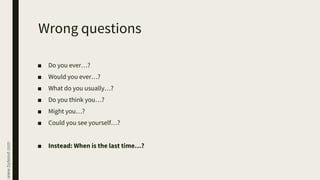
Wrong questions
■ Do you ever…?
■ Would you ever…?
■ What do you usually…?
■ Do you think you…?
■ Might you…?
■ Could you see yourself…?
■ Instead: When is the last time…?
www.byteout.com
Questions to dig into feature requests:
■ Why do you want that?
■ What would that let you do?
■ How are you coping without it?
■ How would that fit into your day?
■ Ask about the specific examples.
www.byteout.com
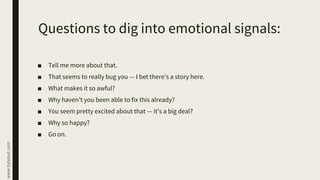
Questions to dig into emotional signals:
■ Tell me more about that.
■ That seems to really bug you — I bet there’s a story here.
■ What makes it so awful?
■ Why haven’t you been able to fix this already?
■ You seem pretty excited about that — it’s a big deal?
■ Why so happy?
■ Go on.
STOP SEEKING
APPROVAL
www.byteout.com
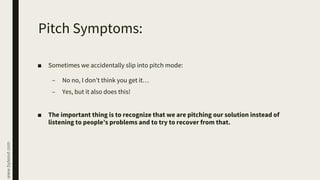
Pitch Symptoms:
■ Sometimes we accidentally slip into pitch mode:
– No no, I don’t think you get it…
– Yes, but it also does this!
■ The important thing is to recognize that we are pitching our solution instead of
listening to people’s problems and to try to recover from that.
www.byteout.com
Look before you zoom
■ We can miss the important questions by spending time on ultimately unimportant details.
■ This can happen when we get stuck in the details before understanding the big picture.
■ Most people have lots of problems which they don’t actually care enough about to fix, but
which they’ll happily tell you the details of if you ask them.
ALWAYS PRE-PLAN THE 3 MOST
IMPORTANT THINGS YOU WANT
TO LEARN FROM ANY GIVEN TYPE
OF PERSON.
5 – 10 MIN
(ANYTIME, ANYWHERE)
avoid being too formal; you don’t need to make appointments just
to ask these questions; ask people you meet at conferences,
meetups, or anywhere else.
EXAMPLES
www.byteout.com
Questions for a PM Tool:
■ How big is the team you work in?
■ How do you communicate with your teammates?
■ How do you receive clients’ requests?
■ Which PM tool do you use? Are you paying for it? Which payment model do you use?
■ How did you find out about it?
■ What do you (mostly) use it for? Tell me about 2-3 tasks that you most frequently accomplish
using that tool?
■ What is the most valuable feature of that tool for you? Why?
■ What don’t you like about it? Is there something missing?
■ Have you tried another tool to accomplish the same tasks? What made you switch to the current
one?
www.byteout.com
Questions for an Alarm Clock App:
■ How many alarms do you set in order to wake up in the morning? How many alarms have
you set up for tomorrow?
■ In which time interval do they ring?
■ How many times do you snooze before you get up?
■ How about this morning? When did you wake up? How many times did you snooze?
■ When is the last time you overslept and why?
■ How often did you wake up later than you should in the last year (or month)?
■ Do you use an alarm clock app on your phone? Which one? Why? What do you like about it?
■ What is the first thing that you do after you turn off your alarm and decide to get up? How
about this morning?

The mom test (short summary)

  • 1.
    THE MOM TESThowto ask good questions to test your product idea April 2016 Based on the book by Rob Fitzpatrick
  • 2.
    www.byteout.com Avoid bad data ■Compliments ■ Fluff – Generic claims (“I usually”, "I always", "I never") – Future-tense promises (“I would”, "I will") – Hypothetical maybes ("I might", "I could") ■ Ideas ■ When someone starts talking about what they “always” or “usually” or “never” or “would” do, they are giving you generic and hypothetical fluff.
  • 3.
    www.byteout.com Wrong questions ■ Doyou ever…? ■ Would you ever…? ■ What do you usually…? ■ Do you think you…? ■ Might you…? ■ Could you see yourself…? ■ Instead: When is the last time…?
  • 4.
    www.byteout.com Questions to diginto feature requests: ■ Why do you want that? ■ What would that let you do? ■ How are you coping without it? ■ How would that fit into your day? ■ Ask about the specific examples.
  • 5.
    www.byteout.com Questions to diginto emotional signals: ■ Tell me more about that. ■ That seems to really bug you — I bet there’s a story here. ■ What makes it so awful? ■ Why haven’t you been able to fix this already? ■ You seem pretty excited about that — it’s a big deal? ■ Why so happy? ■ Go on.
  • 6.
  • 7.
    www.byteout.com Pitch Symptoms: ■ Sometimeswe accidentally slip into pitch mode: – No no, I don’t think you get it… – Yes, but it also does this! ■ The important thing is to recognize that we are pitching our solution instead of listening to people’s problems and to try to recover from that.
  • 8.
    www.byteout.com Look before youzoom ■ We can miss the important questions by spending time on ultimately unimportant details. ■ This can happen when we get stuck in the details before understanding the big picture. ■ Most people have lots of problems which they don’t actually care enough about to fix, but which they’ll happily tell you the details of if you ask them.
  • 9.
    ALWAYS PRE-PLAN THE3 MOST IMPORTANT THINGS YOU WANT TO LEARN FROM ANY GIVEN TYPE OF PERSON.
  • 10.
    5 – 10MIN (ANYTIME, ANYWHERE) avoid being too formal; you don’t need to make appointments just to ask these questions; ask people you meet at conferences, meetups, or anywhere else.
  • 11.
  • 12.
    www.byteout.com Questions for aPM Tool: ■ How big is the team you work in? ■ How do you communicate with your teammates? ■ How do you receive clients’ requests? ■ Which PM tool do you use? Are you paying for it? Which payment model do you use? ■ How did you find out about it? ■ What do you (mostly) use it for? Tell me about 2-3 tasks that you most frequently accomplish using that tool? ■ What is the most valuable feature of that tool for you? Why? ■ What don’t you like about it? Is there something missing? ■ Have you tried another tool to accomplish the same tasks? What made you switch to the current one?
  • 13.
    www.byteout.com Questions for anAlarm Clock App: ■ How many alarms do you set in order to wake up in the morning? How many alarms have you set up for tomorrow? ■ In which time interval do they ring? ■ How many times do you snooze before you get up? ■ How about this morning? When did you wake up? How many times did you snooze? ■ When is the last time you overslept and why? ■ How often did you wake up later than you should in the last year (or month)? ■ Do you use an alarm clock app on your phone? Which one? Why? What do you like about it? ■ What is the first thing that you do after you turn off your alarm and decide to get up? How about this morning?