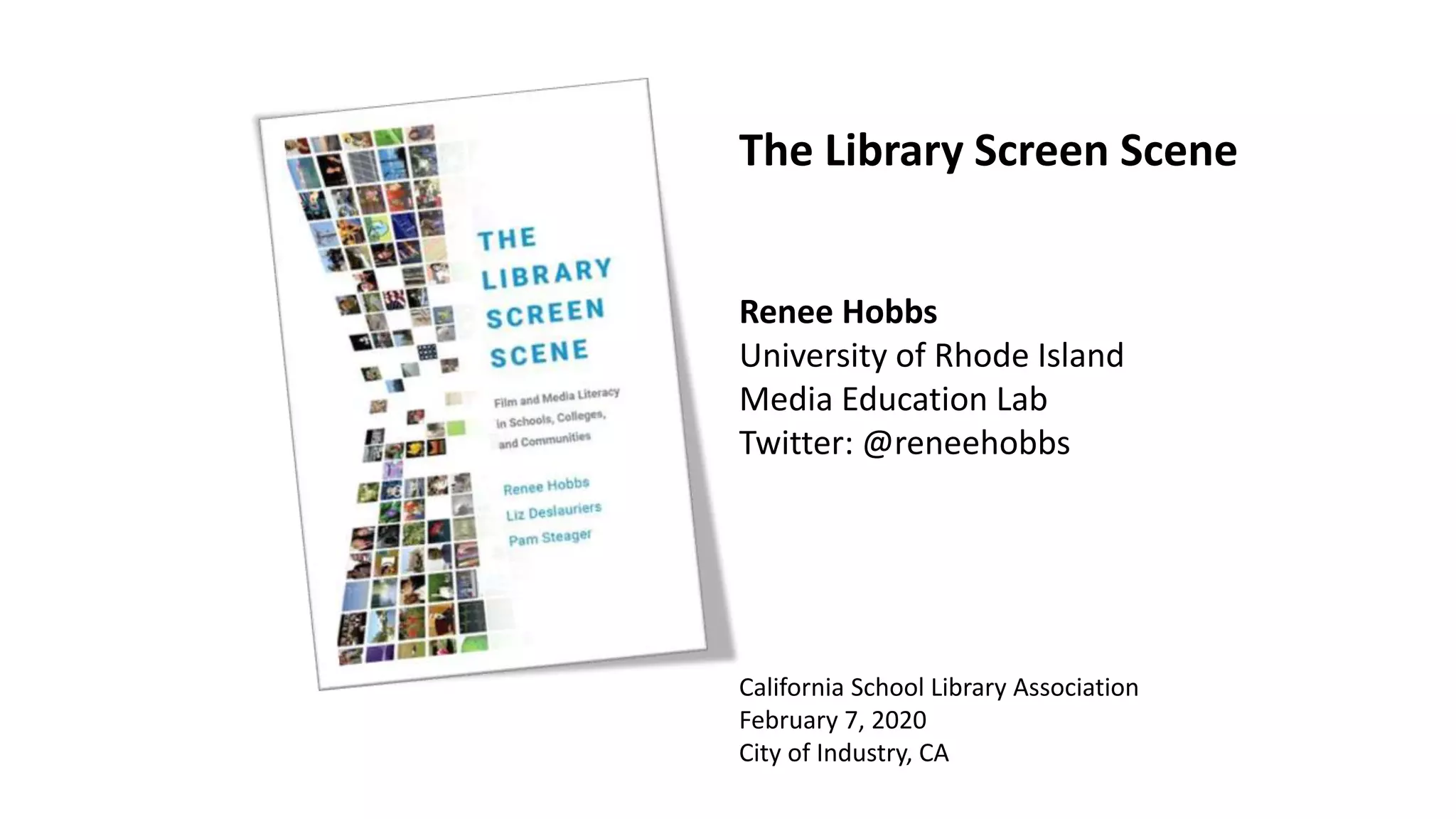
The Library Screen Scene
Renee Hobbs
University of Rhode Island
Media Education Lab
Twitter: @reneehobbs
California School Library Association
February 7, 2020
City of Industry, CA
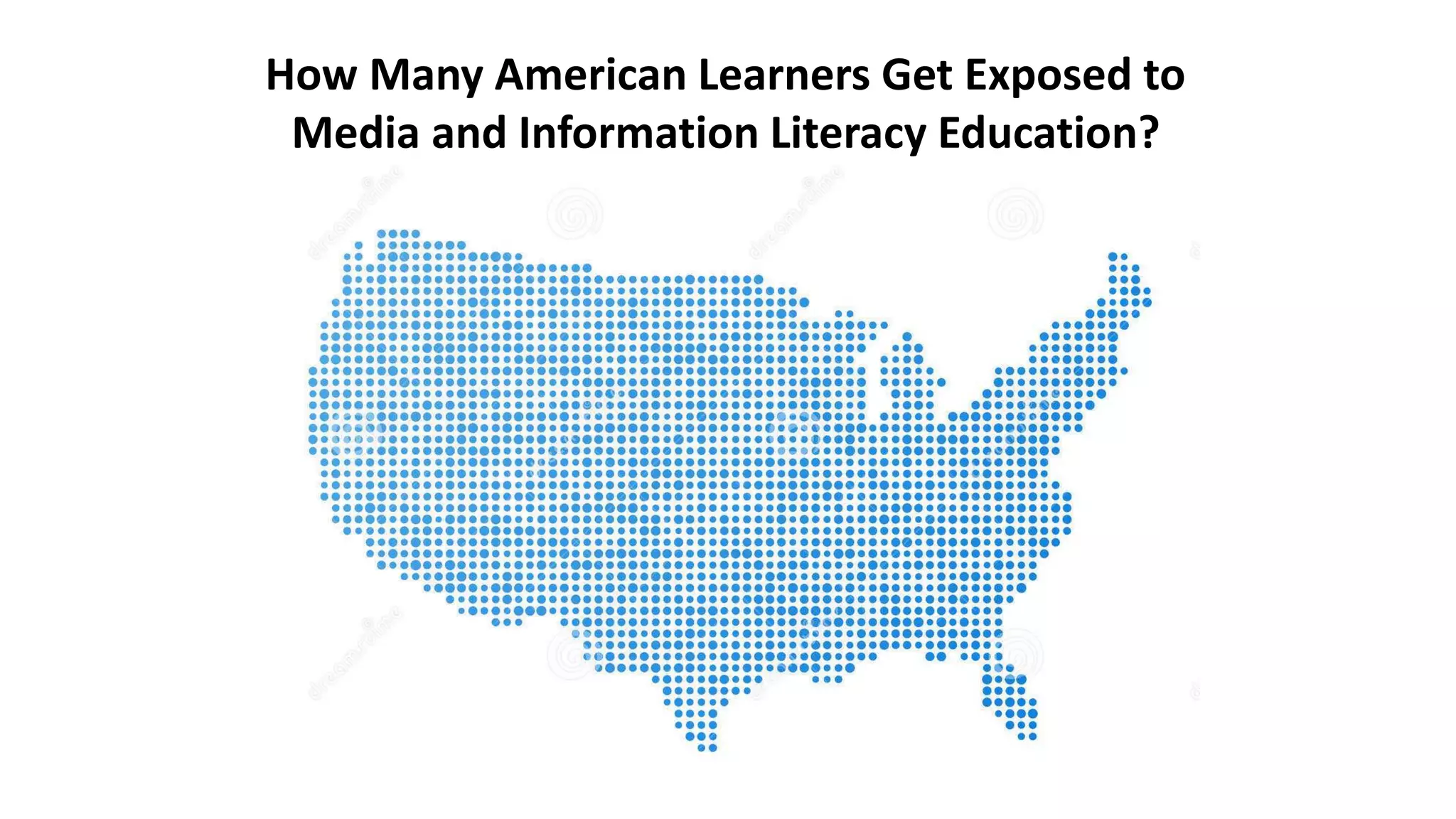
How Many American Learners Get Exposed to
Media and Information Literacy Education?
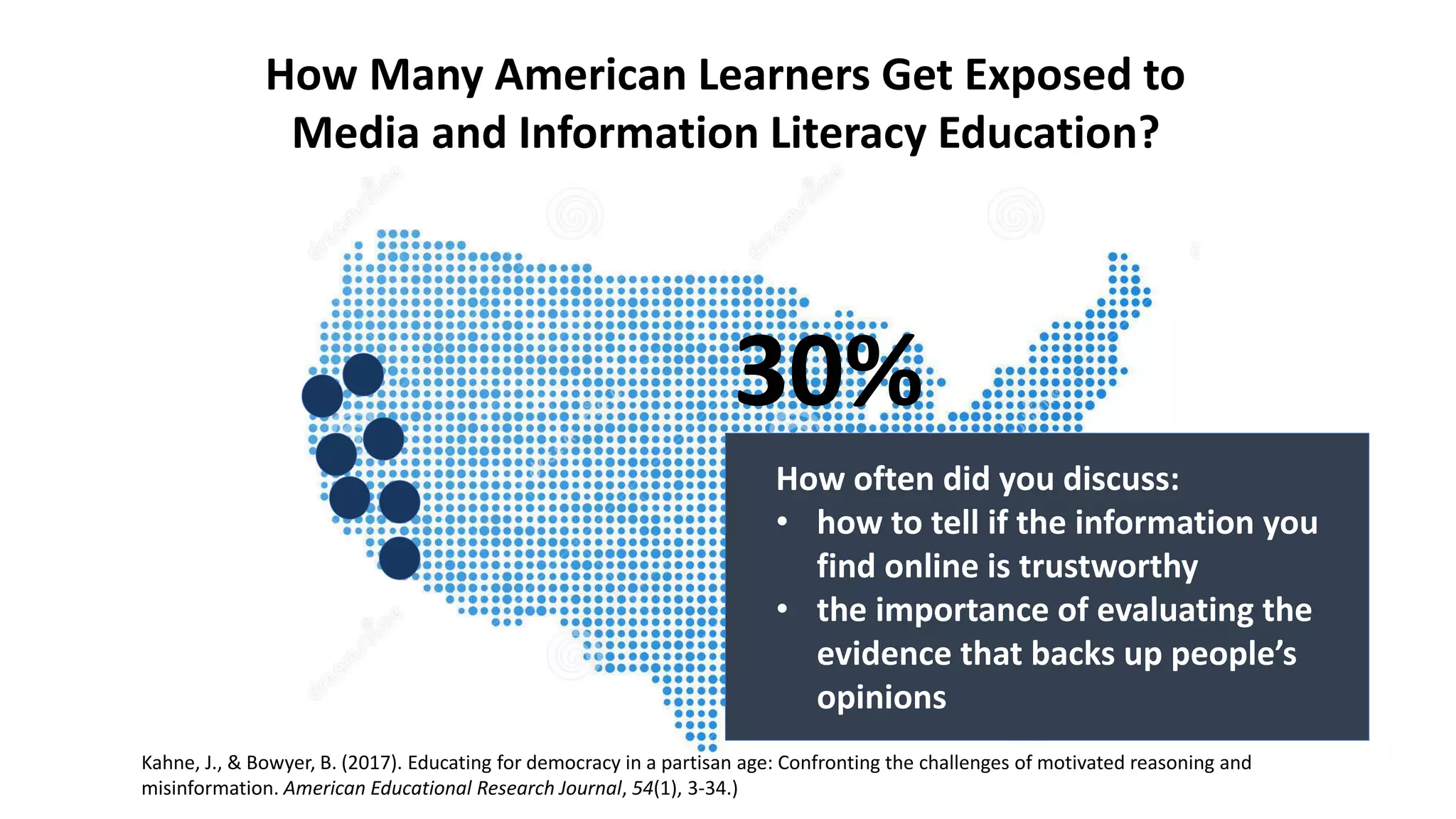
How Many American Learners Get Exposed to
Media and Information Literacy Education?
How often did you discuss:
• how to tell if the information you
find online is trustworthy
• the importance of evaluating the
evidence that backs up people’s
opinions
Kahne, J., & Bowyer, B. (2017). Educating for democracy in a partisan age: Confronting the challenges of motivated reasoning and
misinformation. American Educational Research Journal, 54(1), 3-34.)
30%
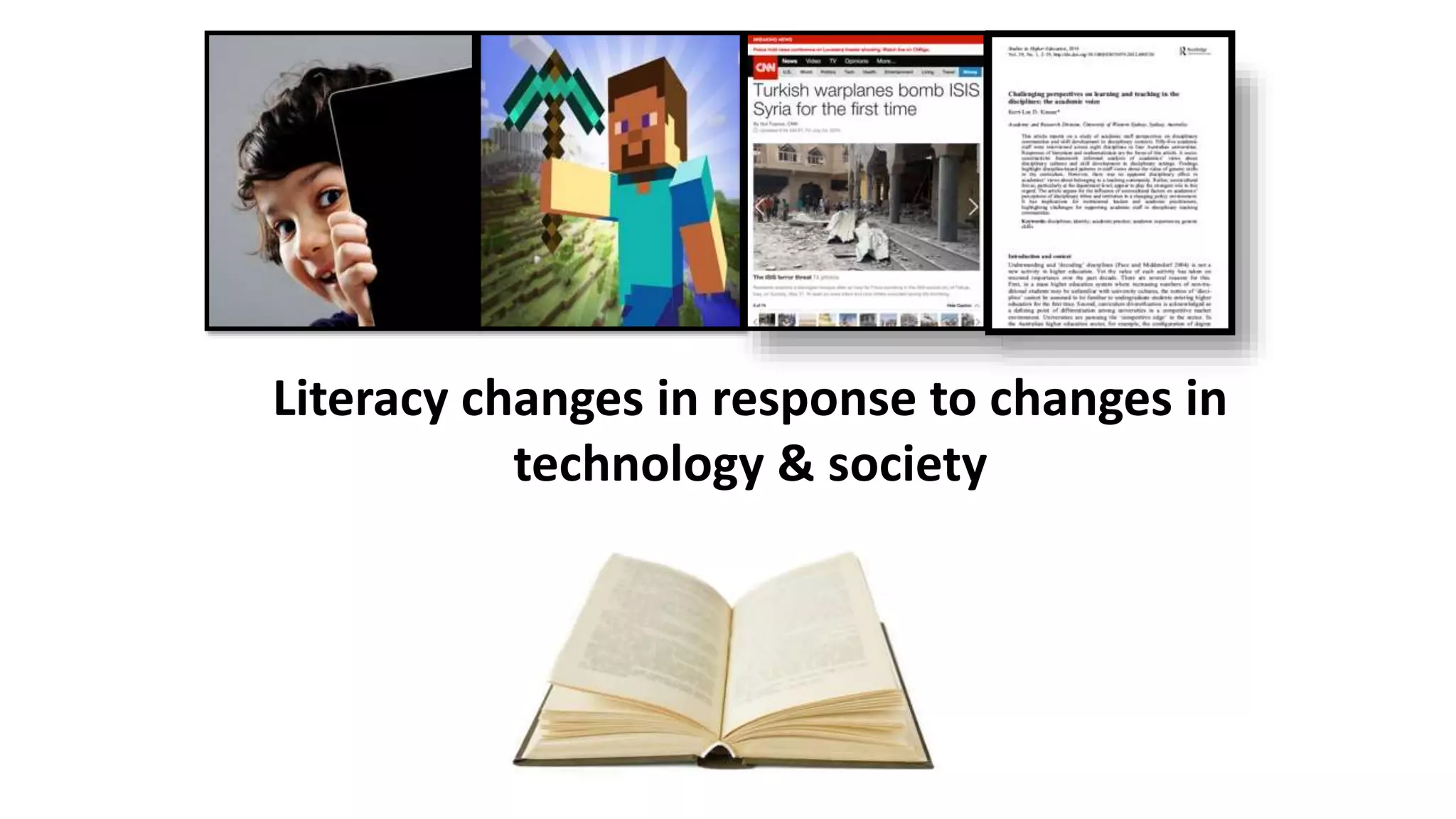
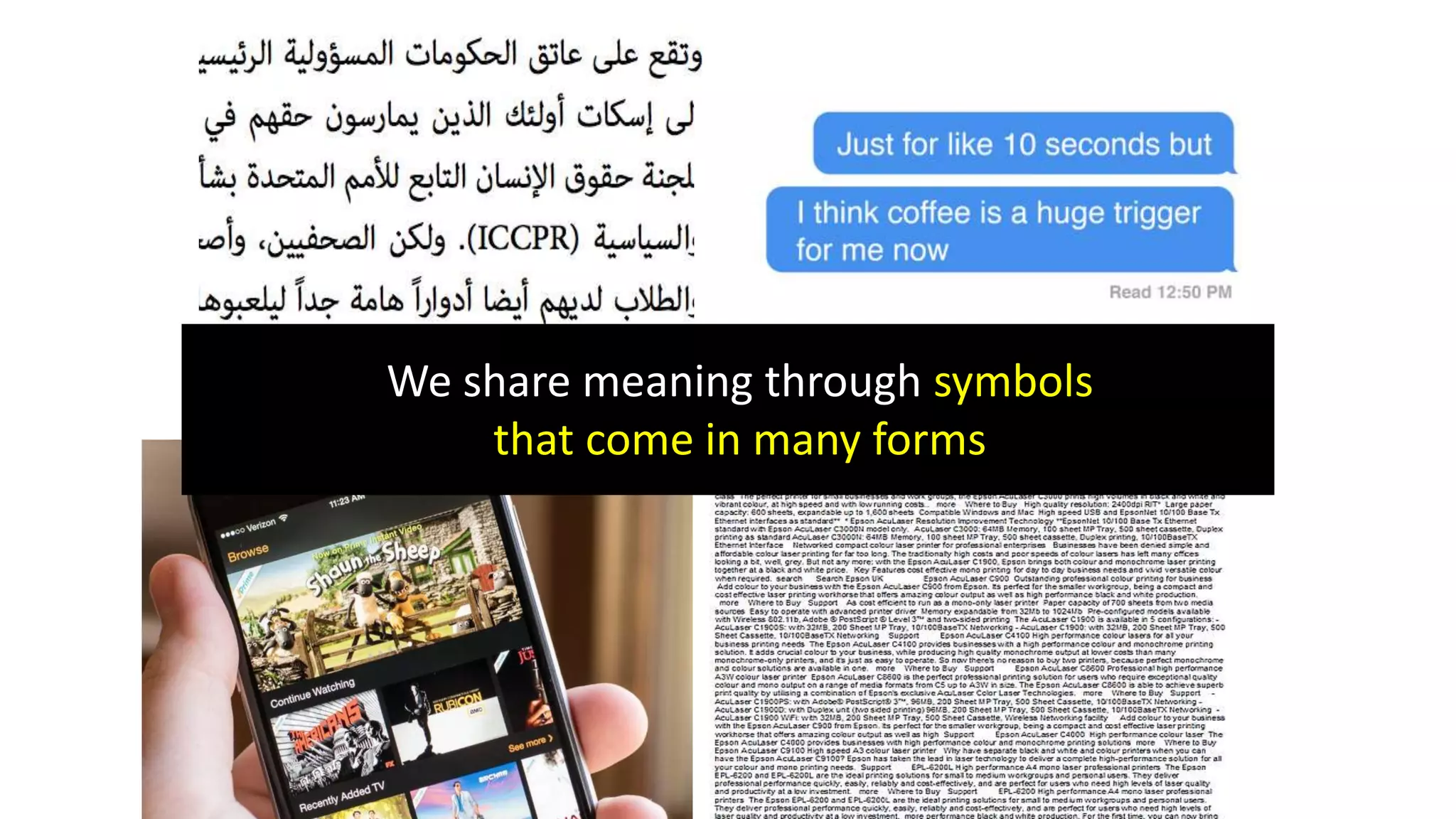
Literacy changes in response to changes in
technology & society
We share meaning through symbols
that come in many forms
The Uses of
AUDIOVISUAL
MEDIA in a
Digital Age
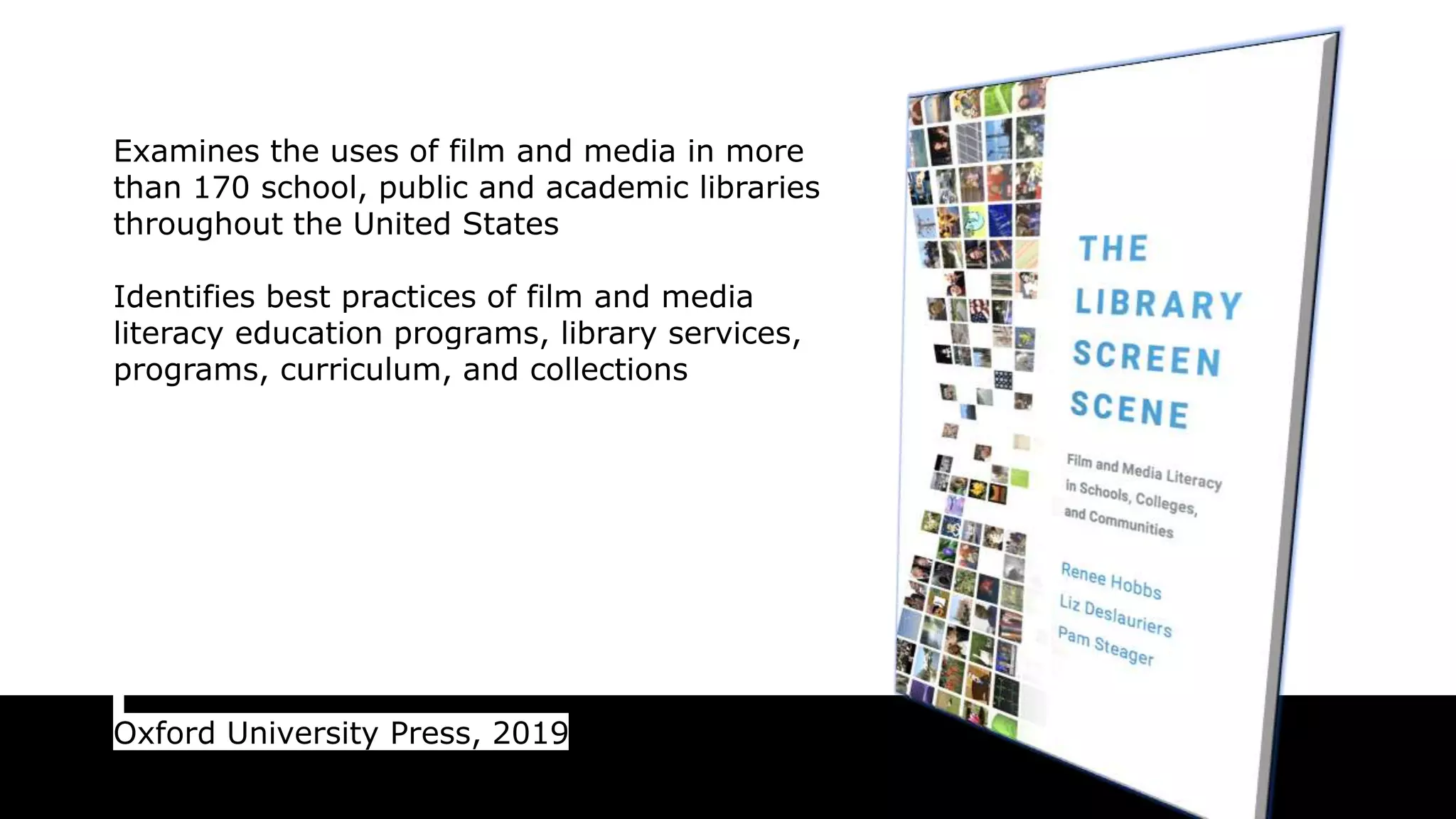
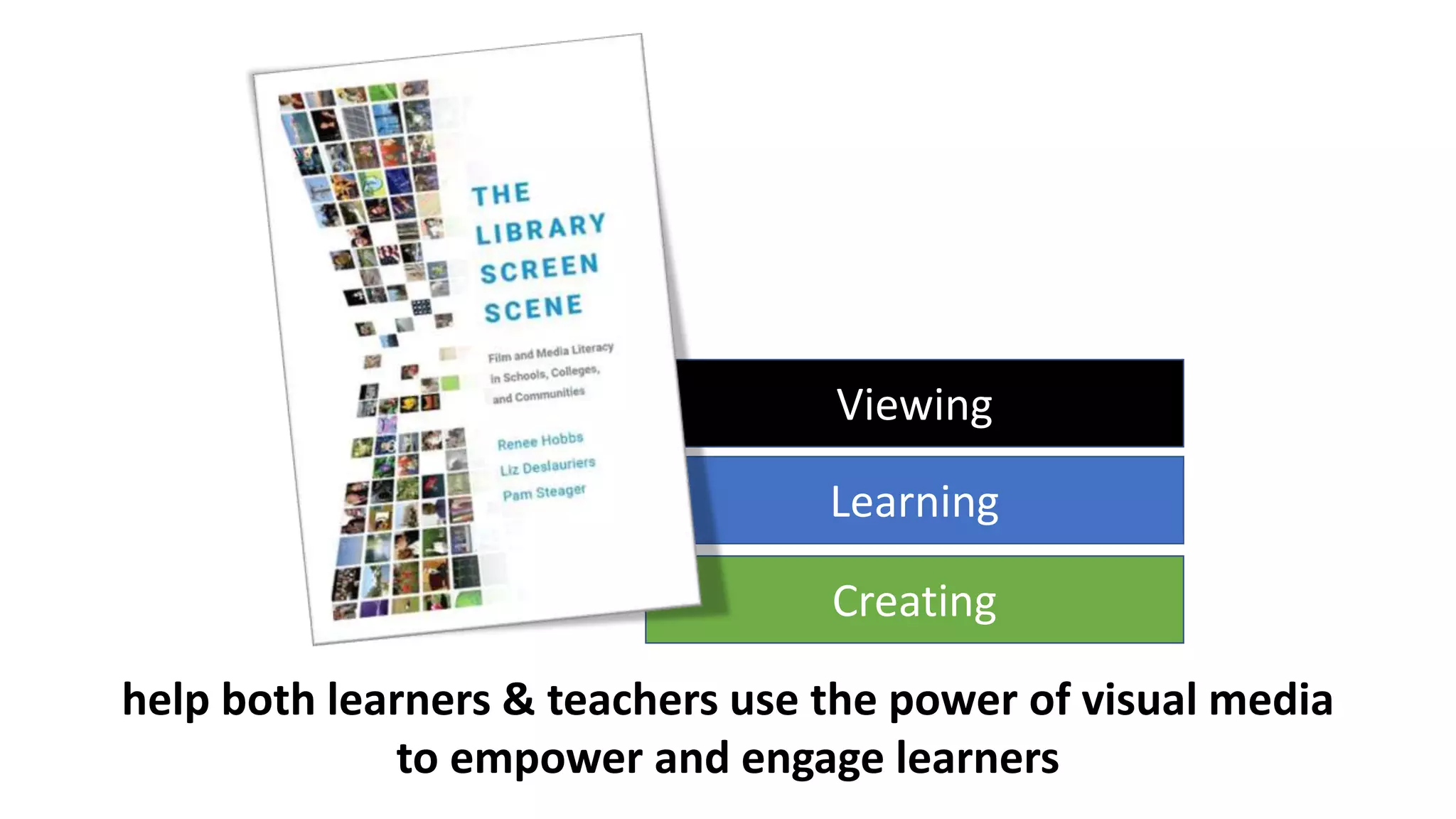
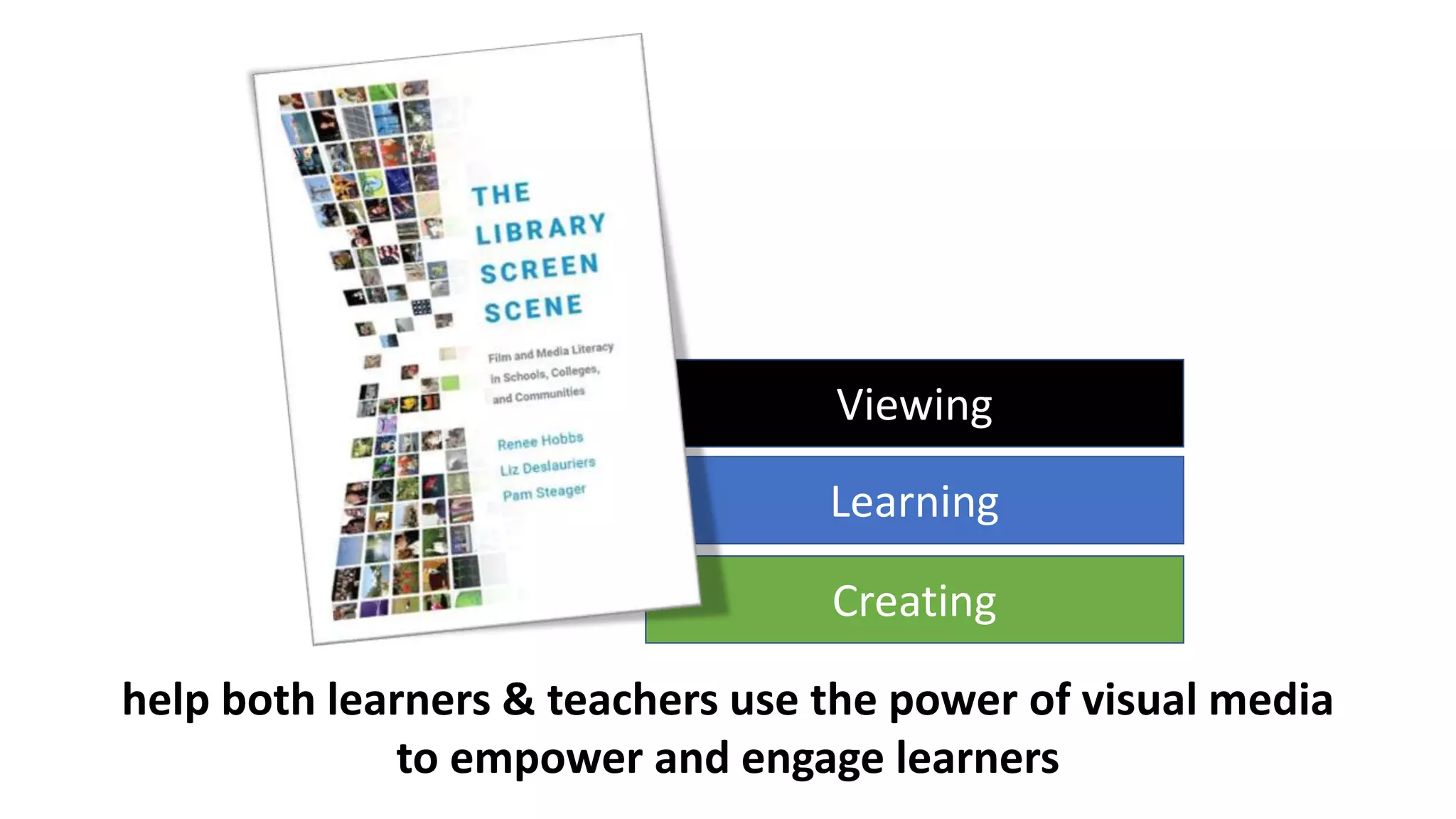
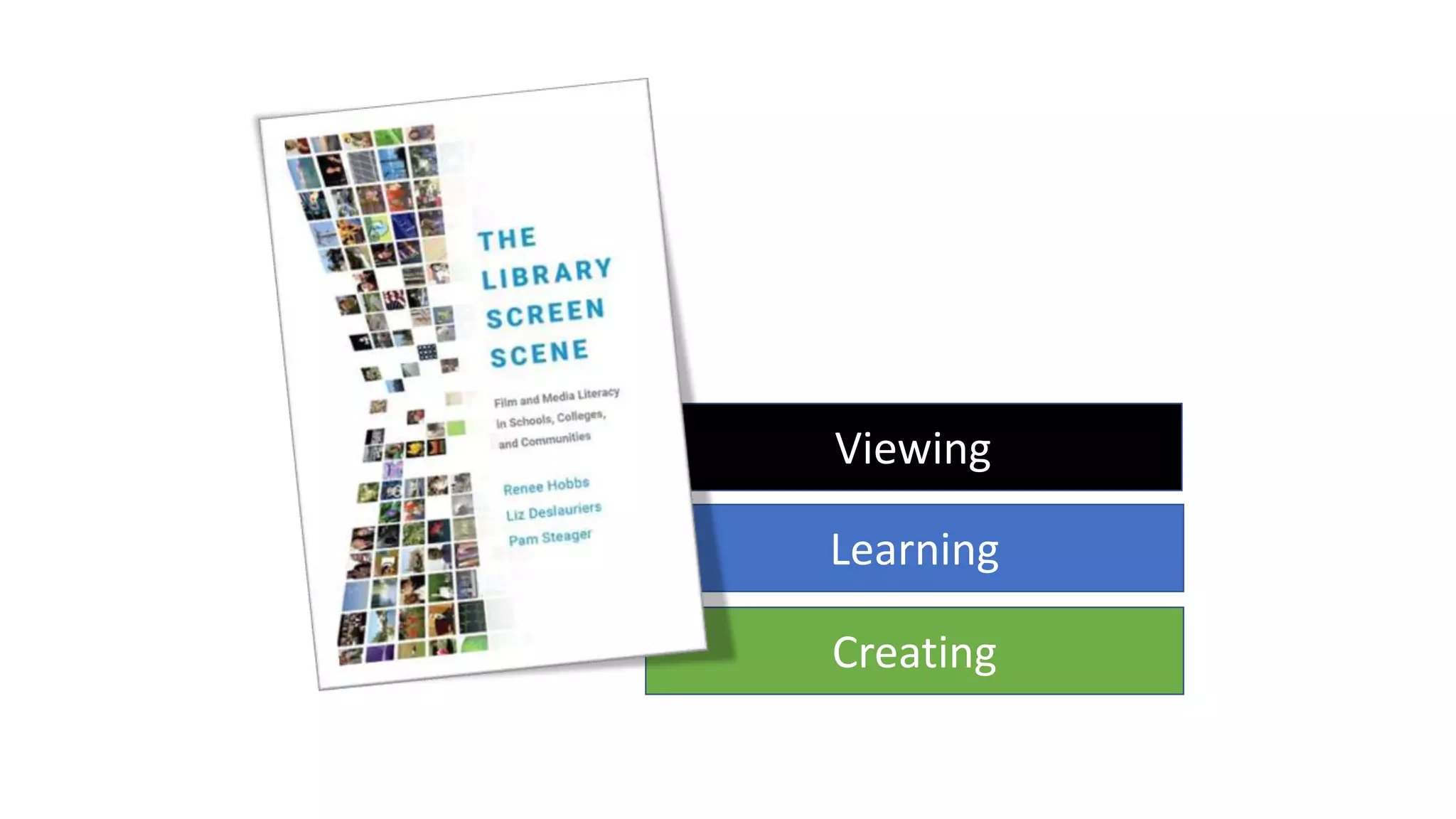
Examines the uses of film and media in more
than 170 school, public and academic libraries
throughout the United States
Identifies best practices of film and media
literacy education programs, library services,
programs, curriculum, and collections
Oxford University Press, 2019
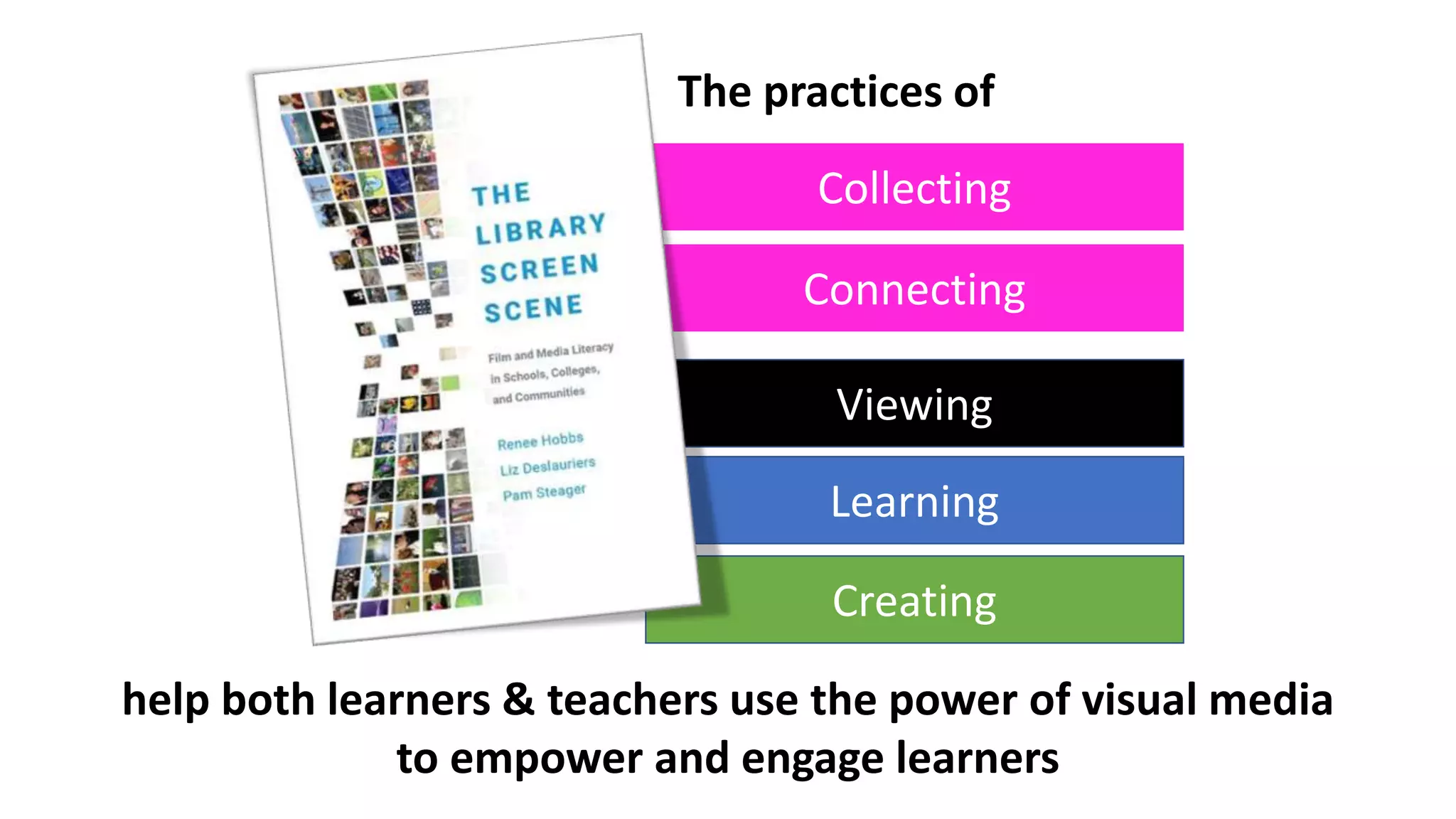
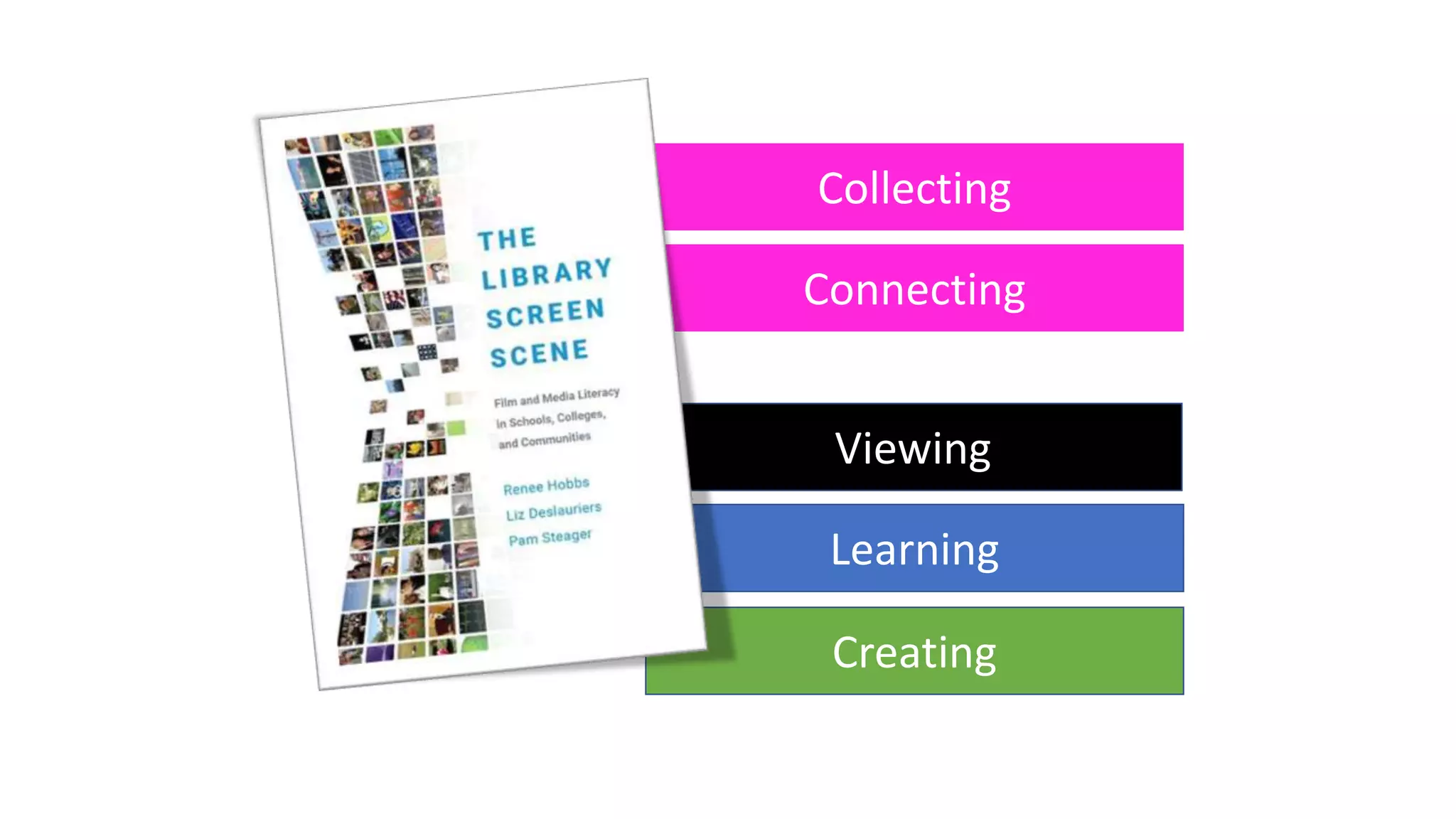
Viewing
Learning
Creating
Collecting
Connecting
The practices of
help both learners & teachers use the power of visual media
to empower and engage learners
#CSLA
www.slido.com
How have you
used a YouTube
video to learn
how to do
something?
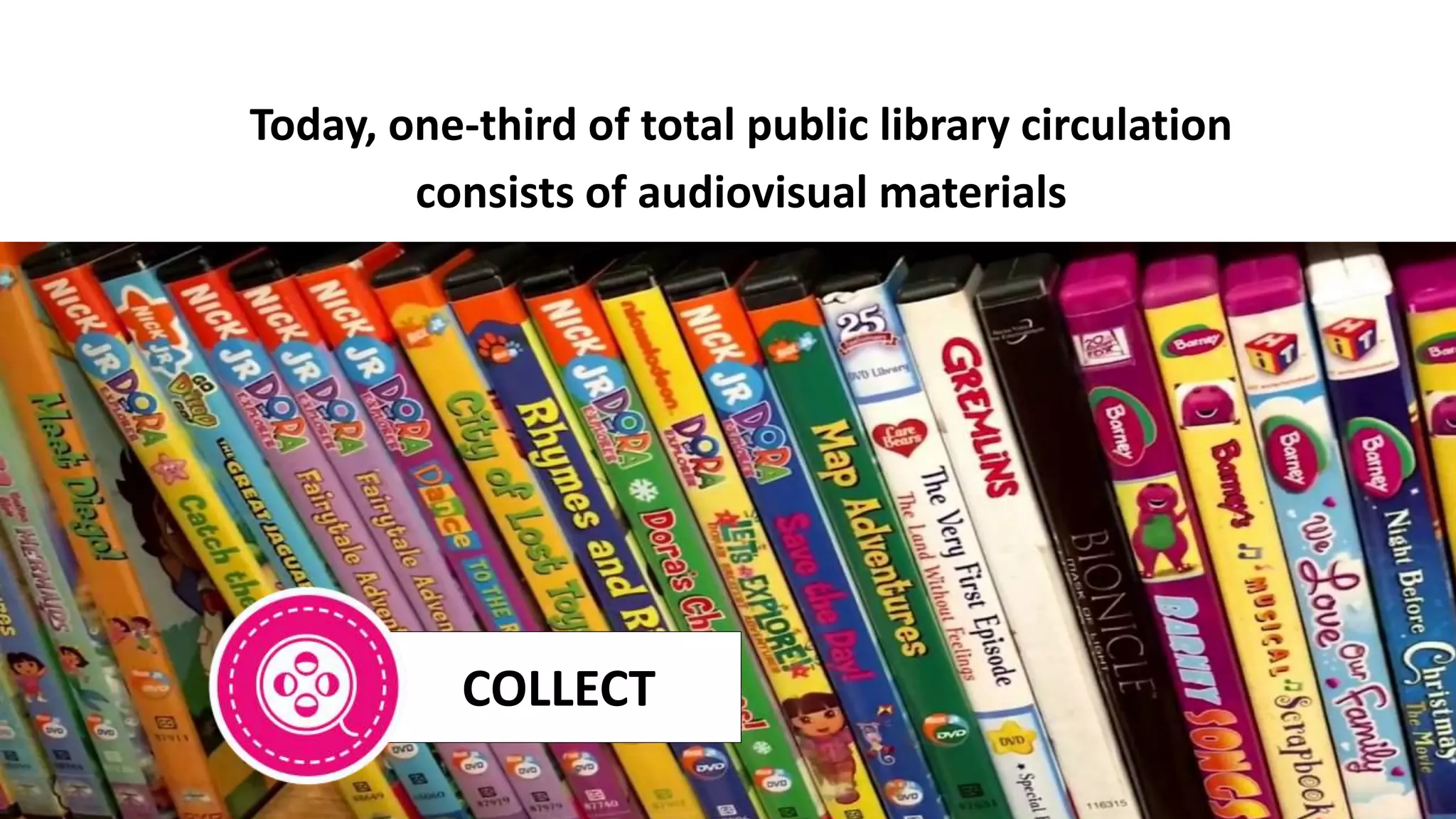
Today, one-third of total public library circulation
consists of audiovisual materials
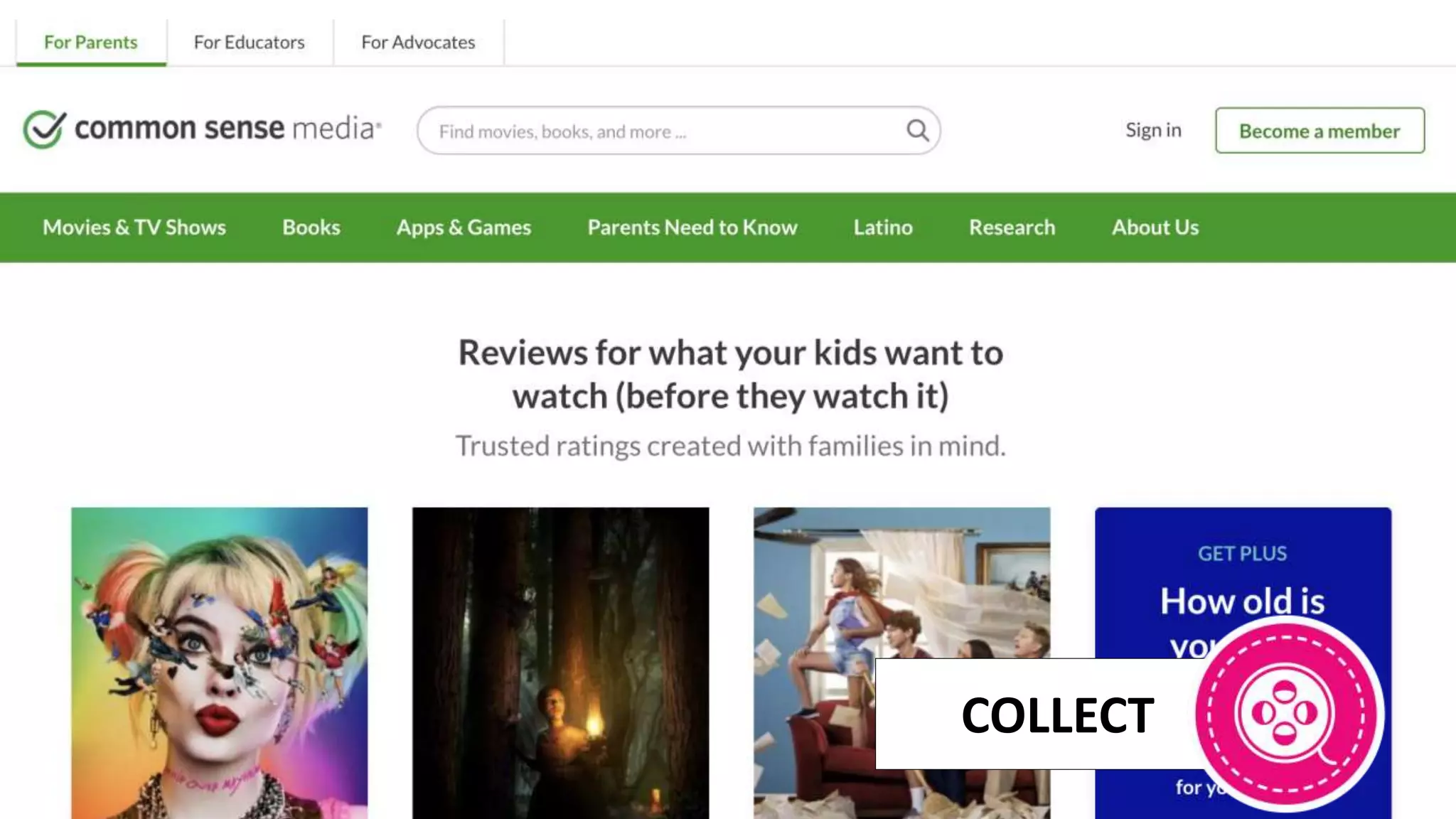
COLLECT
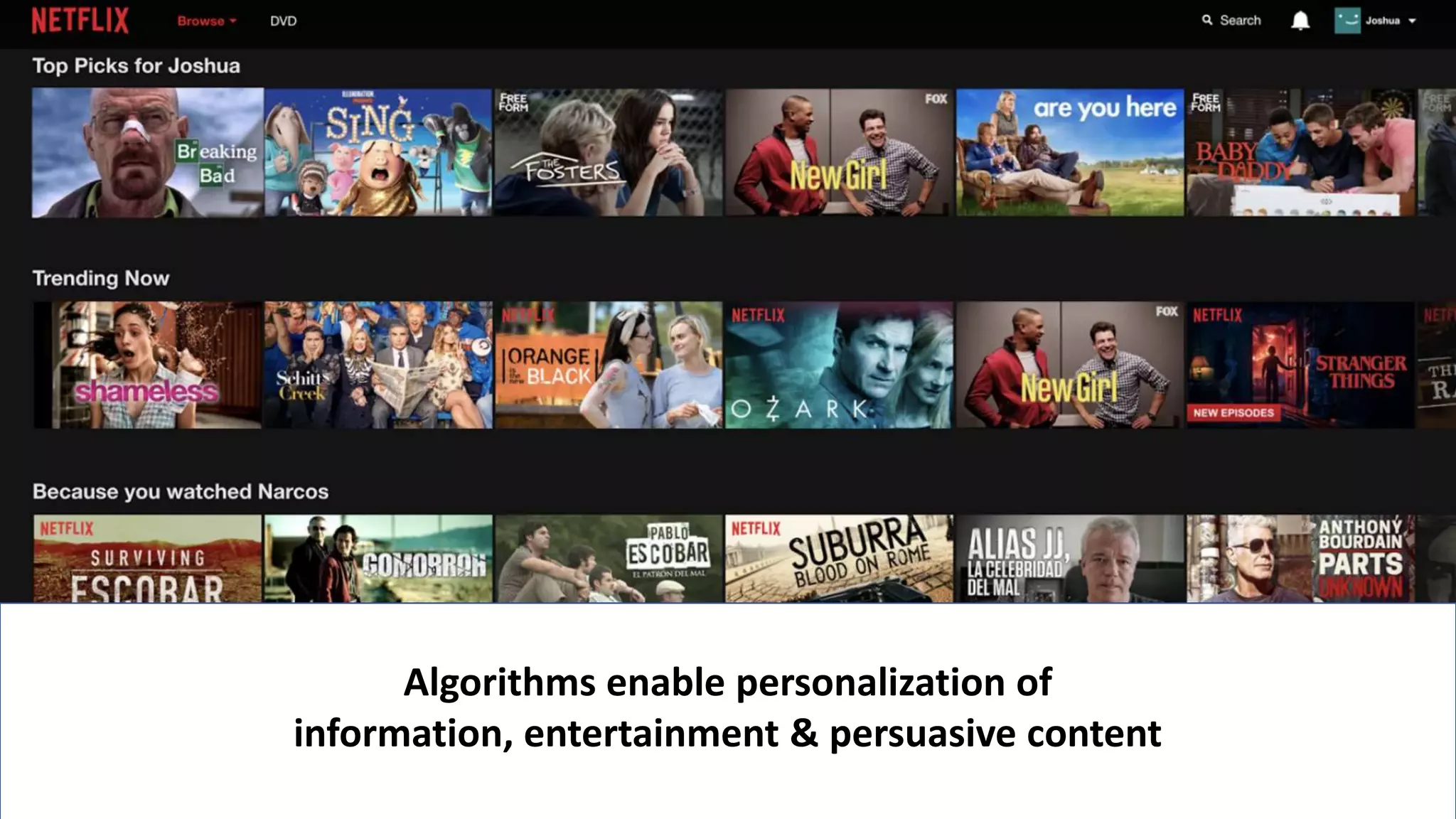
Algorithms enable personalization of
information, entertainment & persuasive content
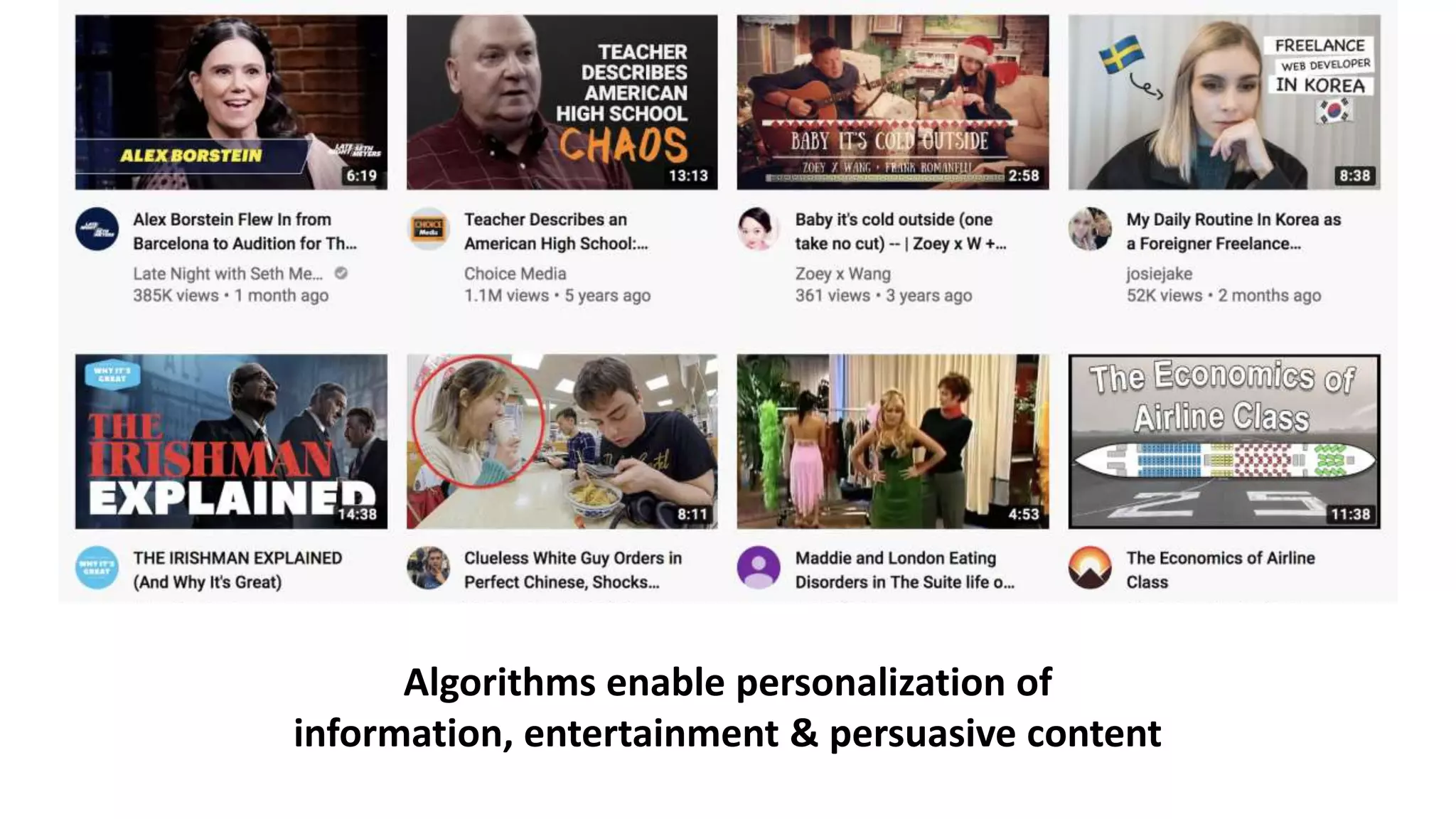
Algorithms enable personalization of
information, entertainment & persuasive content
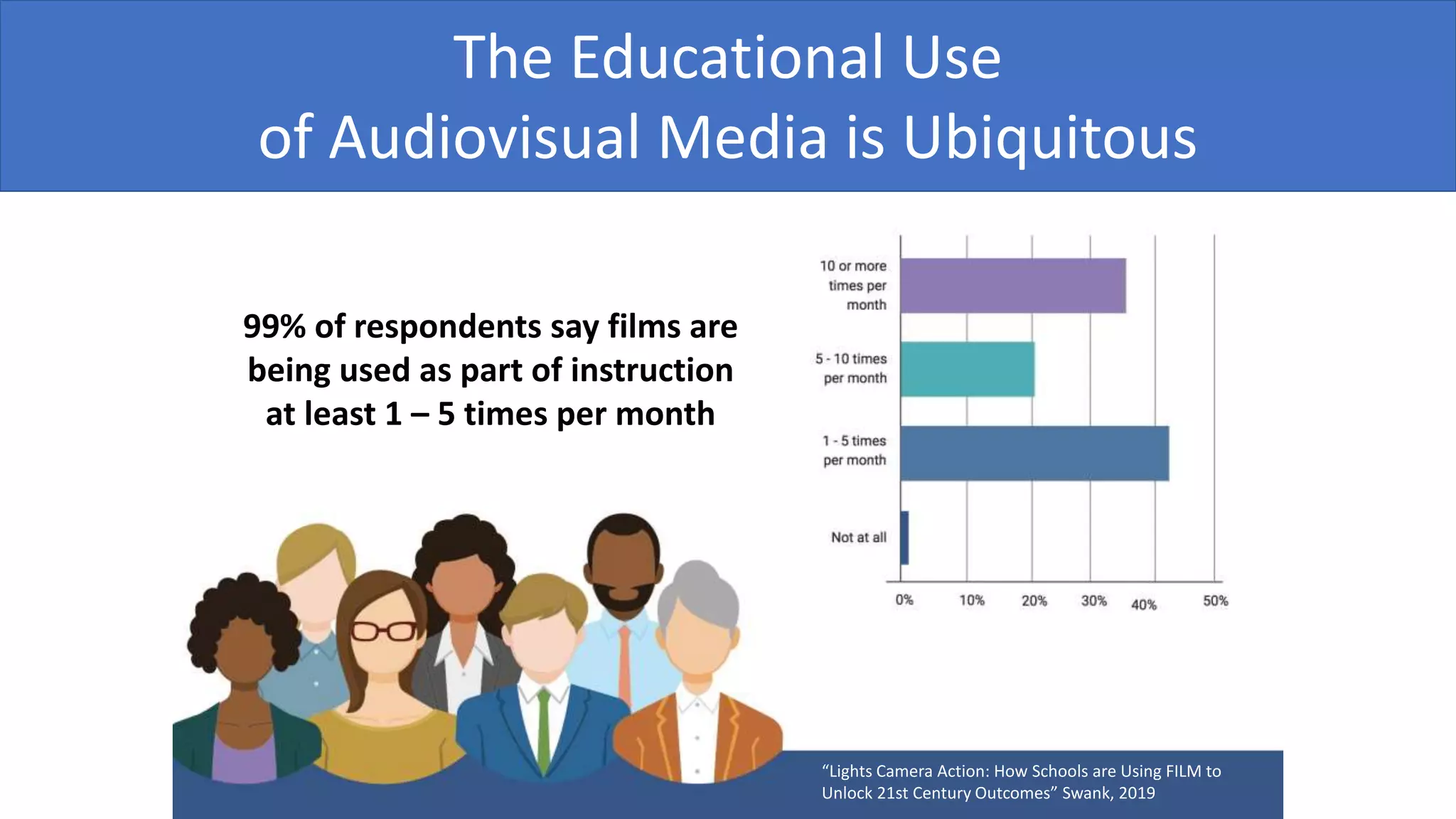
The Educational Use
of Audiovisual Media is Ubiquitous
99% of respondents say films are
being used as part of instruction
at least 1 – 5 times per month
“Lights Camera Action: How Schools are Using FILM to
Unlock 21st Century Outcomes” Swank, 2019
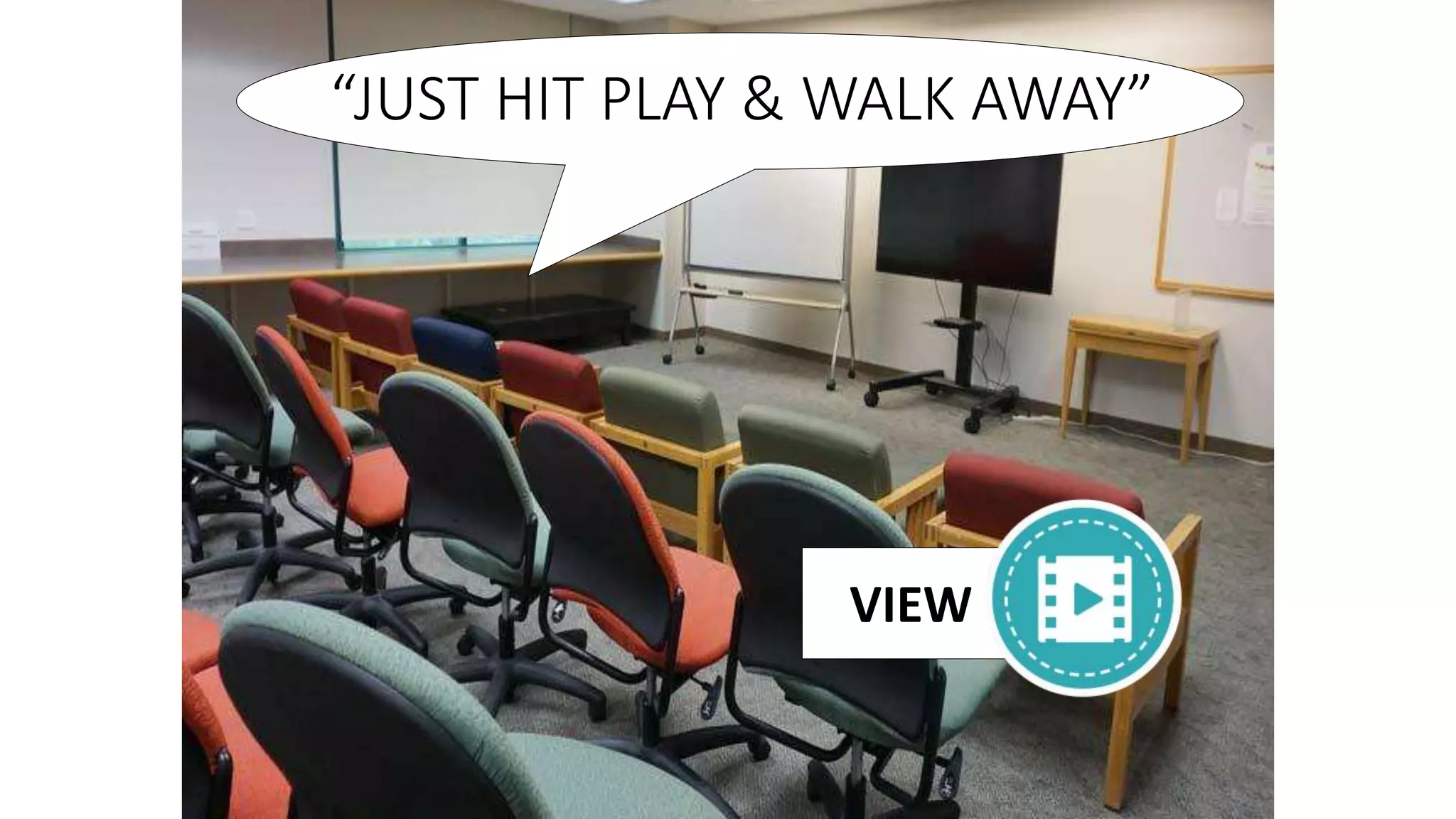
“JUST HIT PLAY & WALK AWAY”
VIEW
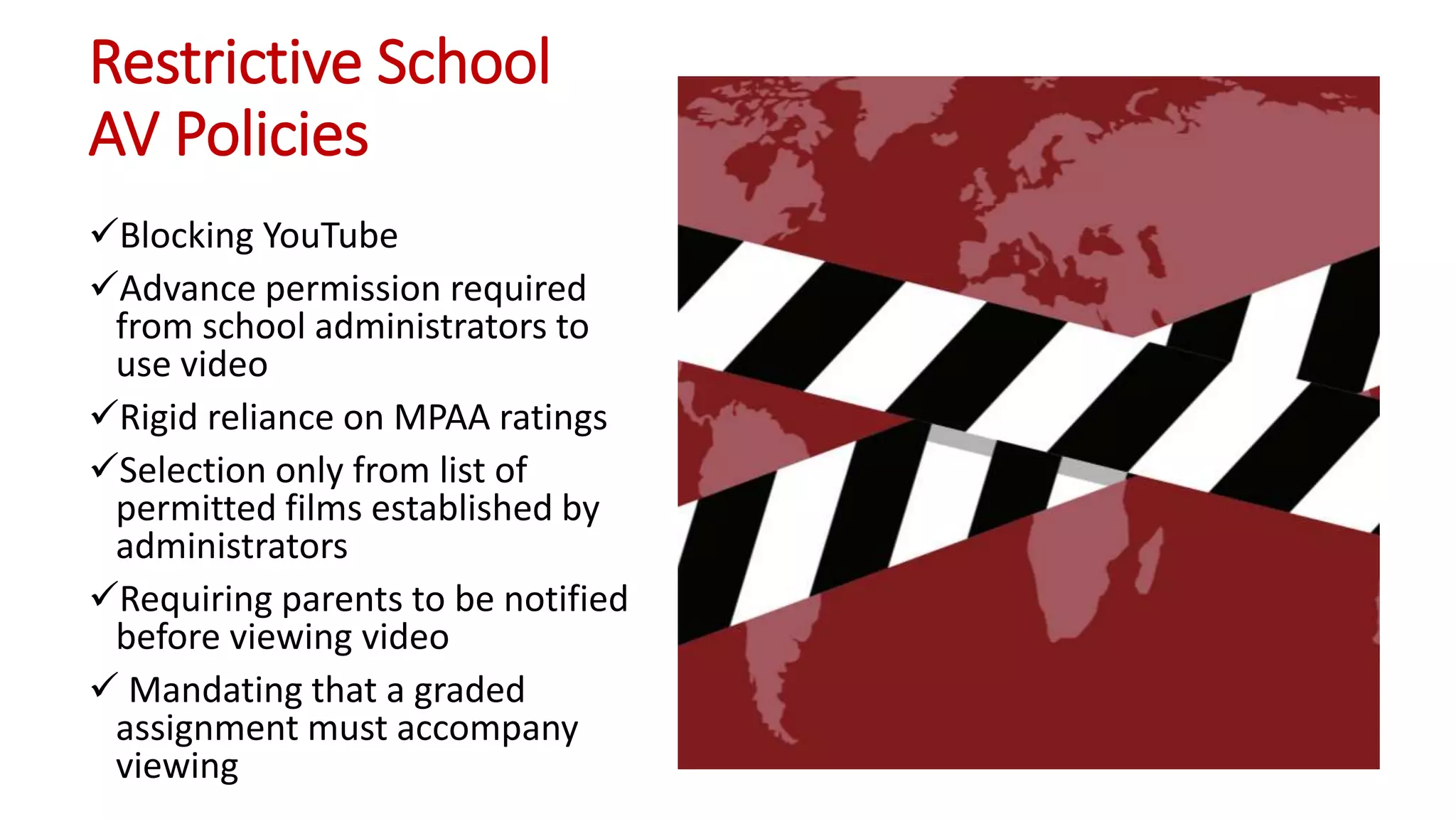
Restrictive School
AV Policies
Blocking YouTube
Advance permission required
from school administrators to
use video
Rigid reliance on MPAA ratings
Selection only from list of
permitted films established by
administrators
Requiring parents to be notified
before viewing video
 Mandating that a graded
assignment must accompany
viewing
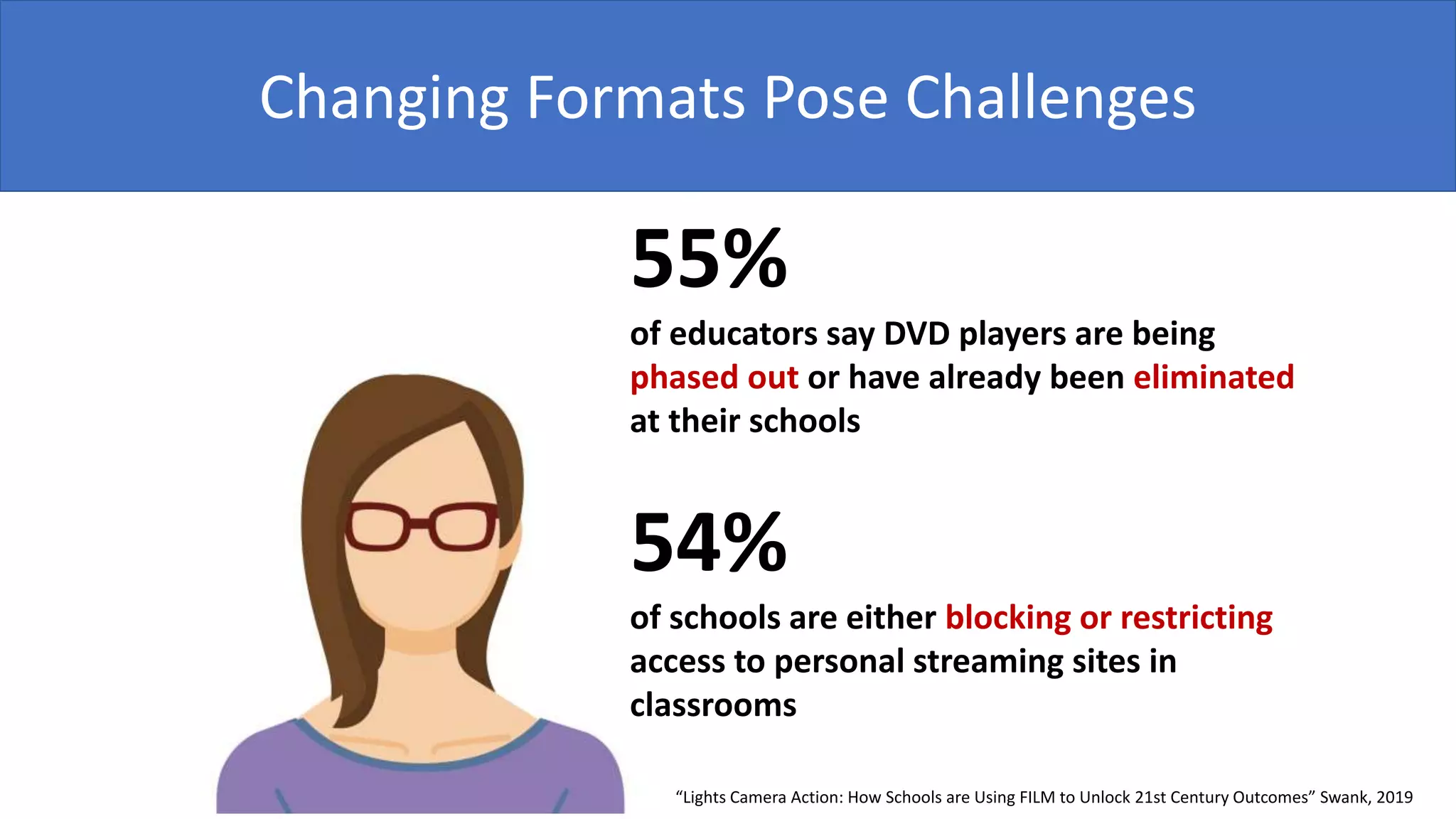
Changing Formats Pose Challenges
55%
of educators say DVD players are being
phased out or have already been eliminated
at their schools
54%
of schools are either blocking or restricting
access to personal streaming sites in
classrooms
“Lights Camera Action: How Schools are Using FILM to Unlock 21st Century Outcomes” Swank, 2019
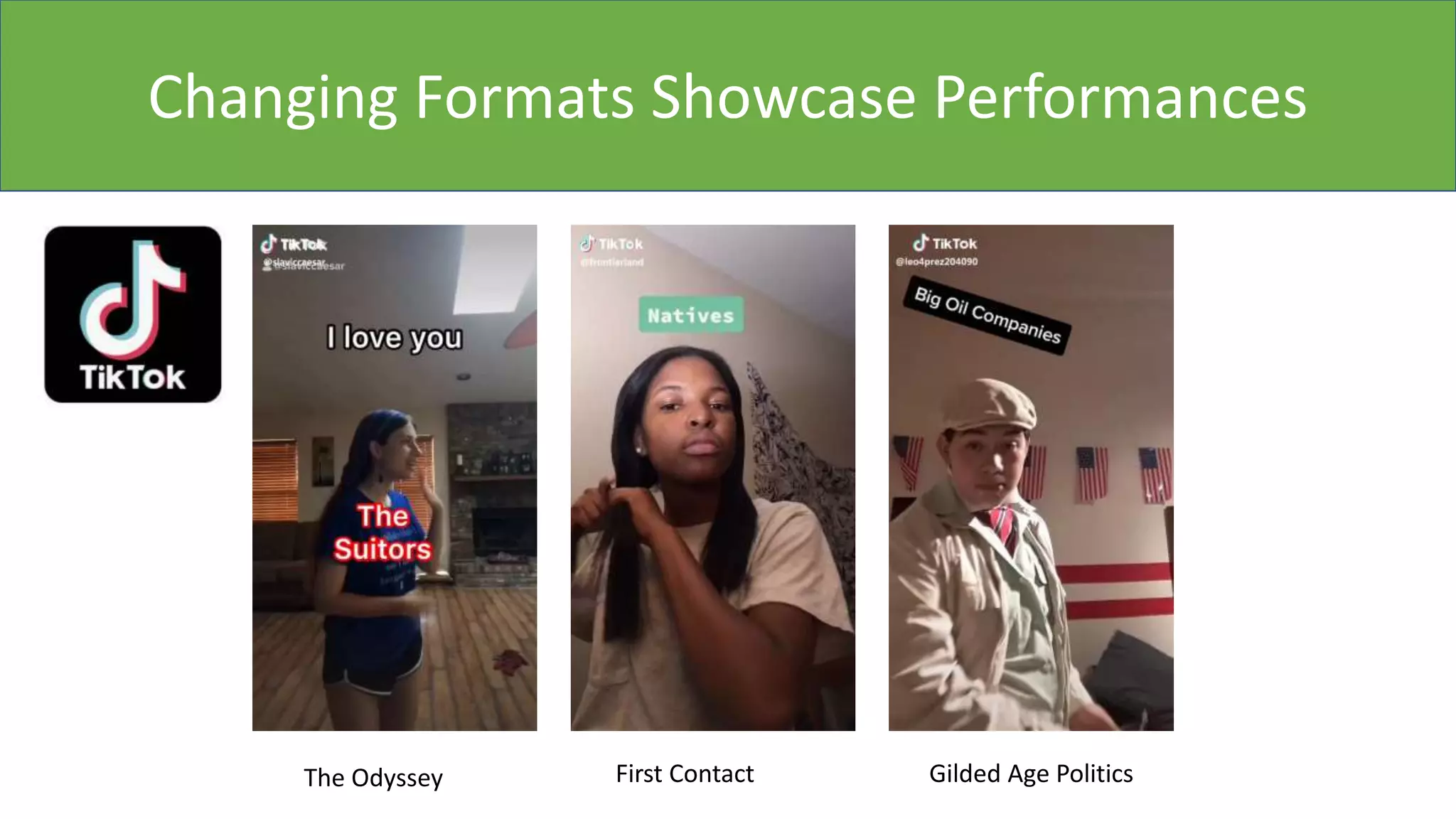
Out-of-School Remix
The Odyssey First Contact Gilded Age Politics
Changing Formats Showcase Performances
A majority of students ages 14 - 23 prefer learning from YouTube videos over other
activities including in-person group activities, learning apps, games, or reading from
printed books.
SOURCE: Pearson (2018). Beyond millennials: The next generation of learners. Global Research & Insights and Harris Polling.
Viewing
Learning
Creating
help both learners & teachers use the power of visual media
to empower and engage learners
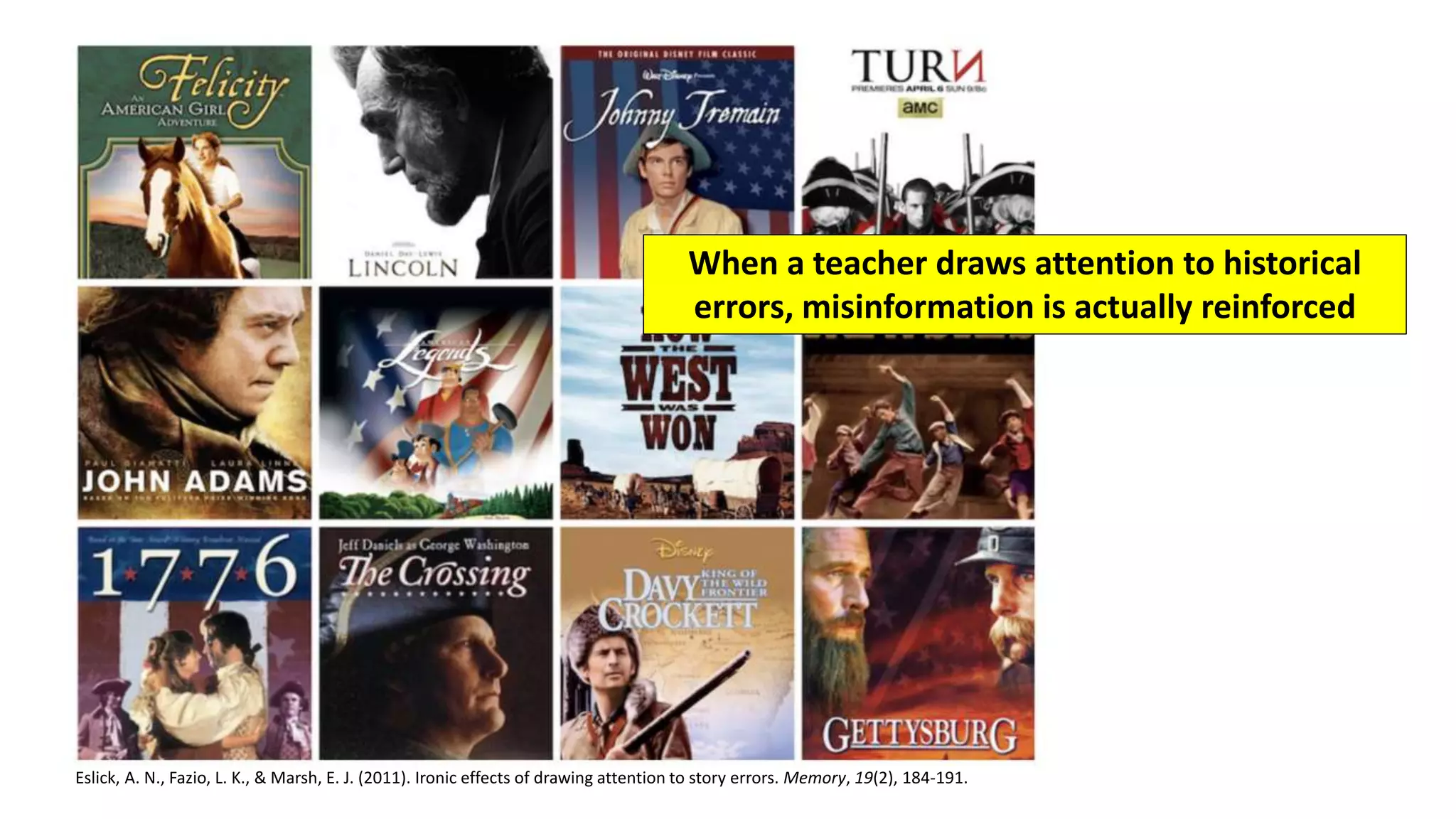
When a teacher draws attention to historical
errors, misinformation is actually reinforced
Eslick, A. N., Fazio, L. K., & Marsh, E. J. (2011). Ironic effects of drawing attention to story errors. Memory, 19(2), 184-191.
Viewing
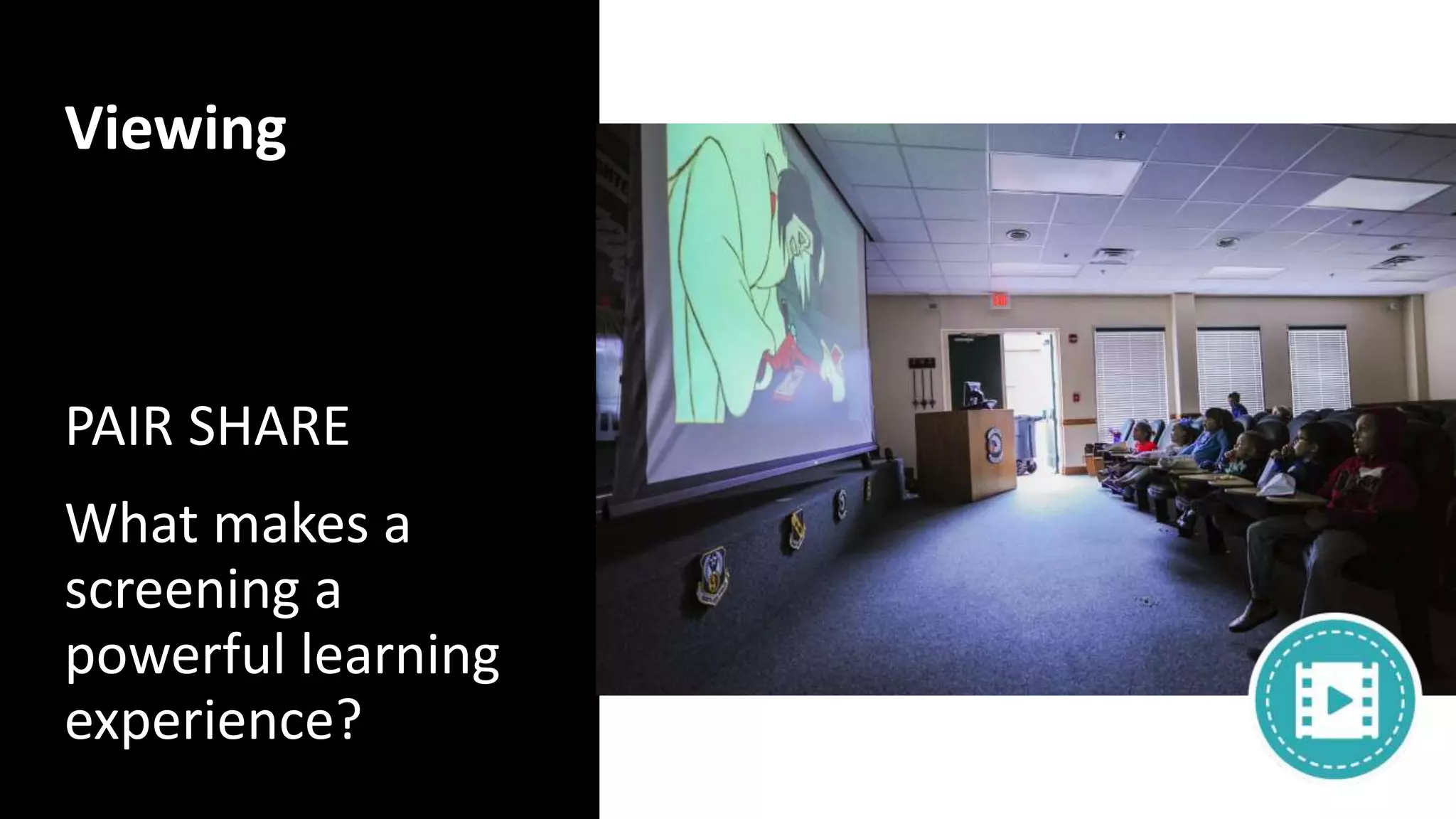
PAIR SHARE
What makes a
screening a
powerful learning
experience?
Viewing
PAIR SHARE
What makes a
screening a
powerful learning
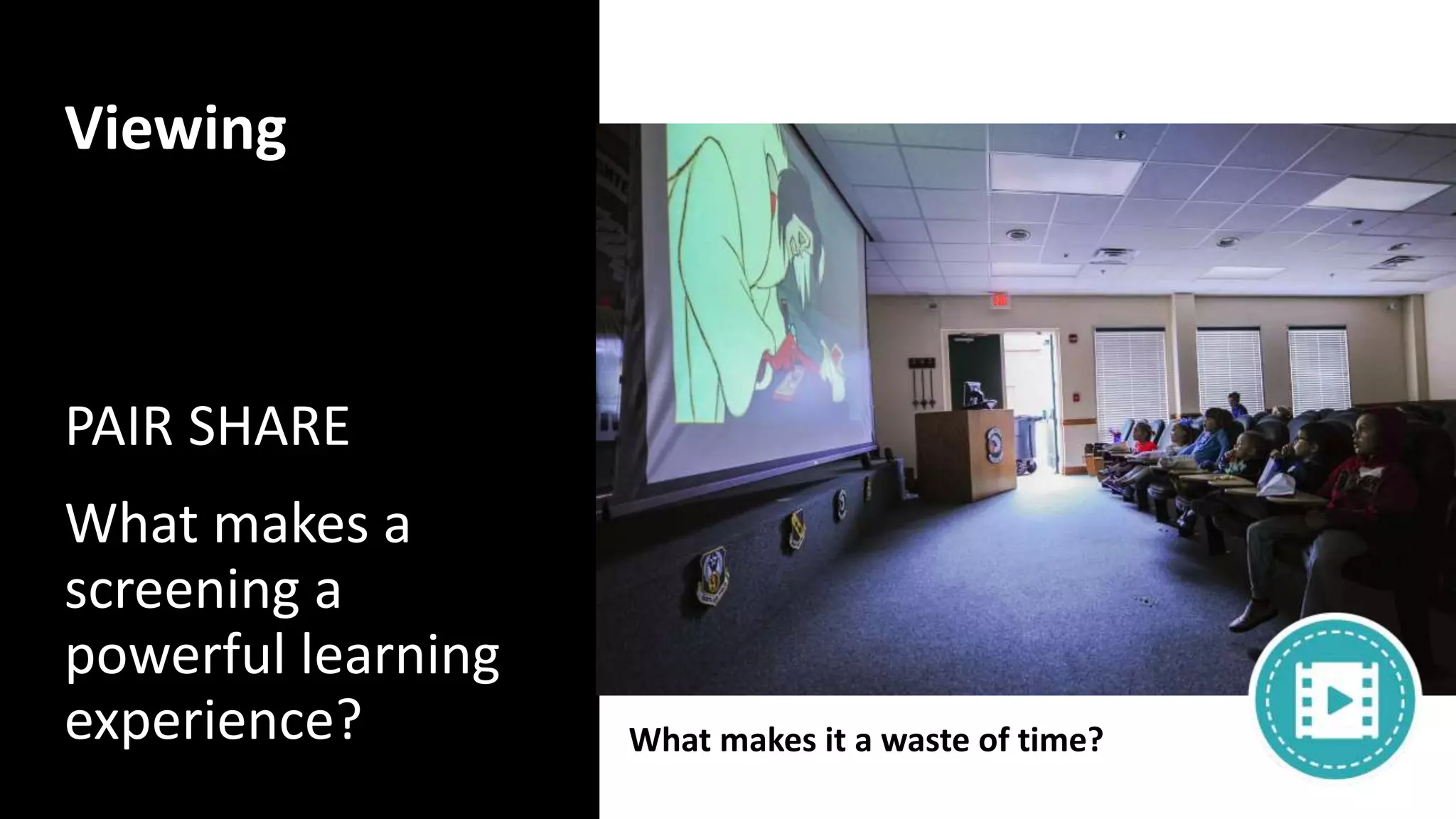
experience? What makes it a waste of time?
#CSLA
www.slido.com
What makes a
screening a
powerful learning
experience?
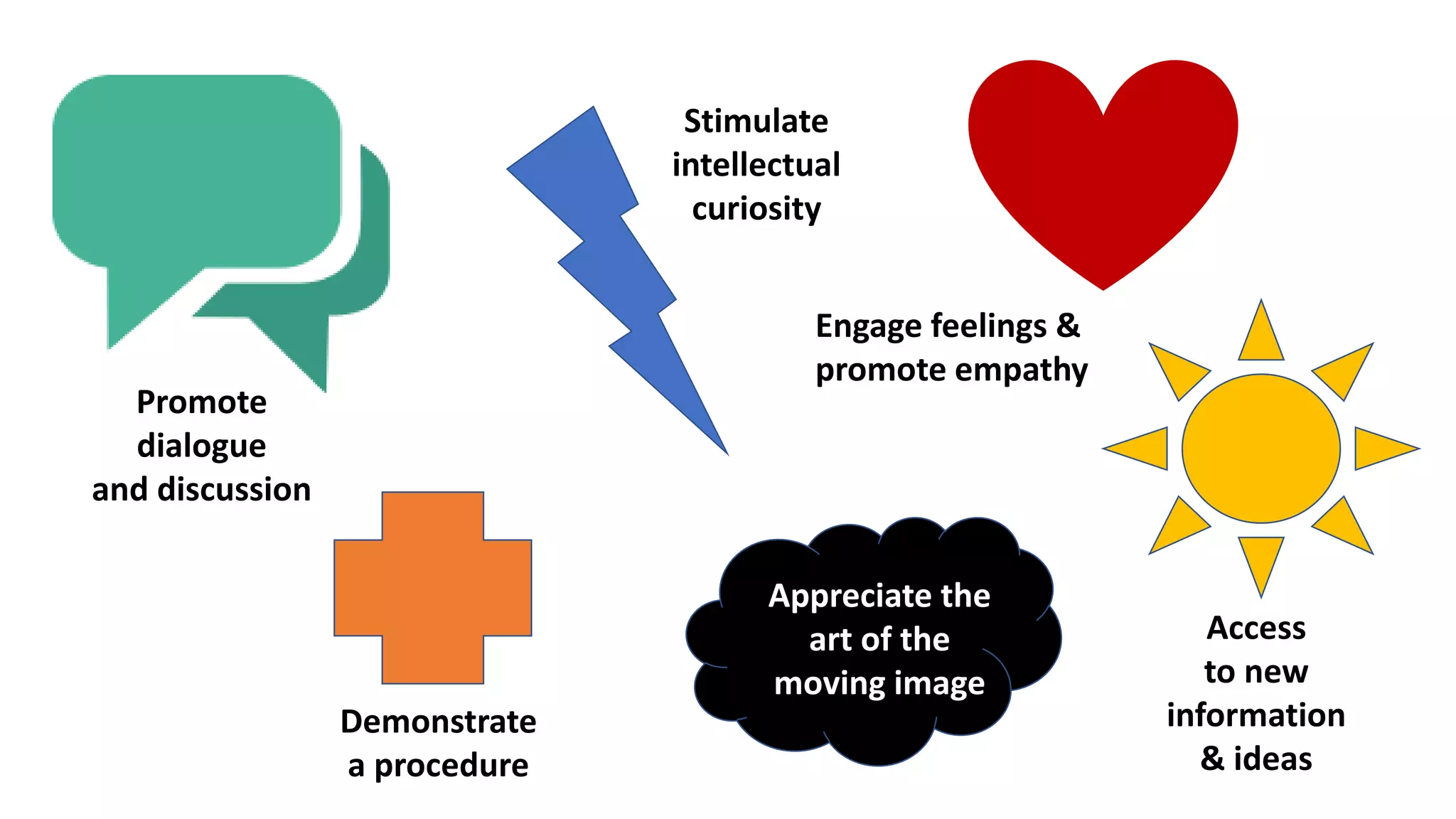
Access
to new
information
& ideas
Engage feelings &
promote empathy
Promote
dialogue
and discussion
Stimulate
intellectual
curiosity
Demonstrate
a procedure
Appreciate the
art of the
moving image
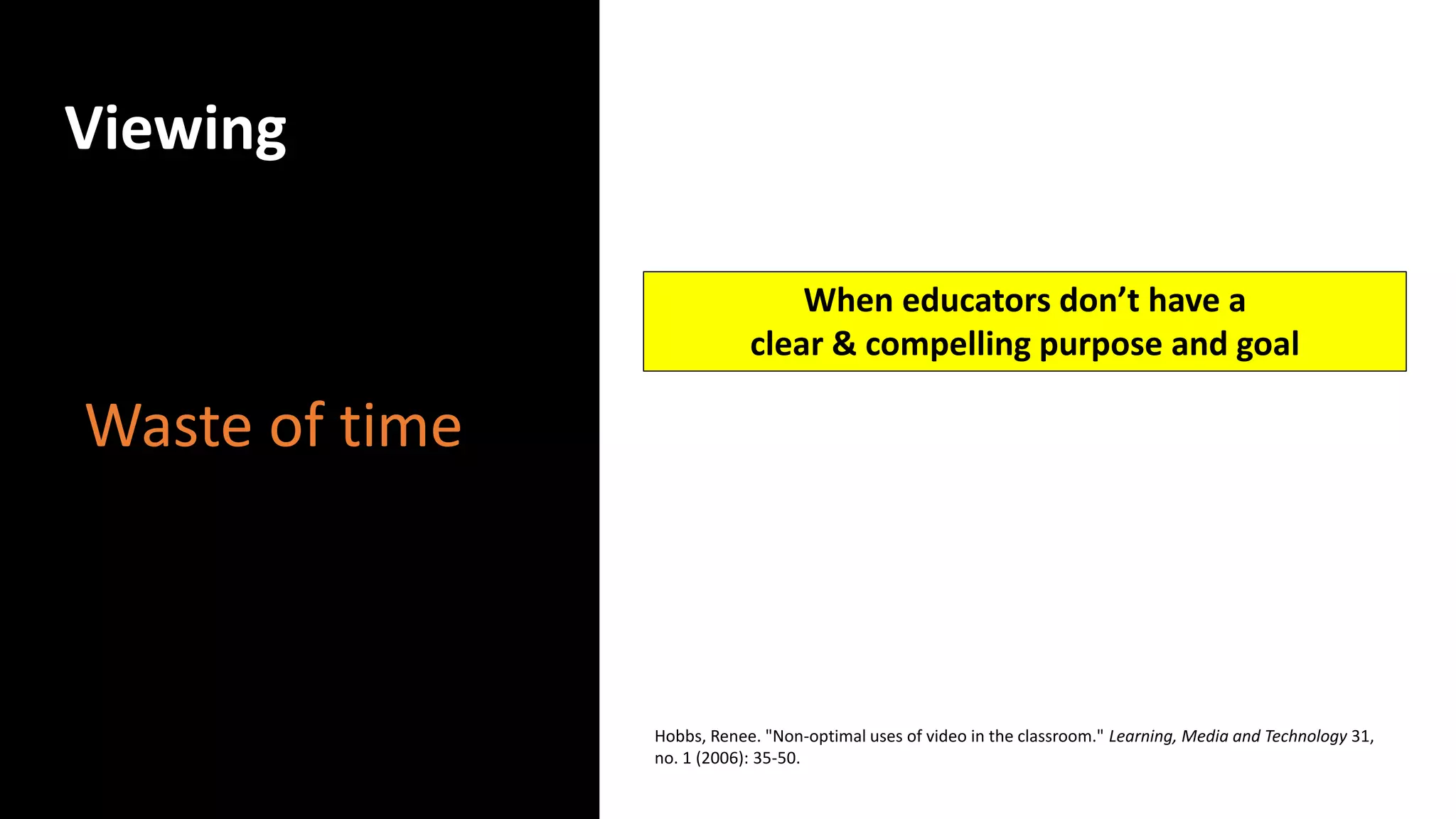
Viewing
Waste of time
Hobbs, Renee. "Non‐optimal uses of video in the classroom." Learning, Media and Technology 31,
no. 1 (2006): 35-50.
When educators don’t have a
clear & compelling purpose and goal
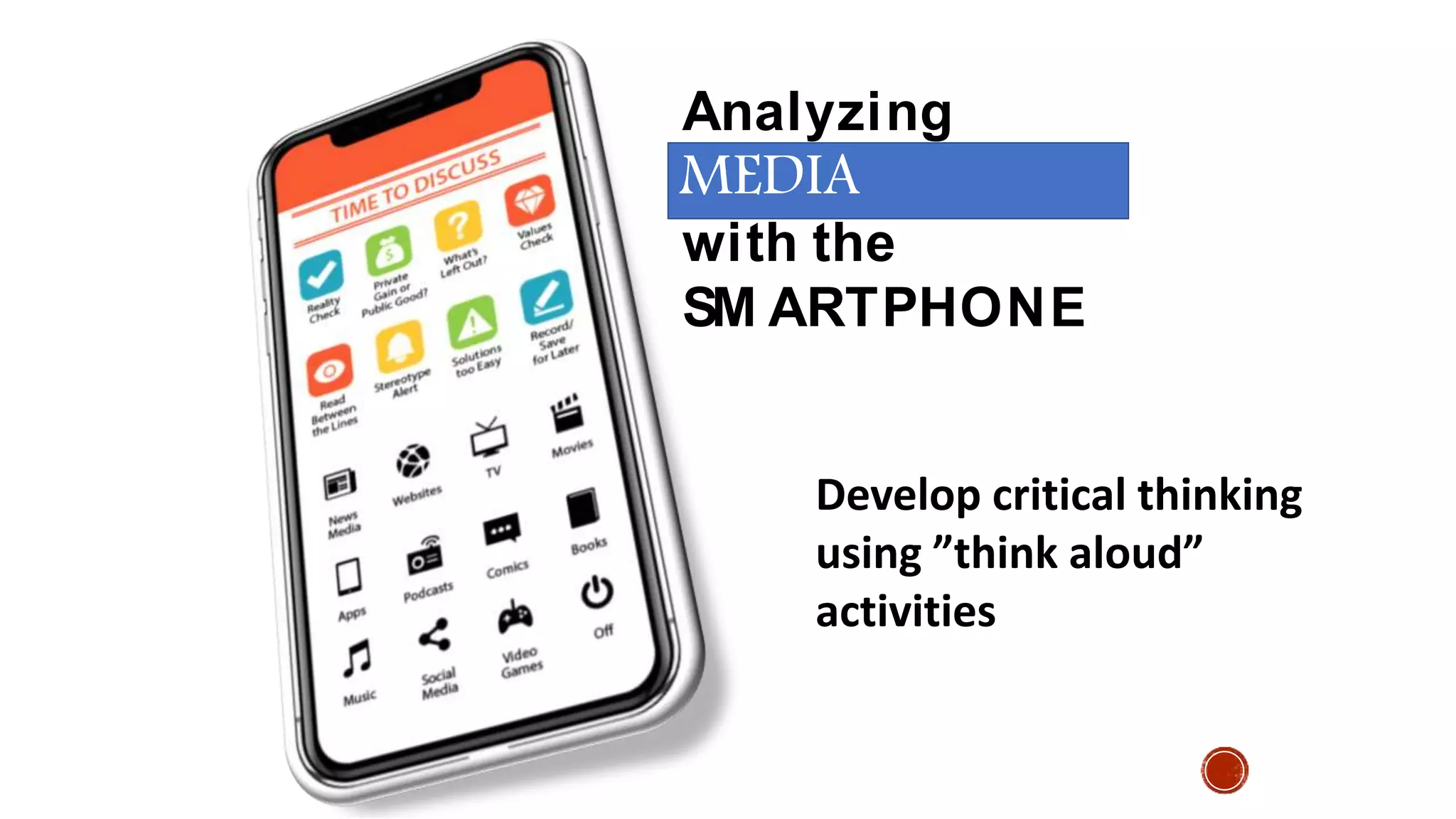
Analyzing
YouTube Videos
with the
SM ARTPHONE
Develop critical thinking
using ”think aloud”
activities
MEDIA
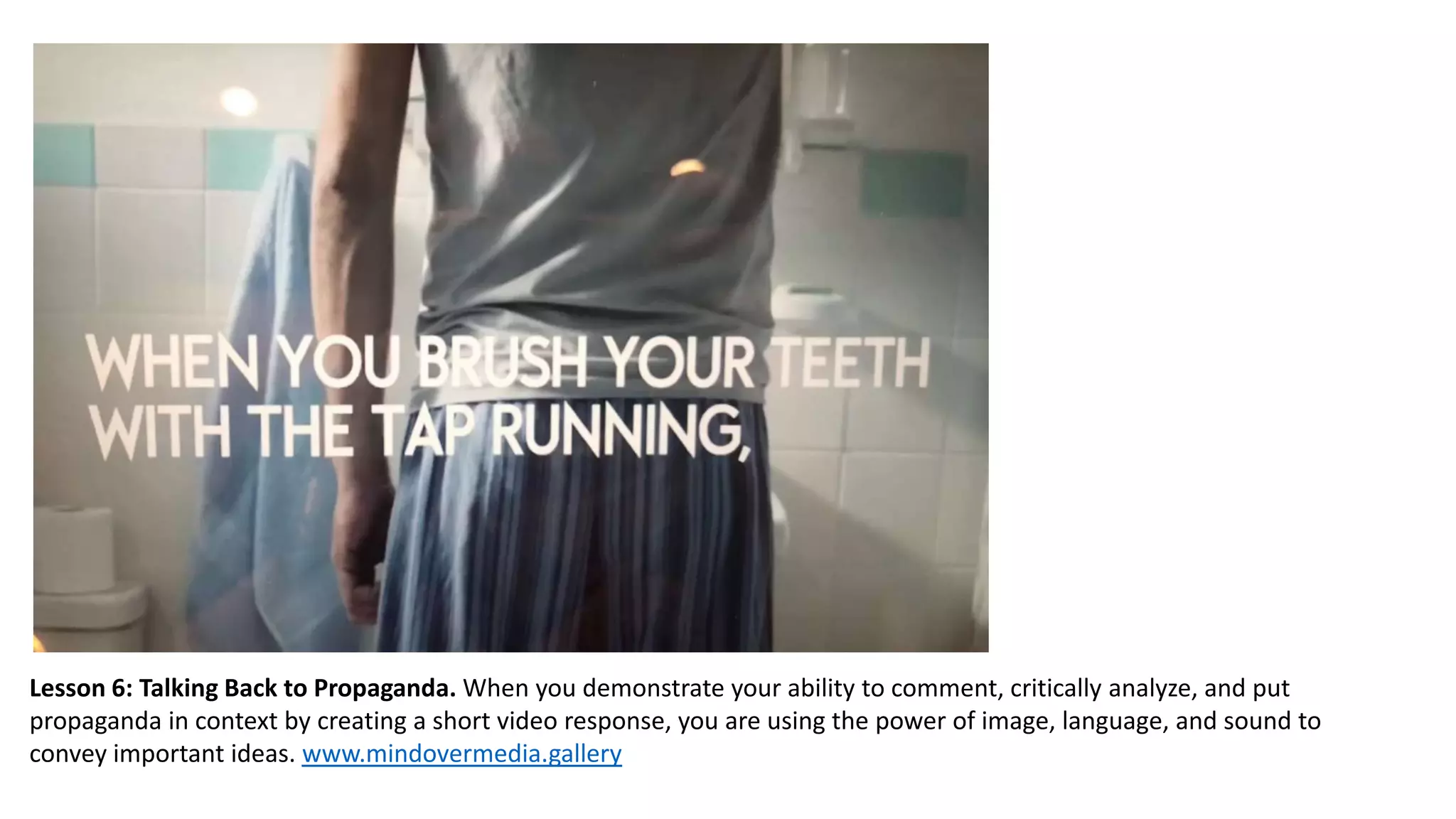
Lesson 6: Talking Back to Propaganda. When you demonstrate your ability to comment, critically analyze, and put
propaganda in context by creating a short video response, you are using the power of image, language, and sound to
convey important ideas. www.mindovermedia.gallery
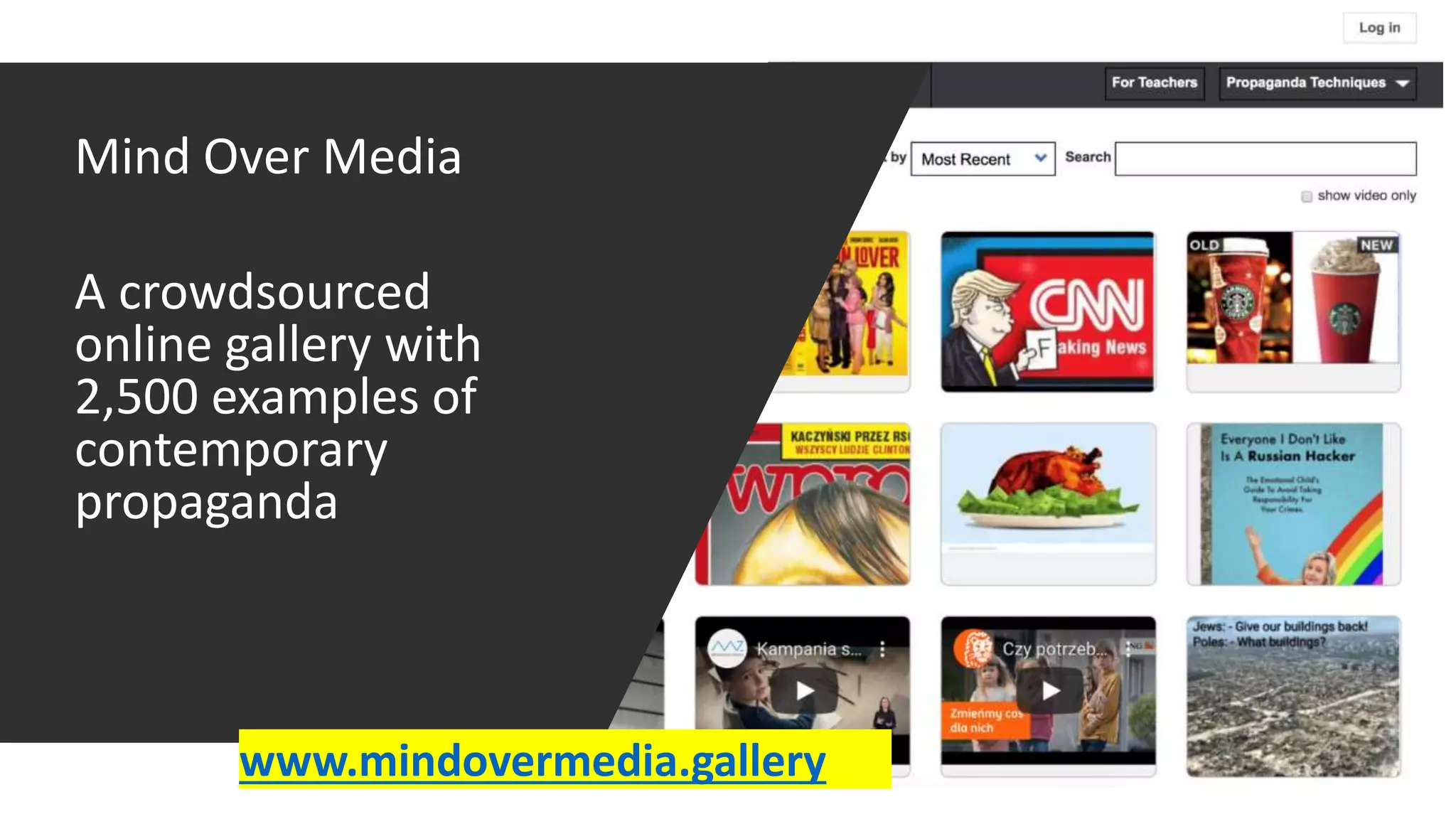
Mind Over Media
A crowdsourced
online gallery with
2,500 examples of
contemporary
propaganda
www.mindovermedia.gallery
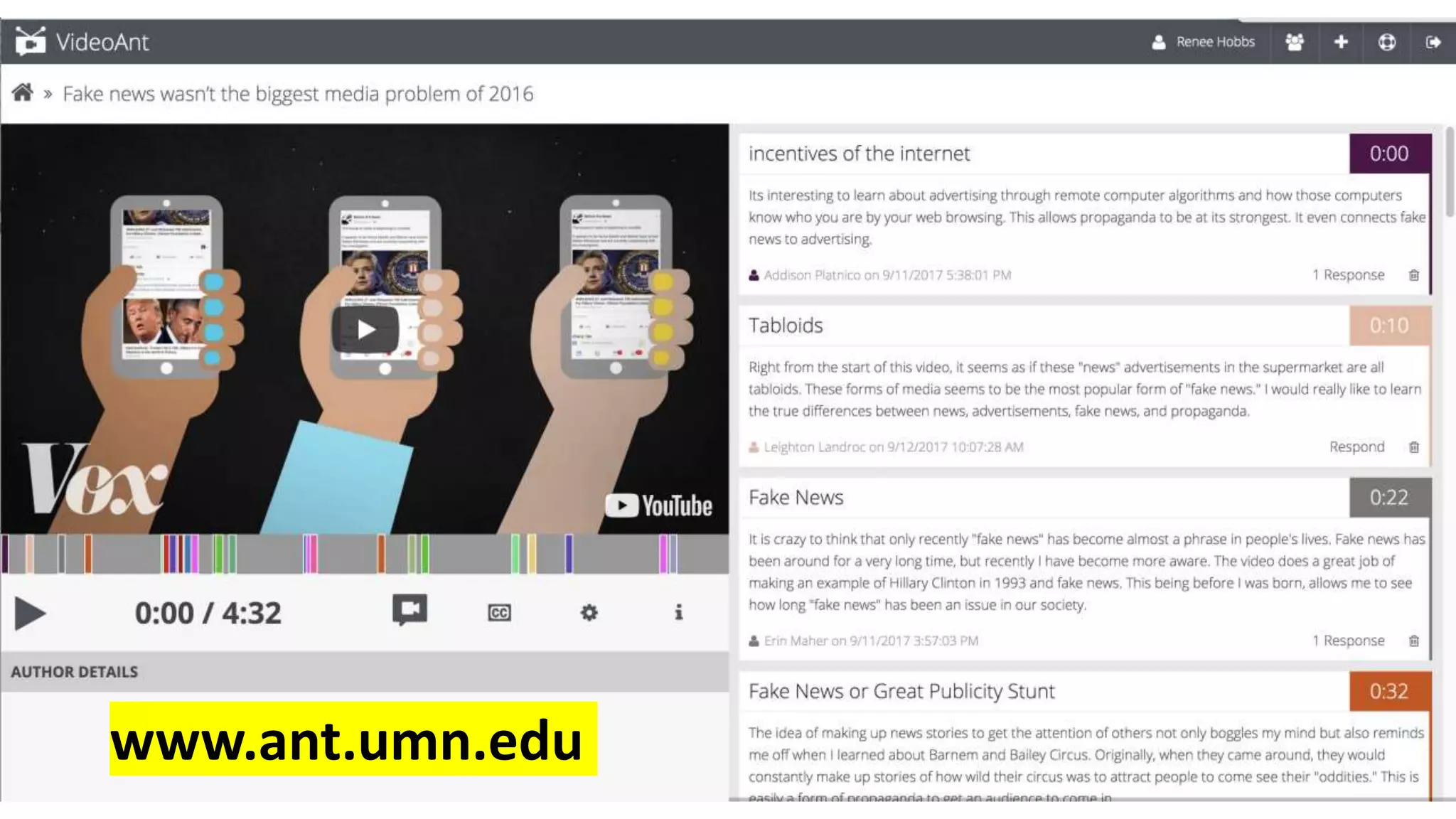
www.ant.umn.edu
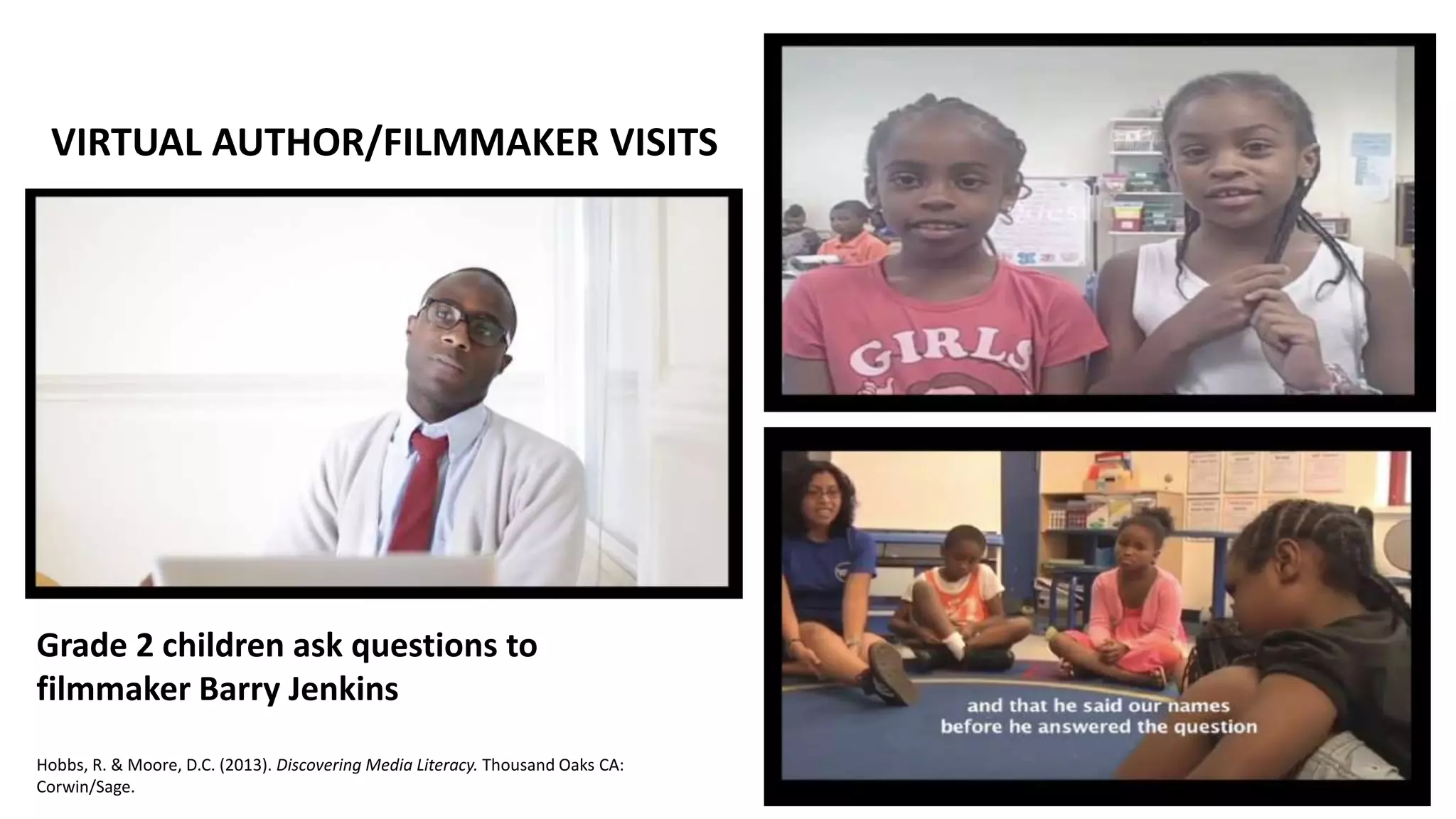
Grade 2 children ask questions to
filmmaker Barry Jenkins
Hobbs, R. & Moore, D.C. (2013). Discovering Media Literacy. Thousand Oaks CA:
Corwin/Sage.
VIRTUAL AUTHOR/FILMMAKER VISITS
Viewing
Learning
Creating
help both learners & teachers use the power of visual media
to empower and engage learners
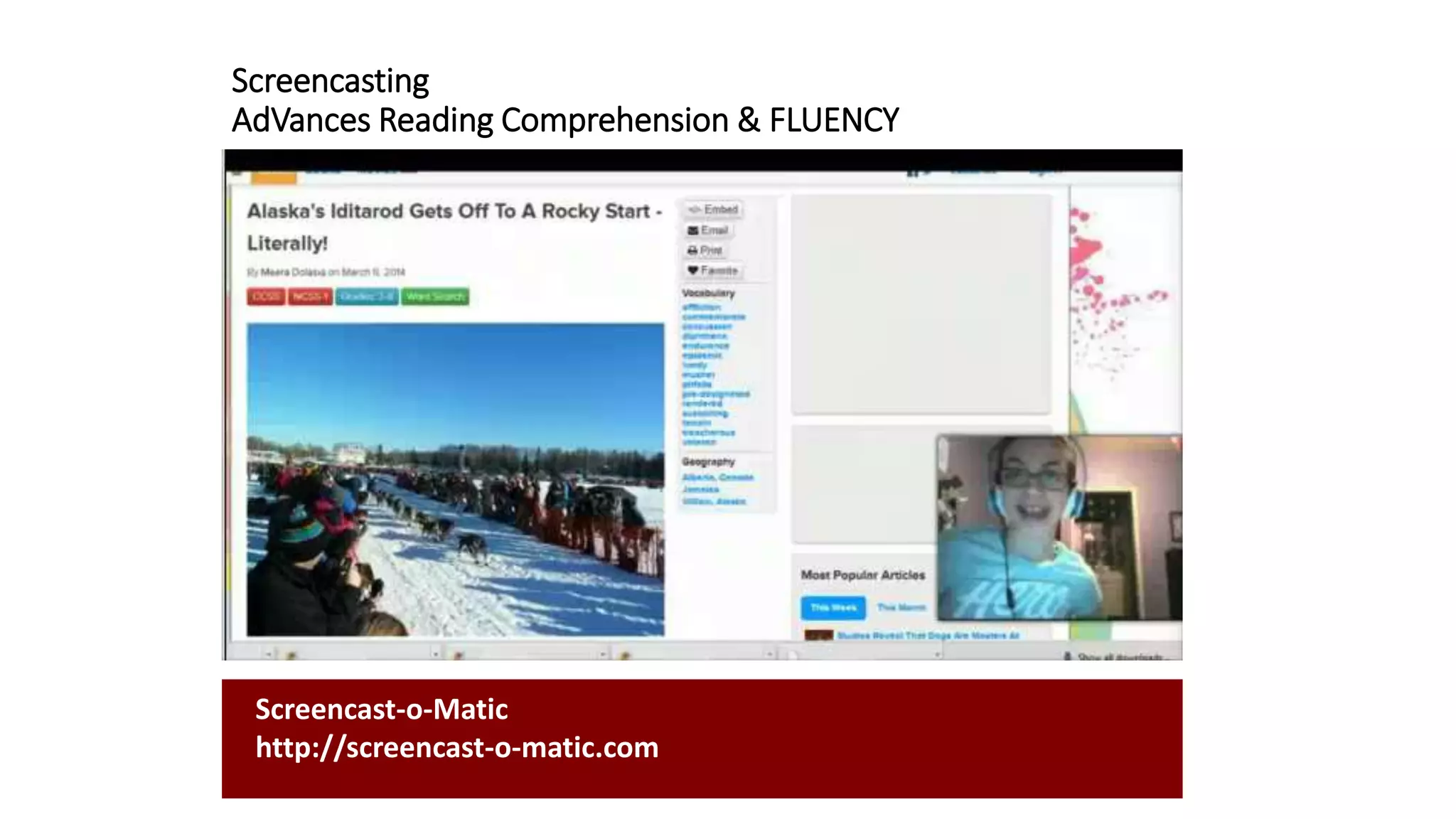
Screencasting
AdVances Reading Comprehension & FLUENCY
Screencast-o-Matic
http://screencast-o-matic.com
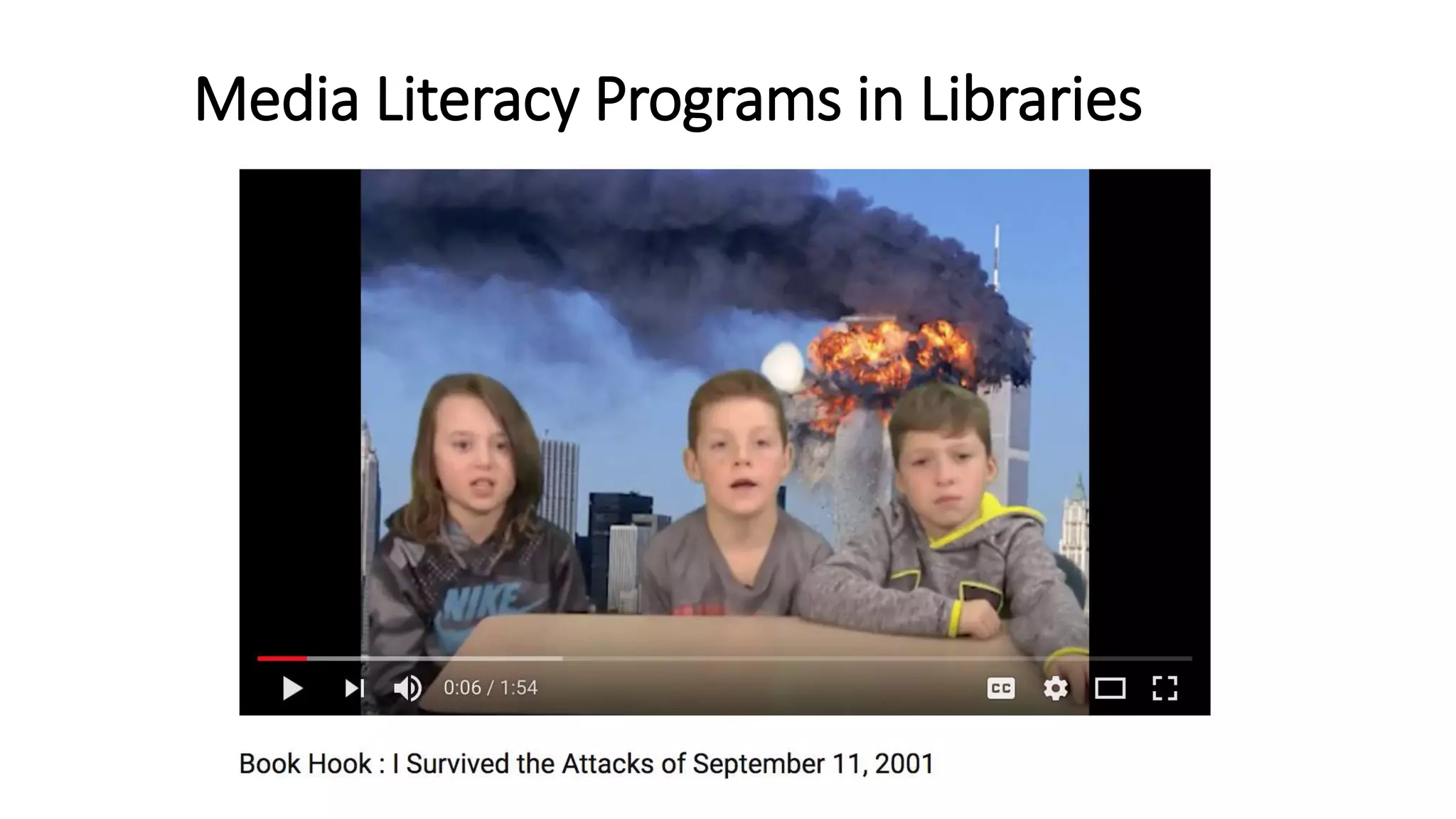
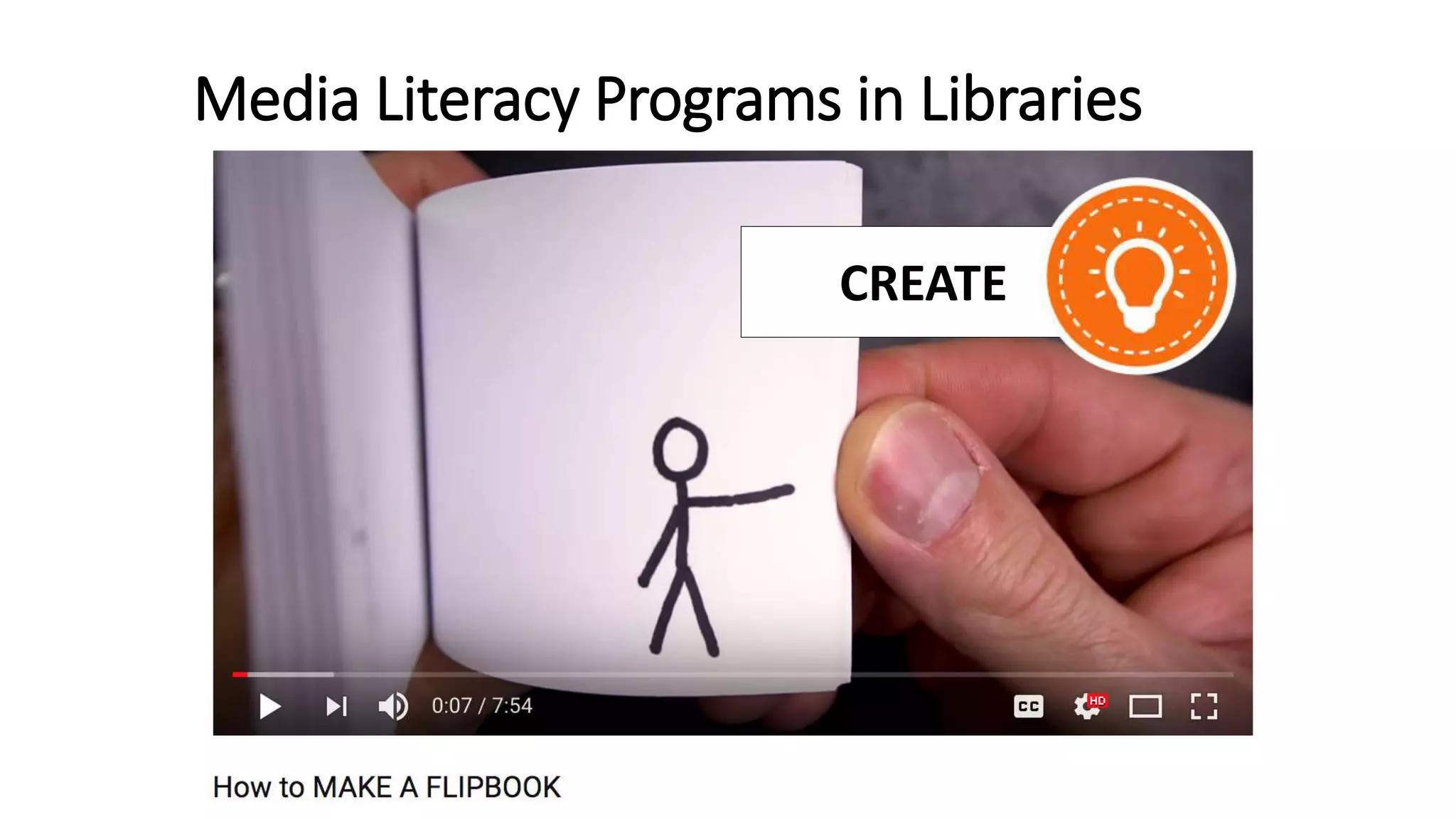
Media Literacy Programs in Libraries
CREATE
Media Literacy Programs in Libraries
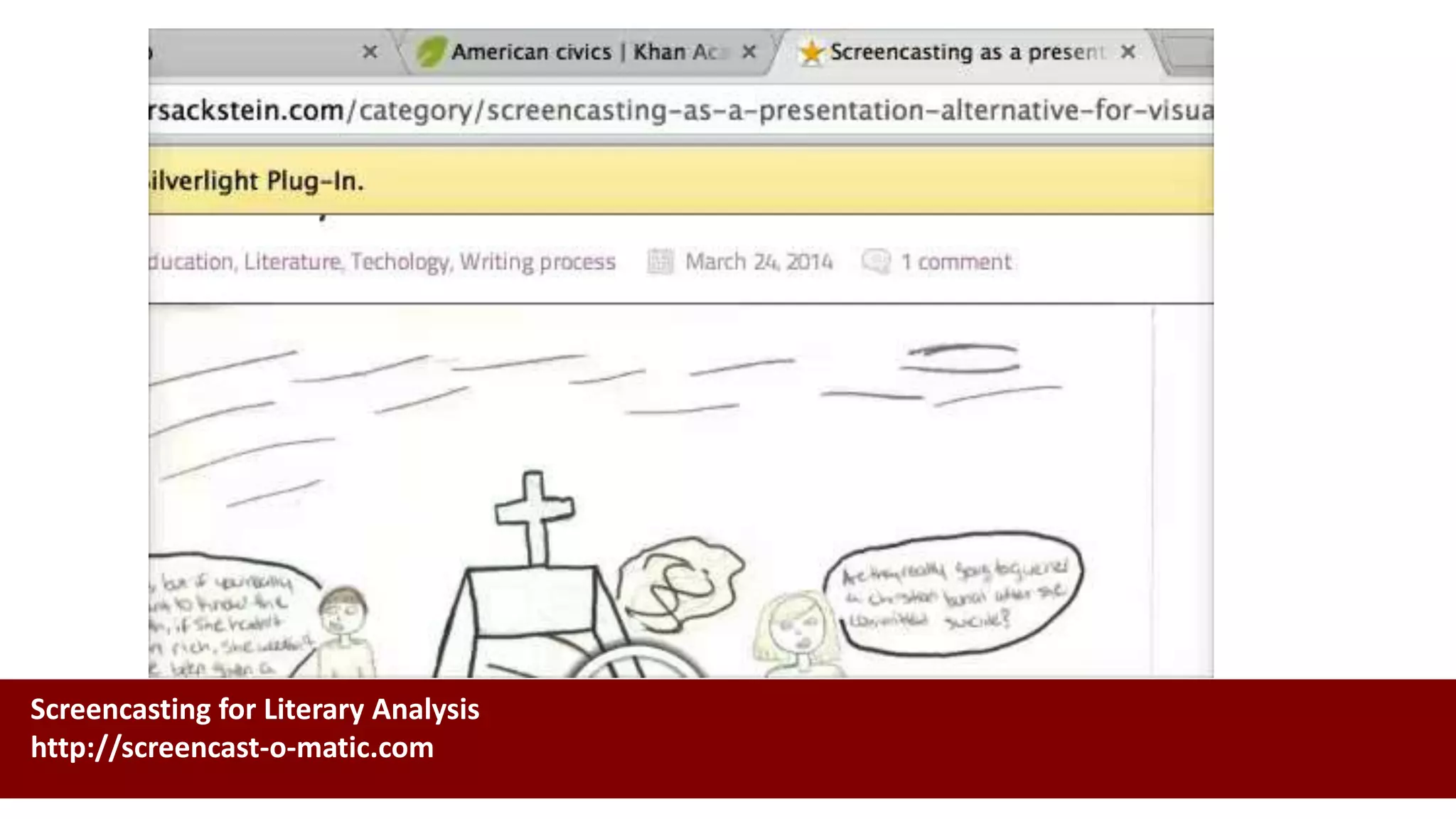
Screencasting for Literary Analysis
http://screencast-o-matic.com
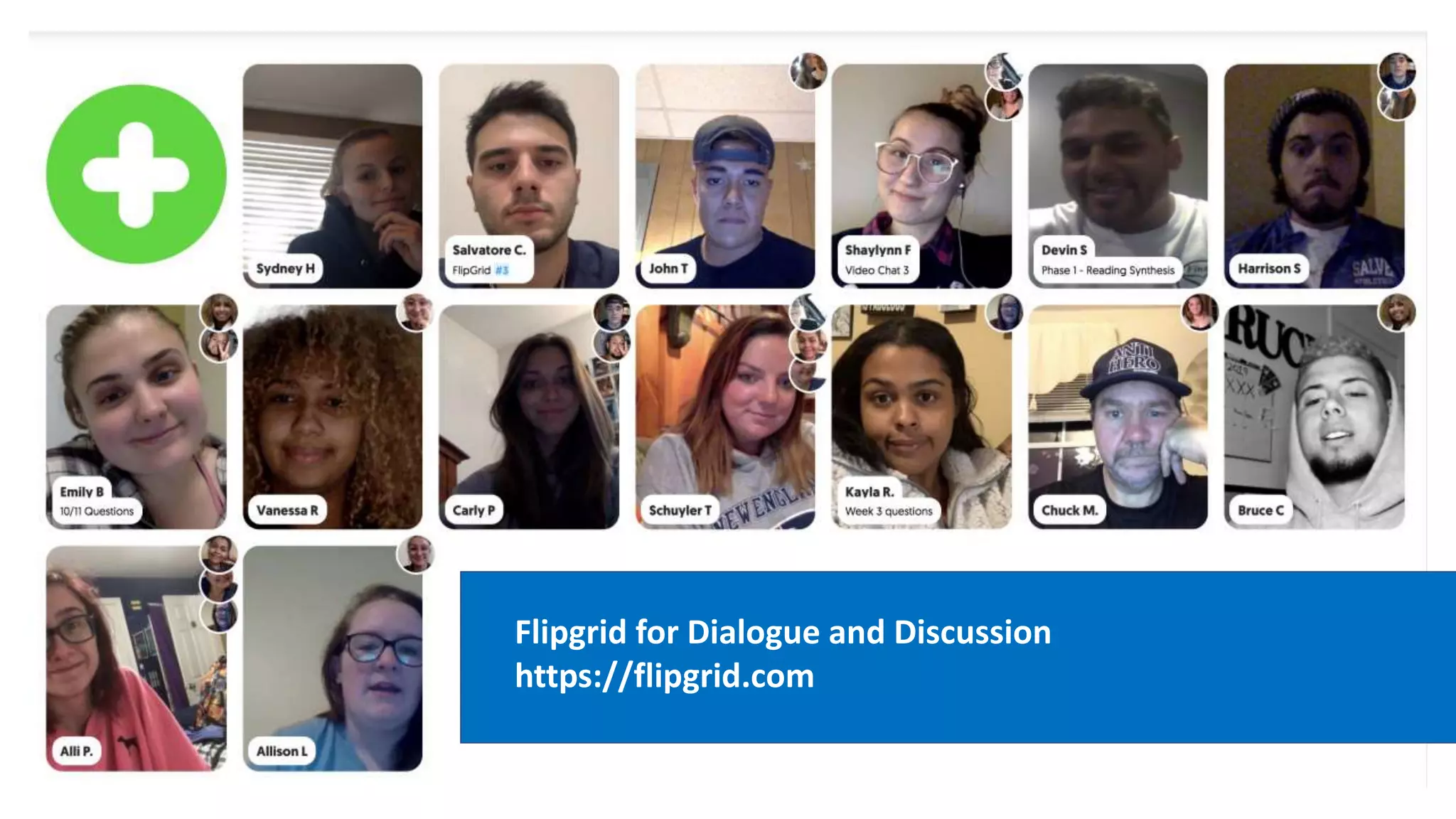
Flipgrid for Dialogue and Discussion
https://flipgrid.com
As you watch, consider:
What inferences can you
make about how the teacher
librarian assessed the
learning experience?
How to Take Care of Your Pet
Grade 1 Students at Russell Byers Charter School, Philadelphia
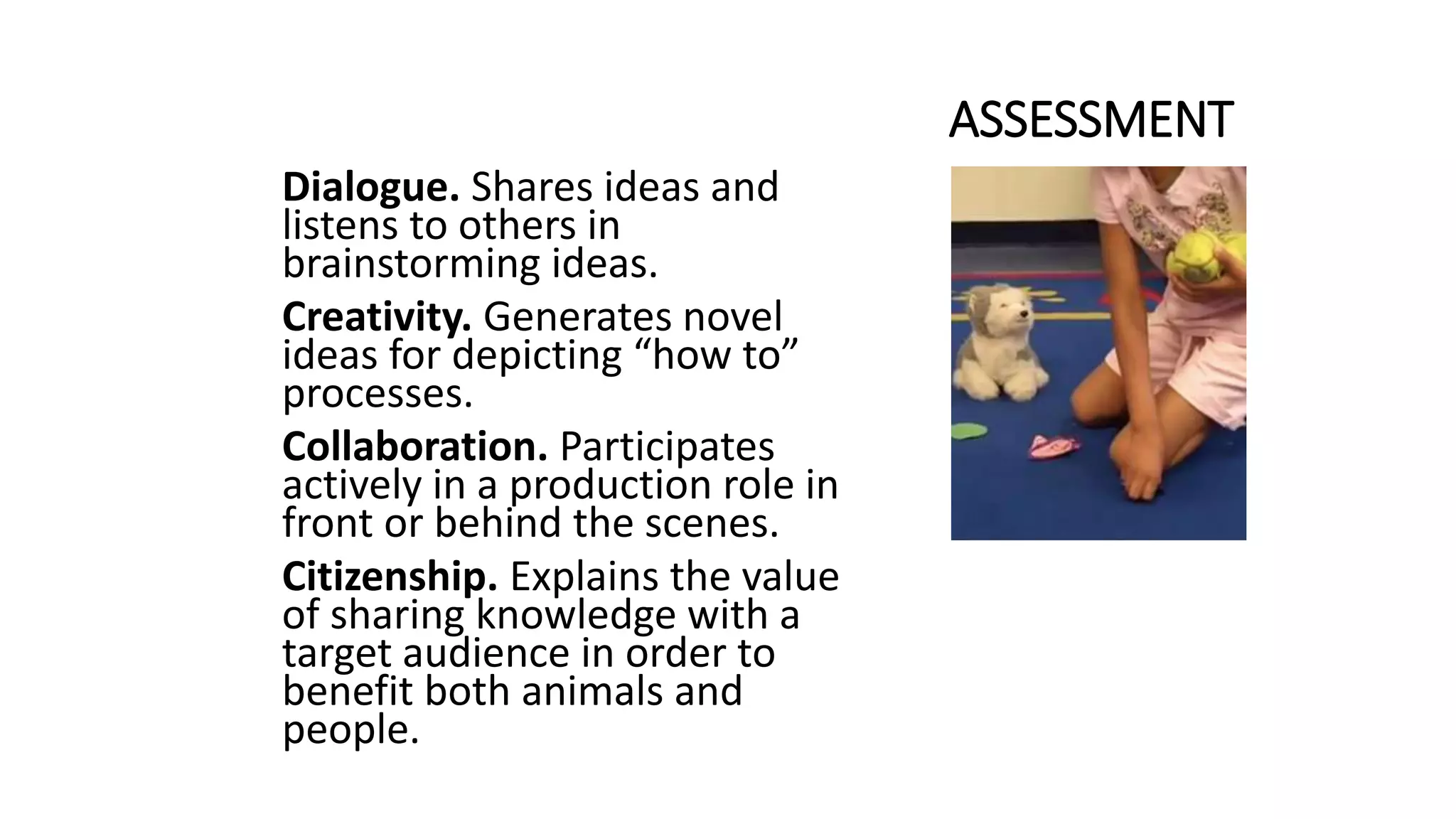
ASSESSMENT
Dialogue. Shares ideas and
listens to others in
brainstorming ideas.
Creativity. Generates novel
ideas for depicting “how to”
processes.
Collaboration. Participates
actively in a production role in
front or behind the scenes.
Citizenship. Explains the value
of sharing knowledge with a
target audience in order to
benefit both animals and
people.
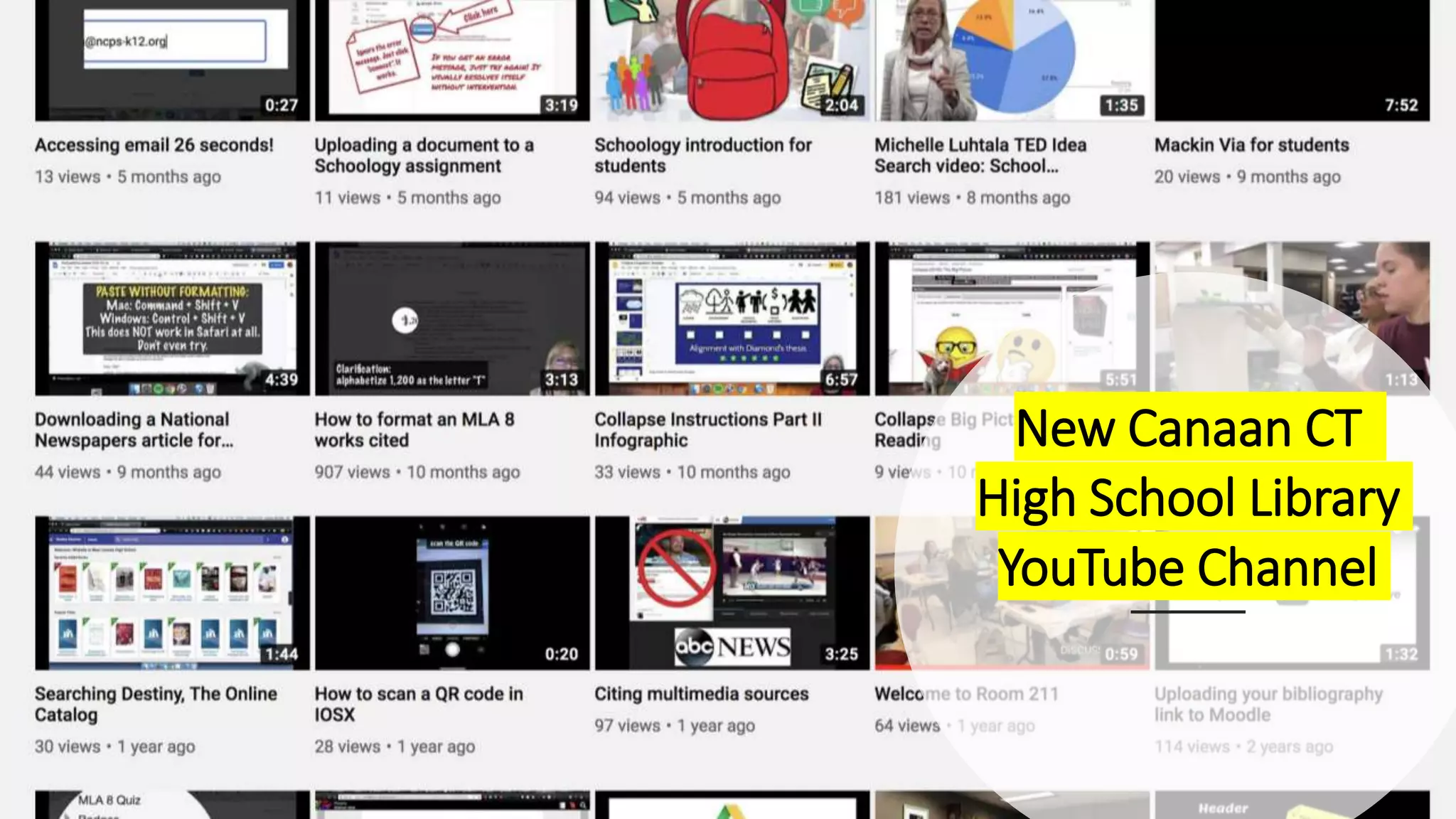
New Canaan CT
High School Library
YouTube Channel
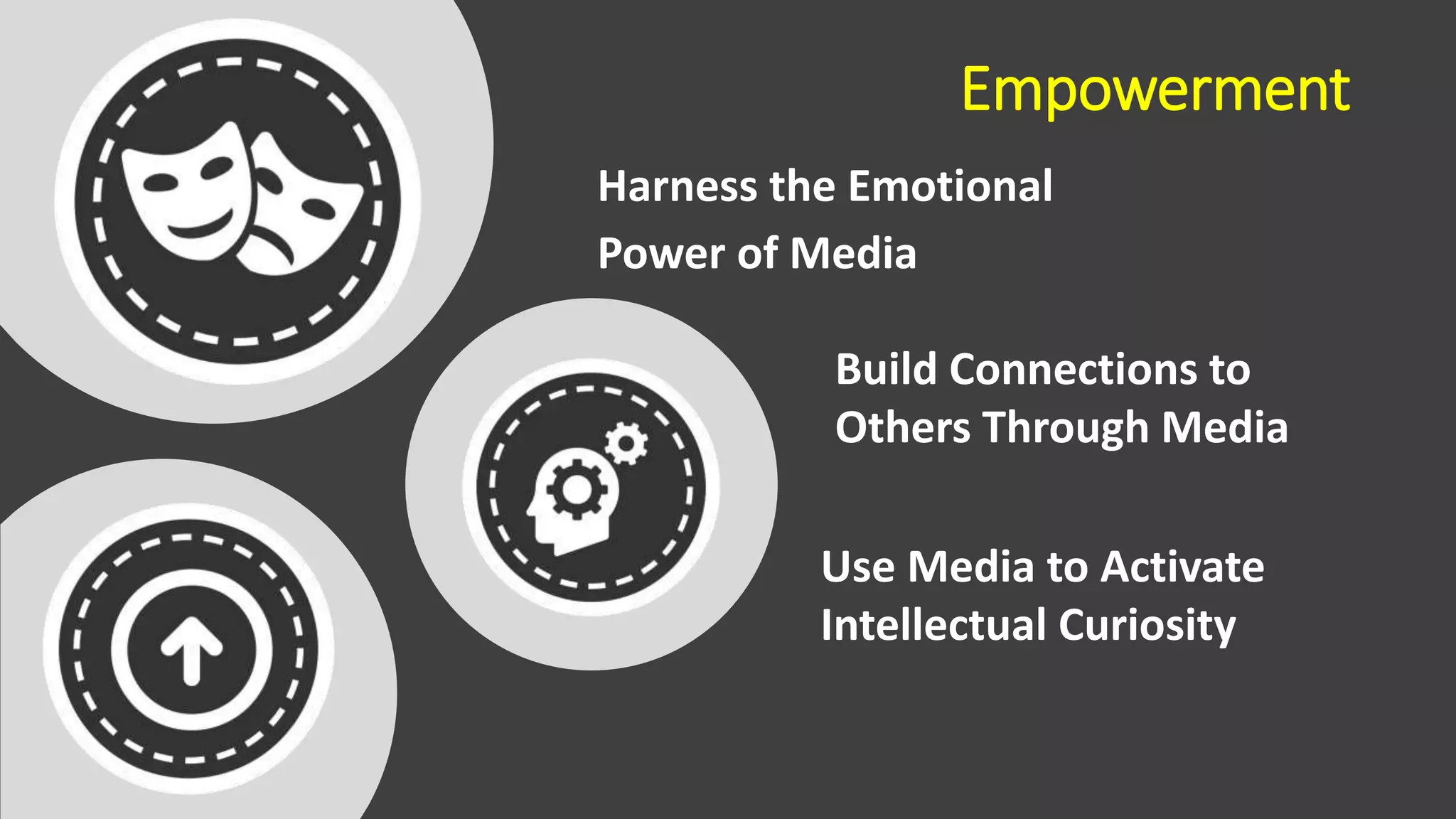
Empowerment
Harness the Emotional
Power of Media
Build Connections to
Others Through Media
Use Media to Activate
Intellectual Curiosity
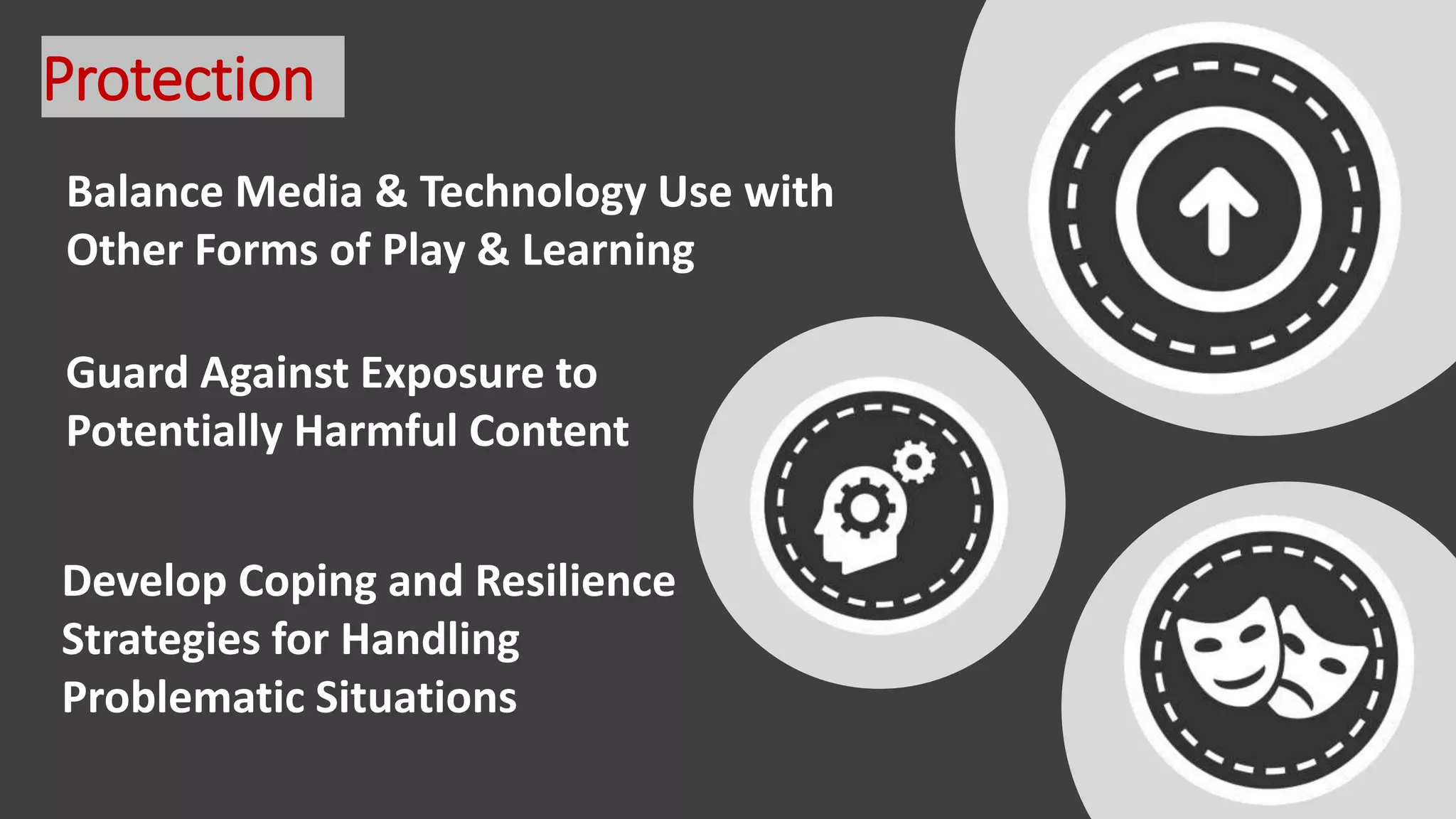
Protection
Balance Media & Technology Use with
Other Forms of Play & Learning
Guard Against Exposure to
Potentially Harmful Content
Develop Coping and Resilience
Strategies for Handling
Problematic Situations
The
Empowerment
Protection
Spiral
Viewing
Learning
Creating
Viewing
Learning
Creating
Collecting
Connecting
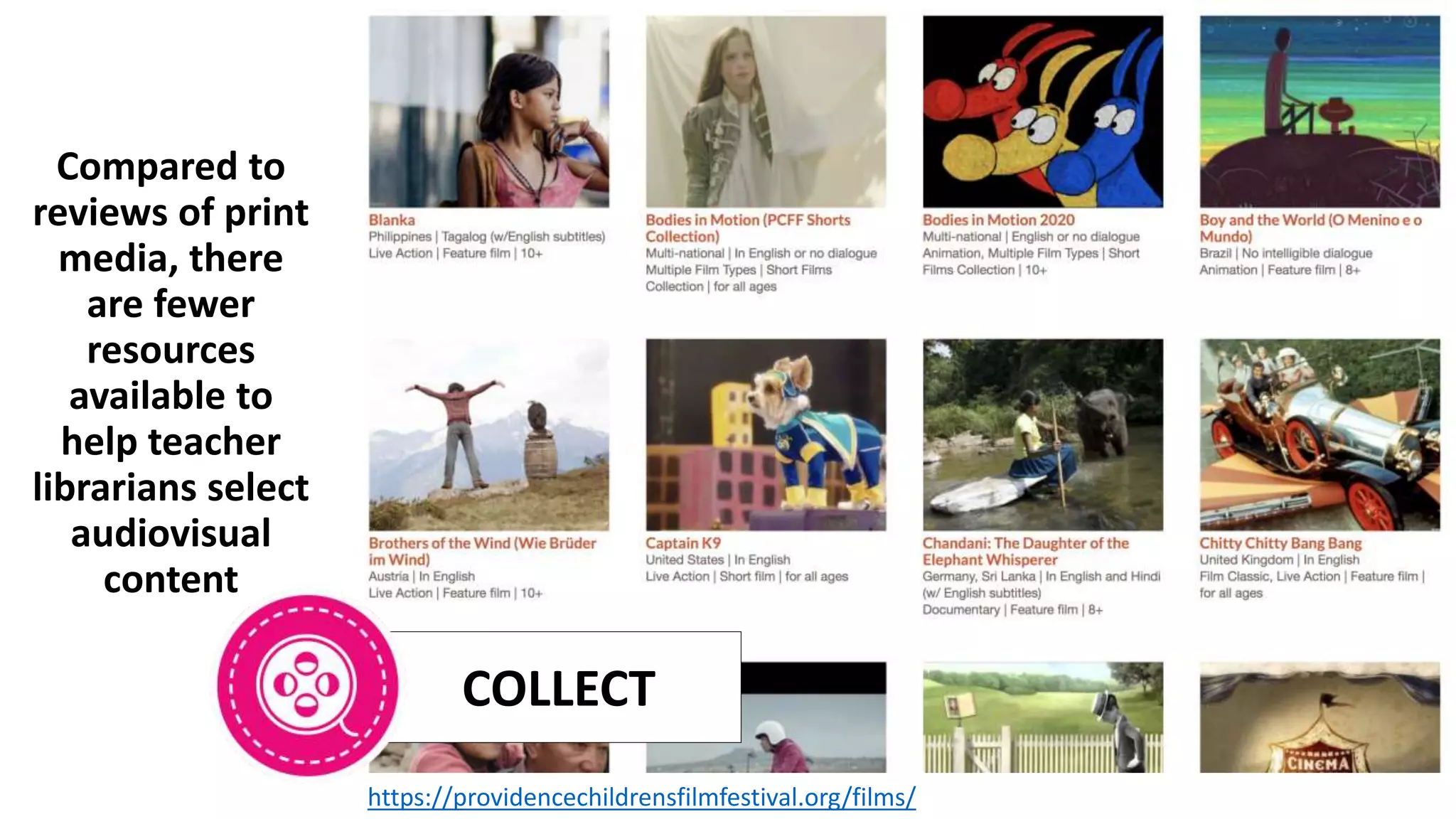
COLLECT
Compared to
reviews of print
media, there
are fewer
resources
available to
help teacher
librarians select
audiovisual
content
COLLECT
https://providencechildrensfilmfestival.org/films/
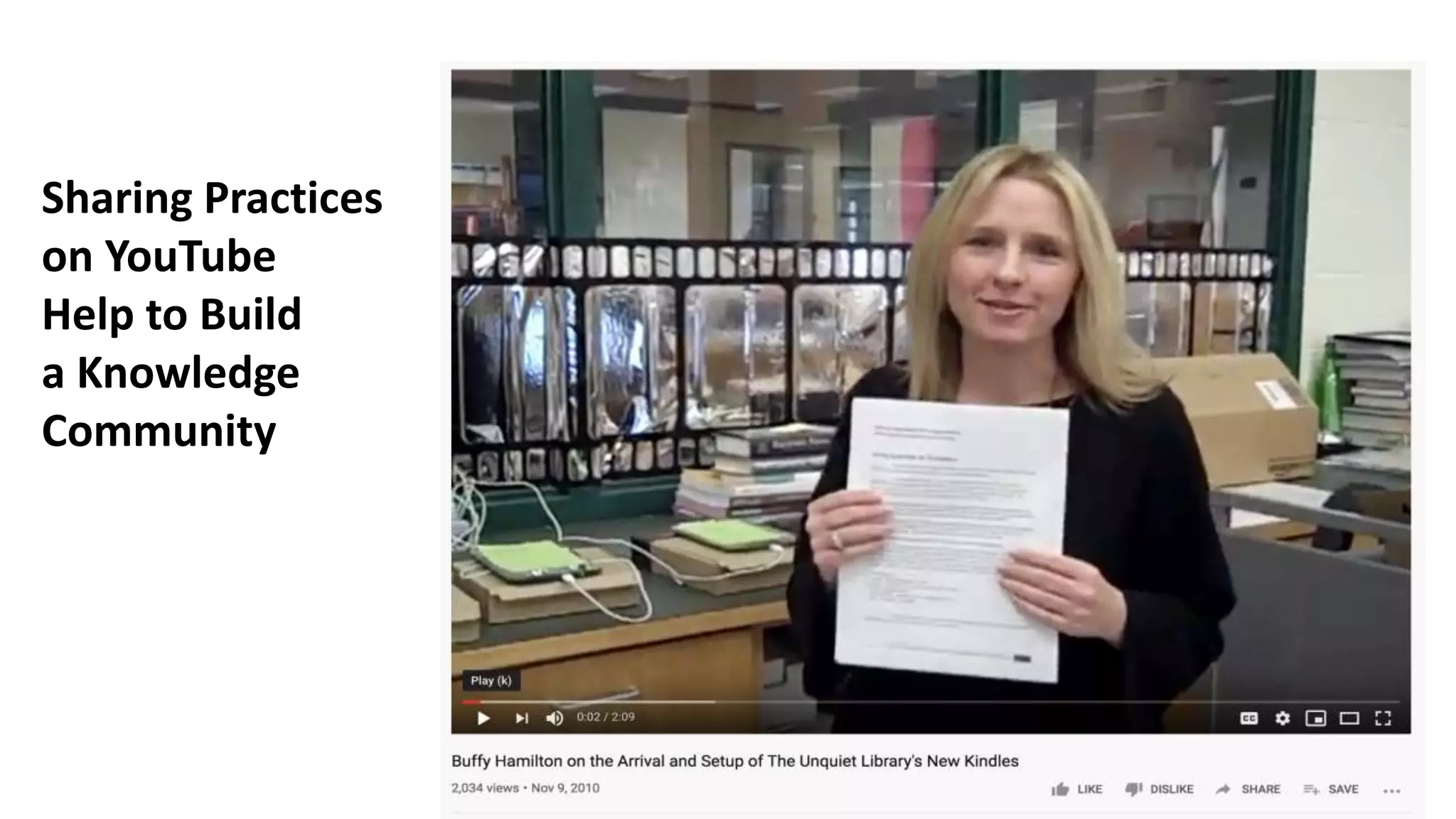
Sharing Practices
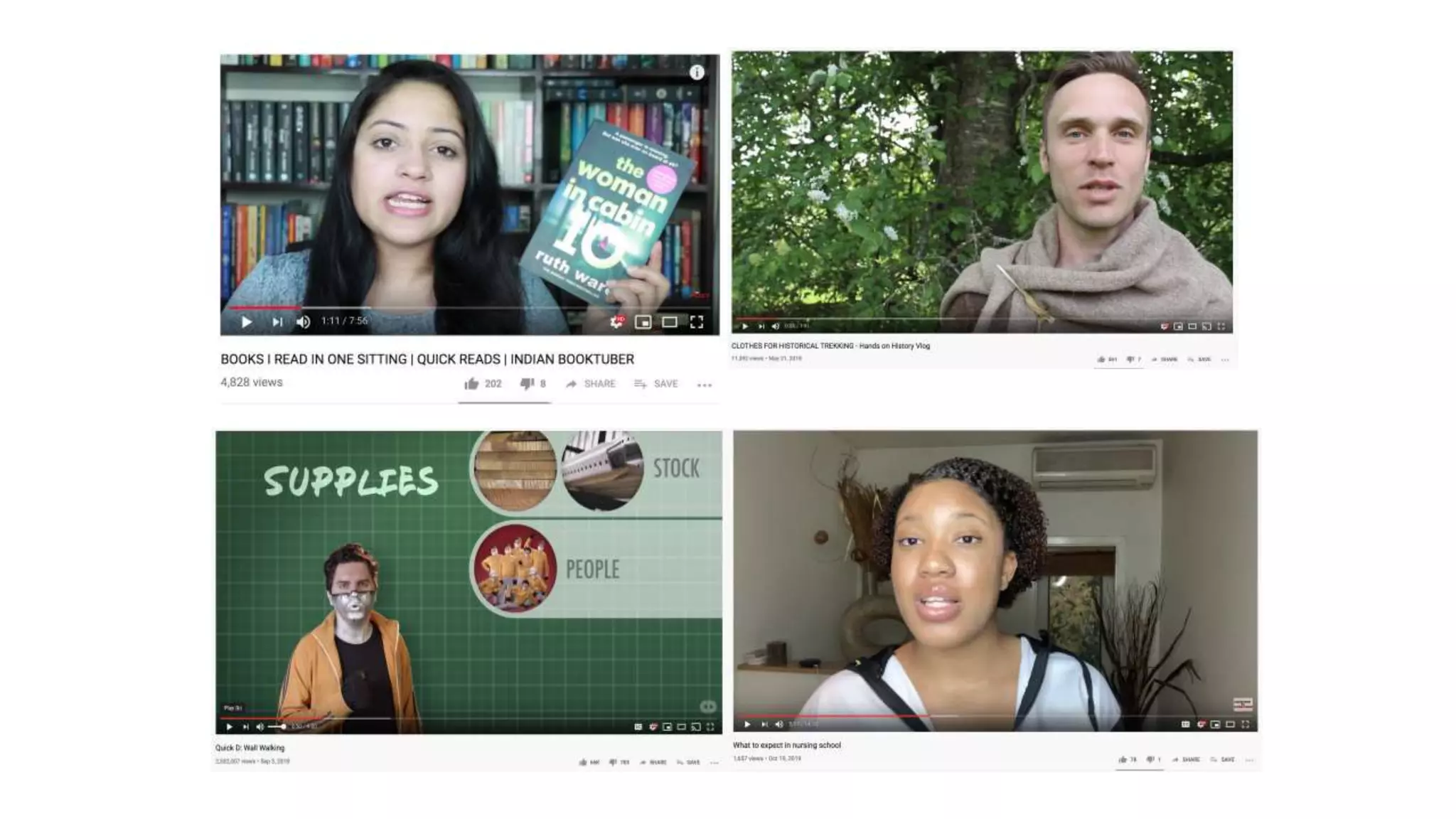
on YouTube
Help to Build
a Knowledge
Community
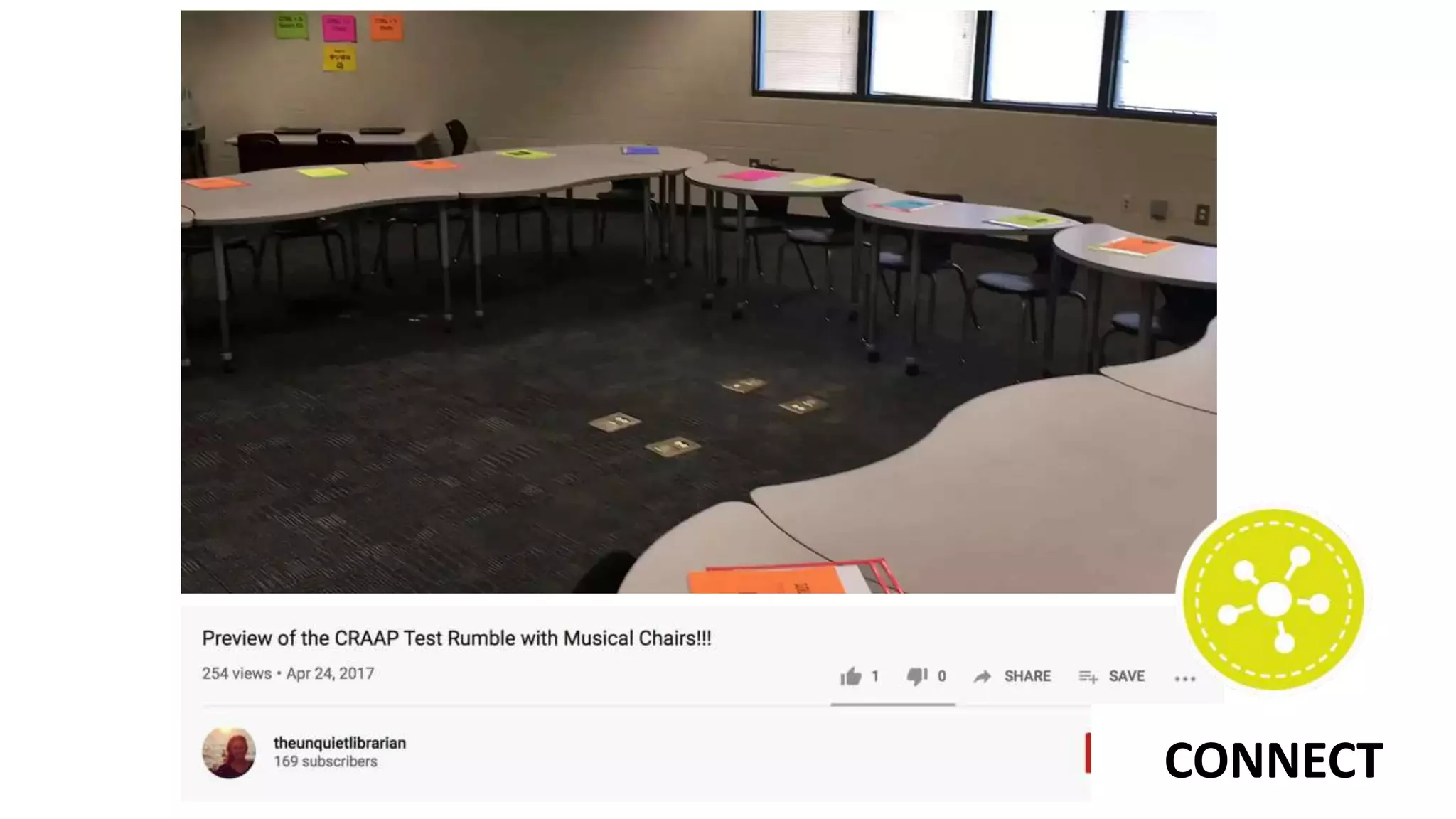
CONNECT
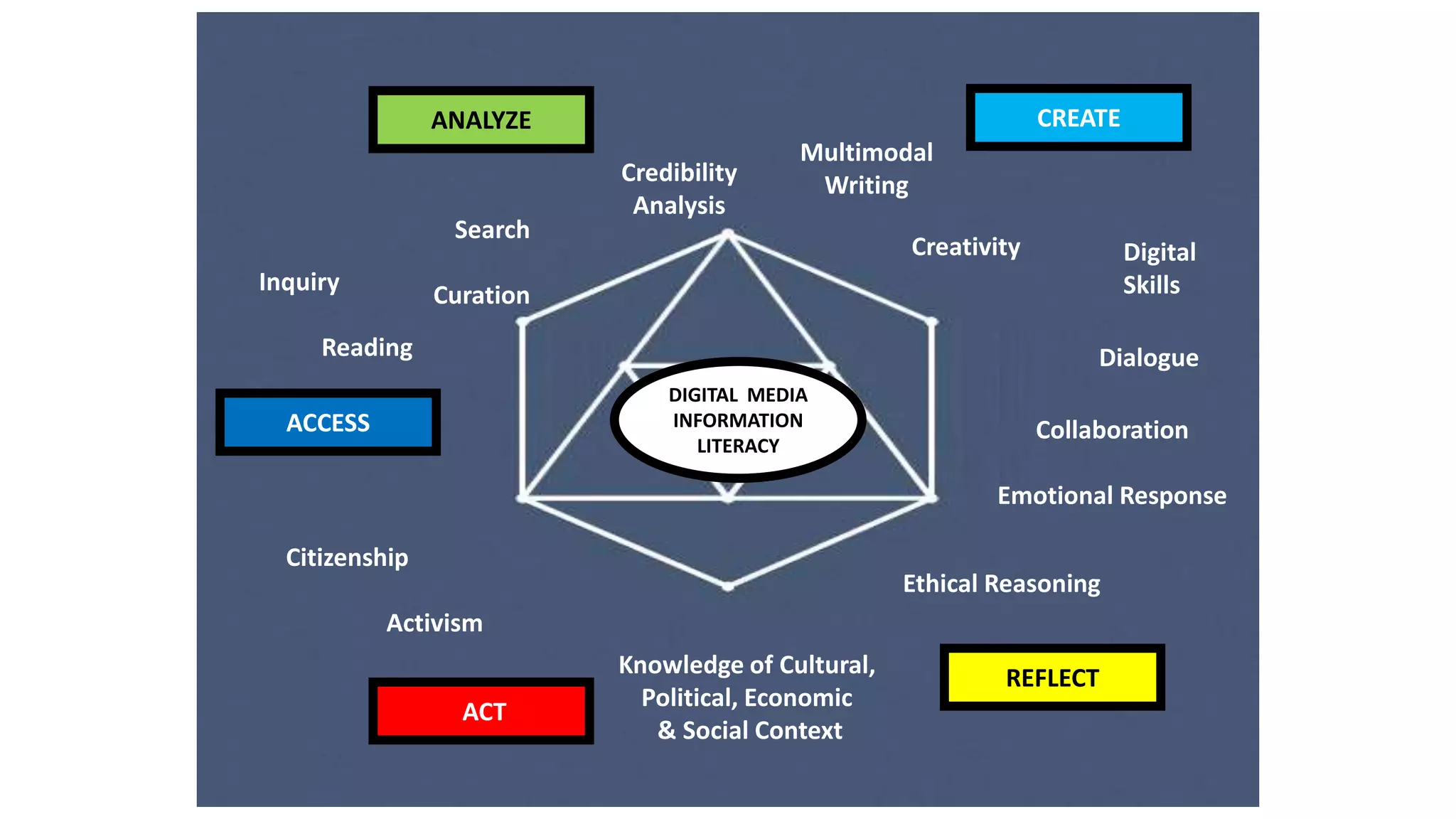
DIGITAL MEDIA
INFORMATION
LITERACY
ANALYZE
ACCESS
ACT
REFLECT
CREATE
Inquiry
Reading
Search
Curation
Credibility
Analysis
Creativity
Multimodal
Writing
Digital
Skills
Dialogue
Collaboration
Emotional Response
Ethical Reasoning
Knowledge of Cultural,
Political, Economic
& Social Context
Citizenship
Activism
COMPETITIONS
& COnTESTS
Global Student Voice
www.studentvoice.org
Open to children ages 5 – 18 from
anywhere in the world.
Theme: “In Another’s Shoes”
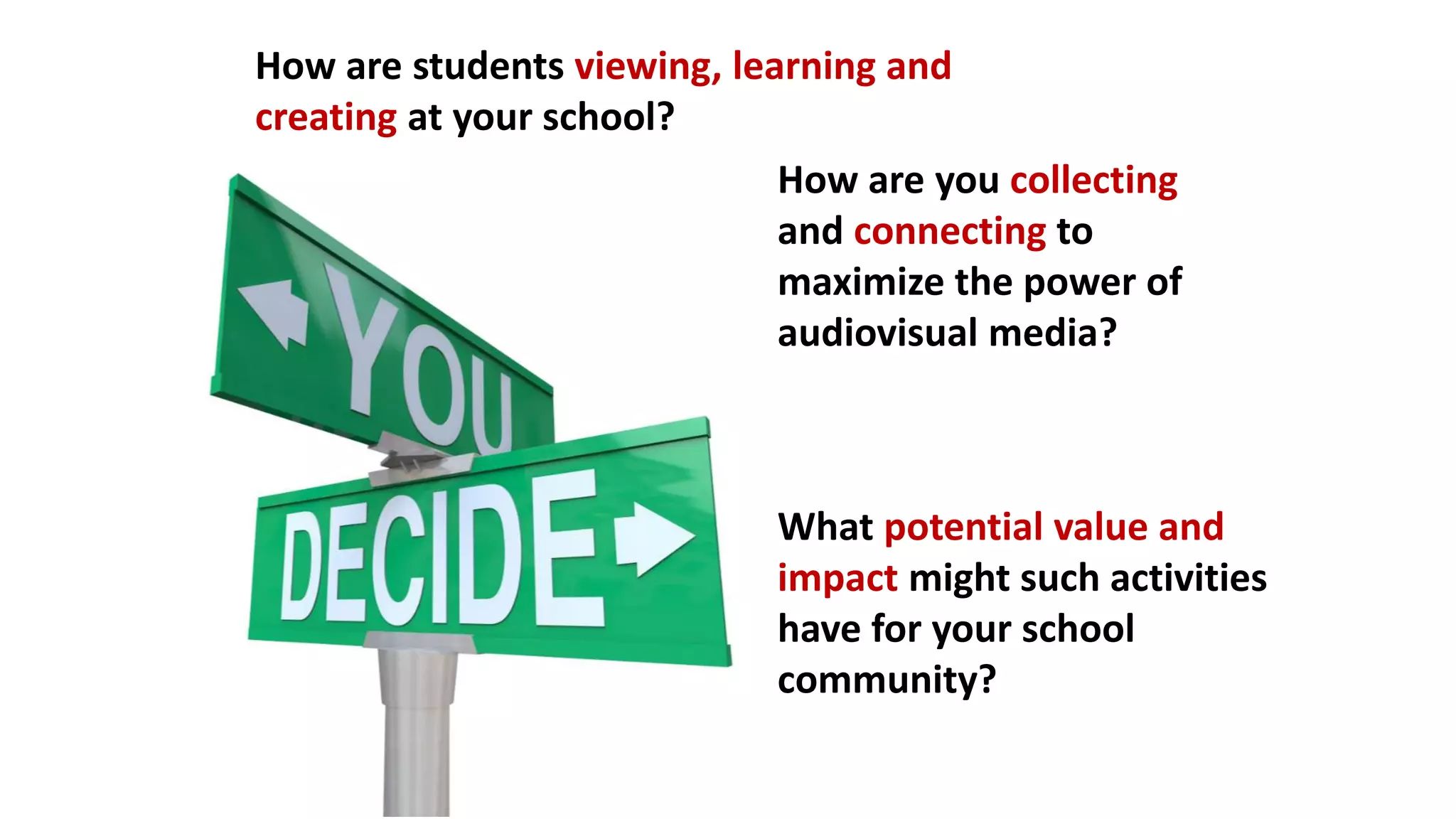
How are students viewing, learning and
creating at your school?
How are you collecting
and connecting to
maximize the power of
audiovisual media?
What potential value and
impact might such activities
have for your school
community?
Renee Hobbs
Director, Media Education Lab
Co-Director, Graduate Certificate Program in Digital Literacy
Harrington School of Communication & Media
University of Rhode Island
Email: hobbs@uri.edu
Twitter: @reneehobbs
LEARN MORE
Web: www.mediaeducationlab.com

The Library Screen Scene
Editor's Notes

  • #8 Overview of our work’s 5 principles. Today we focus on: Collect - Connect - Create