THE KOREAN WAR:   1950-1953
A WAR OF PROXY
PRE-WAR KOREA BASICS


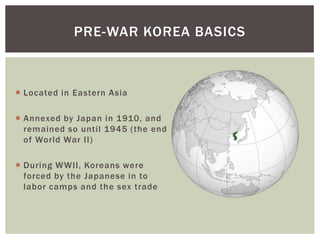
 Located in Eastern Asia

 Annexed by Japan in 1910, and
  remained so until 1945 (the end
  of World War II)

 During WWII, Koreans were
  forced by the Japanese in to
  labor camps and the sex trade
THE DIVISION OF KOREA


         The end of World War II saw the
          division of Korea
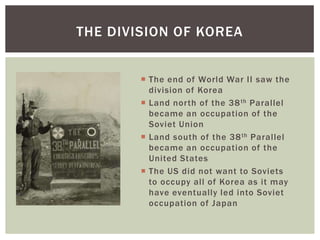
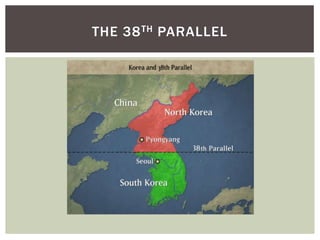
         Land north of the 38 th Parallel
          became an occupation of the
          Soviet Union
         Land south of the 38 th Parallel
          became an occupation of the
          United States
         The US did not want to Soviets
          to occupy all of Korea as it may
          have eventually led into Soviet
          occupation of Japan
THE 38 TH PARALLEL
POST-DIVISION ELECTIONS

1948 marked elections in both North Korea
 and South Korea
North Korea held Parliamentary elections;
 established Communist North Korean
 government
South Korea held national general elections;
 established “The Republic of Korea”
Election time and after was plagued by violent
 resistance on both fronts
WAR BEGINS


Early 1950 – Newly elected North Korean
 leader Kim Il-sung meets with leaders of
 Soviet Union and China to discuss
 invasion of South Korea in attempts to
 unify the country under communist rule
June 25th 1950 – North Korean People’s
 Army (KPA) crosses 38 th Parallel to
 invade South Korea
US INTERVENTION


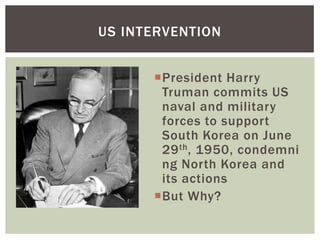
      President Harry
       Truman commits US
       naval and military
       forces to support
       South Korea on June
       29 th , 1950, condemni
       ng North Korea and
       its actions
      But Why?
WHY THE US WAS INVOLVED

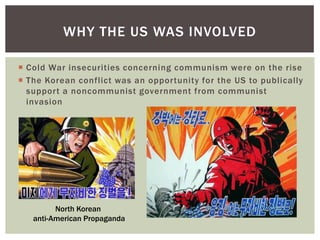
 Cold War insecurities concerning communism were on the rise
 The Korean conflict was an opportunity for the US to publically
  support a noncommunist government from communist
  invasion


         North Korean
   anti-American Propaganda
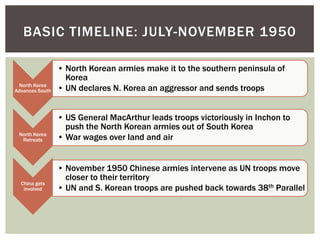
BASIC TIMELINE: JULY-NOVEMBER 1950

                 • North Korean armies make it to the southern peninsula of
                   Korea
 North Korea
Advances South   • UN declares N. Korea an aggressor and sends troops


                 • US General MacArthur leads troops victoriously in Inchon to
                   push the North Korean armies out of South Korea
 North Korea
  Retreats       • War wages over land and air


                 • November 1950 Chinese armies intervene as UN troops move
                   closer to their territory
  China gets
   involved      • UN and S. Korean troops are pushed back towards 38th Parallel
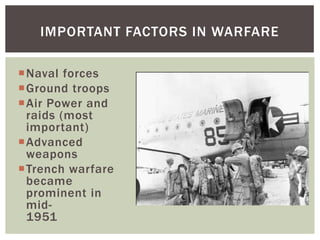
IMPORTANT FACTORS IN WARFARE

Naval forces
Ground troops
Air Power and
 raids (most
 important)
Advanced
 weapons
Trench warfare
 became
 prominent in
 mid-
 1951
STALEMATE AND RESOLUTION

 By mid-1951, land battles were at a stalemate so
  both sides agreed to go to the bargaining table
 Talks went on for 2 years
 A main hang-up was the outcome of thousands of
  POWs
 July 1953 marked Operation Big Switch where
  thousands of prisoners from both sides were freed
 A Demilitarized Zone was established at the
  North/South Korean border with a UN commission
  put in place to supervise
 This essentially marked the end of the war
APPROXIMATE DEATH TOLLS

 2.5 million North Korean soldiers and civilians
 1.5 million South Korean soldiers and civilians
 1 million Chinese soldiers and civilians
 55 thousand American soldiers
 500 Canadian soldiers
 300 Australian soldiers
 A further 5000 UN soldiers from a number of
  different countries all lost their lives in the Korean
  war

 Stats from History Channel
KOREAN WAR AS A PROXY WAR

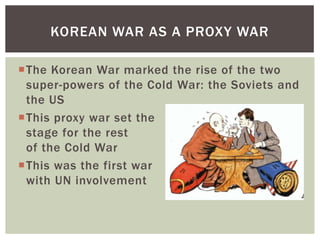
The Korean War marked the rise of the two
 super-powers of the Cold War: the Soviets and
 the US
This proxy war set the
 stage for the rest
 of the Cold War
This was the first war
 with UN involvement
KOREA POST WAR


South Korea’s economy was able to
 stabilize and it has become one of
 the fastest growing in the world
North Korea remained a “hermit
 state” and is still underdeveloped by
 modern standards

The Korean War

  • 1.
    THE KOREAN WAR: 1950-1953 A WAR OF PROXY
  • 2.
    PRE-WAR KOREA BASICS Located in Eastern Asia  Annexed by Japan in 1910, and remained so until 1945 (the end of World War II)  During WWII, Koreans were forced by the Japanese in to labor camps and the sex trade
  • 3.
    THE DIVISION OFKOREA  The end of World War II saw the division of Korea  Land north of the 38 th Parallel became an occupation of the Soviet Union  Land south of the 38 th Parallel became an occupation of the United States  The US did not want to Soviets to occupy all of Korea as it may have eventually led into Soviet occupation of Japan
  • 4.
    THE 38 THPARALLEL
  • 5.
    POST-DIVISION ELECTIONS 1948 markedelections in both North Korea and South Korea North Korea held Parliamentary elections; established Communist North Korean government South Korea held national general elections; established “The Republic of Korea” Election time and after was plagued by violent resistance on both fronts
  • 6.
    WAR BEGINS Early 1950– Newly elected North Korean leader Kim Il-sung meets with leaders of Soviet Union and China to discuss invasion of South Korea in attempts to unify the country under communist rule June 25th 1950 – North Korean People’s Army (KPA) crosses 38 th Parallel to invade South Korea
  • 7.
    US INTERVENTION President Harry Truman commits US naval and military forces to support South Korea on June 29 th , 1950, condemni ng North Korea and its actions But Why?
  • 8.
    WHY THE USWAS INVOLVED  Cold War insecurities concerning communism were on the rise  The Korean conflict was an opportunity for the US to publically support a noncommunist government from communist invasion North Korean anti-American Propaganda
  • 9.
    BASIC TIMELINE: JULY-NOVEMBER1950 • North Korean armies make it to the southern peninsula of Korea North Korea Advances South • UN declares N. Korea an aggressor and sends troops • US General MacArthur leads troops victoriously in Inchon to push the North Korean armies out of South Korea North Korea Retreats • War wages over land and air • November 1950 Chinese armies intervene as UN troops move closer to their territory China gets involved • UN and S. Korean troops are pushed back towards 38th Parallel
  • 10.
    IMPORTANT FACTORS INWARFARE Naval forces Ground troops Air Power and raids (most important) Advanced weapons Trench warfare became prominent in mid- 1951
  • 11.
    STALEMATE AND RESOLUTION By mid-1951, land battles were at a stalemate so both sides agreed to go to the bargaining table  Talks went on for 2 years  A main hang-up was the outcome of thousands of POWs  July 1953 marked Operation Big Switch where thousands of prisoners from both sides were freed  A Demilitarized Zone was established at the North/South Korean border with a UN commission put in place to supervise  This essentially marked the end of the war
  • 12.
    APPROXIMATE DEATH TOLLS 2.5 million North Korean soldiers and civilians  1.5 million South Korean soldiers and civilians  1 million Chinese soldiers and civilians  55 thousand American soldiers  500 Canadian soldiers  300 Australian soldiers  A further 5000 UN soldiers from a number of different countries all lost their lives in the Korean war  Stats from History Channel
  • 13.
    KOREAN WAR ASA PROXY WAR The Korean War marked the rise of the two super-powers of the Cold War: the Soviets and the US This proxy war set the stage for the rest of the Cold War This was the first war with UN involvement
  • 14.
    KOREA POST WAR SouthKorea’s economy was able to stabilize and it has become one of the fastest growing in the world North Korea remained a “hermit state” and is still underdeveloped by modern standards