The Human Digestive System John Lee Pri. 4B
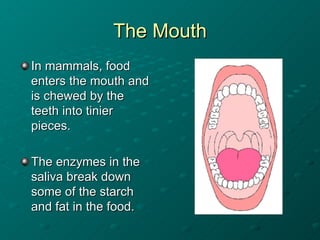
The Mouth In mammals, food enters the mouth and is chewed by the teeth into tinier pieces. The enzymes in the saliva break down some of the starch and fat in the food.
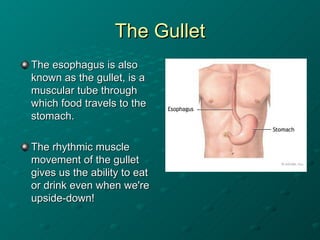
The Gullet The esophagus is also known as the gullet, is a muscular tube through which food travels to the stomach. The rhythmic muscle movement of the gullet gives us the ability to eat or drink even when we're upside-down!
The Stomach The stomach is a large, sack-like organ that breaks down the food and bathes it in a very strong acid. The stomach has a very strong wall lining to withstand the acid and is elastic enough to contain up to 2 litres of food and liquids.
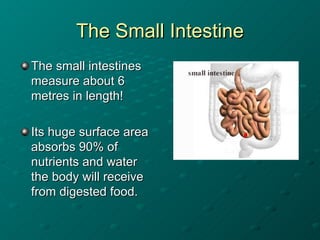
The Small Intestine The small intestines measure about 6 metres in length! Its huge surface area absorbs 90% of nutrients and water the body will receive from digested food.
The Large Intestine The large intestine absorbs the last bits of nutrients and water from indigestible food. It then compacts the remaining matter and eliminates it as waste (faeces).
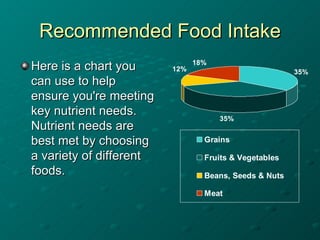
Recommended Food Intake Here is a chart you can use to help ensure you're meeting key nutrient needs. Nutrient needs are best met by choosing a variety of different foods.
References http://en.wikipedia.org/wiki/Stomach http://en.wikipedia.org/wiki/Intestine http://en.wikipedia.org/wiki/Mouth http://en.wikipedia.org/wiki/Gullet

The human digestive system

  • 1.
    The Human DigestiveSystem John Lee Pri. 4B
  • 2.
    The Mouth Inmammals, food enters the mouth and is chewed by the teeth into tinier pieces. The enzymes in the saliva break down some of the starch and fat in the food.
  • 3.
    The Gullet Theesophagus is also known as the gullet, is a muscular tube through which food travels to the stomach. The rhythmic muscle movement of the gullet gives us the ability to eat or drink even when we're upside-down!
  • 4.
    The Stomach Thestomach is a large, sack-like organ that breaks down the food and bathes it in a very strong acid. The stomach has a very strong wall lining to withstand the acid and is elastic enough to contain up to 2 litres of food and liquids.
  • 5.
    The Small IntestineThe small intestines measure about 6 metres in length! Its huge surface area absorbs 90% of nutrients and water the body will receive from digested food.
  • 6.
    The Large IntestineThe large intestine absorbs the last bits of nutrients and water from indigestible food. It then compacts the remaining matter and eliminates it as waste (faeces).
  • 7.
    Recommended Food IntakeHere is a chart you can use to help ensure you're meeting key nutrient needs. Nutrient needs are best met by choosing a variety of different foods.
  • 8.
    References http://en.wikipedia.org/wiki/Stomach http://en.wikipedia.org/wiki/Intestinehttp://en.wikipedia.org/wiki/Mouth http://en.wikipedia.org/wiki/Gullet