The Hybrid Learning Model (HLM) and You! Micro-teaching Session 12 th  March 2008 Fiona Doherty – E-Learning Development Officer CIES - C ETL(NI):  I nstitutional  E -Learning  S ervices
Learning Outcome Consider how the Hybrid Learning Model can help you in your teaching practice.
The Aim of the  Hybrid Learning Model
Activity Think of a  learning activity …
The 8 Learning Events
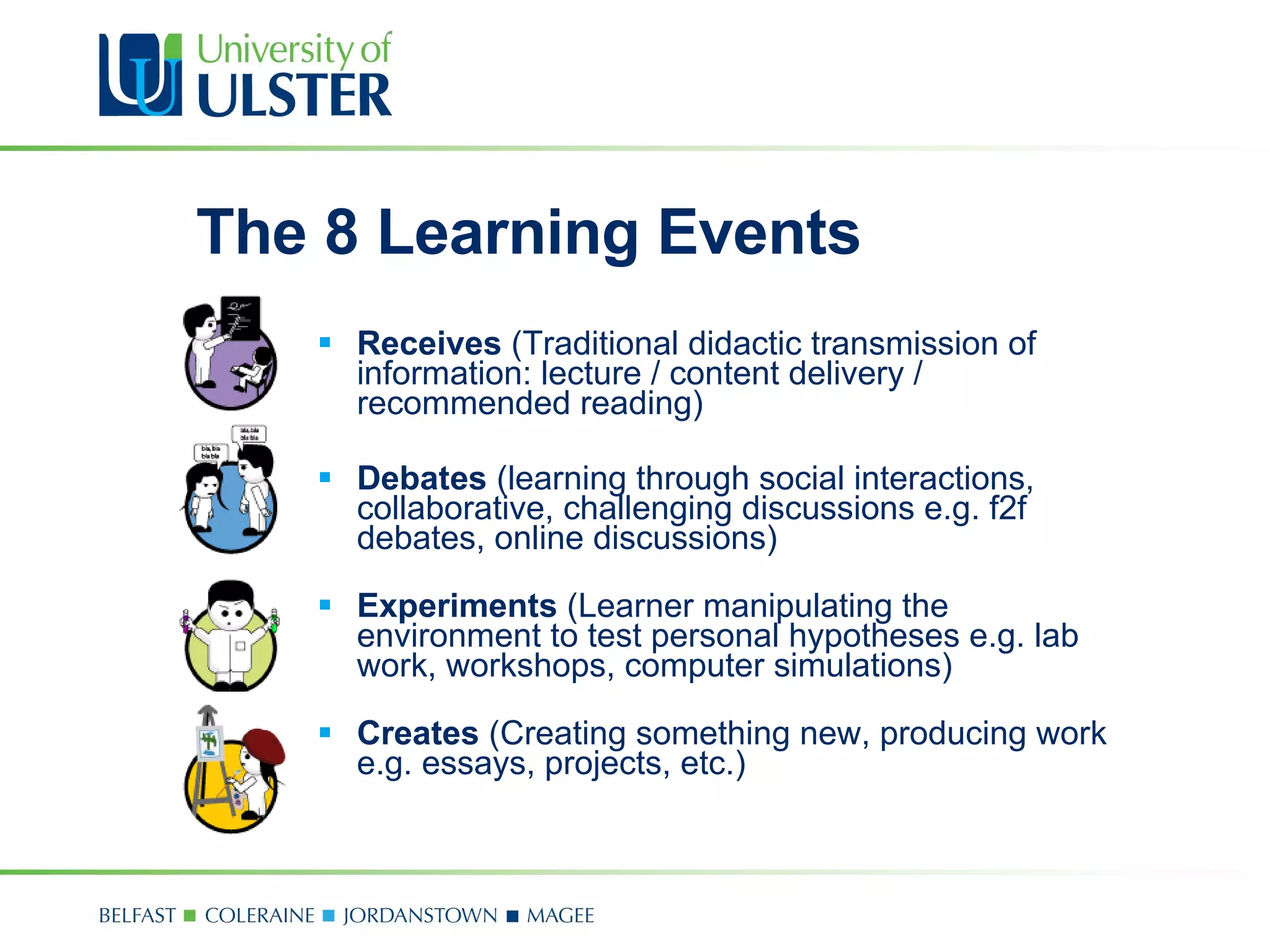
The 8 Learning Events Receives  (Traditional didactic transmission of information: lecture / content delivery / recommended reading) Debates  (learning through social interactions, collaborative, challenging discussions e.g. f2f debates, online discussions) Experiments  (Learner manipulating the environment to test personal hypotheses e.g. lab work, workshops, computer simulations) Creates  (Creating something new, producing work e.g. essays, projects, etc.)
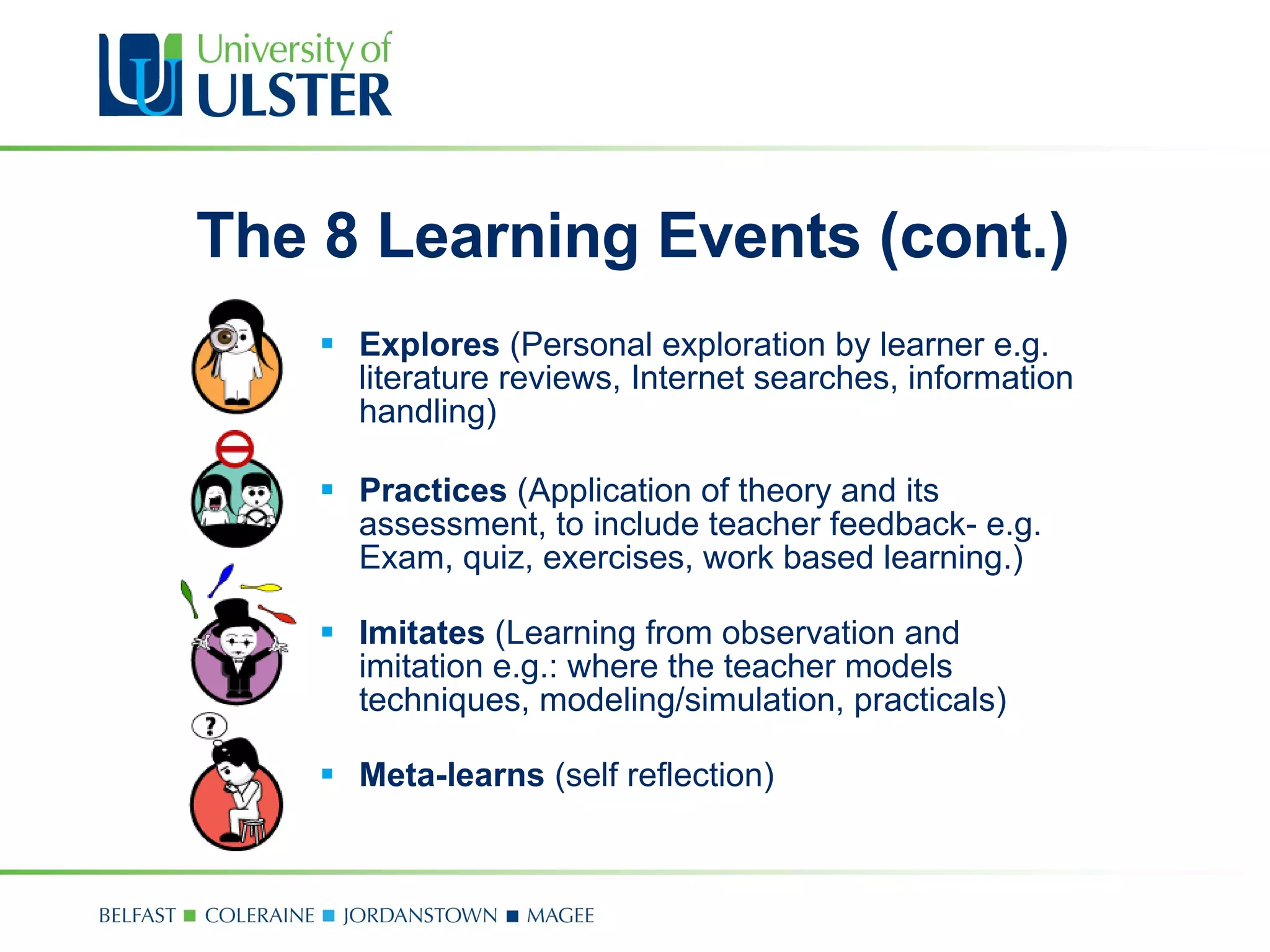
The 8 Learning Events (cont.) Explores  (Personal exploration by learner e.g. literature reviews, Internet searches, information handling) Practices  (Application of theory and its assessment, to include teacher feedback- e.g. Exam, quiz, exercises, work based learning.)  Imitates  (Learning from observation and imitation e.g.: where the teacher models techniques, modeling/simulation, practicals) Meta-learns  (self reflection)
Activity Pick  one learning event  that relates to your learning activity – look at the card for this event.
Cards – Front and Back
Verbs
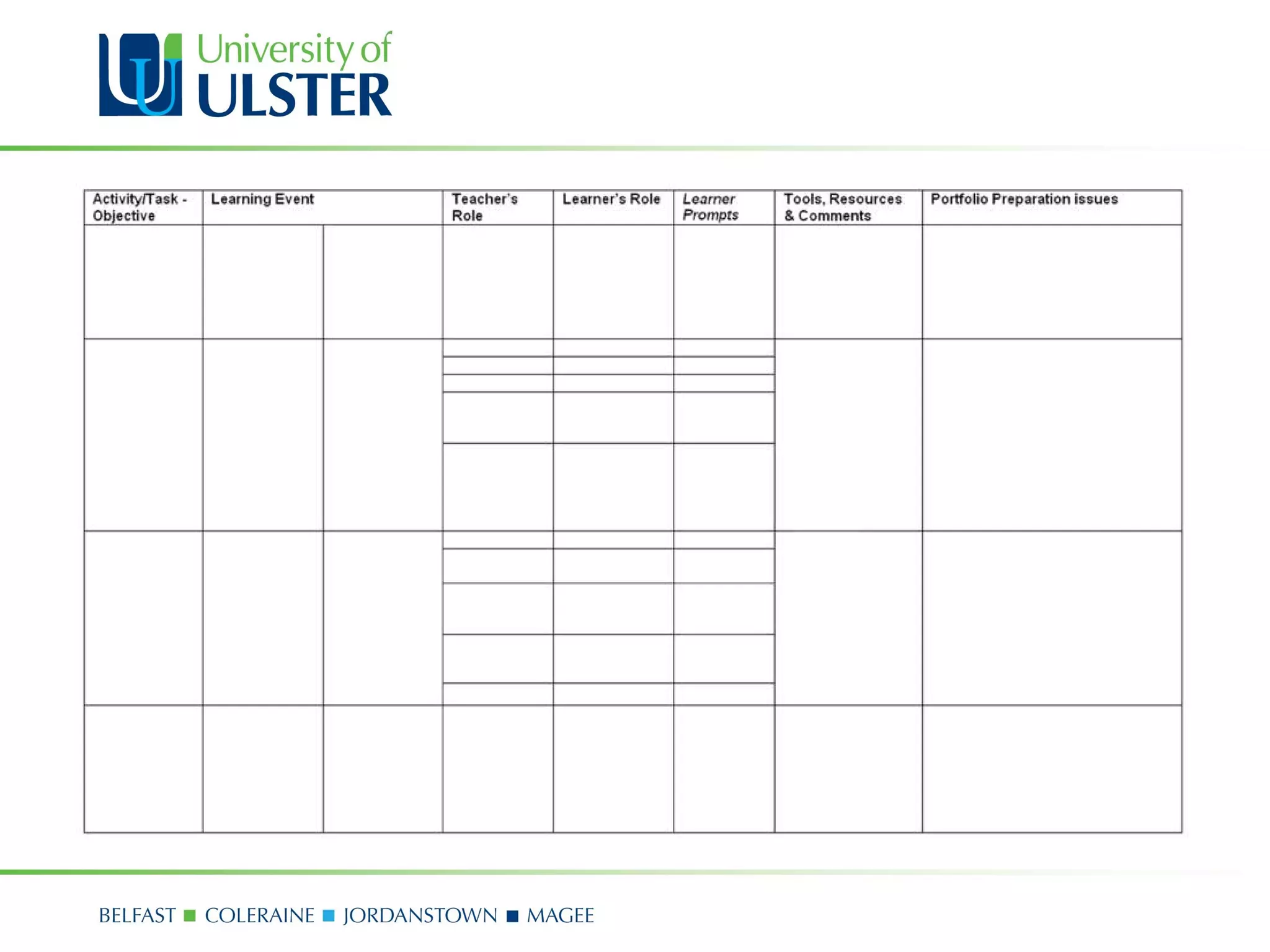
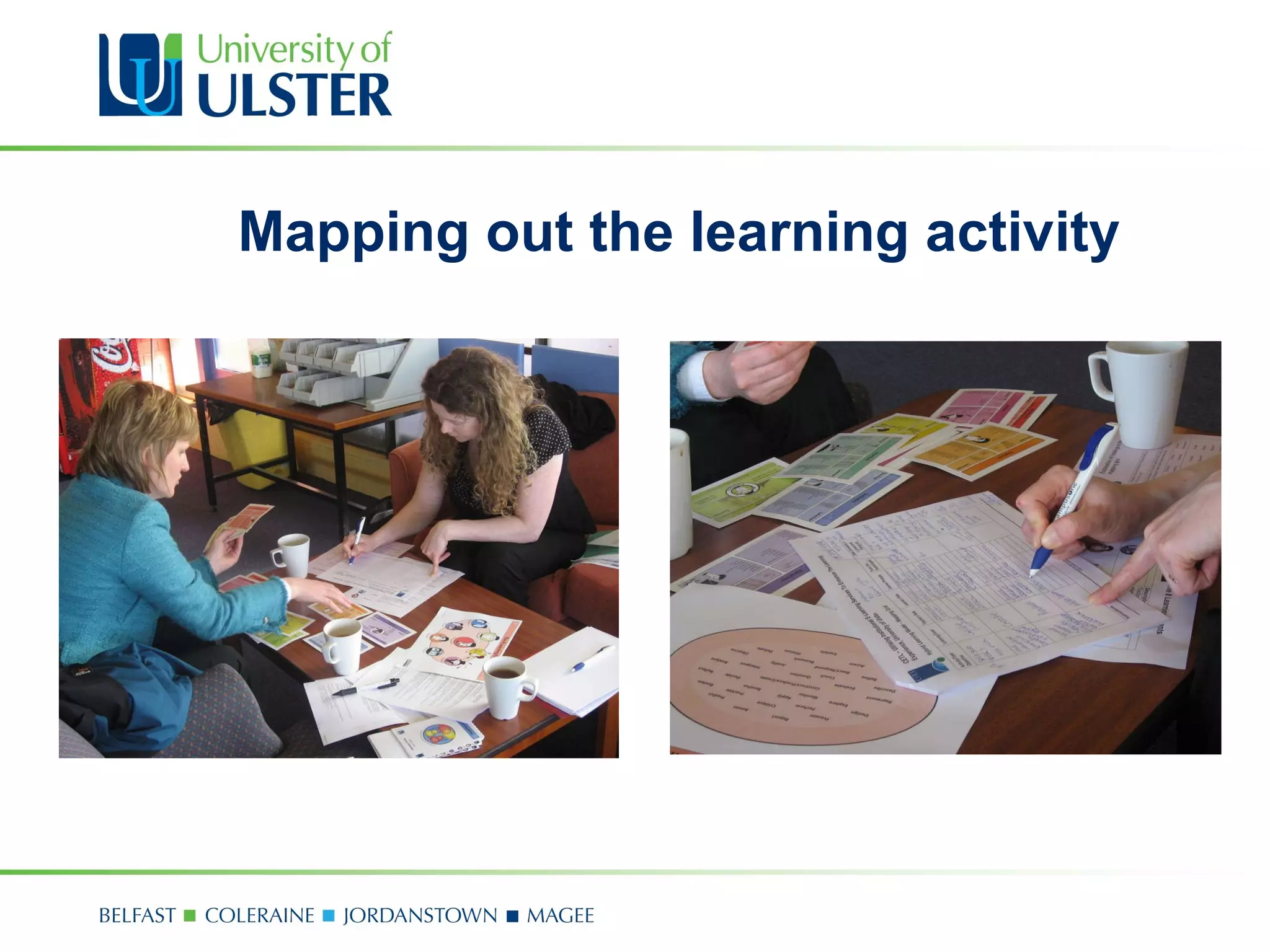
Mapping out the learning activity
Example
Learning Outcome Consider how the Hybrid Learning Model can help you in your teaching practice.

The HLM And You

  • 1.
  • 2.
    The Hybrid LearningModel (HLM) and You! Micro-teaching Session 12 th March 2008 Fiona Doherty – E-Learning Development Officer CIES - C ETL(NI): I nstitutional E -Learning S ervices
  • 3.
    Learning Outcome Considerhow the Hybrid Learning Model can help you in your teaching practice.
  • 4.
    The Aim ofthe Hybrid Learning Model
  • 5.
    Activity Think ofa learning activity …
  • 6.
  • 7.
    The 8 LearningEvents Receives (Traditional didactic transmission of information: lecture / content delivery / recommended reading) Debates (learning through social interactions, collaborative, challenging discussions e.g. f2f debates, online discussions) Experiments (Learner manipulating the environment to test personal hypotheses e.g. lab work, workshops, computer simulations) Creates (Creating something new, producing work e.g. essays, projects, etc.)
  • 8.
    The 8 LearningEvents (cont.) Explores (Personal exploration by learner e.g. literature reviews, Internet searches, information handling) Practices (Application of theory and its assessment, to include teacher feedback- e.g. Exam, quiz, exercises, work based learning.) Imitates (Learning from observation and imitation e.g.: where the teacher models techniques, modeling/simulation, practicals) Meta-learns (self reflection)
  • 9.
    Activity Pick one learning event that relates to your learning activity – look at the card for this event.
  • 10.
  • 11.
  • 12.
    Mapping out thelearning activity
  • 13.
  • 14.
    Learning Outcome Considerhow the Hybrid Learning Model can help you in your teaching practice.