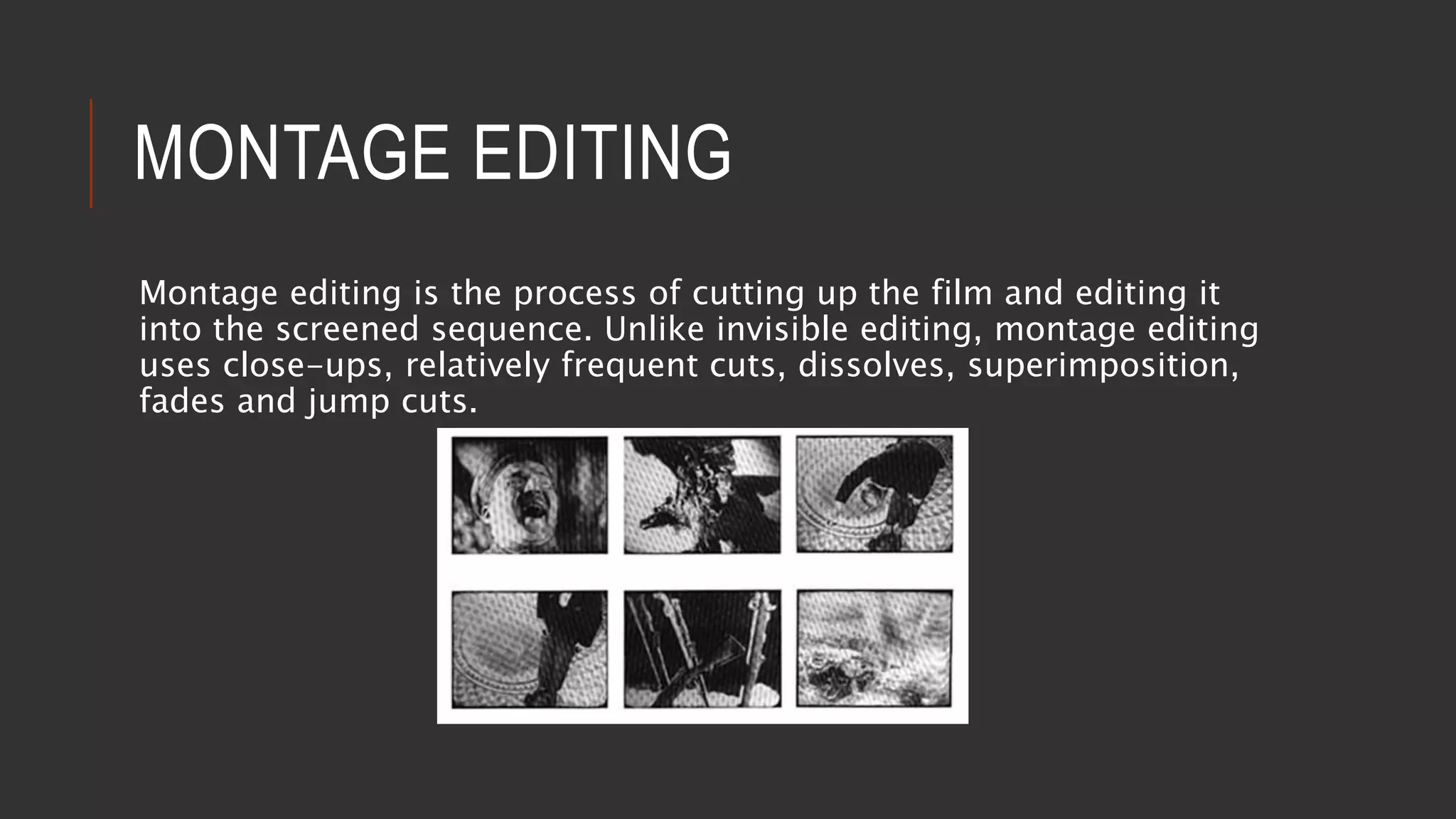
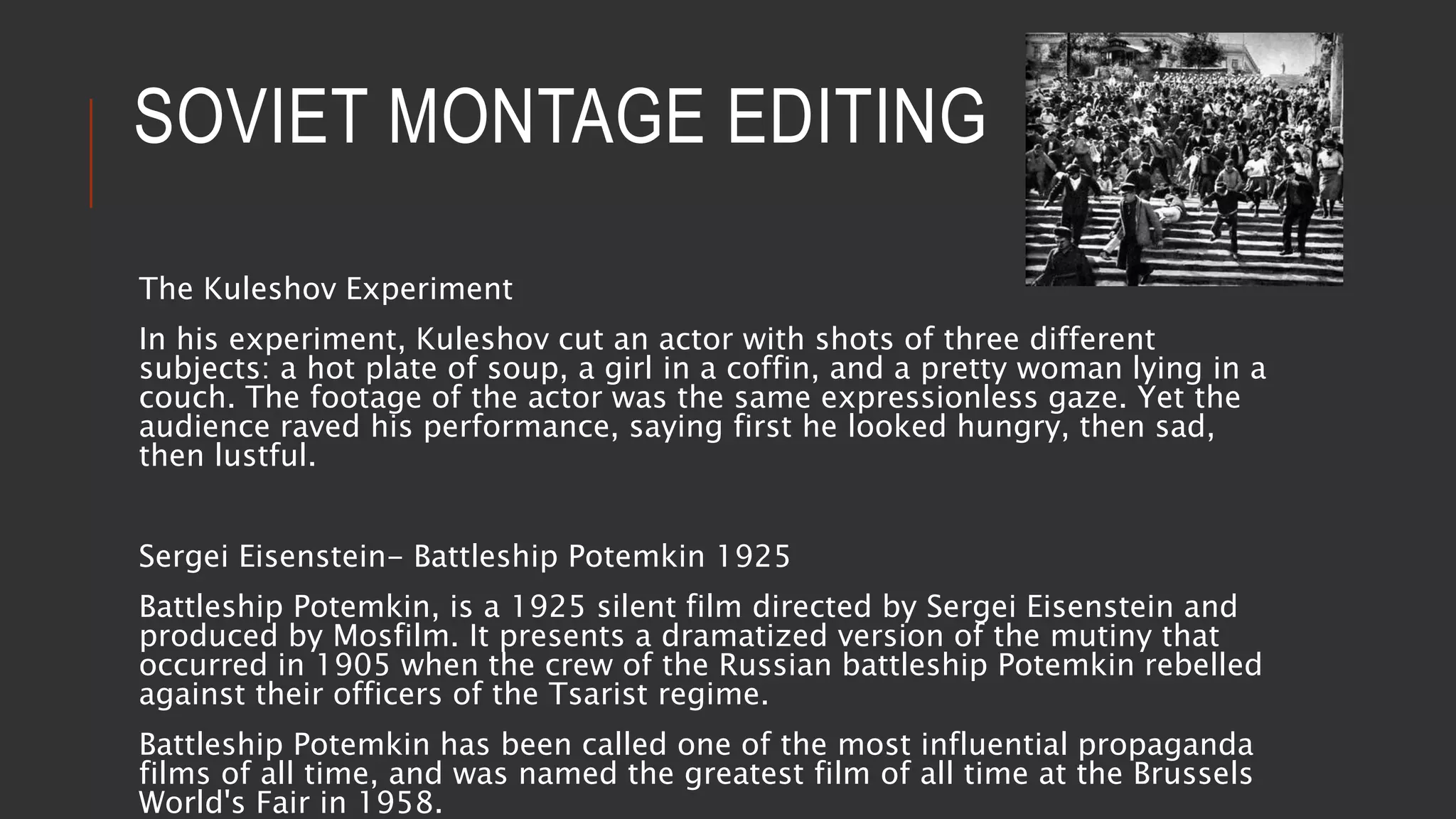
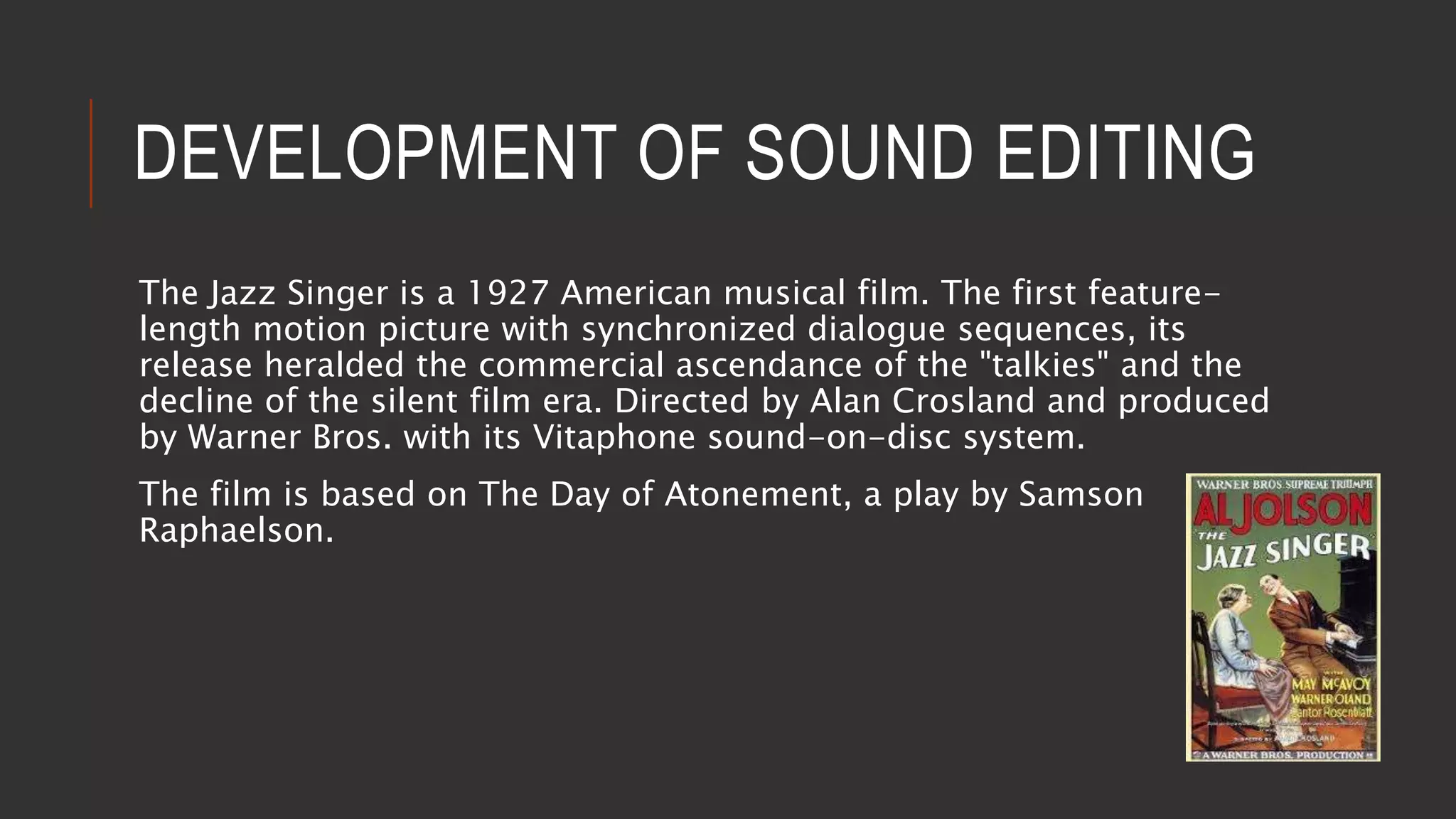
Film editing has evolved significantly from early films consisting of single static shots to complex techniques used today. Early editing established continuity by cutting between shots, while montage editing used techniques like jump cuts and superimposition. Soviet montage editing, pioneered by Eisenstein, used rapid cutting to imply meanings not literally shown. Hollywood developed continuity editing to seamlessly advance narratives. The French New Wave introduced long takes and existential themes. Sound editing began with The Jazz Singer, and technology advanced from flatbeds and Moviolas to non-linear digital systems.