The History of Editing
 Liam Anderson
What is Editing?
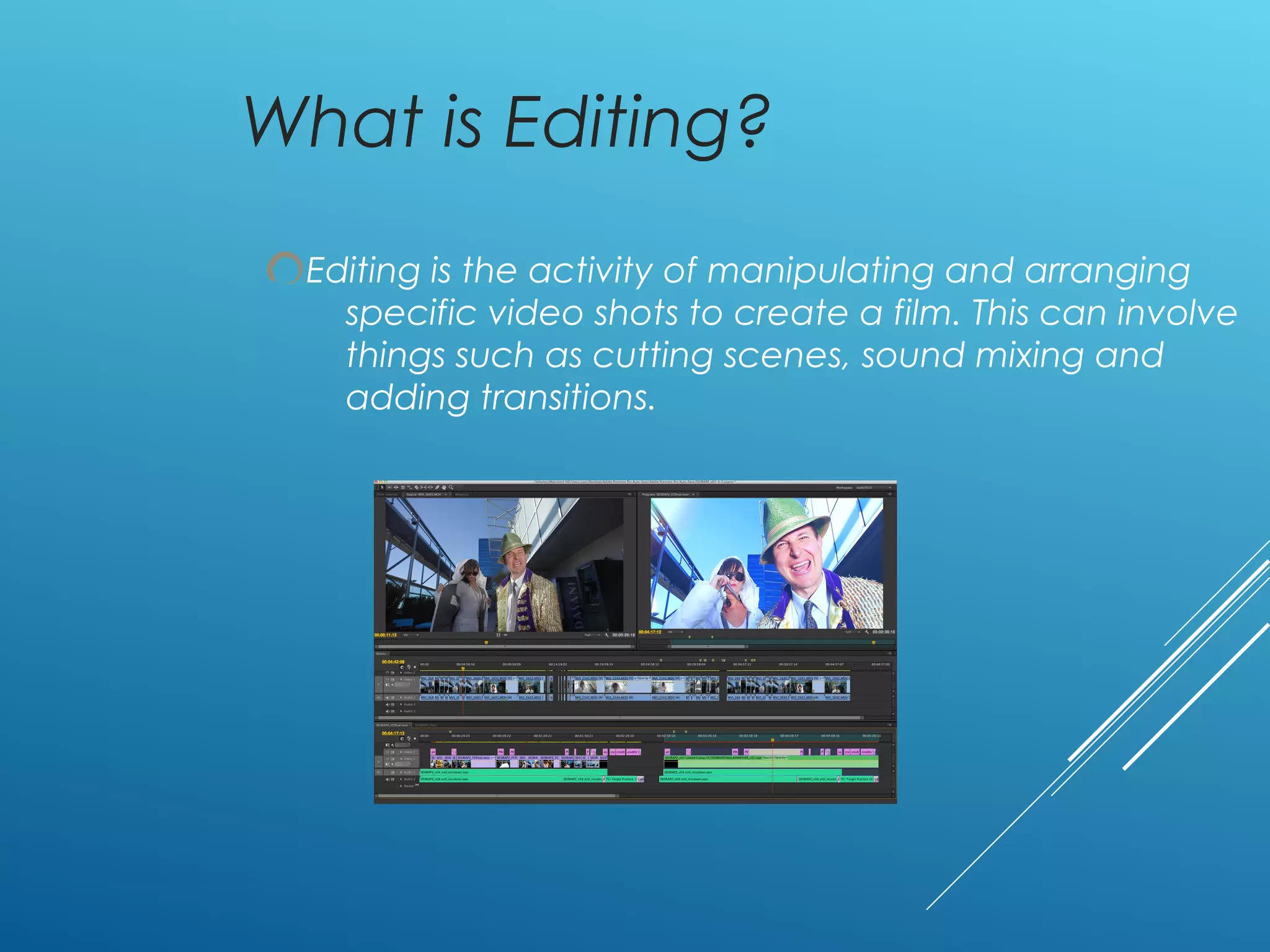
Editing is the activity of manipulating and arranging
specific video shots to create a film. This can involve
things such as cutting scenes, sound mixing and
adding transitions.
Early Editing
 When film first started, all the way back in the 1800's -
there was no editing at all. This meant filming had to
be done extremely efficiently, and could become
very difficult to record anything that wasn't very
basic.

 However, this is when the first idea of editing came in.
The thought of being able to cut footage and
pasting it in between other shots to tell a story. To do
this they would physically cut and paste together
pieces of film using a splicer and threading the film
on a machine with a viewer.


The Lumière Brothers
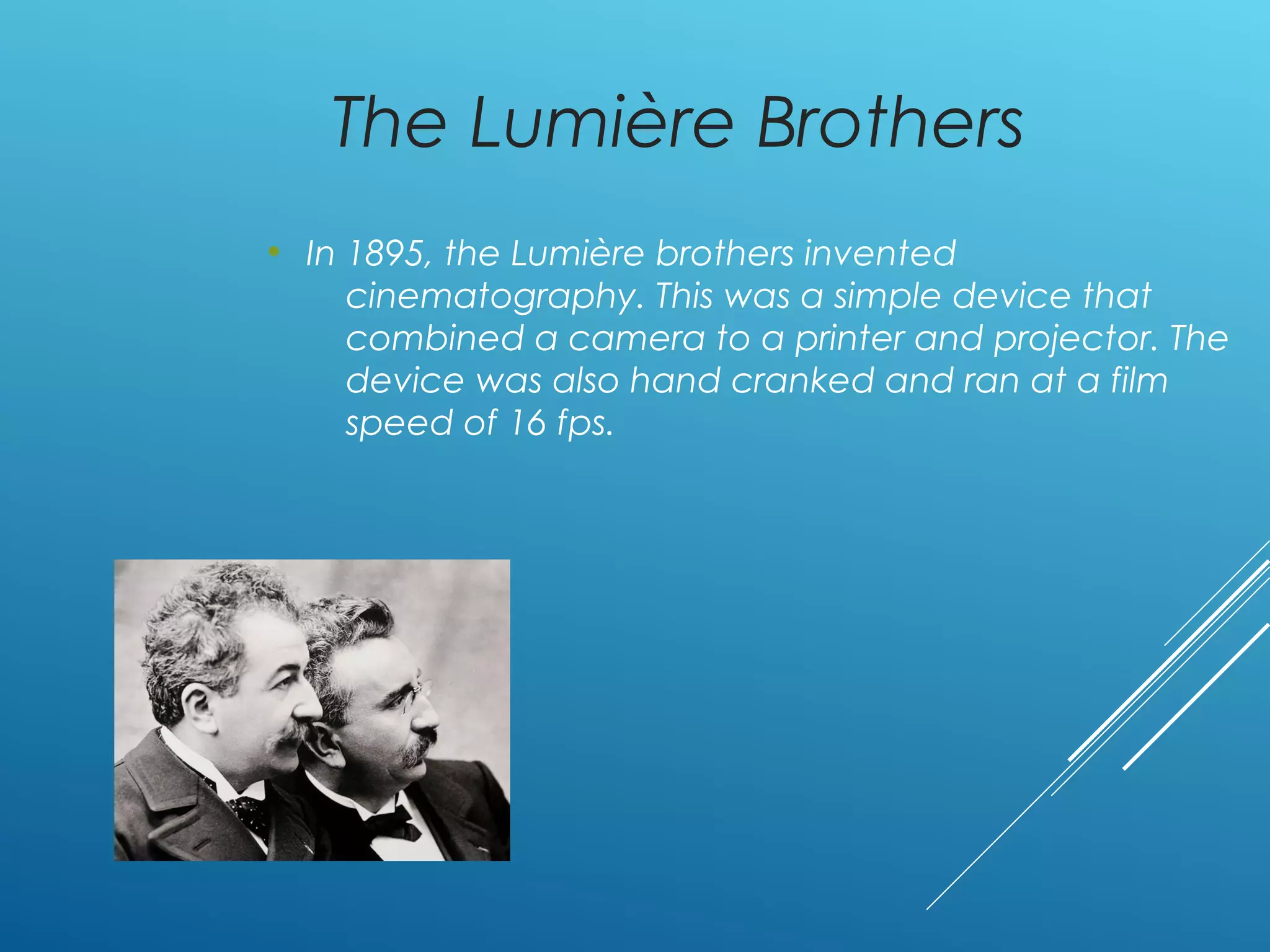
• In 1895, the Lumière brothers invented
cinematography. This was a simple device that
combined a camera to a printer and projector. The
device was also hand cranked and ran at a film
speed of 16 fps.
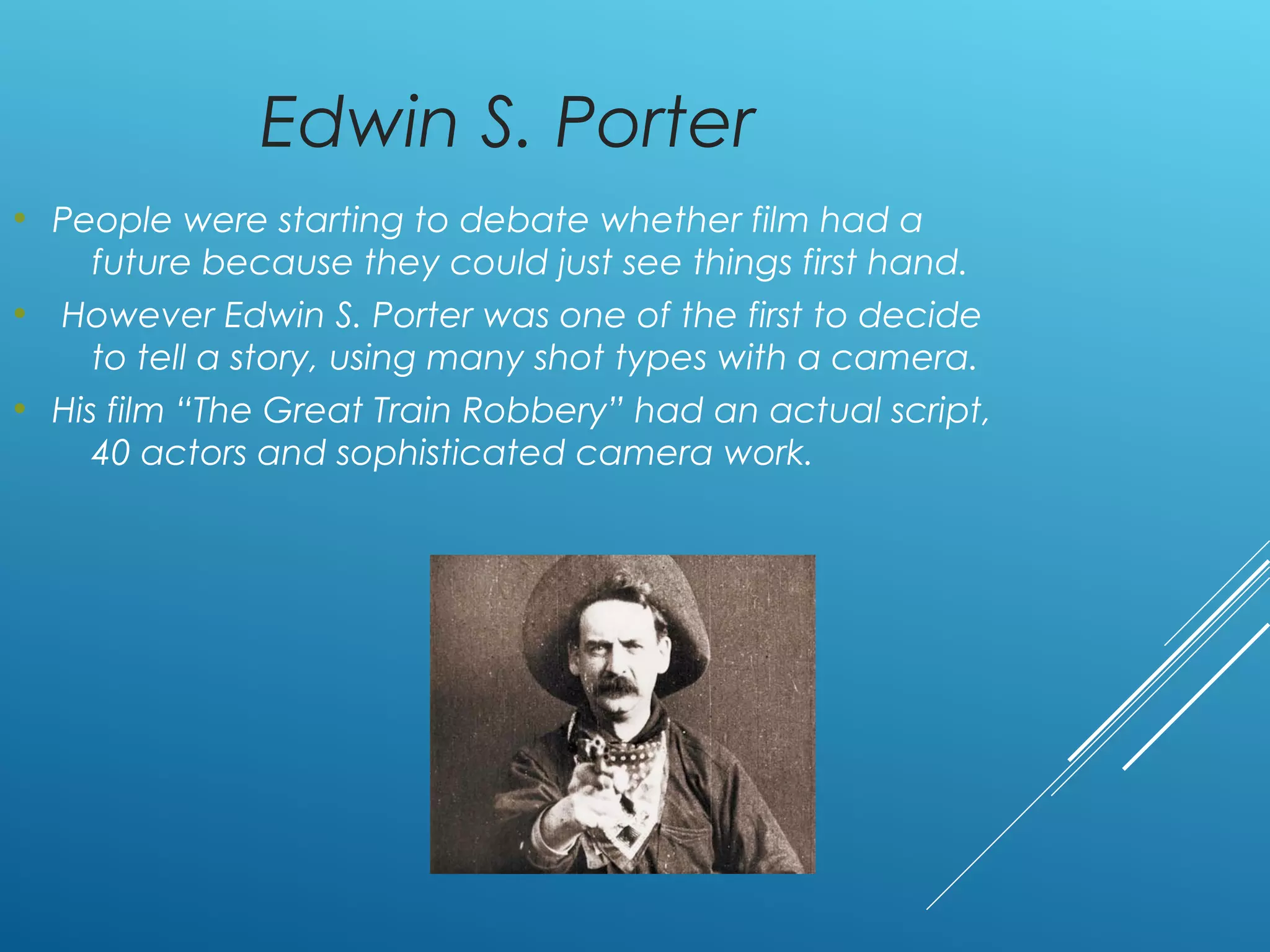
Edwin S. Porter
• People were starting to debate whether film had a
future because they could just see things first hand.
• However Edwin S. Porter was one of the first to decide
to tell a story, using many shot types with a camera.
• His film “The Great Train Robbery” had an actual script,
40 actors and sophisticated camera work.
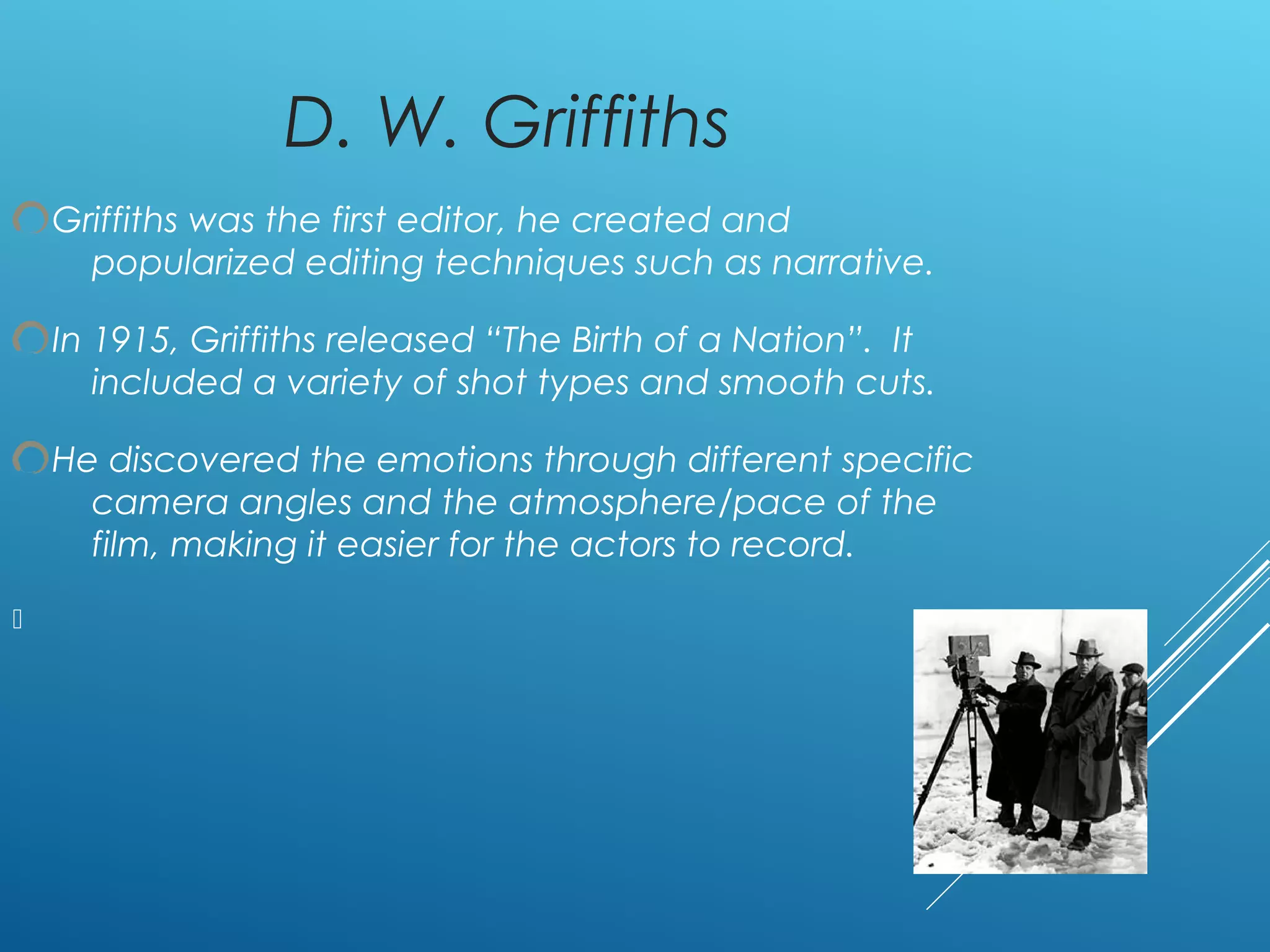
D. W. Griffiths
Griffiths was the first editor, he created and
popularized editing techniques such as narrative.
In 1915, Griffiths released “The Birth of a Nation”. It
included a variety of shot types and smooth cuts.
He discovered the emotions through different specific
camera angles and the atmosphere/pace of the
film, making it easier for the actors to record.

Development of Continuity
Editing
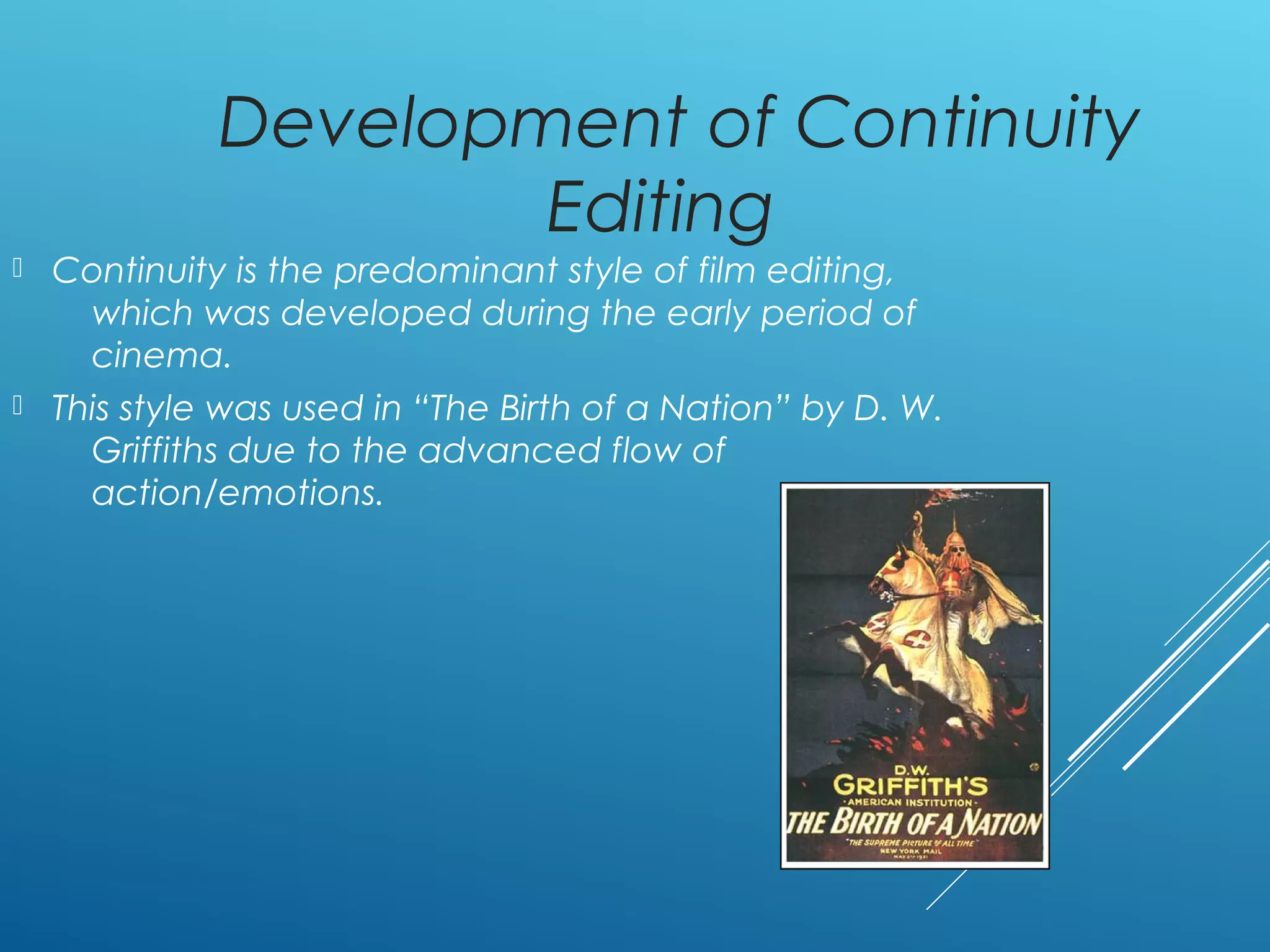
 Continuity is the predominant style of film editing,
which was developed during the early period of
cinema.
 This style was used in “The Birth of a Nation” by D. W.
Griffiths due to the advanced flow of
action/emotions.
Soviet Montage Editing
Lev Kuleshov was a Soviet filmmaker. Throughout his
experiments, research and investigations, he found
out how putting shots together differently will affect
how the audience react.
“Battleship Potemkin” was created by Sergei Eisenstein.
This is a revolutionary propaganda film, which was
deliberately edited to try and emotionally attach
the audience sympathetically towards the rebellious
sailors.

Classic Hollywood Montage
Editing
 Montage Editing is a technique in which a series of
short shots are edited into a sequence to condense
space, time, and information.

 This style of editing can be used to advance the
narrative of a story. It is used to inform the audience,
rather than to create strong emotions.





Development of Alternative Editing
Method
The French New Wave (Nouvelle Vague) is an artistic
movement which affected film greatly. This is a style
of a number of highly independent French film
directors in the 1950s.
Some New Wave directors were Louis Malle, Claude
Chabrol and Jean-Luc Godard. These films were
often characterized by technique that was thought
to have overshadowed their subject matter.
In Godards “Breathless” - the scenes change in rapid
sequence (jump cuts). This is to create a
disconnected effect.

Development of Sound
Editing
“The Jazz Singer” was an American musical released
in1927. It put an end to silent film as it was the very
first movie with full synchronized dialogue.
Diegetic Sound is sound that is visible on the screen/the
source of the sound is present in the action of the
film (e.g. voices of characters, sounds made by
objects)
Non-Diegetic Sound is not visible on the screen or
present in the action, (e.g. narrator, mood music)
Film Editing Technology
Non-Linear Editing Systems enable you to access any
frame in a digital video clip. This allows effects to be
achieved easier.
Movie Ola was invented in 1924. This device allows the
editor the view film while editing.
Flatbeds are a machine used to edit for a motion
picture. Picture and sound rolls are loaded onto the
plates, then moved back and forth.
Modern/Digital Editing this type of editing software is
used on a computer.

History of editing

  • 1.
    The History ofEditing  Liam Anderson
  • 2.
    What is Editing? Editingis the activity of manipulating and arranging specific video shots to create a film. This can involve things such as cutting scenes, sound mixing and adding transitions.
  • 3.
    Early Editing  Whenfilm first started, all the way back in the 1800's - there was no editing at all. This meant filming had to be done extremely efficiently, and could become very difficult to record anything that wasn't very basic.   However, this is when the first idea of editing came in. The thought of being able to cut footage and pasting it in between other shots to tell a story. To do this they would physically cut and paste together pieces of film using a splicer and threading the film on a machine with a viewer.  
  • 4.
    The Lumière Brothers •In 1895, the Lumière brothers invented cinematography. This was a simple device that combined a camera to a printer and projector. The device was also hand cranked and ran at a film speed of 16 fps.
  • 5.
    Edwin S. Porter •People were starting to debate whether film had a future because they could just see things first hand. • However Edwin S. Porter was one of the first to decide to tell a story, using many shot types with a camera. • His film “The Great Train Robbery” had an actual script, 40 actors and sophisticated camera work.
  • 6.
    D. W. Griffiths Griffithswas the first editor, he created and popularized editing techniques such as narrative. In 1915, Griffiths released “The Birth of a Nation”. It included a variety of shot types and smooth cuts. He discovered the emotions through different specific camera angles and the atmosphere/pace of the film, making it easier for the actors to record. 
  • 7.
    Development of Continuity Editing Continuity is the predominant style of film editing, which was developed during the early period of cinema.  This style was used in “The Birth of a Nation” by D. W. Griffiths due to the advanced flow of action/emotions.
  • 8.
    Soviet Montage Editing LevKuleshov was a Soviet filmmaker. Throughout his experiments, research and investigations, he found out how putting shots together differently will affect how the audience react. “Battleship Potemkin” was created by Sergei Eisenstein. This is a revolutionary propaganda film, which was deliberately edited to try and emotionally attach the audience sympathetically towards the rebellious sailors. 
  • 9.
    Classic Hollywood Montage Editing Montage Editing is a technique in which a series of short shots are edited into a sequence to condense space, time, and information.   This style of editing can be used to advance the narrative of a story. It is used to inform the audience, rather than to create strong emotions.     
  • 10.
    Development of AlternativeEditing Method The French New Wave (Nouvelle Vague) is an artistic movement which affected film greatly. This is a style of a number of highly independent French film directors in the 1950s. Some New Wave directors were Louis Malle, Claude Chabrol and Jean-Luc Godard. These films were often characterized by technique that was thought to have overshadowed their subject matter. In Godards “Breathless” - the scenes change in rapid sequence (jump cuts). This is to create a disconnected effect. 
  • 11.
    Development of Sound Editing “TheJazz Singer” was an American musical released in1927. It put an end to silent film as it was the very first movie with full synchronized dialogue. Diegetic Sound is sound that is visible on the screen/the source of the sound is present in the action of the film (e.g. voices of characters, sounds made by objects) Non-Diegetic Sound is not visible on the screen or present in the action, (e.g. narrator, mood music)
  • 12.
    Film Editing Technology Non-LinearEditing Systems enable you to access any frame in a digital video clip. This allows effects to be achieved easier. Movie Ola was invented in 1924. This device allows the editor the view film while editing. Flatbeds are a machine used to edit for a motion picture. Picture and sound rolls are loaded onto the plates, then moved back and forth. Modern/Digital Editing this type of editing software is used on a computer.