PRESENTATION BY 
NUSRAT AZEEMA
CONTENTS 
• HISTORY 
•EVOLUTION OF CINEMA 
VIA DIFFERENT ERAS. 
• SILENT ERA ( BIRTH OF CINEMA) 
•SOUND ERA ( 1930- 1960) 
• POST CLASSICAL ERA ( 1970-1980) 
•BLOCKBUSTER/ SEQUEL ERA ( 1980- 
1990) 
• INDEPENDENT ERA ( 1990-PRESENT)
 EARLY FILMS IS A RESULT OF 
INVENTORS NOT ARTISTS . 
 ZEOTRO IS A CIRCULAR DRUM WITH 
SLITS WHICH ALOWS MOMENTS OF 
DARKNESS. IT CREATES ILLUSION OF 
MOVEMENT. IT WAS CREATED BY 
WILLIAM HORNER IN 1834. 
 HAD TO HAVE 
PHOTOGRAPHY BEFORE 
MOTION PICTURE
• 1816 - Nicephore Niepce made first 
photographic images. 
•1839 - Louis Daguerre created clear, 
sharp images on silver copperplate. 
•Required 15 minutes exposure time. 
•1841 - Only 3 minutes needed for 
exposure
Eadweard Muybridge 
•1872 - Set up 12 
cameras along a 
track, tied strings to 
the shutters which 
were tripped as the 
horse ran down the 
track. 
•Created movement 
with photography.
•1884 
•Developed celluloid 
film. 
•Originally created for 
the still camera, it made 
motion pictures 
possible. 
•Flexible and allows 
light to pass through.
 FIRST MOVIE STUDIO : BLACK 
MARIA
 PROJECTION: ITS ROOTS GO AS FAR AS 
1646. 
 Father Athanasius Kircher 
made drawings of a box 
that could reproduce an 
image through a lens. 
 Ancestor of present day 
slide projector.
•First theater opens to 
the paying public. 
•Basement of a Paris 
café. 
•Lumieres’ show: 
•Workers leaving the 
Lumiere Factory. 
•Arrival at Lyon. 
•A Baby’s Meal
THE CINEMA HASN’T BEEN THE 
SAME AS IT IS NOW. IT HAS BEEN 
EVOLVING SINCE ITS BIRTH. 
SO, WE HAVE DIVEDED THIS 
EVOLUTION PROCESS INTO 
DIFFERENT ERAS.
For the first twenty years of motion picture 
history most silent films were short--only a 
few minutes in length. At first a novelty, 
and then increasingly an art form and 
literary form, silent films reached greater 
complexity and length in the early 1910's
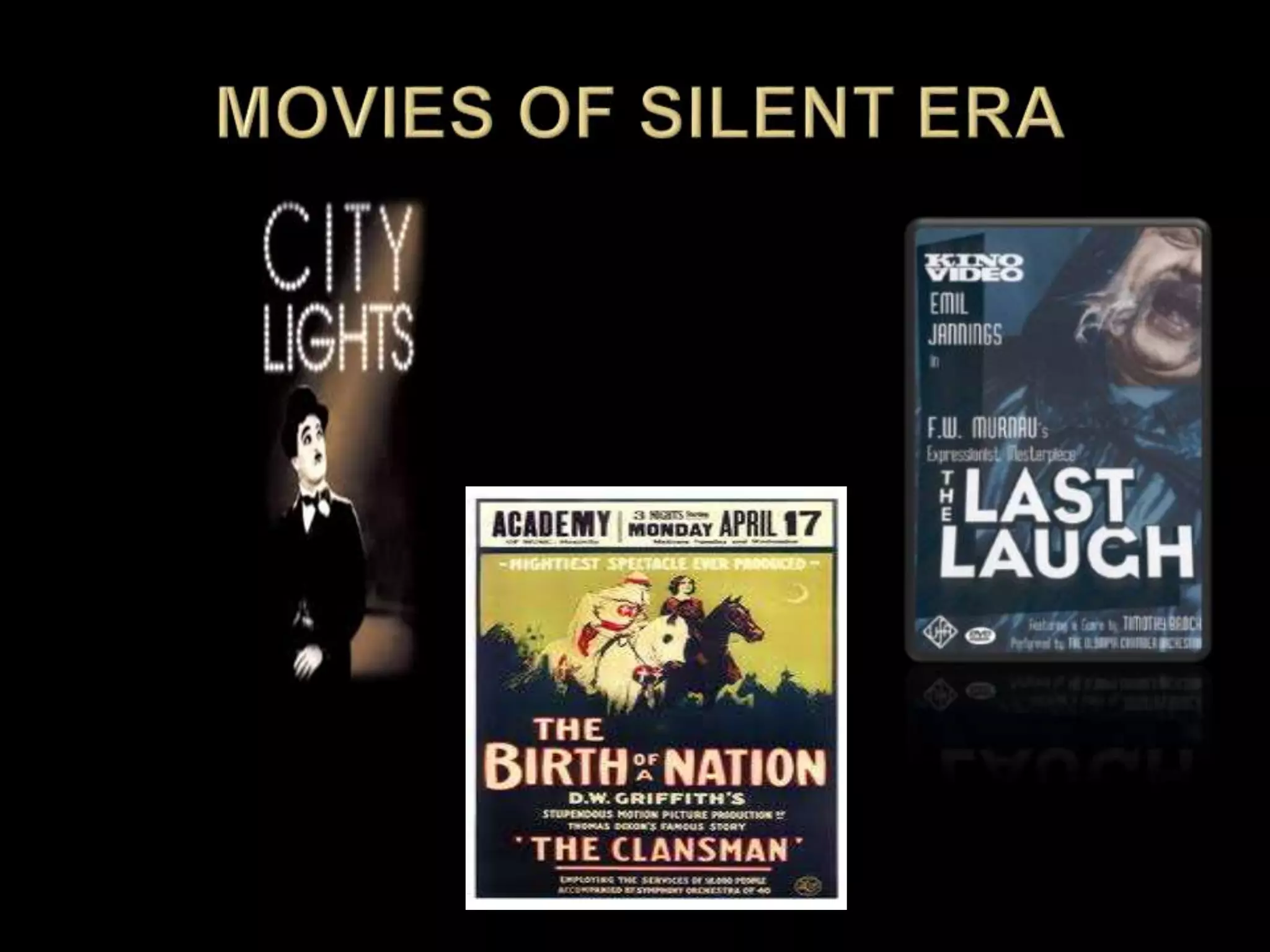
• BIRTH OF NATION 
• THE LAST LAUGH 
• CITY LIGHTS 
• MODERN TIMES 
• ALL QUIET ON WESTERN FRONT
DURING THE FILM THE ACTOR 
AL JLSON SHOWED HIS SINGING TALENT 
IN 50s THE CINEMA MADE A BIG JUMP: IT WAS 
PROJECTED IN COLURES AND THE SOUND 
TURNS IN ESTEREO
The New Hollywood' and 'post-classical cinema' 
are terms used to describe the period following 
the decline of the studio system during the 
1950s and 1960s and the end of the production 
code. During the 1970s, filmmakers increasingly 
depicted explicit sexual content and showed 
gunfight and battle scenes that included graphic 
images of bloody deaths.
During the 1980s, audiences began 
increasingly watching movies on their home 
VCRs. In the early part of that decade, the 
movie studios tried legal action to ban home 
ownership of VCRs as a violation of copyright, 
which proved unsuccessful. Eventually, the 
sale and rental of movies on home video 
became a significant "second venue" for 
exhibition of films, and an additional source of 
revenue for the movie companies.
The early 1990s saw the development of a 
commercially successful independent cinema in the 
United States. Although cinema was increasingly 
dominated by special-effects films such as 
Terminator 2: Judgment Day (1991) and Titanic 
(1997), independent films like Steven Soderbergh's 
sex, lies, and videotape (1989) and Quentin 
Tarantino's Reservoir Dogs (1992) had significant 
commercial success both at the cinema and on 
home video.
The documentary film also rose as a commercial genre 
for perhaps the first time, with the success of films such 
as March of the Penguins and Michael Moore's 
Bowling for Columbine and Fahrenheit 9/11. A new 
genre was created with Martin Kunert and Eric Manes' 
Voices of Iraq, when 150 inexpensive DV cameras were 
distributed across Iraq, transforming ordinary people 
into collaborative filmmakers. The success of Gladiator 
lead to a revival of interest in epic cinema. Home 
theatre systems became increasingly sophisticated, as 
did some of the special edition DVDs designed to be 
shown on them. The Lord of the Rings trilogy was 
released on DVD in both the theatrical version and in a 
special extended version intended only for home 
cinema audiences.
Evolution of cinema
Evolution of cinema

Evolution of cinema

  • 1.
  • 2.
    CONTENTS • HISTORY •EVOLUTION OF CINEMA VIA DIFFERENT ERAS. • SILENT ERA ( BIRTH OF CINEMA) •SOUND ERA ( 1930- 1960) • POST CLASSICAL ERA ( 1970-1980) •BLOCKBUSTER/ SEQUEL ERA ( 1980- 1990) • INDEPENDENT ERA ( 1990-PRESENT)
  • 3.
     EARLY FILMSIS A RESULT OF INVENTORS NOT ARTISTS .  ZEOTRO IS A CIRCULAR DRUM WITH SLITS WHICH ALOWS MOMENTS OF DARKNESS. IT CREATES ILLUSION OF MOVEMENT. IT WAS CREATED BY WILLIAM HORNER IN 1834.  HAD TO HAVE PHOTOGRAPHY BEFORE MOTION PICTURE
  • 4.
    • 1816 -Nicephore Niepce made first photographic images. •1839 - Louis Daguerre created clear, sharp images on silver copperplate. •Required 15 minutes exposure time. •1841 - Only 3 minutes needed for exposure
  • 5.
    Eadweard Muybridge •1872- Set up 12 cameras along a track, tied strings to the shutters which were tripped as the horse ran down the track. •Created movement with photography.
  • 6.
    •1884 •Developed celluloid film. •Originally created for the still camera, it made motion pictures possible. •Flexible and allows light to pass through.
  • 7.
     FIRST MOVIESTUDIO : BLACK MARIA
  • 8.
     PROJECTION: ITSROOTS GO AS FAR AS 1646.  Father Athanasius Kircher made drawings of a box that could reproduce an image through a lens.  Ancestor of present day slide projector.
  • 9.
    •First theater opensto the paying public. •Basement of a Paris café. •Lumieres’ show: •Workers leaving the Lumiere Factory. •Arrival at Lyon. •A Baby’s Meal
  • 10.
    THE CINEMA HASN’TBEEN THE SAME AS IT IS NOW. IT HAS BEEN EVOLVING SINCE ITS BIRTH. SO, WE HAVE DIVEDED THIS EVOLUTION PROCESS INTO DIFFERENT ERAS.
  • 11.
    For the firsttwenty years of motion picture history most silent films were short--only a few minutes in length. At first a novelty, and then increasingly an art form and literary form, silent films reached greater complexity and length in the early 1910's
  • 12.
    • BIRTH OFNATION • THE LAST LAUGH • CITY LIGHTS • MODERN TIMES • ALL QUIET ON WESTERN FRONT
  • 14.
    DURING THE FILMTHE ACTOR AL JLSON SHOWED HIS SINGING TALENT IN 50s THE CINEMA MADE A BIG JUMP: IT WAS PROJECTED IN COLURES AND THE SOUND TURNS IN ESTEREO
  • 16.
    The New Hollywood'and 'post-classical cinema' are terms used to describe the period following the decline of the studio system during the 1950s and 1960s and the end of the production code. During the 1970s, filmmakers increasingly depicted explicit sexual content and showed gunfight and battle scenes that included graphic images of bloody deaths.
  • 18.
    During the 1980s,audiences began increasingly watching movies on their home VCRs. In the early part of that decade, the movie studios tried legal action to ban home ownership of VCRs as a violation of copyright, which proved unsuccessful. Eventually, the sale and rental of movies on home video became a significant "second venue" for exhibition of films, and an additional source of revenue for the movie companies.
  • 20.
    The early 1990ssaw the development of a commercially successful independent cinema in the United States. Although cinema was increasingly dominated by special-effects films such as Terminator 2: Judgment Day (1991) and Titanic (1997), independent films like Steven Soderbergh's sex, lies, and videotape (1989) and Quentin Tarantino's Reservoir Dogs (1992) had significant commercial success both at the cinema and on home video.
  • 21.
    The documentary filmalso rose as a commercial genre for perhaps the first time, with the success of films such as March of the Penguins and Michael Moore's Bowling for Columbine and Fahrenheit 9/11. A new genre was created with Martin Kunert and Eric Manes' Voices of Iraq, when 150 inexpensive DV cameras were distributed across Iraq, transforming ordinary people into collaborative filmmakers. The success of Gladiator lead to a revival of interest in epic cinema. Home theatre systems became increasingly sophisticated, as did some of the special edition DVDs designed to be shown on them. The Lord of the Rings trilogy was released on DVD in both the theatrical version and in a special extended version intended only for home cinema audiences.