February 7,2012
Edgardo Morales Ed.D
Mary Gergen, Ph. D
Play with purpose: relational and
performative practices in everyday
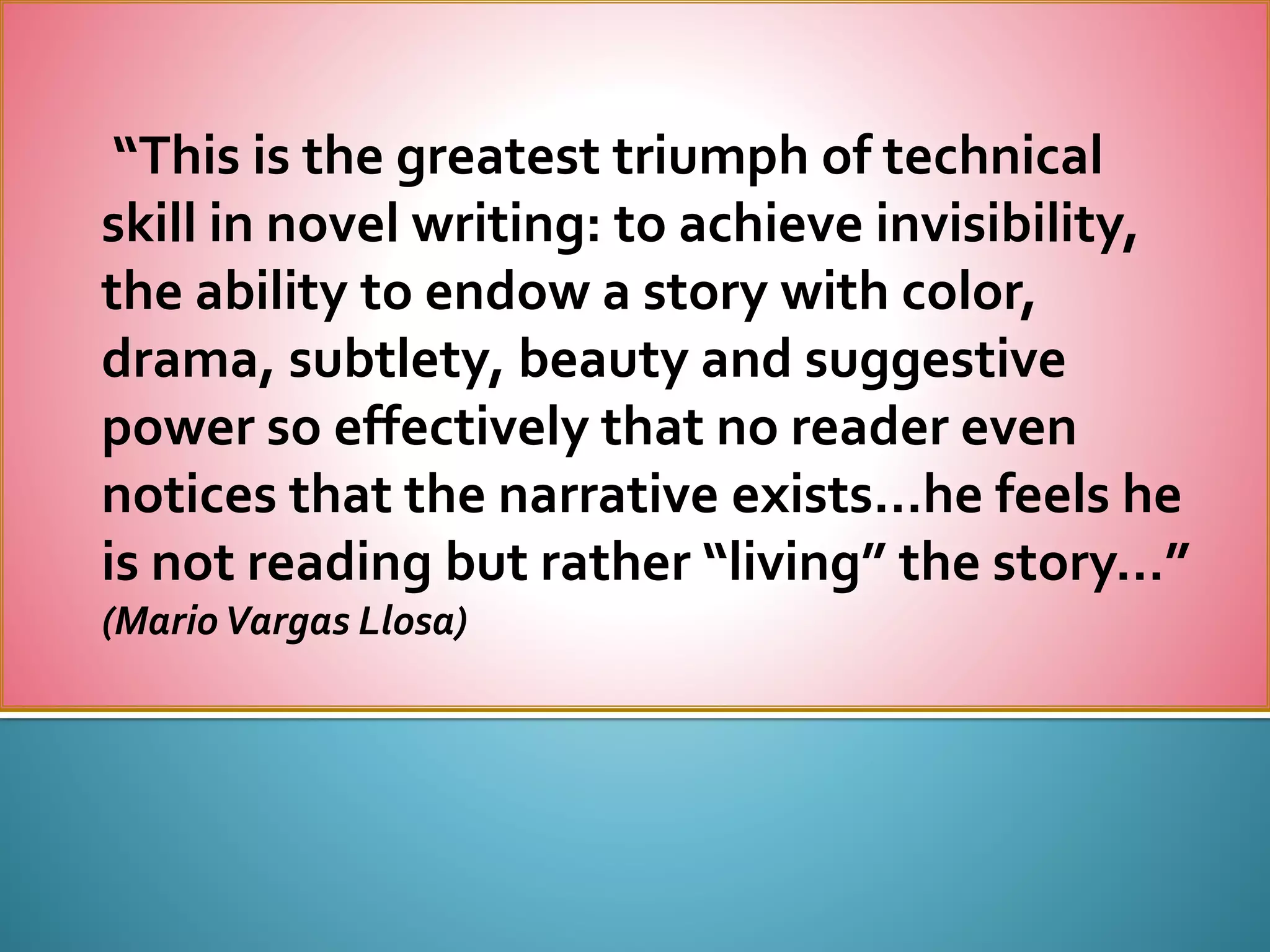
“This is the greatest triumph of technical
skill in novel writing: to achieve invisibility,
the ability to endow a story with color,
drama, subtlety, beauty and suggestive
power so effectively that no reader even
notices that the narrative exists…he feels he
is not reading but rather “living” the story…”
(MarioVargas Llosa)
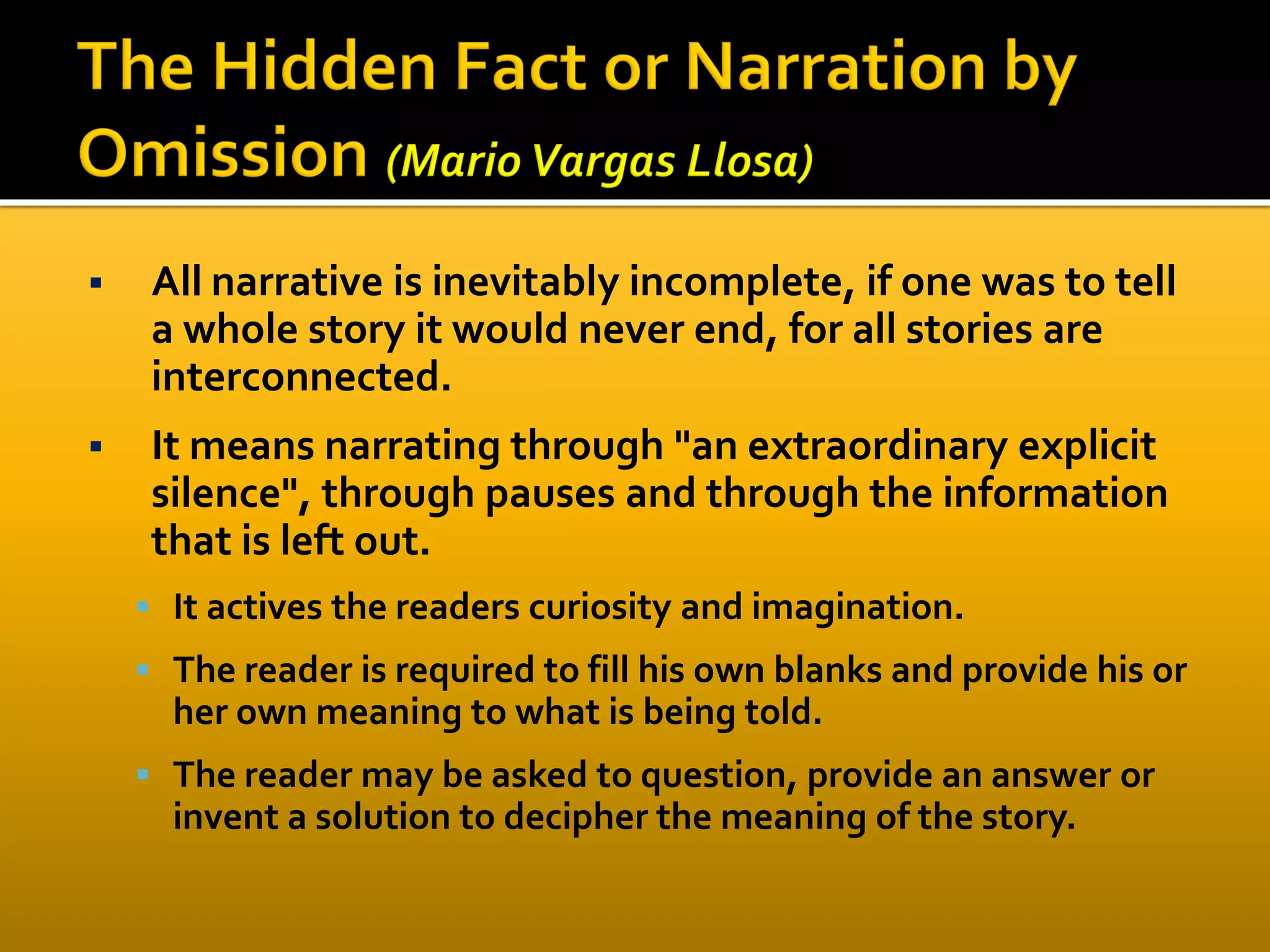
 All narrative is inevitably incomplete, if one was to tell
a whole story it would never end, for all stories are
interconnected.
 It means narrating through "an extraordinary explicit
silence", through pauses and through the information
that is left out.
 It actives the readers curiosity and imagination.
 The reader is required to fill his own blanks and provide his or
her own meaning to what is being told.
 The reader may be asked to question, provide an answer or
invent a solution to decipher the meaning of the story.
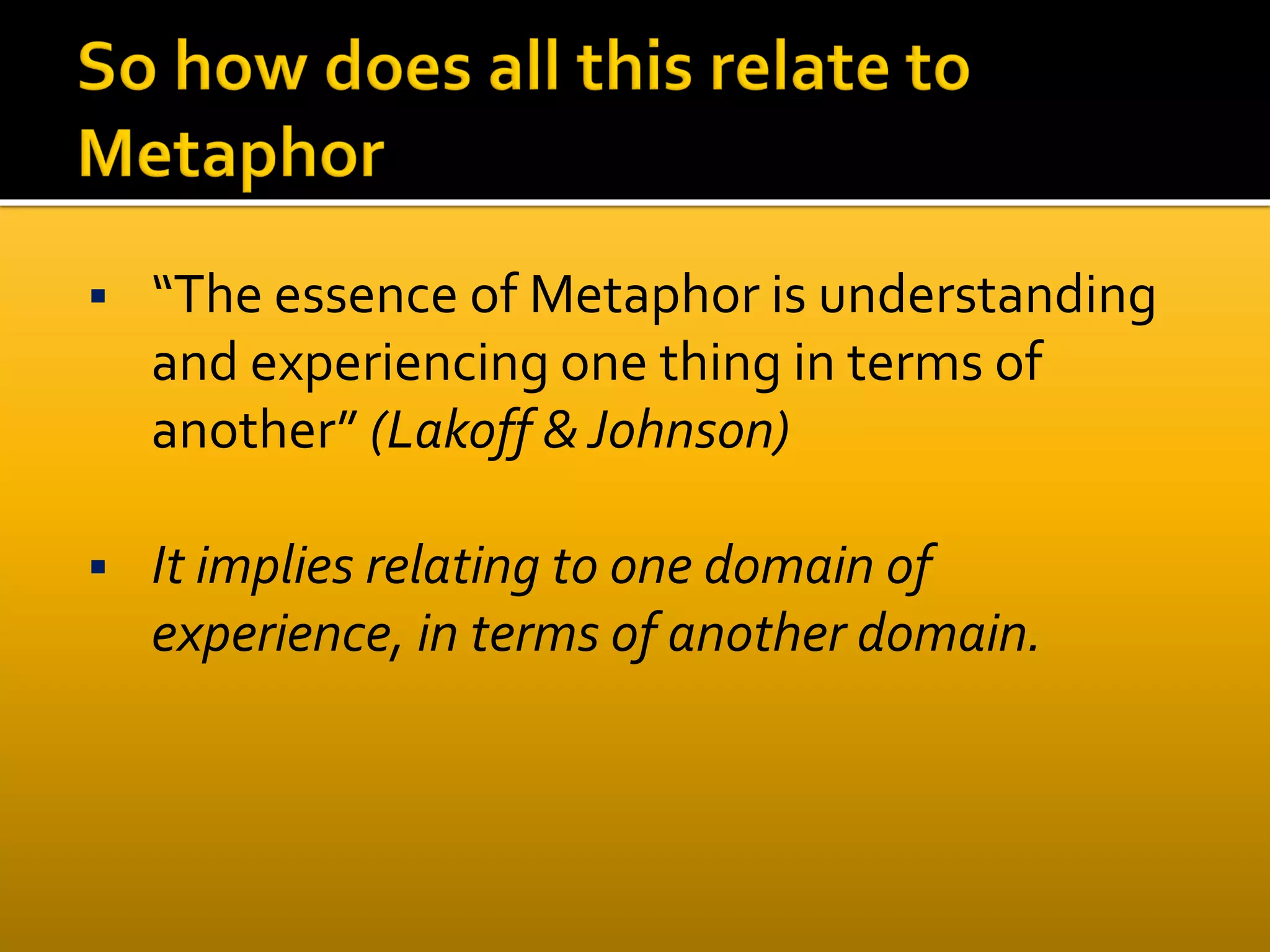
 “The essence of Metaphor is understanding
and experiencing one thing in terms of
another” (Lakoff &Johnson)
 It implies relating to one domain of
experience, in terms of another domain.
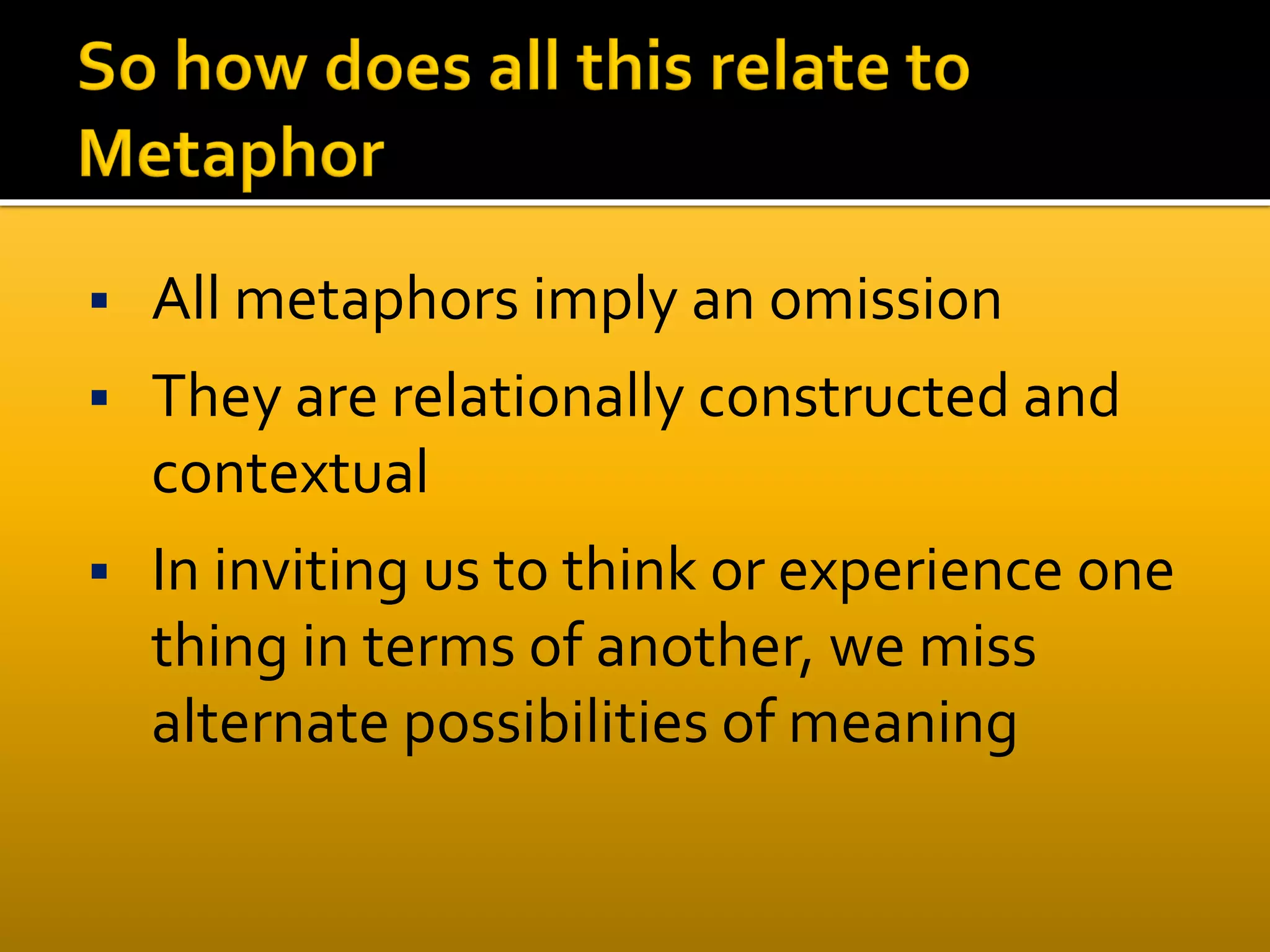
 All metaphors imply an omission
 They are relationally constructed and
contextual
 In inviting us to think or experience one
thing in terms of another, we miss
alternate possibilities of meaning
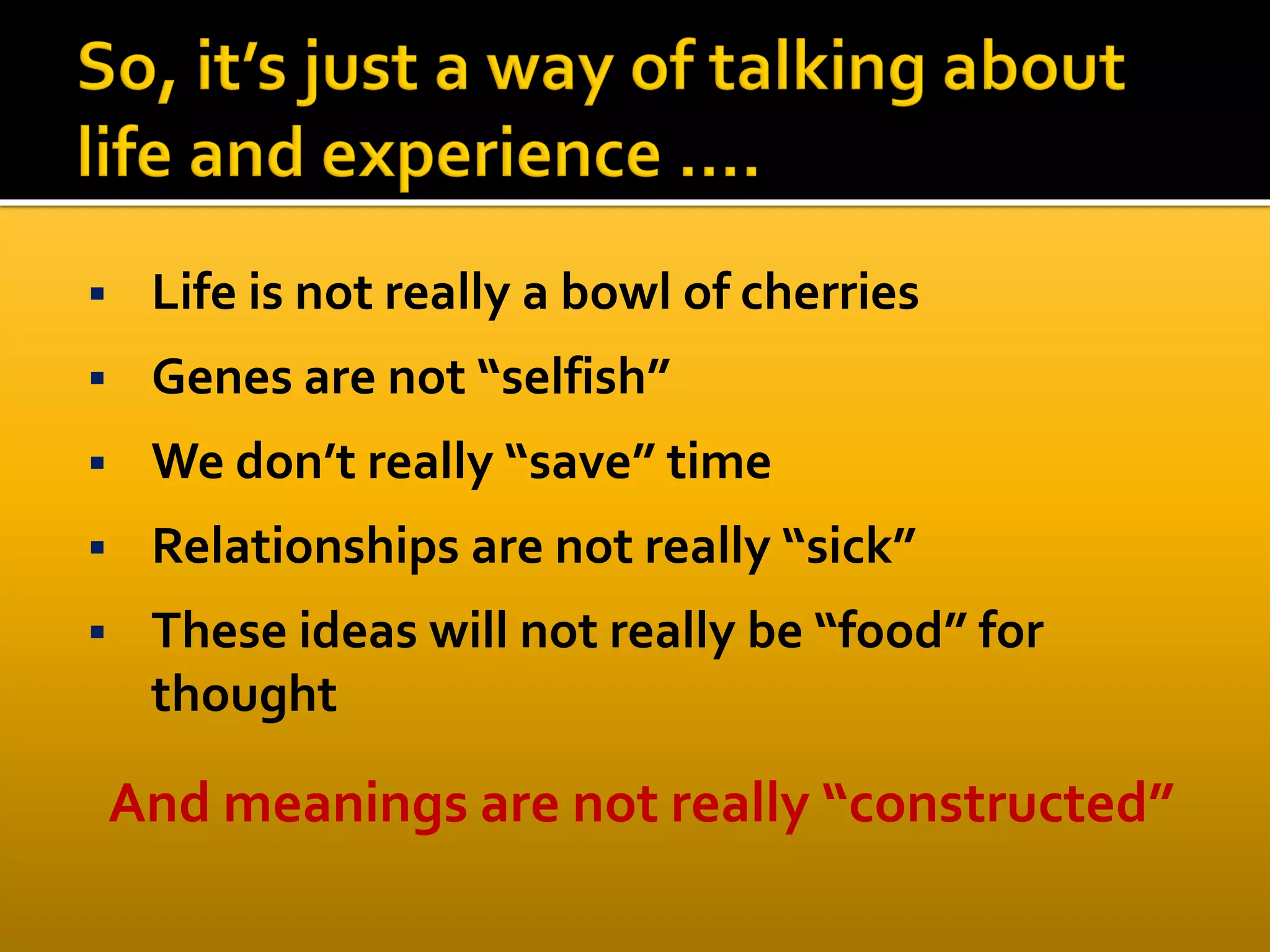
 Life is not really a bowl of cherries
 Genes are not “selfish”
 We don’t really “save” time
 Relationships are not really “sick”
 These ideas will not really be “food” for
thought
And meanings are not really “constructed”
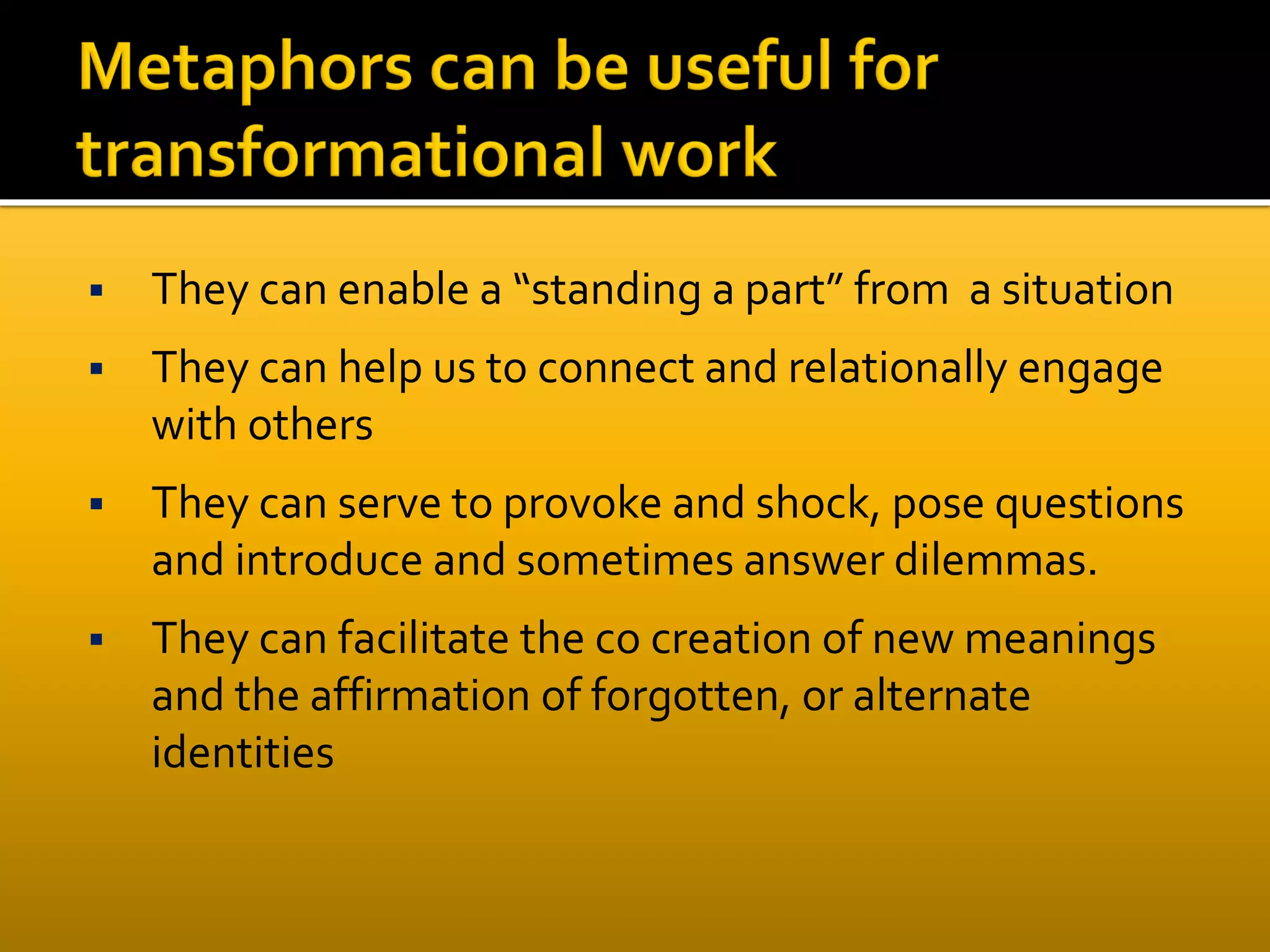
 They can enable a “standing a part” from a situation
 They can help us to connect and relationally engage
with others
 They can serve to provoke and shock, pose questions
and introduce and sometimes answer dilemmas.
 They can facilitate the co creation of new meanings
and the affirmation of forgotten, or alternate
identities
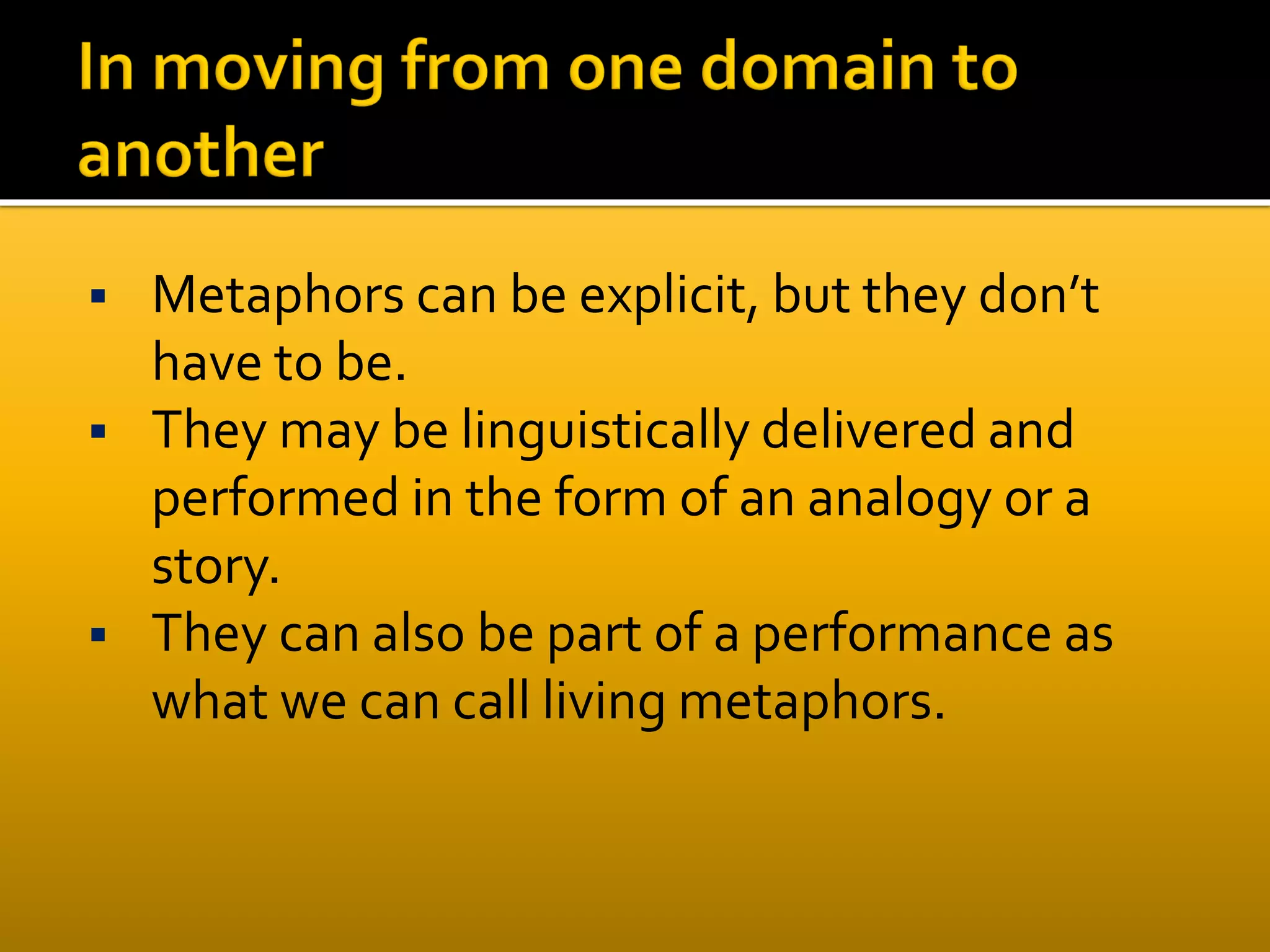
 Metaphors can be explicit, but they don’t
have to be.
 They may be linguistically delivered and
performed in the form of an analogy or a
story.
 They can also be part of a performance as
what we can call living metaphors.
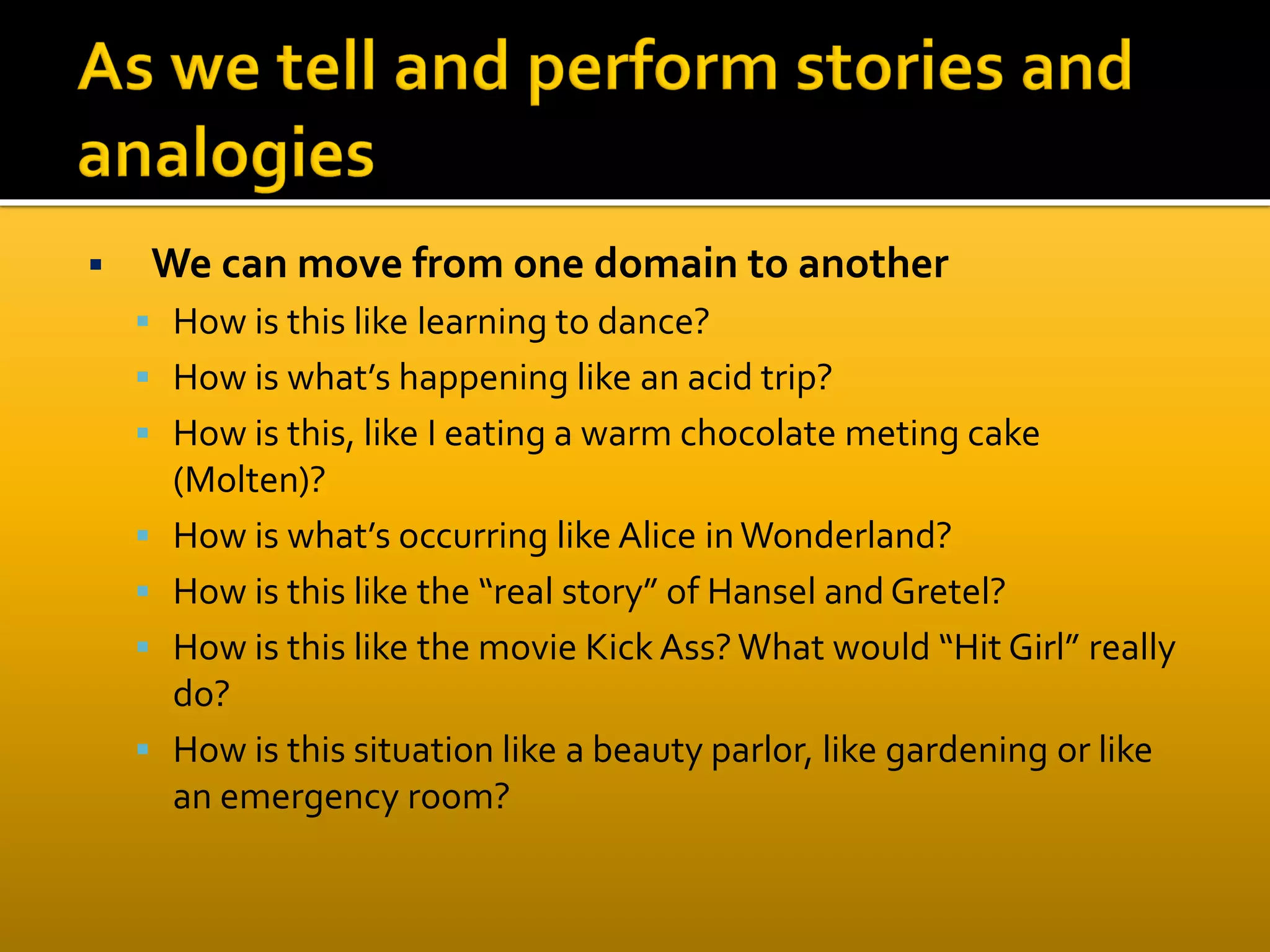
 We can move from one domain to another
 How is this like learning to dance?
 How is what’s happening like an acid trip?
 How is this, like I eating a warm chocolate meting cake
(Molten)?
 How is what’s occurring like Alice inWonderland?
 How is this like the “real story” of Hansel and Gretel?
 How is this like the movie Kick Ass?What would “Hit Girl” really
do?
 How is this situation like a beauty parlor, like gardening or like
an emergency room?
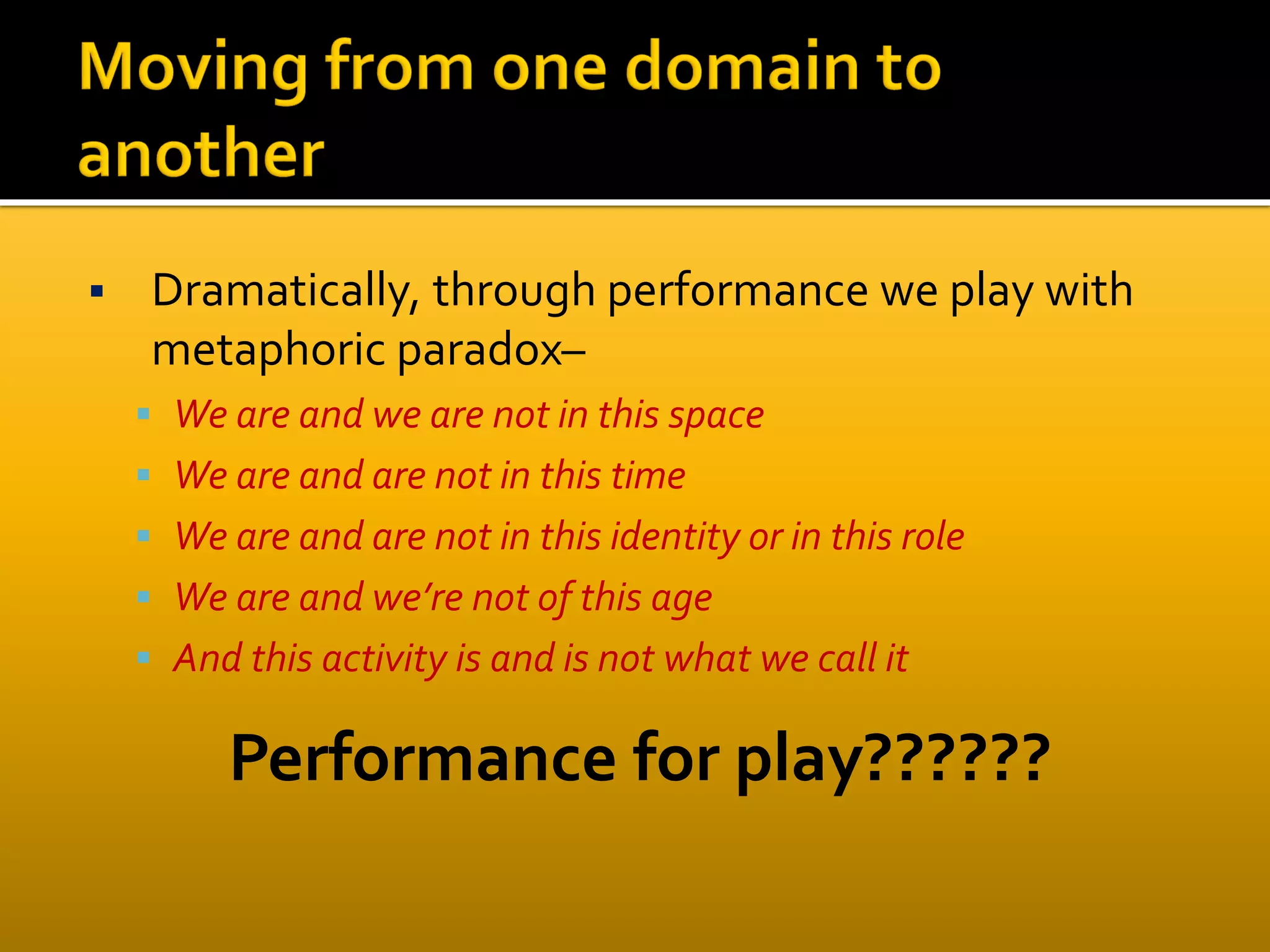
 Dramatically, through performance we play with
metaphoric paradox–
 We are and we are not in this space
 We are and are not in this time
 We are and are not in this identity or in this role
 We are and we’re not of this age
 And this activity is and is not what we call it
Performance for play??????
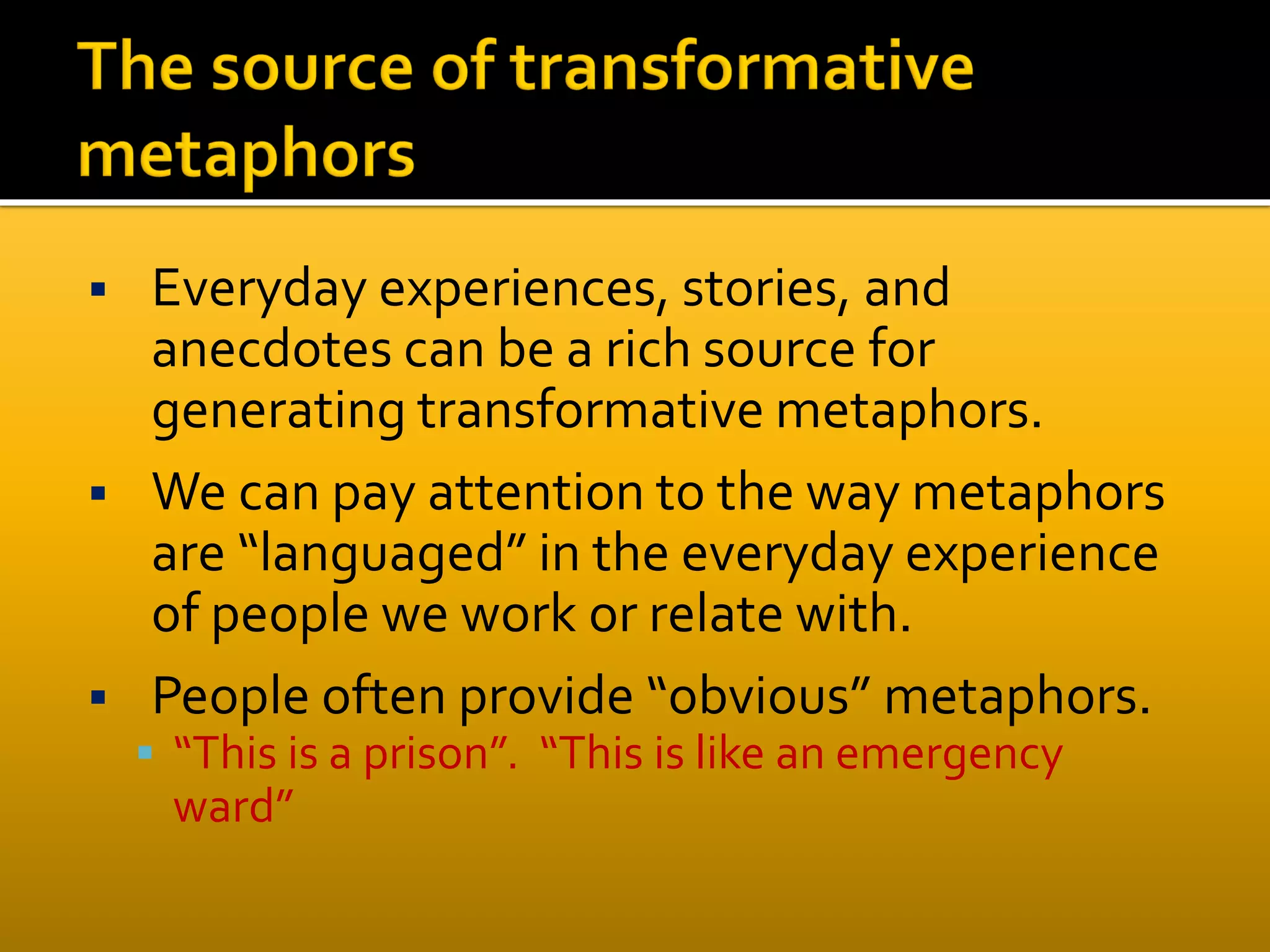
 Everyday experiences, stories, and
anecdotes can be a rich source for
generating transformative metaphors.
 We can pay attention to the way metaphors
are “languaged” in the everyday experience
of people we work or relate with.
 People often provide “obvious” metaphors.
 “This is a prison”. “This is like an emergency
ward”
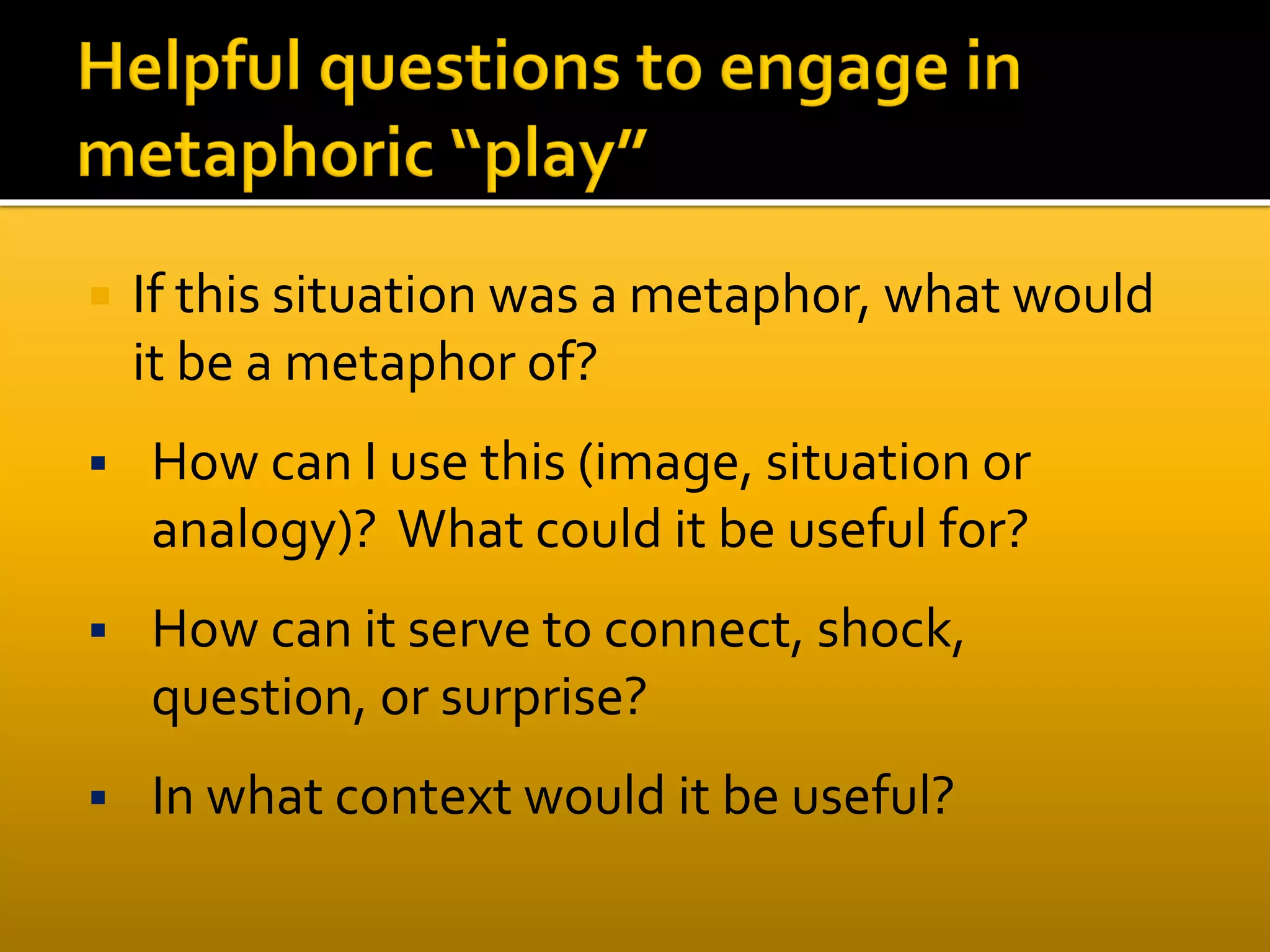
 If this situation was a metaphor, what would
it be a metaphor of?
 How can I use this (image, situation or
analogy)? What could it be useful for?
 How can it serve to connect, shock,
question, or surprise?
 In what context would it be useful?
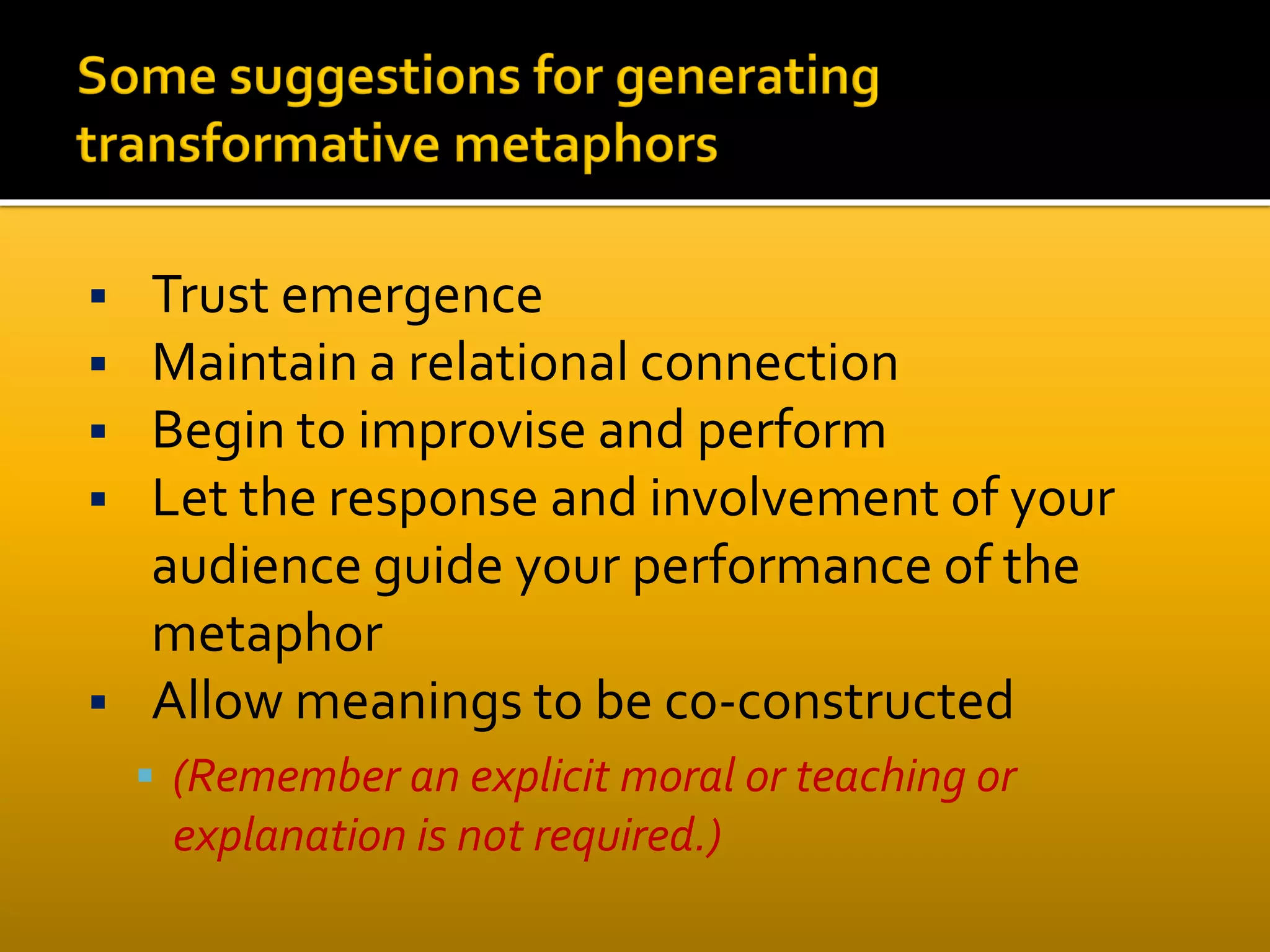
 Trust emergence
 Maintain a relational connection
 Begin to improvise and perform
 Let the response and involvement of your
audience guide your performance of the
metaphor
 Allow meanings to be c0-constructed
 (Remember an explicit moral or teaching or
explanation is not required.)
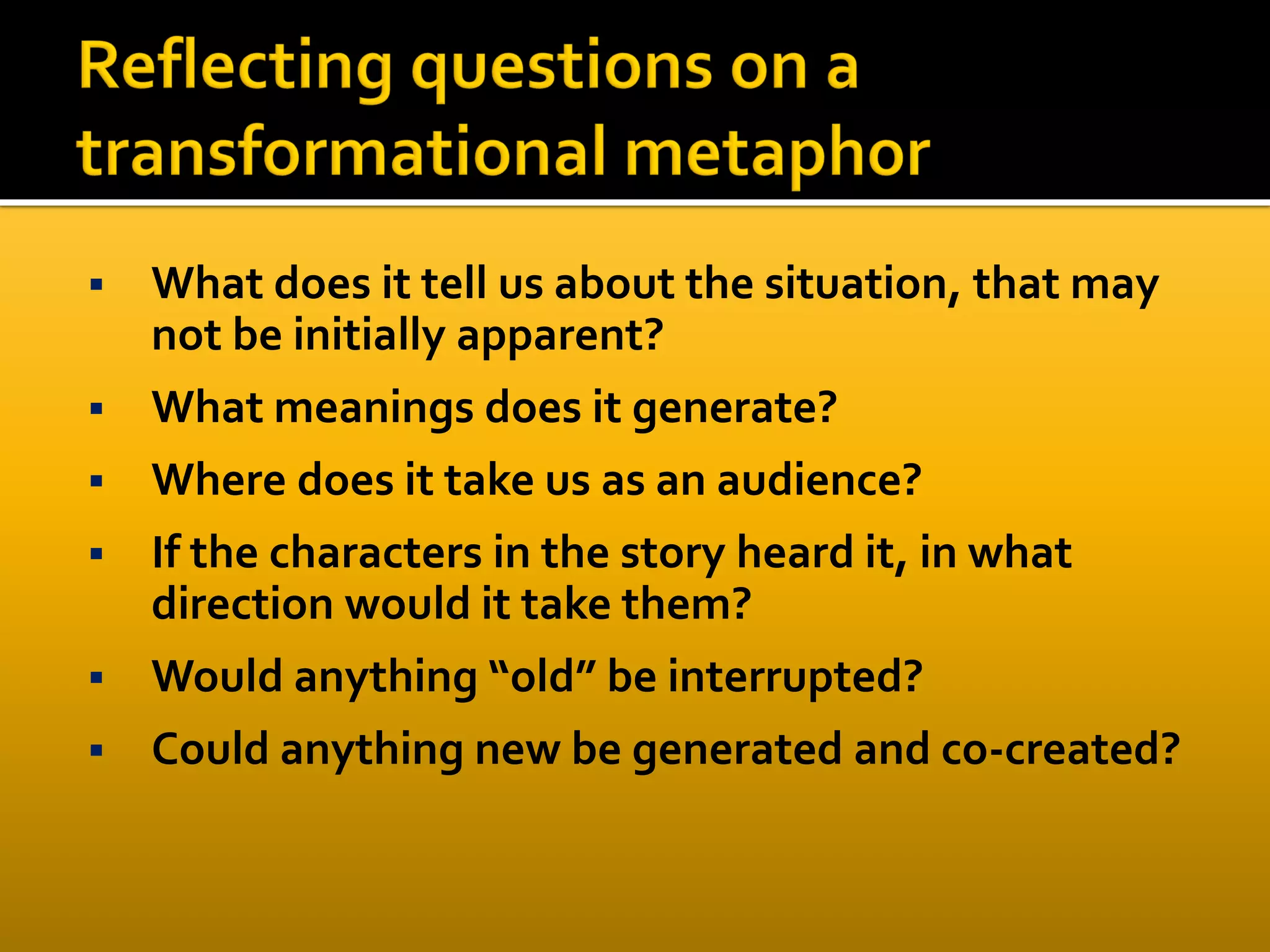
 What does it tell us about the situation, that may
not be initially apparent?
 What meanings does it generate?
 Where does it take us as an audience?
 If the characters in the story heard it, in what
direction would it take them?
 Would anything “old” be interrupted?
 Could anything new be generated and co-created?

The hidden fact playing with metaphors to reframe the domains of meaning

  • 1.
    February 7,2012 Edgardo MoralesEd.D Mary Gergen, Ph. D Play with purpose: relational and performative practices in everyday
  • 2.
    “This is thegreatest triumph of technical skill in novel writing: to achieve invisibility, the ability to endow a story with color, drama, subtlety, beauty and suggestive power so effectively that no reader even notices that the narrative exists…he feels he is not reading but rather “living” the story…” (MarioVargas Llosa)
  • 4.
     All narrativeis inevitably incomplete, if one was to tell a whole story it would never end, for all stories are interconnected.  It means narrating through "an extraordinary explicit silence", through pauses and through the information that is left out.  It actives the readers curiosity and imagination.  The reader is required to fill his own blanks and provide his or her own meaning to what is being told.  The reader may be asked to question, provide an answer or invent a solution to decipher the meaning of the story.
  • 5.
     “The essenceof Metaphor is understanding and experiencing one thing in terms of another” (Lakoff &Johnson)  It implies relating to one domain of experience, in terms of another domain.
  • 6.
     All metaphorsimply an omission  They are relationally constructed and contextual  In inviting us to think or experience one thing in terms of another, we miss alternate possibilities of meaning
  • 7.
     Life isnot really a bowl of cherries  Genes are not “selfish”  We don’t really “save” time  Relationships are not really “sick”  These ideas will not really be “food” for thought And meanings are not really “constructed”
  • 8.
     They canenable a “standing a part” from a situation  They can help us to connect and relationally engage with others  They can serve to provoke and shock, pose questions and introduce and sometimes answer dilemmas.  They can facilitate the co creation of new meanings and the affirmation of forgotten, or alternate identities
  • 9.
     Metaphors canbe explicit, but they don’t have to be.  They may be linguistically delivered and performed in the form of an analogy or a story.  They can also be part of a performance as what we can call living metaphors.
  • 10.
     We canmove from one domain to another  How is this like learning to dance?  How is what’s happening like an acid trip?  How is this, like I eating a warm chocolate meting cake (Molten)?  How is what’s occurring like Alice inWonderland?  How is this like the “real story” of Hansel and Gretel?  How is this like the movie Kick Ass?What would “Hit Girl” really do?  How is this situation like a beauty parlor, like gardening or like an emergency room?
  • 11.
     Dramatically, throughperformance we play with metaphoric paradox–  We are and we are not in this space  We are and are not in this time  We are and are not in this identity or in this role  We are and we’re not of this age  And this activity is and is not what we call it Performance for play??????
  • 12.
     Everyday experiences,stories, and anecdotes can be a rich source for generating transformative metaphors.  We can pay attention to the way metaphors are “languaged” in the everyday experience of people we work or relate with.  People often provide “obvious” metaphors.  “This is a prison”. “This is like an emergency ward”
  • 13.
     If thissituation was a metaphor, what would it be a metaphor of?  How can I use this (image, situation or analogy)? What could it be useful for?  How can it serve to connect, shock, question, or surprise?  In what context would it be useful?
  • 14.
     Trust emergence Maintain a relational connection  Begin to improvise and perform  Let the response and involvement of your audience guide your performance of the metaphor  Allow meanings to be c0-constructed  (Remember an explicit moral or teaching or explanation is not required.)
  • 15.
     What doesit tell us about the situation, that may not be initially apparent?  What meanings does it generate?  Where does it take us as an audience?  If the characters in the story heard it, in what direction would it take them?  Would anything “old” be interrupted?  Could anything new be generated and co-created?