The Green House Effect By Aaron Lloveras
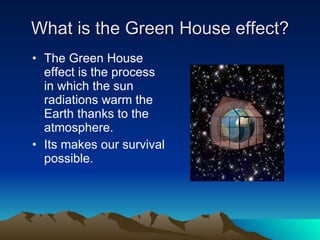
What is the Green House effect? The Green House effect is the process in which the sun radiations warm the Earth thanks to the atmosphere. Its makes our survival possible.
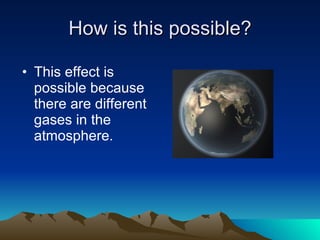
How is this possible? This effect is possible because there are different gases in the atmosphere.
We have a huge problem: This Problem started in the 19th century during the industrial revolution, so think of it, we’re on the 21th.
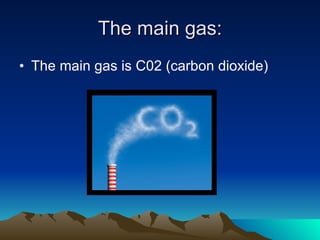
The main gas: The main gas is C02 (carbon dioxide)
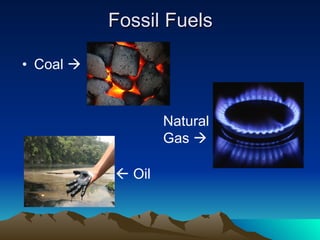
Fossil Fuels Coal     Natural Gas      Oil
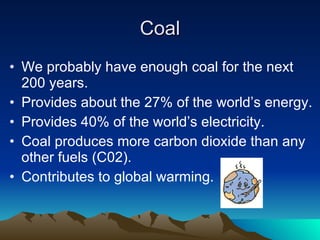
Coal We probably have enough coal for the next 200 years. Provides about the 27% of the world’s energy. Provides 40% of the world’s electricity. Coal produces more carbon dioxide than any other fuels (C02). Contributes to global warming.
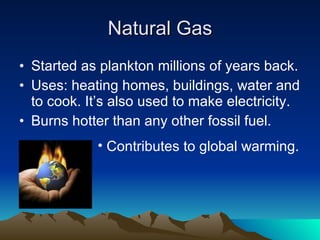
Natural Gas Started as plankton millions of years back. Uses: heating homes, buildings, water and to cook. It’s also used to make electricity. Burns hotter than any other fossil fuel. Contributes to global warming.
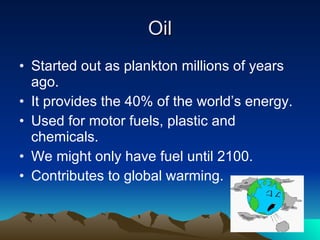
Oil Started out as plankton millions of years ago. It provides the 40% of the world’s energy. Used for motor fuels, plastic and chemicals. We might only have fuel until 2100. Contributes to global warming.
What do they have in common? All these fossil fuels have something in common: They produce C0 2     and… what is C0 2 ? C02 is a gas which produces The Green House effect in the atmosphere. So, if we “add” more of this gas in the atmosphere, the sun radiations can’t go through the atmosphere and the earths warms up more and more.
Let’s save the earth We can do many things to avoid the global warming, so let’s do it! We can reduce, recycle and reuse, this 3 main things could change everything.  Good luck!

The green house effect

  • 1.
    The Green HouseEffect By Aaron Lloveras
  • 2.
    What is theGreen House effect? The Green House effect is the process in which the sun radiations warm the Earth thanks to the atmosphere. Its makes our survival possible.
  • 3.
    How is thispossible? This effect is possible because there are different gases in the atmosphere.
  • 4.
    We have ahuge problem: This Problem started in the 19th century during the industrial revolution, so think of it, we’re on the 21th.
  • 5.
    The main gas:The main gas is C02 (carbon dioxide)
  • 6.
    Fossil Fuels Coal  Natural Gas   Oil
  • 7.
    Coal We probablyhave enough coal for the next 200 years. Provides about the 27% of the world’s energy. Provides 40% of the world’s electricity. Coal produces more carbon dioxide than any other fuels (C02). Contributes to global warming.
  • 8.
    Natural Gas Startedas plankton millions of years back. Uses: heating homes, buildings, water and to cook. It’s also used to make electricity. Burns hotter than any other fossil fuel. Contributes to global warming.
  • 9.
    Oil Started outas plankton millions of years ago. It provides the 40% of the world’s energy. Used for motor fuels, plastic and chemicals. We might only have fuel until 2100. Contributes to global warming.
  • 10.
    What do theyhave in common? All these fossil fuels have something in common: They produce C0 2  and… what is C0 2 ? C02 is a gas which produces The Green House effect in the atmosphere. So, if we “add” more of this gas in the atmosphere, the sun radiations can’t go through the atmosphere and the earths warms up more and more.
  • 11.
    Let’s save theearth We can do many things to avoid the global warming, so let’s do it! We can reduce, recycle and reuse, this 3 main things could change everything. Good luck!