GREENHOUSE EFFECT
-Mamata Dhakal
- Bsc nursing
- Yeti Health Science Academy
• The greenhouse effect is a natural process that
warms the Earth's surface. When the Sun's
energy reaches the Earth's atmosphere, some of
it is reflected back to space and the rest is
absorbed and re-radiated by greenhouse gases
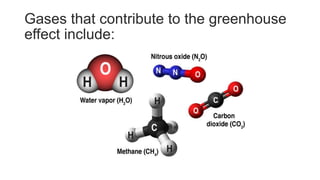
Gases that contribute to the greenhouse
effect include:
Water vapor
• Most abundant greenhouse gas, but importantly, it acts as a
feedback to the climate.
Carbon dioxide (CO2).
• A minor but very important component of the atmosphere,
carbon dioxide is released through natural processes such as
respiration and volcano eruptions and through human activities
such as deforestation, land use changes, and burning fossil
fuels.
• Humans have increased atmospheric CO2 concentration by
47% since the Industrial Revolution began. This is the most
important long-lived "forcing" of climate change.
Methane
• A hydrocarbon gas produced both through natural sources and
human activities, including the decomposition of wastes in
landfills, agriculture, and especially rice cultivation, as well as
ruminant digestion and manure management associated with
domestic livestock.
• On a molecule-for-molecule basis, methane is a far more active
greenhouse gas than carbon dioxide, but also one which is
much less abundant in the atmosphere.
Nitrous oxide
• A powerful greenhouse gas produced by soil cultivation
practices, especially the use of commercial and organic
fertilizers, fossil fuel combustion, nitric acid production, and
biomass burning.
Chlorofluorocarbons (CFCs).
• Synthetic compounds entirely of industrial origin used in a
number of applications, but now largely regulated in production
and release to the atmosphere by international agreement for
their ability to contribute to destruction of the ozone layer. They
are also greenhouse gases.
Greenhouse effect
• Step 1: Solar radiation reaches the Earth's atmosphere - some of this is
reflected back into space.
• Step 2: The rest of the sun's energy is absorbed by the land and the
oceans, heating the Earth.
• Step 3: Heat radiates from Earth towards space.
• Step 4: Some of this heat is trapped by greenhouse gases in the
atmosphere, keeping the Earth warm enough to sustain life.
• Step 5: Human activities such as burning fossil fuels, agriculture
and land clearing are increasing the amount of greenhouse gases
released into the atmosphere.
• Step 6: This is trapping extra heat, and causing the Earth's
temperature to rise.
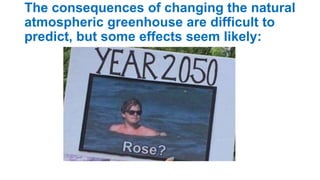
The consequences of changing the natural
atmospheric greenhouse are difficult to
predict, but some effects seem likely:
• On average, Earth will become warmer. Some regions may welcome
warmer temperatures, but others may not.
• Warmer conditions will probably lead to more evaporation and
precipitation overall, but individual regions will vary, some becoming
wetter and others dryer.
• A stronger greenhouse effect will warm the ocean and partially melt
glaciers and ice sheets, increasing sea level. Ocean water also will
expand if it warms, contributing further to sea level rise.
• Outside of a greenhouse, higher atmospheric carbon dioxide
(CO2) levels can have both positive and negative effects on crop yields.
• Some laboratory experiments suggest that elevated CO2 levels can
increase plant growth. However, other factors, such as changing
temperatures, ozone, and water and nutrient constraints, may more
than counteract any potential increase in yield.
• Finally, although rising CO2 can stimulate plant growth, research has
shown that it can also reduce the nutritional value of most food
crops by reducing the concentrations of protein and essential minerals in
most plant species.
• Climate change can cause new patterns of pests and diseases to emerge,
affecting plants, animals and humans, and posing new risks for food
security, food safety and human health.
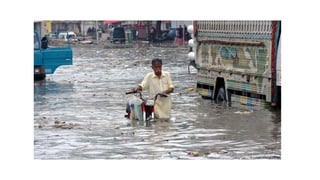
• In Nepal, 95% of green house gas emissions from agriculture and
forestry sectors were 77% from forestry sector only.The consequences
of global warmimig have had the most impact in developing and
mountainous countries like Nepal , which has high intensity rainfall during
the rainy season. It has resulted in heavy floods, landslides and soil
erosion.
• The effects of greenhouse gases (GHGs) on both drought and flooding
events have been found, including severe winter drought and excessive
monsoon flooding. Climate change has been alarming in the context of
global warming.
What can we do ?
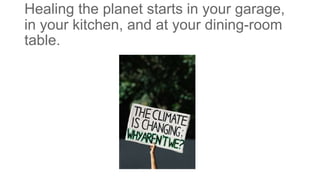
Healing the planet starts in your garage,
in your kitchen, and at your dining-room
table.
Plant trees
What to do:
• Plant trees in tropical rainforests in Brazil, Indonesia, India,
Colombia, and Madagascar
• Protect what remains of our existing tropical forests through
nonprofits such as Cool Earth
• But not all forests are created equal – some remove carbon
from our atmosphere more effectively than others. According to
a paper published in Science Advances, tropical forests in
countries like Brazil, Indonesia, and India will most efficiently
pull carbon out of the atmosphere, since they’re home to a huge
amount of biodiversity and play a major role in the planet’s air
and water cycle.
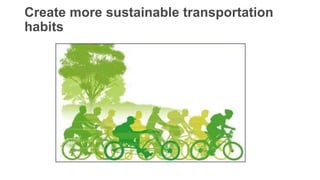
Create more sustainable transportation
habits
What to do:
• Do at least one of these things:
• Instead of ordering a private ride, do a rideshare
• Avoid rapid acceleration and braking, and turn on cruise control
on longer trips
• Walk and bike to your destination whenever possible
• When buying a new car, choose a climate-friendly option
• Why it’s impactful:
• As aforementioned, cars are one of the biggest contributors to
climate change: 82% of emissions from transportation come
from cars. And while cutting automotive transportation out of
your life would make the most impact, this isn’t possible for
most people. So instead, tweak a few habits that will have a
bigger collective impact.
Lower your heating bill
What to do:
• In the winter, take steps to lower your heating bill:
• Set your thermostat at 68 degrees F, and lower your home’s
temperature 7-10 degrees for 8 hours a day. (But don’t turn
down the heat more than 10 degrees if it’s only for a few hours-
it’ll take too much energy to heat back up.)
• Shore up your windows, seal up the doors, and plug up dafty
holes
Why it’s impactful:
• Electricity is one of the biggest causes of greenhouse gas
emissions, and heating systems are the single biggest energy
expense in the home. So lowering your heating bills is the most
impactful way reduce your electricity consumption (and isn’t so
bad for your wallet, either).
• In addition to monitoring your thermostat, improving insulation
and airtightness through your walls, roof, and windows is a
great way to avoid heat from escaping your home, since the
biggest sources of heat loss are your walls (35%), roof (20%),
and windows (15%).
Divest from coal, and encourage others to
do the same
• What to do:
• Use alternative source
• Why it’s impactful:
• Coal-burning power plants are by far the biggest emitters of
carbon dioxide in our atmosphere, according to the Natural
Resources Defense Council.
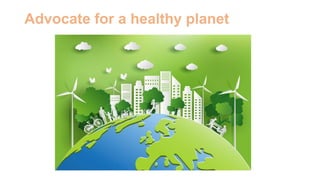
Advocate for a healthy planet
What to do:
• Support climate legislation by doing one or more of these
things:
• Send a letter to party leaders and candidates telling them your
vote depends on their stance on global warming
• Volunteer for a candidate that supports efforts to stop global
warming
• Talk to friends and family about the importance of voting for
climate action
• Write a letter to your elected leaders to support and implement
a set of climate solutions
Why it’s impactful:
• Reminder: 100 companies produce 71% of emissions worldwide.
What will compel big companies to act sustainably consistently, on a
large scale? Lawmakers.
• They can:
• Place limits on the amount of carbon companies are allowed to emit
• Provide resources to prevent emissions leaks from equipment
• Subsidize efficient industrial technology to make it more affordable
• They can also help individuals act more sustainably. Copenhagen’s
government is working to make it the world’s first carbon-neutral city
by 2025, by installing bike lanes across the city, restricting polluting
cars, and building new wind turbines.
• And how can we enact political change? It all starts with you.
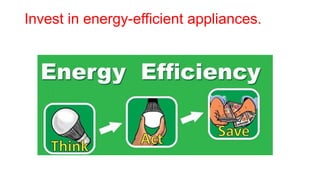
Invest in energy-efficient appliances.
• Energy efficiency is the lowest-cost way to reduce emissions,”.
• When shopping for refrigerators, washing machines, and other
appliances, look for the Energy Star label. It will tell you which
are the most efficient.
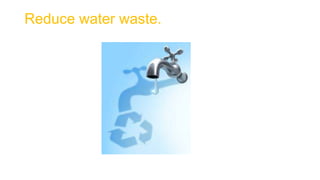
Reduce water waste.
• Saving water reduces carbon pollution, too. That's because it
takes a lot of energy to pump, heat, and treat your water. So
take shorter showers, turn off the tap while brushing your teeth,
and switch to WaterSense -labeled fixtures and appliances
Actually eat the food you buy
• Approximately 10 percent energy use goes into growing,
processing, packaging, and shipping food, about 40 percent of
which just winds up in the landfill.
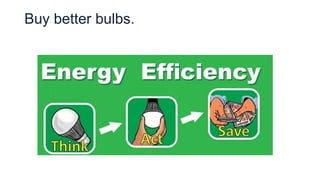
Buy better bulbs.
• LED lightbulbs use up to 80 percent less energy than
conventional incandescents. They’re also cheaper in the long
run
Rethink planes, trains, and automobiles.
• Choosing to live in walkable smart-growth cities and towns with
quality public transportation leads to less driving, less money
spent on fuel, and less pollution in the air. Less frequent flying
can make a big difference, too. “Air transport is a major source
of climate pollution,” “If you can take a train instead, do that.”
Shrink your carbon profile
• You can offset the carbon you produce by purchasing carbon
offsets, which represent clean power that you can add to the
nation’s energy grid in place of power from fossil fuels.
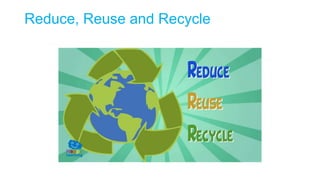
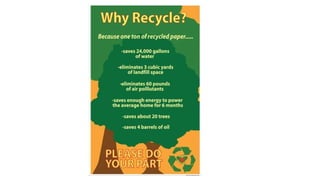
Reduce, Reuse and Recycle
• Landfills are the major contributor of methane and
other greenhouse gases. When the waste is burnt, it releases
toxic gases in the atmosphere, which results in global warming.
Reusing and recycling old items can significantly reduce your
carbon footprint as it takes far less energy to recycle old
items than to produce items from scratch
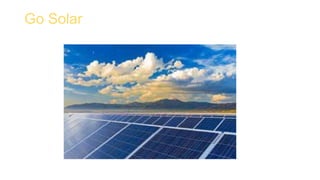
Go Solar
• Many people have caught the energy-efficient bandwagon of
solar energy. Having solar panels installed is something readily
possible and available
Look for Renewable Fuel Options
• If you can’t afford an electric car, buy the cleanest gasoline as
possible. When car shopping, look at the benefits of options that
provide renewable fuel. Although it may be a pretty penny now,
you’re on the ground level of forwarding thinking.
Green house effect

Green house effect

  • 1.
    GREENHOUSE EFFECT -Mamata Dhakal -Bsc nursing - Yeti Health Science Academy
  • 3.
    • The greenhouseeffect is a natural process that warms the Earth's surface. When the Sun's energy reaches the Earth's atmosphere, some of it is reflected back to space and the rest is absorbed and re-radiated by greenhouse gases
  • 4.
    Gases that contributeto the greenhouse effect include:
  • 5.
    Water vapor • Mostabundant greenhouse gas, but importantly, it acts as a feedback to the climate.
  • 6.
    Carbon dioxide (CO2). •A minor but very important component of the atmosphere, carbon dioxide is released through natural processes such as respiration and volcano eruptions and through human activities such as deforestation, land use changes, and burning fossil fuels. • Humans have increased atmospheric CO2 concentration by 47% since the Industrial Revolution began. This is the most important long-lived "forcing" of climate change.
  • 7.
    Methane • A hydrocarbongas produced both through natural sources and human activities, including the decomposition of wastes in landfills, agriculture, and especially rice cultivation, as well as ruminant digestion and manure management associated with domestic livestock. • On a molecule-for-molecule basis, methane is a far more active greenhouse gas than carbon dioxide, but also one which is much less abundant in the atmosphere.
  • 8.
    Nitrous oxide • Apowerful greenhouse gas produced by soil cultivation practices, especially the use of commercial and organic fertilizers, fossil fuel combustion, nitric acid production, and biomass burning.
  • 9.
    Chlorofluorocarbons (CFCs). • Syntheticcompounds entirely of industrial origin used in a number of applications, but now largely regulated in production and release to the atmosphere by international agreement for their ability to contribute to destruction of the ozone layer. They are also greenhouse gases.
  • 10.
    Greenhouse effect • Step1: Solar radiation reaches the Earth's atmosphere - some of this is reflected back into space. • Step 2: The rest of the sun's energy is absorbed by the land and the oceans, heating the Earth. • Step 3: Heat radiates from Earth towards space.
  • 11.
    • Step 4:Some of this heat is trapped by greenhouse gases in the atmosphere, keeping the Earth warm enough to sustain life. • Step 5: Human activities such as burning fossil fuels, agriculture and land clearing are increasing the amount of greenhouse gases released into the atmosphere. • Step 6: This is trapping extra heat, and causing the Earth's temperature to rise.
  • 13.
    The consequences ofchanging the natural atmospheric greenhouse are difficult to predict, but some effects seem likely:
  • 14.
    • On average,Earth will become warmer. Some regions may welcome warmer temperatures, but others may not. • Warmer conditions will probably lead to more evaporation and precipitation overall, but individual regions will vary, some becoming wetter and others dryer. • A stronger greenhouse effect will warm the ocean and partially melt glaciers and ice sheets, increasing sea level. Ocean water also will expand if it warms, contributing further to sea level rise.
  • 15.
    • Outside ofa greenhouse, higher atmospheric carbon dioxide (CO2) levels can have both positive and negative effects on crop yields. • Some laboratory experiments suggest that elevated CO2 levels can increase plant growth. However, other factors, such as changing temperatures, ozone, and water and nutrient constraints, may more than counteract any potential increase in yield.
  • 16.
    • Finally, althoughrising CO2 can stimulate plant growth, research has shown that it can also reduce the nutritional value of most food crops by reducing the concentrations of protein and essential minerals in most plant species. • Climate change can cause new patterns of pests and diseases to emerge, affecting plants, animals and humans, and posing new risks for food security, food safety and human health.
  • 18.
    • In Nepal,95% of green house gas emissions from agriculture and forestry sectors were 77% from forestry sector only.The consequences of global warmimig have had the most impact in developing and mountainous countries like Nepal , which has high intensity rainfall during the rainy season. It has resulted in heavy floods, landslides and soil erosion. • The effects of greenhouse gases (GHGs) on both drought and flooding events have been found, including severe winter drought and excessive monsoon flooding. Climate change has been alarming in the context of global warming.
  • 19.
  • 20.
    Healing the planetstarts in your garage, in your kitchen, and at your dining-room table.
  • 21.
  • 22.
    What to do: •Plant trees in tropical rainforests in Brazil, Indonesia, India, Colombia, and Madagascar • Protect what remains of our existing tropical forests through nonprofits such as Cool Earth
  • 23.
    • But notall forests are created equal – some remove carbon from our atmosphere more effectively than others. According to a paper published in Science Advances, tropical forests in countries like Brazil, Indonesia, and India will most efficiently pull carbon out of the atmosphere, since they’re home to a huge amount of biodiversity and play a major role in the planet’s air and water cycle.
  • 24.
    Create more sustainabletransportation habits
  • 25.
    What to do: •Do at least one of these things: • Instead of ordering a private ride, do a rideshare • Avoid rapid acceleration and braking, and turn on cruise control on longer trips • Walk and bike to your destination whenever possible • When buying a new car, choose a climate-friendly option
  • 26.
    • Why it’simpactful: • As aforementioned, cars are one of the biggest contributors to climate change: 82% of emissions from transportation come from cars. And while cutting automotive transportation out of your life would make the most impact, this isn’t possible for most people. So instead, tweak a few habits that will have a bigger collective impact.
  • 27.
  • 28.
    What to do: •In the winter, take steps to lower your heating bill: • Set your thermostat at 68 degrees F, and lower your home’s temperature 7-10 degrees for 8 hours a day. (But don’t turn down the heat more than 10 degrees if it’s only for a few hours- it’ll take too much energy to heat back up.) • Shore up your windows, seal up the doors, and plug up dafty holes
  • 29.
    Why it’s impactful: •Electricity is one of the biggest causes of greenhouse gas emissions, and heating systems are the single biggest energy expense in the home. So lowering your heating bills is the most impactful way reduce your electricity consumption (and isn’t so bad for your wallet, either). • In addition to monitoring your thermostat, improving insulation and airtightness through your walls, roof, and windows is a great way to avoid heat from escaping your home, since the biggest sources of heat loss are your walls (35%), roof (20%), and windows (15%).
  • 30.
    Divest from coal,and encourage others to do the same
  • 31.
    • What todo: • Use alternative source
  • 32.
    • Why it’simpactful: • Coal-burning power plants are by far the biggest emitters of carbon dioxide in our atmosphere, according to the Natural Resources Defense Council.
  • 33.
    Advocate for ahealthy planet
  • 34.
    What to do: •Support climate legislation by doing one or more of these things: • Send a letter to party leaders and candidates telling them your vote depends on their stance on global warming • Volunteer for a candidate that supports efforts to stop global warming • Talk to friends and family about the importance of voting for climate action • Write a letter to your elected leaders to support and implement a set of climate solutions
  • 35.
    Why it’s impactful: •Reminder: 100 companies produce 71% of emissions worldwide. What will compel big companies to act sustainably consistently, on a large scale? Lawmakers. • They can: • Place limits on the amount of carbon companies are allowed to emit • Provide resources to prevent emissions leaks from equipment • Subsidize efficient industrial technology to make it more affordable • They can also help individuals act more sustainably. Copenhagen’s government is working to make it the world’s first carbon-neutral city by 2025, by installing bike lanes across the city, restricting polluting cars, and building new wind turbines. • And how can we enact political change? It all starts with you.
  • 36.
  • 37.
    • Energy efficiencyis the lowest-cost way to reduce emissions,”. • When shopping for refrigerators, washing machines, and other appliances, look for the Energy Star label. It will tell you which are the most efficient.
  • 38.
  • 39.
    • Saving waterreduces carbon pollution, too. That's because it takes a lot of energy to pump, heat, and treat your water. So take shorter showers, turn off the tap while brushing your teeth, and switch to WaterSense -labeled fixtures and appliances
  • 40.
    Actually eat thefood you buy
  • 41.
    • Approximately 10percent energy use goes into growing, processing, packaging, and shipping food, about 40 percent of which just winds up in the landfill.
  • 42.
  • 43.
    • LED lightbulbsuse up to 80 percent less energy than conventional incandescents. They’re also cheaper in the long run
  • 44.
    Rethink planes, trains,and automobiles.
  • 45.
    • Choosing tolive in walkable smart-growth cities and towns with quality public transportation leads to less driving, less money spent on fuel, and less pollution in the air. Less frequent flying can make a big difference, too. “Air transport is a major source of climate pollution,” “If you can take a train instead, do that.”
  • 46.
  • 47.
    • You canoffset the carbon you produce by purchasing carbon offsets, which represent clean power that you can add to the nation’s energy grid in place of power from fossil fuels.
  • 48.
  • 49.
    • Landfills arethe major contributor of methane and other greenhouse gases. When the waste is burnt, it releases toxic gases in the atmosphere, which results in global warming. Reusing and recycling old items can significantly reduce your carbon footprint as it takes far less energy to recycle old items than to produce items from scratch
  • 51.
  • 52.
    • Many peoplehave caught the energy-efficient bandwagon of solar energy. Having solar panels installed is something readily possible and available
  • 53.
    Look for RenewableFuel Options
  • 54.
    • If youcan’t afford an electric car, buy the cleanest gasoline as possible. When car shopping, look at the benefits of options that provide renewable fuel. Although it may be a pretty penny now, you’re on the ground level of forwarding thinking.