Compter Overview
By Kishan Mishra
Theme:-
Computer Generations
• The term 'Computer Generation'is often
used in relation to the hardware of
computers.Each phase of computer
development is known as a separate
generation of computer.
First Generation Computer
• The first electronic computer was
designed at Iowa State between 1939-
1942
• This computers were slow,huge,expensive
and often unreliable.
• Contained vacuum tubes and stored
numbers for calculations by burning holes
in paper.
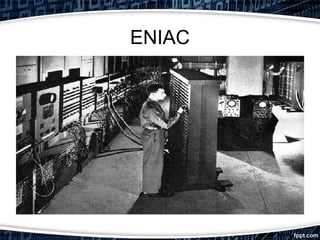
ENIAC
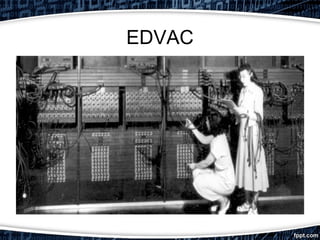
EDVAC
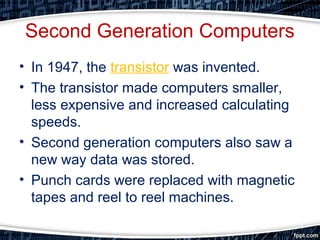
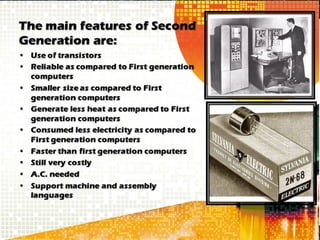
Second Generation Computers
• In 1947, the transistor was invented.
• The transistor made computers smaller,
less expensive and increased calculating
speeds.
• Second generation computers also saw a
new way data was stored.
• Punch cards were replaced with magnetic
tapes and reel to reel machines.
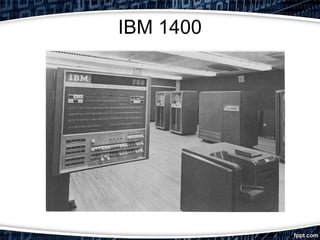
IBM 1400
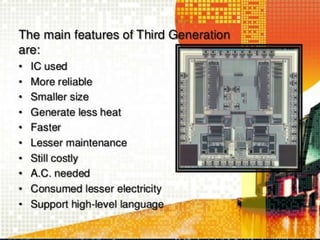
Third Generation Computers
• Transistors were replaced by integrated
circuits(IC)
• One IC could replace hundreds of
transistors
• This made computers even smaller and
faster.
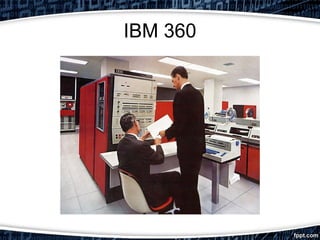
IBM 360
Fourth Generation Computers
• In 1970 the Intel Corporation invented the
Microprocessor:an entire CPU on one
chip.
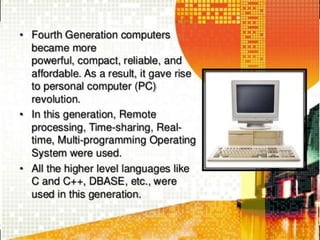
• This led to microcomputers-computers on
a desk.
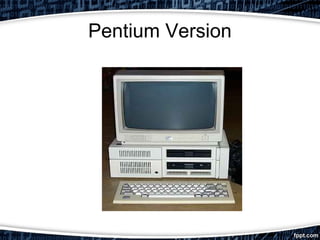
Pentium Version
Fifth Generation Computers
Present and Beyond
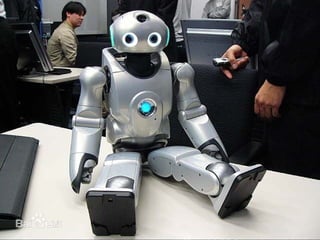
• The fifth generation computers are
technologically advance and are stillbeing
developed to become more efficient,
though there are some applications,such
as voice recongnition,advanced robotics
that are beind used today.
5th Generation5th Generation
Still Being DevelopedStill Being Developed
• Natural Language
• This language is designed to give people
a more human connection with computers.
• Uses multi-media has also defined this
generation.
• There is a great deal of “bundled software”
with this generation.
The generation of computers

The generation of computers

  • 1.
  • 2.
    Computer Generations • Theterm 'Computer Generation'is often used in relation to the hardware of computers.Each phase of computer development is known as a separate generation of computer.
  • 3.
    First Generation Computer •The first electronic computer was designed at Iowa State between 1939- 1942 • This computers were slow,huge,expensive and often unreliable. • Contained vacuum tubes and stored numbers for calculations by burning holes in paper.
  • 5.
  • 6.
  • 7.
    Second Generation Computers •In 1947, the transistor was invented. • The transistor made computers smaller, less expensive and increased calculating speeds. • Second generation computers also saw a new way data was stored. • Punch cards were replaced with magnetic tapes and reel to reel machines.
  • 9.
  • 10.
    Third Generation Computers •Transistors were replaced by integrated circuits(IC) • One IC could replace hundreds of transistors • This made computers even smaller and faster.
  • 12.
  • 13.
    Fourth Generation Computers •In 1970 the Intel Corporation invented the Microprocessor:an entire CPU on one chip. • This led to microcomputers-computers on a desk.
  • 15.
  • 16.
    Fifth Generation Computers Presentand Beyond • The fifth generation computers are technologically advance and are stillbeing developed to become more efficient, though there are some applications,such as voice recongnition,advanced robotics that are beind used today.
  • 17.
    5th Generation5th Generation StillBeing DevelopedStill Being Developed • Natural Language • This language is designed to give people a more human connection with computers. • Uses multi-media has also defined this generation. • There is a great deal of “bundled software” with this generation.