Futures of ODR Sanjana Hattotuwa Head, ICT and Peacebuilding Info Share
today PC’s Commercial  ADR roots Text based Growth industry
Snapshots of ODR at present
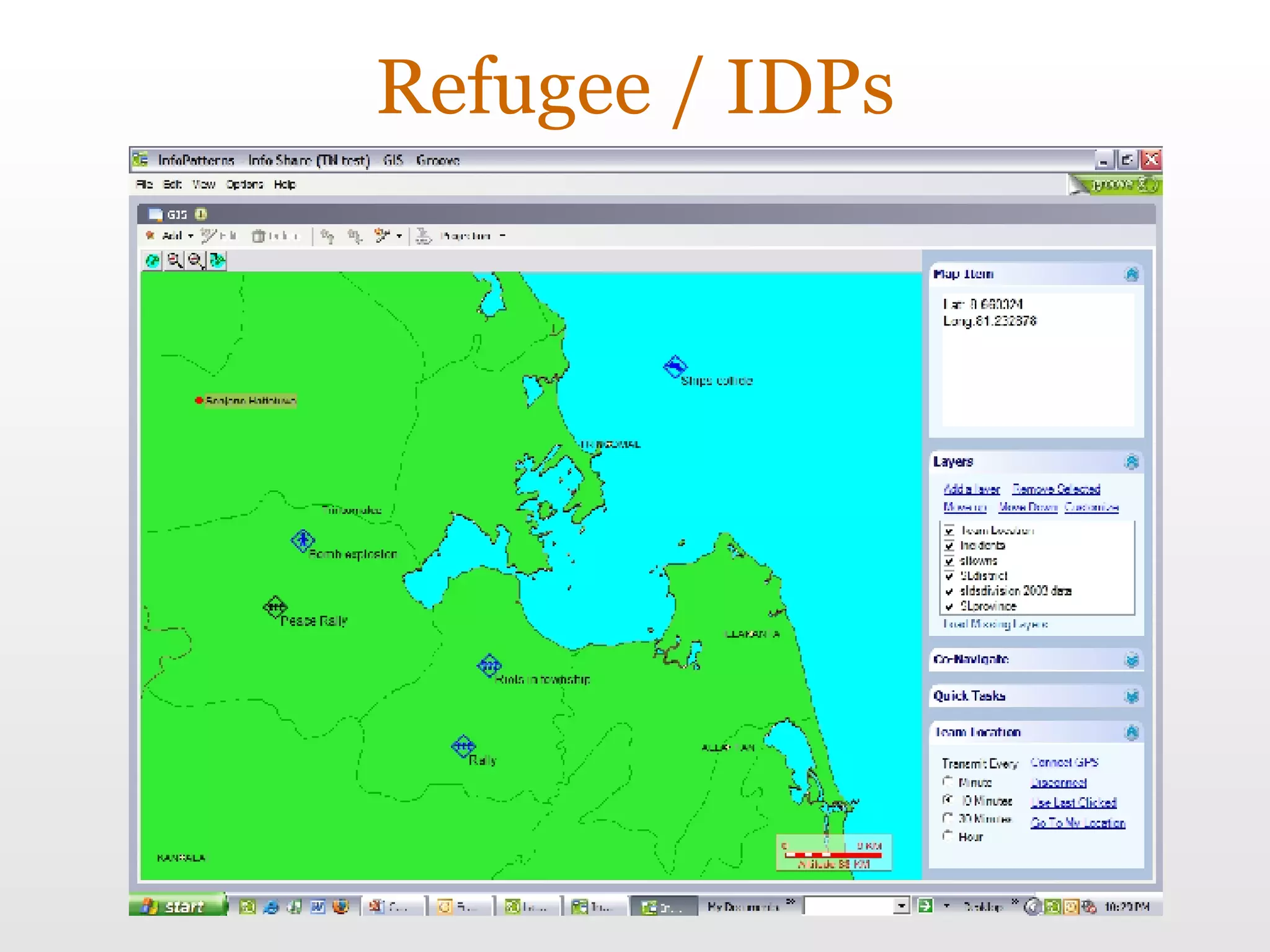
Refugee / IDPs
Anti-trafficking
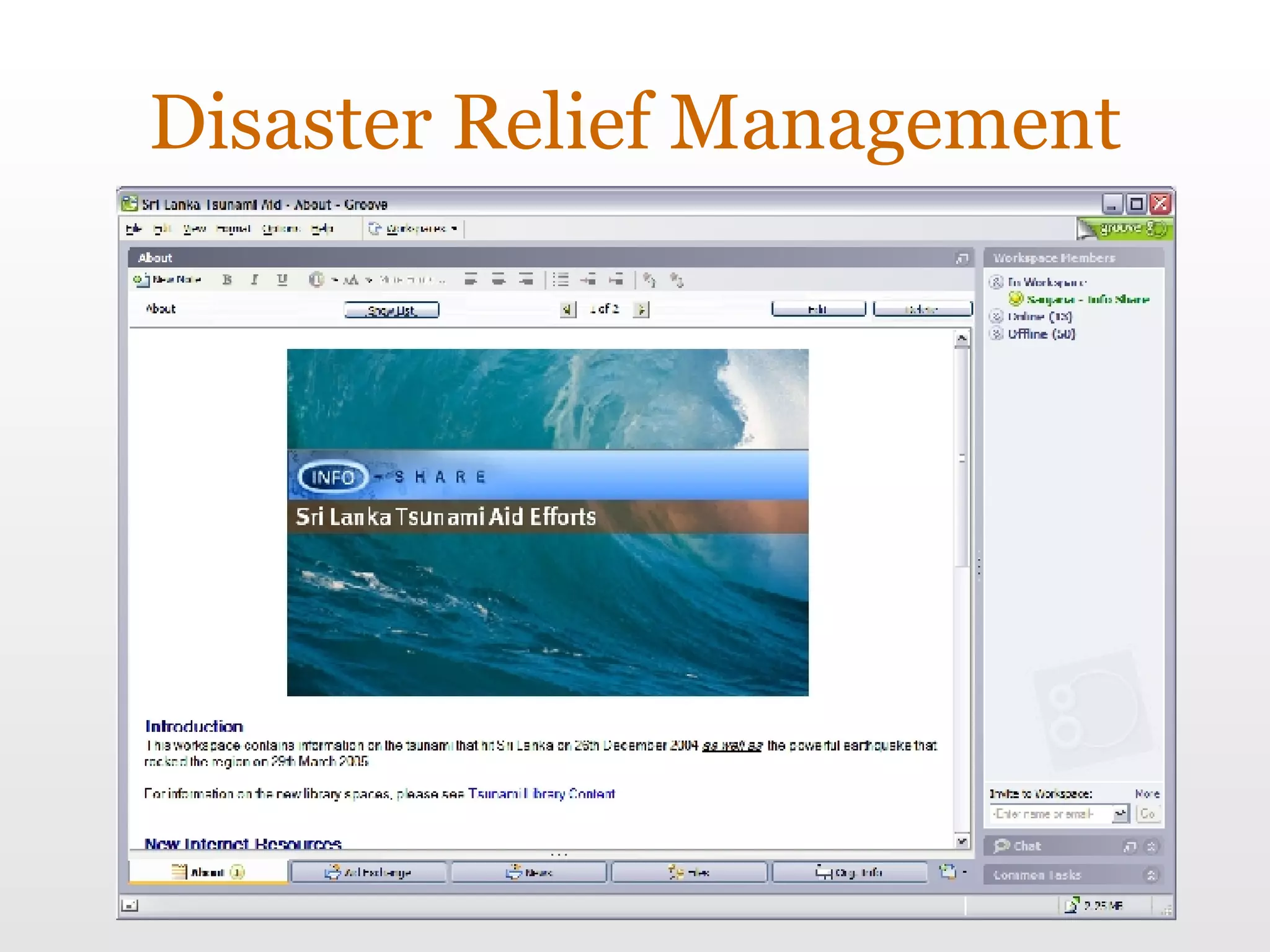
Disaster Relief Management
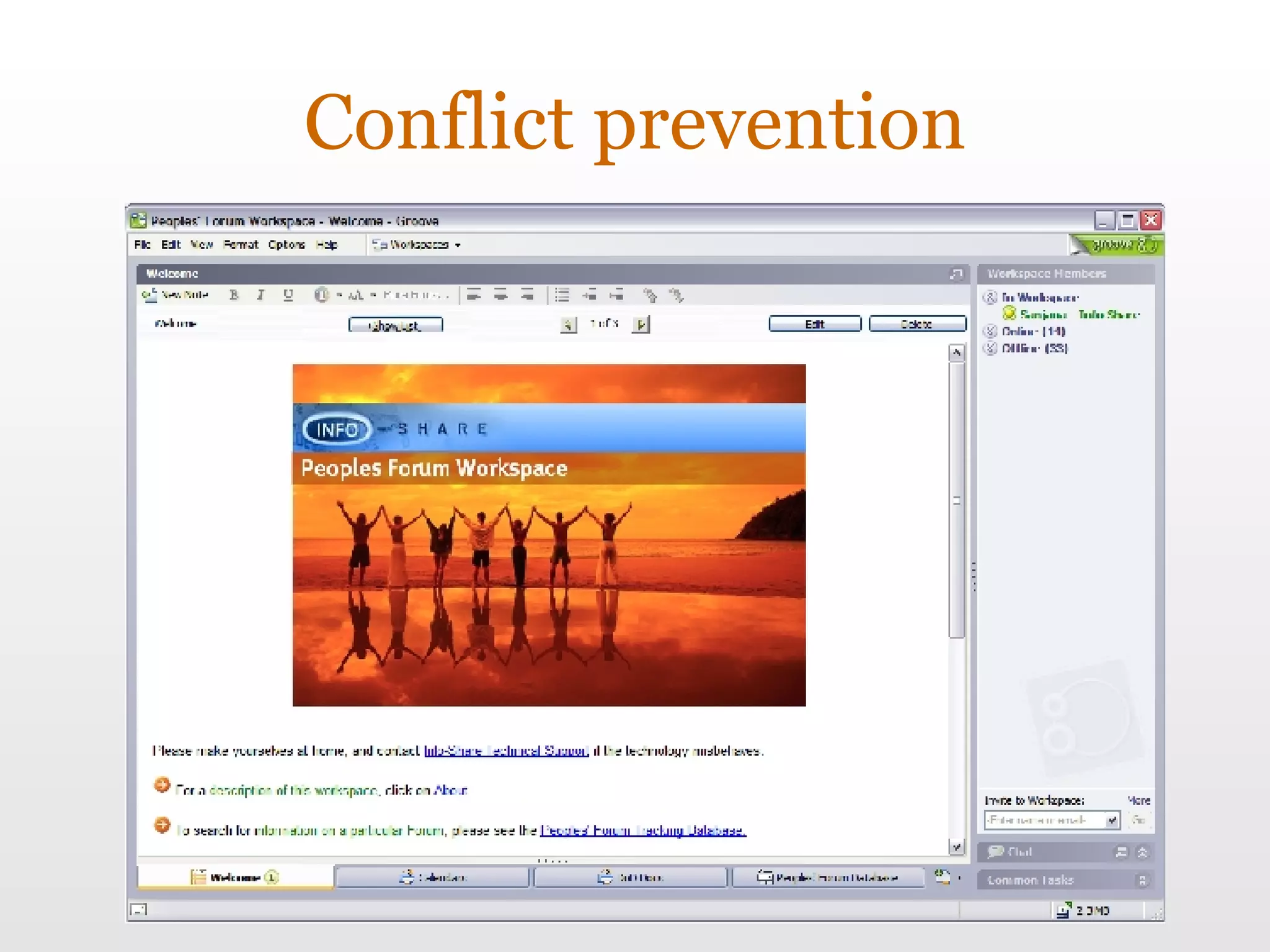
Conflict prevention
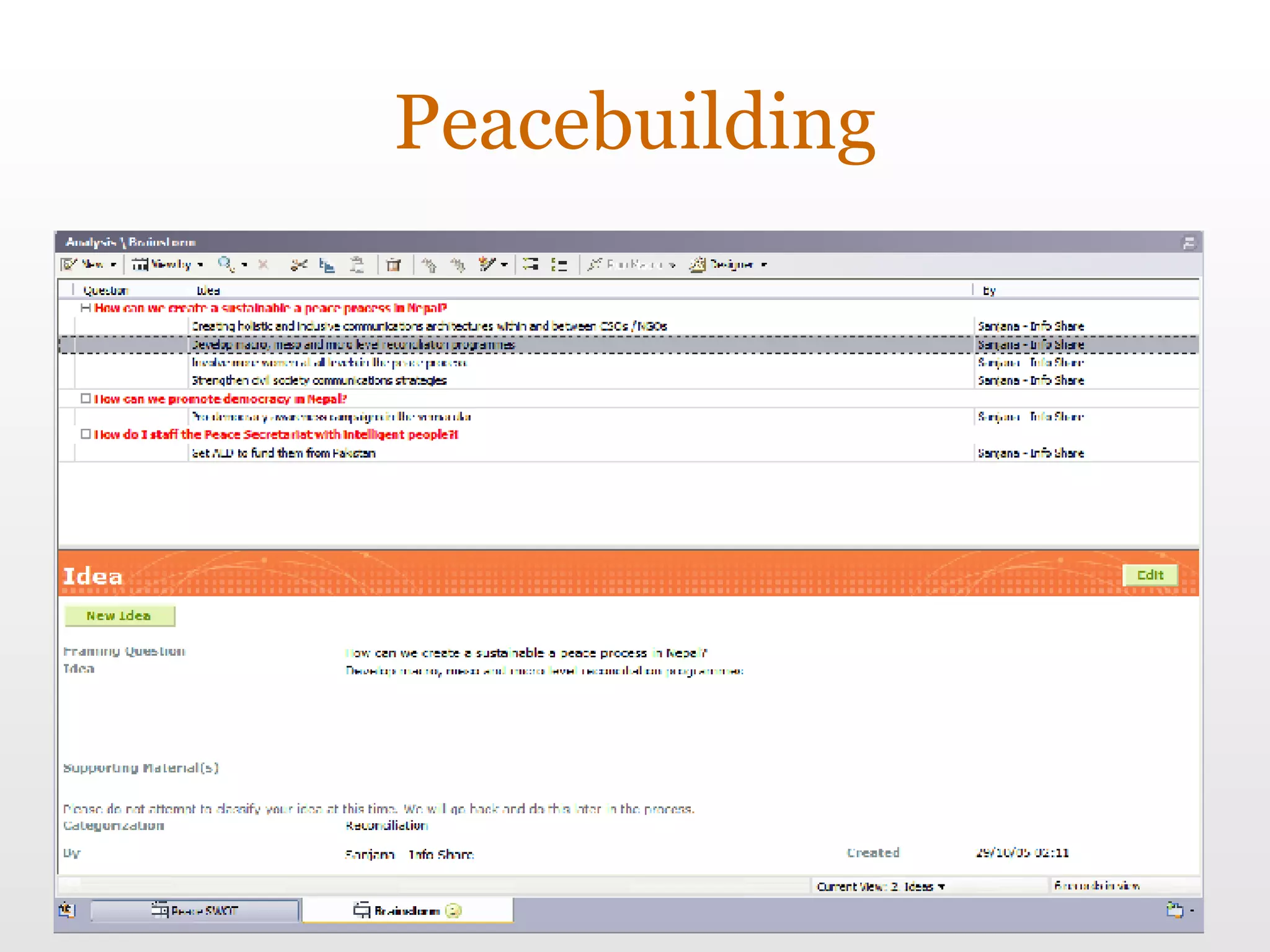
Peacebuilding
 
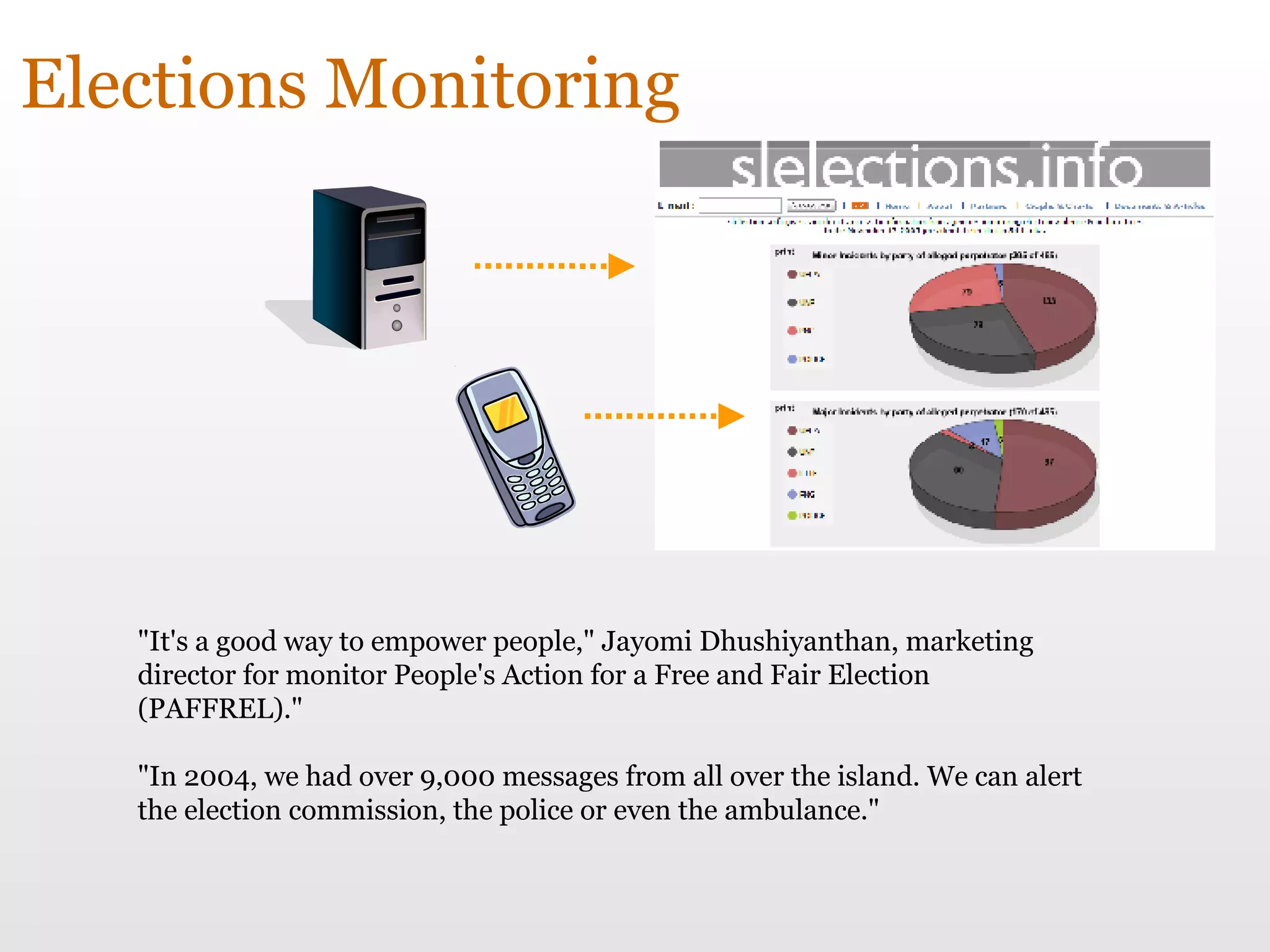
Elections Monitoring "It's a good way to empower people," Jayomi Dhushiyanthan, marketing director for monitor People's Action for a Free and Fair Election (PAFFREL)." "In 2004, we had over 9,000 messages from all over the island. We can alert the election commission, the police or even the ambulance."
Civil society voices
http://www.moju.lk/ http://beta.peacelibrary.org/
Growth of a technology First, people begin to take note of it with suspicions and apprehensions Then some people warm up to it – they want to try and see! When more people use it and become familiar with it, acceptance begins to take root slowly –a few ‘champions’ begin to emerge from within. After years of use, barring serious mishaps, people begin to actually trust the technology After some more time, everyone accepts it as part of the socio-cultural landscape – it becomes second nature Finally comes the stage where people clamour for it, and are even willing to pay for it!
The problem Technology and pay for service models abound Little or no awareness building People are left with suspicions and apprehensions
3 ideas Web 2.0 Mobile telephones  (Community) radio
 
Devices
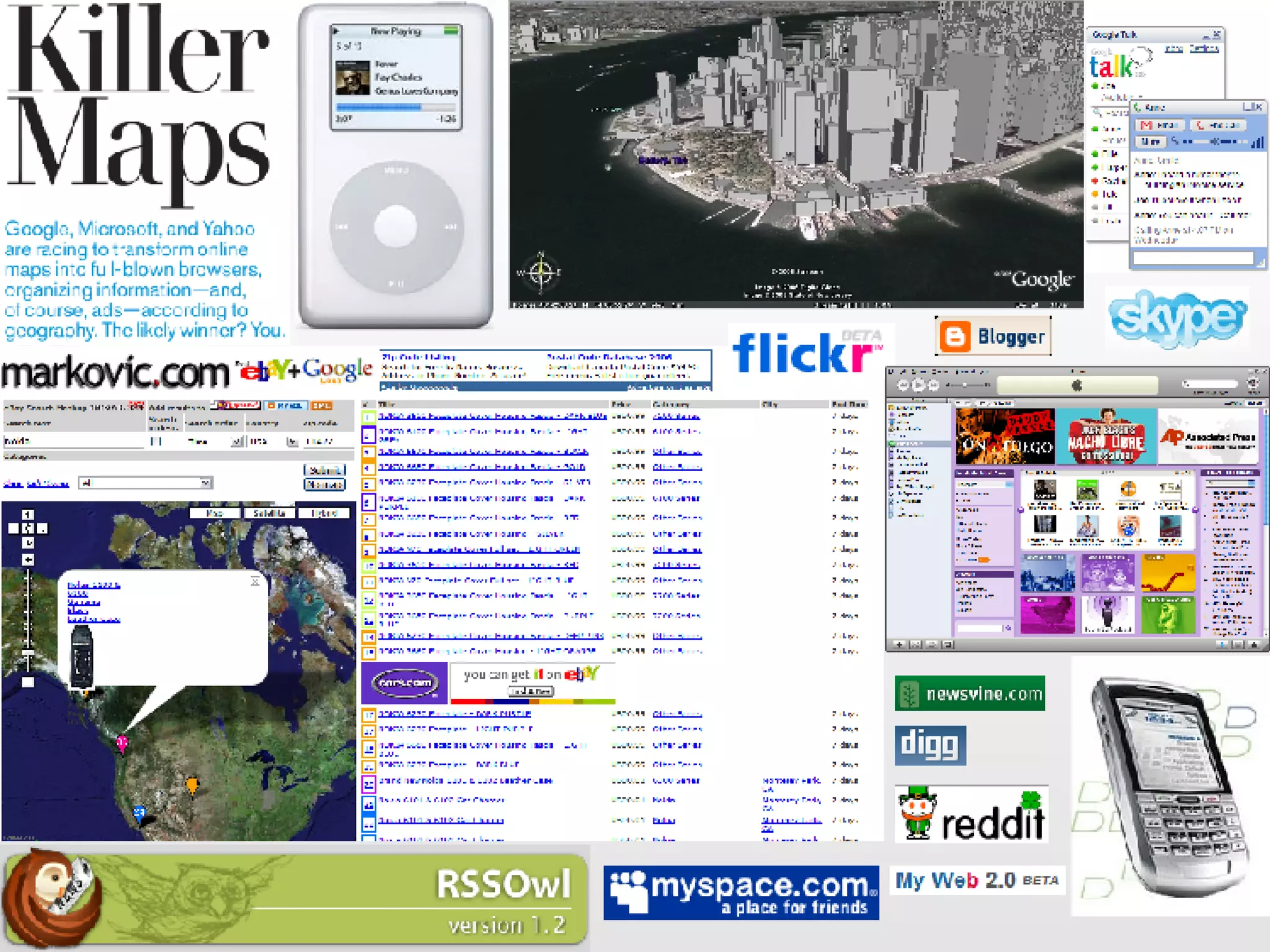
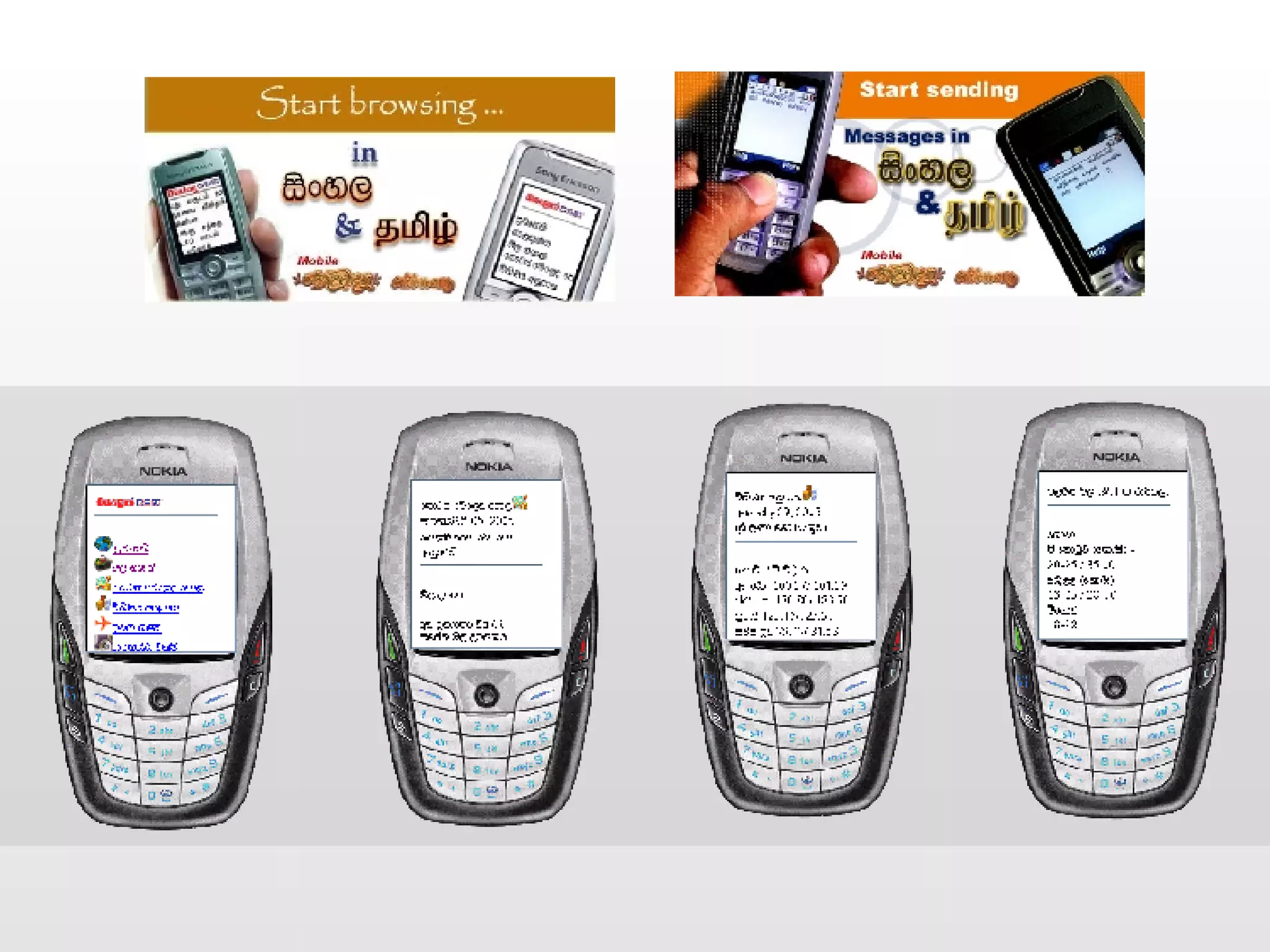
Web 2.0 for ODR? Interactive / Multimedia / Intuitive Piggyback on new consumer devices and existing programming Social networking as communities for ODR New technologies that enhance storage, retrieval, comparison, review and reuse of existing information. Create greater awareness of ODR
New devices for ODR? $100 dollar laptop 100 million per country 3 countries 300 million laptops
Mobile growth
 
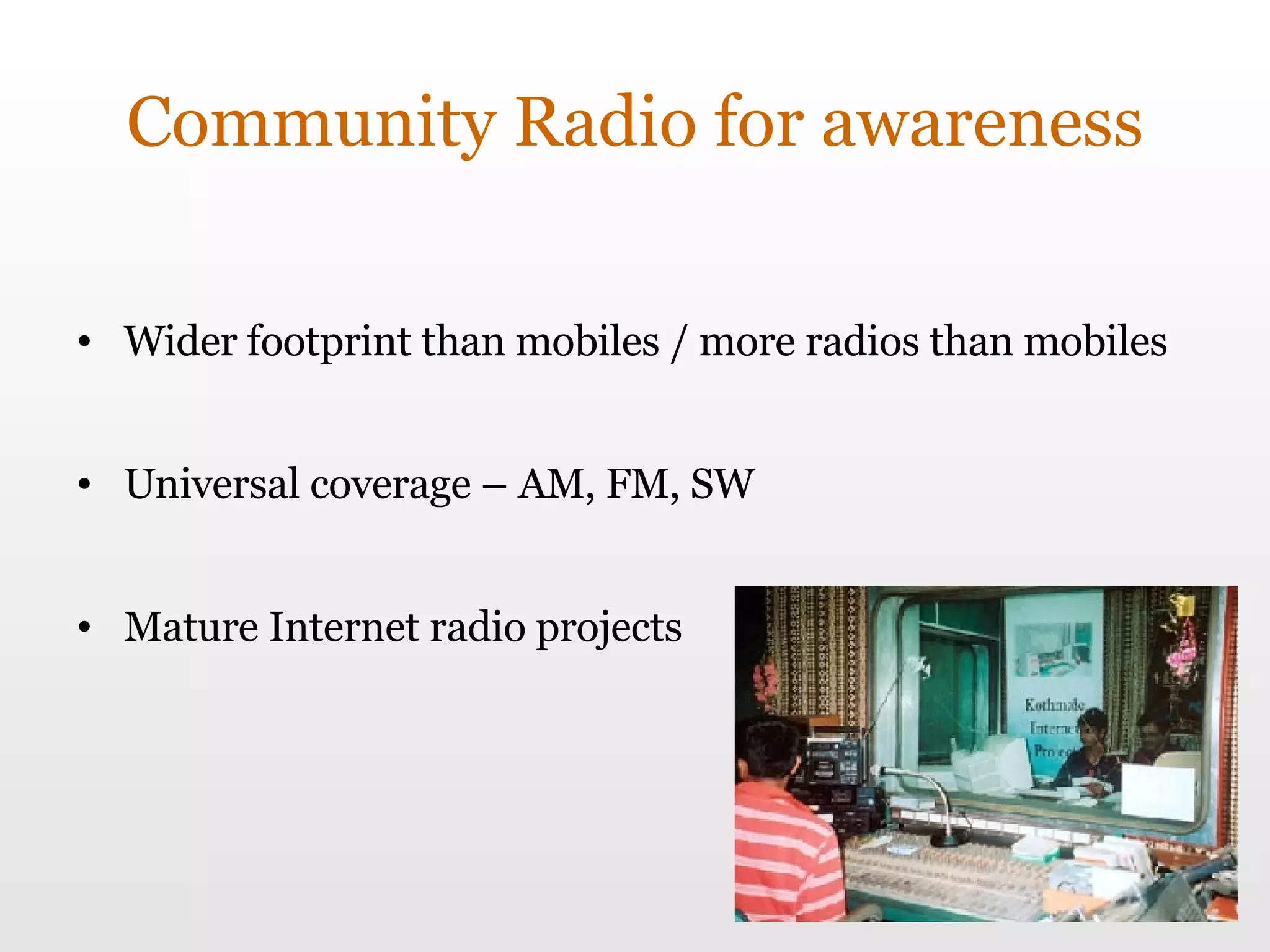
Community Radio for awareness Wider footprint than mobiles / more radios than mobiles Universal coverage – AM, FM, SW Mature Internet radio projects
Hybridity XML Java Pod-casting Wi-Max / Wi-Fi WAP / SMS / MMS / 3G Voice driven menus
Mobile ODR Data gathering GIS co-ordinates / location, salient issues, disputant details Video / pictures Audio testimonies Mediator notes – audio / text / video System generated file number for voice mail DR process status ODR process SMS feedback of similar cases based on GIS location and case details (keyword, semantic algorithms)
Mobile ODR Data dissemination SMS decision notification (in vernacular) Voice mail notification / salient details of conclusion in vernacular WAP based option generation for each disputant Final outcome Each disputant gets personalised voice mails Details of local decision point / F2F meeting Mobile database of outcomes based on dispute type, locale, ethnicity, land type, claim etc accessible via WAP over GPRS
Mobile + Radio Community radio programmes based on highest ranking local dispute issues Multi-lingual conflict management programmes – for adults and children Awareness generation of ADR / ODR mechanisms Call in / SMS / voice mail responses to queries Internet based research to salient local issues Personalised SMS programme updates
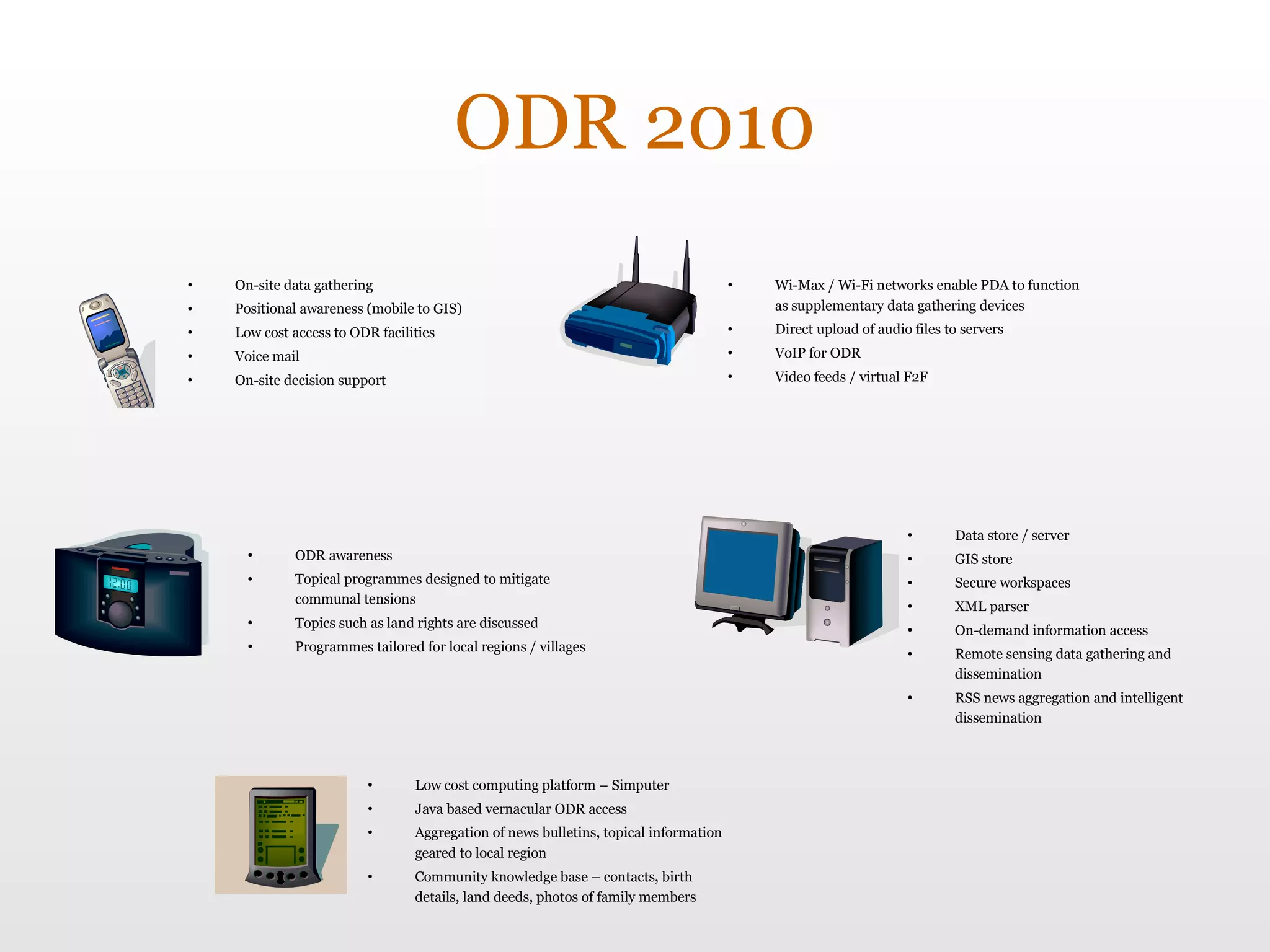
ODR 2010 Wi-Max / Wi-Fi networks enable PDA to function as supplementary data gathering devices Direct upload of audio files to servers VoIP for ODR Video feeds / virtual F2F ODR awareness Topical programmes designed to mitigate communal tensions Topics such as land rights are discussed Programmes tailored for local regions / villages On-site data gathering Positional awareness (mobile to GIS) Low cost access to ODR facilities Voice mail On-site decision support Data store / server GIS store Secure workspaces XML parser On-demand information access Remote sensing data gathering and dissemination RSS news aggregation and intelligent dissemination Low cost computing platform – Simputer Java based vernacular ODR access Aggregation of news bulletins, topical information geared to local region Community knowledge base – contacts, birth details, land deeds, photos of family members
National, regional, international District, provincial Village  Grassroots community
Coverage / Access / Awareness Not just a numbers game
Future ODR systems Land issues Refugee re-settlement Disaster relief management / humanitarian support systems Conflict prevention & early warning Peace process support – SL Govt. ICT4Peace Peoples voices  in e-government
 
Question What if violence in the real world spills over into virtual communities in Second Life, or more disturbingly, vice-versa? Privacy, identity, location, ODR
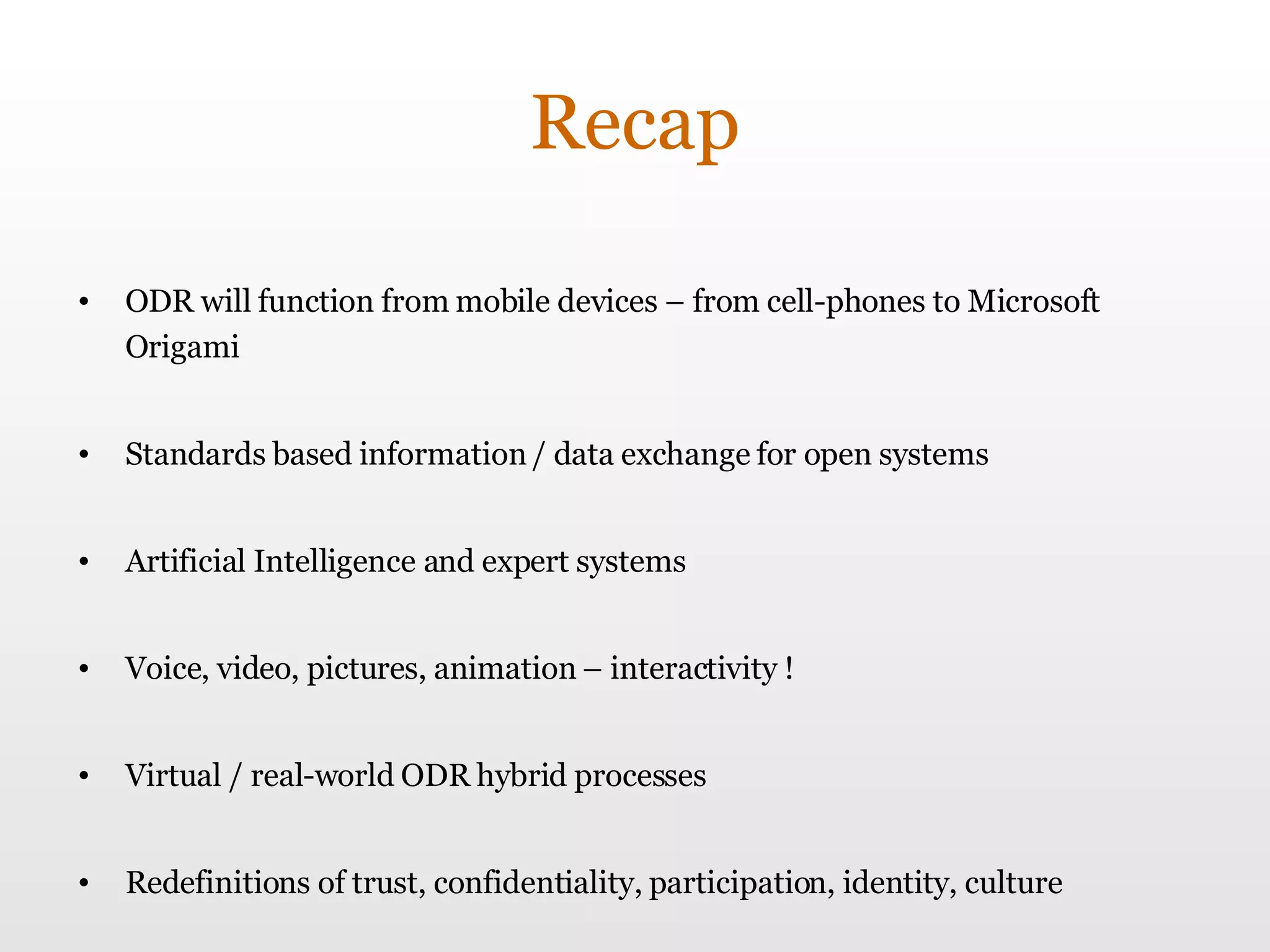
Recap ODR will function from mobile devices – from cell-phones to Microsoft Origami Standards based information / data exchange for open systems Artificial Intelligence and expert systems Voice, video, pictures, animation – interactivity ! Virtual / real-world ODR hybrid processes Redefinitions of trust, confidentiality, participation, identity, culture
Thank You !

The Future of ODR

  • 1.
    Futures of ODRSanjana Hattotuwa Head, ICT and Peacebuilding Info Share
  • 2.
    today PC’s Commercial ADR roots Text based Growth industry
  • 3.
    Snapshots of ODRat present
  • 4.
  • 5.
  • 6.
  • 7.
  • 8.
  • 9.
  • 10.
  • 11.
    Elections Monitoring "It'sa good way to empower people," Jayomi Dhushiyanthan, marketing director for monitor People's Action for a Free and Fair Election (PAFFREL)." "In 2004, we had over 9,000 messages from all over the island. We can alert the election commission, the police or even the ambulance."
  • 12.
  • 13.
  • 14.
    Growth of atechnology First, people begin to take note of it with suspicions and apprehensions Then some people warm up to it – they want to try and see! When more people use it and become familiar with it, acceptance begins to take root slowly –a few ‘champions’ begin to emerge from within. After years of use, barring serious mishaps, people begin to actually trust the technology After some more time, everyone accepts it as part of the socio-cultural landscape – it becomes second nature Finally comes the stage where people clamour for it, and are even willing to pay for it!
  • 15.
    The problem Technologyand pay for service models abound Little or no awareness building People are left with suspicions and apprehensions
  • 16.
    3 ideas Web2.0 Mobile telephones (Community) radio
  • 17.
  • 18.
  • 19.
    Web 2.0 forODR? Interactive / Multimedia / Intuitive Piggyback on new consumer devices and existing programming Social networking as communities for ODR New technologies that enhance storage, retrieval, comparison, review and reuse of existing information. Create greater awareness of ODR
  • 20.
    New devices forODR? $100 dollar laptop 100 million per country 3 countries 300 million laptops
  • 21.
  • 22.
  • 23.
    Community Radio forawareness Wider footprint than mobiles / more radios than mobiles Universal coverage – AM, FM, SW Mature Internet radio projects
  • 24.
    Hybridity XML JavaPod-casting Wi-Max / Wi-Fi WAP / SMS / MMS / 3G Voice driven menus
  • 25.
    Mobile ODR Datagathering GIS co-ordinates / location, salient issues, disputant details Video / pictures Audio testimonies Mediator notes – audio / text / video System generated file number for voice mail DR process status ODR process SMS feedback of similar cases based on GIS location and case details (keyword, semantic algorithms)
  • 26.
    Mobile ODR Datadissemination SMS decision notification (in vernacular) Voice mail notification / salient details of conclusion in vernacular WAP based option generation for each disputant Final outcome Each disputant gets personalised voice mails Details of local decision point / F2F meeting Mobile database of outcomes based on dispute type, locale, ethnicity, land type, claim etc accessible via WAP over GPRS
  • 27.
    Mobile + RadioCommunity radio programmes based on highest ranking local dispute issues Multi-lingual conflict management programmes – for adults and children Awareness generation of ADR / ODR mechanisms Call in / SMS / voice mail responses to queries Internet based research to salient local issues Personalised SMS programme updates
  • 28.
    ODR 2010 Wi-Max/ Wi-Fi networks enable PDA to function as supplementary data gathering devices Direct upload of audio files to servers VoIP for ODR Video feeds / virtual F2F ODR awareness Topical programmes designed to mitigate communal tensions Topics such as land rights are discussed Programmes tailored for local regions / villages On-site data gathering Positional awareness (mobile to GIS) Low cost access to ODR facilities Voice mail On-site decision support Data store / server GIS store Secure workspaces XML parser On-demand information access Remote sensing data gathering and dissemination RSS news aggregation and intelligent dissemination Low cost computing platform – Simputer Java based vernacular ODR access Aggregation of news bulletins, topical information geared to local region Community knowledge base – contacts, birth details, land deeds, photos of family members
  • 29.
    National, regional, internationalDistrict, provincial Village Grassroots community
  • 30.
    Coverage / Access/ Awareness Not just a numbers game
  • 31.
    Future ODR systemsLand issues Refugee re-settlement Disaster relief management / humanitarian support systems Conflict prevention & early warning Peace process support – SL Govt. ICT4Peace Peoples voices in e-government
  • 32.
  • 33.
    Question What ifviolence in the real world spills over into virtual communities in Second Life, or more disturbingly, vice-versa? Privacy, identity, location, ODR
  • 34.
    Recap ODR willfunction from mobile devices – from cell-phones to Microsoft Origami Standards based information / data exchange for open systems Artificial Intelligence and expert systems Voice, video, pictures, animation – interactivity ! Virtual / real-world ODR hybrid processes Redefinitions of trust, confidentiality, participation, identity, culture
  • 35.