Internet for All by 2020?
The 2015-16 Affordability Report
Onica N. Makwakwa
Africa Regional Coordinator
Alliance for Affordable Internet
#C2CPretoria@a4a_internet #affordableinternet
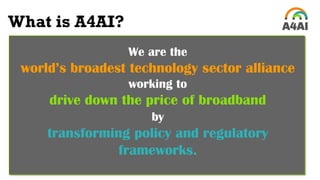
We are the
world’s broadest technology sector alliance
working to
drive down the price of broadband
by
transforming policy and regulatory
frameworks.
What is A4AI?
Hosted at theWeb Foundation
Conducting robust original research
to underpin evidence-based policy
Annual
Affordability
Report
Newest edition
published
February 2016
Thematic
briefings
Universal Access
& Service Funds;
Zero-rating &
other mobile
data plans
Case studies
Ghana, Nigeria,
Cameroon, Peru,
Brazil, Dominican
Republic,
Myanmar,
Bangladesh
International advocacy through
global partnerships
Working together to expand access & achieve the SDGs
• Operationalizing recommendations from the 2016 WDR report to
close the digital divide & expand digital dividends (World Bank)
• Building capacity to develop strong ICT & gender policy (ECOWAS,
CRASA, ECLAC & other regional organizations)
• Advocate for gender responsive policy and better & improved
gender data and indicators (UN-Women, GSMA)
• September 2016: Africa Summit on Women & Girls in Technology
(UN Women, AfDB, AITI-KACE)
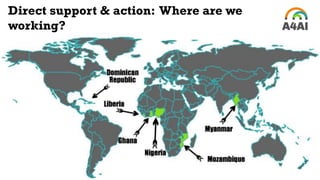
Direct support & action: Where are we
working?
The 2015-16 Affordability Report
• http://a4ai.org/affordability-report/
• Released February 2016
• Examines policies & regulations in place across 51
developing & emerging countries
• Takes a closer look at how income & gender inequalities
impact affordability
• Why have some countries succeeded in making Internet
access more affordable, accessible and universal, and
what can others do to catch up quickly?
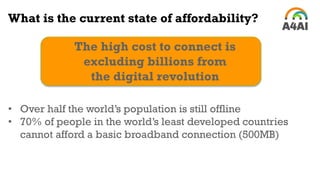
What is the current state of affordability?
The high cost to connect is
excluding billions from
the digital revolution
• Over half the world’s population is still offline
• 70% of people in the world’s least developed countries
cannot afford a basic broadband connection (500MB)
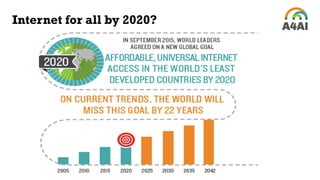
Internet for all by 2020?
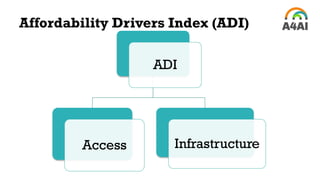
Affordability Drivers Index (ADI)
ADI
Access Infrastructure
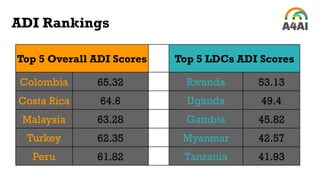
ADI Rankings
Top 5 Overall ADI Scores Top 5 LDCs ADI Scores
Colombia 65.32 Rwanda 53.13
Costa Rica 64.6 Uganda 49.4
Malaysia 63.28 Gambia 45.82
Turkey 62.35 Myanmar 42.57
Peru 61.82 Tanzania 41.93
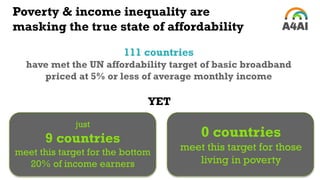
Poverty & income inequality are
masking the true state of affordability
111 countries
have met the UN affordability target of basic broadband
priced at 5% or less of average monthly income
YET
just
9 countries
meet this target for the bottom
20% of income earners
0 countries
meet this target for those
living in poverty
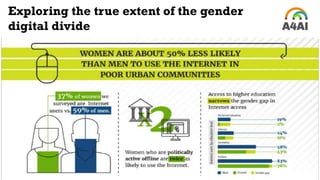
Exploring the true extent of the gender
digital divide
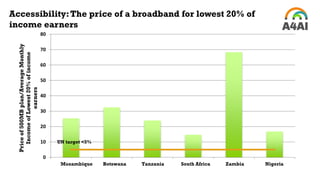
Accessibility:The price of a broadband for lowest 20% of
income earners
0
10
20
30
40
50
60
70
80
Moçambique Botswana Tanzania South Africa Zambia Nigeria
Priceof500MBplan/AverageMonthly
IncomeofLowest20%ofincome
earners
UN target <5%
Mozambique Botswana Tanzania South Africa Zambia Nigeria
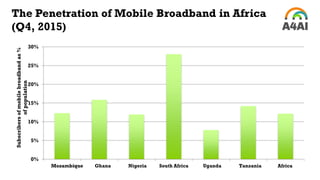
The Penetration of Mobile Broadband in Africa
(Q4, 2015)
0%
5%
10%
15%
20%
25%
30%
Moçambique Ghana Nigeria South Africa Uganda Tanzania Africa
Subscribersofmobilebroadbandas%
ofpopulation
NigeriaGhanaMozambiqueMozambique UgandaSouth Africa Tanzania Africa
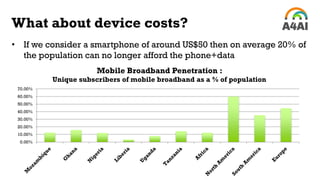
What about device costs?
• If we consider a smartphone of around US$50 then on average 20% of
the population can no longer afford the phone+data
0.00%
10.00%
20.00%
30.00%
40.00%
50.00%
60.00%
70.00%
Mobile Broadband Penetration :
Unique subscribers of mobile broadband as a % of population
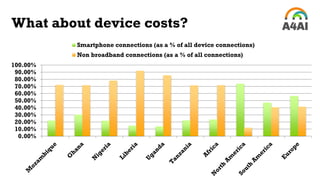
What about device costs?
0.00%
10.00%
20.00%
30.00%
40.00%
50.00%
60.00%
70.00%
80.00%
90.00%
100.00%
Smartphone connections (as a % of all device connections)
Non broadband connections (as a % of all connections)
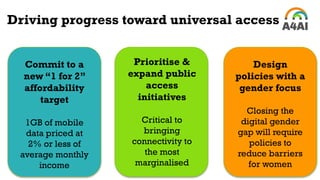
Driving progress toward universal access
Commit to a
new “1 for 2”
affordability
target
1GB of mobile
data priced at
2% or less of
average monthly
income
Prioritise &
expand public
access
initiatives
Critical to
bringing
connectivity to
the most
marginalised
Design
policies with a
gender focus
Closing the
digital gender
gap will require
policies to
reduce barriers
for women
Thank you!
Onica N. Makwakwa
onica.makwakwa@webfoundation.org
@AfroDiva
@a4a_internet#affordableinternet #C2CPretoria

Day 2 C2C - Affordability Internet: Internet for ALL by 2020

  • 1.
    Internet for Allby 2020? The 2015-16 Affordability Report Onica N. Makwakwa Africa Regional Coordinator Alliance for Affordable Internet #C2CPretoria@a4a_internet #affordableinternet
  • 2.
    We are the world’sbroadest technology sector alliance working to drive down the price of broadband by transforming policy and regulatory frameworks. What is A4AI?
  • 3.
    Hosted at theWebFoundation
  • 4.
    Conducting robust originalresearch to underpin evidence-based policy Annual Affordability Report Newest edition published February 2016 Thematic briefings Universal Access & Service Funds; Zero-rating & other mobile data plans Case studies Ghana, Nigeria, Cameroon, Peru, Brazil, Dominican Republic, Myanmar, Bangladesh
  • 5.
    International advocacy through globalpartnerships Working together to expand access & achieve the SDGs • Operationalizing recommendations from the 2016 WDR report to close the digital divide & expand digital dividends (World Bank) • Building capacity to develop strong ICT & gender policy (ECOWAS, CRASA, ECLAC & other regional organizations) • Advocate for gender responsive policy and better & improved gender data and indicators (UN-Women, GSMA) • September 2016: Africa Summit on Women & Girls in Technology (UN Women, AfDB, AITI-KACE)
  • 6.
    Direct support &action: Where are we working?
  • 7.
    The 2015-16 AffordabilityReport • http://a4ai.org/affordability-report/ • Released February 2016 • Examines policies & regulations in place across 51 developing & emerging countries • Takes a closer look at how income & gender inequalities impact affordability • Why have some countries succeeded in making Internet access more affordable, accessible and universal, and what can others do to catch up quickly?
  • 8.
    What is thecurrent state of affordability? The high cost to connect is excluding billions from the digital revolution • Over half the world’s population is still offline • 70% of people in the world’s least developed countries cannot afford a basic broadband connection (500MB)
  • 9.
  • 10.
    Affordability Drivers Index(ADI) ADI Access Infrastructure
  • 11.
    ADI Rankings Top 5Overall ADI Scores Top 5 LDCs ADI Scores Colombia 65.32 Rwanda 53.13 Costa Rica 64.6 Uganda 49.4 Malaysia 63.28 Gambia 45.82 Turkey 62.35 Myanmar 42.57 Peru 61.82 Tanzania 41.93
  • 12.
    Poverty & incomeinequality are masking the true state of affordability 111 countries have met the UN affordability target of basic broadband priced at 5% or less of average monthly income YET just 9 countries meet this target for the bottom 20% of income earners 0 countries meet this target for those living in poverty
  • 13.
    Exploring the trueextent of the gender digital divide
  • 14.
    Accessibility:The price ofa broadband for lowest 20% of income earners 0 10 20 30 40 50 60 70 80 Moçambique Botswana Tanzania South Africa Zambia Nigeria Priceof500MBplan/AverageMonthly IncomeofLowest20%ofincome earners UN target <5% Mozambique Botswana Tanzania South Africa Zambia Nigeria
  • 15.
    The Penetration ofMobile Broadband in Africa (Q4, 2015) 0% 5% 10% 15% 20% 25% 30% Moçambique Ghana Nigeria South Africa Uganda Tanzania Africa Subscribersofmobilebroadbandas% ofpopulation NigeriaGhanaMozambiqueMozambique UgandaSouth Africa Tanzania Africa
  • 16.
    What about devicecosts? • If we consider a smartphone of around US$50 then on average 20% of the population can no longer afford the phone+data 0.00% 10.00% 20.00% 30.00% 40.00% 50.00% 60.00% 70.00% Mobile Broadband Penetration : Unique subscribers of mobile broadband as a % of population
  • 17.
    What about devicecosts? 0.00% 10.00% 20.00% 30.00% 40.00% 50.00% 60.00% 70.00% 80.00% 90.00% 100.00% Smartphone connections (as a % of all device connections) Non broadband connections (as a % of all connections)
  • 18.
    Driving progress towarduniversal access Commit to a new “1 for 2” affordability target 1GB of mobile data priced at 2% or less of average monthly income Prioritise & expand public access initiatives Critical to bringing connectivity to the most marginalised Design policies with a gender focus Closing the digital gender gap will require policies to reduce barriers for women
  • 19.
    Thank you! Onica N.Makwakwa onica.makwakwa@webfoundation.org @AfroDiva @a4a_internet#affordableinternet #C2CPretoria