
PHYSICAL
SCIENCE
WEEK 1
MS. ROSELLA S. MAQUIRANG
1. How the elements found in the universe were formed
2. How the idea of the atom, along with the idea of the
elements evolved
3. How the properties of matter relate to their chemical
structure
4. How chemistry contributes to the understanding of
household and personal care products
5. How we come to realize that the Earth is not the
centre of the Universe.
6. Why we believe that the laws of physics are universal
7. How light acts as a wave and a particle
Contents of this Course
FORMATION OF THE UNIVERSE
How did the
universe began?
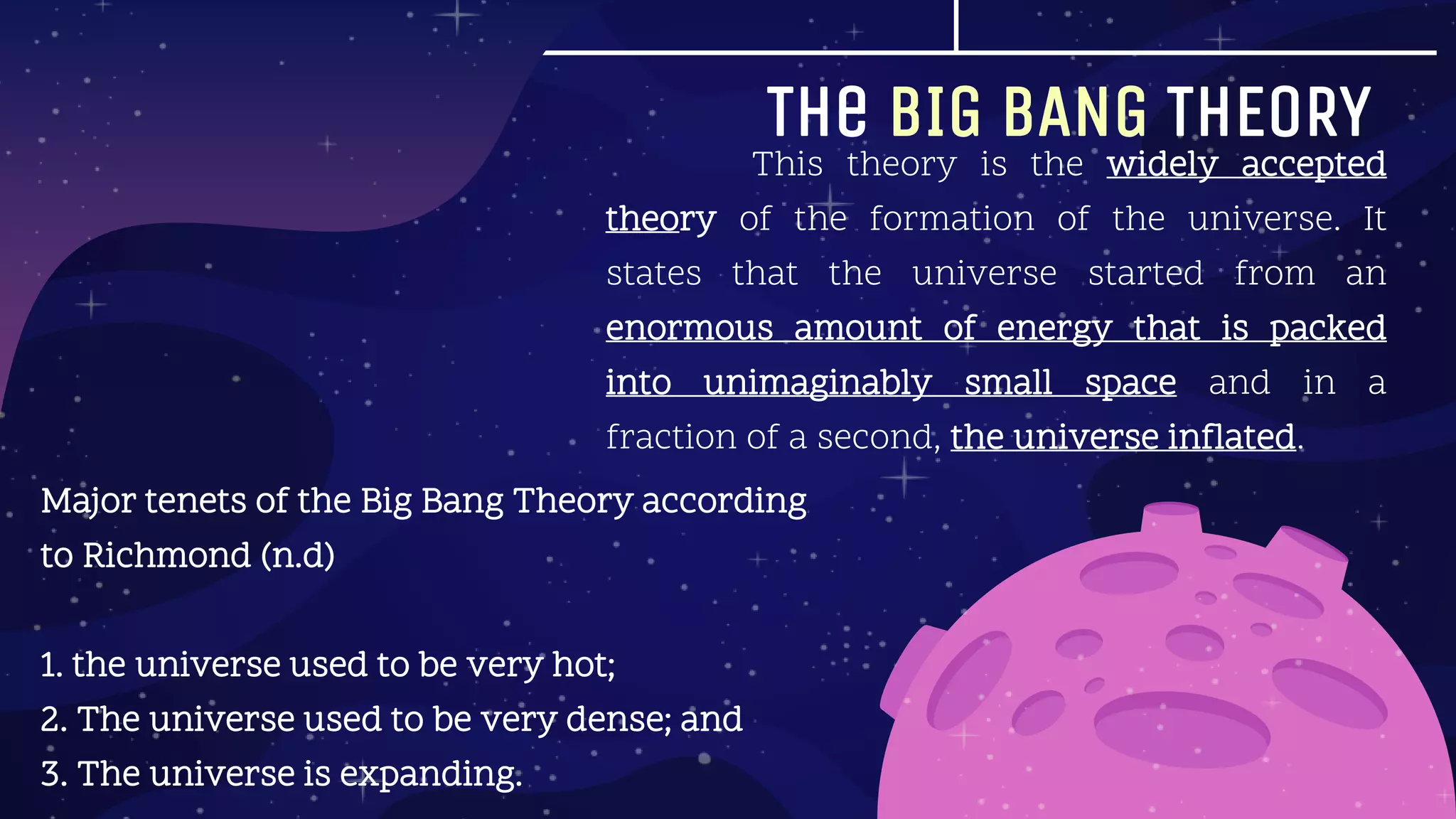
The BIG BANG THEORY
Major tenets of the Big Bang Theory according
to Richmond (n.d)
1. the universe used to be very hot;
2. The universe used to be very dense; and
3. The universe is expanding.
This theory is the widely accepted
theory of the formation of the universe. It
states that the universe started from an
enormous amount of energy that is packed
into unimaginably small space and in a
fraction of a second, the universe inflated.
It is very clear that the universe of today used to be very hot,
dense and expanding. It did not begin with a violent explosion or
big bang, as most people believe. In a nutshell, every single matter
in the universe begins from a “tiny infinitesimally small and
infinitely dense point” called SINGULARITY.
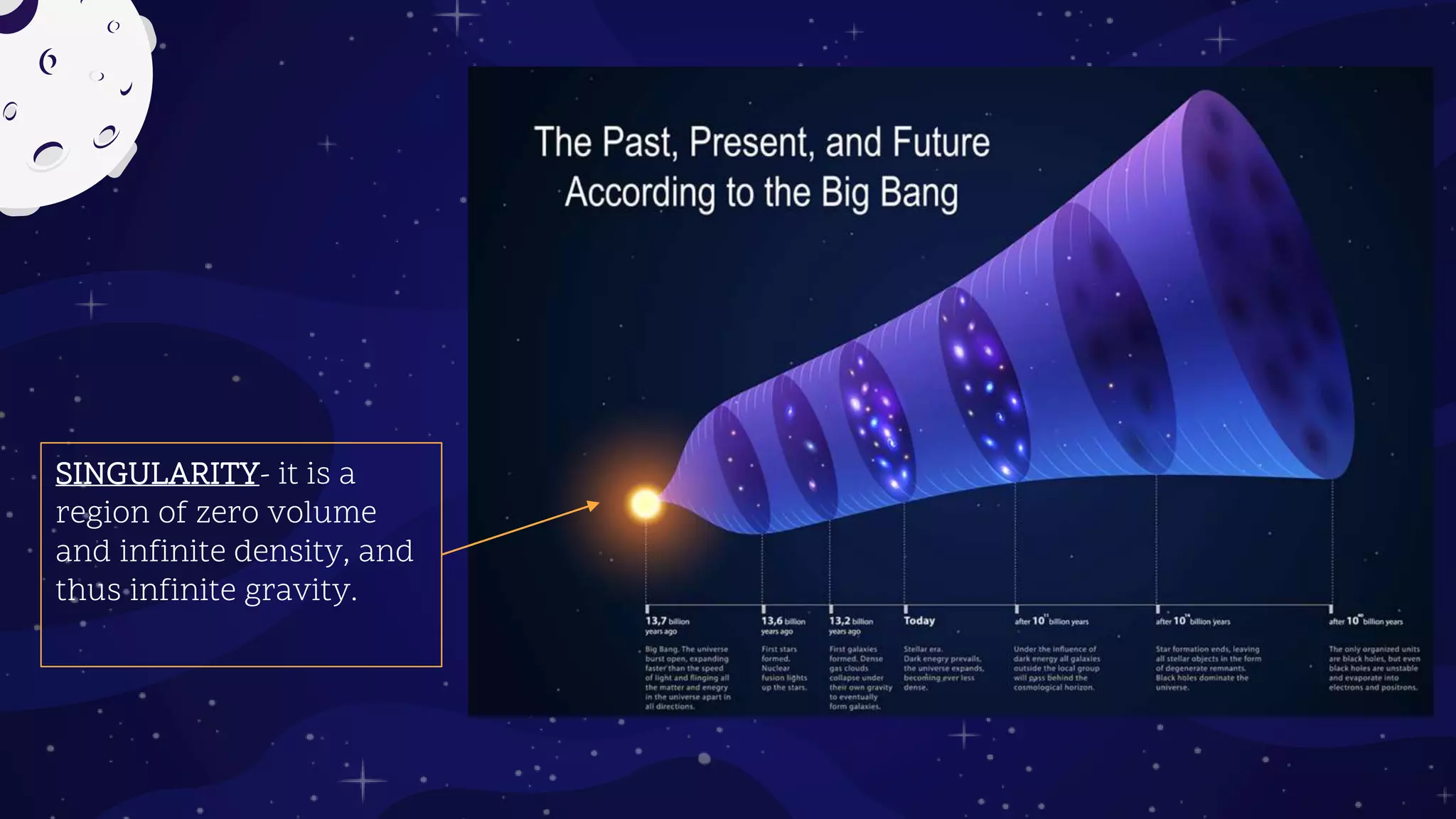
SINGULARITY- it is a
region of zero volume
and infinite density, and
thus infinite gravity.
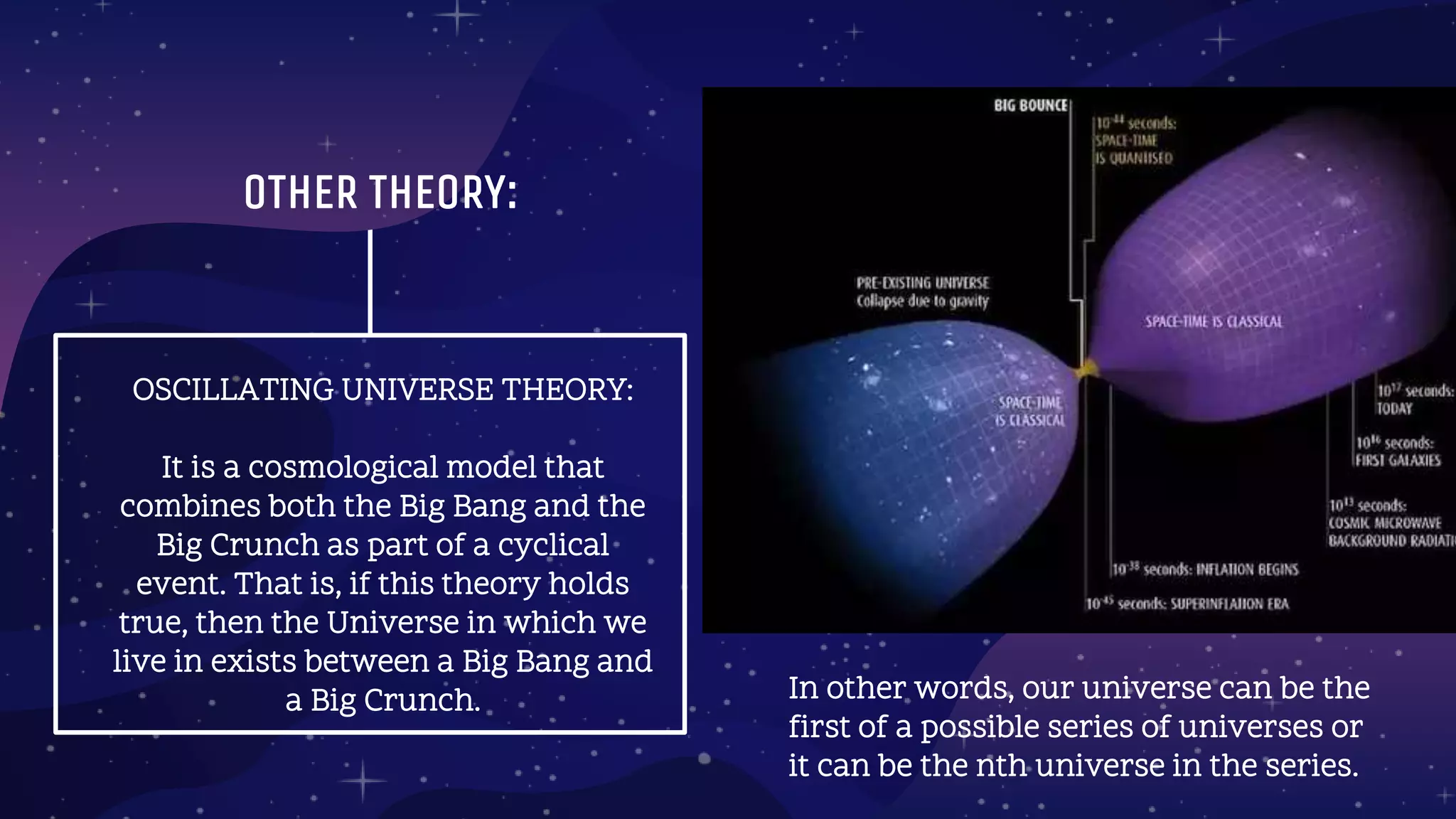
OSCILLATING UNIVERSE THEORY:
It is a cosmological model that
combines both the Big Bang and the
Big Crunch as part of a cyclical
event. That is, if this theory holds
true, then the Universe in which we
live in exists between a Big Bang and
a Big Crunch.
OTHER THEORY:
In other words, our universe can be the
first of a possible series of universes or
it can be the nth universe in the series.
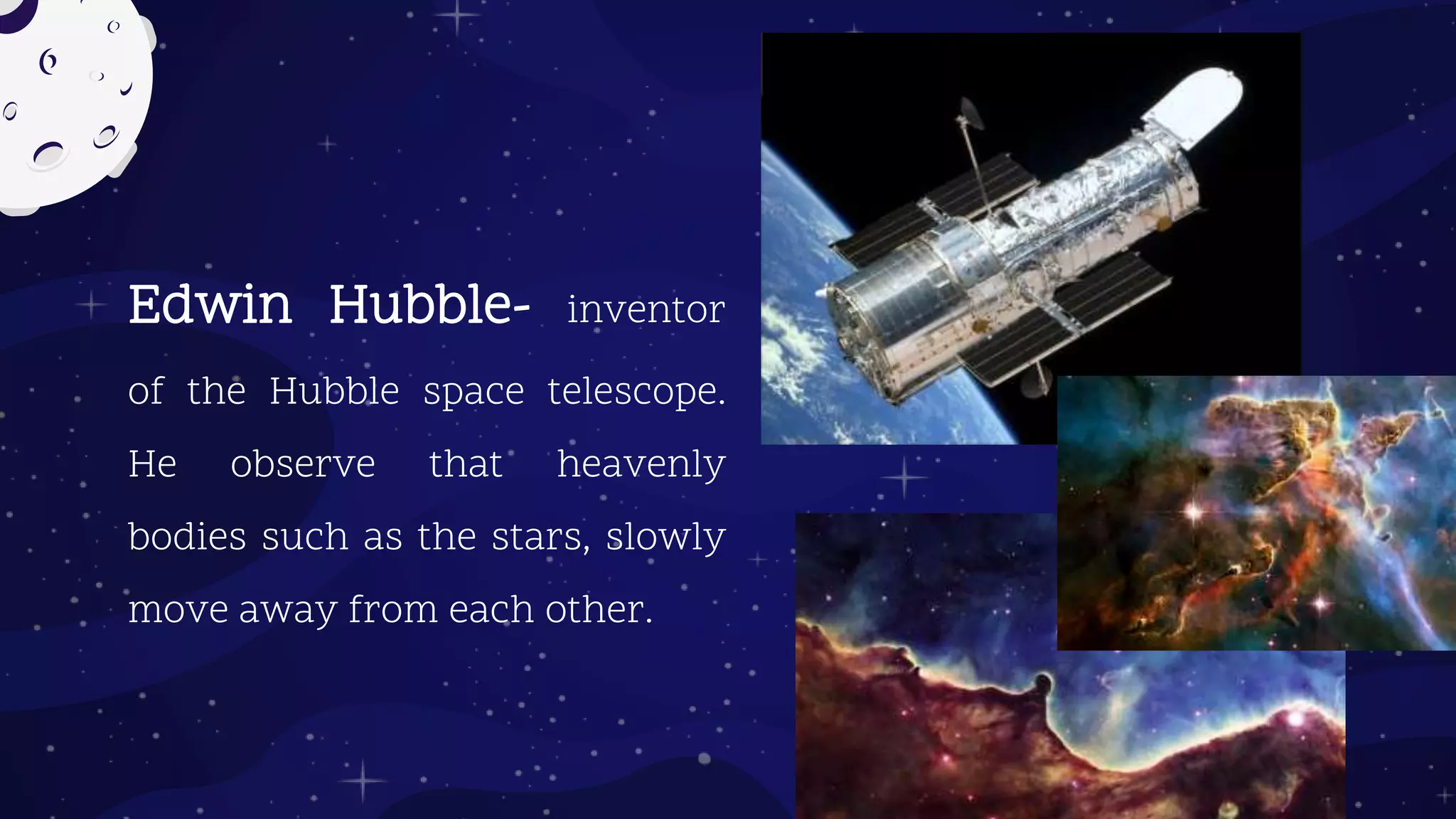
Edwin Hubble- inventor
of the Hubble space telescope.
He observe that heavenly
bodies such as the stars, slowly
move away from each other.
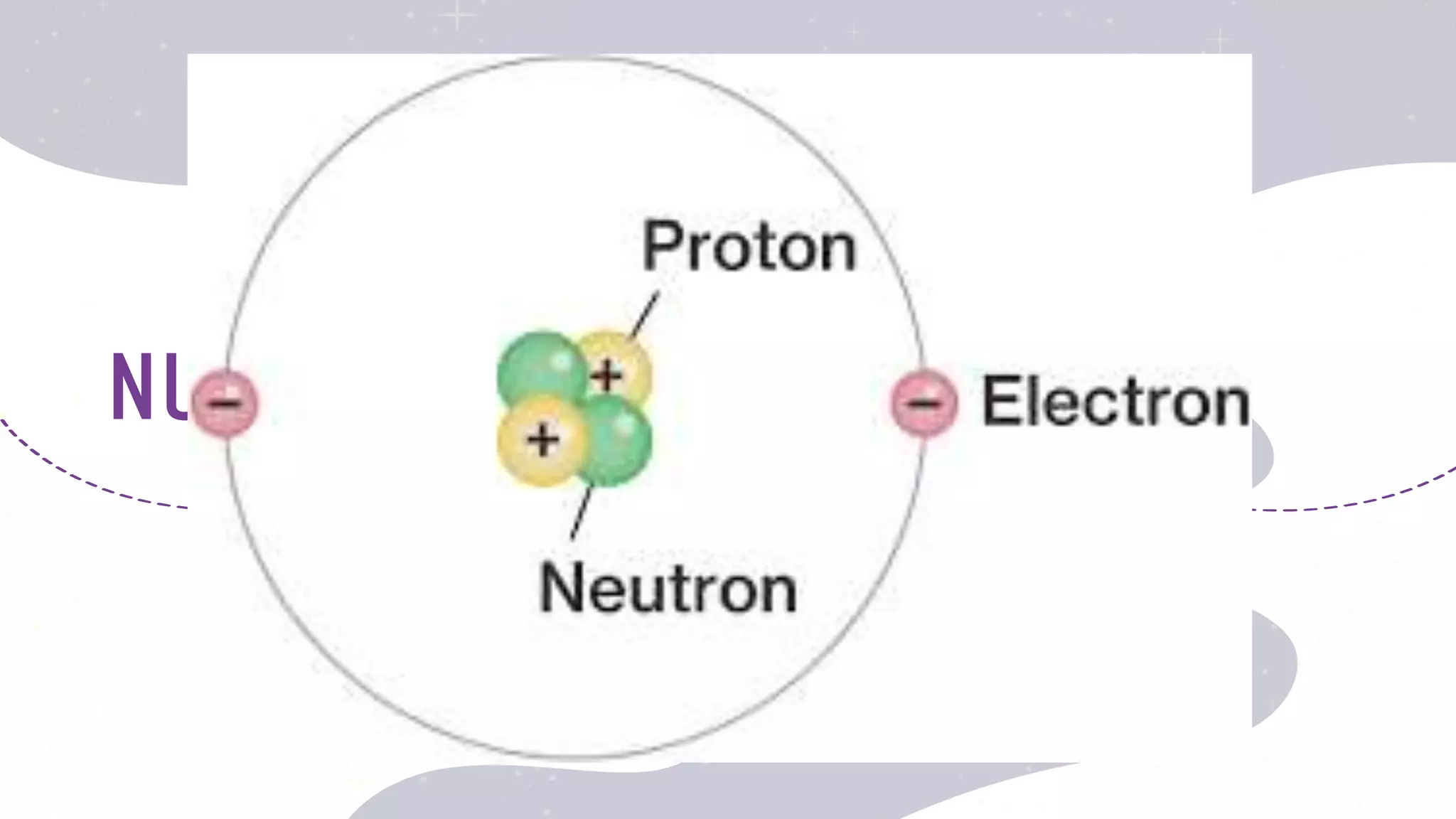
NUCLEOSYNTHESIS
The Origin of Elements
NUCLEOSYNTHESIS
3 Types of Nucleosynthesis:
1. Bigbang Nucleosynthesis- H, He, Li
2. Stellar Nucleosythesis- Li, Fe
3. Super Nova Nucleosythesis- Fe . . .
It is the process of “creating”
elements by nuclear reactions. This
process occurred approximately
100seconds after the Big bang.
Nuclear fusion- refers to the
combining of least two atomic
nuclei combine/fuse into a
single nucleus.
Nuclear Fission- refers to the
splitting of an atomic nucleus
into two or lighter nuclei.
NUCLEOSYNTHESIS
The Origin of Elements
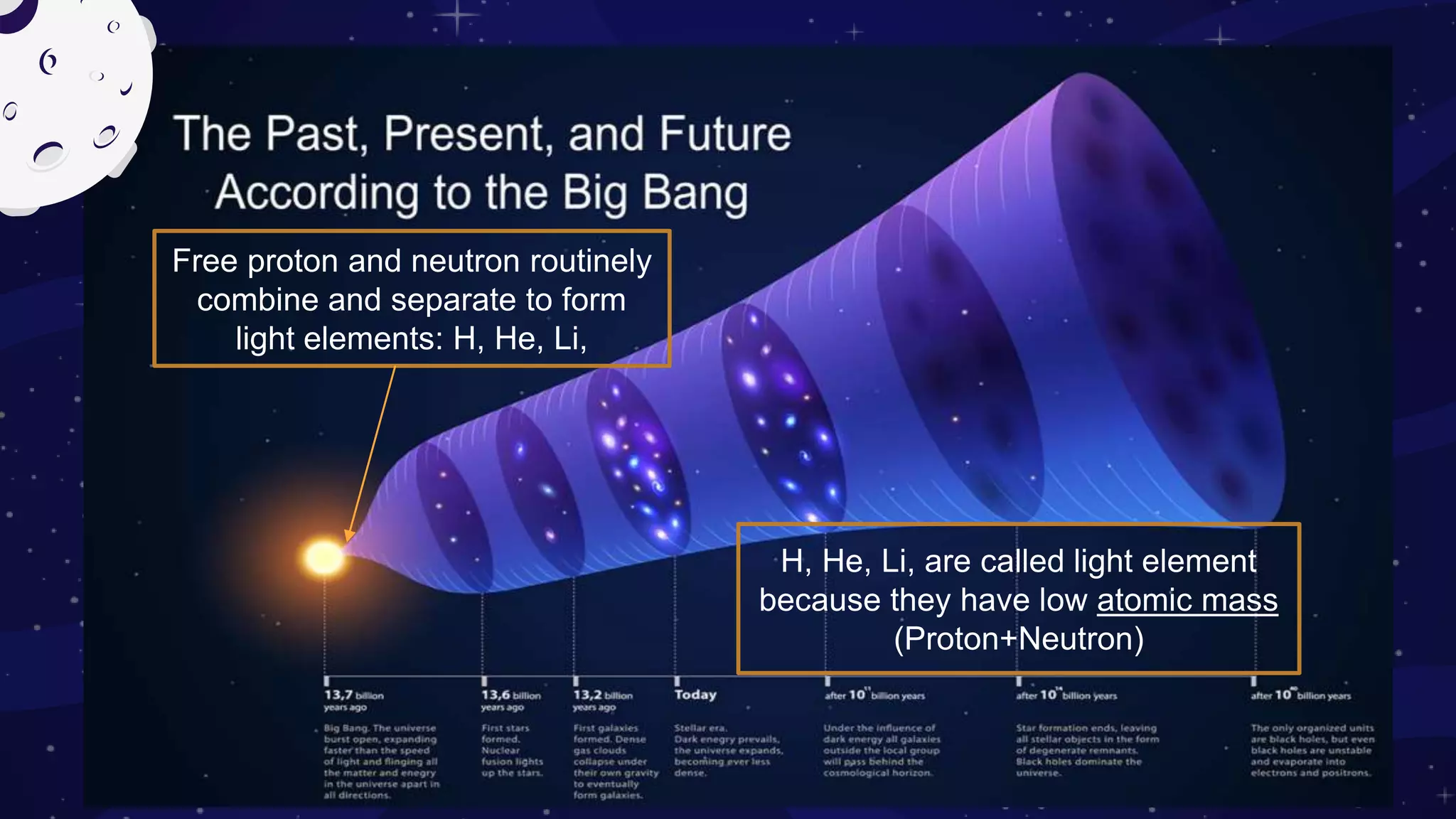
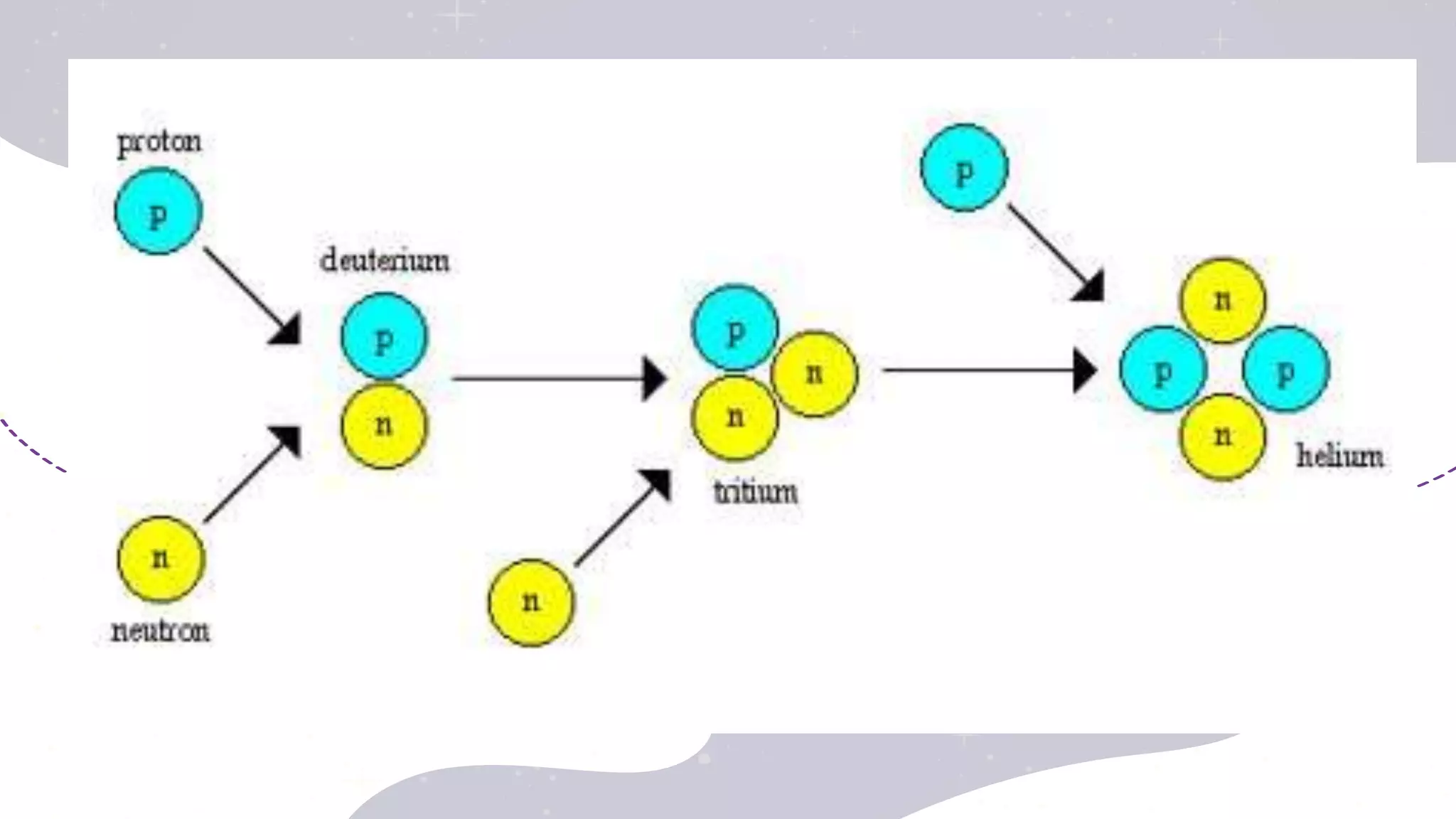
Free proton and neutron routinely
combine and separate to form
light elements: H, He, Li,
H, He, Li, are called light element
because they have low atomic mass
(Proton+Neutron)
Strategy
This is the subtitle that makes it
comprehensible
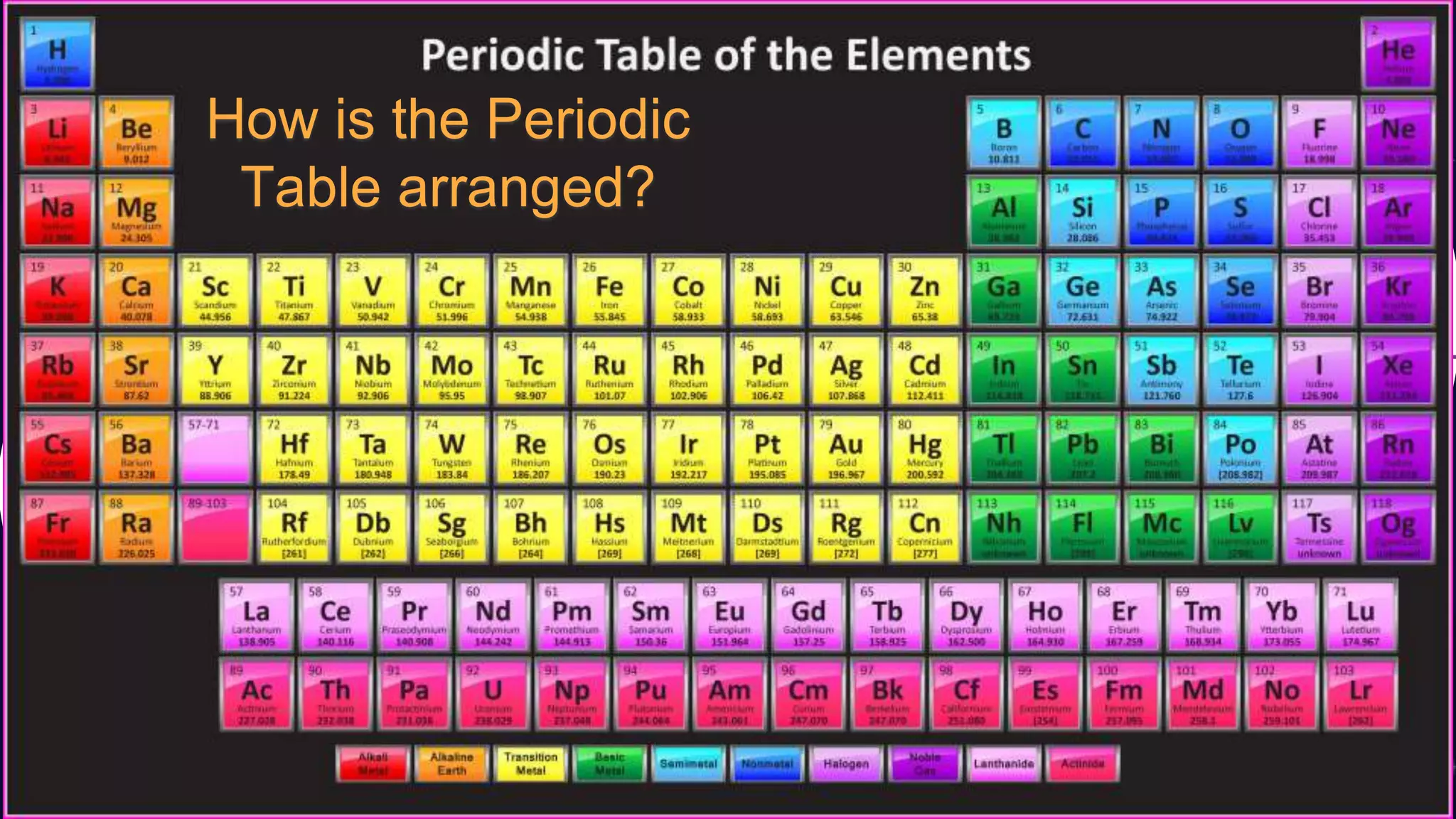
How is the Periodic
Table arranged?
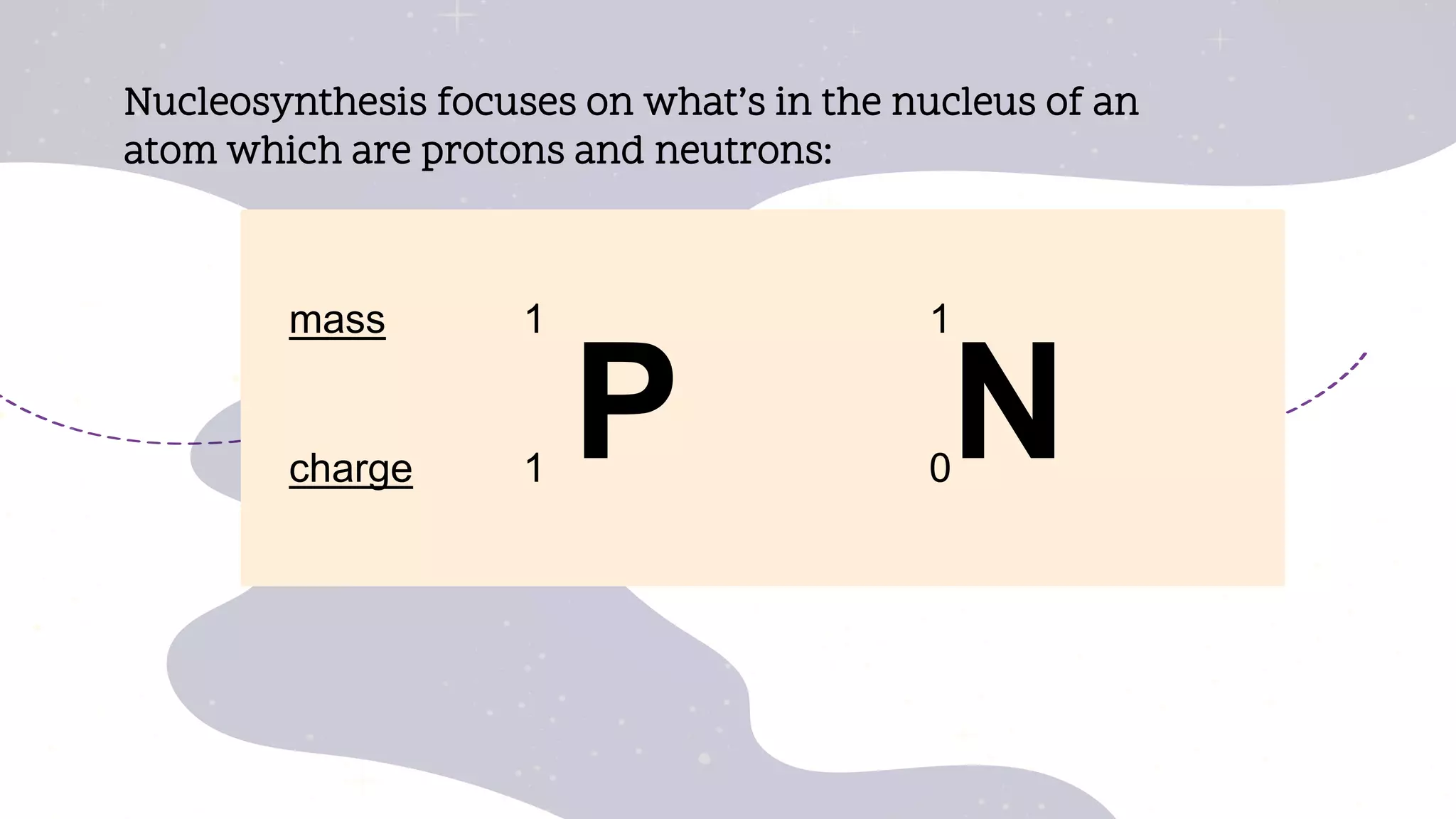
P N
Nucleosynthesis focuses on what’s in the nucleus of an
atom which are protons and neutrons:
1
1
1
0
mass
charge
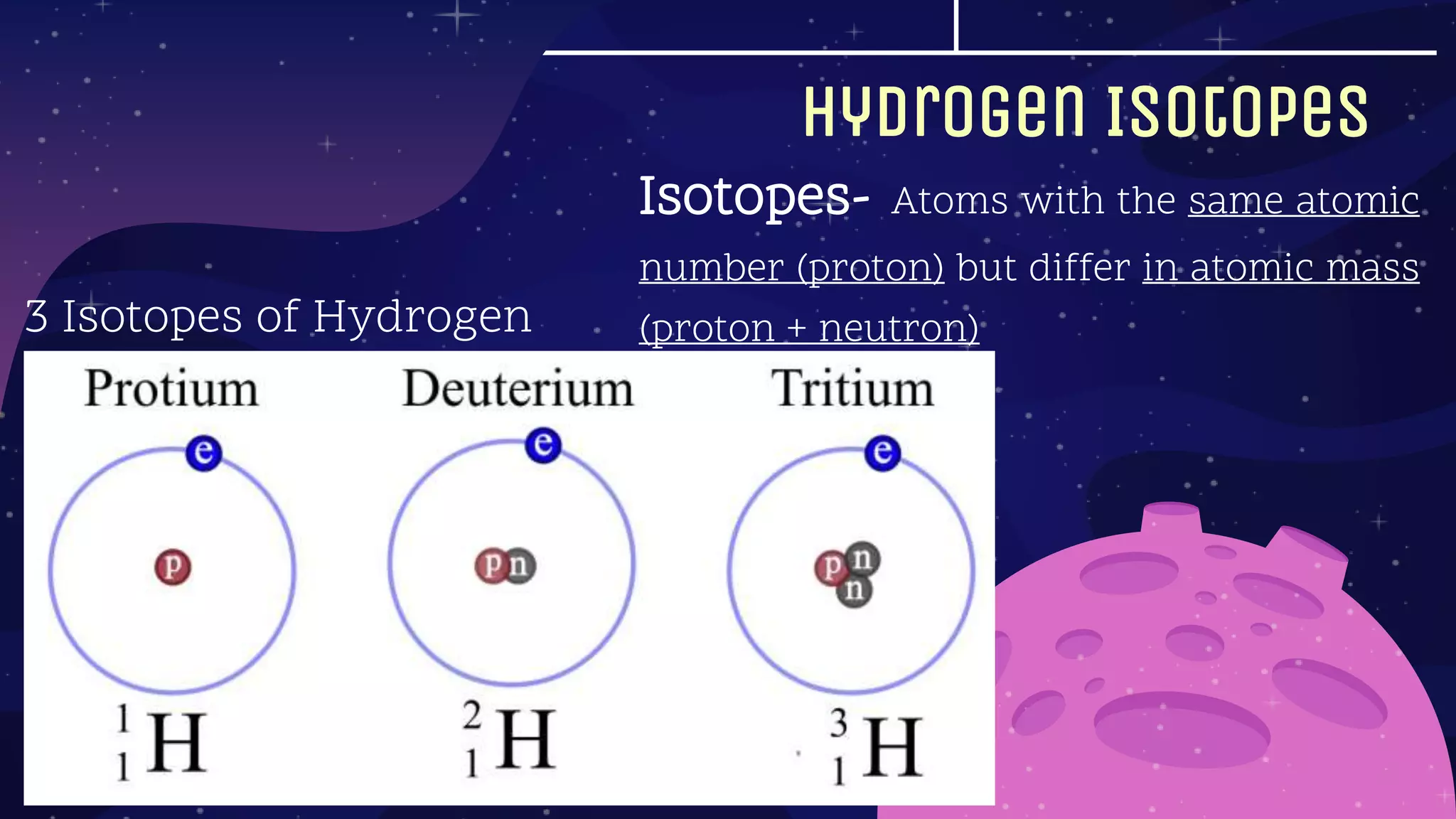
Hydrogen ISotopes
Isotopes- Atoms with the same atomic
number (proton) but differ in atomic mass
(proton + neutron)
3 Isotopes of Hydrogen
NUCLEOSYNTHESIS
The Origin of Elements
Thanks!
Does anyone have any questions?
Facebook.com/ella.maQuirang

The Formation of the Universe

  • 1.
  • 2.
    1. How theelements found in the universe were formed 2. How the idea of the atom, along with the idea of the elements evolved 3. How the properties of matter relate to their chemical structure 4. How chemistry contributes to the understanding of household and personal care products 5. How we come to realize that the Earth is not the centre of the Universe. 6. Why we believe that the laws of physics are universal 7. How light acts as a wave and a particle Contents of this Course
  • 3.
  • 4.
  • 5.
    The BIG BANGTHEORY Major tenets of the Big Bang Theory according to Richmond (n.d) 1. the universe used to be very hot; 2. The universe used to be very dense; and 3. The universe is expanding. This theory is the widely accepted theory of the formation of the universe. It states that the universe started from an enormous amount of energy that is packed into unimaginably small space and in a fraction of a second, the universe inflated.
  • 6.
    It is veryclear that the universe of today used to be very hot, dense and expanding. It did not begin with a violent explosion or big bang, as most people believe. In a nutshell, every single matter in the universe begins from a “tiny infinitesimally small and infinitely dense point” called SINGULARITY.
  • 8.
    SINGULARITY- it isa region of zero volume and infinite density, and thus infinite gravity.
  • 9.
    OSCILLATING UNIVERSE THEORY: Itis a cosmological model that combines both the Big Bang and the Big Crunch as part of a cyclical event. That is, if this theory holds true, then the Universe in which we live in exists between a Big Bang and a Big Crunch. OTHER THEORY: In other words, our universe can be the first of a possible series of universes or it can be the nth universe in the series.
  • 10.
    Edwin Hubble- inventor ofthe Hubble space telescope. He observe that heavenly bodies such as the stars, slowly move away from each other.
  • 11.
  • 12.
    NUCLEOSYNTHESIS 3 Types ofNucleosynthesis: 1. Bigbang Nucleosynthesis- H, He, Li 2. Stellar Nucleosythesis- Li, Fe 3. Super Nova Nucleosythesis- Fe . . . It is the process of “creating” elements by nuclear reactions. This process occurred approximately 100seconds after the Big bang. Nuclear fusion- refers to the combining of least two atomic nuclei combine/fuse into a single nucleus. Nuclear Fission- refers to the splitting of an atomic nucleus into two or lighter nuclei.
  • 13.
  • 14.
    Free proton andneutron routinely combine and separate to form light elements: H, He, Li, H, He, Li, are called light element because they have low atomic mass (Proton+Neutron)
  • 15.
    Strategy This is thesubtitle that makes it comprehensible How is the Periodic Table arranged?
  • 16.
    P N Nucleosynthesis focuseson what’s in the nucleus of an atom which are protons and neutrons: 1 1 1 0 mass charge
  • 17.
    Hydrogen ISotopes Isotopes- Atomswith the same atomic number (proton) but differ in atomic mass (proton + neutron) 3 Isotopes of Hydrogen
  • 18.
  • 19.
    Thanks! Does anyone haveany questions? Facebook.com/ella.maQuirang