FORMATION OF LIGHT
ELEMENTS
PHYSICAL SCIENCE WEEK 1
RJLA
TARGETS
• explain stellar nucleosynthesis;
• describe the different stages of life cycle of stars;
• cite the different heavy elements formed in each stages of star
cycle;
• describe how heavier elements formed during stellar
nucleosynthesis and evolution.
FACT OR BLUFF
Read and analyze the following statements.
Choose FACT if the statement is TRUE and
BLUFF if the statement is false. DEFEND your
answer
TRUE
ELEMENTS ARE MADE OF SUB ATOMIC
PARTICLES CALLED PROTON, NEUTRON AND
ELECTRONS
FALSE
The identity of an element depends on
how many neutron it has
TRUE
LITHIUM IS ONE OF THE ELEMENTS FORMED DURING THE
BIG BANG NUCLEOSYTHESIS
TRUE
Nucleosysnthesis combines nucleons (proton
and neutron) to form Elements
FALSE
BIG BANG IS AN EXPLOSION
FALSE
Universe is colder 13 BYA
TRUE
The Higher the energy the Higher the temperature
TRUE
Can mass be converted to Energy?
THE ORIGIN OF LIGHT ELEMENTS
The origin of all the naturally occurring elements fall
into two phases:
•Big Bang or Primordial Nucleosynthesis —the origin of
the “light” elements; and
•Stellar Nucleosynthesis— the origin and production
of the “heavy elements
• Nucleosynthesis is the process that creates new atomic
nucleus from preexisting nucleons, which is proton
neutrons.
• Primordial or Big Bang Nucleosynthesis refers to the
process of producing the
“light elements” shortly after the Big Bang.
HOW DOES BIG BANG NUCLEOSYTHESIS WORK?
By means collision and combination of
protons and neutrons
• The energy and temperature of the
universe are extremely high to cause
the neutrons and protons to combine
and form certain species of atomic
nuclei in a process called nuclear
fusion
• Through Nuclear Fusion, the light
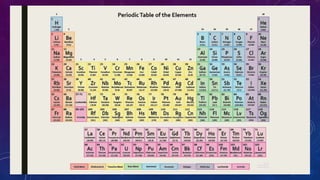
elements- Hydrogen (H), Helium (He), and
small amounts of lithium (Li) and
beryllium (Be) were formed.
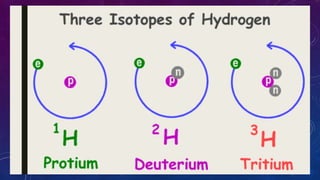
• The isotopes produced during the big
bang nucleosynthesis were H-1, H-2, H-3,
H-4, L-7
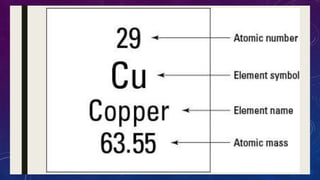
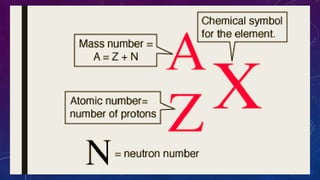
• An Isotope is a form of an element
that has the same atomic number
of the original element but with
different atomic mass or mass
number.
•Helium 4 + Tritium = Lithium
•Helium 3 + Helium 4 = Beryllium

FORMATION OF LIGHT ELEMENTS-PHYSCI1.pptx

  • 1.
  • 2.
    TARGETS • explain stellarnucleosynthesis; • describe the different stages of life cycle of stars; • cite the different heavy elements formed in each stages of star cycle; • describe how heavier elements formed during stellar nucleosynthesis and evolution.
  • 3.
    FACT OR BLUFF Readand analyze the following statements. Choose FACT if the statement is TRUE and BLUFF if the statement is false. DEFEND your answer
  • 4.
    TRUE ELEMENTS ARE MADEOF SUB ATOMIC PARTICLES CALLED PROTON, NEUTRON AND ELECTRONS
  • 5.
    FALSE The identity ofan element depends on how many neutron it has
  • 10.
    TRUE LITHIUM IS ONEOF THE ELEMENTS FORMED DURING THE BIG BANG NUCLEOSYTHESIS
  • 11.
    TRUE Nucleosysnthesis combines nucleons(proton and neutron) to form Elements
  • 12.
    FALSE BIG BANG ISAN EXPLOSION
  • 13.
  • 14.
    TRUE The Higher theenergy the Higher the temperature
  • 15.
    TRUE Can mass beconverted to Energy?
  • 16.
    THE ORIGIN OFLIGHT ELEMENTS The origin of all the naturally occurring elements fall into two phases: •Big Bang or Primordial Nucleosynthesis —the origin of the “light” elements; and •Stellar Nucleosynthesis— the origin and production of the “heavy elements
  • 17.
    • Nucleosynthesis isthe process that creates new atomic nucleus from preexisting nucleons, which is proton neutrons. • Primordial or Big Bang Nucleosynthesis refers to the process of producing the “light elements” shortly after the Big Bang.
  • 18.
    HOW DOES BIGBANG NUCLEOSYTHESIS WORK? By means collision and combination of protons and neutrons
  • 19.
    • The energyand temperature of the universe are extremely high to cause the neutrons and protons to combine and form certain species of atomic nuclei in a process called nuclear fusion
  • 22.
    • Through NuclearFusion, the light elements- Hydrogen (H), Helium (He), and small amounts of lithium (Li) and beryllium (Be) were formed. • The isotopes produced during the big bang nucleosynthesis were H-1, H-2, H-3, H-4, L-7
  • 23.
    • An Isotopeis a form of an element that has the same atomic number of the original element but with different atomic mass or mass number.
  • 24.
    •Helium 4 +Tritium = Lithium •Helium 3 + Helium 4 = Beryllium

Editor's Notes

  • #5 Proton, neutron and electrons are part of the ingredients of creating an element
  • #6 BASED ON PROTONS Different number of proton different elements Proton can become neutron or vice versa
  • #11 Formed during this period of time , minutes after the bigbang Mostly H and He some Li Be
  • #12 Define Nucleosythesis Collision of ingredients to form elements
  • #13 It is expansion Extremely small smaller than atom, dense, and hot 13.8 BYA it start to expand
  • #14 Its is hot and becomes cold after expansion Hot enough to form elements and become colder
  • #15 Temperature and Collision is the key for formation of elements Too hot it will be destroyed Lack energy will bounce If enough will combine
  • #16 When elements are made energy is released where does the energy came from? From mass