




Insight Report


The Financial
Development Report
2012
World Economic Forum   World Economic Forum USA Inc.
Geneva, Switzerland                   New York, USA


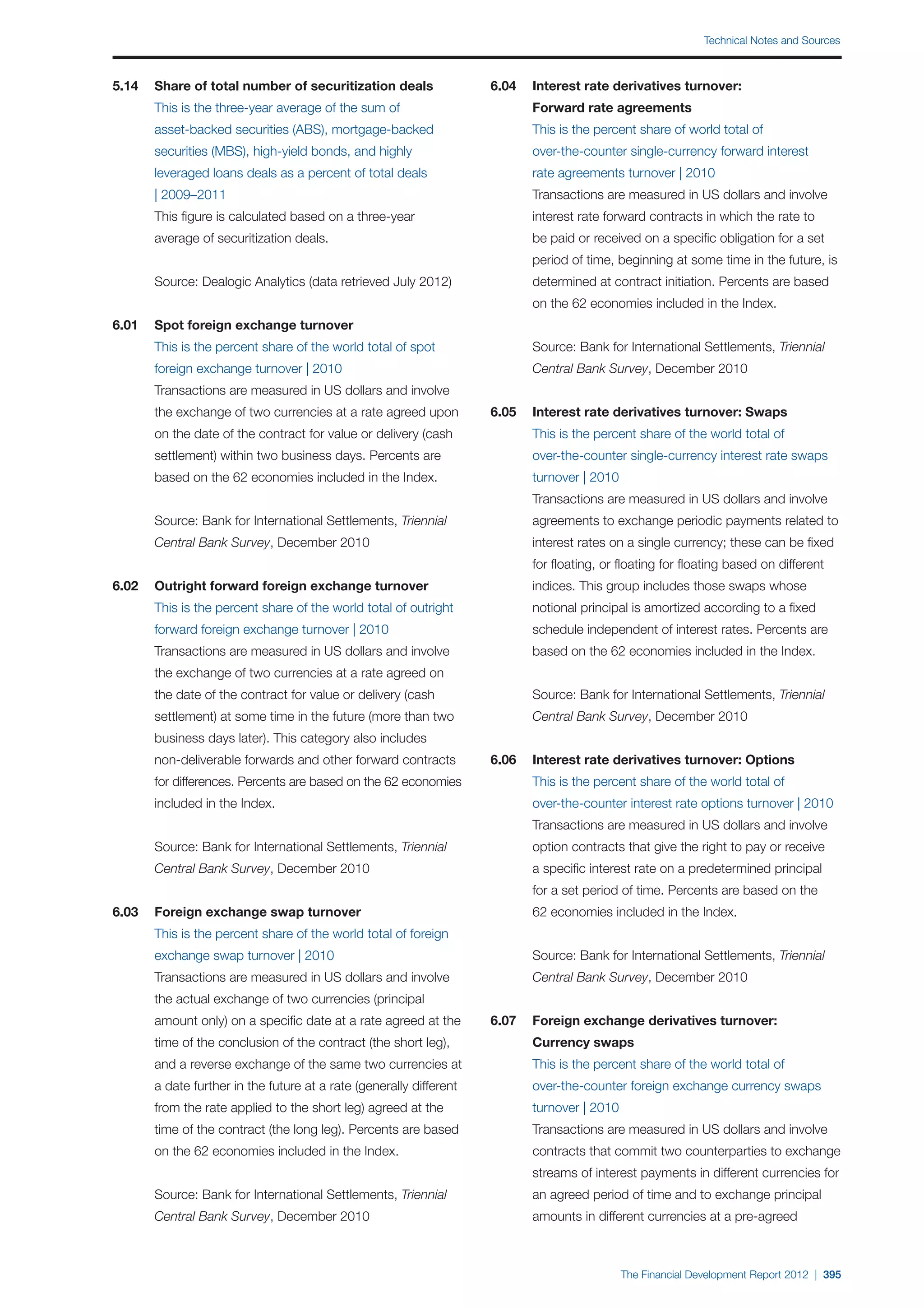
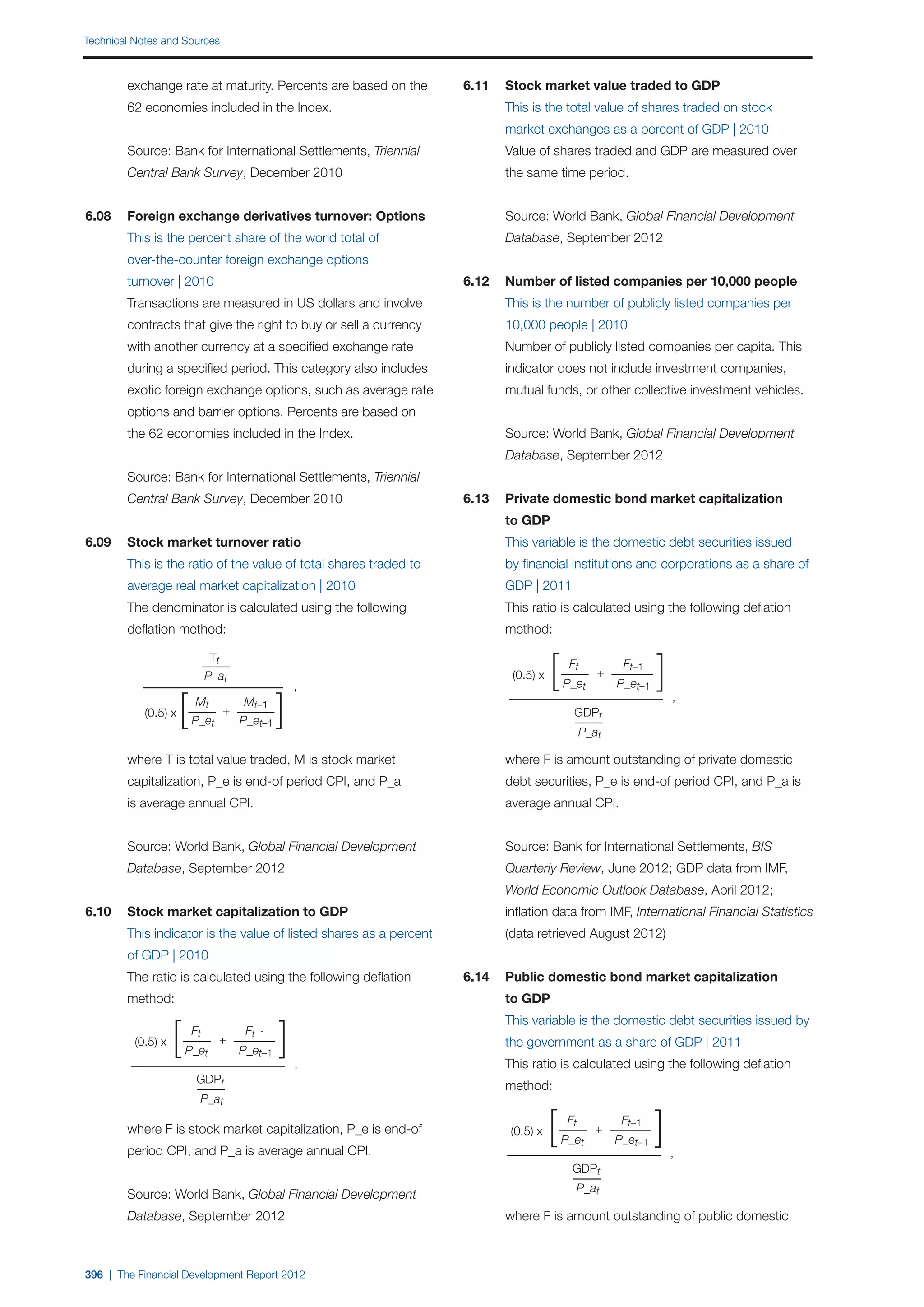
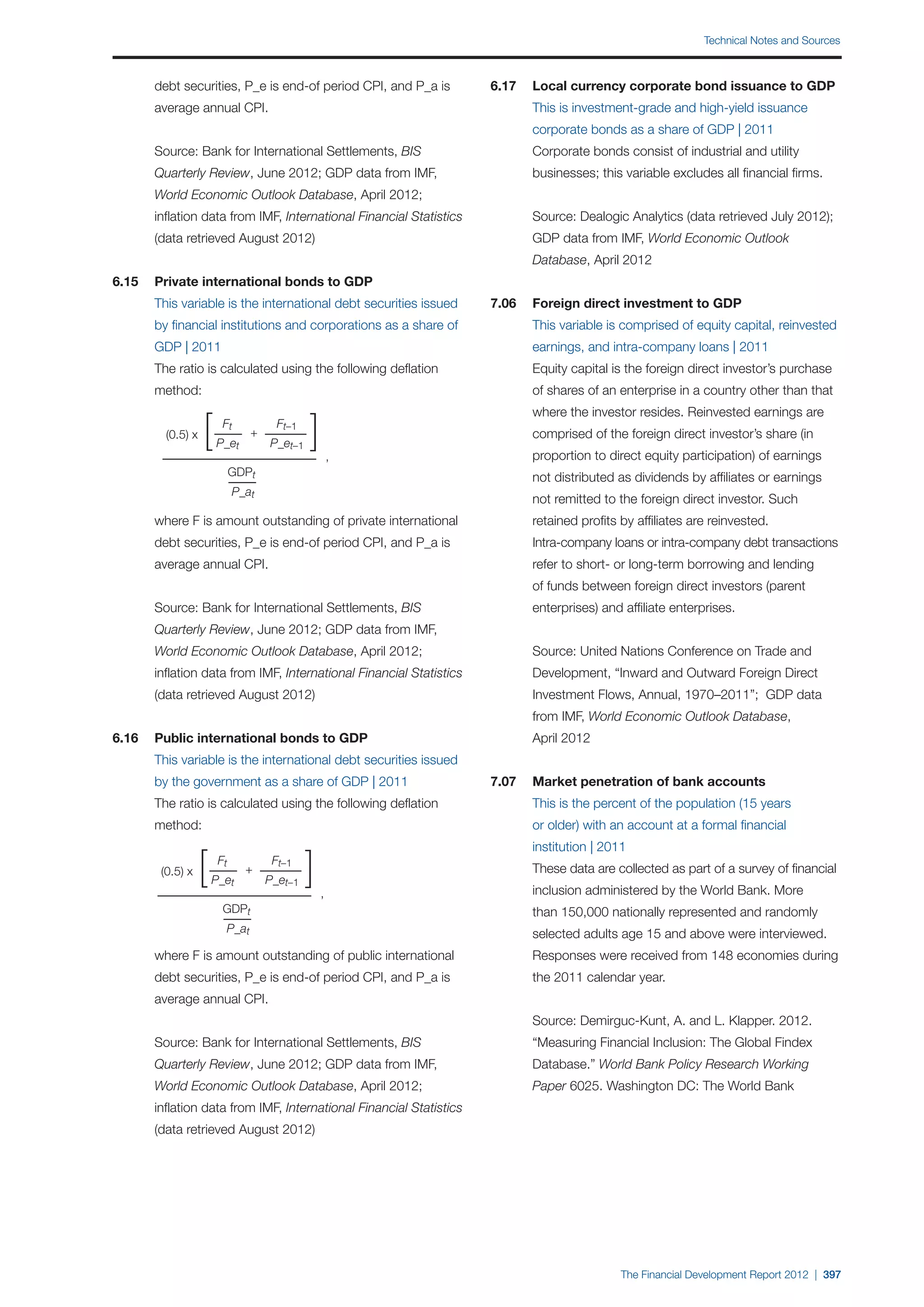
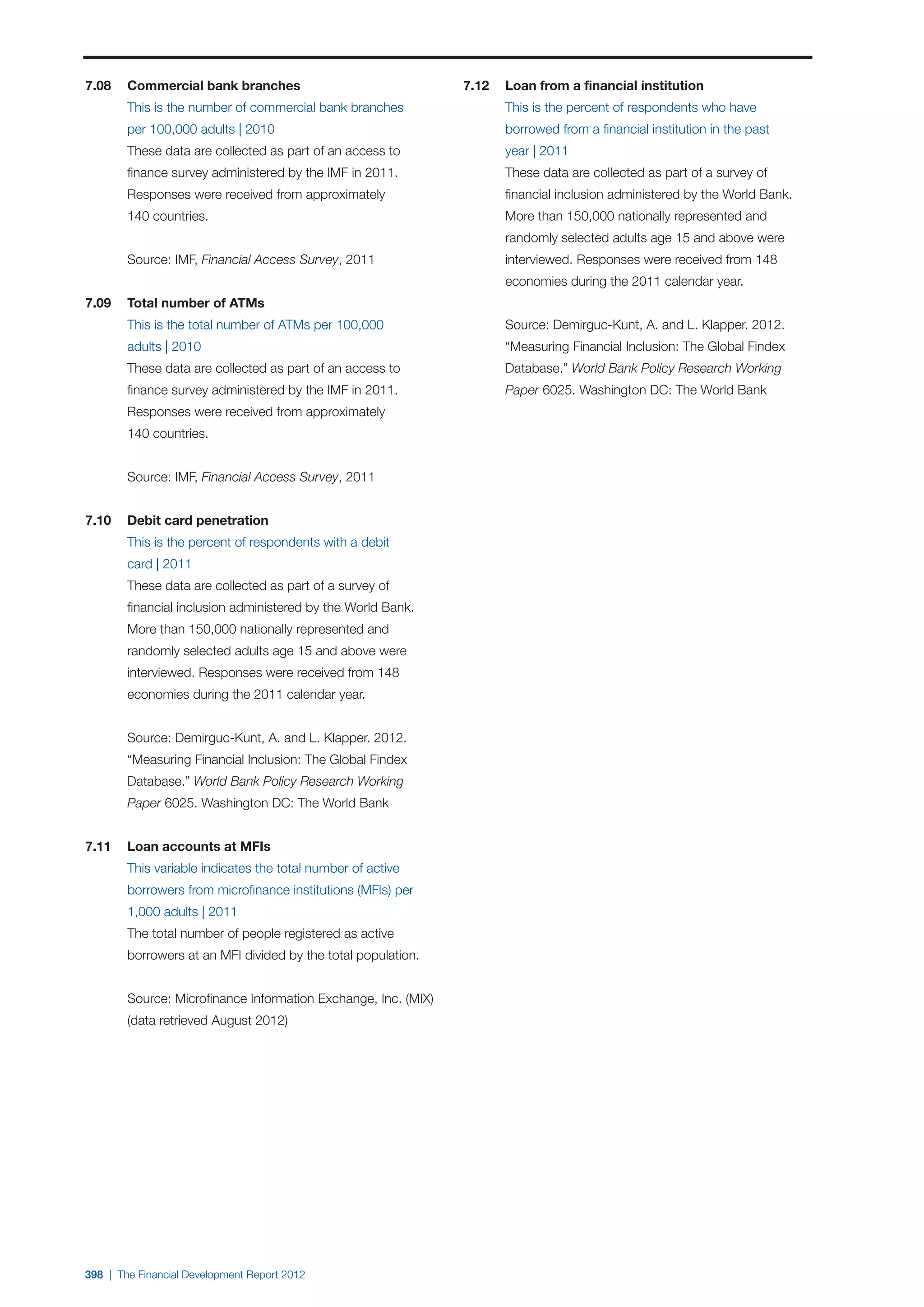
The Financial
Development Report
2012
The terms country and nation, as used in this Report, do            World Economic Forum USA Inc.
not in all cases refer to a territorial entity that is a state as
understood by international law and practice. The terms             Copyright © 2012
cover well-defined, geographically self-contained economic          by the World Economic Forum USA Inc.
areas that may not be states but for which statistical data are
maintained on a separate and independent basis.                     All rights reserved. No reproduction, copy or transmission of
                                                                    this publication may be made without written permission.


                                                                    No paragraph of this publication may be reproduced, stored
                                                                    in a retrieval system, or transmitted, in any form or by any
                                                                    means, electronic, mechanical, photocopying, or otherwise
                                                                    without the prior permission of the World Economic Forum.


                                                                    ISBN-10: 92-95044-39-8
                                                                    ISBN-13: 978-92-95044-39-5


                                                                    This book is printed on paper suitable for recycling and made
                                                                    from fully managed and sustained forest sources.


                                                                    A catalogue record for this book is available from the
                                                                    British Library.


                                                                    A catalogue record for this book is available from the
                                                                    Library of Congress.
Contents


Contributors 	                                   v    Part 2: Country/Economy Profiles 	                                               55


Academic Advisors 	                            vii    How to Read the Country/Economy Profiles....................... 57
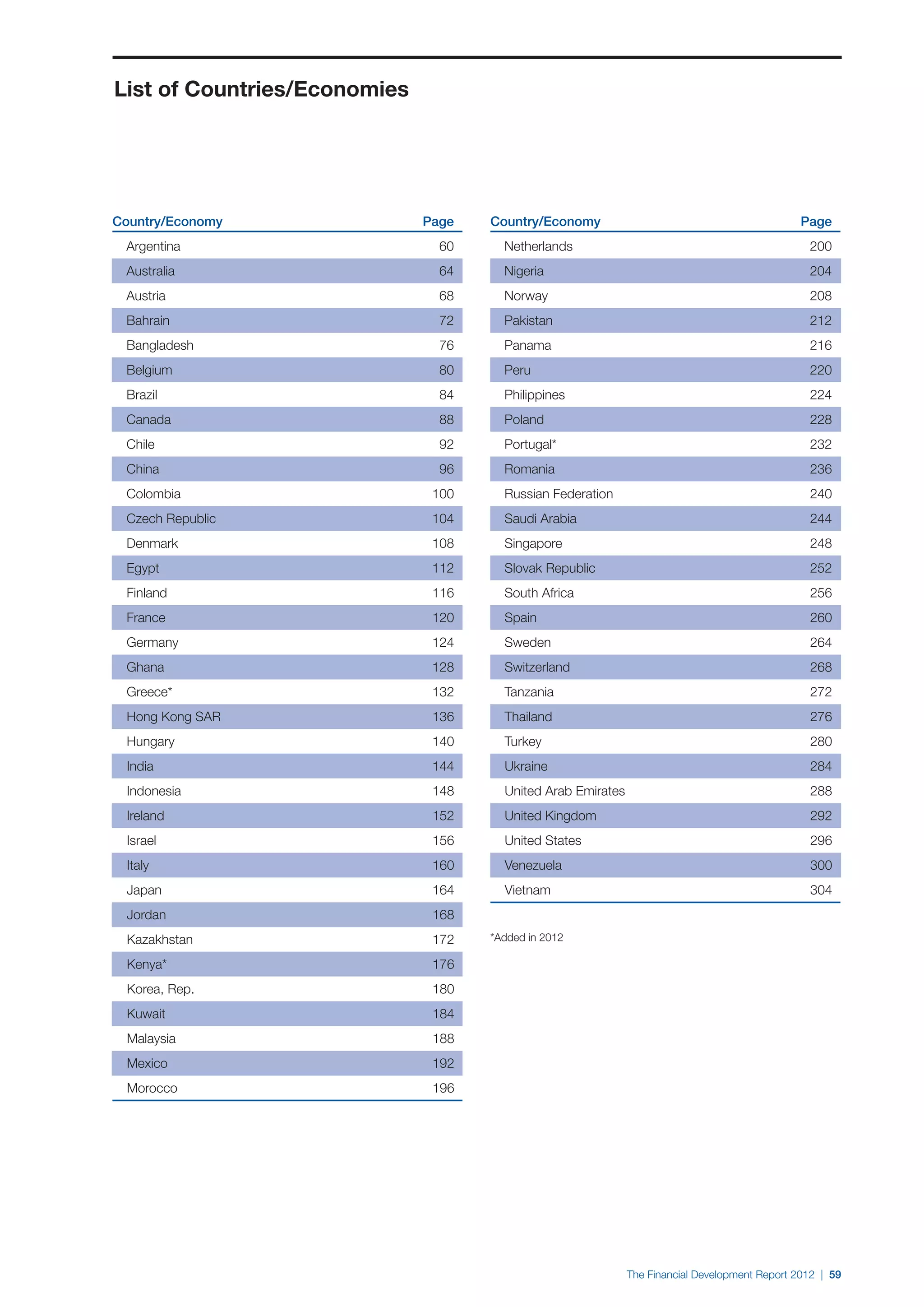
                                                      List of Countries/Economies............................................... 59
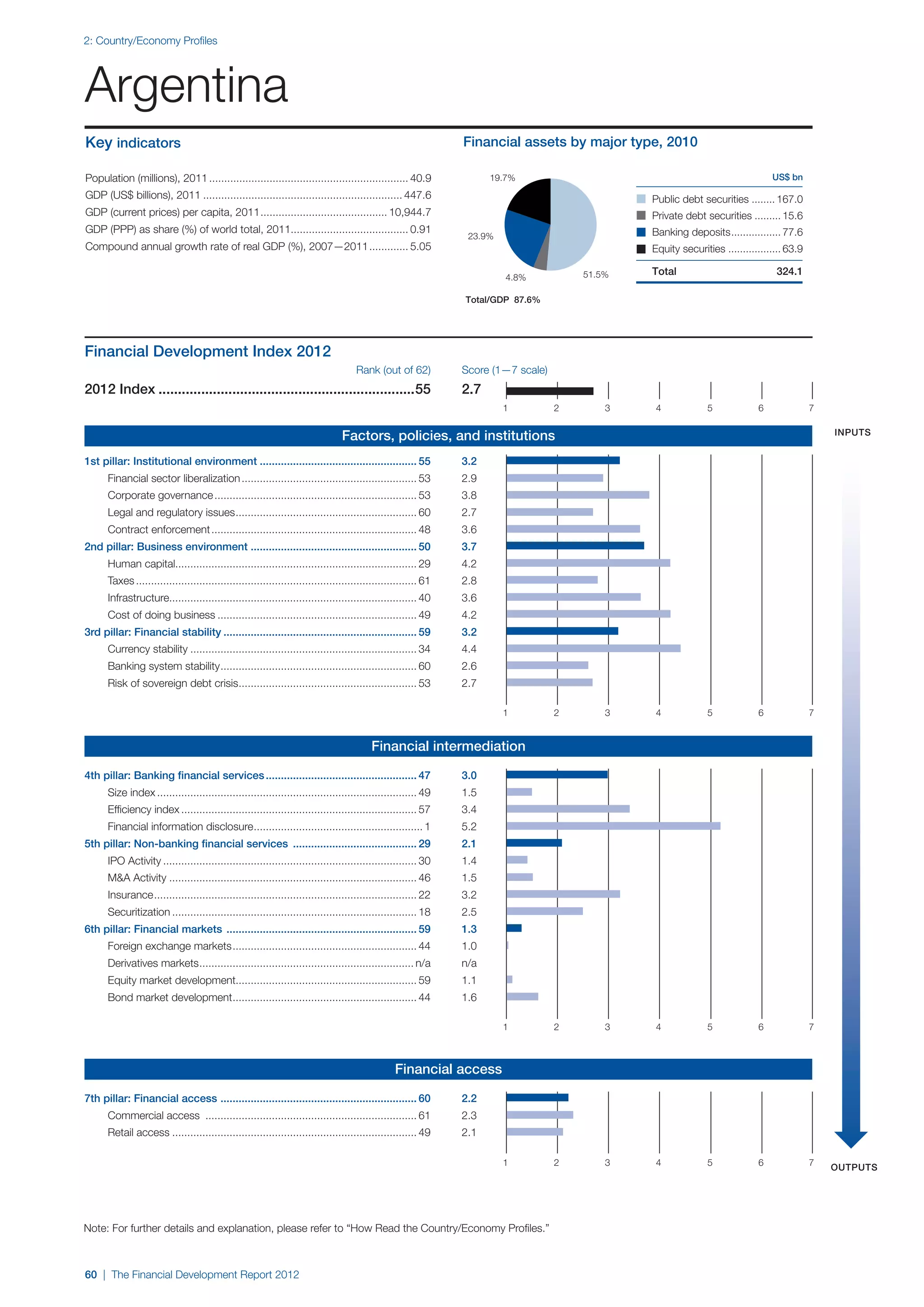
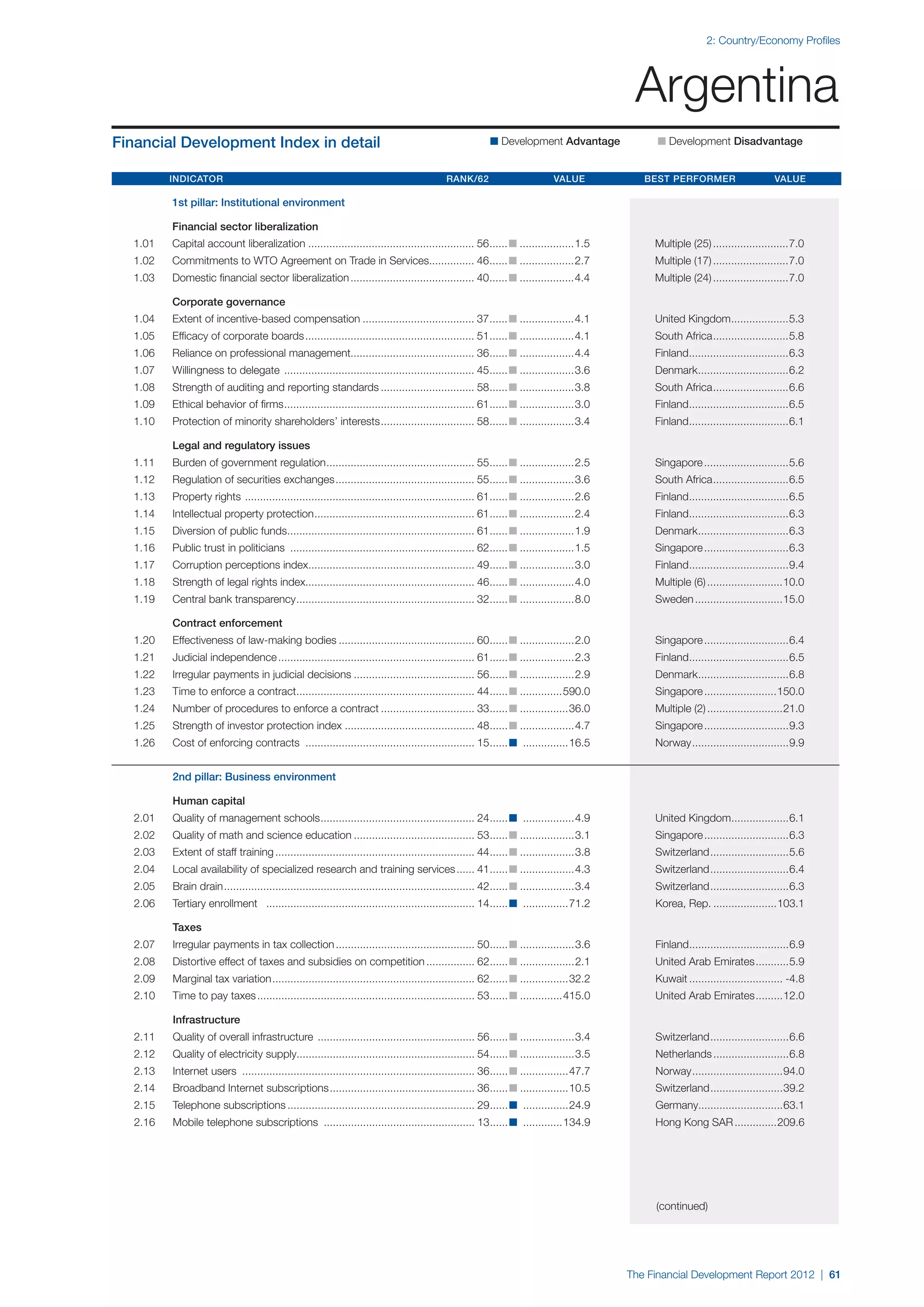
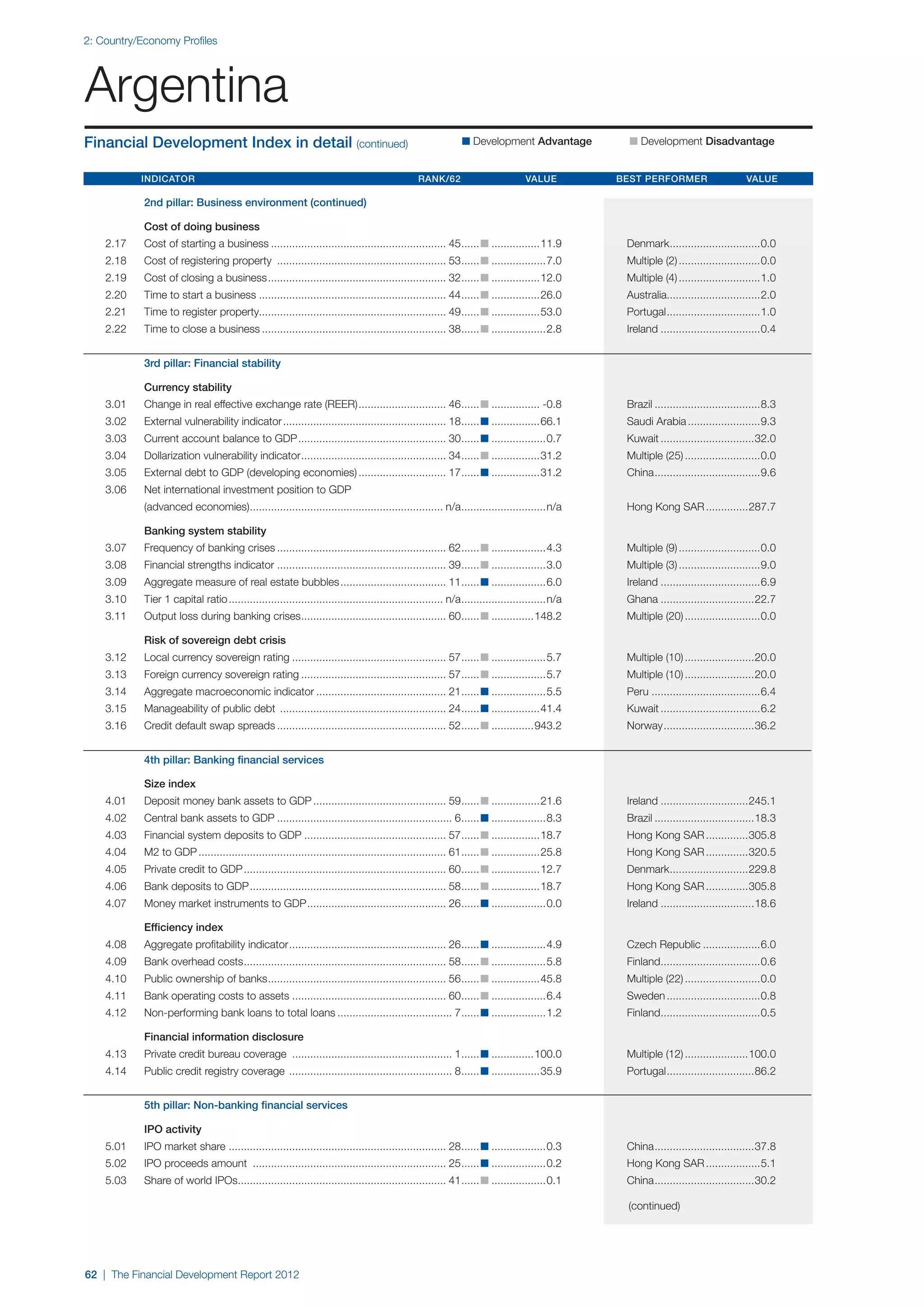
Preface	                                        ix    Country/Economy Profiles.................................................. 60
by Klaus Schwab


Foreword 	                                      xi    Part 3: Data Tables 	                                                          309
by Kevin Steinberg and Giancarlo Bruno
                                                      How to Read the Data Tables ...........................................311
Executive Summary 	                            xiii   Index of Data Tables .........................................................313
                                                      Data Tables.......................................................................315


Part 1: Findings from the Financial 	            1    Technical Notes and Sources 	                                                  385
Development Index 2012
                                                      About the Authors 	                                                            399
1.1: The Financial Development Index 2012: 	     3
Stalled Recovery—In Search of Growth                  Partner Institutes 	                                                           401
by Isabella Reuttner and Todd Glass


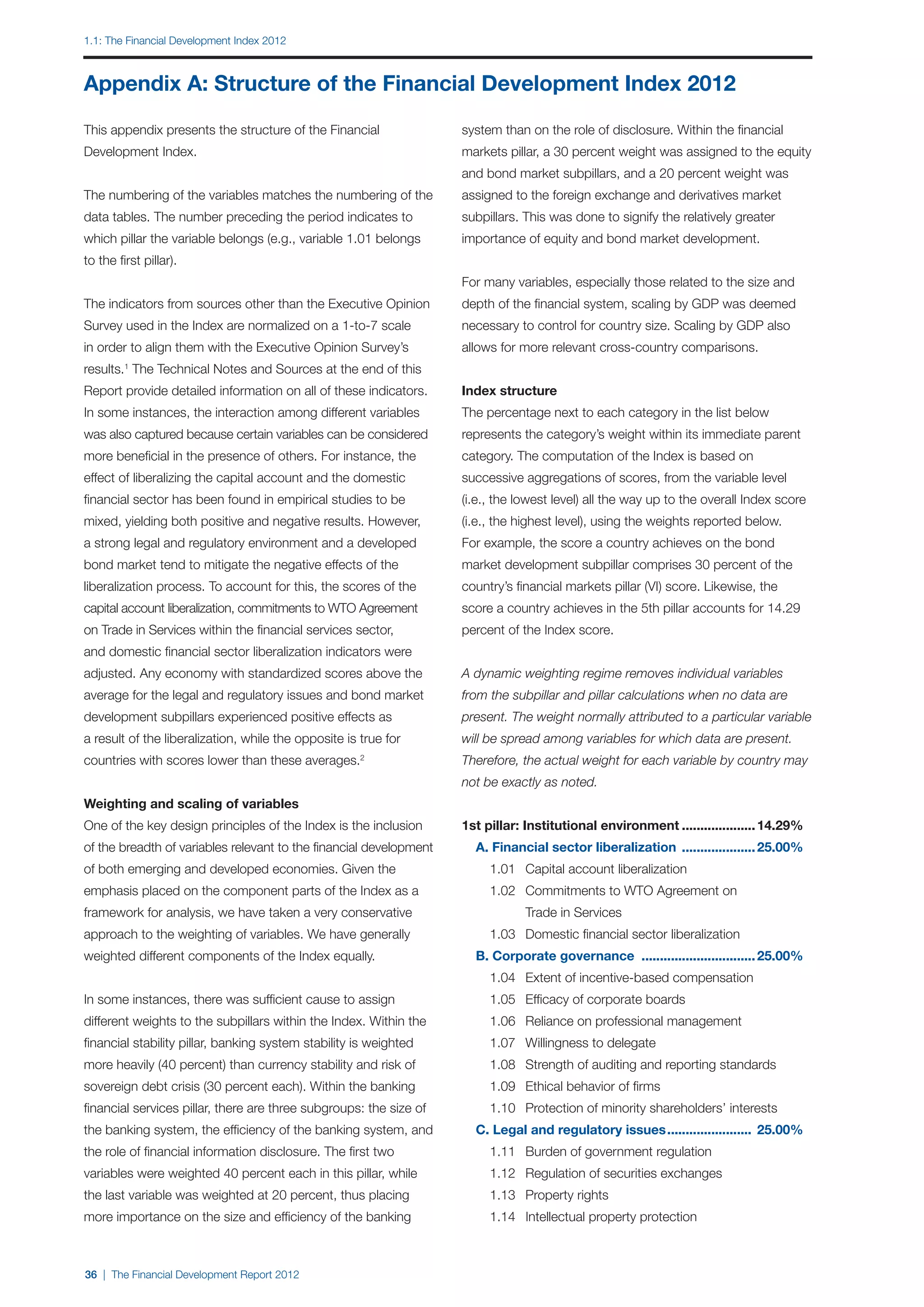
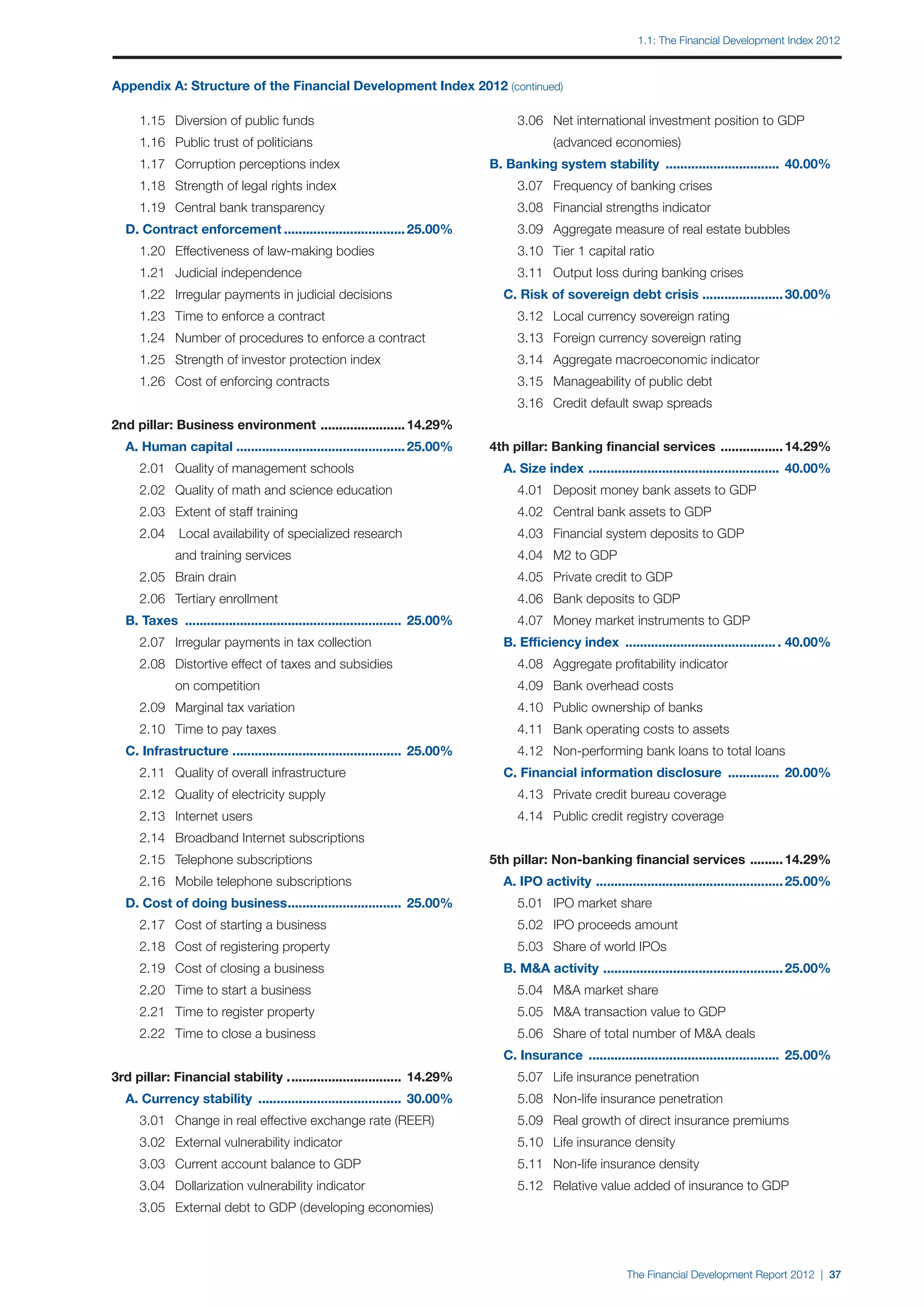
Appendix A: Structure of the Financial 	       36
Development Index 2012


1.2: Drawing Boundaries Around and 	           39
Through the Banking System
by Darrell Duffie


1.3: Branching Out: The Rise of Emerging 	     47
Market Banks
by Neeltje van Horen


                                                                                        The Financial Development Report 2012 | iii
Contributors


EDITOR                                                            EXPERT COMMITTEE*
Isabella Reuttner, Associate Director, World Economic Forum       Giancarlo Bruno, Senior Director,
                                                                  World Economic Forum USA
PROJECT TEAM
                                                                  Chris Coles, Partner, Actis
Todd Glass, Project Associate, World Economic Forum USA
                                                                  Michael Drexler, Senior Director,
PROJECT ADVISORS                                                  World Economic Forum USA
Margareta Drzeniek Hanouz, Director, Senior Economist,            Patrice Etlin, Managing Partner, Advent International
World Economic Forum
                                                                  Reto Kohler, Head of Strategy, Corporate and Investment
Thierry Geiger, Associate Director, Economist,                    Banking and Wealth Management, Barclays
World Economic Forum
                                                                  Gerard Lyons, Chief Economist and Group Head of Global
Michael Koenitzer, Associate Director, Head of                    Research, Standard Chartered
Project Management, World Economic Forum USA
                                                                  Raghuram Rajan, Eric J. Gleacher Distinguished Service

CONTRIBUTORS                                                      Professor of Finance, The University of Chicago Booth School

Darrell Duffie, Dean Witter Distinguished Professor of            of Business

Finance, Stanford Graduate School of Business                     Nouriel Roubini, Professor of Economics and International

Neeltje van Horen, Senior Economist,                              Business, Leonard N. Stern School of Business, New York

De Nederlandsche Bank                                             University and Chairman, Roubini Global Economics

                                                                  Kevin Steinberg, Chief Operating Officer, World Economic
                                                                  Forum USA

                                                                  Augusto de la Torre, Chief Economist for Latin America
                                                                  and the Caribbean, World Bank

                                                                  Ksenia Yudaeva, Director of the Macroeconomic Research
                                                                  Center, Sberbank


                                                                  We thank Gilly Nadel for her superb editing work and
                                                                  Tim Bruce and Lowercase, Inc. for their excellent graphic
                                                                  design and layout. We would also like to thank Chris Ryan,
                                                                  Boripat Louichareon, Martin Cihak, and Zbyszko Tabernacki
                                                                  for their assistance in assembling data for this Report.

                                                                  We would like to thank Dealogic, the IHS World Industry
                                                                  Service team, and Thomson Reuters for their generous
                                                                  contribution of data for this Report.


* The Forum is grateful for the support of the Industry Partners who served on the Expert Committee. Any findings contained in
the Report are solely the view of the Report’s authors and do not reflect the opinions of the Expert Committee members.


                                                                                            The Financial Development Report 2012 | v
Contributors


FROM THE WORLD ECONOMIC FORUM
Kevin Steinberg, Chief Operating Officer, World Economic   The Global Benchmarking Network
Forum USA†                                                 Jennifer Blanke, Senior Director, Lead Economist, Head
                                                           of The Global Benchmarking Network
Giancarlo Bruno, Senior Director, Head of Financial
Services Industry†                                         Margareta Drzeniek Hanouz, Director, Senior
                                                           Economist, Head of Competitiveness Research
Michael Drexler, Senior Director, Head of Investors
Industry†                                                  Beñat Bilbao-Osorio, Associate Director, Senior Economist

Matthew Blake, Associate Director, Head of Banking         Ciara Browne, Associate Director
and Capital Markets   †
                                                           Thierry Geiger, Associate Director, Economist
Michael Koenitzer, Associate Director, Head of
                                                           Roberto Crotti, Quantitative Economist
Project Management†
                                                           Tania Gutknecht, Community Manager
Abel Lee, Associate Director, Head of Insurance and
Asset Management†                                          Caroline Ko, Junior Economist

Maha Eltobgy, Associate Director, Head of                  Cecilia Serin, Team Coordinator
Private Investors †


Irwin Mendelssohn, Associate Director†

Abigail Noble, Associate Director†

Isabella Reuttner, Associate Director

Andre Belelieu, Senior Community Manager†

Lisa Donegan, Senior Community Manager†

Nadia Guillot, Senior Community Manager

Tik Keung, Project Manager†

Elisabeth Bremer, Senior Community Associate†

Amy Cassidy, Senior Team Coordinator†

Alexandra Hawes, Senior Team Coordinator†

Todd Glass, Project Associate†

Peter Gratzke, Project Associate†

Megan O’Neill, Team Coordinator†

Dena Stivella, Team Coordinator†


†
    Employees of the World Economic Forum USA.


vi | The Financial Development Report 2012
Academic Advisors


Thorsten Beck
Tilburg University

Erik Feyen
The World Bank

Leora Klapper
The World Bank

Luc Laeven
International Monetary Fund

Maria Soledad Martinez Peria
The World Bank

Sergio Schmukler
The World Bank

Laura Tyson
University of California, Berkeley

Luigi Zingales
University of Chicago


The Forum is grateful for the support of the Academic Advisors who contributed to the Report. Any findings contained in the
Report are solely the views of the Report’s authors and do not reflect the opinions of the Academic Advisors.


                                                                                           The Financial Development Report 2012 | vii
Preface
KLAUS SCHWAB, Executive Chairman, World Economic Forum


Since 2008, the year that the Financial Development Report            In the tradition of the Forum’s multi-stakeholder approach
first launched, financial systems around the world have been          to global issues, the creation of this Report involved an
hit with a series of debilitating crises. From burst housing          extensive program of outreach and dialogue with members
bubbles and crippling unemployment to unsustainable debt              of the academic community, public figures, representatives of
levels and economic stagnation, few countries have been               nongovernmental organizations, and business leaders from
spared. Even emerging economies, which exhibited relative             around the world. This work included numerous interviews
strength during this period, have been unable to decouple             and collaborative sessions to discuss the findings of the Index
successfully from Western markets. The fifth edition of the           and their implications, as well as possible modifications to its
Financial Development Report comes at a time when                     design. Other complementary publications from the World
recovery efforts around the world have stalled and confidence         Economic Forum include The Global Competitiveness Report,
in the system continues to deteriorate. The recovery’s few            The Global Enabling Trade Report, The Global Gender Gap
bright spots have been overshadowed by the general fragility          Report, The Global Information Technology Report, and The
of the global financial system, characterized by rising funding       Travel & Tourism Competitiveness Report.
costs, higher commodity prices, and volatile capital flows.
Given these uncertainties, it is clear that restoring faith in the    We would like to express our gratitude to our industry partners
markets will be a monumental task for policymakers in both            and the academic experts who served on the project’s Expert
advanced and emerging economies.                                      Committee: Giancarlo Bruno, Senior Director, World Economic
                                                                      Forum USA; Chris Coles, Partner, Actis; Michael Drexler,
In order to reignite the engines of economic growth, global           Senior Director, World Economic Forum USA; Patrice Etlin,
leaders must provide investors, consumers, entrepreneurs,             Managing Partner, Advent International; Reto Kohler, Head
and the like with the trust and support necessary to take risks       of Strategy, Corporate and Investment Banking and Wealth
and innovate. To accomplish this, they need to strengthen             Management, Barclays; Gerard Lyons, Chief Economist
institutions through more efficient and effective legal and           and Group Head of Global Research, Standard Chartered;
regulatory frameworks, as well as enhanced corporate                  Raghuram Rajan, Eric J. Gleacher Distinguished Service
governance mechanisms. Instilling trust back in the system            Professor of Finance, The University of Chicago Booth School
could pay dividends as financial markets stabilize, liquidity         of Business; Nouriel Roubini, Professor of Economics and
increases, and capital is allocated to its most productive            International Business, Leonard N. Stern School of Business,
uses. Although emerging and advanced economies face                   New York University and Chairman, Roubini Global Economics;
challenges that will be neither easy nor straightforward to           Kevin Steinberg, Chief Operating Officer, World Economic
address, long-term sustainable growth can be attained                 Forum USA; Augusto de la Torre, Chief Economist for Latin
through collective action and international cooperation.              America and the Caribbean, World Bank; and Ksenia Yudaeva,
Dialogue at the local, regional, and global levels will be critical   Director of the Macroeconomic Research Center, Sberbank.
in providing greater assurance, minimizing negative outcomes,         We are appreciative of our other academic advisors, who
and promoting a more stable financial system.                         generously contributed their time and ideas in helping shape
                                                                      this Report. We would also like to thank Isabella Reuttner and
Improvement efforts need to be driven by local-level reforms          Todd Glass at the World Economic Forum for their energy
to ensure that the appropriate financial systems are in place,        and commitment to the project. We are grateful to Margareta
thereby helping extend prosperity to all. The Financial               Drzeniek Hanouz, Thierry Geiger, and Michael Koenitzer for
Development Report provides a benchmarking tool across a              their guidance as Project Advisors. Appreciation also goes to
depth of information and a number of economies. It thereby            The Global Benchmarking Network Team, including Jennifer
allows countries to identify and develop workable solutions           Blanke, Beñat Bilbao-Osorio, Ciara Browne, Roberto Crotti,
for building on existing strengths and addressing potential           Tania Gutknecht, Caroline Ko, and Cecilia Serin. Finally, we
problematic areas.                                                    would like to thank our network of Partner Institutes, without
                                                                      whose enthusiasm and hard work the annual administration of the
                                                                      Executive Opinion Survey and this Report would not be possible.


                                                                                                The Financial Development Report 2012 | ix
Foreword
KEVIN STEINBERG, Chief Operating Officer, World Economic Forum USA
GIANCARLO BRUNO, Senior Director, Head of Financial Services Industry, World Economic Forum USA


The World Economic Forum’s Financial Services team is             Perhaps one of the most important issues is waning trust
pleased to release The Financial Development Report 2012,         in the overall system, a by-product of which has been the
the fifth edition since its inaugural publication in 2008. This   withholding of capital and a reduction in much-needed investment
Report represents a key ongoing initiative undertaken as          in medium- to long-term growth. The lack of trust can also be
part of the Forum’s Industry Partnership Programme, which         seen in volatility in various markets, particularly equity markets,
provides a platform for CEOs and senior executives to             across the world. In order to restore confidence in the
collaborate with their peers and an extended community            system, actors and participants will need to take concerted
of senior leaders from the public sector, academics, and          action to align activities with the core economic and social
experts from civil society to tackle key issues of concern to     objectives of the financial system.
the global community.
                                                                  The variables in this Report help provide guidance for
The effects of the financial crisis continue to be felt in both   measuring the effects of programs and reforms across three
advanced and emerging economies around the world. Europe          broad categories: (1) factors, policies, and institutions; (2)
remains plagued by debt overhang, high unemployment,              financial intermediation; and (3) financial access. The Report
political divisiveness, and a general lack of competitiveness.    uses a comprehensive framework that includes 121 variables
The United States faces political gridlock in a time of fiscal    that measure the stability and efficacy of the banking system,
uncertainty and increasing public debt. Traditional emerging      financial markets, and many other related factors. We believe
market powers, such as China and Brazil, are experiencing         this Report will be highly informative and useful as a vehicle
an economic slowdown, which may have significant ramifications    for future dialogue and debate.
for global trade. Generally speaking, although policymakers
have sought reform through structural adjustment, global          The Financial Development Report 2012
output is expected to slow over the near term. It is clear that   In this context, we offer this year’s Report as a way to identify
economic growth continues to be a vital issue for the global      the factors that play a crucial role in achieving much-needed
community. We believe that The Financial Development              economic growth and in enabling stakeholders to collectively
Report provides a better understanding of how both emerging       prioritize, implement, and assess any necessary reforms.
and advanced economies can identify and rectify areas of          Part 1 of the Report summarizes this year’s Index results
weakness in their financial systems, ultimately leading to        and related findings in three chapters. Chapter 1.1 outlines
sustainable economic growth.                                      the methodology for the Index, the academic theory and
                                                                  assumptions supporting it, and some of the key findings from
Stalled recovery: In search of growth                             the Index results. Chapter 1.2 provides insight into the debate
Although arguably improving, the global economy has yet to        about regulating the traditional, as well as shadow banking
fully stabilize. This instability applies not only to developed   systems in light of the financial crisis of 2007-2009. Finally,
economies but also to emerging ones, which are experiencing       Chapter 1.3 discusses the rise of emerging market banks,
the knock-on effect of advanced economy woes. Recovery            their importance as foreign investors, and how the global
efforts are still needed to address both lingering legacy         financial crisis has allowed these banks to increase their
issues, such as rising debt levels, and post-crisis issues,       footprint at the regional level.
such as increasing unemployment, with the ultimate goal
of creating long-term, sustainable growth. Given the crucial      We also encourage readers to delve into the details of
role that the financial system plays in any economy, recovery     Part 2: Country/Economy Profiles and Part 3: Data Tables of
efforts will depend on a well-functioning system of saving and    the Report. The richness and breadth of the data paint
allocating capital, among other factors. Although a number of     a balanced picture of the challenges and opportunities faced
reforms that address some of the underlying issues within the     by different countries.
system have been well received, there are still many issues
that remain to be addressed, including effective supervisory      By design, this Report must rely on data that are available for
frameworks, cross-border bank resolution in times of failure,     all the economies it covers, to proxy for key elements of
and the role of the shadow banking system.                        financial development. This year, as every year, it is with a


                                                                                             The Financial Development Report 2012 | xi
Foreword


degree of humility that we put forth our findings, given some
of the inherent limitations and occasional inconsistencies
of these data, the rapidly changing environment, and the
unique circumstances of some of the economies covered.
Yet, through its attempt to establish a comprehensive
framework and a means for benchmarking, we feel the
Report provides a useful common vantage point from which
to unify priorities and develop a course of action.
We welcome your feedback and suggestions for how we
may develop and utilize this Report to promote the
potential of financial systems as enablers of growth and
individual prosperity.


On behalf of the World Economic Forum, we wish to
particularly thank the members of the Expert Committee, the
Academic Advisors, and the project team, Isabella Reuttner
and Todd Glass, for their boundless support.


xii | The Financial Development Report 2012
Executive Summary


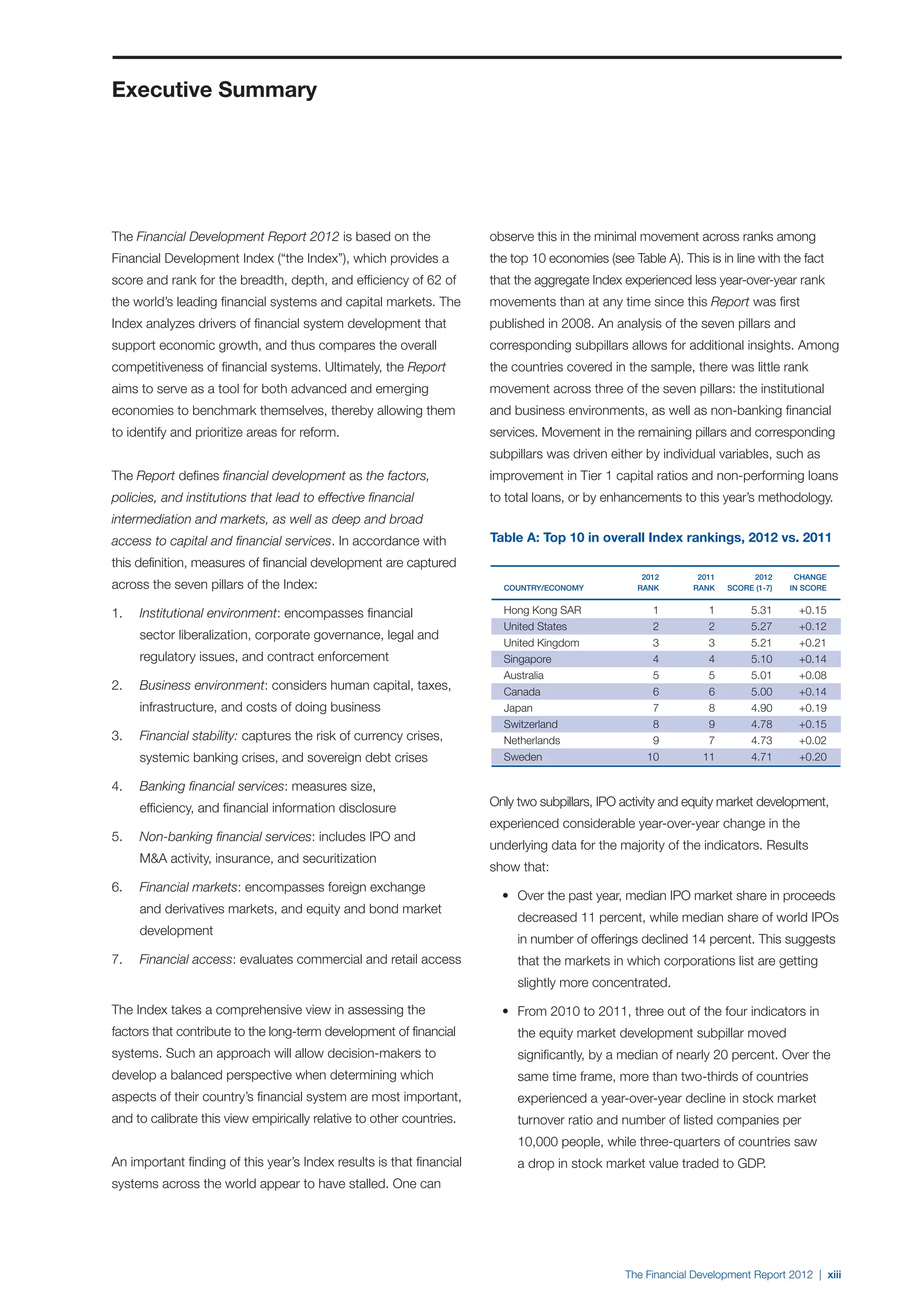
The Financial Development Report 2012 is based on the                 observe this in the minimal movement across ranks among
Financial Development Index (“the Index”), which provides a           the top 10 economies (see Table A). This is in line with the fact
score and rank for the breadth, depth, and efficiency of 62 of        that the aggregate Index experienced less year-over-year rank
the world’s leading financial systems and capital markets. The        movements than at any time since this Report was first
Index analyzes drivers of financial system development that           published in 2008. An analysis of the seven pillars and
support economic growth, and thus compares the overall                corresponding subpillars allows for additional insights. Among
competitiveness of financial systems. Ultimately, the Report          the countries covered in the sample, there was little rank
aims to serve as a tool for both advanced and emerging                movement across three of the seven pillars: the institutional
economies to benchmark themselves, thereby allowing them              and business environments, as well as non-banking financial
to identify and prioritize areas for reform.                          services. Movement in the remaining pillars and corresponding
                                                                      subpillars was driven either by individual variables, such as
The Report defines financial development as the factors,              improvement in Tier 1 capital ratios and non-performing loans
policies, and institutions that lead to effective financial           to total loans, or by enhancements to this year’s methodology.
intermediation and markets, as well as deep and broad
access to capital and financial services. In accordance with          Table A: Top 10 in overall Index rankings, 2012 vs. 2011
this definition, measures of financial development are captured
                                                                      	   	                2012 	 2011 	  2012 	                  Change
across the seven pillars of the Index:                                	   Country/economy	Rank	Rank	 score (1-7)	                in score


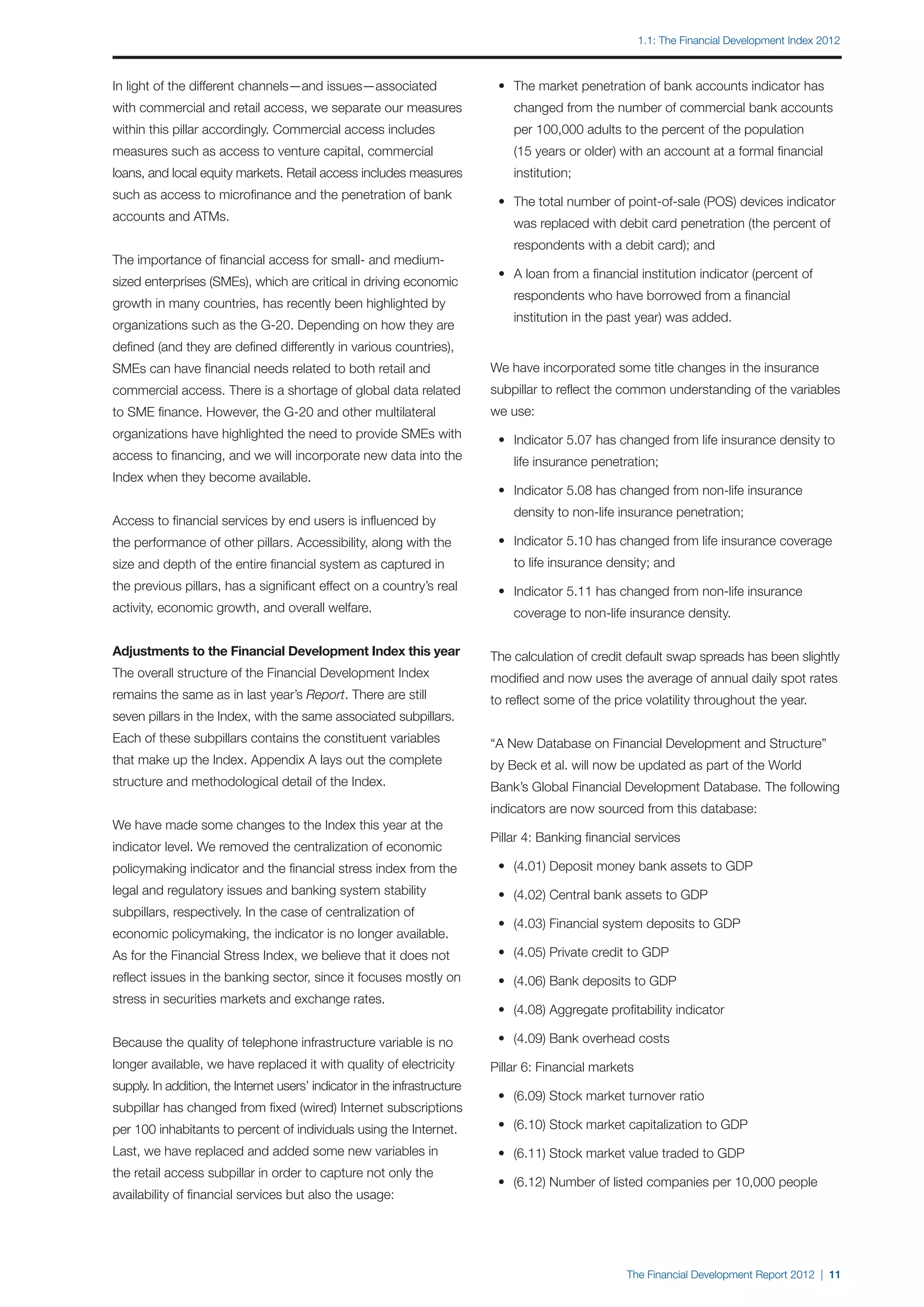
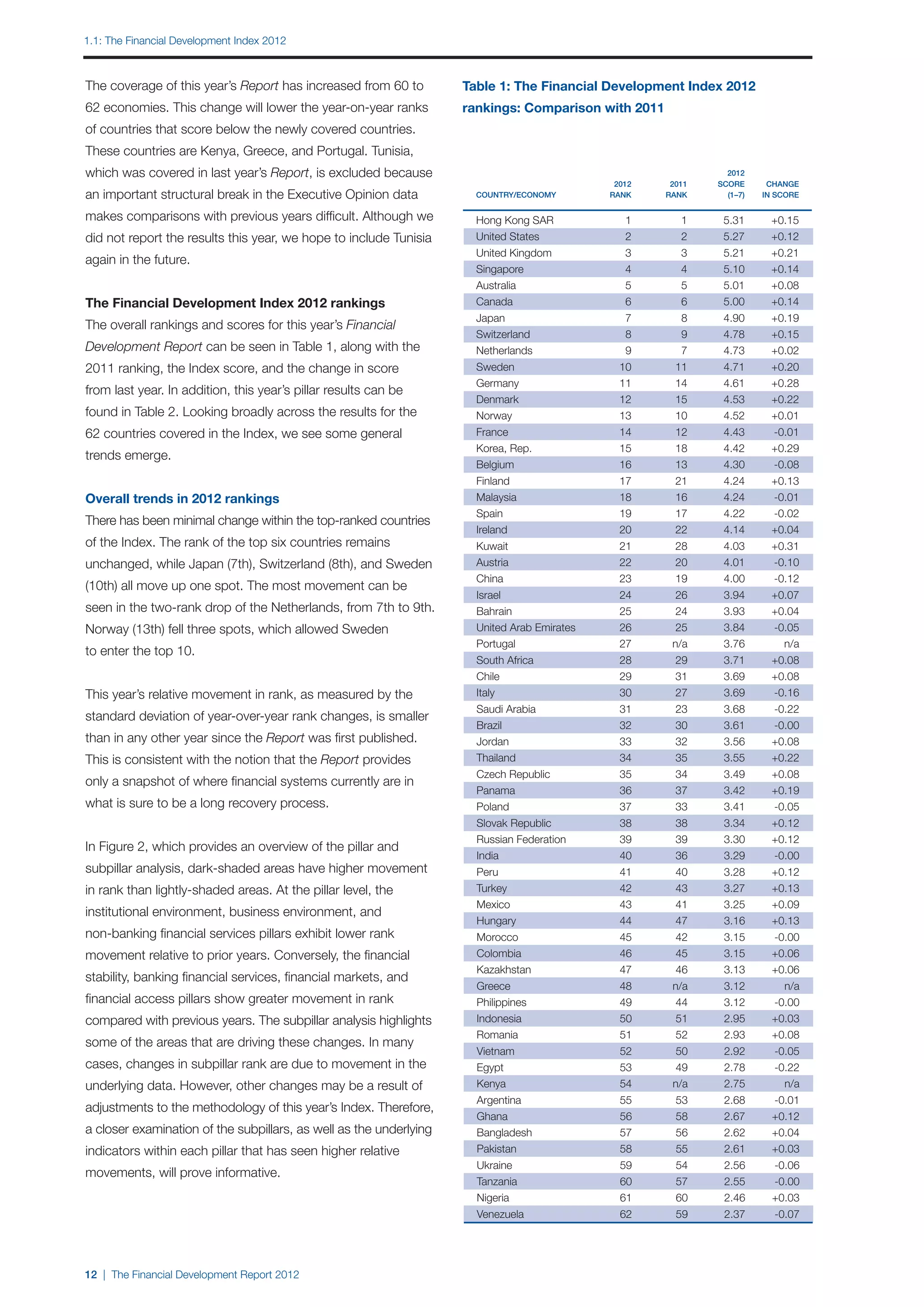
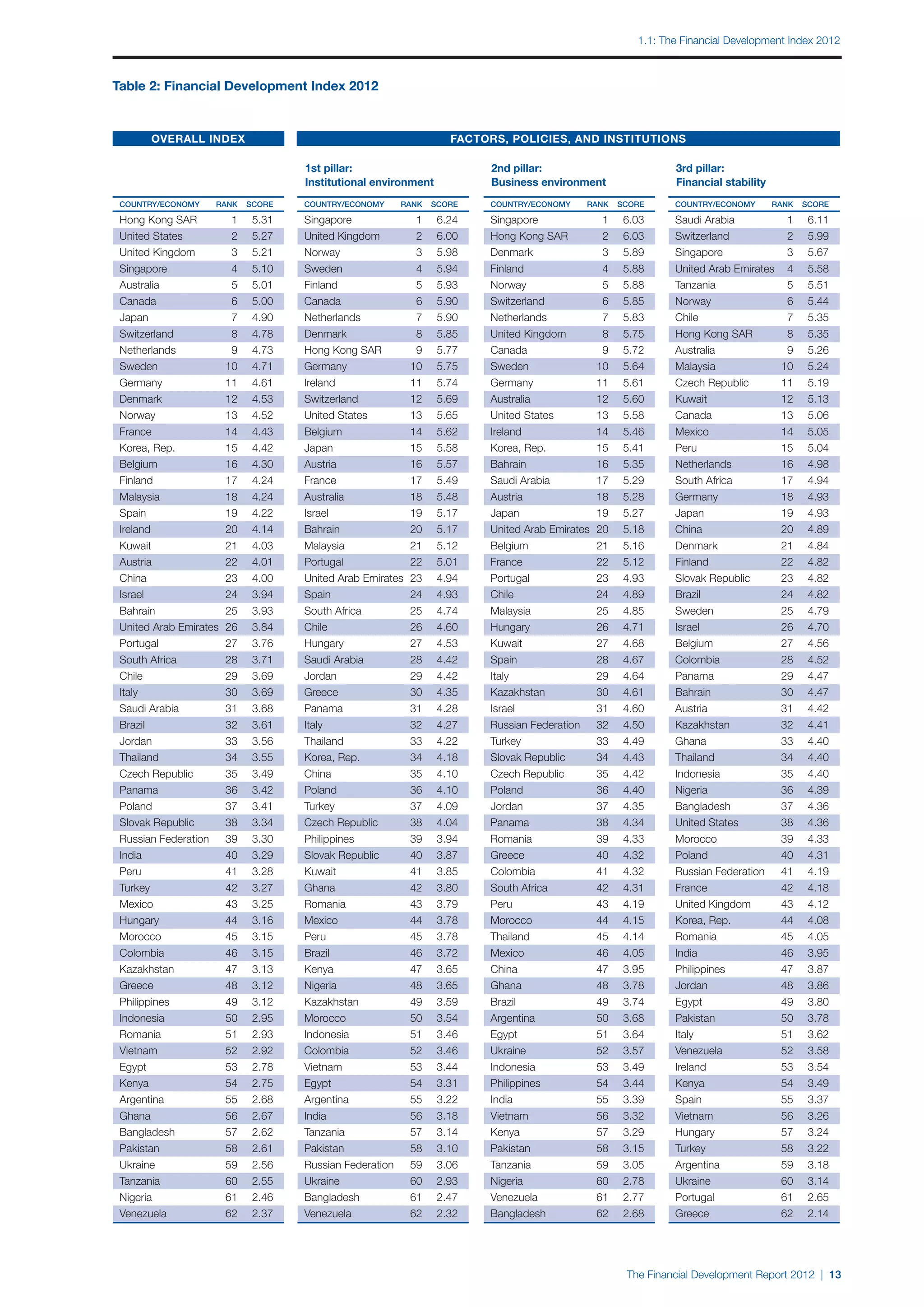
1.	   Institutional environment: encompasses financial                	   Hong Kong SAR	             1	         1	       5.31	     +0.15
                                                                      	   United States	             2	         2	       5.27	     +0.12
		    sector liberalization, corporate governance, legal and
                                                                      	   United Kingdom	            3	         3	       5.21	     +0.21
		    regulatory issues, and contract enforcement                     	   Singapore	                 4	         4	       5.10	     +0.14
                                                                      	   Australia	                 5	         5	       5.01	     +0.08
2.	   Business environment: considers human capital, taxes, 	         	   Canada	                    6	         6	       5.00	     +0.14
		    infrastructure, and costs of doing business                     	   Japan	                     7	         8	       4.90	     +0.19
                                                                      	   Switzerland	               8	         9	       4.78	     +0.15
3.	   Financial stability: captures the risk of currency crises, 	    	   Netherlands	               9	         7	       4.73	     +0.02
		    systemic banking crises, and sovereign debt crises              	   Sweden	                   10	        11	       4.71	     +0.20
                                                                      	
4.	   Banking financial services: measures size,
		    efficiency, and financial information disclosure                Only two subpillars, IPO activity and equity market development,
                                                                      experienced considerable year-over-year change in the
5.	   Non-banking financial services: includes IPO and
                                                                      underlying data for the majority of the indicators. Results
		    M&A activity, insurance, and securitization
                                                                      show that:
6.	   Financial markets: encompasses foreign exchange
                                                                      	 •	 Over the past year, median IPO market share in proceeds
		    and derivatives markets, and equity and bond market
                                                                      		 decreased 11 percent, while median share of world IPOs
		    development
                                                                      		 in number of offerings declined 14 percent. This suggests
7.	   Financial access: evaluates commercial and retail access        		 that the markets in which corporations list are getting
                                                                      		 slightly more concentrated.

The Index takes a comprehensive view in assessing the                 	 •	 From 2010 to 2011, three out of the four indicators in
factors that contribute to the long-term development of financial     		 the equity market development subpillar moved
systems. Such an approach will allow decision-makers to               		 significantly, by a median of nearly 20 percent. Over the
develop a balanced perspective when determining which                 		 same time frame, more than two-thirds of countries
aspects of their country’s financial system are most important,       		 experienced a year-over-year decline in stock market
and to calibrate this view empirically relative to other countries.   		 turnover ratio and number of listed companies per
                                                                      		 10,000 people, while three-quarters of countries saw
An important finding of this year’s Index results is that financial   		 a drop in stock market value traded to GDP.
systems across the world appear to have stalled. One can


                                                                                                The Financial Development Report 2012 | xiii
Executive Summary


Although most subpillars experienced negligible movement,
IPO activity and equity market development appeared to
experience significant volatility. Therefore, a closer look at the
underlying variables in each of these subpillars over a
multi-year period proves informative. Looking at changes in
the individual variables from a general and regional perspective
sheds light on how individual economies and regions fared
throughout the crisis. The Report pays particular attention to
the top five countries hosting the world’s largest exchanges,
since they account for more than 50 percent of the world’s
stock market capitalization, and thus provide an additional
perspective on the effects of the recent crisis on equity
markets. Some of the key points from this analysis include
the following:

	 •	 Across the country sample, the most significant change
		 occurred within the domestic market capitalization to GDP
		 indicator. The variable’s largest year-on-year decline took
		 place from 2007 to 2008, and 2011 levels are still
		 substantially lower than in 2006. Nevertheless, liquidity
		 appears to be stabilizing, as highlighted by the fact that
		 turnover velocity rebounded in 2011, moving closer to
		 2006 levels.

	 •	 Regional results are in line with the above-mentioned
		 trends, as domestic market capitalization to GDP
		 decreased for most regions, with the exception of
		 Asia/Pacific. In contrast, while the overall picture suggests
		 that liquidity is stabilizing, Europe and Latin America see
		 a decrease, indicating that lingering liquidity issues may
		 be region-specific.

	 •	 Across the top five economies that host the largest
		 exchanges, liquidity appears to be stabilizing in line with
		 the overall trend, with the exception of the United Kingdom.
		 Nevertheless, domestic market capitalization to GDP is
		 still declining in three of the five countries examined.
		 Among the factors that influence this drop are declines in
		 value of shares trading to GDP, the number of listed
		 companies per 10,000 people, and IPO activity.


While one can observe pockets of improvement across some
indicators related to the banking system, this signifies only
a small step in what will be a long road to recovery. Volatility
across the equity markets also suggests that many actors
feel a degree of uncertainty. In order to realize much-needed
growth opportunities, decision-makers need to recognize that
financial systems must progress. At the same time, leaders
should keep a watchful eye on those indicators that have
shown declines and take action should conditions continue
to deteriorate.


xiv | The Financial Development Report 2012
Part 1
Findings from the Financial
Development Index 2012


                       The Financial Development Report 2012 | 1
CHAPTER 1.1                               The global economic outlook remains quite bleak. In October
                                          this year, the International Monetary Fund cut its 2012 global
                                          growth forecast slightly to 3.3 percent, with the warning that
The Financial Development                 its outlook depended on rapid policy action, especially in
Index 2012: Stalled Recovery –            the euro zone. The Fund also said that emerging markets
In Search of Growth                       continue to be the global driver of growth, forecasting
                                          5.3 percent for 2012 and 5.6 percent for 2013. Nevertheless,
ISABELLA REUTTNER, World Economic Forum   these predictions are tied to the expectation that emerging
TODD GLASS, World Economic Forum USA      markets will take steps to support their economies in a time
                                          of continued global turmoil.


                                          Although pockets of recovery from the recent crisis are
                                          appearing, many observers believe that a number of issues
                                          remain. Some of these are legacy issues from before the
                                          crisis, such as rising and unsustainable debt levels, while others
                                          are a direct result of the crisis, such as high unemployment
                                          and economic stagnation in some emerging economies due
                                          to trade linkages. One issue that everyone can agree on is
                                          that sustainable growth in the long term is absolutely essential
                                          to the process of overcoming many of the challenges that
                                          countries across the world face.


                                          Empirical studies have generally found that cross-country
                                          differences in levels of financial development explain a
                                          considerable portion of the differences in growth rates of
                                          economies.1 Countries should, therefore, take a holistic view
                                          by identifying and improving long-term factors crucial to their
                                          financial development. This would encourage economic
                                          prosperity for all participants in the global economy.


                                          It is against this backdrop that the fifth annual Financial
                                          Development Report aims to provide policymakers with a
                                          common framework to identify and discuss the range of
                                          factors that are central to the development of global financial
                                          systems and markets. It provides the Financial Development
                                          Index (“the Index”), which ranks 62 of the world’s leading
                                          financial systems and can be used by countries to benchmark
                                          themselves and establish priorities for financial system
                                          improvement. The Financial Development Report is published
                                          annually so that countries can continue to compare themselves
                                          with their peers and track their progress over time.


                                          In recognition of the diversity of economies covered by the
                                          Index and the variety of financial activities that are vital to
                                          economic growth, the Report provides a holistic view of financial
                                          systems. For the purposes of this Report and the Index, we
                                          have defined financial development as the factors, policies,
                                          and institutions that lead to effective financial intermediation
                                          and markets, as well as deep and broad access to capital
                                          and financial services. This definition thus spans the foundational
                                          supports of a financial system, including the institutional
                                          and business environments; the financial intermediaries and
                                          markets through which efficient risk diversification and capital


                                                                      The Financial Development Report 2012 | 3
1.1: The Financial Development Index 2012


allocation occur; and the results of this financial intermediation       Economic theory suggests that financial markets and
process, which include the availability of, and access to, capital.      intermediaries exist mainly because of two types of market
                                                                         frictions: information costs and transaction costs. The role of
The Index relies upon current academic research, both in                 financial markets and intermediaries is to assist in the trading,
selecting the factors that are included and in determining its           hedging, diversification, and pooling of risk; provide insurance
overall structure. Consistent with its purpose of supporting             services; allocate savings and resources to the appropriate
the long-term development of financial systems and their                 investment projects; monitor managers and promote corporate
central role in economic growth, it also encourages a broad              control and governance; mobilize savings efficiently; and
analysis rather than a theoretical focus on a few specific               facilitate the exchange of goods and services.
areas. Such a holistic view will allow decision makers to
develop a balanced perspective as to which aspects of their              Financial intermediation and financial markets contribute
country’s financial system are most important and to empirically         directly to economic growth and aggregate economic welfare
calibrate this view relative to other countries.                         through their effect on capital accumulation (the rate of
                                                                         investment) and on technological innovation. First, greater
Financial development and economic growth                                financial development leads to greater mobilization of savings
A large body of economic literature supports the premise                 and its allocation to the highest-return investment projects.
that, in addition to many other important factors, the                   This increased accumulation of capital enhances economic
performance and long-term economic growth and welfare of                 growth. Second, by allocating capital to the right investment
a country are related to its degree of financial development.            projects and promoting sound corporate governance,
Financial development is measured by factors such as size,               financial development increases the rate of technological
depth, access, and the efficiency and stability of a financial           innovation and productivity growth, further enhancing
system, which includes its markets, intermediaries, range of             economic growth and welfare.
assets, institutions, and regulations. The higher the degree of
financial development, the wider the availability of financial           Financial markets and intermediation also benefit consumers
services that allow the diversification of risk. Such diversification,   and firms in many other ways that are not directly related to
in turn, increases the long-term growth trajectory of a country          economic growth. Access to financial markets for consumers
and ultimately improves the welfare and prosperity of producers          and producers can reduce poverty, such as when the poor
and consumers that have access to financial services. The                have access to banking services and credit. The importance
link between financial development and economic growth                   of microfinance becomes clear in this context. Credit access
can be traced back to the work of Joseph Schumpeter in the               for consumers smoothes consumption over time through
early 20th century,2 and more recently to Ronald McKinnon                borrowing and/or lending and stabilizes consumer welfare
and Edward Shaw. This link is now well established in terms              during temporary shocks to wages and income. By contributing
of empirical evidence.3                                                  to the diversification of savings and of portfolio choices,
                                                                         microfinance can also increase the return on savings and
In general, economic recoveries after financial crises have              ensure higher income and consumption opportunities.
been shown to be much slower than those that occur after                 Insurance services can mitigate a variety of risks that individuals
recessions not associated with financial crises.4 This has               and firms face, and allow better sharing of individual or even
been the case in the slow economic recovery of many                      macroeconomic risk.6
countries since the onset of the recent crisis. The added
strain on the financial system of the current crisis has only            The seven pillars of financial development
increased the need for stability. However, it is also important          The degree of depth and efficiency in the provision of financial
to consider the positive impact that broader financial                   services depends on several factors, all of which—along with
development and more dynamic financial systems can have                  their respective interactions—must be taken into account
on longer-term economic growth. Research supports the                    when one is looking to understand and measure the degree
idea that countries that have experienced occasional financial           of financial development. Conceptually, in an index that
crises have, on average, demonstrated higher economic                    measures financial development, the various aspects of
growth than countries that have exhibited more stable financial          development can be seen as seven “pillars” grouped into
conditions. While it is important to mitigate the short-term
            5
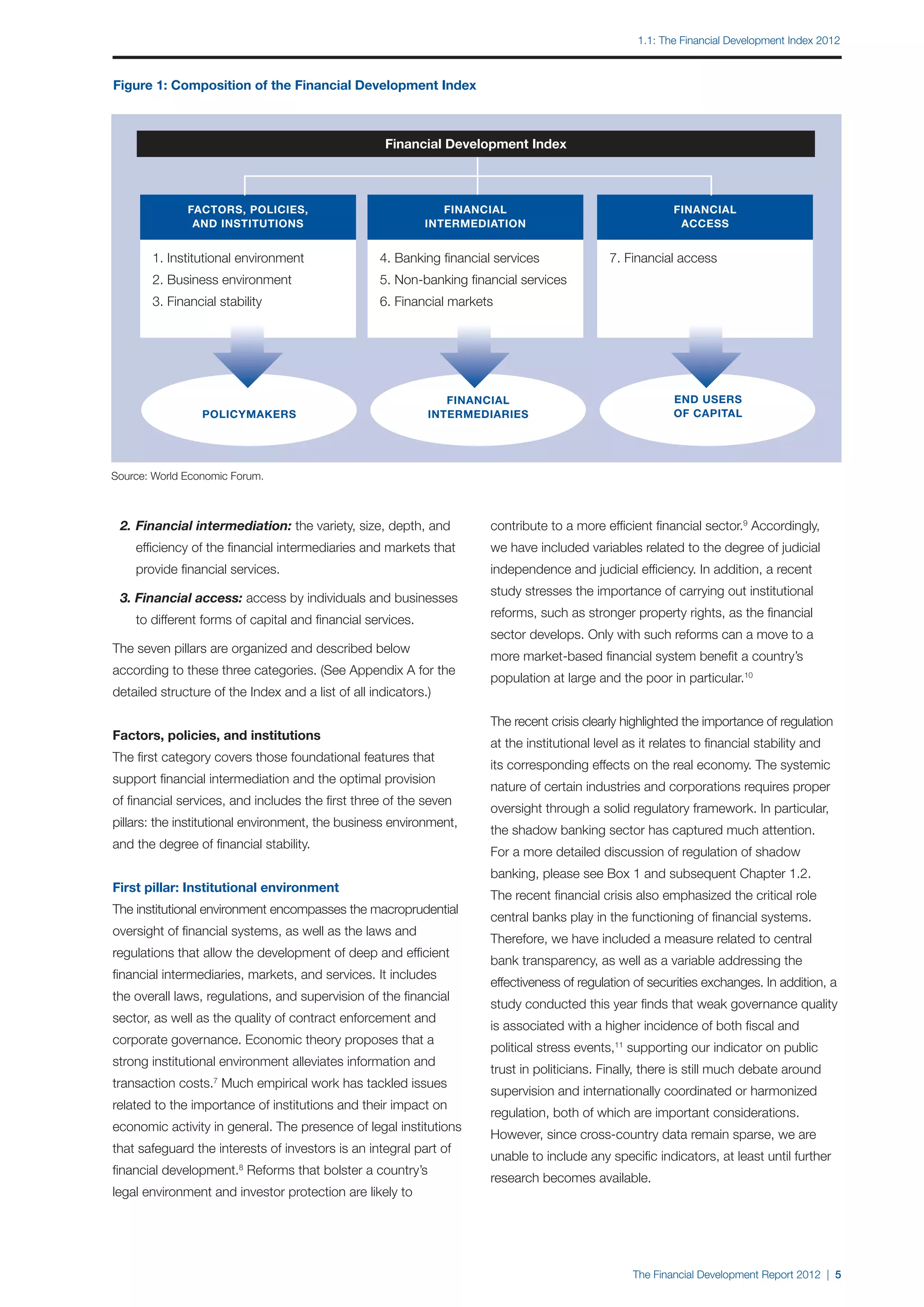
                                                                         three broad categories, as indicated in Figure 1:
impact of crises, it is also important to view financial
                                                                         	 1. 	Factors, policies, and institutions: the foundational
development in terms beyond that of financial stability.
                                                                         		   characteristics that allow the development of financial
                                                                         		   intermediaries, markets, instruments, and services.


4 | The Financial Development Report 2012
1.1: The Financial Development Index 2012


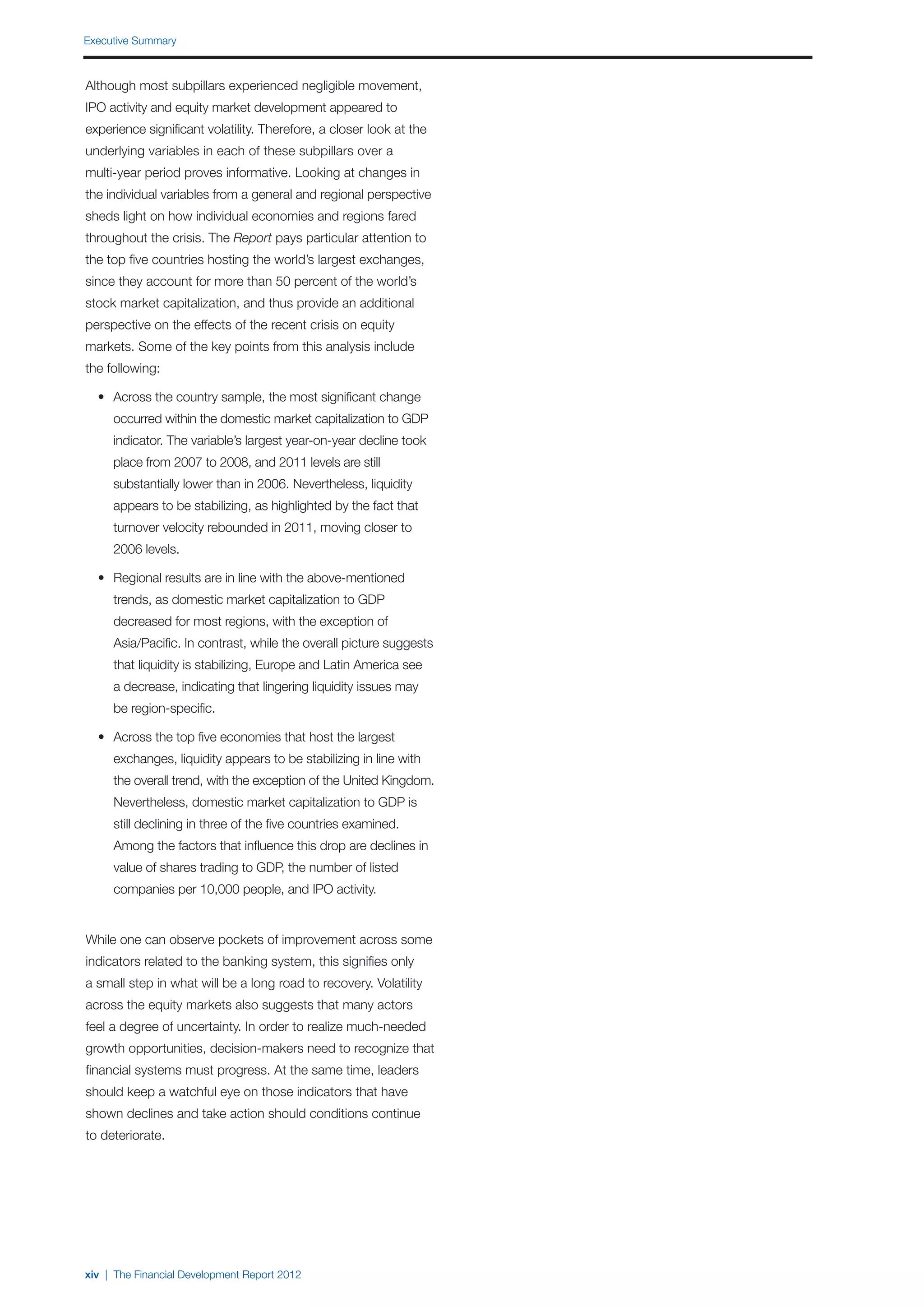
Figure 1: Composition of the Financial Development Index


                                                     Financial Development Index


              FACTORS, POLICIES,                               FINANCIAL                                     FINANCIAL
               AND INSTITUTIONS                             INTERMEDIATION                                    ACCESS


       1. Institutional environment                 4. Banking financial services               7. Financial access
       2. Business environment                      5. Non-banking financial services
       3. Financial stability                       6. Financial markets


                                                                Financial                                    End users
                 Policymakers                                intermediaries                                  of capital


Source: World Economic Forum.


	 2. 	 inancial intermediation: the variety, size, depth, and
     F                                                                  contribute to a more efficient financial sector.9 Accordingly,
		 efficiency of the financial intermediaries and markets that          we have included variables related to the degree of judicial
		 provide financial services.                                          independence and judicial efficiency. In addition, a recent
                                                                        study stresses the importance of carrying out institutional
	 3. Financial access: access by individuals and businesses
                                                                        reforms, such as stronger property rights, as the financial
		 to different forms of capital and financial services.
                                                                        sector develops. Only with such reforms can a move to a
The seven pillars are organized and described below
                                                                        more market-based financial system benefit a country’s
according to these three categories. (See Appendix A for the
                                                                        population at large and the poor in particular.10
detailed structure of the Index and a list of all indicators.)

                                                                        The recent crisis clearly highlighted the importance of regulation
Factors, policies, and institutions
                                                                        at the institutional level as it relates to financial stability and
The first category covers those foundational features that
                                                                        its corresponding effects on the real economy. The systemic
support financial intermediation and the optimal provision
                                                                        nature of certain industries and corporations requires proper
of financial services, and includes the first three of the seven
                                                                        oversight through a solid regulatory framework. In particular,
pillars: the institutional environment, the business environment,
                                                                        the shadow banking sector has captured much attention.
and the degree of financial stability.
                                                                        For a more detailed discussion of regulation of shadow
                                                                        banking, please see Box 1 and subsequent Chapter 1.2.
First pillar: Institutional environment
                                                                        The recent financial crisis also emphasized the critical role
The institutional environment encompasses the macroprudential
                                                                        central banks play in the functioning of financial systems.
oversight of financial systems, as well as the laws and
                                                                        Therefore, we have included a measure related to central
regulations that allow the development of deep and efficient
                                                                        bank transparency, as well as a variable addressing the
financial intermediaries, markets, and services. It includes
                                                                        effectiveness of regulation of securities exchanges. In addition, a
the overall laws, regulations, and supervision of the financial
                                                                        study conducted this year finds that weak governance quality
sector, as well as the quality of contract enforcement and
                                                                        is associated with a higher incidence of both fiscal and
corporate governance. Economic theory proposes that a
                                                                        political stress events,11 supporting our indicator on public
strong institutional environment alleviates information and
                                                                        trust in politicians. Finally, there is still much debate around
transaction costs.7 Much empirical work has tackled issues
                                                                        supervision and internationally coordinated or harmonized
related to the importance of institutions and their impact on
                                                                        regulation, both of which are important considerations.
economic activity in general. The presence of legal institutions
                                                                        However, since cross-country data remain sparse, we are
that safeguard the interests of investors is an integral part of
                                                                        unable to include any specific indicators, at least until further
financial development.8 Reforms that bolster a country’s
                                                                        research becomes available.
legal environment and investor protection are likely to


                                                                                                    The Financial Development Report 2012 | 5
1.1: The Financial Development Index 2012


     Box 1: Drawing boundaries around and through the banking system

     Please see Chapter 1.2 by Darrell Duffie for a full discussion of this topic.


     As operators of payment and settlement systems, banks                In the United States, the discussion has resulted in legislation
     play a critical role in ensuring that buyers of goods and            known as the Volcker Rule, which restricts regulated
     services are able to complete their transactions. Banks also         banks and affiliates from financial trading activities other
     facilitate the use of money through credit intermediation            than those necessary for hedging their own risks, making
     and maturity transformation—they use short-term funding              markets, and underwriting new securities offerings. In
     to finance longer-term assets. Outside the banking system            practice, the ability of regulators to distinguish between
     is the shadow banking system—a complex and ambiguously               hedging and market-making activities is quite limited, and
     defined web of financial institutions that conduct financial         implementation of the Volcker Rule may thus have negative
     intermediation and maturity transformation services for              consequences for market liquidity. New non-regulated
     savers and investors through a variety of securitized funding        market makers may eventually fill this void, and the whole
     methods. Investment banks, prime money-market mutual                 debate over shadow activities will start anew.
     funds, and structured investment vehicles (SIVs) are just
     a few examples of the shadow banks that comprise this                The United Kingdom’s response to the dangers exposed
     universe. Although shadow banks offer close substitutes              by the financial crisis has been to “ring fence” traditional
     to traditional bank lending and deposit taking, they are not         domestic banks from wholesale global banking activities,
     regulated as banks. As a result, they traditionally lack the         such as securities and derivatives trading. Like the Volcker
     safety net that is offered to banks in times of crisis.              Rule, ring fencing may be difficult to implement because
                                                                          of the ambiguity in identifying when a bank’s clients are
     However, in the crisis of 2007-2009, the US safety net               obtaining commercial hedging services and when they
     was extended to failing non-banking financial institutions           are routing demands for speculative positions through the
     such as AIG, Fannie Mae, and Freddie Mac, and to money               bank’s “domestic side” in order to have a safer counterparty.
     market mutual funds suffering runs. The decision to bail
     out members of the shadow banking world did not come                 The debate over defining the regulatory boundaries of the
     without scrutiny. Extending government support without               banking system and additional rules for shadow banks is
     increased regulation raises the threat of moral hazard.              an important one. Policymakers must weigh the costs and
     As a consequence, a debate invariably arises over how                benefits of tighter regulation and the extension of safety
     the traditional and shadow banking systems should                    nets to shadow banks. These decisions will undoubtedly
     be regulated and what impact this will have on market                have profound consequences on effective and efficient
     efficiency and financial stability.                                  financial intermediation, as well as on financial stability.


High-quality corporate governance is believed to encourage                 financial sector liberalization. Financial liberalization generally
financial development, which, in turn, has a positive impact               permits a greater degree of financial depth, which translates
on growth. Contract enforcement is also important,
            12
                                                                           into greater financial intermediation among savers and
because it limits the scope for default among debtors and                  investors. This, in turn, increases the monetization of an
thus promotes compliance. Variables capturing these measures               economy, resulting in a more efficient flow of resources.17
as they relate to the formal transfer of funds from savers                 Empirically, however, capital account liberalization delivers
to investors are included in the pillar. Inadequate investor
                                            13
                                                                           mixed results. Several studies assert that capital account
protection leads to a number of adverse effects, which can                 liberalization has no impact on growth, while others find a
be detrimental to external financing and ultimately to the                 positive, and statistically significant, impact.18 At the same
development of well-functioning capital markets.14 Nevertheless,           time, other work asserts that the relationship is undetermined.
literature warns of over-regulating investor protection.
Specifically, a study of the impact of investor protection                 Given such ambiguity over the impact of capital account
regulation on corporate governance for a number of countries               openness, it is best examined within the context of the legal
shows that stringent investor protection regulation carries                environment. The better a country’s legal and regulatory
either a neutral or negative effect on company performance.        15
                                                                           environment, the greater the benefits from capital account
In general, inadequate enforcement of financial contracts has              openness—and vice versa. Accordingly, within the Index, we
been found to promote credit rationing, thus hindering the                 try to capture the relationship between capital account
overall process of growth.16                                               openness and the level of legal and regulatory development,
                                                                           and have interacted the variables used to measure each
Other important aspects of the institutional environment                   (see Appendix A).
include a country’s capital account openness and domestic


6 | The Financial Development Report 2012
1.1: The Financial Development Index 2012


The presence of both a robust legal and regulatory system            However, our analysis of infrastructure emphasizes measures
and capital account openness provides a positive indication          of information and communication technologies, which are
of the financial development of a country. We have also              particularly important to those firms operating within a financial
interacted the capital account openness variable with the            context because of their data-intensive nature.
level of bond market development, because of research that
asserts the importance of developing domestic bond markets           Another integral aspect of the business environment is the
in advance of full liberalization of the capital accounts.19         cost of doing business in a country. Specifically, research
Assessments of commitment to World Trade Organization                has shown that the cost of doing business is a vital feature
(WTO) trade agreements related to financial services have            of the efficiency of financial institutions. The different costs
also been included and interacted in a similar manner.               of doing business are fundamental to assessing a country’s
                                                                     business environment as well as the type of constraints that
A comparable analysis can be extended to the degree of               businesses may face.24 A better business environment leads
liberalization of the domestic financial sector. The degree of       to better performance of financial institutions, which, in turn,
liberalization is based on whether a country exerts interest         results in a higher degree of financial development. Variables
rate controls (either ceilings or floors), whether credit ceilings   that capture the costs of doing business include the World
exist, and whether foreign currency deposits are allowed. In         Bank’s measures of the cost of starting a business, the cost
general, the better a country’s legal and regulatory environment,    of registering property, and the cost of closing a business.
the greater the impact of domestic financial sector liberalization   Indirect and transaction costs are captured in variables such
on the country’s economic growth. Variables representing             as time to start a business, time to register property, and time
each of these characteristics have been interacted. Research         to close a business.
supports the importance of advanced legal systems and
institutions to the financial sector, holding that the presence      Our analysis considers taxes as another key constraint that
of such institutions is as vital as having both a developed          businesses in the financial sector face. The variables in this
banking sector and an equity market.    20
                                                                     subpillar focus on misrepresentative and burdensome tax
                                                                     policies. We have included a variable to capture high marginal
Second pillar: Business environment                                  tax rates, which have been found to have distortionary effects.
The second pillar focuses on the business environment                As the academic literature is less clear about the effects of
and considers:                                                       absolute rates of taxation and issues of data comparability,
                                                                     we have not included measures related to overall tax rates.
	 •	 the availability of human capital—that is, skilled workers
		 who can be employed by the financial sector and thus
                                                                     Finally, empirical evidence suggests that civic capital
		 provide efficient financial services;
                                                                     encompasses a positive economic payoff and can explain
	 •	 the state of physical capital—that is, the physical and
                                                                     persistent differences in economic development between
		 technological infrastructure; and
                                                                     countries.25 However, current data that capture levels
	 •	 other aspects of the business environment, including            of civic capital do not provide enough coverage of countries
		 taxation policy and the costs of doing business for               in the Index, and we are unable to include such a measure
		 financial intermediaries.                                         until coverage improves.

Facilitating the creation and improvement of human capital
can assist economic growth.21 Empirical evidence supports            Third pillar: Financial stability

this observation and shows positive correlations between             The third pillar addresses the stability of the financial system.

human capital and the degree of financial development.         22    The severe negative impact of financial instability on

Our proxies for the quality of human capital are related to          economic growth emerged sharply in the recent financial

the enrollment levels of tertiary education. We also include         crisis, as well as in past financial crises. Such instability can

other measures that reflect the quality of human capital, such       lead to significant losses to investors, resulting in systemic

as the degree of staff training, the quality of management           banking and corporate crises, currency crises, and sovereign

schools and math and science education, and the availability         debt crises. The third pillar captures the risk of these three

of research and training services.                                   types of crises.


An additional key area is infrastructure. We capture a basic         For the risk of currency crises, we include the change in

measure of the quality of physical infrastructure, which             real effective exchange rate, the current account balance, a

enhances the process of private capital accumulation and             dollarization vulnerability indicator, an external vulnerability

financial depth by increasing the profitability of investment.23     indicator, external debt to GDP, and net international investment


                                                                                                The Financial Development Report 2012 | 7
1.1: The Financial Development Index 2012


position. We apply variables relating to external debt to               The greater the risk of these crises, the greater the likelihood
GDP and net international investment position specifically to           that the various processes of financial intermediation will
developing and developed countries, respectively.                       be hampered, precipitating lower economic growth rates.
                                                                        However, the effects of financial stability on economic growth
The systemic banking crises subpillar combines measures                 can be considered in terms of a trade-off between risk and
of historic banking system instability, an assessment of                innovation/return, and many theories support the view that
aggregate balance sheet strength, and measures of the                   financial innovation drives the financial system toward greater
presence of real estate “bubbles,” as a study finds that                economic efficiency.30 A financial system that is heavily
“turbulence in the real estate market directly affects the stability    regulated may be very stable and never spark a financial
of the banking system.” Historic instability is captured
                           26
                                                                        crisis, but such a controlled system would hamper the
in a measure of the frequency of banking crises since the               financial development and innovation that increases returns,
1970s; more recent banking crises are given greater weight.             diversifies risks, and allocates resources to the highest-return
Empirical research has shown that countries that have gone              investments. Conversely, a financial system that is free and
through systemic banking crises or endured a high degree of             innovative, and very lightly regulated, may eventually become
financial volatility are more susceptible to profound short-term        unstable by triggering unsustainable credit booms and asset
negative impacts on the degree of financial intermediation.       27
                                                                        bubbles that can severely affect growth, returns, and welfare.
We also capture the degree of economic output loss                      Nevertheless, although there is some trade-off between the
associated with crises, weighting output loss from more                 stability of the financial system and its degree of innovation
recent crises more heavily. It is important that prudential             and sophistication, financial stability remains an important
regulation include uniform capital adequacy requirements,               input in the process of financial development.
and accordingly we have included a measurement of Tier 1
capital in this subpillar.28 Some research indicates that               Financial intermediaries and markets
quantitative capital adequacy measures are not always                   The second category of pillars measures the degree of
accurate measures of the financial strength of banks in                 development of the financial sector, as expressed in the
developing countries.29 Accordingly, we have included a                 different types of intermediaries. These three pillars are banking
financial strength indicator that balances quantitative measures        financial services, non-banking financial services (e.g., investment
of balance-sheet strength with qualitative assessments of               banks and insurance firms), and financial markets.
banks’ abilities to meet their obligations to depositors and
creditors. A measure of share of government bond holdings               Consensus exists on the positive relationship between the
by domestic banks would also be valuable. However,                      size and depth of the financial system and the supply and
because cross-country data are limited, we are unable to                robustness of financial services that are important contribu-
incorporate this measure into the Index.                                tors to economic growth.31 The size of financial markets (total
                                                                        financial assets within a country) is an important determinant
The last type of crisis captured within the financial stability         of savings and investment.32 Moreover, the larger a financial
pillar is sovereign debt crisis. Manageability of public debt,          system, the greater its ability to benefit from economies of
defined as total public debt as a percent of GDP, is included           scale, given the significant fixed costs prevailing in financial
in this pillar. The ability of countries to pay this debt in full and   intermediaries’ activities. A larger financial system tends to
in a timely manner is captured in sovereign credit ratings,             relieve credit constraints, facilitating borrowing by firms and
an important proxy for the risk of a crisis. In particular, these       further improving the process of savings mobilization and the
variables increase in importance along with the transfer of             channelling of savings to investors. Given that a large financial
debt from the private sector to the public sector. These                system should allocate capital efficiently and better monitor
data were calculated as an average of both local currency               the use of funds, improved access to financing will tend to
sovereign credit ratings and foreign currency sovereign credit          amplify the resilience of an economy to shocks.
ratings. A high sovereign credit rating signifies less likelihood
of default occasioned by a sovereign debt crisis. Credit                The depth (total financial assets as a percent of GDP) of a
default swaps provide a quantitative, market-based indicator            financial system is an important component of financial
of the ability of a country to repay its debt. In addition, we          development, as it contributes to economic growth rates
include macroeconomic measures, such as inflation and                   across countries.33 Measures of size and depth have been
GDP growth, as these influence the ability of countries to              included in each of the three financial intermediation pillars.
service their debt.
                                                                        Fourth pillar: Banking financial services
                                                                        Although the third pillar captures some of the negative impact
                                                                        that an unstable banking system can have on an economy,
                                                                        banks also play a vital role in supporting economic growth.

8 | The Financial Development Report 2012
1.1: The Financial Development Index 2012


This role is captured in the fourth pillar. Bank-based financial        the more capital it can channel from savers to investors.
systems emerge to improve acquisition of financial                      This enhances financial development, which in turn leads
information and to lower transaction costs, as well as to               to greater economic growth. Currently, we are witnessing
allocate credit more efficiently, which is particularly important       growth across many emerging-market banks. Box 2 and
in developing economies.                                                subsequent Chapter 1.3 discuss this in more detail.
                                                                        Measures of size include deposit money bank assets to GDP,
The efficient allocation of capital in a financial system generally     M2 to GDP, and private credit to GDP.
occurs through bank-based systems or market-based
financial systems.34 Some research asserts that banks finance           Another key aspect of the banking system is its efficiency.
growth more effectively and efficiently than market-based               Direct measures of efficiency captured in the Index are aggregate
systems, particularly in underdeveloped economies,                      operating ratios, such as bank operating costs to assets and
where non-bank financial intermediaries are generally less              the ratio of non-performing loans to total loans. An indirect
sophisticated.35 Research also shows that, compared with                measure of efficiency is public ownership. Publicly owned
other forms of financial intermediation, well-established banks         banks tend to be less efficient, impeding credit allocation and
form stronger ties with the private sector, a relationship that         the channelling of capital, and thus slowing financial
enables them to acquire information about firms more                    intermediation. Recent literature suggests that banking
efficiently and to persuade firms to pay their debts in a more          sector development has significant and positive effects on
timely manner.  36
                     Advocates of bank-based systems argue              firm innovation in countries with lower government ownership
that banks that are unimpeded by regulatory restrictions tend           of banks, but insignificant and sometimes even significantly
to benefit from economies of scale in the process of                    negative effects in countries with higher government
collecting information and can thus enhance industrial growth.          ownership of banks.38
Banks are also key players in eradicating liquidity risk, which
causes them to increase investment in high-return, illiquid             Measures of operating efficiency may provide an incomplete
assets and speed up the process of economic growth.         37
                                                                        picture of the efficacy of the banking system if it is not profitable.
One of the key measures of the efficacy of the banking system           Accordingly, we also include an aggregate measure of bank
captured in this pillar is size. The larger the banking system,         profitability. At the same time, if banks are highly profitable while


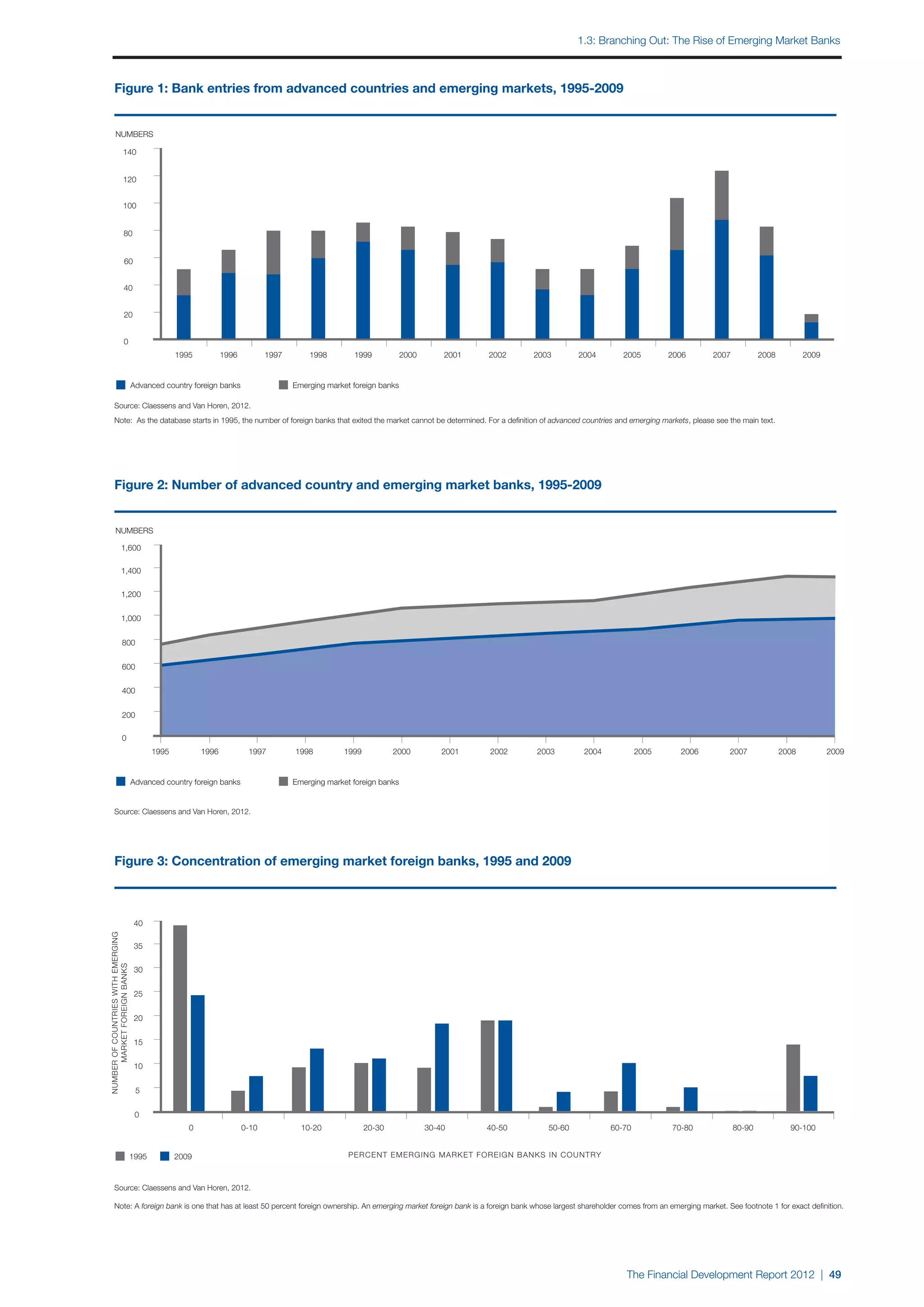
    Box 2: Branching out: The rise of emerging market banks

    Please see Chapter 1.3 by Neeltje van Horen for a full discussion of this topic.

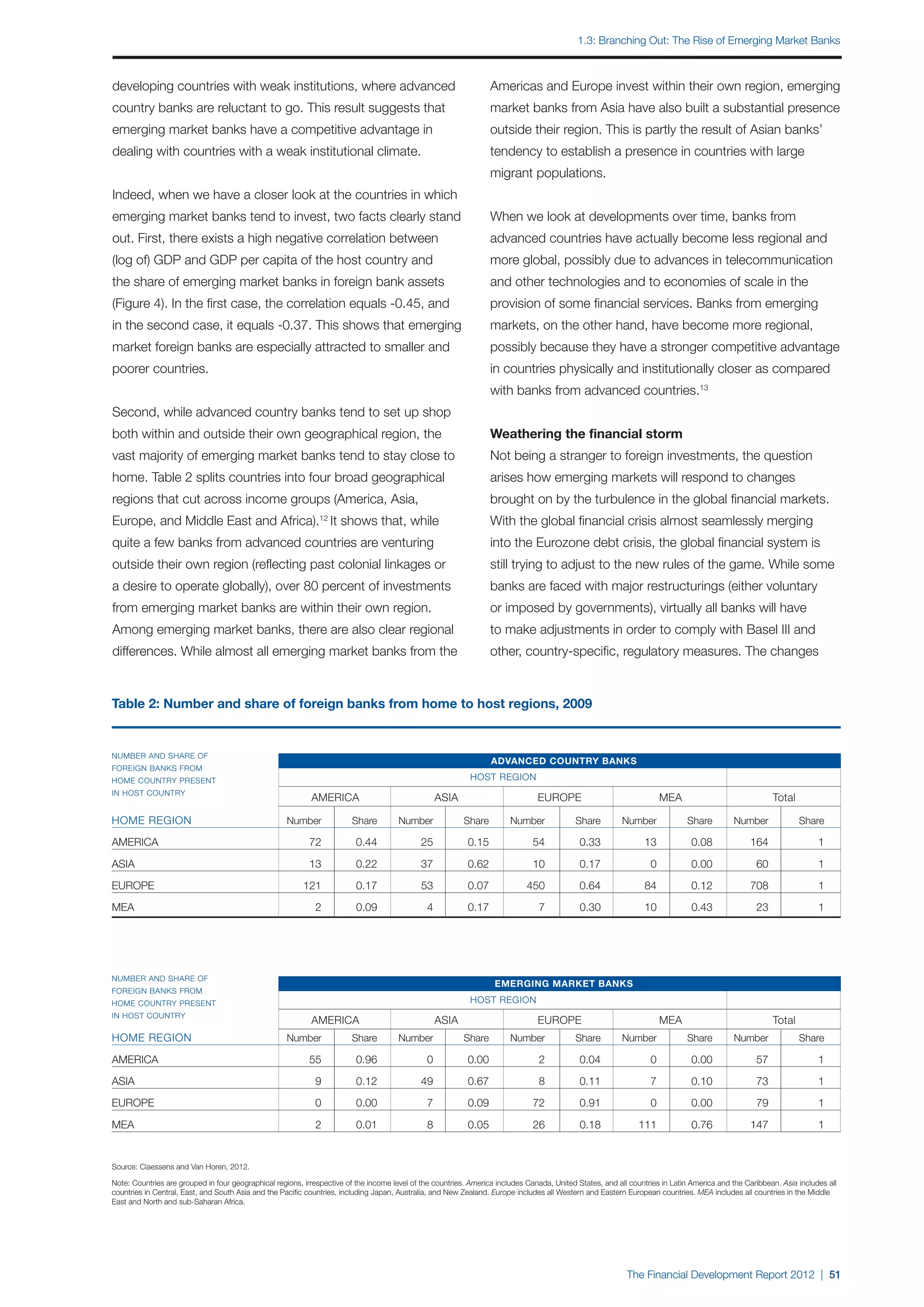
    The global financial crisis and subsequent sovereign               Whereas banks from advanced economies continue to
    debt crisis have left many banks in advanced economies             seek expansion opportunities at the global level, emerging
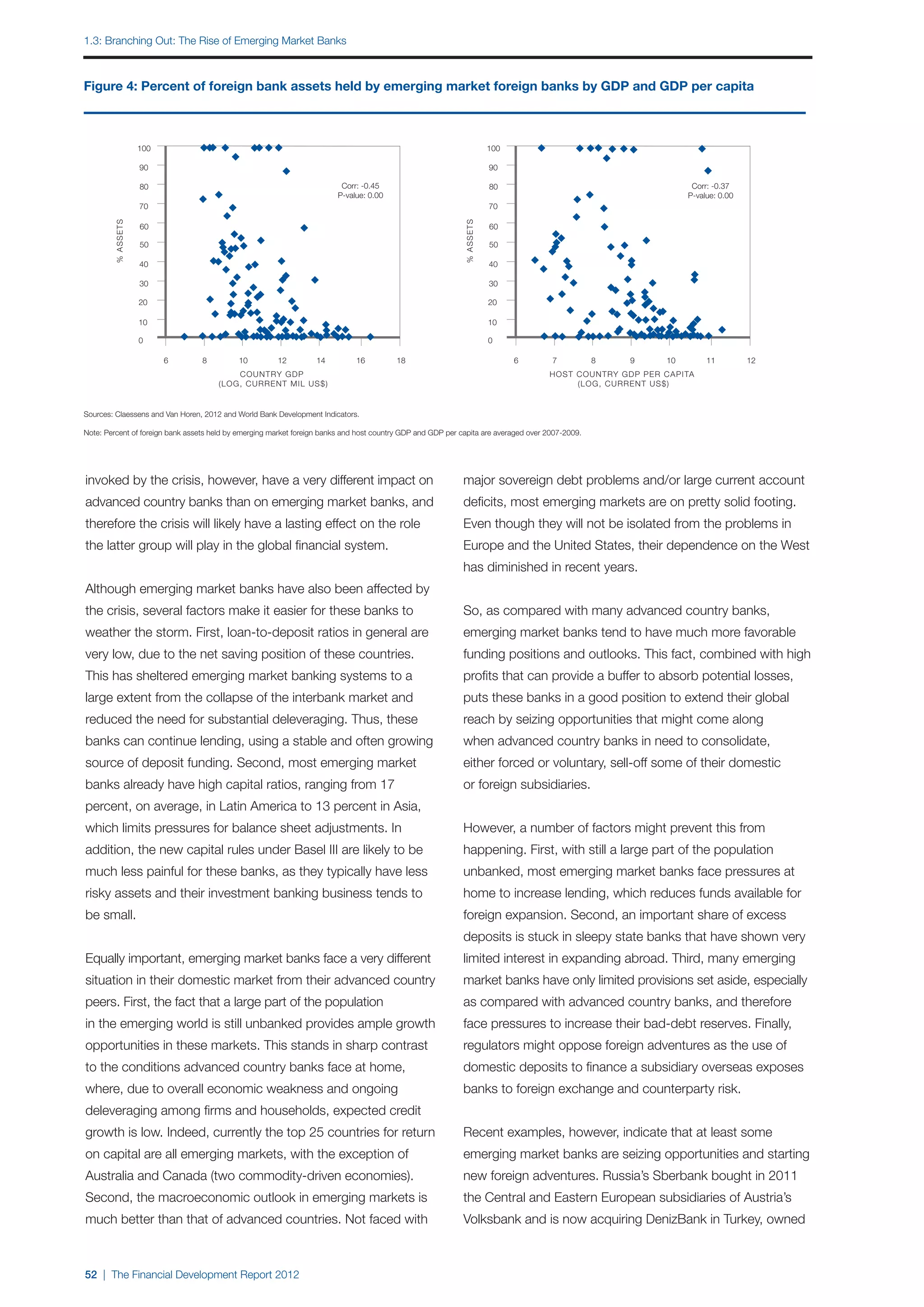
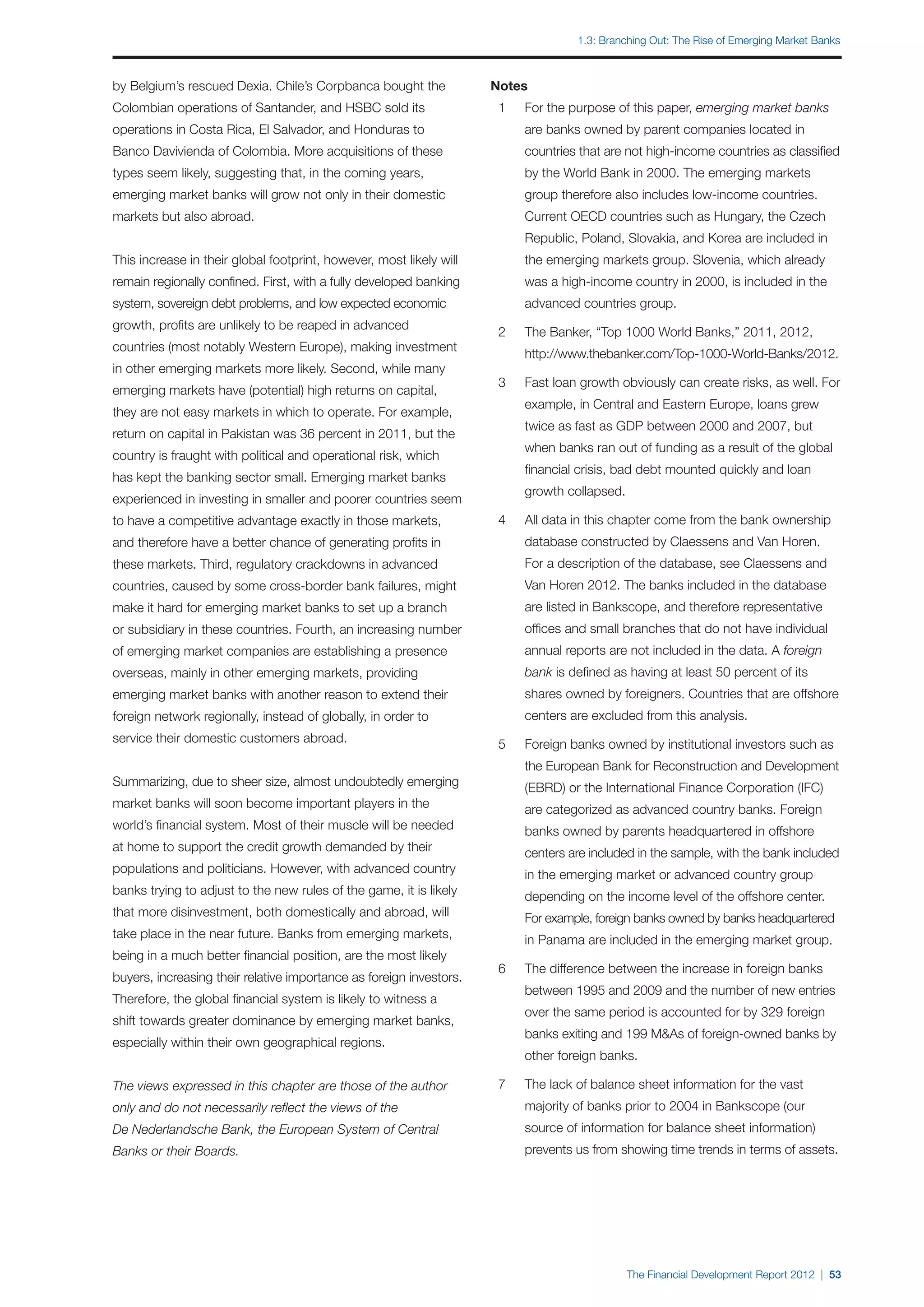
    teetering on the brink of collapse. In emerging markets, on        market banks tend to invest in smaller, less-developed
    the other hand, banks have not only weathered the storm,           countries within their own region. This trend is highlighted
    but even thrived—many emerging market banks have                   by the fact that 80 percent of investments from emerging
    vaulted up the global size rankings. China’s ICBC is the           market banks are within their own region. This regional
    world’s biggest bank in terms of market value, and seven           effect may be due to the competitive advantage that
    additional emerging market banks from China, Brazil, and           emerging market banks have in working in institutionally
    Russia are among the top 25 banking financial institutions.        weak and politically tumultuous environments.
    This impressive rise is further validated by the fact that, as
    recently as 2005, no emerging market bank was in the list          Although the recent financial turmoil has put the global
    of top 25 largest institutions by market capitalization.           banking system in an increasingly precarious position,
                                                                       emerging market banks find themselves poised to capitalize
    The expansion of emerging market banks has not been                on this uncertain environment. Domestically, emerging
    confined to domestic markets. Rather, emerging market              market banks will benefit from a large unbanked population,
    investment in foreign banks has grown, in terms of both            as well as the strong credit demand that is needed to
    number of host countries and number of investors. From             finance economic growth. Banks from emerging markets
    1995 to 2009, the number of emerging markets that                  are also expected to play a more active role as foreign
    pursued banking activities in other countries increased            investors, particularly within their own geographical
    from 45 to 60. Low-income countries are the primary                regions. The expansion of emerging market banks at both
    investment locale for emerging market banks, and as of             the domestic and regional levels will likely represent a
    2009, South Africa, Russia, Turkey, and Brazil were the            considerable shift as banks from advanced economies are
    most active investors, owning 31, 29, 21, and 17 foreign           forced to make structural adjustments in order to adhere
    banks, respectively.                                               to the rules imposed by international and domestic regulators.


                                                                                                     The Financial Development Report 2012 | 9
1.1: The Financial Development Index 2012


performing poorly in the operating measures, then this may            quite strongly even in developing countries.43 Insurance also
indicate a lack of competition along with high undue inefficiency.    creates liquidity and facilitates the process of building
                                                                      economies of scale in investment, thereby improving overall
A third key aspect of the efficacy of the banking system is the       financial efficiency.44
role of financial information disclosure within the operation
of banks. Policies that induce correct information disclosure,        Sixth pillar: Financial markets
authorize private-sector corporate control of banks, and              Recent literature finds that, as economies develop, they
motivate private agents to exercise corporate control, tend           increase their demand for the services provided by financial
to encourage bank development, operational efficiency,                markets relative to those provided by banks, so that financial
and stability. However, due to limited cross-country data
              39
                                                                      markets become comparatively more important as economies
availability, we are not able to include variables that capture       grow.45 The four major types of financial markets include
this. On the other hand, cross-country data are available             bond markets (for both government and corporate bonds),
for the coverage of private credit bureaus and public credit          stock markets where equities are traded, foreign exchange
registries, so we include these measures in the financial             markets, and derivatives markets.
information disclosure subpillar.
                                                                      Stock market liquidity has a significant positive impact on
Fifth pillar: Non-banking financial services                          capital accumulation, productivity growth, and current and
Non-bank financial intermediaries—such as broker-dealers,             future rates of economic growth.46 More generally, economic
traditional asset managers, alternative asset managers, and           theory suggests that stock markets encourage long-term
insurance companies—can be both an important complement               growth by promoting specialization, acquiring and disseminating
to banks and a potential substitute for them. Their complementary     information, and mobilizing savings efficiently to promote
role lies in their efforts to fill any vacuum created by commercial   investment.47 Research also shows that, as countries become
banks. Their competition with banks allows both parties to            wealthier, stock markets become more active and efficient
operate more efficiently in meeting market needs. Activities of       relative to banks.48 Despite bond markets having received
non-bank financial intermediaries include their participation in      little empirical attention, some research shows that they play
securities markets as well as the mobilization and allocation         an important role in financial development and the effective
of financial resources of a longer-term nature—for example,           allocation of capital.49
in insurance activities. Because of inadequate regulation and
oversight, certain non-banking financial services, such as            Derivatives markets are an important aspect of this pillar
securitization, played a detrimental role in the recent financial     because they can significantly improve risk management and
crisis as part of the so-called shadow banking system.                risk diversification. More developed derivatives markets can
However, within the context of a sound legal and regulatory           enhance the confidence of international investors and financial
framework, such services fulfill a unique and vital role as           institutions and encourage these agents to participate in
financial intermediaries.                                             these markets. Derivatives markets are generally small in
                                                                      emerging markets. A stronger legal and regulatory environment
The degree of development of non-bank financial intermediaries        can enhance the development of such markets.50
is a good proxy for a country’s overall level of financial
development.40 Empirical research has found that both banks           Financial access
and non-bank financial intermediaries are larger, more active,        This third and final category is comprised of one pillar that
and more efficient in developed economies. Advocates of
                                               41
                                                                      represents measures of access to capital and financial services.
the market-based system (i.e., non-banks) point to the fact
that non-bank financial intermediaries are able to finance            Seventh pillar: Financial access
innovative and high-risk projects.42 There are three main areas       The measures represented in this last pillar span areas of
of non-bank financing activity that we capture in the Index:          access to capital through both commercial and retail channels.
initial public offerings (IPO), mergers and acquisitions (M&A),       Empirically, greater access to financial services is associated
and securitization.                                                   with the usual proxies for financial development and the
                                                                      resulting economic growth.51 The presence of financial
Additionally, we include a number of variables on the insurance       services per se, as reflected by size and depth, does not
sector, which can facilitate trade and commerce by providing          necessarily imply that different types of users within an
ample liability coverage. Recent empirical research has found         economy have access to them. Thus, it is access that is
a strong positive relationship between insurance sector devel-        integral to our analysis.
opment and economic growth; this relationship holds


10 | The Financial Development Report 2012
1.1: The Financial Development Index 2012


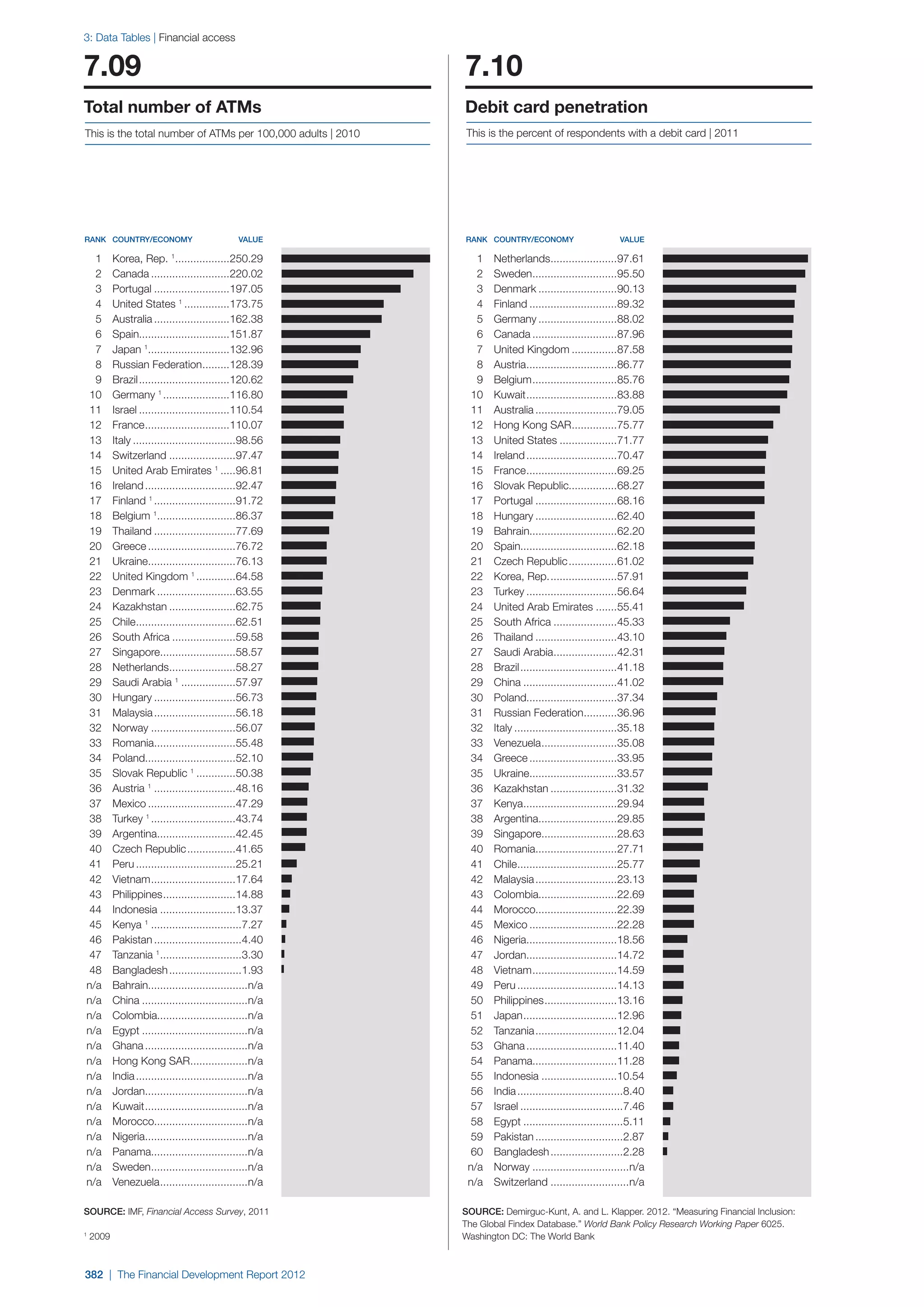
In light of the different channels—and issues—associated                   	 •	 The market penetration of bank accounts indicator has
with commercial and retail access, we separate our measures                		 changed from the number of commercial bank accounts
within this pillar accordingly. Commercial access includes                 		 per 100,000 adults to the percent of the population
measures such as access to venture capital, commercial                     		 (15 years or older) with an account at a formal financial
loans, and local equity markets. Retail access includes measures           		 institution;
such as access to microfinance and the penetration of bank
                                                                           	 •	 The total number of point-of-sale (POS) devices indicator
accounts and ATMs.
                                                                           		 was replaced with debit card penetration (the percent of
                                                                           		 respondents with a debit card); and
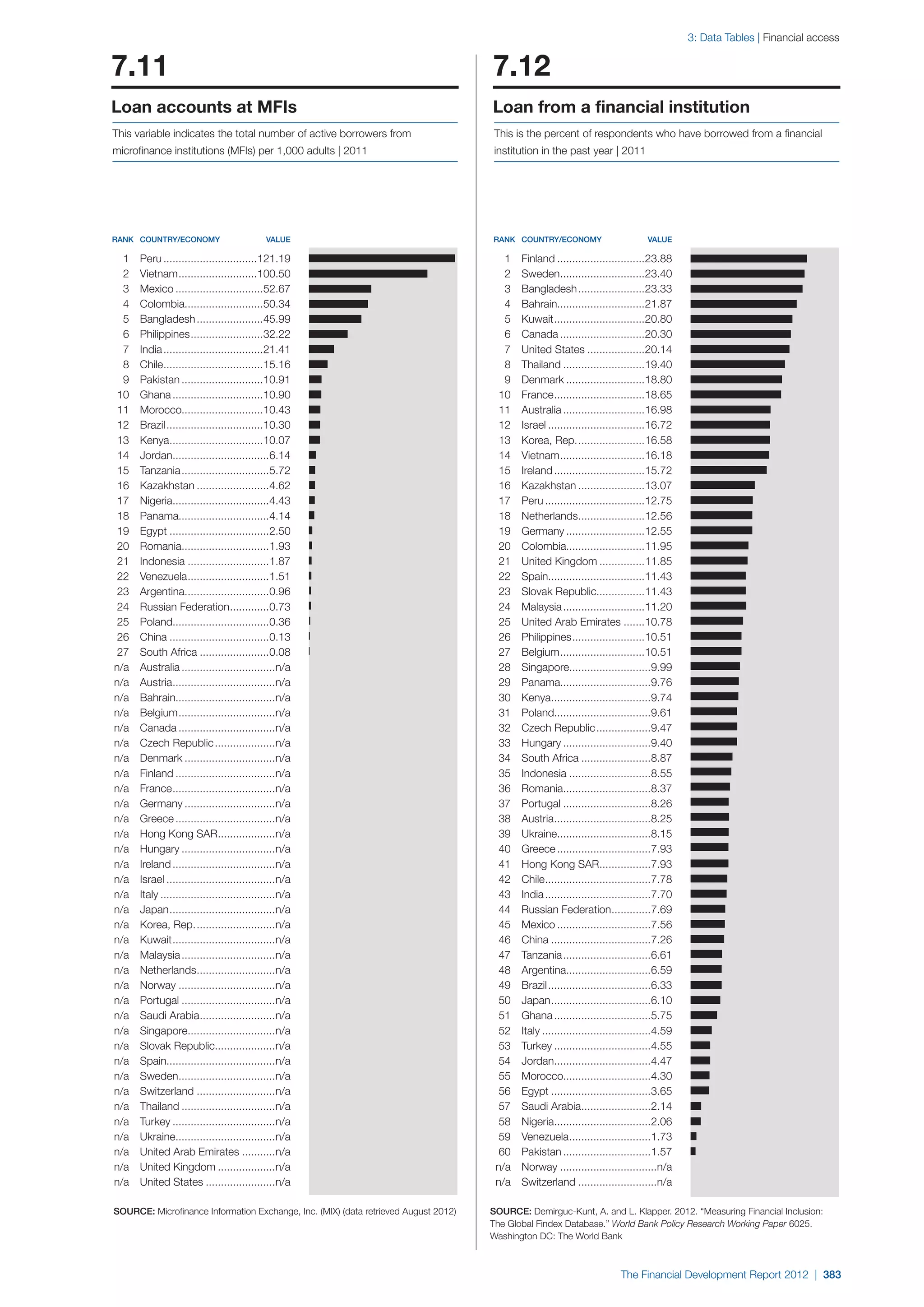
The importance of financial access for small- and medium-
                                                                           	 •	 A loan from a financial institution indicator (percent of
sized enterprises (SMEs), which are critical in driving economic
                                                                           		 respondents who have borrowed from a financial
growth in many countries, has recently been highlighted by
                                                                           		 institution in the past year) was added.
organizations such as the G-20. Depending on how they are
defined (and they are defined differently in various countries),
SMEs can have financial needs related to both retail and                   We have incorporated some title changes in the insurance
commercial access. There is a shortage of global data related              subpillar to reflect the common understanding of the variables
to SME finance. However, the G-20 and other multilateral                   we use:
organizations have highlighted the need to provide SMEs with               	 •	 Indicator 5.07 has changed from life insurance density to
access to financing, and we will incorporate new data into the             		 life insurance penetration;
Index when they become available.
                                                                           	 •	 Indicator 5.08 has changed from non-life insurance
                                                                           		 density to non-life insurance penetration;
Access to financial services by end users is influenced by
the performance of other pillars. Accessibility, along with the            	 •	 Indicator 5.10 has changed from life insurance coverage
size and depth of the entire financial system as captured in               		 to life insurance density; and
the previous pillars, has a significant effect on a country’s real         	 •	 Indicator 5.11 has changed from non-life insurance
activity, economic growth, and overall welfare.                            		 coverage to non-life insurance density.

Adjustments to the Financial Development Index this year                   The calculation of credit default swap spreads has been slightly
The overall structure of the Financial Development Index                   modified and now uses the average of annual daily spot rates
remains the same as in last year’s Report. There are still                 to reflect some of the price volatility throughout the year.
seven pillars in the Index, with the same associated subpillars.
Each of these subpillars contains the constituent variables                “A New Database on Financial Development and Structure”
that make up the Index. Appendix A lays out the complete                   by Beck et al. will now be updated as part of the World
structure and methodological detail of the Index.                          Bank’s Global Financial Development Database. The following
                                                                           indicators are now sourced from this database:
We have made some changes to the Index this year at the
                                                                           Pillar 4: Banking financial services
indicator level. We removed the centralization of economic
policymaking indicator and the financial stress index from the             	 •	 (4.01) Deposit money bank assets to GDP
legal and regulatory issues and banking system stability                   	 •	 (4.02) Central bank assets to GDP
subpillars, respectively. In the case of centralization of
                                                                           	 •	 (4.03) Financial system deposits to GDP
economic policymaking, the indicator is no longer available.
As for the Financial Stress Index, we believe that it does not             	 •	 (4.05) Private credit to GDP
reflect issues in the banking sector, since it focuses mostly on           	 •	 (4.06) Bank deposits to GDP
stress in securities markets and exchange rates.
                                                                           	 •	 (4.08) Aggregate profitability indicator

Because the quality of telephone infrastructure variable is no             	 •	 (4.09) Bank overhead costs
longer available, we have replaced it with quality of electricity          Pillar 6: Financial markets
supply. In addition, the Internet users’ indicator in the infrastructure
                                                                           	 •	 (6.09) Stock market turnover ratio
subpillar has changed from fixed (wired) Internet subscriptions
per 100 inhabitants to percent of individuals using the Internet.          	 •	 (6.10) Stock market capitalization to GDP

Last, we have replaced and added some new variables in                     	 •	 (6.11) Stock market value traded to GDP
the retail access subpillar in order to capture not only the
                                                                           	 •	 (6.12) Number of listed companies per 10,000 people
availability of financial services but also the usage:


                                                                                                     The Financial Development Report 2012 | 11
1.1: The Financial Development Index 2012


The coverage of this year’s Report has increased from 60 to         Table 1: The Financial Development Index 2012
62 economies. This change will lower the year-on-year ranks         rankings: Comparison with 2011
of countries that score below the newly covered countries.
These countries are Kenya, Greece, and Portugal. Tunisia,
which was covered in last year’s Report, is excluded because        	  		                          	           2012 	
                                                                    		                 2012	 2011	           score	   Change
an important structural break in the Executive Opinion data         	 Country/economy	Rank	Rank	               (1–7)	In score

makes comparisons with previous years difficult. Although we        	   Hong Kong SAR	           1	     1	    5.31	    +0.15
did not report the results this year, we hope to include Tunisia    	   United States	           2	     2	    5.27	    +0.12
                                                                    	   United Kingdom	          3	     3	    5.21	    +0.21
again in the future.
                                                                    	   Singapore	               4	     4	    5.10	    +0.14
                                                                    	   Australia	               5	     5	    5.01	    +0.08
The Financial Development Index 2012 rankings                       	   Canada	                  6	     6	    5.00	    +0.14
                                                                    	   Japan	                   7	     8	    4.90	    +0.19
The overall rankings and scores for this year’s Financial
                                                                    	   Switzerland	             8	     9	    4.78	    +0.15
Development Report can be seen in Table 1, along with the           	   Netherlands	             9	     7	    4.73	    +0.02
2011 ranking, the Index score, and the change in score              	   Sweden	                 10	   11	     4.71	    +0.20
                                                                    	   Germany	                11	   14	     4.61	    +0.28
from last year. In addition, this year’s pillar results can be
                                                                    	   Denmark	                12	   15	     4.53	    +0.22
found in Table 2. Looking broadly across the results for the        	   Norway	                 13	   10	     4.52	    +0.01
62 countries covered in the Index, we see some general              	   France	                 14	   12	     4.43	    -0.01
                                                                    	   Korea, Rep.	            15	   18	     4.42	    +0.29
trends emerge.
                                                                    	   Belgium	                16	   13	     4.30	    -0.08
                                                                    	   Finland	                17	   21	     4.24	    +0.13
Overall trends in 2012 rankings                                     	   Malaysia	               18	   16	     4.24	    -0.01
                                                                    	   Spain	                  19	    17	    4.22	    -0.02
There has been minimal change within the top-ranked countries
                                                                    	   Ireland	                20	    22	    4.14	    +0.04
of the Index. The rank of the top six countries remains             	   Kuwait	                 21	    28	    4.03	    +0.31
unchanged, while Japan (7th), Switzerland (8th), and Sweden         	   Austria	                22	    20	    4.01	    -0.10
                                                                    	   China	                  23	    19	    4.00	    -0.12
(10th) all move up one spot. The most movement can be
                                                                    	   Israel	                 24	    26	    3.94	    +0.07
seen in the two-rank drop of the Netherlands, from 7th to 9th.      	   Bahrain	                25	    24	    3.93	    +0.04
Norway (13th) fell three spots, which allowed Sweden                	   United Arab Emirates	   26	    25	    3.84	    -0.05
                                                                    	   Portugal	               27	   n/a	    3.76	      n/a
to enter the top 10.
                                                                    	   South Africa	           28	    29	    3.71	    +0.08
                                                                    	   Chile	                  29	    31	    3.69	    +0.08
This year’s relative movement in rank, as measured by the           	   Italy	                  30	    27	    3.69	    -0.16
                                                                    	   Saudi Arabia	           31	    23	    3.68	    -0.22
standard deviation of year-over-year rank changes, is smaller
                                                                    	   Brazil	                 32	    30	    3.61	    -0.00
than in any other year since the Report was first published.        	   Jordan	                 33	    32	    3.56	    +0.08
This is consistent with the notion that the Report provides         	   Thailand	               34	    35	    3.55	    +0.22
                                                                    	   Czech Republic	         35	    34	    3.49	    +0.08
only a snapshot of where financial systems currently are in
                                                                    	   Panama	                 36	    37	    3.42	    +0.19
what is sure to be a long recovery process.                         	   Poland	                 37	    33	    3.41	    -0.05
                                                                    	   Slovak Republic	        38	    38	    3.34	    +0.12
                                                                    	   Russian Federation	     39	    39	    3.30	    +0.12
In Figure 2, which provides an overview of the pillar and
                                                                    	   India	                  40	    36	    3.29	    -0.00
subpillar analysis, dark-shaded areas have higher movement          	   Peru	                   41	    40	    3.28	    +0.12
in rank than lightly-shaded areas. At the pillar level, the         	   Turkey	                 42	    43	    3.27	    +0.13
                                                                    	   Mexico	                 43	    41	    3.25	    +0.09
institutional environment, business environment, and
                                                                    	   Hungary	                44	    47	    3.16	    +0.13
non-banking financial services pillars exhibit lower rank           	   Morocco	                45	    42	    3.15	    -0.00
movement relative to prior years. Conversely, the financial         	   Colombia	               46	    45	    3.15	    +0.06
                                                                    	   Kazakhstan	             47	    46	    3.13	    +0.06
stability, banking financial services, financial markets, and
                                                                    	   Greece	                 48	   n/a	    3.12	      n/a
financial access pillars show greater movement in rank              	   Philippines	            49	    44	    3.12	    -0.00
compared with previous years. The subpillar analysis highlights     	   Indonesia	              50	    51	    2.95	    +0.03
                                                                    	   Romania	                51	    52	    2.93	    +0.08
some of the areas that are driving these changes. In many
                                                                    	   Vietnam	                52	    50	    2.92	    -0.05
cases, changes in subpillar rank are due to movement in the         	   Egypt	                  53	    49	    2.78	    -0.22
underlying data. However, other changes may be a result of          	   Kenya	                  54	   n/a	    2.75	      n/a
                                                                    	   Argentina	              55	    53	    2.68	    -0.01
adjustments to the methodology of this year’s Index. Therefore,
                                                                    	   Ghana	                  56	    58	    2.67	    +0.12
a closer examination of the subpillars, as well as the underlying   	   Bangladesh	             57	    56	    2.62	    +0.04
indicators within each pillar that has seen higher relative         	   Pakistan	               58	    55	    2.61	    +0.03
                                                                    	   Ukraine	                59	    54	    2.56	    -0.06
movements, will prove informative.
                                                                    	   Tanzania	               60	    57	    2.55	    -0.00
                                                                    	   Nigeria	                61	    60	    2.46	    +0.03
                                                                    	   Venezuela	              62	    59	    2.37	    -0.07


12 | The Financial Development Report 2012
1.1: The Financial Development Index 2012


Table 2: Financial Development Index 2012


        OVERALL INDEX                                                        FACTORS, POLICIES, AND INSTITUTIONS

                                            1st pillar:                                2nd pillar:                                3rd pillar:
	 	                         	          	   	 	                         	          	   	 	                      	             	   	 	                           	          	
	                                          	
                                             Institutional   environment              	
                                                                                        Business  environment	                   	
                                                                                                                                   Financial    stability	
	 Country/economy	Rank	 score              	 Country/economy	Rank	 score              	 Country/economy	Rank	 score              	 Country/economy	Rank	 score

	 Hong Kong SAR	           1	   5.31       	 Singapore	               1	   6.24       	 Singapore	               1	   6.03       	 Saudi Arabia	              1	   6.11
	 United States	           2	   5.27       	 United Kingdom	          2	   6.00       	 Hong Kong SAR	           2	   6.03       	 Switzerland	               2	   5.99
	 United Kingdom	          3	   5.21       	 Norway	                  3	   5.98       	 Denmark	                 3	   5.89       	 Singapore	                 3	   5.67
	 Singapore	               4	   5.10       	 Sweden	                  4	   5.94       	 Finland	                 4	   5.88       	 United Arab Emirates	      4	   5.58
	 Australia	               5	   5.01       	 Finland	                 5	   5.93       	 Norway	                  5	   5.88       	 Tanzania	                  5	   5.51
	 Canada	                  6	   5.00       	 Canada	                  6	   5.90       	 Switzerland	             6	   5.85       	 Norway	                    6	   5.44
	 Japan	                   7	   4.90       	 Netherlands	             7	   5.90       	 Netherlands	             7	   5.83       	 Chile	                     7	   5.35
	 Switzerland	             8	   4.78       	 Denmark	                 8	   5.85       	 United Kingdom	          8	   5.75       	 Hong Kong SAR	             8	   5.35
	 Netherlands	             9	   4.73       	 Hong Kong SAR	           9	   5.77       	 Canada	                  9	   5.72       	 Australia	                 9	   5.26
	 Sweden	                 10	   4.71       	 Germany	                10	   5.75       	 Sweden	                 10	   5.64       	 Malaysia	                 10	   5.24
	 Germany	                11	   4.61       	 Ireland	                11	   5.74       	 Germany	                11	   5.61       	 Czech Republic	           11	   5.19
	 Denmark	                12	   4.53       	 Switzerland	            12	   5.69       	 Australia	              12	   5.60       	 Kuwait	                   12	   5.13
	 Norway	                 13	   4.52       	 United States	          13	   5.65       	 United States	          13	   5.58       	 Canada	                   13	   5.06
	 France	                 14	   4.43       	 Belgium	                14	   5.62       	 Ireland	                14	   5.46       	 Mexico	                   14	   5.05
	 Korea, Rep.	            15	   4.42       	 Japan	                  15	   5.58       	 Korea, Rep.	            15	   5.41       	 Peru	                     15	   5.04
	 Belgium	                16	   4.30       	 Austria	                16	   5.57       	 Bahrain	                16	   5.35       	 Netherlands	              16	   4.98
	 Finland	                17	   4.24       	 France	                 17	   5.49       	 Saudi Arabia	           17	   5.29       	 South Africa	             17	   4.94
	 Malaysia	               18	   4.24       	 Australia	              18	   5.48       	 Austria	                18	   5.28       	 Germany	                  18	   4.93
	 Spain	                  19	   4.22       	 Israel	                 19	   5.17       	 Japan	                  19	   5.27       	 Japan	                    19	   4.93
	 Ireland	                20	   4.14       	 Bahrain	                20	   5.17       	 United Arab Emirates	   20	   5.18       	 China	                    20	   4.89
	 Kuwait	                 21	   4.03       	 Malaysia	               21	   5.12       	 Belgium	                21	   5.16       	 Denmark	                  21	   4.84
	 Austria	                22	   4.01       	 Portugal	               22	   5.01       	 France	                 22	   5.12       	 Finland	                  22	   4.82
	 China	                  23	   4.00       	 United Arab Emirates	   23	   4.94       	 Portugal	               23	   4.93       	 Slovak Republic	          23	   4.82
	 Israel	                 24	   3.94       	 Spain	                  24	   4.93       	 Chile	                  24	   4.89       	 Brazil	                   24	   4.82
	 Bahrain	                25	   3.93       	 South Africa	           25	   4.74       	 Malaysia	               25	   4.85       	 Sweden	                   25	   4.79
	 United Arab Emirates	   26	   3.84       	 Chile	                  26	   4.60       	 Hungary	                26	   4.71       	 Israel	                   26	   4.70
	 Portugal	               27	   3.76       	 Hungary	                27	   4.53       	 Kuwait	                 27	   4.68       	 Belgium	                  27	   4.56
	 South Africa	           28	   3.71       	 Saudi Arabia	           28	   4.42       	 Spain	                  28	   4.67       	 Colombia	                 28	   4.52
	 Chile	                  29	   3.69       	 Jordan	                 29	   4.42       	 Italy	                  29	   4.64       	 Panama	                   29	   4.47
	 Italy	                  30	   3.69       	 Greece	                 30	   4.35       	 Kazakhstan	             30	   4.61       	 Bahrain	                  30	   4.47
	 Saudi Arabia	           31	   3.68       	 Panama	                 31	   4.28       	 Israel	                 31	   4.60       	 Austria	                  31	   4.42
	 Brazil	                 32	   3.61       	 Italy	                  32	   4.27       	 Russian Federation	     32	   4.50       	 Kazakhstan	               32	   4.41
	 Jordan	                 33	   3.56       	 Thailand	               33	   4.22       	 Turkey	                 33	   4.49       	 Ghana	                    33	   4.40
	 Thailand	               34	   3.55       	 Korea, Rep.	            34	   4.18       	 Slovak Republic	        34	   4.43       	 Thailand	                 34	   4.40
	 Czech Republic	         35	   3.49       	 China	                  35	   4.10       	 Czech Republic	         35	   4.42       	 Indonesia	                35	   4.40
	 Panama	                 36	   3.42       	 Poland	                 36	   4.10       	 Poland	                 36	   4.40       	 Nigeria	                  36	   4.39
	 Poland	                 37	   3.41       	 Turkey	                 37	   4.09       	 Jordan	                 37	   4.35       	 Bangladesh	               37	   4.36
	 Slovak Republic	        38	   3.34       	 Czech Republic	         38	   4.04       	 Panama	                 38	   4.34       	 United States	            38	   4.36
	 Russian Federation	     39	   3.30       	 Philippines	            39	   3.94       	 Romania	                39	   4.33       	 Morocco	                  39	   4.33
	 India	                  40	   3.29       	 Slovak Republic	        40	   3.87       	 Greece	                 40	   4.32       	 Poland	                   40	   4.31
	 Peru	                   41	   3.28       	 Kuwait	                 41	   3.85       	 Colombia	               41	   4.32       	 Russian Federation	       41	   4.19
	 Turkey	                 42	   3.27       	 Ghana	                  42	   3.80       	 South Africa	           42	   4.31       	 France	                   42	   4.18
	 Mexico	                 43	   3.25       	 Romania	                43	   3.79       	 Peru	                   43	   4.19       	 United Kingdom	           43	   4.12
	 Hungary	                44	   3.16       	 Mexico	                 44	   3.78       	 Morocco	                44	   4.15       	 Korea, Rep.	              44	   4.08
	 Morocco	                45	   3.15       	 Peru	                   45	   3.78       	 Thailand	               45	   4.14       	 Romania	                  45	   4.05
	 Colombia	               46	   3.15       	 Brazil	                 46	   3.72       	 Mexico	                 46	   4.05       	 India	                    46	   3.95
	 Kazakhstan	             47	   3.13       	 Kenya	                  47	   3.65       	 China	                  47	   3.95       	 Philippines	              47	   3.87
	 Greece	                 48	   3.12       	 Nigeria	                48	   3.65       	 Ghana	                  48	   3.78       	 Jordan	                   48	   3.86
	 Philippines	            49	   3.12       	 Kazakhstan	             49	   3.59       	 Brazil	                 49	   3.74       	 Egypt	                    49	   3.80
	 Indonesia	              50	   2.95       	 Morocco	                50	   3.54       	 Argentina	              50	   3.68       	 Pakistan	                 50	   3.78
	 Romania	                51	   2.93       	 Indonesia	              51	   3.46       	 Egypt	                  51	   3.64       	 Italy	                    51	   3.62
	 Vietnam	                52	   2.92       	 Colombia	               52	   3.46       	 Ukraine	                52	   3.57       	 Venezuela	                52	   3.58
	 Egypt	                  53	   2.78       	 Vietnam	                53	   3.44       	 Indonesia	              53	   3.49       	 Ireland	                  53	   3.54
	 Kenya	                  54	   2.75       	 Egypt	                  54	   3.31       	 Philippines	            54	   3.44       	 Kenya	                    54	   3.49
	 Argentina	              55	   2.68       	 Argentina	              55	   3.22       	 India	                  55	   3.39       	 Spain	                    55	   3.37
	 Ghana	                  56	   2.67       	 India	                  56	   3.18       	 Vietnam	                56	   3.32       	 Vietnam	                  56	   3.26
	 Bangladesh	             57	   2.62       	 Tanzania	               57	   3.14       	 Kenya	                  57	   3.29       	 Hungary	                  57	   3.24
	 Pakistan	               58	   2.61       	 Pakistan	               58	   3.10       	 Pakistan	               58	   3.15       	 Turkey	                   58	   3.22
	 Ukraine	                59	   2.56       	 Russian Federation	     59	   3.06       	 Tanzania	               59	   3.05       	 Argentina	                59	   3.18
	 Tanzania	               60	   2.55       	 Ukraine	                60	   2.93       	 Nigeria	                60	   2.78       	 Ukraine	                  60	   3.14
	 Nigeria	                61	   2.46       	 Bangladesh	             61	   2.47       	 Venezuela	              61	   2.77       	 Portugal	                 61	   2.65
	 Venezuela	              62	   2.37       	 Venezuela	              62	   2.32       	 Bangladesh	             62	   2.68       	 Greece	                   62	   2.14


                                                                                                                      The Financial Development Report 2012 | 13
1.1: The Financial Development Index 2012


Table 2: Financial Development Index 2012 (continued)


                                           FINANCIAL INTERMEDIATION                                                                   FINANCIAL ACCESS

 4th pillar:                                5th pillar:                                6th pillar:                                7th pillar:
	 	                       	            	   	 	                         	          	   	 	                         	          	   	 	                         	          	
	
  Banking  financial services	             	
                                             Non-banking   financial services         	
                                                                                        Financial    markets	                    	
                                                                                                                                   Financial    access	
	 Country/economy	Rank	 score              	 Country/economy	Rank	 score              	 Country/economy	Rank	 score              	 Country/economy	Rank	 score

	 Hong Kong SAR	           1	   6.15       	 United States	           1	   6.11       	 United States	           1	   5.86       	 Sweden	                  1	   5.73
	 United Kingdom	          2	   5.80       	 Korea, Rep.	             2	   5.04       	 United Kingdom	          2	   5.44       	 Canada	                  2	   5.21
	 Japan	                   3	   5.69       	 United Kingdom	          3	   4.85       	 Singapore	               3	   5.11       	 Belgium	                 3	   5.09
	 Netherlands	             4	   5.29       	 China	                   4	   4.48       	 Hong Kong SAR	           4	   5.04       	 Hong Kong SAR	           4	   5.08
	 Spain	                   5	   5.27       	 Australia	               5	   4.35       	 Japan	                   5	   4.71       	 United States	           5	   5.06
	 Norway	                  6	   5.21       	 Japan	                   6	   4.32       	 Kuwait	                  6	   4.63       	 Australia	               6	   5.00
	 Australia	               7	   5.04       	 Canada	                  7	   4.24       	 Switzerland	             7	   4.37       	 Bahrain	                 7	   4.99
	 Sweden	                  8	   5.03       	 Russian Federation	      8	   4.09       	 Australia	               8	   4.37       	 Finland	                 8	   4.80
	 Portugal	                9	   5.02       	 India	                   9	   3.94       	 Spain	                   9	   4.33       	 Denmark	                 9	   4.75
	 Singapore	              10	   4.78       	 Hong Kong SAR	          10	   3.76       	 Canada	                 10	   4.27       	 Kuwait	                 10	   4.73
	 Malaysia	               11	   4.71       	 Brazil	                 11	   3.60       	 France	                 11	   4.26       	 France	                 11	   4.69
	 Germany	                12	   4.69       	 Singapore	              12	   3.44       	 Denmark	                12	   3.97       	 United Kingdom	         12	   4.51
	 Canada	                 13	   4.60       	 Netherlands	            13	   3.28       	 Germany	                13	   3.80       	 Netherlands	            13	   4.46
	 Ireland	                14	   4.58       	 Malaysia	               14	   3.23       	 Korea, Rep.	            14	   3.78       	 Singapore	              14	   4.45
	 Belgium	                15	   4.57       	 Switzerland	            15	   3.12       	 Sweden	                 15	   3.77       	 Portugal	               15	   4.41
	 Switzerland	            16	   4.46       	 Germany	                16	   3.06       	 Jordan	                 16	   3.52       	 Germany	                16	   4.40
	 China	                  17	   4.43       	 France	                 17	   2.85       	 Netherlands	            17	   3.41       	 Norway	                 17	   4.31
	 Austria	                18	   4.41       	 Spain	                  18	   2.82       	 Italy	                  18	   3.38       	 Ireland	                18	   4.18
	 France	                 19	   4.39       	 Ireland	                19	   2.70       	 Belgium	                19	   3.15       	 Israel	                 19	   4.17
	 Korea, Rep.	            20	   4.37       	 Poland	                 20	   2.68       	 Israel	                 20	   3.00       	 Spain	                  20	   4.15
	 United States	          21	   4.28       	 Philippines	            21	   2.68       	 China	                  21	   2.98       	 United Arab Emirates	   21	   4.09
	 Finland	                22	   4.27       	 South Africa	           22	   2.45       	 Austria	                22	   2.80       	 Korea, Rep.	            22	   4.06
	 Czech Republic	         23	   4.24       	 Indonesia	              23	   2.38       	 Ireland	                23	   2.79       	 Austria	                23	   3.98
	 Panama	                 24	   4.21       	 Italy	                  24	   2.38       	 Malaysia	               24	   2.71       	 Switzerland	            24	   3.97
	 Denmark	                25	   4.19       	 Norway	                 25	   2.23       	 South Africa	           25	   2.67       	 Thailand	               25	   3.94
	 Greece	                 26	   4.19       	 Jordan	                 26	   2.19       	 Norway	                 26	   2.61       	 Peru	                   26	   3.82
	 Bahrain	                27	   4.18       	 Denmark	                27	   2.19       	 Portugal	               27	   2.57       	 Japan	                  27	   3.81
	 Thailand	               28	   4.08       	 Kazakhstan	             28	   2.15       	 India	                  28	   2.48       	 Malaysia	               28	   3.79
	 Italy	                  29	   4.06       	 Argentina	              29	   2.14       	 Greece	                 29	   2.45       	 Slovak Republic	        29	   3.74
	 Israel	                 30	   3.99       	 Kenya	                  30	   2.14       	 Turkey	                 30	   2.39       	 Chile	                  30	   3.59
	 United Arab Emirates	   31	   3.87       	 Chile	                  31	   2.09       	 Finland	                31	   2.39       	 Czech Republic	         31	   3.55
	 Vietnam	                32	   3.87       	 Sweden	                 32	   2.07       	 Brazil	                 32	   2.37       	 Brazil	                 32	   3.48
	 Jordan	                 33	   3.81       	 Mexico	                 33	   2.03       	 Thailand	               33	   2.27       	 Italy	                  33	   3.46
	 Morocco	                34	   3.66       	 Ukraine	                34	   1.95       	 Philippines	            34	   2.18       	 Poland	                 34	   3.43
	 Turkey	                 35	   3.66       	 Belgium	                35	   1.95       	 Russian Federation	     35	   2.05       	 Panama	                 35	   3.40
	 Brazil	                 36	   3.55       	 Israel	                 36	   1.94       	 Hungary	                36	   2.03       	 South Africa	           36	   3.39
	 Slovak Republic	        37	   3.53       	 Colombia	               37	   1.93       	 Vietnam	                37	   1.99       	 Colombia	               37	   3.36
	 South Africa	           38	   3.51       	 Panama	                 38	   1.89       	 Pakistan	               38	   1.97       	 Hungary	                38	   3.33
	 Saudi Arabia	           39	   3.45       	 Morocco	                39	   1.84       	 Egypt	                  39	   1.94       	 Turkey	                 39	   3.33
	 Kuwait	                 40	   3.43       	 Venezuela	              40	   1.82       	 Chile	                  40	   1.92       	 Saudi Arabia	           40	   3.29
	 Chile	                  41	   3.38       	 Kuwait	                 41	   1.78       	 Bangladesh	             41	   1.83       	 China	                  41	   3.15
	 Egypt	                  42	   3.31       	 Thailand	               42	   1.77       	 Saudi Arabia	           42	   1.76       	 Greece	                 42	   3.12
	 Mexico	                 43	   3.25       	 Bahrain	                43	   1.77       	 Poland	                 43	   1.75       	 Vietnam	                43	   3.06
	 Poland	                 44	   3.17       	 Portugal	               44	   1.74       	 Kazakhstan	             44	   1.69       	 Mexico	                 44	   2.96
	 India	                  45	   3.14       	 Turkey	                 45	   1.70       	 Morocco	                45	   1.64       	 India	                  45	   2.94
	 Peru	                   46	   3.07       	 Peru	                   46	   1.69       	 Mexico	                 46	   1.64       	 Morocco	                46	   2.92
	 Argentina	              47	   3.04       	 Austria	                47	   1.62       	 United Arab Emirates	   47	   1.63       	 Kazakhstan	             47	   2.89
	 Colombia	               48	   3.02       	 United Arab Emirates	   48	   1.61       	 Bahrain	                48	   1.61       	 Romania	                48	   2.86
	 Philippines	            49	   3.02       	 Finland	                49	   1.60       	 Slovak Republic	        49	   1.54       	 Kenya	                  49	   2.85
	 Bangladesh	             50	   3.00       	 Czech Republic	         50	   1.56       	 Colombia	               50	   1.45       	 Russian Federation	     50	   2.83
	 Hungary	                51	   2.91       	 Vietnam	                51	   1.53       	 Romania	                51	   1.43       	 Bangladesh	             51	   2.83
	 Romania	                52	   2.88       	 Slovak Republic	        52	   1.47       	 Czech Republic	         52	   1.41       	 Jordan	                 52	   2.77
	 Indonesia	              53	   2.82       	 Saudi Arabia	           53	   1.43       	 Ukraine	                53	   1.40       	 Philippines	            53	   2.74
	 Pakistan	               54	   2.79       	 Hungary	                54	   1.38       	 Indonesia	              54	   1.39       	 Indonesia	              54	   2.69
	 Kazakhstan	             55	   2.54       	 Pakistan	               55	   1.35       	 Peru	                   55	   1.38       	 Ghana	                  55	   2.67
	 Venezuela	              56	   2.48       	 Egypt	                  56	   1.31       	 Kenya	                  56	   1.37       	 Ukraine	                56	   2.66
	 Kenya	                  57	   2.48       	 Greece	                 57	   1.29       	 Venezuela	              57	   1.35       	 Nigeria	                57	   2.33
	 Russian Federation	     58	   2.37       	 Nigeria	                58	   1.19       	 Panama	                 58	   1.33       	 Venezuela	              58	   2.28
	 Ukraine	                59	   2.30       	 Romania	                59	   1.19       	 Argentina	              59	   1.27       	 Tanzania	               59	   2.24
	 Ghana	                  60	   1.89       	 Bangladesh	             60	   1.17       	 Nigeria	                60	   1.13       	 Argentina	              60	   2.21
	 Tanzania	               61	   1.88       	 Ghana	                  61	   1.13       	 Ghana	                  61	   1.01       	 Pakistan	               61	   2.13
	 Nigeria	                62	   1.79       	 Tanzania	               62	   1.01       	 Tanzania	               62	   1.00       	 Egypt	                  62	   2.11


14 | The Financial Development Report 2012
1.1: The Financial Development Index 2012


Figure 2: Main Index, pillar and subpillar variation                     stability pillar results, as well as a discussion of the underlying
analysis results                                                         dynamics of the linear ranking, please see Box 3.

Main Index Level   Pillar Level       SubPillar Level
                                                                         The banking financial services pillar similarly portrays higher
                                                                         relative rank movement. The largest movements occur in the
  Main              1st pillar:       Financial sector liberalization
  Index             Institutional     Corporate governance               efficiency index, while financial information disclosure sees the
                    environment                                          least change. Within the efficiency index subpillar, the largest
                                      Legal and regulatory issues
                                      Contract enforcement               improvement is in the non-performing bank loans to total
                                      Human capital                      loans indicator, with a median year-over-year increase
                    2nd pillar:
                    Business          Taxes                              of 8 percent, and with an increase in more than 60 percent of
                    environment	
                    	
                                      Infrastructure                     countries covered in the sample. In light of efforts to recover
                                      Cost of doing business             from the recent crisis, this improvement may be a step
                    3rd pillar:       Currency stability                 forward, as “bad” loans are being churned off balance sheets.
                    Financial         Banking system stability           In contrast, other indicators in the subpillar have experienced
                    stability	
                                      Risk of sovereign debt crisis      only marginal changes. For instance, the public ownership of
                    	
                                                                         banks indicator has seen a decline of 1.7 percent, suggesting
                    4th pillar:       Size index                         that there has been an increase in public bank ownership.
                    Banking           Efficiency index                   The indicator is evenly split between countries that have
                    financial
                                      Financial information disclosure
                    services	                                            improved, declined, and experienced no change. One can
                                                                         also observe a slight increase (year-on-year median change
                    5th pillar:       IPO activity                       of approximately 1 percent) in both bank overhead costs
                    Non-banking       M&A activity
                    financial
                                                                         and bank operating costs to assets, possibly hinting
                                      Insurance
                    services                                             at an improvement in the efficiency of banks, albeit still at
                                      Securitization
                                                                         a very low level.
                    6th pillar:       Foreign exchange markets
                    Financial         Derivatives markets
                    markets	                                             The largest movement in rank across the four subpillars
                                      Equity market development
                    	                                                    constituting the financial markets pillar appears in the equity
                                      Bond market development
                                                                         market development subpillar. Although the other subpillars
                    7th pillar:       Commercial access
                                                                         also show changes in rank, they are marginal in comparison.
                    Financial         Retail access
                    access	                                              Three of the four indicators within the equity market
                    	
                                                                         development subpillar either increase or decrease by a
                                                                         median of nearly 20 percent year-over-year. Whereas the
       Little movement              High movement
                                                                         stock market turnover ratio and stock market value traded
                                                                         to GDP indicators both see approximately 70 percent of
Within the financial stability pillar, changes in rank can be            countries in our sample decline, the stock market capitalization
observed across all of the subpillars. However, by far the               to GDP indicator sees just over 70 percent of countries in
most significant year-on-year movement in rank occurs in the             the sample increase. The fourth indicator, number of listed
banking system stability subpillar. Looking more closely at              companies per 10,000 people, also shows nearly 70 percent
banking system stability, one can see year-on-year changes               of countries decreasing, although on a smaller scale
in two out of the five underlying indicators. First, Tier 1              (a median year-on-year decline of 1.8 percent).
capital ratios have improved; from 2011 to 2012, median
Tier 1 capital ratios have risen 8.3 percent. This suggests              Within the financial access pillar, the largest changes in rank
that financial institutions are preparing for regulatory reform          can be seen in the retail access subpillar. This is not surprising,
and strengthening their balance sheets. Second, the                      given that this year’s Index includes a number of new indicators
aggregate measure of real estate bubbles indicator experienced           (please see the adjustments section earlier in the chapter
increases. As is the case with the Tier 1 capital ratio, over half       for more detail). Therefore, the high degree of movement
the countries in the sample have seen an increase, albeit only           across ranks is driven more by methodological changes than
a marginal one, with the median year-on-year change being                changes in the underlying data.
1.5 percent. Finally, removal of the Financial Stress Index,
as discussed in more detail in the adjustments section, also             Pillar five, non-banking financial services, proves to be an
contributes to some of the rank changes that can be found                exception among the seven pillars. Although this pillar shows
in this subpillar. For a more detailed look at the financial             lower rank movement relative to previous years, one of its


                                                                                                   The Financial Development Report 2012 | 15
1.1: The Financial Development Index 2012


     Box 3: A closer look at financial stability


     By Michael Drexler

     Financial stability has featured prominently in the debate                        Israel is the only country that has capital ratios notably
     about financial development for quite some time, and                              under 10 percent. Although it has seen an increase over the
     this has certainly been reinforced by the recent crisis and                       past year, policymakers should ensure that improvements
     subsequent events. It is therefore only appropriate to                            continue so that no wrong signals are created in what is
     discuss some of the aspects of the financial stability pillar                     still a very volatile world.
     in more detail.
                                                                                       Beyond banks and capital
     Some good news                                                                    When looking at the top-ranked countries in the financial
     Regulators around the world have focused sharply on                               stability pillar (see Figure 2), it is clear that a linear ranking
     improving banks’ strength, and it shows. Only in two                              does not do the underlying dynamics justice. Why would
     countries out of the sample did Tier 1 capital ratios for                         Saudi Arabia score higher than Switzerland? Or Chile rank
     major banks decline in a meaningful way (i.e., more than                          above Canada? Surely there is more going on than the
     10 percent), and none of those declines led to a ratio                            ranking scale gives away. The remainder of this section
     below 10 percent. For comparison, before the crisis this                          outlines some of the nuances that underpin those scores
     ratio was around 6 percent for many developed markets.                            and alludes to some of the considerations that might help
     This is illustrated graphically in Figure 1, with some                            players in those markets and policymakers who want to
     countries highlighted that either are outliers in the absolute                    improve stability in their country.
     ratio or have shown particularly large changes.
                                                                                                     Figure 4: Correlation between currency stability
                                                                                       Figure 2: Top 10 financial stability scores
     Figure 1: Tier 1 capital ratios for top 10 banks                                                    and foreign exchange market development
                                                                                       	   Country/economy	                                                    score
                   25                                                                                                               7
                                                                                       	 Saudi Arabia	                                                           6.32
                                                  IMPROVED
                                                                                                         FOREIGN EXCHANGE MARKETS


                                                                                       	 Switzerland	                               6                            6.06
                                                                  Japan
                   20
                                                                                       	 United Arab Emirates	                                                   5.86
                                                                                                                                    5
                                                                   DETERIORATED


                                                                                                               SUBPILLAR 6A:


                                                                                       	 Singapore	                                                              5.69
                                                                                                                                    4
                                                                                       	 Norway	                                                                 5.69
                                   Ireland
     FDR 2012, %


                   15
                                                                                       	 Chile	                                     3
                                                                                                                                                                 5.53
                            Peru                                                                                                                                               R 2=0.0091
                                                                                       	 Hong Kong SAR	                                                          5.51
                                                                                                                                    2
                   10
                                                                                       	 Australia	                                                              5.42
                                                  Austria
                                                                                       	 Malaysia	                                  1                            5.40
                                   Israel
                                                                                       	 Canada	                                                                 5.26
                                                                                                                                        2      3         4          5         6         7
                   5
                                                                                                                                            SUBPILLAR 3A: CURRENCY STA B I L I T Y

                                                                                       The financial stability score is a blended average of three
                   0
                                                                                       subpillars: currency stability, banking system stability, and
                        0      5             10        15    20                   25   risk of sovereign debt crisis. This multivariate approach
                                             FDR 2011, %                               gives a better view of the dynamics underlying stability
     Some of the outliers warrant a closer look. Japan’s                               in a complex real world than those that focus on a single
     position is driven by an idiosyncrasy in its banking system—                      variable, however carefully constructed. It is clear that
     a large bank that primarily takes deposits and offers very                        the current economic cycle offers a stability premium to
     little credit, therefore showing an exceptionally high capital                    resource-rich nations, with both currency stability and
     buffer; the other major banks have Tier 1 ratios in line with                     a strong fiscal position, which goes some way towards
     the upper range of global averages.                                               explaining the strong scores for Saudi Arabia, the United
                                                                                       Arab Emirates, Norway, Australia, and, to some degree,
     While Ireland has made great strides in putting its banking                       Malaysia. It should be noted that currency movements in
     system on sound footing, continued entanglement between                           and by themselves do not correlate with financial stability
     sovereign debt and the European banking system means                              in a linear fashion, as many smaller economies that have
     that even a Tier 1 capital buffer above 15 percent may                            experienced episodic capital flows can attest.
     not be sufficient against all future shocks. In that vein, the
     Austrian position reflects the other side of the coin—exposure                    However, other factors that are more under the control of
     to books that have failed to recover post-crisis, in this                         policymakers also come into play. To highlight these factors,
     case particularly in Eastern Europe. Close observation is                         we segmented all countries covered by the Financial
     certainly appropriate in that case.                                               Development Report along a combination of the financial


16 | The Financial Development Report 2012
1.1: The Financial Development Index 2012


Box 3: A closer look at financial stability (continued)


Figure 3: Classification of countries by degree of financial sector liberalization with financial stability score

                    Conservative                                   Transition                                 liberal

     Early-stage                      Advancing
      Financial                       Financial                                                  European                Non-European
      Markets                          Markets

	Tanzania	           5.17   	Saudi Arabia	        6.32   	United Arab Emirates	 5.86   	Switzerland	        6.06     	Singapore	        5.69

	Peru	               4.96   	Mexico	              5.19   	Chile	                5.53   	Norway	             5.69     	Hong Kong SAR	    5.51

	Czech Republic	     4.89   	Brazil	              4.98   	Malaysia	             5.40   	Germany	            5.13     	Australia	        5.42

	Slovak Republic	    4.89   	Kazakhstan	          4.51   	Kuwait	               5.25   	Denmark	            5.02     	Canada	           5.26

	Indonesia	          4.52   	Poland	              4.42   	South Africa	         5.12   	Sweden	             4.97     	Japan	            4.93

	Colombia	           4.47   	Russian Federation	 4.38    	China	                5.06   	Netherlands	        4.94     	Israel	           4.83

	Nigeria	            4.03   	Bangladesh	          4.37   	Finland	              4.99   	Belgium	            4.73     	United States	    4.41

	Romania	            4.00   	Morocco	             4.33   	Panama	               4.58   	Austria	            4.62     	Jordan	           4.04

	Venezuela	          3.58   	India	               4.12   	Thailand	             4.56   	France	             4.35

	Ghana	              3.31   	Pakistan	            4.03   	Bahrain	              4.23   	United Kingdom	     4.31

	Argentina	          3.18   	Egypt	               3.92   	Korea, Rep.	          4.20   	Italy	              3.73

	Ukraine	            3.16   	Vietnam	             3.26   	Philippines	          4.06   	Ireland	            3.66

	Kenya	              3.05                                	Hungary	              3.37   	Spain	              3.57

                                                         	Turkey	               3.29   	Portugal	           2.85

                                                                                       	Greece	             2.14


sector liberalization subpillar and the financial markets                 The middle category sees markets that are considerably
pillar. This combination measures both the freedom of the                 on their way to liberalization of the financial sector. These
financial sector to innovate and the potential of that                    make up a more diverse group. The United Arab Emirates
innovation to scale via developed markets. To the far left                shows how a resource-backed economy combined with
of the framework in Figure 3 are countries that have                      a strong central regulator can create a high stability score,
relatively early-stage financial markets (i.e., a 6th pillar              despite recent upheaval in one of its emirates. Chile’s
score in the bottom quartile) and a conservative approach                 evolution is frequently discussed in the literature. China’s
to the financial sector, with comparatively low liberalization            approach is different, with a high emphasis on central
scores. Such countries can still be comparatively stable,                 planning, but its sheer size and growth potential add to its
as in the case of Tanzania and Peru. At this stage of                     stability outlook.
development, there are important trade-offs to be made in
relation to external capital flows.1                                      Among the countries with the highest degree of liberalization,
                                                                          we have separated out the European instances to
Further along are countries that still have a conservative                emphasize the impact of the recent euro zone crisis.
approach to the financial sector, but whose markets are                   At the bottom of the stability list are the well-known
more developed (i.e., a higher 6th pillar score). In many of              peripheral economies, whose fate depends to some
those markets, the government plays a strong role, and                    degree on a combination of their own structural reforms
they can be very stable, as evidenced by Saudi Arabia.                    and German support. As evidenced by this group, once
Some of these countries have experienced significant                      such a high degree of liberalization has been reached,
crises in the past decades but have improved their                        fiscal sustainability becomes one of the key drivers of
financial systems since. As markets in this category often                financial stability. But even in this category, capital flows
have sufficient scale to cope with external capital flows,                cannot be overlooked, as the case of the Swiss currency
policymakers need to consider at what stage they can                      over the recent year demonstrates.
further liberalize markets and grow the scaling potential
of the local economy. Brazil is an interesting recent                     Among non-European markets with the highest degree of
case in which the government initially liberalized but had                liberalization, fiscal sustainability is again the key metric.
to apply the brakes repeatedly through capital controls                   The US position is largely explained by this fact, although
and market interventions.                                                 it must be noted that the quantitative variables employed


                                                                                                       The Financial Development Report 2012 | 17
1.1: The Financial Development Index 2012


      Box 3: A closer look at financial stability (continued)


     do not recognize the special position of the US dollar as                     Whereas capital flows in their various guises and
     the world’s reserve currency and the associated benefits                      compositions are among the key metrics to watch in
     this brings with regards to debt issuance and currency                        countries with less liberalized and scaled-up markets,
     stability. Thus, the stability ranking is likely lower than                   fiscal sustainability and debt become ever more important
     it would be if those factors were taken into account.                         for those countries with more liberal markets. Debt growth
                                                                                   in significant excess of GDP has been identified as one
     While this is a more nuanced view than a linear ranking,                      of the key predictors for financial crises,3 and derived
     it still groups countries into relatively broad and simplistic                stabilizers such as loan-to-value restrictions can be
     categories. We should therefore be careful not to infer too                   employed to great effect by policymakers. We will endeavor
     much from a detailed comparison of liberalization that is                     to include a related metric in future editions of the
     based on de jure indicators which might not be borne                          Financial Development Report.
     out de facto in the same way in different countries.
     This is particularly true for countries in the advancing and
     transition categories, where the simple framework                             Notes
     cannot adequately capture the complexity of real-world
                                                                                   	 1	 For further discussion, see Davies and Drexler 2010
     development paths in economies of dramatically varying
                                                                                   		 and De la Torre and Schmukler 2007.
     sizes, models, and geographies.
                                                                                   	 2	 Ranciere et al. 2008 find countries with occasional 	
     No easy answers                                                               		 financial crises growing faster on average than those
     The analysis shows that, at all levels of market liberalization,              		 with completely stable conditions.
     high stability scores can be achieved—but they come                           	 3	 For an overview of the related literature,
     with trade-offs. A liberal market operates in a dynamic                       		 see Cihak et al. 2012.
     equilibrium that can be threatened by shocks, bubbles,
     and external speculative flows. A more conservatively run
     market suffers less from those perils (though it is not                       Sources
     completely immune), but can hold back the access of the
                                                                                   Cihak, M., A. Demirgüç-Kunt, E.H.B. Feyen, and R. Levine.
     local economy to much-needed expansion capital.2
                                                                                   		 2012. “Benchmarking Financial Systems Around the
     Figure 4 illustrates clearly that there are no easy answers
                                                                                   		 World.” World Bank Policy Research Working Paper
     to such trade-offs. While more developed foreign
                                                                                   		 No. 6175. Washington DC: World Bank.
     exchange markets do coincide somewhat with higher
     currency stability, the overall correlation between these                     Davies, H. and M. Drexler. 2010. “Financial Development,
     two variables is negligible. Markets can play a role in                       		 Capital Flows, and Capital Controls.” Financial
     stabilizing a currency (or a financial system), but other                     		 Development Report 2010. 31-46.
     factors are of at least equal importance.                                     De la Torre, A. and S. Schmukler. 2007. Emerging Capital
                                                                                   		 Markets and Globalization: The Latin American
      Figure 4: Correlation between currency stability                             		 Experience. Washington DC: World Bank.
      and foreign exchange market development                                      Ranciere, R., A. Tornell, and F. Westermann. 2008.
                                 7                                                 		 “Systemic Crises and Growth.” The Quarterly Journal
                                                                                   		 of Economics 123 (1): 359-406.
      FOREIGN EXCHANGE MARKETS


                                 6


                                 5
            SUBPILLAR 6A:


                                 4


                                 3
                                                                      R 2=0.0091

                                 2


                                 1

                                     2      3       4        5        6        7

                                         SUBPILLAR 3A: CURRENCY STABILITY


18 | The Financial Development Report 2012
1.1: The Financial Development Index 2012


                         four subpillars, IPO activity, experiences substantial change.       seen in the decline of number of companies listed (see Figure
                         When taking a closer look at the underlying variables, one can       4); and (2) valuations of shares declined (see value of shares
                         observe median year-over-year declines of 11 and 14 percent          trading to GDP in Figure 3), because many companies found
                         in the IPO market share and share of world IPOs indicators,          themselves under strain. In line with expectations, domestic
                         respectively. Moreover, nearly 60 percent of countries in the        market capitalization recovered and increased from 2008
                         sample declined across both of these indicators over the past        to 2009 and 2009 to 2010, before declining again from
                         year. These decreases are not particularly surprising, since         2010 to 2011.
                         one would expect it to be quite difficult for companies to list
                         in the lingering post-crisis environment. The third variable in      Figure 3: Equity market development indicators,

                         the subpillar, IPO proceeds amount, differs from the other two       median across country sample

                         IPO indicators in that median IPO proceeds increased slightly        Median Value

                         at 1.6 percent.                                                         120

                                                                                                 110


                         Pockets of improvement emerge across the Index, especially              100


                         in the banking system, for example, in the Tier 1 capital ratio         90


                         and non-performing loans to total loans indicators in the               80

                                                                                                 70
                         banking system stability and banking efficiency index subpillars,
                                                                                                 60
                         respectively. Nevertheless, as indicators across IPO activity
                                                                                                 50
                         and equity market development show, equity markets remain
                                                                                                 40
                         stressed. This is a matter of potential concern, given the                            2006    2007         2008            2009        2010          2011

                         current environment and the need for sustainable growth.                  Turnover velocity   Domestic market cap to GDP          Value of shares trading to GDP

                         Empirical evidence suggests that stock market liquidity
                         is positively and significantly correlated with current and
Figure 3: Equity market developmentgrowth, capital accumulation, and
             future rates of economic indicators,                                             Figure 4: Number of listed companies per 10,000 people,
median across country sample
            productivity growth.                   52                                         median across country sample

Median Value                                                                                  Median Value
   120                   Impact of the recent crisis on equity markets                          0.15

   110                   The substantial movement across the majority of indicators
   100                   underlying the IPO activity and equity market development              0.14

   90                    subpillars warrants a closer examination of the variables
   80                    over a multi-year period. Given the effects that IPO activity          0.13

   70                    has on the overall equity market development indicators, we
                                                                                                0.12
   60
                         assess the IPO activity indicators in the context of changes
   50
                         to equity markets, rather than as isolated variables. Due to
   40
                 2006    cross-country data availability, a 2010 subset of our variables
                              2007     2008     2009        small 2011                                          2006   2007         2008            2009        2010           2011

                         report numbers at a historic base year. This is the case for
     Turnover velocity        Domestic market cap to GDP   Value of shares trading to GDP
                         our equity market development indicators, which are reported
                         with 2010 as the base year. However, given the dynamism of           Related to the number of companies listed and the value of
                         stock markets, we supplement our analysis with more current          shares trading are the IPO activity indicators, which are
                         data from the World Federation of Exchanges.                  53
                                                                                              reported as a three-year average. The median for all three IPO
                                                                                              indicators declined substantially from 2007-2009 to
                         An overall analysis of the global equity market development          2008-2010: 18 percent, 41 percent, and 49 percent for
                         and IPO activity indicators from 2006 to 2011 provides a             IPO market share, IPO proceeds amount, and share of world
                         general overview of how economies fared throughout the               IPOs, respectively. Thus, not only the number of IPOs, but
                         crisis. Figure 3 shows the results of three of the equity market     also the amount at which they are listed, declined.
                         development indicators: turnover velocity, domestic market
                         capitalization to GDP, and value of shares trading to GDP.           Interestingly, the turnover velocity indicator remained steady
                         The most significant change occurred within the domestic             until its decline in 2010 (see Figure 3). This suggests that
                         market capitalization to GDP indicator, and the variable’s largest   liquidity was available throughout the crisis, reflecting the
                         year-on-year decline took place from 2007 to 2008. This              effect of some government support systems. Although the
                         drop, occasioned by the crisis, was driven by two factors,           indicator drops in 2010, it rebounds in 2011 and moves closer
                         among others: (1) during the crisis, it was more difficult for       to 2006 levels, possibly indicating that liquidity is stabilizing.
                         private companies to list on the stock exchanges, as can be


                                                                                                                              The Financial Development Report 2012 | 19
1.1: The Financial Development Index 2012


Figure 5: Equity market indicators across regions,
          A regional dissection of equity market development and IPO                                             Figure 6: IPO activity indicators across regions,
median percent change, 2006-2011 valuable, given that reactions to
        activity indicators may prove                                                                            median change 2006-2008 to 2009-2011
              the crisis differed across regions, affecting how they emerged.
 40%          Figure 5 shows that domestic market capitalization to GDP                                           150%

              has decreased across most regions, with the exception of
 20%
                                                                                                                  100%
              Asia/Pacific, where it has seen a minor increase since 2006.
 0%
              A similar picture can be seen in the number of companies                                            50%

 -20%         listed per 10,000 people, although the declines are smaller.
                                                                                                                  0%
 -40%         Asia/Pacific is the only region that increased in this indicator
              over the past five years. While the value of shares trading to                                      -50%
 -60%
              GDP has seen a drop in Europe, the Middle East and North
 -80%                                                                                                             -100%
              Africa, and North America, theEast
            Asia/PacificEurope   Latin Middle Asia/Pacific and Latin America
                                          and
                                                   North    South                                                              Asia/Pacific   Europe      Latin         Middle East
                                                                                                                                                                            and
                                                                                                                                                                                          North          South
                                               America                    America        Africa                                                          America                         America         Africa
                                                          North Africa                                                                                                  North Africa
              regions have increased their value of shares trading. The
   Turnover velocity                            Domestic market cap to GDP                                             IPO market share           IPO proceeds amount                  Share of world IPOs
              Asia/Pacific region, in particular, has experienced a considerable
   Value of shares trading to GDP   Number of listed shares to population

              increase of 25 percent. In terms of turnover velocity, Figure 5
              shows a decline for Europe and Latin America, indicating that                                      account for over 50 percent of the world’s market capitalization
              there may be lingering liquidity issues. In contrast, Asia/Pacific,                                (see Table 3). As the data suggest, a majority of the equity
              the Middle East and North Africa, and North America have                                           market development indicators are still declining in many
              seen only a minor increase, which suggests that liquidity                                          of these regions, warranting a closer examination of the
              levels in 2006 and 2011 are at similar levels.                                                     countries that host the largest exchanges.

               Figure 5: Equity market indicators across regions,                                                          Figure 6: IPO activity indicators across regions,
                                                                                                                 Table 3: Top stock exchanges by domestic
               median percent change, 2006-2011                                                                           median change 2006-2008 to 2009-2011
                                                                                                                 market capitalization, 2011
                                                                                                                                                                    Domestic market                   Share of
                                                                                                                 Rank        Stock exchange               capitalization (US$ billions)              the world
                  40%                                                                                                            150%
                                                                                                                 	 1	        NYSE	                                                 11,795.6 	            25%
                  20%                                                                                            	 2	        NASDAQ	
                                                                                                                                100%
                                                                                                                                                                                       3,845.1 	             8%
                                                                                                                 	 3	        Tokyo Stock Exchange	                                     3,325.4 	             7%
                  0%
                                                                                                                 	 4	        London Stock Exchange	
                                                                                                                                 50%                                                   3,266.4 	             7%
                 -20%                                                                                            	 5	        Shanghai Stock Exchange	                                  2,357.4 	             5%
                                                                                                                                   0%
                                                                                                                 	 6	        Hong Kong Stock Exchange	                                 2,258.0 	             5%
                 -40%
                                                                                                                 	 7	        Toronto Stock Exchange	                                   1,912.1 	             4%
                                                                                                                                   -50%
                 -60%                                                                                            	 8	        BM&F Bovespa	                                             1,228.9 	             3%
                                                                                                                 	 9	        Australian Securities Exchange	                           1,198.2 	             3%
                 -80%                                                                                                              -100%
                                                               Latin      Middle East       North       South                                                                Latin    Middle East             North      South
                                Asia/Pacific     Europe
                                                              America         and          America      Africa   	 10	       Deutsche Borse	
                                                                                                                                          Asia/Pacific      Europe
                                                                                                                                                                            America1,184.5 	
                                                                                                                                                                                          and                2%
                                                                                                                                                                                                             America     Africa
                                                                          North Africa                                                                                                North Africa

                       Turnover velocity                        Domestic market cap to GDP                       		          Rest of IPO market share
                                                                                                                                     world	                                      15,075.6
                                                                                                                                                                   IPO proceeds amount           	       32%
                                                                                                                                                                                                        Share of world IPOs
                       Value of shares trading to GDP           Number of listed shares to population            		          Total	                                                47,447.2 	           100%


              Figure 6 shows the IPO activity indicators at a regional level                                     Figure 7 shows that turnover velocity slightly increased from
              over the period from 2006-2008 to 2009-2011. It is apparent                                        2006 levels for all countries, except in the United Kingdom, where
              that some of the changes in the equity market development                                          it is still 45 percent lower than in 2006. This is not particularly
              subpillar were influenced by the decline in IPO activity across                                    surprising, given the ongoing troubles in the euro zone and
              Europe, Latin America, and the Middle East and North Africa.                                       the lack of an obvious solution. From 2010 to 2011, turnover
              For Asia/Pacific, results are more mixed, as there is an                                           velocity decreased in China and the United Kingdom by
              increase in IPO market share but a decrease in IPO proceeds                                        2 percent and 1 percent, respectively. The remaining three
              amount. This suggests that Asia/Pacific’s decline in proceeds                                      markets all experienced an increase over the past year.
              is less than the decline in many other regions, allowing the
              region to gain market share. North America also presents an                                        Since 2006, domestic market capitalization to GDP has
              interesting picture, as the positive values are driven by a spike                                  increased for both China and Hong Kong. In contrast, Japan,
              in IPOs in Canada, which in 2010 had 25 offerings worth a                                          the United Kingdom, and the United States all experienced
              combined value of US$5.2 billion.                                                                  declines over the past five years. Interestingly, from 2010 to
                                                                                                                 2011, domestic market capitalization to GDP has fallen for all
              Several regions have large stock exchanges—the United                                              five economies, with China experiencing the largest decline,
              States, Japan, the United Kingdom, China, and Hong Kong                                            at 31 percent.


              20 | The Financial Development Report 2012
1.1: The Financial Development Index 2012


Figure 7: Equity market indicators indicators across top 5
           Figure 7: Equity market across top 5                                      Figure 8: IPO activity indicators indicators across top 5
                                                                                                Figure 8: IPO activity across top 5
stock exchanges
         stock exchanges                                                             stock exchanges
                                                                                              stock exchanges


Turnover velocity
           Turnover velocity                                                         IPO marketIPO market share, world IPO proceeds proceeds
                                                                                                share, percent of percent of world IPO
 700         700                                                                       40                40

                                                                                       35                35
 600         600

                                                                                       30                30
 500         500
                                                                                       25                25
 400         400
                                                                                       20                20
 300         300
                                                                                       15                15

 200         200
                                                                                       10                10

 100         100                                                                       5                 5

 0           0                                                                         0                 0
            China     Hong Kong
                         China      Hong Kong
                                     Japan        United
                                                   Japan        United
                                                                 United     United                     China         Hong Kong
                                                                                                                        China       Hong Kong
                                                                                                                                     Japan          United
                                                                                                                                                     Japan     United
                                                                                                                                                                United     United
                        SAR           SAR        Kingdom        Kingdom
                                                                States      States                                     SAR            SAR          Kingdom     Kingdom
                                                                                                                                                               States      States

     2006   2007
               2006   2008
                         2007     2009
                                     2008   2010
                                               2009   2011
                                                         2010        2011                  2006-2008         2006-2008
                                                                                                               2007-2009      2007-2009
                                                                                                                                 2008-2010      2008-2010
                                                                                                                                                   2009-2011   2009-2011


Domestic market capitizationcapitization to GDP
          Domestic market to GDP                                                     IPO proceeds amount, percent of GDP
                                                                                               IPO proceeds amount, percent of GDP
 1300        1300                                                                      6                 6

 1100        1100
                                                                                       5                 5

 900         900
                                                                                       4                 4

 700         700
                                                                                       3                 3
 500         500

                                                                                       2                 2
 300         300

 100        100                                                                        1                 1


-100        -100                                                                       0                 0
            China     Hong Kong
                         China      Hong Kong
                                     Japan        United
                                                   Japan        United
                                                                 United     United                     China         Hong Kong
                                                                                                                        China       Hong Kong
                                                                                                                                     Japan          United
                                                                                                                                                     Japan     United
                                                                                                                                                                United     United
                        SAR           SAR        Kingdom        Kingdom
                                                                States      States                                     SAR            SAR          Kingdom     Kingdom
                                                                                                                                                               States      States
     2006      2006
            2007         2007
                      2008        2009
                                     2008   2010
                                               2009   2011
                                                         2010        2011                  2006-2008         2006-2008
                                                                                                               2007-2009      2007-2009
                                                                                                                                 2008-2010      2008-2010
                                                                                                                                                   2009-2011   2009-2011


Value of shares trading to GDP
           Value of shares trading to GDP                                            Share of worlds IPOs, percent of total global total global issues of issues
                                                                                               Share of worlds IPOs, percent of number of number
 1000        1000                                                                     35                35
 900         900
                                                                                      30                30
 800         800

 700         700                                                                      25                25

 600         600
                                                                                      20                20
 500         500
 400         400                                                                      15                15

 300         300                                                                      10                10
 200         200
                                                                                      5                 5
 100         100

 0           0                                                                        0                 0
            China        China
                      Hong Kong     Hong Kong
                                     Japan         Japan
                                                  United         United
                                                                United      United                     China         Hong Kong
                                                                                                                        China       Hong Kong
                                                                                                                                     Japan          United
                                                                                                                                                     Japan     United
                                                                                                                                                                United     United
                        SAR           SAR        Kingdom        Kingdom
                                                                States      States                                     SAR            SAR          Kingdom     Kingdom
                                                                                                                                                               States      States

     2006   2007
               2006   2008
                         2007     2009
                                     2008   2010
                                               2009   2011
                                                         2010        2011                  2006-2008           2007-2009
                                                                                                             2006-2008           2008-2010
                                                                                                                              2007-2009            2009-2011
                                                                                                                                                2008-2010      2009-2011


Number of Number of listed companies per 10,000 people
          listed companies per 10,000 people
 2.5         2.5


 2.0         2.0


 1.5         1.5


 1.0         1.0


 0.5         0.5


 0.0         0.0
            China     Hong Kong
                         China       Japan
                                    Hong Kong     United
                                                   Japan        United
                                                                 United     United
                        SAR           SAR        Kingdom        States
                                                                Kingdom     States

     2006   2007
               2006   2008
                         2007     2009
                                     2008   2010
                                               2009   2011
                                                         2010        2011


                                                                                                                           The Financial Development Report 2012 | 21
1.1: The Financial Development Index 2012


Whereas the value of shares trading to GDP has increased              Hong Kong scores quite high in the business environment
substantially in China and Hong Kong since 2006 (109                  (2nd) pillar. Areas of particular strength include the taxes (3rd)
percent and 49 percent, respectively), the United Kingdom             and infrastructure (1st) subpillars. In the financial stability pillar
has seen only a modest increase of 2 percent (see Figure 7).          (8th), Hong Kong has fallen four spots. This can be partially
Over the same period, Japan and the United States declined            attributed to a drop in rank and score in the risk of sovereign
47 and 16 percent, respectively. Looking only at the year-            debt crisis (10th) subpillar. More specifically, Hong Kong
over-year change from 2010 to 2011, it is clear that all five         showed weakness in the aggregate macroeconomic indicator
economies have experienced a decrease in the value trading            (44th), as well as in manageability of public debt (22nd). With
relative to GDP. China and Hong Kong experienced the                  regards to financial intermediation, Hong Kong benefits from
largest declines, at 34 percent and 11 percent, respectively.         both a large (2nd) and efficient (1st) banking system. Despite
                                                                      these areas of considerable strength, Hong Kong does show
A similar picture presents itself for the number of listed            relative weakness in non-banking financial services (10th),
companies per 10,000 people. China and Hong Kong have                 particularly the securitization (25th) subpillar. Hong Kong fell
both increased since 2006 (61 percent and 24 percent,                 three spots in the financial access (4th) pillar. While commercial
respectively), while the other three economies have declined,         access to capital (1st) remains very strong, retail access
with the United Kingdom experiencing the largest decrease,            (18th) is a clear area for improvement.
of 14 percent. Year-on-year changes see a continuation of
China and Hong Kong increasing, and Japan, the United                 Although Singapore (4th) maintained its position in this year’s
Kingdom, and the United States declining.                             Index, the country did experience an increase in overall score.
                                                                      Singapore showed improvement in the financial stability
Many of these changes are in line with the movement seen              pillar (3rd), moving up five spots. Singapore’s stable currency
across the IPO activity indicators. Figure 8 shows a decline          system (2nd) is driven by strong results in the current account
in all three indicators for Japan, the United Kingdom, and the        balance to GDP (2nd), net international investment position to
United States from 2006-2008 to 2009-2011. While both                 GDP (2nd), and dollarization vulnerability indicator variables
China and Hong Kong increased in IPO market share, China              (1st). Although Singapore has exhibited strong results in
experienced a slight decline of 4 percent for IPO proceeds            banking financial services (10th), the country does show
amount, while Hong Kong saw an increase of 81 percent. This           weakness in the financial information disclosure (32nd)
picture reverses itself in the share of world IPO indicator; China    subpillar. In terms of financial intermediation, Singapore
more than doubled, while Hong Kong decreased by 32 percent.           scores best in the financial markets (3rd) pillar. The country
                                                                      has highly developed foreign exchange (4th), derivatives (5th),
The results discussed above indicate that liquidity is stabilizing    and equity markets (2nd). Despite these areas of strength,
across the countries that host the world’s major stock markets,       Singapore lacks a well-developed bond market (25th). Financial
with the exception of the United Kingdom. Nevertheless,               access (14th) scores are mixed, with Singapore scoring high
domestic market capitalization to GDP is still declining in           in terms of commercial access to capital (2nd) but quite low
three of the five countries examined. Among the factors that          with regards to retail access (31st).
influence this drop are declines in value of shares trading to
GDP, the number of listed companies per 10,000 people, and            Australia has, for the third year in a row, finished behind
the IPO activity indicators. Policymakers should be mindful           Singapore, at 5th place. Although Australia did not experience
of these weaknesses and take concerted action if conditions           considerable changes at the Index level, the country did
continue to deteriorate.                                              exhibit some positive developments in the pillars and subpillars.
                                                                      For instance, Australia has improved in terms of financial
Regional analysis                                                     stability (9th), moving up four spots. The change is due in
While some high-level trends were highlighted earlier, it is          part to increased banking system stability (9th). Financial
at the country level that some of the potentially most useful         intermediation continues to be area of strength, with Australia
findings of the Report can be seen. The Country Profiles              scoring high across the non-banking financial services (5th),
contained in Part 2 provide detailed information with which to        banking financial services (7th), and financial markets (8th)
undertake this analysis. A summary of highlights, by region,          pillars. Although improvements in the M&A activity (3rd),
are presented below.                                                  insurance (12th), and securitization (8th) subpillars provided
                                                                      a boon to Australia’s non-banking financial services results,
ASIA AND THE PACIFIC                                                  the country experienced a slight decrease in score in the IPO
Hong Kong SAR maintains the top spot in the 2012 Financial            activity (11th) subpillar. Australia’s decline of four spots in the
Development Index. In terms of factors, policies, and institutions,   financial access (6th) pillar is driven primarily by weakness


22 | The Financial Development Report 2012
1.1: The Financial Development Index 2012


in retail access (5th), specifically the comparatively low          China fell four spots in the 2012 Financial Development
number of commercial bank branches (13th) and debit card            Index, placing 23rd overall. The decline can be attributed to
penetration (11th).                                                 a decrease in scores in the banking financial services (17th)
                                                                    and financial access (41st) pillars. These changes are due,
Japan’s 7th place rank, up one spot from last year, is              in part, to greater banking system instability (55th) and by
bolstered by strong scores in the banking financial services        weak results in both the commercial (37th) and retail access
(3rd), non-banking financial services (6th), and financial          (38th) subpillars. China also experienced declines of 11,
markets (5th) pillars. While Japan’s banking system is both         five, and seven spots in the insurance (15th), bond market
large (3rd) and efficient (5th), the country lags in terms of       development (24th), and financial sector liberalization (44th)
financial information disclosure (17th). The country’s business     subpillars, respectively. Despite these areas of weakness,
environment (19th) is also relatively weak by developed             China retains development advantages across a number
country standards. Comparatively speaking, Japan suffers            of pillars and subpillars. China scores particularly high in
from a weak human capital (19th) pool, a less-than-optimal          non-banking financial services (4th), with IPO (1st) and M&A
tax regime (24th), and a high cost of doing business (20th).        activity (5th) being especially robust. Still, there is considerable
Despite these areas of relative weakness, Japan benefits            room to improve China’s business environment (47th), which
from having highly developed foreign exchange (3rd) and             remains the country’s worst-performing pillar.
derivatives markets (6th). Financial access continues to be
a development disadvantage for Japan. The country’s                 Thailand moves up one spot to place 34th this year.
commercial access (36th) scores fell sharply because of             Thailand’s financial markets (33rd) and financial access (25th)
declines in the ease of access to credit (20th), financing          pillars experienced the greatest change, rising seven and
through local equity market (14th), and foreign direct investment   13 spots, respectively. The changes were due to strong
to GDP (60th) indicators.                                           results in the equity market development (23rd) and retail
                                                                    access (25th) subpillars. Like a number of other Asian
After rising six spots in 2011, the Republic of Korea (15th)        economies, Thailand performs quite well across the financial
continues to show improvement, moving up three spots in             intermediation pillars. Thailand’s banking system increased
this year’s Index. Korea benefitted from positive developments      in both size (24th) and efficiency (17th) this year. In addition,
in the financial access (22nd) pillar. Although Korea ranks         strong M&A activity (38th) provided a boon to the country’s
quite low in commercial access (58th), the country does have        non-banking financial services (42nd) pillar score. Although
a development advantage in retail access (13th). Korea              these improvements suggest that Thailand is making strides
exhibits particular strength in the total number of ATMs (1st)      in financial development, there are still several areas of
and loan from financial institution (13th) indicators. In terms     concern, namely, a decrease in financial stability (34th) driven
of factors, policies, and institutions, Korea shows signs of        by an increase in the risk of sovereign debt crisis (35th) and
weakness in the institutional environment (34th) and financial      banking system instability (56th).
stability (44th) pillars. Specifically, Korea has declined four
spots in the financial sector liberalization (43rd) subpillar,      India ranks 40th in the 2012 Index, a four-spot decline from
and three spots in the currency stability (42nd) subpillar.         last year. Weak results in the institutional (56th) and business
Nevertheless, Korea offsets these weak results with                 environment (55th) pillars continue to be driven by an inability
a strong performance across financial intermediation,               to enforce contracts (60th), a low degree of financial sector
particularly the non-banking financial services (2nd) and           liberalization (58th), inadequate infrastructure (58th), and a
financial markets (14th) pillars.                                   high cost of doing business (56th). Although its factors, policies,
                                                                    and institutions are quite weak, India did experience a slight
Malaysia fell two spots, to 18th, in part because of a decline      improvement in the financial stability pillar (46th). The change
in the financial stability (10th) pillar. Driving this change was   was due to score improvements across the currency stability
increasing currency (3rd) and banking system instability            (16th) and risk of sovereign debt crisis (47th) subpillars. India’s
(29th). Malaysia also experienced a nine-spot decline in            financial intermediation results are mixed. While India ranks
financial access (28th), which can be attributed to weakness        quite high in non-banking financial services (9th), banking
in retail access (35th) scores. Specifically, Malaysia scores       financial services (45th) are an area for improvement. Financial
relatively low in the number of commercial bank branches            access (45th) results are also inconsistent, with India having
(37th) and debit card penetration (42nd). Despite these             a development advantage in the commercial access (25th)
limitations, Malaysia benefits from a high degree of financial      subpillar but a development disadvantage in the retail access
information disclosure (2nd), robust IPO activity (5th), and a      (51st) subpillar. India’s neighbor to the north, Pakistan (58th),
well-developed bond market (12th).                                  shows weakness across the majority of the pillars in the Index.
                                                                    As is the case with India, the country’s institutional (58th) and


                                                                                               The Financial Development Report 2012 | 23
1.1: The Financial Development Index 2012


business environments (58th) are highly underdeveloped. In             41st, respectively), and Indonesia saw minor improvement
addition, Pakistan has experienced relatively steep declines           in non-banking financial services (23rd). All three countries
in both the commercial (51st) and retail access (59th) subpillars.     experienced rank declines in the financial access pillar, with
Still, this year’s Index results indicate some signs of improvement.   Vietnam and Bangladesh dropping the most, at 13 and 15
Pakistan’s jump in the financial stability pillar (50th) was           spots, respectively.
primarily due to increased banking system stability (22nd).
                                                                       EUROPE AND NORTH AMERICA
Kazakhstan (47th) fell one spot because of weakness                    The United States places 2nd overall for the second
in financial intermediation. Specifically, Kazakhstan’s rank           consecutive year. The United States continues to be the
declined five, six, and eight spots in the banking financial           world leader in both non-banking financial services (1st) and
services (55th), non-banking financial services (28th), and            financial markets (1st). It holds the top position across a
financial markets (44th) pillars, respectively. Kazakhstan’s           number of financial intermediation-related subpillars, including:
banking system decreased in size (54th) and efficiency (56th),         insurance, securitization, foreign exchange markets, and
M&A activity (24th) slowed down, and the country’s equity              derivatives markets. Although there was little movement
market (54th) took a hit to its level of development. These            within these pillars, the United States did show slight
declines were offset by improvements in banking system                 improvement in equity (5th) and bond market development
stability (36th), IPO activity (45th), and commercial access           (3rd). Nevertheless, the United States remains comparatively
(39th). In addition, Kazakhstan rose eight spots in the                weak in terms of factors, policies, and institutions. While it
corporate governance (41st) subpillar because of positive              made a strong jump in financial sector liberalization (1st), the
developments across a number of indicators, most notably               country saw a minor setback in the business environment
the efficacy of corporate boards (23rd), reliance on professional      pillar (13th), primarily because of an inefficient tax regime
management (48th), and ethical behavior of firms (37th).               (30th). Financial stability (38th) continues to be the area of
                                                                       greatest weakness for the United States. However, it should
The Philippines was unable to continue its impressive climb            be noted that the country exhibited an improvement in its
up the rankings, falling five spots to 49th this year. The biggest     banking system stability (40th) score, which may indicate
change occurred in banking financial services (49th), where            a shift in the right direction. With regard to financial access
the Philippines fell 11 and 12 spots in the size (44th) and            (5th), the United States exhibits mixed results. Whereas retail
efficiency (33rd) indices, respectively. The Philippines also          access (4th) scores are quite strong, commercial access
slipped in currency stability (32nd) because of significant            (17th) results are comparatively weak.
weakness in the change in real effective exchange rate (52nd)
indicator. Nevertheless, positive developments can be seen in          Like the United States, the United Kingdom (3rd) maintains
the country’s institutional (39th) and business environment            its position in the 2012 Financial Development Index. The
(54th) pillar results. Over the past year, the Philippines exhibited   United Kingdom’s strength resides primarily in the financial
improvement in the corporate governance (27th), legal and              intermediation pillars—banking financial services, non-banking
regulatory issues (48th), human capital (42nd), and taxes              financial services, and financial markets. Although the
(41st) subpillars. Financial access (53rd), particularly retail        United Kingdom’s banking financial services (2nd) are highly
access (48th), remains an area for improvement.                        developed, the country experienced a five-spot decline in
                                                                       the efficiency index (23rd). This decrease was balanced by
As in 2011, Indonesia (50th), Vietnam (52nd), and                      improvements in other areas of financial intermediation, such
Bangladesh (57th) all place near the bottom of the Financial           as securitization (4th) and equity market development (9th),
Development Index. While Indonesia moved up one spot,                  which saw jumps in rank of eight and 10 spots, respectively.
Vietnam and Bangladesh fell two spots and one spot,                    The United Kingdom’s strong institutional (2nd) and business
respectively. All three countries continue to score quite low in       environment (8th) is attributable to a liberalized financial
the institutional and business environment pillars. Vietnam’s          sector (1st), an ability to effectively enforce contracts (3rd),
position in these pillars has worsened as the country dropped          a strong legal and regulatory framework (6th), and well-
10 and 13 spots in the legal and regulatory issues (52nd) and          developed infrastructure (7th). While the United Kingdom still
infrastructure (50th) subpillars, respectively. Indonesia likewise     suffers from financial instability (43rd), the country has shown
experienced a considerable drop in the legal and regulatory            improvement in the banking system stability (44th) subpillar.
issues subpillar (41st), falling seven spots. Despite these
weaknesses, Indonesia, Vietnam, and Bangladesh improved                Canada, which ranks 6th overall for the third consecutive
in financial intermediation. Vietnam and Bangladesh saw                year, ranks quite high across most pillars. Canada is particularly
significant jumps in the financial markets subpillar (37th and         strong in factors, policies, and institutions, ranking 6th and


24 | The Financial Development Report 2012
1.1: The Financial Development Index 2012


9th in the institutional and business environment pillars,           The Scandinavian countries—Sweden (10th), Denmark
respectively. Financial system stability (13th) pillar results are   (12th), Norway (13th), and Finland (17th)—all rank within the
comparatively weak, and although Canada has a highly stable          top 20 in this year’s Index. While Sweden, Denmark and
banking system (5th), the country’s currency (46th) is quite         Finland all increased their positions, Norway fell three spots.
unstable. The eight-spot decline that Canada experienced in          All four countries rank in the top 10 in both the institutional
the currency stability subpillar can be attributed to decreases      and business environment pillars. Whereas Sweden and
in the current account balance to GDP (45th) and net                 Denmark rank first in financial sector liberalization, Norway
international investment position to GDP (14th) indicators.          and Finland place quite low, at 18th and 24th, respectively.
Canada’s other area of relative weakness is banking financial        Nevertheless, Norway has strong contract enforcement (4th)
services (13th). Over the past year, Canada dropped in rank          mechanisms and a low cost of doing business (3rd), while
in both the size (19th) and efficiency (16th) indices. Despite       Finland benefits from effective corporate governance (1st)
this weakness, Canada is still strong in terms of financial          and a well-developed human capital pool (1st). Various
intermediation, as evidenced by its high rank in the non-banking     aspects of financial intermediation appear to be the greatest
financial services (7th) and financial markets (10th) subpillars.    weakness for the Scandinavian countries. All four countries
Although Canada ranks quite high in the retail access (3rd)          have development disadvantages in non-banking financial
pillar, it could improve access to commercial capital (12th).        services, with Finland ranking the lowest, at 49th. Sweden,
                                                                     Finland, and Denmark experienced considerable improvements
Switzerland moved up one spot to place 8th overall in this           in financial access (1st, 8th, and 9th, respectively), particularly
year’s Index. Switzerland’s jump, albeit small, can be attributed    in the area of retail access to capital (1st, 10th, and 7th,
partly to a boost in non-banking financial services (15th),          respectively). On the other hand, Norway experienced
specifically jumps in rank of 33, seven, and five spots in the       declines in the financial access (17th) pillar and commercial
IPO activity (14th), securitization (37th), and insurance (5th)      access (9th) subpillar.
subpillars, respectively. Switzerland continues to benefit from
well-developed financial markets (7th), as well as a highly          Germany moved up three spots to 11th overall. The increase
stable financial system (2nd). Switzerland jumped six spots to       in rank is driven by jumps in financial stability (18th), banking
attain the top rank in currency stability. This is due to positive   financial services (12th), and financial access (16th). Regarding
developments in the change in real effective exchange rate           financial stability, Germany experienced positive results in
(13th) and current account balance to GDP (4th) indicators.          both the banking system stability (20th) and risk of sovereign
Offsetting these areas of strength is relative weakness in           debt crisis (13th) subpillars. The reduced threat of sovereign
banking financial services (16th). Although Switzerland’s            debt crisis can be partly attributed to the decline in credit
banking system is quite large (8th), it is relatively inefficient    default swap spreads (11th) and an improved score in the
(30th). Financial information disclosure (45th) continues to be      aggregate macroeconomic indicator (17th). The improvement
an area in need of improvement.                                      in Germany’s banking financial services score is due to the
                                                                     increase in size (11th) and efficiency (29th) of the country’s
The Netherlands fell two spots to 9th in this year’s Index,          banking system. An improvement in financial access can
primarily because of weakness in the financial markets pillar        be explained by positive developments in both commercial
(17th). Specifically, the Netherlands’ overall position was          (30th) and retail access (15th) scores. These gains have been
hurt by weakness in the equity (19th) and bond (9th) market          counterbalanced by an increasingly unstable currency system
development subpillars. Financial stability (16th) continues         (24th) and weakness in the equity (30th) and bond market
to be an area of weakness in spite of the improvements               development (17th) subpillars.
made in banking system stability (21st). Nevertheless, the
country benefits from a large (4th) banking system, strong           France (14th) fell two spots in this year’s Index because of
corporate governance mechanisms (5th), highly-developed              decreases in the financial stability (42nd) and financial markets
infrastructure (5th), and a talented human capital pool (6th).       (11th) pillars. Greater financial instability can be attributed
The Netherlands has development disadvantages in both the            to currency (40th) and banking system (49th) volatility, and
commercial (19th) and retail (17th) access subpillars. While         France scores particularly low in the change in real effective
the Netherlands benefits from a sophisticated financial market       exchange rate (40th) and aggregate measure of real estate
(7th) and high debit card penetration (1st), it is hindered by       bubble (44th) indicators. With regards to France’s financial
relatively low foreign direct investment (38th) and a low            markets, the country experienced drops in both equity (25th)
number of ATMs (28th).                                               and bond market development (7th). Additional areas for
                                                                     improvement include taxes (45th), financial information
                                                                     disclosure (36th), and commercial access (35th). Despite


                                                                                               The Financial Development Report 2012 | 25
1.1: The Financial Development Index 2012


these areas of weakness, France benefits from a liberalized            Austria comes in two spots behind Ireland, at 22nd place.
financial sector (1st), highly developed infrastructure (6th),         Austria has declined 15 spots in the financial stability pillar
and a robust foreign exchange market (8th). Retail access              (31st), driven primarily by an increase in banking system
to capital (6th) is also quite solid, as France has both a high        instability (43rd). General weakness can be found in
number of commercial bank branches (6th) and a high market             non-banking financial services (47th), where Austria ranks
penetration of bank accounts (10th).                                   quite low in securitization (57th), insurance (43rd), and IPO
                                                                       activity (43rd). Austria was also hindered by poor results in
Belgium fell three spots to place 16th overall in this year’s          the financial access (23rd) pillar. Although Austria improved in
Index. Belgium experienced declines in financial intermediation,       terms of commercial access (26th), this was offset by
with particular weakness in the equity market development              a steeper decline in the retail access (20th) subpillar. Like
(37th), efficiency index (26th), and insurance (27th) subpillars.      Ireland, Austria benefits from a strong institutional (16th)
Additional areas of weakness include financial stability               and business environment (18th). Austria’s development
(27th), where the risk of sovereign debt crisis (33rd) is              advantages stem from having a liberal financial sector (1st),
relatively high. While these are clearly areas for improvement,        well-developed infrastructure (9th), strong corporate
Belgium benefits from a highly liberal financial sector (1st),         governance mechanisms (14th), and a solid legal and
a well-developed bond market (2nd), and an educated                    regulatory framework (16th).
human capital pool (4th). Financial access (3rd) is also quite
strong, as Belgium has development advantages in both                  Portugal, which was added to this year’s Index and ranks
the commercial (4th) and retail (9th) access subpillars. The           27th overall, exhibits mixed results across the seven pillars,
country has considerable strength in foreign direct investment         performing quite well in areas such as banking financial
(3rd), debit card penetration (9th), and number of commercial          services (9th) and financial access (15th) but poorly in financial
bank branches (4th).                                                   stability (61st) and non-banking financial services (44th).
                                                                       Financial turmoil and uncertainty is, unsurprisingly, reflected
Like France, Spain fell two spots, to place 19th overall in            in Portugal’s currency stability (54th), banking system stability
the Index. Spain’s greatest weakness continues to be in the            (57th), and risk of sovereign debt crisis (60th) subpillar results.
financial stability (55th) pillar. Currency stability (47th) and       Weakness in non-banking financial services is evident in
banking system stability (58th) remain very weak. Moreover,            M&A activity (44th), insurance (45th), and securitization (39th).
Spain has fallen seven spots in the risk of sovereign debt             Despite these areas for improvement, Portugal does have a
crisis (43rd), due primarily to declines in both the local             number of development advantages, including a liberal financial
currency (36th) and foreign currency sovereign ratings (30th).         sector (1st), a well-developed bond market (1st), and a large
Spain has also experienced setbacks in the financial access            banking system (7th). Portugal’s financial access results are
(20th) pillar, falling five and seven spots in the commercial          mixed, with the country ranking in the top 10 in retail access
access (54th) and retail access (12th) subpillars, respectively.       (8th) but in the bottom third of commercial access (44th).
While these represent clear areas for improvement, Spain
does have development advantages in financial intermediation,          Italy’s (30th) three-spot drop in this year’s Index is a result of
particularly in the banking financial services (5th) and financial     declines across a number of pillars and subpillars. Specifically,
markets (9th) subpillars. Spain also jumped an impressive              growing financial instability (51st) can be attributed to drops
16 spots in IPO activity (18th), providing a boost to its              in both the banking system stability (47th) and risk of sovereign
non-banking financial services (18th) score.                           debt crisis (46th) subpillars. Moreover, Italy’s weak results in
                                                                       the financial markets (18th) and financial access (33rd) pillars
Ireland’s (20th) two-spot jump in this year’s Index is due to          are due to an underperforming equity market (28th) and
improvements in the financial stability (53rd) and non-banking         limited retail access (21st). Additional emphasis should be
financial services (19th) pillars. Although it still ranks quite low   placed on developing Italy’s institutional environment (32nd),
in terms of financial stability, Ireland benefited from a 15-spot      where corporate governance, legal and regulatory issues,
jump in the banking system stability (42nd) subpillar. Regarding       and contract enforcement all rank quite low, at 57th, 50th,
non-banking financial services, Ireland moved up eight spots           and 58th, respectively. Italy does have some bright spots,
to place 20th overall in M&A activity. However, Ireland’s robust       as the country has a highly liberalized financial sector (1st),
M&A activity results were offset by declines in securitization         comparatively robust M&A (21st) and IPO activity (20th),
(17th). Other areas to target for improvement include banking          and well-developed foreign exchange (19th) and derivatives
efficiency (55th), equity market development (46th), and               (13th) markets.
commercial access (42nd). Ireland does have a number of
development advantages, primarily in the institutional (11th)
and business environment (14th) pillars.


26 | The Financial Development Report 2012
1.1: The Financial Development Index 2012


Although they continue to be the highest-ranking Eastern               bank overhead costs (48th) and an increase in its aggregate
European countries in the Index, both the Czech Republic               profitability indicator (29th) scores. Additional areas for
(35th) and Poland (37th) experienced a drop in the overall             improvement include non-banking financial services (54th)
rankings. The Czech Republic’s one-spot drop is due to a               and the insurance (56th) subpillar in particular.
decrease in non-banking financial services (50th), while
Poland’s four-spot decline can be attributed to weakness               Greece (48th), which has been added to this year’s Index,
in the financial markets (43rd) pillar. The Czech Republic             scores at the bottom of the financial stability pillar (62nd).
experienced declines in the IPO activity (50th), insurance             Greece is a focal point in the euro zone crisis, and this is
(49th), and securitization (42nd) subpillars, while Poland fell        reflected in the country’s risk of sovereign debt crisis (61st)
in bond market development (32nd). The Czech Republic                  and banking system stability (61st) scores. Although Greece
has relative strength in both the financial stability (11th) and       benefits from having a liberal financial sector (1st), the rest of
banking financial services (23rd) pillars, and the country ranks       the country’s institutional environment (30th) is considerably
quite high in the risk of sovereign debt crisis (12th), efficiency     underdeveloped. Specifically, Greece suffers from a weak
index (8th), and financial information disclosure (6th) subpillars.    legal and regulatory framework (55th), poor corporate
Poland, in turn, is quite strong in non-banking financial              governance (50th), and an inability to enforce contracts
services (20th), particularly in IPO activity (4th). The Czech         (50th). Despite these clear weaknesses, Greece does have
Republic and Poland continue to exhibit mixed results in               some bright spots in financial intermediation, namely in
financial access (31st and 34th, respectively), exhibiting             banking financial services (26th) and financial markets (29th).
development advantages in retail access but development
disadvantages in commercial access.                                    Rounding out the remaining European countries are Romania
                                                                       and the Ukraine, which rank 51st and 59th, respectively.
Neither the Slovak Republic (38th) nor the Russian                     Although Romania moved up only one spot over the past
Federation (39th) changed rank in this year’s Index.                   year, there were some big swings in a number of pillars and
Although there were not significant changes overall, the               subpillars. Most notable were six- and four-spot declines in
Slovak Republic and Russia did experience some movement                the institutional (43rd) and business environment (39th) pillars,
at the pillar and subpillar level. Russia’s biggest change             respectively. While weaker corporate governance (60th)
occurred in the financial markets (35th) pillar and equity             mechanisms and a diminishing human capital (53rd) pool are
market development (24th) subpillar. The Slovak Republic               causes for concern, Romania benefitted from improvements
experienced the greatest movement in the financial access              in other areas, such as financial stability (45th) and banking
(29th) pillar and retail access (19th) subpillar. Russia continues     financial services (52nd). Unlike Romania, the Ukraine
to be very strong in non-banking financial services (8th),             dropped in rank at the Index level, falling five spots since
scoring particularly high in the securitization (3rd), M&A             last year. The decline is attributed to weak results across the
activity (7th), and IPO activity (16th) subpillars. The Slovak         financial intermediation pillars. The decline in banking financial
Republic, on the other hand, is actually weakest in non-banking        services (59th) is due to a decrease in efficiency (60th), while
financial services (52nd), ranking near the bottom of the Index        the decline in non-banking financial services (34th) is
in both M&A activity (58th) and insurance (53rd). The Slovak           attributable to the drying up of IPO (34th) and securitization
Republic does benefit from a relatively stable financial system        (26th) activity. Both the Ukraine and Romania have development
(23rd). However, the gains from improvements in the banking            disadvantages in the commercial access subpillar, placing
system stability (17th) subpillar were offset by declines in the       59th and 55th, respectively.
risk of sovereign debt crisis (31st). Russia continues to be
plagued by a weak institutional environment (59th) and should          LATIN AMERICA
look to address weakness in the corporate governance                   Chile (29th) rose two spots in this year’s Index and replaces
(61st), legal and regulatory issues (61st), and financial sector       Brazil as the highest-ranked country in Latin America.
liberalization (56th) subpillars.                                      Although Chile received a boost across the majority of pillars,
                                                                       the greatest improvement occurred in financial markets
Hungary rises three spots to place 44th overall in this year’s         (40th). The four-spot jump can be attributed to strong results
Index. Although Hungary is very weak in financial stability            in both the equity (29th) and bond market development (33rd)
(57th), it has shown improvement over the past year, as                subpillars. Chile has relatively strong factors, policies, and
evidenced by its four-spot increase in banking system stability        institutions, and ranks highest in the financial stability pillar
(51st). Hungary’s banking financial services (51st) results are        (7th). Chile continues to benefit from a low risk of sovereign
also quite poor. However, as it did in terms of financial stability,   debt crisis (2nd) and, although it declined this year, a stable
Hungary has improved slightly over the past year in terms of           banking system (11th). While Chile is making strides in the
banking system efficiency (46th), because of a reduction in            Index, there are still a number of areas in need of improvement.


                                                                                                  The Financial Development Report 2012 | 27
1.1: The Financial Development Index 2012


For instance, Chile has development disadvantages in banking          Mexico fell two spots to place 43rd overall in this year’s
financial services (41st), which can be attributed to the country’s   Index. The biggest decline occurred in the financial access
comparatively small (39th) and inefficient (41st) banking             pillar (44th), where Mexico was hindered by weak retail
system. Moreover, low retail access to capital (43rd) results         access (42nd) results. Mexico also experienced weakness
hinder Chile’s position in the financial access (30th) pillar.        in the areas of equity (50th) and bond market development
                                                                      (34th), falling five and six spots, respectively. While these
Brazil fell two spots to place 32nd overall in this year’s Index.     drops may be some cause for concern, Mexico did jump in
Brazil’s drop can be attributed to weaker results across the          rank in a number of areas, including corporate governance
financial stability (24th), financial markets (32nd), and financial   (37th), legal and regulatory issues (43rd), and insurance
access (32nd) pillars. Although Brazil’s financial system is          (42nd). Mexico also exhibits particular strength in terms of
quite stable, the country fell in rank in both the currency (6th)     financial stability (14th). The stability of Mexico’s banking
and banking systems stability (33rd) subpillars. Brazil’s             system (13th) has improved, and the risk of sovereign debt
business environment (49th) remains its area of greatest              crisis (28th) has decreased slightly. In addition to financial
weakness, and the country continues to be hindered by its             stability, Mexico has development advantages in several
tax regime (58th), a high cost of doing business (48th), and          non-banking financial services (33rd) subpillars. In particular,
a comparatively weak human capital pool (43rd). Brazil’s              Mexico is quite strong in securitization, where it ranks 19th overall.
institutional environment (46th) is held back by an illiberal
financial sector (47th), a weak legal and regulatory framework        After moving up two spots last year, Colombia has fallen one
(46th), and a relative inability to enforce contracts (47th).         spot to place 46th overall in the Index. Colombia has very
Non-banking financial services (11th) results are quite strong,       apparent weaknesses in the institutional environment (52nd)
and Brazil has shown improvement across the M&A activity              and financial markets (50th) pillars. Colombia’s weak legal and
(11th), insurance (10th), and securitization (14th) subpillars.       regulatory framework (56th) and ineffectiveness in enforcing
                                                                      contracts (56th) hinder the country’s ability to develop its
Up one spot from last year, Panama continues to move up               factors, policies, and institutions. Although Colombia’s foreign
the rankings and places 36th overall. Panama increased its            exchange market (35th) is relatively developed, its equity
position in five of seven pillars, the largest jump occurring in      market (48th) lags behind countries such as Brazil and Chile.
financial stability (29th). Panama’s risk of sovereign debt crisis    Like Mexico, Colombia scores relatively high in terms of
(27th) decreased because of improvements across a number              financial stability (28th). However, declines in the banking
of indicators, including local (39th) and foreign currency            system stability (53rd) should be cause for some concern.
sovereign rating (34th). Although Panama benefits from a              With regards to financial access (37th), Colombia has
comparatively large (26th) and efficient (12th) banking system,       development advantages in both the commercial access
the country ranks very low in the financial markets (58th) pillar.    (31st) and retail access (32nd) subpillars. Colombia benefits
Panama’s equity market (55th) places near the bottom of               from having a large amount of foreign direct investment
the Index, and limited data availability prevents Panama from         relative to GDP (18th) and a high number of loan accounts
being ranked in the foreign exchange markets, derivatives             at MFIs (4th).
markets, and bond market development subpillars. Panama’s
financial access (35th) results are quite mixed, with the country     Argentina and Venezuela round out the Latin America
ranking very high in commercial access (3rd) but very low in          countries and rank 55th and 62nd, respectively. Both Argentina
retail access (53rd).                                                 and Venezuela have fallen in rank in this year’s Index.
                                                                      Argentina’s largest drop occurred in non-banking financial
Peru finishes five spots behind Panama at 41st, down one              services (29th), and Venezuela’s was in the financial markets
spot from last year’s Index. Peru continues to be weak in             (57th) pillar. Although Argentina received a considerable boost
financial intermediation, ranking 46th, 46th, and 55th in the         in IPO activity (30th), the pillar results were offset by an even
banking financial services, non-banking financial services, and       greater decline in securitization (18th). Venezuela, on the
financial markets pillars, respectively. Declines in the insurance    other hand, received a 16-spot boost in the securitization
(48th) and equity market development (51st) subpillars were           (22nd) subpillar rankings and an 11-spot jump in rank in the
particularly steep. On a positive note, Peru’s banking system         non-banking financial services (40th) pillar. Venezuela continues
has become more efficient (36th), as evidenced by the                 to suffer from very weak factors, policies, and institutions
country’s 10-spot jump from last year. Financial stability (15th)     and ranks at or near the very bottom of both the institutional
remains Peru’s strongest pillar. It is bolstered by relatively        (62nd) and business environment (61st) subpillars. Though
stable currency (21st) and banking (16th) systems, as well as         Argentina also has a relatively weak institutional environment
a low risk of sovereign debt crisis (17th). Peru’s financial          (55th), its area of greatest weakness is financial access (60th).
access (26th) pillar results have strengthened, primarily             Argentina’s commercial access (61st) scores are particularly
because of jumps made in the retail access (28th) subpillar.          low and result from unsophisticated financial markets (62nd),

28 | The Financial Development Report 2012
1.1: The Financial Development Index 2012


limited venture capital availability (62nd), and difficulty accessing   generally strong corporate governance mechanisms (22nd
loans (62nd).                                                           and 16th, respectively) and highly stable banking systems
                                                                        (1st and 4th, respectively).
MIDDLE EAST AND NORTH AFRICA
Placing 21st in this year’s Index, Kuwait is the highest-               Saudi Arabia (31st) experienced the largest decline among
ranked country in the Middle East and North Africa region.              the countries in the Index, falling eight spots since last year.
Kuwait also holds the distinction of having the greatest                Saudi Arabia fell in both score and ranking in four of the
year-over-year jump in the rankings, moving up an impressive            seven pillars. Weakness in the financial access (40th) pillar
seven spots since last year. Kuwait’s climb up the Index is             is particularly evident, as Saudi Arabia fell ten spots in
attributed to a boost in the financial access (10th) pillar. In         commercial access (13th) because of weakness in indicators
addition, Kuwait has improved in financial stability (12th),            such as foreign direct investment to GDP (25th), financing
moving up 10 and seven spots in the risk of sovereign debt              through local equity market (11th), ease of access to credit
crisis (1st) and currency stability (15th) subpillars, respectively.    (17th), and venture capital availability (14th). Saudi Arabia also
Kuwait’s strong financial markets (6th) are counterbalanced             dropped in all of the subpillars constituting the institutional
by weakness in the banking financial services (40th) and                environment (28th); the financial sector liberalization (41st)
non-banking financial services (41st) pillars. More specifically,       subpillar took the hardest hit, falling 11 spots. On a positive
M&A activity (53rd), insurance (52nd), and financial information        note, Saudi Arabia continues to place 1st overall in terms of
disclosure (44th) are clear areas for improvement. In the               financial stability, and the risk of sovereign debt crisis (5th)
institutional (41st) and business environment (27th) pillars,           declined since last year.
Kuwait should address underdevelopment issues stemming
from a weak legal and regulatory framework (51st) and an                Jordan fell one spot to place 33rd overall in this year’s Index.
underdeveloped human capital pool (56th).                               Like Saudi Arabia, Jordan fell quite a bit in the financial
                                                                        access (52nd) pillar and retail access subpillar (54th). The
Israel moved up two spots to place 24th overall in this year’s          country’s poor performance in this area stems in part from
Index. Over the past year, Israel exhibited improvement across          its low rank in the market penetration of bank accounts
several pillars, including financial stability (26th), non-banking      (53rd) and loan from a financial institution (54th) indicators.
financial services (36th), and financial markets (20th). Israel         Jordan also experienced a slight drop in the banking financial
also benefits from relatively strong results in the institutional       services (33rd) pillar because of weakness in the size index
environment (19th) and financial access (19th) pillars. In              (23rd). Despite these weaknesses, Jordan benefits from
particular, Israel has a sound legal and regulatory framework           having a well-developed equity market (16th), robust
(20th), good contract enforcement mechanisms (21st), and                securitization activity (9th), and an efficient tax regime (20th).
solid availability of commercial capital (10th). Despite these          Although it has a comparatively stable banking system (26th),
relative strengths, there are a number of clear areas for               financial stability (48th) remains one of Jordan’s weakest pillars.
improvement. Banking financial services (30th) and non-banking
financial services (36th) are relatively underdeveloped. Israel’s       Turkey’s (42nd) one-spot rise in this year’s Index can be
banking system is comparatively small (30th) and inefficient            attributed to improvement in a number of pillars and subpillars.
(32nd), and the country’s securitization (55th) activity is minimal.    Turkey showed considerable strength in the financial markets
                                                                        pillar (30th), particularly in equity market development (20th).
Coming in behind Israel are Bahrain (25th) and the United               Other areas of growth include insurance (35th) in the
Arab Emirates (UAE) (26th), both of which declined one                  non-banking financial services (45th) pillar, human capital
spot since last year. Bahrain and the UAE took hits in the              (45th) in the business environment (33rd) pillar, and corporate
banking financial services pillar (27th and 31st, respectively),        governance (43rd) in the institutional environment (37th) pillar.
the UAE because its banking system became less efficient                On the negative side, Turkey is experiencing greater financial
(43rd), falling ten spots, and Bahrain because newly available          instability (58th). Both Turkey’s currency (56th) and banking
data allowed the country to be ranked in the size index (25th).         systems (50th) have become more unstable. Financial access
Other areas of weakness for Bahrain over the past year                  (39th) is another area that experienced sizable drops over
include declining M&A activity (48th), increased currency               the past year. Although Turkey has development advantages
instability (57th), and a declining equity market (35th). The           in both the commercial (32nd) and retail access (33rd)
UAE experienced declining results in the IPO activity (48th),           subpillars, it fell 13 spots in the retail access subpillar.
securitization (51st), and retail access (26th) subpillars.
Despite these weaknesses, the Gulf States benefit from                  Morocco (45th) and Egypt (53rd), which fell three and four
strong factors, policies, and institutions. Bahrain and the UAE         spots, respectively, round out the Middle East and North
benefit from efficient tax regimes (2nd and 1st, respectively),         Africa. Whereas Morocco fell most in the financial stability


                                                                                                    The Financial Development Report 2012 | 29
1.1: The Financial Development Index 2012


(39th) and financial markets (45th) pillars, Egypt was hardest hit    Ghana (56th) and Tanzania (60th), which were added to
in financial access (62nd) and non-banking financial services         last year’s Index, have moved in opposite directions. While
(56th). Since last year, Morocco has experienced greater              Ghana rose two spots over last year, Tanzania declined three
currency (22nd) and banking system instability (34th), as well        spots. Tanzania declined in six of seven pillars, although these
as weakness in equity market development (43rd). Egypt                declines were small. Ghana, on the other hand, saw much
saw M&A activity (49th) dry up substantially and commercial           more variation, particularly in the financial stability (33rd) and
access (49th) drop. While there is still significant room for         banking financial services pillars (60th). Ghana’s weakness in
improvement, Egypt is making its banking system more                  the efficiency index (62nd) was offset by a high score in
efficient (47th). Despite a number of declines, Morocco               banking system stability (2nd). While Tanzania continues to
continues to have development advantages in financial                 rank as one of the most stable financial systems (5th), this
intermediation. Morocco’s banking system is relatively large          may be attributed to the lack of depth and sophistication of
(32nd) and efficient (19th), and insurance (33rd) and                 its financial markets (62nd), banking financial services (61st),
securitization (30th) activity are strong, given the country’s        and non-banking financial services (62nd). Ghana exhibits
position in the overall Index.                                        similar weakness in financial intermediation, ranking 60th,
                                                                      61st, and 61st in the banking financial services, non-banking
SUB-SAHARAN AFRICA                                                    financial services, and financial markets pillars, respectively.
South Africa moves up one spot to place 28th and continues            Nevertheless, Ghana benefits from strong commercial
to be the top-ranked sub-Saharan African country in the               access (28th) results, scoring relatively high in the foreign
Index. South Africa experienced a slight improvement in               direct investment to GDP (5th) and financing through local
non-banking financial services (22nd) and financial stability         equity market (33rd) indicators.
(17th). These changes were driven by greater currency
stability (28th) and more robust IPO (26th) and securitization        Nigeria fell one spot and ranks 61st overall in this year’s
activity (44th). Although South Africa’s business environment         Index. Nigeria continues to rank at or near the bottom of the
(42nd) is the country’s weakest area, results within the pillar       Index in a number of areas, including the business environment
are quite mixed. For instance, South Africa’s efficient tax           (60th), banking financial services (62nd), non-banking financial
regime (16th) is counterbalanced by a very weak human                 services (58th), financial markets (60th), and financial access
capital pool (52nd) and underdeveloped infrastructure (51st).         (57th) pillars. While these weaknesses hinder Nigeria’s overall
South Africa’s comparatively strong institutional environment         development, the country made strides over the past year.
(25th) is a result of good corporate governance mechanisms            For instance, Nigeria’s 14-spot jump in the legal and regulatory
(11th) and an ability to effectively enforce contracts (19th).        issues (37th) subpillar is driven by increased central bank
In terms of financial access (36th), South Africa offers varied       transparency (34th) and greater public trust in politicians (47th).
results. On the one hand, commercial access scores (16th)             Nigeria also improved in financial stability (36th). A reduction
are solid and improving, while retail access (41st) is relatively     in the risk of sovereign debt crisis (44th) can be partly
weak and declining.                                                   attributed to an improved score in the macroeconomic indicator
                                                                      (43rd). Other areas of relative strength include commercial
Kenya was added to this year’s Index and ranks 54th overall.          access (47th), IPO activity (49th), and securitization (49th).
Kenya’s factors, policies, and institutions are quite weak,
particularly with regard to the business environment (57th)           Conclusion
and financial stability (54th) pillars. Kenya’s business              The 2008 crisis brought the financial world to the brink of
environment is hindered by a weak human capital pool (54th),          collapse. Since then, there have been a number of initiatives
underdeveloped infrastructure (56th), and a high cost of doing        to identify and address the issues that led to the onset of the
business (58th). In terms of financial stability, Kenya’s high risk   crisis. Although the recovery has been much slower than
of sovereign debt crisis (55th) is attributable to low local (53rd)   desired, positive developments are evident in the form of
and foreign currency sovereign ratings (53rd), as well as a low       higher Tier 1 capital ratios and a lower number of non-performing
aggregate macroeconomic indicator (52nd) score. Financial             loans. While this may be a step in the right direction, the path
intermediation also remains less than optimal, as Kenya ranks         to full recovery is still long. High unemployment, low growth,
57th and 56th in the banking financial services and financial         and unsustainable debt levels could be interpreted as yet
markets pillars, respectively. Although there are clear areas for     another looming crisis. Moreover, waning trust in the system
improvement, Kenya performs relatively well in the insurance          and its actors is reflected in volatile stock markets.
(23rd), commercial access (33rd), banking system stability            Weaknesses in the Financial Development Report’s equity
(32nd), and legal and regulatory issues (38th) subpillars.            market indicators suggest that further volatility in the stock
                                                                      markets can be expected, at least in the near term. Although


30 | The Financial Development Report 2012
1.1: The Financial Development Index 2012


leaders will be stretched thin to find solutions to both domestic      	 12	 La Porta et al. 1997; King and Levine 1993.
and international problems, it is imperative that they address
                                                                       	 13	 Schleifer and Vishny 1997.
these issues to ensure that the foundations that allow financial
                                                                       	 14	 Tavares 2002.
systems to develop are in place.
                                                                       	 15	 Claessens et al. 2010.
The Country Profiles and Data Tables in this Report contain            	 16	 Galor and Zeira 1993.
a wealth of data that can be a useful starting point to
                                                                       	 17	 Fitzgerald 2007.
supplement this analysis. These data are presented within a
transparent and comprehensive framework that encourages                	 18	 For findings related to the positive relationship between
breadth of analysis within countries and the benchmarking of           		    liberalization and growth, see Grilli and Milesi-Ferretti
performance across them. The framework is limited by the               		    1995; Kraay 1998; Rodrik 1998; and Edison et al.
data that are available for the countries covered in the Index,        		    2002a. The works of Quinn 1997; Klein and Olivei
and its findings should be scrutinized and, where appropriate,         		    1999; and Quinn and Toyoda 2008 support the
challenged. However, we believe the advantages of bringing             		    relationship. Research presented in Edison et al.
together such a comprehensive amount of data in a                      		    2002b; Chanda 2003; and Arteta 2003 find the
structured and accessible way far outweigh these limitations.          		    relationship to be ambiguous.
We hope that this Report broadens and sharpens the                     	 19	 De la Torre et al. 2008.
perspective of those who are working to harness the full
                                                                       	 20	 Ito and Chin 2007.
potential of financial systems to promote global economic
growth and individual welfare.                                         	 21	 Levine 1997.

                                                                       	 22	 Outreville 1999.
Notes
                                                                       	 23	 Barro 1991.
	 1	   Khan and Senhadji 2000.
                                                                       	 24	 Beck 2006.
	 2	   Schumpeter (1912) holds that financial intermediaries
		     select the firms that utilize an economy’s savings. More        	 25	 Guiso et al. 2010.
		     formally, his view stipulates that financial intermediaries     	 26	 Aizenman and Pinto 2011.
		     tend to adjust the process of savings allocation rather
                                                                       	 27	 Loayza and Ranciere 2002.
		     than alter the savings rate itself. Thus, Schumpeter’s notion
		     of finance and development focuses on the effect of             	 28	 De la Torre and Ize 2009.
		     financial intermediaries on productivity growth and the         	 29	 Rojas-Suarez 2003.
		     rates of technological change.
                                                                       	 30	 Merton and Brodie 1998.
	 3	   For a detailed review of the literature on finance and
                                                                       	 31	 Goldsmith 1969.
		     growth, see Levine 2004.
                                                                       	 32	 Ito and Chinn 2007.
	 4	   Kannan 2010.
                                                                       	 33	 Levine 2004.
	 5	   Ranciere et al. 2008. This research does not suggest that
		     financial crises are good for economic growth. Rather,          	 34	 That such channeling and efficient allocation occur is

		     it suggests that the systemic risk-taking that overcomes        		    emphasized based on two premises: (1) financial

		     financial bottlenecks to economic growth is associated          		    intermediaries provide liquidity, and (2) financial

		     with occasional financial crises.                               		    intermediaries are capable of altering the riskiness of
                                                                       		    assets; see Claus and Grimes 2003.
	 6	   Feyen 2009.
                                                                       	 35	 Gerschenkron 1962, along with others, asserts that
	 7	   Levine 2004.
                                                                       		    banks finance growth in a more effective and efficient
	 8	   La Porta et al. 1997, 1998, 1999; Levine 1998, 1999;            		    way than market-based systems, particularly in
		     and Barth et al. 1999.                                          		    underdeveloped economies where non-bank financial
	 9	   Bekaert and Harvey 2005 also hold explicitly that reforms       		    intermediaries are generally less sophisticated.
		     that strengthen a country’s legal environment and               	 36	 Rajan and Zingales 2001.
		     investor protection are most likely the true cause of 		
                                                                       	 37	 Levine 1997, 2001.
		     better growth prospects.
                                                                       	 38	 Xiao and Zhao 2011.
	 10	 Kpodar and Jan Singh 2011.
                                                                       	 39	 Barth et al. 1999.
	 11	 Caceres and Kochanova 2012.
                                                                       	 40	 Vittas 1998.


                                                                                                  The Financial Development Report 2012 | 31
1.1: The Financial Development Index 2012


	 41	 Demirgüç-Kunt and Levine 2001.                            Arteta, C. O. 2003. “Are Financially Dollarized Countries More
                                                                		    Prone to Costly Crises?” International Finance
	 42	 Noyer 2006.
                                                                		    Discussion Paper 763. Board of Governors of the
	 43	 Avram et al. 2010.
                                                                		    Federal Reserve System (US).
	 44	 Lin 2007.
                                                                Avram, K., Y. Nguyen, and M. Skully. 2010. “Insurance and
	 45	 Demirgüç-Kunt et al. 2011.                                		    Economic Growth: A Cross Country Examination.”

	 46	 Levine and Zervos 1996 employ several indicators for      		    Australian Centre for Financial Studies, Finsia Banking

		     stock markets, spanning size (market capitalization      		    and Finance Conference.

		     ratio) and liquidity (stock market turnover and stock    Ayyagari, M., T. Beck, and A. Demirgüç-Kunt. 2007. “Small
		     market value traded both as shares of GDP).              		    and Medium Enterprises across the Globe: A New

	 47	 Arestis et al. 2001.                                      		    Database.” Small Business Economics 29(4): 415–34.

	 48	 Demirgüç-Kunt and Levine 2001.                            Balakrishnan, R., S. Danninger, S. Elekdag, and I. Tytell.
                                                                		    2009. The Transmission of Financial Stress from
	 49	 Fink et al. 2003.
                                                                		    Advanced to Emerging Economies. Washington DC: IMF.
	 50	 See http://www.imf.org/external/np/speeches/
                                                                Barro, R. J. 1991. “Economic Growth in a Cross Section of
		     2007/082207.htm.
                                                                		    Countries.” NBER Working Paper No. 3120.
	 51	 Beck et al. 2006.                                         		    Cambridge: National Bureau of Economic Research.

	 52	 Beck et al. 2010.                                         Barth, J.R., G. Caprio, and R. Levine. 1999. “Banking Systems

	 53	 The World Federation of Exchanges data are not            		    Around the World: Do Regulation and Ownership Affect

		     deflated and cover 39 of the 62 countries reported in    		     Performance and Stability?” World Bank Policy

		     the Financial Development Index this year.               		    Research Paper No. 2325. Washington DC: World Bank.

                                                                — 2006. Rethinking Bank Regulation: Till Angels Govern.
                                                                 —.
                                                                		    New York: Cambridge University Press.
References
                                                                — 2007. “Bank Regulations Are Changing: But for Better
                                                                 —.
Aizenman, J. and Y. Jinjarak. 2008. “Current Account Patterns
                                                                		    or Worse?” World Bank Policy Research Paper
		     and National Real Estate Markets.” NBER Working
                                                                		    No. 4646. Washington DC: World Bank.
		     Paper No. 13921. Cambridge: National Bureau of
		     Economic Research.                                       Beck, T. 2006. “Efficiency in Financial Intermediation: Theory
                                                                		    and Empirical Measurement.” In Microfinance and
Aizenman, J. and B. Pinto. 2011. “Managing Financial
                                                                		    Public Policy: Outreach, Performance and Efficiency,
		     Integration and Capital Mobility: Policy Lessons from
                                                                		    ed. B. Balkenhol. Hampshire: Palgrave MacMillan.
		     the Past Two Decades.” World Bank Policy Research
		     Working Paper No. 5768. Washington DC: World Bank.       Beck, T., A. Demirgüç-Kunt, and R. Levine. 2000. “A New
                                                                		    Database on Financial Development and Structure.”
Allen, F. and E. Carletti. 2011. “What Should Central Banks
                                                                		    World Bank Economic Review 14: 597–605, updated
		     Do About Real Estate Prices?” Philadelphia: The
                                                                		    November 2008. Washington DC: World Bank.
		     Wharton School, University of Pennsylvania.
                                                                — 2003. “Bank Concentration and Crises.” NBER Working
                                                                 —.
Andrianova, S., P. Demetriades, and A. Shortland. 2006.
                                                                		    Paper No. 9921. Cambridge: National Bureau of
		     “Government Ownership of Banks, Institutions, and
                                                                		    Economic Research.
		     Financial Development.” WEF Working Paper 0011.
		     London: ESRC World Economy and Finance Research          — 2006. “Reaching Out: Access to and Use of Banking
                                                                 —.

		     Programme.                                               		    Services across Countries.” World Bank Policy
                                                                		    Research Working Paper No. 3754. Washington DC:
Arestis, P., P. O. Demetriades, and K. B. Luintel. 2001.
                                                                		    World Bank.
		     “Financial Development and Economic Growth:
		     The Role of Stock Markets.” Journal of Money, Credit,    — 2010. “Financial Institutions and Markets across Countries
                                                                 —.

		     and Banking 33 (1): 16–41.                               		    and over Time: The Updated Financial Development and 	
                                                                		    Structure Database.” World Bank Economic Review 24: 	
                                                                		    77-92. Washington DC: World Bank.

                                                                Beck, T., E. Feyen, A. Ize, and F. Moizeszowicz. 2008.
                                                                		    “Benchmarking Financial Development.” World Bank
                                                                		    Policy Research Working Paper No. 4638. Washington
                                                                		    DC: World Bank.


32 | The Financial Development Report 2012
1.1: The Financial Development Index 2012


Bekaert, G. and C. R. Harvey. 2005. “Research in Emerging       Demirgüç-Kunt, A. and R. Levine. 2001. Financial Structures
		    Markets Finance: Looking to the Future.” Emerging         		    and Economic Growth: A Cross- Country Comparison
		    Markets Review 3 (4): 429–48.                             		    of Banks, Markets, and Development. Cambridge,
                                                                		    MA: MIT Press.
Bekaert G., C. R. Harvey, and C. Lundblad. 2001. “Emerging
		    Equity Markets and Economic Development.” Journal         Demirgüç-Kunt, A. and V. Maksimovic. 2001. “Funding
		    of Development Economics 66 (2001): 465–504.              		    Growth in Bank-Based and Market-Based Financial
                                                                		    Systems: Evidence from Firm Level Data.” World Bank
Biggs, M., T. Mayer, and A. Pick. 2009. “Credit and Economic
                                                                		    Policy Research Working Paper No. 2432.
		     Recovery.” DNB Working Paper No. 218. Amsterdam:
                                                                		    Washington DC: World Bank.
		    De Nederlandsche Bank.
                                                                De Rato, R. 2007. “Economic Growth and Financial Market
Browne, C. and T. Geiger. 2009. “The Executive Opinion
                                                                		    Development: A Strengthening Integration.” A speech
		    Survey: Capturing the Views of the Business
                                                                		    sponsored by the International Monetary Fund.
		    Community.” The Global Competitiveness Report
                                                                		    August 22. Available at http://imf.org/external/np/
		    2009–2010. Geneva: World Economic Forum. 49–57.
                                                                		    speeches/2007/082207.htm.
Caceres, C. and A. Kochanova. 2012. “Country Stress
                                                                De la Torre, A., J. C. Gozzi, and S. Schmukler. 2008. “Capital
		    Events: Does Governance Matter?” IMF Working Paper
                                                                		    Market Development: Whither Latin America?” In
		    WP/12/116. Washington DC: IMF.
                                                                		    Financial Markets Volatility and Performance in Emerging
Cardarelli, R., S. Elekdag, and S. Lall. 2009. “Financial
                                                                		    Markets, ed. S. Edwards and M. G. P. Garcia. National
		    Stress, Downturns, and Recoveries.” IMF Working
                                                                		    Bureau of Economic Research Conference Report
		    Paper WP/09/100. Washington DC: International
                                                                		    Series. Chicago: University of Chicago Press. 121–54.
		    Monetary Fund.
                                                                De la Torre, A. and A. Ize. 2009. “Regulatory Reform:
Carmichael, B. and Y. Dissou. 2000. “Health Insurance,
                                                                		    Integrating Paradigms.” World Bank Policy Research
		    Liquidity and Growth.” Scandinavian Journal of
                                                                		    Working Paper No. 4842. Washington DC: World Bank.
		    Economics 102 (2): 269–84.
                                                                De la Torre, A. and S. Schmukler. 2006. Emerging Capital
Chanda, A. 2003. “The Influence of Capital Controls on Long
                                                                		    Markets and Globalization: The Latin American
		    Run Growth: Where and How Much?” Journal of
                                                                		    Experience. Washington DC: World Bank Publications.
		    Development Economics 77: 441–66.
                                                                Edison, H. J., M. W. Klein, L. Ricci, and T. Sloek. 2002a.
Chinn, M. S. and H. Ito. 2008. “A New Measure of Financial
                                                                		    “Capital Account Liberalization and Economic
		    Openness.” Journal of Comparative Policy Analysis
                                                                		    Performance: Survey and Synthesis.” NBER Working
		    10 (3): 309–22.
                                                                		    Paper No. 9100. Cambridge, MA: National Bureau of
Claessens, S. 2003. “Corporate Governance and Development.”     		    Economic Research.
		    Global Corporate Governance Forum. Washington DC:
                                                                Edison, H. J., R. Levine, L. Ricci, and T. Slok. 2002b.
		    World Bank.
                                                                		    “International Financial Integration and Economic
Claessens, S., G. Dell’Ariccia, D. Igan, and L. Laeven. 2010.   		    Growth.” Journal of International Money and
		    “Lessons and Policy Implications from the Global          		    Finance 21 (6): 749–76.
		    Financial Crisis.” IMF Working Paper WP/10/44.
                                                                Eichengreen, B., A. Mody, M. Nedeljkovic, and L. Sarno.
		    Washington DC: International Monetary Fund.
                                                                		    2009. “How the Subprime Crisis Went Global:
Claus, I. and A. Grimes. 2003. “Asymmetric Information,         		    Evidence from Bank Credit Default Swap Spreads”.
		    Financial Intermediation and the Monetary Transmission    		    NBER Working Paper No. 14904. Cambridge, MA:
		    Mechanism: A Critical Review.” Treasury Working           		    National Bureau of Economic Research.
		    Paper Series 03/19. Wellington: New Zealand Treasury.
                                                                Feyen, E. 2009. “Financial Development, Financial Crises, and
Demirgüç-Kunt, A., T. Beck, and M. Peria. 2006. “Banking        		    the Millennium Development Goals.” The Financial
		    Services for Everyone? Barriers to Bank Access and        		    Development Report 2009. New York: World Economic
		    Use Around the World.” World Bank Policy Research         		    Forum USA Inc.
		    Working Paper No. 4079. Washington DC: World Bank.
                                                                Fink, G., P. Haiss, and S. Hristoforova. 2003. “Bond Markets
Demirgüç-Kunt, A., E. Feyen, and R. Levine. 2011. “The          		    and Economic Growth.” IEF Working Paper No. 49.
		    Evolving Importance of Banks and Securities Markets.”     		    Vienna: Research Institute for European Affairs.
		    World Bank Policy Research Working Paper No. 5805.
		    Washington DC: World Bank.


                                                                                        The Financial Development Report 2012 | 33
1.1: The Financial Development Index 2012


Fitzgerald, V. 2007. “Financial Development and Economic             Kraay, A. 1998. “In Search of the Macroeconomic Effects of
		     Growth: A Critical View.” In Flat World, Big Gaps, ed.        		    Capital Account Liberalization.” Preliminary paper.
		     K. S. Jomo. Hyderabad: Orient Longman.                        		    Washington DC: World Bank. Available at
                                                                     		    http://siteresources.worldbank.org/DEC/Resources/
Galor, O. and J. Zeira. 1993. “Income Distribution and
                                                                     		    22237_CALMacroEffects_Manuscript.pdf.
		     Macroeconomics.” Review of Economic Studies 60 (1):
		      35–52.                                                       La Porta, R., F. Lopez-de-Silanes, and A. Shleifer. 2000.
                                                                     		    “Government Ownership of Banks.” NBER Working
Gerschenkron, A. 1962. Economic Backwardness in Historical
                                                                     		    Paper No. 7620. Cambridge, MA: National Bureau of
		     Perspective: A Book of Essays. Cambridge: Harvard
                                                                     		    Economic Research.
		     University Press.
                                                                     La Porta, R., F. Lopez-de-Silanes, A. Shleifer, and R. W.
Goldsmith, R. W. 1969. Financial Structure and Development.
                                                                     		    Vishny. 1997. “Legal Determinants of External Finance.”
		     London and New Haven: Yale University Press.
                                                                     		    Journal of Finance 52: 1131–50.
Grilli, V. and G. M. Milesi-Ferretti. 1995. “Economic Effects
                                                                     — 1998. “Law and Finance.” Journal of Political Economy 	
                                                                      —.
		     and Structural Determinants of Capital Controls.” IMF 	
                                                                     		    106: 1113–55.
		     Working Paper 95/31. Washington DC: IMF.
                                                                     — 1999. “Corporate Ownership Around the World.” Journal
                                                                      —.
IMF (International Monetary Fund). 2009. Global Financial
                                                                     		    of Finance 54: 471–17.
		     Stability Report: Responding to the Financial Crisis and
		     Measuring Systemic Risks. Washington DC: IMF.                 Levine, R. 1997. “Financial Development and Economic
                                                                     		    Growth: Views and Agenda.” Journal of Economic
Guiso, L., P. Sapienza, and L. Zingales. 2010. “Civic Capital
                                                                     		    Literature 35: 688–726.
		     as the Missing Link.” CEPR Discussion Paper No.
		     7757. London: Centre for Economic Policy Research.            — 1998. “The Legal Environment, Banks, and Long-Run
                                                                      —.
                                                                     		    Economic Growth.” Journal of Money, Credit and
Ito, H. and M. Chinn. 2007. “Price-based Measurement of
                                                                     		    Banking 30 (3): 598–13.
		     Financial Globalization: A Cross-Country Study of
		     Interest Rate Parity.” Pacific Economic Review 12 (4):        — 1999. “Law, Finance, and Economic Growth.” Journal of
                                                                      —.
		     419–44.                                                       		    Financial Intermediation 8 (1-2): 8–36.

Kannan, P. 2010. “Credit Conditions and Recoveries from              — 2001. “Bank-Based or Market-Based Financial Systems:
                                                                      —.
		     Recessions Associated with Financial Crises.” IMF             		    Which Is Better?” NBER Working Paper No. 9138.
		     Working Paper 10/83. Washington DC: IMF.                      		    Cambridge, MA: National Bureau of Economic Research.

Khan, M. S. and A. Senhadji. 2000. “Financial Development            — 2004. “Finance and Growth: Theory and Evidence.”
                                                                      —.
		     and Economic Growth: An Overview.” IMF Working                		    NBER Working Paper No. 10766. Cambridge, MA:
		     Paper 00/209. Washington DC: IMF.                             		    National Bureau of Economic Research.

King, R. and R. Levine. 1993. “Finance and Growth:                   Levine, R. and S. Zervos. 1996. “Stock Markets, Banks, and
		     Schumpeter Might Be Right.” The Quarterly Journal of          		    Economic Growth.” World Bank Policy Research
		     Economics 108: 717–38.                                        		    Working Paper No. 1690. Washington DC: World Bank.

Klein, M. W. and G. Olivei. 1999. “Capital Account Liberalization,   Lin, J. J. 2007. “The Nature and Importance of Insurance.”
		     Financial Depth and Economic Growth.” NBER Working            		    College of Commerce at National Chengchi University.
		     Paper No. 7384. Cambridge, MA: National Bureau for            		    Available at http://www.rmi.nccu.edu.Tw/modules/
		     Economic Research.                                            		    news/data/ 2007%2020_Nature_and_Importance_
                                                                     		    Insurance.ppt.
Kneiding C., E. Al-Hussayni, and I. Mas. 2009. “Multi-Country
		     Data Sources for Access to Finance.” Washington DC:           Loayza, N. and R. Ranciere. 2002. “Financial Fragility,
		     Consultative Group to Assist the Poor, The World Bank.        		    Financial Development, and Growth.” World Bank
                                                                     		    Policy Research Working Paper No. 3431. Washington
Kpodar, K. and R. Jan Singh. 2011. “Does Financial Structure
                                                                     		    DC: World Bank.
		     Matter for Poverty? Evidence from Developing Countries.”
		     World Bank Policy Research Working Paper No. 5915.            McKinnon, R. I. 1973. Money and Capital in Economic
		     Washington DC: World Bank.                                    		     Development. Washington DC: Brookings Institution.

Kose, M. A., E. S. Prasad, and M. E. Terrones. 2009. “Does           Michalopoulos, S., L. Laeven, and R. Levine. 2009. “Financial
		     Openness to International Financial Flows Raise               		    Innovation and Endogenous Growth”. NBER Working
		     Productivity Growth?” Journal of International Money          		    Paper No. 15356. Cambridge, MA: National Bureau of
		     and Finance 28 (4): 554–80.                                   		    Economic Research.


34 | The Financial Development Report 2012
1.1: The Financial Development Index 2012


Nardo, M., M. Saisana, A. Saltelli, S. Tarantola, A. Hoffman,        Shleifer, A. and D. Wolfenzon. 2000. “Investor Protection and
		    and E. Giovannini. 2005. “Handbook On Constructing             		    Equity Markets.” NBER Working Paper No. 7974.
		    Composite Indicators: Methodology and User Guide.” 	           		    Cambridge, MA: National Bureau of Economic Research.
		    OECD Statistics Working Paper JT00188147, STD/
                                                                     Siklos, P. L. 2010. “Central Bank Transparency: An Updated
		    DOC(2005) 3. Paris: Organisation for Economic
                                                                     		    Look.” Applied Economics Letters (forthcoming).
		    Co-operation and Development.
                                                                     Stelios, M. and L. Laeven and R. Levine, 2009. “Financial
Noyer, C. 2006. “Financial Systems for Economic Growth.”
                                                                     		    Innovation and Endogenous Growth.” NBER Research
		    Paper Presented at the Third Conference of the
                                                                     		    Paper No. 15356. Cambridge, MA: National Bureau of
		    Monetary Stability Foundation: Challenges to the
                                                                     		    Economic Research.
		    Financial System—Ageing and Low Growth.
                                                                     Tavares, J. 2002. “Firms, Financial Markets and the Law:
		    Frankfurt-am-Main. July 6.
                                                                     		    Institutions and Economic Growth in Portugal.” Paper
Outreville, J. F. 1999. “Financial Development, Human Capital
                                                                     		    presented at the Desenvolvimento Económico
		    and Political Stability.” UNCTAD Discussion Paper 142.
                                                                     		    Português No Espaço Europeu: Determinantes E
		    Geneva: United Nations Conference on Trade and
                                                                     		    Political, sponsored by Banco de Portugal. May 24–25.
		    Development.
                                                                     Vittas, D. 1998. “The Role of Non-Bank Financial Intermediaries
Quinn, D. P. 1997. “The Correlates of Changes in International
                                                                     		    (with Particular Reference to Egypt).” Policy Research
		    Financial Regulation.” American Political Science Review
                                                                     		    Working Paper 1892. Washington DC: World Bank. 24.
		    91: 531–51.
                                                                     Xiao, S. and S. Zhao. 2011. “Financial Development,
Quinn, D. P. and A. M. Toyoda. 2008. “Does Capital Account
                                                                     		    Government Ownership of Banks and Firm Innovation.”
		    Liberalization Lead to Economic Growth? An Empirical
                                                                     		    Journal of International Money and Finance 31 (4):
		    Investigation.” The Review of Financial Studies 21 (3):
                                                                     		    880-906.
		    1403–49.

Rajan, R. G. 2010. Fault Lines: How Hidden Fractures Still
		    Threaten the World Economy. Princeton, NJ:
		    Princeton University Press.

Rajan, R. G. and L. Zingales. 2001. “The Great Reversals:
		    The Politics of Financial Development in the 20th
		    Century.” NBER Working Paper No. 8178. Cambridge,
		    MA: National Bureau of Economic Research.

Ranciere, R., A. Tornell, and F. Westermann. 2008. “Systemic
		    Crises and Growth.” Quarterly Journal of Economics
		    123 (1): 359–406.

Rodrik, D. 1998. “Where Did All The Growth Go? External
		    Shocks, Social Conflict, and Growth Collapses.” NBER
		    Working Paper No. 6350. Cambridge, MA: National
		    Bureau of Economic Research.

Rojas-Suarez, L. 2003. “Rating Banks in Emerging Markets:
		    What Credit Rating Agencies Should Learn from
		    Financial Indicators.” Institute for International Economics
		    Working Paper No. 01-06. Washington DC: Institute for
		    International Economics.

Schumpeter, J. A. 1912. Theorie der Wirtschaftlichen
		    Entwicklung. Leipzig: Dunker & Humblot; The Theory of
		    Economic Development, trans R. Opie. 1934.
		    Cambridge, MA: Harvard University Press.

Shaw, E. S. 1973. Financial Deepening in Economic
		    Development. New York: Oxford University Press.

Shleifer, A. and R. Vishny. 1997. “A Survey of Corporate
		    Governance.” Journal of Finance 52 (2): 737–83.


                                                                                              The Financial Development Report 2012 | 35
1.1: The Financial Development Index 2012


Appendix A: Structure of the Financial Development Index 2012

This appendix presents the structure of the Financial               system than on the role of disclosure. Within the financial
Development Index.                                                  markets pillar, a 30 percent weight was assigned to the equity
                                                                    and bond market subpillars, and a 20 percent weight was
The numbering of the variables matches the numbering of the         assigned to the foreign exchange and derivatives market
data tables. The number preceding the period indicates to           subpillars. This was done to signify the relatively greater
which pillar the variable belongs (e.g., variable 1.01 belongs      importance of equity and bond market development.
to the first pillar).
                                                                    For many variables, especially those related to the size and
The indicators from sources other than the Executive Opinion        depth of the financial system, scaling by GDP was deemed
Survey used in the Index are normalized on a 1-to-7 scale           necessary to control for country size. Scaling by GDP also
in order to align them with the Executive Opinion Survey’s          allows for more relevant cross-country comparisons.
results. The Technical Notes and Sources at the end of this
         1


Report provide detailed information on all of these indicators.     Index structure
In some instances, the interaction among different variables        The percentage next to each category in the list below
was also captured because certain variables can be considered       represents the category’s weight within its immediate parent
more beneficial in the presence of others. For instance, the        category. The computation of the Index is based on
effect of liberalizing the capital account and the domestic         successive aggregations of scores, from the variable level
financial sector has been found in empirical studies to be          (i.e., the lowest level) all the way up to the overall Index score
mixed, yielding both positive and negative results. However,        (i.e., the highest level), using the weights reported below.
a strong legal and regulatory environment and a developed           For example, the score a country achieves on the bond
bond market tend to mitigate the negative effects of the            market development subpillar comprises 30 percent of the
liberalization process. To account for this, the scores of the      country’s financial markets pillar (VI) score. Likewise, the
capital account liberalization, commitments to WTO Agreement        score a country achieves in the 5th pillar accounts for 14.29
on Trade in Services within the financial services sector,          percent of the Index score.
and domestic financial sector liberalization indicators were
adjusted. Any economy with standardized scores above the            A dynamic weighting regime removes individual variables
average for the legal and regulatory issues and bond market         from the subpillar and pillar calculations when no data are
development subpillars experienced positive effects as              present. The weight normally attributed to a particular variable
a result of the liberalization, while the opposite is true for      will be spread among variables for which data are present.
countries with scores lower than these averages.      2
                                                                    Therefore, the actual weight for each variable by country may
                                                                    not be exactly as noted.
Weighting and scaling of variables
One of the key design principles of the Index is the inclusion      1st pillar: Institutional environment..................... 14.29%
of the breadth of variables relevant to the financial development   	 A. Financial sector liberalization ..................... 25.00%
of both emerging and developed economies. Given the                 		 1.01	 Capital account liberalization
emphasis placed on the component parts of the Index as a            		 1.02	 Commitments to WTO Agreement on
framework for analysis, we have taken a very conservative           			         Trade in Services
approach to the weighting of variables. We have generally           		 1.03	 Domestic financial sector liberalization
weighted different components of the Index equally.                 	 B. Corporate governance ................................ 25.00%
                                                                    		 1.04	 Extent of incentive-based compensation
In some instances, there was sufficient cause to assign             		 1.05	 Efficacy of corporate boards
different weights to the subpillars within the Index. Within the    		 1.06	 Reliance on professional management
financial stability pillar, banking system stability is weighted    		 1.07	 Willingness to delegate
more heavily (40 percent) than currency stability and risk of       		 1.08	 Strength of auditing and reporting standards
sovereign debt crisis (30 percent each). Within the banking         		 1.09	 Ethical behavior of firms
financial services pillar, there are three subgroups: the size of   		 1.10	 Protection of minority shareholders’ interests
the banking system, the efficiency of the banking system, and       	 C. Legal and regulatory issues........................ 25.00%
the role of financial information disclosure. The first two         		 1.11 	 Burden of government regulation
variables were weighted 40 percent each in this pillar, while       		 1.12 	 Regulation of securities exchanges
the last variable was weighted at 20 percent, thus placing          		 1.13 	 Property rights
more importance on the size and efficiency of the banking           		 1.14 	 Intellectual property protection


36 | The Financial Development Report 2012
1.1: The Financial Development Index 2012


Appendix A: Structure of the Financial Development Index 2012 (continued)

		 1.15 	 Diversion of public funds                                              		 3.06	 Net international investment position to GDP
		 1.16	 Public trust of politicians                                             			           (advanced economies)
		 1.17	 Corruption perceptions index                                            B. Banking system stability ................................ 40.00%
		 1.18	 Strength of legal rights index                                          		 3.07 	 Frequency of banking crises
		 1.19	 Central bank transparency                                               		 3.08 	 Financial strengths indicator
	 D. Contract enforcement.................................. 25.00%               		 3.09 	 Aggregate measure of real estate bubbles
		 1.20	 Effectiveness of law-making bodies                                      		 3.10 	 Tier 1 capital ratio
		 1.21	 Judicial independence                                                   		 3.11 	 Output loss during banking crises
		 1.22	 Irregular payments in judicial decisions                                	 C. Risk of sovereign debt crisis ...................... 30.00%
		 1.23	 Time to enforce a contract                                              		 3.12 	 Local currency sovereign rating
		 1.24	 Number of procedures to enforce a contract                              		 3.13 	 Foreign currency sovereign rating
		 1.25	 Strength of investor protection index                                   		 3.14 	 Aggregate macroeconomic indicator
		 1.26	 Cost of enforcing contracts                                             		 3.15 	 Manageability of public debt
                                                                                 		 3.16 	 Credit default swap spreads
2nd pillar: Business environment . ...................... 14.29%
	 A. Human capital .............................................. 25.00%         4th pillar: Banking financial services .................. 14.29%
		 2.01	 Quality of management schools                                           	 A. Size index . ................................................... 40.00%
		 2.02	 Quality of math and science education                                   		 4.01 	 Deposit money bank assets to GDP
		 2.03 	 Extent of staff training                                               		 4.02 	 Central bank assets to GDP
		 2.04	 Local availability of specialized research                              		 4.03 	 Financial system deposits to GDP
			           and training services                                              		 4.04 	 M2 to GDP
		 2.05	 Brain drain                                                             		 4.05 	 Private credit to GDP
		 2.06 	 Tertiary enrollment                                                    		 4.06 	 Bank deposits to GDP
	 B. Taxes ............................................................ 25.00%   		 4.07 	 Money market instruments to GDP
		 2.07	 Irregular payments in tax collection                                    	 B. Efficiency index .......................................... . 40.00%
		 2.08	 Distortive effect of taxes and subsidies                                		 4.08 	 Aggregate profitability indicator
			           on competition                                                     		 4.09	 Bank overhead costs
		 2.09	 Marginal tax variation                                                  		 4.10	 Public ownership of banks
		 2.10	 Time to pay taxes                                                       		 4.11	 Bank operating costs to assets
	 C. Infrastructure .............................................. 25.00%
                     .                                                           		 4.12	 Non-performing bank loans to total loans
		 2.11	 Quality of overall infrastructure                                       	 C. Financial information disclosure ............... 20.00%
		 2.12	 Quality of electricity supply                                           		 4.13 	 Private credit bureau coverage
		 2.13	 Internet users                                                          		 4.14 	 Public credit registry coverage
		 2.14	 Broadband Internet subscriptions
		 2.15	 Telephone subscriptions                                                 5th pillar: Non-banking financial services . ........ 14.29%
		 2.16	 Mobile telephone subscriptions                                          	 A. IPO activity . .................................................. 25.00%
	 D. Cost of doing business. .............................. 25.00%
                           .                                                     		 5.01	 IPO market share
		 2.17 	 Cost of starting a business                                            		 5.02 	 IPO proceeds amount
		 2.18 	 Cost of registering property                                           		 5.03 	 Share of world IPOs
		 2.19 	 Cost of closing a business                                             	 B. M&A activity . ................................................ 25.00%
		 2.20 	 Time to start a business                                               		 5.04 	 M&A market share
		 2.21 	 Time to register property                                              		 5.05 	 M&A transaction value to GDP
		 2.22 	 Time to close a business                                               		 5.06 	 Share of total number of M&A deals
                                                                                 	 C. Insurance ..................................................... 25.00%
3rd pillar: Financial stability .. ............................. 14.29%
                                 .                                               		 5.07 	 Life insurance penetration
	 A. Currency stability ........................................ 30.00%          		 5.08 	 Non-life insurance penetration
		 3.01	 Change in real effective exchange rate (REER)                           		 5.09 	 Real growth of direct insurance premiums
		 3.02	 External vulnerability indicator                                        		 5.10 	 Life insurance density
		 3.03	 Current account balance to GDP                                          		 5.11 	 Non-life insurance density
		 3.04	 Dollarization vulnerability indicator                                   		 5.12 	 Relative value added of insurance to GDP
		 3.05	 External debt to GDP (developing economies)                             	


                                                                                                               The Financial Development Report 2012 | 37
1.1: The Financial Development Index 2012


Appendix A: Structure of the Financial Development Index 2012 (continued)


D. Securitization .................................................. 25.00%   Notes
		 5.13 	 Securitization to GDP                                               	1	   See Browne and Geiger 2009. The standard formula
		 5.14 	 Share of total number of securitization deals                       		    for converting hard data is the following:

                                                                                            (country score – sample minimum)
6th pillar: Financial markets ............................... 14.29%
                                                                                    6x                                            +1
	 A. Foreign exchange markets ........................ 20.00%                              (sample maximum – sample minimum)
		 6.01 	 Spot foreign exchange turnover
		 6.02 	 Outright forward foreign exchange turnover                          		    The sample minimum and sample maximum are,
		 6.03 	 Foreign exchange swap turnover                                      		    respectively, the lowest and highest country scores
	 B. Derivatives markets ..................................... 20.00%         		    in the sample of countries covered by the Index. In
		 6.04 	 Interest rate derivatives turnover: Forward rate                    		    some instances, adjustments were made to account
			          agreements                                                       		    for extreme outliers. For those hard data variables
		 6.05	 Interest rate derivatives turnover: Swaps                            		    for which a higher value indicates a worse outcome
		 6.06 	 Interest rate derivatives turnover: Options                         		    (e.g., Frequency of banking crises, Entry restrictions
		 6.07 	 Foreign exchange derivatives turnover:                              		    for banks), we rely on a normalization formula that, in
			          Currency swaps                                                   		    addition to converting the series to a 1-to-7 scale,
		 6.08 	 Foreign exchange derivatives turnover: Options                      		    reverses it so that 1 and 7 still corresponds to the
	 C. Equity market development ........................ 30.00%                		    worst and best possible outcomes, respectively:
		 6.09 	 Stock market turnover ratio
                                                                                             (country score – sample minimum)
		 6.10 	 Stock market capitalization to GDP
                                                                                    –6 x                                          +7
		 6.11	 Stock market value traded to GDP                                                  (sample maximum – sample minimum)
		 6.12 	 Number of listed companies per 10,000 people
	 D. Bond market development ........................ 30.00%                  	2	   The average score for the legal and regulatory issues
		 6.13 	 Private domestic bond market capitalization                         		    was 4.10. The average score for the bond market
			          to GDP                                                           		    development was 2.76.
		 6.14 	 Public domestic bond market capitalization to GDP
		 6.15 	 Private international bonds to GDP
		 6.16 	 Public international bonds to GDP
		 6.17 	 Local currency corporate bond issuance to GDP


7th pillar: Financial access ................................. 14.29%
	 A. Commercial access .................................... 50.00%
		 7.01 	 Financial market sophistication
		 7.02 	 Venture capital availability
		 7.03 	 Ease of access to credit
		 7.04 	 Financing through local equity market
		 7.05 	 Ease of access to loans
		 7.06 	 Foreign direct investment to GDP
	 B. Retail access ............................................... 50.00%
		 7.07 	 Market penetration of bank accounts
		 7.08 	 Commercial bank branches
		 7.09 	 Total number of ATMs
		 7.10 	 Debit card penetration
		 7.11	 Loan accounts at MFIs
		 7.12 	 Loan at a financial institution


38 | The Financial Development Report 2012
CHAPTER 1.2                                       Legislators and regulators are once again grappling with one
                                                  of the most complex and important policy issues concerning
                                                  our economic system: How should the boundaries of the
Drawing Boundaries Around and                     regulated banking system be drawn? Should “shadow banks”
Through the Banking System                        that offer services tantamount to lending and deposit taking
                                                  be forced to operate under a banking license? Conversely,
Darrell Duffie                                    should banks that benefit from a safety net of governmental
Stanford University Graduate School of Business   deposit insurance and access to central bank liquidity be
                                                  allowed to do more than take deposits and make loans?


                                                  The United States has had a particularly tortured history with
                                                  respect to the latter question. US regulators are currently
                                                  groping for a reasonable implementation of the Volcker Rule,
                                                  which bans many forms of speculative trading by bank holding
                                                  companies while allowing them to trade so as to hedge their
                                                  banking risks and to provide clients with underwriting and
                                                  market-making services. Some have suggested, instead, a
                                                  strict return to the Glass-Steagall Act of 1933, under which
                                                  banks could not offer investment-banking services. The
                                                  United Kingdom is now drawing fundamental new boundaries
                                                  within its banking system by “ring-fencing” traditional domestic
                                                  banking services from risks associated with wholesale
                                                  global financial services. Other major regulatory jurisdictions,
                                                  particularly Switzerland and the euro zone, have maintained
                                                  variants of the “universal banking” model, by which banks
                                                  are permitted to offer a wide range of financial services.
                                                  In October 2012, however, the Liikanen Group Report
                                                  recommended to the European Commission that European
                                                  banks have ring-fencing along lines similar to those of the
                                                  United Kingdom.


                                                  Proponents of tight restriction on the activities of banks assert
                                                  that limiting banks to traditional lending and deposit taking
                                                  improves the safety of our financial system. They believe that
                                                  such limitations need not lead to a loss of market efficiency
                                                  but, even if it does, we can afford to give up some market
                                                  liquidity and convenience in order to ensure that our banks
                                                  are safe.


                                                  Bank failures, however, are not the only significant threat
                                                  to financial stability. Some of the gravest moments of the
                                                  financial crisis of 2007-2009 involved the bailouts or collapses
                                                  of large non-bank financial institutions, such as Bear Stearns,
                                                  Lehman Brothers, Fannie Mae, Freddie Mac, Merrill Lynch,
                                                  and AIG. Gorton and Metrick detail the additional damage
                                                  caused by runs on a range of shadow banks, including prime
                                                  money market mutual funds, asset-backed commercial paper
                                                  conduits, structured investment vehicles, and other forms of
                                                  short-term lending backed by collateralized debt obligations.1
                                                  Shadow banks are firms that offer close substitutes to


                                                  This draft is intended for a publication of the World Economic Forum.
                                                  The views expressed here are entirely my own. I am grateful for comments
                                                  from Pierre Collin-Dufresne.


                                                                                 The Financial Development Report 2012 | 39
1.2: Drawing Boundaries Around and Through the Banking System


traditional bank lending and deposit taking but are not              depends in part on the stock of money available to facilitate
regulated as banks. Some hedge funds offer loans, thus
                       2
                                                                     transactions. Bank deposits and short-term bank credit lines
participating in the world of shadow banking, but hedge fund         are an important source of money. During banking crises,
failures did not figure prominently in the financial crisis of       the money supply can drop dangerously unless steps are
2007-2009.                                                           quickly taken to replenish it. As emphasized by Friedman
                                                                     and Schwartz, the massive failures of US banks in the early
Investment banks and shadow banks have been far less                 1930s were exceptionally damaging to the US economy
limited than traditional banks by regulatory supervision and         because they lowered the stock of money available to the
capital requirements. They normally have no safety net of            economy, exacerbated by the failure of the central bank to
deposit insurance or direct access to central bank                   act as a robust lender of last resort.3 By contrast, during the
emergency liquidity.                                                 financial crisis of 2007-2009, all major central banks moved
                                                                     aggressively and in a coordinated fashion to ensure that the
Banking regulation affects not only the safety and soundness         economy had an abundant stock of money.
of banks, but also what happens outside the regulated
banking system. Our economy depends heavily on the                   In practice, banks offer a substantial credit services beyond
continued provision of certain financial services, whether           those needed to maintain our payment and settlement
or not they are offered by regulated banks. The failure of           systems and money stock, especially through maturity
non-bank financial services firms can also cause contagious          transformation, by which banks borrow for short maturities
damage through asset fire sales, heightened investor                 and lend for longer maturities. Long-term credit provision is
uncertainty, and counterparty default exposures. In theory,          generally risky. Over the term of a 10-year loan, for instance,
separate systems of regulation for non-bank financial services       a borrower whose credit quality is initially strong has plenty of
firms can bring the exterior of the regulated banking system         time to become insolvent. Some observers have proposed
to almost any desired level of safety and soundness. In              that our payment and settlement systems and money supply
practice, the recent financial crisis does not leave much            would be better protected within a regime of “narrow banks”
comfort in that respect.                                             that are precluded from significant maturity transformation,
                                                                     as depicted in Figure 1. A related proposal, “100% reserve
What are we trying to protect?                                       banking,” suggested (and then abandoned) by Milton Friedman,
The regulatory boundaries of banking systems are designed            would force each bank’s deposits to be 100% backed by
mainly to protect within them certain crucial economic functions.    reserves (vault currency and central bank deposits), but
Banks operate the economy’s most important payment and               would allow banks to offer risky long-term loans funded from
settlement systems. It would be difficult for a market-based         other sources.4
economy to carry out its essential functions if buyers of
goods and services were unable to settle their transactions
                                                                     Figure 1: The boundary of a narrow banking system
by debiting their bank accounts (or borrowing on bank credit
lines) in favor of the bank accounts of sellers. Similarly, a wide
range of important financial contracts and securities trades
                                                                                                   Maturity Transformation
are settled through payment systems operated by banks
or bank-controlled clearinghouses. These systems include
deposit account and check-clearing systems, credit card
account systems, ATM networks, direct bank account
                                                                               Underwriting
transfer systems, interbank large payment systems (such as                    Brokerage and
                                                                                                       Payments and
                                                                                                        Settlement
                                                                              Market Making
CHIPS for US dollars and CHAPS for UK pounds), foreign
currency transactions settlement services such as CLS
Bank, and various securities trade-settlement and depository
systems. Some important interbank payment and settlement
systems are operated by central banks. The highest priority            Boundary of a narrow
                                                                         banking system
must be given to the continued operation of these payment
and settlement systems.


These payment and settlement systems facilitate the use of           These sorts of restrictions on banks, however, increase
money, the class of financial instruments by which wealth            incentives to create money-like financial instruments in the
or access to short-term credit can be safely maintained and          shadow banking system, where they may be less regulated.
widely and easily used as a medium for transactions. The             It would then be left to additional regulation to restrict risks
level of economic activity that a market economy can support         taken by shadow banks (and perhaps to provide a separate

40 | The Financial Development Report 2012
1.2: Drawing Boundaries Around and Through the Banking System


safety net for shadow banks) or, alternatively, to force shadow          economy, then regulators could provide some form of safety
banking activities back into the regulated banking system.               net for selected securities intermediaries.
A significant amount of maturity transformation can be (and is)
intermediated by hedge funds and other asset management                  For example, Gorton and Metrick argue that certain shadow
firms, through specialty non-bank finance firms and through              banks now operating in securities markets should be brought
the use of security markets, primarily via the issuance of               within the protective safety net of the banking system and
bonds, structured products such as collateralized debt                   regulated as narrow banks.8 They recommend this step for
obligations, and mutual funds. If regulations significantly              so-called “stable net asset value” (one dollar per share) money
limited maturity transformation by banks, much of the resulting          market mutual funds, which are tantamount to demand
gap could probably be filled adequately outside the regulated            deposits, and for certain types of securitization vehicles that
banking system, given enough time for adjustment. Most                   offer close substitutes for money. Similarly, Ricks proposes
banks are purpose-built for credit intermediation and maturity           that any financial activity that effectively creates money or
transformation, however, so this could involve some loss in              close substitutes for money should require a license, have
economic efficiency. In any case, maturity transformation is             its risk taking regulated, and be placed under the protection
currently offered liberally within the boundaries of the regulated       of deposit insurance and central-bank liquidity support.9 In a
banking system, where the associated risks are principally               related proposal, Tuckman suggests that shadow banks of
addressed with regulatory capital requirements, regulatory               various types should be allowed to submit bids in an auction
supervision, deposit insurance to reduce the risk of runs, and           for access to emergency loans from their central bank.10
access to emergency loans from the central bank.
                                                                         Some analysts believe that shadow banks provide a necessary
In the United States, about 60 percent of credit intermediation          and relatively safe supply of money. Pozsar makes the case
occurs in securities markets, rather than through bank loans,        5
                                                                         that bank deposits are an unsatisfactory form of money for
partly explaining the historical tension in the United States            many large institutional investors, given the risk of bank failure
over the separation of banks and investment banks. US                    and the limited coverage of deposit insurance.11 Deposit
banks have wanted access to profitable opportunities for                 insurance is capped at $250,000 per account in the United
intermediating securities and derivatives markets; regulators            States, and does not exist in many major countries. Based
and investment banks have often resisted. In essentially                 on his analysis of the uses and quantities of various types of
every other major jurisdiction, securities markets play a much           money-like instruments, Poszar suggests that, in preference
smaller role than banks in credit provision. While the assets            over bank deposits, institutional investors choose safe and
of US banks are less than 100 percent of US GDP, this ratio              liquid money-like assets that are found in securities markets.
is approximately 300 percent for France and Germany and                  These instruments include Treasury bills, of which there is
about 500 percent for the United Kingdom and Switzerland.        6
                                                                         too small a quantity to meet demand, and shadow bank
The extremely high ratios for the U.K. and Switzerland are               money-like instruments such as money market funds and
due to the fact that their largest banks operate extensively in          repurchase agreements. Pozsar writes that institutional
non-domestic markets.                                                    investors’ cumulative demand for short-term government-
                                                                         guaranteed instruments (as alternatives to insured deposits)
Even in the United States, the provision and intermediation              exceeded the supply of such instruments by at least
of credit by banks is substantial and serves an important                $1.5 trillion between 2003 and 2008, and that the shadow
function beyond contributing to the stock of money and                   banking system filled this vacuum through the creation of
maintaining payment and settlement systems. Providing                    safe, short-term, liquid instruments.
access to long-term debt financing at a low frictional cost is
an important economic service in which banks specialize.                 Dang, Gorton, and Holmstrom caution, however, that reliance
Moreover, in the course of arranging access to credit, banks             on ostensibly safe forms of shadow-bank money can lead
provide substantial governance benefits through the monitoring           to damaging runs by investors once their safety is called into
of borrowers, especially in the case of loans to corporations.7          question.12 Because of this, shadow-banking activities that
                                                                         offer investors access to large amounts of run-susceptible
Bundling the robust provision of risky long-term lending                 money-like instruments should be either forced back into the
together with insured deposit taking is only one of several              regulated banking environment or given a safety net of their
plausible extensions of the protective safety net of the                 own. These approaches are not simple to implement, and
regulated banking system. If the uninterrupted intermediation            could lead to unintended consequences. In particular, safety
of certain securities markets is viewed as critical to the               nets increase moral hazard, a point examined in more detail
economy, or if their collapse would otherwise endanger the               in the next section. Regulators should be especially alert to


                                                                                                   The Financial Development Report 2012 | 41
1.2: Drawing Boundaries Around and Through the Banking System


large pools of money-like instruments backed by assets that          safety net for regulated banks. Indeed, with the Dodd-Frank
cannot be given emergency financing at the central bank.             Act, Congress removed the ability of the Federal Reserve to
                                                                     provide emergency loans of last resort to individual non-bank
Access to the safety net                                             institutions. Going forward, non-bank emergency loans from
Regulated banks benefit substantially from a safety net that,        the Fed may be provided only to financial market utilities or
depending on the jurisdiction, can include government-               under programs that address the needs of a broad set of
backed deposit insurance, access to loans of last resort from        borrowers. The US Treasury has declared that it is no longer
the central bank, and a perception held by many bank                 authorized to provide an emergency guarantee to money
creditors that legislatures or central banks would be likely to      market mutual funds.
offer even more assistance if their banking systems were
seriously threatened. A particular threat to the banking             A key benefit to banks of the government safety net is a
system is the failure of even a single sufficiently large bank,      reduction of their normal cost of debt financing. For example,
leading to the infamous phrase “too big to fail.”                    the treasurer of Goldman Sachs recently estimated that the
                                                                     annual cost to her firm of borrowing with three-year term
The extra assistance offered by governments to regulated             bank deposits was about 2 percent less than that of issuing
banks during the most recent financial crisis, beyond the            three-year bonds.15
normal banking safety net, included special bank-specific
loan guarantees and capital injections, as well as enormous          In the United States, it is sometimes said that financial
amounts of secured lending to banks by central banks and             institutions whose risk-taking activities go beyond traditional
other government agencies. Beyond these steps, all UK
                               13
                                                                     lending should be denied access to the safety net in order
bank deposits were given a government guarantee during               to protect government deposit insurance funds. This logic is
the crisis. In the United States, banks got extra support from       backward. Rather, the main purpose of deposit insurance is
interest payments on their central bank reserve deposits, from       to lower the risk of interruptions of critical banking services
a central bank policy of ultra-low short-term interest rates,        that could be caused by depositor runs. Path-breaking
and from a dramatic extension of government guarantees               research by Diamond and Dybvig demonstrates that, without
on loans to banks. The extension of guarantees on US bank            deposit insurance, a mere expectation by depositors that
debt offered by the Federal Deposit Insurance Corporation            other depositors will withdraw their funds earlier than necessary
through the Temporary Liquidity Guarantee Program covered            will cause most depositors to attempt to do so, leading to a
not only deposit insurance at significantly increased levels,        run and to costly bank failures.16 Since the introduction of
but also other forms of new bank borrowing in almost unlimited       federal deposit insurance in the United States in 1933, the
amounts. Likewise, in the face of a general bank solvency            country has experienced none of the broad depositor-based
crisis in late 2011 and early 2012, the European Central Bank        bank runs that had previously plagued its economy. Europe’s
offered unprecedented amounts of special three-year financing        leaders are currently considering how to obtain a euro zone-
to euro zone banks.                                                  wide deposit insurance scheme in order to mitigate the risk of
                                                                     run-induced failures of their own banks.
The US safety net was also extended during the 2007-2009
crisis to many non-bank financial institutions. The insurance        A bank run is triggered by solvency concerns that can arise
giant AIG received government capital injections and secured         from any source of loss. Empirically, as emphasized by
loans from the Federal Reserve. Two enormous mortgage                Reinhart and Rogoff, non-performing loans, especially real-
financing firms, Fannie Mae and Freddie Mac, were nationalized.      estate loans, are the normal cause of banking crises.17 This
Emergency secured loans were provided to major non-bank              is the case even when banking and investment banking have
securities dealers through such programs as the Primary              been bundled, as during the financial crises of 1929-1933
Dealer Credit Facility and the Term Securities Lending Facility.     and 2007-2009.18 From the perspective of financial stability,
When Lehman’s September 2008 bankruptcy triggered a                  the relevant question is which activities are more dangerously
massive run by institutional investors on prime money market         conducted inside the regulated banking system as opposed
mutual funds, these funds were offered a complete guarantee          to outside.
by the US Treasury.14
                                                                     The main cost of extending the safety net to a wider range
These extensions of the safety net beyond the regulated              of activities or firms is the associated moral hazard. If the
banking system were, however, subjected to heavy scrutiny            creditors and managers of a financial institution believe that
by many observers, including members of the US Congress,             the institution is likely to receive enough support from the
which oversees the Federal Reserve. In the future, these             government to prevent its failure, then the financial institution
extraordinary forms of support will probably not be viewed by        has an incentive to take socially inefficient risks, given the
creditors of financial institutions as reliable, compared with the   prospect of a bailout and given that failure-causing losses

42 | The Financial Development Report 2012
1.2: Drawing Boundaries Around and Through the Banking System


would be borne in part by the safety net provider. For               by the Volcker Rule, depicted in Figure 3, is sometimes called
example, Dam and Koetter use pre-crisis German banking               “Glass-Steagall light.” The government agencies charged with
industry data to show that significant increases in expectations     implementing this legislation have been delayed by the
of bailouts for banks lead to significant increases in risk taking   difficulty of clearly defining the exempted trading activities.
by banks.19 The more limited the types of risks that are legally     It is relatively easy to identify some of the types of prohibited
permitted by those within the safety net, the less                   trading activities, such as internally operated hedge funds.
opportunity for moral hazard.                                        Indeed, banks and their affiliates have already largely jettisoned
                                                                     these easily identified trading businesses in anticipation of
As additional risky activities are permitted within the safety       the regulators’ final rules. It has been quite difficult, however,
net of the banking system, the associated moral hazard can           for regulators to define “hedging” and “market making” in an
be mitigated by several approaches, including (i) risk-based         implementable manner that respects the intent of Congress.
capital and liquidity requirements, (ii) risk-based pricing of       For example, in many cases it will be difficult for regulators
access to the safety net, and (iii) regulatory supervision. There    to detect whether a trade was conducted in order to profit
is, nevertheless, concern that these mitigation tools have           from the provision of an intermediation service to a client
often been ineffective. The effectiveness of the first two tools,    (market making) or purely in order to benefit from an expected
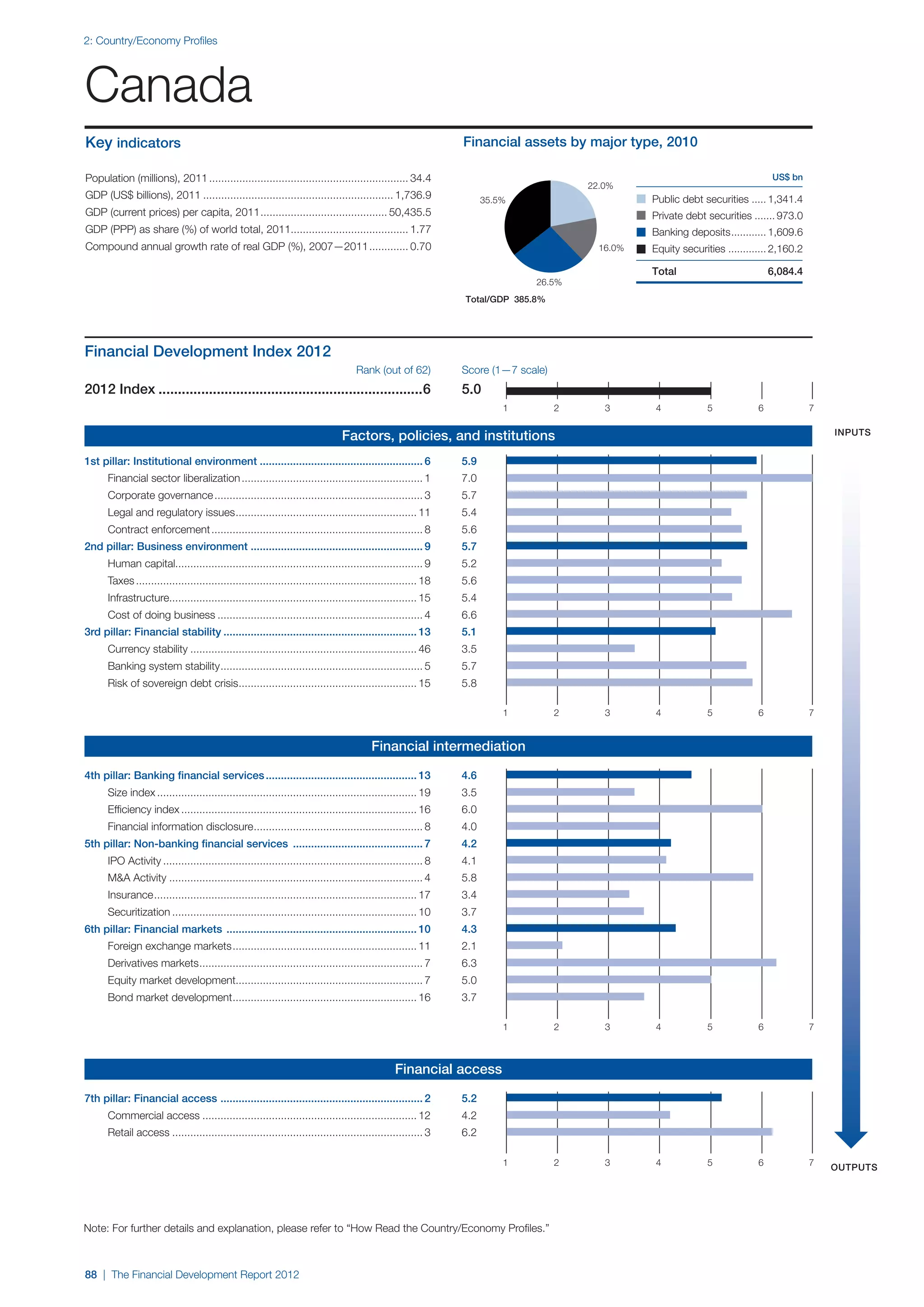
in particular, depends on accurate risk measurement. The    20
                                                                     price change.22
difficulty of risk measurement and regulatory supervision
grows with the range and complexity of activities bundled             Figure 3: The US banking system under the Volcker Rule
within a financial institution.


Ring-fencing, Glass-Steagall, or Volcker?                                                         Maturity Transformation

In the United States, the systemically dangerous practices of
most investment banks that were revealed during the financial
crisis of 2007-2009 have triggered a new debate over the
benefits of a Glass-Steagall-type separation of investment                     Underwriting
                                                                                                      Payments and
                                                                              Brokerage and
banking from commercial banking. This separation, depicted                    Market Making
                                                                                                       Settlement

in Figure 2, was weakened in various regulatory and court
decisions during the 1980s and 1990s, and was finally
eliminated in 1999 by the Graham-Leach-Bliley Act.21

                                                                         Boundary of the US
                                                                          banking system
Figure 2: Separation of commercial and investment
banking under the Glass-Steagall Act

                                                                     Some of the complaints over the agencies’ initially proposed
                                  Maturity Transformation
                                                                     methods for implementing the Volcker Rule have been over
                                                                     the loss of market liquidity that may result from an unintended
                                                                     but potentially significant reduction in market-making services.
                                                                     For example, Japan, Canada, the United Kingdom, and the
           Underwriting                                              European Union have asked the United States to exempt
                                      Payments and
          Brokerage and
          Market Making
                                       Settlement                    their government bond issues from the Volcker Rule, just as
                                                                     Congress has exempted US government bonds, in order to
                                                                     avoid a loss of liquidity in the markets for their bonds. The
                                                                     less liquid the secondary market for the bonds, the higher
    Boundary of the 1933                                             must be the interest rate offered by these governments to
       Glass-Steagall
      banking system                                                 investors who buy these bonds when they are issued.


                                                                     If there indeed turns out to be a significant loss of liquidity
An outcome of this most recent debate is new legislation             associated with a reduction in market-making services offered
commonly known as the Volcker Rule, prohibiting regulated            by banks and their affiliates, that gap would probably be filled
banks and affiliates within the same holding company from            over time through the entry of market makers that are not
financial trading activities other than those necessary for          affiliated with banks. This, however, raises the specter of the
hedging their own risks, making markets, and underwriting            past practices of large investment banks that were outside
new securities offerings. The separation of activities provided      the regulated banking sphere. Market makers that are not


                                                                                               The Financial Development Report 2012 | 43
1.2: Drawing Boundaries Around and Through the Banking System


under the supervision of bank regulators have a different and         In some respects, ring-fencing is less severe than the Volcker
historically weaker regime of capital requirements than banks         Rule, which precludes a significant amount of trading by a
and do not have direct access to the safety net. They could,          bank holding company even when conducted by a broker-
then, pose risks to financial stability. This possibility amplifies   dealer affiliate that does not in principle have access to the
the importance of regulatory supervision for systemically             bank’s capital.24 In practice, it is not clear which of these
important financial institutions (SIFIs) that are not banks.          two forms of separation between traditional banking and
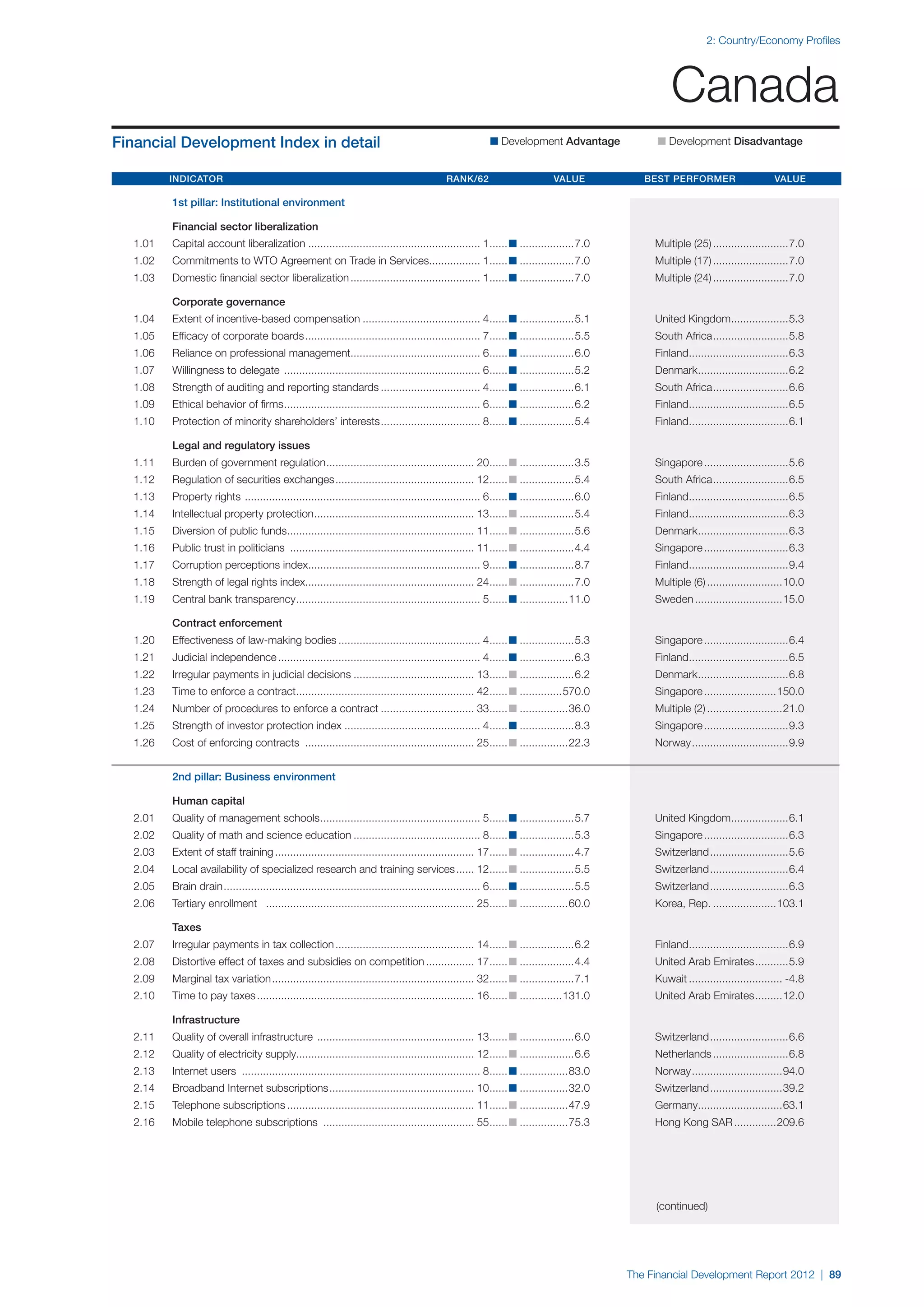
In the United States, the Financial Stability Oversight Council       “wholesale” trading activities will prove to be more effective
(FSOC), a committee of all major US financial regulatory              at maintaining financial stability.
agencies, will designate and supervise SIFIs. One of the first
serious tests of the FSOC’s ability to control systemic risk          Questions for regulators
outside the regulated banking system is likely to be over the         Regulators face a complex array of options for how to draw
regulation of money market mutual funds.                              regulatory boundaries around and through their banking
                                                                      systems, and how to promote financial stability outside the
The United Kingdom has responded to the dangers to its                boundaries of the banking system.
banking system revealed by the recent crisis with a plan to
“ring-fence” its traditional domestic banks from wholesale            Nothing about the boundaries of the regulated banking system
global banking activities, such as dealings in securities and         should be taken on principle. Which activities are allowed
derivatives. Roughly speaking, this will mean that, whenever
               23
                                                                      within this specially protected regulatory environment is a
these two classes of activities are offered by the same bank,         cost-benefit decision that should be based on how dangerous
the traditional domestic banking activities (including the            it would be for these activities to be interrupted, what sorts
critical payment and settlement systems) must be backed               of collateral damage might be caused by their failure, and
by a pool of capital that is legally insulated from losses            what risks these activities would pose to financial stability
suffered on wholesale global banking activities, as depicted          if conducted outside the regulated banking system. The
in Figure 4.                                                          benefits of access to the safety net are also to be evaluated
                                                                      against the associated moral hazard, which leads to socially
                                                                      inefficient risk taking, to the extent that it cannot be controlled
 Figure 4: Ring-fencing within the boundary of                        by other regulation.
 a universal banking system
                                                                      There can be more than a single monolithic safety net, as
                                                                      with the ring-fencing approach of the United Kingdom. Even
                                Maturity Transformation
                                                                      more surgical approaches to safety nets include regulated
                                                                      categories of special-purpose narrow banks25 or a market for
                                                                      access to emergency liquidity.26


            Underwriting
                                    Payments and
                                                                      The regulation of activities by banks clearly influences the
           Brokerage and
                                     Settlement
           Market Making                                              activities undertaken in the shadow banking system. The
                                                                      activity limits and safety nets that apply inside and outside the
                                                                      regulated banking environments should be coordinated.
                                                                      Regulatory boundaries should also reflect any clear economies
      Ring-fencing within                                             or diseconomies of scope that may add to the costs and
       a banking system
                                                                      benefits of bundling financial services of various sorts within
                                                                      the same enterprise. These economies affect both technical
                                                                      operating costs and customer service quality and efficiency.
As with the Volcker Rule, ring-fencing is easier to describe          There are also diseconomies of scope associated with
in general terms than it will be to implement. For example,           complexity, both for the management of financial institutions
some domestic commercial banking clients may wish to use              and for their regulatory supervision.
derivatives to hedge business risks associated with interest
rates, commodities, or foreign exchange. It will be difficult in      After a review of the available evidence, Pennacchi writes,
practice to know when clients are indeed obtaining commercial         “There appears to be little or no benefits [sic] available from
hedging services or are actually routing demand for speculative       traditional banks that could not be obtained in a carefully
positions through the “domestic side” of the bank in order to         designed narrow bank financial system.”27 As to whether
have a safer counterparty.                                            there are net efficiency gains associated with extending
                                                                      traditional banks into universal banks, analysts reach mixed
                                                                      or uncertain conclusions.28

44 | The Financial Development Report 2012
1.2: Drawing Boundaries Around and Through the Banking System


Notes                                                                		    limits, and moreover may not involve many of the
	 1	   Gorton and Metrick 2012, 2010.                                		    “wholesale” securities and derivatives products that are
                                                                     		    ring-fenced in the United Kingdom, except under
	 2	   See, for example, McCulley 2009. McCulley is the
                                                                     		    emergency exemptions that meet stringent conditions
		     originator of the term shadow banking.
                                                                     		    and the approval of the Federal Deposit Insurance
	 3	   Friedman and Schwartz 1963.
                                                                     		    Corporation. See Omarova 2011. Recently, Bank of
	 4	   See Friedman 1960 and Friedman and Schwartz 1986.             		    America and Morgan Stanley have been prevented by

	 5	   Office of Financial Research 2012, p. 16.                     		    the Federal Reserve from transferring large portfolios of
                                                                     		    over-the-counter derivatives from their broker-dealer
	 6	   Her Majesty’s Treasury 2012, p. 10.
                                                                     		    affiliates to their banking arms.
	 7	   See Diamond 1984. The empirical evidence associated
                                                                     	 25	 See, e.g., the shadow bank examples of Gorton and
		     with the benefits of governance by universal banks is
                                                                     		    Metrick 2010 and Ricks 2012.
		     mixed. See Kroszner and Rajan 1994, Gorton and
		     Schmid 2000, and Ferreira and Matos 2009. On                  	 26	 See, e,g., Tuckman 2012.

		     additional benefits through combining underwriting and        	 27	 Pennacchi 2012.
		     loan monitoring, see Drucker and Puri 2005.
                                                                     	 28	 See Benston 1994, Duffie 2010, Baxter 2012, and 		
	 8	   Gorton and Metrick 2010.                                      		    Saunders and Walter 2012.

	 9	   Ricks 2012.

	 10	 Tuckman 2011.                                                  References

	 11	 Pozsar 2011.                                                   Baxter, L. 2012. “Betting Big: Value, Caution and Accountability

	 12	 Dang et al. 2009.                                              		    in an Era of Large Banks and Complex Finance.”
                                                                     		    Review of Banking and Financial Law 31 (in press).
	 13	 In the United States, Federal Home Loan Banks
		     provided high levels of “advances” to banks, collateralized   Benston, G. 1994. “Universal Banking.” Journal of Economic

		     by mortgages and other housing-related assets.                		    Perspectives 8(3): 121-43.

	 14	 Squam Lake Group, Reforming Money Market Funds: 	              Dam, L. and M. Koetter. 2012. “Bank Bailouts and Moral

		     A Proposal by the Squam Lake Group, January 14, 2011,         		    Hazard: Evidence from Germany.” Review of Financial

		     http://www.squamlakegroup.org/Squam%20Lake%20	                		    Studies 25 (8): 2343-80.

		     MMF%20January%2014%20Final.pdf.                               Dang, T.V., G. Gorton, and B. Holmstrom. 2009. “Opacity and

	 15	 Harper and Son 2012.                                           		    the Optimality of Debt for Liquidity Provision.” Work
                                                                     		    in Progress, available at http://www.econ.yale.
	 16	 Diamond and Dybvig 1983.
                                                                     		    edu/~dirkb/teach/pdf/d/dang/Paper_Liquidity.pdf.
	 17.	 Reinhart and Rogoff 2009.
                                                                     Diamond, D.W. 1984. “Financial Intermediation and Delegated
	 18	 See, for example, Markham 2010 and White 2010.                 		    Monitoring.” Review of Economic Studies 51(3):393-414.

	 19 	 See Dam and Koetter 2012.                                     Diamond, D.W. and P. Dybvig. 1983. “Bank Runs, Deposit

	 20	 The price of government deposit insurance has generally        		    Insurance, and Liquidity.” The Journal of Political

		     been below the market price. See Duffie et al. 2003.          		    Economy 91 (3): 401-19.

	 21	 An excellent review of the history of the Glass-Steagall       Drucker, S. and M. Puri. 2005. “On the Benefits of Concurrent

		     Act and its elimination is provided in Markham 2010.          		    Lending and Underwriting.” Journal of Finance 60 (6):
                                                                     		    2763-99.
	 22	 See Duffie 2012.
                                                                     Duffie, D. 2010. How Big Banks Fail – And What to do About It.
	 23	 See Her Majesty’s Treasury 2012, ch. 2.
                                                                     		    Princeton, NJ: Princeton University Press.
	 24	 Market making and underwriting are exempted by the
                                                                     — 2012. “Market Making Under the Proposed Volcker 		
                                                                      —.
		     Volcker Rule but not by ring-fencing. Market making and
                                                                     		    Rule.” Report to the Securities Industry and Financial
		     underwriting, however, are conducted by broker-dealers,
                                                                     		    Markets Association, submission to the Office of the
		     not banks. Under Sections 23A and 23B of the US Bank
                                                                     		    Comptroller of the Currency, the Board of Governors of
		     Holding Company Act, transactions between a bank and
                                                                     		    the Federal Reserve System, the Federal Deposit
		     its broker-dealer and other affiliates within the same
                                                                     		    Insurance Corporation, and the Securities and Exchange
		     holding company must be on an arm’s-length basis, must
                                                                     		    Commission. Available at http://www.sec.gov/comments/
		     not allow the bank to fund its affiliate beyond strict
                                                                     		    s7-41-11/s74111-72.pdf.


                                                                                              The Financial Development Report 2012 | 45
1.2: Drawing Boundaries Around and Through the Banking System


Duffie, D., R. Jarrow, A. Purnanandam, and W. Yang 2003.          Office of Financial Research, US Department of the Treasury.
		     “Market Pricing of Deposit Insurance.” Journal of          		    2012. 2012 Annual Report. Washington DC: OFR.
		     Financial Services Research 24(2-3):93-119.
                                                                  Omarova, S.T. 2011. “From Gramm-Leach-Bliley to Dodd-Frank:
Ferreira, M. and P. Matos. 2009. “Universal Banks and             		    The Unfulfilled Promise of Section 23A of the Federal
		     Corporate Control – Evidence from the Global Syndicated    		    Reserve Act.” North Carolina Law Review 89: 1683-769.
		     Loan Market.” Working Paper No. 1066. Frankfurt:
                                                                  Pennacchi, G. 2012. “Narrow Banking.” Annual Review of
		     European Central Bank.
                                                                  		    Financial Economics 4 (in press).
Friedman, M. 1960. A Program for Monetary Stability.
                                                                  Pozsar, Z. 2011. “Institutional Cash Pools and the Triffin
		     New York: Fordham University Press.
                                                                  		    Dilemma of the U.S. Banking System,” IMF Working Paper
Friedman, M. and A.J. Schwartz. 1986. “Has Government             		    11/190. Washington DC: IMF.
		     Any Role in Money?” Journal of Monetary Economics
                                                                  Reinhart, C.M. and Rogoff, K.S. 2009. This Time is Different: 	
		     17(1): 37-62.
                                                                  		    Eight Centuries of Financial Folly. Princeton, NJ:
— 1963.A Monetary History of the United States, 1857-1960. 	
 —.                                                               		    Princeton University Press.
		     Princeton, NJ: Princeton University Press.
                                                                  Ricks, M. 2012. “Reforming the Short-Term Funding Markets.”
Gorton, G. and A. Metrick. 2010. “Regulating the Shadow 		        		    Harvard University John M. Olin Center for Law,
		     Banking System.” Brookings Papers on Economic              		    Economics and Business Discussion Paper No. 713.
		     Activity 41 (2): 261-97.                                   		    Available at http://dx.doi.org/10.2139/ssrn.2062334.

— 2012. “Securitized Banking and the Run on Repo.” 		
 —.                                                               Saunders, A. and I. Walter. 2012. “Universal Financial
		     Journal of Financial Economics 104 (3): 425-51.            		    Architecture, Systemic Risk, and Universal Banking.”
                                                                  		    Financial Markets and Portfolio Management. 26 (1):
Gorton, G. and F. Schmid. 2000. “Universal Banking and the
                                                                  		    39-59.
		     Performance of German Firms.” Journal of Financial
		     Economics 58 (1-2): 29-80                                  Tuckman, B. 2012. “Federal Liquidity Options: Containing
                                                                  		    Runs on Deposit- Like Assets without Bailouts and
Harper, C. and H. Son. 2012. “Breaking up Banks is Hard with
                                                                  		    Moral Hazard.” Center for Financial Stability Policy
		     Traders Hooked on Deposits.” Bloomberg, September 4.
                                                                  		    Paper. New York: Center for Financial Stability.
Liikanen Group. 2012. High-level Expert Group Report on
                                                                  White, L. J. 2010. “The Gramm-Leach-Bliley Act of 1999:
		     Reforming the Structure of the Banking Sector, Final
                                                                  		    A Bridge Too Far? Or Not Far Enough?” Suffolk
		     Report, European Commission, Brussels, October 2,
                                                                  		    University Law Review 43(4): 937-56.
		     2012. http://ec.europa.eu/internal_market/bank/docs/
		     high-level_expert_group/report_en.pdf

Her Majesty’s Treasury. 2012. Banking Reform: Delivering
		     Stability and Supporting a Sustainable Economy.
		     London: HM Treasury.

Kroszner, R. and R. Rajan. 1994. “Is the Glass-Steagall Act
		     Justified?
A Study of the U.S. Experience with Universal
		     Banking Before 1933.” American Economic Review
		     84(4): 810-32.

Markham, J. 2010. “The Subprime Crisis—A Test Match
		     For the Bankers: Glass-Steagall vs. Gramm-Leach-Bliley.”
		     University of Pennsylvania Journal of Business Law
		     12 (4): 1081–134.

McCulley, P. 2009. “The Shadow Banking System and Hyman
		     Minsky’s Economic Journey.” Insights into the Global
		     Financial Crisis, ed. L. Siegel. The Research Foundation
		     of CFA Institute.


46 | The Financial Development Report 2012
CHAPTER 1.3                  Emerging market banks are by no means small and are
                             growing fast. However, very little is known about these banks,
Branching Out: The Rise of   especially about their cross-border activities. This chapter
Emerging Market Banks        explores in detail the importance of emerging market banks
                             as foreign investors and discusses how the global financial
Neeltje van Horen            crisis allows these banks to increase their global (albeit
De Nederlandsche Bank        regionally confined) footprint.


                             Emerging market banks, emerging giants
                             Although, in the West, many are unfamiliar with emerging
                             market banks, they are by no means small.1 In fact, the
                             world’s biggest bank in market value is China’s ICBC. The
                             global top 25 currently includes eight emerging market
                             banks. Among these are three other Chinese banks (China
                             Construction Bank, Agricultural Bank of China, and Bank of
                             China), three Brazilian banks (Itau Unibanco, Banco do Brasil,
                             and Banco Bradesco), and one Russian bank (Sberbank).
                             While excess optimism might have inflated these market
                             values, these banks are large with respect to other measures,
                             as well. In terms of assets, all these banks are in the top 75
                             worldwide, with all four Chinese banks in the top 20. In addition,
                             lower down in the rankings, there is a long list of smaller
                             banks that together add up to quite a lot. In 2010, emerging
                             market banks as a group accounted for roughly 30 percent
                             of global profits, a third of global revenues, and half of tier 1
                             capital. In 2011, these numbers only increased. For example,
                             Brazil has now overtaken the United Kingdom in terms of
                             profits earned, despite having an asset base that is less than
                             one-fifth as large as that of the UK.2


                             Not only are emerging market banks already substantially
                             large; they are growing fast. In terms of market value, the
                             share of emerging market banks in the industry’s total
                             worldwide almost doubled between 2005 and 2010. While in
                             2005 all of the world’s 25 largest banks by market capitalization
                             were located in advanced countries, currently eight are
                             from emerging markets. In addition, asset growth has been
                             impressive in many emerging markets. Although China again
                             tops the ranks, other emerging markets have seen impressive
                             increases in bank assets, as well, while maintaining adequate
                             capital ratios and ample deposit funding. Loan growth was
                             strong in many emerging markets in the period leading up to
                             the financial crisis, and many banks in Asia, Africa, and Latin
                             America predict that their loan books will continue to rise with
                             double-digit numbers over the next few years.3


                             Outward bound
                             With a large part of their populations still unbanked and their
                             economies growing, much of the growth potential of emerging
                             market banks will lie at home. However, there is also growth
                             potential overseas. Although many are not aware of the
                             foreign adventures these banks have undertaken in the past,
                             quite a few emerging market banks are no stranger to setting


                                                       The Financial Development Report 2012 | 47
1.3: Branching out: The Rise of Emerging Market Banks


up a branch or subsidiary abroad, generating revenue outside      the importance of emerging market foreign banks increased
their domestic market. Standard Bank of South Africa, for         substantially in a large number of countries since 1995. In
example, generated almost a quarter of its profits from           1995, there were 39 countries that had a foreign bank active
abroad, mainly the rest of Africa. Hungary’s OTP Bank Nyrt        but no foreign banks owned by a parent from an emerging
expects business in its home market to contract this year         market. By 2009, this number was down to 24. Similarly, in
amid tough economic conditions, but projects double-digit         1995, there were 20 countries where emerging market banks
growth rates in its Russia and Ukraine retail business. So,       represented more than 50 percent of the foreign banks active
how active are emerging market banks overseas? How has            in the country; in 2009, there were 26 countries in this group.
this changed over time, and what type of countries are these      In fact, in some countries (Azerbaijan, Kuwait, Malawi,
banks targeting?                                                  Mongolia, Namibia, Sudan, and Vietnam), all foreign banks
                                                                  are owned by parents from emerging markets. And in some
Over the last two decades, the world has witnessed an             host countries, these banks are large players indeed. For
unprecedented degree of foreign bank entry. Driven by             example, the biggest bank in Madagascar is Bank of Africa,
globalization and increased financial integration, the number     headquartered in Mali. Similarly, in Burkina Faso, Bank
of foreign banks almost doubled, from 774 in 1995 to 1,334        of Africa and Ecobank, headquartered in Togo, are two of
in 2009. Although most of this foreign investment is done by
         4
                                                                  the six foreign banks active, and two of the biggest ones
banks from advanced countries, banks from emerging                in terms of assets.
markets have been active investors, as well. Figure 1 depicts
the entry of foreign banks, highlighting investments by           Ownership by emerging market banks has expanded not only
advanced country banks and those by emerging market               in terms of host countries, but also in terms of the number
banks.5 Of the 1,088 entries that took place between 1995         of emerging market investors. While in 1995 banks from
and 2009, 312 were by emerging market banks. The figure 6
                                                                  45 different emerging markets pursued banking activities in
shows that foreign banks from emerging markets have been          other countries, by 2009, banks from 60 emerging markets
active investors over the whole sample period. Especially         did so. While emerging market investors typically come from
in 1997 (41 percent) and 2006 (38 percent), they were             more developed emerging markets, such as Argentina, Brazil,
responsible for a large share of the new entries.                 and South Africa, banks from low- and lower-middle-income
                                                                  countries, such as Kenya, Nicaragua, and Pakistan, are also
Over the period 1995-2009, the share (in terms of numbers)        active as investors. In 2009, 30 percent of emerging market
of foreign ownership by emerging market banks has stayed          foreign banks were owned by parents located in low- or
relatively stable, as both advanced country banks and emerging    lower-middle-income countries, up from 21 percent in 1995.
market banks increased their overseas investment (see             In 1995, most emerging market investors belonged to countries
Figure 2). In 2009 (the last year of our sample period), banks
             7
                                                                  in Latin America (33 percent), but by 2009, this focus had
from 60 emerging markets owned 27 percent of the foreign          shifted towards Eastern Europe (23 percent) and Central Asia
banks in terms of numbers, up from 24 percent in 1995. In         and sub-Saharan Africa (23 percent), mostly due to
terms of assets, however, they owned only 5 percent, so           disinvestment by banks from Argentina, Brazil, and Panama
emerging market banks still represent only a small portion        and to large-scale investments by banks from Hungary,
of total foreign banking assets. This indicates that, even        Nigeria, Russia, and South Africa. Excluding Panama, which
though quite a few emerging market banks engage in foreign        is an offshore center, the most active investors as of 2009 are
adventures, they tend to focus on small acquisitions, often       banks from South Africa, Russia, Turkey, and Brazil, owning
to service local customers abroad or to offer services to         31, 29, 21, and 17 foreign banks, respectively.
migrants. For example, State Bank of India (SBI) and ICICI
Bank, India’s largest privately owned bank, have both             Table 1 groups countries according to their income level and
undertaken expansions in Asia, Africa, and the Middle East.       region and shows a number of interesting facts. First, as
The reason behind these expansions are to facilitate              expected, the share of emerging market foreign banks is
increasing trade and investment flows between India and other     higher in emerging markets than in advanced countries, in
countries, to provide foreign currency denominated loans to       terms of both numbers and assets. When the sample of
the overseas affiliates of Indian companies,and to provide        emerging markets is split into middle- and low-income
remittance and retail credit services for Indian expatriates. 8
                                                                  countries, it becomes obvious that emerging market banks
                                                                  are specifically investing in low-income countries. On average,
Even though, at a global scale, emerging market foreign           52 percent of the foreign assets in these countries is owned
banks are still small, these banks are becoming more              by a bank headquartered in an emerging market, compared
significant in many emerging markets. Figure 3 shows that         to 33 percent in middle-income countries.


48 | The Financial Development Report 2012
1.3: Branching out: The Rise of Emerging Market Banks
         Figure 1: Bank entries from advanced countries and emerging markets, 1995-2009
         Figure 1: Bank entries from advanced countries and emerging markets, 1995-2009
         Figure 1: Bank entries from advanced countries and emerging markets, 1995-2009
         NUMBERS

            140
           NUMBERS

            140
           NUMBERS
            120
                             140
                             120
                             100
                             120
                             100
                             80
                             100
                             80
                             60
                              80
                              60
                              40
                              60
                              40
                              20
                              40
                              20
                              0
                              20                          1995          1996          1997       1998        1999            2000       2001   2002    2003       2004       2005        2006     2007           2008          2009
                              0
                          1995        1996                                            1997       1998         1999         2000         2001   2002    2003       2004       2005        2006     2007           2008          2009
           0 Advanced country foreign banks                                                  Emerging market foreign banks
                          1995        1996                                            1997       1998         1999         2000         2001   2002    2003       2004       2005        2006     2007           2008          2009
             Advanced country foreign banks
         Source: Claessens and Van Horen, 2012.                                              Emerging market foreign banks

         Note: As the database starts in 1995, the number of foreign banks that exited the market cannot be determined. For a definition of advanced countries and emerging markets, please see the main text.
         Source: Claessens and Van Horen, 2012.
             Advanced country foreign banks                   Emerging market foreign banks
         Note: As the database starts in 1995, the number of foreign banks that exited the market cannot be determined. For a definition of advanced countries and emerging markets, please see the main text.
         Source: Claessens and Van Horen, 2012.
         Note: As the database starts in 1995, the number of foreign banks that exited the market cannot be determined. For a definition of advanced countries and emerging markets, please see the main text.


         Figure 2: Number of advanced country and emerging market banks, 1995-2009
         Figure 2: Number of advanced country and emerging market banks, 1995-2009
         Figure 2: Number of advanced country and emerging market banks, 1995-2009
         NUMBERS

            1,600
           NUMBERS

            1,600
            1,400
           NUMBERS

                        1,400
                        1,600
                        1,200

                        1,400
                        1,200
                        1,000

                        1,200
                        1,000
                        800

                        1,000
                        800
                        600

                          800
                          600
                          400

                          600
                          400
                          200

                          400
                          200
                          0
                                                   1995          1996           1997         1998          1999           2000          2001   2002    2003        2004           2005     2006      2007               2008          2009
                          0
                          200
                    1995         1996         1997                                            1998        1999          2000            2001   2002    2003        2004           2005     2006      2007               2008          2009
           0 Advanced country foreign banks                                                  Emerging market foreign banks
                    1995         1996         1997                                            1998        1999          2000            2001   2002    2003        2004           2005     2006      2007               2008          2009
             Advanced country foreign banks                                                  Emerging market foreign banks
         Source: Claessens and Van Horen, 2012.
             Advanced country foreign banks                                                  Emerging market foreign banks
         Source: Claessens and Van Horen, 2012.


         Source: Claessens and Van Horen, 2012.


         Figure 3: Concentration of emerging market foreign banks, 1995 and 2009
         Figure 3: Concentration of emerging market foreign banks, 1995 and 2009
         Figure 3: Concentration of emerging market foreign banks, 1995 and 2009
                                             40
NUMBER OF COUNTRIES WITH EMERGINGEMERGING


                                             40
                                             35
        NUMBER OF COUNTRIES EMERGING


                                             35
                                             40
              MARKET FOREIGN BANKS


                                             30
    NUMBER OF COUNTRIES WITHWITH
           MARKET FOREIGN BANKS


                                             35
                                             30
                                             25
      MARKET FOREIGN BANKS


                                             30
                                             25
                                             20

                                             25
                                             20
                                             15

                                             20
                                             15
                                             10

                                             15
                                             10
                                             5

                                             10
                                             5
                                             0
                                                             0                 0-10            10-20              20-30             30-40      40-50      50-60           60-70          70-80           80-90            90-100
                                             5
                                             0
                                                             0                 0-10            10-20           20-30      30-40       40-50       50-60                   60-70          70-80           80-90            90-100
                                             0
                                            1995          2009                                              PERCENT EMERGING MARKET FOREIGN BANKS IN COUNTRY
                                                             0                 0-10            10-20           20-30      30-40       40-50       50-60
                                                                                                            PERCENT EMERGING MARKET FOREIGN BANKS IN COUNTRY
                                                                                                                                                                          60-70          70-80           80-90            90-100
                                            1995          2009
         Source: Claessens and Van Horen, 2012.
             1995          2009                                             PERCENT EMERGING MARKET FOREIGN BANKS IN COUNTRY
         Note: A Claessens and Van Horen, at least
         Source: foreign bank is one that has2012. 50 percent foreign ownership. An emerging market foreign bank is a foreign bank whose largest shareholder comes from an emerging market. See footnote 1 for exact definition.

         Note: A foreign bank is one that has at least 50 percent foreign ownership. An emerging market foreign bank is a foreign bank whose largest shareholder comes from an emerging market. See footnote 1 for exact definition.
         Source: Claessens and Van Horen, 2012.

         Note: A foreign bank is one that has at least 50 percent foreign ownership. An emerging market foreign bank is a foreign bank whose largest shareholder comes from an emerging market. See footnote 1 for exact definition.


                                                                                                                                                                             The Financial Development Report 2012 | 49
1.3: Branching out: The Rise of Emerging Market Banks


Table 1: Foreign bank penetration, aggregates by income level and region, 2009


                                                                                         Country-based                                                                             Group-based

                                                    Foreign bank      Share EM          Number of         Share EM           Total number   Total number    Foreign bank      Share EM          Number of         Share EM
                                                    assets in total   foreign bank      foreign banks     foreign banks      of foreign      of countries   assets in total   foreign bank      foreign banks     foreign banks
                                                    bank assets       assets in total   in total number   in total foreign   banks                          bank assets       assets in total   in total number   in total foreign
                                                                      foreign assets    of banks          banks                                                               foreign assets    of banks          banks
Income level

Advanced countries	                                      0.23	             0.22	             0.29	              0.17	             376	             27	           0.13	             0.05	            0.25	              0.18

Emerging markets	                                        0.48	             0.33	             0.47	              0.38	             958	             91	           0.14	             0.07	            0.40	              0.30

	 Middle-income	                                         0.40	             0.33	             0.44	              0.38	             698	             61	           0.11	             0.08	            0.36	              0.29

	 Low-income	                                            0.65	             0.52	             0.52	              0.48	             131	             21	           0.35	             0.45	            0.47	              0.53


Region (emerging markets only)										

East Asia and Pacific	                                   0.19	             0.42	             0.26	              0.46	              95	               9	          0.04	             0.11	            0.25	              0.32

Europe and Central Asia	                                 0.62	             0.15	             0.59	              0.30	             371	             25	           0.39	             0.04	            0.47	              0.21

Latin America and Caribbean	                             0.42	             0.37	             0.44	              0.32	             232	             19	           0.30	             0.04	            0.39	              0.25

Middle East and North Africa	                            0.26	             0.24	             0.27	              0.42	              57	               6	          0.16	             0.14	            0.36	              0.46

South Asia	                                              0.18	             0.30	             0.14	              0.24	              22	               4	          0.08	             0.04	            0.14	              0.23

Sub-Saharan Africa	                                      0.63	             0.53	             0.58	              0.47	             181	             28	           0.27	             0.17	            0.54	              0.49


All countries	                                           0.41	             0.31	             0.43	              0.33	          1,334	            118	            0.13	             0.05	            0.34	              0.27


Source: Claessens and Van Horen, 2012.

Notes: Figures reported are ratios of number of foreign banks to total number of banks (in 2009) and foreign bank assets to total bank assets (average over 2007-2009) in each country, and the ratios of the number of
emerging market foreign banks in total number of foreign banks and emerging market foreign bank assets to total foreign bank assets in each country. Income and region classifications follow World Bank definitions as of
2009. Country-based figures are the simple average of the countries within a group ((1/n)Σi[FBi/(DBi+FBi)] for country i), whereas group-based figures are obtained from ΣiFBi/(ΣiDBi+ΣiFBi) for country i within a group. FB
and DB represent foreign bank and domestic bank respectively.


Second, strong regional differences exist. While foreign                                                                Differences that count
ownership is especially prevalent in Eastern Europe and                                                                 Banks engage in foreign investment for several reasons. First,
Central Asia, Latin America, and sub-Saharan Africa,                                                                    foreign investment provides a possibility for risk diversification.
ownership by emerging market banks is significantly higher                                                              Second, entering new markets can increase the bank’s client
in the latter region. In sub-Saharan Africa, 53 percent of                                                              base. Third, by following their international customers
foreign assets, on average, are owned by emerging market                                                                in order to provide them with financial services, banks can
banks, while in Eastern Europe and Central Asia and in                                                                  exploit informational advantages derived from long-term
Latin America, these numbers are substantially lower—15                                                                 bank-client relationships. Indeed, a number of studies have
and 37 percent, respectively. The difference is even more                                                               shown that foreign direct investment in banking is correlated
pronounced when looking at the group-based shares. In                                                                   with economic integration, as measured by trade and FDI
sub-Saharan Africa, emerging market banks own 49 percent                                                                flows between the home country of the parent and the host
of foreign banks and 17 percent of foreign assets. In Eastern                                                           country in which it is investing,9 and with proximity, measured
Europe and Central Asia, these numbers are 21 and 4 percent,                                                            along several dimensions.10 Fourth, foreign banks tend to be
respectively, and in Latin America, 25 and 4 percent.                                                                   attracted to countries where expected profits are higher,
                                                                                                                        owing to higher expected economic growth and the existence
Third, clear differences emerge when comparing the shares                                                               of local bank inefficiencies.11
calculated on a group basis with those based on simple averages
of the individual countries, and especially when looking at                                                             How do entry decisions of foreign banks from emerging
asset shares. In most cases, the emerging market share for                                                              markets compare to those of advanced countries? The
the group-based measure is lower than the country-based                                                                 characteristics of emerging market bank investment described
measure, indicating that foreign banks owned by banks from                                                              above suggest that emerging market banks tend to invest
emerging markets are overrepresented in smaller markets.                                                                in different countries than advanced country banks do.
This suggests that advanced country banks are more                                                                      Research confirms this. Van Horen (2007) shows that foreign
attracted to larger markets, while emerging market banks                                                                bank entry by both emerging market and advanced country
tend to invest in the smaller, often poorer, countries, a topic                                                         banks is driven by economic integration, common language,
that will be discussed further next.                                                                                    and proximity. However, controlling for these factors, banks
                                                                                                                        from emerging markets are more likely to invest in small,


50 | The Financial Development Report 2012
1.3: Branching out: The Rise of Emerging Market Banks


developing countries with weak institutions, where advanced                                                       Americas and Europe invest within their own region, emerging
country banks are reluctant to go. This result suggests that                                                      market banks from Asia have also built a substantial presence
emerging market banks have a competitive advantage in                                                             outside their region. This is partly the result of Asian banks’
dealing with countries with a weak institutional climate.                                                         tendency to establish a presence in countries with large
                                                                                                                  migrant populations.
Indeed, when we have a closer look at the countries in which
emerging market banks tend to invest, two facts clearly stand                                                     When we look at developments over time, banks from
out. First, there exists a high negative correlation between                                                      advanced countries have actually become less regional and
(log of) GDP and GDP per capita of the host country and                                                           more global, possibly due to advances in telecommunication
the share of emerging market banks in foreign bank assets                                                         and other technologies and to economies of scale in the
(Figure 4). In the first case, the correlation equals -0.45, and                                                  provision of some financial services. Banks from emerging
in the second case, it equals -0.37. This shows that emerging                                                     markets, on the other hand, have become more regional,
market foreign banks are especially attracted to smaller and                                                      possibly because they have a stronger competitive advantage
poorer countries.                                                                                                 in countries physically and institutionally closer as compared
                                                                                                                  with banks from advanced countries.13
Second, while advanced country banks tend to set up shop
both within and outside their own geographical region, the                                                        Weathering the financial storm
vast majority of emerging market banks tend to stay close to                                                      Not being a stranger to foreign investments, the question
home. Table 2 splits countries into four broad geographical                                                       arises how emerging markets will respond to changes
regions that cut across income groups (America, Asia,                                                             brought on by the turbulence in the global financial markets.
Europe, and Middle East and Africa).12 It shows that, while                                                       With the global financial crisis almost seamlessly merging
quite a few banks from advanced countries are venturing                                                           into the Eurozone debt crisis, the global financial system is
outside their own region (reflecting past colonial linkages or                                                    still trying to adjust to the new rules of the game. While some
a desire to operate globally), over 80 percent of investments                                                     banks are faced with major restructurings (either voluntary
from emerging market banks are within their own region.                                                           or imposed by governments), virtually all banks will have
Among emerging market banks, there are also clear regional                                                        to make adjustments in order to comply with Basel III and
differences. While almost all emerging market banks from the                                                      other, country-specific, regulatory measures. The changes


Table 2: Number and share of foreign banks from home to host regions, 2009


Number and share of
                                                                                                                   Advanced country banks
foreign banks from
home country present                                                                                        Host region
in host country
                                                            AMERICA                              ASIA                            EUROPE                               MEA                                Total

Home region	                                         Number	            Share	         Number	            Share	         Number	            Share	        Number	             Share	        Number	              Share

AMERICA	                                                   72	            0.44	              25	            0.15	              54	            0.33	              13	           0.08	             164	                 1

ASIA		                                                     13	            0.22	              37	            0.62	              10	            0.17	                0	          0.00	               60	                1

EUROPE	                                                   121	            0.17	              53	            0.07	             450	            0.64	              84	           0.12	             708	                 1

MEA		                                                        2	           0.09	                4	           0.17	                7	           0.30	              10	           0.43	               23	                1


Number and share of
                                                                                                                    Emerging market banks
foreign banks from
home country present                                                                                        Host region
in host country
                                                            AMERICA                              ASIA                            EUROPE                               MEA                                Total
Home region	                                         Number	            Share	         Number	            Share	         Number	            Share	        Number	             Share	        Number	              Share

AMERICA	                                                   55	            0.96	                0	           0.00	                2	           0.04	                0	          0.00	               57	                1

ASIA		                                                       9	           0.12	              49	            0.67	                8	           0.11	                7	          0.10	               73	                1

EUROPE	                                                      0	           0.00	                7	           0.09	              72	            0.91	                0	          0.00	               79	                1

MEA		                                                        2	           0.01	                8	           0.05	              26	            0.18	            111	            0.76	             147	                 1


Source: Claessens and Van Horen, 2012.

Note: Countries are grouped in four geographical regions, irrespective of the income level of the countries. America includes Canada, United States, and all countries in Latin America and the Caribbean. Asia includes all
countries in Central, East, and South Asia and the Pacific countries, including Japan, Australia, and New Zealand. Europe includes all Western and Eastern European countries. MEA includes all countries in the Middle
East and North and sub-Saharan Africa.


                                                                                                                                                            The Financial Development Report 2012 | 51
1.3: Branching out: The Rise of Emerging Market Banks


Figure 4: Percent of foreign bank assets held by emerging market foreign banks by GDP and GDP per capita


                   100                                                                                                  100

                   90                                                                                                   90

                   80                                                    Corr: -0.45                                    80                                      Corr: -0.37
                                                                        P-value: 0.00                                                                          P-value: 0.00
                   70                                                                                                   70
        % ASSETS


                                                                                                             % ASSETS
                   60                                                                                                   60

                   50                                                                                                   50

                   40                                                                                                   40

                   30                                                                                                   30

                   20                                                                                                   20

                   10                                                                                                   10

                   0                                                                                                    0

                         6        8         10         12         14          16         18                                   6       7           8   9   10        11         12
                                          COUNTRY GDP                                                                                HOST COUNTRY GDP PER CAPITA
                                      (LOG, CURRENT MIL US$)                                                                              (LOG, CURRENT US$)


Sources: Claessens and Van Horen, 2012 and World Bank Development Indicators.

Note: Percent of foreign bank assets held by emerging market foreign banks and host country GDP and GDP per capita are averaged over 2007-2009.


invoked by the crisis, however, have a very different impact on                                              major sovereign debt problems and/or large current account
advanced country banks than on emerging market banks, and                                                    deficits, most emerging markets are on pretty solid footing.
therefore the crisis will likely have a lasting effect on the role                                           Even though they will not be isolated from the problems in
the latter group will play in the global financial system.                                                   Europe and the United States, their dependence on the West
                                                                                                             has diminished in recent years.
Although emerging market banks have also been affected by
the crisis, several factors make it easier for these banks to                                                So, as compared with many advanced country banks,
weather the storm. First, loan-to-deposit ratios in general are                                              emerging market banks tend to have much more favorable
very low, due to the net saving position of these countries.                                                 funding positions and outlooks. This fact, combined with high
This has sheltered emerging market banking systems to a                                                      profits that can provide a buffer to absorb potential losses,
large extent from the collapse of the interbank market and                                                   puts these banks in a good position to extend their global
reduced the need for substantial deleveraging. Thus, these                                                   reach by seizing opportunities that might come along
banks can continue lending, using a stable and often growing                                                 when advanced country banks in need to consolidate,
source of deposit funding. Second, most emerging market                                                      either forced or voluntary, sell-off some of their domestic
banks already have high capital ratios, ranging from 17                                                      or foreign subsidiaries.
percent, on average, in Latin America to 13 percent in Asia,
which limits pressures for balance sheet adjustments. In                                                     However, a number of factors might prevent this from
addition, the new capital rules under Basel III are likely to be                                             happening. First, with still a large part of the population
much less painful for these banks, as they typically have less                                               unbanked, most emerging market banks face pressures at
risky assets and their investment banking business tends to                                                  home to increase lending, which reduces funds available for
be small.                                                                                                    foreign expansion. Second, an important share of excess
                                                                                                             deposits is stuck in sleepy state banks that have shown very
Equally important, emerging market banks face a very different                                               limited interest in expanding abroad. Third, many emerging
situation in their domestic market from their advanced country                                               market banks have only limited provisions set aside, especially
peers. First, the fact that a large part of the population                                                   as compared with advanced country banks, and therefore
in the emerging world is still unbanked provides ample growth                                                face pressures to increase their bad-debt reserves. Finally,
opportunities in these markets. This stands in sharp contrast                                                regulators might oppose foreign adventures as the use of
to the conditions advanced country banks face at home,                                                       domestic deposits to finance a subsidiary overseas exposes
where, due to overall economic weakness and ongoing                                                          banks to foreign exchange and counterparty risk.
deleveraging among firms and households, expected credit
growth is low. Indeed, currently the top 25 countries for return                                             Recent examples, however, indicate that at least some
on capital are all emerging markets, with the exception of                                                   emerging market banks are seizing opportunities and starting
Australia and Canada (two commodity-driven economies).                                                       new foreign adventures. Russia’s Sberbank bought in 2011
Second, the macroeconomic outlook in emerging markets is                                                     the Central and Eastern European subsidiaries of Austria’s
much better than that of advanced countries. Not faced with                                                  Volksbank and is now acquiring DenizBank in Turkey, owned


52 | The Financial Development Report 2012
1.3: Branching out: The Rise of Emerging Market Banks


by Belgium’s rescued Dexia. Chile’s Corpbanca bought the             Notes
Colombian operations of Santander, and HSBC sold its                 	 1	   For the purpose of this paper, emerging market banks 	
operations in Costa Rica, El Salvador, and Honduras to               		     are banks owned by parent companies located in
Banco Davivienda of Colombia. More acquisitions of these             		     countries that are not high-income countries as classified
types seem likely, suggesting that, in the coming years,             		     by the World Bank in 2000. The emerging markets
emerging market banks will grow not only in their domestic           		     group therefore also includes low-income countries.
markets but also abroad.                                             		     Current OECD countries such as Hungary, the Czech
                                                                     		     Republic, Poland, Slovakia, and Korea are included in
This increase in their global footprint, however, most likely will   		     the emerging markets group. Slovenia, which already
remain regionally confined. First, with a fully developed banking    		     was a high-income country in 2000, is included in the
system, sovereign debt problems, and low expected economic           		     advanced countries group.
growth, profits are unlikely to be reaped in advanced
                                                                     	 2	   The Banker, “Top 1000 World Banks,” 2011, 2012,
countries (most notably Western Europe), making investment
                                                                     		     http://www.thebanker.com/Top-1000-World-Banks/2012.
in other emerging markets more likely. Second, while many
                                                                     	 3	   Fast loan growth obviously can create risks, as well. For
emerging markets have (potential) high returns on capital,
                                                                     		     example, in Central and Eastern Europe, loans grew
they are not easy markets in which to operate. For example,
                                                                     		     twice as fast as GDP between 2000 and 2007, but
return on capital in Pakistan was 36 percent in 2011, but the
                                                                     		     when banks ran out of funding as a result of the global
country is fraught with political and operational risk, which
                                                                     		     financial crisis, bad debt mounted quickly and loan
has kept the banking sector small. Emerging market banks
                                                                     		     growth collapsed.
experienced in investing in smaller and poorer countries seem
to have a competitive advantage exactly in those markets,            	 4	   All data in this chapter come from the bank ownership
and therefore have a better chance of generating profits in          		     database constructed by Claessens and Van Horen.
these markets. Third, regulatory crackdowns in advanced              		     For a description of the database, see Claessens and
countries, caused by some cross-border bank failures, might          		     Van Horen 2012. The banks included in the database
make it hard for emerging market banks to set up a branch            		     are listed in Bankscope, and therefore representative
or subsidiary in these countries. Fourth, an increasing number       		     offices and small branches that do not have individual
of emerging market companies are establishing a presence             		     annual reports are not included in the data. A foreign
overseas, mainly in other emerging markets, providing                		     bank is defined as having at least 50 percent of its
emerging market banks with another reason to extend their            		     shares owned by foreigners. Countries that are offshore
foreign network regionally, instead of globally, in order to         		     centers are excluded from this analysis.
service their domestic customers abroad.                             	 5	   Foreign banks owned by institutional investors such as
                                                                     		     the European Bank for Reconstruction and Development
Summarizing, due to sheer size, almost undoubtedly emerging          		     (EBRD) or the International Finance Corporation (IFC)
market banks will soon become important players in the               		     are categorized as advanced country banks. Foreign
world’s financial system. Most of their muscle will be needed        		     banks owned by parents headquartered in offshore
at home to support the credit growth demanded by their               		     centers are included in the sample, with the bank included
populations and politicians. However, with advanced country          		     in the emerging market or advanced country group
banks trying to adjust to the new rules of the game, it is likely    		     depending on the income level of the offshore center.
that more disinvestment, both domestically and abroad, will          		     For example, foreign banks owned by banks headquartered
take place in the near future. Banks from emerging markets,          		     in Panama are included in the emerging market group.
being in a much better financial position, are the most likely
                                                                     	 6	   The difference between the increase in foreign banks
buyers, increasing their relative importance as foreign investors.
                                                                     		     between 1995 and 2009 and the number of new entries
Therefore, the global financial system is likely to witness a
                                                                     		     over the same period is accounted for by 329 foreign
shift towards greater dominance by emerging market banks,
                                                                     		     banks exiting and 199 M&As of foreign-owned banks by
especially within their own geographical regions.
                                                                     		     other foreign banks.

The views expressed in this chapter are those of the author          	 7 	 The lack of balance sheet information for the vast
only and do not necessarily reflect the views of the                 		     majority of banks prior to 2004 in Bankscope (our
De Nederlandsche Bank, the European System of Central                		     source of information for balance sheet information)
Banks or their Boards.                                               		     prevents us from showing time trends in terms of assets.


                                                                                                The Financial Development Report 2012 | 53
1.3: Branching out: The Rise of Emerging Market Banks


	 8	   World Bank 2006, p. 118.                                    References

	 9	   See, for example, Grosse and Goldberg 1991, Brealey         Berger, A.N., C.M. Buch, G. DeLong, and R. DeYoung. 2004.
		     and Kaplanis 1996.                                          		    “Exporting Financial Institutions Management Via
                                                                   		    Foreign Direct Investment Mergers and Acquisitions,”
	 10	 Galindo et al. 2003; Berger et al. 2004; Claessens
                                                                   		    Journal of International Money and Finance 23(3): 333–66.
		     and Van Horen 2008.
                                                                   Brealey, R. and E. Kaplanis. 1996. “The Determination of
	 11	 Focarelli and Pozzolo 2000.
                                                                   		    Foreign Banking Location.” Journal of International
	 12	 America includes the United States, Canada, and
                                                                   		    Money and Finance 15(4): 577–97.
		     the countries in Latin America and the Caribbean. Asia
                                                                   Claessens, S. and N. Van Horen. 2008 “Location Decisions of
		     includes all countries in Central, East, and South Asia
                                                                   		    Foreign Banks and Competitive Advantage.” World
		     and the Pacific countries including Japan, Australia, and
                                                                   		    Bank Policy Research Working Paper No. 4113.
		     New Zealand. Europe includes all Western and Eastern
                                                                   		    Washington DC: IMF and De Nederlandsche Bank.
		     European countries. Middle East and Africa includes all
		     countries in the Middle East and in North and               — 2012. “Foreign Banking: Trends, Impact and Financial
                                                                    —.
		     sub-Saharan Africa.                                         		    Stability.” IMF Working Paper 12/10. Washington DC: IMF.

	 13	 See Claessens and Van Horen 2008.                            Focarelli, D. and A.F. Pozzolo. 2000. “The Determinants of
                                                                   		    Cross-Border Bank Shareholdings: An Analysis with
                                                                   		    Bank-Level Data from OECD Countries.” 2000
                                                                   		    Conference Proceedings. Federal Reserve Bank of
                                                                   		    Chicago International Banking Conference.199–232.

                                                                   Galindo, A., A. Micco, and C. Serra. 2003. “Better the Devil
                                                                   		    That You Know: Evidence on Entry Costs Faced by
                                                                   		    Foreign Banks.” Inter-American Development Bank
                                                                   		    Working Paper No. 477. Washington DC: Inter-American 	
                                                                   		    Development Bank.

                                                                   Grosse, R. and L. Goldberg. 1991. “Foreign Bank Activity in
                                                                   		    the United States: An Analysis by Country of Origin.”
                                                                   		    Journal of Banking and Finance 15 (6): 1093–112.

                                                                   Van Horen, N. 2007. “Foreign Banking in Developing Countries:
                                                                   		    Origin Matters.” Emerging Market Review 8(2): 81-105.

                                                                   World Bank. 2006. Global Development Finance.
                                                                   		    Washington DC: The World Bank.


54 | The Financial Development Report 2012
Part 2
Country/Economy Profiles


                     The Financial Development Report 2012 | 55
How to Read the Country/Economy Profiles


The Profiles section presents a four-page profile for each of
the 62 economies covered by The Financial Development
Report 2012.


Page 1
➊ Key indicators
The first section of each Country/Economy Profile presents a
selection of key indicators:


  •	 Population, GDP, and related data come from the
     International Monetary Fund’s World Economic
     Outlook of April 2012.


➋ Financial assets by major type, 2010
  •	 Public debt figures are from the Economist Intelligence
     Unit’s CountryData Database, accessed in August
     2012. Private debt data come from the Bank for
     International Settlements Quarterly Review, June
     2012, and are presented as of 2010. Data on banking
     deposits are from the IMF International Financial
     Statistics database, electronic version, accessed
     July 2012. Equity securities data were downloaded
     from the market capitalization dataset on the World
     Bank’s World Development Indicators database in
     July 2012.                                                  ➌ Financial Development Index
                                                                 This section details the economy’s performance on the
  •	 The four financial asset indicators (public and private     various components of the Financial Development Index
     debt securities, banking deposits, and equity securities)   (the Index). At the top is the country’s overall rank out of 62
     are added to measure total financial assets in the          economies, its score on the 1-to-7 scale, and a graphical
     Index economies. The share of depth attributable to         representation of the score.
     each component is displayed in the pie chart.
     Percentages displayed may not add up to 100                 Below, the seven pillars of the Index are organized thematically.
     percent because of rounding.                                The three themes—factors, policies, and institutions; financial
                                                                 intermediation; and financial access—are displayed according
  •	 The total financial assets data are shown as a              to their role in the continuum of the financial system, from
     percent of GDP, using the GDP figure from the key
                                                                 inputs to outputs.
     indicators section.

  •	 The pie chart shows the share of total financial assets     After the pillar or subpillar name, the first column shows
                                                                 each economy’s rank for that pillar or subpillar among the
     attributable to each of the four types of financial asset
                                                                 62 economies included in the Index. The second column
     indicators in a given economy.
                                                                 presents the score for that pillar or subpillar on the 1-to-7
                                                                 normalized scale. On the right, the normalized score is
                                                                 represented graphically. For more information on the
                                                                 methodology and results of the Index, please refer to
                                                                 Chapter 1.1 of this Report.


                                                                                          The Financial Development Report 2012 | 57
How to Read the Country/Economy Profiles


Pages 2–4


➍ The Financial Development Index in detail
These pages present the rank achieved by a country in each
of the indicators entering the composition of the Index.
Indicators are organized by pillar. Please refer to Appendix A
of Chapter 1.1 for a detailed structure of the Index.


Next to the rank, a colored square indicates whether the
indicator constitutes an advantage (blue square) or a
disadvantage (gray square) for the country.


In order to identify variables as advantages or disadvantages,
the following rules were applied:


  •	 For those economies ranked in the top 10 in the
     overall Index, individual variables ranked from
     1 through 10 are considered to be advantages. Any
     variables below 10 are considered to be disadvantages.
     For instance, in the case of Canada, which is ranked
     6th overall, its 5th-place rank in the variable Quality of
     management schools makes this variable a development
     advantage, whereas Extent of staff training, in which
     it ranks 17th, constitutes a development disadvantage        After the advantage/disadvantage marker is the value of the
     for the country.                                             listed indicator for the profiled economy. For more information

  •	 For those economies ranked from 11 through 31 in
                                                                  on the significance of the value, such as the units in which it
                                                                  is measured or the source, please see the Data Tables in Part
     the overall Index, variables ranked higher than
                                                                  3 of this Report.
     the economy’s overall rank are considered to be
     advantages. Any variables ranked equal to or lower
                                                                  In the gray box at the right of the profile is the name and
     than the economy’s overall rank are considered to be
                                                                  value for the top-ranked economy of the given indicator.
     disadvantages. In the case of Malaysia, ranked 18th
                                                                  For indicators in which there is a tie for the top rank, the
     overall, its 10th-place rank in the variable Number of
                                                                  word Multiple appears with the number of economies that
     procedures to enforce a contract makes this variable
                                                                  share that value in parentheses.
     a development advantage, whereas Judicial
     independence, in which it ranks 26th, constitutes
     a development disadvantage for the country.

  •	 For those economies ranked lower than 31 in the
     overall Index, any individual variables ranked 31st or
     higher are considered as advantages. Any variables
     ranked 32nd or lower are considered to be
     disadvantages. For Greece, ranked 48th overall, its
     rank of 24th in Market penetration of bank accounts
     constitutes a development advantage for the country,
     whereas its 34th-place rank in the variable Debit
     card penetration makes this variable a development
     disadvantage.


58 | The Financial Development Report 2012
List of Countries/Economies


Country/Economy	              Page   Country/Economy	                                           Page
	 Argentina	                    60   	 Netherlands 	                                             200
	 Australia	                    64   	 Nigeria 	                                                 204
	 Austria	                      68   	 Norway 	                                                  208
	 Bahrain	                      72   	 Pakistan 	                                                212
	 Bangladesh	                   76   	 Panama 	                                                  216
	 Belgium	                      80   	 Peru 	                                                    220
	 Brazil	                       84   	 Philippines 	                                             224
	 Canada	                       88   	 Poland 	                                                  228
	 Chile	                        92   	 Portugal* 	                                               232
	 China	                        96   	 Romania 	                                                 236
	 Colombia 	                   100   	 Russian Federation 	                                      240
	 Czech Republic	              104   	 Saudi Arabia 	                                            244
	 Denmark 	                    108   	 Singapore 	                                               248
	 Egypt 	                      112   	 Slovak Republic 	                                         252
	 Finland 	                    116   	 South Africa 	                                            256
	 France 	                     120   	 Spain 	                                                   260
	 Germany 	                    124   	 Sweden 	                                                  264
	 Ghana 	                      128   	 Switzerland 	                                             268
	 Greece* 	                    132   	 Tanzania 	                                                272
	 Hong Kong SAR 	              136   	 Thailand 	                                                276
	 Hungary 	                    140   	 Turkey 	                                                  280
	 India 	                      144   	 Ukraine 	                                                 284
	 Indonesia 	                  148   	 United Arab Emirates 	                                    288
	 Ireland 	                    152   	 United Kingdom 	                                          292
	 Israel 	                     156   	 United States 	                                           296
	 Italy 	                      160   	 Venezuela 	                                               300
	 Japan 	                      164   	 Vietnam 	                                                 304
	 Jordan 	                     168
	 Kazakhstan 	                 172   *Added in 2012

	 Kenya* 	                     176
	 Korea, Rep. 	                180
	 Kuwait 	                     184
	 Malaysia 	                   188
	 Mexico 	                     192
	 Morocco	                     196


                                                              The Financial Development Report 2012 | 59
2: Country/Economy Profiles


Argentina
Key indicators                                                                                                  Financial assets by major type, 2010

Population (millions), 2011................................................................... 40.9                    19.7%                                                    US$ bn

GDP (US$ billions), 2011................................................................... 447.6                                               Public debt securities ........ 167.0
GDP (current prices) per capita, 2011. ......................................... 10,944.7
                                     .                                                                                                          Private debt securities ......... 15.6
GDP (PPP) as share (%) of world total, 2011....................................... 0.91                                                         Banking deposits................. 77.6
                                                                                                                 23.9%
Compound annual growth rate of real GDP (%), 2007—2011.............. 5.05                                                                       Equity securities .................. 63.9

                                                                                                                                        51.5%   Total                            324.1
                                                                                                                          4.8%

                                                                                                                Total/GDP 87.6%


Financial Development Index 2012
	 	   	                                                                             Rank (out of 62)            Score (1—7 scale)
2012 Index...................................................................55                                 2.7
                                                                                                                         1          2       3    4             5            6               7

                                                                                                                                                                                                inputs
                                                                               Factors, policies, and institutions
1st pillar: Institutional environment..................................................... 55	                  3.2
		    Financial sector liberalization........................................................... 53	            2.9
		    Corporate governance.................................................................... 53	              3.8
		    Legal and regulatory issues. ........................................................... 60	
                                 .                                                                              2.7
		    Contract enforcement..................................................................... 48	             3.6
2nd pillar: Business environment ....................................................... 50	                    3.7
		    Human capital................................................................................ 29	         4.2
		    Taxes.............................................................................................. 61	   2.8
		    Infrastructure.................................................................................. 40	      3.6
		    Cost of doing business................................................................... 49	             4.2
3rd pillar: Financial stability................................................................. 59	            3.2
		    Currency stability............................................................................ 34	        4.4
		    Banking system stability. ................................................................ 60	
                              .                                                                                 2.6
		    Risk of sovereign debt crisis. .......................................................... 53	
                                   .                                                                            2.7

                                                                                                                         1          2       3    4             5            6               7


                                                                                         Financial intermediation

4th pillar: Banking financial services................................................... 47	                   3.0
		    Size index....................................................................................... 49	     1.5
		    Efficiency index............................................................................... 57	       3.4
		    Financial information disclosure. ....................................................... 1	
                                      .                                                                         5.2
5th pillar: Non-banking financial services .......................................... 29	                       2.1
		    IPO Activity..................................................................................... 30	     1.4
		    M&A Activity................................................................................... 46	       1.5
		    Insurance. ...................................................................................... 22	
               .                                                                                                3.2
		    Securitization.................................................................................. 18	      2.5
6th pillar: Financial markets ................................................................ 59	              1.3	
		    Foreign exchange markets.............................................................. 44	                1.0
		    Derivatives markets. ...................................................................... n/a	
                         .                                                                                      n/a
		    Equity market development............................................................ 59	                 1.1
		    Bond market development. ............................................................ 44	
                             .                                                                                  1.6

                                                                                                                         1          2       3    4             5            6               7


                                                                                                Financial access

7th pillar: Financial access ................................................................. 60	              2.2	
		    Commercial access ....................................................................... 61	             2.3
		    Retail access.................................................................................. 49	       2.1

                                                                                                                         1          2       3    4             5            6               7   outputs


Note: For further details and explanation, please refer to “How Read the Country/Economy Profiles.”


60 | The Financial Development Report 2012
2: Country/Economy Profiles


                                                                                                                                                  Argentina
Financial Development Index in detail                                                                         n Development Advantage 	                n Development Disadvantage


	Indicator 	Rank/62 	Value 	Best Performer 	Value

		          1st pillar: Institutional environment

		          Financial sector liberalization
	   1.01	   Capital account liberalization........................................................ 56. ..... n...................1.5	
                                                                                                     .                                                Multiple (25)..........................7.0
	   1.02	   Commitments to WTO Agreement on Trade in Services............... 46. ..... n...................2.7	
                                                             .                 .                                                                      Multiple (17)..........................7.0
	   1.03	   Domestic financial sector liberalization.......................................... 40. ..... n...................4.4	
                                                                                                 .                                                    Multiple (24)..........................7.0

		          Corporate governance
	   1.04	   Extent of incentive-based compensation...................................... 37. ..... n...................4.1	
                                                                                           .                                                          United Kingdom...................5.3
                                                                                                                                                                    .
	   1.05	   Efficacy of corporate boards......................................................... 51. ..... n...................4.1	
                                                                                                    .                                                 South Africa. ........................5.8
                                                                                                                                                                  .
	   1.06	   Reliance on professional management......................................... 36. ..... n...................4.4	
                                                                                           .                                                          Finland.................................6.3
                                                                                                                                                             .
	   1.07	   Willingness to delegate ................................................................ 45. ..... n...................3.6	
                                                                                                       .                                              Denmark..............................6.2
                                                                                                                                                             .
	   1.08	   Strength of auditing and reporting standards................................ 58. ..... n...................3.8	
                                                                                           .                                                          South Africa. ........................6.6
                                                                                                                                                                  .
	   1.09	   Ethical behavior of firms. .............................................................. 61. ..... n...................3.0	
                                     .                                                                  .                                             Finland.................................6.5
                                                                                                                                                             .
	   1.10	   Protection of minority shareholders’ interests. .............................. 58. ..... n...................3.4	
                                                          .                                  .                                                        Finland.................................6.1
                                                                                                                                                             .

		          Legal and regulatory issues
	   1.11	   Burden of government regulation. ................................................ 55. ..... n...................2.5	
                                           .                                                    .                                                     Singapore.............................5.6
	   1.12	   Regulation of securities exchanges............................................... 55. ..... n...................3.6	
                                                                                                .                                                     South Africa. ........................6.5
                                                                                                                                                                  .
	   1.13	   Property rights . ........................................................................... 61. ..... n...................2.6	
                                                                                                            .                                         Finland.................................6.5
                                                                                                                                                             .
	   1.14	   Intellectual property protection. .................................................... 61. ..... n...................2.4	
                                            .                                                        .                                                Finland.................................6.3
                                                                                                                                                             .
	   1.15	   Diversion of public funds.............................................................. 61. ..... n...................1.9	
                                     .                                                                .                                               Denmark..............................6.3
                                                                                                                                                             .
	   1.16	   Public trust in politicians .............................................................. 62. ..... n...................1.5	
                                                                                                         .                                            Singapore.............................6.3
	   1.17	   Corruption perceptions index....................................................... 49. ..... n...................3.0	
                                        .                                                         .                                                   Finland.................................9.4
                                                                                                                                                             .
	   1.18	   Strength of legal rights index........................................................ 46. ..... n...................4.0	
                                                                                                     .                                                Multiple (6)..........................10.0
	   1.19	   Central bank transparency. .......................................................... 32. ..... n...................8.0	
                                     .                                                              .                                                 Sweden..............................15.0

		          Contract enforcement
	   1.20	   Effectiveness of law-making bodies.............................................. 60. ..... n...................2.0	
                                                                                               .                                                      Singapore.............................6.4
	   1.21	   Judicial independence.................................................................. 61. ..... n...................2.3	
                                                                                                      .                                               Finland.................................6.5
                                                                                                                                                             .
	   1.22	   Irregular payments in judicial decisions......................................... 56. ..... n...................2.9	
                                                                                                .                                                     Denmark..............................6.8
                                                                                                                                                             .
	   1.23	   Time to enforce a contract........................................................... 44. ..... n...............590.0	
                                      .                                                             .                                                 Singapore.........................150.0
	   1.24	   Number of procedures to enforce a contract................................ 33. ..... n.................36.0	
                                                                                         .                                                            Multiple (2)..........................21.0
	   1.25	   Strength of investor protection index............................................ 48. ..... n...................4.7	
                                                                                                .                                                     Singapore.............................9.3
	   1.26	   Cost of enforcing contracts ......................................................... 15. ..... n ................16.5	
                                                                                                    .                                                 Norway. ...............................9.9
                                                                                                                                                            .


		          2nd pillar: Business environment

		Human capital
	   2.01	   Quality of management schools. .................................................. 24. ..... n ..................4.9	
                                         .                                                      .                                                     United Kingdom...................6.1
                                                                                                                                                                    .
	   2.02	   Quality of math and science education......................................... 53. ..... n...................3.1	
                                                                                             .                                                        Singapore.............................6.3
	   2.03	   Extent of staff training................................................................... 44. ..... n...................3.8	
                                                                                                          .                                           Switzerland...........................5.6
	   2.04	   Local availability of specialized research and training services....... 41. ..... n...................4.3	
                                                                                      .                                                               Switzerland...........................6.4
	   2.05	   Brain drain.................................................................................... 42. ..... n...................3.4	
                                                                                                              .                                       Switzerland...........................6.3
	   2.06	   Tertiary enrollment ...................................................................... 14. ..... n ................71.2	
                                                                                                         .                                            Korea, Rep.......................103.1

		Taxes
	   2.07	   Irregular payments in tax collection............................................... 50. ..... n...................3.6	
                                                                                                  .                                                   Finland.................................6.9
                                                                                                                                                             .
	   2.08	   Distortive effect of taxes and subsidies on competition................. 62. ..... n...................2.1	
                                                                                       .                                                              United Arab Emirates............5.9
	   2.09	   Marginal tax variation.................................................................... 62. ..... n.................32.2	
                                                                                                         .                                            Kuwait................................ -4.8
	   2.10	   Time to pay taxes......................................................................... 53. ..... n...............415.0	
                                                                                                         .                                            United Arab Emirates..........12.0

		Infrastructure
	   2.11	   Quality of overall infrastructure ..................................................... 56. ..... n...................3.4	
                                                                                                      .                                               Switzerland...........................6.6
	   2.12	   Quality of electricity supply........................................................... 54. ..... n...................3.5	
                                                                                                       .                                              Netherlands..........................6.8
	   2.13	   Internet users .............................................................................. 36. ..... n.................47.7	
                                                                                                            .                                         Norway...............................94.0
	   2.14	   Broadband Internet subscriptions................................................. 36. ..... n.................10.5	
                                                                                                .                                                     Switzerland.........................39.2
	   2.15	   Telephone subscriptions............................................................... 29. ..... n ................24.9	
                                                                                                     .                                                Germany............................63.1
                                                                                                                                                             .
	   2.16	   Mobile telephone subscriptions ................................................... 13. ..... n ..............134.9	
                                                                                                 .                                                    Hong Kong SAR...............209.6


                                                                                                                                                      (continued)


                                                                                                                                                 The Financial Development Report 2012 | 61
2: Country/Economy Profiles


Argentina
Financial Development Index in detail (continued)                                                            n Development Advantage 	          n Development Disadvantage


	Indicator 	Rank/62 	Value 	Best Performer 	Value

		          2nd pillar: Business environment (continued)

		          Cost of doing business
	   2.17	   Cost of starting a business........................................................... 45. ..... n.................11.9	
                                                                                                     .                                          Denmark..............................0.0
                                                                                                                                                       .
	   2.18	   Cost of registering property ......................................................... 53. ..... n...................7.0	
                                                                                                     .                                          Multiple (2)............................0.0
	   2.19	   Cost of closing a business............................................................ 32. ..... n.................12.0	
                                                                                                     .                                          Multiple (4)............................1.0
	   2.20	   Time to start a business............................................................... 44. ..... n.................26.0	
                                                                                                      .                                         Australia...............................2.0
	   2.21	   Time to register property.............................................................. 49. ..... n.................53.0	
                                                                                                      .                                         Portugal. ..............................1.0
                                                                                                                                                        .
	   2.22	   Time to close a business.............................................................. 38. ..... n...................2.8	
                                                                                                     .                                          Ireland..................................0.4


		          3rd pillar: Financial stability

		          Currency stability
	   3.01	   Change in real effective exchange rate (REER).............................. 46. ..... n................. -0.8	
                                                                                          .                                                     Brazil....................................8.3
	   3.02	   External vulnerability indicator....................................................... 18. ..... n.................66.1	
                                                                                                      .                                         Saudi Arabia.........................9.3
	   3.03	   Current account balance to GDP.................................................. 30. ..... n...................0.7	
                                                                                               .                                                Kuwait................................32.0
	   3.04	   Dollarization vulnerability indicator. ............................................... 34. ..... n.................31.2	
                                                 .                                                   .                                          Multiple (25)..........................0.0
	   3.05	   External debt to GDP (developing economies).............................. 17. ..... n.................31.2	
                                                                                        .                                                       China. ..................................9.6
                                                                                                                                                     .
	   3.06	   Net international investment position to GDP
		          (advanced economies). ............................................................... n/a. ...........................n/a	
                                .                                                                    .                                          Hong Kong SAR...............287.7

		Banking system stability
	   3.07	   Frequency of banking crises......................................................... 62. ..... n...................4.3	
                                                                                                   .                                            Multiple (9)............................0.0
	   3.08	   Financial strengths indicator......................................................... 39. ..... n...................3.0	
                                                                                                     .                                          Multiple (3)............................9.0
	   3.09	   Aggregate measure of real estate bubbles.................................... 11. ..... n...................6.0	
                                                                                           .                                                    Ireland..................................6.9
	   3.10	   Tier 1 capital ratio........................................................................ n/a. ...........................n/a	
                                                                                                            .                                   Ghana................................22.7
	   3.11	   Output loss during banking crises. ............................................... 60. ..... n...............148.2	
                                             .                                                   .                                              Multiple (20)..........................0.0

		Risk of sovereign debt crisis
	   3.12	   Local currency sovereign rating.................................................... 57. ..... n...................5.7	
                                                                                                  .                                             Multiple (10)........................20.0
	   3.13	   Foreign currency sovereign rating................................................. 57. ..... n...................5.7	
                                                                                                 .                                              Multiple (10)........................20.0
	   3.14	   Aggregate macroeconomic indicator............................................ 21. ..... n...................5.5	
                                                                                            .                                                   Peru.....................................6.4
	   3.15	   Manageability of public debt ........................................................ 24. ..... n.................41.4	
                                                                                                    .                                           Kuwait..................................6.2
	   3.16	   Credit default swap spreads......................................................... 52. ..... n...............943.2	
                                                                                                   .                                            Norway...............................36.2


		          4th pillar: Banking financial services

		Size index
	   4.01	   Deposit money bank assets to GDP............................................. 59. ..... n.................21.6	
                                                                                            .                                                   Ireland..............................245.1
	   4.02	   Central bank assets to GDP........................................................... 6. ..... n...................8.3	
                                                                                                   .                                            Brazil..................................18.3
	   4.03	   Financial system deposits to GDP................................................ 57. ..... n.................18.7	
                                                                                               .                                                Hong Kong SAR...............305.8
	   4.04	   M2 to GDP................................................................................... 61. ..... n.................25.8	
                                                                                                           .                                    Hong Kong SAR...............320.5
	   4.05	   Private credit to GDP.................................................................... 60. ..... n.................12.7	
                                                                                                        .                                       Denmark..........................229.8
                                                                                                                                                       .
	   4.06	   Bank deposits to GDP.................................................................. 58. ..... n.................18.7	
                                                                                                     .                                          Hong Kong SAR...............305.8
	   4.07	   Money market instruments to GDP. ............................................. 26. ..... n...................0.0	
                                           .                                                 .                                                  Ireland................................18.6

		Efficiency index
	   4.08	   Aggregate profitability indicator. ................................................... 26. ..... n...................4.9	
                                             .                                                       .                                          Czech Republic....................6.0
	   4.09	   Bank overhead costs. .................................................................. 58. ..... n...................5.8	
                               .                                                                      .                                         Finland.................................0.6
                                                                                                                                                       .
	   4.10	   Public ownership of banks. .......................................................... 56. ..... n.................45.8	
                                     .                                                              .                                           Multiple (22)..........................0.0
	   4.11	   Bank operating costs to assets.................................................... 60. ..... n...................6.4	
                                                                                                 .                                              Sweden................................0.8
	   4.12	   Non-performing bank loans to total loans....................................... 7. ..... n...................1.2	
                                                                                             .                                                  Finland.................................0.5
                                                                                                                                                       .

		          Financial information disclosure
	   4.13	   Private credit bureau coverage ...................................................... 1. ..... n...............100.0	
                                                                                                   .                                            Multiple (12)......................100.0
	   4.14	   Public credit registry coverage ....................................................... 8. ..... n.................35.9	
                                                                                                     .                                          Portugal. ............................86.2
                                                                                                                                                        .


		          5th pillar: Non-banking financial services

		IPO activity
	   5.01	   IPO market share ........................................................................ 28. ..... n...................0.3	
                                                                                                        .                                       China. ................................37.8
                                                                                                                                                     .
	   5.02	   IPO proceeds amount ................................................................. 25. ..... n...................0.2	
                                                                                                    .                                           Hong Kong SAR...................5.1
	   5.03	   Share of world IPOs..................................................................... 41. ..... n...................0.1	
                               .                                                                       .                                        China. ................................30.2
                                                                                                                                                     .

                                                                                                                                                (continued)


62 | The Financial Development Report 2012
2: Country/Economy Profiles


                                                                                                                                            Argentina
Financial Development Index in detail (continued)                                                        n Development Advantage 	               n Development Disadvantage


	Indicator 	Rank/62 	Value 	Best Performer 	Value

		          5th pillar: Non-banking financial services (continued)

		M&A activity
	   5.04	   M&A market share . ..................................................................... 37. ..... n...................0.2	
                                                                                                       .                                        United States. ....................34.4
                                                                                                                                                             .
	   5.05	   M&A transaction value to GDP..................................................... 46. ..... n...................1.5	
                                                                                                .                                               Hong Kong SAR...................9.9
	   5.06	   Share of total number of M&A deals............................................. 36. ..... n...................0.3	
                                                                                              .                                                 United States. ....................23.3
                                                                                                                                                             .

		Insurance
	   5.07	   Life insurance penetration. ........................................................... 46. ..... n...................0.6	
                                      .                                                               .                                         Ireland................................19.8
	   5.08	   Non-life insurance penetration...................................................... 22. ..... n...................2.3	
                                                                                                   .                                            Netherlands..........................9.5
	   5.09	   Real growth of direct insurance premiums...................................... 1. ..... n.................21.9	
                                                                                            .                                                   Argentina............................21.9
	   5.10	   Life insurance density................................................................... 39. ..... n...................0.2	
                                                                                                        .                                       India...................................43.5
	   5.11	   Non-life insurance density. ........................................................... 20. ..... n...................0.9	
                                      .                                                               .                                         China. ................................16.1
                                                                                                                                                     .
	   5.12	   Relative value added of insurance to GDP.................................... 18. ..... n...................1.7	
                                                                                           .                                                    Bahrain.................................6.0

		Securitization
	   5.13	   Securitization to GDP ................................................................. 30. ..... n...................0.4	
                                                                                                      .                                         United States. ......................5.1
                                                                                                                                                             .
	   5.14	   Share of total number of securitization deals. ............................... 10. ..... n...................1.6	
                                                         .                                   .                                                  United States. ....................53.6
                                                                                                                                                             .


		          6th pillar: Financial markets

		          Foreign exchange markets
	   6.01	   Spot foreign exchange turnover . ................................................. 37. ..... n...................0.1	
                                                                                                 .                                              United Kingdom.................38.5
                                                                                                                                                              .
	   6.02	   Outright forward foreign exchange turnover ................................. 46. ..... n...................0.0	
                                                                                           .                                                    United Kingdom.................41.3
                                                                                                                                                              .
	   6.03	   Foreign exchange swap turnover . ............................................. n/a. ...........................n/a	
                                                                                              .                                                 United Kingdom.................33.3
                                                                                                                                                              .

		Derivatives markets
	   6.04	   Interest rate derivatives turnover: Forward rate agreements......... n/a. ...........................n/a	
                                                                                    .                                                           United Kingdom.................48.4
                                                                                                                                                              .
	   6.05	   Interest rate derivatives turnover: Swaps .................................... n/a. ...........................n/a	
                                                                                              .                                                 United Kingdom.................45.3
                                                                                                                                                              .
	   6.06	   Interest rate derivatives turnover: Options ................................... n/a. ...........................n/a	
                                                                                               .                                                United Kingdom.................50.4
                                                                                                                                                              .
	   6.07	   Foreign exchange derivatives turnover: Currency swaps.............. n/a. ...........................n/a	
                                                                                   .                                                            United Kingdom.................32.1
                                                                                                                                                              .
	   6.08	   Foreign exchange derivatives turnover: Options. ......................... n/a. ...........................n/a	
                                                          .                              .                                                      United Kingdom.................55.3
                                                                                                                                                              .

		Equity market development
	   6.09	   Stock market turnover ratio.......................................................... 54. ..... n...................7.2	
                                                                                                    .                                           Turkey..............................237.9
                                                                                                                                                      .
	   6.10	   Stock market capitalization to GDP.............................................. 56. ..... n.................15.0	
                                                                                               .                                                Hong Kong SAR...............440.2
	   6.11	   Stock market value traded to GDP............................................... 56. ..... n...................0.7	
                                                                                              .                                                 Hong Kong SAR...............681.5
	   6.12	   Number of listed companies per 10,000 people........................... 48. ..... n...................0.0	
                                                                                      .                                                         Hong Kong SAR...................2.0

		Bond market development
	   6.13	   Private domestic bond market capitalization to GDP.................... 37. ..... n...................2.0	
                                                              .                      .                                                          Denmark..........................177.2
                                                                                                                                                       .
	   6.14	   Public domestic bond market capitalization to GDP..................... 44. ..... n.................10.5	
                                                             .                       .                                                          Japan...............................208.5
	   6.15	   Private international bonds to GDP............................................... 48. ..... n...................1.5	
                                                                                                .                                               Ireland..............................202.8
	   6.16	   Public international bonds to GDP................................................ 15. ..... n.................10.6	
                                                                                                .                                               Greece...............................70.8
	   6.17	   Local currency corporate bond issuance to GDP. ........................ 43. ..... n...................0.0	
                                                         .                            .                                                         Malaysia...............................4.9


		          7th pillar: Financial access

		          Commercial access
	   7.01	   Financial market sophistication..................................................... 62. ..... n...................3.1	
                                                                                                   .                                            United Kingdom...................6.8
                                                                                                                                                              .
	   7.02	   Venture capital availability............................................................. 62. ..... n...................1.8	
                                                                                                        .                                       Hong Kong SAR...................4.5
	   7.03	   Ease of access to credit .............................................................. 56. ..... n...................2.8	
                                                                                                      .                                         Hong Kong SAR...................5.0
	   7.04	   Financing through local equity market. ......................................... 60. ..... n...................2.5	
                                                 .                                             .                                                Hong Kong SAR...................5.7
	   7.05	   Ease of access to loans. .............................................................. 62. ..... n...................1.7	
                                   .                                                                  .                                         Bahrain.................................4.8
	   7.06	   Foreign direct investment to GDP................................................. 44. ..... n...................1.6	
                                                                                                .                                               Hong Kong SAR.................34.2

		Retail access
	   7.07	   Market penetration of bank accounts........................................... 47. ..... n.................33.1	
                                                                                             .                                                  Denmark............................99.7
                                                                                                                                                       .
	   7.08	   Commercial bank branches ......................................................... 33. ..... n.................13.3	
                                                                                                 .                                              Portugal. ............................75.9
                                                                                                                                                        .
	   7.09	   Total number of ATMs. ................................................................. 39. ..... n.................42.5	
                                .                                                                     .                                         Korea, Rep.......................250.3
	   7.10	   Debit card penetration.................................................................. 38. ..... n.................29.8	
                                                                                                       .                                        Netherlands........................97.6
	   7.11	   Loan accounts at MFIs................................................................. 23. ..... n...................1.0	
                                                                                                     .                                          Peru.................................121.2
	   7.12	   Loan from a financial institution. ................................................... 48. ..... n...................6.6	
                                             .                                                       .                                          Finland...............................23.9
                                                                                                                                                       .


                                                                                                                                           The Financial Development Report 2012 | 63
2: Country/Economy Profiles


Australia
Key indicators                                                                                                  Financial assets by major type, 2010

Population (millions), 2011................................................................... 22.7                    33.8%
                                                                                                                                        6.8%                                          US$ bn
GDP (US$ billions), 2011................................................................ 1,488.2                                               28.2%   Public debt securities ........ 292.7
GDP (current prices) per capita, 2011. ......................................... 65,477.0
                                     .
                                                                                                                                                       Private debt securities .... 1,213.6
GDP (PPP) as share (%) of world total, 2011....................................... 1.16
                                                                                                                                                       Banking deposits............ 1,343.0
Compound annual growth rate of real GDP (%), 2007—2011.............. 1.69
                                                                                                                                                       Equity securities ............. 1,454.5

                                                                                                                                                       Total                          4,303.8
                                                                                                                               31.2%
                                                                                                                Total/GDP 345.6%


Financial Development Index 2012
	 	   	                                                                             Rank (out of 62)            Score (1—7 scale)
2012 Index.....................................................................5                                5.0
                                                                                                                         1          2            3     4             5            6              7

                                                                                                                                                                                                     inputs
                                                                               Factors, policies, and institutions
1st pillar: Institutional environment..................................................... 18	                  5.5
		    Financial sector liberalization........................................................... 28	            5.5
		    Corporate governance.................................................................... 10	              5.4
		    Legal and regulatory issues. ........................................................... 10	
                                 .                                                                              5.4
		    Contract enforcement..................................................................... 10	             5.5
2nd pillar: Business environment ....................................................... 12	                    5.6	
		    Human capital................................................................................ 13	         5.1
		    Taxes.............................................................................................. 12	   5.7
		    Infrastructure.................................................................................. 18	      5.3
		    Cost of doing business..................................................................... 6	            6.3
3rd pillar: Financial stability................................................................... 9	           5.3	
		    Currency stability............................................................................ 38	        4.2
		    Banking system stability. .................................................................. 9	
                              .                                                                                 5.3
		    Risk of sovereign debt crisis. ............................................................ 6	
                                   .                                                                            6.2

                                                                                                                         1          2            3     4             5            6              7


                                                                                         Financial intermediation

4th pillar: Banking financial services..................................................... 7	                  5.0
		    Size index....................................................................................... 15	     3.9
		    Efficiency index................................................................................. 3	      6.7
		    Financial information disclosure. ....................................................... 8	
                                      .                                                                         4.0
5th pillar: Non-banking financial services ............................................ 5	                      4.4	
		    IPO Activity..................................................................................... 11	     3.4
		    M&A Activity..................................................................................... 3	      6.1
		    Insurance. ...................................................................................... 12	
               .                                                                                                3.8
		    Securitization.................................................................................... 8	     4.1
6th pillar: Financial markets .................................................................. 8	             4.4	
		    Foreign exchange markets................................................................ 7	               4.0
		    Derivatives markets. ......................................................................... 8	
                         .                                                                                      6.1
		    Equity market development.............................................................. 4	                5.3
		    Bond market development. ............................................................ 26	
                             .                                                                                  2.6

                                                                                                                         1          2            3     4             5            6              7


                                                                                                Financial access

7th pillar: Financial access ................................................................... 6	             5.0	
		    Commercial access........................................................................ 18	             4.1
		    Retail access.................................................................................... 5	      5.9

                                                                                                                         1          2            3     4             5            6              7   outputs


Note: For further details and explanation, please refer to “How Read the Country/Economy Profiles.”


64 | The Financial Development Report 2012
2: Country/Economy Profiles


                                                                                                                                                      Australia
Financial Development Index in detail                                                                         n Development Advantage 	                n Development Disadvantage


	Indicator 	Rank/62 	Value 	Best Performer 	Value

		          1st pillar: Institutional environment

		          Financial sector liberalization
	   1.01	   Capital account liberalization........................................................ 28. ..... n...................6.0	
                                                                                                     .                                                Multiple (25)..........................7.0
	   1.02	   Commitments to WTO Agreement on Trade in Services............... 38. ..... n...................3.5	
                                                             .                 .                                                                      Multiple (17)..........................7.0
	   1.03	   Domestic financial sector liberalization............................................ 1. ..... n...................7.0	
                                                                                                  .                                                   Multiple (24)..........................7.0

		          Corporate governance
	   1.04	   Extent of incentive-based compensation...................................... 26. ..... n...................4.4	
                                                                                           .                                                          United Kingdom...................5.3
                                                                                                                                                                    .
	   1.05	   Efficacy of corporate boards........................................................... 3. ..... n...................5.6	
                                                                                                     .                                                South Africa. ........................5.8
                                                                                                                                                                  .
	   1.06	   Reliance on professional management........................................... 9. ..... n...................5.9	
                                                                                            .                                                         Finland.................................6.3
                                                                                                                                                             .
	   1.07	   Willingness to delegate ................................................................ 10. ..... n...................5.0	
                                                                                                       .                                              Denmark..............................6.2
                                                                                                                                                             .
	   1.08	   Strength of auditing and reporting standards.................................. 6. ..... n...................6.0	
                                                                                            .                                                         South Africa. ........................6.6
                                                                                                                                                                  .
	   1.09	   Ethical behavior of firms. ................................................................ 9. ..... n...................5.9	
                                     .                                                                   .                                            Finland.................................6.5
                                                                                                                                                             .
	   1.10	   Protection of minority shareholders’ interests. .............................. 13. ..... n...................5.1	
                                                          .                                  .                                                        Finland.................................6.1
                                                                                                                                                             .

		          Legal and regulatory issues
	   1.11	   Burden of government regulation. ................................................ 36. ..... n...................3.1	
                                           .                                                    .                                                     Singapore.............................5.6
	   1.12	   Regulation of securities exchanges................................................. 5. ..... n...................5.8	
                                                                                                 .                                                    South Africa. ........................6.5
                                                                                                                                                                  .
	   1.13	   Property rights . ........................................................................... 18. ..... n...................5.5	
                                                                                                            .                                         Finland.................................6.5
                                                                                                                                                             .
	   1.14	   Intellectual property protection. .................................................... 15. ..... n...................5.3	
                                            .                                                        .                                                Finland.................................6.3
                                                                                                                                                             .
	   1.15	   Diversion of public funds.............................................................. 14. ..... n...................5.5	
                                     .                                                                .                                               Denmark..............................6.3
                                                                                                                                                             .
	   1.16	   Public trust in politicians .............................................................. 15. ..... n...................4.0	
                                                                                                         .                                            Singapore.............................6.3
	   1.17	   Corruption perceptions index......................................................... 7. ..... n...................8.8	
                                        .                                                          .                                                  Finland.................................9.4
                                                                                                                                                             .
	   1.18	   Strength of legal rights index.......................................................... 7. ..... n...................9.0	
                                                                                                      .                                               Multiple (6)..........................10.0
	   1.19	   Central bank transparency. .......................................................... 19. ..... n.................10.5	
                                     .                                                              .                                                 Sweden..............................15.0

		          Contract enforcement
	   1.20	   Effectiveness of law-making bodies.............................................. 11. ..... n...................4.9	
                                                                                               .                                                      Singapore.............................6.4
	   1.21	   Judicial independence.................................................................. 12. ..... n...................6.0	
                                                                                                      .                                               Finland.................................6.5
                                                                                                                                                             .
	   1.22	   Irregular payments in judicial decisions......................................... 15. ..... n...................6.1	
                                                                                                .                                                     Denmark..............................6.8
                                                                                                                                                             .
	   1.23	   Time to enforce a contract........................................................... 15. ..... n...............395.0	
                                      .                                                             .                                                 Singapore.........................150.0
	   1.24	   Number of procedures to enforce a contract.................................. 8. ..... n.................28.0	
                                                                                          .                                                           Multiple (2)..........................21.0
	   1.25	   Strength of investor protection index............................................ 31. ..... n...................5.7	
                                                                                                .                                                     Singapore.............................9.3
	   1.26	   Cost of enforcing contracts ......................................................... 23. ..... n.................21.8	
                                                                                                    .                                                 Norway.................................9.9


		          2nd pillar: Business environment

		Human capital
	   2.01	   Quality of management schools. .................................................. 14. ..... n...................5.3	
                                         .                                                      .                                                     United Kingdom...................6.1
                                                                                                                                                                    .
	   2.02	   Quality of math and science education......................................... 11. ..... n...................4.9	
                                                                                             .                                                        Singapore.............................6.3
	   2.03	   Extent of staff training................................................................... 22. ..... n...................4.6	
                                                                                                          .                                           Switzerland...........................5.6
	   2.04	   Local availability of specialized research and training services....... 17. ..... n...................5.3	
                                                                                      .                                                               Switzerland...........................6.4
	   2.05	   Brain drain.................................................................................... 23. ..... n...................4.4	
                                                                                                              .                                       Switzerland...........................6.3
	   2.06	   Tertiary enrollment ........................................................................ 5. ..... n.................79.9	
                                                                                                          .                                           Korea, Rep.......................103.1

		Taxes
	   2.07	   Irregular payments in tax collection............................................... 16. ..... n...................6.1	
                                                                                                  .                                                   Finland.................................6.9
                                                                                                                                                             .
	   2.08	   Distortive effect of taxes and subsidies on competition................. 20. ..... n...................4.2	
                                                                                       .                                                              United Arab Emirates............5.9
	   2.09	   Marginal tax variation.................................................................... 21. ..... n...................4.0	
                                                                                                         .                                            Kuwait................................ -4.8
	   2.10	   Time to pay taxes......................................................................... 10. ..... n...............109.0	
                                                                                                         .                                            United Arab Emirates..........12.0

		Infrastructure
	   2.11	   Quality of overall infrastructure ..................................................... 26. ..... n...................5.2	
                                                                                                      .                                               Switzerland...........................6.6
	   2.12	   Quality of electricity supply........................................................... 22. ..... n...................6.3	
                                                                                                       .                                              Netherlands..........................6.8
	   2.13	   Internet users .............................................................................. 14. ..... n.................79.0	
                                                                                                            .                                         Norway...............................94.0
	   2.14	   Broadband Internet subscriptions................................................. 18. ..... n.................23.9	
                                                                                                .                                                     Switzerland.........................39.2
	   2.15	   Telephone subscriptions............................................................... 12. ..... n.................46.6	
                                                                                                     .                                                Germany............................63.1
                                                                                                                                                             .
	   2.16	   Mobile telephone subscriptions ................................................... 42. ..... n...............108.3	
                                                                                                 .                                                    Hong Kong SAR...............209.6


                                                                                                                                                      (continued)


                                                                                                                                                 The Financial Development Report 2012 | 65
2: Country/Economy Profiles


Australia
Financial Development Index in detail (continued)                                                          n Development Advantage 	          n Development Disadvantage


	Indicator 	Rank/62 	Value 	Best Performer 	Value

		          2nd pillar: Business environment (continued)

		          Cost of doing business
	   2.17	   Cost of starting a business............................................................. 6. ..... n...................0.7	
                                                                                                      .                                       Denmark..............................0.0
                                                                                                                                                     .
	   2.18	   Cost of registering property ......................................................... 39. ..... n...................5.0	
                                                                                                     .                                        Multiple (2)............................0.0
	   2.19	   Cost of closing a business............................................................ 17. ..... n...................8.0	
                                                                                                     .                                        Multiple (4)............................1.0
	   2.20	   Time to start a business................................................................. 1. ..... n...................2.0	
                                                                                                       .                                      Australia...............................2.0
	   2.21	   Time to register property................................................................ 6. ..... n...................5.0	
                                                                                                       .                                      Portugal. ..............................1.0
                                                                                                                                                      .
	   2.22	   Time to close a business................................................................ 8. ..... n...................1.0	
                                                                                                      .                                       Ireland..................................0.4


		          3rd pillar: Financial stability

		          Currency stability
	   3.01	   Change in real effective exchange rate (REER).............................. 11. ..... n...................3.4	
                                                                                          .                                                   Brazil....................................8.3
	   3.02	   External vulnerability indicator...................................................... n/a. ...........................n/a	
                                                                                                      .                                       Saudi Arabia.........................9.3
	   3.03	   Current account balance to GDP.................................................. 48. ..... n................. -3.1	
                                                                                               .                                              Kuwait................................32.0
	   3.04	   Dollarization vulnerability indicator. ................................................. 1. ..... n...................0.0	
                                                 .                                                    .                                       Multiple (25)..........................0.0
	   3.05	   External debt to GDP (developing economies)............................. n/a. ...........................n/a	
                                                                                        .                                                     China. ..................................9.6
                                                                                                                                                   .
	   3.06	   Net international investment position
		          to GDP (advanced economies)..................................................... 18. ..... n............... -59.3	
                                                                                               .                                              Hong Kong SAR...............287.7

		Banking system stability
	   3.07	   Frequency of banking crises........................................................... 1. ..... n...................0.0	
                                                                                                    .                                         Multiple (9)............................0.0
	   3.08	   Financial strengths indicator........................................................... 4. ..... n...................8.0	
                                                                                                      .                                       Multiple (3)............................9.0
	   3.09	   Aggregate measure of real estate bubbles.................................... 31. ..... n...................5.0	
                                                                                           .                                                  Ireland..................................6.9
	   3.10	   Tier 1 capital ratio......................................................................... 47. ..... n.................10.0	
                                                                                                            .                                 Ghana................................22.7
	   3.11	   Output loss during banking crises. ................................................. 1. ..... n...................0.0	
                                             .                                                    .                                           Multiple (20)..........................0.0

		Risk of sovereign debt crisis
	   3.12	   Local currency sovereign rating...................................................... 1. ..... n.................20.0	
                                                                                                   .                                          Multiple (10)........................20.0
	   3.13	   Foreign currency sovereign rating................................................... 1. ..... n.................20.0	
                                                                                                  .                                           Multiple (10)........................20.0
	   3.14	   Aggregate macroeconomic indicator............................................ 39. ..... n...................4.9	
                                                                                            .                                                 Peru.....................................6.4
	   3.15	   Manageability of public debt ........................................................ 10. ..... n.................26.8	
                                                                                                    .                                         Kuwait..................................6.2
	   3.16	   Credit default swap spreads........................................................... 9. ..... n.................76.9	
                                                                                                    .                                         Norway. .............................36.2
                                                                                                                                                    .


		          4th pillar: Banking financial services

		Size index
	   4.01	   Deposit money bank assets to GDP............................................. 14. ..... n...............131.4	
                                                                                            .                                                 Ireland..............................245.1
	   4.02	   Central bank assets to GDP......................................................... 20. ..... n...................3.2	
                                                                                                  .                                           Brazil..................................18.3
	   4.03	   Financial system deposits to GDP................................................ 15. ..... n.................98.8	
                                                                                               .                                              Hong Kong SAR...............305.8
	   4.04	   M2 to GDP................................................................................... 19. ..... n.................99.7	
                                                                                                           .                                  Hong Kong SAR...............320.5
	   4.05	   Private credit to GDP.................................................................... 13. ..... n...............128.7	
                                                                                                        .                                     Denmark..........................229.8
                                                                                                                                                     .
	   4.06	   Bank deposits to GDP.................................................................. 16. ..... n.................98.8	
                                                                                                     .                                        Hong Kong SAR...............305.8
	   4.07	   Money market instruments to GDP. ............................................. 13. ..... n...................2.7	
                                           .                                                 .                                                Ireland................................18.6

		Efficiency index
	   4.08	   Aggregate profitability indicator. ..................................................... 5. ..... n...................5.6	
                                             .                                                        .                                       Czech Republic....................6.0
	   4.09	   Bank overhead costs. .................................................................. 16. ..... n...................1.2	
                               .                                                                      .                                       Finland.................................0.6
                                                                                                                                                     .
	   4.10	   Public ownership of banks. .......................................................... 25. ..... n...................2.0	
                                     .                                                              .                                         Multiple (22)..........................0.0
	   4.11	   Bank operating costs to assets.................................................... 17. ..... n...................1.3	
                                                                                                 .                                            Sweden................................0.8
	   4.12	   Non-performing bank loans to total loans..................................... 12. ..... n...................2.0	
                                                                                            .                                                 Finland.................................0.5
                                                                                                                                                     .

		          Financial information disclosure
	   4.13	   Private credit bureau coverage ...................................................... 1. ..... n...............100.0	
                                                                                                   .                                          Multiple (12)......................100.0
	   4.14	   Public credit registry coverage ..................................................... 26. ..... n...................0.0	
                                                                                                    .                                         Portugal. ............................86.2
                                                                                                                                                      .


		          5th pillar: Non-banking financial services

		IPO activity
	   5.01	   IPO market share ........................................................................ 10. ..... n...................1.9	
                                                                                                        .                                     China. ................................37.8
                                                                                                                                                   .
	   5.02	   IPO proceeds amount ................................................................. 14. ..... n...................0.3	
                                                                                                    .                                         Hong Kong SAR...................5.1
	   5.03	   Share of world IPOs....................................................................... 6. ..... n...................4.5	
                               .                                                                        .                                     China. ................................30.2
                                                                                                                                                   .

                                                                                                                                              (continued)


66 | The Financial Development Report 2012
2: Country/Economy Profiles


                                                                                                                                                Australia
Financial Development Index in detail (continued)                                                        n Development Advantage 	               n Development Disadvantage


	Indicator 	Rank/62 	Value 	Best Performer 	Value

		          5th pillar: Non-banking financial services (continued)

		M&A activity
	   5.04	   M&A market share . ....................................................................... 5. ..... n...................4.0	
                                                                                                        .                                       United States. ....................34.4
                                                                                                                                                             .
	   5.05	   M&A transaction value to GDP....................................................... 2. ..... n...................8.1	
                                                                                                 .                                              Hong Kong SAR...................9.9
	   5.06	   Share of total number of M&A deals............................................... 7. ..... n...................4.2	
                                                                                               .                                                United States. ....................23.3
                                                                                                                                                             .

		Insurance
	   5.07	   Life insurance penetration. ........................................................... 21. ..... n...................3.0	
                                      .                                                               .                                         Ireland................................19.8
	   5.08	   Non-life insurance penetration...................................................... 14. ..... n...................2.9	
                                                                                                   .                                            Netherlands..........................9.5
	   5.09	   Real growth of direct insurance premiums.................................... 21. ..... n...................5.4	
                                                                                           .                                                    Argentina............................21.9
	   5.10	   Life insurance density................................................................... 22. ..... n...................0.7	
                                                                                                        .                                       India...................................43.5
	   5.11	   Non-life insurance density. ........................................................... 28. ..... n...................0.7	
                                      .                                                               .                                         China. ................................16.1
                                                                                                                                                     .
	   5.12	   Relative value added of insurance to GDP...................................... 2. ..... n...................4.0	
                                                                                            .                                                   Bahrain.................................6.0

		Securitization
	   5.13	   Securitization to GDP ................................................................... 7. ..... n...................1.8	
                                                                                                       .                                        United States. ......................5.1
                                                                                                                                                             .
	   5.14	   Share of total number of securitization deals. ................................. 8. ..... n...................1.7	
                                                         .                                    .                                                 United States. ....................53.6
                                                                                                                                                             .


		          6th pillar: Financial markets

		          Foreign exchange markets
	   6.01	   Spot foreign exchange turnover . ................................................... 6. ..... n...................3.3	
                                                                                                  .                                             United Kingdom.................38.5
                                                                                                                                                              .
	   6.02	   Outright forward foreign exchange turnover ................................. 11. ..... n...................1.5	
                                                                                           .                                                    United Kingdom.................41.3
                                                                                                                                                              .
	   6.03	   Foreign exchange swap turnover . ................................................ 7. ..... n...................5.1	
                                                                                               .                                                United Kingdom.................33.3
                                                                                                                                                              .

		Derivatives markets
	   6.04	   Interest rate derivatives turnover: Forward rate agreements............ 8. ..... n...................0.9	
                                                                                     .                                                          United Kingdom.................48.4
                                                                                                                                                              .
	   6.05	   Interest rate derivatives turnover: Swaps ....................................... 8. ..... n...................2.1	
                                                                                               .                                                United Kingdom.................45.3
                                                                                                                                                              .
	   6.06	   Interest rate derivatives turnover: Options .................................... 21. ..... n...................0.1	
                                                                                               .                                                United Kingdom.................50.4
                                                                                                                                                              .
	   6.07	   Foreign exchange derivatives turnover: Currency swaps................. 4. ..... n...................7.8	
                                                                                    .                                                           United Kingdom.................32.1
                                                                                                                                                              .
	   6.08	   Foreign exchange derivatives turnover: Options. .......................... 11. ..... n...................0.8	
                                                          .                              .                                                      United Kingdom.................55.3
                                                                                                                                                              .

		Equity market development
	   6.09	   Stock market turnover ratio.......................................................... 20. ..... n.................95.1	
                                                                                                    .                                           Turkey..............................237.9
                                                                                                                                                      .
	   6.10	   Stock market capitalization to GDP................................................ 6. ..... n...............131.5	
                                                                                                .                                               Hong Kong SAR...............440.2
	   6.11	   Stock market value traded to GDP............................................... 10. ..... n.................94.6	
                                                                                              .                                                 Hong Kong SAR...............681.5
	   6.12	   Number of listed companies per 10,000 people............................. 4. ..... n...................0.9	
                                                                                       .                                                        Hong Kong SAR...................2.0

		Bond market development
	   6.13	   Private domestic bond market capitalization to GDP.................... 14. ..... n.................41.6	
                                                              .                      .                                                          Denmark..........................177.2
                                                                                                                                                       .
	   6.14	   Public domestic bond market capitalization to GDP..................... 30. ..... n.................25.9	
                                                             .                       .                                                          Japan...............................208.5
	   6.15	   Private international bonds to GDP............................................... 17. ..... n.................40.5	
                                                                                                .                                               Ireland..............................202.8
	   6.16	   Public international bonds to GDP................................................ 44. ..... n...................0.8	
                                                                                                .                                               Greece...............................70.8
	   6.17	   Local currency corporate bond issuance to GDP. ........................ 33. ..... n...................0.3	
                                                         .                            .                                                         Malaysia...............................4.9


		          7th pillar: Financial access

		          Commercial access
	   7.01	   Financial market sophistication....................................................... 9. ..... n...................6.2	
                                                                                                    .                                           United Kingdom...................6.8
                                                                                                                                                              .
	   7.02	   Venture capital availability............................................................. 21. ..... n...................3.3	
                                                                                                        .                                       Hong Kong SAR...................4.5
	   7.03	   Ease of access to credit .............................................................. 31. ..... n...................3.8	
                                                                                                      .                                         Hong Kong SAR...................5.0
	   7.04	   Financing through local equity market. ......................................... 10. ..... n...................4.7	
                                                 .                                             .                                                Hong Kong SAR...................5.7
	   7.05	   Ease of access to loans. .............................................................. 17. ..... n...................3.7	
                                   .                                                                  .                                         Bahrain.................................4.8
	   7.06	   Foreign direct investment to GDP................................................. 26. ..... n...................2.8	
                                                                                                .                                               Hong Kong SAR.................34.2

		Retail access
	   7.07	   Market penetration of bank accounts............................................. 3. ..... n.................99.1	
                                                                                              .                                                 Denmark............................99.7
                                                                                                                                                       .
	   7.08	   Commercial bank branches ......................................................... 13. ..... n.................31.6	
                                                                                                 .                                              Portugal. ............................75.9
                                                                                                                                                        .
	   7.09	   Total number of ATMs. ................................................................... 5. ..... n...............162.4	
                                .                                                                      .                                        Korea, Rep.......................250.3
	   7.10	   Debit card penetration.................................................................. 11. ..... n.................79.1	
                                                                                                       .                                        Netherlands........................97.6
	   7.11	   Loan accounts at MFIs................................................................ n/a. ...........................n/a	
                                                                                                     .                                          Peru.................................121.2
	   7.12	   Loan from a financial institution. ................................................... 11. ..... n.................17.0	
                                             .                                                       .                                          Finland...............................23.9
                                                                                                                                                       .


                                                                                                                                           The Financial Development Report 2012 | 67
2: Country/Economy Profiles


Austria
Key indicators                                                                                                  Financial assets by major type, 2010

Population (millions), 2011..................................................................... 8.4                           5.7%
                                                                                                                                                                                US$ bn
GDP (US$ billions), 2011................................................................... 419.2                                       23.0%
                                                                                                                                                Public debt securities ........ 272.0
GDP (current prices) per capita, 2011. ......................................... 49,809.2
                                     .
                                                                                                                      31.4%                     Private debt securities ....... 471.1
GDP (PPP) as share (%) of world total, 2011....................................... 0.45
                                                                                                                                                Banking deposits............... 370.5
Compound annual growth rate of real GDP (%), 2007—2011.............. 0.57
                                                                                                                                                Equity securities .................. 67.7

                                                                                                                                                Total                           1,181.3
                                                                                                                              39.9%

                                                                                                                Total/GDP 311.1%


Financial Development Index 2012
	 	   	                                                                             Rank (out of 62)            Score (1—7 scale)
2012 Index...................................................................22                                 4.0
                                                                                                                          1         2     3      4             5            6               7

                                                                                                                                                                                                inputs
                                                                               Factors, policies, and institutions
1st pillar: Institutional environment..................................................... 16	                  5.6
		    Financial sector liberalization............................................................. 1	           7.0
		    Corporate governance.................................................................... 14	              5.2
		    Legal and regulatory issues. ........................................................... 16	
                                 .                                                                              4.9
		    Contract enforcement..................................................................... 18	             5.2
2nd pillar: Business environment ....................................................... 18	                    5.3	
		    Human capital................................................................................ 16	         4.9
		    Taxes.............................................................................................. 26	   5.2
		    Infrastructure.................................................................................... 9	     5.9
		    Cost of doing business................................................................... 32	             5.1
3rd pillar: Financial stability................................................................. 31	            4.4
		    Currency stability............................................................................ 36	        4.3
		    Banking system stability. ................................................................ 43	
                              .                                                                                 3.8
		    Risk of sovereign debt crisis. .......................................................... 20	
                                   .                                                                            5.5

                                                                                                                          1         2     3      4             5            6               7


                                                                                         Financial intermediation

4th pillar: Banking financial services................................................... 18	                   4.4	
		    Size index....................................................................................... 13	     4.0
		    Efficiency index............................................................................... 25	       5.7
		    Financial information disclosure. ..................................................... 34	
                                      .                                                                         2.6
5th pillar: Non-banking financial services .......................................... 47	                       1.6
		    IPO Activity..................................................................................... 43	     1.1
		    M&A Activity................................................................................... 32	       1.9
		    Insurance. ...................................................................................... 43	
               .                                                                                                2.4
		    Securitization.................................................................................. 57	      1.0
6th pillar: Financial markets ................................................................ 22	              2.8
		    Foreign exchange markets.............................................................. 24	                1.3
		    Derivatives markets. ....................................................................... 20	
                         .                                                                                      3.0
		    Equity market development............................................................ 41	                 2.0
		    Bond market development. .............................................................. 6	
                             .                                                                                  4.5

                                                                                                                          1         2     3      4             5            6               7


                                                                                                Financial access

7th pillar: Financial access ................................................................. 23	              4.0
		    Commercial access........................................................................ 26	             3.8
		    Retail access.................................................................................. 20	       4.2

                                                                                                                          1         2     3      4             5            6               7   outputs


Note: For further details and explanation, please refer to “How Read the Country/Economy Profiles.”


68 | The Financial Development Report 2012
2: Country/Economy Profiles


                                                                                                                                                                Austria
Financial Development Index in detail                                                                         n Development Advantage 	                n Development Disadvantage


	Indicator 	Rank/62 	Value 	Best Performer 	Value

		          1st pillar: Institutional environment

		          Financial sector liberalization
	   1.01	   Capital account liberalization.......................................................... 1. ..... n...................7.0	
                                                                                                      .                                               Multiple (25)..........................7.0
	   1.02	   Commitments to WTO Agreement on Trade in Services................. 1. ..... n...................7.0	
                                                             .                  .                                                                     Multiple (17)..........................7.0
	   1.03	   Domestic financial sector liberalization............................................ 1. ..... n...................7.0	
                                                                                                  .                                                   Multiple (24)..........................7.0

		          Corporate governance
	   1.04	   Extent of incentive-based compensation...................................... 14. ..... n...................4.7	
                                                                                           .                                                          United Kingdom...................5.3
                                                                                                                                                                    .
	   1.05	   Efficacy of corporate boards......................................................... 14. ..... n...................5.2	
                                                                                                    .                                                 South Africa. ........................5.8
                                                                                                                                                                  .
	   1.06	   Reliance on professional management......................................... 15. ..... n...................5.5	
                                                                                           .                                                          Finland.................................6.3
                                                                                                                                                             .
	   1.07	   Willingness to delegate ................................................................ 18. ..... n...................4.6	
                                                                                                       .                                              Denmark..............................6.2
                                                                                                                                                             .
	   1.08	   Strength of auditing and reporting standards................................ 12. ..... n...................5.7	
                                                                                           .                                                          South Africa. ........................6.6
                                                                                                                                                                  .
	   1.09	   Ethical behavior of firms. .............................................................. 15. ..... n...................5.6	
                                     .                                                                  .                                             Finland.................................6.5
                                                                                                                                                             .
	   1.10	   Protection of minority shareholders’ interests. .............................. 14. ..... n...................5.1	
                                                          .                                  .                                                        Finland.................................6.1
                                                                                                                                                             .

		          Legal and regulatory issues
	   1.11	   Burden of government regulation. ................................................ 32. ..... n...................3.3	
                                           .                                                    .                                                     Singapore.............................5.6
	   1.12	   Regulation of securities exchanges............................................... 31. ..... n...................4.7	
                                                                                                .                                                     South Africa. ........................6.5
                                                                                                                                                                  .
	   1.13	   Property rights . ........................................................................... 10. ..... n...................5.8	
                                                                                                            .                                         Finland.................................6.5
                                                                                                                                                             .
	   1.14	   Intellectual property protection. .................................................... 12. ..... n...................5.5	
                                            .                                                        .                                                Finland.................................6.3
                                                                                                                                                             .
	   1.15	   Diversion of public funds.............................................................. 23. ..... n...................4.5	
                                     .                                                                .                                               Denmark..............................6.3
                                                                                                                                                             .
	   1.16	   Public trust in politicians .............................................................. 32. ..... n...................3.0	
                                                                                                         .                                            Singapore.............................6.3
	   1.17	   Corruption perceptions index....................................................... 13. ..... n...................7.8	
                                        .                                                         .                                                   Finland.................................9.4
                                                                                                                                                             .
	   1.18	   Strength of legal rights index........................................................ 24. ..... n...................7.0	
                                                                                                     .                                                Multiple (6)..........................10.0
	   1.19	   Central bank transparency. ............................................................ 5. ..... n.................11.0	
                                     .                                                               .                                                Sweden..............................15.0

		          Contract enforcement
	   1.20	   Effectiveness of law-making bodies.............................................. 20. ..... n...................4.2	
                                                                                               .                                                      Singapore.............................6.4
	   1.21	   Judicial independence.................................................................. 21. ..... n...................5.2	
                                                                                                      .                                               Finland.................................6.5
                                                                                                                                                             .
	   1.22	   Irregular payments in judicial decisions......................................... 16. ..... n...................5.9	
                                                                                                .                                                     Denmark..............................6.8
                                                                                                                                                             .
	   1.23	   Time to enforce a contract........................................................... 17. ..... n...............397.0	
                                      .                                                             .                                                 Singapore.........................150.0
	   1.24	   Number of procedures to enforce a contract.................................. 3. ..... n.................25.0	
                                                                                          .                                                           Multiple (2)..........................21.0
	   1.25	   Strength of investor protection index............................................ 57. ..... n...................4.0	
                                                                                                .                                                     Singapore.............................9.3
	   1.26	   Cost of enforcing contracts ......................................................... 20. ..... n.................18.0	
                                                                                                    .                                                 Norway.................................9.9


		          2nd pillar: Business environment

		Human capital
	   2.01	   Quality of management schools. .................................................. 26. ..... n...................4.8	
                                         .                                                      .                                                     United Kingdom...................6.1
                                                                                                                                                                    .
	   2.02	   Quality of math and science education......................................... 25. ..... n...................4.4	
                                                                                             .                                                        Singapore.............................6.3
	   2.03	   Extent of staff training................................................................... 10. ..... n...................5.0	
                                                                                                          .                                           Switzerland...........................5.6
	   2.04	   Local availability of specialized research and training services......... 3. ..... n...................6.1	
                                                                                       .                                                              Switzerland...........................6.4
	   2.05	   Brain drain.................................................................................... 24. ..... n...................4.4	
                                                                                                              .                                       Switzerland...........................6.3
	   2.06	   Tertiary enrollment ...................................................................... 24. ..... n.................60.2	
                                                                                                         .                                            Korea, Rep.......................103.1

		Taxes
	   2.07	   Irregular payments in tax collection............................................... 20. ..... n...................5.8	
                                                                                                  .                                                   Finland.................................6.9
                                                                                                                                                             .
	   2.08	   Distortive effect of taxes and subsidies on competition................. 25. ..... n...................4.2	
                                                                                       .                                                              United Arab Emirates............5.9
	   2.09	   Marginal tax variation.................................................................... 41. ..... n.................10.0	
                                                                                                         .                                            Kuwait................................ -4.8
	   2.10	   Time to pay taxes......................................................................... 21. ..... n...............170.0	
                                                                                                         .                                            United Arab Emirates..........12.0

		Infrastructure
	   2.11	   Quality of overall infrastructure ....................................................... 7. ..... n...................6.3	
                                                                                                       .                                              Switzerland...........................6.6
	   2.12	   Quality of electricity supply............................................................. 6. ..... n...................6.7	
                                                                                                        .                                             Netherlands..........................6.8
	   2.13	   Internet users .............................................................................. 11. ..... n.................79.8	
                                                                                                            .                                         Norway...............................94.0
	   2.14	   Broadband Internet subscriptions................................................. 16. ..... n.................26.5	
                                                                                                .                                                     Switzerland.........................39.2
	   2.15	   Telephone subscriptions............................................................... 21. ..... n.................40.3	
                                                                                                     .                                                Germany............................63.1
                                                                                                                                                             .
	   2.16	   Mobile telephone subscriptions ..................................................... 7. ..... n...............154.8	
                                                                                                  .                                                   Hong Kong SAR...............209.6


                                                                                                                                                      (continued)


                                                                                                                                                 The Financial Development Report 2012 | 69
2: Country/Economy Profiles


Austria
Financial Development Index in detail (continued)                                                          n Development Advantage 	          n Development Disadvantage


	Indicator 	Rank/62 	Value 	Best Performer 	Value

		          2nd pillar: Business environment (continued)

		          Cost of doing business
	   2.17	   Cost of starting a business........................................................... 28. ..... n...................5.2	
                                                                                                     .                                        Denmark..............................0.0		
                                                                                                                                                     .
	   2.18	   Cost of registering property ......................................................... 35. ..... n...................4.6	
                                                                                                     .                                        Multiple (2)............................0.0
	   2.19	   Cost of closing a business............................................................ 42. ..... n.................18.0	
                                                                                                     .                                        Multiple (4)............................1.0
	   2.20	   Time to start a business............................................................... 46. ..... n.................28.0	
                                                                                                      .                                       Australia...............................2.0
	   2.21	   Time to register property.............................................................. 24. ..... n.................21.0	
                                                                                                      .                                       Portugal. ..............................1.0
                                                                                                                                                      .
	   2.22	   Time to close a business.............................................................. 11. ..... n...................1.1	
                                                                                                     .                                        Ireland..................................0.4


		          3rd pillar: Financial stability

		          Currency stability
	   3.01	   Change in real effective exchange rate (REER).............................. 34. ..... n...................0.0	
                                                                                          .                                                   Brazil....................................8.3
	   3.02	   External vulnerability indicator...................................................... n/a. ...........................n/a	
                                                                                                      .                                       Saudi Arabia.........................9.3
	   3.03	   Current account balance to GDP.................................................. 22. ..... n...................2.3	
                                                                                               .                                              Kuwait................................32.0
	   3.04	   Dollarization vulnerability indicator. ................................................. 1. ..... n...................0.0	
                                                 .                                                    .                                       Multiple (25)..........................0.0
	   3.05	   External debt to GDP (developing economies)............................. n/a. ...........................n/a	
                                                                                        .                                                     China. ..................................9.6
                                                                                                                                                   .
	   3.06	   Net international investment position to GDP
		          (advanced economies). ................................................................ 11. ..... n................. -5.5	
                                .                                                                    .                                        Hong Kong SAR...............287.7

		Banking system stability
	   3.07	   Frequency of banking crises......................................................... 36. ..... n...................2.0	
                                                                                                   .                                          Multiple (9)............................0.0
	   3.08	   Financial strengths indicator......................................................... 30. ..... n...................4.0	
                                                                                                     .                                        Multiple (3)............................9.0
	   3.09	   Aggregate measure of real estate bubbles.................................... 32. ..... n...................5.0	
                                                                                           .                                                  Ireland..................................6.9
	   3.10	   Tier 1 capital ratio......................................................................... 46. ..... n.................10.1	
                                                                                                            .                                 Ghana................................22.7
	   3.11	   Output loss during banking crises. ............................................... 28. ..... n.................28.0	
                                             .                                                   .                                            Multiple (20)..........................0.0

		Risk of sovereign debt crisis
	   3.12	   Local currency sovereign rating.................................................... 13. ..... n.................18.7	
                                                                                                  .                                           Multiple (10)........................20.0
	   3.13	   Foreign currency sovereign rating................................................. 13. ..... n.................18.7	
                                                                                                 .                                            Multiple (10)........................20.0
	   3.14	   Aggregate macroeconomic indicator............................................ 30. ..... n...................5.2	
                                                                                            .                                                 Peru.....................................6.4
	   3.15	   Manageability of public debt ........................................................ 48. ..... n.................71.9	
                                                                                                    .                                         Kuwait..................................6.2
	   3.16	   Credit default swap spreads......................................................... 28. ..... n...............166.2	
                                                                                                   .                                          Norway...............................36.2


		          4th pillar: Banking financial services

		Size index
	   4.01	   Deposit money bank assets to GDP............................................. 13. ..... n...............136.0	
                                                                                            .                                                 Ireland..............................245.1
	   4.02	   Central bank assets to GDP......................................................... 38. ..... n...................0.5	
                                                                                                  .                                           Brazil..................................18.3
	   4.03	   Financial system deposits to GDP................................................ 13. ..... n...............105.9	
                                                                                               .                                              Hong Kong SAR...............305.8
	   4.04	   M2 to GDP................................................................................... 17. ..... n...............101.7	
                                                                                                           .                                  Hong Kong SAR...............320.5
	   4.05	   Private credit to GDP.................................................................... 14. ..... n...............121.3	
                                                                                                        .                                     Denmark..........................229.8
                                                                                                                                                     .
	   4.06	   Bank deposits to GDP.................................................................. 13. ..... n...............105.9	
                                                                                                     .                                        Hong Kong SAR...............305.8
	   4.07	   Money market instruments to GDP. ............................................... 8. ..... n...................4.3	
                                           .                                                  .                                               Ireland................................18.6

		Efficiency index
	   4.08	   Aggregate profitability indicator. ................................................... 46. ..... n...................4.1	
                                             .                                                       .                                        Czech Republic....................6.0
	   4.09	   Bank overhead costs. .................................................................. 30. ..... n...................1.9	
                               .                                                                      .                                       Finland.................................0.6
                                                                                                                                                     .
	   4.10	   Public ownership of banks. .......................................................... 32. ..... n...................4.4	
                                     .                                                              .                                         Multiple (22)..........................0.0
	   4.11	   Bank operating costs to assets.................................................... 30. ..... n...................1.9	
                                                                                                 .                                            Sweden................................0.8
	   4.12	   Non-performing bank loans to total loans..................................... 24. ..... n...................2.7	
                                                                                            .                                                 Finland.................................0.5
                                                                                                                                                     .

		          Financial information disclosure
	   4.13	   Private credit bureau coverage .................................................... 28. ..... n.................51.6	
                                                                                                  .                                           Multiple (12)......................100.0
	   4.14	   Public credit registry coverage ..................................................... 21. ..... n...................1.7	
                                                                                                    .                                         Portugal. ............................86.2
                                                                                                                                                      .


		          5th pillar: Non-banking financial services

		IPO activity
	   5.01	   IPO market share ........................................................................ 39. ..... n...................0.1	
                                                                                                        .                                     China. ................................37.8
                                                                                                                                                   .
	   5.02	   IPO proceeds amount ................................................................. 45. ..... n...................0.0	
                                                                                                    .                                         Hong Kong SAR...................5.1
	   5.03	   Share of world IPOs..................................................................... 45. ..... n...................0.1	
                               .                                                                       .                                      China. ................................30.2
                                                                                                                                                   .

                                                                                                                                              (continued)


70 | The Financial Development Report 2012
2: Country/Economy Profiles


                                                                                                                                                            Austria
Financial Development Index in detail (continued)                                                          n Development Advantage 	               n Development Disadvantage


	Indicator 	Rank/62 	Value 	Best Performer 	Value

		            5th pillar: Non-banking financial services (continued)

		M&A activity
	   5.04	     M&A market share . ..................................................................... 28. ..... n...................0.4	
                                                                                                         .                                        United States. ....................34.4
                                                                                                                                                               .
	   5.05	     M&A transaction value to GDP..................................................... 29. ..... n...................2.9	
                                                                                                  .                                               Hong Kong SAR...................9.9
	   5.06	     Share of total number of M&A deals............................................. 31. ..... n...................0.4	
                                                                                                .                                                 United States. ....................23.3
                                                                                                                                                               .

		Insurance
	   5.07	     Life insurance penetration. ........................................................... 27. ..... n...................2.3	
                                        .                                                               .                                         Ireland................................19.8
	   5.08	     Non-life insurance penetration...................................................... 12. ..... n...................3.2	
                                                                                                     .                                            Netherlands..........................9.5
	   5.09	     Real growth of direct insurance premiums.................................... 47. ..... n................. -4.3	
                                                                                             .                                                    Argentina............................21.9
	   5.10	     Life insurance density................................................................... 44. ..... n...................0.2	
                                                                                                          .                                       India...................................43.5
	   5.11	     Non-life insurance density. ........................................................... 38. ..... n...................0.3	
                                        .                                                               .                                         China. ................................16.1
                                                                                                                                                       .
	   5.12	     Relative value added of insurance to GDP.................................... 39. ..... n...................0.9	
                                                                                             .                                                    Bahrain.................................6.0

		Securitization
	   5.13	     Securitization to GDP ................................................................. 56. ..... n...................0.0	
                                                                                                        .                                         United States. ......................5.1
                                                                                                                                                               .
	   5.14	     Share of total number of securitization deals. ............................... 51. ..... n...................0.0	
                                                           .                                   .                                                  United States. ....................53.6
                                                                                                                                                               .


		            6th pillar: Financial markets

		            Foreign exchange markets
	   6.01	     Spot foreign exchange turnover . ................................................. 21. ..... n...................0.3	
                                                                                                   .                                              United Kingdom.................38.5
                                                                                                                                                                .
	   6.02	     Outright forward foreign exchange turnover ................................. 22. ..... n...................0.3	
                                                                                             .                                                    United Kingdom.................41.3
                                                                                                                                                                .
	   6.03	     Foreign exchange swap turnover . .............................................. 20. ..... n...................0.5	
                                                                                                .                                                 United Kingdom.................33.3
                                                                                                                                                                .

		Derivatives markets
	   6.04	     Interest rate derivatives turnover: Forward rate agreements.......... 15. ..... n...................0.3	
                                                                                      .                                                           United Kingdom.................48.4
                                                                                                                                                                .
	   6.05	     Interest rate derivatives turnover: Swaps ..................................... 22. ..... n...................0.1	
                                                                                                .                                                 United Kingdom.................45.3
                                                                                                                                                                .
	   6.06	     Interest rate derivatives turnover: Options .................................... 18. ..... n...................0.2	
                                                                                                 .                                                United Kingdom.................50.4
                                                                                                                                                                .
	   6.07	     Foreign exchange derivatives turnover: Currency swaps............... 20. ..... n...................0.5	
                                                                                     .                                                            United Kingdom.................32.1
                                                                                                                                                                .
	   6.08	     Foreign exchange derivatives turnover: Options. .......................... 17. ..... n...................0.3	
                                                            .                              .                                                      United Kingdom.................55.3
                                                                                                                                                                .

		Equity market development
	   66.09	 Stock market turnover ratio.......................................................... 24. ..... n.................89.1	
                                                                                                   .                                              Turkey..............................237.9
                                                                                                                                                        .
	   6.10	     Stock market capitalization to GDP.............................................. 53. ..... n.................15.7	
                                                                                                 .                                                Hong Kong SAR...............440.2
	   6.11	     Stock market value traded to GDP............................................... 44. ..... n...................9.6	
                                                                                                .                                                 Hong Kong SAR...............681.5
	   6.12	     Number of listed companies per 10,000 people........................... 29. ..... n...................0.1	
                                                                                        .                                                         Hong Kong SAR...................2.0

		Bond market development
	   6.13	     Private domestic bond market capitalization to GDP.................... 11. ..... n.................50.9	
                                                                .                      .                                                          Denmark..........................177.2
                                                                                                                                                         .
	   6.14	     Public domestic bond market capitalization to GDP..................... 24. ..... n.................32.8	
                                                               .                       .                                                          Japan...............................208.5
	   6.15	     Private international bonds to GDP............................................... 12. ..... n.................57.0	
                                                                                                  .                                               Ireland..............................202.8
	   6.16	     Public international bonds to GDP.................................................. 7. ..... n.................25.1	
                                                                                                   .                                              Greece...............................70.8
	   6.17	     Local currency corporate bond issuance to GDP. ........................ 16. ..... n...................0.9	
                                                           .                            .                                                         Malaysia...............................4.9


		            7th pillar: Financial access

		            Commercial access
	   7.01	     Financial market sophistication..................................................... 27. ..... n...................5.4	
                                                                                                     .                                            United Kingdom...................6.8
                                                                                                                                                                .
	   7.02	     Venture capital availability............................................................. 27. ..... n...................3.0	
                                                                                                          .                                       Hong Kong SAR...................4.5
	   7.03	     Ease of access to credit .............................................................. 27. ..... n...................4.0	
                                                                                                        .                                         Hong Kong SAR...................5.0
	   7.04	     Financing through local equity market. ......................................... 39. ..... n...................3.8	
                                                   .                                             .                                                Hong Kong SAR...................5.7
	   7.05	     Ease of access to loans. .............................................................. 25. ..... n...................3.2	
                                     .                                                                  .                                         Bahrain.................................4.8
	   7.06	     Foreign direct investment to GDP................................................. 20. ..... n...................3.4	
                                                                                                  .                                               Hong Kong SAR.................34.2

		Retail access
	   7.07	     Market penetration of bank accounts............................................. 9. ..... n.................97.1	
                                                                                                .                                                 Denmark............................99.7
                                                                                                                                                         .
	   7.08	     Commercial bank branches ......................................................... 34. ..... n.................11.4	
                                                                                                   .                                              Portugal. ............................75.9
                                                                                                                                                          .
	   7.09	     Total number of ATMs. ................................................................. 36. ..... n.................48.2	
                                  .                                                                     .                                         Korea, Rep.......................250.3
	   7.10	     Debit card penetration.................................................................... 8. ..... n.................86.8	
                                                                                                          .                                       Netherlands........................97.6
	   7.11	     Loan accounts at MFIs................................................................ n/a. ...........................n/a	
                                                                                                       .                                          Peru.................................121.2
	   7.12	     Loan from a financial institution. ................................................... 38. ..... n...................8.3	
                                               .                                                       .                                          Finland...............................23.9
                                                                                                                                                         .


                                                                                                                                             The Financial Development Report 2012 | 71
2: Country/Economy Profiles


Bahrain
Key indicators                                                                                                   Financial assets by major type, 2010

Population (millions), 2011..................................................................... 1.1                                                                              US$ bn

GDP (US$ billions), 2011..................................................................... 26.1                                       20.8%
                                                                                                                       35.3%                      Public debt securities .......... 12.1
GDP (current prices) per capita, 2011. ......................................... 23,132.3
                                     .                                                                                                            Private debt securities ........... 5.6
GDP (PPP) as share (%) of world total, 2011....................................... 0.04                                                    9.7%   Banking deposits................. 19.8
Compound annual growth rate of real GDP (%), 2007—2011.............. 3.11                                                                         Equity securities .................. 20.4

                                                                                                                                                  Total                              57.9
                                                                                                                               34.2%
                                                                                                                 Total/GDP 258.2%


Financial Development Index 2012
	 	   	                                                                              Rank (out of 62)            Score (1—7 scale)
2012 Index...................................................................25                                  3.9
                                                                                                                           1         2     3       4             5            6               7

                                                                                                                                                                                                  inputs
                                                                                Factors, policies, and institutions
1st pillar: Institutional environment..................................................... 20	                   5.2
		    Financial sector liberalization........................................................... 17	             6.9
		    Corporate governance.................................................................... 22	               5.0
		    Legal and regulatory issues. ........................................................... 24	
                                 .                                                                               4.4
		    Contract enforcement..................................................................... 33	              4.4
2nd pillar: Business environment ....................................................... 16	                     5.4	
		    Human capital................................................................................ 25	          4.4
		    Taxes................................................................................................ 2	   6.5
		    Infrastructure.................................................................................. 24	       4.8
		    Cost of doing business................................................................... 16	              5.7
3rd pillar: Financial stability................................................................. 30	             4.5
		    Currency stability............................................................................ 57	         2.5
		    Banking system stability. .................................................................. 1	
                              .                                                                                  6.0
		    Risk of sovereign debt crisis. .......................................................... 40	
                                   .                                                                             4.3

                                                                                                                           1         2     3       4             5            6               7


                                                                                          Financial intermediation

4th pillar: Banking financial services................................................... 27	                    4.2
		    Size index....................................................................................... 25	      3.1
		    Efficiency index................................................................................. 7	       6.2
		    Financial information disclosure. ..................................................... 38	
                                      .                                                                          2.2
5th pillar: Non-banking financial services .......................................... 43	                        1.8
		    IPO Activity..................................................................................... 19	      1.9
		    M&A Activity................................................................................... 48	        1.2
		    Insurance. ...................................................................................... 24	
               .                                                                                                 2.9
		    Securitization.................................................................................. 53	       1.1
6th pillar: Financial markets ................................................................ 48	               1.6
		    Foreign exchange markets.............................................................. 42	                 1.0
		    Derivatives markets. ....................................................................... 36	
                         .                                                                                       1.1
		    Equity market development............................................................ 35	                  2.3
		    Bond market development. ........................................................... n/a	
                             .                                                                                   n/a

                                                                                                                           1         2     3       4             5            6               7


                                                                                                 Financial access

7th pillar: Financial access ................................................................... 7	              5.0
		    Commercial access.......................................................................... 7	             4.5
		    Retail access.................................................................................. 11	        5.5

                                                                                                                           1         2     3       4             5            6               7   outputs


Note: For further details and explanation, please refer to “How Read the Country/Economy Profiles.”


72 | The Financial Development Report 2012
2: Country/Economy Profiles


                                                                                                                                                           Bahrain
Financial Development Index in detail                                                                         n Development Advantage 	                n Development Disadvantage


	Indicator 	Rank/62 	Value 	Best Performer 	Value

		          1st pillar: Institutional environment

		          Financial sector liberalization
	   1.01	   Capital account liberalization.......................................................... 1. ..... n ..................7.0	
                                                                                                      .                                               Multiple (25)..........................7.0
	   1.02	   Commitments to WTO Agreement on Trade in Services............... 19. ..... n ..................6.7	
                                                             .                 .                                                                      Multiple (17)..........................7.0
	   1.03	   Domestic financial sector liberalization............................................ 1. ..... n ..................7.0	
                                                                                                  .                                                   Multiple (24)..........................7.0

		          Corporate governance
	   1.04	   Extent of incentive-based compensation...................................... 31. ..... n ..................4.2	
                                                                                           .                                                          United Kingdom...................5.3
                                                                                                                                                                    .
	   1.05	   Efficacy of corporate boards......................................................... 21. ..... n ..................5.0	
                                                                                                    .                                                 South Africa. ........................5.8
                                                                                                                                                                  .
	   1.06	   Reliance on professional management......................................... 22. ..... n ..................5.0	
                                                                                           .                                                          Finland.................................6.3
                                                                                                                                                             .
	   1.07	   Willingness to delegate ................................................................ 27. ..... n ..................4.0	
                                                                                                       .                                              Denmark..............................6.2
                                                                                                                                                             .
	   1.08	   Strength of auditing and reporting standards.................................. 7. ..... n ..................6.0	
                                                                                            .                                                         South Africa. ........................6.6
                                                                                                                                                                  .
	   1.09	   Ethical behavior of firms. .............................................................. 20. ..... n ..................5.2	
                                     .                                                                  .                                             Finland.................................6.5
                                                                                                                                                             .
	   1.10	   Protection of minority shareholders’ interests. ................................ 7. ..... n ..................5.5	
                                                          .                                   .                                                       Finland.................................6.1
                                                                                                                                                             .

		          Legal and regulatory issues
	   1.11	   Burden of government regulation. .................................................. 5. ..... n ..................4.8	
                                           .                                                     .                                                    Singapore.............................5.6
	   1.12	   Regulation of securities exchanges............................................... 10. ..... n ..................5.5	
                                                                                                .                                                     South Africa. ........................6.5
                                                                                                                                                                  .
	   1.13	   Property rights . ........................................................................... 15. ..... n ..................5.7	
                                                                                                            .                                         Finland.................................6.5
                                                                                                                                                             .
	   1.14	   Intellectual property protection. .................................................... 21. ..... n ..................5.1	
                                            .                                                        .                                                Finland.................................6.3
                                                                                                                                                             .
	   1.15	   Diversion of public funds.............................................................. 18. ..... n ..................5.2	
                                     .                                                                .                                               Denmark..............................6.3
                                                                                                                                                             .
	   1.16	   Public trust in politicians .............................................................. 12. ..... n ..................4.2	
                                                                                                         .                                            Singapore.............................6.3
	   1.17	   Corruption perceptions index....................................................... 26. ..... n ..................5.1	
                                        .                                                         .                                                   Finland.................................9.4
                                                                                                                                                             .
	   1.18	   Strength of legal rights index........................................................ 46. ..... n ..................4.0	
                                                                                                     .                                                Multiple (6)..........................10.0
	   1.19	   Central bank transparency. .......................................................... 46. ..... n ..................5.0	
                                     .                                                              .                                                 Sweden..............................15.0

		          Contract enforcement
	   1.20	   Effectiveness of law-making bodies.............................................. 23. ..... n ..................4.0	
                                                                                               .                                                      Singapore.............................6.4
	   1.21	   Judicial independence.................................................................. 22. ..... n ..................5.1	
                                                                                                      .                                               Finland.................................6.5
                                                                                                                                                             .
	   1.22	   Irregular payments in judicial decisions......................................... 18. ..... n ..................5.9	
                                                                                                .                                                     Denmark..............................6.8
                                                                                                                                                             .
	   1.23	   Time to enforce a contract........................................................... 47. ..... n ..............635.0	
                                      .                                                             .                                                 Singapore.........................150.0
	   1.24	   Number of procedures to enforce a contract................................ 60. ..... n ................48.0	
                                                                                         .                                                            Multiple (2)..........................21.0
	   1.25	   Strength of investor protection index............................................ 36. ..... n ..................5.3	
                                                                                                .                                                     Singapore.............................9.3
	   1.26	   Cost of enforcing contracts ......................................................... 13. ..... n ................14.7	
                                                                                                    .                                                 Norway.................................9.9


		          2nd pillar: Business environment

		Human capital
	   2.01	   Quality of management schools. .................................................. 44. ..... n ..................4.1	
                                         .                                                      .                                                     United Kingdom...................6.1
                                                                                                                                                                    .
	   2.02	   Quality of math and science education......................................... 32. ..... n ..................4.2	
                                                                                             .                                                        Singapore.............................6.3
	   2.03	   Extent of staff training................................................................... 19. ..... n ..................4.6	
                                                                                                          .                                           Switzerland...........................5.6
	   2.04	   Local availability of specialized research and training services....... 32. ..... n ..................4.6	
                                                                                      .                                                               Switzerland...........................6.4
	   2.05	   Brain drain.................................................................................... 15. ..... n ..................4.8	
                                                                                                              .                                       Switzerland...........................6.3
	   2.06	   Tertiary enrollment ...................................................................... 34. ..... n ................51.2	
                                                                                                         .                                            Korea, Rep.......................103.1

		Taxes
	   2.07	   Irregular payments in tax collection................................................. 7. ..... n ..................6.4	
                                                                                                   .                                                  Finland.................................6.9
                                                                                                                                                             .
	   2.08	   Distortive effect of taxes and subsidies on competition................... 2. ..... n ..................5.7	
                                                                                        .                                                             United Arab Emirates............5.9
	   2.09	   Marginal tax variation...................................................................... 5. ..... n ..................0.0	
                                                                                                          .                                           Kuwait................................ -4.8
	   2.10	   Time to pay taxes........................................................................... 2. ..... n ................36.0	
                                                                                                          .                                           United Arab Emirates..........12.0

		Infrastructure
	   2.11	   Quality of overall infrastructure ..................................................... 12. ..... n ..................6.0	
                                                                                                      .                                               Switzerland...........................6.6
	   2.12	   Quality of electricity supply........................................................... 19. ..... n ..................6.3	
                                                                                                       .                                              Netherlands..........................6.8
	   2.13	   Internet users .............................................................................. 17. ..... n ................77.0	
                                                                                                            .                                         Norway...............................94.0
	   2.14	   Broadband Internet subscriptions................................................. 29. ..... n ................13.8	
                                                                                                .                                                     Switzerland.........................39.2
	   2.15	   Telephone subscriptions............................................................... 35. ..... n ................20.9	
                                                                                                     .                                                Germany............................63.1
                                                                                                                                                             .
	   2.16	   Mobile telephone subscriptions ................................................... 19. ..... n ..............128.0	
                                                                                                 .                                                    Hong Kong SAR...............209.6


                                                                                                                                                      (continued)


                                                                                                                                                 The Financial Development Report 2012 | 73
2: Country/Economy Profiles


Bahrain
Financial Development Index in detail (continued)                                                           n Development Advantage 	          n Development Disadvantage


	Indicator 	Rank/62 	Value 	Best Performer 	Value

		          2nd pillar: Business environment (continued)

		          Cost of doing business
	   2.17	   Cost of starting a business............................................................. 6. ..... n ..................0.7	
                                                                                                      .                                        Denmark..............................0.0		
                                                                                                                                                      .
	   2.18	   Cost of registering property ......................................................... 21. ..... n ..................2.7	
                                                                                                     .                                         Multiple (2)............................0.0
	   2.19	   Cost of closing a business............................................................ 29. ..... n ................10.0	
                                                                                                     .                                         Multiple (4)............................1.0
	   2.20	   Time to start a business............................................................... 21. ..... n ..................9.0	
                                                                                                      .                                        Australia...............................2.0
	   2.21	   Time to register property.............................................................. 33. ..... n ................31.0	
                                                                                                      .                                        Portugal. ..............................1.0
                                                                                                                                                       .
	   2.22	   Time to close a business.............................................................. 35. ..... n ..................2.5	
                                                                                                     .                                         Ireland..................................0.4


		          3rd pillar: Financial stability

		          Currency stability
	   3.01	   Change in real effective exchange rate (REER).............................. 53. ..... n ................ -3.9	
                                                                                          .                                                    Brazil....................................8.3
	   3.02	   External vulnerability indicator....................................................... 35. ..... n ..............631.3	
                                                                                                      .                                        Saudi Arabia.........................9.3
	   3.03	   Current account balance to GDP.................................................. 19. ..... n ..................3.5	
                                                                                               .                                               Kuwait................................32.0
	   3.04	   Dollarization vulnerability indicator. ............................................... 36. ..... n ................34.2	
                                                 .                                                   .                                         Multiple (25)..........................0.0
	   3.05	   External debt to GDP (developing economies).............................. 35. ..... n ..............156.6	
                                                                                        .                                                      China. ..................................9.6
                                                                                                                                                    .
	   3.06	   Net international investment position to GDP
		          (advanced economies). ............................................................... n/a. ...........................n/a	
                                .                                                                    .                                         Hong Kong SAR...............287.7

		Banking system stability
	   3.07	   Frequency of banking crises........................................................... 1. ..... n ..................0.0	
                                                                                                    .                                          Multiple (9)............................0.0
	   3.08	   Financial strengths indicator......................................................... 30. ..... n ..................4.0	
                                                                                                     .                                         Multiple (3)............................9.0
	   3.09	   Aggregate measure of real estate bubbles................................... n/a. ...........................n/a	
                                                                                           .                                                   Ireland..................................6.9
	   3.10	   Tier 1 capital ratio........................................................................... 5. ..... n ................19.0	
                                                                                                             .                                 Ghana................................22.7
	   3.11	   Output loss during banking crises. ................................................. 1. ..... n ..................0.0	
                                             .                                                    .                                            Multiple (20)..........................0.0

		Risk of sovereign debt crisis
	   3.12	   Local currency sovereign rating.................................................... 41. ..... n ................11.7	
                                                                                                  .                                            Multiple (10)........................20.0
	   3.13	   Foreign currency sovereign rating................................................. 39. ..... n ................11.7	
                                                                                                 .                                             Multiple (10)........................20.0
	   3.14	   Aggregate macroeconomic indicator............................................ 26. ..... n ..................5.4	
                                                                                            .                                                  Peru.....................................6.4
	   3.15	   Manageability of public debt ........................................................ 38. ..... n ................53.4	
                                                                                                    .                                          Kuwait..................................6.2
	   3.16	   Credit default swap spreads......................................................... 40. ..... n ..............352.2	
                                                                                                   .                                           Norway...............................36.2


		          4th pillar: Banking financial services

		Size index
	   4.01	   Deposit money bank assets to GDP............................................. 28. ..... n ................90.3	
                                                                                            .                                                  Ireland..............................245.1
	   4.02	   Central bank assets to GDP........................................................ n/a. ...........................n/a	
                                                                                                  .                                            Brazil..................................18.3
	   4.03	   Financial system deposits to GDP................................................ 22. ..... n ................82.5	
                                                                                               .                                               Hong Kong SAR...............305.8
	   4.04	   M2 to GDP................................................................................... 25. ..... n ................81.0	
                                                                                                           .                                   Hong Kong SAR...............320.5
	   4.05	   Private credit to GDP.................................................................... 16. ..... n ..............116.2	
                                                                                                        .                                      Denmark..........................229.8
                                                                                                                                                      .
	   4.06	   Bank deposits to GDP.................................................................. 23. ..... n ................82.5	
                                                                                                     .                                         Hong Kong SAR...............305.8
	   4.07	   Money market instruments to GDP. ............................................. 33. ..... n ..................0.0	
                                           .                                                 .                                                 Ireland................................18.6

		Efficiency index
	   4.08	   Aggregate profitability indicator. ................................................... 34. ..... n ..................4.6	
                                             .                                                       .                                         Czech Republic....................6.0
	   4.09	   Bank overhead costs. .................................................................. 10. ..... n ..................1.2	
                               .                                                                      .                                        Finland.................................0.6
                                                                                                                                                      .
	   4.10	   Public ownership of banks. ............................................................ 1. ..... n ..................0.0	
                                     .                                                               .                                         Multiple (22)..........................0.0
	   4.11	   Bank operating costs to assets.................................................... 22. ..... n ..................1.6	
                                                                                                 .                                             Sweden................................0.8
	   4.12	   Non-performing bank loans to total loans.................................... n/a. ...........................n/a	
                                                                                            .                                                  Finland.................................0.5
                                                                                                                                                      .

		          Financial information disclosure
	   4.13	   Private credit bureau coverage .................................................... 31. ..... n ................40.0	
                                                                                                  .                                            Multiple (12)......................100.0
	   4.14	   Public credit registry coverage ..................................................... 26. ..... n ..................0.0	
                                                                                                    .                                          Portugal. ............................86.2
                                                                                                                                                       .


		          5th pillar: Non-banking financial services

		IPO activity
	   5.01	   IPO market share ........................................................................ 41. ..... n ..................0.1	
                                                                                                        .                                      China. ................................37.8
                                                                                                                                                    .
	   5.02	   IPO proceeds amount ................................................................... 7. ..... n ..................0.5	
                                                                                                     .                                         Hong Kong SAR...................5.1
	   5.03	   Share of world IPOs..................................................................... 52. ..... n...................0.0	
                               .                                                                       .                                       China. ................................30.2
                                                                                                                                                    .

                                                                                                                                               (continued)


74 | The Financial Development Report 2012
2: Country/Economy Profiles


                                                                                                                                                       Bahrain
Financial Development Index in detail (continued)                                                         n Development Advantage 	               n Development Disadvantage


	Indicator 	Rank/62 	Value 	Best Performer 	Value

		          5th pillar: Non-banking financial services (continued)

		M&A activity
	   5.04	   M&A market share . ..................................................................... 59. ..... n ..................0.0	
                                                                                                       .                                         United States. ....................34.4
                                                                                                                                                              .
	   5.05	   M&A transaction value to GDP..................................................... 48. ..... n ..................1.3	
                                                                                                .                                                Hong Kong SAR...................9.9
	   5.06	   Share of total number of M&A deals............................................. 61. ..... n ..................0.0	
                                                                                              .                                                  United States. ....................23.3
                                                                                                                                                              .

		Insurance
	   5.07	   Life insurance penetration. ........................................................... 47. ..... n ..................0.6	
                                      .                                                               .                                          Ireland................................19.8
	   5.08	   Non-life insurance penetration...................................................... 36. ..... n ..................1.7	
                                                                                                   .                                             Netherlands..........................9.5
	   5.09	   Real growth of direct insurance premiums.................................... 29. ..... n ..................2.9	
                                                                                           .                                                     Argentina............................21.9
	   5.10	   Life insurance density................................................................... 59. ..... n ..................0.0	
                                                                                                        .                                        India...................................43.5
	   5.11	   Non-life insurance density. ........................................................... 59. ..... n ..................0.0	
                                      .                                                               .                                          China. ................................16.1
                                                                                                                                                      .
	   5.12	   Relative value added of insurance to GDP...................................... 1. ..... n ..................6.0	
                                                                                            .                                                    Bahrain.................................6.0

		Securitization
	   5.13	   Securitization to GDP ................................................................. 53. ..... n ..................0.1	
                                                                                                      .                                          United States. ......................5.1
                                                                                                                                                              .
	   5.14	   Share of total number of securitization deals. ............................... 58. ..... n ..................0.0	
                                                         .                                   .                                                   United States. ....................53.6
                                                                                                                                                              .


		          6th pillar: Financial markets

		          Foreign exchange markets
	   6.01	   Spot foreign exchange turnover . ................................................. 45. ..... n ..................0.0	
                                                                                                 .                                               United Kingdom.................38.5
                                                                                                                                                               .
	   6.02	   Outright forward foreign exchange turnover ................................. 43. ..... n ..................0.0	
                                                                                           .                                                     United Kingdom.................41.3
                                                                                                                                                               .
	   6.03	   Foreign exchange swap turnover . .............................................. 30. ..... n ..................0.2	
                                                                                              .                                                  United Kingdom.................33.3
                                                                                                                                                               .

		Derivatives markets
	   6.04	   Interest rate derivatives turnover: Forward rate agreements......... n/a. ...........................n/a	
                                                                                    .                                                            United Kingdom.................48.4
                                                                                                                                                               .
	   6.05	   Interest rate derivatives turnover: Swaps ..................................... 37. ..... n ..................0.0	
                                                                                              .                                                  United Kingdom.................45.3
                                                                                                                                                               .
	   6.06	   Interest rate derivatives turnover: Options ................................... n/a. ...........................n/a	
                                                                                               .                                                 United Kingdom.................50.4
                                                                                                                                                               .
	   6.07	   Foreign exchange derivatives turnover: Currency swaps............... 37. ..... n ..................0.0	
                                                                                   .                                                             United Kingdom.................32.1
                                                                                                                                                               .
	   6.08	   Foreign exchange derivatives turnover: Options. .......................... 30. ..... n ..................0.0	
                                                          .                              .                                                       United Kingdom.................55.3
                                                                                                                                                               .

		Equity market development
	   6.09	   Stock market turnover ratio.......................................................... 60. ..... n ..................1.8	
                                                                                                    .                                            Turkey..............................237.9
                                                                                                                                                       .
	   6.10	   Stock market capitalization to GDP.............................................. 19. ..... n ................81.7	
                                                                                               .                                                 Hong Kong SAR...............440.2
	   6.11	   Stock market value traded to GDP............................................... 49. ..... n ..................2.5	
                                                                                              .                                                  Hong Kong SAR...............681.5
	   6.12	   Number of listed companies per 10,000 people........................... 14. ..... n ..................0.3	
                                                                                      .                                                          Hong Kong SAR...................2.0

		Bond market development
	   6.13	   Private domestic bond market capitalization to GDP................... n/a. ...........................n/a	
                                                              .                      .                                                           Denmark..........................177.2
                                                                                                                                                        .
	   6.14	   Public domestic bond market capitalization to GDP.................... n/a. ...........................n/a	
                                                             .                       .                                                           Japan...............................208.5
	   6.15	   Private international bonds to GDP............................................... 24. ..... n ................20.0	
                                                                                                .                                                Ireland..............................202.8
	   6.16	   Public international bonds to GDP................................................ 10. ..... n ................13.2	
                                                                                                .                                                Greece...............................70.8
	   6.17	   Local currency corporate bond issuance to GDP. ....................... n/a. ...........................n/a	
                                                         .                            .                                                          Malaysia...............................4.9


		          7th pillar: Financial access

		          Commercial access
	   7.01	   Financial market sophistication..................................................... 16. ..... n ..................5.9	
                                                                                                   .                                             United Kingdom...................6.8
                                                                                                                                                               .
	   7.02	   Venture capital availability............................................................... 6. ..... n ..................4.3	
                                                                                                         .                                       Hong Kong SAR...................4.5
	   7.03	   Ease of access to credit ................................................................ 6. ..... n ..................4.7	
                                                                                                       .                                         Hong Kong SAR...................5.0
	   7.04	   Financing through local equity market. ......................................... 18. ..... n ..................4.5	
                                                 .                                             .                                                 Hong Kong SAR...................5.7
	   7.05	   Ease of access to loans. ................................................................ 1. ..... n ..................4.8	
                                   .                                                                   .                                         Bahrain.................................4.8
	   7.06	   Foreign direct investment to GDP................................................. 22. ..... n ..................3.0	
                                                                                                .                                                Hong Kong SAR.................34.2

		Retail access
	   7.07	   Market penetration of bank accounts........................................... 30. ..... n ................64.5	
                                                                                             .                                                   Denmark............................99.7
                                                                                                                                                        .
	   7.08	   Commercial bank branches ........................................................ n/a. ...........................n/a	
                                                                                                 .                                               Portugal. ............................75.9
                                                                                                                                                         .
	   7.09	   Total number of ATMs. ................................................................ n/a. ...........................n/a	
                                .                                                                     .                                          Korea, Rep.......................250.3
	   7.10	   Debit card penetration.................................................................. 19. ..... n ................62.2	
                                                                                                       .                                         Netherlands........................97.6
	   7.11	   Loan accounts at MFIs................................................................ n/a. ...........................n/a	
                                                                                                     .                                           Peru.................................121.2
	   7.12	   Loan from a financial institution. ..................................................... 4. ..... n ................21.9	
                                             .                                                        .                                          Finland...............................23.9
                                                                                                                                                        .


                                                                                                                                            The Financial Development Report 2012 | 75
2: Country/Economy Profiles


Bangladesh
Key indicators                                                                                                  Financial assets by major type, 2010

Population (millions), 2011................................................................. 166.7                    15.7%                                                     US$ bn

GDP (US$ billions), 2011................................................................... 113.0                                       33.7%
                                                                                                                                                Public debt securities .......... 33.6
GDP (current prices) per capita, 2011. .............................................. 678.0
                                     .                                                                                                          Private debt securities ........... 0.0
GDP (PPP) as share (%) of world total, 2011....................................... 0.36                                                         Banking deposits................. 50.6
Compound annual growth rate of real GDP (%), 2007—2011.............. 4.83                                                                       Equity securities .................. 15.7

                                                                                                                                                Total                            100.0
                                                                                                                              50.7%

                                                                                                                Total/GDP 94.7%


Financial Development Index 2012
	 	   	                                                                             Rank (out of 62)            Score (1—7 scale)
2012 Index...................................................................57                                 2.6
                                                                                                                        1           2     3      4             5            6               7

                                                                                                                                                                                                inputs
                                                                               Factors, policies, and institutions
1st pillar: Institutional environment..................................................... 61	                  2.5
		    Financial sector liberalization........................................................... 61	            1.1
		    Corporate governance.................................................................... 62	              3.3
		    Legal and regulatory issues. ........................................................... 58	
                                 .                                                                              2.9
		    Contract enforcement..................................................................... 62	             2.6
2nd pillar: Business environment ....................................................... 62	                    2.7
		    Human capital................................................................................ 62	         2.8
		    Taxes.............................................................................................. 55	   3.4
		    Infrastructure.................................................................................. 62	      1.4
		    Cost of doing business................................................................... 57	             3.1
3rd pillar: Financial stability................................................................. 37	            4.4
		    Currency stability.............................................................................. 9	       5.6
		    Banking system stability. ................................................................ 23	
                              .                                                                                 4.6
		    Risk of sovereign debt crisis. .......................................................... 52	
                                   .                                                                            2.8

                                                                                                                        1           2     3      4             5            6               7


                                                                                         Financial intermediation

4th pillar: Banking financial services................................................... 50	                   3.0
		    Size index....................................................................................... 41	     2.0
		    Efficiency index............................................................................... 35	       5.0
		    Financial information disclosure. ..................................................... 59	
                                      .                                                                         1.0
5th pillar: Non-banking financial services .......................................... 60	                       1.2
		    IPO Activity..................................................................................... 35	     1.3
		    M&A Activity................................................................................... 61	       1.0
		    Insurance. ...................................................................................... 59	
               .                                                                                                1.4
		    Securitization.................................................................................. 58	      1.0
6th pillar: Financial markets ................................................................ 41	              1.8
		    Foreign exchange markets............................................................. n/a	                n/a
		    Derivatives markets. ...................................................................... n/a	
                         .                                                                                      n/a
		    Equity market development............................................................ 31	                 2.6
		    Bond market development. ............................................................ 53	
                             .                                                                                  1.0

                                                                                                                        1           2     3      4             5            6               7


                                                                                                Financial access

7th pillar: Financial access ................................................................. 51	              2.8
		    Commercial access........................................................................ 56	             2.8
		    Retail access.................................................................................. 37	       2.9

                                                                                                                        1           2     3      4             5            6               7   outputs


Note: For further details and explanation, please refer to “How Read the Country/Economy Profiles.”


76 | The Financial Development Report 2012
2: Country/Economy Profiles


                                                                                                                                           Bangladesh
Financial Development Index in detail                                                                         n Development Advantage 	                n Development Disadvantage


	Indicator 	Rank/62 	Value 	Best Performer 	Value


		          1st pillar: Institutional environment

		          Financial sector liberalization
	   1.01	   Capital account liberalization........................................................ 60. ..... n...................1.1	
                                                                                                     .                                                Multiple (25)..........................7.0
	   1.02	   Commitments to WTO Agreement on Trade in Services............... 55. ..... n...................1.0	
                                                             .                 .                                                                      Multiple (17)..........................7.0
	   1.03	   Domestic financial sector liberalization......................................... n/a. ...........................n/a	
                                                                                                 .                                                    Multiple (24)..........................7.0

		          Corporate governance
	   1.04	   Extent of incentive-based compensation...................................... 62. ..... n...................2.8	
                                                                                           .                                                          United Kingdom...................5.3
                                                                                                                                                                    .
	   1.05	   Efficacy of corporate boards......................................................... 54. ..... n...................4.0	
                                                                                                    .                                                 South Africa. ........................5.8
                                                                                                                                                                  .
	   1.06	   Reliance on professional management......................................... 59. ..... n...................3.5	
                                                                                           .                                                          Finland.................................6.3
                                                                                                                                                             .
	   1.07	   Willingness to delegate ................................................................ 62. ..... n...................2.8	
                                                                                                       .                                              Denmark..............................6.2
                                                                                                                                                             .
	   1.08	   Strength of auditing and reporting standards................................ 61. ..... n...................3.7	
                                                                                           .                                                          South Africa. ........................6.6
                                                                                                                                                                  .
	   1.09	   Ethical behavior of firms. .............................................................. 62. ..... n...................2.9	
                                     .                                                                  .                                             Finland.................................6.5
                                                                                                                                                             .
	   1.10	   Protection of minority shareholders’ interests. .............................. 60. ..... n...................3.2	
                                                          .                                  .                                                        Finland.................................6.1
                                                                                                                                                             .

		          Legal and regulatory issues
	   1.11	   Burden of government regulation. ................................................ 33. ..... n...................3.2	
                                           .                                                    .                                                     Singapore.............................5.6
	   1.12	   Regulation of securities exchanges............................................... 62. ..... n...................3.0	
                                                                                                .                                                     South Africa. ........................6.5
                                                                                                                                                                  .
	   1.13	   Property rights . ........................................................................... 53. ..... n...................3.6	
                                                                                                            .                                         Finland.................................6.5
                                                                                                                                                             .
	   1.14	   Intellectual property protection. .................................................... 60. ..... n...................2.4	
                                            .                                                        .                                                Finland.................................6.3
                                                                                                                                                             .
	   1.15	   Diversion of public funds.............................................................. 50. ..... n...................2.6	
                                     .                                                                .                                               Denmark..............................6.3
                                                                                                                                                             .
	   1.16	   Public trust in politicians .............................................................. 53. ..... n...................1.9	
                                                                                                         .                                            Singapore.............................6.3
	   1.17	   Corruption perceptions index....................................................... 55. ..... n...................2.7	
                                        .                                                         .                                                   Finland.................................9.4
                                                                                                                                                             .
	   1.18	   Strength of legal rights index........................................................ 24. ..... n...................7.0	
                                                                                                     .                                                Multiple (6)..........................10.0
	   1.19	   Central bank transparency. .......................................................... 51. ..... n...................3.5	
                                     .                                                              .                                                 Sweden..............................15.0

		          Contract enforcement
	   1.20	   Effectiveness of law-making bodies.............................................. 46. ..... n...................3.1	
                                                                                               .                                                      Singapore.............................6.4
	   1.21	   Judicial independence.................................................................. 54. ..... n...................2.8	
                                                                                                      .                                               Finland.................................6.5
                                                                                                                                                             .
	   1.22	   Irregular payments in judicial decisions......................................... 54. ..... n...................3.0	
                                                                                                .                                                     Denmark..............................6.8
                                                                                                                                                             .
	   1.23	   Time to enforce a contract........................................................... 62. ..... n............1,442.0	
                                      .                                                             .                                                 Singapore.........................150.0
	   1.24	   Number of procedures to enforce a contract................................ 52. ..... n.................41.0	
                                                                                         .                                                            Multiple (2)..........................21.0
	   1.25	   Strength of investor protection index............................................ 17. ..... n...................6.7	
                                                                                                .                                                     Singapore.............................9.3
	   1.26	   Cost of enforcing contracts ......................................................... 61. ..... n.................63.3	
                                                                                                    .                                                 Norway.................................9.9


		          2nd pillar: Business environment

		Human capital
	   2.01	   Quality of management schools. .................................................. 50. ..... n...................3.9	
                                         .                                                      .                                                     United Kingdom...................6.1
                                                                                                                                                                    .
	   2.02	   Quality of math and science education......................................... 52. ..... n...................3.2	
                                                                                             .                                                        Singapore.............................6.3
	   2.03	   Extent of staff training................................................................... 62. ..... n...................3.0	
                                                                                                          .                                           Switzerland...........................5.6
	   2.04	   Local availability of specialized research and training services....... 62. ..... n...................2.8	
                                                                                      .                                                               Switzerland...........................6.4
	   2.05	   Brain drain.................................................................................... 54. ..... n...................2.8	
                                                                                                              .                                       Switzerland...........................6.3
	   2.06	   Tertiary enrollment ...................................................................... 57. ..... n.................10.6	
                                                                                                         .                                            Korea, Rep.......................103.1

		Taxes
	   2.07	   Irregular payments in tax collection............................................... 62. ..... n...................1.9	
                                                                                                  .                                                   Finland.................................6.9
                                                                                                                                                             .
	   2.08	   Distortive effect of taxes and subsidies on competition................. 37. ..... n...................3.9	
                                                                                       .                                                              United Arab Emirates............5.9
	   2.09	   Marginal tax variation.................................................................... 57. ..... n.................19.3	
                                                                                                         .                                            Kuwait................................ -4.8
	   2.10	   Time to pay taxes......................................................................... 46. ..... n...............302.0	
                                                                                                         .                                            United Arab Emirates..........12.0

		Infrastructure
	   2.11	   Quality of overall infrastructure ..................................................... 60. ..... n...................2.8	
                                                                                                      .                                               Switzerland...........................6.6
	   2.12	   Quality of electricity supply........................................................... 61. ..... n...................1.8	
                                                                                                       .                                              Netherlands..........................6.8
	   2.13	   Internet users .............................................................................. 62. ..... n...................5.0	
                                                                                                            .                                         Norway...............................94.0
	   2.14	   Broadband Internet subscriptions................................................. 61. ..... n...................0.0	
                                                                                                .                                                     Switzerland.........................39.2
	   2.15	   Telephone subscriptions............................................................... 59. ..... n...................1.1	
                                                                                                     .                                                Germany............................63.1
                                                                                                                                                             .
	   2.16	   Mobile telephone subscriptions ................................................... 61. ..... n.................56.5	
                                                                                                 .                                                    Hong Kong SAR...............209.6


                                                                                                                                                      (continued)


                                                                                                                                                 The Financial Development Report 2012 | 77
2: Country/Economy Profiles


Bangladesh
Financial Development Index in detail (continued)                                                           n Development Advantage 	          n Development Disadvantage


	Indicator 	Rank/62 	Value 	Best Performer 	Value

		          2nd pillar: Business environment (continued)

		          Cost of doing business
	   2.17	   Cost of starting a business........................................................... 59. ..... n.................30.6	
                                                                                                     .                                         Denmark..............................0.0
                                                                                                                                                      .
	   2.18	   Cost of registering property ......................................................... 52. ..... n...................6.6	
                                                                                                     .                                         Multiple (2)............................0.0
	   2.19	   Cost of closing a business............................................................ 17. ..... n...................8.0	
                                                                                                     .                                         Multiple (4)............................1.0
	   2.20	   Time to start a business............................................................... 37. ..... n.................19.0	
                                                                                                      .                                        Australia...............................2.0
	   2.21	   Time to register property.............................................................. 62. ..... n...............245.0	
                                                                                                      .                                        Portugal. ..............................1.0
                                                                                                                                                       .
	   2.22	   Time to close a business.............................................................. 48. ..... n...................4.0	
                                                                                                     .                                         Ireland..................................0.4


		          3rd pillar: Financial stability

		          Currency stability
	   3.01	   Change in real effective exchange rate (REER)............................. n/a. ...........................n/a	
                                                                                          .                                                    Brazil....................................8.3
	   3.02	   External vulnerability indicator......................................................... 5. ..... n.................19.8	
                                                                                                       .                                       Saudi Arabia.........................9.3
	   3.03	   Current account balance to GDP.................................................. 25. ..... n...................1.3	
                                                                                               .                                               Kuwait................................32.0
	   3.04	   Dollarization vulnerability indicator. .............................................. n/a. ...........................n/a	
                                                 .                                                   .                                         Multiple (25)..........................0.0
	   3.05	   External debt to GDP (developing economies)................................ 7. ..... n.................22.7	
                                                                                         .                                                     China. ..................................9.6
                                                                                                                                                    .
	   3.06	   Net international investment position to GDP (
		          advanced economies)................................................................. n/a. ...........................n/a	
                                                                                                    .                                          Hong Kong SAR...............287.7

		Banking system stability
	   3.07	   Frequency of banking crises......................................................... 16. ..... n...................1.0	
                                                                                                   .                                           Multiple (9)............................0.0
	   3.08	   Financial strengths indicator........................................................ n/a. ...........................n/a	
                                                                                                     .                                         Multiple (3)............................9.0
	   3.09	   Aggregate measure of real estate bubbles................................... n/a. ...........................n/a	
                                                                                           .                                                   Ireland..................................6.9
	   3.10	   Tier 1 capital ratio......................................................................... 55. ..... n...................9.1	
                                                                                                            .                                  Ghana................................22.7
	   3.11	   Output loss during banking crises. ................................................. 1. ..... n...................0.0	
                                             .                                                    .                                            Multiple (20)..........................0.0

		Risk of sovereign debt crisis
	   3.12	   Local currency sovereign rating.................................................... 50. ..... n...................8.0	
                                                                                                  .                                            Multiple (10)........................20.0
	   3.13	   Foreign currency sovereign rating................................................. 50. ..... n...................8.0	
                                                                                                 .                                             Multiple (10)........................20.0
	   3.14	   Aggregate macroeconomic indicator............................................ 56. ..... n...................3.7	
                                                                                            .                                                  Peru.....................................6.4
	   3.15	   Manageability of public debt ........................................................ 12. ..... n.................31.8	
                                                                                                    .                                          Kuwait..................................6.2
	   3.16	   Credit default swap spreads........................................................ n/a. ...........................n/a	
                                                                                                   .                                           Norway...............................36.2


		          4th pillar: Banking financial services

		Size index
	   4.01	   Deposit money bank assets to GDP............................................. 43. ..... n.................59.2	
                                                                                            .                                                  Ireland..............................245.1
	   4.02	   Central bank assets to GDP......................................................... 18. ..... n...................3.3	
                                                                                                  .                                            Brazil..................................18.3
	   4.03	   Financial system deposits to GDP................................................ 38. ..... n.................51.7	
                                                                                               .                                               Hong Kong SAR...............305.8
	   4.04	   M2 to GDP................................................................................... 45. ..... n.................51.2	
                                                                                                           .                                   Hong Kong SAR...............320.5
	   4.05	   Private credit to GDP.................................................................... 45. ..... n.................41.2	
                                                                                                        .                                      Denmark..........................229.8
                                                                                                                                                      .
	   4.06	   Bank deposits to GDP.................................................................. 39. ..... n.................51.3	
                                                                                                     .                                         Hong Kong SAR...............305.8
	   4.07	   Money market instruments to GDP. ............................................. 33. ..... n...................0.0	
                                           .                                                 .                                                 Ireland................................18.6

		Efficiency index
	   4.08	   Aggregate profitability indicator. ..................................................... 2. ..... n...................5.8	
                                             .                                                        .                                        Czech Republic....................6.0
	   4.09	   Bank overhead costs. .................................................................. 37. ..... n...................2.5	
                               .                                                                      .                                        Finland.................................0.6
                                                                                                                                                      .
	   4.10	   Public ownership of banks. .......................................................... 58. ..... n.................47.2	
                                     .                                                              .                                          Multiple (22)..........................0.0
	   4.11	   Bank operating costs to assets.................................................... 32. ..... n...................2.1	
                                                                                                 .                                             Sweden................................0.8
	   4.12	   Non-performing bank loans to total loans.................................... n/a. ...........................n/a	
                                                                                            .                                                  Finland.................................0.5
                                                                                                                                                      .

		          Financial information disclosure
	   4.13	   Private credit bureau coverage .................................................... 53. ..... n...................0.0	
                                                                                                  .                                            Multiple (12)......................100.0
	   4.14	   Public credit registry coverage ..................................................... 24. ..... n...................0.6	
                                                                                                    .                                          Portugal. ............................86.2
                                                                                                                                                       .


		          5th pillar: Non-banking financial services

		IPO activity
	   5.01	   IPO market share ........................................................................ 42. ..... n...................0.1	
                                                                                                        .                                      China. ................................37.8
                                                                                                                                                    .
	   5.02	   IPO proceeds amount ................................................................. 34. ..... n...................0.1	
                                                                                                    .                                          Hong Kong SAR...................5.1
	   5.03	   Share of world IPOs..................................................................... 20. ..... n...................0.7	
                               .                                                                       .                                       China. ................................30.2
                                                                                                                                                    .

                                                                                                                                               (continued)


78 | The Financial Development Report 2012
2: Country/Economy Profiles


                                                                                                                                     Bangladesh
Financial Development Index in detail (continued)                                                        n Development Advantage 	               n Development Disadvantage


	Indicator 	Rank/62 	Value 	Best Performer 	Value

		          5th pillar: Non-banking financial services (continued)

		M&A activity
	   5.04	   M&A market share . ..................................................................... 57. ..... n...................0.0	
                                                                                                       .                                        United States. ....................34.4
                                                                                                                                                             .
	   5.05	   M&A transaction value to GDP..................................................... 60. ..... n...................0.4	
                                                                                                .                                               Hong Kong SAR...................9.9
	   5.06	   Share of total number of M&A deals............................................. 60. ..... n...................0.0	
                                                                                              .                                                 United States. ....................23.3
                                                                                                                                                             .

		Insurance
	   5.07	   Life insurance penetration. ........................................................... 43. ..... n...................0.7	
                                      .                                                               .                                         Ireland................................19.8
	   5.08	   Non-life insurance penetration...................................................... 60. ..... n...................0.2	
                                                                                                   .                                            Netherlands..........................9.5
	   5.09	   Real growth of direct insurance premiums................................... n/a. ...........................n/a	
                                                                                           .                                                    Argentina............................21.9
	   5.10	   Life insurance density................................................................... 15. ..... n...................1.2	
                                                                                                        .                                       India...................................43.5
	   5.11	   Non-life insurance density. ........................................................... 33. ..... n...................0.4	
                                      .                                                               .                                         China. ................................16.1
                                                                                                                                                     .
	   5.12	   Relative value added of insurance to GDP.................................... 50. ..... n...................0.5	
                                                                                           .                                                    Bahrain.................................6.0

		Securitization
	   5.13	   Securitization to GDP ................................................................. 59. ..... n...................0.0	
                                                                                                      .                                         United States. ......................5.1
                                                                                                                                                             .
	   5.14	   Share of total number of securitization deals. ............................... 58. ..... n...................0.0	
                                                         .                                   .                                                  United States. ....................53.6
                                                                                                                                                             .


		          6th pillar: Financial markets

		          Foreign exchange markets
	   6.01	   Spot foreign exchange turnover . ................................................ n/a. ...........................n/a	
                                                                                                 .                                              United Kingdom.................38.5
                                                                                                                                                              .
	   6.02	   Outright forward foreign exchange turnover ................................ n/a. ...........................n/a	
                                                                                           .                                                    United Kingdom.................41.3
                                                                                                                                                              .
	   6.03	   Foreign exchange swap turnover . ............................................. n/a. ...........................n/a	
                                                                                              .                                                 United Kingdom.................33.3
                                                                                                                                                              .

		Derivatives markets
	   6.04	   Interest rate derivatives turnover: Forward rate agreements......... n/a. ...........................n/a	
                                                                                    .                                                           United Kingdom.................48.4
                                                                                                                                                              .
	   6.05	   Interest rate derivatives turnover: Swaps .................................... n/a. ...........................n/a	
                                                                                              .                                                 United Kingdom.................45.3
                                                                                                                                                              .
	   6.06	   Interest rate derivatives turnover: Options ................................... n/a. ...........................n/a	
                                                                                               .                                                United Kingdom.................50.4
                                                                                                                                                              .
	   6.07	   Foreign exchange derivatives turnover: Currency swaps.............. n/a. ...........................n/a	
                                                                                   .                                                            United Kingdom.................32.1
                                                                                                                                                              .
	   6.08	   Foreign exchange derivatives turnover: Options. ......................... n/a. ...........................n/a	
                                                          .                              .                                                      United Kingdom.................55.3
                                                                                                                                                              .

		Equity market development
	   6.09	   Stock market turnover ratio............................................................ 4. ..... n...............191.1	
                                                                                                     .                                          Turkey..............................237.9
                                                                                                                                                      .
	   6.10	   Stock market capitalization to GDP.............................................. 57. ..... n.................11.1	
                                                                                               .                                                Hong Kong SAR...............440.2
	   6.11	   Stock market value traded to GDP............................................... 40. ..... n.................14.5	
                                                                                              .                                                 Hong Kong SAR...............681.5
	   6.12	   Number of listed companies per 10,000 people........................... 58. ..... n...................0.0	
                                                                                      .                                                         Hong Kong SAR...................2.0

		Bond market development
	   6.13	   Private domestic bond market capitalization to GDP.................... 42. ..... n...................0.0	
                                                              .                      .                                                          Denmark..........................177.2
                                                                                                                                                       .
	   6.14	   Public domestic bond market capitalization to GDP..................... 45. ..... n...................6.5	
                                                             .                       .                                                          Japan...............................208.5
	   6.15	   Private international bonds to GDP............................................... 56. ..... n...................0.0	
                                                                                                .                                               Ireland..............................202.8
	   6.16	   Public international bonds to GDP................................................ 54. ..... n...................0.0	
                                                                                                .                                               Greece...............................70.8
	   6.17	   Local currency corporate bond issuance to GDP. ....................... n/a. ...........................n/a	
                                                         .                            .                                                         Malaysia...............................4.9


		          7th pillar: Financial access

		          Commercial access
	   7.01	   Financial market sophistication..................................................... 60. ..... n...................3.2	
                                                                                                   .                                            United Kingdom...................6.8
                                                                                                                                                              .
	   7.02	   Venture capital availability............................................................. 60. ..... n...................2.0	
                                                                                                        .                                       Hong Kong SAR...................4.5
	   7.03	   Ease of access to credit .............................................................. 40. ..... n...................3.5	
                                                                                                      .                                         Hong Kong SAR...................5.0
	   7.04	   Financing through local equity market. ......................................... 34. ..... n...................4.0	
                                                 .                                             .                                                Hong Kong SAR...................5.7
	   7.05	   Ease of access to loans. .............................................................. 48. ..... n...................2.4	
                                   .                                                                  .                                         Bahrain.................................4.8
	   7.06	   Foreign direct investment to GDP................................................. 51. ..... n...................1.0	
                                                                                                .                                               Hong Kong SAR.................34.2

		Retail access
	   7.07	   Market penetration of bank accounts........................................... 44. ..... n.................39.6	
                                                                                             .                                                  Denmark............................99.7
                                                                                                                                                       .
	   7.08	   Commercial bank branches ......................................................... 45. ..... n...................6.9	
                                                                                                 .                                              Portugal. ............................75.9
                                                                                                                                                        .
	   7.09	   Total number of ATMs. ................................................................. 48. ..... n...................1.9	
                                .                                                                     .                                         Korea, Rep.......................250.3
	   7.10	   Debit card penetration.................................................................. 60. ..... n...................2.3	
                                                                                                       .                                        Netherlands........................97.6
	   7.11	   Loan accounts at MFIs................................................................... 5. ..... n.................46.0	
                                                                                                      .                                         Peru.................................121.2
	   7.12	   Loan from a financial institution. ..................................................... 3. ..... n.................23.3	
                                             .                                                        .                                         Finland...............................23.9
                                                                                                                                                       .


                                                                                                                                           The Financial Development Report 2012 | 79
2: Country/Economy Profiles


Belgium
Key indicators                                                                                                  Financial assets by major type, 2010

Population (millions), 2011................................................................... 11.0                       13.9%                                                     US$ bn
                                                                                                                                           23.3%
GDP (US$ billions), 2011................................................................... 513.4                                                   Public debt securities ........ 451.4
GDP (current prices) per capita, 2011. ......................................... 46,878.4
                                     .                                                                                                              Private debt securities ....... 703.6
GDP (PPP) as share (%) of world total, 2011....................................... 0.52                           26.3%                             Banking deposits............... 509.2
Compound annual growth rate of real GDP (%), 2007—2011.............. 0.44                                                                           Equity securities ................ 269.3

                                                                                                                                                    Total                           1,933.6
                                                                                                                                        36.4%
                                                                                                                Total/GDP 411.2%


Financial Development Index 2012
	 	   	                                                                             Rank (out of 62)            Score (1—7 scale)
2012 Index...................................................................16                                 4.3
                                                                                                                          1         2           3    4            5             6              7

                                                                                                                                                                                                   inputs
                                                                               Factors, policies, and institutions
1st pillar: Institutional environment..................................................... 14	                  5.6
		    Financial sector liberalization............................................................. 1	           7.0
		    Corporate governance.................................................................... 17	              5.1
		    Legal and regulatory issues. ........................................................... 18	
                                 .                                                                              4.8
		    Contract enforcement..................................................................... 11	             5.5
2nd pillar: Business environment ....................................................... 21	                    5.2
		    Human capital.................................................................................. 4	        5.5
		    Taxes.............................................................................................. 47	   4.3
		    Infrastructure.................................................................................. 14	      5.7
		    Cost of doing business................................................................... 28	             5.2
3rd pillar: Financial stability................................................................. 27	            4.6	
		    Currency stability............................................................................ 30	        4.5
		    Banking system stability. ................................................................ 27	
                              .                                                                                 4.4
		    Risk of sovereign debt crisis. .......................................................... 33	
                                   .                                                                            4.9

                                                                                                                          1         2           3    4            5             6              7


                                                                                         Financial intermediation

4th pillar: Banking financial services................................................... 15	                   4.6
		    Size index....................................................................................... 12	     4.1
		    Efficiency index............................................................................... 26	       5.6
		    Financial information disclosure. ..................................................... 22	
                                      .                                                                         3.5
5th pillar: Non-banking financial services .......................................... 35	                       1.9
		    IPO Activity..................................................................................... 52	     1.0
		    M&A Activity................................................................................... 23	       2.6
		    Insurance. ...................................................................................... 27	
               .                                                                                                2.8
		    Securitization.................................................................................. 41	      1.3
6th pillar: Financial markets ................................................................ 19	              3.2
		    Foreign exchange markets.............................................................. 18	                1.5
		    Derivatives markets. ....................................................................... 23	
                         .                                                                                      3.0
		    Equity market development............................................................ 37	                 2.2
		    Bond market development. .............................................................. 2	
                             .                                                                                  5.3

                                                                                                                          1         2           3    4            5             6              7


                                                                                                Financial access

7th pillar: Financial access ................................................................... 3	             5.1
		    Commercial access.......................................................................... 4	            4.7
		    Retail access.................................................................................... 9	      5.5

                                                                                                                          1         2           3    4            5             6              7   outputs


Note: For further details and explanation, please refer to “How Read the Country/Economy Profiles.”


80 | The Financial Development Report 2012
2: Country/Economy Profiles


                                                                                                                                                         Belgium
Financial Development Index in detail                                                                         n Development Advantage 	                n Development Disadvantage


	Indicator 	Rank/62 	Value 	Best Performer 	Value

		          1st pillar: Institutional environment

		          Financial sector liberalization
	   1.01	   Capital account liberalization.......................................................... 1. ..... n...................7.0	
                                                                                                      .                                               Multiple (25)..........................7.0
	   1.02	   Commitments to WTO Agreement on Trade in Services................. 1. ..... n...................7.0	
                                                             .                  .                                                                     Multiple (17)..........................7.0
	   1.03	   Domestic financial sector liberalization............................................ 1. ..... n...................7.0	
                                                                                                  .                                                   Multiple (24)..........................7.0

		          Corporate governance
	   1.04	   Extent of incentive-based compensation...................................... 19. ..... n...................4.5	
                                                                                           .                                                          United Kingdom...................5.3
                                                                                                                                                                    .
	   1.05	   Efficacy of corporate boards......................................................... 16. ..... n...................5.2	
                                                                                                    .                                                 South Africa. ........................5.8
                                                                                                                                                                  .
	   1.06	   Reliance on professional management......................................... 17. ..... n...................5.4	
                                                                                           .                                                          Finland.................................6.3
                                                                                                                                                             .
	   1.07	   Willingness to delegate ................................................................ 12. ..... n...................5.0	
                                                                                                       .                                              Denmark..............................6.2
                                                                                                                                                             .
	   1.08	   Strength of auditing and reporting standards................................ 14. ..... n...................5.6	
                                                                                           .                                                          South Africa. ........................6.6
                                                                                                                                                                  .
	   1.09	   Ethical behavior of firms. .............................................................. 16. ..... n...................5.4	
                                     .                                                                  .                                             Finland.................................6.5
                                                                                                                                                             .
	   1.10	   Protection of minority shareholders’ interests. .............................. 18. ..... n...................4.9	
                                                          .                                  .                                                        Finland.................................6.1
                                                                                                                                                             .

		          Legal and regulatory issues
	   1.11	   Burden of government regulation. ................................................ 54. ..... n...................2.6	
                                           .                                                    .                                                     Singapore.............................5.6
	   1.12	   Regulation of securities exchanges............................................... 22. ..... n...................5.0	
                                                                                                .                                                     South Africa. ........................6.5
                                                                                                                                                                  .
	   1.13	   Property rights . ........................................................................... 23. ..... n...................5.3	
                                                                                                            .                                         Finland.................................6.5
                                                                                                                                                             .
	   1.14	   Intellectual property protection. .................................................... 19. ..... n...................5.2	
                                            .                                                        .                                                Finland.................................6.3
                                                                                                                                                             .
	   1.15	   Diversion of public funds.............................................................. 16. ..... n...................5.2	
                                     .                                                                .                                               Denmark..............................6.3
                                                                                                                                                             .
	   1.16	   Public trust in politicians .............................................................. 20. ..... n...................3.5	
                                                                                                         .                                            Singapore.............................6.3
	   1.17	   Corruption perceptions index....................................................... 16. ..... n...................7.5	
                                        .                                                         .                                                   Finland.................................9.4
                                                                                                                                                             .
	   1.18	   Strength of legal rights index........................................................ 24. ..... n...................7.0	
                                                                                                     .                                                Multiple (6)..........................10.0
	   1.19	   Central bank transparency. ............................................................ 5. ..... n.................11.0	
                                     .                                                               .                                                Sweden..............................15.0
                                                                                                                                                                                                    81
		          Contract enforcement
	   1.20	   Effectiveness of law-making bodies.............................................. 34. ..... n...................3.7	
                                                                                               .                                                      Singapore.............................6.4
	   1.21	   Judicial independence.................................................................. 20. ..... n...................5.2	
                                                                                                      .                                               Finland.................................6.5
                                                                                                                                                             .
	   1.22	   Irregular payments in judicial decisions......................................... 22. ..... n...................5.6	
                                                                                                .                                                     Denmark..............................6.8
                                                                                                                                                             .
	   1.23	   Time to enforce a contract........................................................... 31. ..... n...............505.0	
                                      .                                                             .                                                 Singapore.........................150.0
	   1.24	   Number of procedures to enforce a contract.................................. 4. ..... n.................26.0	
                                                                                          .                                                           Multiple (2)..........................21.0
	   1.25	   Strength of investor protection index............................................ 13. ..... n...................7.0	
                                                                                                .                                                     Singapore.............................9.3
	   1.26	   Cost of enforcing contracts ......................................................... 19. ..... n.................17.7	
                                                                                                    .                                                 Norway.................................9.9


		          2nd pillar: Business environment

		Human capital
	   2.01	   Quality of management schools. .................................................... 2. ..... n...................6.0	
                                         .                                                       .                                                    United Kingdom...................6.1
                                                                                                                                                                    .
	   2.02	   Quality of math and science education........................................... 3. ..... n...................6.2	
                                                                                              .                                                       Singapore.............................6.3
	   2.03	   Extent of staff training................................................................... 16. ..... n...................4.8	
                                                                                                          .                                           Switzerland...........................5.6
	   2.04	   Local availability of specialized research and training services......... 5. ..... n...................5.9	
                                                                                       .                                                              Switzerland...........................6.4
	   2.05	   Brain drain.................................................................................... 16. ..... n...................4.7	
                                                                                                              .                                       Switzerland...........................6.3
	   2.06	   Tertiary enrollment ...................................................................... 16. ..... n.................67.5	
                                                                                                         .                                            Korea, Rep.......................103.1

		Taxes
	   2.07	   Irregular payments in tax collection............................................... 21. ..... n...................5.7	
                                                                                                  .                                                   Finland.................................6.9
                                                                                                                                                             .
	   2.08	   Distortive effect of taxes and subsidies on competition................. 33. ..... n...................4.0	
                                                                                       .                                                              United Arab Emirates............5.9
	   2.09	   Marginal tax variation.................................................................... 60. ..... n.................28.8	
                                                                                                         .                                            Kuwait................................ -4.8
	   2.10	   Time to pay taxes......................................................................... 20. ..... n...............156.0	
                                                                                                         .                                            United Arab Emirates..........12.0

		Infrastructure
	   2.11	   Quality of overall infrastructure ..................................................... 15. ..... n...................5.9	
                                                                                                      .                                               Switzerland...........................6.6
	   2.12	   Quality of electricity supply........................................................... 11. ..... n...................6.6	
                                                                                                       .                                              Netherlands..........................6.8
	   2.13	   Internet users .............................................................................. 15. ..... n.................78.0	
                                                                                                            .                                         Norway...............................94.0
	   2.14	   Broadband Internet subscriptions................................................... 7. ..... n.................33.0	
                                                                                                 .                                                    Switzerland.........................39.2
	   2.15	   Telephone subscriptions............................................................... 16. ..... n.................43.1	
                                                                                                     .                                                Germany............................63.1
                                                                                                                                                             .
	   2.16	   Mobile telephone subscriptions ................................................... 32. ..... n...............116.6	
                                                                                                 .                                                    Hong Kong SAR...............209.6


                                                                                                                                                      (continued)


                                                                                                                                                 The Financial Development Report 2012 | 81
2: Country/Economy Profiles


Belgium
Financial Development Index in detail (continued)                                                          n Development Advantage 	          n Development Disadvantage


	Indicator 	Rank/62 	Value 	Best Performer 	Value

		          2nd pillar: Business environment (continued)

		          Cost of doing business
	   2.17	   Cost of starting a business........................................................... 28. ..... n...................5.2	
                                                                                                     .                                        Denmark..............................0.0
                                                                                                                                                     .
	   2.18	   Cost of registering property ......................................................... 61. ..... n.................12.7	
                                                                                                     .                                        Multiple (2)............................0.0
	   2.19	   Cost of closing a business.............................................................. 5. ..... n...................4.0	
                                                                                                      .                                       Multiple (4)............................1.0
	   2.20	   Time to start a business................................................................. 4. ..... n...................4.0	
                                                                                                       .                                      Australia...............................2.0
	   2.21	   Time to register property.............................................................. 52. ..... n.................64.0	
                                                                                                      .                                       Portugal. ..............................1.0
                                                                                                                                                      .
	   2.22	   Time to close a business................................................................ 5. ..... n...................0.9	
                                                                                                      .                                       Ireland..................................0.4


		          3rd pillar: Financial stability

		          Currency stability
	   3.01	   Change in real effective exchange rate (REER).............................. 29. ..... n...................0.4	
                                                                                          .                                                   Brazil....................................8.3
	   3.02	   External vulnerability indicator...................................................... n/a. ...........................n/a	
                                                                                                      .                                       Saudi Arabia.........................9.3
	   3.03	   Current account balance to GDP.................................................. 31. ..... n................. -0.1	
                                                                                               .                                              Kuwait................................32.0
	   3.04	   Dollarization vulnerability indicator. ................................................. 1. ..... n...................0.0	
                                                 .                                                    .                                       Multiple (25)..........................0.0
	   3.05	   External debt to GDP (developing economies)............................. n/a. ...........................n/a	
                                                                                        .                                                     China. ..................................9.6
                                                                                                                                                   .
	   3.06	   Net international investment position to GDP
		          (advanced economies). .................................................................. 5. ..... n.................62.6	
                                .                                                                     .                                       Hong Kong SAR...............287.7

		Banking system stability
	   3.07	   Frequency of banking crises......................................................... 36. ..... n...................2.0	
                                                                                                   .                                          Multiple (9)............................0.0
	   3.08	   Financial strengths indicator......................................................... 17. ..... n...................5.0	
                                                                                                     .                                        Multiple (3)............................9.0
	   3.09	   Aggregate measure of real estate bubbles.................................... 18. ..... n...................5.7	
                                                                                           .                                                  Ireland..................................6.9
	   3.10	   Tier 1 capital ratio......................................................................... 28. ..... n.................13.0	
                                                                                                            .                                 Ghana................................22.7
	   3.11	   Output loss during banking crises. ............................................... 33. ..... n.................38.0	
                                             .                                                   .                                            Multiple (20)..........................0.0

		Risk of sovereign debt crisis
	   3.12	   Local currency sovereign rating.................................................... 19. ..... n.................17.7	
                                                                                                  .                                           Multiple (10)........................20.0
	   3.13	   Foreign currency sovereign rating................................................. 17. ..... n.................17.7	
                                                                                                 .                                            Multiple (10)........................20.0
	   3.14	   Aggregate macroeconomic indicator............................................ 25. ..... n...................5.4	
                                                                                            .                                                 Peru.....................................6.4
	   3.15	   Manageability of public debt ........................................................ 56. ..... n.................97.9	
                                                                                                    .                                         Kuwait..................................6.2
	   3.16	   Credit default swap spreads......................................................... 39. ..... n...............263.7	
                                                                                                   .                                          Norway...............................36.2


		          4th pillar: Banking financial services

		Size index
	   4.01	   Deposit money bank assets to GDP............................................. 22. ..... n...............115.7	
                                                                                            .                                                 Ireland..............................245.1
	   4.02	   Central bank assets to GDP......................................................... 35. ..... n...................0.8	
                                                                                                  .                                           Brazil..................................18.3
	   4.03	   Financial system deposits to GDP.................................................. 8. ..... n...............130.4	
                                                                                                .                                             Hong Kong SAR...............305.8
	   4.04	   M2 to GDP................................................................................... 14. ..... n...............113.5	
                                                                                                           .                                  Hong Kong SAR...............320.5
	   4.05	   Private credit to GDP.................................................................... 27. ..... n.................94.6	
                                                                                                        .                                     Denmark..........................229.8
                                                                                                                                                     .
	   4.06	   Bank deposits to GDP.................................................................... 8. ..... n...............130.4	
                                                                                                      .                                       Hong Kong SAR...............305.8
	   4.07	   Money market instruments to GDP. ............................................. 12. ..... n...................3.2	
                                           .                                                 .                                                Ireland................................18.6

		Efficiency index
	   4.08	   Aggregate profitability indicator. ................................................... 59. ..... n...................2.7	
                                             .                                                       .                                        Czech Republic....................6.0
	   4.09	   Bank overhead costs. .................................................................... 8. ..... n...................1.1	
                               .                                                                       .                                      Finland.................................0.6
                                                                                                                                                     .
	   4.10	   Public ownership of banks. ............................................................ 1. ..... n...................0.0	
                                     .                                                               .                                        Multiple (22)..........................0.0
	   4.11	   Bank operating costs to assets...................................................... 8. ..... n...................1.0	
                                                                                                  .                                           Sweden................................0.8
	   4.12	   Non-performing bank loans to total loans..................................... 26. ..... n...................2.8	
                                                                                            .                                                 Finland.................................0.5
                                                                                                                                                     .

		          Financial information disclosure
	   4.13	   Private credit bureau coverage .................................................... 53. ..... n...................0.0	
                                                                                                  .                                           Multiple (12)......................100.0
	   4.14	   Public credit registry coverage ....................................................... 3. ..... n.................72.6	
                                                                                                     .                                        Portugal. ............................86.2
                                                                                                                                                      .


		          5th pillar: Non-banking financial services

		IPO activity
	   5.01	   IPO market share ........................................................................ 47. ..... n...................0.0	
                                                                                                        .                                     China. ................................37.8
                                                                                                                                                   .
	   5.02	   IPO proceeds amount ................................................................. 52. ..... n...................0.0	
                                                                                                    .                                         Hong Kong SAR...................5.1
	   5.03	   Share of world IPOs..................................................................... 35. ..... n...................0.1	
                               .                                                                       .                                      China. ................................30.2
                                                                                                                                                   .

                                                                                                                                              (continued)


82 | The Financial Development Report 2012
2: Country/Economy Profiles


                                                                                                                                                   Belgium
Financial Development Index in detail (continued)                                                        n Development Advantage 	               n Development Disadvantage


	Indicator 	Rank/62 	Value 	Best Performer 	Value

		          5th pillar: Non-banking financial services (continued)

		M&A activity
	   5.04	   M&A market share . ..................................................................... 19. ..... n...................0.9	
                                                                                                       .                                        United States. ....................34.4
                                                                                                                                                             .
	   5.05	   M&A transaction value to GDP..................................................... 19. ..... n...................4.5	
                                                                                                .                                               Hong Kong SAR...................9.9
	   5.06	   Share of total number of M&A deals............................................. 28. ..... n...................0.5	
                                                                                              .                                                 United States. ....................23.3
                                                                                                                                                             .

		Insurance
	   5.07	   Life insurance penetration. ........................................................... 12. ..... n...................5.1	
                                      .                                                               .                                         Ireland................................19.8
	   5.08	   Non-life insurance penetration...................................................... 15. ..... n...................2.9	
                                                                                                   .                                            Netherlands..........................9.5
	   5.09	   Real growth of direct insurance premiums.................................... 47. ..... n................. -4.3	
                                                                                           .                                                    Argentina............................21.9
	   5.10	   Life insurance density................................................................... 28. ..... n...................0.6	
                                                                                                        .                                       India...................................43.5
	   5.11	   Non-life insurance density. ........................................................... 36. ..... n...................0.3	
                                      .                                                               .                                         China. ................................16.1
                                                                                                                                                     .
	   5.12	   Relative value added of insurance to GDP.................................... 29. ..... n...................1.2	
                                                                                           .                                                    Bahrain.................................6.0

		Securitization
	   5.13	   Securitization to GDP ................................................................. 41. ..... n...................0.3	
                                                                                                      .                                         United States. ......................5.1
                                                                                                                                                             .
	   5.14	   Share of total number of securitization deals. ............................... 33. ..... n...................0.1	
                                                         .                                   .                                                  United States. ....................53.6
                                                                                                                                                             .


		          6th pillar: Financial markets

		          Foreign exchange markets
	   6.01	   Spot foreign exchange turnover . ................................................. 20. ..... n...................0.4	
                                                                                                 .                                              United Kingdom.................38.5
                                                                                                                                                              .
	   6.02	   Outright forward foreign exchange turnover ................................. 24. ..... n...................0.3	
                                                                                           .                                                    United Kingdom.................41.3
                                                                                                                                                              .
	   6.03	   Foreign exchange swap turnover . .............................................. 14. ..... n...................1.0	
                                                                                              .                                                 United Kingdom.................33.3
                                                                                                                                                              .

		Derivatives markets
	   6.04	   Interest rate derivatives turnover: Forward rate agreements.......... 23. ..... n...................0.0	
                                                                                    .                                                           United Kingdom.................48.4
                                                                                                                                                              .
	   6.05	   Interest rate derivatives turnover: Swaps ..................................... 20. ..... n...................0.3	
                                                                                              .                                                 United Kingdom.................45.3
                                                                                                                                                              .
	   6.06	   Interest rate derivatives turnover: Options ...................................... 5. ..... n...................2.2	
                                                                                                .                                               United Kingdom.................50.4
                                                                                                                                                              .
	   6.07	   Foreign exchange derivatives turnover: Currency swaps............... 26. ..... n...................0.1	
                                                                                   .                                                            United Kingdom.................32.1
                                                                                                                                                              .
	   6.08	   Foreign exchange derivatives turnover: Options. .......................... 20. ..... n...................0.2	
                                                          .                              .                                                      United Kingdom.................55.3
                                                                                                                                                              .

		Equity market development
	   6.09	   Stock market turnover ratio.......................................................... 39. ..... n.................47.5	
                                                                                                    .                                           Turkey..............................237.9
                                                                                                                                                      .
	   6.10	   Stock market capitalization to GDP.............................................. 33. ..... n.................55.6	
                                                                                               .                                                Hong Kong SAR...............440.2
	   6.11	   Stock market value traded to GDP............................................... 30. ..... n.................25.0	
                                                                                              .                                                 Hong Kong SAR...............681.5
	   6.12	   Number of listed companies per 10,000 people........................... 23. ..... n...................0.1	
                                                                                      .                                                         Hong Kong SAR...................2.0

		Bond market development
	   6.13	   Private domestic bond market capitalization to GDP.................... 12. ..... n.................50.4	
                                                              .                      .                                                          Denmark..........................177.2
                                                                                                                                                       .
	   6.14	   Public domestic bond market capitalization to GDP....................... 7. ..... n.................57.2	
                                                             .                        .                                                         Japan...............................208.5
	   6.15	   Private international bonds to GDP................................................. 6. ..... n.................82.3	
                                                                                                 .                                              Ireland..............................202.8
	   6.16	   Public international bonds to GDP.................................................. 3. ..... n.................29.8	
                                                                                                 .                                              Greece...............................70.8
	   6.17	   Local currency corporate bond issuance to GDP. ........................ 14. ..... n...................1.0	
                                                         .                            .                                                         Malaysia...............................4.9


		          7th pillar: Financial access

		          Commercial access
	   7.01	   Financial market sophistication..................................................... 17. ..... n...................5.8	
                                                                                                   .                                            United Kingdom...................6.8
                                                                                                                                                              .
	   7.02	   Venture capital availability............................................................. 19. ..... n...................3.5	
                                                                                                        .                                       Hong Kong SAR...................4.5
	   7.03	   Ease of access to credit .............................................................. 33. ..... n...................3.7	
                                                                                                      .                                         Hong Kong SAR...................5.0
	   7.04	   Financing through local equity market. ......................................... 31. ..... n...................4.1	
                                                 .                                             .                                                Hong Kong SAR...................5.7
	   7.05	   Ease of access to loans. .............................................................. 13. ..... n...................3.8	
                                   .                                                                  .                                         Bahrain.................................4.8
	   7.06	   Foreign direct investment to GDP................................................... 3. ..... n.................17.4	
                                                                                                 .                                              Hong Kong SAR.................34.2

		Retail access
	   7.07	   Market penetration of bank accounts........................................... 12. ..... n.................96.3	
                                                                                             .                                                  Denmark............................99.7
                                                                                                                                                       .
	   7.08	   Commercial bank branches ........................................................... 4. ..... n.................48.0	
                                                                                                  .                                             Portugal. ............................75.9
                                                                                                                                                        .
	   7.09	   Total number of ATMs. ................................................................. 18. ..... n.................86.4	
                                .                                                                     .                                         Korea, Rep.......................250.3
	   7.10	   Debit card penetration.................................................................... 9. ..... n.................85.8	
                                                                                                        .                                       Netherlands........................97.6
	   7.11	   Loan accounts at MFIs................................................................ n/a. ...........................n/a	
                                                                                                     .                                          Peru.................................121.2
	   7.12	   Loan from a financial institution. ................................................... 27. ..... n.................10.5	
                                             .                                                       .                                          Finland...............................23.9
                                                                                                                                                       .


                                                                                                                                           The Financial Development Report 2012 | 83
2: Country/Economy Profiles


Brazil
Key indicators                                                                                                  Financial assets by major type, 2010

Population (millions), 2011................................................................. 194.9                                                                               US$ bn
                                                                                                                                        22.9%
GDP (US$ billions), 2011................................................................ 2,492.9                      30.9%                       Public debt securities ..... 1,143.4
GDP (current prices) per capita, 2011. ......................................... 12,788.6
                                     .                                                                                                            Private debt securities ....... 631.1
GDP (PPP) as share (%) of world total, 2011....................................... 2.91                                                           Banking deposits............ 1,677.3
Compound annual growth rate of real GDP (%), 2007—2011.............. 2.98                                                                 12.6%   Equity securities ............. 1,545.6

                                                                                                                                                  Total                          4,997.3
                                                                                                                              33.6%
                                                                                                                Total/GDP 233.2%


Financial Development Index 2012
	 	   	                                                                             Rank (out of 62)            Score (1—7 scale)
2012 Index...................................................................32                                 3.6
                                                                                                                          1         2      3      4             5            6              7

                                                                                                                                                                                                inputs
                                                                               Factors, policies, and institutions
1st pillar: Institutional environment..................................................... 46	                  3.7
		    Financial sector liberalization........................................................... 47	            3.3
		    Corporate governance.................................................................... 26	              4.6
		    Legal and regulatory issues. ........................................................... 46	
                                 .                                                                              3.4
		    Contract enforcement..................................................................... 47	             3.6
2nd pillar: Business environment ....................................................... 49	                    3.7
		    Human capital................................................................................ 43	         3.8 	
		    Taxes.............................................................................................. 58	   3.3
		    Infrastructure.................................................................................. 39	      3.6
		    Cost of doing business................................................................... 48	             4.2
3rd pillar: Financial stability................................................................. 24	            4.8
		    Currency stability.............................................................................. 6	       6.0
		    Banking system stability. ................................................................ 33	
                              .                                                                                 4.2
		    Risk of sovereign debt crisis. .......................................................... 38	
                                   .                                                                            4.5

                                                                                                                          1         2      3      4             5            6              7


                                                                                         Financial intermediation

4th pillar: Banking financial services................................................... 36	                   3.5
		    Size index....................................................................................... 29	     2.9
		    Efficiency index............................................................................... 54	       3.9
		    Financial information disclosure. ....................................................... 5	
                                      .                                                                         4.1
5th pillar: Non-banking financial services .......................................... 11	                       3.6
		    IPO Activity..................................................................................... 10	     3.7
		    M&A Activity................................................................................... 11	       4.3
		    Insurance. ...................................................................................... 10	
               .                                                                                                3.8
		    Securitization.................................................................................. 14	      2.6
6th pillar: Financial markets ................................................................ 32	              2.4
		    Foreign exchange markets.............................................................. 21	                1.4
		    Derivatives markets. ....................................................................... 16	
                         .                                                                                      3.4
		    Equity market development............................................................ 32	                 2.5
		    Bond market development. ............................................................ 29	
                             .                                                                                  2.2

                                                                                                                          1         2      3      4             5            6              7


                                                                                                Financial access

7th pillar: Financial access ................................................................. 32	              3.5
		    Commercial access........................................................................ 22	             3.9
		    Retail access.................................................................................. 34	       3.1

                                                                                                                          1         2      3      4             5            6              7   outputs


Note: For further details and explanation, please refer to “How Read the Country/Economy Profiles.”


84 | The Financial Development Report 2012
2: Country/Economy Profiles


                                                                                                                                                                         Brazil
Financial Development Index in detail                                                                         n Development Advantage 	                n Development Disadvantage


	Indicator 	Rank/62 	Value 	Best Performer 	Value

		          1st pillar: Institutional environment

		          Financial sector liberalization
	   1.01	   Capital account liberalization........................................................ 42. ..... n...................3.1	
                                                                                                     .                                                Multiple (25)..........................7.0
	   1.02	   Commitments to WTO Agreement on Trade in Services............... 55. ..... n...................1.0	
                                                             .                 .                                                                      Multiple (17)..........................7.0
	   1.03	   Domestic financial sector liberalization.......................................... 30. ..... n...................5.7	
                                                                                                 .                                                    Multiple (24)..........................7.0

		          Corporate governance
	   1.04	   Extent of incentive-based compensation...................................... 22. ..... n...................4.4	
                                                                                           .                                                          United Kingdom...................5.3
                                                                                                                                                                    .
	   1.05	   Efficacy of corporate boards......................................................... 25. ..... n...................4.9	
                                                                                                    .                                                 South Africa. ........................5.8
                                                                                                                                                                  .
	   1.06	   Reliance on professional management......................................... 26. ..... n...................4.9	
                                                                                           .                                                          Finland.................................6.3
                                                                                                                                                             .
	   1.07	   Willingness to delegate ................................................................ 25. ..... n...................4.2	
                                                                                                       .                                              Denmark..............................6.2
                                                                                                                                                             .
	   1.08	   Strength of auditing and reporting standards................................ 27. ..... n...................5.1	
                                                                                           .                                                          South Africa. ........................6.6
                                                                                                                                                                  .
	   1.09	   Ethical behavior of firms. .............................................................. 42. ..... n...................3.7	
                                     .                                                                  .                                             Finland.................................6.5
                                                                                                                                                             .
	   1.10	   Protection of minority shareholders’ interests. .............................. 23. ..... n...................4.7	
                                                          .                                  .                                                        Finland.................................6.1
                                                                                                                                                             .

		          Legal and regulatory issues
	   1.11	   Burden of government regulation. ................................................ 62. ..... n...................2.0	
                                           .                                                    .                                                     Singapore.............................5.6
	   1.12	   Regulation of securities exchanges................................................. 6. ..... n...................5.8	
                                                                                                 .                                                    South Africa. ........................6.5
                                                                                                                                                                  .
	   1.13	   Property rights . ........................................................................... 32. ..... n...................4.7	
                                                                                                            .                                         Finland.................................6.5
                                                                                                                                                             .
	   1.14	   Intellectual property protection. .................................................... 41. ..... n...................3.5	
                                            .                                                        .                                                Finland.................................6.3
                                                                                                                                                             .
	   1.15	   Diversion of public funds.............................................................. 56. ..... n...................2.5	
                                     .                                                                .                                               Denmark..............................6.3
                                                                                                                                                             .
	   1.16	   Public trust in politicians .............................................................. 52. ..... n...................2.0	
                                                                                                         .                                            Singapore.............................6.3
	   1.17	   Corruption perceptions index....................................................... 38. ..... n...................3.8	
                                        .                                                         .                                                   Finland.................................9.4
                                                                                                                                                             .
	   1.18	   Strength of legal rights index........................................................ 55. ..... n...................3.0	
                                                                                                     .                                                Multiple (6)..........................10.0
	   1.19	   Central bank transparency. .......................................................... 24. ..... n...................9.5	
                                     .                                                              .                                                 Sweden..............................15.0

		          Contract enforcement
	   1.20	   Effectiveness of law-making bodies.............................................. 55. ..... n...................2.7	
                                                                                               .                                                      Singapore.............................6.4
	   1.21	   Judicial independence.................................................................. 38. ..... n...................3.8	
                                                                                                      .                                               Finland.................................6.5
                                                                                                                                                             .
	   1.22	   Irregular payments in judicial decisions......................................... 38. ..... n...................3.8	
                                                                                                .                                                     Denmark..............................6.8
                                                                                                                                                             .
	   1.23	   Time to enforce a contract........................................................... 52. ..... n...............731.0	
                                      .                                                             .                                                 Singapore.........................150.0
	   1.24	   Number of procedures to enforce a contract................................ 57. ..... n.................45.0	
                                                                                         .                                                            Multiple (2)..........................21.0
	   1.25	   Strength of investor protection index............................................ 36. ..... n...................5.3	
                                                                                                .                                                     Singapore.............................9.3
	   1.26	   Cost of enforcing contracts ......................................................... 15. ..... n.................16.5	
                                                                                                    .                                                 Norway.................................9.9


		          2nd pillar: Business environment

		Human capital
	   2.01	   Quality of management schools. .................................................. 34. ..... n...................4.4	
                                         .                                                      .                                                     United Kingdom...................6.1
                                                                                                                                                                    .
	   2.02	   Quality of math and science education......................................... 59. ..... n...................2.6	
                                                                                             .                                                        Singapore.............................6.3
	   2.03	   Extent of staff training................................................................... 24. ..... n...................4.4	
                                                                                                          .                                           Switzerland...........................5.6
	   2.04	   Local availability of specialized research and training services....... 27. ..... n...................4.8	
                                                                                      .                                                               Switzerland...........................6.4
	   2.05	   Brain drain.................................................................................... 20. ..... n...................4.6	
                                                                                                              .                                       Switzerland...........................6.3
	   2.06	   Tertiary enrollment ...................................................................... 48. ..... n.................25.6	
                                                                                                         .                                            Korea, Rep.......................103.1

		Taxes
	   2.07	   Irregular payments in tax collection............................................... 41. ..... n...................4.4	
                                                                                                  .                                                   Finland.................................6.9
                                                                                                                                                             .
	   2.08	   Distortive effect of taxes and subsidies on competition................. 50. ..... n...................3.6	
                                                                                       .                                                              United Arab Emirates............5.9
	   2.09	   Marginal tax variation.................................................................... 50. ..... n.................11.6	
                                                                                                         .                                            Kuwait................................ -4.8
	   2.10	   Time to pay taxes......................................................................... 62. ..... n............2,600.0	
                                                                                                         .                                            United Arab Emirates..........12.0

		Infrastructure
	   2.11	   Quality of overall infrastructure ..................................................... 53. ..... n...................3.4	
                                                                                                      .                                               Switzerland...........................6.6
	   2.12	   Quality of electricity supply........................................................... 41. ..... n...................4.9	
                                                                                                       .                                              Netherlands..........................6.8
	   2.13	   Internet users .............................................................................. 38. ..... n.................45.0	
                                                                                                            .                                         Norway...............................94.0
	   2.14	   Broadband Internet subscriptions................................................. 38. ..... n...................8.6	
                                                                                                .                                                     Switzerland.........................39.2
	   2.15	   Telephone subscriptions............................................................... 32. ..... n.................21.9	
                                                                                                     .                                                Germany............................63.1
                                                                                                                                                             .
	   2.16	   Mobile telephone subscriptions ................................................... 23. ..... n...............123.2	
                                                                                                 .                                                    Hong Kong SAR...............209.6


                                                                                                                                                      (continued)


                                                                                                                                                 The Financial Development Report 2012 | 85
2: Country/Economy Profiles


Brazil
Financial Development Index in detail (continued)                                                          n Development Advantage 	          n Development Disadvantage


	Indicator 	Rank/62 	Value 	Best Performer 	Value

		          2nd pillar: Business environment (continued)

		          Cost of doing business
	   2.17	   Cost of starting a business........................................................... 30. ..... n...................5.4	
                                                                                                     .                                        Denmark..............................0.0
                                                                                                                                                     .
	   2.18	   Cost of registering property ......................................................... 18. ..... n...................2.3	
                                                                                                     .                                        Multiple (2)............................0.0
	   2.19	   Cost of closing a business............................................................ 32. ..... n.................12.0	
                                                                                                     .                                        Multiple (4)............................1.0
	   2.20	   Time to start a business............................................................... 61. ..... n...............119.0	
                                                                                                      .                                       Australia...............................2.0
	   2.21	   Time to register property.............................................................. 40. ..... n.................39.0	
                                                                                                      .                                       Portugal. ..............................1.0
                                                                                                                                                      .
	   2.22	   Time to close a business.............................................................. 48. ..... n...................4.0	
                                                                                                     .                                        Ireland..................................0.4


		          3rd pillar: Financial stability

		          Currency stability
	   3.01	   Change in real effective exchange rate (REER)................................ 1. ..... n...................8.3	
                                                                                           .                                                  Brazil....................................8.3
	   3.02	   External vulnerability indicator....................................................... 10. ..... n.................33.7	
                                                                                                      .                                       Saudi Arabia.........................9.3
	   3.03	   Current account balance to GDP.................................................. 36. ..... n................. -1.9	
                                                                                               .                                              Kuwait................................32.0
	   3.04	   Dollarization vulnerability indicator. ................................................. 1. ..... n...................0.0	
                                                 .                                                    .                                       Multiple (25)..........................0.0
	   3.05	   External debt to GDP (developing economies)................................ 5. ..... n.................18.1	
                                                                                         .                                                    China. ..................................9.6
                                                                                                                                                   .
	   3.06	   Net international investment position to GDP
		          (advanced economies). ............................................................... n/a. ...........................n/a	
                                .                                                                    .                                        Hong Kong SAR...............287.7

		Banking system stability
	   3.07	   Frequency of banking crises......................................................... 50. ..... n...................2.3	
                                                                                                   .                                          Multiple (9)............................0.0
	   3.08	   Financial strengths indicator........................................................... 5. ..... n...................7.0	
                                                                                                      .                                       Multiple (3)............................9.0
	   3.09	   Aggregate measure of real estate bubbles.................................... 19. ..... n...................5.7	
                                                                                           .                                                  Ireland..................................6.9
	   3.10	   Tier 1 capital ratio......................................................................... 38. ..... n.................11.2	
                                                                                                            .                                 Ghana................................22.7
	   3.11	   Output loss during banking crises. ............................................... 41. ..... n.................62.3	
                                             .                                                   .                                            Multiple (20)..........................0.0

		Risk of sovereign debt crisis
	   3.12	   Local currency sovereign rating.................................................... 29. ..... n.................14.0	
                                                                                                  .                                           Multiple (10)........................20.0
	   3.13	   Foreign currency sovereign rating................................................. 34. ..... n.................12.0	
                                                                                                 .                                            Multiple (10)........................20.0
	   3.14	   Aggregate macroeconomic indicator............................................ 47. ..... n...................4.7	
                                                                                            .                                                 Peru.....................................6.4
	   3.15	   Manageability of public debt ........................................................ 41. ..... n.................54.2	
                                                                                                    .                                         Kuwait..................................6.2
	   3.16	   Credit default swap spreads......................................................... 24. ..... n...............149.1	
                                                                                                   .                                          Norway...............................36.2


		          4th pillar: Banking financial services

		Size index
	   4.01	   Deposit money bank assets to GDP............................................. 31. ..... n.................82.5	
                                                                                            .                                                 Ireland..............................245.1
	   4.02	   Central bank assets to GDP........................................................... 1. ..... n.................18.3	
                                                                                                   .                                          Brazil..................................18.3
	   4.03	   Financial system deposits to GDP................................................ 31. ..... n.................65.3	
                                                                                               .                                              Hong Kong SAR...............305.8
	   4.04	   M2 to GDP................................................................................... 51. ..... n.................36.1	
                                                                                                           .                                  Hong Kong SAR...............320.5
	   4.05	   Private credit to GDP.................................................................... 39. ..... n.................51.7	
                                                                                                        .                                     Denmark..........................229.8
                                                                                                                                                     .
	   4.06	   Bank deposits to GDP.................................................................. 32. ..... n.................66.4	
                                                                                                     .                                        Hong Kong SAR...............305.8
	   4.07	   Money market instruments to GDP. ............................................. 25. ..... n...................0.0	
                                           .                                                 .                                                Ireland................................18.6

		Efficiency index
	   4.08	   Aggregate profitability indicator. ................................................... 51. ..... n...................3.8	
                                             .                                                       .                                        Czech Republic....................6.0
	   4.09	   Bank overhead costs. .................................................................. 53. ..... n...................3.7	
                               .                                                                      .                                       Finland.................................0.6
                                                                                                                                                     .
	   4.10	   Public ownership of banks. .......................................................... 52. ..... n.................40.5	
                                     .                                                              .                                         Multiple (22)..........................0.0
	   4.11	   Bank operating costs to assets.................................................... 50. ..... n...................3.6	
                                                                                                 .                                            Sweden................................0.8
	   4.12	   Non-performing bank loans to total loans..................................... 30. ..... n...................3.5	
                                                                                            .                                                 Finland.................................0.5
                                                                                                                                                     .

		          Financial information disclosure
	   4.13	   Private credit bureau coverage .................................................... 22. ..... n.................61.5	
                                                                                                  .                                           Multiple (12)......................100.0
	   4.14	   Public credit registry coverage ....................................................... 7. ..... n.................36.1	
                                                                                                     .                                        Portugal. ............................86.2
                                                                                                                                                      .


		          5th pillar: Non-banking financial services

		IPO activity
	   5.01	   IPO market share .......................................................................... 4. ..... n...................4.3	
                                                                                                         .                                    China. ................................37.8
                                                                                                                                                   .
	   5.02	   IPO proceeds amount ................................................................... 9. ..... n...................0.4	
                                                                                                     .                                        Hong Kong SAR...................5.1
	   5.03	   Share of world IPOs..................................................................... 17. ..... n...................0.9	
                               .                                                                       .                                      China. ................................30.2
                                                                                                                                                   .

                                                                                                                                              (continued)


86 | The Financial Development Report 2012
2: Country/Economy Profiles


                                                                                                                                                                    Brazil
Financial Development Index in detail (continued)                                                         n Development Advantage 	               n Development Disadvantage


	Indicator 	Rank/62 	Value 	Best Performer 	Value

		          5th pillar: Non-banking financial services (continued)

		M&A activity
	   5.04	   M&A market share . ....................................................................... 6. ..... n...................3.9	
                                                                                                        .                                        United States. ....................34.4
                                                                                                                                                              .
	   5.05	   M&A transaction value to GDP..................................................... 16. ..... n...................4.7	
                                                                                                .                                                Hong Kong SAR...................9.9
	   5.06	   Share of total number of M&A deals............................................. 17. ..... n...................1.3	
                                                                                              .                                                  United States. ....................23.3
                                                                                                                                                              .

		Insurance
	   5.07	   Life insurance penetration. ........................................................... 32. ..... n...................1.6	
                                      .                                                               .                                          Ireland................................19.8
	   5.08	   Non-life insurance penetration...................................................... 41. ..... n...................1.5	
                                                                                                   .                                             Netherlands..........................9.5
	   5.09	   Real growth of direct insurance premiums.................................... 12. ..... n...................8.7	
                                                                                           .                                                     Argentina............................21.9
	   5.10	   Life insurance density..................................................................... 9. ..... n...................3.2	
                                                                                                         .                                       India...................................43.5
	   5.11	   Non-life insurance density. ............................................................. 6. ..... n...................2.9	
                                      .                                                                .                                         China. ................................16.1
                                                                                                                                                      .
	   5.12	   Relative value added of insurance to GDP.................................... 15. ..... n...................1.9	
                                                                                           .                                                     Bahrain.................................6.0

		Securitization
	   5.13	   Securitization to GDP ................................................................. 26. ..... n...................0.5	
                                                                                                      .                                          United States. ......................5.1
                                                                                                                                                              .
	   5.14	   Share of total number of securitization deals. ................................. 9. ..... n...................1.6	
                                                         .                                    .                                                  United States. ....................53.6
                                                                                                                                                              .


		          6th pillar: Financial markets

		          Foreign exchange markets
	   6.01	   Spot foreign exchange turnover . ................................................. 17. ..... n...................0.5	
                                                                                                 .                                               United Kingdom.................38.5
                                                                                                                                                               .
	   6.02	   Outright forward foreign exchange turnover ................................. 15. ..... n...................0.7	
                                                                                           .                                                     United Kingdom.................41.3
                                                                                                                                                               .
	   6.03	   Foreign exchange swap turnover . .............................................. 42. ..... n...................0.0	
                                                                                              .                                                  United Kingdom.................33.3
                                                                                                                                                               .

		Derivatives markets
	   6.04	   Interest rate derivatives turnover: Forward rate agreements.......... 21. ..... n...................0.1	
                                                                                    .                                                            United Kingdom.................48.4
                                                                                                                                                               .
	   6.05	   Interest rate derivatives turnover: Swaps ..................................... 19. ..... n...................0.3	
                                                                                              .                                                  United Kingdom.................45.3
                                                                                                                                                               .
	   6.06	   Interest rate derivatives turnover: Options .................................... 15. ..... n...................0.4	
                                                                                               .                                                 United Kingdom.................50.4
                                                                                                                                                               .
	   6.07	   Foreign exchange derivatives turnover: Currency swaps............... 17. ..... n...................0.7	
                                                                                   .                                                             United Kingdom.................32.1
                                                                                                                                                               .
	   6.08	   Foreign exchange derivatives turnover: Options. .......................... 16. ..... n...................0.3	
                                                          .                              .                                                       United Kingdom.................55.3
                                                                                                                                                               .

		Equity market development
	   6.09	   Stock market turnover ratio.......................................................... 27. ..... n.................78.5	
                                                                                                    .                                            Turkey..............................237.9
                                                                                                                                                       .
	   6.10	   Stock market capitalization to GDP.............................................. 25. ..... n.................67.3	
                                                                                               .                                                 Hong Kong SAR...............440.2
	   6.11	   Stock market value traded to GDP............................................... 28. ..... n.................38.4	
                                                                                              .                                                  Hong Kong SAR...............681.5
	   6.12	   Number of listed companies per 10,000 people........................... 51. ..... n...................0.0	
                                                                                      .                                                          Hong Kong SAR...................2.0

		Bond market development
	   6.13	   Private domestic bond market capitalization to GDP.................... 22. ..... n.................21.0	
                                                              .                      .                                                           Denmark..........................177.2
                                                                                                                                                        .
	   6.14	   Public domestic bond market capitalization to GDP..................... 18. ..... n.................38.5	
                                                             .                       .                                                           Japan...............................208.5
	   6.15	   Private international bonds to GDP............................................... 37. ..... n...................5.6	
                                                                                                .                                                Ireland..............................202.8
	   6.16	   Public international bonds to GDP................................................ 37. ..... n...................2.1	
                                                                                                .                                                Greece...............................70.8
	   6.17	   Local currency corporate bond issuance to GDP. ........................ 31. ..... n...................0.4	
                                                         .                            .                                                          Malaysia...............................4.9


		          7th pillar: Financial access

		          Commercial access
	   7.01	   Financial market sophistication....................................................... 8. ..... n...................6.2	
                                                                                                    .                                            United Kingdom...................6.8
                                                                                                                                                               .
	   7.02	   Venture capital availability............................................................. 34. ..... n...................2.8	
                                                                                                        .                                        Hong Kong SAR...................4.5
	   7.03	   Ease of access to credit .............................................................. 12. ..... n...................4.5	
                                                                                                      .                                          Hong Kong SAR...................5.0
	   7.04	   Financing through local equity market. ......................................... 32. ..... n...................4.1	
                                                 .                                             .                                                 Hong Kong SAR...................5.7
	   7.05	   Ease of access to loans. .............................................................. 31. ..... n...................3.1	
                                   .                                                                  .                                          Bahrain.................................4.8
	   7.06	   Foreign direct investment to GDP................................................. 28. ..... n...................2.7	
                                                                                                .                                                Hong Kong SAR.................34.2

		Retail access
	   7.07	   Market penetration of bank accounts........................................... 34. ..... n.................55.9	
                                                                                             .                                                   Denmark............................99.7
                                                                                                                                                        .
	   7.08	   Commercial bank branches ......................................................... 32. ..... n.................13.8	
                                                                                                 .                                               Portugal. ............................75.9
                                                                                                                                                         .
	   7.09	   Total number of ATMs. ................................................................... 9. ..... n...............120.6	
                                .                                                                      .                                         Korea, Rep.......................250.3
	   7.10	   Debit card penetration.................................................................. 28. ..... n.................41.2	
                                                                                                       .                                         Netherlands........................97.6
	   7.11	   Loan accounts at MFIs................................................................. 12. ..... n.................10.3	
                                                                                                     .                                           Peru.................................121.2
	   7.12	   Loan from a financial institution. ................................................... 49. ..... n...................6.3	
                                             .                                                       .                                           Finland...............................23.9
                                                                                                                                                        .


                                                                                                                                            The Financial Development Report 2012 | 87
2: Country/Economy Profiles


Canada
Key indicators                                                                                                  Financial assets by major type, 2010

Population (millions), 2011................................................................... 34.4                                                                              US$ bn
                                                                                                                                        22.0%
GDP (US$ billions), 2011................................................................ 1,736.9                      35.5%                       Public debt securities ..... 1,341.4
GDP (current prices) per capita, 2011. ......................................... 50,435.5
                                     .                                                                                                            Private debt securities ....... 973.0
GDP (PPP) as share (%) of world total, 2011....................................... 1.77                                                           Banking deposits............ 1,609.6
Compound annual growth rate of real GDP (%), 2007—2011.............. 0.70                                                                 16.0%   Equity securities ............. 2,160.2

                                                                                                                                                  Total                          6,084.4
                                                                                                                              26.5%
                                                                                                                Total/GDP 385.8%


Financial Development Index 2012
	 	   	                                                                             Rank (out of 62)            Score (1—7 scale)
2012 Index.....................................................................6                                5.0
                                                                                                                          1         2      3      4             5            6              7

                                                                                                                                                                                                inputs
                                                                               Factors, policies, and institutions
1st pillar: Institutional environment....................................................... 6	                 5.9
		    Financial sector liberalization............................................................. 1	           7.0
		    Corporate governance...................................................................... 3	             5.7
		    Legal and regulatory issues. ........................................................... 11	
                                 .                                                                              5.4
		    Contract enforcement....................................................................... 8	            5.6
2nd pillar: Business environment ......................................................... 9	                   5.7
		    Human capital.................................................................................. 9	        5.2
		    Taxes.............................................................................................. 18	   5.6
		    Infrastructure.................................................................................. 15	      5.4
		    Cost of doing business..................................................................... 4	            6.6
3rd pillar: Financial stability................................................................. 13	            5.1
		    Currency stability............................................................................ 46	        3.5
		    Banking system stability. .................................................................. 5	
                              .                                                                                 5.7
		    Risk of sovereign debt crisis. .......................................................... 15	
                                   .                                                                            5.8

                                                                                                                          1         2      3      4             5            6              7


                                                                                         Financial intermediation

4th pillar: Banking financial services................................................... 13	                   4.6
		    Size index....................................................................................... 19	     3.5
		    Efficiency index............................................................................... 16	       6.0
		    Financial information disclosure. ....................................................... 8	
                                      .                                                                         4.0
5th pillar: Non-banking financial services ............................................ 7	                      4.2
		    IPO Activity....................................................................................... 8	    4.1
		    M&A Activity..................................................................................... 4	      5.8
		    Insurance. ...................................................................................... 17	
               .                                                                                                3.4
		    Securitization.................................................................................. 10	      3.7
6th pillar: Financial markets ................................................................ 10	              4.3
		    Foreign exchange markets.............................................................. 11	                2.1
		    Derivatives markets. ......................................................................... 7	
                         .                                                                                      6.3
		    Equity market development.............................................................. 7	                5.0
		    Bond market development. ............................................................ 16	
                             .                                                                                  3.7

                                                                                                                          1         2      3      4             5            6              7


                                                                                                Financial access

7th pillar: Financial access ................................................................... 2	             5.2
		    Commercial access........................................................................ 12	             4.2
		    Retail access.................................................................................... 3	      6.2

                                                                                                                          1         2      3      4             5            6              7   outputs


Note: For further details and explanation, please refer to “How Read the Country/Economy Profiles.”


88 | The Financial Development Report 2012
2: Country/Economy Profiles


                                                                                                                                                           Canada
Financial Development Index in detail                                                                         n Development Advantage 	                 n Development Disadvantage


	Indicator 	Rank/62 	Value 	Best Performer 	Value

		          1st pillar: Institutional environment

		          Financial sector liberalization
	   1.01	   Capital account liberalization.......................................................... 1. ..... n...................7.0	
                                                                                                      .                                                Multiple (25)..........................7.0
	   1.02	   Commitments to WTO Agreement on Trade in Services................. 1. ..... n...................7.0	
                                                             .                  .                                                                      Multiple (17)..........................7.0
	   1.03	   Domestic financial sector liberalization............................................ 1. ..... n...................7.0	
                                                                                                  .                                                    Multiple (24)..........................7.0

		          Corporate governance
	   1.04	   Extent of incentive-based compensation........................................ 4. ..... n...................5.1	
                                                                                            .                                                          United Kingdom...................5.3
                                                                                                                                                                     .
	   1.05	   Efficacy of corporate boards........................................................... 7. ..... n...................5.5	
                                                                                                     .                                                 South Africa. ........................5.8
                                                                                                                                                                   .
	   1.06	   Reliance on professional management........................................... 6. ..... n...................6.0	
                                                                                            .                                                          Finland.................................6.3
                                                                                                                                                              .
	   1.07	   Willingness to delegate .................................................................. 6. ..... n...................5.2	
                                                                                                        .                                              Denmark..............................6.2
                                                                                                                                                              .
	   1.08	   Strength of auditing and reporting standards.................................. 4. ..... n...................6.1	
                                                                                            .                                                          South Africa. ........................6.6
                                                                                                                                                                   .
	   1.09	   Ethical behavior of firms. ................................................................ 6. ..... n...................6.2	
                                     .                                                                   .                                             Finland.................................6.5
                                                                                                                                                              .
	   1.10	   Protection of minority shareholders’ interests. ................................ 8. ..... n...................5.4	
                                                          .                                   .                                                        Finland.................................6.1
                                                                                                                                                              .

		          Legal and regulatory issues
	   1.11	   Burden of government regulation. ................................................ 20. ..... n...................3.5	
                                           .                                                    .                                                      Singapore.............................5.6
	   1.12	   Regulation of securities exchanges............................................... 12. ..... n...................5.4	
                                                                                                .                                                      South Africa. ........................6.5
                                                                                                                                                                   .
	   1.13	   Property rights . ............................................................................. 6. ..... n...................6.0	
                                                                                                             .                                         Finland.................................6.5
                                                                                                                                                              .
	   1.14	   Intellectual property protection. .................................................... 13. ..... n...................5.4	
                                            .                                                        .                                                 Finland.................................6.3
                                                                                                                                                              .
	   1.15	   Diversion of public funds.............................................................. 11. ..... n...................5.6	
                                     .                                                                .                                                Denmark..............................6.3
                                                                                                                                                              .
	   1.16	   Public trust in politicians .............................................................. 11. ..... n...................4.4	
                                                                                                         .                                             Singapore.............................6.3
	   1.17	   Corruption perceptions index......................................................... 9. ..... n...................8.7	
                                        .                                                          .                                                   Finland.................................9.4
                                                                                                                                                              .
	   1.18	   Strength of legal rights index........................................................ 24. ..... n...................7.0	
                                                                                                     .                                                 Multiple (6)..........................10.0
	   1.19	   Central bank transparency. ............................................................ 5. ..... n.................11.0	
                                     .                                                               .                                                 Sweden..............................15.0

		          Contract enforcement
	   1.20	   Effectiveness of law-making bodies................................................ 4. ..... n...................5.3	
                                                                                                .                                                      Singapore.............................6.4
	   1.21	   Judicial independence.................................................................... 4. ..... n...................6.3	
                                                                                                       .                                               Finland.................................6.5
                                                                                                                                                              .
	   1.22	   Irregular payments in judicial decisions......................................... 13. ..... n...................6.2	
                                                                                                .                                                      Denmark..............................6.8
                                                                                                                                                              .
	   1.23	   Time to enforce a contract........................................................... 42. ..... n...............570.0	
                                      .                                                             .                                                  Singapore.........................150.0
	   1.24	   Number of procedures to enforce a contract................................ 33. ..... n.................36.0	
                                                                                         .                                                             Multiple (2)..........................21.0
	   1.25	   Strength of investor protection index.............................................. 4. ..... n...................8.3	
                                                                                                 .                                                     Singapore.............................9.3
	   1.26	   Cost of enforcing contracts ......................................................... 25. ..... n.................22.3	
                                                                                                    .                                                  Norway.................................9.9


		          2nd pillar: Business environment

		Human capital
	   2.01	   Quality of management schools. .................................................... 5. ..... n...................5.7	
                                         .                                                       .                                                     United Kingdom...................6.1
                                                                                                                                                                     .
	   2.02	   Quality of math and science education........................................... 8. ..... n...................5.3	
                                                                                              .                                                        Singapore.............................6.3
	   2.03	   Extent of staff training................................................................... 17. ..... n...................4.7	
                                                                                                          .                                            Switzerland...........................5.6
	   2.04	   Local availability of specialized research and training services....... 12. ..... n...................5.5	
                                                                                      .                                                                Switzerland...........................6.4
	   2.05	   Brain drain...................................................................................... 6. ..... n...................5.5	
                                                                                                               .                                       Switzerland...........................6.3
	   2.06	   Tertiary enrollment ...................................................................... 25. ..... n.................60.0	
                                                                                                         .                                             Korea, Rep.......................103.1

		Taxes
	   2.07	   Irregular payments in tax collection............................................... 14. ..... n...................6.2	
                                                                                                  .                                                    Finland.................................6.9
                                                                                                                                                              .
	   2.08	   Distortive effect of taxes and subsidies on competition................. 17. ..... n...................4.4	
                                                                                       .                                                               United Arab Emirates............5.9
	   2.09	   Marginal tax variation.................................................................... 32. ..... n...................7.1	
                                                                                                         .                                             Kuwait................................ -4.8
	   2.10	   Time to pay taxes......................................................................... 16. ..... n...............131.0	
                                                                                                         .                                             United Arab Emirates..........12.0

		Infrastructure
	   2.11	   Quality of overall infrastructure ..................................................... 13. ..... n...................6.0	
                                                                                                      .                                                Switzerland...........................6.6
	   2.12	   Quality of electricity supply........................................................... 12. ..... n...................6.6	
                                                                                                       .                                               Netherlands..........................6.8
	   2.13	   Internet users ................................................................................ 8. ..... n.................83.0	
                                                                                                             .                                         Norway...............................94.0
	   2.14	   Broadband Internet subscriptions................................................. 10. ..... n.................32.0	
                                                                                                .                                                      Switzerland.........................39.2
	   2.15	   Telephone subscriptions............................................................... 11. ..... n.................47.9	
                                                                                                     .                                                 Germany............................63.1
                                                                                                                                                              .
	   2.16	   Mobile telephone subscriptions ................................................... 55. ..... n.................75.3	
                                                                                                 .                                                     Hong Kong SAR...............209.6


                                                                                                                                                       (continued)


                                                                                                                                                  The Financial Development Report 2012 | 89
2: Country/Economy Profiles


Canada
Financial Development Index in detail (continued)                                                          n Development Advantage 	          n Development Disadvantage


	Indicator 	Rank/62 	Value 	Best Performer 	Value

		          2nd pillar: Business environment (continued)

		          Cost of doing business
	   2.17	   Cost of starting a business............................................................. 3. ..... n...................0.4	
                                                                                                      .                                       Denmark..............................0.0
                                                                                                                                                     .
	   2.18	   Cost of registering property ......................................................... 15. ..... n...................1.8	
                                                                                                     .                                        Multiple (2)............................0.0
	   2.19	   Cost of closing a business.............................................................. 5. ..... n...................4.0	
                                                                                                      .                                       Multiple (4)............................1.0
	   2.20	   Time to start a business................................................................. 6. ..... n...................5.0	
                                                                                                       .                                      Australia...............................2.0
	   2.21	   Time to register property.............................................................. 20. ..... n.................17.0	
                                                                                                      .                                       Portugal. ..............................1.0
                                                                                                                                                      .
	   2.22	   Time to close a business................................................................ 3. ..... n...................0.8	
                                                                                                      .                                       Ireland..................................0.4


		          3rd pillar: Financial stability

		          Currency stability
	   3.01	   Change in real effective exchange rate (REER).............................. 48. ..... n................. -2.0	
                                                                                          .                                                   Brazil....................................8.3
	   3.02	   External vulnerability indicator...................................................... n/a. ...........................n/a	
                                                                                                      .                                       Saudi Arabia.........................9.3
	   3.03	   Current account balance to GDP.................................................. 45. ..... n................. -3.0	
                                                                                               .                                              Kuwait................................32.0
	   3.04	   Dollarization vulnerability indicator. ................................................. 1. ..... n...................0.0	
                                                 .                                                    .                                       Multiple (25)..........................0.0
	   3.05	   External debt to GDP (developing economies)............................. n/a. ...........................n/a	
                                                                                        .                                                     China. ..................................9.6
                                                                                                                                                   .
	   3.06	   Net international investment position to GDP
		          (advanced economies). ................................................................ 14. ..... n............... -12.0	
                                .                                                                    .                                        Hong Kong SAR...............287.7

		Banking system stability
	   3.07	   Frequency of banking crises........................................................... 1. ..... n...................0.0	
                                                                                                    .                                         Multiple (9)............................0.0
	   3.08	   Financial strengths indicator........................................................... 1. ..... n...................9.0	
                                                                                                      .                                       Multiple (3)............................9.0
	   3.09	   Aggregate measure of real estate bubbles.................................... 33. ..... n...................4.9	
                                                                                           .                                                  Ireland..................................6.9
	   3.10	   Tier 1 capital ratio......................................................................... 22. ..... n.................13.4	
                                                                                                            .                                 Ghana................................22.7
	   3.11	   Output loss during banking crises. ................................................. 1. ..... n...................0.0	
                                             .                                                    .                                           Multiple (20)..........................0.0

		Risk of sovereign debt crisis
	   3.12	   Local currency sovereign rating...................................................... 1. ..... n.................20.0	
                                                                                                   .                                          Multiple (10)........................20.0
	   3.13	   Foreign currency sovereign rating................................................... 1. ..... n.................20.0	
                                                                                                  .                                           Multiple (10)........................20.0
	   3.14	   Aggregate macroeconomic indicator............................................ 15. ..... n...................5.5	
                                                                                            .                                                 Peru.....................................6.4
	   3.15	   Manageability of public debt ........................................................ 55. ..... n.................87.4	
                                                                                                    .                                         Kuwait..................................6.2
	   3.16	   Credit default swap spreads........................................................... 3. ..... n.................50.7	
                                                                                                    .                                         Norway. .............................36.2
                                                                                                                                                    .


		          4th pillar: Banking financial services

		Size index
	   4.01	   Deposit money bank assets to GDP............................................. 11. ..... n...............140.1	
                                                                                            .                                                 Ireland..............................245.1
	   4.02	   Central bank assets to GDP......................................................... 21. ..... n...................3.2	
                                                                                                  .                                           Brazil..................................18.3
	   4.03	   Financial system deposits to GDP................................................ 16. ..... n.................98.1	
                                                                                               .                                              Hong Kong SAR...............305.8
	   4.04	   M2 to GDP................................................................................... 24. ..... n.................81.3	
                                                                                                           .                                  Hong Kong SAR...............320.5
	   4.05	   Private credit to GDP.................................................................... 18. ..... n...............114.5	
                                                                                                        .                                     Denmark..........................229.8
                                                                                                                                                     .
	   4.06	   Bank deposits to GDP.................................................................. 14. ..... n...............103.6	
                                                                                                     .                                        Hong Kong SAR...............305.8
	   4.07	   Money market instruments to GDP. ............................................. 22. ..... n...................0.1	
                                           .                                                 .                                                Ireland................................18.6

		Efficiency index
	   4.08	   Aggregate profitability indicator. ................................................... 32. ..... n...................4.7	
                                             .                                                       .                                        Czech Republic....................6.0
	   4.09	   Bank overhead costs. .................................................................. 36. ..... n...................2.4	
                               .                                                                      .                                       Finland.................................0.6
                                                                                                                                                     .
	   4.10	   Public ownership of banks. ............................................................ 1. ..... n...................0.0	
                                     .                                                               .                                        Multiple (22)..........................0.0
	   4.11	   Bank operating costs to assets.................................................... 29. ..... n...................1.9	
                                                                                                 .                                            Sweden................................0.8
	   4.12	   Non-performing bank loans to total loans....................................... 3. ..... n...................0.8	
                                                                                             .                                                Finland.................................0.5
                                                                                                                                                     .

		          Financial information disclosure
	   4.13	   Private credit bureau coverage ...................................................... 1. ..... n...............100.0	
                                                                                                   .                                          Multiple (12)......................100.0
	   4.14	   Public credit registry coverage ..................................................... 26. ..... n...................0.0	
                                                                                                    .                                         Portugal. ............................86.2
                                                                                                                                                      .


		          5th pillar: Non-banking financial services

		IPO activity
	   5.01	   IPO market share ........................................................................ 12. ..... n...................1.8	
                                                                                                        .                                     China. ................................37.8
                                                                                                                                                   .
	   5.02	   IPO proceeds amount ................................................................. 17. ..... n...................0.2	
                                                                                                    .                                         Hong Kong SAR...................5.1
	   5.03	   Share of world IPOs....................................................................... 2. ..... n.................11.6	
                               .                                                                        .                                     China. ................................30.2
                                                                                                                                                   .

                                                                                                                                              (continued)


90 | The Financial Development Report 2012
2: Country/Economy Profiles


                                                                                                                                                    Canada
Financial Development Index in detail (continued)                                                        n Development Advantage 	               n Development Disadvantage


	Indicator 	Rank/62 	Value 	Best Performer 	Value

		          5th pillar: Non-banking financial services (continued)

		M&A activity
	   5.04	   M&A market share . ....................................................................... 7. ..... n...................3.8	
                                                                                                        .                                       United States. ....................34.4
                                                                                                                                                             .
	   5.05	   M&A transaction value to GDP....................................................... 7. ..... n...................6.2	
                                                                                                 .                                              Hong Kong SAR...................9.9
	   5.06	   Share of total number of M&A deals............................................... 6. ..... n...................4.8	
                                                                                               .                                                United States. ....................23.3
                                                                                                                                                             .

		Insurance
	   5.07	   Life insurance penetration. ........................................................... 22. ..... n...................3.0	
                                      .                                                               .                                         Ireland................................19.8
	   5.08	   Non-life insurance penetration........................................................ 7. ..... n...................4.0	
                                                                                                    .                                           Netherlands..........................9.5
	   5.09	   Real growth of direct insurance premiums.................................... 40. ..... n................. -0.5	
                                                                                           .                                                    Argentina............................21.9
	   5.10	   Life insurance density................................................................... 16. ..... n...................1.0	
                                                                                                        .                                       India...................................43.5
	   5.11	   Non-life insurance density. ........................................................... 13. ..... n...................1.4	
                                      .                                                               .                                         China. ................................16.1
                                                                                                                                                     .
	   5.12	   Relative value added of insurance to GDP.................................... 26. ..... n...................1.3	
                                                                                           .                                                    Bahrain.................................6.0

		Securitization
	   5.13	   Securitization to GDP ................................................................. 11. ..... n...................1.2	
                                                                                                      .                                         United States. ......................5.1
                                                                                                                                                             .
	   5.14	   Share of total number of securitization deals. ................................. 6. ..... n...................2.0	
                                                         .                                    .                                                 United States. ....................53.6
                                                                                                                                                             .


		          6th pillar: Financial markets

		          Foreign exchange markets
	   6.01	   Spot foreign exchange turnover . ................................................. 13. ..... n...................1.0	
                                                                                                 .                                              United Kingdom.................38.5
                                                                                                                                                              .
	   6.02	   Outright forward foreign exchange turnover ................................. 12. ..... n...................1.1	
                                                                                           .                                                    United Kingdom.................41.3
                                                                                                                                                              .
	   6.03	   Foreign exchange swap turnover . .............................................. 11. ..... n...................1.5	
                                                                                              .                                                 United Kingdom.................33.3
                                                                                                                                                              .

		Derivatives markets
	   6.04	   Interest rate derivatives turnover: Forward rate agreements............ 9. ..... n...................0.8	
                                                                                     .                                                          United Kingdom.................48.4
                                                                                                                                                              .
	   6.05	   Interest rate derivatives turnover: Swaps ....................................... 7. ..... n...................2.1	
                                                                                               .                                                United Kingdom.................45.3
                                                                                                                                                              .
	   6.06	   Interest rate derivatives turnover: Options .................................... 17. ..... n...................0.3	
                                                                                               .                                                United Kingdom.................50.4
                                                                                                                                                              .
	   6.07	   Foreign exchange derivatives turnover: Currency swaps............... 10. ..... n...................2.2	
                                                                                   .                                                            United Kingdom.................32.1
                                                                                                                                                              .
	   6.08	   Foreign exchange derivatives turnover: Options. .......................... 10. ..... n...................0.9	
                                                          .                              .                                                      United Kingdom.................55.3
                                                                                                                                                              .

		Equity market development
	   6.09	   Stock market turnover ratio.......................................................... 33. ..... n.................73.7	
                                                                                                    .                                           Turkey..............................237.9
                                                                                                                                                      .
	   6.10	   Stock market capitalization to GDP................................................ 9. ..... n...............127.9	
                                                                                                .                                               Hong Kong SAR...............440.2
	   6.11	   Stock market value traded to GDP............................................... 12. ..... n.................87.2	
                                                                                              .                                                 Hong Kong SAR...............681.5
	   6.12	   Number of listed companies per 10,000 people............................. 2. ..... n...................1.1	
                                                                                       .                                                        Hong Kong SAR...................2.0

		Bond market development
	   6.13	   Private domestic bond market capitalization to GDP.................... 19. ..... n.................25.9	
                                                              .                      .                                                          Denmark..........................177.2
                                                                                                                                                       .
	   6.14	   Public domestic bond market capitalization to GDP....................... 4. ..... n.................62.1	
                                                             .                        .                                                         Japan...............................208.5
	   6.15	   Private international bonds to GDP............................................... 19. ..... n.................32.2	
                                                                                                .                                               Ireland..............................202.8
	   6.16	   Public international bonds to GDP................................................ 19. ..... n...................7.0	
                                                                                                .                                               Greece...............................70.8
	   6.17	   Local currency corporate bond issuance to GDP. ........................ 11. ..... n...................1.2	
                                                         .                            .                                                         Malaysia...............................4.9


		          7th pillar: Financial access

		          Commercial access
	   7.01	   Financial market sophistication....................................................... 4. ..... n...................6.5	
                                                                                                    .                                           United Kingdom...................6.8
                                                                                                                                                              .
	   7.02	   Venture capital availability............................................................. 16. ..... n...................3.6	
                                                                                                        .                                       Hong Kong SAR...................4.5
	   7.03	   Ease of access to credit .............................................................. 18. ..... n...................4.2	
                                                                                                      .                                         Hong Kong SAR...................5.0
	   7.04	   Financing through local equity market. ........................................... 7. ..... n...................4.9	
                                                 .                                              .                                               Hong Kong SAR...................5.7
	   7.05	   Ease of access to loans. .............................................................. 12. ..... n...................3.8	
                                   .                                                                  .                                         Bahrain.................................4.8
	   7.06	   Foreign direct investment to GDP................................................. 31. ..... n...................2.4	
                                                                                                .                                               Hong Kong SAR.................34.2

		Retail access
	   7.07	   Market penetration of bank accounts........................................... 13. ..... n.................95.8	
                                                                                             .                                                  Denmark............................99.7
                                                                                                                                                       .
	   7.08	   Commercial bank branches ......................................................... 17. ..... n.................24.3	
                                                                                                 .                                              Portugal. ............................75.9
                                                                                                                                                        .
	   7.09	   Total number of ATMs. ................................................................... 2. ..... n...............220.0	
                                .                                                                      .                                        Korea, Rep.......................250.3
	   7.10	   Debit card penetration.................................................................... 6. ..... n.................88.0	
                                                                                                        .                                       Netherlands........................97.6
	   7.11	   Loan accounts at MFIs................................................................ n/a. ...........................n/a	
                                                                                                     .                                          Peru.................................121.2
	   7.12	   Loan from a financial institution. ..................................................... 6. ..... n.................20.3	
                                             .                                                        .                                         Finland...............................23.9
                                                                                                                                                       .


                                                                                                                                           The Financial Development Report 2012 | 91
2: Country/Economy Profiles


Chile	
Key indicators                                                                                                  Financial assets by major type, 2010

Population (millions), 2011................................................................... 17.4                                 3.5%
                                                                                                                                                                                          US$ bn
                                                                                                                                           9.5%
GDP (US$ billions), 2011................................................................... 248.4
                                                                                                                                                          Public debt securities .......... 18.7
GDP (current prices) per capita, 2011. ......................................... 14,277.7
                                     .
                                                                                                                                                          Private debt securities ......... 50.4
GDP (PPP) as share (%) of world total, 2011....................................... 0.38                                                           22.4%
                                                                                                                                                          Banking deposits............... 118.4
Compound annual growth rate of real GDP (%), 2007—2011.............. 2.81
                                                                                                                                                          Equity securities ................ 341.6
                                                                                                                      64.6%
                                                                                                                                                          Total                            529.1
                                                                                                                Total/GDP 244.8%


Financial Development Index 2012
	 	   	                                                                             Rank (out of 62)            Score (1—7 scale)
2012 Index...................................................................29                                 3.7
                                                                                                                          1         2             3        4            5             6              7

                                                                                                                                                                                                         inputs
                                                                               Factors, policies, and institutions
1st pillar: Institutional environment..................................................... 26	                  4.6
		    Financial sector liberalization........................................................... 31	            4.5
		    Corporate governance.................................................................... 25	              4.7
		    Legal and regulatory issues. ........................................................... 23	
                                 .                                                                              4.5
		    Contract enforcement..................................................................... 24	             4.8
2nd pillar: Business environment ....................................................... 24	                    4.9
		    Human capital................................................................................ 22	         4.5
		    Taxes.............................................................................................. 15	   5.7
		    Infrastructure.................................................................................. 34	      4.2
		    Cost of doing business................................................................... 31	             5.1
3rd pillar: Financial stability................................................................... 7	           5.3
		    Currency stability............................................................................ 33	        4.4
		    Banking system stability. ................................................................ 11	
                              .                                                                                 5.2
		    Risk of sovereign debt crisis. ............................................................ 2	
                                   .                                                                            6.5

                                                                                                                          1         2             3        4            5             6              7


                                                                                         Financial intermediation

4th pillar: Banking financial services................................................... 41	                   3.4
		    Size index....................................................................................... 39	     2.1
		    Efficiency index............................................................................... 41	       4.9
		    Financial information disclosure. ..................................................... 29	
                                      .                                                                         3.0
5th pillar: Non-banking financial services .......................................... 31	                       2.1
		    IIPO Activity.................................................................................... 29	     1.5
		    M&A Activity................................................................................... 22	       2.7
		    Insurance. ...................................................................................... 30	
               .                                                                                                2.7
		    Securitization.................................................................................. 40	      1.4
6th pillar: Financial markets ................................................................ 40	              1.9
		    Foreign exchange markets.............................................................. 29	                1.2
		    Derivatives markets. ....................................................................... 31	
                         .                                                                                      1.4
		    Equity market development............................................................ 29	                 2.7
		    Bond market development. ............................................................ 33	
                             .                                                                                  2.1

                                                                                                                          1         2             3        4            5             6              7


                                                                                                Financial access

7th pillar: Financial access ................................................................. 30	              3.6
		    Commercial access.......................................................................... 5	            4.6
		    Retail access.................................................................................. 43	       2.6

                                                                                                                          1         2             3        4            5             6              7   outputs


Note: For further details and explanation, please refer to “How Read the Country/Economy Profiles.”


92 | The Financial Development Report 2012
2: Country/Economy Profiles


                                                                                                                                                                            Chile
Financial Development Index in detail                                                                         n Development Advantage 	                n Development Disadvantage


	Indicator 	Rank/62 	Value 	Best Performer 	Value

		          1st pillar: Institutional environment

		          Financial sector liberalization
	   1.01	   Capital account liberalization........................................................ 29. ..... n...................5.6	
                                                                                                     .                                                Multiple (25)..........................7.0
	   1.02	   Commitments to WTO Agreement on Trade in Services............... 52. ..... n...................1.2	
                                                             .                 .                                                                      Multiple (17)..........................7.0
	   1.03	   Domestic financial sector liberalization.......................................... 27. ..... n...................6.7	
                                                                                                 .                                                    Multiple (24)..........................7.0

		          Corporate governance
	   1.04	   Extent of incentive-based compensation...................................... 16. ..... n...................4.6	
                                                                                           .                                                          United Kingdom...................5.3
                                                                                                                                                                    .
	   1.05	   Efficacy of corporate boards......................................................... 24. ..... n...................4.9	
                                                                                                    .                                                 South Africa. ........................5.8
                                                                                                                                                                  .
	   1.06	   Reliance on professional management......................................... 28. ..... n...................4.9	
                                                                                           .                                                          Finland.................................6.3
                                                                                                                                                             .
	   1.07	   Willingness to delegate ................................................................ 42. ..... n...................3.7	
                                                                                                       .                                              Denmark..............................6.2
                                                                                                                                                             .
	   1.08	   Strength of auditing and reporting standards................................ 30. ..... n...................5.0	
                                                                                           .                                                          South Africa. ........................6.6
                                                                                                                                                                  .
	   1.09	   Ethical behavior of firms. .............................................................. 19. ..... n...................5.3	
                                     .                                                                  .                                             Finland.................................6.5
                                                                                                                                                             .
	   1.10	   Protection of minority shareholders’ interests. .............................. 29. ..... n...................4.5	
                                                          .                                  .                                                        Finland.................................6.1
                                                                                                                                                             .

		          Legal and regulatory issues
	   1.11	   Burden of government regulation. ................................................ 11. ..... n...................3.9	
                                           .                                                    .                                                     Singapore.............................5.6
	   1.12	   Regulation of securities exchanges............................................... 50. ..... n...................3.9	
                                                                                                .                                                     South Africa. ........................6.5
                                                                                                                                                                  .
	   1.13	   Property rights . ........................................................................... 25. ..... n...................5.2	
                                                                                                            .                                         Finland.................................6.5
                                                                                                                                                             .
	   1.14	   Intellectual property protection. .................................................... 36. ..... n...................3.7	
                                            .                                                        .                                                Finland.................................6.3
                                                                                                                                                             .
	   1.15	   Diversion of public funds.............................................................. 17. ..... n...................5.2	
                                     .                                                                .                                               Denmark..............................6.3
                                                                                                                                                             .
	   1.16	   Public trust in politicians .............................................................. 16. ..... n...................4.0	
                                                                                                         .                                            Singapore.............................6.3
	   1.17	   Corruption perceptions index....................................................... 17. ..... n...................7.2	
                                        .                                                         .                                                   Finland.................................9.4
                                                                                                                                                             .
	   1.18	   Strength of legal rights index........................................................ 35. ..... n...................6.0	
                                                                                                     .                                                Multiple (6)..........................10.0
	   1.19	   Central bank transparency. .......................................................... 34. ..... n...................7.5	
                                     .                                                              .                                                 Sweden..............................15.0

		          Contract enforcement
	   1.20	   Effectiveness of law-making bodies.............................................. 26. ..... n...................3.9	
                                                                                               .                                                      Singapore.............................6.4
	   1.21	   Judicial independence.................................................................. 17. ..... n...................5.3	
                                                                                                      .                                               Finland.................................6.5
                                                                                                                                                             .
	   1.22	   Irregular payments in judicial decisions......................................... 21. ..... n...................5.7	
                                                                                                .                                                     Denmark..............................6.8
                                                                                                                                                             .
	   1.23	   Time to enforce a contract........................................................... 29. ..... n...............480.0	
                                      .                                                             .                                                 Singapore.........................150.0
	   1.24	   Number of procedures to enforce a contract................................ 33. ..... n.................36.0	
                                                                                         .                                                            Multiple (2)..........................21.0
	   1.25	   Strength of investor protection index............................................ 19. ..... n...................6.3	
                                                                                                .                                                     Singapore.............................9.3
	   1.26	   Cost of enforcing contracts ......................................................... 43. ..... n.................28.6	
                                                                                                    .                                                 Norway.................................9.9


		          2nd pillar: Business environment

		Human capital
	   2.01	   Quality of management schools. .................................................. 12. ..... n...................5.4	
                                         .                                                      .                                                     United Kingdom...................6.1
                                                                                                                                                                    .
	   2.02	   Quality of math and science education......................................... 54. ..... n...................3.0	
                                                                                             .                                                        Singapore.............................6.3
	   2.03	   Extent of staff training................................................................... 26. ..... n...................4.3	
                                                                                                          .                                           Switzerland...........................5.6
	   2.04	   Local availability of specialized research and training services....... 29. ..... n...................4.7	
                                                                                      .                                                               Switzerland...........................6.4
	   2.05	   Brain drain.................................................................................... 13. ..... n...................5.0	
                                                                                                              .                                       Switzerland...........................6.3
	   2.06	   Tertiary enrollment ...................................................................... 28. ..... n.................59.2	
                                                                                                         .                                            Korea, Rep.......................103.1

		Taxes
	   2.07	   Irregular payments in tax collection............................................... 12. ..... n...................6.2	
                                                                                                  .                                                   Finland.................................6.9
                                                                                                                                                             .
	   2.08	   Distortive effect of taxes and subsidies on competition................... 6. ..... n...................5.0	
                                                                                        .                                                             United Arab Emirates............5.9
	   2.09	   Marginal tax variation.................................................................... 14. ..... n...................2.0	
                                                                                                         .                                            Kuwait................................ -4.8
	   2.10	   Time to pay taxes......................................................................... 48. ..... n...............316.0	
                                                                                                         .                                            United Arab Emirates..........12.0

		Infrastructure
	   2.11	   Quality of overall infrastructure ..................................................... 24. ..... n...................5.4	
                                                                                                      .                                               Switzerland...........................6.6
	   2.12	   Quality of electricity supply........................................................... 35. ..... n...................5.4	
                                                                                                       .                                              Netherlands..........................6.8
	   2.13	   Internet users .............................................................................. 32. ..... n.................53.9	
                                                                                                            .                                         Norway...............................94.0
	   2.14	   Broadband Internet subscriptions................................................. 32. ..... n.................11.7	
                                                                                                .                                                     Switzerland.........................39.2
	   2.15	   Telephone subscriptions............................................................... 39. ..... n.................19.5	
                                                                                                     .                                                Germany............................63.1
                                                                                                                                                             .
	   2.16	   Mobile telephone subscriptions ................................................... 17. ..... n...............129.7	
                                                                                                 .                                                    Hong Kong SAR...............209.6


                                                                                                                                                      (continued)


                                                                                                                                                 The Financial Development Report 2012 | 93
2: Country/Economy Profiles


Chile
Financial Development Index in detail (continued)                                                           n Development Advantage 	          n Development Disadvantage


	Indicator 	Rank/62 	Value 	Best Performer 	Value

		          2nd pillar: Business environment (continued)

		          Cost of doing business
	   2.17	   Cost of starting a business........................................................... 27. ..... n...................5.1	
                                                                                                     .                                         Denmark..............................0.0
                                                                                                                                                      .
	   2.18	   Cost of registering property ......................................................... 14. ..... n...................1.3	
                                                                                                     .                                         Multiple (2)............................0.0
	   2.19	   Cost of closing a business............................................................ 34. ..... n.................15.0	
                                                                                                     .                                         Multiple (4)............................1.0
	   2.20	   Time to start a business............................................................... 14. ..... n...................7.0	
                                                                                                      .                                        Australia...............................2.0
	   2.21	   Time to register property.............................................................. 33. ..... n.................31.0	
                                                                                                      .                                        Portugal. ..............................1.0
                                                                                                                                                       .
	   2.22	   Time to close a business.............................................................. 56. ..... n...................4.5	
                                                                                                     .                                         Ireland..................................0.4


		          3rd pillar: Financial stability

		          Currency stability
	   3.01	   Change in real effective exchange rate (REER).............................. 18. ..... n...................1.6	
                                                                                          .                                                    Brazil....................................8.3
	   3.02	   External vulnerability indicator....................................................... 25. ..... n...............123.4	
                                                                                                      .                                        Saudi Arabia.........................9.3
	   3.03	   Current account balance to GDP.................................................. 29. ..... n...................0.8	
                                                                                               .                                               Kuwait................................32.0
	   3.04	   Dollarization vulnerability indicator. .............................................. n/a. ...........................n/a	
                                                 .                                                   .                                         Multiple (25)..........................0.0
	   3.05	   External debt to GDP (developing economies).............................. 22. ..... n.................39.7	
                                                                                        .                                                      China. ..................................9.6
                                                                                                                                                    .
	   3.06	   Net international investment position to GDP
		          (advanced economies). ............................................................... n/a. ...........................n/a	
                                .                                                                    .                                         Hong Kong SAR...............287.7

		Banking system stability
	   3.07	   Frequency of banking crises......................................................... 16. ..... n...................1.0	
                                                                                                   .                                           Multiple (9)............................0.0
	   3.08	   Financial strengths indicator........................................................... 5. ..... n...................7.0	
                                                                                                      .                                        Multiple (3)............................9.0
	   3.09	   Aggregate measure of real estate bubbles...................................... 2. ..... n...................6.9	
                                                                                            .                                                  Ireland..................................6.9
	   3.10	   Tier 1 capital ratio......................................................................... 52. ..... n...................9.5	
                                                                                                            .                                  Ghana................................22.7
	   3.11	   Output loss during banking crises. ............................................... 26. ..... n.................14.3	
                                             .                                                   .                                             Multiple (20)..........................0.0

		Risk of sovereign debt crisis
	   3.12	   Local currency sovereign rating.................................................... 16. ..... n.................18.3	
                                                                                                  .                                            Multiple (10)........................20.0
	   3.13	   Foreign currency sovereign rating................................................. 22. ..... n.................16.3	
                                                                                                 .                                             Multiple (10)........................20.0
	   3.14	   Aggregate macroeconomic indicator.............................................. 3. ..... n...................6.3	
                                                                                             .                                                 Peru.....................................6.4
	   3.15	   Manageability of public debt .......................................................... 3. ..... n...................9.2	
                                                                                                     .                                         Kuwait..................................6.2
	   3.16	   Credit default swap spreads......................................................... 13. ..... n...............111.7	
                                                                                                   .                                           Norway...............................36.2


		          4th pillar: Banking financial services

		Size index
	   4.01	   Deposit money bank assets to GDP............................................. 36. ..... n.................70.5	
                                                                                            .                                                  Ireland..............................245.1
	   4.02	   Central bank assets to GDP......................................................... 36. ..... n...................0.8	
                                                                                                  .                                            Brazil..................................18.3
	   4.03	   Financial system deposits to GDP................................................ 36. ..... n.................54.7	
                                                                                               .                                               Hong Kong SAR...............305.8
	   4.04	   M2 to GDP................................................................................... 44. ..... n.................51.2	
                                                                                                           .                                   Hong Kong SAR...............320.5
	   4.05	   Private credit to GDP.................................................................... 30. ..... n.................83.7	
                                                                                                        .                                      Denmark..........................229.8
                                                                                                                                                      .
	   4.06	   Bank deposits to GDP.................................................................. 37. ..... n.................55.2	
                                                                                                     .                                         Hong Kong SAR...............305.8
	   4.07	   Money market instruments to GDP. ............................................. 33. ..... n...................0.0	
                                           .                                                 .                                                 Ireland................................18.6

		Efficiency index
	   4.08	   Aggregate profitability indicator. ................................................... 56. ..... n...................3.4	
                                             .                                                       .                                         Czech Republic....................6.0
	   4.09	   Bank overhead costs. .................................................................. 39. ..... n...................2.5	
                               .                                                                      .                                        Finland.................................0.6
                                                                                                                                                      .
	   4.10	   Public ownership of banks. .......................................................... 39. ..... n.................17.4	
                                     .                                                              .                                          Multiple (22)..........................0.0
	   4.11	   Bank operating costs to assets.................................................... 40. ..... n...................2.6	
                                                                                                 .                                             Sweden................................0.8
	   4.12	   Non-performing bank loans to total loans..................................... 17. ..... n...................2.3	
                                                                                            .                                                  Finland.................................0.5
                                                                                                                                                      .

		          Financial information disclosure
	   4.13	   Private credit bureau coverage .................................................... 38. ..... n.................25.8	
                                                                                                  .                                            Multiple (12)......................100.0
	   4.14	   Public credit registry coverage ....................................................... 9. ..... n.................35.6	
                                                                                                     .                                         Portugal. ............................86.2
                                                                                                                                                       .


		          5th pillar: Non-banking financial services

		IPO activity
	   5.01	   IPO market share ........................................................................ 29. ..... n...................0.3	
                                                                                                        .                                      China. ................................37.8
                                                                                                                                                    .
	   5.02	   IPO proceeds amount ................................................................. 15. ..... n...................0.2	
                                                                                                    .                                          Hong Kong SAR...................5.1
	   5.03	   Share of world IPOs..................................................................... 30. ..... n...................0.2	
                               .                                                                       .                                       China. ................................30.2
                                                                                                                                                    .

                                                                                                                                               (continued)


94 | The Financial Development Report 2012
2: Country/Economy Profiles


                                                                                                                                                                      Chile
Financial Development Index in detail (continued)                                                        n Development Advantage 	               n Development Disadvantage


	Indicator 	Rank/62 	Value 	Best Performer 	Value

		          5th pillar: Non-banking financial services (continued)

		M&A activity
	   5.04	   M&A market share . ..................................................................... 27. ..... n...................0.5	
                                                                                                       .                                        United States. ....................34.4
                                                                                                                                                             .
	   5.05	   M&A transaction value to GDP..................................................... 11. ..... n...................5.7	
                                                                                                .                                               Hong Kong SAR...................9.9
	   5.06	   Share of total number of M&A deals............................................. 33. ..... n...................0.4	
                                                                                              .                                                 United States. ....................23.3
                                                                                                                                                             .

		Insurance
	   5.07	   Life insurance penetration. ........................................................... 28. ..... n...................2.2	
                                      .                                                               .                                         Ireland................................19.8
	   5.08	   Non-life insurance penetration...................................................... 37. ..... n...................1.6	
                                                                                                   .                                            Netherlands..........................9.5
	   5.09	   Real growth of direct insurance premiums.................................... 15. ..... n...................7.4	
                                                                                           .                                                    Argentina............................21.9
	   5.10	   Life insurance density................................................................... 33. ..... n...................0.4	
                                                                                                        .                                       India...................................43.5
	   5.11	   Non-life insurance density. ........................................................... 37. ..... n...................0.3	
                                      .                                                               .                                         China. ................................16.1
                                                                                                                                                     .
	   5.12	   Relative value added of insurance to GDP.................................... 21. ..... n...................1.6	
                                                                                           .                                                    Bahrain.................................6.0

		Securitization
	   5.13	   Securitization to GDP ................................................................. 39. ..... n...................0.3	
                                                                                                      .                                         United States. ......................5.1
                                                                                                                                                             .
	   5.14	   Share of total number of securitization deals. ............................... 30. ..... n...................0.2	
                                                         .                                   .                                                  United States. ....................53.6
                                                                                                                                                             .


		          6th pillar: Financial markets

		          Foreign exchange markets
	   6.01	   Spot foreign exchange turnover . ................................................. 31. ..... n...................0.1	
                                                                                                 .                                              United Kingdom.................38.5
                                                                                                                                                              .
	   6.02	   Outright forward foreign exchange turnover ................................. 20. ..... n...................0.4	
                                                                                           .                                                    United Kingdom.................41.3
                                                                                                                                                              .
	   6.03	   Foreign exchange swap turnover . .............................................. 41. ..... n...................0.0	
                                                                                              .                                                 United Kingdom.................33.3
                                                                                                                                                              .

		Derivatives markets
	   6.04	   Interest rate derivatives turnover: Forward rate agreements.......... 36. ..... n...................0.0	
                                                                                    .                                                           United Kingdom.................48.4
                                                                                                                                                              .
	   6.05	   Interest rate derivatives turnover: Swaps ..................................... 32. ..... n...................0.0	
                                                                                              .                                                 United Kingdom.................45.3
                                                                                                                                                              .
	   6.06	   Interest rate derivatives turnover: Options ................................... n/a. ...........................n/a	
                                                                                               .                                                United Kingdom.................50.4
                                                                                                                                                              .
	   6.07	   Foreign exchange derivatives turnover: Currency swaps............... 21. ..... n...................0.4	
                                                                                   .                                                            United Kingdom.................32.1
                                                                                                                                                              .
	   6.08	   Foreign exchange derivatives turnover: Options. .......................... 44. ..... n...................0.0	
                                                          .                              .                                                      United Kingdom.................55.3
                                                                                                                                                              .

		Equity market development
	   6.09	   Stock market turnover ratio.......................................................... 47. ..... n.................19.7	
                                                                                                    .                                           Turkey..............................237.9
                                                                                                                                                      .
	   6.10	   Stock market capitalization to GDP................................................ 8. ..... n...............129.5	
                                                                                                .                                               Hong Kong SAR...............440.2
	   6.11	   Stock market value traded to GDP............................................... 33. ..... n.................21.6	
                                                                                              .                                                 Hong Kong SAR...............681.5
	   6.12	   Number of listed companies per 10,000 people........................... 27. ..... n...................0.1	
                                                                                      .                                                         Hong Kong SAR...................2.0

		Bond market development
	   6.13	   Private domestic bond market capitalization to GDP.................... 27. ..... n.................14.4	
                                                              .                      .                                                          Denmark..........................177.2
                                                                                                                                                       .
	   6.14	   Public domestic bond market capitalization to GDP..................... 39. ..... n.................18.0	
                                                             .                       .                                                          Japan...............................208.5
	   6.15	   Private international bonds to GDP............................................... 36. ..... n...................5.8	
                                                                                                .                                               Ireland..............................202.8
	   6.16	   Public international bonds to GDP................................................ 42. ..... n...................1.6	
                                                                                                .                                               Greece...............................70.8
	   6.17	   Local currency corporate bond issuance to GDP. ........................ 15. ..... n...................0.9	
                                                         .                            .                                                         Malaysia...............................4.9


		          7th pillar: Financial access

		          Commercial access
	   7.01	   Financial market sophistication..................................................... 18. ..... n...................5.8	
                                                                                                   .                                            United Kingdom...................6.8
                                                                                                                                                              .
	   7.02	   Venture capital availability............................................................. 22. ..... n...................3.2	
                                                                                                        .                                       Hong Kong SAR...................4.5
	   7.03	   Ease of access to credit .............................................................. 10. ..... n...................4.5	
                                                                                                      .                                         Hong Kong SAR...................5.0
	   7.04	   Financing through local equity market. ......................................... 13. ..... n...................4.6	
                                                 .                                             .                                                Hong Kong SAR...................5.7
	   7.05	   Ease of access to loans. .............................................................. 15. ..... n...................3.7	
                                   .                                                                  .                                         Bahrain.................................4.8
	   7.06	   Foreign direct investment to GDP................................................... 7. ..... n...................7.0	
                                                                                                 .                                              Hong Kong SAR.................34.2

		Retail access
	   7.07	   Market penetration of bank accounts........................................... 41. ..... n.................42.2	
                                                                                             .                                                  Denmark............................99.7
                                                                                                                                                       .
	   7.08	   Commercial bank branches ......................................................... 26. ..... n.................17.6	
                                                                                                 .                                              Portugal. ............................75.9
                                                                                                                                                        .
	   7.09	   Total number of ATMs. ................................................................. 25. ..... n.................62.5	
                                .                                                                     .                                         Korea, Rep.......................250.3
	   7.10	   Debit card penetration.................................................................. 41. ..... n.................25.8	
                                                                                                       .                                        Netherlands........................97.6
	   7.11	   Loan accounts at MFIs................................................................... 8. ..... n.................15.2	
                                                                                                      .                                         Peru.................................121.2
	   7.12	   Loan from a financial institution. ................................................... 42. ..... n...................7.8	
                                             .                                                       .                                          Finland...............................23.9
                                                                                                                                                       .


                                                                                                                                           The Financial Development Report 2012 | 95
2: Country/Economy Profiles


China
Key indicators                                                                                                  Financial assets by major type, 2010

Population (millions), 2011.............................................................. 1,348.1                                   5.5%
                                                                                                                                           8.4%                                      US$ bn
GDP (US$ billions), 2011................................................................ 7,298.1
                                                                                                                      27.1%
GDP (current prices) per capita, 2011. ........................................... 5,413.6
                                     .                                                                                                                Public debt securities ........ 972.6

GDP (PPP) as share (%) of world total, 2011..................................... 14.32                                                                Private debt securities .... 1,478.6
                                                                                                                                                      Banking deposits.......... 10,340.8
Compound annual growth rate of real GDP (%), 2007—2011.............. 7.63
                                                                                                                                                      Equity securities ............. 4,762.8

                                                                                                                                        58.9%         Total                       17,554.8
                                                                                                                Total/GDP 296.0%


Financial Development Index 2012
	 	   	                                                                             Rank (out of 62)            Score (1—7 scale)
2012 Index...................................................................23                                 4.0
                                                                                                                          1         2             3   4             5            6              7

                                                                                                                                                                                                    inputs
                                                                               Factors, policies, and institutions
1st pillar: Institutional environment..................................................... 35	                  4.1
		    Financial sector liberalization........................................................... 44	            3.6
		    Corporate governance.................................................................... 31	              4.3
		    Legal and regulatory issues. ........................................................... 32	
                                 .                                                                              3.8
		    Contract enforcement..................................................................... 27	             4.7
2nd pillar: Business environment........................................................ 47	                    3.9
		    Human capital................................................................................ 39	         3.9
		    Taxes.............................................................................................. 54	   3.8
		    Infrastructure.................................................................................. 45	      3.3
		    Cost of doing business................................................................... 42	             4.7
3rd pillar: Financial stability................................................................. 20	            4.9
		    Currency stability.............................................................................. 7	       6.0
		    Banking system stability. ................................................................ 55	
                              .                                                                                 3.1
		    Risk of sovereign debt crisis. ............................................................ 7	
                                   .                                                                            6.2

                                                                                                                          1         2             3   4             5            6              7


                                                                                         Financial intermediation

4th pillar: Banking financial services................................................... 17	                   4.4
		    Size index....................................................................................... 21	     3.4
		    Efficiency index............................................................................... 21	       5.8
		    Financial information disclosure. ..................................................... 19	
                                      .                                                                         3.9
5th pillar: Non-banking financial services............................................. 4	                      4.5
		IPO Activity....................................................................................... 1	        6.9
		    M&A Activity..................................................................................... 5	      5.6
		    Insurance. ...................................................................................... 15	
               .                                                                                                3.6
		    Securitization.................................................................................. 32	      1.7
6th pillar: Financial markets................................................................. 21	              3.0
		    Foreign exchange markets.............................................................. 20	                1.4
		    Derivatives markets. ....................................................................... 25	
                         .                                                                                      2.5
		    Equity market development............................................................ 11	                 4.5
		    Bond market development. ............................................................ 24	
                             .                                                                                  2.8

                                                                                                                          1         2             3   4             5            6              7


                                                                                                Financial access

7th pillar: Financial access.................................................................. 41	
                            .                                                                                   3.2
		    Commercial access........................................................................ 37	             3.5
		    Retail access.................................................................................. 38	       2.8

                                                                                                                          1         2             3   4             5            6              7   outputs


Note: For further details and explanation, please refer to “How Read the Country/Economy Profiles.”


96 | The Financial Development Report 2012
2: Country/Economy Profiles


                                                                                                                                                                       China
Financial Development Index in detail                                                                         n Development Advantage 	                n Development Disadvantage


	Indicator 	Rank/62 	Value 	Best Performer 	Value

		          1st pillar: Institutional environment

		          Financial sector liberalization
	   1.01	   Capital account liberalization........................................................ 49. ..... n...................1.9	
                                                                                                     .                                                Multiple (25)..........................7.0
	   1.02	   Commitments to WTO Agreement on Trade in Services............... 26. ..... n...................5.1	
                                                             .                 .                                                                      Multiple (17)..........................7.0
	   1.03	   Domestic financial sector liberalization.......................................... 42. ..... n...................3.9	
                                                                                                 .                                                    Multiple (24)..........................7.0

		          Corporate governance
	   1.04	   Extent of incentive-based compensation...................................... 18. ..... n...................4.5	
                                                                                           .                                                          United Kingdom...................5.3
                                                                                                                                                                    .
	   1.05	   Efficacy of corporate boards......................................................... 44. ..... n...................4.3	
                                                                                                    .                                                 South Africa. ........................5.8
                                                                                                                                                                  .
	   1.06	   Reliance on professional management......................................... 32. ..... n...................4.5	
                                                                                           .                                                          Finland.................................6.3
                                                                                                                                                             .
	   1.07	   Willingness to delegate ................................................................ 33. ..... n...................3.8	
                                                                                                       .                                              Denmark..............................6.2
                                                                                                                                                             .
	   1.08	   Strength of auditing and reporting standards................................ 41. ..... n...................4.5	
                                                                                           .                                                          South Africa. ........................6.6
                                                                                                                                                                  .
	   1.09	   Ethical behavior of firms. .............................................................. 32. ..... n...................4.0	
                                     .                                                                  .                                             Finland.................................6.5
                                                                                                                                                             .
	   1.10	   Protection of minority shareholders’ interests. .............................. 39. ..... n...................4.2	
                                                          .                                  .                                                        Finland.................................6.1
                                                                                                                                                             .

		          Legal and regulatory issues
	   1.11	   Burden of government regulation. .................................................. 8. ..... n...................4.2	
                                           .                                                     .                                                    Singapore.............................5.6
	   1.12	   Regulation of securities exchanges............................................... 38. ..... n...................4.3	
                                                                                                .                                                     South Africa. ........................6.5
                                                                                                                                                                  .
	   1.13	   Property rights . ........................................................................... 29. ..... n...................4.9	
                                                                                                            .                                         Finland.................................6.5
                                                                                                                                                             .
	   1.14	   Intellectual property protection. .................................................... 32. ..... n...................3.9	
                                            .                                                        .                                                Finland.................................6.3
                                                                                                                                                             .
	   1.15	   Diversion of public funds.............................................................. 28. ..... n...................3.7	
                                     .                                                                .                                               Denmark..............................6.3
                                                                                                                                                             .
	   1.16	   Public trust in politicians .............................................................. 14. ..... n...................4.1	
                                                                                                         .                                            Singapore.............................6.3
	   1.17	   Corruption perceptions index....................................................... 39. ..... n...................3.6	
                                        .                                                         .                                                   Finland.................................9.4
                                                                                                                                                             .
	   1.18	   Strength of legal rights index........................................................ 35. ..... n...................6.0	
                                                                                                     .                                                Multiple (6)..........................10.0
	   1.19	   Central bank transparency. .......................................................... 49. ..... n...................4.0	
                                     .                                                              .                                                 Sweden..............................15.0

		          Contract enforcement
	   1.20	   Effectiveness of law-making bodies.............................................. 19. ..... n...................4.3	
                                                                                               .                                                      Singapore.............................6.4
	   1.21	   Judicial independence.................................................................. 35. ..... n...................3.9	
                                                                                                      .                                               Finland.................................6.5
                                                                                                                                                             .
	   1.22	   Irregular payments in judicial decisions......................................... 39. ..... n...................3.8	
                                                                                                .                                                     Denmark..............................6.8
                                                                                                                                                             .
	   1.23	   Time to enforce a contract........................................................... 19. ..... n...............406.0	
                                      .                                                             .                                                 Singapore.........................150.0
	   1.24	   Number of procedures to enforce a contract................................ 26. ..... n.................34.0	
                                                                                         .                                                            Multiple (2)..........................21.0
	   1.25	   Strength of investor protection index............................................ 41. ..... n...................5.0	
                                                                                                .                                                     Singapore.............................9.3
	   1.26	   Cost of enforcing contracts ........................................................... 3. ..... n.................11.1	
                                                                                                     .                                                Norway.................................9.9


		          2nd pillar: Business environment

		Human capital
	   2.01	   Quality of management schools. .................................................. 39. ..... n...................4.2	
                                         .                                                      .                                                     United Kingdom...................6.1
                                                                                                                                                                    .
	   2.02	   Quality of math and science education......................................... 18. ..... n...................4.6	
                                                                                             .                                                        Singapore.............................6.3
	   2.03	   Extent of staff training................................................................... 31. ..... n...................4.2	
                                                                                                          .                                           Switzerland...........................5.6
	   2.04	   Local availability of specialized research and training services....... 37. ..... n...................4.4	
                                                                                      .                                                               Switzerland...........................6.4
	   2.05	   Brain drain.................................................................................... 28. ..... n...................4.1	
                                                                                                              .                                       Switzerland...........................6.3
	   2.06	   Tertiary enrollment ...................................................................... 47. ..... n.................25.9	
                                                                                                         .                                            Korea, Rep.......................103.1

		Taxes
	   2.07	   Irregular payments in tax collection............................................... 45. ..... n...................3.9	
                                                                                                  .                                                   Finland.................................6.9
                                                                                                                                                             .
	   2.08	   Distortive effect of taxes and subsidies on competition................. 26. ..... n...................4.2	
                                                                                       .                                                              United Arab Emirates............5.9
	   2.09	   Marginal tax variation.................................................................... 56. ..... n.................19.0	
                                                                                                         .                                            Kuwait................................ -4.8
	   2.10	   Time to pay taxes......................................................................... 52. ..... n...............398.0	
                                                                                                         .                                            United Arab Emirates..........12.0

		Infrastructure
	   2.11	   Quality of overall infrastructure ..................................................... 40. ..... n...................4.3	
                                                                                                      .                                               Switzerland...........................6.6
	   2.12	   Quality of electricity supply........................................................... 38. ..... n...................5.2	
                                                                                                       .                                              Netherlands..........................6.8
	   2.13	   Internet users .............................................................................. 45. ..... n.................38.3	
                                                                                                            .                                         Norway...............................94.0
	   2.14	   Broadband Internet subscriptions................................................. 33. ..... n.................11.6	
                                                                                                .                                                     Switzerland.........................39.2
	   2.15	   Telephone subscriptions............................................................... 33. ..... n.................21.2	
                                                                                                     .                                                Germany............................63.1
                                                                                                                                                             .
	   2.16	   Mobile telephone subscriptions ................................................... 56. ..... n.................73.2	
                                                                                                 .                                                    Hong Kong SAR...............209.6


                                                                                                                                                      (continued)


                                                                                                                                                 The Financial Development Report 2012 | 97
2: Country/Economy Profiles


China
Financial Development Index in detail (continued)                                                           n Development Advantage 	          n Development Disadvantage


	Indicator 	Rank/62 	Value 	Best Performer 	Value

		          2nd pillar: Business environment (continued)

		          Cost of doing business
	   2.17	   Cost of starting a business........................................................... 22. ..... n...................3.5	
                                                                                                     .                                         Denmark..............................0.0
                                                                                                                                                      .
	   2.18	   Cost of registering property ......................................................... 27. ..... n...................3.6	
                                                                                                     .                                         Multiple (2)............................0.0
	   2.19	   Cost of closing a business............................................................ 49. ..... n.................22.0	
                                                                                                     .                                         Multiple (4)............................1.0
	   2.20	   Time to start a business............................................................... 58. ..... n.................38.0	
                                                                                                      .                                        Australia...............................2.0
	   2.21	   Time to register property.............................................................. 31. ..... n.................29.0	
                                                                                                      .                                        Portugal. ..............................1.0
                                                                                                                                                       .
	   2.22	   Time to close a business.............................................................. 22. ..... n...................1.7	
                                                                                                     .                                         Ireland..................................0.4


		          3rd pillar: Financial stability

		          Currency stability
	   3.01	   Change in real effective exchange rate (REER).............................. 15. ..... n...................2.9	
                                                                                          .                                                    Brazil....................................8.3
	   3.02	   External vulnerability indicator......................................................... 2. ..... n.................14.3	
                                                                                                       .                                       Saudi Arabia.........................9.3
	   3.03	   Current account balance to GDP.................................................. 17. ..... n...................4.4	
                                                                                               .                                               Kuwait................................32.0
	   3.04	   Dollarization vulnerability indicator. .............................................. n/a. ...........................n/a	
                                                 .                                                   .                                         Multiple (25)..........................0.0
	   3.05	   External debt to GDP (developing economies)................................ 1. ..... n...................9.6	
                                                                                         .                                                     China. ..................................9.6
                                                                                                                                                    .
	   3.06	   Net international investment position to GDP
		          (advanced economies). ............................................................... n/a. ...........................n/a	
                                .                                                                    .                                         Hong Kong SAR...............287.7

		Banking system stability
	   3.07	   Frequency of banking crises......................................................... 28. ..... n...................1.5	
                                                                                                   .                                           Multiple (9)............................0.0
	   3.08	   Financial strengths indicator......................................................... 39. ..... n...................3.0	
                                                                                                     .                                         Multiple (3)............................9.0
	   3.09	   Aggregate measure of real estate bubbles.................................... 49. ..... n...................1.0	
                                                                                           .                                                   Ireland..................................6.9
	   3.10	   Tier 1 capital ratio......................................................................... 51. ..... n...................9.7	
                                                                                                            .                                  Ghana................................22.7
	   3.11	   Output loss during banking crises. ............................................... 30. ..... n.................29.1	
                                             .                                                   .                                             Multiple (20)..........................0.0

		Risk of sovereign debt crisis
	   3.12	   Local currency sovereign rating.................................................... 20. ..... n.................17.0	
                                                                                                  .                                            Multiple (10)........................20.0
	   3.13	   Foreign currency sovereign rating................................................. 18. ..... n.................17.0	
                                                                                                 .                                             Multiple (10)........................20.0
	   3.14	   Aggregate macroeconomic indicator.............................................. 9. ..... n...................6.0	
                                                                                             .                                                 Peru.....................................6.4
	   3.15	   Manageability of public debt .......................................................... 6. ..... n.................15.1	
                                                                                                     .                                         Kuwait..................................6.2
	   3.16	   Credit default swap spreads......................................................... 17. ..... n...............128.4	
                                                                                                   .                                           Norway...............................36.2


		          4th pillar: Banking financial services

		Size index
	   4.01	   Deposit money bank assets to GDP............................................. 15. ..... n...............130.5	
                                                                                            .                                                  Ireland..............................245.1
	   4.02	   Central bank assets to GDP......................................................... 16. ..... n...................3.9	
                                                                                                  .                                            Brazil..................................18.3
	   4.03	   Financial system deposits to GDP................................................ 39. ..... n.................51.0	
                                                                                               .                                               Hong Kong SAR...............305.8
	   4.04	   M2 to GDP..................................................................................... 2. ..... n...............170.6	
                                                                                                            .                                  Hong Kong SAR...............320.5
	   4.05	   Private credit to GDP.................................................................... 15. ..... n...............120.3	
                                                                                                        .                                      Denmark..........................229.8
                                                                                                                                                      .
	   4.06	   Bank deposits to GDP.................................................................. 40. ..... n.................51.0	
                                                                                                     .                                         Hong Kong SAR...............305.8
	   4.07	   Money market instruments to GDP. ............................................. 33. ..... n...................0.0	
                                           .                                                 .                                                 Ireland................................18.6

		Efficiency index
	   4.08	   Aggregate profitability indicator. ..................................................... 4. ..... n...................5.6	
                                             .                                                        .                                        Czech Republic....................6.0
	   4.09	   Bank overhead costs. .................................................................... 3. ..... n...................0.9	
                               .                                                                       .                                       Finland.................................0.6
                                                                                                                                                      .
	   4.10	   Public ownership of banks. .......................................................... 62. ..... n.................83.4	
                                     .                                                              .                                          Multiple (22)..........................0.0
	   4.11	   Bank operating costs to assets.................................................... 10. ..... n...................1.0	
                                                                                                 .                                             Sweden................................0.8
	   4.12	   Non-performing bank loans to total loans....................................... 6. ..... n...................1.0	
                                                                                             .                                                 Finland.................................0.5
                                                                                                                                                      .

		          Financial information disclosure
	   4.13	   Private credit bureau coverage .................................................... 53. ..... n...................0.0	
                                                                                                  .                                            Multiple (12)......................100.0
	   4.14	   Public credit registry coverage ....................................................... 2. ..... n.................82.5	
                                                                                                     .                                         Portugal. ............................86.2
                                                                                                                                                       .


		          5th pillar: Non-banking financial services

		IPO activity
	   5.01	   IPO market share .......................................................................... 1. ..... n.................37.8	
                                                                                                         .                                     China. ................................37.8
                                                                                                                                                    .
	   5.02	   IPO proceeds amount ................................................................... 4. ..... n...................1.1	
                                                                                                     .                                         Hong Kong SAR...................5.1
	   5.03	   Share of world IPOs....................................................................... 1. ..... n.................30.2	
                               .                                                                        .                                      China. ................................30.2
                                                                                                                                                    .

                                                                                                                                               (continued)


98 | The Financial Development Report 2012
2: Country/Economy Profiles


                                                                                                                                                                 China
Financial Development Index in detail (continued)                                                        n Development Advantage 	               n Development Disadvantage


	Indicator 	Rank/62 	Value 	Best Performer 	Value

		          5th pillar: Non-banking financial services (continued)

		M&A activity
	   5.04	   M&A market share . ....................................................................... 3. ..... n...................6.7	
                                                                                                        .                                       United States. ....................34.4
                                                                                                                                                             .
	   5.05	   M&A transaction value to GDP..................................................... 32. ..... n...................2.8	
                                                                                                .                                               Hong Kong SAR...................9.9
	   5.06	   Share of total number of M&A deals............................................... 2. ..... n...................9.7	
                                                                                               .                                                United States. ....................23.3
                                                                                                                                                             .

		Insurance
	   5.07	   Life insurance penetration. ........................................................... 30. ..... n...................1.8	
                                      .                                                               .                                         Ireland................................19.8
	   5.08	   Non-life insurance penetration...................................................... 45. ..... n...................1.2	
                                                                                                   .                                            Netherlands..........................9.5
	   5.09	   Real growth of direct insurance premiums.................................... 51. ..... n................. -6.4	
                                                                                           .                                                    Argentina............................21.9
	   5.10	   Life insurance density..................................................................... 2. ..... n.................24.9	
                                                                                                         .                                      India...................................43.5
	   5.11	   Non-life insurance density. ............................................................. 1. ..... n.................16.1	
                                      .                                                                .                                        China. ................................16.1
                                                                                                                                                     .
	   5.12	   Relative value added of insurance to GDP.................................... 43. ..... n...................0.7	
                                                                                           .                                                    Bahrain.................................6.0

		Securitization
	   5.13	   Securitization to GDP ................................................................. 51. ..... n...................0.1	
                                                                                                      .                                         United States. ......................5.1
                                                                                                                                                             .
	   5.14	   Share of total number of securitization deals. ............................... 15. ..... n...................1.0	
                                                         .                                   .                                                  United States. ....................53.6
                                                                                                                                                             .


		          6th pillar: Financial markets

		          Foreign exchange markets
	   6.01	   Spot foreign exchange turnover . ................................................. 18. ..... n...................0.5	
                                                                                                 .                                              United Kingdom.................38.5
                                                                                                                                                              .
	   6.02	   Outright forward foreign exchange turnover ................................. 16. ..... n...................0.6	
                                                                                           .                                                    United Kingdom.................41.3
                                                                                                                                                              .
	   6.03	   Foreign exchange swap turnover . .............................................. 24. ..... n...................0.3	
                                                                                              .                                                 United Kingdom.................33.3
                                                                                                                                                              .

		Derivatives markets
	   6.04	   Interest rate derivatives turnover: Forward rate agreements......... n/a. ...........................n/a	
                                                                                    .                                                           United Kingdom.................48.4
                                                                                                                                                              .
	   6.05	   Interest rate derivatives turnover: Swaps ..................................... 31. ..... n...................0.0	
                                                                                              .                                                 United Kingdom.................45.3
                                                                                                                                                              .
	   6.06	   Interest rate derivatives turnover: Options .................................... 10. ..... n...................0.6	
                                                                                               .                                                United Kingdom.................50.4
                                                                                                                                                              .
	   6.07	   Foreign exchange derivatives turnover: Currency swaps............... 41. ..... n...................0.0	
                                                                                   .                                                            United Kingdom.................32.1
                                                                                                                                                              .
	   6.08	   Foreign exchange derivatives turnover: Options. .......................... 33. ..... n...................0.0	
                                                          .                              .                                                      United Kingdom.................55.3
                                                                                                                                                              .

		Equity market development
	   6.09	   Stock market turnover ratio............................................................ 5. ..... n...............186.5	
                                                                                                     .                                          Turkey..............................237.9
                                                                                                                                                      .
	   6.10	   Stock market capitalization to GDP.............................................. 17. ..... n.................83.8	
                                                                                               .                                                Hong Kong SAR...............440.2
	   6.11	   Stock market value traded to GDP................................................. 5. ..... n...............145.8	
                                                                                               .                                                Hong Kong SAR...............681.5
	   6.12	   Number of listed companies per 10,000 people........................... 55. ..... n...................0.0	
                                                                                      .                                                         Hong Kong SAR...................2.0

		Bond market development
	   6.13	   Private domestic bond market capitalization to GDP.................... 21. ..... n.................22.7	
                                                              .                      .                                                          Denmark..........................177.2
                                                                                                                                                       .
	   6.14	   Public domestic bond market capitalization to GDP..................... 35. ..... n.................21.9	
                                                             .                       .                                                          Japan...............................208.5
	   6.15	   Private international bonds to GDP............................................... 49. ..... n...................1.4	
                                                                                                .                                               Ireland..............................202.8
	   6.16	   Public international bonds to GDP................................................ 51. ..... n...................0.1	
                                                                                                .                                               Greece...............................70.8
	   6.17	   Local currency corporate bond issuance to GDP. .......................... 3. ..... n...................2.3	
                                                         .                             .                                                        Malaysia...............................4.9


		          7th pillar: Financial access

		          Commercial access
	   7.01	   Financial market sophistication..................................................... 49. ..... n...................4.1	
                                                                                                   .                                            United Kingdom...................6.8
                                                                                                                                                              .
	   7.02	   Venture capital availability............................................................. 18. ..... n...................3.5	
                                                                                                        .                                       Hong Kong SAR...................4.5
	   7.03	   Ease of access to credit .............................................................. 26. ..... n...................4.0	
                                                                                                      .                                         Hong Kong SAR...................5.0
	   7.04	   Financing through local equity market. ......................................... 36. ..... n...................3.9	
                                                 .                                             .                                                Hong Kong SAR...................5.7
	   7.05	   Ease of access to loans. .............................................................. 30. ..... n...................3.1	
                                   .                                                                  .                                         Bahrain.................................4.8
	   7.06	   Foreign direct investment to GDP................................................. 41. ..... n...................1.7	
                                                                                                .                                               Hong Kong SAR.................34.2

		Retail access
	   7.07	   Market penetration of bank accounts........................................... 31. ..... n.................63.8	
                                                                                             .                                                  Denmark............................99.7
                                                                                                                                                       .
	   7.08	   Commercial bank branches ........................................................ n/a. ...........................n/a	
                                                                                                 .                                              Portugal. ............................75.9
                                                                                                                                                        .
	   7.09	   Total number of ATMs. ................................................................ n/a. ...........................n/a	
                                .                                                                     .                                         Korea, Rep.......................250.3
	   7.10	   Debit card penetration.................................................................. 29. ..... n.................41.0	
                                                                                                       .                                        Netherlands........................97.6
	   7.11	   Loan accounts at MFIs................................................................. 26. ..... n...................0.1	
                                                                                                     .                                          Peru.................................121.2
	   7.12	   Loan from a financial institution. ................................................... 46. ..... n...................7.3	
                                             .                                                       .                                          Finland...............................23.9
                                                                                                                                                       .


                                                                                                                                           The Financial Development Report 2012 | 99
2: Country/Economy Profiles


Colombia
Key indicators                                                                                                  Financial assets by major type, 2010

Population (millions), 2011................................................................... 46.1                                                                                 US$ bn
                                                                                                                                          32.9%
GDP (US$ billions), 2011................................................................... 328.4                                                   Public debt securities ........ 132.7
GDP (current prices) per capita, 2011. ........................................... 7,131.6
                                     .                                                                                                              Private debt securities ........... 7.9
GDP (PPP) as share (%) of world total, 2011....................................... 0.60                          51.6%                              Banking deposits................. 54.8
Compound annual growth rate of real GDP (%), 2007—2011.............. 3.01                                                                           Equity securities ................ 208.5
                                                                                                                                           2.0%

                                                                                                                                        13.6%       Total                            403.9
                                                                                                                Total/GDP 140.6%


Financial Development Index 2012
	 	   	                                                                             Rank (out of 62)            Score (1—7 scale)
2012 Index...................................................................46                                 3.2
                                                                                                                         1          2           3    4            5             6              7

                                                                                                                                                                                                   inputs
                                                                               Factors, policies, and institutions
1st pillar: Institutional environment..................................................... 52	                  3.5
		    Financial sector liberalization........................................................... 46	            3.4
		    Corporate governance.................................................................... 48	              4.0
		    Legal and regulatory issues. ........................................................... 56	
                                 .                                                                              3.2
		    Contract enforcement..................................................................... 56	             3.2
2nd pillar: Business environment........................................................ 41	                    4.3
		    Human capital................................................................................ 51	         3.6
		    Taxes.............................................................................................. 46	   4.4
		    Infrastructure.................................................................................. 48	      3.2
		    Cost of doing business..................................................................... 8	            6.1
3rd pillar: Financial stability................................................................. 28	            4.5
		    Currency stability............................................................................ 10	        5.6
		    Banking system stability. ................................................................ 53	
                              .                                                                                 3.3
		    Risk of sovereign debt crisis. .......................................................... 29	
                                   .                                                                            5.0

                                                                                                                         1          2           3    4            5             6              7


                                                                                         Financial intermediation

4th pillar: Banking financial services................................................... 48	                   3.0
		    Size index....................................................................................... 58	     1.2
		    Efficiency index............................................................................... 42	       4.8
		    Financial information disclosure. ..................................................... 27	
                                      .                                                                         3.1
5th pillar: Non-banking financial services........................................... 37	                       1.9
		    IPO Activity..................................................................................... 39	     1.2
		    M&A Activity................................................................................... 35	       1.8
		    Insurance. ...................................................................................... 32	
               .                                                                                                2.7
		    Securitization.................................................................................. 27	      1.9
6th pillar: Financial markets................................................................. 50	              1.5
		    Foreign exchange markets.............................................................. 35	                1.1
		    Derivatives markets. ....................................................................... 41	
                         .                                                                                      1.0
		    Equity market development............................................................ 48	                 1.7
		    Bond market development. ............................................................ 41	
                             .                                                                                  1.8

                                                                                                                         1          2           3    4            5             6              7


                                                                                                Financial access

7th pillar: Financial access.................................................................. 37	
                            .                                                                                   3.4
		    Commercial access........................................................................ 31	             3.6
		    Retail access.................................................................................. 32	       3.1

                                                                                                                         1          2           3    4            5             6              7   outputs


Note: For further details and explanation, please refer to “How Read the Country/Economy Profiles.”


100 | The Financial Development Report 2012
2: Country/Economy Profiles


                                                                                                                                                   Colombia
Financial Development Index in detail                                                                         n Development Advantage 	                 n Development Disadvantage


	Indicator 	Rank/62 	Value 	Best Performer 	Value

		          1st pillar: Institutional environment

		          Financial sector liberalization
	   1.01	   Capital account liberalization........................................................ 45. ..... n...................2.5	
                                                                                                     .                                                 Multiple (25)..........................7.0
	   1.02	   Commitments to WTO Agreement on Trade in Services............... 47. ..... n...................2.5	
                                                             .                 .                                                                       Multiple (17)..........................7.0
	   1.03	   Domestic financial sector liberalization.......................................... 35. ..... n...................5.1	
                                                                                                 .                                                     Multiple (24)..........................7.0

		          Corporate governance
	   1.04	   Extent of incentive-based compensation...................................... 54. ..... n...................3.6	
                                                                                           .                                                           United Kingdom...................5.3
                                                                                                                                                                     .
	   1.05	   Efficacy of corporate boards......................................................... 33. ..... n...................4.5	
                                                                                                    .                                                  South Africa. ........................5.8
                                                                                                                                                                   .
	   1.06	   Reliance on professional management......................................... 47. ..... n...................4.1	
                                                                                           .                                                           Finland.................................6.3
                                                                                                                                                              .
	   1.07	   Willingness to delegate ................................................................ 34. ..... n...................3.8	
                                                                                                       .                                               Denmark..............................6.2
                                                                                                                                                              .
	   1.08	   Strength of auditing and reporting standards................................ 47. ..... n...................4.4	
                                                                                           .                                                           South Africa. ........................6.6
                                                                                                                                                                   .
	   1.09	   Ethical behavior of firms. .............................................................. 53. ..... n...................3.5	
                                     .                                                                  .                                              Finland.................................6.5
                                                                                                                                                              .
	   1.10	   Protection of minority shareholders’ interests. .............................. 45. ..... n...................4.0	
                                                          .                                  .                                                         Finland.................................6.1
                                                                                                                                                              .

		          Legal and regulatory issues
	   1.11	   Burden of government regulation. ................................................ 40. ..... n...................3.0	
                                           .                                                    .                                                      Singapore.............................5.6
	   1.12	   Regulation of securities exchanges............................................... 46. ..... n...................4.0	
                                                                                                .                                                      South Africa. ........................6.5
                                                                                                                                                                   .
	   1.13	   Property rights . ........................................................................... 50. ..... n...................3.8	
                                                                                                            .                                          Finland.................................6.5
                                                                                                                                                              .
	   1.14	   Intellectual property protection. .................................................... 47. ..... n...................3.2	
                                            .                                                        .                                                 Finland.................................6.3
                                                                                                                                                              .
	   1.15	   Diversion of public funds.............................................................. 59. ..... n...................2.3	
                                     .                                                                .                                                Denmark..............................6.3
                                                                                                                                                              .
	   1.16	   Public trust in politicians .............................................................. 45. ..... n...................2.3	
                                                                                                         .                                             Singapore.............................6.3
	   1.17	   Corruption perceptions index....................................................... 41. ..... n...................3.4	
                                        .                                                         .                                                    Finland.................................9.4
                                                                                                                                                              .
	   1.18	   Strength of legal rights index........................................................ 42. ..... n...................5.0	
                                                                                                     .                                                 Multiple (6)..........................10.0
	   1.19	   Central bank transparency. .......................................................... 34. ..... n...................7.5	
                                     .                                                              .                                                  Sweden..............................15.0

		          Contract enforcement
	   1.20	   Effectiveness of law-making bodies.............................................. 53. ..... n...................2.8	
                                                                                               .                                                       Singapore.............................6.4
	   1.21	   Judicial independence.................................................................. 51. ..... n...................3.2	
                                                                                                      .                                                Finland.................................6.5
                                                                                                                                                              .
	   1.22	   Irregular payments in judicial decisions......................................... 48. ..... n...................3.2	
                                                                                                .                                                      Denmark..............................6.8
                                                                                                                                                              .
	   1.23	   Time to enforce a contract........................................................... 60. ..... n............1,346.0	
                                      .                                                             .                                                  Singapore.........................150.0
	   1.24	   Number of procedures to enforce a contract................................ 26. ..... n.................34.0	
                                                                                         .                                                             Multiple (2)..........................21.0
	   1.25	   Strength of investor protection index.............................................. 4. ..... n...................8.3	
                                                                                                 .                                                     Singapore.............................9.3
	   1.26	   Cost of enforcing contracts ......................................................... 59. ..... n.................47.9	
                                                                                                    .                                                  Norway.................................9.9


		          2nd pillar: Business environment

		Human capital
	   2.01	   Quality of management schools. .................................................. 43. ..... n...................4.1	
                                         .                                                      .                                                      United Kingdom...................6.1
                                                                                                                                                                     .
	   2.02	   Quality of math and science education......................................... 51. ..... n...................3.4	
                                                                                             .                                                         Singapore.............................6.3
	   2.03	   Extent of staff training................................................................... 51. ..... n...................3.6	
                                                                                                          .                                            Switzerland...........................5.6
	   2.04	   Local availability of specialized research and training services....... 47. ..... n...................4.1	
                                                                                      .                                                                Switzerland...........................6.4
	   2.05	   Brain drain.................................................................................... 48. ..... n...................3.2	
                                                                                                              .                                        Switzerland...........................6.3
	   2.06	   Tertiary enrollment ...................................................................... 41. ..... n.................39.1	
                                                                                                         .                                             Korea, Rep.......................103.1

		Taxes
	   2.07	   Irregular payments in tax collection............................................... 47. ..... n...................3.9	
                                                                                                  .                                                    Finland.................................6.9
                                                                                                                                                              .
	   2.08	   Distortive effect of taxes and subsidies on competition................. 46. ..... n...................3.7	
                                                                                       .                                                               United Arab Emirates............5.9
	   2.09	   Marginal tax variation.................................................................... 53. ..... n.................14.1	
                                                                                                         .                                             Kuwait................................ -4.8
	   2.10	   Time to pay taxes......................................................................... 26. ..... n...............193.0	
                                                                                                         .                                             United Arab Emirates..........12.0

		Infrastructure
	   2.11	   Quality of overall infrastructure ..................................................... 54. ..... n...................3.4	
                                                                                                      .                                                Switzerland...........................6.6
	   2.12	   Quality of electricity supply........................................................... 39. ..... n...................5.1	
                                                                                                       .                                               Netherlands..........................6.8
	   2.13	   Internet users .............................................................................. 43. ..... n.................40.4	
                                                                                                            .                                          Norway...............................94.0
	   2.14	   Broadband Internet subscriptions................................................. 43. ..... n...................6.9	
                                                                                                .                                                      Switzerland.........................39.2
	   2.15	   Telephone subscriptions............................................................... 45. ..... n.................15.2	
                                                                                                     .                                                 Germany............................63.1
                                                                                                                                                              .
	   2.16	   Mobile telephone subscriptions ................................................... 48. ..... n.................98.5	
                                                                                                 .                                                     Hong Kong SAR...............209.6


                                                                                                                                                       (continued)


                                                                                                                                                 The Financial Development Report 2012 | 101
2: Country/Economy Profiles


Colombia
Financial Development Index in detail (continued)                                                           n Development Advantage 	          n Development Disadvantage


	Indicator 	Rank/62 	Value 	Best Performer 	Value

		          2nd pillar: Business environment (continued)

		          Cost of doing business
	   2.17	   Cost of starting a business........................................................... 38. ..... n...................8.0	
                                                                                                     .                                         Denmark..............................0.0
                                                                                                                                                      .
	   2.18	   Cost of registering property ......................................................... 16. ..... n...................2.0	
                                                                                                     .                                         Multiple (2)............................0.0
	   2.19	   Cost of closing a business.............................................................. 1. ..... n...................1.0	
                                                                                                      .                                        Multiple (4)............................1.0
	   2.20	   Time to start a business............................................................... 30. ..... n.................14.0	
                                                                                                      .                                        Australia...............................2.0
	   2.21	   Time to register property.............................................................. 17. ..... n.................15.0	
                                                                                                      .                                        Portugal. ..............................1.0
                                                                                                                                                       .
	   2.22	   Time to close a business.............................................................. 15. ..... n...................1.3	
                                                                                                     .                                         Ireland..................................0.4


		          3rd pillar: Financial stability

		          Currency stability
	   3.01	   Change in real effective exchange rate (REER)................................ 5. ..... n...................4.0	
                                                                                           .                                                   Brazil....................................8.3
	   3.02	   External vulnerability indicator....................................................... 15. ..... n.................55.3	
                                                                                                      .                                        Saudi Arabia.........................9.3
	   3.03	   Current account balance to GDP.................................................. 41. ..... n................. -2.7	
                                                                                               .                                               Kuwait................................32.0
	   3.04	   Dollarization vulnerability indicator. ................................................. 1. ..... n...................0.0	
                                                 .                                                    .                                        Multiple (25)..........................0.0
	   3.05	   External debt to GDP (developing economies)................................ 8. ..... n.................22.8	
                                                                                         .                                                     China. ..................................9.6
                                                                                                                                                    .
	   3.06	   Net international investment position to GDP
		          (advanced economies). ............................................................... n/a. ...........................n/a	
                                .                                                                    .                                         Hong Kong SAR...............287.7

		Banking system stability
	   3.07	   Frequency of banking crises......................................................... 50. ..... n...................2.3	
                                                                                                   .                                           Multiple (9)............................0.0
	   3.08	   Financial strengths indicator......................................................... 30. ..... n...................4.0	
                                                                                                     .                                         Multiple (3)............................9.0
	   3.09	   Aggregate measure of real estate bubbles.................................... 10. ..... n...................6.3	
                                                                                           .                                                   Ireland..................................6.9
	   3.10	   Tier 1 capital ratio......................................................................... 50. ..... n...................9.9	
                                                                                                            .                                  Ghana................................22.7
	   3.11	   Output loss during banking crises. ............................................... 55. ..... n...............100.3	
                                             .                                                   .                                             Multiple (20)..........................0.0

		Risk of sovereign debt crisis
	   3.12	   Local currency sovereign rating.................................................... 32. ..... n.................13.0	
                                                                                                  .                                            Multiple (10)........................20.0
	   3.13	   Foreign currency sovereign rating................................................. 40. ..... n.................11.0	
                                                                                                 .                                             Multiple (10)........................20.0
	   3.14	   Aggregate macroeconomic indicator.............................................. 7. ..... n...................6.0	
                                                                                             .                                                 Peru.....................................6.4
	   3.15	   Manageability of public debt ........................................................ 30. ..... n.................44.4	
                                                                                                    .                                          Kuwait..................................6.2
	   3.16	   Credit default swap spreads......................................................... 22. ..... n...............141.9	
                                                                                                   .                                           Norway...............................36.2


		          4th pillar: Banking financial services

		Size index
	   4.01	   Deposit money bank assets to GDP............................................. 51. ..... n.................38.0	
                                                                                            .                                                  Ireland..............................245.1
	   4.02	   Central bank assets to GDP......................................................... 39. ..... n...................0.5	
                                                                                                  .                                            Brazil..................................18.3
	   4.03	   Financial system deposits to GDP................................................ 56. ..... n.................21.8	
                                                                                               .                                               Hong Kong SAR...............305.8
	   4.04	   M2 to GDP................................................................................... 54. ..... n.................34.9	
                                                                                                           .                                   Hong Kong SAR...............320.5
	   4.05	   Private credit to GDP.................................................................... 46. ..... n.................40.3	
                                                                                                        .                                      Denmark..........................229.8
                                                                                                                                                      .
	   4.06	   Bank deposits to GDP.................................................................. 57. ..... n.................22.1	
                                                                                                     .                                         Hong Kong SAR...............305.8
	   4.07	   Money market instruments to GDP. ............................................. 33. ..... n...................0.0	
                                           .                                                 .                                                 Ireland................................18.6

		Efficiency index
	   4.08	   Aggregate profitability indicator. ..................................................... 9. ..... n...................5.4	
                                             .                                                        .                                        Czech Republic....................6.0
	   4.09	   Bank overhead costs. .................................................................. 56. ..... n...................4.9	
                               .                                                                      .                                        Finland.................................0.6
                                                                                                                                                      .
	   4.10	   Public ownership of banks. ............................................................ 1. ..... n...................0.0	
                                     .                                                               .                                         Multiple (22)..........................0.0
	   4.11	   Bank operating costs to assets.................................................... 57. ..... n...................5.5	
                                                                                                 .                                             Sweden................................0.8
	   4.12	   Non-performing bank loans to total loans..................................... 20. ..... n...................2.5	
                                                                                            .                                                  Finland.................................0.5
                                                                                                                                                      .

		          Financial information disclosure
	   4.13	   Private credit bureau coverage .................................................... 21. ..... n.................71.2	
                                                                                                  .                                            Multiple (12)......................100.0
	   4.14	   Public credit registry coverage ..................................................... 26. ..... n...................0.0	
                                                                                                    .                                          Portugal. ............................86.2
                                                                                                                                                       .


		          5th pillar: Non-banking financial services

		IPO activity
	   5.01	   IPO market share ........................................................................ 36. ..... n...................0.1	
                                                                                                        .                                      China. ................................37.8
                                                                                                                                                    .
	   5.02	   IPO proceeds amount ................................................................. 36. ..... n...................0.1	
                                                                                                    .                                          Hong Kong SAR...................5.1
	   5.03	   Share of world IPOs..................................................................... 35. ..... n...................0.1	
                               .                                                                       .                                       China. ................................30.2
                                                                                                                                                    .

                                                                                                                                               (continued)


102 | The Financial Development Report 2012
2: Country/Economy Profiles


                                                                                                                                             Colombia
Financial Development Index in detail (continued)                                                        n Development Advantage 	                n Development Disadvantage


	Indicator 	Rank/62 	Value 	Best Performer 	Value

		          5th pillar: Non-banking financial services (continued)

		M&A activity
	   5.04	   M&A market share . ..................................................................... 33. ..... n...................0.3	
                                                                                                       .                                         United States. ....................34.4
                                                                                                                                                              .
	   5.05	   M&A transaction value to GDP..................................................... 30. ..... n...................2.9	
                                                                                                .                                                Hong Kong SAR...................9.9
	   5.06	   Share of total number of M&A deals............................................. 40. ..... n...................0.3	
                                                                                              .                                                  United States. ....................23.3
                                                                                                                                                              .

		Insurance
	   5.07	   Life insurance penetration. ........................................................... 44. ..... n...................0.7	
                                      .                                                               .                                          Ireland................................19.8
	   5.08	   Non-life insurance penetration...................................................... 38. ..... n...................1.6	
                                                                                                   .                                             Netherlands..........................9.5
	   5.09	   Real growth of direct insurance premiums...................................... 9. ..... n.................11.1	
                                                                                            .                                                    Argentina............................21.9
	   5.10	   Life insurance density................................................................... 35. ..... n...................0.3	
                                                                                                        .                                        India...................................43.5
	   5.11	   Non-life insurance density. ........................................................... 25. ..... n...................0.7	
                                      .                                                               .                                          China. ................................16.1
                                                                                                                                                      .
	   5.12	   Relative value added of insurance to GDP.................................... 27. ..... n...................1.3	
                                                                                           .                                                     Bahrain.................................6.0

		Securitization
	   5.13	   Securitization to GDP ................................................................. 22. ..... n...................0.6	
                                                                                                      .                                          United States. ......................5.1
                                                                                                                                                              .
	   5.14	   Share of total number of securitization deals. ............................... 23. ..... n...................0.5	
                                                         .                                   .                                                   United States. ....................53.6
                                                                                                                                                              .


		          6th pillar: Financial markets

		          Foreign exchange markets
	   6.01	   Spot foreign exchange turnover . ................................................. 36. ..... n...................0.1	
                                                                                                 .                                               United Kingdom.................38.5
                                                                                                                                                               .
	   6.02	   Outright forward foreign exchange turnover ................................. 26. ..... n...................0.2	
                                                                                           .                                                     United Kingdom.................41.3
                                                                                                                                                               .
	   6.03	   Foreign exchange swap turnover . .............................................. 44. ..... n...................0.0	
                                                                                              .                                                  United Kingdom.................33.3
                                                                                                                                                               .

		Derivatives markets
	   6.04	   Interest rate derivatives turnover: Forward rate agreements.......... 37. ..... n...................0.0	
                                                                                    .                                                            United Kingdom.................48.4
                                                                                                                                                               .
	   6.05	   Interest rate derivatives turnover: Swaps ..................................... 38. ..... n...................0.0	
                                                                                              .                                                  United Kingdom.................45.3
                                                                                                                                                               .
	   6.06	   Interest rate derivatives turnover: Options .................................... 36. ..... n...................0.0	
                                                                                               .                                                 United Kingdom.................50.4
                                                                                                                                                               .
	   6.07	   Foreign exchange derivatives turnover: Currency swaps............... 36. ..... n...................0.0	
                                                                                   .                                                             United Kingdom.................32.1
                                                                                                                                                               .
	   6.08	   Foreign exchange derivatives turnover: Options. .......................... 42. ..... n...................0.0	
                                                          .                              .                                                       United Kingdom.................55.3
                                                                                                                                                               .

		Equity market development
	   6.09	   Stock market turnover ratio.......................................................... 50. ..... n.................16.0	
                                                                                                    .                                            Turkey..............................237.9
                                                                                                                                                       .
	   6.10	   Stock market capitalization to GDP.............................................. 29. ..... n.................62.5	
                                                                                               .                                                 Hong Kong SAR...............440.2
	   6.11	   Stock market value traded to GDP............................................... 48. ..... n...................6.5	
                                                                                              .                                                  Hong Kong SAR...............681.5
	   6.12	   Number of listed companies per 10,000 people........................... 53. ..... n...................0.0	
                                                                                      .                                                          Hong Kong SAR...................2.0

		Bond market development
	   6.13	   Private domestic bond market capitalization to GDP.................... 41. ..... n...................0.6	
                                                              .                      .                                                           Denmark..........................177.2
                                                                                                                                                        .
	   6.14	   Public domestic bond market capitalization to GDP..................... 33. ..... n.................22.8	
                                                             .                       .                                                           Japan...............................208.5
	   6.15	   Private international bonds to GDP............................................... 44. ..... n...................2.4	
                                                                                                .                                                Ireland..............................202.8
	   6.16	   Public international bonds to GDP................................................ 24. ..... n...................5.8	
                                                                                                .                                                Greece...............................70.8
	   6.17	   Local currency corporate bond issuance to GDP. ........................ 30. ..... n...................0.4	
                                                         .                            .                                                          Malaysia...............................4.9


		          7th pillar: Financial access

		          Commercial access
	   7.01	   Financial market sophistication..................................................... 41. ..... n...................4.5	
                                                                                                   .                                             United Kingdom...................6.8
                                                                                                                                                               .
	   7.02	   Venture capital availability............................................................. 35. ..... n...................2.8	
                                                                                                        .                                        Hong Kong SAR...................4.5
	   7.03	   Ease of access to credit .............................................................. 29. ..... n...................3.8	
                                                                                                      .                                          Hong Kong SAR...................5.0
	   7.04	   Financing through local equity market. ......................................... 38. ..... n...................3.8	
                                                 .                                             .                                                 Hong Kong SAR...................5.7
	   7.05	   Ease of access to loans. .............................................................. 33. ..... n...................3.1	
                                   .                                                                  .                                          Bahrain.................................4.8
	   7.06	   Foreign direct investment to GDP................................................. 18. ..... n...................4.0	
                                                                                                .                                                Hong Kong SAR.................34.2

		Retail access
	   7.07	   Market penetration of bank accounts........................................... 48. ..... n.................30.4	
                                                                                             .                                                   Denmark............................99.7
                                                                                                                                                        .
	   7.08	   Commercial bank branches ........................................................ n/a. ...........................n/a	
                                                                                                 .                                               Portugal. ............................75.9
                                                                                                                                                         .
	   7.09	   Total number of ATMs. ................................................................ n/a. ...........................n/a	
                                .                                                                     .                                          Korea, Rep.......................250.3
	   7.10	   Debit card penetration.................................................................. 43. ..... n.................22.7	
                                                                                                       .                                         Netherlands........................97.6
	   7.11	   Loan accounts at MFIs................................................................... 4. ..... n.................50.3	
                                                                                                      .                                          Peru.................................121.2
	   7.12	   Loan from a financial institution. ................................................... 20. ..... n.................11.9	
                                             .                                                       .                                           Finland...............................23.9
                                                                                                                                                        .


                                                                                                                                           The Financial Development Report 2012 | 103
2: Country/Economy Profiles


Czech Republic
Key indicators                                                                                                  Financial assets by major type, 2010

Population (millions), 2011................................................................... 10.5                      14.5%                                                   US$ bn
                                                                                                                                        25.4%
GDP (US$ billions), 2011................................................................... 215.3                                                Public debt securities .......... 75.4
GDP (current prices) per capita, 2011. ......................................... 20,444.0
                                     .                                                                                                           Private debt securities ......... 38.4
GDP (PPP) as share (%) of world total, 2011....................................... 0.36                                                          Banking deposits............... 139.7
Compound annual growth rate of real GDP (%), 2007—2011.............. 0.52                                                                        Equity securities .................. 43.1
                                                                                                                                         13.0%
                                                                                                                      47.1%
                                                                                                                                                 Total                            296.6
                                                                                                                Total/GDP 150.0%


Financial Development Index 2012
	 	   	                                                                             Rank (out of 62)            Score (1—7 scale)
2012 Index...................................................................35                                 3.5
                                                                                                                         1          2      3      4             5            6               7

                                                                                                                                                                                                 inputs
                                                                               Factors, policies, and institutions
1st pillar: Institutional environment..................................................... 38	                  4.0
		    Financial sector liberalization........................................................... 32	            4.3
		    Corporate governance.................................................................... 40	              4.2
		    Legal and regulatory issues. ........................................................... 35	
                                 .                                                                              3.6
		    Contract enforcement..................................................................... 39	             4.0
2nd pillar: Business environment........................................................ 35	                    4.4
		    Human capital................................................................................ 30	         4.2
		    Taxes.............................................................................................. 53	   4.0
		    Infrastructure.................................................................................. 26	      4.7
		    Cost of doing business................................................................... 39	             4.8
3rd pillar: Financial stability................................................................. 11	            5.2
		    Currency stability............................................................................ 29	        4.5
		    Banking system stability. ................................................................ 10
 World Economic Forum,  'The Financial Development Report 2012'
 World Economic Forum,  'The Financial Development Report 2012'
 World Economic Forum,  'The Financial Development Report 2012'
 World Economic Forum,  'The Financial Development Report 2012'
 World Economic Forum,  'The Financial Development Report 2012'
 World Economic Forum,  'The Financial Development Report 2012'
 World Economic Forum,  'The Financial Development Report 2012'
 World Economic Forum,  'The Financial Development Report 2012'
 World Economic Forum,  'The Financial Development Report 2012'
 World Economic Forum,  'The Financial Development Report 2012'
 World Economic Forum,  'The Financial Development Report 2012'
 World Economic Forum,  'The Financial Development Report 2012'
 World Economic Forum,  'The Financial Development Report 2012'
 World Economic Forum,  'The Financial Development Report 2012'
 World Economic Forum,  'The Financial Development Report 2012'
 World Economic Forum,  'The Financial Development Report 2012'
 World Economic Forum,  'The Financial Development Report 2012'
 World Economic Forum,  'The Financial Development Report 2012'
 World Economic Forum,  'The Financial Development Report 2012'
 World Economic Forum,  'The Financial Development Report 2012'
 World Economic Forum,  'The Financial Development Report 2012'
 World Economic Forum,  'The Financial Development Report 2012'
 World Economic Forum,  'The Financial Development Report 2012'
 World Economic Forum,  'The Financial Development Report 2012'
 World Economic Forum,  'The Financial Development Report 2012'
 World Economic Forum,  'The Financial Development Report 2012'
 World Economic Forum,  'The Financial Development Report 2012'
 World Economic Forum,  'The Financial Development Report 2012'
 World Economic Forum,  'The Financial Development Report 2012'
 World Economic Forum,  'The Financial Development Report 2012'
 World Economic Forum,  'The Financial Development Report 2012'
 World Economic Forum,  'The Financial Development Report 2012'
 World Economic Forum,  'The Financial Development Report 2012'
 World Economic Forum,  'The Financial Development Report 2012'
 World Economic Forum,  'The Financial Development Report 2012'
 World Economic Forum,  'The Financial Development Report 2012'
 World Economic Forum,  'The Financial Development Report 2012'
 World Economic Forum,  'The Financial Development Report 2012'
 World Economic Forum,  'The Financial Development Report 2012'
 World Economic Forum,  'The Financial Development Report 2012'
 World Economic Forum,  'The Financial Development Report 2012'
 World Economic Forum,  'The Financial Development Report 2012'
 World Economic Forum,  'The Financial Development Report 2012'
 World Economic Forum,  'The Financial Development Report 2012'
 World Economic Forum,  'The Financial Development Report 2012'
 World Economic Forum,  'The Financial Development Report 2012'
 World Economic Forum,  'The Financial Development Report 2012'
 World Economic Forum,  'The Financial Development Report 2012'
 World Economic Forum,  'The Financial Development Report 2012'
 World Economic Forum,  'The Financial Development Report 2012'
 World Economic Forum,  'The Financial Development Report 2012'
 World Economic Forum,  'The Financial Development Report 2012'
 World Economic Forum,  'The Financial Development Report 2012'
 World Economic Forum,  'The Financial Development Report 2012'
 World Economic Forum,  'The Financial Development Report 2012'
 World Economic Forum,  'The Financial Development Report 2012'
 World Economic Forum,  'The Financial Development Report 2012'
 World Economic Forum,  'The Financial Development Report 2012'
 World Economic Forum,  'The Financial Development Report 2012'
 World Economic Forum,  'The Financial Development Report 2012'
 World Economic Forum,  'The Financial Development Report 2012'
 World Economic Forum,  'The Financial Development Report 2012'
 World Economic Forum,  'The Financial Development Report 2012'
 World Economic Forum,  'The Financial Development Report 2012'
 World Economic Forum,  'The Financial Development Report 2012'
 World Economic Forum,  'The Financial Development Report 2012'
 World Economic Forum,  'The Financial Development Report 2012'
 World Economic Forum,  'The Financial Development Report 2012'
 World Economic Forum,  'The Financial Development Report 2012'
 World Economic Forum,  'The Financial Development Report 2012'
 World Economic Forum,  'The Financial Development Report 2012'
 World Economic Forum,  'The Financial Development Report 2012'
 World Economic Forum,  'The Financial Development Report 2012'
 World Economic Forum,  'The Financial Development Report 2012'
 World Economic Forum,  'The Financial Development Report 2012'
 World Economic Forum,  'The Financial Development Report 2012'
 World Economic Forum,  'The Financial Development Report 2012'
 World Economic Forum,  'The Financial Development Report 2012'
 World Economic Forum,  'The Financial Development Report 2012'
 World Economic Forum,  'The Financial Development Report 2012'
 World Economic Forum,  'The Financial Development Report 2012'
 World Economic Forum,  'The Financial Development Report 2012'
 World Economic Forum,  'The Financial Development Report 2012'
 World Economic Forum,  'The Financial Development Report 2012'
 World Economic Forum,  'The Financial Development Report 2012'
 World Economic Forum,  'The Financial Development Report 2012'
 World Economic Forum,  'The Financial Development Report 2012'
 World Economic Forum,  'The Financial Development Report 2012'
 World Economic Forum,  'The Financial Development Report 2012'
 World Economic Forum,  'The Financial Development Report 2012'
 World Economic Forum,  'The Financial Development Report 2012'
 World Economic Forum,  'The Financial Development Report 2012'
 World Economic Forum,  'The Financial Development Report 2012'
 World Economic Forum,  'The Financial Development Report 2012'
 World Economic Forum,  'The Financial Development Report 2012'
 World Economic Forum,  'The Financial Development Report 2012'
 World Economic Forum,  'The Financial Development Report 2012'
 World Economic Forum,  'The Financial Development Report 2012'
 World Economic Forum,  'The Financial Development Report 2012'
 World Economic Forum,  'The Financial Development Report 2012'
 World Economic Forum,  'The Financial Development Report 2012'
 World Economic Forum,  'The Financial Development Report 2012'
 World Economic Forum,  'The Financial Development Report 2012'
 World Economic Forum,  'The Financial Development Report 2012'
 World Economic Forum,  'The Financial Development Report 2012'
 World Economic Forum,  'The Financial Development Report 2012'
 World Economic Forum,  'The Financial Development Report 2012'
 World Economic Forum,  'The Financial Development Report 2012'
 World Economic Forum,  'The Financial Development Report 2012'
 World Economic Forum,  'The Financial Development Report 2012'
 World Economic Forum,  'The Financial Development Report 2012'
 World Economic Forum,  'The Financial Development Report 2012'
 World Economic Forum,  'The Financial Development Report 2012'
 World Economic Forum,  'The Financial Development Report 2012'
 World Economic Forum,  'The Financial Development Report 2012'
 World Economic Forum,  'The Financial Development Report 2012'
 World Economic Forum,  'The Financial Development Report 2012'
 World Economic Forum,  'The Financial Development Report 2012'
 World Economic Forum,  'The Financial Development Report 2012'
 World Economic Forum,  'The Financial Development Report 2012'
 World Economic Forum,  'The Financial Development Report 2012'
 World Economic Forum,  'The Financial Development Report 2012'
 World Economic Forum,  'The Financial Development Report 2012'
 World Economic Forum,  'The Financial Development Report 2012'
 World Economic Forum,  'The Financial Development Report 2012'
 World Economic Forum,  'The Financial Development Report 2012'
 World Economic Forum,  'The Financial Development Report 2012'
 World Economic Forum,  'The Financial Development Report 2012'
 World Economic Forum,  'The Financial Development Report 2012'
 World Economic Forum,  'The Financial Development Report 2012'
 World Economic Forum,  'The Financial Development Report 2012'
 World Economic Forum,  'The Financial Development Report 2012'
 World Economic Forum,  'The Financial Development Report 2012'
 World Economic Forum,  'The Financial Development Report 2012'
 World Economic Forum,  'The Financial Development Report 2012'
 World Economic Forum,  'The Financial Development Report 2012'
 World Economic Forum,  'The Financial Development Report 2012'
 World Economic Forum,  'The Financial Development Report 2012'
 World Economic Forum,  'The Financial Development Report 2012'
 World Economic Forum,  'The Financial Development Report 2012'
 World Economic Forum,  'The Financial Development Report 2012'
 World Economic Forum,  'The Financial Development Report 2012'
 World Economic Forum,  'The Financial Development Report 2012'
 World Economic Forum,  'The Financial Development Report 2012'
 World Economic Forum,  'The Financial Development Report 2012'
 World Economic Forum,  'The Financial Development Report 2012'
 World Economic Forum,  'The Financial Development Report 2012'
 World Economic Forum,  'The Financial Development Report 2012'
 World Economic Forum,  'The Financial Development Report 2012'
 World Economic Forum,  'The Financial Development Report 2012'
 World Economic Forum,  'The Financial Development Report 2012'
 World Economic Forum,  'The Financial Development Report 2012'
 World Economic Forum,  'The Financial Development Report 2012'
 World Economic Forum,  'The Financial Development Report 2012'
 World Economic Forum,  'The Financial Development Report 2012'
 World Economic Forum,  'The Financial Development Report 2012'
 World Economic Forum,  'The Financial Development Report 2012'
 World Economic Forum,  'The Financial Development Report 2012'
 World Economic Forum,  'The Financial Development Report 2012'
 World Economic Forum,  'The Financial Development Report 2012'
 World Economic Forum,  'The Financial Development Report 2012'
 World Economic Forum,  'The Financial Development Report 2012'
 World Economic Forum,  'The Financial Development Report 2012'
 World Economic Forum,  'The Financial Development Report 2012'
 World Economic Forum,  'The Financial Development Report 2012'
 World Economic Forum,  'The Financial Development Report 2012'
 World Economic Forum,  'The Financial Development Report 2012'
 World Economic Forum,  'The Financial Development Report 2012'
 World Economic Forum,  'The Financial Development Report 2012'
 World Economic Forum,  'The Financial Development Report 2012'
 World Economic Forum,  'The Financial Development Report 2012'
 World Economic Forum,  'The Financial Development Report 2012'
 World Economic Forum,  'The Financial Development Report 2012'
 World Economic Forum,  'The Financial Development Report 2012'
 World Economic Forum,  'The Financial Development Report 2012'
 World Economic Forum,  'The Financial Development Report 2012'
 World Economic Forum,  'The Financial Development Report 2012'
 World Economic Forum,  'The Financial Development Report 2012'
 World Economic Forum,  'The Financial Development Report 2012'
 World Economic Forum,  'The Financial Development Report 2012'
 World Economic Forum,  'The Financial Development Report 2012'
 World Economic Forum,  'The Financial Development Report 2012'
 World Economic Forum,  'The Financial Development Report 2012'
 World Economic Forum,  'The Financial Development Report 2012'
 World Economic Forum,  'The Financial Development Report 2012'
 World Economic Forum,  'The Financial Development Report 2012'
 World Economic Forum,  'The Financial Development Report 2012'
 World Economic Forum,  'The Financial Development Report 2012'
 World Economic Forum,  'The Financial Development Report 2012'
 World Economic Forum,  'The Financial Development Report 2012'
 World Economic Forum,  'The Financial Development Report 2012'
 World Economic Forum,  'The Financial Development Report 2012'
 World Economic Forum,  'The Financial Development Report 2012'
 World Economic Forum,  'The Financial Development Report 2012'
 World Economic Forum,  'The Financial Development Report 2012'
 World Economic Forum,  'The Financial Development Report 2012'
 World Economic Forum,  'The Financial Development Report 2012'
 World Economic Forum,  'The Financial Development Report 2012'
 World Economic Forum,  'The Financial Development Report 2012'
 World Economic Forum,  'The Financial Development Report 2012'
 World Economic Forum,  'The Financial Development Report 2012'
 World Economic Forum,  'The Financial Development Report 2012'
 World Economic Forum,  'The Financial Development Report 2012'
 World Economic Forum,  'The Financial Development Report 2012'
 World Economic Forum,  'The Financial Development Report 2012'
 World Economic Forum,  'The Financial Development Report 2012'
 World Economic Forum,  'The Financial Development Report 2012'
 World Economic Forum,  'The Financial Development Report 2012'
 World Economic Forum,  'The Financial Development Report 2012'
 World Economic Forum,  'The Financial Development Report 2012'
 World Economic Forum,  'The Financial Development Report 2012'
 World Economic Forum,  'The Financial Development Report 2012'
 World Economic Forum,  'The Financial Development Report 2012'
 World Economic Forum,  'The Financial Development Report 2012'
 World Economic Forum,  'The Financial Development Report 2012'
 World Economic Forum,  'The Financial Development Report 2012'
 World Economic Forum,  'The Financial Development Report 2012'
 World Economic Forum,  'The Financial Development Report 2012'
 World Economic Forum,  'The Financial Development Report 2012'
 World Economic Forum,  'The Financial Development Report 2012'
 World Economic Forum,  'The Financial Development Report 2012'
 World Economic Forum,  'The Financial Development Report 2012'
 World Economic Forum,  'The Financial Development Report 2012'
 World Economic Forum,  'The Financial Development Report 2012'
 World Economic Forum,  'The Financial Development Report 2012'
 World Economic Forum,  'The Financial Development Report 2012'
 World Economic Forum,  'The Financial Development Report 2012'
 World Economic Forum,  'The Financial Development Report 2012'
 World Economic Forum,  'The Financial Development Report 2012'
 World Economic Forum,  'The Financial Development Report 2012'
 World Economic Forum,  'The Financial Development Report 2012'
 World Economic Forum,  'The Financial Development Report 2012'
 World Economic Forum,  'The Financial Development Report 2012'
 World Economic Forum,  'The Financial Development Report 2012'
 World Economic Forum,  'The Financial Development Report 2012'
 World Economic Forum,  'The Financial Development Report 2012'
 World Economic Forum,  'The Financial Development Report 2012'
 World Economic Forum,  'The Financial Development Report 2012'
 World Economic Forum,  'The Financial Development Report 2012'
 World Economic Forum,  'The Financial Development Report 2012'
 World Economic Forum,  'The Financial Development Report 2012'
 World Economic Forum,  'The Financial Development Report 2012'
 World Economic Forum,  'The Financial Development Report 2012'
 World Economic Forum,  'The Financial Development Report 2012'
 World Economic Forum,  'The Financial Development Report 2012'
 World Economic Forum,  'The Financial Development Report 2012'
 World Economic Forum,  'The Financial Development Report 2012'
 World Economic Forum,  'The Financial Development Report 2012'
 World Economic Forum,  'The Financial Development Report 2012'
 World Economic Forum,  'The Financial Development Report 2012'
 World Economic Forum,  'The Financial Development Report 2012'
 World Economic Forum,  'The Financial Development Report 2012'
 World Economic Forum,  'The Financial Development Report 2012'
 World Economic Forum,  'The Financial Development Report 2012'
 World Economic Forum,  'The Financial Development Report 2012'
 World Economic Forum,  'The Financial Development Report 2012'
 World Economic Forum,  'The Financial Development Report 2012'
 World Economic Forum,  'The Financial Development Report 2012'
 World Economic Forum,  'The Financial Development Report 2012'
 World Economic Forum,  'The Financial Development Report 2012'
 World Economic Forum,  'The Financial Development Report 2012'
 World Economic Forum,  'The Financial Development Report 2012'
 World Economic Forum,  'The Financial Development Report 2012'
 World Economic Forum,  'The Financial Development Report 2012'
 World Economic Forum,  'The Financial Development Report 2012'
 World Economic Forum,  'The Financial Development Report 2012'
 World Economic Forum,  'The Financial Development Report 2012'
 World Economic Forum,  'The Financial Development Report 2012'
 World Economic Forum,  'The Financial Development Report 2012'
 World Economic Forum,  'The Financial Development Report 2012'
 World Economic Forum,  'The Financial Development Report 2012'
 World Economic Forum,  'The Financial Development Report 2012'
 World Economic Forum,  'The Financial Development Report 2012'
 World Economic Forum,  'The Financial Development Report 2012'
 World Economic Forum,  'The Financial Development Report 2012'
 World Economic Forum,  'The Financial Development Report 2012'
 World Economic Forum,  'The Financial Development Report 2012'
 World Economic Forum,  'The Financial Development Report 2012'
 World Economic Forum,  'The Financial Development Report 2012'
 World Economic Forum,  'The Financial Development Report 2012'
 World Economic Forum,  'The Financial Development Report 2012'
 World Economic Forum,  'The Financial Development Report 2012'
 World Economic Forum,  'The Financial Development Report 2012'
 World Economic Forum,  'The Financial Development Report 2012'
 World Economic Forum,  'The Financial Development Report 2012'
 World Economic Forum,  'The Financial Development Report 2012'
 World Economic Forum,  'The Financial Development Report 2012'
 World Economic Forum,  'The Financial Development Report 2012'
 World Economic Forum,  'The Financial Development Report 2012'
 World Economic Forum,  'The Financial Development Report 2012'
 World Economic Forum,  'The Financial Development Report 2012'
 World Economic Forum,  'The Financial Development Report 2012'
 World Economic Forum,  'The Financial Development Report 2012'
 World Economic Forum,  'The Financial Development Report 2012'
 World Economic Forum,  'The Financial Development Report 2012'
 World Economic Forum,  'The Financial Development Report 2012'
 World Economic Forum,  'The Financial Development Report 2012'
 World Economic Forum,  'The Financial Development Report 2012'
 World Economic Forum,  'The Financial Development Report 2012'
 World Economic Forum,  'The Financial Development Report 2012'
 World Economic Forum,  'The Financial Development Report 2012'
 World Economic Forum,  'The Financial Development Report 2012'
 World Economic Forum,  'The Financial Development Report 2012'
 World Economic Forum,  'The Financial Development Report 2012'

World Economic Forum, 'The Financial Development Report 2012'

  • 1.
  • 3.
    World Economic Forum World Economic Forum USA Inc. Geneva, Switzerland New York, USA The Financial Development Report 2012
  • 4.
    The terms countryand nation, as used in this Report, do World Economic Forum USA Inc. not in all cases refer to a territorial entity that is a state as understood by international law and practice. The terms Copyright © 2012 cover well-defined, geographically self-contained economic by the World Economic Forum USA Inc. areas that may not be states but for which statistical data are maintained on a separate and independent basis. All rights reserved. No reproduction, copy or transmission of this publication may be made without written permission. No paragraph of this publication may be reproduced, stored in a retrieval system, or transmitted, in any form or by any means, electronic, mechanical, photocopying, or otherwise without the prior permission of the World Economic Forum. ISBN-10: 92-95044-39-8 ISBN-13: 978-92-95044-39-5 This book is printed on paper suitable for recycling and made from fully managed and sustained forest sources. A catalogue record for this book is available from the British Library. A catalogue record for this book is available from the Library of Congress.
  • 5.
    Contents Contributors v Part 2: Country/Economy Profiles 55 Academic Advisors vii How to Read the Country/Economy Profiles....................... 57 List of Countries/Economies............................................... 59 Preface ix Country/Economy Profiles.................................................. 60 by Klaus Schwab Foreword xi Part 3: Data Tables 309 by Kevin Steinberg and Giancarlo Bruno How to Read the Data Tables ...........................................311 Executive Summary xiii Index of Data Tables .........................................................313 Data Tables.......................................................................315 Part 1: Findings from the Financial 1 Technical Notes and Sources 385 Development Index 2012 About the Authors 399 1.1: The Financial Development Index 2012: 3 Stalled Recovery—In Search of Growth Partner Institutes 401 by Isabella Reuttner and Todd Glass Appendix A: Structure of the Financial 36 Development Index 2012 1.2: Drawing Boundaries Around and 39 Through the Banking System by Darrell Duffie 1.3: Branching Out: The Rise of Emerging 47 Market Banks by Neeltje van Horen The Financial Development Report 2012 | iii
  • 7.
    Contributors EDITOR EXPERT COMMITTEE* Isabella Reuttner, Associate Director, World Economic Forum Giancarlo Bruno, Senior Director, World Economic Forum USA PROJECT TEAM Chris Coles, Partner, Actis Todd Glass, Project Associate, World Economic Forum USA Michael Drexler, Senior Director, PROJECT ADVISORS World Economic Forum USA Margareta Drzeniek Hanouz, Director, Senior Economist, Patrice Etlin, Managing Partner, Advent International World Economic Forum Reto Kohler, Head of Strategy, Corporate and Investment Thierry Geiger, Associate Director, Economist, Banking and Wealth Management, Barclays World Economic Forum Gerard Lyons, Chief Economist and Group Head of Global Michael Koenitzer, Associate Director, Head of Research, Standard Chartered Project Management, World Economic Forum USA Raghuram Rajan, Eric J. Gleacher Distinguished Service CONTRIBUTORS Professor of Finance, The University of Chicago Booth School Darrell Duffie, Dean Witter Distinguished Professor of of Business Finance, Stanford Graduate School of Business Nouriel Roubini, Professor of Economics and International Neeltje van Horen, Senior Economist, Business, Leonard N. Stern School of Business, New York De Nederlandsche Bank University and Chairman, Roubini Global Economics Kevin Steinberg, Chief Operating Officer, World Economic Forum USA Augusto de la Torre, Chief Economist for Latin America and the Caribbean, World Bank Ksenia Yudaeva, Director of the Macroeconomic Research Center, Sberbank We thank Gilly Nadel for her superb editing work and Tim Bruce and Lowercase, Inc. for their excellent graphic design and layout. We would also like to thank Chris Ryan, Boripat Louichareon, Martin Cihak, and Zbyszko Tabernacki for their assistance in assembling data for this Report. We would like to thank Dealogic, the IHS World Industry Service team, and Thomson Reuters for their generous contribution of data for this Report. * The Forum is grateful for the support of the Industry Partners who served on the Expert Committee. Any findings contained in the Report are solely the view of the Report’s authors and do not reflect the opinions of the Expert Committee members. The Financial Development Report 2012 | v
  • 8.
    Contributors FROM THE WORLDECONOMIC FORUM Kevin Steinberg, Chief Operating Officer, World Economic The Global Benchmarking Network Forum USA† Jennifer Blanke, Senior Director, Lead Economist, Head of The Global Benchmarking Network Giancarlo Bruno, Senior Director, Head of Financial Services Industry† Margareta Drzeniek Hanouz, Director, Senior Economist, Head of Competitiveness Research Michael Drexler, Senior Director, Head of Investors Industry† Beñat Bilbao-Osorio, Associate Director, Senior Economist Matthew Blake, Associate Director, Head of Banking Ciara Browne, Associate Director and Capital Markets † Thierry Geiger, Associate Director, Economist Michael Koenitzer, Associate Director, Head of Roberto Crotti, Quantitative Economist Project Management† Tania Gutknecht, Community Manager Abel Lee, Associate Director, Head of Insurance and Asset Management† Caroline Ko, Junior Economist Maha Eltobgy, Associate Director, Head of Cecilia Serin, Team Coordinator Private Investors † Irwin Mendelssohn, Associate Director† Abigail Noble, Associate Director† Isabella Reuttner, Associate Director Andre Belelieu, Senior Community Manager† Lisa Donegan, Senior Community Manager† Nadia Guillot, Senior Community Manager Tik Keung, Project Manager† Elisabeth Bremer, Senior Community Associate† Amy Cassidy, Senior Team Coordinator† Alexandra Hawes, Senior Team Coordinator† Todd Glass, Project Associate† Peter Gratzke, Project Associate† Megan O’Neill, Team Coordinator† Dena Stivella, Team Coordinator† † Employees of the World Economic Forum USA. vi | The Financial Development Report 2012
  • 9.
    Academic Advisors Thorsten Beck TilburgUniversity Erik Feyen The World Bank Leora Klapper The World Bank Luc Laeven International Monetary Fund Maria Soledad Martinez Peria The World Bank Sergio Schmukler The World Bank Laura Tyson University of California, Berkeley Luigi Zingales University of Chicago The Forum is grateful for the support of the Academic Advisors who contributed to the Report. Any findings contained in the Report are solely the views of the Report’s authors and do not reflect the opinions of the Academic Advisors. The Financial Development Report 2012 | vii
  • 11.
    Preface KLAUS SCHWAB, ExecutiveChairman, World Economic Forum Since 2008, the year that the Financial Development Report In the tradition of the Forum’s multi-stakeholder approach first launched, financial systems around the world have been to global issues, the creation of this Report involved an hit with a series of debilitating crises. From burst housing extensive program of outreach and dialogue with members bubbles and crippling unemployment to unsustainable debt of the academic community, public figures, representatives of levels and economic stagnation, few countries have been nongovernmental organizations, and business leaders from spared. Even emerging economies, which exhibited relative around the world. This work included numerous interviews strength during this period, have been unable to decouple and collaborative sessions to discuss the findings of the Index successfully from Western markets. The fifth edition of the and their implications, as well as possible modifications to its Financial Development Report comes at a time when design. Other complementary publications from the World recovery efforts around the world have stalled and confidence Economic Forum include The Global Competitiveness Report, in the system continues to deteriorate. The recovery’s few The Global Enabling Trade Report, The Global Gender Gap bright spots have been overshadowed by the general fragility Report, The Global Information Technology Report, and The of the global financial system, characterized by rising funding Travel & Tourism Competitiveness Report. costs, higher commodity prices, and volatile capital flows. Given these uncertainties, it is clear that restoring faith in the We would like to express our gratitude to our industry partners markets will be a monumental task for policymakers in both and the academic experts who served on the project’s Expert advanced and emerging economies. Committee: Giancarlo Bruno, Senior Director, World Economic Forum USA; Chris Coles, Partner, Actis; Michael Drexler, In order to reignite the engines of economic growth, global Senior Director, World Economic Forum USA; Patrice Etlin, leaders must provide investors, consumers, entrepreneurs, Managing Partner, Advent International; Reto Kohler, Head and the like with the trust and support necessary to take risks of Strategy, Corporate and Investment Banking and Wealth and innovate. To accomplish this, they need to strengthen Management, Barclays; Gerard Lyons, Chief Economist institutions through more efficient and effective legal and and Group Head of Global Research, Standard Chartered; regulatory frameworks, as well as enhanced corporate Raghuram Rajan, Eric J. Gleacher Distinguished Service governance mechanisms. Instilling trust back in the system Professor of Finance, The University of Chicago Booth School could pay dividends as financial markets stabilize, liquidity of Business; Nouriel Roubini, Professor of Economics and increases, and capital is allocated to its most productive International Business, Leonard N. Stern School of Business, uses. Although emerging and advanced economies face New York University and Chairman, Roubini Global Economics; challenges that will be neither easy nor straightforward to Kevin Steinberg, Chief Operating Officer, World Economic address, long-term sustainable growth can be attained Forum USA; Augusto de la Torre, Chief Economist for Latin through collective action and international cooperation. America and the Caribbean, World Bank; and Ksenia Yudaeva, Dialogue at the local, regional, and global levels will be critical Director of the Macroeconomic Research Center, Sberbank. in providing greater assurance, minimizing negative outcomes, We are appreciative of our other academic advisors, who and promoting a more stable financial system. generously contributed their time and ideas in helping shape this Report. We would also like to thank Isabella Reuttner and Improvement efforts need to be driven by local-level reforms Todd Glass at the World Economic Forum for their energy to ensure that the appropriate financial systems are in place, and commitment to the project. We are grateful to Margareta thereby helping extend prosperity to all. The Financial Drzeniek Hanouz, Thierry Geiger, and Michael Koenitzer for Development Report provides a benchmarking tool across a their guidance as Project Advisors. Appreciation also goes to depth of information and a number of economies. It thereby The Global Benchmarking Network Team, including Jennifer allows countries to identify and develop workable solutions Blanke, Beñat Bilbao-Osorio, Ciara Browne, Roberto Crotti, for building on existing strengths and addressing potential Tania Gutknecht, Caroline Ko, and Cecilia Serin. Finally, we problematic areas. would like to thank our network of Partner Institutes, without whose enthusiasm and hard work the annual administration of the Executive Opinion Survey and this Report would not be possible. The Financial Development Report 2012 | ix
  • 13.
    Foreword KEVIN STEINBERG, ChiefOperating Officer, World Economic Forum USA GIANCARLO BRUNO, Senior Director, Head of Financial Services Industry, World Economic Forum USA The World Economic Forum’s Financial Services team is Perhaps one of the most important issues is waning trust pleased to release The Financial Development Report 2012, in the overall system, a by-product of which has been the the fifth edition since its inaugural publication in 2008. This withholding of capital and a reduction in much-needed investment Report represents a key ongoing initiative undertaken as in medium- to long-term growth. The lack of trust can also be part of the Forum’s Industry Partnership Programme, which seen in volatility in various markets, particularly equity markets, provides a platform for CEOs and senior executives to across the world. In order to restore confidence in the collaborate with their peers and an extended community system, actors and participants will need to take concerted of senior leaders from the public sector, academics, and action to align activities with the core economic and social experts from civil society to tackle key issues of concern to objectives of the financial system. the global community. The variables in this Report help provide guidance for The effects of the financial crisis continue to be felt in both measuring the effects of programs and reforms across three advanced and emerging economies around the world. Europe broad categories: (1) factors, policies, and institutions; (2) remains plagued by debt overhang, high unemployment, financial intermediation; and (3) financial access. The Report political divisiveness, and a general lack of competitiveness. uses a comprehensive framework that includes 121 variables The United States faces political gridlock in a time of fiscal that measure the stability and efficacy of the banking system, uncertainty and increasing public debt. Traditional emerging financial markets, and many other related factors. We believe market powers, such as China and Brazil, are experiencing this Report will be highly informative and useful as a vehicle an economic slowdown, which may have significant ramifications for future dialogue and debate. for global trade. Generally speaking, although policymakers have sought reform through structural adjustment, global The Financial Development Report 2012 output is expected to slow over the near term. It is clear that In this context, we offer this year’s Report as a way to identify economic growth continues to be a vital issue for the global the factors that play a crucial role in achieving much-needed community. We believe that The Financial Development economic growth and in enabling stakeholders to collectively Report provides a better understanding of how both emerging prioritize, implement, and assess any necessary reforms. and advanced economies can identify and rectify areas of Part 1 of the Report summarizes this year’s Index results weakness in their financial systems, ultimately leading to and related findings in three chapters. Chapter 1.1 outlines sustainable economic growth. the methodology for the Index, the academic theory and assumptions supporting it, and some of the key findings from Stalled recovery: In search of growth the Index results. Chapter 1.2 provides insight into the debate Although arguably improving, the global economy has yet to about regulating the traditional, as well as shadow banking fully stabilize. This instability applies not only to developed systems in light of the financial crisis of 2007-2009. Finally, economies but also to emerging ones, which are experiencing Chapter 1.3 discusses the rise of emerging market banks, the knock-on effect of advanced economy woes. Recovery their importance as foreign investors, and how the global efforts are still needed to address both lingering legacy financial crisis has allowed these banks to increase their issues, such as rising debt levels, and post-crisis issues, footprint at the regional level. such as increasing unemployment, with the ultimate goal of creating long-term, sustainable growth. Given the crucial We also encourage readers to delve into the details of role that the financial system plays in any economy, recovery Part 2: Country/Economy Profiles and Part 3: Data Tables of efforts will depend on a well-functioning system of saving and the Report. The richness and breadth of the data paint allocating capital, among other factors. Although a number of a balanced picture of the challenges and opportunities faced reforms that address some of the underlying issues within the by different countries. system have been well received, there are still many issues that remain to be addressed, including effective supervisory By design, this Report must rely on data that are available for frameworks, cross-border bank resolution in times of failure, all the economies it covers, to proxy for key elements of and the role of the shadow banking system. financial development. This year, as every year, it is with a The Financial Development Report 2012 | xi
  • 14.
    Foreword degree of humilitythat we put forth our findings, given some of the inherent limitations and occasional inconsistencies of these data, the rapidly changing environment, and the unique circumstances of some of the economies covered. Yet, through its attempt to establish a comprehensive framework and a means for benchmarking, we feel the Report provides a useful common vantage point from which to unify priorities and develop a course of action. We welcome your feedback and suggestions for how we may develop and utilize this Report to promote the potential of financial systems as enablers of growth and individual prosperity. On behalf of the World Economic Forum, we wish to particularly thank the members of the Expert Committee, the Academic Advisors, and the project team, Isabella Reuttner and Todd Glass, for their boundless support. xii | The Financial Development Report 2012
  • 15.
    Executive Summary The FinancialDevelopment Report 2012 is based on the observe this in the minimal movement across ranks among Financial Development Index (“the Index”), which provides a the top 10 economies (see Table A). This is in line with the fact score and rank for the breadth, depth, and efficiency of 62 of that the aggregate Index experienced less year-over-year rank the world’s leading financial systems and capital markets. The movements than at any time since this Report was first Index analyzes drivers of financial system development that published in 2008. An analysis of the seven pillars and support economic growth, and thus compares the overall corresponding subpillars allows for additional insights. Among competitiveness of financial systems. Ultimately, the Report the countries covered in the sample, there was little rank aims to serve as a tool for both advanced and emerging movement across three of the seven pillars: the institutional economies to benchmark themselves, thereby allowing them and business environments, as well as non-banking financial to identify and prioritize areas for reform. services. Movement in the remaining pillars and corresponding subpillars was driven either by individual variables, such as The Report defines financial development as the factors, improvement in Tier 1 capital ratios and non-performing loans policies, and institutions that lead to effective financial to total loans, or by enhancements to this year’s methodology. intermediation and markets, as well as deep and broad access to capital and financial services. In accordance with Table A: Top 10 in overall Index rankings, 2012 vs. 2011 this definition, measures of financial development are captured 2012 2011 2012 Change across the seven pillars of the Index: Country/economy Rank Rank score (1-7) in score 1. Institutional environment: encompasses financial Hong Kong SAR 1 1 5.31 +0.15 United States 2 2 5.27 +0.12 sector liberalization, corporate governance, legal and United Kingdom 3 3 5.21 +0.21 regulatory issues, and contract enforcement Singapore 4 4 5.10 +0.14 Australia 5 5 5.01 +0.08 2. Business environment: considers human capital, taxes, Canada 6 6 5.00 +0.14 infrastructure, and costs of doing business Japan 7 8 4.90 +0.19 Switzerland 8 9 4.78 +0.15 3. Financial stability: captures the risk of currency crises, Netherlands 9 7 4.73 +0.02 systemic banking crises, and sovereign debt crises Sweden 10 11 4.71 +0.20 4. Banking financial services: measures size, efficiency, and financial information disclosure Only two subpillars, IPO activity and equity market development, experienced considerable year-over-year change in the 5. Non-banking financial services: includes IPO and underlying data for the majority of the indicators. Results M&A activity, insurance, and securitization show that: 6. Financial markets: encompasses foreign exchange • Over the past year, median IPO market share in proceeds and derivatives markets, and equity and bond market decreased 11 percent, while median share of world IPOs development in number of offerings declined 14 percent. This suggests 7. Financial access: evaluates commercial and retail access that the markets in which corporations list are getting slightly more concentrated. The Index takes a comprehensive view in assessing the • From 2010 to 2011, three out of the four indicators in factors that contribute to the long-term development of financial the equity market development subpillar moved systems. Such an approach will allow decision-makers to significantly, by a median of nearly 20 percent. Over the develop a balanced perspective when determining which same time frame, more than two-thirds of countries aspects of their country’s financial system are most important, experienced a year-over-year decline in stock market and to calibrate this view empirically relative to other countries. turnover ratio and number of listed companies per 10,000 people, while three-quarters of countries saw An important finding of this year’s Index results is that financial a drop in stock market value traded to GDP. systems across the world appear to have stalled. One can The Financial Development Report 2012 | xiii
  • 16.
    Executive Summary Although mostsubpillars experienced negligible movement, IPO activity and equity market development appeared to experience significant volatility. Therefore, a closer look at the underlying variables in each of these subpillars over a multi-year period proves informative. Looking at changes in the individual variables from a general and regional perspective sheds light on how individual economies and regions fared throughout the crisis. The Report pays particular attention to the top five countries hosting the world’s largest exchanges, since they account for more than 50 percent of the world’s stock market capitalization, and thus provide an additional perspective on the effects of the recent crisis on equity markets. Some of the key points from this analysis include the following: • Across the country sample, the most significant change occurred within the domestic market capitalization to GDP indicator. The variable’s largest year-on-year decline took place from 2007 to 2008, and 2011 levels are still substantially lower than in 2006. Nevertheless, liquidity appears to be stabilizing, as highlighted by the fact that turnover velocity rebounded in 2011, moving closer to 2006 levels. • Regional results are in line with the above-mentioned trends, as domestic market capitalization to GDP decreased for most regions, with the exception of Asia/Pacific. In contrast, while the overall picture suggests that liquidity is stabilizing, Europe and Latin America see a decrease, indicating that lingering liquidity issues may be region-specific. • Across the top five economies that host the largest exchanges, liquidity appears to be stabilizing in line with the overall trend, with the exception of the United Kingdom. Nevertheless, domestic market capitalization to GDP is still declining in three of the five countries examined. Among the factors that influence this drop are declines in value of shares trading to GDP, the number of listed companies per 10,000 people, and IPO activity. While one can observe pockets of improvement across some indicators related to the banking system, this signifies only a small step in what will be a long road to recovery. Volatility across the equity markets also suggests that many actors feel a degree of uncertainty. In order to realize much-needed growth opportunities, decision-makers need to recognize that financial systems must progress. At the same time, leaders should keep a watchful eye on those indicators that have shown declines and take action should conditions continue to deteriorate. xiv | The Financial Development Report 2012
  • 17.
    Part 1 Findings fromthe Financial Development Index 2012 The Financial Development Report 2012 | 1
  • 19.
    CHAPTER 1.1 The global economic outlook remains quite bleak. In October this year, the International Monetary Fund cut its 2012 global growth forecast slightly to 3.3 percent, with the warning that The Financial Development its outlook depended on rapid policy action, especially in Index 2012: Stalled Recovery – the euro zone. The Fund also said that emerging markets In Search of Growth continue to be the global driver of growth, forecasting 5.3 percent for 2012 and 5.6 percent for 2013. Nevertheless, ISABELLA REUTTNER, World Economic Forum these predictions are tied to the expectation that emerging TODD GLASS, World Economic Forum USA markets will take steps to support their economies in a time of continued global turmoil. Although pockets of recovery from the recent crisis are appearing, many observers believe that a number of issues remain. Some of these are legacy issues from before the crisis, such as rising and unsustainable debt levels, while others are a direct result of the crisis, such as high unemployment and economic stagnation in some emerging economies due to trade linkages. One issue that everyone can agree on is that sustainable growth in the long term is absolutely essential to the process of overcoming many of the challenges that countries across the world face. Empirical studies have generally found that cross-country differences in levels of financial development explain a considerable portion of the differences in growth rates of economies.1 Countries should, therefore, take a holistic view by identifying and improving long-term factors crucial to their financial development. This would encourage economic prosperity for all participants in the global economy. It is against this backdrop that the fifth annual Financial Development Report aims to provide policymakers with a common framework to identify and discuss the range of factors that are central to the development of global financial systems and markets. It provides the Financial Development Index (“the Index”), which ranks 62 of the world’s leading financial systems and can be used by countries to benchmark themselves and establish priorities for financial system improvement. The Financial Development Report is published annually so that countries can continue to compare themselves with their peers and track their progress over time. In recognition of the diversity of economies covered by the Index and the variety of financial activities that are vital to economic growth, the Report provides a holistic view of financial systems. For the purposes of this Report and the Index, we have defined financial development as the factors, policies, and institutions that lead to effective financial intermediation and markets, as well as deep and broad access to capital and financial services. This definition thus spans the foundational supports of a financial system, including the institutional and business environments; the financial intermediaries and markets through which efficient risk diversification and capital The Financial Development Report 2012 | 3
  • 20.
    1.1: The FinancialDevelopment Index 2012 allocation occur; and the results of this financial intermediation Economic theory suggests that financial markets and process, which include the availability of, and access to, capital. intermediaries exist mainly because of two types of market frictions: information costs and transaction costs. The role of The Index relies upon current academic research, both in financial markets and intermediaries is to assist in the trading, selecting the factors that are included and in determining its hedging, diversification, and pooling of risk; provide insurance overall structure. Consistent with its purpose of supporting services; allocate savings and resources to the appropriate the long-term development of financial systems and their investment projects; monitor managers and promote corporate central role in economic growth, it also encourages a broad control and governance; mobilize savings efficiently; and analysis rather than a theoretical focus on a few specific facilitate the exchange of goods and services. areas. Such a holistic view will allow decision makers to develop a balanced perspective as to which aspects of their Financial intermediation and financial markets contribute country’s financial system are most important and to empirically directly to economic growth and aggregate economic welfare calibrate this view relative to other countries. through their effect on capital accumulation (the rate of investment) and on technological innovation. First, greater Financial development and economic growth financial development leads to greater mobilization of savings A large body of economic literature supports the premise and its allocation to the highest-return investment projects. that, in addition to many other important factors, the This increased accumulation of capital enhances economic performance and long-term economic growth and welfare of growth. Second, by allocating capital to the right investment a country are related to its degree of financial development. projects and promoting sound corporate governance, Financial development is measured by factors such as size, financial development increases the rate of technological depth, access, and the efficiency and stability of a financial innovation and productivity growth, further enhancing system, which includes its markets, intermediaries, range of economic growth and welfare. assets, institutions, and regulations. The higher the degree of financial development, the wider the availability of financial Financial markets and intermediation also benefit consumers services that allow the diversification of risk. Such diversification, and firms in many other ways that are not directly related to in turn, increases the long-term growth trajectory of a country economic growth. Access to financial markets for consumers and ultimately improves the welfare and prosperity of producers and producers can reduce poverty, such as when the poor and consumers that have access to financial services. The have access to banking services and credit. The importance link between financial development and economic growth of microfinance becomes clear in this context. Credit access can be traced back to the work of Joseph Schumpeter in the for consumers smoothes consumption over time through early 20th century,2 and more recently to Ronald McKinnon borrowing and/or lending and stabilizes consumer welfare and Edward Shaw. This link is now well established in terms during temporary shocks to wages and income. By contributing of empirical evidence.3 to the diversification of savings and of portfolio choices, microfinance can also increase the return on savings and In general, economic recoveries after financial crises have ensure higher income and consumption opportunities. been shown to be much slower than those that occur after Insurance services can mitigate a variety of risks that individuals recessions not associated with financial crises.4 This has and firms face, and allow better sharing of individual or even been the case in the slow economic recovery of many macroeconomic risk.6 countries since the onset of the recent crisis. The added strain on the financial system of the current crisis has only The seven pillars of financial development increased the need for stability. However, it is also important The degree of depth and efficiency in the provision of financial to consider the positive impact that broader financial services depends on several factors, all of which—along with development and more dynamic financial systems can have their respective interactions—must be taken into account on longer-term economic growth. Research supports the when one is looking to understand and measure the degree idea that countries that have experienced occasional financial of financial development. Conceptually, in an index that crises have, on average, demonstrated higher economic measures financial development, the various aspects of growth than countries that have exhibited more stable financial development can be seen as seven “pillars” grouped into conditions. While it is important to mitigate the short-term 5 three broad categories, as indicated in Figure 1: impact of crises, it is also important to view financial 1. Factors, policies, and institutions: the foundational development in terms beyond that of financial stability. characteristics that allow the development of financial intermediaries, markets, instruments, and services. 4 | The Financial Development Report 2012
  • 21.
    1.1: The FinancialDevelopment Index 2012 Figure 1: Composition of the Financial Development Index Financial Development Index FACTORS, POLICIES, FINANCIAL FINANCIAL AND INSTITUTIONS INTERMEDIATION ACCESS 1. Institutional environment 4. Banking financial services 7. Financial access 2. Business environment 5. Non-banking financial services 3. Financial stability 6. Financial markets Financial End users Policymakers intermediaries of capital Source: World Economic Forum. 2. inancial intermediation: the variety, size, depth, and F contribute to a more efficient financial sector.9 Accordingly, efficiency of the financial intermediaries and markets that we have included variables related to the degree of judicial provide financial services. independence and judicial efficiency. In addition, a recent study stresses the importance of carrying out institutional 3. Financial access: access by individuals and businesses reforms, such as stronger property rights, as the financial to different forms of capital and financial services. sector develops. Only with such reforms can a move to a The seven pillars are organized and described below more market-based financial system benefit a country’s according to these three categories. (See Appendix A for the population at large and the poor in particular.10 detailed structure of the Index and a list of all indicators.) The recent crisis clearly highlighted the importance of regulation Factors, policies, and institutions at the institutional level as it relates to financial stability and The first category covers those foundational features that its corresponding effects on the real economy. The systemic support financial intermediation and the optimal provision nature of certain industries and corporations requires proper of financial services, and includes the first three of the seven oversight through a solid regulatory framework. In particular, pillars: the institutional environment, the business environment, the shadow banking sector has captured much attention. and the degree of financial stability. For a more detailed discussion of regulation of shadow banking, please see Box 1 and subsequent Chapter 1.2. First pillar: Institutional environment The recent financial crisis also emphasized the critical role The institutional environment encompasses the macroprudential central banks play in the functioning of financial systems. oversight of financial systems, as well as the laws and Therefore, we have included a measure related to central regulations that allow the development of deep and efficient bank transparency, as well as a variable addressing the financial intermediaries, markets, and services. It includes effectiveness of regulation of securities exchanges. In addition, a the overall laws, regulations, and supervision of the financial study conducted this year finds that weak governance quality sector, as well as the quality of contract enforcement and is associated with a higher incidence of both fiscal and corporate governance. Economic theory proposes that a political stress events,11 supporting our indicator on public strong institutional environment alleviates information and trust in politicians. Finally, there is still much debate around transaction costs.7 Much empirical work has tackled issues supervision and internationally coordinated or harmonized related to the importance of institutions and their impact on regulation, both of which are important considerations. economic activity in general. The presence of legal institutions However, since cross-country data remain sparse, we are that safeguard the interests of investors is an integral part of unable to include any specific indicators, at least until further financial development.8 Reforms that bolster a country’s research becomes available. legal environment and investor protection are likely to The Financial Development Report 2012 | 5
  • 22.
    1.1: The FinancialDevelopment Index 2012 Box 1: Drawing boundaries around and through the banking system Please see Chapter 1.2 by Darrell Duffie for a full discussion of this topic. As operators of payment and settlement systems, banks In the United States, the discussion has resulted in legislation play a critical role in ensuring that buyers of goods and known as the Volcker Rule, which restricts regulated services are able to complete their transactions. Banks also banks and affiliates from financial trading activities other facilitate the use of money through credit intermediation than those necessary for hedging their own risks, making and maturity transformation—they use short-term funding markets, and underwriting new securities offerings. In to finance longer-term assets. Outside the banking system practice, the ability of regulators to distinguish between is the shadow banking system—a complex and ambiguously hedging and market-making activities is quite limited, and defined web of financial institutions that conduct financial implementation of the Volcker Rule may thus have negative intermediation and maturity transformation services for consequences for market liquidity. New non-regulated savers and investors through a variety of securitized funding market makers may eventually fill this void, and the whole methods. Investment banks, prime money-market mutual debate over shadow activities will start anew. funds, and structured investment vehicles (SIVs) are just a few examples of the shadow banks that comprise this The United Kingdom’s response to the dangers exposed universe. Although shadow banks offer close substitutes by the financial crisis has been to “ring fence” traditional to traditional bank lending and deposit taking, they are not domestic banks from wholesale global banking activities, regulated as banks. As a result, they traditionally lack the such as securities and derivatives trading. Like the Volcker safety net that is offered to banks in times of crisis. Rule, ring fencing may be difficult to implement because of the ambiguity in identifying when a bank’s clients are However, in the crisis of 2007-2009, the US safety net obtaining commercial hedging services and when they was extended to failing non-banking financial institutions are routing demands for speculative positions through the such as AIG, Fannie Mae, and Freddie Mac, and to money bank’s “domestic side” in order to have a safer counterparty. market mutual funds suffering runs. The decision to bail out members of the shadow banking world did not come The debate over defining the regulatory boundaries of the without scrutiny. Extending government support without banking system and additional rules for shadow banks is increased regulation raises the threat of moral hazard. an important one. Policymakers must weigh the costs and As a consequence, a debate invariably arises over how benefits of tighter regulation and the extension of safety the traditional and shadow banking systems should nets to shadow banks. These decisions will undoubtedly be regulated and what impact this will have on market have profound consequences on effective and efficient efficiency and financial stability. financial intermediation, as well as on financial stability. High-quality corporate governance is believed to encourage financial sector liberalization. Financial liberalization generally financial development, which, in turn, has a positive impact permits a greater degree of financial depth, which translates on growth. Contract enforcement is also important, 12 into greater financial intermediation among savers and because it limits the scope for default among debtors and investors. This, in turn, increases the monetization of an thus promotes compliance. Variables capturing these measures economy, resulting in a more efficient flow of resources.17 as they relate to the formal transfer of funds from savers Empirically, however, capital account liberalization delivers to investors are included in the pillar. Inadequate investor 13 mixed results. Several studies assert that capital account protection leads to a number of adverse effects, which can liberalization has no impact on growth, while others find a be detrimental to external financing and ultimately to the positive, and statistically significant, impact.18 At the same development of well-functioning capital markets.14 Nevertheless, time, other work asserts that the relationship is undetermined. literature warns of over-regulating investor protection. Specifically, a study of the impact of investor protection Given such ambiguity over the impact of capital account regulation on corporate governance for a number of countries openness, it is best examined within the context of the legal shows that stringent investor protection regulation carries environment. The better a country’s legal and regulatory either a neutral or negative effect on company performance. 15 environment, the greater the benefits from capital account In general, inadequate enforcement of financial contracts has openness—and vice versa. Accordingly, within the Index, we been found to promote credit rationing, thus hindering the try to capture the relationship between capital account overall process of growth.16 openness and the level of legal and regulatory development, and have interacted the variables used to measure each Other important aspects of the institutional environment (see Appendix A). include a country’s capital account openness and domestic 6 | The Financial Development Report 2012
  • 23.
    1.1: The FinancialDevelopment Index 2012 The presence of both a robust legal and regulatory system However, our analysis of infrastructure emphasizes measures and capital account openness provides a positive indication of information and communication technologies, which are of the financial development of a country. We have also particularly important to those firms operating within a financial interacted the capital account openness variable with the context because of their data-intensive nature. level of bond market development, because of research that asserts the importance of developing domestic bond markets Another integral aspect of the business environment is the in advance of full liberalization of the capital accounts.19 cost of doing business in a country. Specifically, research Assessments of commitment to World Trade Organization has shown that the cost of doing business is a vital feature (WTO) trade agreements related to financial services have of the efficiency of financial institutions. The different costs also been included and interacted in a similar manner. of doing business are fundamental to assessing a country’s business environment as well as the type of constraints that A comparable analysis can be extended to the degree of businesses may face.24 A better business environment leads liberalization of the domestic financial sector. The degree of to better performance of financial institutions, which, in turn, liberalization is based on whether a country exerts interest results in a higher degree of financial development. Variables rate controls (either ceilings or floors), whether credit ceilings that capture the costs of doing business include the World exist, and whether foreign currency deposits are allowed. In Bank’s measures of the cost of starting a business, the cost general, the better a country’s legal and regulatory environment, of registering property, and the cost of closing a business. the greater the impact of domestic financial sector liberalization Indirect and transaction costs are captured in variables such on the country’s economic growth. Variables representing as time to start a business, time to register property, and time each of these characteristics have been interacted. Research to close a business. supports the importance of advanced legal systems and institutions to the financial sector, holding that the presence Our analysis considers taxes as another key constraint that of such institutions is as vital as having both a developed businesses in the financial sector face. The variables in this banking sector and an equity market. 20 subpillar focus on misrepresentative and burdensome tax policies. We have included a variable to capture high marginal Second pillar: Business environment tax rates, which have been found to have distortionary effects. The second pillar focuses on the business environment As the academic literature is less clear about the effects of and considers: absolute rates of taxation and issues of data comparability, we have not included measures related to overall tax rates. • the availability of human capital—that is, skilled workers who can be employed by the financial sector and thus Finally, empirical evidence suggests that civic capital provide efficient financial services; encompasses a positive economic payoff and can explain • the state of physical capital—that is, the physical and persistent differences in economic development between technological infrastructure; and countries.25 However, current data that capture levels • other aspects of the business environment, including of civic capital do not provide enough coverage of countries taxation policy and the costs of doing business for in the Index, and we are unable to include such a measure financial intermediaries. until coverage improves. Facilitating the creation and improvement of human capital can assist economic growth.21 Empirical evidence supports Third pillar: Financial stability this observation and shows positive correlations between The third pillar addresses the stability of the financial system. human capital and the degree of financial development. 22 The severe negative impact of financial instability on Our proxies for the quality of human capital are related to economic growth emerged sharply in the recent financial the enrollment levels of tertiary education. We also include crisis, as well as in past financial crises. Such instability can other measures that reflect the quality of human capital, such lead to significant losses to investors, resulting in systemic as the degree of staff training, the quality of management banking and corporate crises, currency crises, and sovereign schools and math and science education, and the availability debt crises. The third pillar captures the risk of these three of research and training services. types of crises. An additional key area is infrastructure. We capture a basic For the risk of currency crises, we include the change in measure of the quality of physical infrastructure, which real effective exchange rate, the current account balance, a enhances the process of private capital accumulation and dollarization vulnerability indicator, an external vulnerability financial depth by increasing the profitability of investment.23 indicator, external debt to GDP, and net international investment The Financial Development Report 2012 | 7
  • 24.
    1.1: The FinancialDevelopment Index 2012 position. We apply variables relating to external debt to The greater the risk of these crises, the greater the likelihood GDP and net international investment position specifically to that the various processes of financial intermediation will developing and developed countries, respectively. be hampered, precipitating lower economic growth rates. However, the effects of financial stability on economic growth The systemic banking crises subpillar combines measures can be considered in terms of a trade-off between risk and of historic banking system instability, an assessment of innovation/return, and many theories support the view that aggregate balance sheet strength, and measures of the financial innovation drives the financial system toward greater presence of real estate “bubbles,” as a study finds that economic efficiency.30 A financial system that is heavily “turbulence in the real estate market directly affects the stability regulated may be very stable and never spark a financial of the banking system.” Historic instability is captured 26 crisis, but such a controlled system would hamper the in a measure of the frequency of banking crises since the financial development and innovation that increases returns, 1970s; more recent banking crises are given greater weight. diversifies risks, and allocates resources to the highest-return Empirical research has shown that countries that have gone investments. Conversely, a financial system that is free and through systemic banking crises or endured a high degree of innovative, and very lightly regulated, may eventually become financial volatility are more susceptible to profound short-term unstable by triggering unsustainable credit booms and asset negative impacts on the degree of financial intermediation. 27 bubbles that can severely affect growth, returns, and welfare. We also capture the degree of economic output loss Nevertheless, although there is some trade-off between the associated with crises, weighting output loss from more stability of the financial system and its degree of innovation recent crises more heavily. It is important that prudential and sophistication, financial stability remains an important regulation include uniform capital adequacy requirements, input in the process of financial development. and accordingly we have included a measurement of Tier 1 capital in this subpillar.28 Some research indicates that Financial intermediaries and markets quantitative capital adequacy measures are not always The second category of pillars measures the degree of accurate measures of the financial strength of banks in development of the financial sector, as expressed in the developing countries.29 Accordingly, we have included a different types of intermediaries. These three pillars are banking financial strength indicator that balances quantitative measures financial services, non-banking financial services (e.g., investment of balance-sheet strength with qualitative assessments of banks and insurance firms), and financial markets. banks’ abilities to meet their obligations to depositors and creditors. A measure of share of government bond holdings Consensus exists on the positive relationship between the by domestic banks would also be valuable. However, size and depth of the financial system and the supply and because cross-country data are limited, we are unable to robustness of financial services that are important contribu- incorporate this measure into the Index. tors to economic growth.31 The size of financial markets (total financial assets within a country) is an important determinant The last type of crisis captured within the financial stability of savings and investment.32 Moreover, the larger a financial pillar is sovereign debt crisis. Manageability of public debt, system, the greater its ability to benefit from economies of defined as total public debt as a percent of GDP, is included scale, given the significant fixed costs prevailing in financial in this pillar. The ability of countries to pay this debt in full and intermediaries’ activities. A larger financial system tends to in a timely manner is captured in sovereign credit ratings, relieve credit constraints, facilitating borrowing by firms and an important proxy for the risk of a crisis. In particular, these further improving the process of savings mobilization and the variables increase in importance along with the transfer of channelling of savings to investors. Given that a large financial debt from the private sector to the public sector. These system should allocate capital efficiently and better monitor data were calculated as an average of both local currency the use of funds, improved access to financing will tend to sovereign credit ratings and foreign currency sovereign credit amplify the resilience of an economy to shocks. ratings. A high sovereign credit rating signifies less likelihood of default occasioned by a sovereign debt crisis. Credit The depth (total financial assets as a percent of GDP) of a default swaps provide a quantitative, market-based indicator financial system is an important component of financial of the ability of a country to repay its debt. In addition, we development, as it contributes to economic growth rates include macroeconomic measures, such as inflation and across countries.33 Measures of size and depth have been GDP growth, as these influence the ability of countries to included in each of the three financial intermediation pillars. service their debt. Fourth pillar: Banking financial services Although the third pillar captures some of the negative impact that an unstable banking system can have on an economy, banks also play a vital role in supporting economic growth. 8 | The Financial Development Report 2012
  • 25.
    1.1: The FinancialDevelopment Index 2012 This role is captured in the fourth pillar. Bank-based financial the more capital it can channel from savers to investors. systems emerge to improve acquisition of financial This enhances financial development, which in turn leads information and to lower transaction costs, as well as to to greater economic growth. Currently, we are witnessing allocate credit more efficiently, which is particularly important growth across many emerging-market banks. Box 2 and in developing economies. subsequent Chapter 1.3 discuss this in more detail. Measures of size include deposit money bank assets to GDP, The efficient allocation of capital in a financial system generally M2 to GDP, and private credit to GDP. occurs through bank-based systems or market-based financial systems.34 Some research asserts that banks finance Another key aspect of the banking system is its efficiency. growth more effectively and efficiently than market-based Direct measures of efficiency captured in the Index are aggregate systems, particularly in underdeveloped economies, operating ratios, such as bank operating costs to assets and where non-bank financial intermediaries are generally less the ratio of non-performing loans to total loans. An indirect sophisticated.35 Research also shows that, compared with measure of efficiency is public ownership. Publicly owned other forms of financial intermediation, well-established banks banks tend to be less efficient, impeding credit allocation and form stronger ties with the private sector, a relationship that the channelling of capital, and thus slowing financial enables them to acquire information about firms more intermediation. Recent literature suggests that banking efficiently and to persuade firms to pay their debts in a more sector development has significant and positive effects on timely manner. 36 Advocates of bank-based systems argue firm innovation in countries with lower government ownership that banks that are unimpeded by regulatory restrictions tend of banks, but insignificant and sometimes even significantly to benefit from economies of scale in the process of negative effects in countries with higher government collecting information and can thus enhance industrial growth. ownership of banks.38 Banks are also key players in eradicating liquidity risk, which causes them to increase investment in high-return, illiquid Measures of operating efficiency may provide an incomplete assets and speed up the process of economic growth. 37 picture of the efficacy of the banking system if it is not profitable. One of the key measures of the efficacy of the banking system Accordingly, we also include an aggregate measure of bank captured in this pillar is size. The larger the banking system, profitability. At the same time, if banks are highly profitable while Box 2: Branching out: The rise of emerging market banks Please see Chapter 1.3 by Neeltje van Horen for a full discussion of this topic. The global financial crisis and subsequent sovereign Whereas banks from advanced economies continue to debt crisis have left many banks in advanced economies seek expansion opportunities at the global level, emerging teetering on the brink of collapse. In emerging markets, on market banks tend to invest in smaller, less-developed the other hand, banks have not only weathered the storm, countries within their own region. This trend is highlighted but even thrived—many emerging market banks have by the fact that 80 percent of investments from emerging vaulted up the global size rankings. China’s ICBC is the market banks are within their own region. This regional world’s biggest bank in terms of market value, and seven effect may be due to the competitive advantage that additional emerging market banks from China, Brazil, and emerging market banks have in working in institutionally Russia are among the top 25 banking financial institutions. weak and politically tumultuous environments. This impressive rise is further validated by the fact that, as recently as 2005, no emerging market bank was in the list Although the recent financial turmoil has put the global of top 25 largest institutions by market capitalization. banking system in an increasingly precarious position, emerging market banks find themselves poised to capitalize The expansion of emerging market banks has not been on this uncertain environment. Domestically, emerging confined to domestic markets. Rather, emerging market market banks will benefit from a large unbanked population, investment in foreign banks has grown, in terms of both as well as the strong credit demand that is needed to number of host countries and number of investors. From finance economic growth. Banks from emerging markets 1995 to 2009, the number of emerging markets that are also expected to play a more active role as foreign pursued banking activities in other countries increased investors, particularly within their own geographical from 45 to 60. Low-income countries are the primary regions. The expansion of emerging market banks at both investment locale for emerging market banks, and as of the domestic and regional levels will likely represent a 2009, South Africa, Russia, Turkey, and Brazil were the considerable shift as banks from advanced economies are most active investors, owning 31, 29, 21, and 17 foreign forced to make structural adjustments in order to adhere banks, respectively. to the rules imposed by international and domestic regulators. The Financial Development Report 2012 | 9
  • 26.
    1.1: The FinancialDevelopment Index 2012 performing poorly in the operating measures, then this may quite strongly even in developing countries.43 Insurance also indicate a lack of competition along with high undue inefficiency. creates liquidity and facilitates the process of building economies of scale in investment, thereby improving overall A third key aspect of the efficacy of the banking system is the financial efficiency.44 role of financial information disclosure within the operation of banks. Policies that induce correct information disclosure, Sixth pillar: Financial markets authorize private-sector corporate control of banks, and Recent literature finds that, as economies develop, they motivate private agents to exercise corporate control, tend increase their demand for the services provided by financial to encourage bank development, operational efficiency, markets relative to those provided by banks, so that financial and stability. However, due to limited cross-country data 39 markets become comparatively more important as economies availability, we are not able to include variables that capture grow.45 The four major types of financial markets include this. On the other hand, cross-country data are available bond markets (for both government and corporate bonds), for the coverage of private credit bureaus and public credit stock markets where equities are traded, foreign exchange registries, so we include these measures in the financial markets, and derivatives markets. information disclosure subpillar. Stock market liquidity has a significant positive impact on Fifth pillar: Non-banking financial services capital accumulation, productivity growth, and current and Non-bank financial intermediaries—such as broker-dealers, future rates of economic growth.46 More generally, economic traditional asset managers, alternative asset managers, and theory suggests that stock markets encourage long-term insurance companies—can be both an important complement growth by promoting specialization, acquiring and disseminating to banks and a potential substitute for them. Their complementary information, and mobilizing savings efficiently to promote role lies in their efforts to fill any vacuum created by commercial investment.47 Research also shows that, as countries become banks. Their competition with banks allows both parties to wealthier, stock markets become more active and efficient operate more efficiently in meeting market needs. Activities of relative to banks.48 Despite bond markets having received non-bank financial intermediaries include their participation in little empirical attention, some research shows that they play securities markets as well as the mobilization and allocation an important role in financial development and the effective of financial resources of a longer-term nature—for example, allocation of capital.49 in insurance activities. Because of inadequate regulation and oversight, certain non-banking financial services, such as Derivatives markets are an important aspect of this pillar securitization, played a detrimental role in the recent financial because they can significantly improve risk management and crisis as part of the so-called shadow banking system. risk diversification. More developed derivatives markets can However, within the context of a sound legal and regulatory enhance the confidence of international investors and financial framework, such services fulfill a unique and vital role as institutions and encourage these agents to participate in financial intermediaries. these markets. Derivatives markets are generally small in emerging markets. A stronger legal and regulatory environment The degree of development of non-bank financial intermediaries can enhance the development of such markets.50 is a good proxy for a country’s overall level of financial development.40 Empirical research has found that both banks Financial access and non-bank financial intermediaries are larger, more active, This third and final category is comprised of one pillar that and more efficient in developed economies. Advocates of 41 represents measures of access to capital and financial services. the market-based system (i.e., non-banks) point to the fact that non-bank financial intermediaries are able to finance Seventh pillar: Financial access innovative and high-risk projects.42 There are three main areas The measures represented in this last pillar span areas of of non-bank financing activity that we capture in the Index: access to capital through both commercial and retail channels. initial public offerings (IPO), mergers and acquisitions (M&A), Empirically, greater access to financial services is associated and securitization. with the usual proxies for financial development and the resulting economic growth.51 The presence of financial Additionally, we include a number of variables on the insurance services per se, as reflected by size and depth, does not sector, which can facilitate trade and commerce by providing necessarily imply that different types of users within an ample liability coverage. Recent empirical research has found economy have access to them. Thus, it is access that is a strong positive relationship between insurance sector devel- integral to our analysis. opment and economic growth; this relationship holds 10 | The Financial Development Report 2012
  • 27.
    1.1: The FinancialDevelopment Index 2012 In light of the different channels—and issues—associated • The market penetration of bank accounts indicator has with commercial and retail access, we separate our measures changed from the number of commercial bank accounts within this pillar accordingly. Commercial access includes per 100,000 adults to the percent of the population measures such as access to venture capital, commercial (15 years or older) with an account at a formal financial loans, and local equity markets. Retail access includes measures institution; such as access to microfinance and the penetration of bank • The total number of point-of-sale (POS) devices indicator accounts and ATMs. was replaced with debit card penetration (the percent of respondents with a debit card); and The importance of financial access for small- and medium- • A loan from a financial institution indicator (percent of sized enterprises (SMEs), which are critical in driving economic respondents who have borrowed from a financial growth in many countries, has recently been highlighted by institution in the past year) was added. organizations such as the G-20. Depending on how they are defined (and they are defined differently in various countries), SMEs can have financial needs related to both retail and We have incorporated some title changes in the insurance commercial access. There is a shortage of global data related subpillar to reflect the common understanding of the variables to SME finance. However, the G-20 and other multilateral we use: organizations have highlighted the need to provide SMEs with • Indicator 5.07 has changed from life insurance density to access to financing, and we will incorporate new data into the life insurance penetration; Index when they become available. • Indicator 5.08 has changed from non-life insurance density to non-life insurance penetration; Access to financial services by end users is influenced by the performance of other pillars. Accessibility, along with the • Indicator 5.10 has changed from life insurance coverage size and depth of the entire financial system as captured in to life insurance density; and the previous pillars, has a significant effect on a country’s real • Indicator 5.11 has changed from non-life insurance activity, economic growth, and overall welfare. coverage to non-life insurance density. Adjustments to the Financial Development Index this year The calculation of credit default swap spreads has been slightly The overall structure of the Financial Development Index modified and now uses the average of annual daily spot rates remains the same as in last year’s Report. There are still to reflect some of the price volatility throughout the year. seven pillars in the Index, with the same associated subpillars. Each of these subpillars contains the constituent variables “A New Database on Financial Development and Structure” that make up the Index. Appendix A lays out the complete by Beck et al. will now be updated as part of the World structure and methodological detail of the Index. Bank’s Global Financial Development Database. The following indicators are now sourced from this database: We have made some changes to the Index this year at the Pillar 4: Banking financial services indicator level. We removed the centralization of economic policymaking indicator and the financial stress index from the • (4.01) Deposit money bank assets to GDP legal and regulatory issues and banking system stability • (4.02) Central bank assets to GDP subpillars, respectively. In the case of centralization of • (4.03) Financial system deposits to GDP economic policymaking, the indicator is no longer available. As for the Financial Stress Index, we believe that it does not • (4.05) Private credit to GDP reflect issues in the banking sector, since it focuses mostly on • (4.06) Bank deposits to GDP stress in securities markets and exchange rates. • (4.08) Aggregate profitability indicator Because the quality of telephone infrastructure variable is no • (4.09) Bank overhead costs longer available, we have replaced it with quality of electricity Pillar 6: Financial markets supply. In addition, the Internet users’ indicator in the infrastructure • (6.09) Stock market turnover ratio subpillar has changed from fixed (wired) Internet subscriptions per 100 inhabitants to percent of individuals using the Internet. • (6.10) Stock market capitalization to GDP Last, we have replaced and added some new variables in • (6.11) Stock market value traded to GDP the retail access subpillar in order to capture not only the • (6.12) Number of listed companies per 10,000 people availability of financial services but also the usage: The Financial Development Report 2012 | 11
  • 28.
    1.1: The FinancialDevelopment Index 2012 The coverage of this year’s Report has increased from 60 to Table 1: The Financial Development Index 2012 62 economies. This change will lower the year-on-year ranks rankings: Comparison with 2011 of countries that score below the newly covered countries. These countries are Kenya, Greece, and Portugal. Tunisia, which was covered in last year’s Report, is excluded because 2012 2012 2011 score Change an important structural break in the Executive Opinion data Country/economy Rank Rank (1–7) In score makes comparisons with previous years difficult. Although we Hong Kong SAR 1 1 5.31 +0.15 did not report the results this year, we hope to include Tunisia United States 2 2 5.27 +0.12 United Kingdom 3 3 5.21 +0.21 again in the future. Singapore 4 4 5.10 +0.14 Australia 5 5 5.01 +0.08 The Financial Development Index 2012 rankings Canada 6 6 5.00 +0.14 Japan 7 8 4.90 +0.19 The overall rankings and scores for this year’s Financial Switzerland 8 9 4.78 +0.15 Development Report can be seen in Table 1, along with the Netherlands 9 7 4.73 +0.02 2011 ranking, the Index score, and the change in score Sweden 10 11 4.71 +0.20 Germany 11 14 4.61 +0.28 from last year. In addition, this year’s pillar results can be Denmark 12 15 4.53 +0.22 found in Table 2. Looking broadly across the results for the Norway 13 10 4.52 +0.01 62 countries covered in the Index, we see some general France 14 12 4.43 -0.01 Korea, Rep. 15 18 4.42 +0.29 trends emerge. Belgium 16 13 4.30 -0.08 Finland 17 21 4.24 +0.13 Overall trends in 2012 rankings Malaysia 18 16 4.24 -0.01 Spain 19 17 4.22 -0.02 There has been minimal change within the top-ranked countries Ireland 20 22 4.14 +0.04 of the Index. The rank of the top six countries remains Kuwait 21 28 4.03 +0.31 unchanged, while Japan (7th), Switzerland (8th), and Sweden Austria 22 20 4.01 -0.10 China 23 19 4.00 -0.12 (10th) all move up one spot. The most movement can be Israel 24 26 3.94 +0.07 seen in the two-rank drop of the Netherlands, from 7th to 9th. Bahrain 25 24 3.93 +0.04 Norway (13th) fell three spots, which allowed Sweden United Arab Emirates 26 25 3.84 -0.05 Portugal 27 n/a 3.76 n/a to enter the top 10. South Africa 28 29 3.71 +0.08 Chile 29 31 3.69 +0.08 This year’s relative movement in rank, as measured by the Italy 30 27 3.69 -0.16 Saudi Arabia 31 23 3.68 -0.22 standard deviation of year-over-year rank changes, is smaller Brazil 32 30 3.61 -0.00 than in any other year since the Report was first published. Jordan 33 32 3.56 +0.08 This is consistent with the notion that the Report provides Thailand 34 35 3.55 +0.22 Czech Republic 35 34 3.49 +0.08 only a snapshot of where financial systems currently are in Panama 36 37 3.42 +0.19 what is sure to be a long recovery process. Poland 37 33 3.41 -0.05 Slovak Republic 38 38 3.34 +0.12 Russian Federation 39 39 3.30 +0.12 In Figure 2, which provides an overview of the pillar and India 40 36 3.29 -0.00 subpillar analysis, dark-shaded areas have higher movement Peru 41 40 3.28 +0.12 in rank than lightly-shaded areas. At the pillar level, the Turkey 42 43 3.27 +0.13 Mexico 43 41 3.25 +0.09 institutional environment, business environment, and Hungary 44 47 3.16 +0.13 non-banking financial services pillars exhibit lower rank Morocco 45 42 3.15 -0.00 movement relative to prior years. Conversely, the financial Colombia 46 45 3.15 +0.06 Kazakhstan 47 46 3.13 +0.06 stability, banking financial services, financial markets, and Greece 48 n/a 3.12 n/a financial access pillars show greater movement in rank Philippines 49 44 3.12 -0.00 compared with previous years. The subpillar analysis highlights Indonesia 50 51 2.95 +0.03 Romania 51 52 2.93 +0.08 some of the areas that are driving these changes. In many Vietnam 52 50 2.92 -0.05 cases, changes in subpillar rank are due to movement in the Egypt 53 49 2.78 -0.22 underlying data. However, other changes may be a result of Kenya 54 n/a 2.75 n/a Argentina 55 53 2.68 -0.01 adjustments to the methodology of this year’s Index. Therefore, Ghana 56 58 2.67 +0.12 a closer examination of the subpillars, as well as the underlying Bangladesh 57 56 2.62 +0.04 indicators within each pillar that has seen higher relative Pakistan 58 55 2.61 +0.03 Ukraine 59 54 2.56 -0.06 movements, will prove informative. Tanzania 60 57 2.55 -0.00 Nigeria 61 60 2.46 +0.03 Venezuela 62 59 2.37 -0.07 12 | The Financial Development Report 2012
  • 29.
    1.1: The FinancialDevelopment Index 2012 Table 2: Financial Development Index 2012 OVERALL INDEX FACTORS, POLICIES, AND INSTITUTIONS 1st pillar: 2nd pillar: 3rd pillar: Institutional environment Business environment Financial stability Country/economy Rank score Country/economy Rank score Country/economy Rank score Country/economy Rank score Hong Kong SAR 1 5.31 Singapore 1 6.24 Singapore 1 6.03 Saudi Arabia 1 6.11 United States 2 5.27 United Kingdom 2 6.00 Hong Kong SAR 2 6.03 Switzerland 2 5.99 United Kingdom 3 5.21 Norway 3 5.98 Denmark 3 5.89 Singapore 3 5.67 Singapore 4 5.10 Sweden 4 5.94 Finland 4 5.88 United Arab Emirates 4 5.58 Australia 5 5.01 Finland 5 5.93 Norway 5 5.88 Tanzania 5 5.51 Canada 6 5.00 Canada 6 5.90 Switzerland 6 5.85 Norway 6 5.44 Japan 7 4.90 Netherlands 7 5.90 Netherlands 7 5.83 Chile 7 5.35 Switzerland 8 4.78 Denmark 8 5.85 United Kingdom 8 5.75 Hong Kong SAR 8 5.35 Netherlands 9 4.73 Hong Kong SAR 9 5.77 Canada 9 5.72 Australia 9 5.26 Sweden 10 4.71 Germany 10 5.75 Sweden 10 5.64 Malaysia 10 5.24 Germany 11 4.61 Ireland 11 5.74 Germany 11 5.61 Czech Republic 11 5.19 Denmark 12 4.53 Switzerland 12 5.69 Australia 12 5.60 Kuwait 12 5.13 Norway 13 4.52 United States 13 5.65 United States 13 5.58 Canada 13 5.06 France 14 4.43 Belgium 14 5.62 Ireland 14 5.46 Mexico 14 5.05 Korea, Rep. 15 4.42 Japan 15 5.58 Korea, Rep. 15 5.41 Peru 15 5.04 Belgium 16 4.30 Austria 16 5.57 Bahrain 16 5.35 Netherlands 16 4.98 Finland 17 4.24 France 17 5.49 Saudi Arabia 17 5.29 South Africa 17 4.94 Malaysia 18 4.24 Australia 18 5.48 Austria 18 5.28 Germany 18 4.93 Spain 19 4.22 Israel 19 5.17 Japan 19 5.27 Japan 19 4.93 Ireland 20 4.14 Bahrain 20 5.17 United Arab Emirates 20 5.18 China 20 4.89 Kuwait 21 4.03 Malaysia 21 5.12 Belgium 21 5.16 Denmark 21 4.84 Austria 22 4.01 Portugal 22 5.01 France 22 5.12 Finland 22 4.82 China 23 4.00 United Arab Emirates 23 4.94 Portugal 23 4.93 Slovak Republic 23 4.82 Israel 24 3.94 Spain 24 4.93 Chile 24 4.89 Brazil 24 4.82 Bahrain 25 3.93 South Africa 25 4.74 Malaysia 25 4.85 Sweden 25 4.79 United Arab Emirates 26 3.84 Chile 26 4.60 Hungary 26 4.71 Israel 26 4.70 Portugal 27 3.76 Hungary 27 4.53 Kuwait 27 4.68 Belgium 27 4.56 South Africa 28 3.71 Saudi Arabia 28 4.42 Spain 28 4.67 Colombia 28 4.52 Chile 29 3.69 Jordan 29 4.42 Italy 29 4.64 Panama 29 4.47 Italy 30 3.69 Greece 30 4.35 Kazakhstan 30 4.61 Bahrain 30 4.47 Saudi Arabia 31 3.68 Panama 31 4.28 Israel 31 4.60 Austria 31 4.42 Brazil 32 3.61 Italy 32 4.27 Russian Federation 32 4.50 Kazakhstan 32 4.41 Jordan 33 3.56 Thailand 33 4.22 Turkey 33 4.49 Ghana 33 4.40 Thailand 34 3.55 Korea, Rep. 34 4.18 Slovak Republic 34 4.43 Thailand 34 4.40 Czech Republic 35 3.49 China 35 4.10 Czech Republic 35 4.42 Indonesia 35 4.40 Panama 36 3.42 Poland 36 4.10 Poland 36 4.40 Nigeria 36 4.39 Poland 37 3.41 Turkey 37 4.09 Jordan 37 4.35 Bangladesh 37 4.36 Slovak Republic 38 3.34 Czech Republic 38 4.04 Panama 38 4.34 United States 38 4.36 Russian Federation 39 3.30 Philippines 39 3.94 Romania 39 4.33 Morocco 39 4.33 India 40 3.29 Slovak Republic 40 3.87 Greece 40 4.32 Poland 40 4.31 Peru 41 3.28 Kuwait 41 3.85 Colombia 41 4.32 Russian Federation 41 4.19 Turkey 42 3.27 Ghana 42 3.80 South Africa 42 4.31 France 42 4.18 Mexico 43 3.25 Romania 43 3.79 Peru 43 4.19 United Kingdom 43 4.12 Hungary 44 3.16 Mexico 44 3.78 Morocco 44 4.15 Korea, Rep. 44 4.08 Morocco 45 3.15 Peru 45 3.78 Thailand 45 4.14 Romania 45 4.05 Colombia 46 3.15 Brazil 46 3.72 Mexico 46 4.05 India 46 3.95 Kazakhstan 47 3.13 Kenya 47 3.65 China 47 3.95 Philippines 47 3.87 Greece 48 3.12 Nigeria 48 3.65 Ghana 48 3.78 Jordan 48 3.86 Philippines 49 3.12 Kazakhstan 49 3.59 Brazil 49 3.74 Egypt 49 3.80 Indonesia 50 2.95 Morocco 50 3.54 Argentina 50 3.68 Pakistan 50 3.78 Romania 51 2.93 Indonesia 51 3.46 Egypt 51 3.64 Italy 51 3.62 Vietnam 52 2.92 Colombia 52 3.46 Ukraine 52 3.57 Venezuela 52 3.58 Egypt 53 2.78 Vietnam 53 3.44 Indonesia 53 3.49 Ireland 53 3.54 Kenya 54 2.75 Egypt 54 3.31 Philippines 54 3.44 Kenya 54 3.49 Argentina 55 2.68 Argentina 55 3.22 India 55 3.39 Spain 55 3.37 Ghana 56 2.67 India 56 3.18 Vietnam 56 3.32 Vietnam 56 3.26 Bangladesh 57 2.62 Tanzania 57 3.14 Kenya 57 3.29 Hungary 57 3.24 Pakistan 58 2.61 Pakistan 58 3.10 Pakistan 58 3.15 Turkey 58 3.22 Ukraine 59 2.56 Russian Federation 59 3.06 Tanzania 59 3.05 Argentina 59 3.18 Tanzania 60 2.55 Ukraine 60 2.93 Nigeria 60 2.78 Ukraine 60 3.14 Nigeria 61 2.46 Bangladesh 61 2.47 Venezuela 61 2.77 Portugal 61 2.65 Venezuela 62 2.37 Venezuela 62 2.32 Bangladesh 62 2.68 Greece 62 2.14 The Financial Development Report 2012 | 13
  • 30.
    1.1: The FinancialDevelopment Index 2012 Table 2: Financial Development Index 2012 (continued) FINANCIAL INTERMEDIATION FINANCIAL ACCESS 4th pillar: 5th pillar: 6th pillar: 7th pillar: Banking financial services Non-banking financial services Financial markets Financial access Country/economy Rank score Country/economy Rank score Country/economy Rank score Country/economy Rank score Hong Kong SAR 1 6.15 United States 1 6.11 United States 1 5.86 Sweden 1 5.73 United Kingdom 2 5.80 Korea, Rep. 2 5.04 United Kingdom 2 5.44 Canada 2 5.21 Japan 3 5.69 United Kingdom 3 4.85 Singapore 3 5.11 Belgium 3 5.09 Netherlands 4 5.29 China 4 4.48 Hong Kong SAR 4 5.04 Hong Kong SAR 4 5.08 Spain 5 5.27 Australia 5 4.35 Japan 5 4.71 United States 5 5.06 Norway 6 5.21 Japan 6 4.32 Kuwait 6 4.63 Australia 6 5.00 Australia 7 5.04 Canada 7 4.24 Switzerland 7 4.37 Bahrain 7 4.99 Sweden 8 5.03 Russian Federation 8 4.09 Australia 8 4.37 Finland 8 4.80 Portugal 9 5.02 India 9 3.94 Spain 9 4.33 Denmark 9 4.75 Singapore 10 4.78 Hong Kong SAR 10 3.76 Canada 10 4.27 Kuwait 10 4.73 Malaysia 11 4.71 Brazil 11 3.60 France 11 4.26 France 11 4.69 Germany 12 4.69 Singapore 12 3.44 Denmark 12 3.97 United Kingdom 12 4.51 Canada 13 4.60 Netherlands 13 3.28 Germany 13 3.80 Netherlands 13 4.46 Ireland 14 4.58 Malaysia 14 3.23 Korea, Rep. 14 3.78 Singapore 14 4.45 Belgium 15 4.57 Switzerland 15 3.12 Sweden 15 3.77 Portugal 15 4.41 Switzerland 16 4.46 Germany 16 3.06 Jordan 16 3.52 Germany 16 4.40 China 17 4.43 France 17 2.85 Netherlands 17 3.41 Norway 17 4.31 Austria 18 4.41 Spain 18 2.82 Italy 18 3.38 Ireland 18 4.18 France 19 4.39 Ireland 19 2.70 Belgium 19 3.15 Israel 19 4.17 Korea, Rep. 20 4.37 Poland 20 2.68 Israel 20 3.00 Spain 20 4.15 United States 21 4.28 Philippines 21 2.68 China 21 2.98 United Arab Emirates 21 4.09 Finland 22 4.27 South Africa 22 2.45 Austria 22 2.80 Korea, Rep. 22 4.06 Czech Republic 23 4.24 Indonesia 23 2.38 Ireland 23 2.79 Austria 23 3.98 Panama 24 4.21 Italy 24 2.38 Malaysia 24 2.71 Switzerland 24 3.97 Denmark 25 4.19 Norway 25 2.23 South Africa 25 2.67 Thailand 25 3.94 Greece 26 4.19 Jordan 26 2.19 Norway 26 2.61 Peru 26 3.82 Bahrain 27 4.18 Denmark 27 2.19 Portugal 27 2.57 Japan 27 3.81 Thailand 28 4.08 Kazakhstan 28 2.15 India 28 2.48 Malaysia 28 3.79 Italy 29 4.06 Argentina 29 2.14 Greece 29 2.45 Slovak Republic 29 3.74 Israel 30 3.99 Kenya 30 2.14 Turkey 30 2.39 Chile 30 3.59 United Arab Emirates 31 3.87 Chile 31 2.09 Finland 31 2.39 Czech Republic 31 3.55 Vietnam 32 3.87 Sweden 32 2.07 Brazil 32 2.37 Brazil 32 3.48 Jordan 33 3.81 Mexico 33 2.03 Thailand 33 2.27 Italy 33 3.46 Morocco 34 3.66 Ukraine 34 1.95 Philippines 34 2.18 Poland 34 3.43 Turkey 35 3.66 Belgium 35 1.95 Russian Federation 35 2.05 Panama 35 3.40 Brazil 36 3.55 Israel 36 1.94 Hungary 36 2.03 South Africa 36 3.39 Slovak Republic 37 3.53 Colombia 37 1.93 Vietnam 37 1.99 Colombia 37 3.36 South Africa 38 3.51 Panama 38 1.89 Pakistan 38 1.97 Hungary 38 3.33 Saudi Arabia 39 3.45 Morocco 39 1.84 Egypt 39 1.94 Turkey 39 3.33 Kuwait 40 3.43 Venezuela 40 1.82 Chile 40 1.92 Saudi Arabia 40 3.29 Chile 41 3.38 Kuwait 41 1.78 Bangladesh 41 1.83 China 41 3.15 Egypt 42 3.31 Thailand 42 1.77 Saudi Arabia 42 1.76 Greece 42 3.12 Mexico 43 3.25 Bahrain 43 1.77 Poland 43 1.75 Vietnam 43 3.06 Poland 44 3.17 Portugal 44 1.74 Kazakhstan 44 1.69 Mexico 44 2.96 India 45 3.14 Turkey 45 1.70 Morocco 45 1.64 India 45 2.94 Peru 46 3.07 Peru 46 1.69 Mexico 46 1.64 Morocco 46 2.92 Argentina 47 3.04 Austria 47 1.62 United Arab Emirates 47 1.63 Kazakhstan 47 2.89 Colombia 48 3.02 United Arab Emirates 48 1.61 Bahrain 48 1.61 Romania 48 2.86 Philippines 49 3.02 Finland 49 1.60 Slovak Republic 49 1.54 Kenya 49 2.85 Bangladesh 50 3.00 Czech Republic 50 1.56 Colombia 50 1.45 Russian Federation 50 2.83 Hungary 51 2.91 Vietnam 51 1.53 Romania 51 1.43 Bangladesh 51 2.83 Romania 52 2.88 Slovak Republic 52 1.47 Czech Republic 52 1.41 Jordan 52 2.77 Indonesia 53 2.82 Saudi Arabia 53 1.43 Ukraine 53 1.40 Philippines 53 2.74 Pakistan 54 2.79 Hungary 54 1.38 Indonesia 54 1.39 Indonesia 54 2.69 Kazakhstan 55 2.54 Pakistan 55 1.35 Peru 55 1.38 Ghana 55 2.67 Venezuela 56 2.48 Egypt 56 1.31 Kenya 56 1.37 Ukraine 56 2.66 Kenya 57 2.48 Greece 57 1.29 Venezuela 57 1.35 Nigeria 57 2.33 Russian Federation 58 2.37 Nigeria 58 1.19 Panama 58 1.33 Venezuela 58 2.28 Ukraine 59 2.30 Romania 59 1.19 Argentina 59 1.27 Tanzania 59 2.24 Ghana 60 1.89 Bangladesh 60 1.17 Nigeria 60 1.13 Argentina 60 2.21 Tanzania 61 1.88 Ghana 61 1.13 Ghana 61 1.01 Pakistan 61 2.13 Nigeria 62 1.79 Tanzania 62 1.01 Tanzania 62 1.00 Egypt 62 2.11 14 | The Financial Development Report 2012
  • 31.
    1.1: The FinancialDevelopment Index 2012 Figure 2: Main Index, pillar and subpillar variation stability pillar results, as well as a discussion of the underlying analysis results dynamics of the linear ranking, please see Box 3. Main Index Level Pillar Level SubPillar Level The banking financial services pillar similarly portrays higher relative rank movement. The largest movements occur in the Main 1st pillar: Financial sector liberalization Index Institutional Corporate governance efficiency index, while financial information disclosure sees the environment least change. Within the efficiency index subpillar, the largest Legal and regulatory issues Contract enforcement improvement is in the non-performing bank loans to total Human capital loans indicator, with a median year-over-year increase 2nd pillar: Business Taxes of 8 percent, and with an increase in more than 60 percent of environment Infrastructure countries covered in the sample. In light of efforts to recover Cost of doing business from the recent crisis, this improvement may be a step 3rd pillar: Currency stability forward, as “bad” loans are being churned off balance sheets. Financial Banking system stability In contrast, other indicators in the subpillar have experienced stability Risk of sovereign debt crisis only marginal changes. For instance, the public ownership of banks indicator has seen a decline of 1.7 percent, suggesting 4th pillar: Size index that there has been an increase in public bank ownership. Banking Efficiency index The indicator is evenly split between countries that have financial Financial information disclosure services improved, declined, and experienced no change. One can also observe a slight increase (year-on-year median change 5th pillar: IPO activity of approximately 1 percent) in both bank overhead costs Non-banking M&A activity financial and bank operating costs to assets, possibly hinting Insurance services at an improvement in the efficiency of banks, albeit still at Securitization a very low level. 6th pillar: Foreign exchange markets Financial Derivatives markets markets The largest movement in rank across the four subpillars Equity market development constituting the financial markets pillar appears in the equity Bond market development market development subpillar. Although the other subpillars 7th pillar: Commercial access also show changes in rank, they are marginal in comparison. Financial Retail access access Three of the four indicators within the equity market development subpillar either increase or decrease by a median of nearly 20 percent year-over-year. Whereas the Little movement High movement stock market turnover ratio and stock market value traded to GDP indicators both see approximately 70 percent of Within the financial stability pillar, changes in rank can be countries in our sample decline, the stock market capitalization observed across all of the subpillars. However, by far the to GDP indicator sees just over 70 percent of countries in most significant year-on-year movement in rank occurs in the the sample increase. The fourth indicator, number of listed banking system stability subpillar. Looking more closely at companies per 10,000 people, also shows nearly 70 percent banking system stability, one can see year-on-year changes of countries decreasing, although on a smaller scale in two out of the five underlying indicators. First, Tier 1 (a median year-on-year decline of 1.8 percent). capital ratios have improved; from 2011 to 2012, median Tier 1 capital ratios have risen 8.3 percent. This suggests Within the financial access pillar, the largest changes in rank that financial institutions are preparing for regulatory reform can be seen in the retail access subpillar. This is not surprising, and strengthening their balance sheets. Second, the given that this year’s Index includes a number of new indicators aggregate measure of real estate bubbles indicator experienced (please see the adjustments section earlier in the chapter increases. As is the case with the Tier 1 capital ratio, over half for more detail). Therefore, the high degree of movement the countries in the sample have seen an increase, albeit only across ranks is driven more by methodological changes than a marginal one, with the median year-on-year change being changes in the underlying data. 1.5 percent. Finally, removal of the Financial Stress Index, as discussed in more detail in the adjustments section, also Pillar five, non-banking financial services, proves to be an contributes to some of the rank changes that can be found exception among the seven pillars. Although this pillar shows in this subpillar. For a more detailed look at the financial lower rank movement relative to previous years, one of its The Financial Development Report 2012 | 15
  • 32.
    1.1: The FinancialDevelopment Index 2012 Box 3: A closer look at financial stability By Michael Drexler Financial stability has featured prominently in the debate Israel is the only country that has capital ratios notably about financial development for quite some time, and under 10 percent. Although it has seen an increase over the this has certainly been reinforced by the recent crisis and past year, policymakers should ensure that improvements subsequent events. It is therefore only appropriate to continue so that no wrong signals are created in what is discuss some of the aspects of the financial stability pillar still a very volatile world. in more detail. Beyond banks and capital Some good news When looking at the top-ranked countries in the financial Regulators around the world have focused sharply on stability pillar (see Figure 2), it is clear that a linear ranking improving banks’ strength, and it shows. Only in two does not do the underlying dynamics justice. Why would countries out of the sample did Tier 1 capital ratios for Saudi Arabia score higher than Switzerland? Or Chile rank major banks decline in a meaningful way (i.e., more than above Canada? Surely there is more going on than the 10 percent), and none of those declines led to a ratio ranking scale gives away. The remainder of this section below 10 percent. For comparison, before the crisis this outlines some of the nuances that underpin those scores ratio was around 6 percent for many developed markets. and alludes to some of the considerations that might help This is illustrated graphically in Figure 1, with some players in those markets and policymakers who want to countries highlighted that either are outliers in the absolute improve stability in their country. ratio or have shown particularly large changes. Figure 4: Correlation between currency stability Figure 2: Top 10 financial stability scores Figure 1: Tier 1 capital ratios for top 10 banks and foreign exchange market development Country/economy score 25 7 Saudi Arabia 6.32 IMPROVED FOREIGN EXCHANGE MARKETS Switzerland 6 6.06 Japan 20 United Arab Emirates 5.86 5 DETERIORATED SUBPILLAR 6A: Singapore 5.69 4 Norway 5.69 Ireland FDR 2012, % 15 Chile 3 5.53 Peru R 2=0.0091 Hong Kong SAR 5.51 2 10 Australia 5.42 Austria Malaysia 1 5.40 Israel Canada 5.26 2 3 4 5 6 7 5 SUBPILLAR 3A: CURRENCY STA B I L I T Y The financial stability score is a blended average of three 0 subpillars: currency stability, banking system stability, and 0 5 10 15 20 25 risk of sovereign debt crisis. This multivariate approach FDR 2011, % gives a better view of the dynamics underlying stability Some of the outliers warrant a closer look. Japan’s in a complex real world than those that focus on a single position is driven by an idiosyncrasy in its banking system— variable, however carefully constructed. It is clear that a large bank that primarily takes deposits and offers very the current economic cycle offers a stability premium to little credit, therefore showing an exceptionally high capital resource-rich nations, with both currency stability and buffer; the other major banks have Tier 1 ratios in line with a strong fiscal position, which goes some way towards the upper range of global averages. explaining the strong scores for Saudi Arabia, the United Arab Emirates, Norway, Australia, and, to some degree, While Ireland has made great strides in putting its banking Malaysia. It should be noted that currency movements in system on sound footing, continued entanglement between and by themselves do not correlate with financial stability sovereign debt and the European banking system means in a linear fashion, as many smaller economies that have that even a Tier 1 capital buffer above 15 percent may experienced episodic capital flows can attest. not be sufficient against all future shocks. In that vein, the Austrian position reflects the other side of the coin—exposure However, other factors that are more under the control of to books that have failed to recover post-crisis, in this policymakers also come into play. To highlight these factors, case particularly in Eastern Europe. Close observation is we segmented all countries covered by the Financial certainly appropriate in that case. Development Report along a combination of the financial 16 | The Financial Development Report 2012
  • 33.
    1.1: The FinancialDevelopment Index 2012 Box 3: A closer look at financial stability (continued) Figure 3: Classification of countries by degree of financial sector liberalization with financial stability score Conservative Transition liberal Early-stage Advancing Financial Financial European Non-European Markets Markets Tanzania 5.17 Saudi Arabia 6.32 United Arab Emirates 5.86 Switzerland 6.06 Singapore 5.69 Peru 4.96 Mexico 5.19 Chile 5.53 Norway 5.69 Hong Kong SAR 5.51 Czech Republic 4.89 Brazil 4.98 Malaysia 5.40 Germany 5.13 Australia 5.42 Slovak Republic 4.89 Kazakhstan 4.51 Kuwait 5.25 Denmark 5.02 Canada 5.26 Indonesia 4.52 Poland 4.42 South Africa 5.12 Sweden 4.97 Japan 4.93 Colombia 4.47 Russian Federation 4.38 China 5.06 Netherlands 4.94 Israel 4.83 Nigeria 4.03 Bangladesh 4.37 Finland 4.99 Belgium 4.73 United States 4.41 Romania 4.00 Morocco 4.33 Panama 4.58 Austria 4.62 Jordan 4.04 Venezuela 3.58 India 4.12 Thailand 4.56 France 4.35 Ghana 3.31 Pakistan 4.03 Bahrain 4.23 United Kingdom 4.31 Argentina 3.18 Egypt 3.92 Korea, Rep. 4.20 Italy 3.73 Ukraine 3.16 Vietnam 3.26 Philippines 4.06 Ireland 3.66 Kenya 3.05 Hungary 3.37 Spain 3.57 Turkey 3.29 Portugal 2.85 Greece 2.14 sector liberalization subpillar and the financial markets The middle category sees markets that are considerably pillar. This combination measures both the freedom of the on their way to liberalization of the financial sector. These financial sector to innovate and the potential of that make up a more diverse group. The United Arab Emirates innovation to scale via developed markets. To the far left shows how a resource-backed economy combined with of the framework in Figure 3 are countries that have a strong central regulator can create a high stability score, relatively early-stage financial markets (i.e., a 6th pillar despite recent upheaval in one of its emirates. Chile’s score in the bottom quartile) and a conservative approach evolution is frequently discussed in the literature. China’s to the financial sector, with comparatively low liberalization approach is different, with a high emphasis on central scores. Such countries can still be comparatively stable, planning, but its sheer size and growth potential add to its as in the case of Tanzania and Peru. At this stage of stability outlook. development, there are important trade-offs to be made in relation to external capital flows.1 Among the countries with the highest degree of liberalization, we have separated out the European instances to Further along are countries that still have a conservative emphasize the impact of the recent euro zone crisis. approach to the financial sector, but whose markets are At the bottom of the stability list are the well-known more developed (i.e., a higher 6th pillar score). In many of peripheral economies, whose fate depends to some those markets, the government plays a strong role, and degree on a combination of their own structural reforms they can be very stable, as evidenced by Saudi Arabia. and German support. As evidenced by this group, once Some of these countries have experienced significant such a high degree of liberalization has been reached, crises in the past decades but have improved their fiscal sustainability becomes one of the key drivers of financial systems since. As markets in this category often financial stability. But even in this category, capital flows have sufficient scale to cope with external capital flows, cannot be overlooked, as the case of the Swiss currency policymakers need to consider at what stage they can over the recent year demonstrates. further liberalize markets and grow the scaling potential of the local economy. Brazil is an interesting recent Among non-European markets with the highest degree of case in which the government initially liberalized but had liberalization, fiscal sustainability is again the key metric. to apply the brakes repeatedly through capital controls The US position is largely explained by this fact, although and market interventions. it must be noted that the quantitative variables employed The Financial Development Report 2012 | 17
  • 34.
    1.1: The FinancialDevelopment Index 2012 Box 3: A closer look at financial stability (continued) do not recognize the special position of the US dollar as Whereas capital flows in their various guises and the world’s reserve currency and the associated benefits compositions are among the key metrics to watch in this brings with regards to debt issuance and currency countries with less liberalized and scaled-up markets, stability. Thus, the stability ranking is likely lower than fiscal sustainability and debt become ever more important it would be if those factors were taken into account. for those countries with more liberal markets. Debt growth in significant excess of GDP has been identified as one While this is a more nuanced view than a linear ranking, of the key predictors for financial crises,3 and derived it still groups countries into relatively broad and simplistic stabilizers such as loan-to-value restrictions can be categories. We should therefore be careful not to infer too employed to great effect by policymakers. We will endeavor much from a detailed comparison of liberalization that is to include a related metric in future editions of the based on de jure indicators which might not be borne Financial Development Report. out de facto in the same way in different countries. This is particularly true for countries in the advancing and transition categories, where the simple framework Notes cannot adequately capture the complexity of real-world 1 For further discussion, see Davies and Drexler 2010 development paths in economies of dramatically varying and De la Torre and Schmukler 2007. sizes, models, and geographies. 2 Ranciere et al. 2008 find countries with occasional No easy answers financial crises growing faster on average than those The analysis shows that, at all levels of market liberalization, with completely stable conditions. high stability scores can be achieved—but they come 3 For an overview of the related literature, with trade-offs. A liberal market operates in a dynamic see Cihak et al. 2012. equilibrium that can be threatened by shocks, bubbles, and external speculative flows. A more conservatively run market suffers less from those perils (though it is not Sources completely immune), but can hold back the access of the Cihak, M., A. Demirgüç-Kunt, E.H.B. Feyen, and R. Levine. local economy to much-needed expansion capital.2 2012. “Benchmarking Financial Systems Around the Figure 4 illustrates clearly that there are no easy answers World.” World Bank Policy Research Working Paper to such trade-offs. While more developed foreign No. 6175. Washington DC: World Bank. exchange markets do coincide somewhat with higher currency stability, the overall correlation between these Davies, H. and M. Drexler. 2010. “Financial Development, two variables is negligible. Markets can play a role in Capital Flows, and Capital Controls.” Financial stabilizing a currency (or a financial system), but other Development Report 2010. 31-46. factors are of at least equal importance. De la Torre, A. and S. Schmukler. 2007. Emerging Capital Markets and Globalization: The Latin American Figure 4: Correlation between currency stability Experience. Washington DC: World Bank. and foreign exchange market development Ranciere, R., A. Tornell, and F. Westermann. 2008. 7 “Systemic Crises and Growth.” The Quarterly Journal of Economics 123 (1): 359-406. FOREIGN EXCHANGE MARKETS 6 5 SUBPILLAR 6A: 4 3 R 2=0.0091 2 1 2 3 4 5 6 7 SUBPILLAR 3A: CURRENCY STABILITY 18 | The Financial Development Report 2012
  • 35.
    1.1: The FinancialDevelopment Index 2012 four subpillars, IPO activity, experiences substantial change. seen in the decline of number of companies listed (see Figure When taking a closer look at the underlying variables, one can 4); and (2) valuations of shares declined (see value of shares observe median year-over-year declines of 11 and 14 percent trading to GDP in Figure 3), because many companies found in the IPO market share and share of world IPOs indicators, themselves under strain. In line with expectations, domestic respectively. Moreover, nearly 60 percent of countries in the market capitalization recovered and increased from 2008 sample declined across both of these indicators over the past to 2009 and 2009 to 2010, before declining again from year. These decreases are not particularly surprising, since 2010 to 2011. one would expect it to be quite difficult for companies to list in the lingering post-crisis environment. The third variable in Figure 3: Equity market development indicators, the subpillar, IPO proceeds amount, differs from the other two median across country sample IPO indicators in that median IPO proceeds increased slightly Median Value at 1.6 percent. 120 110 Pockets of improvement emerge across the Index, especially 100 in the banking system, for example, in the Tier 1 capital ratio 90 and non-performing loans to total loans indicators in the 80 70 banking system stability and banking efficiency index subpillars, 60 respectively. Nevertheless, as indicators across IPO activity 50 and equity market development show, equity markets remain 40 stressed. This is a matter of potential concern, given the 2006 2007 2008 2009 2010 2011 current environment and the need for sustainable growth. Turnover velocity Domestic market cap to GDP Value of shares trading to GDP Empirical evidence suggests that stock market liquidity is positively and significantly correlated with current and Figure 3: Equity market developmentgrowth, capital accumulation, and future rates of economic indicators, Figure 4: Number of listed companies per 10,000 people, median across country sample productivity growth. 52 median across country sample Median Value Median Value 120 Impact of the recent crisis on equity markets 0.15 110 The substantial movement across the majority of indicators 100 underlying the IPO activity and equity market development 0.14 90 subpillars warrants a closer examination of the variables 80 over a multi-year period. Given the effects that IPO activity 0.13 70 has on the overall equity market development indicators, we 0.12 60 assess the IPO activity indicators in the context of changes 50 to equity markets, rather than as isolated variables. Due to 40 2006 cross-country data availability, a 2010 subset of our variables 2007 2008 2009 small 2011 2006 2007 2008 2009 2010 2011 report numbers at a historic base year. This is the case for Turnover velocity Domestic market cap to GDP Value of shares trading to GDP our equity market development indicators, which are reported with 2010 as the base year. However, given the dynamism of Related to the number of companies listed and the value of stock markets, we supplement our analysis with more current shares trading are the IPO activity indicators, which are data from the World Federation of Exchanges. 53 reported as a three-year average. The median for all three IPO indicators declined substantially from 2007-2009 to An overall analysis of the global equity market development 2008-2010: 18 percent, 41 percent, and 49 percent for and IPO activity indicators from 2006 to 2011 provides a IPO market share, IPO proceeds amount, and share of world general overview of how economies fared throughout the IPOs, respectively. Thus, not only the number of IPOs, but crisis. Figure 3 shows the results of three of the equity market also the amount at which they are listed, declined. development indicators: turnover velocity, domestic market capitalization to GDP, and value of shares trading to GDP. Interestingly, the turnover velocity indicator remained steady The most significant change occurred within the domestic until its decline in 2010 (see Figure 3). This suggests that market capitalization to GDP indicator, and the variable’s largest liquidity was available throughout the crisis, reflecting the year-on-year decline took place from 2007 to 2008. This effect of some government support systems. Although the drop, occasioned by the crisis, was driven by two factors, indicator drops in 2010, it rebounds in 2011 and moves closer among others: (1) during the crisis, it was more difficult for to 2006 levels, possibly indicating that liquidity is stabilizing. private companies to list on the stock exchanges, as can be The Financial Development Report 2012 | 19
  • 36.
    1.1: The FinancialDevelopment Index 2012 Figure 5: Equity market indicators across regions, A regional dissection of equity market development and IPO Figure 6: IPO activity indicators across regions, median percent change, 2006-2011 valuable, given that reactions to activity indicators may prove median change 2006-2008 to 2009-2011 the crisis differed across regions, affecting how they emerged. 40% Figure 5 shows that domestic market capitalization to GDP 150% has decreased across most regions, with the exception of 20% 100% Asia/Pacific, where it has seen a minor increase since 2006. 0% A similar picture can be seen in the number of companies 50% -20% listed per 10,000 people, although the declines are smaller. 0% -40% Asia/Pacific is the only region that increased in this indicator over the past five years. While the value of shares trading to -50% -60% GDP has seen a drop in Europe, the Middle East and North -80% -100% Africa, and North America, theEast Asia/PacificEurope Latin Middle Asia/Pacific and Latin America and North South Asia/Pacific Europe Latin Middle East and North South America America Africa America America Africa North Africa North Africa regions have increased their value of shares trading. The Turnover velocity Domestic market cap to GDP IPO market share IPO proceeds amount Share of world IPOs Asia/Pacific region, in particular, has experienced a considerable Value of shares trading to GDP Number of listed shares to population increase of 25 percent. In terms of turnover velocity, Figure 5 shows a decline for Europe and Latin America, indicating that account for over 50 percent of the world’s market capitalization there may be lingering liquidity issues. In contrast, Asia/Pacific, (see Table 3). As the data suggest, a majority of the equity the Middle East and North Africa, and North America have market development indicators are still declining in many seen only a minor increase, which suggests that liquidity of these regions, warranting a closer examination of the levels in 2006 and 2011 are at similar levels. countries that host the largest exchanges. Figure 5: Equity market indicators across regions, Figure 6: IPO activity indicators across regions, Table 3: Top stock exchanges by domestic median percent change, 2006-2011 median change 2006-2008 to 2009-2011 market capitalization, 2011 Domestic market Share of Rank Stock exchange capitalization (US$ billions) the world 40% 150% 1 NYSE 11,795.6 25% 20% 2 NASDAQ 100% 3,845.1 8% 3 Tokyo Stock Exchange 3,325.4 7% 0% 4 London Stock Exchange 50% 3,266.4 7% -20% 5 Shanghai Stock Exchange 2,357.4 5% 0% 6 Hong Kong Stock Exchange 2,258.0 5% -40% 7 Toronto Stock Exchange 1,912.1 4% -50% -60% 8 BM&F Bovespa 1,228.9 3% 9 Australian Securities Exchange 1,198.2 3% -80% -100% Latin Middle East North South Latin Middle East North South Asia/Pacific Europe America and America Africa 10 Deutsche Borse Asia/Pacific Europe America1,184.5 and 2% America Africa North Africa North Africa Turnover velocity Domestic market cap to GDP Rest of IPO market share world 15,075.6 IPO proceeds amount 32% Share of world IPOs Value of shares trading to GDP Number of listed shares to population Total 47,447.2 100% Figure 6 shows the IPO activity indicators at a regional level Figure 7 shows that turnover velocity slightly increased from over the period from 2006-2008 to 2009-2011. It is apparent 2006 levels for all countries, except in the United Kingdom, where that some of the changes in the equity market development it is still 45 percent lower than in 2006. This is not particularly subpillar were influenced by the decline in IPO activity across surprising, given the ongoing troubles in the euro zone and Europe, Latin America, and the Middle East and North Africa. the lack of an obvious solution. From 2010 to 2011, turnover For Asia/Pacific, results are more mixed, as there is an velocity decreased in China and the United Kingdom by increase in IPO market share but a decrease in IPO proceeds 2 percent and 1 percent, respectively. The remaining three amount. This suggests that Asia/Pacific’s decline in proceeds markets all experienced an increase over the past year. is less than the decline in many other regions, allowing the region to gain market share. North America also presents an Since 2006, domestic market capitalization to GDP has interesting picture, as the positive values are driven by a spike increased for both China and Hong Kong. In contrast, Japan, in IPOs in Canada, which in 2010 had 25 offerings worth a the United Kingdom, and the United States all experienced combined value of US$5.2 billion. declines over the past five years. Interestingly, from 2010 to 2011, domestic market capitalization to GDP has fallen for all Several regions have large stock exchanges—the United five economies, with China experiencing the largest decline, States, Japan, the United Kingdom, China, and Hong Kong at 31 percent. 20 | The Financial Development Report 2012
  • 37.
    1.1: The FinancialDevelopment Index 2012 Figure 7: Equity market indicators indicators across top 5 Figure 7: Equity market across top 5 Figure 8: IPO activity indicators indicators across top 5 Figure 8: IPO activity across top 5 stock exchanges stock exchanges stock exchanges stock exchanges Turnover velocity Turnover velocity IPO marketIPO market share, world IPO proceeds proceeds share, percent of percent of world IPO 700 700 40 40 35 35 600 600 30 30 500 500 25 25 400 400 20 20 300 300 15 15 200 200 10 10 100 100 5 5 0 0 0 0 China Hong Kong China Hong Kong Japan United Japan United United United China Hong Kong China Hong Kong Japan United Japan United United United SAR SAR Kingdom Kingdom States States SAR SAR Kingdom Kingdom States States 2006 2007 2006 2008 2007 2009 2008 2010 2009 2011 2010 2011 2006-2008 2006-2008 2007-2009 2007-2009 2008-2010 2008-2010 2009-2011 2009-2011 Domestic market capitizationcapitization to GDP Domestic market to GDP IPO proceeds amount, percent of GDP IPO proceeds amount, percent of GDP 1300 1300 6 6 1100 1100 5 5 900 900 4 4 700 700 3 3 500 500 2 2 300 300 100 100 1 1 -100 -100 0 0 China Hong Kong China Hong Kong Japan United Japan United United United China Hong Kong China Hong Kong Japan United Japan United United United SAR SAR Kingdom Kingdom States States SAR SAR Kingdom Kingdom States States 2006 2006 2007 2007 2008 2009 2008 2010 2009 2011 2010 2011 2006-2008 2006-2008 2007-2009 2007-2009 2008-2010 2008-2010 2009-2011 2009-2011 Value of shares trading to GDP Value of shares trading to GDP Share of worlds IPOs, percent of total global total global issues of issues Share of worlds IPOs, percent of number of number 1000 1000 35 35 900 900 30 30 800 800 700 700 25 25 600 600 20 20 500 500 400 400 15 15 300 300 10 10 200 200 5 5 100 100 0 0 0 0 China China Hong Kong Hong Kong Japan Japan United United United United China Hong Kong China Hong Kong Japan United Japan United United United SAR SAR Kingdom Kingdom States States SAR SAR Kingdom Kingdom States States 2006 2007 2006 2008 2007 2009 2008 2010 2009 2011 2010 2011 2006-2008 2007-2009 2006-2008 2008-2010 2007-2009 2009-2011 2008-2010 2009-2011 Number of Number of listed companies per 10,000 people listed companies per 10,000 people 2.5 2.5 2.0 2.0 1.5 1.5 1.0 1.0 0.5 0.5 0.0 0.0 China Hong Kong China Japan Hong Kong United Japan United United United SAR SAR Kingdom States Kingdom States 2006 2007 2006 2008 2007 2009 2008 2010 2009 2011 2010 2011 The Financial Development Report 2012 | 21
  • 38.
    1.1: The FinancialDevelopment Index 2012 Whereas the value of shares trading to GDP has increased Hong Kong scores quite high in the business environment substantially in China and Hong Kong since 2006 (109 (2nd) pillar. Areas of particular strength include the taxes (3rd) percent and 49 percent, respectively), the United Kingdom and infrastructure (1st) subpillars. In the financial stability pillar has seen only a modest increase of 2 percent (see Figure 7). (8th), Hong Kong has fallen four spots. This can be partially Over the same period, Japan and the United States declined attributed to a drop in rank and score in the risk of sovereign 47 and 16 percent, respectively. Looking only at the year- debt crisis (10th) subpillar. More specifically, Hong Kong over-year change from 2010 to 2011, it is clear that all five showed weakness in the aggregate macroeconomic indicator economies have experienced a decrease in the value trading (44th), as well as in manageability of public debt (22nd). With relative to GDP. China and Hong Kong experienced the regards to financial intermediation, Hong Kong benefits from largest declines, at 34 percent and 11 percent, respectively. both a large (2nd) and efficient (1st) banking system. Despite these areas of considerable strength, Hong Kong does show A similar picture presents itself for the number of listed relative weakness in non-banking financial services (10th), companies per 10,000 people. China and Hong Kong have particularly the securitization (25th) subpillar. Hong Kong fell both increased since 2006 (61 percent and 24 percent, three spots in the financial access (4th) pillar. While commercial respectively), while the other three economies have declined, access to capital (1st) remains very strong, retail access with the United Kingdom experiencing the largest decrease, (18th) is a clear area for improvement. of 14 percent. Year-on-year changes see a continuation of China and Hong Kong increasing, and Japan, the United Although Singapore (4th) maintained its position in this year’s Kingdom, and the United States declining. Index, the country did experience an increase in overall score. Singapore showed improvement in the financial stability Many of these changes are in line with the movement seen pillar (3rd), moving up five spots. Singapore’s stable currency across the IPO activity indicators. Figure 8 shows a decline system (2nd) is driven by strong results in the current account in all three indicators for Japan, the United Kingdom, and the balance to GDP (2nd), net international investment position to United States from 2006-2008 to 2009-2011. While both GDP (2nd), and dollarization vulnerability indicator variables China and Hong Kong increased in IPO market share, China (1st). Although Singapore has exhibited strong results in experienced a slight decline of 4 percent for IPO proceeds banking financial services (10th), the country does show amount, while Hong Kong saw an increase of 81 percent. This weakness in the financial information disclosure (32nd) picture reverses itself in the share of world IPO indicator; China subpillar. In terms of financial intermediation, Singapore more than doubled, while Hong Kong decreased by 32 percent. scores best in the financial markets (3rd) pillar. The country has highly developed foreign exchange (4th), derivatives (5th), The results discussed above indicate that liquidity is stabilizing and equity markets (2nd). Despite these areas of strength, across the countries that host the world’s major stock markets, Singapore lacks a well-developed bond market (25th). Financial with the exception of the United Kingdom. Nevertheless, access (14th) scores are mixed, with Singapore scoring high domestic market capitalization to GDP is still declining in in terms of commercial access to capital (2nd) but quite low three of the five countries examined. Among the factors that with regards to retail access (31st). influence this drop are declines in value of shares trading to GDP, the number of listed companies per 10,000 people, and Australia has, for the third year in a row, finished behind the IPO activity indicators. Policymakers should be mindful Singapore, at 5th place. Although Australia did not experience of these weaknesses and take concerted action if conditions considerable changes at the Index level, the country did continue to deteriorate. exhibit some positive developments in the pillars and subpillars. For instance, Australia has improved in terms of financial Regional analysis stability (9th), moving up four spots. The change is due in While some high-level trends were highlighted earlier, it is part to increased banking system stability (9th). Financial at the country level that some of the potentially most useful intermediation continues to be area of strength, with Australia findings of the Report can be seen. The Country Profiles scoring high across the non-banking financial services (5th), contained in Part 2 provide detailed information with which to banking financial services (7th), and financial markets (8th) undertake this analysis. A summary of highlights, by region, pillars. Although improvements in the M&A activity (3rd), are presented below. insurance (12th), and securitization (8th) subpillars provided a boon to Australia’s non-banking financial services results, ASIA AND THE PACIFIC the country experienced a slight decrease in score in the IPO Hong Kong SAR maintains the top spot in the 2012 Financial activity (11th) subpillar. Australia’s decline of four spots in the Development Index. In terms of factors, policies, and institutions, financial access (6th) pillar is driven primarily by weakness 22 | The Financial Development Report 2012
  • 39.
    1.1: The FinancialDevelopment Index 2012 in retail access (5th), specifically the comparatively low China fell four spots in the 2012 Financial Development number of commercial bank branches (13th) and debit card Index, placing 23rd overall. The decline can be attributed to penetration (11th). a decrease in scores in the banking financial services (17th) and financial access (41st) pillars. These changes are due, Japan’s 7th place rank, up one spot from last year, is in part, to greater banking system instability (55th) and by bolstered by strong scores in the banking financial services weak results in both the commercial (37th) and retail access (3rd), non-banking financial services (6th), and financial (38th) subpillars. China also experienced declines of 11, markets (5th) pillars. While Japan’s banking system is both five, and seven spots in the insurance (15th), bond market large (3rd) and efficient (5th), the country lags in terms of development (24th), and financial sector liberalization (44th) financial information disclosure (17th). The country’s business subpillars, respectively. Despite these areas of weakness, environment (19th) is also relatively weak by developed China retains development advantages across a number country standards. Comparatively speaking, Japan suffers of pillars and subpillars. China scores particularly high in from a weak human capital (19th) pool, a less-than-optimal non-banking financial services (4th), with IPO (1st) and M&A tax regime (24th), and a high cost of doing business (20th). activity (5th) being especially robust. Still, there is considerable Despite these areas of relative weakness, Japan benefits room to improve China’s business environment (47th), which from having highly developed foreign exchange (3rd) and remains the country’s worst-performing pillar. derivatives markets (6th). Financial access continues to be a development disadvantage for Japan. The country’s Thailand moves up one spot to place 34th this year. commercial access (36th) scores fell sharply because of Thailand’s financial markets (33rd) and financial access (25th) declines in the ease of access to credit (20th), financing pillars experienced the greatest change, rising seven and through local equity market (14th), and foreign direct investment 13 spots, respectively. The changes were due to strong to GDP (60th) indicators. results in the equity market development (23rd) and retail access (25th) subpillars. Like a number of other Asian After rising six spots in 2011, the Republic of Korea (15th) economies, Thailand performs quite well across the financial continues to show improvement, moving up three spots in intermediation pillars. Thailand’s banking system increased this year’s Index. Korea benefitted from positive developments in both size (24th) and efficiency (17th) this year. In addition, in the financial access (22nd) pillar. Although Korea ranks strong M&A activity (38th) provided a boon to the country’s quite low in commercial access (58th), the country does have non-banking financial services (42nd) pillar score. Although a development advantage in retail access (13th). Korea these improvements suggest that Thailand is making strides exhibits particular strength in the total number of ATMs (1st) in financial development, there are still several areas of and loan from financial institution (13th) indicators. In terms concern, namely, a decrease in financial stability (34th) driven of factors, policies, and institutions, Korea shows signs of by an increase in the risk of sovereign debt crisis (35th) and weakness in the institutional environment (34th) and financial banking system instability (56th). stability (44th) pillars. Specifically, Korea has declined four spots in the financial sector liberalization (43rd) subpillar, India ranks 40th in the 2012 Index, a four-spot decline from and three spots in the currency stability (42nd) subpillar. last year. Weak results in the institutional (56th) and business Nevertheless, Korea offsets these weak results with environment (55th) pillars continue to be driven by an inability a strong performance across financial intermediation, to enforce contracts (60th), a low degree of financial sector particularly the non-banking financial services (2nd) and liberalization (58th), inadequate infrastructure (58th), and a financial markets (14th) pillars. high cost of doing business (56th). Although its factors, policies, and institutions are quite weak, India did experience a slight Malaysia fell two spots, to 18th, in part because of a decline improvement in the financial stability pillar (46th). The change in the financial stability (10th) pillar. Driving this change was was due to score improvements across the currency stability increasing currency (3rd) and banking system instability (16th) and risk of sovereign debt crisis (47th) subpillars. India’s (29th). Malaysia also experienced a nine-spot decline in financial intermediation results are mixed. While India ranks financial access (28th), which can be attributed to weakness quite high in non-banking financial services (9th), banking in retail access (35th) scores. Specifically, Malaysia scores financial services (45th) are an area for improvement. Financial relatively low in the number of commercial bank branches access (45th) results are also inconsistent, with India having (37th) and debit card penetration (42nd). Despite these a development advantage in the commercial access (25th) limitations, Malaysia benefits from a high degree of financial subpillar but a development disadvantage in the retail access information disclosure (2nd), robust IPO activity (5th), and a (51st) subpillar. India’s neighbor to the north, Pakistan (58th), well-developed bond market (12th). shows weakness across the majority of the pillars in the Index. As is the case with India, the country’s institutional (58th) and The Financial Development Report 2012 | 23
  • 40.
    1.1: The FinancialDevelopment Index 2012 business environments (58th) are highly underdeveloped. In 41st, respectively), and Indonesia saw minor improvement addition, Pakistan has experienced relatively steep declines in non-banking financial services (23rd). All three countries in both the commercial (51st) and retail access (59th) subpillars. experienced rank declines in the financial access pillar, with Still, this year’s Index results indicate some signs of improvement. Vietnam and Bangladesh dropping the most, at 13 and 15 Pakistan’s jump in the financial stability pillar (50th) was spots, respectively. primarily due to increased banking system stability (22nd). EUROPE AND NORTH AMERICA Kazakhstan (47th) fell one spot because of weakness The United States places 2nd overall for the second in financial intermediation. Specifically, Kazakhstan’s rank consecutive year. The United States continues to be the declined five, six, and eight spots in the banking financial world leader in both non-banking financial services (1st) and services (55th), non-banking financial services (28th), and financial markets (1st). It holds the top position across a financial markets (44th) pillars, respectively. Kazakhstan’s number of financial intermediation-related subpillars, including: banking system decreased in size (54th) and efficiency (56th), insurance, securitization, foreign exchange markets, and M&A activity (24th) slowed down, and the country’s equity derivatives markets. Although there was little movement market (54th) took a hit to its level of development. These within these pillars, the United States did show slight declines were offset by improvements in banking system improvement in equity (5th) and bond market development stability (36th), IPO activity (45th), and commercial access (3rd). Nevertheless, the United States remains comparatively (39th). In addition, Kazakhstan rose eight spots in the weak in terms of factors, policies, and institutions. While it corporate governance (41st) subpillar because of positive made a strong jump in financial sector liberalization (1st), the developments across a number of indicators, most notably country saw a minor setback in the business environment the efficacy of corporate boards (23rd), reliance on professional pillar (13th), primarily because of an inefficient tax regime management (48th), and ethical behavior of firms (37th). (30th). Financial stability (38th) continues to be the area of greatest weakness for the United States. However, it should The Philippines was unable to continue its impressive climb be noted that the country exhibited an improvement in its up the rankings, falling five spots to 49th this year. The biggest banking system stability (40th) score, which may indicate change occurred in banking financial services (49th), where a shift in the right direction. With regard to financial access the Philippines fell 11 and 12 spots in the size (44th) and (5th), the United States exhibits mixed results. Whereas retail efficiency (33rd) indices, respectively. The Philippines also access (4th) scores are quite strong, commercial access slipped in currency stability (32nd) because of significant (17th) results are comparatively weak. weakness in the change in real effective exchange rate (52nd) indicator. Nevertheless, positive developments can be seen in Like the United States, the United Kingdom (3rd) maintains the country’s institutional (39th) and business environment its position in the 2012 Financial Development Index. The (54th) pillar results. Over the past year, the Philippines exhibited United Kingdom’s strength resides primarily in the financial improvement in the corporate governance (27th), legal and intermediation pillars—banking financial services, non-banking regulatory issues (48th), human capital (42nd), and taxes financial services, and financial markets. Although the (41st) subpillars. Financial access (53rd), particularly retail United Kingdom’s banking financial services (2nd) are highly access (48th), remains an area for improvement. developed, the country experienced a five-spot decline in the efficiency index (23rd). This decrease was balanced by As in 2011, Indonesia (50th), Vietnam (52nd), and improvements in other areas of financial intermediation, such Bangladesh (57th) all place near the bottom of the Financial as securitization (4th) and equity market development (9th), Development Index. While Indonesia moved up one spot, which saw jumps in rank of eight and 10 spots, respectively. Vietnam and Bangladesh fell two spots and one spot, The United Kingdom’s strong institutional (2nd) and business respectively. All three countries continue to score quite low in environment (8th) is attributable to a liberalized financial the institutional and business environment pillars. Vietnam’s sector (1st), an ability to effectively enforce contracts (3rd), position in these pillars has worsened as the country dropped a strong legal and regulatory framework (6th), and well- 10 and 13 spots in the legal and regulatory issues (52nd) and developed infrastructure (7th). While the United Kingdom still infrastructure (50th) subpillars, respectively. Indonesia likewise suffers from financial instability (43rd), the country has shown experienced a considerable drop in the legal and regulatory improvement in the banking system stability (44th) subpillar. issues subpillar (41st), falling seven spots. Despite these weaknesses, Indonesia, Vietnam, and Bangladesh improved Canada, which ranks 6th overall for the third consecutive in financial intermediation. Vietnam and Bangladesh saw year, ranks quite high across most pillars. Canada is particularly significant jumps in the financial markets subpillar (37th and strong in factors, policies, and institutions, ranking 6th and 24 | The Financial Development Report 2012
  • 41.
    1.1: The FinancialDevelopment Index 2012 9th in the institutional and business environment pillars, The Scandinavian countries—Sweden (10th), Denmark respectively. Financial system stability (13th) pillar results are (12th), Norway (13th), and Finland (17th)—all rank within the comparatively weak, and although Canada has a highly stable top 20 in this year’s Index. While Sweden, Denmark and banking system (5th), the country’s currency (46th) is quite Finland all increased their positions, Norway fell three spots. unstable. The eight-spot decline that Canada experienced in All four countries rank in the top 10 in both the institutional the currency stability subpillar can be attributed to decreases and business environment pillars. Whereas Sweden and in the current account balance to GDP (45th) and net Denmark rank first in financial sector liberalization, Norway international investment position to GDP (14th) indicators. and Finland place quite low, at 18th and 24th, respectively. Canada’s other area of relative weakness is banking financial Nevertheless, Norway has strong contract enforcement (4th) services (13th). Over the past year, Canada dropped in rank mechanisms and a low cost of doing business (3rd), while in both the size (19th) and efficiency (16th) indices. Despite Finland benefits from effective corporate governance (1st) this weakness, Canada is still strong in terms of financial and a well-developed human capital pool (1st). Various intermediation, as evidenced by its high rank in the non-banking aspects of financial intermediation appear to be the greatest financial services (7th) and financial markets (10th) subpillars. weakness for the Scandinavian countries. All four countries Although Canada ranks quite high in the retail access (3rd) have development disadvantages in non-banking financial pillar, it could improve access to commercial capital (12th). services, with Finland ranking the lowest, at 49th. Sweden, Finland, and Denmark experienced considerable improvements Switzerland moved up one spot to place 8th overall in this in financial access (1st, 8th, and 9th, respectively), particularly year’s Index. Switzerland’s jump, albeit small, can be attributed in the area of retail access to capital (1st, 10th, and 7th, partly to a boost in non-banking financial services (15th), respectively). On the other hand, Norway experienced specifically jumps in rank of 33, seven, and five spots in the declines in the financial access (17th) pillar and commercial IPO activity (14th), securitization (37th), and insurance (5th) access (9th) subpillar. subpillars, respectively. Switzerland continues to benefit from well-developed financial markets (7th), as well as a highly Germany moved up three spots to 11th overall. The increase stable financial system (2nd). Switzerland jumped six spots to in rank is driven by jumps in financial stability (18th), banking attain the top rank in currency stability. This is due to positive financial services (12th), and financial access (16th). Regarding developments in the change in real effective exchange rate financial stability, Germany experienced positive results in (13th) and current account balance to GDP (4th) indicators. both the banking system stability (20th) and risk of sovereign Offsetting these areas of strength is relative weakness in debt crisis (13th) subpillars. The reduced threat of sovereign banking financial services (16th). Although Switzerland’s debt crisis can be partly attributed to the decline in credit banking system is quite large (8th), it is relatively inefficient default swap spreads (11th) and an improved score in the (30th). Financial information disclosure (45th) continues to be aggregate macroeconomic indicator (17th). The improvement an area in need of improvement. in Germany’s banking financial services score is due to the increase in size (11th) and efficiency (29th) of the country’s The Netherlands fell two spots to 9th in this year’s Index, banking system. An improvement in financial access can primarily because of weakness in the financial markets pillar be explained by positive developments in both commercial (17th). Specifically, the Netherlands’ overall position was (30th) and retail access (15th) scores. These gains have been hurt by weakness in the equity (19th) and bond (9th) market counterbalanced by an increasingly unstable currency system development subpillars. Financial stability (16th) continues (24th) and weakness in the equity (30th) and bond market to be an area of weakness in spite of the improvements development (17th) subpillars. made in banking system stability (21st). Nevertheless, the country benefits from a large (4th) banking system, strong France (14th) fell two spots in this year’s Index because of corporate governance mechanisms (5th), highly-developed decreases in the financial stability (42nd) and financial markets infrastructure (5th), and a talented human capital pool (6th). (11th) pillars. Greater financial instability can be attributed The Netherlands has development disadvantages in both the to currency (40th) and banking system (49th) volatility, and commercial (19th) and retail (17th) access subpillars. While France scores particularly low in the change in real effective the Netherlands benefits from a sophisticated financial market exchange rate (40th) and aggregate measure of real estate (7th) and high debit card penetration (1st), it is hindered by bubble (44th) indicators. With regards to France’s financial relatively low foreign direct investment (38th) and a low markets, the country experienced drops in both equity (25th) number of ATMs (28th). and bond market development (7th). Additional areas for improvement include taxes (45th), financial information disclosure (36th), and commercial access (35th). Despite The Financial Development Report 2012 | 25
  • 42.
    1.1: The FinancialDevelopment Index 2012 these areas of weakness, France benefits from a liberalized Austria comes in two spots behind Ireland, at 22nd place. financial sector (1st), highly developed infrastructure (6th), Austria has declined 15 spots in the financial stability pillar and a robust foreign exchange market (8th). Retail access (31st), driven primarily by an increase in banking system to capital (6th) is also quite solid, as France has both a high instability (43rd). General weakness can be found in number of commercial bank branches (6th) and a high market non-banking financial services (47th), where Austria ranks penetration of bank accounts (10th). quite low in securitization (57th), insurance (43rd), and IPO activity (43rd). Austria was also hindered by poor results in Belgium fell three spots to place 16th overall in this year’s the financial access (23rd) pillar. Although Austria improved in Index. Belgium experienced declines in financial intermediation, terms of commercial access (26th), this was offset by with particular weakness in the equity market development a steeper decline in the retail access (20th) subpillar. Like (37th), efficiency index (26th), and insurance (27th) subpillars. Ireland, Austria benefits from a strong institutional (16th) Additional areas of weakness include financial stability and business environment (18th). Austria’s development (27th), where the risk of sovereign debt crisis (33rd) is advantages stem from having a liberal financial sector (1st), relatively high. While these are clearly areas for improvement, well-developed infrastructure (9th), strong corporate Belgium benefits from a highly liberal financial sector (1st), governance mechanisms (14th), and a solid legal and a well-developed bond market (2nd), and an educated regulatory framework (16th). human capital pool (4th). Financial access (3rd) is also quite strong, as Belgium has development advantages in both Portugal, which was added to this year’s Index and ranks the commercial (4th) and retail (9th) access subpillars. The 27th overall, exhibits mixed results across the seven pillars, country has considerable strength in foreign direct investment performing quite well in areas such as banking financial (3rd), debit card penetration (9th), and number of commercial services (9th) and financial access (15th) but poorly in financial bank branches (4th). stability (61st) and non-banking financial services (44th). Financial turmoil and uncertainty is, unsurprisingly, reflected Like France, Spain fell two spots, to place 19th overall in in Portugal’s currency stability (54th), banking system stability the Index. Spain’s greatest weakness continues to be in the (57th), and risk of sovereign debt crisis (60th) subpillar results. financial stability (55th) pillar. Currency stability (47th) and Weakness in non-banking financial services is evident in banking system stability (58th) remain very weak. Moreover, M&A activity (44th), insurance (45th), and securitization (39th). Spain has fallen seven spots in the risk of sovereign debt Despite these areas for improvement, Portugal does have a crisis (43rd), due primarily to declines in both the local number of development advantages, including a liberal financial currency (36th) and foreign currency sovereign ratings (30th). sector (1st), a well-developed bond market (1st), and a large Spain has also experienced setbacks in the financial access banking system (7th). Portugal’s financial access results are (20th) pillar, falling five and seven spots in the commercial mixed, with the country ranking in the top 10 in retail access access (54th) and retail access (12th) subpillars, respectively. (8th) but in the bottom third of commercial access (44th). While these represent clear areas for improvement, Spain does have development advantages in financial intermediation, Italy’s (30th) three-spot drop in this year’s Index is a result of particularly in the banking financial services (5th) and financial declines across a number of pillars and subpillars. Specifically, markets (9th) subpillars. Spain also jumped an impressive growing financial instability (51st) can be attributed to drops 16 spots in IPO activity (18th), providing a boost to its in both the banking system stability (47th) and risk of sovereign non-banking financial services (18th) score. debt crisis (46th) subpillars. Moreover, Italy’s weak results in the financial markets (18th) and financial access (33rd) pillars Ireland’s (20th) two-spot jump in this year’s Index is due to are due to an underperforming equity market (28th) and improvements in the financial stability (53rd) and non-banking limited retail access (21st). Additional emphasis should be financial services (19th) pillars. Although it still ranks quite low placed on developing Italy’s institutional environment (32nd), in terms of financial stability, Ireland benefited from a 15-spot where corporate governance, legal and regulatory issues, jump in the banking system stability (42nd) subpillar. Regarding and contract enforcement all rank quite low, at 57th, 50th, non-banking financial services, Ireland moved up eight spots and 58th, respectively. Italy does have some bright spots, to place 20th overall in M&A activity. However, Ireland’s robust as the country has a highly liberalized financial sector (1st), M&A activity results were offset by declines in securitization comparatively robust M&A (21st) and IPO activity (20th), (17th). Other areas to target for improvement include banking and well-developed foreign exchange (19th) and derivatives efficiency (55th), equity market development (46th), and (13th) markets. commercial access (42nd). Ireland does have a number of development advantages, primarily in the institutional (11th) and business environment (14th) pillars. 26 | The Financial Development Report 2012
  • 43.
    1.1: The FinancialDevelopment Index 2012 Although they continue to be the highest-ranking Eastern bank overhead costs (48th) and an increase in its aggregate European countries in the Index, both the Czech Republic profitability indicator (29th) scores. Additional areas for (35th) and Poland (37th) experienced a drop in the overall improvement include non-banking financial services (54th) rankings. The Czech Republic’s one-spot drop is due to a and the insurance (56th) subpillar in particular. decrease in non-banking financial services (50th), while Poland’s four-spot decline can be attributed to weakness Greece (48th), which has been added to this year’s Index, in the financial markets (43rd) pillar. The Czech Republic scores at the bottom of the financial stability pillar (62nd). experienced declines in the IPO activity (50th), insurance Greece is a focal point in the euro zone crisis, and this is (49th), and securitization (42nd) subpillars, while Poland fell reflected in the country’s risk of sovereign debt crisis (61st) in bond market development (32nd). The Czech Republic and banking system stability (61st) scores. Although Greece has relative strength in both the financial stability (11th) and benefits from having a liberal financial sector (1st), the rest of banking financial services (23rd) pillars, and the country ranks the country’s institutional environment (30th) is considerably quite high in the risk of sovereign debt crisis (12th), efficiency underdeveloped. Specifically, Greece suffers from a weak index (8th), and financial information disclosure (6th) subpillars. legal and regulatory framework (55th), poor corporate Poland, in turn, is quite strong in non-banking financial governance (50th), and an inability to enforce contracts services (20th), particularly in IPO activity (4th). The Czech (50th). Despite these clear weaknesses, Greece does have Republic and Poland continue to exhibit mixed results in some bright spots in financial intermediation, namely in financial access (31st and 34th, respectively), exhibiting banking financial services (26th) and financial markets (29th). development advantages in retail access but development disadvantages in commercial access. Rounding out the remaining European countries are Romania and the Ukraine, which rank 51st and 59th, respectively. Neither the Slovak Republic (38th) nor the Russian Although Romania moved up only one spot over the past Federation (39th) changed rank in this year’s Index. year, there were some big swings in a number of pillars and Although there were not significant changes overall, the subpillars. Most notable were six- and four-spot declines in Slovak Republic and Russia did experience some movement the institutional (43rd) and business environment (39th) pillars, at the pillar and subpillar level. Russia’s biggest change respectively. While weaker corporate governance (60th) occurred in the financial markets (35th) pillar and equity mechanisms and a diminishing human capital (53rd) pool are market development (24th) subpillar. The Slovak Republic causes for concern, Romania benefitted from improvements experienced the greatest movement in the financial access in other areas, such as financial stability (45th) and banking (29th) pillar and retail access (19th) subpillar. Russia continues financial services (52nd). Unlike Romania, the Ukraine to be very strong in non-banking financial services (8th), dropped in rank at the Index level, falling five spots since scoring particularly high in the securitization (3rd), M&A last year. The decline is attributed to weak results across the activity (7th), and IPO activity (16th) subpillars. The Slovak financial intermediation pillars. The decline in banking financial Republic, on the other hand, is actually weakest in non-banking services (59th) is due to a decrease in efficiency (60th), while financial services (52nd), ranking near the bottom of the Index the decline in non-banking financial services (34th) is in both M&A activity (58th) and insurance (53rd). The Slovak attributable to the drying up of IPO (34th) and securitization Republic does benefit from a relatively stable financial system (26th) activity. Both the Ukraine and Romania have development (23rd). However, the gains from improvements in the banking disadvantages in the commercial access subpillar, placing system stability (17th) subpillar were offset by declines in the 59th and 55th, respectively. risk of sovereign debt crisis (31st). Russia continues to be plagued by a weak institutional environment (59th) and should LATIN AMERICA look to address weakness in the corporate governance Chile (29th) rose two spots in this year’s Index and replaces (61st), legal and regulatory issues (61st), and financial sector Brazil as the highest-ranked country in Latin America. liberalization (56th) subpillars. Although Chile received a boost across the majority of pillars, the greatest improvement occurred in financial markets Hungary rises three spots to place 44th overall in this year’s (40th). The four-spot jump can be attributed to strong results Index. Although Hungary is very weak in financial stability in both the equity (29th) and bond market development (33rd) (57th), it has shown improvement over the past year, as subpillars. Chile has relatively strong factors, policies, and evidenced by its four-spot increase in banking system stability institutions, and ranks highest in the financial stability pillar (51st). Hungary’s banking financial services (51st) results are (7th). Chile continues to benefit from a low risk of sovereign also quite poor. However, as it did in terms of financial stability, debt crisis (2nd) and, although it declined this year, a stable Hungary has improved slightly over the past year in terms of banking system (11th). While Chile is making strides in the banking system efficiency (46th), because of a reduction in Index, there are still a number of areas in need of improvement. The Financial Development Report 2012 | 27
  • 44.
    1.1: The FinancialDevelopment Index 2012 For instance, Chile has development disadvantages in banking Mexico fell two spots to place 43rd overall in this year’s financial services (41st), which can be attributed to the country’s Index. The biggest decline occurred in the financial access comparatively small (39th) and inefficient (41st) banking pillar (44th), where Mexico was hindered by weak retail system. Moreover, low retail access to capital (43rd) results access (42nd) results. Mexico also experienced weakness hinder Chile’s position in the financial access (30th) pillar. in the areas of equity (50th) and bond market development (34th), falling five and six spots, respectively. While these Brazil fell two spots to place 32nd overall in this year’s Index. drops may be some cause for concern, Mexico did jump in Brazil’s drop can be attributed to weaker results across the rank in a number of areas, including corporate governance financial stability (24th), financial markets (32nd), and financial (37th), legal and regulatory issues (43rd), and insurance access (32nd) pillars. Although Brazil’s financial system is (42nd). Mexico also exhibits particular strength in terms of quite stable, the country fell in rank in both the currency (6th) financial stability (14th). The stability of Mexico’s banking and banking systems stability (33rd) subpillars. Brazil’s system (13th) has improved, and the risk of sovereign debt business environment (49th) remains its area of greatest crisis (28th) has decreased slightly. In addition to financial weakness, and the country continues to be hindered by its stability, Mexico has development advantages in several tax regime (58th), a high cost of doing business (48th), and non-banking financial services (33rd) subpillars. In particular, a comparatively weak human capital pool (43rd). Brazil’s Mexico is quite strong in securitization, where it ranks 19th overall. institutional environment (46th) is held back by an illiberal financial sector (47th), a weak legal and regulatory framework After moving up two spots last year, Colombia has fallen one (46th), and a relative inability to enforce contracts (47th). spot to place 46th overall in the Index. Colombia has very Non-banking financial services (11th) results are quite strong, apparent weaknesses in the institutional environment (52nd) and Brazil has shown improvement across the M&A activity and financial markets (50th) pillars. Colombia’s weak legal and (11th), insurance (10th), and securitization (14th) subpillars. regulatory framework (56th) and ineffectiveness in enforcing contracts (56th) hinder the country’s ability to develop its Up one spot from last year, Panama continues to move up factors, policies, and institutions. Although Colombia’s foreign the rankings and places 36th overall. Panama increased its exchange market (35th) is relatively developed, its equity position in five of seven pillars, the largest jump occurring in market (48th) lags behind countries such as Brazil and Chile. financial stability (29th). Panama’s risk of sovereign debt crisis Like Mexico, Colombia scores relatively high in terms of (27th) decreased because of improvements across a number financial stability (28th). However, declines in the banking of indicators, including local (39th) and foreign currency system stability (53rd) should be cause for some concern. sovereign rating (34th). Although Panama benefits from a With regards to financial access (37th), Colombia has comparatively large (26th) and efficient (12th) banking system, development advantages in both the commercial access the country ranks very low in the financial markets (58th) pillar. (31st) and retail access (32nd) subpillars. Colombia benefits Panama’s equity market (55th) places near the bottom of from having a large amount of foreign direct investment the Index, and limited data availability prevents Panama from relative to GDP (18th) and a high number of loan accounts being ranked in the foreign exchange markets, derivatives at MFIs (4th). markets, and bond market development subpillars. Panama’s financial access (35th) results are quite mixed, with the country Argentina and Venezuela round out the Latin America ranking very high in commercial access (3rd) but very low in countries and rank 55th and 62nd, respectively. Both Argentina retail access (53rd). and Venezuela have fallen in rank in this year’s Index. Argentina’s largest drop occurred in non-banking financial Peru finishes five spots behind Panama at 41st, down one services (29th), and Venezuela’s was in the financial markets spot from last year’s Index. Peru continues to be weak in (57th) pillar. Although Argentina received a considerable boost financial intermediation, ranking 46th, 46th, and 55th in the in IPO activity (30th), the pillar results were offset by an even banking financial services, non-banking financial services, and greater decline in securitization (18th). Venezuela, on the financial markets pillars, respectively. Declines in the insurance other hand, received a 16-spot boost in the securitization (48th) and equity market development (51st) subpillars were (22nd) subpillar rankings and an 11-spot jump in rank in the particularly steep. On a positive note, Peru’s banking system non-banking financial services (40th) pillar. Venezuela continues has become more efficient (36th), as evidenced by the to suffer from very weak factors, policies, and institutions country’s 10-spot jump from last year. Financial stability (15th) and ranks at or near the very bottom of both the institutional remains Peru’s strongest pillar. It is bolstered by relatively (62nd) and business environment (61st) subpillars. Though stable currency (21st) and banking (16th) systems, as well as Argentina also has a relatively weak institutional environment a low risk of sovereign debt crisis (17th). Peru’s financial (55th), its area of greatest weakness is financial access (60th). access (26th) pillar results have strengthened, primarily Argentina’s commercial access (61st) scores are particularly because of jumps made in the retail access (28th) subpillar. low and result from unsophisticated financial markets (62nd), 28 | The Financial Development Report 2012
  • 45.
    1.1: The FinancialDevelopment Index 2012 limited venture capital availability (62nd), and difficulty accessing generally strong corporate governance mechanisms (22nd loans (62nd). and 16th, respectively) and highly stable banking systems (1st and 4th, respectively). MIDDLE EAST AND NORTH AFRICA Placing 21st in this year’s Index, Kuwait is the highest- Saudi Arabia (31st) experienced the largest decline among ranked country in the Middle East and North Africa region. the countries in the Index, falling eight spots since last year. Kuwait also holds the distinction of having the greatest Saudi Arabia fell in both score and ranking in four of the year-over-year jump in the rankings, moving up an impressive seven pillars. Weakness in the financial access (40th) pillar seven spots since last year. Kuwait’s climb up the Index is is particularly evident, as Saudi Arabia fell ten spots in attributed to a boost in the financial access (10th) pillar. In commercial access (13th) because of weakness in indicators addition, Kuwait has improved in financial stability (12th), such as foreign direct investment to GDP (25th), financing moving up 10 and seven spots in the risk of sovereign debt through local equity market (11th), ease of access to credit crisis (1st) and currency stability (15th) subpillars, respectively. (17th), and venture capital availability (14th). Saudi Arabia also Kuwait’s strong financial markets (6th) are counterbalanced dropped in all of the subpillars constituting the institutional by weakness in the banking financial services (40th) and environment (28th); the financial sector liberalization (41st) non-banking financial services (41st) pillars. More specifically, subpillar took the hardest hit, falling 11 spots. On a positive M&A activity (53rd), insurance (52nd), and financial information note, Saudi Arabia continues to place 1st overall in terms of disclosure (44th) are clear areas for improvement. In the financial stability, and the risk of sovereign debt crisis (5th) institutional (41st) and business environment (27th) pillars, declined since last year. Kuwait should address underdevelopment issues stemming from a weak legal and regulatory framework (51st) and an Jordan fell one spot to place 33rd overall in this year’s Index. underdeveloped human capital pool (56th). Like Saudi Arabia, Jordan fell quite a bit in the financial access (52nd) pillar and retail access subpillar (54th). The Israel moved up two spots to place 24th overall in this year’s country’s poor performance in this area stems in part from Index. Over the past year, Israel exhibited improvement across its low rank in the market penetration of bank accounts several pillars, including financial stability (26th), non-banking (53rd) and loan from a financial institution (54th) indicators. financial services (36th), and financial markets (20th). Israel Jordan also experienced a slight drop in the banking financial also benefits from relatively strong results in the institutional services (33rd) pillar because of weakness in the size index environment (19th) and financial access (19th) pillars. In (23rd). Despite these weaknesses, Jordan benefits from particular, Israel has a sound legal and regulatory framework having a well-developed equity market (16th), robust (20th), good contract enforcement mechanisms (21st), and securitization activity (9th), and an efficient tax regime (20th). solid availability of commercial capital (10th). Despite these Although it has a comparatively stable banking system (26th), relative strengths, there are a number of clear areas for financial stability (48th) remains one of Jordan’s weakest pillars. improvement. Banking financial services (30th) and non-banking financial services (36th) are relatively underdeveloped. Israel’s Turkey’s (42nd) one-spot rise in this year’s Index can be banking system is comparatively small (30th) and inefficient attributed to improvement in a number of pillars and subpillars. (32nd), and the country’s securitization (55th) activity is minimal. Turkey showed considerable strength in the financial markets pillar (30th), particularly in equity market development (20th). Coming in behind Israel are Bahrain (25th) and the United Other areas of growth include insurance (35th) in the Arab Emirates (UAE) (26th), both of which declined one non-banking financial services (45th) pillar, human capital spot since last year. Bahrain and the UAE took hits in the (45th) in the business environment (33rd) pillar, and corporate banking financial services pillar (27th and 31st, respectively), governance (43rd) in the institutional environment (37th) pillar. the UAE because its banking system became less efficient On the negative side, Turkey is experiencing greater financial (43rd), falling ten spots, and Bahrain because newly available instability (58th). Both Turkey’s currency (56th) and banking data allowed the country to be ranked in the size index (25th). systems (50th) have become more unstable. Financial access Other areas of weakness for Bahrain over the past year (39th) is another area that experienced sizable drops over include declining M&A activity (48th), increased currency the past year. Although Turkey has development advantages instability (57th), and a declining equity market (35th). The in both the commercial (32nd) and retail access (33rd) UAE experienced declining results in the IPO activity (48th), subpillars, it fell 13 spots in the retail access subpillar. securitization (51st), and retail access (26th) subpillars. Despite these weaknesses, the Gulf States benefit from Morocco (45th) and Egypt (53rd), which fell three and four strong factors, policies, and institutions. Bahrain and the UAE spots, respectively, round out the Middle East and North benefit from efficient tax regimes (2nd and 1st, respectively), Africa. Whereas Morocco fell most in the financial stability The Financial Development Report 2012 | 29
  • 46.
    1.1: The FinancialDevelopment Index 2012 (39th) and financial markets (45th) pillars, Egypt was hardest hit Ghana (56th) and Tanzania (60th), which were added to in financial access (62nd) and non-banking financial services last year’s Index, have moved in opposite directions. While (56th). Since last year, Morocco has experienced greater Ghana rose two spots over last year, Tanzania declined three currency (22nd) and banking system instability (34th), as well spots. Tanzania declined in six of seven pillars, although these as weakness in equity market development (43rd). Egypt declines were small. Ghana, on the other hand, saw much saw M&A activity (49th) dry up substantially and commercial more variation, particularly in the financial stability (33rd) and access (49th) drop. While there is still significant room for banking financial services pillars (60th). Ghana’s weakness in improvement, Egypt is making its banking system more the efficiency index (62nd) was offset by a high score in efficient (47th). Despite a number of declines, Morocco banking system stability (2nd). While Tanzania continues to continues to have development advantages in financial rank as one of the most stable financial systems (5th), this intermediation. Morocco’s banking system is relatively large may be attributed to the lack of depth and sophistication of (32nd) and efficient (19th), and insurance (33rd) and its financial markets (62nd), banking financial services (61st), securitization (30th) activity are strong, given the country’s and non-banking financial services (62nd). Ghana exhibits position in the overall Index. similar weakness in financial intermediation, ranking 60th, 61st, and 61st in the banking financial services, non-banking SUB-SAHARAN AFRICA financial services, and financial markets pillars, respectively. South Africa moves up one spot to place 28th and continues Nevertheless, Ghana benefits from strong commercial to be the top-ranked sub-Saharan African country in the access (28th) results, scoring relatively high in the foreign Index. South Africa experienced a slight improvement in direct investment to GDP (5th) and financing through local non-banking financial services (22nd) and financial stability equity market (33rd) indicators. (17th). These changes were driven by greater currency stability (28th) and more robust IPO (26th) and securitization Nigeria fell one spot and ranks 61st overall in this year’s activity (44th). Although South Africa’s business environment Index. Nigeria continues to rank at or near the bottom of the (42nd) is the country’s weakest area, results within the pillar Index in a number of areas, including the business environment are quite mixed. For instance, South Africa’s efficient tax (60th), banking financial services (62nd), non-banking financial regime (16th) is counterbalanced by a very weak human services (58th), financial markets (60th), and financial access capital pool (52nd) and underdeveloped infrastructure (51st). (57th) pillars. While these weaknesses hinder Nigeria’s overall South Africa’s comparatively strong institutional environment development, the country made strides over the past year. (25th) is a result of good corporate governance mechanisms For instance, Nigeria’s 14-spot jump in the legal and regulatory (11th) and an ability to effectively enforce contracts (19th). issues (37th) subpillar is driven by increased central bank In terms of financial access (36th), South Africa offers varied transparency (34th) and greater public trust in politicians (47th). results. On the one hand, commercial access scores (16th) Nigeria also improved in financial stability (36th). A reduction are solid and improving, while retail access (41st) is relatively in the risk of sovereign debt crisis (44th) can be partly weak and declining. attributed to an improved score in the macroeconomic indicator (43rd). Other areas of relative strength include commercial Kenya was added to this year’s Index and ranks 54th overall. access (47th), IPO activity (49th), and securitization (49th). Kenya’s factors, policies, and institutions are quite weak, particularly with regard to the business environment (57th) Conclusion and financial stability (54th) pillars. Kenya’s business The 2008 crisis brought the financial world to the brink of environment is hindered by a weak human capital pool (54th), collapse. Since then, there have been a number of initiatives underdeveloped infrastructure (56th), and a high cost of doing to identify and address the issues that led to the onset of the business (58th). In terms of financial stability, Kenya’s high risk crisis. Although the recovery has been much slower than of sovereign debt crisis (55th) is attributable to low local (53rd) desired, positive developments are evident in the form of and foreign currency sovereign ratings (53rd), as well as a low higher Tier 1 capital ratios and a lower number of non-performing aggregate macroeconomic indicator (52nd) score. Financial loans. While this may be a step in the right direction, the path intermediation also remains less than optimal, as Kenya ranks to full recovery is still long. High unemployment, low growth, 57th and 56th in the banking financial services and financial and unsustainable debt levels could be interpreted as yet markets pillars, respectively. Although there are clear areas for another looming crisis. Moreover, waning trust in the system improvement, Kenya performs relatively well in the insurance and its actors is reflected in volatile stock markets. (23rd), commercial access (33rd), banking system stability Weaknesses in the Financial Development Report’s equity (32nd), and legal and regulatory issues (38th) subpillars. market indicators suggest that further volatility in the stock markets can be expected, at least in the near term. Although 30 | The Financial Development Report 2012
  • 47.
    1.1: The FinancialDevelopment Index 2012 leaders will be stretched thin to find solutions to both domestic 12 La Porta et al. 1997; King and Levine 1993. and international problems, it is imperative that they address 13 Schleifer and Vishny 1997. these issues to ensure that the foundations that allow financial 14 Tavares 2002. systems to develop are in place. 15 Claessens et al. 2010. The Country Profiles and Data Tables in this Report contain 16 Galor and Zeira 1993. a wealth of data that can be a useful starting point to 17 Fitzgerald 2007. supplement this analysis. These data are presented within a transparent and comprehensive framework that encourages 18 For findings related to the positive relationship between breadth of analysis within countries and the benchmarking of liberalization and growth, see Grilli and Milesi-Ferretti performance across them. The framework is limited by the 1995; Kraay 1998; Rodrik 1998; and Edison et al. data that are available for the countries covered in the Index, 2002a. The works of Quinn 1997; Klein and Olivei and its findings should be scrutinized and, where appropriate, 1999; and Quinn and Toyoda 2008 support the challenged. However, we believe the advantages of bringing relationship. Research presented in Edison et al. together such a comprehensive amount of data in a 2002b; Chanda 2003; and Arteta 2003 find the structured and accessible way far outweigh these limitations. relationship to be ambiguous. We hope that this Report broadens and sharpens the 19 De la Torre et al. 2008. perspective of those who are working to harness the full 20 Ito and Chin 2007. potential of financial systems to promote global economic growth and individual welfare. 21 Levine 1997. 22 Outreville 1999. Notes 23 Barro 1991. 1 Khan and Senhadji 2000. 24 Beck 2006. 2 Schumpeter (1912) holds that financial intermediaries select the firms that utilize an economy’s savings. More 25 Guiso et al. 2010. formally, his view stipulates that financial intermediaries 26 Aizenman and Pinto 2011. tend to adjust the process of savings allocation rather 27 Loayza and Ranciere 2002. than alter the savings rate itself. Thus, Schumpeter’s notion of finance and development focuses on the effect of 28 De la Torre and Ize 2009. financial intermediaries on productivity growth and the 29 Rojas-Suarez 2003. rates of technological change. 30 Merton and Brodie 1998. 3 For a detailed review of the literature on finance and 31 Goldsmith 1969. growth, see Levine 2004. 32 Ito and Chinn 2007. 4 Kannan 2010. 33 Levine 2004. 5 Ranciere et al. 2008. This research does not suggest that financial crises are good for economic growth. Rather, 34 That such channeling and efficient allocation occur is it suggests that the systemic risk-taking that overcomes emphasized based on two premises: (1) financial financial bottlenecks to economic growth is associated intermediaries provide liquidity, and (2) financial with occasional financial crises. intermediaries are capable of altering the riskiness of assets; see Claus and Grimes 2003. 6 Feyen 2009. 35 Gerschenkron 1962, along with others, asserts that 7 Levine 2004. banks finance growth in a more effective and efficient 8 La Porta et al. 1997, 1998, 1999; Levine 1998, 1999; way than market-based systems, particularly in and Barth et al. 1999. underdeveloped economies where non-bank financial 9 Bekaert and Harvey 2005 also hold explicitly that reforms intermediaries are generally less sophisticated. that strengthen a country’s legal environment and 36 Rajan and Zingales 2001. investor protection are most likely the true cause of 37 Levine 1997, 2001. better growth prospects. 38 Xiao and Zhao 2011. 10 Kpodar and Jan Singh 2011. 39 Barth et al. 1999. 11 Caceres and Kochanova 2012. 40 Vittas 1998. The Financial Development Report 2012 | 31
  • 48.
    1.1: The FinancialDevelopment Index 2012 41 Demirgüç-Kunt and Levine 2001. Arteta, C. O. 2003. “Are Financially Dollarized Countries More Prone to Costly Crises?” International Finance 42 Noyer 2006. Discussion Paper 763. Board of Governors of the 43 Avram et al. 2010. Federal Reserve System (US). 44 Lin 2007. Avram, K., Y. Nguyen, and M. Skully. 2010. “Insurance and 45 Demirgüç-Kunt et al. 2011. Economic Growth: A Cross Country Examination.” 46 Levine and Zervos 1996 employ several indicators for Australian Centre for Financial Studies, Finsia Banking stock markets, spanning size (market capitalization and Finance Conference. ratio) and liquidity (stock market turnover and stock Ayyagari, M., T. Beck, and A. Demirgüç-Kunt. 2007. “Small market value traded both as shares of GDP). and Medium Enterprises across the Globe: A New 47 Arestis et al. 2001. Database.” Small Business Economics 29(4): 415–34. 48 Demirgüç-Kunt and Levine 2001. Balakrishnan, R., S. Danninger, S. Elekdag, and I. Tytell. 2009. The Transmission of Financial Stress from 49 Fink et al. 2003. Advanced to Emerging Economies. Washington DC: IMF. 50 See http://www.imf.org/external/np/speeches/ Barro, R. J. 1991. “Economic Growth in a Cross Section of 2007/082207.htm. Countries.” NBER Working Paper No. 3120. 51 Beck et al. 2006. Cambridge: National Bureau of Economic Research. 52 Beck et al. 2010. Barth, J.R., G. Caprio, and R. Levine. 1999. “Banking Systems 53 The World Federation of Exchanges data are not Around the World: Do Regulation and Ownership Affect deflated and cover 39 of the 62 countries reported in Performance and Stability?” World Bank Policy the Financial Development Index this year. Research Paper No. 2325. Washington DC: World Bank. — 2006. Rethinking Bank Regulation: Till Angels Govern. —. New York: Cambridge University Press. References — 2007. “Bank Regulations Are Changing: But for Better —. Aizenman, J. and Y. Jinjarak. 2008. “Current Account Patterns or Worse?” World Bank Policy Research Paper and National Real Estate Markets.” NBER Working No. 4646. Washington DC: World Bank. Paper No. 13921. Cambridge: National Bureau of Economic Research. Beck, T. 2006. “Efficiency in Financial Intermediation: Theory and Empirical Measurement.” In Microfinance and Aizenman, J. and B. Pinto. 2011. “Managing Financial Public Policy: Outreach, Performance and Efficiency, Integration and Capital Mobility: Policy Lessons from ed. B. Balkenhol. Hampshire: Palgrave MacMillan. the Past Two Decades.” World Bank Policy Research Working Paper No. 5768. Washington DC: World Bank. Beck, T., A. Demirgüç-Kunt, and R. Levine. 2000. “A New Database on Financial Development and Structure.” Allen, F. and E. Carletti. 2011. “What Should Central Banks World Bank Economic Review 14: 597–605, updated Do About Real Estate Prices?” Philadelphia: The November 2008. Washington DC: World Bank. Wharton School, University of Pennsylvania. — 2003. “Bank Concentration and Crises.” NBER Working —. Andrianova, S., P. Demetriades, and A. Shortland. 2006. Paper No. 9921. Cambridge: National Bureau of “Government Ownership of Banks, Institutions, and Economic Research. Financial Development.” WEF Working Paper 0011. London: ESRC World Economy and Finance Research — 2006. “Reaching Out: Access to and Use of Banking —. Programme. Services across Countries.” World Bank Policy Research Working Paper No. 3754. Washington DC: Arestis, P., P. O. Demetriades, and K. B. Luintel. 2001. World Bank. “Financial Development and Economic Growth: The Role of Stock Markets.” Journal of Money, Credit, — 2010. “Financial Institutions and Markets across Countries —. and Banking 33 (1): 16–41. and over Time: The Updated Financial Development and Structure Database.” World Bank Economic Review 24: 77-92. Washington DC: World Bank. Beck, T., E. Feyen, A. Ize, and F. Moizeszowicz. 2008. “Benchmarking Financial Development.” World Bank Policy Research Working Paper No. 4638. Washington DC: World Bank. 32 | The Financial Development Report 2012
  • 49.
    1.1: The FinancialDevelopment Index 2012 Bekaert, G. and C. R. Harvey. 2005. “Research in Emerging Demirgüç-Kunt, A. and R. Levine. 2001. Financial Structures Markets Finance: Looking to the Future.” Emerging and Economic Growth: A Cross- Country Comparison Markets Review 3 (4): 429–48. of Banks, Markets, and Development. Cambridge, MA: MIT Press. Bekaert G., C. R. Harvey, and C. Lundblad. 2001. “Emerging Equity Markets and Economic Development.” Journal Demirgüç-Kunt, A. and V. Maksimovic. 2001. “Funding of Development Economics 66 (2001): 465–504. Growth in Bank-Based and Market-Based Financial Systems: Evidence from Firm Level Data.” World Bank Biggs, M., T. Mayer, and A. Pick. 2009. “Credit and Economic Policy Research Working Paper No. 2432. Recovery.” DNB Working Paper No. 218. Amsterdam: Washington DC: World Bank. De Nederlandsche Bank. De Rato, R. 2007. “Economic Growth and Financial Market Browne, C. and T. Geiger. 2009. “The Executive Opinion Development: A Strengthening Integration.” A speech Survey: Capturing the Views of the Business sponsored by the International Monetary Fund. Community.” The Global Competitiveness Report August 22. Available at http://imf.org/external/np/ 2009–2010. Geneva: World Economic Forum. 49–57. speeches/2007/082207.htm. Caceres, C. and A. Kochanova. 2012. “Country Stress De la Torre, A., J. C. Gozzi, and S. Schmukler. 2008. “Capital Events: Does Governance Matter?” IMF Working Paper Market Development: Whither Latin America?” In WP/12/116. Washington DC: IMF. Financial Markets Volatility and Performance in Emerging Cardarelli, R., S. Elekdag, and S. Lall. 2009. “Financial Markets, ed. S. Edwards and M. G. P. Garcia. National Stress, Downturns, and Recoveries.” IMF Working Bureau of Economic Research Conference Report Paper WP/09/100. Washington DC: International Series. Chicago: University of Chicago Press. 121–54. Monetary Fund. De la Torre, A. and A. Ize. 2009. “Regulatory Reform: Carmichael, B. and Y. Dissou. 2000. “Health Insurance, Integrating Paradigms.” World Bank Policy Research Liquidity and Growth.” Scandinavian Journal of Working Paper No. 4842. Washington DC: World Bank. Economics 102 (2): 269–84. De la Torre, A. and S. Schmukler. 2006. Emerging Capital Chanda, A. 2003. “The Influence of Capital Controls on Long Markets and Globalization: The Latin American Run Growth: Where and How Much?” Journal of Experience. Washington DC: World Bank Publications. Development Economics 77: 441–66. Edison, H. J., M. W. Klein, L. Ricci, and T. Sloek. 2002a. Chinn, M. S. and H. Ito. 2008. “A New Measure of Financial “Capital Account Liberalization and Economic Openness.” Journal of Comparative Policy Analysis Performance: Survey and Synthesis.” NBER Working 10 (3): 309–22. Paper No. 9100. Cambridge, MA: National Bureau of Claessens, S. 2003. “Corporate Governance and Development.” Economic Research. Global Corporate Governance Forum. Washington DC: Edison, H. J., R. Levine, L. Ricci, and T. Slok. 2002b. World Bank. “International Financial Integration and Economic Claessens, S., G. Dell’Ariccia, D. Igan, and L. Laeven. 2010. Growth.” Journal of International Money and “Lessons and Policy Implications from the Global Finance 21 (6): 749–76. Financial Crisis.” IMF Working Paper WP/10/44. Eichengreen, B., A. Mody, M. Nedeljkovic, and L. Sarno. Washington DC: International Monetary Fund. 2009. “How the Subprime Crisis Went Global: Claus, I. and A. Grimes. 2003. “Asymmetric Information, Evidence from Bank Credit Default Swap Spreads”. Financial Intermediation and the Monetary Transmission NBER Working Paper No. 14904. Cambridge, MA: Mechanism: A Critical Review.” Treasury Working National Bureau of Economic Research. Paper Series 03/19. Wellington: New Zealand Treasury. Feyen, E. 2009. “Financial Development, Financial Crises, and Demirgüç-Kunt, A., T. Beck, and M. Peria. 2006. “Banking the Millennium Development Goals.” The Financial Services for Everyone? Barriers to Bank Access and Development Report 2009. New York: World Economic Use Around the World.” World Bank Policy Research Forum USA Inc. Working Paper No. 4079. Washington DC: World Bank. Fink, G., P. Haiss, and S. Hristoforova. 2003. “Bond Markets Demirgüç-Kunt, A., E. Feyen, and R. Levine. 2011. “The and Economic Growth.” IEF Working Paper No. 49. Evolving Importance of Banks and Securities Markets.” Vienna: Research Institute for European Affairs. World Bank Policy Research Working Paper No. 5805. Washington DC: World Bank. The Financial Development Report 2012 | 33
  • 50.
    1.1: The FinancialDevelopment Index 2012 Fitzgerald, V. 2007. “Financial Development and Economic Kraay, A. 1998. “In Search of the Macroeconomic Effects of Growth: A Critical View.” In Flat World, Big Gaps, ed. Capital Account Liberalization.” Preliminary paper. K. S. Jomo. Hyderabad: Orient Longman. Washington DC: World Bank. Available at http://siteresources.worldbank.org/DEC/Resources/ Galor, O. and J. Zeira. 1993. “Income Distribution and 22237_CALMacroEffects_Manuscript.pdf. Macroeconomics.” Review of Economic Studies 60 (1): 35–52. La Porta, R., F. Lopez-de-Silanes, and A. Shleifer. 2000. “Government Ownership of Banks.” NBER Working Gerschenkron, A. 1962. Economic Backwardness in Historical Paper No. 7620. Cambridge, MA: National Bureau of Perspective: A Book of Essays. Cambridge: Harvard Economic Research. University Press. La Porta, R., F. Lopez-de-Silanes, A. Shleifer, and R. W. Goldsmith, R. W. 1969. Financial Structure and Development. Vishny. 1997. “Legal Determinants of External Finance.” London and New Haven: Yale University Press. Journal of Finance 52: 1131–50. Grilli, V. and G. M. Milesi-Ferretti. 1995. “Economic Effects — 1998. “Law and Finance.” Journal of Political Economy —. and Structural Determinants of Capital Controls.” IMF 106: 1113–55. Working Paper 95/31. Washington DC: IMF. — 1999. “Corporate Ownership Around the World.” Journal —. IMF (International Monetary Fund). 2009. Global Financial of Finance 54: 471–17. Stability Report: Responding to the Financial Crisis and Measuring Systemic Risks. Washington DC: IMF. Levine, R. 1997. “Financial Development and Economic Growth: Views and Agenda.” Journal of Economic Guiso, L., P. Sapienza, and L. Zingales. 2010. “Civic Capital Literature 35: 688–726. as the Missing Link.” CEPR Discussion Paper No. 7757. London: Centre for Economic Policy Research. — 1998. “The Legal Environment, Banks, and Long-Run —. Economic Growth.” Journal of Money, Credit and Ito, H. and M. Chinn. 2007. “Price-based Measurement of Banking 30 (3): 598–13. Financial Globalization: A Cross-Country Study of Interest Rate Parity.” Pacific Economic Review 12 (4): — 1999. “Law, Finance, and Economic Growth.” Journal of —. 419–44. Financial Intermediation 8 (1-2): 8–36. Kannan, P. 2010. “Credit Conditions and Recoveries from — 2001. “Bank-Based or Market-Based Financial Systems: —. Recessions Associated with Financial Crises.” IMF Which Is Better?” NBER Working Paper No. 9138. Working Paper 10/83. Washington DC: IMF. Cambridge, MA: National Bureau of Economic Research. Khan, M. S. and A. Senhadji. 2000. “Financial Development — 2004. “Finance and Growth: Theory and Evidence.” —. and Economic Growth: An Overview.” IMF Working NBER Working Paper No. 10766. Cambridge, MA: Paper 00/209. Washington DC: IMF. National Bureau of Economic Research. King, R. and R. Levine. 1993. “Finance and Growth: Levine, R. and S. Zervos. 1996. “Stock Markets, Banks, and Schumpeter Might Be Right.” The Quarterly Journal of Economic Growth.” World Bank Policy Research Economics 108: 717–38. Working Paper No. 1690. Washington DC: World Bank. Klein, M. W. and G. Olivei. 1999. “Capital Account Liberalization, Lin, J. J. 2007. “The Nature and Importance of Insurance.” Financial Depth and Economic Growth.” NBER Working College of Commerce at National Chengchi University. Paper No. 7384. Cambridge, MA: National Bureau for Available at http://www.rmi.nccu.edu.Tw/modules/ Economic Research. news/data/ 2007%2020_Nature_and_Importance_ Insurance.ppt. Kneiding C., E. Al-Hussayni, and I. Mas. 2009. “Multi-Country Data Sources for Access to Finance.” Washington DC: Loayza, N. and R. Ranciere. 2002. “Financial Fragility, Consultative Group to Assist the Poor, The World Bank. Financial Development, and Growth.” World Bank Policy Research Working Paper No. 3431. Washington Kpodar, K. and R. Jan Singh. 2011. “Does Financial Structure DC: World Bank. Matter for Poverty? Evidence from Developing Countries.” World Bank Policy Research Working Paper No. 5915. McKinnon, R. I. 1973. Money and Capital in Economic Washington DC: World Bank. Development. Washington DC: Brookings Institution. Kose, M. A., E. S. Prasad, and M. E. Terrones. 2009. “Does Michalopoulos, S., L. Laeven, and R. Levine. 2009. “Financial Openness to International Financial Flows Raise Innovation and Endogenous Growth”. NBER Working Productivity Growth?” Journal of International Money Paper No. 15356. Cambridge, MA: National Bureau of and Finance 28 (4): 554–80. Economic Research. 34 | The Financial Development Report 2012
  • 51.
    1.1: The FinancialDevelopment Index 2012 Nardo, M., M. Saisana, A. Saltelli, S. Tarantola, A. Hoffman, Shleifer, A. and D. Wolfenzon. 2000. “Investor Protection and and E. Giovannini. 2005. “Handbook On Constructing Equity Markets.” NBER Working Paper No. 7974. Composite Indicators: Methodology and User Guide.” Cambridge, MA: National Bureau of Economic Research. OECD Statistics Working Paper JT00188147, STD/ Siklos, P. L. 2010. “Central Bank Transparency: An Updated DOC(2005) 3. Paris: Organisation for Economic Look.” Applied Economics Letters (forthcoming). Co-operation and Development. Stelios, M. and L. Laeven and R. Levine, 2009. “Financial Noyer, C. 2006. “Financial Systems for Economic Growth.” Innovation and Endogenous Growth.” NBER Research Paper Presented at the Third Conference of the Paper No. 15356. Cambridge, MA: National Bureau of Monetary Stability Foundation: Challenges to the Economic Research. Financial System—Ageing and Low Growth. Tavares, J. 2002. “Firms, Financial Markets and the Law: Frankfurt-am-Main. July 6. Institutions and Economic Growth in Portugal.” Paper Outreville, J. F. 1999. “Financial Development, Human Capital presented at the Desenvolvimento Económico and Political Stability.” UNCTAD Discussion Paper 142. Português No Espaço Europeu: Determinantes E Geneva: United Nations Conference on Trade and Political, sponsored by Banco de Portugal. May 24–25. Development. Vittas, D. 1998. “The Role of Non-Bank Financial Intermediaries Quinn, D. P. 1997. “The Correlates of Changes in International (with Particular Reference to Egypt).” Policy Research Financial Regulation.” American Political Science Review Working Paper 1892. Washington DC: World Bank. 24. 91: 531–51. Xiao, S. and S. Zhao. 2011. “Financial Development, Quinn, D. P. and A. M. Toyoda. 2008. “Does Capital Account Government Ownership of Banks and Firm Innovation.” Liberalization Lead to Economic Growth? An Empirical Journal of International Money and Finance 31 (4): Investigation.” The Review of Financial Studies 21 (3): 880-906. 1403–49. Rajan, R. G. 2010. Fault Lines: How Hidden Fractures Still Threaten the World Economy. Princeton, NJ: Princeton University Press. Rajan, R. G. and L. Zingales. 2001. “The Great Reversals: The Politics of Financial Development in the 20th Century.” NBER Working Paper No. 8178. Cambridge, MA: National Bureau of Economic Research. Ranciere, R., A. Tornell, and F. Westermann. 2008. “Systemic Crises and Growth.” Quarterly Journal of Economics 123 (1): 359–406. Rodrik, D. 1998. “Where Did All The Growth Go? External Shocks, Social Conflict, and Growth Collapses.” NBER Working Paper No. 6350. Cambridge, MA: National Bureau of Economic Research. Rojas-Suarez, L. 2003. “Rating Banks in Emerging Markets: What Credit Rating Agencies Should Learn from Financial Indicators.” Institute for International Economics Working Paper No. 01-06. Washington DC: Institute for International Economics. Schumpeter, J. A. 1912. Theorie der Wirtschaftlichen Entwicklung. Leipzig: Dunker & Humblot; The Theory of Economic Development, trans R. Opie. 1934. Cambridge, MA: Harvard University Press. Shaw, E. S. 1973. Financial Deepening in Economic Development. New York: Oxford University Press. Shleifer, A. and R. Vishny. 1997. “A Survey of Corporate Governance.” Journal of Finance 52 (2): 737–83. The Financial Development Report 2012 | 35
  • 52.
    1.1: The FinancialDevelopment Index 2012 Appendix A: Structure of the Financial Development Index 2012 This appendix presents the structure of the Financial system than on the role of disclosure. Within the financial Development Index. markets pillar, a 30 percent weight was assigned to the equity and bond market subpillars, and a 20 percent weight was The numbering of the variables matches the numbering of the assigned to the foreign exchange and derivatives market data tables. The number preceding the period indicates to subpillars. This was done to signify the relatively greater which pillar the variable belongs (e.g., variable 1.01 belongs importance of equity and bond market development. to the first pillar). For many variables, especially those related to the size and The indicators from sources other than the Executive Opinion depth of the financial system, scaling by GDP was deemed Survey used in the Index are normalized on a 1-to-7 scale necessary to control for country size. Scaling by GDP also in order to align them with the Executive Opinion Survey’s allows for more relevant cross-country comparisons. results. The Technical Notes and Sources at the end of this 1 Report provide detailed information on all of these indicators. Index structure In some instances, the interaction among different variables The percentage next to each category in the list below was also captured because certain variables can be considered represents the category’s weight within its immediate parent more beneficial in the presence of others. For instance, the category. The computation of the Index is based on effect of liberalizing the capital account and the domestic successive aggregations of scores, from the variable level financial sector has been found in empirical studies to be (i.e., the lowest level) all the way up to the overall Index score mixed, yielding both positive and negative results. However, (i.e., the highest level), using the weights reported below. a strong legal and regulatory environment and a developed For example, the score a country achieves on the bond bond market tend to mitigate the negative effects of the market development subpillar comprises 30 percent of the liberalization process. To account for this, the scores of the country’s financial markets pillar (VI) score. Likewise, the capital account liberalization, commitments to WTO Agreement score a country achieves in the 5th pillar accounts for 14.29 on Trade in Services within the financial services sector, percent of the Index score. and domestic financial sector liberalization indicators were adjusted. Any economy with standardized scores above the A dynamic weighting regime removes individual variables average for the legal and regulatory issues and bond market from the subpillar and pillar calculations when no data are development subpillars experienced positive effects as present. The weight normally attributed to a particular variable a result of the liberalization, while the opposite is true for will be spread among variables for which data are present. countries with scores lower than these averages. 2 Therefore, the actual weight for each variable by country may not be exactly as noted. Weighting and scaling of variables One of the key design principles of the Index is the inclusion 1st pillar: Institutional environment..................... 14.29% of the breadth of variables relevant to the financial development A. Financial sector liberalization ..................... 25.00% of both emerging and developed economies. Given the 1.01 Capital account liberalization emphasis placed on the component parts of the Index as a 1.02 Commitments to WTO Agreement on framework for analysis, we have taken a very conservative Trade in Services approach to the weighting of variables. We have generally 1.03 Domestic financial sector liberalization weighted different components of the Index equally. B. Corporate governance ................................ 25.00% 1.04 Extent of incentive-based compensation In some instances, there was sufficient cause to assign 1.05 Efficacy of corporate boards different weights to the subpillars within the Index. Within the 1.06 Reliance on professional management financial stability pillar, banking system stability is weighted 1.07 Willingness to delegate more heavily (40 percent) than currency stability and risk of 1.08 Strength of auditing and reporting standards sovereign debt crisis (30 percent each). Within the banking 1.09 Ethical behavior of firms financial services pillar, there are three subgroups: the size of 1.10 Protection of minority shareholders’ interests the banking system, the efficiency of the banking system, and C. Legal and regulatory issues........................ 25.00% the role of financial information disclosure. The first two 1.11 Burden of government regulation variables were weighted 40 percent each in this pillar, while 1.12 Regulation of securities exchanges the last variable was weighted at 20 percent, thus placing 1.13 Property rights more importance on the size and efficiency of the banking 1.14 Intellectual property protection 36 | The Financial Development Report 2012
  • 53.
    1.1: The FinancialDevelopment Index 2012 Appendix A: Structure of the Financial Development Index 2012 (continued) 1.15 Diversion of public funds 3.06 Net international investment position to GDP 1.16 Public trust of politicians (advanced economies) 1.17 Corruption perceptions index B. Banking system stability ................................ 40.00% 1.18 Strength of legal rights index 3.07 Frequency of banking crises 1.19 Central bank transparency 3.08 Financial strengths indicator D. Contract enforcement.................................. 25.00% 3.09 Aggregate measure of real estate bubbles 1.20 Effectiveness of law-making bodies 3.10 Tier 1 capital ratio 1.21 Judicial independence 3.11 Output loss during banking crises 1.22 Irregular payments in judicial decisions C. Risk of sovereign debt crisis ...................... 30.00% 1.23 Time to enforce a contract 3.12 Local currency sovereign rating 1.24 Number of procedures to enforce a contract 3.13 Foreign currency sovereign rating 1.25 Strength of investor protection index 3.14 Aggregate macroeconomic indicator 1.26 Cost of enforcing contracts 3.15 Manageability of public debt 3.16 Credit default swap spreads 2nd pillar: Business environment . ...................... 14.29% A. Human capital .............................................. 25.00% 4th pillar: Banking financial services .................. 14.29% 2.01 Quality of management schools A. Size index . ................................................... 40.00% 2.02 Quality of math and science education 4.01 Deposit money bank assets to GDP 2.03 Extent of staff training 4.02 Central bank assets to GDP 2.04 Local availability of specialized research 4.03 Financial system deposits to GDP and training services 4.04 M2 to GDP 2.05 Brain drain 4.05 Private credit to GDP 2.06 Tertiary enrollment 4.06 Bank deposits to GDP B. Taxes ............................................................ 25.00% 4.07 Money market instruments to GDP 2.07 Irregular payments in tax collection B. Efficiency index .......................................... . 40.00% 2.08 Distortive effect of taxes and subsidies 4.08 Aggregate profitability indicator on competition 4.09 Bank overhead costs 2.09 Marginal tax variation 4.10 Public ownership of banks 2.10 Time to pay taxes 4.11 Bank operating costs to assets C. Infrastructure .............................................. 25.00% . 4.12 Non-performing bank loans to total loans 2.11 Quality of overall infrastructure C. Financial information disclosure ............... 20.00% 2.12 Quality of electricity supply 4.13 Private credit bureau coverage 2.13 Internet users 4.14 Public credit registry coverage 2.14 Broadband Internet subscriptions 2.15 Telephone subscriptions 5th pillar: Non-banking financial services . ........ 14.29% 2.16 Mobile telephone subscriptions A. IPO activity . .................................................. 25.00% D. Cost of doing business. .............................. 25.00% . 5.01 IPO market share 2.17 Cost of starting a business 5.02 IPO proceeds amount 2.18 Cost of registering property 5.03 Share of world IPOs 2.19 Cost of closing a business B. M&A activity . ................................................ 25.00% 2.20 Time to start a business 5.04 M&A market share 2.21 Time to register property 5.05 M&A transaction value to GDP 2.22 Time to close a business 5.06 Share of total number of M&A deals C. Insurance ..................................................... 25.00% 3rd pillar: Financial stability .. ............................. 14.29% . 5.07 Life insurance penetration A. Currency stability ........................................ 30.00% 5.08 Non-life insurance penetration 3.01 Change in real effective exchange rate (REER) 5.09 Real growth of direct insurance premiums 3.02 External vulnerability indicator 5.10 Life insurance density 3.03 Current account balance to GDP 5.11 Non-life insurance density 3.04 Dollarization vulnerability indicator 5.12 Relative value added of insurance to GDP 3.05 External debt to GDP (developing economies) The Financial Development Report 2012 | 37
  • 54.
    1.1: The FinancialDevelopment Index 2012 Appendix A: Structure of the Financial Development Index 2012 (continued) D. Securitization .................................................. 25.00% Notes 5.13 Securitization to GDP 1 See Browne and Geiger 2009. The standard formula 5.14 Share of total number of securitization deals for converting hard data is the following: (country score – sample minimum) 6th pillar: Financial markets ............................... 14.29% 6x +1 A. Foreign exchange markets ........................ 20.00% (sample maximum – sample minimum) 6.01 Spot foreign exchange turnover 6.02 Outright forward foreign exchange turnover The sample minimum and sample maximum are, 6.03 Foreign exchange swap turnover respectively, the lowest and highest country scores B. Derivatives markets ..................................... 20.00% in the sample of countries covered by the Index. In 6.04 Interest rate derivatives turnover: Forward rate some instances, adjustments were made to account agreements for extreme outliers. For those hard data variables 6.05 Interest rate derivatives turnover: Swaps for which a higher value indicates a worse outcome 6.06 Interest rate derivatives turnover: Options (e.g., Frequency of banking crises, Entry restrictions 6.07 Foreign exchange derivatives turnover: for banks), we rely on a normalization formula that, in Currency swaps addition to converting the series to a 1-to-7 scale, 6.08 Foreign exchange derivatives turnover: Options reverses it so that 1 and 7 still corresponds to the C. Equity market development ........................ 30.00% worst and best possible outcomes, respectively: 6.09 Stock market turnover ratio (country score – sample minimum) 6.10 Stock market capitalization to GDP –6 x +7 6.11 Stock market value traded to GDP (sample maximum – sample minimum) 6.12 Number of listed companies per 10,000 people D. Bond market development ........................ 30.00% 2 The average score for the legal and regulatory issues 6.13 Private domestic bond market capitalization was 4.10. The average score for the bond market to GDP development was 2.76. 6.14 Public domestic bond market capitalization to GDP 6.15 Private international bonds to GDP 6.16 Public international bonds to GDP 6.17 Local currency corporate bond issuance to GDP 7th pillar: Financial access ................................. 14.29% A. Commercial access .................................... 50.00% 7.01 Financial market sophistication 7.02 Venture capital availability 7.03 Ease of access to credit 7.04 Financing through local equity market 7.05 Ease of access to loans 7.06 Foreign direct investment to GDP B. Retail access ............................................... 50.00% 7.07 Market penetration of bank accounts 7.08 Commercial bank branches 7.09 Total number of ATMs 7.10 Debit card penetration 7.11 Loan accounts at MFIs 7.12 Loan at a financial institution 38 | The Financial Development Report 2012
  • 55.
    CHAPTER 1.2 Legislators and regulators are once again grappling with one of the most complex and important policy issues concerning our economic system: How should the boundaries of the Drawing Boundaries Around and regulated banking system be drawn? Should “shadow banks” Through the Banking System that offer services tantamount to lending and deposit taking be forced to operate under a banking license? Conversely, Darrell Duffie should banks that benefit from a safety net of governmental Stanford University Graduate School of Business deposit insurance and access to central bank liquidity be allowed to do more than take deposits and make loans? The United States has had a particularly tortured history with respect to the latter question. US regulators are currently groping for a reasonable implementation of the Volcker Rule, which bans many forms of speculative trading by bank holding companies while allowing them to trade so as to hedge their banking risks and to provide clients with underwriting and market-making services. Some have suggested, instead, a strict return to the Glass-Steagall Act of 1933, under which banks could not offer investment-banking services. The United Kingdom is now drawing fundamental new boundaries within its banking system by “ring-fencing” traditional domestic banking services from risks associated with wholesale global financial services. Other major regulatory jurisdictions, particularly Switzerland and the euro zone, have maintained variants of the “universal banking” model, by which banks are permitted to offer a wide range of financial services. In October 2012, however, the Liikanen Group Report recommended to the European Commission that European banks have ring-fencing along lines similar to those of the United Kingdom. Proponents of tight restriction on the activities of banks assert that limiting banks to traditional lending and deposit taking improves the safety of our financial system. They believe that such limitations need not lead to a loss of market efficiency but, even if it does, we can afford to give up some market liquidity and convenience in order to ensure that our banks are safe. Bank failures, however, are not the only significant threat to financial stability. Some of the gravest moments of the financial crisis of 2007-2009 involved the bailouts or collapses of large non-bank financial institutions, such as Bear Stearns, Lehman Brothers, Fannie Mae, Freddie Mac, Merrill Lynch, and AIG. Gorton and Metrick detail the additional damage caused by runs on a range of shadow banks, including prime money market mutual funds, asset-backed commercial paper conduits, structured investment vehicles, and other forms of short-term lending backed by collateralized debt obligations.1 Shadow banks are firms that offer close substitutes to This draft is intended for a publication of the World Economic Forum. The views expressed here are entirely my own. I am grateful for comments from Pierre Collin-Dufresne. The Financial Development Report 2012 | 39
  • 56.
    1.2: Drawing BoundariesAround and Through the Banking System traditional bank lending and deposit taking but are not depends in part on the stock of money available to facilitate regulated as banks. Some hedge funds offer loans, thus 2 transactions. Bank deposits and short-term bank credit lines participating in the world of shadow banking, but hedge fund are an important source of money. During banking crises, failures did not figure prominently in the financial crisis of the money supply can drop dangerously unless steps are 2007-2009. quickly taken to replenish it. As emphasized by Friedman and Schwartz, the massive failures of US banks in the early Investment banks and shadow banks have been far less 1930s were exceptionally damaging to the US economy limited than traditional banks by regulatory supervision and because they lowered the stock of money available to the capital requirements. They normally have no safety net of economy, exacerbated by the failure of the central bank to deposit insurance or direct access to central bank act as a robust lender of last resort.3 By contrast, during the emergency liquidity. financial crisis of 2007-2009, all major central banks moved aggressively and in a coordinated fashion to ensure that the Banking regulation affects not only the safety and soundness economy had an abundant stock of money. of banks, but also what happens outside the regulated banking system. Our economy depends heavily on the In practice, banks offer a substantial credit services beyond continued provision of certain financial services, whether those needed to maintain our payment and settlement or not they are offered by regulated banks. The failure of systems and money stock, especially through maturity non-bank financial services firms can also cause contagious transformation, by which banks borrow for short maturities damage through asset fire sales, heightened investor and lend for longer maturities. Long-term credit provision is uncertainty, and counterparty default exposures. In theory, generally risky. Over the term of a 10-year loan, for instance, separate systems of regulation for non-bank financial services a borrower whose credit quality is initially strong has plenty of firms can bring the exterior of the regulated banking system time to become insolvent. Some observers have proposed to almost any desired level of safety and soundness. In that our payment and settlement systems and money supply practice, the recent financial crisis does not leave much would be better protected within a regime of “narrow banks” comfort in that respect. that are precluded from significant maturity transformation, as depicted in Figure 1. A related proposal, “100% reserve What are we trying to protect? banking,” suggested (and then abandoned) by Milton Friedman, The regulatory boundaries of banking systems are designed would force each bank’s deposits to be 100% backed by mainly to protect within them certain crucial economic functions. reserves (vault currency and central bank deposits), but Banks operate the economy’s most important payment and would allow banks to offer risky long-term loans funded from settlement systems. It would be difficult for a market-based other sources.4 economy to carry out its essential functions if buyers of goods and services were unable to settle their transactions Figure 1: The boundary of a narrow banking system by debiting their bank accounts (or borrowing on bank credit lines) in favor of the bank accounts of sellers. Similarly, a wide range of important financial contracts and securities trades Maturity Transformation are settled through payment systems operated by banks or bank-controlled clearinghouses. These systems include deposit account and check-clearing systems, credit card account systems, ATM networks, direct bank account Underwriting transfer systems, interbank large payment systems (such as Brokerage and Payments and Settlement Market Making CHIPS for US dollars and CHAPS for UK pounds), foreign currency transactions settlement services such as CLS Bank, and various securities trade-settlement and depository systems. Some important interbank payment and settlement systems are operated by central banks. The highest priority Boundary of a narrow banking system must be given to the continued operation of these payment and settlement systems. These payment and settlement systems facilitate the use of These sorts of restrictions on banks, however, increase money, the class of financial instruments by which wealth incentives to create money-like financial instruments in the or access to short-term credit can be safely maintained and shadow banking system, where they may be less regulated. widely and easily used as a medium for transactions. The It would then be left to additional regulation to restrict risks level of economic activity that a market economy can support taken by shadow banks (and perhaps to provide a separate 40 | The Financial Development Report 2012
  • 57.
    1.2: Drawing BoundariesAround and Through the Banking System safety net for shadow banks) or, alternatively, to force shadow economy, then regulators could provide some form of safety banking activities back into the regulated banking system. net for selected securities intermediaries. A significant amount of maturity transformation can be (and is) intermediated by hedge funds and other asset management For example, Gorton and Metrick argue that certain shadow firms, through specialty non-bank finance firms and through banks now operating in securities markets should be brought the use of security markets, primarily via the issuance of within the protective safety net of the banking system and bonds, structured products such as collateralized debt regulated as narrow banks.8 They recommend this step for obligations, and mutual funds. If regulations significantly so-called “stable net asset value” (one dollar per share) money limited maturity transformation by banks, much of the resulting market mutual funds, which are tantamount to demand gap could probably be filled adequately outside the regulated deposits, and for certain types of securitization vehicles that banking system, given enough time for adjustment. Most offer close substitutes for money. Similarly, Ricks proposes banks are purpose-built for credit intermediation and maturity that any financial activity that effectively creates money or transformation, however, so this could involve some loss in close substitutes for money should require a license, have economic efficiency. In any case, maturity transformation is its risk taking regulated, and be placed under the protection currently offered liberally within the boundaries of the regulated of deposit insurance and central-bank liquidity support.9 In a banking system, where the associated risks are principally related proposal, Tuckman suggests that shadow banks of addressed with regulatory capital requirements, regulatory various types should be allowed to submit bids in an auction supervision, deposit insurance to reduce the risk of runs, and for access to emergency loans from their central bank.10 access to emergency loans from the central bank. Some analysts believe that shadow banks provide a necessary In the United States, about 60 percent of credit intermediation and relatively safe supply of money. Pozsar makes the case occurs in securities markets, rather than through bank loans, 5 that bank deposits are an unsatisfactory form of money for partly explaining the historical tension in the United States many large institutional investors, given the risk of bank failure over the separation of banks and investment banks. US and the limited coverage of deposit insurance.11 Deposit banks have wanted access to profitable opportunities for insurance is capped at $250,000 per account in the United intermediating securities and derivatives markets; regulators States, and does not exist in many major countries. Based and investment banks have often resisted. In essentially on his analysis of the uses and quantities of various types of every other major jurisdiction, securities markets play a much money-like instruments, Poszar suggests that, in preference smaller role than banks in credit provision. While the assets over bank deposits, institutional investors choose safe and of US banks are less than 100 percent of US GDP, this ratio liquid money-like assets that are found in securities markets. is approximately 300 percent for France and Germany and These instruments include Treasury bills, of which there is about 500 percent for the United Kingdom and Switzerland. 6 too small a quantity to meet demand, and shadow bank The extremely high ratios for the U.K. and Switzerland are money-like instruments such as money market funds and due to the fact that their largest banks operate extensively in repurchase agreements. Pozsar writes that institutional non-domestic markets. investors’ cumulative demand for short-term government- guaranteed instruments (as alternatives to insured deposits) Even in the United States, the provision and intermediation exceeded the supply of such instruments by at least of credit by banks is substantial and serves an important $1.5 trillion between 2003 and 2008, and that the shadow function beyond contributing to the stock of money and banking system filled this vacuum through the creation of maintaining payment and settlement systems. Providing safe, short-term, liquid instruments. access to long-term debt financing at a low frictional cost is an important economic service in which banks specialize. Dang, Gorton, and Holmstrom caution, however, that reliance Moreover, in the course of arranging access to credit, banks on ostensibly safe forms of shadow-bank money can lead provide substantial governance benefits through the monitoring to damaging runs by investors once their safety is called into of borrowers, especially in the case of loans to corporations.7 question.12 Because of this, shadow-banking activities that offer investors access to large amounts of run-susceptible Bundling the robust provision of risky long-term lending money-like instruments should be either forced back into the together with insured deposit taking is only one of several regulated banking environment or given a safety net of their plausible extensions of the protective safety net of the own. These approaches are not simple to implement, and regulated banking system. If the uninterrupted intermediation could lead to unintended consequences. In particular, safety of certain securities markets is viewed as critical to the nets increase moral hazard, a point examined in more detail economy, or if their collapse would otherwise endanger the in the next section. Regulators should be especially alert to The Financial Development Report 2012 | 41
  • 58.
    1.2: Drawing BoundariesAround and Through the Banking System large pools of money-like instruments backed by assets that safety net for regulated banks. Indeed, with the Dodd-Frank cannot be given emergency financing at the central bank. Act, Congress removed the ability of the Federal Reserve to provide emergency loans of last resort to individual non-bank Access to the safety net institutions. Going forward, non-bank emergency loans from Regulated banks benefit substantially from a safety net that, the Fed may be provided only to financial market utilities or depending on the jurisdiction, can include government- under programs that address the needs of a broad set of backed deposit insurance, access to loans of last resort from borrowers. The US Treasury has declared that it is no longer the central bank, and a perception held by many bank authorized to provide an emergency guarantee to money creditors that legislatures or central banks would be likely to market mutual funds. offer even more assistance if their banking systems were seriously threatened. A particular threat to the banking A key benefit to banks of the government safety net is a system is the failure of even a single sufficiently large bank, reduction of their normal cost of debt financing. For example, leading to the infamous phrase “too big to fail.” the treasurer of Goldman Sachs recently estimated that the annual cost to her firm of borrowing with three-year term The extra assistance offered by governments to regulated bank deposits was about 2 percent less than that of issuing banks during the most recent financial crisis, beyond the three-year bonds.15 normal banking safety net, included special bank-specific loan guarantees and capital injections, as well as enormous In the United States, it is sometimes said that financial amounts of secured lending to banks by central banks and institutions whose risk-taking activities go beyond traditional other government agencies. Beyond these steps, all UK 13 lending should be denied access to the safety net in order bank deposits were given a government guarantee during to protect government deposit insurance funds. This logic is the crisis. In the United States, banks got extra support from backward. Rather, the main purpose of deposit insurance is interest payments on their central bank reserve deposits, from to lower the risk of interruptions of critical banking services a central bank policy of ultra-low short-term interest rates, that could be caused by depositor runs. Path-breaking and from a dramatic extension of government guarantees research by Diamond and Dybvig demonstrates that, without on loans to banks. The extension of guarantees on US bank deposit insurance, a mere expectation by depositors that debt offered by the Federal Deposit Insurance Corporation other depositors will withdraw their funds earlier than necessary through the Temporary Liquidity Guarantee Program covered will cause most depositors to attempt to do so, leading to a not only deposit insurance at significantly increased levels, run and to costly bank failures.16 Since the introduction of but also other forms of new bank borrowing in almost unlimited federal deposit insurance in the United States in 1933, the amounts. Likewise, in the face of a general bank solvency country has experienced none of the broad depositor-based crisis in late 2011 and early 2012, the European Central Bank bank runs that had previously plagued its economy. Europe’s offered unprecedented amounts of special three-year financing leaders are currently considering how to obtain a euro zone- to euro zone banks. wide deposit insurance scheme in order to mitigate the risk of run-induced failures of their own banks. The US safety net was also extended during the 2007-2009 crisis to many non-bank financial institutions. The insurance A bank run is triggered by solvency concerns that can arise giant AIG received government capital injections and secured from any source of loss. Empirically, as emphasized by loans from the Federal Reserve. Two enormous mortgage Reinhart and Rogoff, non-performing loans, especially real- financing firms, Fannie Mae and Freddie Mac, were nationalized. estate loans, are the normal cause of banking crises.17 This Emergency secured loans were provided to major non-bank is the case even when banking and investment banking have securities dealers through such programs as the Primary been bundled, as during the financial crises of 1929-1933 Dealer Credit Facility and the Term Securities Lending Facility. and 2007-2009.18 From the perspective of financial stability, When Lehman’s September 2008 bankruptcy triggered a the relevant question is which activities are more dangerously massive run by institutional investors on prime money market conducted inside the regulated banking system as opposed mutual funds, these funds were offered a complete guarantee to outside. by the US Treasury.14 The main cost of extending the safety net to a wider range These extensions of the safety net beyond the regulated of activities or firms is the associated moral hazard. If the banking system were, however, subjected to heavy scrutiny creditors and managers of a financial institution believe that by many observers, including members of the US Congress, the institution is likely to receive enough support from the which oversees the Federal Reserve. In the future, these government to prevent its failure, then the financial institution extraordinary forms of support will probably not be viewed by has an incentive to take socially inefficient risks, given the creditors of financial institutions as reliable, compared with the prospect of a bailout and given that failure-causing losses 42 | The Financial Development Report 2012
  • 59.
    1.2: Drawing BoundariesAround and Through the Banking System would be borne in part by the safety net provider. For by the Volcker Rule, depicted in Figure 3, is sometimes called example, Dam and Koetter use pre-crisis German banking “Glass-Steagall light.” The government agencies charged with industry data to show that significant increases in expectations implementing this legislation have been delayed by the of bailouts for banks lead to significant increases in risk taking difficulty of clearly defining the exempted trading activities. by banks.19 The more limited the types of risks that are legally It is relatively easy to identify some of the types of prohibited permitted by those within the safety net, the less trading activities, such as internally operated hedge funds. opportunity for moral hazard. Indeed, banks and their affiliates have already largely jettisoned these easily identified trading businesses in anticipation of As additional risky activities are permitted within the safety the regulators’ final rules. It has been quite difficult, however, net of the banking system, the associated moral hazard can for regulators to define “hedging” and “market making” in an be mitigated by several approaches, including (i) risk-based implementable manner that respects the intent of Congress. capital and liquidity requirements, (ii) risk-based pricing of For example, in many cases it will be difficult for regulators access to the safety net, and (iii) regulatory supervision. There to detect whether a trade was conducted in order to profit is, nevertheless, concern that these mitigation tools have from the provision of an intermediation service to a client often been ineffective. The effectiveness of the first two tools, (market making) or purely in order to benefit from an expected in particular, depends on accurate risk measurement. The 20 price change.22 difficulty of risk measurement and regulatory supervision grows with the range and complexity of activities bundled Figure 3: The US banking system under the Volcker Rule within a financial institution. Ring-fencing, Glass-Steagall, or Volcker? Maturity Transformation In the United States, the systemically dangerous practices of most investment banks that were revealed during the financial crisis of 2007-2009 have triggered a new debate over the benefits of a Glass-Steagall-type separation of investment Underwriting Payments and Brokerage and banking from commercial banking. This separation, depicted Market Making Settlement in Figure 2, was weakened in various regulatory and court decisions during the 1980s and 1990s, and was finally eliminated in 1999 by the Graham-Leach-Bliley Act.21 Boundary of the US banking system Figure 2: Separation of commercial and investment banking under the Glass-Steagall Act Some of the complaints over the agencies’ initially proposed Maturity Transformation methods for implementing the Volcker Rule have been over the loss of market liquidity that may result from an unintended but potentially significant reduction in market-making services. For example, Japan, Canada, the United Kingdom, and the Underwriting European Union have asked the United States to exempt Payments and Brokerage and Market Making Settlement their government bond issues from the Volcker Rule, just as Congress has exempted US government bonds, in order to avoid a loss of liquidity in the markets for their bonds. The less liquid the secondary market for the bonds, the higher Boundary of the 1933 must be the interest rate offered by these governments to Glass-Steagall banking system investors who buy these bonds when they are issued. If there indeed turns out to be a significant loss of liquidity An outcome of this most recent debate is new legislation associated with a reduction in market-making services offered commonly known as the Volcker Rule, prohibiting regulated by banks and their affiliates, that gap would probably be filled banks and affiliates within the same holding company from over time through the entry of market makers that are not financial trading activities other than those necessary for affiliated with banks. This, however, raises the specter of the hedging their own risks, making markets, and underwriting past practices of large investment banks that were outside new securities offerings. The separation of activities provided the regulated banking sphere. Market makers that are not The Financial Development Report 2012 | 43
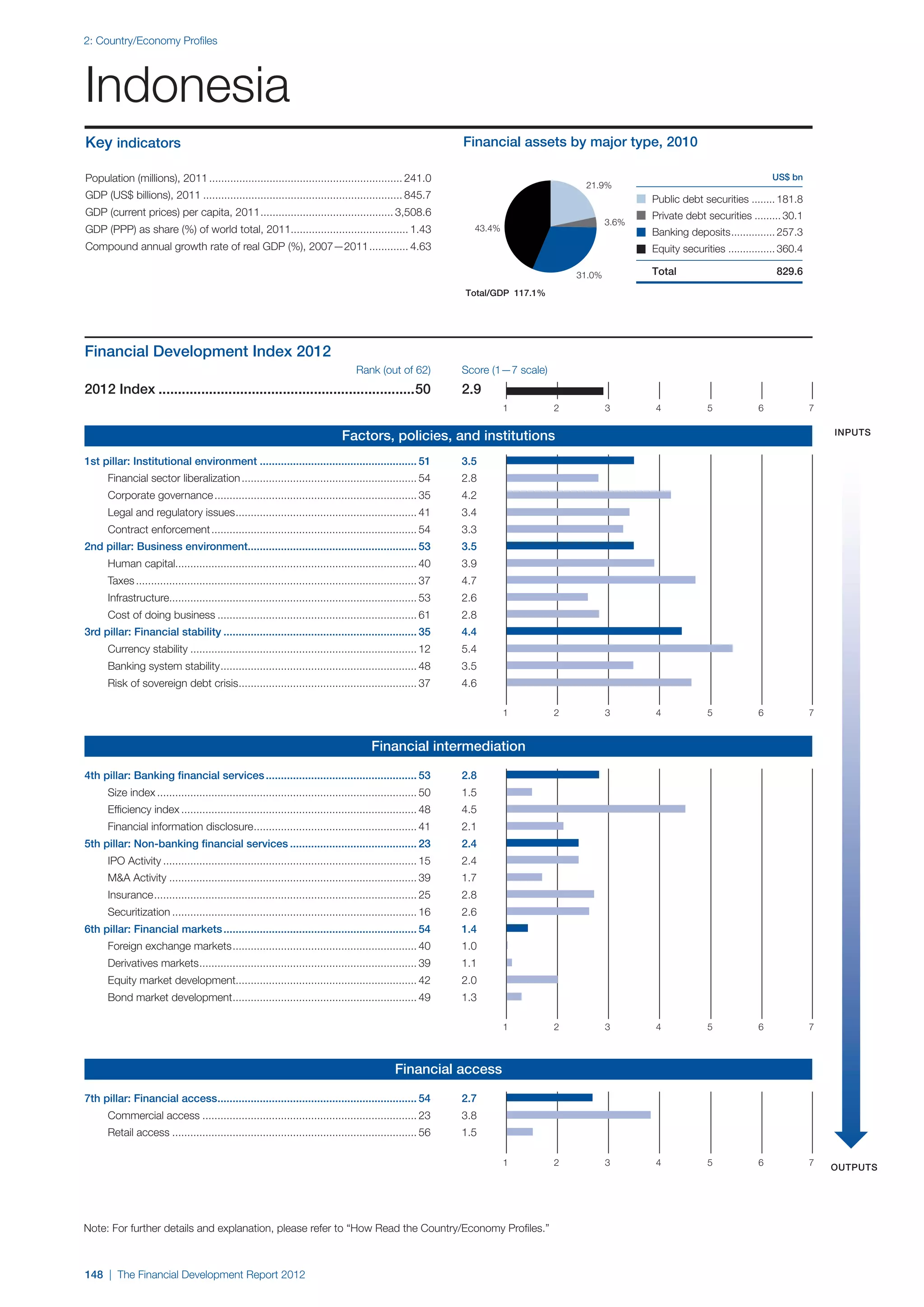
  • 60.
    1.2: Drawing BoundariesAround and Through the Banking System under the supervision of bank regulators have a different and In some respects, ring-fencing is less severe than the Volcker historically weaker regime of capital requirements than banks Rule, which precludes a significant amount of trading by a and do not have direct access to the safety net. They could, bank holding company even when conducted by a broker- then, pose risks to financial stability. This possibility amplifies dealer affiliate that does not in principle have access to the the importance of regulatory supervision for systemically bank’s capital.24 In practice, it is not clear which of these important financial institutions (SIFIs) that are not banks. two forms of separation between traditional banking and In the United States, the Financial Stability Oversight Council “wholesale” trading activities will prove to be more effective (FSOC), a committee of all major US financial regulatory at maintaining financial stability. agencies, will designate and supervise SIFIs. One of the first serious tests of the FSOC’s ability to control systemic risk Questions for regulators outside the regulated banking system is likely to be over the Regulators face a complex array of options for how to draw regulation of money market mutual funds. regulatory boundaries around and through their banking systems, and how to promote financial stability outside the The United Kingdom has responded to the dangers to its boundaries of the banking system. banking system revealed by the recent crisis with a plan to “ring-fence” its traditional domestic banks from wholesale Nothing about the boundaries of the regulated banking system global banking activities, such as dealings in securities and should be taken on principle. Which activities are allowed derivatives. Roughly speaking, this will mean that, whenever 23 within this specially protected regulatory environment is a these two classes of activities are offered by the same bank, cost-benefit decision that should be based on how dangerous the traditional domestic banking activities (including the it would be for these activities to be interrupted, what sorts critical payment and settlement systems) must be backed of collateral damage might be caused by their failure, and by a pool of capital that is legally insulated from losses what risks these activities would pose to financial stability suffered on wholesale global banking activities, as depicted if conducted outside the regulated banking system. The in Figure 4. benefits of access to the safety net are also to be evaluated against the associated moral hazard, which leads to socially inefficient risk taking, to the extent that it cannot be controlled Figure 4: Ring-fencing within the boundary of by other regulation. a universal banking system There can be more than a single monolithic safety net, as with the ring-fencing approach of the United Kingdom. Even Maturity Transformation more surgical approaches to safety nets include regulated categories of special-purpose narrow banks25 or a market for access to emergency liquidity.26 Underwriting Payments and The regulation of activities by banks clearly influences the Brokerage and Settlement Market Making activities undertaken in the shadow banking system. The activity limits and safety nets that apply inside and outside the regulated banking environments should be coordinated. Regulatory boundaries should also reflect any clear economies Ring-fencing within or diseconomies of scope that may add to the costs and a banking system benefits of bundling financial services of various sorts within the same enterprise. These economies affect both technical operating costs and customer service quality and efficiency. As with the Volcker Rule, ring-fencing is easier to describe There are also diseconomies of scope associated with in general terms than it will be to implement. For example, complexity, both for the management of financial institutions some domestic commercial banking clients may wish to use and for their regulatory supervision. derivatives to hedge business risks associated with interest rates, commodities, or foreign exchange. It will be difficult in After a review of the available evidence, Pennacchi writes, practice to know when clients are indeed obtaining commercial “There appears to be little or no benefits [sic] available from hedging services or are actually routing demand for speculative traditional banks that could not be obtained in a carefully positions through the “domestic side” of the bank in order to designed narrow bank financial system.”27 As to whether have a safer counterparty. there are net efficiency gains associated with extending traditional banks into universal banks, analysts reach mixed or uncertain conclusions.28 44 | The Financial Development Report 2012
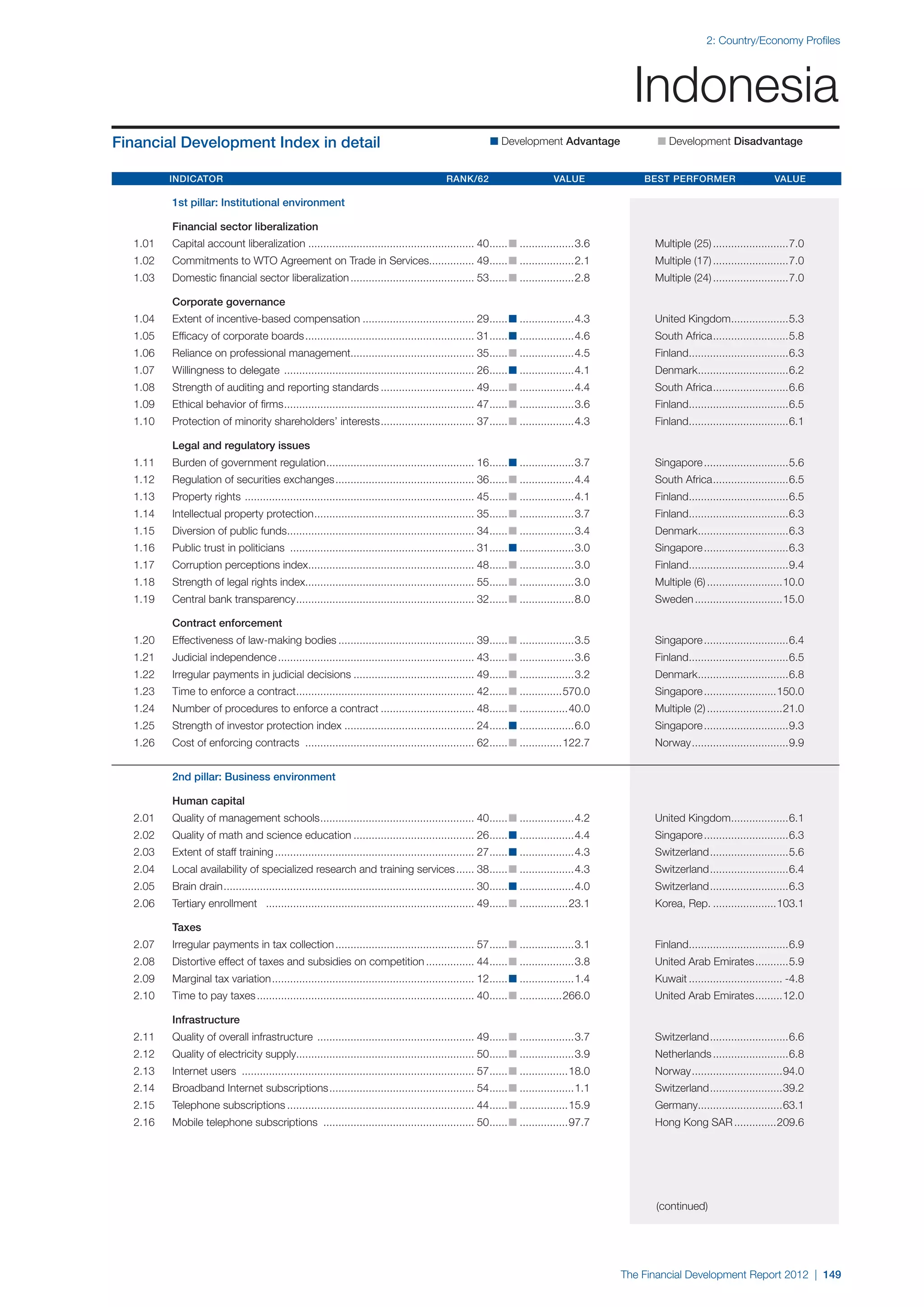
  • 61.
    1.2: Drawing BoundariesAround and Through the Banking System Notes limits, and moreover may not involve many of the 1 Gorton and Metrick 2012, 2010. “wholesale” securities and derivatives products that are ring-fenced in the United Kingdom, except under 2 See, for example, McCulley 2009. McCulley is the emergency exemptions that meet stringent conditions originator of the term shadow banking. and the approval of the Federal Deposit Insurance 3 Friedman and Schwartz 1963. Corporation. See Omarova 2011. Recently, Bank of 4 See Friedman 1960 and Friedman and Schwartz 1986. America and Morgan Stanley have been prevented by 5 Office of Financial Research 2012, p. 16. the Federal Reserve from transferring large portfolios of over-the-counter derivatives from their broker-dealer 6 Her Majesty’s Treasury 2012, p. 10. affiliates to their banking arms. 7 See Diamond 1984. The empirical evidence associated 25 See, e.g., the shadow bank examples of Gorton and with the benefits of governance by universal banks is Metrick 2010 and Ricks 2012. mixed. See Kroszner and Rajan 1994, Gorton and Schmid 2000, and Ferreira and Matos 2009. On 26 See, e,g., Tuckman 2012. additional benefits through combining underwriting and 27 Pennacchi 2012. loan monitoring, see Drucker and Puri 2005. 28 See Benston 1994, Duffie 2010, Baxter 2012, and 8 Gorton and Metrick 2010. Saunders and Walter 2012. 9 Ricks 2012. 10 Tuckman 2011. References 11 Pozsar 2011. Baxter, L. 2012. “Betting Big: Value, Caution and Accountability 12 Dang et al. 2009. in an Era of Large Banks and Complex Finance.” Review of Banking and Financial Law 31 (in press). 13 In the United States, Federal Home Loan Banks provided high levels of “advances” to banks, collateralized Benston, G. 1994. “Universal Banking.” Journal of Economic by mortgages and other housing-related assets. Perspectives 8(3): 121-43. 14 Squam Lake Group, Reforming Money Market Funds: Dam, L. and M. Koetter. 2012. “Bank Bailouts and Moral A Proposal by the Squam Lake Group, January 14, 2011, Hazard: Evidence from Germany.” Review of Financial http://www.squamlakegroup.org/Squam%20Lake%20 Studies 25 (8): 2343-80. MMF%20January%2014%20Final.pdf. Dang, T.V., G. Gorton, and B. Holmstrom. 2009. “Opacity and 15 Harper and Son 2012. the Optimality of Debt for Liquidity Provision.” Work in Progress, available at http://www.econ.yale. 16 Diamond and Dybvig 1983. edu/~dirkb/teach/pdf/d/dang/Paper_Liquidity.pdf. 17. Reinhart and Rogoff 2009. Diamond, D.W. 1984. “Financial Intermediation and Delegated 18 See, for example, Markham 2010 and White 2010. Monitoring.” Review of Economic Studies 51(3):393-414. 19 See Dam and Koetter 2012. Diamond, D.W. and P. Dybvig. 1983. “Bank Runs, Deposit 20 The price of government deposit insurance has generally Insurance, and Liquidity.” The Journal of Political been below the market price. See Duffie et al. 2003. Economy 91 (3): 401-19. 21 An excellent review of the history of the Glass-Steagall Drucker, S. and M. Puri. 2005. “On the Benefits of Concurrent Act and its elimination is provided in Markham 2010. Lending and Underwriting.” Journal of Finance 60 (6): 2763-99. 22 See Duffie 2012. Duffie, D. 2010. How Big Banks Fail – And What to do About It. 23 See Her Majesty’s Treasury 2012, ch. 2. Princeton, NJ: Princeton University Press. 24 Market making and underwriting are exempted by the — 2012. “Market Making Under the Proposed Volcker —. Volcker Rule but not by ring-fencing. Market making and Rule.” Report to the Securities Industry and Financial underwriting, however, are conducted by broker-dealers, Markets Association, submission to the Office of the not banks. Under Sections 23A and 23B of the US Bank Comptroller of the Currency, the Board of Governors of Holding Company Act, transactions between a bank and the Federal Reserve System, the Federal Deposit its broker-dealer and other affiliates within the same Insurance Corporation, and the Securities and Exchange holding company must be on an arm’s-length basis, must Commission. Available at http://www.sec.gov/comments/ not allow the bank to fund its affiliate beyond strict s7-41-11/s74111-72.pdf. The Financial Development Report 2012 | 45
  • 62.
    1.2: Drawing BoundariesAround and Through the Banking System Duffie, D., R. Jarrow, A. Purnanandam, and W. Yang 2003. Office of Financial Research, US Department of the Treasury. “Market Pricing of Deposit Insurance.” Journal of 2012. 2012 Annual Report. Washington DC: OFR. Financial Services Research 24(2-3):93-119. Omarova, S.T. 2011. “From Gramm-Leach-Bliley to Dodd-Frank: Ferreira, M. and P. Matos. 2009. “Universal Banks and The Unfulfilled Promise of Section 23A of the Federal Corporate Control – Evidence from the Global Syndicated Reserve Act.” North Carolina Law Review 89: 1683-769. Loan Market.” Working Paper No. 1066. Frankfurt: Pennacchi, G. 2012. “Narrow Banking.” Annual Review of European Central Bank. Financial Economics 4 (in press). Friedman, M. 1960. A Program for Monetary Stability. Pozsar, Z. 2011. “Institutional Cash Pools and the Triffin New York: Fordham University Press. Dilemma of the U.S. Banking System,” IMF Working Paper Friedman, M. and A.J. Schwartz. 1986. “Has Government 11/190. Washington DC: IMF. Any Role in Money?” Journal of Monetary Economics Reinhart, C.M. and Rogoff, K.S. 2009. This Time is Different: 17(1): 37-62. Eight Centuries of Financial Folly. Princeton, NJ: — 1963.A Monetary History of the United States, 1857-1960. —. Princeton University Press. Princeton, NJ: Princeton University Press. Ricks, M. 2012. “Reforming the Short-Term Funding Markets.” Gorton, G. and A. Metrick. 2010. “Regulating the Shadow Harvard University John M. Olin Center for Law, Banking System.” Brookings Papers on Economic Economics and Business Discussion Paper No. 713. Activity 41 (2): 261-97. Available at http://dx.doi.org/10.2139/ssrn.2062334. — 2012. “Securitized Banking and the Run on Repo.” —. Saunders, A. and I. Walter. 2012. “Universal Financial Journal of Financial Economics 104 (3): 425-51. Architecture, Systemic Risk, and Universal Banking.” Financial Markets and Portfolio Management. 26 (1): Gorton, G. and F. Schmid. 2000. “Universal Banking and the 39-59. Performance of German Firms.” Journal of Financial Economics 58 (1-2): 29-80 Tuckman, B. 2012. “Federal Liquidity Options: Containing Runs on Deposit- Like Assets without Bailouts and Harper, C. and H. Son. 2012. “Breaking up Banks is Hard with Moral Hazard.” Center for Financial Stability Policy Traders Hooked on Deposits.” Bloomberg, September 4. Paper. New York: Center for Financial Stability. Liikanen Group. 2012. High-level Expert Group Report on White, L. J. 2010. “The Gramm-Leach-Bliley Act of 1999: Reforming the Structure of the Banking Sector, Final A Bridge Too Far? Or Not Far Enough?” Suffolk Report, European Commission, Brussels, October 2, University Law Review 43(4): 937-56. 2012. http://ec.europa.eu/internal_market/bank/docs/ high-level_expert_group/report_en.pdf Her Majesty’s Treasury. 2012. Banking Reform: Delivering Stability and Supporting a Sustainable Economy. London: HM Treasury. Kroszner, R. and R. Rajan. 1994. “Is the Glass-Steagall Act Justified?
A Study of the U.S. Experience with Universal Banking Before 1933.” American Economic Review 84(4): 810-32. Markham, J. 2010. “The Subprime Crisis—A Test Match For the Bankers: Glass-Steagall vs. Gramm-Leach-Bliley.” University of Pennsylvania Journal of Business Law 12 (4): 1081–134. McCulley, P. 2009. “The Shadow Banking System and Hyman Minsky’s Economic Journey.” Insights into the Global Financial Crisis, ed. L. Siegel. The Research Foundation of CFA Institute. 46 | The Financial Development Report 2012
  • 63.
    CHAPTER 1.3 Emerging market banks are by no means small and are growing fast. However, very little is known about these banks, Branching Out: The Rise of especially about their cross-border activities. This chapter Emerging Market Banks explores in detail the importance of emerging market banks as foreign investors and discusses how the global financial Neeltje van Horen crisis allows these banks to increase their global (albeit De Nederlandsche Bank regionally confined) footprint. Emerging market banks, emerging giants Although, in the West, many are unfamiliar with emerging market banks, they are by no means small.1 In fact, the world’s biggest bank in market value is China’s ICBC. The global top 25 currently includes eight emerging market banks. Among these are three other Chinese banks (China Construction Bank, Agricultural Bank of China, and Bank of China), three Brazilian banks (Itau Unibanco, Banco do Brasil, and Banco Bradesco), and one Russian bank (Sberbank). While excess optimism might have inflated these market values, these banks are large with respect to other measures, as well. In terms of assets, all these banks are in the top 75 worldwide, with all four Chinese banks in the top 20. In addition, lower down in the rankings, there is a long list of smaller banks that together add up to quite a lot. In 2010, emerging market banks as a group accounted for roughly 30 percent of global profits, a third of global revenues, and half of tier 1 capital. In 2011, these numbers only increased. For example, Brazil has now overtaken the United Kingdom in terms of profits earned, despite having an asset base that is less than one-fifth as large as that of the UK.2 Not only are emerging market banks already substantially large; they are growing fast. In terms of market value, the share of emerging market banks in the industry’s total worldwide almost doubled between 2005 and 2010. While in 2005 all of the world’s 25 largest banks by market capitalization were located in advanced countries, currently eight are from emerging markets. In addition, asset growth has been impressive in many emerging markets. Although China again tops the ranks, other emerging markets have seen impressive increases in bank assets, as well, while maintaining adequate capital ratios and ample deposit funding. Loan growth was strong in many emerging markets in the period leading up to the financial crisis, and many banks in Asia, Africa, and Latin America predict that their loan books will continue to rise with double-digit numbers over the next few years.3 Outward bound With a large part of their populations still unbanked and their economies growing, much of the growth potential of emerging market banks will lie at home. However, there is also growth potential overseas. Although many are not aware of the foreign adventures these banks have undertaken in the past, quite a few emerging market banks are no stranger to setting The Financial Development Report 2012 | 47
  • 64.
    1.3: Branching out:The Rise of Emerging Market Banks up a branch or subsidiary abroad, generating revenue outside the importance of emerging market foreign banks increased their domestic market. Standard Bank of South Africa, for substantially in a large number of countries since 1995. In example, generated almost a quarter of its profits from 1995, there were 39 countries that had a foreign bank active abroad, mainly the rest of Africa. Hungary’s OTP Bank Nyrt but no foreign banks owned by a parent from an emerging expects business in its home market to contract this year market. By 2009, this number was down to 24. Similarly, in amid tough economic conditions, but projects double-digit 1995, there were 20 countries where emerging market banks growth rates in its Russia and Ukraine retail business. So, represented more than 50 percent of the foreign banks active how active are emerging market banks overseas? How has in the country; in 2009, there were 26 countries in this group. this changed over time, and what type of countries are these In fact, in some countries (Azerbaijan, Kuwait, Malawi, banks targeting? Mongolia, Namibia, Sudan, and Vietnam), all foreign banks are owned by parents from emerging markets. And in some Over the last two decades, the world has witnessed an host countries, these banks are large players indeed. For unprecedented degree of foreign bank entry. Driven by example, the biggest bank in Madagascar is Bank of Africa, globalization and increased financial integration, the number headquartered in Mali. Similarly, in Burkina Faso, Bank of foreign banks almost doubled, from 774 in 1995 to 1,334 of Africa and Ecobank, headquartered in Togo, are two of in 2009. Although most of this foreign investment is done by 4 the six foreign banks active, and two of the biggest ones banks from advanced countries, banks from emerging in terms of assets. markets have been active investors, as well. Figure 1 depicts the entry of foreign banks, highlighting investments by Ownership by emerging market banks has expanded not only advanced country banks and those by emerging market in terms of host countries, but also in terms of the number banks.5 Of the 1,088 entries that took place between 1995 of emerging market investors. While in 1995 banks from and 2009, 312 were by emerging market banks. The figure 6 45 different emerging markets pursued banking activities in shows that foreign banks from emerging markets have been other countries, by 2009, banks from 60 emerging markets active investors over the whole sample period. Especially did so. While emerging market investors typically come from in 1997 (41 percent) and 2006 (38 percent), they were more developed emerging markets, such as Argentina, Brazil, responsible for a large share of the new entries. and South Africa, banks from low- and lower-middle-income countries, such as Kenya, Nicaragua, and Pakistan, are also Over the period 1995-2009, the share (in terms of numbers) active as investors. In 2009, 30 percent of emerging market of foreign ownership by emerging market banks has stayed foreign banks were owned by parents located in low- or relatively stable, as both advanced country banks and emerging lower-middle-income countries, up from 21 percent in 1995. market banks increased their overseas investment (see In 1995, most emerging market investors belonged to countries Figure 2). In 2009 (the last year of our sample period), banks 7 in Latin America (33 percent), but by 2009, this focus had from 60 emerging markets owned 27 percent of the foreign shifted towards Eastern Europe (23 percent) and Central Asia banks in terms of numbers, up from 24 percent in 1995. In and sub-Saharan Africa (23 percent), mostly due to terms of assets, however, they owned only 5 percent, so disinvestment by banks from Argentina, Brazil, and Panama emerging market banks still represent only a small portion and to large-scale investments by banks from Hungary, of total foreign banking assets. This indicates that, even Nigeria, Russia, and South Africa. Excluding Panama, which though quite a few emerging market banks engage in foreign is an offshore center, the most active investors as of 2009 are adventures, they tend to focus on small acquisitions, often banks from South Africa, Russia, Turkey, and Brazil, owning to service local customers abroad or to offer services to 31, 29, 21, and 17 foreign banks, respectively. migrants. For example, State Bank of India (SBI) and ICICI Bank, India’s largest privately owned bank, have both Table 1 groups countries according to their income level and undertaken expansions in Asia, Africa, and the Middle East. region and shows a number of interesting facts. First, as The reason behind these expansions are to facilitate expected, the share of emerging market foreign banks is increasing trade and investment flows between India and other higher in emerging markets than in advanced countries, in countries, to provide foreign currency denominated loans to terms of both numbers and assets. When the sample of the overseas affiliates of Indian companies,and to provide emerging markets is split into middle- and low-income remittance and retail credit services for Indian expatriates. 8 countries, it becomes obvious that emerging market banks are specifically investing in low-income countries. On average, Even though, at a global scale, emerging market foreign 52 percent of the foreign assets in these countries is owned banks are still small, these banks are becoming more by a bank headquartered in an emerging market, compared significant in many emerging markets. Figure 3 shows that to 33 percent in middle-income countries. 48 | The Financial Development Report 2012
  • 65.
    1.3: Branching out:The Rise of Emerging Market Banks Figure 1: Bank entries from advanced countries and emerging markets, 1995-2009 Figure 1: Bank entries from advanced countries and emerging markets, 1995-2009 Figure 1: Bank entries from advanced countries and emerging markets, 1995-2009 NUMBERS 140 NUMBERS 140 NUMBERS 120 140 120 100 120 100 80 100 80 60 80 60 40 60 40 20 40 20 0 20 1995 1996 1997 1998 1999 2000 2001 2002 2003 2004 2005 2006 2007 2008 2009 0 1995 1996 1997 1998 1999 2000 2001 2002 2003 2004 2005 2006 2007 2008 2009 0 Advanced country foreign banks Emerging market foreign banks 1995 1996 1997 1998 1999 2000 2001 2002 2003 2004 2005 2006 2007 2008 2009 Advanced country foreign banks Source: Claessens and Van Horen, 2012. Emerging market foreign banks Note: As the database starts in 1995, the number of foreign banks that exited the market cannot be determined. For a definition of advanced countries and emerging markets, please see the main text. Source: Claessens and Van Horen, 2012. Advanced country foreign banks Emerging market foreign banks Note: As the database starts in 1995, the number of foreign banks that exited the market cannot be determined. For a definition of advanced countries and emerging markets, please see the main text. Source: Claessens and Van Horen, 2012. Note: As the database starts in 1995, the number of foreign banks that exited the market cannot be determined. For a definition of advanced countries and emerging markets, please see the main text. Figure 2: Number of advanced country and emerging market banks, 1995-2009 Figure 2: Number of advanced country and emerging market banks, 1995-2009 Figure 2: Number of advanced country and emerging market banks, 1995-2009 NUMBERS 1,600 NUMBERS 1,600 1,400 NUMBERS 1,400 1,600 1,200 1,400 1,200 1,000 1,200 1,000 800 1,000 800 600 800 600 400 600 400 200 400 200 0 1995 1996 1997 1998 1999 2000 2001 2002 2003 2004 2005 2006 2007 2008 2009 0 200 1995 1996 1997 1998 1999 2000 2001 2002 2003 2004 2005 2006 2007 2008 2009 0 Advanced country foreign banks Emerging market foreign banks 1995 1996 1997 1998 1999 2000 2001 2002 2003 2004 2005 2006 2007 2008 2009 Advanced country foreign banks Emerging market foreign banks Source: Claessens and Van Horen, 2012. Advanced country foreign banks Emerging market foreign banks Source: Claessens and Van Horen, 2012. Source: Claessens and Van Horen, 2012. Figure 3: Concentration of emerging market foreign banks, 1995 and 2009 Figure 3: Concentration of emerging market foreign banks, 1995 and 2009 Figure 3: Concentration of emerging market foreign banks, 1995 and 2009 40 NUMBER OF COUNTRIES WITH EMERGINGEMERGING 40 35 NUMBER OF COUNTRIES EMERGING 35 40 MARKET FOREIGN BANKS 30 NUMBER OF COUNTRIES WITHWITH MARKET FOREIGN BANKS 35 30 25 MARKET FOREIGN BANKS 30 25 20 25 20 15 20 15 10 15 10 5 10 5 0 0 0-10 10-20 20-30 30-40 40-50 50-60 60-70 70-80 80-90 90-100 5 0 0 0-10 10-20 20-30 30-40 40-50 50-60 60-70 70-80 80-90 90-100 0 1995 2009 PERCENT EMERGING MARKET FOREIGN BANKS IN COUNTRY 0 0-10 10-20 20-30 30-40 40-50 50-60 PERCENT EMERGING MARKET FOREIGN BANKS IN COUNTRY 60-70 70-80 80-90 90-100 1995 2009 Source: Claessens and Van Horen, 2012. 1995 2009 PERCENT EMERGING MARKET FOREIGN BANKS IN COUNTRY Note: A Claessens and Van Horen, at least Source: foreign bank is one that has2012. 50 percent foreign ownership. An emerging market foreign bank is a foreign bank whose largest shareholder comes from an emerging market. See footnote 1 for exact definition. Note: A foreign bank is one that has at least 50 percent foreign ownership. An emerging market foreign bank is a foreign bank whose largest shareholder comes from an emerging market. See footnote 1 for exact definition. Source: Claessens and Van Horen, 2012. Note: A foreign bank is one that has at least 50 percent foreign ownership. An emerging market foreign bank is a foreign bank whose largest shareholder comes from an emerging market. See footnote 1 for exact definition. The Financial Development Report 2012 | 49
  • 66.
    1.3: Branching out:The Rise of Emerging Market Banks Table 1: Foreign bank penetration, aggregates by income level and region, 2009 Country-based Group-based Foreign bank Share EM Number of Share EM Total number Total number Foreign bank Share EM Number of Share EM assets in total foreign bank foreign banks foreign banks of foreign of countries assets in total foreign bank foreign banks foreign banks bank assets assets in total in total number in total foreign banks bank assets assets in total in total number in total foreign foreign assets of banks banks foreign assets of banks banks Income level Advanced countries 0.23 0.22 0.29 0.17 376 27 0.13 0.05 0.25 0.18 Emerging markets 0.48 0.33 0.47 0.38 958 91 0.14 0.07 0.40 0.30 Middle-income 0.40 0.33 0.44 0.38 698 61 0.11 0.08 0.36 0.29 Low-income 0.65 0.52 0.52 0.48 131 21 0.35 0.45 0.47 0.53 Region (emerging markets only) East Asia and Pacific 0.19 0.42 0.26 0.46 95 9 0.04 0.11 0.25 0.32 Europe and Central Asia 0.62 0.15 0.59 0.30 371 25 0.39 0.04 0.47 0.21 Latin America and Caribbean 0.42 0.37 0.44 0.32 232 19 0.30 0.04 0.39 0.25 Middle East and North Africa 0.26 0.24 0.27 0.42 57 6 0.16 0.14 0.36 0.46 South Asia 0.18 0.30 0.14 0.24 22 4 0.08 0.04 0.14 0.23 Sub-Saharan Africa 0.63 0.53 0.58 0.47 181 28 0.27 0.17 0.54 0.49 All countries 0.41 0.31 0.43 0.33 1,334 118 0.13 0.05 0.34 0.27 Source: Claessens and Van Horen, 2012. Notes: Figures reported are ratios of number of foreign banks to total number of banks (in 2009) and foreign bank assets to total bank assets (average over 2007-2009) in each country, and the ratios of the number of emerging market foreign banks in total number of foreign banks and emerging market foreign bank assets to total foreign bank assets in each country. Income and region classifications follow World Bank definitions as of 2009. Country-based figures are the simple average of the countries within a group ((1/n)Σi[FBi/(DBi+FBi)] for country i), whereas group-based figures are obtained from ΣiFBi/(ΣiDBi+ΣiFBi) for country i within a group. FB and DB represent foreign bank and domestic bank respectively. Second, strong regional differences exist. While foreign Differences that count ownership is especially prevalent in Eastern Europe and Banks engage in foreign investment for several reasons. First, Central Asia, Latin America, and sub-Saharan Africa, foreign investment provides a possibility for risk diversification. ownership by emerging market banks is significantly higher Second, entering new markets can increase the bank’s client in the latter region. In sub-Saharan Africa, 53 percent of base. Third, by following their international customers foreign assets, on average, are owned by emerging market in order to provide them with financial services, banks can banks, while in Eastern Europe and Central Asia and in exploit informational advantages derived from long-term Latin America, these numbers are substantially lower—15 bank-client relationships. Indeed, a number of studies have and 37 percent, respectively. The difference is even more shown that foreign direct investment in banking is correlated pronounced when looking at the group-based shares. In with economic integration, as measured by trade and FDI sub-Saharan Africa, emerging market banks own 49 percent flows between the home country of the parent and the host of foreign banks and 17 percent of foreign assets. In Eastern country in which it is investing,9 and with proximity, measured Europe and Central Asia, these numbers are 21 and 4 percent, along several dimensions.10 Fourth, foreign banks tend to be respectively, and in Latin America, 25 and 4 percent. attracted to countries where expected profits are higher, owing to higher expected economic growth and the existence Third, clear differences emerge when comparing the shares of local bank inefficiencies.11 calculated on a group basis with those based on simple averages of the individual countries, and especially when looking at How do entry decisions of foreign banks from emerging asset shares. In most cases, the emerging market share for markets compare to those of advanced countries? The the group-based measure is lower than the country-based characteristics of emerging market bank investment described measure, indicating that foreign banks owned by banks from above suggest that emerging market banks tend to invest emerging markets are overrepresented in smaller markets. in different countries than advanced country banks do. This suggests that advanced country banks are more Research confirms this. Van Horen (2007) shows that foreign attracted to larger markets, while emerging market banks bank entry by both emerging market and advanced country tend to invest in the smaller, often poorer, countries, a topic banks is driven by economic integration, common language, that will be discussed further next. and proximity. However, controlling for these factors, banks from emerging markets are more likely to invest in small, 50 | The Financial Development Report 2012
  • 67.
    1.3: Branching out:The Rise of Emerging Market Banks developing countries with weak institutions, where advanced Americas and Europe invest within their own region, emerging country banks are reluctant to go. This result suggests that market banks from Asia have also built a substantial presence emerging market banks have a competitive advantage in outside their region. This is partly the result of Asian banks’ dealing with countries with a weak institutional climate. tendency to establish a presence in countries with large migrant populations. Indeed, when we have a closer look at the countries in which emerging market banks tend to invest, two facts clearly stand When we look at developments over time, banks from out. First, there exists a high negative correlation between advanced countries have actually become less regional and (log of) GDP and GDP per capita of the host country and more global, possibly due to advances in telecommunication the share of emerging market banks in foreign bank assets and other technologies and to economies of scale in the (Figure 4). In the first case, the correlation equals -0.45, and provision of some financial services. Banks from emerging in the second case, it equals -0.37. This shows that emerging markets, on the other hand, have become more regional, market foreign banks are especially attracted to smaller and possibly because they have a stronger competitive advantage poorer countries. in countries physically and institutionally closer as compared with banks from advanced countries.13 Second, while advanced country banks tend to set up shop both within and outside their own geographical region, the Weathering the financial storm vast majority of emerging market banks tend to stay close to Not being a stranger to foreign investments, the question home. Table 2 splits countries into four broad geographical arises how emerging markets will respond to changes regions that cut across income groups (America, Asia, brought on by the turbulence in the global financial markets. Europe, and Middle East and Africa).12 It shows that, while With the global financial crisis almost seamlessly merging quite a few banks from advanced countries are venturing into the Eurozone debt crisis, the global financial system is outside their own region (reflecting past colonial linkages or still trying to adjust to the new rules of the game. While some a desire to operate globally), over 80 percent of investments banks are faced with major restructurings (either voluntary from emerging market banks are within their own region. or imposed by governments), virtually all banks will have Among emerging market banks, there are also clear regional to make adjustments in order to comply with Basel III and differences. While almost all emerging market banks from the other, country-specific, regulatory measures. The changes Table 2: Number and share of foreign banks from home to host regions, 2009 Number and share of Advanced country banks foreign banks from home country present Host region in host country AMERICA ASIA EUROPE MEA Total Home region Number Share Number Share Number Share Number Share Number Share AMERICA 72 0.44 25 0.15 54 0.33 13 0.08 164 1 ASIA 13 0.22 37 0.62 10 0.17 0 0.00 60 1 EUROPE 121 0.17 53 0.07 450 0.64 84 0.12 708 1 MEA 2 0.09 4 0.17 7 0.30 10 0.43 23 1 Number and share of Emerging market banks foreign banks from home country present Host region in host country AMERICA ASIA EUROPE MEA Total Home region Number Share Number Share Number Share Number Share Number Share AMERICA 55 0.96 0 0.00 2 0.04 0 0.00 57 1 ASIA 9 0.12 49 0.67 8 0.11 7 0.10 73 1 EUROPE 0 0.00 7 0.09 72 0.91 0 0.00 79 1 MEA 2 0.01 8 0.05 26 0.18 111 0.76 147 1 Source: Claessens and Van Horen, 2012. Note: Countries are grouped in four geographical regions, irrespective of the income level of the countries. America includes Canada, United States, and all countries in Latin America and the Caribbean. Asia includes all countries in Central, East, and South Asia and the Pacific countries, including Japan, Australia, and New Zealand. Europe includes all Western and Eastern European countries. MEA includes all countries in the Middle East and North and sub-Saharan Africa. The Financial Development Report 2012 | 51
  • 68.
    1.3: Branching out:The Rise of Emerging Market Banks Figure 4: Percent of foreign bank assets held by emerging market foreign banks by GDP and GDP per capita 100 100 90 90 80 Corr: -0.45 80 Corr: -0.37 P-value: 0.00 P-value: 0.00 70 70 % ASSETS % ASSETS 60 60 50 50 40 40 30 30 20 20 10 10 0 0 6 8 10 12 14 16 18 6 7 8 9 10 11 12 COUNTRY GDP HOST COUNTRY GDP PER CAPITA (LOG, CURRENT MIL US$) (LOG, CURRENT US$) Sources: Claessens and Van Horen, 2012 and World Bank Development Indicators. Note: Percent of foreign bank assets held by emerging market foreign banks and host country GDP and GDP per capita are averaged over 2007-2009. invoked by the crisis, however, have a very different impact on major sovereign debt problems and/or large current account advanced country banks than on emerging market banks, and deficits, most emerging markets are on pretty solid footing. therefore the crisis will likely have a lasting effect on the role Even though they will not be isolated from the problems in the latter group will play in the global financial system. Europe and the United States, their dependence on the West has diminished in recent years. Although emerging market banks have also been affected by the crisis, several factors make it easier for these banks to So, as compared with many advanced country banks, weather the storm. First, loan-to-deposit ratios in general are emerging market banks tend to have much more favorable very low, due to the net saving position of these countries. funding positions and outlooks. This fact, combined with high This has sheltered emerging market banking systems to a profits that can provide a buffer to absorb potential losses, large extent from the collapse of the interbank market and puts these banks in a good position to extend their global reduced the need for substantial deleveraging. Thus, these reach by seizing opportunities that might come along banks can continue lending, using a stable and often growing when advanced country banks in need to consolidate, source of deposit funding. Second, most emerging market either forced or voluntary, sell-off some of their domestic banks already have high capital ratios, ranging from 17 or foreign subsidiaries. percent, on average, in Latin America to 13 percent in Asia, which limits pressures for balance sheet adjustments. In However, a number of factors might prevent this from addition, the new capital rules under Basel III are likely to be happening. First, with still a large part of the population much less painful for these banks, as they typically have less unbanked, most emerging market banks face pressures at risky assets and their investment banking business tends to home to increase lending, which reduces funds available for be small. foreign expansion. Second, an important share of excess deposits is stuck in sleepy state banks that have shown very Equally important, emerging market banks face a very different limited interest in expanding abroad. Third, many emerging situation in their domestic market from their advanced country market banks have only limited provisions set aside, especially peers. First, the fact that a large part of the population as compared with advanced country banks, and therefore in the emerging world is still unbanked provides ample growth face pressures to increase their bad-debt reserves. Finally, opportunities in these markets. This stands in sharp contrast regulators might oppose foreign adventures as the use of to the conditions advanced country banks face at home, domestic deposits to finance a subsidiary overseas exposes where, due to overall economic weakness and ongoing banks to foreign exchange and counterparty risk. deleveraging among firms and households, expected credit growth is low. Indeed, currently the top 25 countries for return Recent examples, however, indicate that at least some on capital are all emerging markets, with the exception of emerging market banks are seizing opportunities and starting Australia and Canada (two commodity-driven economies). new foreign adventures. Russia’s Sberbank bought in 2011 Second, the macroeconomic outlook in emerging markets is the Central and Eastern European subsidiaries of Austria’s much better than that of advanced countries. Not faced with Volksbank and is now acquiring DenizBank in Turkey, owned 52 | The Financial Development Report 2012
  • 69.
    1.3: Branching out:The Rise of Emerging Market Banks by Belgium’s rescued Dexia. Chile’s Corpbanca bought the Notes Colombian operations of Santander, and HSBC sold its 1 For the purpose of this paper, emerging market banks operations in Costa Rica, El Salvador, and Honduras to are banks owned by parent companies located in Banco Davivienda of Colombia. More acquisitions of these countries that are not high-income countries as classified types seem likely, suggesting that, in the coming years, by the World Bank in 2000. The emerging markets emerging market banks will grow not only in their domestic group therefore also includes low-income countries. markets but also abroad. Current OECD countries such as Hungary, the Czech Republic, Poland, Slovakia, and Korea are included in This increase in their global footprint, however, most likely will the emerging markets group. Slovenia, which already remain regionally confined. First, with a fully developed banking was a high-income country in 2000, is included in the system, sovereign debt problems, and low expected economic advanced countries group. growth, profits are unlikely to be reaped in advanced 2 The Banker, “Top 1000 World Banks,” 2011, 2012, countries (most notably Western Europe), making investment http://www.thebanker.com/Top-1000-World-Banks/2012. in other emerging markets more likely. Second, while many 3 Fast loan growth obviously can create risks, as well. For emerging markets have (potential) high returns on capital, example, in Central and Eastern Europe, loans grew they are not easy markets in which to operate. For example, twice as fast as GDP between 2000 and 2007, but return on capital in Pakistan was 36 percent in 2011, but the when banks ran out of funding as a result of the global country is fraught with political and operational risk, which financial crisis, bad debt mounted quickly and loan has kept the banking sector small. Emerging market banks growth collapsed. experienced in investing in smaller and poorer countries seem to have a competitive advantage exactly in those markets, 4 All data in this chapter come from the bank ownership and therefore have a better chance of generating profits in database constructed by Claessens and Van Horen. these markets. Third, regulatory crackdowns in advanced For a description of the database, see Claessens and countries, caused by some cross-border bank failures, might Van Horen 2012. The banks included in the database make it hard for emerging market banks to set up a branch are listed in Bankscope, and therefore representative or subsidiary in these countries. Fourth, an increasing number offices and small branches that do not have individual of emerging market companies are establishing a presence annual reports are not included in the data. A foreign overseas, mainly in other emerging markets, providing bank is defined as having at least 50 percent of its emerging market banks with another reason to extend their shares owned by foreigners. Countries that are offshore foreign network regionally, instead of globally, in order to centers are excluded from this analysis. service their domestic customers abroad. 5 Foreign banks owned by institutional investors such as the European Bank for Reconstruction and Development Summarizing, due to sheer size, almost undoubtedly emerging (EBRD) or the International Finance Corporation (IFC) market banks will soon become important players in the are categorized as advanced country banks. Foreign world’s financial system. Most of their muscle will be needed banks owned by parents headquartered in offshore at home to support the credit growth demanded by their centers are included in the sample, with the bank included populations and politicians. However, with advanced country in the emerging market or advanced country group banks trying to adjust to the new rules of the game, it is likely depending on the income level of the offshore center. that more disinvestment, both domestically and abroad, will For example, foreign banks owned by banks headquartered take place in the near future. Banks from emerging markets, in Panama are included in the emerging market group. being in a much better financial position, are the most likely 6 The difference between the increase in foreign banks buyers, increasing their relative importance as foreign investors. between 1995 and 2009 and the number of new entries Therefore, the global financial system is likely to witness a over the same period is accounted for by 329 foreign shift towards greater dominance by emerging market banks, banks exiting and 199 M&As of foreign-owned banks by especially within their own geographical regions. other foreign banks. The views expressed in this chapter are those of the author 7 The lack of balance sheet information for the vast only and do not necessarily reflect the views of the majority of banks prior to 2004 in Bankscope (our De Nederlandsche Bank, the European System of Central source of information for balance sheet information) Banks or their Boards. prevents us from showing time trends in terms of assets. The Financial Development Report 2012 | 53
  • 70.
    1.3: Branching out:The Rise of Emerging Market Banks 8 World Bank 2006, p. 118. References 9 See, for example, Grosse and Goldberg 1991, Brealey Berger, A.N., C.M. Buch, G. DeLong, and R. DeYoung. 2004. and Kaplanis 1996. “Exporting Financial Institutions Management Via Foreign Direct Investment Mergers and Acquisitions,” 10 Galindo et al. 2003; Berger et al. 2004; Claessens Journal of International Money and Finance 23(3): 333–66. and Van Horen 2008. Brealey, R. and E. Kaplanis. 1996. “The Determination of 11 Focarelli and Pozzolo 2000. Foreign Banking Location.” Journal of International 12 America includes the United States, Canada, and Money and Finance 15(4): 577–97. the countries in Latin America and the Caribbean. Asia Claessens, S. and N. Van Horen. 2008 “Location Decisions of includes all countries in Central, East, and South Asia Foreign Banks and Competitive Advantage.” World and the Pacific countries including Japan, Australia, and Bank Policy Research Working Paper No. 4113. New Zealand. Europe includes all Western and Eastern Washington DC: IMF and De Nederlandsche Bank. European countries. Middle East and Africa includes all countries in the Middle East and in North and — 2012. “Foreign Banking: Trends, Impact and Financial —. sub-Saharan Africa. Stability.” IMF Working Paper 12/10. Washington DC: IMF. 13 See Claessens and Van Horen 2008. Focarelli, D. and A.F. Pozzolo. 2000. “The Determinants of Cross-Border Bank Shareholdings: An Analysis with Bank-Level Data from OECD Countries.” 2000 Conference Proceedings. Federal Reserve Bank of Chicago International Banking Conference.199–232. Galindo, A., A. Micco, and C. Serra. 2003. “Better the Devil That You Know: Evidence on Entry Costs Faced by Foreign Banks.” Inter-American Development Bank Working Paper No. 477. Washington DC: Inter-American Development Bank. Grosse, R. and L. Goldberg. 1991. “Foreign Bank Activity in the United States: An Analysis by Country of Origin.” Journal of Banking and Finance 15 (6): 1093–112. Van Horen, N. 2007. “Foreign Banking in Developing Countries: Origin Matters.” Emerging Market Review 8(2): 81-105. World Bank. 2006. Global Development Finance. Washington DC: The World Bank. 54 | The Financial Development Report 2012
  • 71.
    Part 2 Country/Economy Profiles The Financial Development Report 2012 | 55
  • 73.
    How to Readthe Country/Economy Profiles The Profiles section presents a four-page profile for each of the 62 economies covered by The Financial Development Report 2012. Page 1 ➊ Key indicators The first section of each Country/Economy Profile presents a selection of key indicators: • Population, GDP, and related data come from the International Monetary Fund’s World Economic Outlook of April 2012. ➋ Financial assets by major type, 2010 • Public debt figures are from the Economist Intelligence Unit’s CountryData Database, accessed in August 2012. Private debt data come from the Bank for International Settlements Quarterly Review, June 2012, and are presented as of 2010. Data on banking deposits are from the IMF International Financial Statistics database, electronic version, accessed July 2012. Equity securities data were downloaded from the market capitalization dataset on the World Bank’s World Development Indicators database in July 2012. ➌ Financial Development Index This section details the economy’s performance on the • The four financial asset indicators (public and private various components of the Financial Development Index debt securities, banking deposits, and equity securities) (the Index). At the top is the country’s overall rank out of 62 are added to measure total financial assets in the economies, its score on the 1-to-7 scale, and a graphical Index economies. The share of depth attributable to representation of the score. each component is displayed in the pie chart. Percentages displayed may not add up to 100 Below, the seven pillars of the Index are organized thematically. percent because of rounding. The three themes—factors, policies, and institutions; financial intermediation; and financial access—are displayed according • The total financial assets data are shown as a to their role in the continuum of the financial system, from percent of GDP, using the GDP figure from the key inputs to outputs. indicators section. • The pie chart shows the share of total financial assets After the pillar or subpillar name, the first column shows each economy’s rank for that pillar or subpillar among the attributable to each of the four types of financial asset 62 economies included in the Index. The second column indicators in a given economy. presents the score for that pillar or subpillar on the 1-to-7 normalized scale. On the right, the normalized score is represented graphically. For more information on the methodology and results of the Index, please refer to Chapter 1.1 of this Report. The Financial Development Report 2012 | 57
  • 74.
    How to Readthe Country/Economy Profiles Pages 2–4 ➍ The Financial Development Index in detail These pages present the rank achieved by a country in each of the indicators entering the composition of the Index. Indicators are organized by pillar. Please refer to Appendix A of Chapter 1.1 for a detailed structure of the Index. Next to the rank, a colored square indicates whether the indicator constitutes an advantage (blue square) or a disadvantage (gray square) for the country. In order to identify variables as advantages or disadvantages, the following rules were applied: • For those economies ranked in the top 10 in the overall Index, individual variables ranked from 1 through 10 are considered to be advantages. Any variables below 10 are considered to be disadvantages. For instance, in the case of Canada, which is ranked 6th overall, its 5th-place rank in the variable Quality of management schools makes this variable a development advantage, whereas Extent of staff training, in which it ranks 17th, constitutes a development disadvantage After the advantage/disadvantage marker is the value of the for the country. listed indicator for the profiled economy. For more information • For those economies ranked from 11 through 31 in on the significance of the value, such as the units in which it is measured or the source, please see the Data Tables in Part the overall Index, variables ranked higher than 3 of this Report. the economy’s overall rank are considered to be advantages. Any variables ranked equal to or lower In the gray box at the right of the profile is the name and than the economy’s overall rank are considered to be value for the top-ranked economy of the given indicator. disadvantages. In the case of Malaysia, ranked 18th For indicators in which there is a tie for the top rank, the overall, its 10th-place rank in the variable Number of word Multiple appears with the number of economies that procedures to enforce a contract makes this variable share that value in parentheses. a development advantage, whereas Judicial independence, in which it ranks 26th, constitutes a development disadvantage for the country. • For those economies ranked lower than 31 in the overall Index, any individual variables ranked 31st or higher are considered as advantages. Any variables ranked 32nd or lower are considered to be disadvantages. For Greece, ranked 48th overall, its rank of 24th in Market penetration of bank accounts constitutes a development advantage for the country, whereas its 34th-place rank in the variable Debit card penetration makes this variable a development disadvantage. 58 | The Financial Development Report 2012
  • 75.
    List of Countries/Economies Country/Economy Page Country/Economy Page Argentina 60 Netherlands 200 Australia 64 Nigeria 204 Austria 68 Norway 208 Bahrain 72 Pakistan 212 Bangladesh 76 Panama 216 Belgium 80 Peru 220 Brazil 84 Philippines 224 Canada 88 Poland 228 Chile 92 Portugal* 232 China 96 Romania 236 Colombia 100 Russian Federation 240 Czech Republic 104 Saudi Arabia 244 Denmark 108 Singapore 248 Egypt 112 Slovak Republic 252 Finland 116 South Africa 256 France 120 Spain 260 Germany 124 Sweden 264 Ghana 128 Switzerland 268 Greece* 132 Tanzania 272 Hong Kong SAR 136 Thailand 276 Hungary 140 Turkey 280 India 144 Ukraine 284 Indonesia 148 United Arab Emirates 288 Ireland 152 United Kingdom 292 Israel 156 United States 296 Italy 160 Venezuela 300 Japan 164 Vietnam 304 Jordan 168 Kazakhstan 172 *Added in 2012 Kenya* 176 Korea, Rep. 180 Kuwait 184 Malaysia 188 Mexico 192 Morocco 196 The Financial Development Report 2012 | 59
  • 76.
    2: Country/Economy Profiles Argentina Keyindicators Financial assets by major type, 2010 Population (millions), 2011................................................................... 40.9 19.7% US$ bn GDP (US$ billions), 2011................................................................... 447.6 Public debt securities ........ 167.0 GDP (current prices) per capita, 2011. ......................................... 10,944.7 . Private debt securities ......... 15.6 GDP (PPP) as share (%) of world total, 2011....................................... 0.91 Banking deposits................. 77.6 23.9% Compound annual growth rate of real GDP (%), 2007—2011.............. 5.05 Equity securities .................. 63.9 51.5% Total 324.1 4.8% Total/GDP 87.6% Financial Development Index 2012 Rank (out of 62) Score (1—7 scale) 2012 Index...................................................................55 2.7 1 2 3 4 5 6 7 inputs Factors, policies, and institutions 1st pillar: Institutional environment..................................................... 55 3.2 Financial sector liberalization........................................................... 53 2.9 Corporate governance.................................................................... 53 3.8 Legal and regulatory issues. ........................................................... 60 . 2.7 Contract enforcement..................................................................... 48 3.6 2nd pillar: Business environment ....................................................... 50 3.7 Human capital................................................................................ 29 4.2 Taxes.............................................................................................. 61 2.8 Infrastructure.................................................................................. 40 3.6 Cost of doing business................................................................... 49 4.2 3rd pillar: Financial stability................................................................. 59 3.2 Currency stability............................................................................ 34 4.4 Banking system stability. ................................................................ 60 . 2.6 Risk of sovereign debt crisis. .......................................................... 53 . 2.7 1 2 3 4 5 6 7 Financial intermediation 4th pillar: Banking financial services................................................... 47 3.0 Size index....................................................................................... 49 1.5 Efficiency index............................................................................... 57 3.4 Financial information disclosure. ....................................................... 1 . 5.2 5th pillar: Non-banking financial services .......................................... 29 2.1 IPO Activity..................................................................................... 30 1.4 M&A Activity................................................................................... 46 1.5 Insurance. ...................................................................................... 22 . 3.2 Securitization.................................................................................. 18 2.5 6th pillar: Financial markets ................................................................ 59 1.3 Foreign exchange markets.............................................................. 44 1.0 Derivatives markets. ...................................................................... n/a . n/a Equity market development............................................................ 59 1.1 Bond market development. ............................................................ 44 . 1.6 1 2 3 4 5 6 7 Financial access 7th pillar: Financial access ................................................................. 60 2.2 Commercial access ....................................................................... 61 2.3 Retail access.................................................................................. 49 2.1 1 2 3 4 5 6 7 outputs Note: For further details and explanation, please refer to “How Read the Country/Economy Profiles.” 60 | The Financial Development Report 2012
  • 77.
    2: Country/Economy Profiles Argentina Financial Development Index in detail n Development Advantage n Development Disadvantage Indicator Rank/62 Value Best Performer Value 1st pillar: Institutional environment Financial sector liberalization 1.01 Capital account liberalization........................................................ 56. ..... n...................1.5 . Multiple (25)..........................7.0 1.02 Commitments to WTO Agreement on Trade in Services............... 46. ..... n...................2.7 . . Multiple (17)..........................7.0 1.03 Domestic financial sector liberalization.......................................... 40. ..... n...................4.4 . Multiple (24)..........................7.0 Corporate governance 1.04 Extent of incentive-based compensation...................................... 37. ..... n...................4.1 . United Kingdom...................5.3 . 1.05 Efficacy of corporate boards......................................................... 51. ..... n...................4.1 . South Africa. ........................5.8 . 1.06 Reliance on professional management......................................... 36. ..... n...................4.4 . Finland.................................6.3 . 1.07 Willingness to delegate ................................................................ 45. ..... n...................3.6 . Denmark..............................6.2 . 1.08 Strength of auditing and reporting standards................................ 58. ..... n...................3.8 . South Africa. ........................6.6 . 1.09 Ethical behavior of firms. .............................................................. 61. ..... n...................3.0 . . Finland.................................6.5 . 1.10 Protection of minority shareholders’ interests. .............................. 58. ..... n...................3.4 . . Finland.................................6.1 . Legal and regulatory issues 1.11 Burden of government regulation. ................................................ 55. ..... n...................2.5 . . Singapore.............................5.6 1.12 Regulation of securities exchanges............................................... 55. ..... n...................3.6 . South Africa. ........................6.5 . 1.13 Property rights . ........................................................................... 61. ..... n...................2.6 . Finland.................................6.5 . 1.14 Intellectual property protection. .................................................... 61. ..... n...................2.4 . . Finland.................................6.3 . 1.15 Diversion of public funds.............................................................. 61. ..... n...................1.9 . . Denmark..............................6.3 . 1.16 Public trust in politicians .............................................................. 62. ..... n...................1.5 . Singapore.............................6.3 1.17 Corruption perceptions index....................................................... 49. ..... n...................3.0 . . Finland.................................9.4 . 1.18 Strength of legal rights index........................................................ 46. ..... n...................4.0 . Multiple (6)..........................10.0 1.19 Central bank transparency. .......................................................... 32. ..... n...................8.0 . . Sweden..............................15.0 Contract enforcement 1.20 Effectiveness of law-making bodies.............................................. 60. ..... n...................2.0 . Singapore.............................6.4 1.21 Judicial independence.................................................................. 61. ..... n...................2.3 . Finland.................................6.5 . 1.22 Irregular payments in judicial decisions......................................... 56. ..... n...................2.9 . Denmark..............................6.8 . 1.23 Time to enforce a contract........................................................... 44. ..... n...............590.0 . . Singapore.........................150.0 1.24 Number of procedures to enforce a contract................................ 33. ..... n.................36.0 . Multiple (2)..........................21.0 1.25 Strength of investor protection index............................................ 48. ..... n...................4.7 . Singapore.............................9.3 1.26 Cost of enforcing contracts ......................................................... 15. ..... n ................16.5 . Norway. ...............................9.9 . 2nd pillar: Business environment Human capital 2.01 Quality of management schools. .................................................. 24. ..... n ..................4.9 . . United Kingdom...................6.1 . 2.02 Quality of math and science education......................................... 53. ..... n...................3.1 . Singapore.............................6.3 2.03 Extent of staff training................................................................... 44. ..... n...................3.8 . Switzerland...........................5.6 2.04 Local availability of specialized research and training services....... 41. ..... n...................4.3 . Switzerland...........................6.4 2.05 Brain drain.................................................................................... 42. ..... n...................3.4 . Switzerland...........................6.3 2.06 Tertiary enrollment ...................................................................... 14. ..... n ................71.2 . Korea, Rep.......................103.1 Taxes 2.07 Irregular payments in tax collection............................................... 50. ..... n...................3.6 . Finland.................................6.9 . 2.08 Distortive effect of taxes and subsidies on competition................. 62. ..... n...................2.1 . United Arab Emirates............5.9 2.09 Marginal tax variation.................................................................... 62. ..... n.................32.2 . Kuwait................................ -4.8 2.10 Time to pay taxes......................................................................... 53. ..... n...............415.0 . United Arab Emirates..........12.0 Infrastructure 2.11 Quality of overall infrastructure ..................................................... 56. ..... n...................3.4 . Switzerland...........................6.6 2.12 Quality of electricity supply........................................................... 54. ..... n...................3.5 . Netherlands..........................6.8 2.13 Internet users .............................................................................. 36. ..... n.................47.7 . Norway...............................94.0 2.14 Broadband Internet subscriptions................................................. 36. ..... n.................10.5 . Switzerland.........................39.2 2.15 Telephone subscriptions............................................................... 29. ..... n ................24.9 . Germany............................63.1 . 2.16 Mobile telephone subscriptions ................................................... 13. ..... n ..............134.9 . Hong Kong SAR...............209.6 (continued) The Financial Development Report 2012 | 61
  • 78.
    2: Country/Economy Profiles Argentina FinancialDevelopment Index in detail (continued) n Development Advantage n Development Disadvantage Indicator Rank/62 Value Best Performer Value 2nd pillar: Business environment (continued) Cost of doing business 2.17 Cost of starting a business........................................................... 45. ..... n.................11.9 . Denmark..............................0.0 . 2.18 Cost of registering property ......................................................... 53. ..... n...................7.0 . Multiple (2)............................0.0 2.19 Cost of closing a business............................................................ 32. ..... n.................12.0 . Multiple (4)............................1.0 2.20 Time to start a business............................................................... 44. ..... n.................26.0 . Australia...............................2.0 2.21 Time to register property.............................................................. 49. ..... n.................53.0 . Portugal. ..............................1.0 . 2.22 Time to close a business.............................................................. 38. ..... n...................2.8 . Ireland..................................0.4 3rd pillar: Financial stability Currency stability 3.01 Change in real effective exchange rate (REER).............................. 46. ..... n................. -0.8 . Brazil....................................8.3 3.02 External vulnerability indicator....................................................... 18. ..... n.................66.1 . Saudi Arabia.........................9.3 3.03 Current account balance to GDP.................................................. 30. ..... n...................0.7 . Kuwait................................32.0 3.04 Dollarization vulnerability indicator. ............................................... 34. ..... n.................31.2 . . Multiple (25)..........................0.0 3.05 External debt to GDP (developing economies).............................. 17. ..... n.................31.2 . China. ..................................9.6 . 3.06 Net international investment position to GDP (advanced economies). ............................................................... n/a. ...........................n/a . . Hong Kong SAR...............287.7 Banking system stability 3.07 Frequency of banking crises......................................................... 62. ..... n...................4.3 . Multiple (9)............................0.0 3.08 Financial strengths indicator......................................................... 39. ..... n...................3.0 . Multiple (3)............................9.0 3.09 Aggregate measure of real estate bubbles.................................... 11. ..... n...................6.0 . Ireland..................................6.9 3.10 Tier 1 capital ratio........................................................................ n/a. ...........................n/a . Ghana................................22.7 3.11 Output loss during banking crises. ............................................... 60. ..... n...............148.2 . . Multiple (20)..........................0.0 Risk of sovereign debt crisis 3.12 Local currency sovereign rating.................................................... 57. ..... n...................5.7 . Multiple (10)........................20.0 3.13 Foreign currency sovereign rating................................................. 57. ..... n...................5.7 . Multiple (10)........................20.0 3.14 Aggregate macroeconomic indicator............................................ 21. ..... n...................5.5 . Peru.....................................6.4 3.15 Manageability of public debt ........................................................ 24. ..... n.................41.4 . Kuwait..................................6.2 3.16 Credit default swap spreads......................................................... 52. ..... n...............943.2 . Norway...............................36.2 4th pillar: Banking financial services Size index 4.01 Deposit money bank assets to GDP............................................. 59. ..... n.................21.6 . Ireland..............................245.1 4.02 Central bank assets to GDP........................................................... 6. ..... n...................8.3 . Brazil..................................18.3 4.03 Financial system deposits to GDP................................................ 57. ..... n.................18.7 . Hong Kong SAR...............305.8 4.04 M2 to GDP................................................................................... 61. ..... n.................25.8 . Hong Kong SAR...............320.5 4.05 Private credit to GDP.................................................................... 60. ..... n.................12.7 . Denmark..........................229.8 . 4.06 Bank deposits to GDP.................................................................. 58. ..... n.................18.7 . Hong Kong SAR...............305.8 4.07 Money market instruments to GDP. ............................................. 26. ..... n...................0.0 . . Ireland................................18.6 Efficiency index 4.08 Aggregate profitability indicator. ................................................... 26. ..... n...................4.9 . . Czech Republic....................6.0 4.09 Bank overhead costs. .................................................................. 58. ..... n...................5.8 . . Finland.................................0.6 . 4.10 Public ownership of banks. .......................................................... 56. ..... n.................45.8 . . Multiple (22)..........................0.0 4.11 Bank operating costs to assets.................................................... 60. ..... n...................6.4 . Sweden................................0.8 4.12 Non-performing bank loans to total loans....................................... 7. ..... n...................1.2 . Finland.................................0.5 . Financial information disclosure 4.13 Private credit bureau coverage ...................................................... 1. ..... n...............100.0 . Multiple (12)......................100.0 4.14 Public credit registry coverage ....................................................... 8. ..... n.................35.9 . Portugal. ............................86.2 . 5th pillar: Non-banking financial services IPO activity 5.01 IPO market share ........................................................................ 28. ..... n...................0.3 . China. ................................37.8 . 5.02 IPO proceeds amount ................................................................. 25. ..... n...................0.2 . Hong Kong SAR...................5.1 5.03 Share of world IPOs..................................................................... 41. ..... n...................0.1 . . China. ................................30.2 . (continued) 62 | The Financial Development Report 2012
  • 79.
    2: Country/Economy Profiles Argentina Financial Development Index in detail (continued) n Development Advantage n Development Disadvantage Indicator Rank/62 Value Best Performer Value 5th pillar: Non-banking financial services (continued) M&A activity 5.04 M&A market share . ..................................................................... 37. ..... n...................0.2 . United States. ....................34.4 . 5.05 M&A transaction value to GDP..................................................... 46. ..... n...................1.5 . Hong Kong SAR...................9.9 5.06 Share of total number of M&A deals............................................. 36. ..... n...................0.3 . United States. ....................23.3 . Insurance 5.07 Life insurance penetration. ........................................................... 46. ..... n...................0.6 . . Ireland................................19.8 5.08 Non-life insurance penetration...................................................... 22. ..... n...................2.3 . Netherlands..........................9.5 5.09 Real growth of direct insurance premiums...................................... 1. ..... n.................21.9 . Argentina............................21.9 5.10 Life insurance density................................................................... 39. ..... n...................0.2 . India...................................43.5 5.11 Non-life insurance density. ........................................................... 20. ..... n...................0.9 . . China. ................................16.1 . 5.12 Relative value added of insurance to GDP.................................... 18. ..... n...................1.7 . Bahrain.................................6.0 Securitization 5.13 Securitization to GDP ................................................................. 30. ..... n...................0.4 . United States. ......................5.1 . 5.14 Share of total number of securitization deals. ............................... 10. ..... n...................1.6 . . United States. ....................53.6 . 6th pillar: Financial markets Foreign exchange markets 6.01 Spot foreign exchange turnover . ................................................. 37. ..... n...................0.1 . United Kingdom.................38.5 . 6.02 Outright forward foreign exchange turnover ................................. 46. ..... n...................0.0 . United Kingdom.................41.3 . 6.03 Foreign exchange swap turnover . ............................................. n/a. ...........................n/a . United Kingdom.................33.3 . Derivatives markets 6.04 Interest rate derivatives turnover: Forward rate agreements......... n/a. ...........................n/a . United Kingdom.................48.4 . 6.05 Interest rate derivatives turnover: Swaps .................................... n/a. ...........................n/a . United Kingdom.................45.3 . 6.06 Interest rate derivatives turnover: Options ................................... n/a. ...........................n/a . United Kingdom.................50.4 . 6.07 Foreign exchange derivatives turnover: Currency swaps.............. n/a. ...........................n/a . United Kingdom.................32.1 . 6.08 Foreign exchange derivatives turnover: Options. ......................... n/a. ...........................n/a . . United Kingdom.................55.3 . Equity market development 6.09 Stock market turnover ratio.......................................................... 54. ..... n...................7.2 . Turkey..............................237.9 . 6.10 Stock market capitalization to GDP.............................................. 56. ..... n.................15.0 . Hong Kong SAR...............440.2 6.11 Stock market value traded to GDP............................................... 56. ..... n...................0.7 . Hong Kong SAR...............681.5 6.12 Number of listed companies per 10,000 people........................... 48. ..... n...................0.0 . Hong Kong SAR...................2.0 Bond market development 6.13 Private domestic bond market capitalization to GDP.................... 37. ..... n...................2.0 . . Denmark..........................177.2 . 6.14 Public domestic bond market capitalization to GDP..................... 44. ..... n.................10.5 . . Japan...............................208.5 6.15 Private international bonds to GDP............................................... 48. ..... n...................1.5 . Ireland..............................202.8 6.16 Public international bonds to GDP................................................ 15. ..... n.................10.6 . Greece...............................70.8 6.17 Local currency corporate bond issuance to GDP. ........................ 43. ..... n...................0.0 . . Malaysia...............................4.9 7th pillar: Financial access Commercial access 7.01 Financial market sophistication..................................................... 62. ..... n...................3.1 . United Kingdom...................6.8 . 7.02 Venture capital availability............................................................. 62. ..... n...................1.8 . Hong Kong SAR...................4.5 7.03 Ease of access to credit .............................................................. 56. ..... n...................2.8 . Hong Kong SAR...................5.0 7.04 Financing through local equity market. ......................................... 60. ..... n...................2.5 . . Hong Kong SAR...................5.7 7.05 Ease of access to loans. .............................................................. 62. ..... n...................1.7 . . Bahrain.................................4.8 7.06 Foreign direct investment to GDP................................................. 44. ..... n...................1.6 . Hong Kong SAR.................34.2 Retail access 7.07 Market penetration of bank accounts........................................... 47. ..... n.................33.1 . Denmark............................99.7 . 7.08 Commercial bank branches ......................................................... 33. ..... n.................13.3 . Portugal. ............................75.9 . 7.09 Total number of ATMs. ................................................................. 39. ..... n.................42.5 . . Korea, Rep.......................250.3 7.10 Debit card penetration.................................................................. 38. ..... n.................29.8 . Netherlands........................97.6 7.11 Loan accounts at MFIs................................................................. 23. ..... n...................1.0 . Peru.................................121.2 7.12 Loan from a financial institution. ................................................... 48. ..... n...................6.6 . . Finland...............................23.9 . The Financial Development Report 2012 | 63
  • 80.
    2: Country/Economy Profiles Australia Keyindicators Financial assets by major type, 2010 Population (millions), 2011................................................................... 22.7 33.8% 6.8% US$ bn GDP (US$ billions), 2011................................................................ 1,488.2 28.2% Public debt securities ........ 292.7 GDP (current prices) per capita, 2011. ......................................... 65,477.0 . Private debt securities .... 1,213.6 GDP (PPP) as share (%) of world total, 2011....................................... 1.16 Banking deposits............ 1,343.0 Compound annual growth rate of real GDP (%), 2007—2011.............. 1.69 Equity securities ............. 1,454.5 Total 4,303.8 31.2% Total/GDP 345.6% Financial Development Index 2012 Rank (out of 62) Score (1—7 scale) 2012 Index.....................................................................5 5.0 1 2 3 4 5 6 7 inputs Factors, policies, and institutions 1st pillar: Institutional environment..................................................... 18 5.5 Financial sector liberalization........................................................... 28 5.5 Corporate governance.................................................................... 10 5.4 Legal and regulatory issues. ........................................................... 10 . 5.4 Contract enforcement..................................................................... 10 5.5 2nd pillar: Business environment ....................................................... 12 5.6 Human capital................................................................................ 13 5.1 Taxes.............................................................................................. 12 5.7 Infrastructure.................................................................................. 18 5.3 Cost of doing business..................................................................... 6 6.3 3rd pillar: Financial stability................................................................... 9 5.3 Currency stability............................................................................ 38 4.2 Banking system stability. .................................................................. 9 . 5.3 Risk of sovereign debt crisis. ............................................................ 6 . 6.2 1 2 3 4 5 6 7 Financial intermediation 4th pillar: Banking financial services..................................................... 7 5.0 Size index....................................................................................... 15 3.9 Efficiency index................................................................................. 3 6.7 Financial information disclosure. ....................................................... 8 . 4.0 5th pillar: Non-banking financial services ............................................ 5 4.4 IPO Activity..................................................................................... 11 3.4 M&A Activity..................................................................................... 3 6.1 Insurance. ...................................................................................... 12 . 3.8 Securitization.................................................................................... 8 4.1 6th pillar: Financial markets .................................................................. 8 4.4 Foreign exchange markets................................................................ 7 4.0 Derivatives markets. ......................................................................... 8 . 6.1 Equity market development.............................................................. 4 5.3 Bond market development. ............................................................ 26 . 2.6 1 2 3 4 5 6 7 Financial access 7th pillar: Financial access ................................................................... 6 5.0 Commercial access........................................................................ 18 4.1 Retail access.................................................................................... 5 5.9 1 2 3 4 5 6 7 outputs Note: For further details and explanation, please refer to “How Read the Country/Economy Profiles.” 64 | The Financial Development Report 2012
  • 81.
    2: Country/Economy Profiles Australia Financial Development Index in detail n Development Advantage n Development Disadvantage Indicator Rank/62 Value Best Performer Value 1st pillar: Institutional environment Financial sector liberalization 1.01 Capital account liberalization........................................................ 28. ..... n...................6.0 . Multiple (25)..........................7.0 1.02 Commitments to WTO Agreement on Trade in Services............... 38. ..... n...................3.5 . . Multiple (17)..........................7.0 1.03 Domestic financial sector liberalization............................................ 1. ..... n...................7.0 . Multiple (24)..........................7.0 Corporate governance 1.04 Extent of incentive-based compensation...................................... 26. ..... n...................4.4 . United Kingdom...................5.3 . 1.05 Efficacy of corporate boards........................................................... 3. ..... n...................5.6 . South Africa. ........................5.8 . 1.06 Reliance on professional management........................................... 9. ..... n...................5.9 . Finland.................................6.3 . 1.07 Willingness to delegate ................................................................ 10. ..... n...................5.0 . Denmark..............................6.2 . 1.08 Strength of auditing and reporting standards.................................. 6. ..... n...................6.0 . South Africa. ........................6.6 . 1.09 Ethical behavior of firms. ................................................................ 9. ..... n...................5.9 . . Finland.................................6.5 . 1.10 Protection of minority shareholders’ interests. .............................. 13. ..... n...................5.1 . . Finland.................................6.1 . Legal and regulatory issues 1.11 Burden of government regulation. ................................................ 36. ..... n...................3.1 . . Singapore.............................5.6 1.12 Regulation of securities exchanges................................................. 5. ..... n...................5.8 . South Africa. ........................6.5 . 1.13 Property rights . ........................................................................... 18. ..... n...................5.5 . Finland.................................6.5 . 1.14 Intellectual property protection. .................................................... 15. ..... n...................5.3 . . Finland.................................6.3 . 1.15 Diversion of public funds.............................................................. 14. ..... n...................5.5 . . Denmark..............................6.3 . 1.16 Public trust in politicians .............................................................. 15. ..... n...................4.0 . Singapore.............................6.3 1.17 Corruption perceptions index......................................................... 7. ..... n...................8.8 . . Finland.................................9.4 . 1.18 Strength of legal rights index.......................................................... 7. ..... n...................9.0 . Multiple (6)..........................10.0 1.19 Central bank transparency. .......................................................... 19. ..... n.................10.5 . . Sweden..............................15.0 Contract enforcement 1.20 Effectiveness of law-making bodies.............................................. 11. ..... n...................4.9 . Singapore.............................6.4 1.21 Judicial independence.................................................................. 12. ..... n...................6.0 . Finland.................................6.5 . 1.22 Irregular payments in judicial decisions......................................... 15. ..... n...................6.1 . Denmark..............................6.8 . 1.23 Time to enforce a contract........................................................... 15. ..... n...............395.0 . . Singapore.........................150.0 1.24 Number of procedures to enforce a contract.................................. 8. ..... n.................28.0 . Multiple (2)..........................21.0 1.25 Strength of investor protection index............................................ 31. ..... n...................5.7 . Singapore.............................9.3 1.26 Cost of enforcing contracts ......................................................... 23. ..... n.................21.8 . Norway.................................9.9 2nd pillar: Business environment Human capital 2.01 Quality of management schools. .................................................. 14. ..... n...................5.3 . . United Kingdom...................6.1 . 2.02 Quality of math and science education......................................... 11. ..... n...................4.9 . Singapore.............................6.3 2.03 Extent of staff training................................................................... 22. ..... n...................4.6 . Switzerland...........................5.6 2.04 Local availability of specialized research and training services....... 17. ..... n...................5.3 . Switzerland...........................6.4 2.05 Brain drain.................................................................................... 23. ..... n...................4.4 . Switzerland...........................6.3 2.06 Tertiary enrollment ........................................................................ 5. ..... n.................79.9 . Korea, Rep.......................103.1 Taxes 2.07 Irregular payments in tax collection............................................... 16. ..... n...................6.1 . Finland.................................6.9 . 2.08 Distortive effect of taxes and subsidies on competition................. 20. ..... n...................4.2 . United Arab Emirates............5.9 2.09 Marginal tax variation.................................................................... 21. ..... n...................4.0 . Kuwait................................ -4.8 2.10 Time to pay taxes......................................................................... 10. ..... n...............109.0 . United Arab Emirates..........12.0 Infrastructure 2.11 Quality of overall infrastructure ..................................................... 26. ..... n...................5.2 . Switzerland...........................6.6 2.12 Quality of electricity supply........................................................... 22. ..... n...................6.3 . Netherlands..........................6.8 2.13 Internet users .............................................................................. 14. ..... n.................79.0 . Norway...............................94.0 2.14 Broadband Internet subscriptions................................................. 18. ..... n.................23.9 . Switzerland.........................39.2 2.15 Telephone subscriptions............................................................... 12. ..... n.................46.6 . Germany............................63.1 . 2.16 Mobile telephone subscriptions ................................................... 42. ..... n...............108.3 . Hong Kong SAR...............209.6 (continued) The Financial Development Report 2012 | 65
  • 82.
    2: Country/Economy Profiles Australia FinancialDevelopment Index in detail (continued) n Development Advantage n Development Disadvantage Indicator Rank/62 Value Best Performer Value 2nd pillar: Business environment (continued) Cost of doing business 2.17 Cost of starting a business............................................................. 6. ..... n...................0.7 . Denmark..............................0.0 . 2.18 Cost of registering property ......................................................... 39. ..... n...................5.0 . Multiple (2)............................0.0 2.19 Cost of closing a business............................................................ 17. ..... n...................8.0 . Multiple (4)............................1.0 2.20 Time to start a business................................................................. 1. ..... n...................2.0 . Australia...............................2.0 2.21 Time to register property................................................................ 6. ..... n...................5.0 . Portugal. ..............................1.0 . 2.22 Time to close a business................................................................ 8. ..... n...................1.0 . Ireland..................................0.4 3rd pillar: Financial stability Currency stability 3.01 Change in real effective exchange rate (REER).............................. 11. ..... n...................3.4 . Brazil....................................8.3 3.02 External vulnerability indicator...................................................... n/a. ...........................n/a . Saudi Arabia.........................9.3 3.03 Current account balance to GDP.................................................. 48. ..... n................. -3.1 . Kuwait................................32.0 3.04 Dollarization vulnerability indicator. ................................................. 1. ..... n...................0.0 . . Multiple (25)..........................0.0 3.05 External debt to GDP (developing economies)............................. n/a. ...........................n/a . China. ..................................9.6 . 3.06 Net international investment position to GDP (advanced economies)..................................................... 18. ..... n............... -59.3 . Hong Kong SAR...............287.7 Banking system stability 3.07 Frequency of banking crises........................................................... 1. ..... n...................0.0 . Multiple (9)............................0.0 3.08 Financial strengths indicator........................................................... 4. ..... n...................8.0 . Multiple (3)............................9.0 3.09 Aggregate measure of real estate bubbles.................................... 31. ..... n...................5.0 . Ireland..................................6.9 3.10 Tier 1 capital ratio......................................................................... 47. ..... n.................10.0 . Ghana................................22.7 3.11 Output loss during banking crises. ................................................. 1. ..... n...................0.0 . . Multiple (20)..........................0.0 Risk of sovereign debt crisis 3.12 Local currency sovereign rating...................................................... 1. ..... n.................20.0 . Multiple (10)........................20.0 3.13 Foreign currency sovereign rating................................................... 1. ..... n.................20.0 . Multiple (10)........................20.0 3.14 Aggregate macroeconomic indicator............................................ 39. ..... n...................4.9 . Peru.....................................6.4 3.15 Manageability of public debt ........................................................ 10. ..... n.................26.8 . Kuwait..................................6.2 3.16 Credit default swap spreads........................................................... 9. ..... n.................76.9 . Norway. .............................36.2 . 4th pillar: Banking financial services Size index 4.01 Deposit money bank assets to GDP............................................. 14. ..... n...............131.4 . Ireland..............................245.1 4.02 Central bank assets to GDP......................................................... 20. ..... n...................3.2 . Brazil..................................18.3 4.03 Financial system deposits to GDP................................................ 15. ..... n.................98.8 . Hong Kong SAR...............305.8 4.04 M2 to GDP................................................................................... 19. ..... n.................99.7 . Hong Kong SAR...............320.5 4.05 Private credit to GDP.................................................................... 13. ..... n...............128.7 . Denmark..........................229.8 . 4.06 Bank deposits to GDP.................................................................. 16. ..... n.................98.8 . Hong Kong SAR...............305.8 4.07 Money market instruments to GDP. ............................................. 13. ..... n...................2.7 . . Ireland................................18.6 Efficiency index 4.08 Aggregate profitability indicator. ..................................................... 5. ..... n...................5.6 . . Czech Republic....................6.0 4.09 Bank overhead costs. .................................................................. 16. ..... n...................1.2 . . Finland.................................0.6 . 4.10 Public ownership of banks. .......................................................... 25. ..... n...................2.0 . . Multiple (22)..........................0.0 4.11 Bank operating costs to assets.................................................... 17. ..... n...................1.3 . Sweden................................0.8 4.12 Non-performing bank loans to total loans..................................... 12. ..... n...................2.0 . Finland.................................0.5 . Financial information disclosure 4.13 Private credit bureau coverage ...................................................... 1. ..... n...............100.0 . Multiple (12)......................100.0 4.14 Public credit registry coverage ..................................................... 26. ..... n...................0.0 . Portugal. ............................86.2 . 5th pillar: Non-banking financial services IPO activity 5.01 IPO market share ........................................................................ 10. ..... n...................1.9 . China. ................................37.8 . 5.02 IPO proceeds amount ................................................................. 14. ..... n...................0.3 . Hong Kong SAR...................5.1 5.03 Share of world IPOs....................................................................... 6. ..... n...................4.5 . . China. ................................30.2 . (continued) 66 | The Financial Development Report 2012
  • 83.
    2: Country/Economy Profiles Australia Financial Development Index in detail (continued) n Development Advantage n Development Disadvantage Indicator Rank/62 Value Best Performer Value 5th pillar: Non-banking financial services (continued) M&A activity 5.04 M&A market share . ....................................................................... 5. ..... n...................4.0 . United States. ....................34.4 . 5.05 M&A transaction value to GDP....................................................... 2. ..... n...................8.1 . Hong Kong SAR...................9.9 5.06 Share of total number of M&A deals............................................... 7. ..... n...................4.2 . United States. ....................23.3 . Insurance 5.07 Life insurance penetration. ........................................................... 21. ..... n...................3.0 . . Ireland................................19.8 5.08 Non-life insurance penetration...................................................... 14. ..... n...................2.9 . Netherlands..........................9.5 5.09 Real growth of direct insurance premiums.................................... 21. ..... n...................5.4 . Argentina............................21.9 5.10 Life insurance density................................................................... 22. ..... n...................0.7 . India...................................43.5 5.11 Non-life insurance density. ........................................................... 28. ..... n...................0.7 . . China. ................................16.1 . 5.12 Relative value added of insurance to GDP...................................... 2. ..... n...................4.0 . Bahrain.................................6.0 Securitization 5.13 Securitization to GDP ................................................................... 7. ..... n...................1.8 . United States. ......................5.1 . 5.14 Share of total number of securitization deals. ................................. 8. ..... n...................1.7 . . United States. ....................53.6 . 6th pillar: Financial markets Foreign exchange markets 6.01 Spot foreign exchange turnover . ................................................... 6. ..... n...................3.3 . United Kingdom.................38.5 . 6.02 Outright forward foreign exchange turnover ................................. 11. ..... n...................1.5 . United Kingdom.................41.3 . 6.03 Foreign exchange swap turnover . ................................................ 7. ..... n...................5.1 . United Kingdom.................33.3 . Derivatives markets 6.04 Interest rate derivatives turnover: Forward rate agreements............ 8. ..... n...................0.9 . United Kingdom.................48.4 . 6.05 Interest rate derivatives turnover: Swaps ....................................... 8. ..... n...................2.1 . United Kingdom.................45.3 . 6.06 Interest rate derivatives turnover: Options .................................... 21. ..... n...................0.1 . United Kingdom.................50.4 . 6.07 Foreign exchange derivatives turnover: Currency swaps................. 4. ..... n...................7.8 . United Kingdom.................32.1 . 6.08 Foreign exchange derivatives turnover: Options. .......................... 11. ..... n...................0.8 . . United Kingdom.................55.3 . Equity market development 6.09 Stock market turnover ratio.......................................................... 20. ..... n.................95.1 . Turkey..............................237.9 . 6.10 Stock market capitalization to GDP................................................ 6. ..... n...............131.5 . Hong Kong SAR...............440.2 6.11 Stock market value traded to GDP............................................... 10. ..... n.................94.6 . Hong Kong SAR...............681.5 6.12 Number of listed companies per 10,000 people............................. 4. ..... n...................0.9 . Hong Kong SAR...................2.0 Bond market development 6.13 Private domestic bond market capitalization to GDP.................... 14. ..... n.................41.6 . . Denmark..........................177.2 . 6.14 Public domestic bond market capitalization to GDP..................... 30. ..... n.................25.9 . . Japan...............................208.5 6.15 Private international bonds to GDP............................................... 17. ..... n.................40.5 . Ireland..............................202.8 6.16 Public international bonds to GDP................................................ 44. ..... n...................0.8 . Greece...............................70.8 6.17 Local currency corporate bond issuance to GDP. ........................ 33. ..... n...................0.3 . . Malaysia...............................4.9 7th pillar: Financial access Commercial access 7.01 Financial market sophistication....................................................... 9. ..... n...................6.2 . United Kingdom...................6.8 . 7.02 Venture capital availability............................................................. 21. ..... n...................3.3 . Hong Kong SAR...................4.5 7.03 Ease of access to credit .............................................................. 31. ..... n...................3.8 . Hong Kong SAR...................5.0 7.04 Financing through local equity market. ......................................... 10. ..... n...................4.7 . . Hong Kong SAR...................5.7 7.05 Ease of access to loans. .............................................................. 17. ..... n...................3.7 . . Bahrain.................................4.8 7.06 Foreign direct investment to GDP................................................. 26. ..... n...................2.8 . Hong Kong SAR.................34.2 Retail access 7.07 Market penetration of bank accounts............................................. 3. ..... n.................99.1 . Denmark............................99.7 . 7.08 Commercial bank branches ......................................................... 13. ..... n.................31.6 . Portugal. ............................75.9 . 7.09 Total number of ATMs. ................................................................... 5. ..... n...............162.4 . . Korea, Rep.......................250.3 7.10 Debit card penetration.................................................................. 11. ..... n.................79.1 . Netherlands........................97.6 7.11 Loan accounts at MFIs................................................................ n/a. ...........................n/a . Peru.................................121.2 7.12 Loan from a financial institution. ................................................... 11. ..... n.................17.0 . . Finland...............................23.9 . The Financial Development Report 2012 | 67
  • 84.
    2: Country/Economy Profiles Austria Keyindicators Financial assets by major type, 2010 Population (millions), 2011..................................................................... 8.4 5.7% US$ bn GDP (US$ billions), 2011................................................................... 419.2 23.0% Public debt securities ........ 272.0 GDP (current prices) per capita, 2011. ......................................... 49,809.2 . 31.4% Private debt securities ....... 471.1 GDP (PPP) as share (%) of world total, 2011....................................... 0.45 Banking deposits............... 370.5 Compound annual growth rate of real GDP (%), 2007—2011.............. 0.57 Equity securities .................. 67.7 Total 1,181.3 39.9% Total/GDP 311.1% Financial Development Index 2012 Rank (out of 62) Score (1—7 scale) 2012 Index...................................................................22 4.0 1 2 3 4 5 6 7 inputs Factors, policies, and institutions 1st pillar: Institutional environment..................................................... 16 5.6 Financial sector liberalization............................................................. 1 7.0 Corporate governance.................................................................... 14 5.2 Legal and regulatory issues. ........................................................... 16 . 4.9 Contract enforcement..................................................................... 18 5.2 2nd pillar: Business environment ....................................................... 18 5.3 Human capital................................................................................ 16 4.9 Taxes.............................................................................................. 26 5.2 Infrastructure.................................................................................... 9 5.9 Cost of doing business................................................................... 32 5.1 3rd pillar: Financial stability................................................................. 31 4.4 Currency stability............................................................................ 36 4.3 Banking system stability. ................................................................ 43 . 3.8 Risk of sovereign debt crisis. .......................................................... 20 . 5.5 1 2 3 4 5 6 7 Financial intermediation 4th pillar: Banking financial services................................................... 18 4.4 Size index....................................................................................... 13 4.0 Efficiency index............................................................................... 25 5.7 Financial information disclosure. ..................................................... 34 . 2.6 5th pillar: Non-banking financial services .......................................... 47 1.6 IPO Activity..................................................................................... 43 1.1 M&A Activity................................................................................... 32 1.9 Insurance. ...................................................................................... 43 . 2.4 Securitization.................................................................................. 57 1.0 6th pillar: Financial markets ................................................................ 22 2.8 Foreign exchange markets.............................................................. 24 1.3 Derivatives markets. ....................................................................... 20 . 3.0 Equity market development............................................................ 41 2.0 Bond market development. .............................................................. 6 . 4.5 1 2 3 4 5 6 7 Financial access 7th pillar: Financial access ................................................................. 23 4.0 Commercial access........................................................................ 26 3.8 Retail access.................................................................................. 20 4.2 1 2 3 4 5 6 7 outputs Note: For further details and explanation, please refer to “How Read the Country/Economy Profiles.” 68 | The Financial Development Report 2012
  • 85.
    2: Country/Economy Profiles Austria Financial Development Index in detail n Development Advantage n Development Disadvantage Indicator Rank/62 Value Best Performer Value 1st pillar: Institutional environment Financial sector liberalization 1.01 Capital account liberalization.......................................................... 1. ..... n...................7.0 . Multiple (25)..........................7.0 1.02 Commitments to WTO Agreement on Trade in Services................. 1. ..... n...................7.0 . . Multiple (17)..........................7.0 1.03 Domestic financial sector liberalization............................................ 1. ..... n...................7.0 . Multiple (24)..........................7.0 Corporate governance 1.04 Extent of incentive-based compensation...................................... 14. ..... n...................4.7 . United Kingdom...................5.3 . 1.05 Efficacy of corporate boards......................................................... 14. ..... n...................5.2 . South Africa. ........................5.8 . 1.06 Reliance on professional management......................................... 15. ..... n...................5.5 . Finland.................................6.3 . 1.07 Willingness to delegate ................................................................ 18. ..... n...................4.6 . Denmark..............................6.2 . 1.08 Strength of auditing and reporting standards................................ 12. ..... n...................5.7 . South Africa. ........................6.6 . 1.09 Ethical behavior of firms. .............................................................. 15. ..... n...................5.6 . . Finland.................................6.5 . 1.10 Protection of minority shareholders’ interests. .............................. 14. ..... n...................5.1 . . Finland.................................6.1 . Legal and regulatory issues 1.11 Burden of government regulation. ................................................ 32. ..... n...................3.3 . . Singapore.............................5.6 1.12 Regulation of securities exchanges............................................... 31. ..... n...................4.7 . South Africa. ........................6.5 . 1.13 Property rights . ........................................................................... 10. ..... n...................5.8 . Finland.................................6.5 . 1.14 Intellectual property protection. .................................................... 12. ..... n...................5.5 . . Finland.................................6.3 . 1.15 Diversion of public funds.............................................................. 23. ..... n...................4.5 . . Denmark..............................6.3 . 1.16 Public trust in politicians .............................................................. 32. ..... n...................3.0 . Singapore.............................6.3 1.17 Corruption perceptions index....................................................... 13. ..... n...................7.8 . . Finland.................................9.4 . 1.18 Strength of legal rights index........................................................ 24. ..... n...................7.0 . Multiple (6)..........................10.0 1.19 Central bank transparency. ............................................................ 5. ..... n.................11.0 . . Sweden..............................15.0 Contract enforcement 1.20 Effectiveness of law-making bodies.............................................. 20. ..... n...................4.2 . Singapore.............................6.4 1.21 Judicial independence.................................................................. 21. ..... n...................5.2 . Finland.................................6.5 . 1.22 Irregular payments in judicial decisions......................................... 16. ..... n...................5.9 . Denmark..............................6.8 . 1.23 Time to enforce a contract........................................................... 17. ..... n...............397.0 . . Singapore.........................150.0 1.24 Number of procedures to enforce a contract.................................. 3. ..... n.................25.0 . Multiple (2)..........................21.0 1.25 Strength of investor protection index............................................ 57. ..... n...................4.0 . Singapore.............................9.3 1.26 Cost of enforcing contracts ......................................................... 20. ..... n.................18.0 . Norway.................................9.9 2nd pillar: Business environment Human capital 2.01 Quality of management schools. .................................................. 26. ..... n...................4.8 . . United Kingdom...................6.1 . 2.02 Quality of math and science education......................................... 25. ..... n...................4.4 . Singapore.............................6.3 2.03 Extent of staff training................................................................... 10. ..... n...................5.0 . Switzerland...........................5.6 2.04 Local availability of specialized research and training services......... 3. ..... n...................6.1 . Switzerland...........................6.4 2.05 Brain drain.................................................................................... 24. ..... n...................4.4 . Switzerland...........................6.3 2.06 Tertiary enrollment ...................................................................... 24. ..... n.................60.2 . Korea, Rep.......................103.1 Taxes 2.07 Irregular payments in tax collection............................................... 20. ..... n...................5.8 . Finland.................................6.9 . 2.08 Distortive effect of taxes and subsidies on competition................. 25. ..... n...................4.2 . United Arab Emirates............5.9 2.09 Marginal tax variation.................................................................... 41. ..... n.................10.0 . Kuwait................................ -4.8 2.10 Time to pay taxes......................................................................... 21. ..... n...............170.0 . United Arab Emirates..........12.0 Infrastructure 2.11 Quality of overall infrastructure ....................................................... 7. ..... n...................6.3 . Switzerland...........................6.6 2.12 Quality of electricity supply............................................................. 6. ..... n...................6.7 . Netherlands..........................6.8 2.13 Internet users .............................................................................. 11. ..... n.................79.8 . Norway...............................94.0 2.14 Broadband Internet subscriptions................................................. 16. ..... n.................26.5 . Switzerland.........................39.2 2.15 Telephone subscriptions............................................................... 21. ..... n.................40.3 . Germany............................63.1 . 2.16 Mobile telephone subscriptions ..................................................... 7. ..... n...............154.8 . Hong Kong SAR...............209.6 (continued) The Financial Development Report 2012 | 69
  • 86.
    2: Country/Economy Profiles Austria FinancialDevelopment Index in detail (continued) n Development Advantage n Development Disadvantage Indicator Rank/62 Value Best Performer Value 2nd pillar: Business environment (continued) Cost of doing business 2.17 Cost of starting a business........................................................... 28. ..... n...................5.2 . Denmark..............................0.0 . 2.18 Cost of registering property ......................................................... 35. ..... n...................4.6 . Multiple (2)............................0.0 2.19 Cost of closing a business............................................................ 42. ..... n.................18.0 . Multiple (4)............................1.0 2.20 Time to start a business............................................................... 46. ..... n.................28.0 . Australia...............................2.0 2.21 Time to register property.............................................................. 24. ..... n.................21.0 . Portugal. ..............................1.0 . 2.22 Time to close a business.............................................................. 11. ..... n...................1.1 . Ireland..................................0.4 3rd pillar: Financial stability Currency stability 3.01 Change in real effective exchange rate (REER).............................. 34. ..... n...................0.0 . Brazil....................................8.3 3.02 External vulnerability indicator...................................................... n/a. ...........................n/a . Saudi Arabia.........................9.3 3.03 Current account balance to GDP.................................................. 22. ..... n...................2.3 . Kuwait................................32.0 3.04 Dollarization vulnerability indicator. ................................................. 1. ..... n...................0.0 . . Multiple (25)..........................0.0 3.05 External debt to GDP (developing economies)............................. n/a. ...........................n/a . China. ..................................9.6 . 3.06 Net international investment position to GDP (advanced economies). ................................................................ 11. ..... n................. -5.5 . . Hong Kong SAR...............287.7 Banking system stability 3.07 Frequency of banking crises......................................................... 36. ..... n...................2.0 . Multiple (9)............................0.0 3.08 Financial strengths indicator......................................................... 30. ..... n...................4.0 . Multiple (3)............................9.0 3.09 Aggregate measure of real estate bubbles.................................... 32. ..... n...................5.0 . Ireland..................................6.9 3.10 Tier 1 capital ratio......................................................................... 46. ..... n.................10.1 . Ghana................................22.7 3.11 Output loss during banking crises. ............................................... 28. ..... n.................28.0 . . Multiple (20)..........................0.0 Risk of sovereign debt crisis 3.12 Local currency sovereign rating.................................................... 13. ..... n.................18.7 . Multiple (10)........................20.0 3.13 Foreign currency sovereign rating................................................. 13. ..... n.................18.7 . Multiple (10)........................20.0 3.14 Aggregate macroeconomic indicator............................................ 30. ..... n...................5.2 . Peru.....................................6.4 3.15 Manageability of public debt ........................................................ 48. ..... n.................71.9 . Kuwait..................................6.2 3.16 Credit default swap spreads......................................................... 28. ..... n...............166.2 . Norway...............................36.2 4th pillar: Banking financial services Size index 4.01 Deposit money bank assets to GDP............................................. 13. ..... n...............136.0 . Ireland..............................245.1 4.02 Central bank assets to GDP......................................................... 38. ..... n...................0.5 . Brazil..................................18.3 4.03 Financial system deposits to GDP................................................ 13. ..... n...............105.9 . Hong Kong SAR...............305.8 4.04 M2 to GDP................................................................................... 17. ..... n...............101.7 . Hong Kong SAR...............320.5 4.05 Private credit to GDP.................................................................... 14. ..... n...............121.3 . Denmark..........................229.8 . 4.06 Bank deposits to GDP.................................................................. 13. ..... n...............105.9 . Hong Kong SAR...............305.8 4.07 Money market instruments to GDP. ............................................... 8. ..... n...................4.3 . . Ireland................................18.6 Efficiency index 4.08 Aggregate profitability indicator. ................................................... 46. ..... n...................4.1 . . Czech Republic....................6.0 4.09 Bank overhead costs. .................................................................. 30. ..... n...................1.9 . . Finland.................................0.6 . 4.10 Public ownership of banks. .......................................................... 32. ..... n...................4.4 . . Multiple (22)..........................0.0 4.11 Bank operating costs to assets.................................................... 30. ..... n...................1.9 . Sweden................................0.8 4.12 Non-performing bank loans to total loans..................................... 24. ..... n...................2.7 . Finland.................................0.5 . Financial information disclosure 4.13 Private credit bureau coverage .................................................... 28. ..... n.................51.6 . Multiple (12)......................100.0 4.14 Public credit registry coverage ..................................................... 21. ..... n...................1.7 . Portugal. ............................86.2 . 5th pillar: Non-banking financial services IPO activity 5.01 IPO market share ........................................................................ 39. ..... n...................0.1 . China. ................................37.8 . 5.02 IPO proceeds amount ................................................................. 45. ..... n...................0.0 . Hong Kong SAR...................5.1 5.03 Share of world IPOs..................................................................... 45. ..... n...................0.1 . . China. ................................30.2 . (continued) 70 | The Financial Development Report 2012
  • 87.
    2: Country/Economy Profiles Austria Financial Development Index in detail (continued) n Development Advantage n Development Disadvantage Indicator Rank/62 Value Best Performer Value 5th pillar: Non-banking financial services (continued) M&A activity 5.04 M&A market share . ..................................................................... 28. ..... n...................0.4 . United States. ....................34.4 . 5.05 M&A transaction value to GDP..................................................... 29. ..... n...................2.9 . Hong Kong SAR...................9.9 5.06 Share of total number of M&A deals............................................. 31. ..... n...................0.4 . United States. ....................23.3 . Insurance 5.07 Life insurance penetration. ........................................................... 27. ..... n...................2.3 . . Ireland................................19.8 5.08 Non-life insurance penetration...................................................... 12. ..... n...................3.2 . Netherlands..........................9.5 5.09 Real growth of direct insurance premiums.................................... 47. ..... n................. -4.3 . Argentina............................21.9 5.10 Life insurance density................................................................... 44. ..... n...................0.2 . India...................................43.5 5.11 Non-life insurance density. ........................................................... 38. ..... n...................0.3 . . China. ................................16.1 . 5.12 Relative value added of insurance to GDP.................................... 39. ..... n...................0.9 . Bahrain.................................6.0 Securitization 5.13 Securitization to GDP ................................................................. 56. ..... n...................0.0 . United States. ......................5.1 . 5.14 Share of total number of securitization deals. ............................... 51. ..... n...................0.0 . . United States. ....................53.6 . 6th pillar: Financial markets Foreign exchange markets 6.01 Spot foreign exchange turnover . ................................................. 21. ..... n...................0.3 . United Kingdom.................38.5 . 6.02 Outright forward foreign exchange turnover ................................. 22. ..... n...................0.3 . United Kingdom.................41.3 . 6.03 Foreign exchange swap turnover . .............................................. 20. ..... n...................0.5 . United Kingdom.................33.3 . Derivatives markets 6.04 Interest rate derivatives turnover: Forward rate agreements.......... 15. ..... n...................0.3 . United Kingdom.................48.4 . 6.05 Interest rate derivatives turnover: Swaps ..................................... 22. ..... n...................0.1 . United Kingdom.................45.3 . 6.06 Interest rate derivatives turnover: Options .................................... 18. ..... n...................0.2 . United Kingdom.................50.4 . 6.07 Foreign exchange derivatives turnover: Currency swaps............... 20. ..... n...................0.5 . United Kingdom.................32.1 . 6.08 Foreign exchange derivatives turnover: Options. .......................... 17. ..... n...................0.3 . . United Kingdom.................55.3 . Equity market development 66.09 Stock market turnover ratio.......................................................... 24. ..... n.................89.1 . Turkey..............................237.9 . 6.10 Stock market capitalization to GDP.............................................. 53. ..... n.................15.7 . Hong Kong SAR...............440.2 6.11 Stock market value traded to GDP............................................... 44. ..... n...................9.6 . Hong Kong SAR...............681.5 6.12 Number of listed companies per 10,000 people........................... 29. ..... n...................0.1 . Hong Kong SAR...................2.0 Bond market development 6.13 Private domestic bond market capitalization to GDP.................... 11. ..... n.................50.9 . . Denmark..........................177.2 . 6.14 Public domestic bond market capitalization to GDP..................... 24. ..... n.................32.8 . . Japan...............................208.5 6.15 Private international bonds to GDP............................................... 12. ..... n.................57.0 . Ireland..............................202.8 6.16 Public international bonds to GDP.................................................. 7. ..... n.................25.1 . Greece...............................70.8 6.17 Local currency corporate bond issuance to GDP. ........................ 16. ..... n...................0.9 . . Malaysia...............................4.9 7th pillar: Financial access Commercial access 7.01 Financial market sophistication..................................................... 27. ..... n...................5.4 . United Kingdom...................6.8 . 7.02 Venture capital availability............................................................. 27. ..... n...................3.0 . Hong Kong SAR...................4.5 7.03 Ease of access to credit .............................................................. 27. ..... n...................4.0 . Hong Kong SAR...................5.0 7.04 Financing through local equity market. ......................................... 39. ..... n...................3.8 . . Hong Kong SAR...................5.7 7.05 Ease of access to loans. .............................................................. 25. ..... n...................3.2 . . Bahrain.................................4.8 7.06 Foreign direct investment to GDP................................................. 20. ..... n...................3.4 . Hong Kong SAR.................34.2 Retail access 7.07 Market penetration of bank accounts............................................. 9. ..... n.................97.1 . Denmark............................99.7 . 7.08 Commercial bank branches ......................................................... 34. ..... n.................11.4 . Portugal. ............................75.9 . 7.09 Total number of ATMs. ................................................................. 36. ..... n.................48.2 . . Korea, Rep.......................250.3 7.10 Debit card penetration.................................................................... 8. ..... n.................86.8 . Netherlands........................97.6 7.11 Loan accounts at MFIs................................................................ n/a. ...........................n/a . Peru.................................121.2 7.12 Loan from a financial institution. ................................................... 38. ..... n...................8.3 . . Finland...............................23.9 . The Financial Development Report 2012 | 71
  • 88.
    2: Country/Economy Profiles Bahrain Keyindicators Financial assets by major type, 2010 Population (millions), 2011..................................................................... 1.1 US$ bn GDP (US$ billions), 2011..................................................................... 26.1 20.8% 35.3% Public debt securities .......... 12.1 GDP (current prices) per capita, 2011. ......................................... 23,132.3 . Private debt securities ........... 5.6 GDP (PPP) as share (%) of world total, 2011....................................... 0.04 9.7% Banking deposits................. 19.8 Compound annual growth rate of real GDP (%), 2007—2011.............. 3.11 Equity securities .................. 20.4 Total 57.9 34.2% Total/GDP 258.2% Financial Development Index 2012 Rank (out of 62) Score (1—7 scale) 2012 Index...................................................................25 3.9 1 2 3 4 5 6 7 inputs Factors, policies, and institutions 1st pillar: Institutional environment..................................................... 20 5.2 Financial sector liberalization........................................................... 17 6.9 Corporate governance.................................................................... 22 5.0 Legal and regulatory issues. ........................................................... 24 . 4.4 Contract enforcement..................................................................... 33 4.4 2nd pillar: Business environment ....................................................... 16 5.4 Human capital................................................................................ 25 4.4 Taxes................................................................................................ 2 6.5 Infrastructure.................................................................................. 24 4.8 Cost of doing business................................................................... 16 5.7 3rd pillar: Financial stability................................................................. 30 4.5 Currency stability............................................................................ 57 2.5 Banking system stability. .................................................................. 1 . 6.0 Risk of sovereign debt crisis. .......................................................... 40 . 4.3 1 2 3 4 5 6 7 Financial intermediation 4th pillar: Banking financial services................................................... 27 4.2 Size index....................................................................................... 25 3.1 Efficiency index................................................................................. 7 6.2 Financial information disclosure. ..................................................... 38 . 2.2 5th pillar: Non-banking financial services .......................................... 43 1.8 IPO Activity..................................................................................... 19 1.9 M&A Activity................................................................................... 48 1.2 Insurance. ...................................................................................... 24 . 2.9 Securitization.................................................................................. 53 1.1 6th pillar: Financial markets ................................................................ 48 1.6 Foreign exchange markets.............................................................. 42 1.0 Derivatives markets. ....................................................................... 36 . 1.1 Equity market development............................................................ 35 2.3 Bond market development. ........................................................... n/a . n/a 1 2 3 4 5 6 7 Financial access 7th pillar: Financial access ................................................................... 7 5.0 Commercial access.......................................................................... 7 4.5 Retail access.................................................................................. 11 5.5 1 2 3 4 5 6 7 outputs Note: For further details and explanation, please refer to “How Read the Country/Economy Profiles.” 72 | The Financial Development Report 2012
  • 89.
    2: Country/Economy Profiles Bahrain Financial Development Index in detail n Development Advantage n Development Disadvantage Indicator Rank/62 Value Best Performer Value 1st pillar: Institutional environment Financial sector liberalization 1.01 Capital account liberalization.......................................................... 1. ..... n ..................7.0 . Multiple (25)..........................7.0 1.02 Commitments to WTO Agreement on Trade in Services............... 19. ..... n ..................6.7 . . Multiple (17)..........................7.0 1.03 Domestic financial sector liberalization............................................ 1. ..... n ..................7.0 . Multiple (24)..........................7.0 Corporate governance 1.04 Extent of incentive-based compensation...................................... 31. ..... n ..................4.2 . United Kingdom...................5.3 . 1.05 Efficacy of corporate boards......................................................... 21. ..... n ..................5.0 . South Africa. ........................5.8 . 1.06 Reliance on professional management......................................... 22. ..... n ..................5.0 . Finland.................................6.3 . 1.07 Willingness to delegate ................................................................ 27. ..... n ..................4.0 . Denmark..............................6.2 . 1.08 Strength of auditing and reporting standards.................................. 7. ..... n ..................6.0 . South Africa. ........................6.6 . 1.09 Ethical behavior of firms. .............................................................. 20. ..... n ..................5.2 . . Finland.................................6.5 . 1.10 Protection of minority shareholders’ interests. ................................ 7. ..... n ..................5.5 . . Finland.................................6.1 . Legal and regulatory issues 1.11 Burden of government regulation. .................................................. 5. ..... n ..................4.8 . . Singapore.............................5.6 1.12 Regulation of securities exchanges............................................... 10. ..... n ..................5.5 . South Africa. ........................6.5 . 1.13 Property rights . ........................................................................... 15. ..... n ..................5.7 . Finland.................................6.5 . 1.14 Intellectual property protection. .................................................... 21. ..... n ..................5.1 . . Finland.................................6.3 . 1.15 Diversion of public funds.............................................................. 18. ..... n ..................5.2 . . Denmark..............................6.3 . 1.16 Public trust in politicians .............................................................. 12. ..... n ..................4.2 . Singapore.............................6.3 1.17 Corruption perceptions index....................................................... 26. ..... n ..................5.1 . . Finland.................................9.4 . 1.18 Strength of legal rights index........................................................ 46. ..... n ..................4.0 . Multiple (6)..........................10.0 1.19 Central bank transparency. .......................................................... 46. ..... n ..................5.0 . . Sweden..............................15.0 Contract enforcement 1.20 Effectiveness of law-making bodies.............................................. 23. ..... n ..................4.0 . Singapore.............................6.4 1.21 Judicial independence.................................................................. 22. ..... n ..................5.1 . Finland.................................6.5 . 1.22 Irregular payments in judicial decisions......................................... 18. ..... n ..................5.9 . Denmark..............................6.8 . 1.23 Time to enforce a contract........................................................... 47. ..... n ..............635.0 . . Singapore.........................150.0 1.24 Number of procedures to enforce a contract................................ 60. ..... n ................48.0 . Multiple (2)..........................21.0 1.25 Strength of investor protection index............................................ 36. ..... n ..................5.3 . Singapore.............................9.3 1.26 Cost of enforcing contracts ......................................................... 13. ..... n ................14.7 . Norway.................................9.9 2nd pillar: Business environment Human capital 2.01 Quality of management schools. .................................................. 44. ..... n ..................4.1 . . United Kingdom...................6.1 . 2.02 Quality of math and science education......................................... 32. ..... n ..................4.2 . Singapore.............................6.3 2.03 Extent of staff training................................................................... 19. ..... n ..................4.6 . Switzerland...........................5.6 2.04 Local availability of specialized research and training services....... 32. ..... n ..................4.6 . Switzerland...........................6.4 2.05 Brain drain.................................................................................... 15. ..... n ..................4.8 . Switzerland...........................6.3 2.06 Tertiary enrollment ...................................................................... 34. ..... n ................51.2 . Korea, Rep.......................103.1 Taxes 2.07 Irregular payments in tax collection................................................. 7. ..... n ..................6.4 . Finland.................................6.9 . 2.08 Distortive effect of taxes and subsidies on competition................... 2. ..... n ..................5.7 . United Arab Emirates............5.9 2.09 Marginal tax variation...................................................................... 5. ..... n ..................0.0 . Kuwait................................ -4.8 2.10 Time to pay taxes........................................................................... 2. ..... n ................36.0 . United Arab Emirates..........12.0 Infrastructure 2.11 Quality of overall infrastructure ..................................................... 12. ..... n ..................6.0 . Switzerland...........................6.6 2.12 Quality of electricity supply........................................................... 19. ..... n ..................6.3 . Netherlands..........................6.8 2.13 Internet users .............................................................................. 17. ..... n ................77.0 . Norway...............................94.0 2.14 Broadband Internet subscriptions................................................. 29. ..... n ................13.8 . Switzerland.........................39.2 2.15 Telephone subscriptions............................................................... 35. ..... n ................20.9 . Germany............................63.1 . 2.16 Mobile telephone subscriptions ................................................... 19. ..... n ..............128.0 . Hong Kong SAR...............209.6 (continued) The Financial Development Report 2012 | 73
  • 90.
    2: Country/Economy Profiles Bahrain FinancialDevelopment Index in detail (continued) n Development Advantage n Development Disadvantage Indicator Rank/62 Value Best Performer Value 2nd pillar: Business environment (continued) Cost of doing business 2.17 Cost of starting a business............................................................. 6. ..... n ..................0.7 . Denmark..............................0.0 . 2.18 Cost of registering property ......................................................... 21. ..... n ..................2.7 . Multiple (2)............................0.0 2.19 Cost of closing a business............................................................ 29. ..... n ................10.0 . Multiple (4)............................1.0 2.20 Time to start a business............................................................... 21. ..... n ..................9.0 . Australia...............................2.0 2.21 Time to register property.............................................................. 33. ..... n ................31.0 . Portugal. ..............................1.0 . 2.22 Time to close a business.............................................................. 35. ..... n ..................2.5 . Ireland..................................0.4 3rd pillar: Financial stability Currency stability 3.01 Change in real effective exchange rate (REER).............................. 53. ..... n ................ -3.9 . Brazil....................................8.3 3.02 External vulnerability indicator....................................................... 35. ..... n ..............631.3 . Saudi Arabia.........................9.3 3.03 Current account balance to GDP.................................................. 19. ..... n ..................3.5 . Kuwait................................32.0 3.04 Dollarization vulnerability indicator. ............................................... 36. ..... n ................34.2 . . Multiple (25)..........................0.0 3.05 External debt to GDP (developing economies).............................. 35. ..... n ..............156.6 . China. ..................................9.6 . 3.06 Net international investment position to GDP (advanced economies). ............................................................... n/a. ...........................n/a . . Hong Kong SAR...............287.7 Banking system stability 3.07 Frequency of banking crises........................................................... 1. ..... n ..................0.0 . Multiple (9)............................0.0 3.08 Financial strengths indicator......................................................... 30. ..... n ..................4.0 . Multiple (3)............................9.0 3.09 Aggregate measure of real estate bubbles................................... n/a. ...........................n/a . Ireland..................................6.9 3.10 Tier 1 capital ratio........................................................................... 5. ..... n ................19.0 . Ghana................................22.7 3.11 Output loss during banking crises. ................................................. 1. ..... n ..................0.0 . . Multiple (20)..........................0.0 Risk of sovereign debt crisis 3.12 Local currency sovereign rating.................................................... 41. ..... n ................11.7 . Multiple (10)........................20.0 3.13 Foreign currency sovereign rating................................................. 39. ..... n ................11.7 . Multiple (10)........................20.0 3.14 Aggregate macroeconomic indicator............................................ 26. ..... n ..................5.4 . Peru.....................................6.4 3.15 Manageability of public debt ........................................................ 38. ..... n ................53.4 . Kuwait..................................6.2 3.16 Credit default swap spreads......................................................... 40. ..... n ..............352.2 . Norway...............................36.2 4th pillar: Banking financial services Size index 4.01 Deposit money bank assets to GDP............................................. 28. ..... n ................90.3 . Ireland..............................245.1 4.02 Central bank assets to GDP........................................................ n/a. ...........................n/a . Brazil..................................18.3 4.03 Financial system deposits to GDP................................................ 22. ..... n ................82.5 . Hong Kong SAR...............305.8 4.04 M2 to GDP................................................................................... 25. ..... n ................81.0 . Hong Kong SAR...............320.5 4.05 Private credit to GDP.................................................................... 16. ..... n ..............116.2 . Denmark..........................229.8 . 4.06 Bank deposits to GDP.................................................................. 23. ..... n ................82.5 . Hong Kong SAR...............305.8 4.07 Money market instruments to GDP. ............................................. 33. ..... n ..................0.0 . . Ireland................................18.6 Efficiency index 4.08 Aggregate profitability indicator. ................................................... 34. ..... n ..................4.6 . . Czech Republic....................6.0 4.09 Bank overhead costs. .................................................................. 10. ..... n ..................1.2 . . Finland.................................0.6 . 4.10 Public ownership of banks. ............................................................ 1. ..... n ..................0.0 . . Multiple (22)..........................0.0 4.11 Bank operating costs to assets.................................................... 22. ..... n ..................1.6 . Sweden................................0.8 4.12 Non-performing bank loans to total loans.................................... n/a. ...........................n/a . Finland.................................0.5 . Financial information disclosure 4.13 Private credit bureau coverage .................................................... 31. ..... n ................40.0 . Multiple (12)......................100.0 4.14 Public credit registry coverage ..................................................... 26. ..... n ..................0.0 . Portugal. ............................86.2 . 5th pillar: Non-banking financial services IPO activity 5.01 IPO market share ........................................................................ 41. ..... n ..................0.1 . China. ................................37.8 . 5.02 IPO proceeds amount ................................................................... 7. ..... n ..................0.5 . Hong Kong SAR...................5.1 5.03 Share of world IPOs..................................................................... 52. ..... n...................0.0 . . China. ................................30.2 . (continued) 74 | The Financial Development Report 2012
  • 91.
    2: Country/Economy Profiles Bahrain Financial Development Index in detail (continued) n Development Advantage n Development Disadvantage Indicator Rank/62 Value Best Performer Value 5th pillar: Non-banking financial services (continued) M&A activity 5.04 M&A market share . ..................................................................... 59. ..... n ..................0.0 . United States. ....................34.4 . 5.05 M&A transaction value to GDP..................................................... 48. ..... n ..................1.3 . Hong Kong SAR...................9.9 5.06 Share of total number of M&A deals............................................. 61. ..... n ..................0.0 . United States. ....................23.3 . Insurance 5.07 Life insurance penetration. ........................................................... 47. ..... n ..................0.6 . . Ireland................................19.8 5.08 Non-life insurance penetration...................................................... 36. ..... n ..................1.7 . Netherlands..........................9.5 5.09 Real growth of direct insurance premiums.................................... 29. ..... n ..................2.9 . Argentina............................21.9 5.10 Life insurance density................................................................... 59. ..... n ..................0.0 . India...................................43.5 5.11 Non-life insurance density. ........................................................... 59. ..... n ..................0.0 . . China. ................................16.1 . 5.12 Relative value added of insurance to GDP...................................... 1. ..... n ..................6.0 . Bahrain.................................6.0 Securitization 5.13 Securitization to GDP ................................................................. 53. ..... n ..................0.1 . United States. ......................5.1 . 5.14 Share of total number of securitization deals. ............................... 58. ..... n ..................0.0 . . United States. ....................53.6 . 6th pillar: Financial markets Foreign exchange markets 6.01 Spot foreign exchange turnover . ................................................. 45. ..... n ..................0.0 . United Kingdom.................38.5 . 6.02 Outright forward foreign exchange turnover ................................. 43. ..... n ..................0.0 . United Kingdom.................41.3 . 6.03 Foreign exchange swap turnover . .............................................. 30. ..... n ..................0.2 . United Kingdom.................33.3 . Derivatives markets 6.04 Interest rate derivatives turnover: Forward rate agreements......... n/a. ...........................n/a . United Kingdom.................48.4 . 6.05 Interest rate derivatives turnover: Swaps ..................................... 37. ..... n ..................0.0 . United Kingdom.................45.3 . 6.06 Interest rate derivatives turnover: Options ................................... n/a. ...........................n/a . United Kingdom.................50.4 . 6.07 Foreign exchange derivatives turnover: Currency swaps............... 37. ..... n ..................0.0 . United Kingdom.................32.1 . 6.08 Foreign exchange derivatives turnover: Options. .......................... 30. ..... n ..................0.0 . . United Kingdom.................55.3 . Equity market development 6.09 Stock market turnover ratio.......................................................... 60. ..... n ..................1.8 . Turkey..............................237.9 . 6.10 Stock market capitalization to GDP.............................................. 19. ..... n ................81.7 . Hong Kong SAR...............440.2 6.11 Stock market value traded to GDP............................................... 49. ..... n ..................2.5 . Hong Kong SAR...............681.5 6.12 Number of listed companies per 10,000 people........................... 14. ..... n ..................0.3 . Hong Kong SAR...................2.0 Bond market development 6.13 Private domestic bond market capitalization to GDP................... n/a. ...........................n/a . . Denmark..........................177.2 . 6.14 Public domestic bond market capitalization to GDP.................... n/a. ...........................n/a . . Japan...............................208.5 6.15 Private international bonds to GDP............................................... 24. ..... n ................20.0 . Ireland..............................202.8 6.16 Public international bonds to GDP................................................ 10. ..... n ................13.2 . Greece...............................70.8 6.17 Local currency corporate bond issuance to GDP. ....................... n/a. ...........................n/a . . Malaysia...............................4.9 7th pillar: Financial access Commercial access 7.01 Financial market sophistication..................................................... 16. ..... n ..................5.9 . United Kingdom...................6.8 . 7.02 Venture capital availability............................................................... 6. ..... n ..................4.3 . Hong Kong SAR...................4.5 7.03 Ease of access to credit ................................................................ 6. ..... n ..................4.7 . Hong Kong SAR...................5.0 7.04 Financing through local equity market. ......................................... 18. ..... n ..................4.5 . . Hong Kong SAR...................5.7 7.05 Ease of access to loans. ................................................................ 1. ..... n ..................4.8 . . Bahrain.................................4.8 7.06 Foreign direct investment to GDP................................................. 22. ..... n ..................3.0 . Hong Kong SAR.................34.2 Retail access 7.07 Market penetration of bank accounts........................................... 30. ..... n ................64.5 . Denmark............................99.7 . 7.08 Commercial bank branches ........................................................ n/a. ...........................n/a . Portugal. ............................75.9 . 7.09 Total number of ATMs. ................................................................ n/a. ...........................n/a . . Korea, Rep.......................250.3 7.10 Debit card penetration.................................................................. 19. ..... n ................62.2 . Netherlands........................97.6 7.11 Loan accounts at MFIs................................................................ n/a. ...........................n/a . Peru.................................121.2 7.12 Loan from a financial institution. ..................................................... 4. ..... n ................21.9 . . Finland...............................23.9 . The Financial Development Report 2012 | 75
  • 92.
    2: Country/Economy Profiles Bangladesh Keyindicators Financial assets by major type, 2010 Population (millions), 2011................................................................. 166.7 15.7% US$ bn GDP (US$ billions), 2011................................................................... 113.0 33.7% Public debt securities .......... 33.6 GDP (current prices) per capita, 2011. .............................................. 678.0 . Private debt securities ........... 0.0 GDP (PPP) as share (%) of world total, 2011....................................... 0.36 Banking deposits................. 50.6 Compound annual growth rate of real GDP (%), 2007—2011.............. 4.83 Equity securities .................. 15.7 Total 100.0 50.7% Total/GDP 94.7% Financial Development Index 2012 Rank (out of 62) Score (1—7 scale) 2012 Index...................................................................57 2.6 1 2 3 4 5 6 7 inputs Factors, policies, and institutions 1st pillar: Institutional environment..................................................... 61 2.5 Financial sector liberalization........................................................... 61 1.1 Corporate governance.................................................................... 62 3.3 Legal and regulatory issues. ........................................................... 58 . 2.9 Contract enforcement..................................................................... 62 2.6 2nd pillar: Business environment ....................................................... 62 2.7 Human capital................................................................................ 62 2.8 Taxes.............................................................................................. 55 3.4 Infrastructure.................................................................................. 62 1.4 Cost of doing business................................................................... 57 3.1 3rd pillar: Financial stability................................................................. 37 4.4 Currency stability.............................................................................. 9 5.6 Banking system stability. ................................................................ 23 . 4.6 Risk of sovereign debt crisis. .......................................................... 52 . 2.8 1 2 3 4 5 6 7 Financial intermediation 4th pillar: Banking financial services................................................... 50 3.0 Size index....................................................................................... 41 2.0 Efficiency index............................................................................... 35 5.0 Financial information disclosure. ..................................................... 59 . 1.0 5th pillar: Non-banking financial services .......................................... 60 1.2 IPO Activity..................................................................................... 35 1.3 M&A Activity................................................................................... 61 1.0 Insurance. ...................................................................................... 59 . 1.4 Securitization.................................................................................. 58 1.0 6th pillar: Financial markets ................................................................ 41 1.8 Foreign exchange markets............................................................. n/a n/a Derivatives markets. ...................................................................... n/a . n/a Equity market development............................................................ 31 2.6 Bond market development. ............................................................ 53 . 1.0 1 2 3 4 5 6 7 Financial access 7th pillar: Financial access ................................................................. 51 2.8 Commercial access........................................................................ 56 2.8 Retail access.................................................................................. 37 2.9 1 2 3 4 5 6 7 outputs Note: For further details and explanation, please refer to “How Read the Country/Economy Profiles.” 76 | The Financial Development Report 2012
  • 93.
    2: Country/Economy Profiles Bangladesh Financial Development Index in detail n Development Advantage n Development Disadvantage Indicator Rank/62 Value Best Performer Value 1st pillar: Institutional environment Financial sector liberalization 1.01 Capital account liberalization........................................................ 60. ..... n...................1.1 . Multiple (25)..........................7.0 1.02 Commitments to WTO Agreement on Trade in Services............... 55. ..... n...................1.0 . . Multiple (17)..........................7.0 1.03 Domestic financial sector liberalization......................................... n/a. ...........................n/a . Multiple (24)..........................7.0 Corporate governance 1.04 Extent of incentive-based compensation...................................... 62. ..... n...................2.8 . United Kingdom...................5.3 . 1.05 Efficacy of corporate boards......................................................... 54. ..... n...................4.0 . South Africa. ........................5.8 . 1.06 Reliance on professional management......................................... 59. ..... n...................3.5 . Finland.................................6.3 . 1.07 Willingness to delegate ................................................................ 62. ..... n...................2.8 . Denmark..............................6.2 . 1.08 Strength of auditing and reporting standards................................ 61. ..... n...................3.7 . South Africa. ........................6.6 . 1.09 Ethical behavior of firms. .............................................................. 62. ..... n...................2.9 . . Finland.................................6.5 . 1.10 Protection of minority shareholders’ interests. .............................. 60. ..... n...................3.2 . . Finland.................................6.1 . Legal and regulatory issues 1.11 Burden of government regulation. ................................................ 33. ..... n...................3.2 . . Singapore.............................5.6 1.12 Regulation of securities exchanges............................................... 62. ..... n...................3.0 . South Africa. ........................6.5 . 1.13 Property rights . ........................................................................... 53. ..... n...................3.6 . Finland.................................6.5 . 1.14 Intellectual property protection. .................................................... 60. ..... n...................2.4 . . Finland.................................6.3 . 1.15 Diversion of public funds.............................................................. 50. ..... n...................2.6 . . Denmark..............................6.3 . 1.16 Public trust in politicians .............................................................. 53. ..... n...................1.9 . Singapore.............................6.3 1.17 Corruption perceptions index....................................................... 55. ..... n...................2.7 . . Finland.................................9.4 . 1.18 Strength of legal rights index........................................................ 24. ..... n...................7.0 . Multiple (6)..........................10.0 1.19 Central bank transparency. .......................................................... 51. ..... n...................3.5 . . Sweden..............................15.0 Contract enforcement 1.20 Effectiveness of law-making bodies.............................................. 46. ..... n...................3.1 . Singapore.............................6.4 1.21 Judicial independence.................................................................. 54. ..... n...................2.8 . Finland.................................6.5 . 1.22 Irregular payments in judicial decisions......................................... 54. ..... n...................3.0 . Denmark..............................6.8 . 1.23 Time to enforce a contract........................................................... 62. ..... n............1,442.0 . . Singapore.........................150.0 1.24 Number of procedures to enforce a contract................................ 52. ..... n.................41.0 . Multiple (2)..........................21.0 1.25 Strength of investor protection index............................................ 17. ..... n...................6.7 . Singapore.............................9.3 1.26 Cost of enforcing contracts ......................................................... 61. ..... n.................63.3 . Norway.................................9.9 2nd pillar: Business environment Human capital 2.01 Quality of management schools. .................................................. 50. ..... n...................3.9 . . United Kingdom...................6.1 . 2.02 Quality of math and science education......................................... 52. ..... n...................3.2 . Singapore.............................6.3 2.03 Extent of staff training................................................................... 62. ..... n...................3.0 . Switzerland...........................5.6 2.04 Local availability of specialized research and training services....... 62. ..... n...................2.8 . Switzerland...........................6.4 2.05 Brain drain.................................................................................... 54. ..... n...................2.8 . Switzerland...........................6.3 2.06 Tertiary enrollment ...................................................................... 57. ..... n.................10.6 . Korea, Rep.......................103.1 Taxes 2.07 Irregular payments in tax collection............................................... 62. ..... n...................1.9 . Finland.................................6.9 . 2.08 Distortive effect of taxes and subsidies on competition................. 37. ..... n...................3.9 . United Arab Emirates............5.9 2.09 Marginal tax variation.................................................................... 57. ..... n.................19.3 . Kuwait................................ -4.8 2.10 Time to pay taxes......................................................................... 46. ..... n...............302.0 . United Arab Emirates..........12.0 Infrastructure 2.11 Quality of overall infrastructure ..................................................... 60. ..... n...................2.8 . Switzerland...........................6.6 2.12 Quality of electricity supply........................................................... 61. ..... n...................1.8 . Netherlands..........................6.8 2.13 Internet users .............................................................................. 62. ..... n...................5.0 . Norway...............................94.0 2.14 Broadband Internet subscriptions................................................. 61. ..... n...................0.0 . Switzerland.........................39.2 2.15 Telephone subscriptions............................................................... 59. ..... n...................1.1 . Germany............................63.1 . 2.16 Mobile telephone subscriptions ................................................... 61. ..... n.................56.5 . Hong Kong SAR...............209.6 (continued) The Financial Development Report 2012 | 77
  • 94.
    2: Country/Economy Profiles Bangladesh FinancialDevelopment Index in detail (continued) n Development Advantage n Development Disadvantage Indicator Rank/62 Value Best Performer Value 2nd pillar: Business environment (continued) Cost of doing business 2.17 Cost of starting a business........................................................... 59. ..... n.................30.6 . Denmark..............................0.0 . 2.18 Cost of registering property ......................................................... 52. ..... n...................6.6 . Multiple (2)............................0.0 2.19 Cost of closing a business............................................................ 17. ..... n...................8.0 . Multiple (4)............................1.0 2.20 Time to start a business............................................................... 37. ..... n.................19.0 . Australia...............................2.0 2.21 Time to register property.............................................................. 62. ..... n...............245.0 . Portugal. ..............................1.0 . 2.22 Time to close a business.............................................................. 48. ..... n...................4.0 . Ireland..................................0.4 3rd pillar: Financial stability Currency stability 3.01 Change in real effective exchange rate (REER)............................. n/a. ...........................n/a . Brazil....................................8.3 3.02 External vulnerability indicator......................................................... 5. ..... n.................19.8 . Saudi Arabia.........................9.3 3.03 Current account balance to GDP.................................................. 25. ..... n...................1.3 . Kuwait................................32.0 3.04 Dollarization vulnerability indicator. .............................................. n/a. ...........................n/a . . Multiple (25)..........................0.0 3.05 External debt to GDP (developing economies)................................ 7. ..... n.................22.7 . China. ..................................9.6 . 3.06 Net international investment position to GDP ( advanced economies)................................................................. n/a. ...........................n/a . Hong Kong SAR...............287.7 Banking system stability 3.07 Frequency of banking crises......................................................... 16. ..... n...................1.0 . Multiple (9)............................0.0 3.08 Financial strengths indicator........................................................ n/a. ...........................n/a . Multiple (3)............................9.0 3.09 Aggregate measure of real estate bubbles................................... n/a. ...........................n/a . Ireland..................................6.9 3.10 Tier 1 capital ratio......................................................................... 55. ..... n...................9.1 . Ghana................................22.7 3.11 Output loss during banking crises. ................................................. 1. ..... n...................0.0 . . Multiple (20)..........................0.0 Risk of sovereign debt crisis 3.12 Local currency sovereign rating.................................................... 50. ..... n...................8.0 . Multiple (10)........................20.0 3.13 Foreign currency sovereign rating................................................. 50. ..... n...................8.0 . Multiple (10)........................20.0 3.14 Aggregate macroeconomic indicator............................................ 56. ..... n...................3.7 . Peru.....................................6.4 3.15 Manageability of public debt ........................................................ 12. ..... n.................31.8 . Kuwait..................................6.2 3.16 Credit default swap spreads........................................................ n/a. ...........................n/a . Norway...............................36.2 4th pillar: Banking financial services Size index 4.01 Deposit money bank assets to GDP............................................. 43. ..... n.................59.2 . Ireland..............................245.1 4.02 Central bank assets to GDP......................................................... 18. ..... n...................3.3 . Brazil..................................18.3 4.03 Financial system deposits to GDP................................................ 38. ..... n.................51.7 . Hong Kong SAR...............305.8 4.04 M2 to GDP................................................................................... 45. ..... n.................51.2 . Hong Kong SAR...............320.5 4.05 Private credit to GDP.................................................................... 45. ..... n.................41.2 . Denmark..........................229.8 . 4.06 Bank deposits to GDP.................................................................. 39. ..... n.................51.3 . Hong Kong SAR...............305.8 4.07 Money market instruments to GDP. ............................................. 33. ..... n...................0.0 . . Ireland................................18.6 Efficiency index 4.08 Aggregate profitability indicator. ..................................................... 2. ..... n...................5.8 . . Czech Republic....................6.0 4.09 Bank overhead costs. .................................................................. 37. ..... n...................2.5 . . Finland.................................0.6 . 4.10 Public ownership of banks. .......................................................... 58. ..... n.................47.2 . . Multiple (22)..........................0.0 4.11 Bank operating costs to assets.................................................... 32. ..... n...................2.1 . Sweden................................0.8 4.12 Non-performing bank loans to total loans.................................... n/a. ...........................n/a . Finland.................................0.5 . Financial information disclosure 4.13 Private credit bureau coverage .................................................... 53. ..... n...................0.0 . Multiple (12)......................100.0 4.14 Public credit registry coverage ..................................................... 24. ..... n...................0.6 . Portugal. ............................86.2 . 5th pillar: Non-banking financial services IPO activity 5.01 IPO market share ........................................................................ 42. ..... n...................0.1 . China. ................................37.8 . 5.02 IPO proceeds amount ................................................................. 34. ..... n...................0.1 . Hong Kong SAR...................5.1 5.03 Share of world IPOs..................................................................... 20. ..... n...................0.7 . . China. ................................30.2 . (continued) 78 | The Financial Development Report 2012
  • 95.
    2: Country/Economy Profiles Bangladesh Financial Development Index in detail (continued) n Development Advantage n Development Disadvantage Indicator Rank/62 Value Best Performer Value 5th pillar: Non-banking financial services (continued) M&A activity 5.04 M&A market share . ..................................................................... 57. ..... n...................0.0 . United States. ....................34.4 . 5.05 M&A transaction value to GDP..................................................... 60. ..... n...................0.4 . Hong Kong SAR...................9.9 5.06 Share of total number of M&A deals............................................. 60. ..... n...................0.0 . United States. ....................23.3 . Insurance 5.07 Life insurance penetration. ........................................................... 43. ..... n...................0.7 . . Ireland................................19.8 5.08 Non-life insurance penetration...................................................... 60. ..... n...................0.2 . Netherlands..........................9.5 5.09 Real growth of direct insurance premiums................................... n/a. ...........................n/a . Argentina............................21.9 5.10 Life insurance density................................................................... 15. ..... n...................1.2 . India...................................43.5 5.11 Non-life insurance density. ........................................................... 33. ..... n...................0.4 . . China. ................................16.1 . 5.12 Relative value added of insurance to GDP.................................... 50. ..... n...................0.5 . Bahrain.................................6.0 Securitization 5.13 Securitization to GDP ................................................................. 59. ..... n...................0.0 . United States. ......................5.1 . 5.14 Share of total number of securitization deals. ............................... 58. ..... n...................0.0 . . United States. ....................53.6 . 6th pillar: Financial markets Foreign exchange markets 6.01 Spot foreign exchange turnover . ................................................ n/a. ...........................n/a . United Kingdom.................38.5 . 6.02 Outright forward foreign exchange turnover ................................ n/a. ...........................n/a . United Kingdom.................41.3 . 6.03 Foreign exchange swap turnover . ............................................. n/a. ...........................n/a . United Kingdom.................33.3 . Derivatives markets 6.04 Interest rate derivatives turnover: Forward rate agreements......... n/a. ...........................n/a . United Kingdom.................48.4 . 6.05 Interest rate derivatives turnover: Swaps .................................... n/a. ...........................n/a . United Kingdom.................45.3 . 6.06 Interest rate derivatives turnover: Options ................................... n/a. ...........................n/a . United Kingdom.................50.4 . 6.07 Foreign exchange derivatives turnover: Currency swaps.............. n/a. ...........................n/a . United Kingdom.................32.1 . 6.08 Foreign exchange derivatives turnover: Options. ......................... n/a. ...........................n/a . . United Kingdom.................55.3 . Equity market development 6.09 Stock market turnover ratio............................................................ 4. ..... n...............191.1 . Turkey..............................237.9 . 6.10 Stock market capitalization to GDP.............................................. 57. ..... n.................11.1 . Hong Kong SAR...............440.2 6.11 Stock market value traded to GDP............................................... 40. ..... n.................14.5 . Hong Kong SAR...............681.5 6.12 Number of listed companies per 10,000 people........................... 58. ..... n...................0.0 . Hong Kong SAR...................2.0 Bond market development 6.13 Private domestic bond market capitalization to GDP.................... 42. ..... n...................0.0 . . Denmark..........................177.2 . 6.14 Public domestic bond market capitalization to GDP..................... 45. ..... n...................6.5 . . Japan...............................208.5 6.15 Private international bonds to GDP............................................... 56. ..... n...................0.0 . Ireland..............................202.8 6.16 Public international bonds to GDP................................................ 54. ..... n...................0.0 . Greece...............................70.8 6.17 Local currency corporate bond issuance to GDP. ....................... n/a. ...........................n/a . . Malaysia...............................4.9 7th pillar: Financial access Commercial access 7.01 Financial market sophistication..................................................... 60. ..... n...................3.2 . United Kingdom...................6.8 . 7.02 Venture capital availability............................................................. 60. ..... n...................2.0 . Hong Kong SAR...................4.5 7.03 Ease of access to credit .............................................................. 40. ..... n...................3.5 . Hong Kong SAR...................5.0 7.04 Financing through local equity market. ......................................... 34. ..... n...................4.0 . . Hong Kong SAR...................5.7 7.05 Ease of access to loans. .............................................................. 48. ..... n...................2.4 . . Bahrain.................................4.8 7.06 Foreign direct investment to GDP................................................. 51. ..... n...................1.0 . Hong Kong SAR.................34.2 Retail access 7.07 Market penetration of bank accounts........................................... 44. ..... n.................39.6 . Denmark............................99.7 . 7.08 Commercial bank branches ......................................................... 45. ..... n...................6.9 . Portugal. ............................75.9 . 7.09 Total number of ATMs. ................................................................. 48. ..... n...................1.9 . . Korea, Rep.......................250.3 7.10 Debit card penetration.................................................................. 60. ..... n...................2.3 . Netherlands........................97.6 7.11 Loan accounts at MFIs................................................................... 5. ..... n.................46.0 . Peru.................................121.2 7.12 Loan from a financial institution. ..................................................... 3. ..... n.................23.3 . . Finland...............................23.9 . The Financial Development Report 2012 | 79
  • 96.
    2: Country/Economy Profiles Belgium Keyindicators Financial assets by major type, 2010 Population (millions), 2011................................................................... 11.0 13.9% US$ bn 23.3% GDP (US$ billions), 2011................................................................... 513.4 Public debt securities ........ 451.4 GDP (current prices) per capita, 2011. ......................................... 46,878.4 . Private debt securities ....... 703.6 GDP (PPP) as share (%) of world total, 2011....................................... 0.52 26.3% Banking deposits............... 509.2 Compound annual growth rate of real GDP (%), 2007—2011.............. 0.44 Equity securities ................ 269.3 Total 1,933.6 36.4% Total/GDP 411.2% Financial Development Index 2012 Rank (out of 62) Score (1—7 scale) 2012 Index...................................................................16 4.3 1 2 3 4 5 6 7 inputs Factors, policies, and institutions 1st pillar: Institutional environment..................................................... 14 5.6 Financial sector liberalization............................................................. 1 7.0 Corporate governance.................................................................... 17 5.1 Legal and regulatory issues. ........................................................... 18 . 4.8 Contract enforcement..................................................................... 11 5.5 2nd pillar: Business environment ....................................................... 21 5.2 Human capital.................................................................................. 4 5.5 Taxes.............................................................................................. 47 4.3 Infrastructure.................................................................................. 14 5.7 Cost of doing business................................................................... 28 5.2 3rd pillar: Financial stability................................................................. 27 4.6 Currency stability............................................................................ 30 4.5 Banking system stability. ................................................................ 27 . 4.4 Risk of sovereign debt crisis. .......................................................... 33 . 4.9 1 2 3 4 5 6 7 Financial intermediation 4th pillar: Banking financial services................................................... 15 4.6 Size index....................................................................................... 12 4.1 Efficiency index............................................................................... 26 5.6 Financial information disclosure. ..................................................... 22 . 3.5 5th pillar: Non-banking financial services .......................................... 35 1.9 IPO Activity..................................................................................... 52 1.0 M&A Activity................................................................................... 23 2.6 Insurance. ...................................................................................... 27 . 2.8 Securitization.................................................................................. 41 1.3 6th pillar: Financial markets ................................................................ 19 3.2 Foreign exchange markets.............................................................. 18 1.5 Derivatives markets. ....................................................................... 23 . 3.0 Equity market development............................................................ 37 2.2 Bond market development. .............................................................. 2 . 5.3 1 2 3 4 5 6 7 Financial access 7th pillar: Financial access ................................................................... 3 5.1 Commercial access.......................................................................... 4 4.7 Retail access.................................................................................... 9 5.5 1 2 3 4 5 6 7 outputs Note: For further details and explanation, please refer to “How Read the Country/Economy Profiles.” 80 | The Financial Development Report 2012
  • 97.
    2: Country/Economy Profiles Belgium Financial Development Index in detail n Development Advantage n Development Disadvantage Indicator Rank/62 Value Best Performer Value 1st pillar: Institutional environment Financial sector liberalization 1.01 Capital account liberalization.......................................................... 1. ..... n...................7.0 . Multiple (25)..........................7.0 1.02 Commitments to WTO Agreement on Trade in Services................. 1. ..... n...................7.0 . . Multiple (17)..........................7.0 1.03 Domestic financial sector liberalization............................................ 1. ..... n...................7.0 . Multiple (24)..........................7.0 Corporate governance 1.04 Extent of incentive-based compensation...................................... 19. ..... n...................4.5 . United Kingdom...................5.3 . 1.05 Efficacy of corporate boards......................................................... 16. ..... n...................5.2 . South Africa. ........................5.8 . 1.06 Reliance on professional management......................................... 17. ..... n...................5.4 . Finland.................................6.3 . 1.07 Willingness to delegate ................................................................ 12. ..... n...................5.0 . Denmark..............................6.2 . 1.08 Strength of auditing and reporting standards................................ 14. ..... n...................5.6 . South Africa. ........................6.6 . 1.09 Ethical behavior of firms. .............................................................. 16. ..... n...................5.4 . . Finland.................................6.5 . 1.10 Protection of minority shareholders’ interests. .............................. 18. ..... n...................4.9 . . Finland.................................6.1 . Legal and regulatory issues 1.11 Burden of government regulation. ................................................ 54. ..... n...................2.6 . . Singapore.............................5.6 1.12 Regulation of securities exchanges............................................... 22. ..... n...................5.0 . South Africa. ........................6.5 . 1.13 Property rights . ........................................................................... 23. ..... n...................5.3 . Finland.................................6.5 . 1.14 Intellectual property protection. .................................................... 19. ..... n...................5.2 . . Finland.................................6.3 . 1.15 Diversion of public funds.............................................................. 16. ..... n...................5.2 . . Denmark..............................6.3 . 1.16 Public trust in politicians .............................................................. 20. ..... n...................3.5 . Singapore.............................6.3 1.17 Corruption perceptions index....................................................... 16. ..... n...................7.5 . . Finland.................................9.4 . 1.18 Strength of legal rights index........................................................ 24. ..... n...................7.0 . Multiple (6)..........................10.0 1.19 Central bank transparency. ............................................................ 5. ..... n.................11.0 . . Sweden..............................15.0 81 Contract enforcement 1.20 Effectiveness of law-making bodies.............................................. 34. ..... n...................3.7 . Singapore.............................6.4 1.21 Judicial independence.................................................................. 20. ..... n...................5.2 . Finland.................................6.5 . 1.22 Irregular payments in judicial decisions......................................... 22. ..... n...................5.6 . Denmark..............................6.8 . 1.23 Time to enforce a contract........................................................... 31. ..... n...............505.0 . . Singapore.........................150.0 1.24 Number of procedures to enforce a contract.................................. 4. ..... n.................26.0 . Multiple (2)..........................21.0 1.25 Strength of investor protection index............................................ 13. ..... n...................7.0 . Singapore.............................9.3 1.26 Cost of enforcing contracts ......................................................... 19. ..... n.................17.7 . Norway.................................9.9 2nd pillar: Business environment Human capital 2.01 Quality of management schools. .................................................... 2. ..... n...................6.0 . . United Kingdom...................6.1 . 2.02 Quality of math and science education........................................... 3. ..... n...................6.2 . Singapore.............................6.3 2.03 Extent of staff training................................................................... 16. ..... n...................4.8 . Switzerland...........................5.6 2.04 Local availability of specialized research and training services......... 5. ..... n...................5.9 . Switzerland...........................6.4 2.05 Brain drain.................................................................................... 16. ..... n...................4.7 . Switzerland...........................6.3 2.06 Tertiary enrollment ...................................................................... 16. ..... n.................67.5 . Korea, Rep.......................103.1 Taxes 2.07 Irregular payments in tax collection............................................... 21. ..... n...................5.7 . Finland.................................6.9 . 2.08 Distortive effect of taxes and subsidies on competition................. 33. ..... n...................4.0 . United Arab Emirates............5.9 2.09 Marginal tax variation.................................................................... 60. ..... n.................28.8 . Kuwait................................ -4.8 2.10 Time to pay taxes......................................................................... 20. ..... n...............156.0 . United Arab Emirates..........12.0 Infrastructure 2.11 Quality of overall infrastructure ..................................................... 15. ..... n...................5.9 . Switzerland...........................6.6 2.12 Quality of electricity supply........................................................... 11. ..... n...................6.6 . Netherlands..........................6.8 2.13 Internet users .............................................................................. 15. ..... n.................78.0 . Norway...............................94.0 2.14 Broadband Internet subscriptions................................................... 7. ..... n.................33.0 . Switzerland.........................39.2 2.15 Telephone subscriptions............................................................... 16. ..... n.................43.1 . Germany............................63.1 . 2.16 Mobile telephone subscriptions ................................................... 32. ..... n...............116.6 . Hong Kong SAR...............209.6 (continued) The Financial Development Report 2012 | 81
  • 98.
    2: Country/Economy Profiles Belgium FinancialDevelopment Index in detail (continued) n Development Advantage n Development Disadvantage Indicator Rank/62 Value Best Performer Value 2nd pillar: Business environment (continued) Cost of doing business 2.17 Cost of starting a business........................................................... 28. ..... n...................5.2 . Denmark..............................0.0 . 2.18 Cost of registering property ......................................................... 61. ..... n.................12.7 . Multiple (2)............................0.0 2.19 Cost of closing a business.............................................................. 5. ..... n...................4.0 . Multiple (4)............................1.0 2.20 Time to start a business................................................................. 4. ..... n...................4.0 . Australia...............................2.0 2.21 Time to register property.............................................................. 52. ..... n.................64.0 . Portugal. ..............................1.0 . 2.22 Time to close a business................................................................ 5. ..... n...................0.9 . Ireland..................................0.4 3rd pillar: Financial stability Currency stability 3.01 Change in real effective exchange rate (REER).............................. 29. ..... n...................0.4 . Brazil....................................8.3 3.02 External vulnerability indicator...................................................... n/a. ...........................n/a . Saudi Arabia.........................9.3 3.03 Current account balance to GDP.................................................. 31. ..... n................. -0.1 . Kuwait................................32.0 3.04 Dollarization vulnerability indicator. ................................................. 1. ..... n...................0.0 . . Multiple (25)..........................0.0 3.05 External debt to GDP (developing economies)............................. n/a. ...........................n/a . China. ..................................9.6 . 3.06 Net international investment position to GDP (advanced economies). .................................................................. 5. ..... n.................62.6 . . Hong Kong SAR...............287.7 Banking system stability 3.07 Frequency of banking crises......................................................... 36. ..... n...................2.0 . Multiple (9)............................0.0 3.08 Financial strengths indicator......................................................... 17. ..... n...................5.0 . Multiple (3)............................9.0 3.09 Aggregate measure of real estate bubbles.................................... 18. ..... n...................5.7 . Ireland..................................6.9 3.10 Tier 1 capital ratio......................................................................... 28. ..... n.................13.0 . Ghana................................22.7 3.11 Output loss during banking crises. ............................................... 33. ..... n.................38.0 . . Multiple (20)..........................0.0 Risk of sovereign debt crisis 3.12 Local currency sovereign rating.................................................... 19. ..... n.................17.7 . Multiple (10)........................20.0 3.13 Foreign currency sovereign rating................................................. 17. ..... n.................17.7 . Multiple (10)........................20.0 3.14 Aggregate macroeconomic indicator............................................ 25. ..... n...................5.4 . Peru.....................................6.4 3.15 Manageability of public debt ........................................................ 56. ..... n.................97.9 . Kuwait..................................6.2 3.16 Credit default swap spreads......................................................... 39. ..... n...............263.7 . Norway...............................36.2 4th pillar: Banking financial services Size index 4.01 Deposit money bank assets to GDP............................................. 22. ..... n...............115.7 . Ireland..............................245.1 4.02 Central bank assets to GDP......................................................... 35. ..... n...................0.8 . Brazil..................................18.3 4.03 Financial system deposits to GDP.................................................. 8. ..... n...............130.4 . Hong Kong SAR...............305.8 4.04 M2 to GDP................................................................................... 14. ..... n...............113.5 . Hong Kong SAR...............320.5 4.05 Private credit to GDP.................................................................... 27. ..... n.................94.6 . Denmark..........................229.8 . 4.06 Bank deposits to GDP.................................................................... 8. ..... n...............130.4 . Hong Kong SAR...............305.8 4.07 Money market instruments to GDP. ............................................. 12. ..... n...................3.2 . . Ireland................................18.6 Efficiency index 4.08 Aggregate profitability indicator. ................................................... 59. ..... n...................2.7 . . Czech Republic....................6.0 4.09 Bank overhead costs. .................................................................... 8. ..... n...................1.1 . . Finland.................................0.6 . 4.10 Public ownership of banks. ............................................................ 1. ..... n...................0.0 . . Multiple (22)..........................0.0 4.11 Bank operating costs to assets...................................................... 8. ..... n...................1.0 . Sweden................................0.8 4.12 Non-performing bank loans to total loans..................................... 26. ..... n...................2.8 . Finland.................................0.5 . Financial information disclosure 4.13 Private credit bureau coverage .................................................... 53. ..... n...................0.0 . Multiple (12)......................100.0 4.14 Public credit registry coverage ....................................................... 3. ..... n.................72.6 . Portugal. ............................86.2 . 5th pillar: Non-banking financial services IPO activity 5.01 IPO market share ........................................................................ 47. ..... n...................0.0 . China. ................................37.8 . 5.02 IPO proceeds amount ................................................................. 52. ..... n...................0.0 . Hong Kong SAR...................5.1 5.03 Share of world IPOs..................................................................... 35. ..... n...................0.1 . . China. ................................30.2 . (continued) 82 | The Financial Development Report 2012
  • 99.
    2: Country/Economy Profiles Belgium Financial Development Index in detail (continued) n Development Advantage n Development Disadvantage Indicator Rank/62 Value Best Performer Value 5th pillar: Non-banking financial services (continued) M&A activity 5.04 M&A market share . ..................................................................... 19. ..... n...................0.9 . United States. ....................34.4 . 5.05 M&A transaction value to GDP..................................................... 19. ..... n...................4.5 . Hong Kong SAR...................9.9 5.06 Share of total number of M&A deals............................................. 28. ..... n...................0.5 . United States. ....................23.3 . Insurance 5.07 Life insurance penetration. ........................................................... 12. ..... n...................5.1 . . Ireland................................19.8 5.08 Non-life insurance penetration...................................................... 15. ..... n...................2.9 . Netherlands..........................9.5 5.09 Real growth of direct insurance premiums.................................... 47. ..... n................. -4.3 . Argentina............................21.9 5.10 Life insurance density................................................................... 28. ..... n...................0.6 . India...................................43.5 5.11 Non-life insurance density. ........................................................... 36. ..... n...................0.3 . . China. ................................16.1 . 5.12 Relative value added of insurance to GDP.................................... 29. ..... n...................1.2 . Bahrain.................................6.0 Securitization 5.13 Securitization to GDP ................................................................. 41. ..... n...................0.3 . United States. ......................5.1 . 5.14 Share of total number of securitization deals. ............................... 33. ..... n...................0.1 . . United States. ....................53.6 . 6th pillar: Financial markets Foreign exchange markets 6.01 Spot foreign exchange turnover . ................................................. 20. ..... n...................0.4 . United Kingdom.................38.5 . 6.02 Outright forward foreign exchange turnover ................................. 24. ..... n...................0.3 . United Kingdom.................41.3 . 6.03 Foreign exchange swap turnover . .............................................. 14. ..... n...................1.0 . United Kingdom.................33.3 . Derivatives markets 6.04 Interest rate derivatives turnover: Forward rate agreements.......... 23. ..... n...................0.0 . United Kingdom.................48.4 . 6.05 Interest rate derivatives turnover: Swaps ..................................... 20. ..... n...................0.3 . United Kingdom.................45.3 . 6.06 Interest rate derivatives turnover: Options ...................................... 5. ..... n...................2.2 . United Kingdom.................50.4 . 6.07 Foreign exchange derivatives turnover: Currency swaps............... 26. ..... n...................0.1 . United Kingdom.................32.1 . 6.08 Foreign exchange derivatives turnover: Options. .......................... 20. ..... n...................0.2 . . United Kingdom.................55.3 . Equity market development 6.09 Stock market turnover ratio.......................................................... 39. ..... n.................47.5 . Turkey..............................237.9 . 6.10 Stock market capitalization to GDP.............................................. 33. ..... n.................55.6 . Hong Kong SAR...............440.2 6.11 Stock market value traded to GDP............................................... 30. ..... n.................25.0 . Hong Kong SAR...............681.5 6.12 Number of listed companies per 10,000 people........................... 23. ..... n...................0.1 . Hong Kong SAR...................2.0 Bond market development 6.13 Private domestic bond market capitalization to GDP.................... 12. ..... n.................50.4 . . Denmark..........................177.2 . 6.14 Public domestic bond market capitalization to GDP....................... 7. ..... n.................57.2 . . Japan...............................208.5 6.15 Private international bonds to GDP................................................. 6. ..... n.................82.3 . Ireland..............................202.8 6.16 Public international bonds to GDP.................................................. 3. ..... n.................29.8 . Greece...............................70.8 6.17 Local currency corporate bond issuance to GDP. ........................ 14. ..... n...................1.0 . . Malaysia...............................4.9 7th pillar: Financial access Commercial access 7.01 Financial market sophistication..................................................... 17. ..... n...................5.8 . United Kingdom...................6.8 . 7.02 Venture capital availability............................................................. 19. ..... n...................3.5 . Hong Kong SAR...................4.5 7.03 Ease of access to credit .............................................................. 33. ..... n...................3.7 . Hong Kong SAR...................5.0 7.04 Financing through local equity market. ......................................... 31. ..... n...................4.1 . . Hong Kong SAR...................5.7 7.05 Ease of access to loans. .............................................................. 13. ..... n...................3.8 . . Bahrain.................................4.8 7.06 Foreign direct investment to GDP................................................... 3. ..... n.................17.4 . Hong Kong SAR.................34.2 Retail access 7.07 Market penetration of bank accounts........................................... 12. ..... n.................96.3 . Denmark............................99.7 . 7.08 Commercial bank branches ........................................................... 4. ..... n.................48.0 . Portugal. ............................75.9 . 7.09 Total number of ATMs. ................................................................. 18. ..... n.................86.4 . . Korea, Rep.......................250.3 7.10 Debit card penetration.................................................................... 9. ..... n.................85.8 . Netherlands........................97.6 7.11 Loan accounts at MFIs................................................................ n/a. ...........................n/a . Peru.................................121.2 7.12 Loan from a financial institution. ................................................... 27. ..... n.................10.5 . . Finland...............................23.9 . The Financial Development Report 2012 | 83
  • 100.
    2: Country/Economy Profiles Brazil Keyindicators Financial assets by major type, 2010 Population (millions), 2011................................................................. 194.9 US$ bn 22.9% GDP (US$ billions), 2011................................................................ 2,492.9 30.9% Public debt securities ..... 1,143.4 GDP (current prices) per capita, 2011. ......................................... 12,788.6 . Private debt securities ....... 631.1 GDP (PPP) as share (%) of world total, 2011....................................... 2.91 Banking deposits............ 1,677.3 Compound annual growth rate of real GDP (%), 2007—2011.............. 2.98 12.6% Equity securities ............. 1,545.6 Total 4,997.3 33.6% Total/GDP 233.2% Financial Development Index 2012 Rank (out of 62) Score (1—7 scale) 2012 Index...................................................................32 3.6 1 2 3 4 5 6 7 inputs Factors, policies, and institutions 1st pillar: Institutional environment..................................................... 46 3.7 Financial sector liberalization........................................................... 47 3.3 Corporate governance.................................................................... 26 4.6 Legal and regulatory issues. ........................................................... 46 . 3.4 Contract enforcement..................................................................... 47 3.6 2nd pillar: Business environment ....................................................... 49 3.7 Human capital................................................................................ 43 3.8 Taxes.............................................................................................. 58 3.3 Infrastructure.................................................................................. 39 3.6 Cost of doing business................................................................... 48 4.2 3rd pillar: Financial stability................................................................. 24 4.8 Currency stability.............................................................................. 6 6.0 Banking system stability. ................................................................ 33 . 4.2 Risk of sovereign debt crisis. .......................................................... 38 . 4.5 1 2 3 4 5 6 7 Financial intermediation 4th pillar: Banking financial services................................................... 36 3.5 Size index....................................................................................... 29 2.9 Efficiency index............................................................................... 54 3.9 Financial information disclosure. ....................................................... 5 . 4.1 5th pillar: Non-banking financial services .......................................... 11 3.6 IPO Activity..................................................................................... 10 3.7 M&A Activity................................................................................... 11 4.3 Insurance. ...................................................................................... 10 . 3.8 Securitization.................................................................................. 14 2.6 6th pillar: Financial markets ................................................................ 32 2.4 Foreign exchange markets.............................................................. 21 1.4 Derivatives markets. ....................................................................... 16 . 3.4 Equity market development............................................................ 32 2.5 Bond market development. ............................................................ 29 . 2.2 1 2 3 4 5 6 7 Financial access 7th pillar: Financial access ................................................................. 32 3.5 Commercial access........................................................................ 22 3.9 Retail access.................................................................................. 34 3.1 1 2 3 4 5 6 7 outputs Note: For further details and explanation, please refer to “How Read the Country/Economy Profiles.” 84 | The Financial Development Report 2012
  • 101.
    2: Country/Economy Profiles Brazil Financial Development Index in detail n Development Advantage n Development Disadvantage Indicator Rank/62 Value Best Performer Value 1st pillar: Institutional environment Financial sector liberalization 1.01 Capital account liberalization........................................................ 42. ..... n...................3.1 . Multiple (25)..........................7.0 1.02 Commitments to WTO Agreement on Trade in Services............... 55. ..... n...................1.0 . . Multiple (17)..........................7.0 1.03 Domestic financial sector liberalization.......................................... 30. ..... n...................5.7 . Multiple (24)..........................7.0 Corporate governance 1.04 Extent of incentive-based compensation...................................... 22. ..... n...................4.4 . United Kingdom...................5.3 . 1.05 Efficacy of corporate boards......................................................... 25. ..... n...................4.9 . South Africa. ........................5.8 . 1.06 Reliance on professional management......................................... 26. ..... n...................4.9 . Finland.................................6.3 . 1.07 Willingness to delegate ................................................................ 25. ..... n...................4.2 . Denmark..............................6.2 . 1.08 Strength of auditing and reporting standards................................ 27. ..... n...................5.1 . South Africa. ........................6.6 . 1.09 Ethical behavior of firms. .............................................................. 42. ..... n...................3.7 . . Finland.................................6.5 . 1.10 Protection of minority shareholders’ interests. .............................. 23. ..... n...................4.7 . . Finland.................................6.1 . Legal and regulatory issues 1.11 Burden of government regulation. ................................................ 62. ..... n...................2.0 . . Singapore.............................5.6 1.12 Regulation of securities exchanges................................................. 6. ..... n...................5.8 . South Africa. ........................6.5 . 1.13 Property rights . ........................................................................... 32. ..... n...................4.7 . Finland.................................6.5 . 1.14 Intellectual property protection. .................................................... 41. ..... n...................3.5 . . Finland.................................6.3 . 1.15 Diversion of public funds.............................................................. 56. ..... n...................2.5 . . Denmark..............................6.3 . 1.16 Public trust in politicians .............................................................. 52. ..... n...................2.0 . Singapore.............................6.3 1.17 Corruption perceptions index....................................................... 38. ..... n...................3.8 . . Finland.................................9.4 . 1.18 Strength of legal rights index........................................................ 55. ..... n...................3.0 . Multiple (6)..........................10.0 1.19 Central bank transparency. .......................................................... 24. ..... n...................9.5 . . Sweden..............................15.0 Contract enforcement 1.20 Effectiveness of law-making bodies.............................................. 55. ..... n...................2.7 . Singapore.............................6.4 1.21 Judicial independence.................................................................. 38. ..... n...................3.8 . Finland.................................6.5 . 1.22 Irregular payments in judicial decisions......................................... 38. ..... n...................3.8 . Denmark..............................6.8 . 1.23 Time to enforce a contract........................................................... 52. ..... n...............731.0 . . Singapore.........................150.0 1.24 Number of procedures to enforce a contract................................ 57. ..... n.................45.0 . Multiple (2)..........................21.0 1.25 Strength of investor protection index............................................ 36. ..... n...................5.3 . Singapore.............................9.3 1.26 Cost of enforcing contracts ......................................................... 15. ..... n.................16.5 . Norway.................................9.9 2nd pillar: Business environment Human capital 2.01 Quality of management schools. .................................................. 34. ..... n...................4.4 . . United Kingdom...................6.1 . 2.02 Quality of math and science education......................................... 59. ..... n...................2.6 . Singapore.............................6.3 2.03 Extent of staff training................................................................... 24. ..... n...................4.4 . Switzerland...........................5.6 2.04 Local availability of specialized research and training services....... 27. ..... n...................4.8 . Switzerland...........................6.4 2.05 Brain drain.................................................................................... 20. ..... n...................4.6 . Switzerland...........................6.3 2.06 Tertiary enrollment ...................................................................... 48. ..... n.................25.6 . Korea, Rep.......................103.1 Taxes 2.07 Irregular payments in tax collection............................................... 41. ..... n...................4.4 . Finland.................................6.9 . 2.08 Distortive effect of taxes and subsidies on competition................. 50. ..... n...................3.6 . United Arab Emirates............5.9 2.09 Marginal tax variation.................................................................... 50. ..... n.................11.6 . Kuwait................................ -4.8 2.10 Time to pay taxes......................................................................... 62. ..... n............2,600.0 . United Arab Emirates..........12.0 Infrastructure 2.11 Quality of overall infrastructure ..................................................... 53. ..... n...................3.4 . Switzerland...........................6.6 2.12 Quality of electricity supply........................................................... 41. ..... n...................4.9 . Netherlands..........................6.8 2.13 Internet users .............................................................................. 38. ..... n.................45.0 . Norway...............................94.0 2.14 Broadband Internet subscriptions................................................. 38. ..... n...................8.6 . Switzerland.........................39.2 2.15 Telephone subscriptions............................................................... 32. ..... n.................21.9 . Germany............................63.1 . 2.16 Mobile telephone subscriptions ................................................... 23. ..... n...............123.2 . Hong Kong SAR...............209.6 (continued) The Financial Development Report 2012 | 85
  • 102.
    2: Country/Economy Profiles Brazil FinancialDevelopment Index in detail (continued) n Development Advantage n Development Disadvantage Indicator Rank/62 Value Best Performer Value 2nd pillar: Business environment (continued) Cost of doing business 2.17 Cost of starting a business........................................................... 30. ..... n...................5.4 . Denmark..............................0.0 . 2.18 Cost of registering property ......................................................... 18. ..... n...................2.3 . Multiple (2)............................0.0 2.19 Cost of closing a business............................................................ 32. ..... n.................12.0 . Multiple (4)............................1.0 2.20 Time to start a business............................................................... 61. ..... n...............119.0 . Australia...............................2.0 2.21 Time to register property.............................................................. 40. ..... n.................39.0 . Portugal. ..............................1.0 . 2.22 Time to close a business.............................................................. 48. ..... n...................4.0 . Ireland..................................0.4 3rd pillar: Financial stability Currency stability 3.01 Change in real effective exchange rate (REER)................................ 1. ..... n...................8.3 . Brazil....................................8.3 3.02 External vulnerability indicator....................................................... 10. ..... n.................33.7 . Saudi Arabia.........................9.3 3.03 Current account balance to GDP.................................................. 36. ..... n................. -1.9 . Kuwait................................32.0 3.04 Dollarization vulnerability indicator. ................................................. 1. ..... n...................0.0 . . Multiple (25)..........................0.0 3.05 External debt to GDP (developing economies)................................ 5. ..... n.................18.1 . China. ..................................9.6 . 3.06 Net international investment position to GDP (advanced economies). ............................................................... n/a. ...........................n/a . . Hong Kong SAR...............287.7 Banking system stability 3.07 Frequency of banking crises......................................................... 50. ..... n...................2.3 . Multiple (9)............................0.0 3.08 Financial strengths indicator........................................................... 5. ..... n...................7.0 . Multiple (3)............................9.0 3.09 Aggregate measure of real estate bubbles.................................... 19. ..... n...................5.7 . Ireland..................................6.9 3.10 Tier 1 capital ratio......................................................................... 38. ..... n.................11.2 . Ghana................................22.7 3.11 Output loss during banking crises. ............................................... 41. ..... n.................62.3 . . Multiple (20)..........................0.0 Risk of sovereign debt crisis 3.12 Local currency sovereign rating.................................................... 29. ..... n.................14.0 . Multiple (10)........................20.0 3.13 Foreign currency sovereign rating................................................. 34. ..... n.................12.0 . Multiple (10)........................20.0 3.14 Aggregate macroeconomic indicator............................................ 47. ..... n...................4.7 . Peru.....................................6.4 3.15 Manageability of public debt ........................................................ 41. ..... n.................54.2 . Kuwait..................................6.2 3.16 Credit default swap spreads......................................................... 24. ..... n...............149.1 . Norway...............................36.2 4th pillar: Banking financial services Size index 4.01 Deposit money bank assets to GDP............................................. 31. ..... n.................82.5 . Ireland..............................245.1 4.02 Central bank assets to GDP........................................................... 1. ..... n.................18.3 . Brazil..................................18.3 4.03 Financial system deposits to GDP................................................ 31. ..... n.................65.3 . Hong Kong SAR...............305.8 4.04 M2 to GDP................................................................................... 51. ..... n.................36.1 . Hong Kong SAR...............320.5 4.05 Private credit to GDP.................................................................... 39. ..... n.................51.7 . Denmark..........................229.8 . 4.06 Bank deposits to GDP.................................................................. 32. ..... n.................66.4 . Hong Kong SAR...............305.8 4.07 Money market instruments to GDP. ............................................. 25. ..... n...................0.0 . . Ireland................................18.6 Efficiency index 4.08 Aggregate profitability indicator. ................................................... 51. ..... n...................3.8 . . Czech Republic....................6.0 4.09 Bank overhead costs. .................................................................. 53. ..... n...................3.7 . . Finland.................................0.6 . 4.10 Public ownership of banks. .......................................................... 52. ..... n.................40.5 . . Multiple (22)..........................0.0 4.11 Bank operating costs to assets.................................................... 50. ..... n...................3.6 . Sweden................................0.8 4.12 Non-performing bank loans to total loans..................................... 30. ..... n...................3.5 . Finland.................................0.5 . Financial information disclosure 4.13 Private credit bureau coverage .................................................... 22. ..... n.................61.5 . Multiple (12)......................100.0 4.14 Public credit registry coverage ....................................................... 7. ..... n.................36.1 . Portugal. ............................86.2 . 5th pillar: Non-banking financial services IPO activity 5.01 IPO market share .......................................................................... 4. ..... n...................4.3 . China. ................................37.8 . 5.02 IPO proceeds amount ................................................................... 9. ..... n...................0.4 . Hong Kong SAR...................5.1 5.03 Share of world IPOs..................................................................... 17. ..... n...................0.9 . . China. ................................30.2 . (continued) 86 | The Financial Development Report 2012
  • 103.
    2: Country/Economy Profiles Brazil Financial Development Index in detail (continued) n Development Advantage n Development Disadvantage Indicator Rank/62 Value Best Performer Value 5th pillar: Non-banking financial services (continued) M&A activity 5.04 M&A market share . ....................................................................... 6. ..... n...................3.9 . United States. ....................34.4 . 5.05 M&A transaction value to GDP..................................................... 16. ..... n...................4.7 . Hong Kong SAR...................9.9 5.06 Share of total number of M&A deals............................................. 17. ..... n...................1.3 . United States. ....................23.3 . Insurance 5.07 Life insurance penetration. ........................................................... 32. ..... n...................1.6 . . Ireland................................19.8 5.08 Non-life insurance penetration...................................................... 41. ..... n...................1.5 . Netherlands..........................9.5 5.09 Real growth of direct insurance premiums.................................... 12. ..... n...................8.7 . Argentina............................21.9 5.10 Life insurance density..................................................................... 9. ..... n...................3.2 . India...................................43.5 5.11 Non-life insurance density. ............................................................. 6. ..... n...................2.9 . . China. ................................16.1 . 5.12 Relative value added of insurance to GDP.................................... 15. ..... n...................1.9 . Bahrain.................................6.0 Securitization 5.13 Securitization to GDP ................................................................. 26. ..... n...................0.5 . United States. ......................5.1 . 5.14 Share of total number of securitization deals. ................................. 9. ..... n...................1.6 . . United States. ....................53.6 . 6th pillar: Financial markets Foreign exchange markets 6.01 Spot foreign exchange turnover . ................................................. 17. ..... n...................0.5 . United Kingdom.................38.5 . 6.02 Outright forward foreign exchange turnover ................................. 15. ..... n...................0.7 . United Kingdom.................41.3 . 6.03 Foreign exchange swap turnover . .............................................. 42. ..... n...................0.0 . United Kingdom.................33.3 . Derivatives markets 6.04 Interest rate derivatives turnover: Forward rate agreements.......... 21. ..... n...................0.1 . United Kingdom.................48.4 . 6.05 Interest rate derivatives turnover: Swaps ..................................... 19. ..... n...................0.3 . United Kingdom.................45.3 . 6.06 Interest rate derivatives turnover: Options .................................... 15. ..... n...................0.4 . United Kingdom.................50.4 . 6.07 Foreign exchange derivatives turnover: Currency swaps............... 17. ..... n...................0.7 . United Kingdom.................32.1 . 6.08 Foreign exchange derivatives turnover: Options. .......................... 16. ..... n...................0.3 . . United Kingdom.................55.3 . Equity market development 6.09 Stock market turnover ratio.......................................................... 27. ..... n.................78.5 . Turkey..............................237.9 . 6.10 Stock market capitalization to GDP.............................................. 25. ..... n.................67.3 . Hong Kong SAR...............440.2 6.11 Stock market value traded to GDP............................................... 28. ..... n.................38.4 . Hong Kong SAR...............681.5 6.12 Number of listed companies per 10,000 people........................... 51. ..... n...................0.0 . Hong Kong SAR...................2.0 Bond market development 6.13 Private domestic bond market capitalization to GDP.................... 22. ..... n.................21.0 . . Denmark..........................177.2 . 6.14 Public domestic bond market capitalization to GDP..................... 18. ..... n.................38.5 . . Japan...............................208.5 6.15 Private international bonds to GDP............................................... 37. ..... n...................5.6 . Ireland..............................202.8 6.16 Public international bonds to GDP................................................ 37. ..... n...................2.1 . Greece...............................70.8 6.17 Local currency corporate bond issuance to GDP. ........................ 31. ..... n...................0.4 . . Malaysia...............................4.9 7th pillar: Financial access Commercial access 7.01 Financial market sophistication....................................................... 8. ..... n...................6.2 . United Kingdom...................6.8 . 7.02 Venture capital availability............................................................. 34. ..... n...................2.8 . Hong Kong SAR...................4.5 7.03 Ease of access to credit .............................................................. 12. ..... n...................4.5 . Hong Kong SAR...................5.0 7.04 Financing through local equity market. ......................................... 32. ..... n...................4.1 . . Hong Kong SAR...................5.7 7.05 Ease of access to loans. .............................................................. 31. ..... n...................3.1 . . Bahrain.................................4.8 7.06 Foreign direct investment to GDP................................................. 28. ..... n...................2.7 . Hong Kong SAR.................34.2 Retail access 7.07 Market penetration of bank accounts........................................... 34. ..... n.................55.9 . Denmark............................99.7 . 7.08 Commercial bank branches ......................................................... 32. ..... n.................13.8 . Portugal. ............................75.9 . 7.09 Total number of ATMs. ................................................................... 9. ..... n...............120.6 . . Korea, Rep.......................250.3 7.10 Debit card penetration.................................................................. 28. ..... n.................41.2 . Netherlands........................97.6 7.11 Loan accounts at MFIs................................................................. 12. ..... n.................10.3 . Peru.................................121.2 7.12 Loan from a financial institution. ................................................... 49. ..... n...................6.3 . . Finland...............................23.9 . The Financial Development Report 2012 | 87
  • 104.
    2: Country/Economy Profiles Canada Keyindicators Financial assets by major type, 2010 Population (millions), 2011................................................................... 34.4 US$ bn 22.0% GDP (US$ billions), 2011................................................................ 1,736.9 35.5% Public debt securities ..... 1,341.4 GDP (current prices) per capita, 2011. ......................................... 50,435.5 . Private debt securities ....... 973.0 GDP (PPP) as share (%) of world total, 2011....................................... 1.77 Banking deposits............ 1,609.6 Compound annual growth rate of real GDP (%), 2007—2011.............. 0.70 16.0% Equity securities ............. 2,160.2 Total 6,084.4 26.5% Total/GDP 385.8% Financial Development Index 2012 Rank (out of 62) Score (1—7 scale) 2012 Index.....................................................................6 5.0 1 2 3 4 5 6 7 inputs Factors, policies, and institutions 1st pillar: Institutional environment....................................................... 6 5.9 Financial sector liberalization............................................................. 1 7.0 Corporate governance...................................................................... 3 5.7 Legal and regulatory issues. ........................................................... 11 . 5.4 Contract enforcement....................................................................... 8 5.6 2nd pillar: Business environment ......................................................... 9 5.7 Human capital.................................................................................. 9 5.2 Taxes.............................................................................................. 18 5.6 Infrastructure.................................................................................. 15 5.4 Cost of doing business..................................................................... 4 6.6 3rd pillar: Financial stability................................................................. 13 5.1 Currency stability............................................................................ 46 3.5 Banking system stability. .................................................................. 5 . 5.7 Risk of sovereign debt crisis. .......................................................... 15 . 5.8 1 2 3 4 5 6 7 Financial intermediation 4th pillar: Banking financial services................................................... 13 4.6 Size index....................................................................................... 19 3.5 Efficiency index............................................................................... 16 6.0 Financial information disclosure. ....................................................... 8 . 4.0 5th pillar: Non-banking financial services ............................................ 7 4.2 IPO Activity....................................................................................... 8 4.1 M&A Activity..................................................................................... 4 5.8 Insurance. ...................................................................................... 17 . 3.4 Securitization.................................................................................. 10 3.7 6th pillar: Financial markets ................................................................ 10 4.3 Foreign exchange markets.............................................................. 11 2.1 Derivatives markets. ......................................................................... 7 . 6.3 Equity market development.............................................................. 7 5.0 Bond market development. ............................................................ 16 . 3.7 1 2 3 4 5 6 7 Financial access 7th pillar: Financial access ................................................................... 2 5.2 Commercial access........................................................................ 12 4.2 Retail access.................................................................................... 3 6.2 1 2 3 4 5 6 7 outputs Note: For further details and explanation, please refer to “How Read the Country/Economy Profiles.” 88 | The Financial Development Report 2012
  • 105.
    2: Country/Economy Profiles Canada Financial Development Index in detail n Development Advantage n Development Disadvantage Indicator Rank/62 Value Best Performer Value 1st pillar: Institutional environment Financial sector liberalization 1.01 Capital account liberalization.......................................................... 1. ..... n...................7.0 . Multiple (25)..........................7.0 1.02 Commitments to WTO Agreement on Trade in Services................. 1. ..... n...................7.0 . . Multiple (17)..........................7.0 1.03 Domestic financial sector liberalization............................................ 1. ..... n...................7.0 . Multiple (24)..........................7.0 Corporate governance 1.04 Extent of incentive-based compensation........................................ 4. ..... n...................5.1 . United Kingdom...................5.3 . 1.05 Efficacy of corporate boards........................................................... 7. ..... n...................5.5 . South Africa. ........................5.8 . 1.06 Reliance on professional management........................................... 6. ..... n...................6.0 . Finland.................................6.3 . 1.07 Willingness to delegate .................................................................. 6. ..... n...................5.2 . Denmark..............................6.2 . 1.08 Strength of auditing and reporting standards.................................. 4. ..... n...................6.1 . South Africa. ........................6.6 . 1.09 Ethical behavior of firms. ................................................................ 6. ..... n...................6.2 . . Finland.................................6.5 . 1.10 Protection of minority shareholders’ interests. ................................ 8. ..... n...................5.4 . . Finland.................................6.1 . Legal and regulatory issues 1.11 Burden of government regulation. ................................................ 20. ..... n...................3.5 . . Singapore.............................5.6 1.12 Regulation of securities exchanges............................................... 12. ..... n...................5.4 . South Africa. ........................6.5 . 1.13 Property rights . ............................................................................. 6. ..... n...................6.0 . Finland.................................6.5 . 1.14 Intellectual property protection. .................................................... 13. ..... n...................5.4 . . Finland.................................6.3 . 1.15 Diversion of public funds.............................................................. 11. ..... n...................5.6 . . Denmark..............................6.3 . 1.16 Public trust in politicians .............................................................. 11. ..... n...................4.4 . Singapore.............................6.3 1.17 Corruption perceptions index......................................................... 9. ..... n...................8.7 . . Finland.................................9.4 . 1.18 Strength of legal rights index........................................................ 24. ..... n...................7.0 . Multiple (6)..........................10.0 1.19 Central bank transparency. ............................................................ 5. ..... n.................11.0 . . Sweden..............................15.0 Contract enforcement 1.20 Effectiveness of law-making bodies................................................ 4. ..... n...................5.3 . Singapore.............................6.4 1.21 Judicial independence.................................................................... 4. ..... n...................6.3 . Finland.................................6.5 . 1.22 Irregular payments in judicial decisions......................................... 13. ..... n...................6.2 . Denmark..............................6.8 . 1.23 Time to enforce a contract........................................................... 42. ..... n...............570.0 . . Singapore.........................150.0 1.24 Number of procedures to enforce a contract................................ 33. ..... n.................36.0 . Multiple (2)..........................21.0 1.25 Strength of investor protection index.............................................. 4. ..... n...................8.3 . Singapore.............................9.3 1.26 Cost of enforcing contracts ......................................................... 25. ..... n.................22.3 . Norway.................................9.9 2nd pillar: Business environment Human capital 2.01 Quality of management schools. .................................................... 5. ..... n...................5.7 . . United Kingdom...................6.1 . 2.02 Quality of math and science education........................................... 8. ..... n...................5.3 . Singapore.............................6.3 2.03 Extent of staff training................................................................... 17. ..... n...................4.7 . Switzerland...........................5.6 2.04 Local availability of specialized research and training services....... 12. ..... n...................5.5 . Switzerland...........................6.4 2.05 Brain drain...................................................................................... 6. ..... n...................5.5 . Switzerland...........................6.3 2.06 Tertiary enrollment ...................................................................... 25. ..... n.................60.0 . Korea, Rep.......................103.1 Taxes 2.07 Irregular payments in tax collection............................................... 14. ..... n...................6.2 . Finland.................................6.9 . 2.08 Distortive effect of taxes and subsidies on competition................. 17. ..... n...................4.4 . United Arab Emirates............5.9 2.09 Marginal tax variation.................................................................... 32. ..... n...................7.1 . Kuwait................................ -4.8 2.10 Time to pay taxes......................................................................... 16. ..... n...............131.0 . United Arab Emirates..........12.0 Infrastructure 2.11 Quality of overall infrastructure ..................................................... 13. ..... n...................6.0 . Switzerland...........................6.6 2.12 Quality of electricity supply........................................................... 12. ..... n...................6.6 . Netherlands..........................6.8 2.13 Internet users ................................................................................ 8. ..... n.................83.0 . Norway...............................94.0 2.14 Broadband Internet subscriptions................................................. 10. ..... n.................32.0 . Switzerland.........................39.2 2.15 Telephone subscriptions............................................................... 11. ..... n.................47.9 . Germany............................63.1 . 2.16 Mobile telephone subscriptions ................................................... 55. ..... n.................75.3 . Hong Kong SAR...............209.6 (continued) The Financial Development Report 2012 | 89
  • 106.
    2: Country/Economy Profiles Canada FinancialDevelopment Index in detail (continued) n Development Advantage n Development Disadvantage Indicator Rank/62 Value Best Performer Value 2nd pillar: Business environment (continued) Cost of doing business 2.17 Cost of starting a business............................................................. 3. ..... n...................0.4 . Denmark..............................0.0 . 2.18 Cost of registering property ......................................................... 15. ..... n...................1.8 . Multiple (2)............................0.0 2.19 Cost of closing a business.............................................................. 5. ..... n...................4.0 . Multiple (4)............................1.0 2.20 Time to start a business................................................................. 6. ..... n...................5.0 . Australia...............................2.0 2.21 Time to register property.............................................................. 20. ..... n.................17.0 . Portugal. ..............................1.0 . 2.22 Time to close a business................................................................ 3. ..... n...................0.8 . Ireland..................................0.4 3rd pillar: Financial stability Currency stability 3.01 Change in real effective exchange rate (REER).............................. 48. ..... n................. -2.0 . Brazil....................................8.3 3.02 External vulnerability indicator...................................................... n/a. ...........................n/a . Saudi Arabia.........................9.3 3.03 Current account balance to GDP.................................................. 45. ..... n................. -3.0 . Kuwait................................32.0 3.04 Dollarization vulnerability indicator. ................................................. 1. ..... n...................0.0 . . Multiple (25)..........................0.0 3.05 External debt to GDP (developing economies)............................. n/a. ...........................n/a . China. ..................................9.6 . 3.06 Net international investment position to GDP (advanced economies). ................................................................ 14. ..... n............... -12.0 . . Hong Kong SAR...............287.7 Banking system stability 3.07 Frequency of banking crises........................................................... 1. ..... n...................0.0 . Multiple (9)............................0.0 3.08 Financial strengths indicator........................................................... 1. ..... n...................9.0 . Multiple (3)............................9.0 3.09 Aggregate measure of real estate bubbles.................................... 33. ..... n...................4.9 . Ireland..................................6.9 3.10 Tier 1 capital ratio......................................................................... 22. ..... n.................13.4 . Ghana................................22.7 3.11 Output loss during banking crises. ................................................. 1. ..... n...................0.0 . . Multiple (20)..........................0.0 Risk of sovereign debt crisis 3.12 Local currency sovereign rating...................................................... 1. ..... n.................20.0 . Multiple (10)........................20.0 3.13 Foreign currency sovereign rating................................................... 1. ..... n.................20.0 . Multiple (10)........................20.0 3.14 Aggregate macroeconomic indicator............................................ 15. ..... n...................5.5 . Peru.....................................6.4 3.15 Manageability of public debt ........................................................ 55. ..... n.................87.4 . Kuwait..................................6.2 3.16 Credit default swap spreads........................................................... 3. ..... n.................50.7 . Norway. .............................36.2 . 4th pillar: Banking financial services Size index 4.01 Deposit money bank assets to GDP............................................. 11. ..... n...............140.1 . Ireland..............................245.1 4.02 Central bank assets to GDP......................................................... 21. ..... n...................3.2 . Brazil..................................18.3 4.03 Financial system deposits to GDP................................................ 16. ..... n.................98.1 . Hong Kong SAR...............305.8 4.04 M2 to GDP................................................................................... 24. ..... n.................81.3 . Hong Kong SAR...............320.5 4.05 Private credit to GDP.................................................................... 18. ..... n...............114.5 . Denmark..........................229.8 . 4.06 Bank deposits to GDP.................................................................. 14. ..... n...............103.6 . Hong Kong SAR...............305.8 4.07 Money market instruments to GDP. ............................................. 22. ..... n...................0.1 . . Ireland................................18.6 Efficiency index 4.08 Aggregate profitability indicator. ................................................... 32. ..... n...................4.7 . . Czech Republic....................6.0 4.09 Bank overhead costs. .................................................................. 36. ..... n...................2.4 . . Finland.................................0.6 . 4.10 Public ownership of banks. ............................................................ 1. ..... n...................0.0 . . Multiple (22)..........................0.0 4.11 Bank operating costs to assets.................................................... 29. ..... n...................1.9 . Sweden................................0.8 4.12 Non-performing bank loans to total loans....................................... 3. ..... n...................0.8 . Finland.................................0.5 . Financial information disclosure 4.13 Private credit bureau coverage ...................................................... 1. ..... n...............100.0 . Multiple (12)......................100.0 4.14 Public credit registry coverage ..................................................... 26. ..... n...................0.0 . Portugal. ............................86.2 . 5th pillar: Non-banking financial services IPO activity 5.01 IPO market share ........................................................................ 12. ..... n...................1.8 . China. ................................37.8 . 5.02 IPO proceeds amount ................................................................. 17. ..... n...................0.2 . Hong Kong SAR...................5.1 5.03 Share of world IPOs....................................................................... 2. ..... n.................11.6 . . China. ................................30.2 . (continued) 90 | The Financial Development Report 2012
  • 107.
    2: Country/Economy Profiles Canada Financial Development Index in detail (continued) n Development Advantage n Development Disadvantage Indicator Rank/62 Value Best Performer Value 5th pillar: Non-banking financial services (continued) M&A activity 5.04 M&A market share . ....................................................................... 7. ..... n...................3.8 . United States. ....................34.4 . 5.05 M&A transaction value to GDP....................................................... 7. ..... n...................6.2 . Hong Kong SAR...................9.9 5.06 Share of total number of M&A deals............................................... 6. ..... n...................4.8 . United States. ....................23.3 . Insurance 5.07 Life insurance penetration. ........................................................... 22. ..... n...................3.0 . . Ireland................................19.8 5.08 Non-life insurance penetration........................................................ 7. ..... n...................4.0 . Netherlands..........................9.5 5.09 Real growth of direct insurance premiums.................................... 40. ..... n................. -0.5 . Argentina............................21.9 5.10 Life insurance density................................................................... 16. ..... n...................1.0 . India...................................43.5 5.11 Non-life insurance density. ........................................................... 13. ..... n...................1.4 . . China. ................................16.1 . 5.12 Relative value added of insurance to GDP.................................... 26. ..... n...................1.3 . Bahrain.................................6.0 Securitization 5.13 Securitization to GDP ................................................................. 11. ..... n...................1.2 . United States. ......................5.1 . 5.14 Share of total number of securitization deals. ................................. 6. ..... n...................2.0 . . United States. ....................53.6 . 6th pillar: Financial markets Foreign exchange markets 6.01 Spot foreign exchange turnover . ................................................. 13. ..... n...................1.0 . United Kingdom.................38.5 . 6.02 Outright forward foreign exchange turnover ................................. 12. ..... n...................1.1 . United Kingdom.................41.3 . 6.03 Foreign exchange swap turnover . .............................................. 11. ..... n...................1.5 . United Kingdom.................33.3 . Derivatives markets 6.04 Interest rate derivatives turnover: Forward rate agreements............ 9. ..... n...................0.8 . United Kingdom.................48.4 . 6.05 Interest rate derivatives turnover: Swaps ....................................... 7. ..... n...................2.1 . United Kingdom.................45.3 . 6.06 Interest rate derivatives turnover: Options .................................... 17. ..... n...................0.3 . United Kingdom.................50.4 . 6.07 Foreign exchange derivatives turnover: Currency swaps............... 10. ..... n...................2.2 . United Kingdom.................32.1 . 6.08 Foreign exchange derivatives turnover: Options. .......................... 10. ..... n...................0.9 . . United Kingdom.................55.3 . Equity market development 6.09 Stock market turnover ratio.......................................................... 33. ..... n.................73.7 . Turkey..............................237.9 . 6.10 Stock market capitalization to GDP................................................ 9. ..... n...............127.9 . Hong Kong SAR...............440.2 6.11 Stock market value traded to GDP............................................... 12. ..... n.................87.2 . Hong Kong SAR...............681.5 6.12 Number of listed companies per 10,000 people............................. 2. ..... n...................1.1 . Hong Kong SAR...................2.0 Bond market development 6.13 Private domestic bond market capitalization to GDP.................... 19. ..... n.................25.9 . . Denmark..........................177.2 . 6.14 Public domestic bond market capitalization to GDP....................... 4. ..... n.................62.1 . . Japan...............................208.5 6.15 Private international bonds to GDP............................................... 19. ..... n.................32.2 . Ireland..............................202.8 6.16 Public international bonds to GDP................................................ 19. ..... n...................7.0 . Greece...............................70.8 6.17 Local currency corporate bond issuance to GDP. ........................ 11. ..... n...................1.2 . . Malaysia...............................4.9 7th pillar: Financial access Commercial access 7.01 Financial market sophistication....................................................... 4. ..... n...................6.5 . United Kingdom...................6.8 . 7.02 Venture capital availability............................................................. 16. ..... n...................3.6 . Hong Kong SAR...................4.5 7.03 Ease of access to credit .............................................................. 18. ..... n...................4.2 . Hong Kong SAR...................5.0 7.04 Financing through local equity market. ........................................... 7. ..... n...................4.9 . . Hong Kong SAR...................5.7 7.05 Ease of access to loans. .............................................................. 12. ..... n...................3.8 . . Bahrain.................................4.8 7.06 Foreign direct investment to GDP................................................. 31. ..... n...................2.4 . Hong Kong SAR.................34.2 Retail access 7.07 Market penetration of bank accounts........................................... 13. ..... n.................95.8 . Denmark............................99.7 . 7.08 Commercial bank branches ......................................................... 17. ..... n.................24.3 . Portugal. ............................75.9 . 7.09 Total number of ATMs. ................................................................... 2. ..... n...............220.0 . . Korea, Rep.......................250.3 7.10 Debit card penetration.................................................................... 6. ..... n.................88.0 . Netherlands........................97.6 7.11 Loan accounts at MFIs................................................................ n/a. ...........................n/a . Peru.................................121.2 7.12 Loan from a financial institution. ..................................................... 6. ..... n.................20.3 . . Finland...............................23.9 . The Financial Development Report 2012 | 91
  • 108.
    2: Country/Economy Profiles Chile Keyindicators Financial assets by major type, 2010 Population (millions), 2011................................................................... 17.4 3.5% US$ bn 9.5% GDP (US$ billions), 2011................................................................... 248.4 Public debt securities .......... 18.7 GDP (current prices) per capita, 2011. ......................................... 14,277.7 . Private debt securities ......... 50.4 GDP (PPP) as share (%) of world total, 2011....................................... 0.38 22.4% Banking deposits............... 118.4 Compound annual growth rate of real GDP (%), 2007—2011.............. 2.81 Equity securities ................ 341.6 64.6% Total 529.1 Total/GDP 244.8% Financial Development Index 2012 Rank (out of 62) Score (1—7 scale) 2012 Index...................................................................29 3.7 1 2 3 4 5 6 7 inputs Factors, policies, and institutions 1st pillar: Institutional environment..................................................... 26 4.6 Financial sector liberalization........................................................... 31 4.5 Corporate governance.................................................................... 25 4.7 Legal and regulatory issues. ........................................................... 23 . 4.5 Contract enforcement..................................................................... 24 4.8 2nd pillar: Business environment ....................................................... 24 4.9 Human capital................................................................................ 22 4.5 Taxes.............................................................................................. 15 5.7 Infrastructure.................................................................................. 34 4.2 Cost of doing business................................................................... 31 5.1 3rd pillar: Financial stability................................................................... 7 5.3 Currency stability............................................................................ 33 4.4 Banking system stability. ................................................................ 11 . 5.2 Risk of sovereign debt crisis. ............................................................ 2 . 6.5 1 2 3 4 5 6 7 Financial intermediation 4th pillar: Banking financial services................................................... 41 3.4 Size index....................................................................................... 39 2.1 Efficiency index............................................................................... 41 4.9 Financial information disclosure. ..................................................... 29 . 3.0 5th pillar: Non-banking financial services .......................................... 31 2.1 IIPO Activity.................................................................................... 29 1.5 M&A Activity................................................................................... 22 2.7 Insurance. ...................................................................................... 30 . 2.7 Securitization.................................................................................. 40 1.4 6th pillar: Financial markets ................................................................ 40 1.9 Foreign exchange markets.............................................................. 29 1.2 Derivatives markets. ....................................................................... 31 . 1.4 Equity market development............................................................ 29 2.7 Bond market development. ............................................................ 33 . 2.1 1 2 3 4 5 6 7 Financial access 7th pillar: Financial access ................................................................. 30 3.6 Commercial access.......................................................................... 5 4.6 Retail access.................................................................................. 43 2.6 1 2 3 4 5 6 7 outputs Note: For further details and explanation, please refer to “How Read the Country/Economy Profiles.” 92 | The Financial Development Report 2012
  • 109.
    2: Country/Economy Profiles Chile Financial Development Index in detail n Development Advantage n Development Disadvantage Indicator Rank/62 Value Best Performer Value 1st pillar: Institutional environment Financial sector liberalization 1.01 Capital account liberalization........................................................ 29. ..... n...................5.6 . Multiple (25)..........................7.0 1.02 Commitments to WTO Agreement on Trade in Services............... 52. ..... n...................1.2 . . Multiple (17)..........................7.0 1.03 Domestic financial sector liberalization.......................................... 27. ..... n...................6.7 . Multiple (24)..........................7.0 Corporate governance 1.04 Extent of incentive-based compensation...................................... 16. ..... n...................4.6 . United Kingdom...................5.3 . 1.05 Efficacy of corporate boards......................................................... 24. ..... n...................4.9 . South Africa. ........................5.8 . 1.06 Reliance on professional management......................................... 28. ..... n...................4.9 . Finland.................................6.3 . 1.07 Willingness to delegate ................................................................ 42. ..... n...................3.7 . Denmark..............................6.2 . 1.08 Strength of auditing and reporting standards................................ 30. ..... n...................5.0 . South Africa. ........................6.6 . 1.09 Ethical behavior of firms. .............................................................. 19. ..... n...................5.3 . . Finland.................................6.5 . 1.10 Protection of minority shareholders’ interests. .............................. 29. ..... n...................4.5 . . Finland.................................6.1 . Legal and regulatory issues 1.11 Burden of government regulation. ................................................ 11. ..... n...................3.9 . . Singapore.............................5.6 1.12 Regulation of securities exchanges............................................... 50. ..... n...................3.9 . South Africa. ........................6.5 . 1.13 Property rights . ........................................................................... 25. ..... n...................5.2 . Finland.................................6.5 . 1.14 Intellectual property protection. .................................................... 36. ..... n...................3.7 . . Finland.................................6.3 . 1.15 Diversion of public funds.............................................................. 17. ..... n...................5.2 . . Denmark..............................6.3 . 1.16 Public trust in politicians .............................................................. 16. ..... n...................4.0 . Singapore.............................6.3 1.17 Corruption perceptions index....................................................... 17. ..... n...................7.2 . . Finland.................................9.4 . 1.18 Strength of legal rights index........................................................ 35. ..... n...................6.0 . Multiple (6)..........................10.0 1.19 Central bank transparency. .......................................................... 34. ..... n...................7.5 . . Sweden..............................15.0 Contract enforcement 1.20 Effectiveness of law-making bodies.............................................. 26. ..... n...................3.9 . Singapore.............................6.4 1.21 Judicial independence.................................................................. 17. ..... n...................5.3 . Finland.................................6.5 . 1.22 Irregular payments in judicial decisions......................................... 21. ..... n...................5.7 . Denmark..............................6.8 . 1.23 Time to enforce a contract........................................................... 29. ..... n...............480.0 . . Singapore.........................150.0 1.24 Number of procedures to enforce a contract................................ 33. ..... n.................36.0 . Multiple (2)..........................21.0 1.25 Strength of investor protection index............................................ 19. ..... n...................6.3 . Singapore.............................9.3 1.26 Cost of enforcing contracts ......................................................... 43. ..... n.................28.6 . Norway.................................9.9 2nd pillar: Business environment Human capital 2.01 Quality of management schools. .................................................. 12. ..... n...................5.4 . . United Kingdom...................6.1 . 2.02 Quality of math and science education......................................... 54. ..... n...................3.0 . Singapore.............................6.3 2.03 Extent of staff training................................................................... 26. ..... n...................4.3 . Switzerland...........................5.6 2.04 Local availability of specialized research and training services....... 29. ..... n...................4.7 . Switzerland...........................6.4 2.05 Brain drain.................................................................................... 13. ..... n...................5.0 . Switzerland...........................6.3 2.06 Tertiary enrollment ...................................................................... 28. ..... n.................59.2 . Korea, Rep.......................103.1 Taxes 2.07 Irregular payments in tax collection............................................... 12. ..... n...................6.2 . Finland.................................6.9 . 2.08 Distortive effect of taxes and subsidies on competition................... 6. ..... n...................5.0 . United Arab Emirates............5.9 2.09 Marginal tax variation.................................................................... 14. ..... n...................2.0 . Kuwait................................ -4.8 2.10 Time to pay taxes......................................................................... 48. ..... n...............316.0 . United Arab Emirates..........12.0 Infrastructure 2.11 Quality of overall infrastructure ..................................................... 24. ..... n...................5.4 . Switzerland...........................6.6 2.12 Quality of electricity supply........................................................... 35. ..... n...................5.4 . Netherlands..........................6.8 2.13 Internet users .............................................................................. 32. ..... n.................53.9 . Norway...............................94.0 2.14 Broadband Internet subscriptions................................................. 32. ..... n.................11.7 . Switzerland.........................39.2 2.15 Telephone subscriptions............................................................... 39. ..... n.................19.5 . Germany............................63.1 . 2.16 Mobile telephone subscriptions ................................................... 17. ..... n...............129.7 . Hong Kong SAR...............209.6 (continued) The Financial Development Report 2012 | 93
  • 110.
    2: Country/Economy Profiles Chile FinancialDevelopment Index in detail (continued) n Development Advantage n Development Disadvantage Indicator Rank/62 Value Best Performer Value 2nd pillar: Business environment (continued) Cost of doing business 2.17 Cost of starting a business........................................................... 27. ..... n...................5.1 . Denmark..............................0.0 . 2.18 Cost of registering property ......................................................... 14. ..... n...................1.3 . Multiple (2)............................0.0 2.19 Cost of closing a business............................................................ 34. ..... n.................15.0 . Multiple (4)............................1.0 2.20 Time to start a business............................................................... 14. ..... n...................7.0 . Australia...............................2.0 2.21 Time to register property.............................................................. 33. ..... n.................31.0 . Portugal. ..............................1.0 . 2.22 Time to close a business.............................................................. 56. ..... n...................4.5 . Ireland..................................0.4 3rd pillar: Financial stability Currency stability 3.01 Change in real effective exchange rate (REER).............................. 18. ..... n...................1.6 . Brazil....................................8.3 3.02 External vulnerability indicator....................................................... 25. ..... n...............123.4 . Saudi Arabia.........................9.3 3.03 Current account balance to GDP.................................................. 29. ..... n...................0.8 . Kuwait................................32.0 3.04 Dollarization vulnerability indicator. .............................................. n/a. ...........................n/a . . Multiple (25)..........................0.0 3.05 External debt to GDP (developing economies).............................. 22. ..... n.................39.7 . China. ..................................9.6 . 3.06 Net international investment position to GDP (advanced economies). ............................................................... n/a. ...........................n/a . . Hong Kong SAR...............287.7 Banking system stability 3.07 Frequency of banking crises......................................................... 16. ..... n...................1.0 . Multiple (9)............................0.0 3.08 Financial strengths indicator........................................................... 5. ..... n...................7.0 . Multiple (3)............................9.0 3.09 Aggregate measure of real estate bubbles...................................... 2. ..... n...................6.9 . Ireland..................................6.9 3.10 Tier 1 capital ratio......................................................................... 52. ..... n...................9.5 . Ghana................................22.7 3.11 Output loss during banking crises. ............................................... 26. ..... n.................14.3 . . Multiple (20)..........................0.0 Risk of sovereign debt crisis 3.12 Local currency sovereign rating.................................................... 16. ..... n.................18.3 . Multiple (10)........................20.0 3.13 Foreign currency sovereign rating................................................. 22. ..... n.................16.3 . Multiple (10)........................20.0 3.14 Aggregate macroeconomic indicator.............................................. 3. ..... n...................6.3 . Peru.....................................6.4 3.15 Manageability of public debt .......................................................... 3. ..... n...................9.2 . Kuwait..................................6.2 3.16 Credit default swap spreads......................................................... 13. ..... n...............111.7 . Norway...............................36.2 4th pillar: Banking financial services Size index 4.01 Deposit money bank assets to GDP............................................. 36. ..... n.................70.5 . Ireland..............................245.1 4.02 Central bank assets to GDP......................................................... 36. ..... n...................0.8 . Brazil..................................18.3 4.03 Financial system deposits to GDP................................................ 36. ..... n.................54.7 . Hong Kong SAR...............305.8 4.04 M2 to GDP................................................................................... 44. ..... n.................51.2 . Hong Kong SAR...............320.5 4.05 Private credit to GDP.................................................................... 30. ..... n.................83.7 . Denmark..........................229.8 . 4.06 Bank deposits to GDP.................................................................. 37. ..... n.................55.2 . Hong Kong SAR...............305.8 4.07 Money market instruments to GDP. ............................................. 33. ..... n...................0.0 . . Ireland................................18.6 Efficiency index 4.08 Aggregate profitability indicator. ................................................... 56. ..... n...................3.4 . . Czech Republic....................6.0 4.09 Bank overhead costs. .................................................................. 39. ..... n...................2.5 . . Finland.................................0.6 . 4.10 Public ownership of banks. .......................................................... 39. ..... n.................17.4 . . Multiple (22)..........................0.0 4.11 Bank operating costs to assets.................................................... 40. ..... n...................2.6 . Sweden................................0.8 4.12 Non-performing bank loans to total loans..................................... 17. ..... n...................2.3 . Finland.................................0.5 . Financial information disclosure 4.13 Private credit bureau coverage .................................................... 38. ..... n.................25.8 . Multiple (12)......................100.0 4.14 Public credit registry coverage ....................................................... 9. ..... n.................35.6 . Portugal. ............................86.2 . 5th pillar: Non-banking financial services IPO activity 5.01 IPO market share ........................................................................ 29. ..... n...................0.3 . China. ................................37.8 . 5.02 IPO proceeds amount ................................................................. 15. ..... n...................0.2 . Hong Kong SAR...................5.1 5.03 Share of world IPOs..................................................................... 30. ..... n...................0.2 . . China. ................................30.2 . (continued) 94 | The Financial Development Report 2012
  • 111.
    2: Country/Economy Profiles Chile Financial Development Index in detail (continued) n Development Advantage n Development Disadvantage Indicator Rank/62 Value Best Performer Value 5th pillar: Non-banking financial services (continued) M&A activity 5.04 M&A market share . ..................................................................... 27. ..... n...................0.5 . United States. ....................34.4 . 5.05 M&A transaction value to GDP..................................................... 11. ..... n...................5.7 . Hong Kong SAR...................9.9 5.06 Share of total number of M&A deals............................................. 33. ..... n...................0.4 . United States. ....................23.3 . Insurance 5.07 Life insurance penetration. ........................................................... 28. ..... n...................2.2 . . Ireland................................19.8 5.08 Non-life insurance penetration...................................................... 37. ..... n...................1.6 . Netherlands..........................9.5 5.09 Real growth of direct insurance premiums.................................... 15. ..... n...................7.4 . Argentina............................21.9 5.10 Life insurance density................................................................... 33. ..... n...................0.4 . India...................................43.5 5.11 Non-life insurance density. ........................................................... 37. ..... n...................0.3 . . China. ................................16.1 . 5.12 Relative value added of insurance to GDP.................................... 21. ..... n...................1.6 . Bahrain.................................6.0 Securitization 5.13 Securitization to GDP ................................................................. 39. ..... n...................0.3 . United States. ......................5.1 . 5.14 Share of total number of securitization deals. ............................... 30. ..... n...................0.2 . . United States. ....................53.6 . 6th pillar: Financial markets Foreign exchange markets 6.01 Spot foreign exchange turnover . ................................................. 31. ..... n...................0.1 . United Kingdom.................38.5 . 6.02 Outright forward foreign exchange turnover ................................. 20. ..... n...................0.4 . United Kingdom.................41.3 . 6.03 Foreign exchange swap turnover . .............................................. 41. ..... n...................0.0 . United Kingdom.................33.3 . Derivatives markets 6.04 Interest rate derivatives turnover: Forward rate agreements.......... 36. ..... n...................0.0 . United Kingdom.................48.4 . 6.05 Interest rate derivatives turnover: Swaps ..................................... 32. ..... n...................0.0 . United Kingdom.................45.3 . 6.06 Interest rate derivatives turnover: Options ................................... n/a. ...........................n/a . United Kingdom.................50.4 . 6.07 Foreign exchange derivatives turnover: Currency swaps............... 21. ..... n...................0.4 . United Kingdom.................32.1 . 6.08 Foreign exchange derivatives turnover: Options. .......................... 44. ..... n...................0.0 . . United Kingdom.................55.3 . Equity market development 6.09 Stock market turnover ratio.......................................................... 47. ..... n.................19.7 . Turkey..............................237.9 . 6.10 Stock market capitalization to GDP................................................ 8. ..... n...............129.5 . Hong Kong SAR...............440.2 6.11 Stock market value traded to GDP............................................... 33. ..... n.................21.6 . Hong Kong SAR...............681.5 6.12 Number of listed companies per 10,000 people........................... 27. ..... n...................0.1 . Hong Kong SAR...................2.0 Bond market development 6.13 Private domestic bond market capitalization to GDP.................... 27. ..... n.................14.4 . . Denmark..........................177.2 . 6.14 Public domestic bond market capitalization to GDP..................... 39. ..... n.................18.0 . . Japan...............................208.5 6.15 Private international bonds to GDP............................................... 36. ..... n...................5.8 . Ireland..............................202.8 6.16 Public international bonds to GDP................................................ 42. ..... n...................1.6 . Greece...............................70.8 6.17 Local currency corporate bond issuance to GDP. ........................ 15. ..... n...................0.9 . . Malaysia...............................4.9 7th pillar: Financial access Commercial access 7.01 Financial market sophistication..................................................... 18. ..... n...................5.8 . United Kingdom...................6.8 . 7.02 Venture capital availability............................................................. 22. ..... n...................3.2 . Hong Kong SAR...................4.5 7.03 Ease of access to credit .............................................................. 10. ..... n...................4.5 . Hong Kong SAR...................5.0 7.04 Financing through local equity market. ......................................... 13. ..... n...................4.6 . . Hong Kong SAR...................5.7 7.05 Ease of access to loans. .............................................................. 15. ..... n...................3.7 . . Bahrain.................................4.8 7.06 Foreign direct investment to GDP................................................... 7. ..... n...................7.0 . Hong Kong SAR.................34.2 Retail access 7.07 Market penetration of bank accounts........................................... 41. ..... n.................42.2 . Denmark............................99.7 . 7.08 Commercial bank branches ......................................................... 26. ..... n.................17.6 . Portugal. ............................75.9 . 7.09 Total number of ATMs. ................................................................. 25. ..... n.................62.5 . . Korea, Rep.......................250.3 7.10 Debit card penetration.................................................................. 41. ..... n.................25.8 . Netherlands........................97.6 7.11 Loan accounts at MFIs................................................................... 8. ..... n.................15.2 . Peru.................................121.2 7.12 Loan from a financial institution. ................................................... 42. ..... n...................7.8 . . Finland...............................23.9 . The Financial Development Report 2012 | 95
  • 112.
    2: Country/Economy Profiles China Keyindicators Financial assets by major type, 2010 Population (millions), 2011.............................................................. 1,348.1 5.5% 8.4% US$ bn GDP (US$ billions), 2011................................................................ 7,298.1 27.1% GDP (current prices) per capita, 2011. ........................................... 5,413.6 . Public debt securities ........ 972.6 GDP (PPP) as share (%) of world total, 2011..................................... 14.32 Private debt securities .... 1,478.6 Banking deposits.......... 10,340.8 Compound annual growth rate of real GDP (%), 2007—2011.............. 7.63 Equity securities ............. 4,762.8 58.9% Total 17,554.8 Total/GDP 296.0% Financial Development Index 2012 Rank (out of 62) Score (1—7 scale) 2012 Index...................................................................23 4.0 1 2 3 4 5 6 7 inputs Factors, policies, and institutions 1st pillar: Institutional environment..................................................... 35 4.1 Financial sector liberalization........................................................... 44 3.6 Corporate governance.................................................................... 31 4.3 Legal and regulatory issues. ........................................................... 32 . 3.8 Contract enforcement..................................................................... 27 4.7 2nd pillar: Business environment........................................................ 47 3.9 Human capital................................................................................ 39 3.9 Taxes.............................................................................................. 54 3.8 Infrastructure.................................................................................. 45 3.3 Cost of doing business................................................................... 42 4.7 3rd pillar: Financial stability................................................................. 20 4.9 Currency stability.............................................................................. 7 6.0 Banking system stability. ................................................................ 55 . 3.1 Risk of sovereign debt crisis. ............................................................ 7 . 6.2 1 2 3 4 5 6 7 Financial intermediation 4th pillar: Banking financial services................................................... 17 4.4 Size index....................................................................................... 21 3.4 Efficiency index............................................................................... 21 5.8 Financial information disclosure. ..................................................... 19 . 3.9 5th pillar: Non-banking financial services............................................. 4 4.5 IPO Activity....................................................................................... 1 6.9 M&A Activity..................................................................................... 5 5.6 Insurance. ...................................................................................... 15 . 3.6 Securitization.................................................................................. 32 1.7 6th pillar: Financial markets................................................................. 21 3.0 Foreign exchange markets.............................................................. 20 1.4 Derivatives markets. ....................................................................... 25 . 2.5 Equity market development............................................................ 11 4.5 Bond market development. ............................................................ 24 . 2.8 1 2 3 4 5 6 7 Financial access 7th pillar: Financial access.................................................................. 41 . 3.2 Commercial access........................................................................ 37 3.5 Retail access.................................................................................. 38 2.8 1 2 3 4 5 6 7 outputs Note: For further details and explanation, please refer to “How Read the Country/Economy Profiles.” 96 | The Financial Development Report 2012
  • 113.
    2: Country/Economy Profiles China Financial Development Index in detail n Development Advantage n Development Disadvantage Indicator Rank/62 Value Best Performer Value 1st pillar: Institutional environment Financial sector liberalization 1.01 Capital account liberalization........................................................ 49. ..... n...................1.9 . Multiple (25)..........................7.0 1.02 Commitments to WTO Agreement on Trade in Services............... 26. ..... n...................5.1 . . Multiple (17)..........................7.0 1.03 Domestic financial sector liberalization.......................................... 42. ..... n...................3.9 . Multiple (24)..........................7.0 Corporate governance 1.04 Extent of incentive-based compensation...................................... 18. ..... n...................4.5 . United Kingdom...................5.3 . 1.05 Efficacy of corporate boards......................................................... 44. ..... n...................4.3 . South Africa. ........................5.8 . 1.06 Reliance on professional management......................................... 32. ..... n...................4.5 . Finland.................................6.3 . 1.07 Willingness to delegate ................................................................ 33. ..... n...................3.8 . Denmark..............................6.2 . 1.08 Strength of auditing and reporting standards................................ 41. ..... n...................4.5 . South Africa. ........................6.6 . 1.09 Ethical behavior of firms. .............................................................. 32. ..... n...................4.0 . . Finland.................................6.5 . 1.10 Protection of minority shareholders’ interests. .............................. 39. ..... n...................4.2 . . Finland.................................6.1 . Legal and regulatory issues 1.11 Burden of government regulation. .................................................. 8. ..... n...................4.2 . . Singapore.............................5.6 1.12 Regulation of securities exchanges............................................... 38. ..... n...................4.3 . South Africa. ........................6.5 . 1.13 Property rights . ........................................................................... 29. ..... n...................4.9 . Finland.................................6.5 . 1.14 Intellectual property protection. .................................................... 32. ..... n...................3.9 . . Finland.................................6.3 . 1.15 Diversion of public funds.............................................................. 28. ..... n...................3.7 . . Denmark..............................6.3 . 1.16 Public trust in politicians .............................................................. 14. ..... n...................4.1 . Singapore.............................6.3 1.17 Corruption perceptions index....................................................... 39. ..... n...................3.6 . . Finland.................................9.4 . 1.18 Strength of legal rights index........................................................ 35. ..... n...................6.0 . Multiple (6)..........................10.0 1.19 Central bank transparency. .......................................................... 49. ..... n...................4.0 . . Sweden..............................15.0 Contract enforcement 1.20 Effectiveness of law-making bodies.............................................. 19. ..... n...................4.3 . Singapore.............................6.4 1.21 Judicial independence.................................................................. 35. ..... n...................3.9 . Finland.................................6.5 . 1.22 Irregular payments in judicial decisions......................................... 39. ..... n...................3.8 . Denmark..............................6.8 . 1.23 Time to enforce a contract........................................................... 19. ..... n...............406.0 . . Singapore.........................150.0 1.24 Number of procedures to enforce a contract................................ 26. ..... n.................34.0 . Multiple (2)..........................21.0 1.25 Strength of investor protection index............................................ 41. ..... n...................5.0 . Singapore.............................9.3 1.26 Cost of enforcing contracts ........................................................... 3. ..... n.................11.1 . Norway.................................9.9 2nd pillar: Business environment Human capital 2.01 Quality of management schools. .................................................. 39. ..... n...................4.2 . . United Kingdom...................6.1 . 2.02 Quality of math and science education......................................... 18. ..... n...................4.6 . Singapore.............................6.3 2.03 Extent of staff training................................................................... 31. ..... n...................4.2 . Switzerland...........................5.6 2.04 Local availability of specialized research and training services....... 37. ..... n...................4.4 . Switzerland...........................6.4 2.05 Brain drain.................................................................................... 28. ..... n...................4.1 . Switzerland...........................6.3 2.06 Tertiary enrollment ...................................................................... 47. ..... n.................25.9 . Korea, Rep.......................103.1 Taxes 2.07 Irregular payments in tax collection............................................... 45. ..... n...................3.9 . Finland.................................6.9 . 2.08 Distortive effect of taxes and subsidies on competition................. 26. ..... n...................4.2 . United Arab Emirates............5.9 2.09 Marginal tax variation.................................................................... 56. ..... n.................19.0 . Kuwait................................ -4.8 2.10 Time to pay taxes......................................................................... 52. ..... n...............398.0 . United Arab Emirates..........12.0 Infrastructure 2.11 Quality of overall infrastructure ..................................................... 40. ..... n...................4.3 . Switzerland...........................6.6 2.12 Quality of electricity supply........................................................... 38. ..... n...................5.2 . Netherlands..........................6.8 2.13 Internet users .............................................................................. 45. ..... n.................38.3 . Norway...............................94.0 2.14 Broadband Internet subscriptions................................................. 33. ..... n.................11.6 . Switzerland.........................39.2 2.15 Telephone subscriptions............................................................... 33. ..... n.................21.2 . Germany............................63.1 . 2.16 Mobile telephone subscriptions ................................................... 56. ..... n.................73.2 . Hong Kong SAR...............209.6 (continued) The Financial Development Report 2012 | 97
  • 114.
    2: Country/Economy Profiles China FinancialDevelopment Index in detail (continued) n Development Advantage n Development Disadvantage Indicator Rank/62 Value Best Performer Value 2nd pillar: Business environment (continued) Cost of doing business 2.17 Cost of starting a business........................................................... 22. ..... n...................3.5 . Denmark..............................0.0 . 2.18 Cost of registering property ......................................................... 27. ..... n...................3.6 . Multiple (2)............................0.0 2.19 Cost of closing a business............................................................ 49. ..... n.................22.0 . Multiple (4)............................1.0 2.20 Time to start a business............................................................... 58. ..... n.................38.0 . Australia...............................2.0 2.21 Time to register property.............................................................. 31. ..... n.................29.0 . Portugal. ..............................1.0 . 2.22 Time to close a business.............................................................. 22. ..... n...................1.7 . Ireland..................................0.4 3rd pillar: Financial stability Currency stability 3.01 Change in real effective exchange rate (REER).............................. 15. ..... n...................2.9 . Brazil....................................8.3 3.02 External vulnerability indicator......................................................... 2. ..... n.................14.3 . Saudi Arabia.........................9.3 3.03 Current account balance to GDP.................................................. 17. ..... n...................4.4 . Kuwait................................32.0 3.04 Dollarization vulnerability indicator. .............................................. n/a. ...........................n/a . . Multiple (25)..........................0.0 3.05 External debt to GDP (developing economies)................................ 1. ..... n...................9.6 . China. ..................................9.6 . 3.06 Net international investment position to GDP (advanced economies). ............................................................... n/a. ...........................n/a . . Hong Kong SAR...............287.7 Banking system stability 3.07 Frequency of banking crises......................................................... 28. ..... n...................1.5 . Multiple (9)............................0.0 3.08 Financial strengths indicator......................................................... 39. ..... n...................3.0 . Multiple (3)............................9.0 3.09 Aggregate measure of real estate bubbles.................................... 49. ..... n...................1.0 . Ireland..................................6.9 3.10 Tier 1 capital ratio......................................................................... 51. ..... n...................9.7 . Ghana................................22.7 3.11 Output loss during banking crises. ............................................... 30. ..... n.................29.1 . . Multiple (20)..........................0.0 Risk of sovereign debt crisis 3.12 Local currency sovereign rating.................................................... 20. ..... n.................17.0 . Multiple (10)........................20.0 3.13 Foreign currency sovereign rating................................................. 18. ..... n.................17.0 . Multiple (10)........................20.0 3.14 Aggregate macroeconomic indicator.............................................. 9. ..... n...................6.0 . Peru.....................................6.4 3.15 Manageability of public debt .......................................................... 6. ..... n.................15.1 . Kuwait..................................6.2 3.16 Credit default swap spreads......................................................... 17. ..... n...............128.4 . Norway...............................36.2 4th pillar: Banking financial services Size index 4.01 Deposit money bank assets to GDP............................................. 15. ..... n...............130.5 . Ireland..............................245.1 4.02 Central bank assets to GDP......................................................... 16. ..... n...................3.9 . Brazil..................................18.3 4.03 Financial system deposits to GDP................................................ 39. ..... n.................51.0 . Hong Kong SAR...............305.8 4.04 M2 to GDP..................................................................................... 2. ..... n...............170.6 . Hong Kong SAR...............320.5 4.05 Private credit to GDP.................................................................... 15. ..... n...............120.3 . Denmark..........................229.8 . 4.06 Bank deposits to GDP.................................................................. 40. ..... n.................51.0 . Hong Kong SAR...............305.8 4.07 Money market instruments to GDP. ............................................. 33. ..... n...................0.0 . . Ireland................................18.6 Efficiency index 4.08 Aggregate profitability indicator. ..................................................... 4. ..... n...................5.6 . . Czech Republic....................6.0 4.09 Bank overhead costs. .................................................................... 3. ..... n...................0.9 . . Finland.................................0.6 . 4.10 Public ownership of banks. .......................................................... 62. ..... n.................83.4 . . Multiple (22)..........................0.0 4.11 Bank operating costs to assets.................................................... 10. ..... n...................1.0 . Sweden................................0.8 4.12 Non-performing bank loans to total loans....................................... 6. ..... n...................1.0 . Finland.................................0.5 . Financial information disclosure 4.13 Private credit bureau coverage .................................................... 53. ..... n...................0.0 . Multiple (12)......................100.0 4.14 Public credit registry coverage ....................................................... 2. ..... n.................82.5 . Portugal. ............................86.2 . 5th pillar: Non-banking financial services IPO activity 5.01 IPO market share .......................................................................... 1. ..... n.................37.8 . China. ................................37.8 . 5.02 IPO proceeds amount ................................................................... 4. ..... n...................1.1 . Hong Kong SAR...................5.1 5.03 Share of world IPOs....................................................................... 1. ..... n.................30.2 . . China. ................................30.2 . (continued) 98 | The Financial Development Report 2012
  • 115.
    2: Country/Economy Profiles China Financial Development Index in detail (continued) n Development Advantage n Development Disadvantage Indicator Rank/62 Value Best Performer Value 5th pillar: Non-banking financial services (continued) M&A activity 5.04 M&A market share . ....................................................................... 3. ..... n...................6.7 . United States. ....................34.4 . 5.05 M&A transaction value to GDP..................................................... 32. ..... n...................2.8 . Hong Kong SAR...................9.9 5.06 Share of total number of M&A deals............................................... 2. ..... n...................9.7 . United States. ....................23.3 . Insurance 5.07 Life insurance penetration. ........................................................... 30. ..... n...................1.8 . . Ireland................................19.8 5.08 Non-life insurance penetration...................................................... 45. ..... n...................1.2 . Netherlands..........................9.5 5.09 Real growth of direct insurance premiums.................................... 51. ..... n................. -6.4 . Argentina............................21.9 5.10 Life insurance density..................................................................... 2. ..... n.................24.9 . India...................................43.5 5.11 Non-life insurance density. ............................................................. 1. ..... n.................16.1 . . China. ................................16.1 . 5.12 Relative value added of insurance to GDP.................................... 43. ..... n...................0.7 . Bahrain.................................6.0 Securitization 5.13 Securitization to GDP ................................................................. 51. ..... n...................0.1 . United States. ......................5.1 . 5.14 Share of total number of securitization deals. ............................... 15. ..... n...................1.0 . . United States. ....................53.6 . 6th pillar: Financial markets Foreign exchange markets 6.01 Spot foreign exchange turnover . ................................................. 18. ..... n...................0.5 . United Kingdom.................38.5 . 6.02 Outright forward foreign exchange turnover ................................. 16. ..... n...................0.6 . United Kingdom.................41.3 . 6.03 Foreign exchange swap turnover . .............................................. 24. ..... n...................0.3 . United Kingdom.................33.3 . Derivatives markets 6.04 Interest rate derivatives turnover: Forward rate agreements......... n/a. ...........................n/a . United Kingdom.................48.4 . 6.05 Interest rate derivatives turnover: Swaps ..................................... 31. ..... n...................0.0 . United Kingdom.................45.3 . 6.06 Interest rate derivatives turnover: Options .................................... 10. ..... n...................0.6 . United Kingdom.................50.4 . 6.07 Foreign exchange derivatives turnover: Currency swaps............... 41. ..... n...................0.0 . United Kingdom.................32.1 . 6.08 Foreign exchange derivatives turnover: Options. .......................... 33. ..... n...................0.0 . . United Kingdom.................55.3 . Equity market development 6.09 Stock market turnover ratio............................................................ 5. ..... n...............186.5 . Turkey..............................237.9 . 6.10 Stock market capitalization to GDP.............................................. 17. ..... n.................83.8 . Hong Kong SAR...............440.2 6.11 Stock market value traded to GDP................................................. 5. ..... n...............145.8 . Hong Kong SAR...............681.5 6.12 Number of listed companies per 10,000 people........................... 55. ..... n...................0.0 . Hong Kong SAR...................2.0 Bond market development 6.13 Private domestic bond market capitalization to GDP.................... 21. ..... n.................22.7 . . Denmark..........................177.2 . 6.14 Public domestic bond market capitalization to GDP..................... 35. ..... n.................21.9 . . Japan...............................208.5 6.15 Private international bonds to GDP............................................... 49. ..... n...................1.4 . Ireland..............................202.8 6.16 Public international bonds to GDP................................................ 51. ..... n...................0.1 . Greece...............................70.8 6.17 Local currency corporate bond issuance to GDP. .......................... 3. ..... n...................2.3 . . Malaysia...............................4.9 7th pillar: Financial access Commercial access 7.01 Financial market sophistication..................................................... 49. ..... n...................4.1 . United Kingdom...................6.8 . 7.02 Venture capital availability............................................................. 18. ..... n...................3.5 . Hong Kong SAR...................4.5 7.03 Ease of access to credit .............................................................. 26. ..... n...................4.0 . Hong Kong SAR...................5.0 7.04 Financing through local equity market. ......................................... 36. ..... n...................3.9 . . Hong Kong SAR...................5.7 7.05 Ease of access to loans. .............................................................. 30. ..... n...................3.1 . . Bahrain.................................4.8 7.06 Foreign direct investment to GDP................................................. 41. ..... n...................1.7 . Hong Kong SAR.................34.2 Retail access 7.07 Market penetration of bank accounts........................................... 31. ..... n.................63.8 . Denmark............................99.7 . 7.08 Commercial bank branches ........................................................ n/a. ...........................n/a . Portugal. ............................75.9 . 7.09 Total number of ATMs. ................................................................ n/a. ...........................n/a . . Korea, Rep.......................250.3 7.10 Debit card penetration.................................................................. 29. ..... n.................41.0 . Netherlands........................97.6 7.11 Loan accounts at MFIs................................................................. 26. ..... n...................0.1 . Peru.................................121.2 7.12 Loan from a financial institution. ................................................... 46. ..... n...................7.3 . . Finland...............................23.9 . The Financial Development Report 2012 | 99
  • 116.
    2: Country/Economy Profiles Colombia Keyindicators Financial assets by major type, 2010 Population (millions), 2011................................................................... 46.1 US$ bn 32.9% GDP (US$ billions), 2011................................................................... 328.4 Public debt securities ........ 132.7 GDP (current prices) per capita, 2011. ........................................... 7,131.6 . Private debt securities ........... 7.9 GDP (PPP) as share (%) of world total, 2011....................................... 0.60 51.6% Banking deposits................. 54.8 Compound annual growth rate of real GDP (%), 2007—2011.............. 3.01 Equity securities ................ 208.5 2.0% 13.6% Total 403.9 Total/GDP 140.6% Financial Development Index 2012 Rank (out of 62) Score (1—7 scale) 2012 Index...................................................................46 3.2 1 2 3 4 5 6 7 inputs Factors, policies, and institutions 1st pillar: Institutional environment..................................................... 52 3.5 Financial sector liberalization........................................................... 46 3.4 Corporate governance.................................................................... 48 4.0 Legal and regulatory issues. ........................................................... 56 . 3.2 Contract enforcement..................................................................... 56 3.2 2nd pillar: Business environment........................................................ 41 4.3 Human capital................................................................................ 51 3.6 Taxes.............................................................................................. 46 4.4 Infrastructure.................................................................................. 48 3.2 Cost of doing business..................................................................... 8 6.1 3rd pillar: Financial stability................................................................. 28 4.5 Currency stability............................................................................ 10 5.6 Banking system stability. ................................................................ 53 . 3.3 Risk of sovereign debt crisis. .......................................................... 29 . 5.0 1 2 3 4 5 6 7 Financial intermediation 4th pillar: Banking financial services................................................... 48 3.0 Size index....................................................................................... 58 1.2 Efficiency index............................................................................... 42 4.8 Financial information disclosure. ..................................................... 27 . 3.1 5th pillar: Non-banking financial services........................................... 37 1.9 IPO Activity..................................................................................... 39 1.2 M&A Activity................................................................................... 35 1.8 Insurance. ...................................................................................... 32 . 2.7 Securitization.................................................................................. 27 1.9 6th pillar: Financial markets................................................................. 50 1.5 Foreign exchange markets.............................................................. 35 1.1 Derivatives markets. ....................................................................... 41 . 1.0 Equity market development............................................................ 48 1.7 Bond market development. ............................................................ 41 . 1.8 1 2 3 4 5 6 7 Financial access 7th pillar: Financial access.................................................................. 37 . 3.4 Commercial access........................................................................ 31 3.6 Retail access.................................................................................. 32 3.1 1 2 3 4 5 6 7 outputs Note: For further details and explanation, please refer to “How Read the Country/Economy Profiles.” 100 | The Financial Development Report 2012
  • 117.
    2: Country/Economy Profiles Colombia Financial Development Index in detail n Development Advantage n Development Disadvantage Indicator Rank/62 Value Best Performer Value 1st pillar: Institutional environment Financial sector liberalization 1.01 Capital account liberalization........................................................ 45. ..... n...................2.5 . Multiple (25)..........................7.0 1.02 Commitments to WTO Agreement on Trade in Services............... 47. ..... n...................2.5 . . Multiple (17)..........................7.0 1.03 Domestic financial sector liberalization.......................................... 35. ..... n...................5.1 . Multiple (24)..........................7.0 Corporate governance 1.04 Extent of incentive-based compensation...................................... 54. ..... n...................3.6 . United Kingdom...................5.3 . 1.05 Efficacy of corporate boards......................................................... 33. ..... n...................4.5 . South Africa. ........................5.8 . 1.06 Reliance on professional management......................................... 47. ..... n...................4.1 . Finland.................................6.3 . 1.07 Willingness to delegate ................................................................ 34. ..... n...................3.8 . Denmark..............................6.2 . 1.08 Strength of auditing and reporting standards................................ 47. ..... n...................4.4 . South Africa. ........................6.6 . 1.09 Ethical behavior of firms. .............................................................. 53. ..... n...................3.5 . . Finland.................................6.5 . 1.10 Protection of minority shareholders’ interests. .............................. 45. ..... n...................4.0 . . Finland.................................6.1 . Legal and regulatory issues 1.11 Burden of government regulation. ................................................ 40. ..... n...................3.0 . . Singapore.............................5.6 1.12 Regulation of securities exchanges............................................... 46. ..... n...................4.0 . South Africa. ........................6.5 . 1.13 Property rights . ........................................................................... 50. ..... n...................3.8 . Finland.................................6.5 . 1.14 Intellectual property protection. .................................................... 47. ..... n...................3.2 . . Finland.................................6.3 . 1.15 Diversion of public funds.............................................................. 59. ..... n...................2.3 . . Denmark..............................6.3 . 1.16 Public trust in politicians .............................................................. 45. ..... n...................2.3 . Singapore.............................6.3 1.17 Corruption perceptions index....................................................... 41. ..... n...................3.4 . . Finland.................................9.4 . 1.18 Strength of legal rights index........................................................ 42. ..... n...................5.0 . Multiple (6)..........................10.0 1.19 Central bank transparency. .......................................................... 34. ..... n...................7.5 . . Sweden..............................15.0 Contract enforcement 1.20 Effectiveness of law-making bodies.............................................. 53. ..... n...................2.8 . Singapore.............................6.4 1.21 Judicial independence.................................................................. 51. ..... n...................3.2 . Finland.................................6.5 . 1.22 Irregular payments in judicial decisions......................................... 48. ..... n...................3.2 . Denmark..............................6.8 . 1.23 Time to enforce a contract........................................................... 60. ..... n............1,346.0 . . Singapore.........................150.0 1.24 Number of procedures to enforce a contract................................ 26. ..... n.................34.0 . Multiple (2)..........................21.0 1.25 Strength of investor protection index.............................................. 4. ..... n...................8.3 . Singapore.............................9.3 1.26 Cost of enforcing contracts ......................................................... 59. ..... n.................47.9 . Norway.................................9.9 2nd pillar: Business environment Human capital 2.01 Quality of management schools. .................................................. 43. ..... n...................4.1 . . United Kingdom...................6.1 . 2.02 Quality of math and science education......................................... 51. ..... n...................3.4 . Singapore.............................6.3 2.03 Extent of staff training................................................................... 51. ..... n...................3.6 . Switzerland...........................5.6 2.04 Local availability of specialized research and training services....... 47. ..... n...................4.1 . Switzerland...........................6.4 2.05 Brain drain.................................................................................... 48. ..... n...................3.2 . Switzerland...........................6.3 2.06 Tertiary enrollment ...................................................................... 41. ..... n.................39.1 . Korea, Rep.......................103.1 Taxes 2.07 Irregular payments in tax collection............................................... 47. ..... n...................3.9 . Finland.................................6.9 . 2.08 Distortive effect of taxes and subsidies on competition................. 46. ..... n...................3.7 . United Arab Emirates............5.9 2.09 Marginal tax variation.................................................................... 53. ..... n.................14.1 . Kuwait................................ -4.8 2.10 Time to pay taxes......................................................................... 26. ..... n...............193.0 . United Arab Emirates..........12.0 Infrastructure 2.11 Quality of overall infrastructure ..................................................... 54. ..... n...................3.4 . Switzerland...........................6.6 2.12 Quality of electricity supply........................................................... 39. ..... n...................5.1 . Netherlands..........................6.8 2.13 Internet users .............................................................................. 43. ..... n.................40.4 . Norway...............................94.0 2.14 Broadband Internet subscriptions................................................. 43. ..... n...................6.9 . Switzerland.........................39.2 2.15 Telephone subscriptions............................................................... 45. ..... n.................15.2 . Germany............................63.1 . 2.16 Mobile telephone subscriptions ................................................... 48. ..... n.................98.5 . Hong Kong SAR...............209.6 (continued) The Financial Development Report 2012 | 101
  • 118.
    2: Country/Economy Profiles Colombia FinancialDevelopment Index in detail (continued) n Development Advantage n Development Disadvantage Indicator Rank/62 Value Best Performer Value 2nd pillar: Business environment (continued) Cost of doing business 2.17 Cost of starting a business........................................................... 38. ..... n...................8.0 . Denmark..............................0.0 . 2.18 Cost of registering property ......................................................... 16. ..... n...................2.0 . Multiple (2)............................0.0 2.19 Cost of closing a business.............................................................. 1. ..... n...................1.0 . Multiple (4)............................1.0 2.20 Time to start a business............................................................... 30. ..... n.................14.0 . Australia...............................2.0 2.21 Time to register property.............................................................. 17. ..... n.................15.0 . Portugal. ..............................1.0 . 2.22 Time to close a business.............................................................. 15. ..... n...................1.3 . Ireland..................................0.4 3rd pillar: Financial stability Currency stability 3.01 Change in real effective exchange rate (REER)................................ 5. ..... n...................4.0 . Brazil....................................8.3 3.02 External vulnerability indicator....................................................... 15. ..... n.................55.3 . Saudi Arabia.........................9.3 3.03 Current account balance to GDP.................................................. 41. ..... n................. -2.7 . Kuwait................................32.0 3.04 Dollarization vulnerability indicator. ................................................. 1. ..... n...................0.0 . . Multiple (25)..........................0.0 3.05 External debt to GDP (developing economies)................................ 8. ..... n.................22.8 . China. ..................................9.6 . 3.06 Net international investment position to GDP (advanced economies). ............................................................... n/a. ...........................n/a . . Hong Kong SAR...............287.7 Banking system stability 3.07 Frequency of banking crises......................................................... 50. ..... n...................2.3 . Multiple (9)............................0.0 3.08 Financial strengths indicator......................................................... 30. ..... n...................4.0 . Multiple (3)............................9.0 3.09 Aggregate measure of real estate bubbles.................................... 10. ..... n...................6.3 . Ireland..................................6.9 3.10 Tier 1 capital ratio......................................................................... 50. ..... n...................9.9 . Ghana................................22.7 3.11 Output loss during banking crises. ............................................... 55. ..... n...............100.3 . . Multiple (20)..........................0.0 Risk of sovereign debt crisis 3.12 Local currency sovereign rating.................................................... 32. ..... n.................13.0 . Multiple (10)........................20.0 3.13 Foreign currency sovereign rating................................................. 40. ..... n.................11.0 . Multiple (10)........................20.0 3.14 Aggregate macroeconomic indicator.............................................. 7. ..... n...................6.0 . Peru.....................................6.4 3.15 Manageability of public debt ........................................................ 30. ..... n.................44.4 . Kuwait..................................6.2 3.16 Credit default swap spreads......................................................... 22. ..... n...............141.9 . Norway...............................36.2 4th pillar: Banking financial services Size index 4.01 Deposit money bank assets to GDP............................................. 51. ..... n.................38.0 . Ireland..............................245.1 4.02 Central bank assets to GDP......................................................... 39. ..... n...................0.5 . Brazil..................................18.3 4.03 Financial system deposits to GDP................................................ 56. ..... n.................21.8 . Hong Kong SAR...............305.8 4.04 M2 to GDP................................................................................... 54. ..... n.................34.9 . Hong Kong SAR...............320.5 4.05 Private credit to GDP.................................................................... 46. ..... n.................40.3 . Denmark..........................229.8 . 4.06 Bank deposits to GDP.................................................................. 57. ..... n.................22.1 . Hong Kong SAR...............305.8 4.07 Money market instruments to GDP. ............................................. 33. ..... n...................0.0 . . Ireland................................18.6 Efficiency index 4.08 Aggregate profitability indicator. ..................................................... 9. ..... n...................5.4 . . Czech Republic....................6.0 4.09 Bank overhead costs. .................................................................. 56. ..... n...................4.9 . . Finland.................................0.6 . 4.10 Public ownership of banks. ............................................................ 1. ..... n...................0.0 . . Multiple (22)..........................0.0 4.11 Bank operating costs to assets.................................................... 57. ..... n...................5.5 . Sweden................................0.8 4.12 Non-performing bank loans to total loans..................................... 20. ..... n...................2.5 . Finland.................................0.5 . Financial information disclosure 4.13 Private credit bureau coverage .................................................... 21. ..... n.................71.2 . Multiple (12)......................100.0 4.14 Public credit registry coverage ..................................................... 26. ..... n...................0.0 . Portugal. ............................86.2 . 5th pillar: Non-banking financial services IPO activity 5.01 IPO market share ........................................................................ 36. ..... n...................0.1 . China. ................................37.8 . 5.02 IPO proceeds amount ................................................................. 36. ..... n...................0.1 . Hong Kong SAR...................5.1 5.03 Share of world IPOs..................................................................... 35. ..... n...................0.1 . . China. ................................30.2 . (continued) 102 | The Financial Development Report 2012
  • 119.
    2: Country/Economy Profiles Colombia Financial Development Index in detail (continued) n Development Advantage n Development Disadvantage Indicator Rank/62 Value Best Performer Value 5th pillar: Non-banking financial services (continued) M&A activity 5.04 M&A market share . ..................................................................... 33. ..... n...................0.3 . United States. ....................34.4 . 5.05 M&A transaction value to GDP..................................................... 30. ..... n...................2.9 . Hong Kong SAR...................9.9 5.06 Share of total number of M&A deals............................................. 40. ..... n...................0.3 . United States. ....................23.3 . Insurance 5.07 Life insurance penetration. ........................................................... 44. ..... n...................0.7 . . Ireland................................19.8 5.08 Non-life insurance penetration...................................................... 38. ..... n...................1.6 . Netherlands..........................9.5 5.09 Real growth of direct insurance premiums...................................... 9. ..... n.................11.1 . Argentina............................21.9 5.10 Life insurance density................................................................... 35. ..... n...................0.3 . India...................................43.5 5.11 Non-life insurance density. ........................................................... 25. ..... n...................0.7 . . China. ................................16.1 . 5.12 Relative value added of insurance to GDP.................................... 27. ..... n...................1.3 . Bahrain.................................6.0 Securitization 5.13 Securitization to GDP ................................................................. 22. ..... n...................0.6 . United States. ......................5.1 . 5.14 Share of total number of securitization deals. ............................... 23. ..... n...................0.5 . . United States. ....................53.6 . 6th pillar: Financial markets Foreign exchange markets 6.01 Spot foreign exchange turnover . ................................................. 36. ..... n...................0.1 . United Kingdom.................38.5 . 6.02 Outright forward foreign exchange turnover ................................. 26. ..... n...................0.2 . United Kingdom.................41.3 . 6.03 Foreign exchange swap turnover . .............................................. 44. ..... n...................0.0 . United Kingdom.................33.3 . Derivatives markets 6.04 Interest rate derivatives turnover: Forward rate agreements.......... 37. ..... n...................0.0 . United Kingdom.................48.4 . 6.05 Interest rate derivatives turnover: Swaps ..................................... 38. ..... n...................0.0 . United Kingdom.................45.3 . 6.06 Interest rate derivatives turnover: Options .................................... 36. ..... n...................0.0 . United Kingdom.................50.4 . 6.07 Foreign exchange derivatives turnover: Currency swaps............... 36. ..... n...................0.0 . United Kingdom.................32.1 . 6.08 Foreign exchange derivatives turnover: Options. .......................... 42. ..... n...................0.0 . . United Kingdom.................55.3 . Equity market development 6.09 Stock market turnover ratio.......................................................... 50. ..... n.................16.0 . Turkey..............................237.9 . 6.10 Stock market capitalization to GDP.............................................. 29. ..... n.................62.5 . Hong Kong SAR...............440.2 6.11 Stock market value traded to GDP............................................... 48. ..... n...................6.5 . Hong Kong SAR...............681.5 6.12 Number of listed companies per 10,000 people........................... 53. ..... n...................0.0 . Hong Kong SAR...................2.0 Bond market development 6.13 Private domestic bond market capitalization to GDP.................... 41. ..... n...................0.6 . . Denmark..........................177.2 . 6.14 Public domestic bond market capitalization to GDP..................... 33. ..... n.................22.8 . . Japan...............................208.5 6.15 Private international bonds to GDP............................................... 44. ..... n...................2.4 . Ireland..............................202.8 6.16 Public international bonds to GDP................................................ 24. ..... n...................5.8 . Greece...............................70.8 6.17 Local currency corporate bond issuance to GDP. ........................ 30. ..... n...................0.4 . . Malaysia...............................4.9 7th pillar: Financial access Commercial access 7.01 Financial market sophistication..................................................... 41. ..... n...................4.5 . United Kingdom...................6.8 . 7.02 Venture capital availability............................................................. 35. ..... n...................2.8 . Hong Kong SAR...................4.5 7.03 Ease of access to credit .............................................................. 29. ..... n...................3.8 . Hong Kong SAR...................5.0 7.04 Financing through local equity market. ......................................... 38. ..... n...................3.8 . . Hong Kong SAR...................5.7 7.05 Ease of access to loans. .............................................................. 33. ..... n...................3.1 . . Bahrain.................................4.8 7.06 Foreign direct investment to GDP................................................. 18. ..... n...................4.0 . Hong Kong SAR.................34.2 Retail access 7.07 Market penetration of bank accounts........................................... 48. ..... n.................30.4 . Denmark............................99.7 . 7.08 Commercial bank branches ........................................................ n/a. ...........................n/a . Portugal. ............................75.9 . 7.09 Total number of ATMs. ................................................................ n/a. ...........................n/a . . Korea, Rep.......................250.3 7.10 Debit card penetration.................................................................. 43. ..... n.................22.7 . Netherlands........................97.6 7.11 Loan accounts at MFIs................................................................... 4. ..... n.................50.3 . Peru.................................121.2 7.12 Loan from a financial institution. ................................................... 20. ..... n.................11.9 . . Finland...............................23.9 . The Financial Development Report 2012 | 103
  • 120.
    2: Country/Economy Profiles CzechRepublic Key indicators Financial assets by major type, 2010 Population (millions), 2011................................................................... 10.5 14.5% US$ bn 25.4% GDP (US$ billions), 2011................................................................... 215.3 Public debt securities .......... 75.4 GDP (current prices) per capita, 2011. ......................................... 20,444.0 . Private debt securities ......... 38.4 GDP (PPP) as share (%) of world total, 2011....................................... 0.36 Banking deposits............... 139.7 Compound annual growth rate of real GDP (%), 2007—2011.............. 0.52 Equity securities .................. 43.1 13.0% 47.1% Total 296.6 Total/GDP 150.0% Financial Development Index 2012 Rank (out of 62) Score (1—7 scale) 2012 Index...................................................................35 3.5 1 2 3 4 5 6 7 inputs Factors, policies, and institutions 1st pillar: Institutional environment..................................................... 38 4.0 Financial sector liberalization........................................................... 32 4.3 Corporate governance.................................................................... 40 4.2 Legal and regulatory issues. ........................................................... 35 . 3.6 Contract enforcement..................................................................... 39 4.0 2nd pillar: Business environment........................................................ 35 4.4 Human capital................................................................................ 30 4.2 Taxes.............................................................................................. 53 4.0 Infrastructure.................................................................................. 26 4.7 Cost of doing business................................................................... 39 4.8 3rd pillar: Financial stability................................................................. 11 5.2 Currency stability............................................................................ 29 4.5 Banking system stability. ................................................................ 10